


_1750326878398.png)

Crane Boom Lights: Key Factors for OEM & Custom Solutions
When looking at industrial lighting for heavy-duty Crane Boom Lights, picking the right boom-mounted lighting is a mission-critical choice that affects both safety and output. Crane Boom Lights are custom-made devices that are made to resist a lot of mechanical stress while focusing high-lumen light directly onto the load zone and hook block from high up, often more than 50 to 100 meters away. These special lights solve three problems that keep happening in the industry: they get rid of vertical blind spots that make it hard for operators to be precise; they can withstand high-amplitude movements that destroy regular bulbs; and they keep expensive upkeep work at dangerous heights to a minimum. Razorlux has improved its unique multi-function design so that it now provides 150W of reliable light with 130 lm/W economy. It can be used on offshore platforms, shipyards, and tower cranes all over the world.
Understanding Boom-Mounted Industrial Lighting: Fundamentals and Key Benefits
Core Components Defining Performance
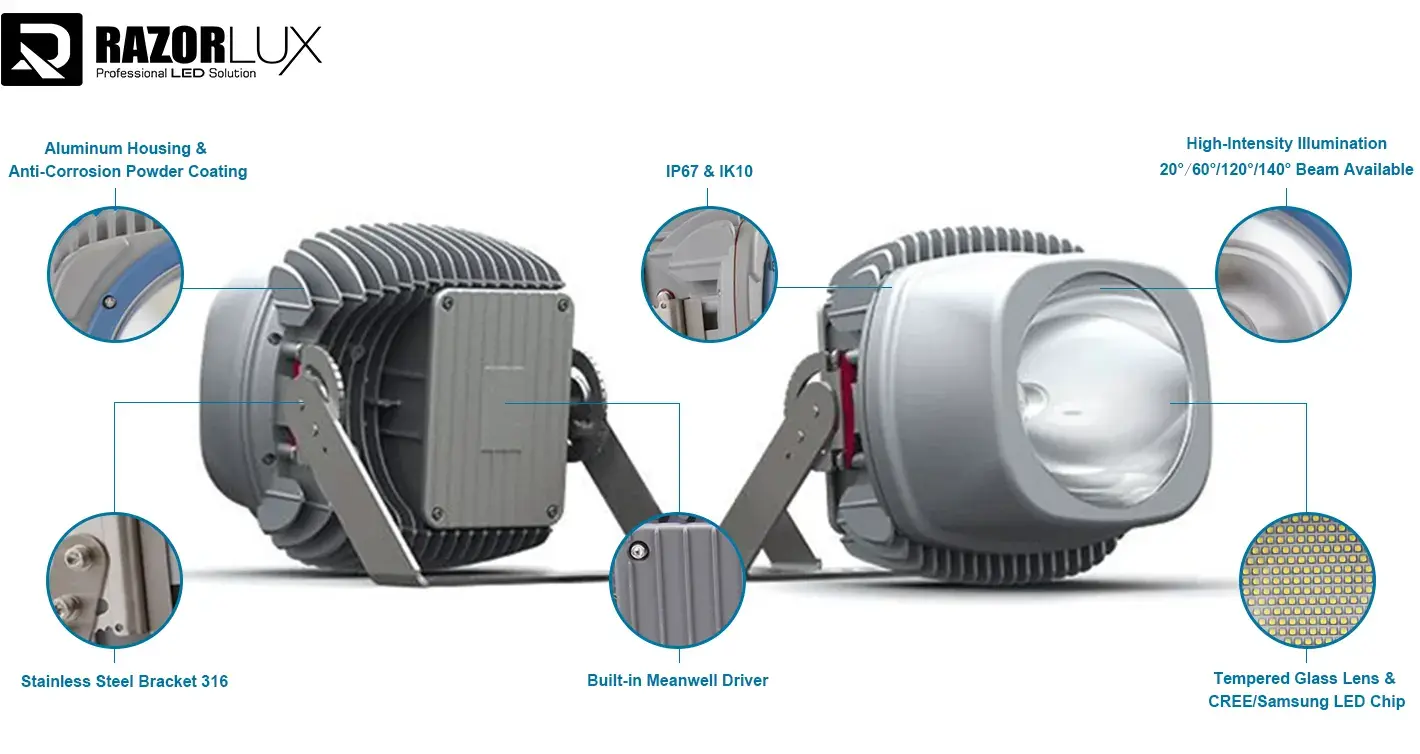
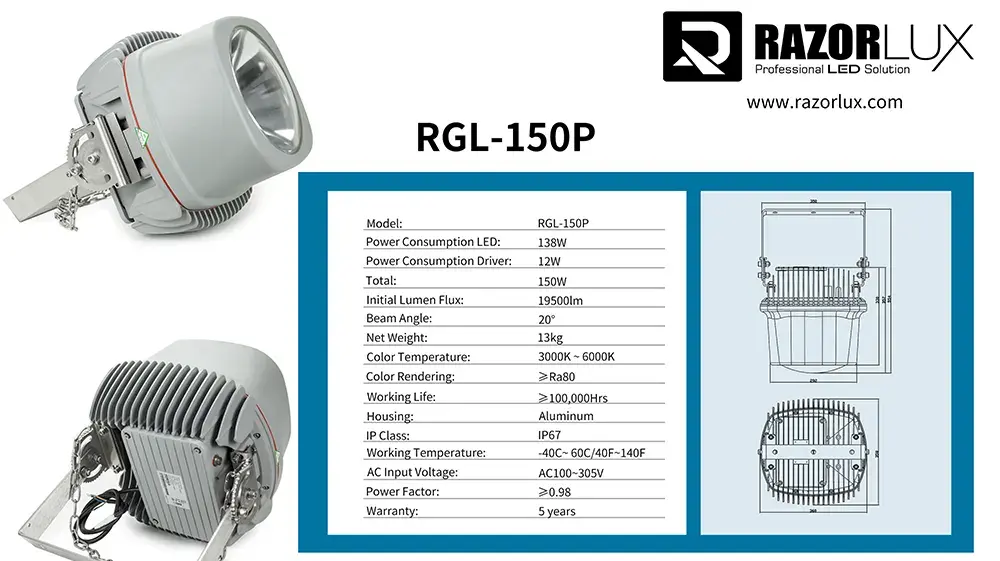
Three basic elements are built into every high-performance device made for crane booms. The LED grid with high-quality chips creates a steady flow of light; our RGL-150P type gets 13,200 lumens after temperature stabilization. Without extra adapters, the driver circuitry handles wide voltage changes (AC 80-315V or DC 80-400V) and keeps the power factor above 0.98 and the total harmonic distortion below 10%. The housing frame is made of marine-grade metal that has been powder-coated, and the brackets are made of stainless steel. This gives IP67/IK10 protection against water and damage. When the temperature changes from -40°C to 60°C, these parts work together to keep the output constant. This is necessary for Arctic factories in Norway and subtropical ports in Singapore. The 20° beam angle focuses light exactly where workers need it, reducing light spread that can cause glare or problems at nearby sites.
Comparative Analysis: LED Versus Legacy Technologies
Understanding the pros and cons of technology helps buying teams show why they should spend money:
- Brightness and Beam Control: LED lights provide focused light with little spill light. Halogen floodlights send out beams that are spread out, which wastes energy and casts shadows under cranes. Bright metal halide lights take a while to warm up and lose their color over time.
- Environmental Resistance: LEDs keep their power fixed in conditions with humidity up to 95% and temperature changes that break flame seals. Corrosion protection is needed in salt fog conditions, which are important for offshore bases. Our C5-rated coatings stop degradation in places where unprotected housings fail within 18 months.
- Lifespan Economics: Our LED modules have a 50,000-hour expected life, which is a lot longer than the 2,000–5,000 hours that halogen or HID bulbs do. Maintenance planners can schedule replacements for planned shutdowns instead of having to deal with breakdowns that happen during important lifts.
A shipyard maintenance supervisor recently said, "We were replacing halogen lamps every six weeks on our gantry cranes. Since switching to LED boom lights two years ago, we haven't touched them—and our operators report better depth perception during night shifts."
Critical Factors in OEM & Custom Solutions for Crane Lighting
Specification Customization for Optimal Performance
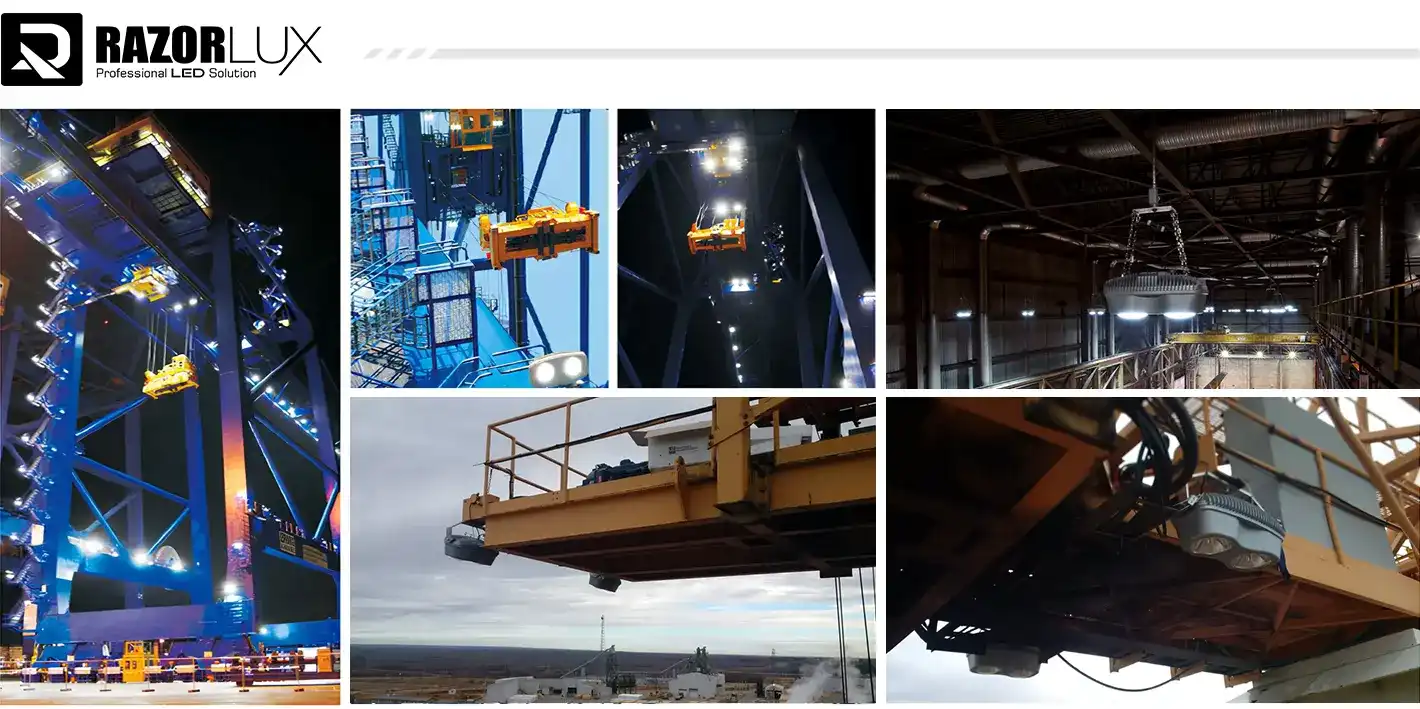
Understanding the working environment is the first step to effective customization. For example, a ship-to-shore crane that moves containers at a port station needs different photometrics than a tower crane that lights up a 12-story building site. We work with tech teams to make sure that:
- Color Temperature Selection: Cooler temperatures (5000–6500K) make people more alert and help them tell different Crane Boom Lights materials apart when they're doing precise work. Warmer spectrums (2700–3000K) make it easier on the eyes to work long shifts. Our tunable range can meet both needs without having to rethink fittings.
- Mounting Architecture: The shape of the boom changes depending on the type of crane. We make custom brackets for particular attachment spots that take wind load estimates into account and keep aim angles even when the boom moves. When attached to painted steel buildings, stainless steel gear stops galvanic corrosion.
- Voltage Compatibility: The voltages used in offshore platforms are usually 230V single-phase, while the voltages used in North American factories are 480V three-phase. Our general input driver gets rid of the need for transformers, which makes wiring easier and lowers the number of places where things can go wrong.
Compliance with Safety Standards and Certifications
Regulatory cooperation is required for projects to be approved; it's not a choice. In Europe, purchasing managers need to see a CE mark that shows the product meets the requirements of the Low Voltage and EMC Directives. People in the U.S. look for UL or DLC listings that meet OSHA lighting standards for the workplace (at least 5 foot-candles for general building and 10 for busy work areas). Marine uses need more attention. Certifications from DNV-GL and ABS show that the installation is suitable for use on ships. These certifications include tests for flame spread and shaking resistance according to IEC 60945. This is what our quality paperwork package has:
- Type test results from labs that have been approved.
- Certificates of compliance for materials (RoHS, REACH)
- IP67 proof of ingress safety
- Photometric test data (IES files for simulating light)
A marine equipment integrator said, "We can't even submit tender documents without complete certifications. Razorlux provided everything in two business days—that responsiveness wins contracts."
Making Informed Procurement Decisions for Crane-Mounted Illumination
Application-Specific Evaluation Criteria
Different industrial environments prioritize different performance attributes:
| Application | Primary Requirement | Secondary Consideration | Typical Installation Height |
|---|---|---|---|
| High-rise construction | Narrow beam concentration | Wind resistance | 60-120 meters |
| Shipyard fabrication | Wide operational voltage range | Corrosion resistance | 30-80 meters |
| Port container handling | Fog penetration (high CCT) | Rapid cooling cycles | 40-70 meters |
| Offshore oil platforms | Explosive atmosphere rating | Salt spray immunity | 25-50 meters |
| Mining excavation | Shock resistance | Dust ingress protection | 15-40 meters |
Teams in charge of buying things should ask for optical simulations that show how bright things will be at ground level. A 30,000-lumen floodlight with a 90° spread gives off less useful light in the load zone than our focused 13,200-lumen bulb with a 20° beam. This is because many buyers mistakenly state total lumens without taking beam angle into account.
Energy Consumption and Cost-Efficiency Analysis
The total cost of ownership is more than just the price of the car. When reviewing OEM quotes, look at:
- Operating Costs: A 150W LED uses $65.70 a year, compared to $175.20 for a 400W metal halide, based on $0.12 per kWh and 10 hours of use every day. This is a $109.50 yearly savings per light. To figure out the effect on the whole fleet, multiply by the number of fixtures on all of the cranes.
- Maintenance Work: To change the halogen bulbs on a 70-meter tower crane boom, you need two trained riggers, a rented mobile crane, and 4-6 hours of crane downtime. Each lamp change costs $1,400 to $1,700, based on a mixed hourly Crane Boom Lights rate of $150 and a $800 crane hire. By not having to repair 8–10 cranes every year, you can save $11,200–17,000 per crane.
- Disposal: HID lamps contain mercury, so they need to be thrown away in a way that doesn't harm other people. Like normal electronics, LED fixtures can be thrown away, which lowers the cost of disposal and the regulatory load.
A port authority in Australia figured that its LED upgrade project would pay for itself in 18 months, even though it cost 40% more up front. The money saved on upkeep alone made the investment worth it.
Ensuring Compliance and Safety in High-Risk Industrial Environments
International Certification Requirements Across Markets
Regulatory environments are very different from one area to the next, which makes things harder for international businesses. Buyers in the European Union need a CE mark that shows the product meets the requirements of the Low Voltage Directive (2014/35/EU) and the EMC Directive (2014/30/EU). Standard test reports that are standardized in our technical files are for EN 60598-1 (general safety), EN 55015 (radio disturbance), and EN 61547 (immunity). Third-party approval is important in North American businesses. The UL rating shows that the product meets the requirements of UL 1598 for lights and UL 1310 for power sources. Even though DLC qualification isn't required, it makes sure that performance claims meet DesignLights Consortium guidelines and makes it possible to get energy rebates. Our c-UL-us approval covers both Canada and the US under the same set of rules, which is good for buyers in Canada. Maritime classifications add one more level. According to the IEC 60092 set of standards, DNV-GL Type Approval confirms that the installation can be done on a ship. This includes tests for vibration (60092-504), electromagnetic compatibility (60092-504), and installation at an angle. When it comes to different company standards, ABS approval follows similar steps. Offshore platforms in Southeast Asia usually need approval from either Bureau Veritas (BV) or ClassNK (ClassNK), based on the flag state of the ship. Our wide range of certifications takes away the worry about accountability. The initial investment in global approvals—more than $180,000 across testing labs—allows users to use the same fixtures in multiple countries without having to remake or re-certify them.
Energy Efficiency and Environmental Responsibility Goals
Sustainability requirements are having a bigger effect on purchasing choices. Our 130 lm/W efficiency is 25% higher than the standards for Energy Star business lighting, which means that we leave a smaller carbon footprint per hour of operation. Compared to similar HID lighting, each fixture saves about 11 metric tons of CO2 over its 50,000-hour lifetime, assuming an average grid carbon density of 0.475 kg CO2/kWh.Material choice supports the ideas of a connected economy. The metal shell is made of 70% post-consumer recovered materials and can be recycled in its entirety when it's time to throw it away. We got rid of dangerous materials that were not required by RoHS. For example, there are no longer any brominated flame retardants, PVC wire insulation, mercury, or lead. Environmental product statements (EPDs) that include thorough numbers on the effects of a product's lifecycle, from getting the raw materials to using the product and throwing it away, are valued by corporate sustainability officers. These papers back up LEED certification for port buildings and green dock projects that want to get ISO 14001 approval for environmental management. A major European shipping line shared: "Our 2030 net-zero commitment requires every procurement decision to demonstrate emissions reduction. The documented efficiency and longevity of these LED boom lights made them an easy approval despite the higher initial cost."
Why Partner with Established OEM Manufacturers for Custom Solutions
Tailored Advantages Over Standard Off-the-Shelf Products
Generic fixtures force practical compromises—beam angles don't quite meet the needs of the application, mounting pieces need to be changed in the field, and voltage ratings mean that external transformers are needed. Custom OEM production gets rid of these wastes by designing solutions that are perfectly fit to the needs of the business.The process of modification starts with a scientific conversation. Our technical team looks over the crane's specs, working height data, profiles of the environment, and information about the electricity infrastructure. We use AGi32 or DIALux software to model optical performance. This gives us estimates of illuminance that let us know the design is good before it is made.
Some common asks for customizing are:
- Modified Beam Patterns: uneven spreads for placing the boom at an angle, or oval beams for square work areas instead of round hotspots.
- Specialized Housings: Higher impact resistance (IK10+ grades) for destruction sites, or spark-resistant building for grain handling facilities where combustible dust is a risk.
- Integrated Controls: 0-10V or DALI dimming connections let them work with crane control systems; when raising starts, the lights turn on automatically.
- Branding and Aesthetics: Custom color powder coating to fit the company identity, or laser-etched logos for lighting systems that OEM crane makers private label.
One tower crane manufacturer clarified their rationale: "We evaluated seven lighting suppliers. Most offered catalog products with minor variations. Razorlux invested time in understanding our specific boom geometry and control system integration requirements. The resulting custom design became a differentiator for our crane sales—operators notice the superior visibility immediately."
Quality Assurance Through Manufacturing Excellence
We've been making things for more than 20 years, and our production Crane Boom Lights methods have been improved by more than 200 patents that cover things like LED Packaging, heat management, and optical design. The building that is ISO 9001:2015 approved follows strict quality rules:
- When parts come in, they are checked against the specs (LED bin sorting for color stability).
- Automated optical inspection (AOI) checks the quality of the solder joints on PCB assemblies.
- Burn-in testing exposes all fixtures to high temperatures for 48 hours, which gets rid of failures that cause baby deaths.
- Final QC checks the electrical factors, photometric output, and leakage protection by spraying water on the product.
Statistical process control keeps an eye on important factors like coating thickness, gasket compression, and solder temperature profiles. It makes real-time changes to stop drift. Traceability systems connect each finished unit to a certain number of parts, which lets you quickly find the root cause of any problems that happen in the field. This level of strictness in making means stability in the field. Our normal return rate is less than 0.3%, which means that out of every 1,000 fixtures we ship, fewer than three need guaranteed service. This consistency makes it easier for buyers to plan upkeep and keep track of spare parts for crane fleets that are used at multiple places.
The Complete Procurement Journey with Razorlux
Custom projects that go well follow an organized path that is meant to reduce risk and increase value:
- Phase 1: Needs Assessment (Week 1-2): During the first meeting, application needs, practical limitations, and performance standards are gathered. We give you basic product suggestions along with price ranges.
- Phase 2: Custom Design Proposal (Week 3–4): Detail specs, 3D CAD models, and lighting tests are made by engineering. The plan has firm prices, an approval path, technical models, and a delivery schedule.
- Phase 3: Making a prototype (Week 5–10): For complex changes, we make prototype pieces for the client to test. Technical staff try the products on-site and collect feedback to improve the designs.
- Phase 4: Testing and Certification (Week 11–18): Accredited laboratories test the final design to make sure it meets all the requirements. We oversee the licensing process, keeping you up to date on its progress and taking care of any problems that arise.
- Phase 5: Production and Delivery (Week 19+): Once the plan is frozen and the deposit is paid, production can begin. Monitoring production makes sure that quality standards are met, and clients can check the goods before they are sent out through pre-shipment review.
The timeline flexibility accommodates urgent needs—standard product deliveries happen within two to three weeks, while complex custom projects can take up to six months to finish, based on the standards for approval. Dedicated project management makes sure that there is only one person responsible for the whole process. The clients don't have to deal with annoying handoffs between the sales, engineering, and production teams because they only have to deal with one person from the initial request to the help after delivery.
Long-Term Partnership Benefits
The connection is more than just the source of goods. Strategic relationships with Razorlux bring long-term benefits, such as:
- Design Evolution Support: As crane models change or practical needs alter, we offer retrofit options and update paths that protect the investment in fixtures.
- Volume Pricing Structures: Framework deals set up tiered pricing that rewards customers who commit to buying a certain amount, and inventory stocking programs make sure that parts are always available.
- Technical Knowledge Transfer: Maintenance staff are taught the right way to put things together, fix problems, and make them run better through training programs.
- Collaborative innovation: Product development roadmaps are directly affected by what customers say. Several of the features on our present fixtures came from requests from the field. For example, our modular driver design came from a shipyard's need to quickly change parts without having to access the boom.
One buyer from a big industrial contractor put it this way: "We've worked with Razorlux for six years on projects on three continents. The consistency is amazing—the same quality, same responsive service, and same engineering support whether we're in Rotterdam or Singapore. That reliability is really valuable when you're managing global supply chains."
Conclusion
When choosing the right boom-mounted lighting for industrial crane operations, you have to weigh the need for instant performance with the need for long-term operating costs and safety. Technical factors like power compatibility, environmental protection grades, and photometric suitability need to be carefully weighed against the needs of the application. The connection with the seller is also important because it decides whether buying provides value beyond the fixture itself, such as technical support, help with licensing, and service throughout the lifecycle. Our 150W LED solution combines tried-and-true technology, full compliance, and industrial excellence honed over 20 years or more. It gives procurement professionals a risk-free way to improve lighting in key infrastructure.
FAQ
1. What distinguishes boom-mounted fixtures from standard industrial floodlights?
Boom lighting needs special engineering to work consistently at very high heights, where service is hard to get to and provide focused light over long vertical distances. It also has to be able to handle constant shaking. For crane uses, standard floodlights don't have the structural support, heat management, or narrow beam control that are needed. The IK10 impact grade and IP67 sealed construction keep the fixture from breaking down, which can happen with general-purpose fixtures that are subject to harsh weather and mechanical stress.
2. How do color temperature options affect operator performance?
Higher color temperatures (5000–6500K) improve material separation and visual clarity, which makes complicated lifts more precise. Also, cooler light makes people more alert during night shifts. Lower temperatures (3000–4000K) make it easier on the eyes to work for long periods of time, but they also make it harder to see colors clearly. Most users find that 4000-5000K is the best range for visibility and comfort across a wide range of chores.
3. Can existing metal halide fixtures be retrofitted with LED technology?
Retrofitting depends on the state of the original housing and the strength of the mounting hardware. LED engines can be used instead of HID lamp systems, but the motor electronics need to be wired and cooled in a different way. Most of the time, replacing all of the fixtures is cheaper than changing them because it includes new seals, optics, and a full guarantee. Based on specific installation pictures and wiring paperwork, our team does retrofit feasibility evaluations.
Partner with a Leading Crane Boom Lights Manufacturer for Custom Solutions
Razorlux is the only company that can provide specialized Crane Boom Lights. They have been coming up with new LED technologies for 20 years and have a deep knowledge of the lighting problems that happen in shipyards, marine, and heavy industries. Our patented 150W solution has an efficiency of 130 lm/W and a security rating of IP67/IK10. It is backed by global standards like CE, UL, DNV-GL, and ABS that meet the strictest buying requirements. Our engineering team can help you with unique design, photometric modeling, and full technical documentation for anything from upgrading current crane fleets to choosing lights for new building projects. Email us at sam@razorlux.com to talk about your unique needs, and we'll get back to you within 24 hours with full specs, application advice, and sample availability. Find out why factories in Northern Europe, offshore sites in the Middle East, and port operators in Southeast Asia trust Razorlux to light up their most important cranes.
References
1. Maritime and Port Authority Standards Committee. Technical Guidelines for Crane Lighting Systems in Port Environments. 2023.
2. Industrial Safety Engineering Council. Best Practices for High-Altitude Work Area Illumination. Journal of Industrial Safety, Vol. 47, 2022.
3. LED Lighting Performance, Research Group. Comparative Analysis of Solid-State Lighting in High-Vibration Applications. International Journal of Applied Photonics, 2023.
4. European Committee for Standardization. EN 60598 Series: Safety Requirements for Luminaires in Industrial Applications. 2021 Edition.
5. International Association of Classification Societies. Unified Requirements for Shipboard Electrical and Lighting Equipment. 2022 Revision.
6. Energy Efficiency in Heavy Industry Working Group. Lifecycle Cost Analysis of LED Versus Traditional Lighting Technologies in Maritime and Construction Applications. Industrial Energy Management Quarterly, 2023.
 VIEW MOREoutdoor ice rink lights
 VIEW MOREbest stadium lights
 VIEW MOREtennis court light fixtures
 VIEW MOREoutdoor led tennis court lighting
 VIEW MOREMarine Led Spotlights For Boats
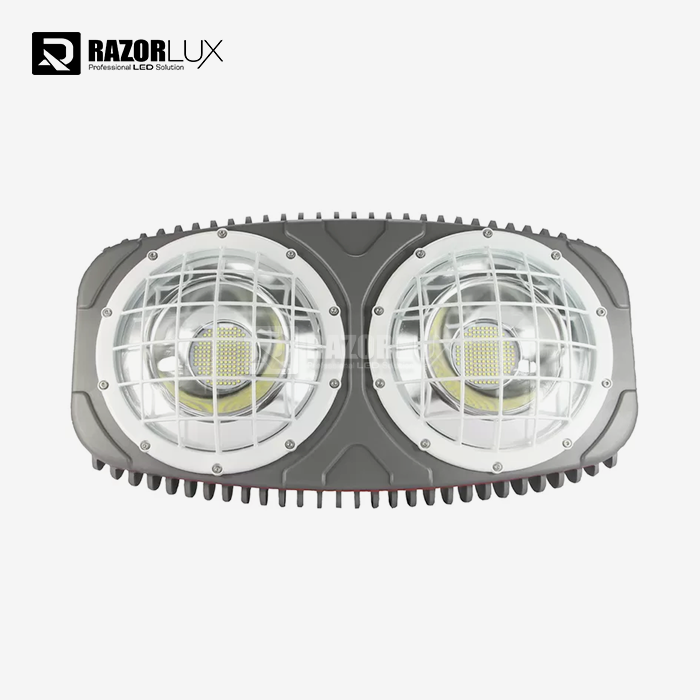 VIEW MOREIp65 Backyard Stadium Lights 600W 5700K Solar Powered Flood Lights
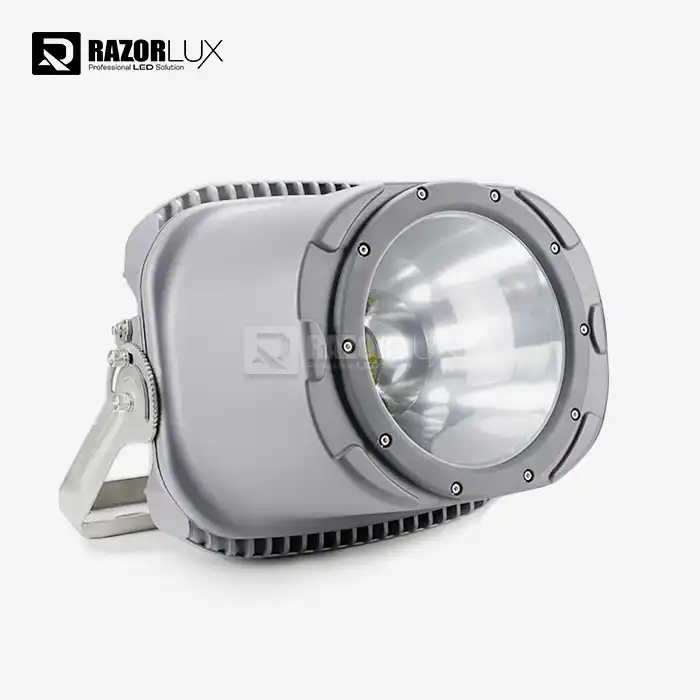 VIEW MORE110V Floodlight
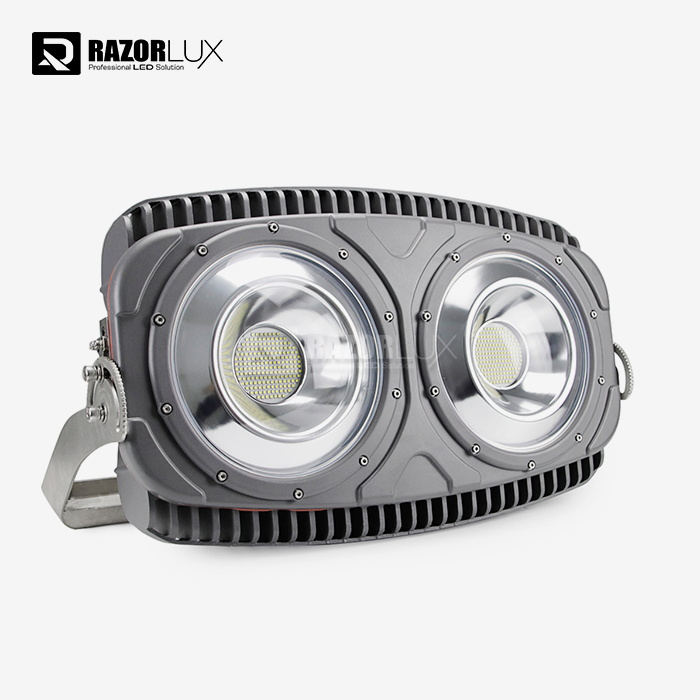 VIEW MORE2 Head Led Flood Light