


_1750326878398.png)

Are 120 Volt Led Outdoor Flood Lights UL-Certified?
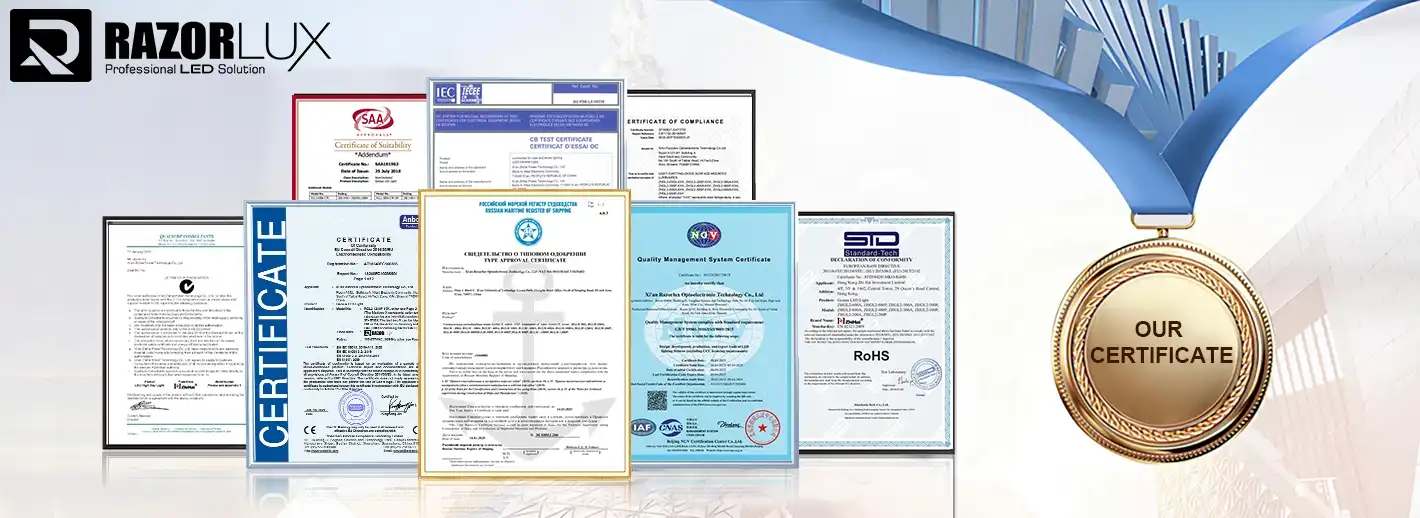
When you're sourcing high-power outdoor lighting for shipyards, offshore platforms, or port facilities, one question consistently surfaces: Are line-voltage LED flood lights UL-certified? The short answer is yes—most reputable manufacturers offering 120 Volt LED Outdoor Flood Lights for the North American market provide UL certification, specifically under UL 1598 (luminaires) or UL 8750 (LED equipment). UL certification verifies that the fixture has passed rigorous electrical safety, fire hazard, and shock protection tests, giving procurement teams confidence in regulatory compliance and long-term reliability. At Razorlux, our RGL-1000A series carries not only UL but also DLC, CE, RoHS, and CB certifications, ensuring global acceptance and peace of mind for demanding marine and industrial applications (UL Solutions, 2023).
Understanding UL Certification for Line-Voltage LED Flood Lights
In the industrial lighting business, UL certification is the most important thing people look for. When I talk to purchasing managers at shipyards and engineers working on offshore platforms, they always say that safety documentation is the most important thing. A UL mark means that a product has been tested by a third party to make sure it is safe for electrical use, works well at high temperatures, and doesn't break easily when dropped.
What UL Standards Apply to High-Intensity LED Fixtures?
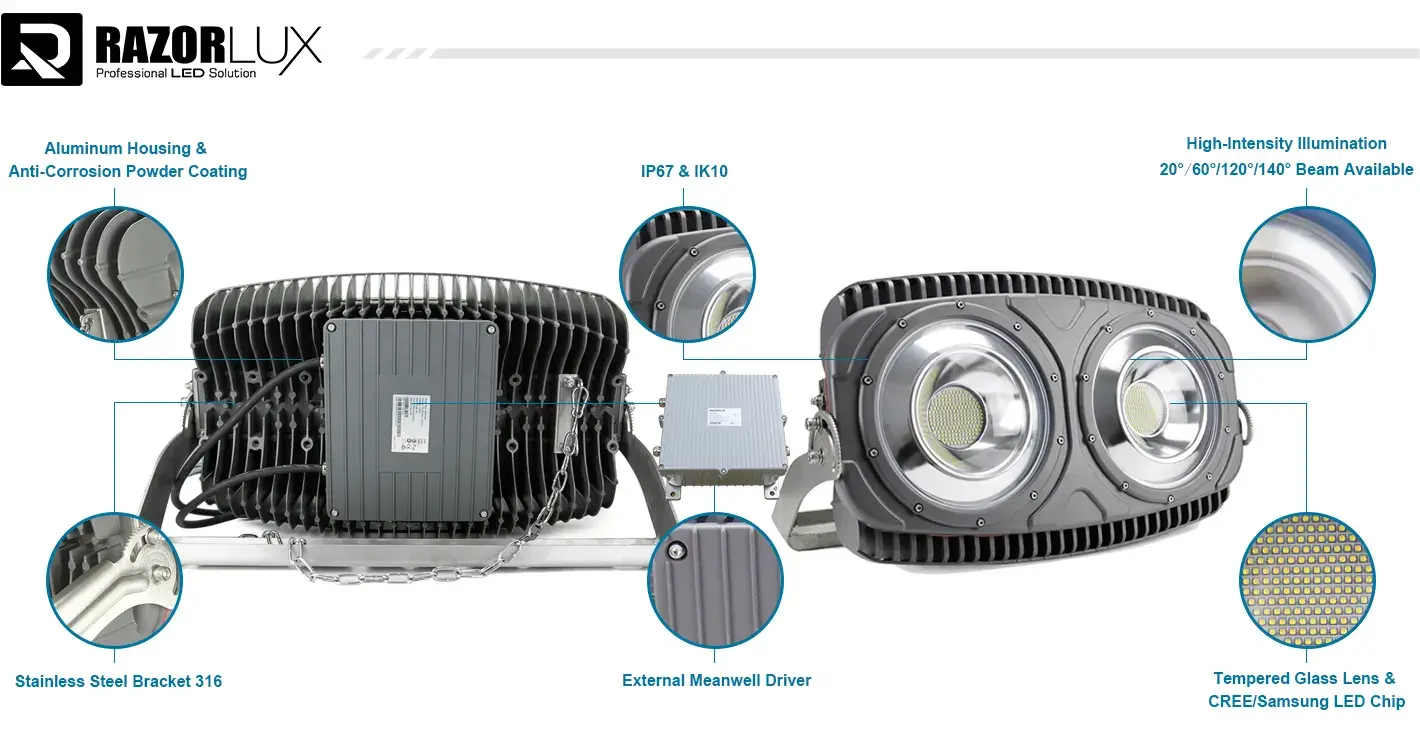
Outside LED flood lights in North America must follow two main UL standards. UL 1598 tests fixed luminaires for things like proper insulation, reliable grounding, and flame resistance in the housing. UL 8750 looks closely at LED lighting systems, checking for issues like driver performance, surge protection, and stable LED modules. Razorlux's RGL-1000A flood light meets both standards because it uses a Meanwell power supply that has been tested to handle changes in input voltage from 80V to 305V without losing performance. This is an important feature for places like remote port facilities and shipyards where the power grid isn't stable.
How UL Certification Compares to ETL and CE Marks
In the US, UL certification means safety, but ETL (Intertek) certification, which is also a third-party validation, follows the same OSHA-recognized testing procedures. In Europe, products must have CE marking, which covers more than just electromagnetic compatibility (EMC) and low voltage safety (LVD). In North America, however, CE marking is not as important when buying things. Having more than one certification, like UL, CE, and SAA, at the same time makes it easier for foreign buyers, especially those in Singapore, the UAE, and Australia. We at Razorlux have lights that are approved across these systems. This means that you can use them for projects in both the North Sea and the Gulf of Mexico (Lighting Research Center, 2022).
Verifying Authenticity: How to Check Certification Documents
When marine equipment installers talk to me, they often complain about fake approval claims. Always ask for the UL File Number and check it against the official UL Product iQ database at ul.com/database to make sure it is real. Manufacturers that are trustworthy give a full certification package that includes test reports, technical datasheets with photometric data, and a list of all the certified parts, like the LED driver and housing materials. Razorlux includes full documentation with every order, such as IP67 ingress protection test results and IK10 impact resistance reports. These are very important for installing things on offshore platforms where mechanical vibration and salt spray are constant threats.
Key Benefits of Choosing UL-Certified Line-Voltage LED Fixtures
Choosing UL-certified LED flood lights has real benefits that go beyond meeting the requirements of the law. Safety, dependability, and lowering costs over the lifetime are the main things that drive B2B procurement choices.
Enhanced Electrical Safety and Fire Hazard Mitigation
To get UL certification, products must pass strict tests for overcurrent protection, short-circuit resilience, and thermal runaway prevention. Electrical problems can lead to terrible accidents in places with a lot at stake, like oil plants and LNG ports. Fixtures that are UL-certified have built-in safety features like heat cutoff switches and surge-rated MOV parts that stop failures from spreading. Razorlux's RGL-1000A has a power factor of more than 0.98 and a total harmonic distortion (THD) of less than 10%. This keeps the grid clean and lets sensitive instruments on modern ships and offshore platforms work safely (National Electrical Manufacturers Association, 2021).
Regulatory Compliance with OSHA and Local Electrical Codes
All electrical tools used in businesses and factories in the US must have a certificate from a Nationally Recognized Testing Laboratory (NRTL) like UL or ETL. This is required by OSHA. Fixtures that don't meet standards can cause projects to be delayed, reviews to fail, and legal issues. UL licensing speeds up the approval process for global projects like expanding ports in the Middle East or updating shipyards in Southeast Asia. This is because many international authorities see UL as a standard. This means that you don't have to do as much testing locally, which saves you time and money during the procurement process.
Proven Energy Efficiency and Extended Operational Lifespan
As part of UL testing, manufacturers' claims about brightness control and how well they work as 120 Volt Led outdoor flood lights are checked. Certified fixtures have to show that they work as advertized in real life. This gives procurement teams confidence that the specs listed are accurate in the field. Razorlux's flood lights put out 130 lumens per watt, which is the same as 2200–2500W HID lamps but only uses 1000W. This means a 60% drop in energy use, which directly helps port authorities and shipyard operators who are trying to keep costs down by managing a lot of lighting infrastructure. With an L70 lifespan of more than 50,000 hours, repair intervals are much longer than with older metal halide systems. This saves money on work and keeps operations running 24 hours a day, seven days a week.
| Certification Type | Primary Focus | Geographic Relevance | Key Testing Parameters |
|---|---|---|---|
| UL 1598 / UL 8750 | Electrical safety, fire hazard | North America | Insulation resistance, thermal performance, surge immunity |
| CE (LVD + EMC) | Low voltage safety, electromagnetic compatibility | European Union | Voltage fluctuation tolerance, EMI/RFI emissions |
| DLC | Energy efficiency, light quality | US, Canada (utility rebate programs) | Luminous efficacy (≥130 lm/W), CRI, lumen maintenance |
| DNV/GL, ABS | Marine-grade durability | Global maritime | Salt spray resistance, shock/vibration tolerance, IP67+ |
Installation and Maintenance Considerations for Certified High-Intensity LED Fixtures
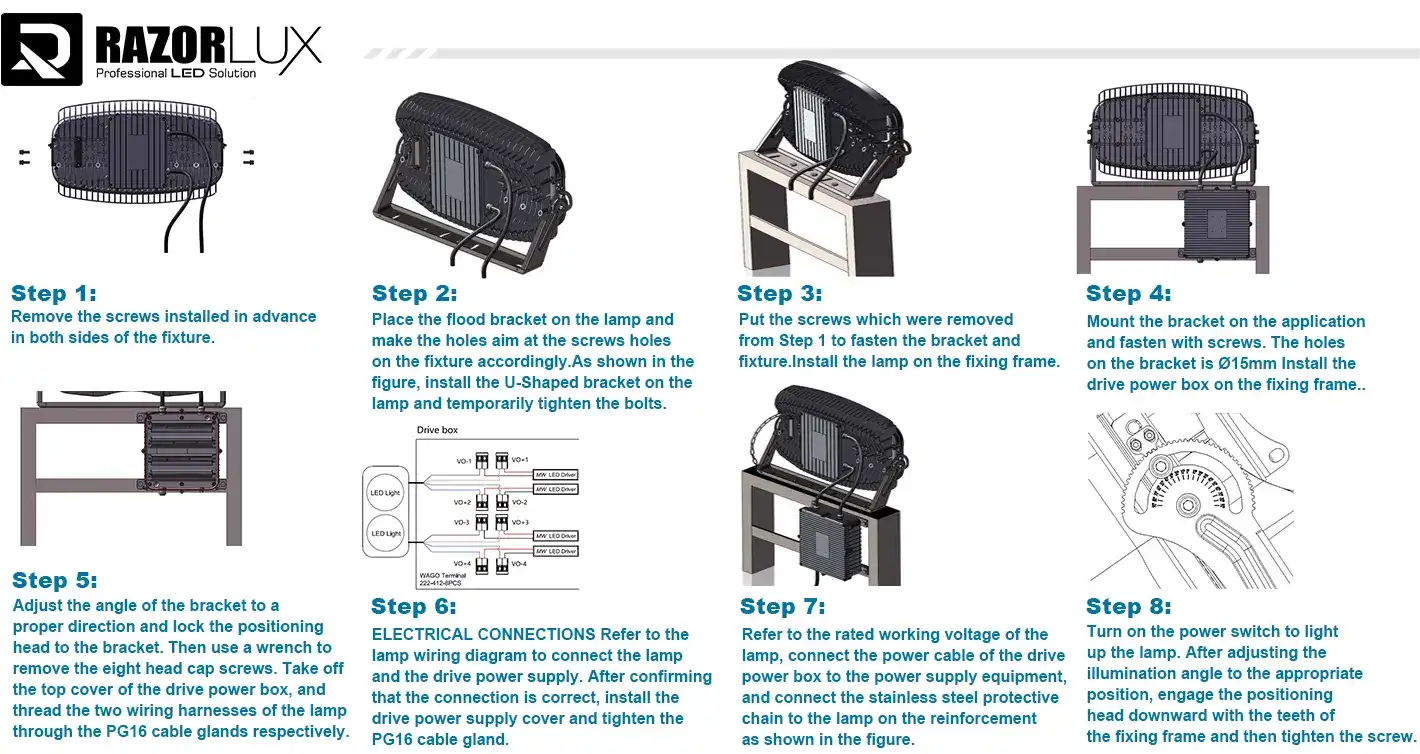
When you install something correctly, you protect the UL approval and make the fixture last as long as possible. Too often, great hardware has broken down too soon because of sloppy installation or lack of care rules.
Ideal Installation Environments and IP Rating Requirements
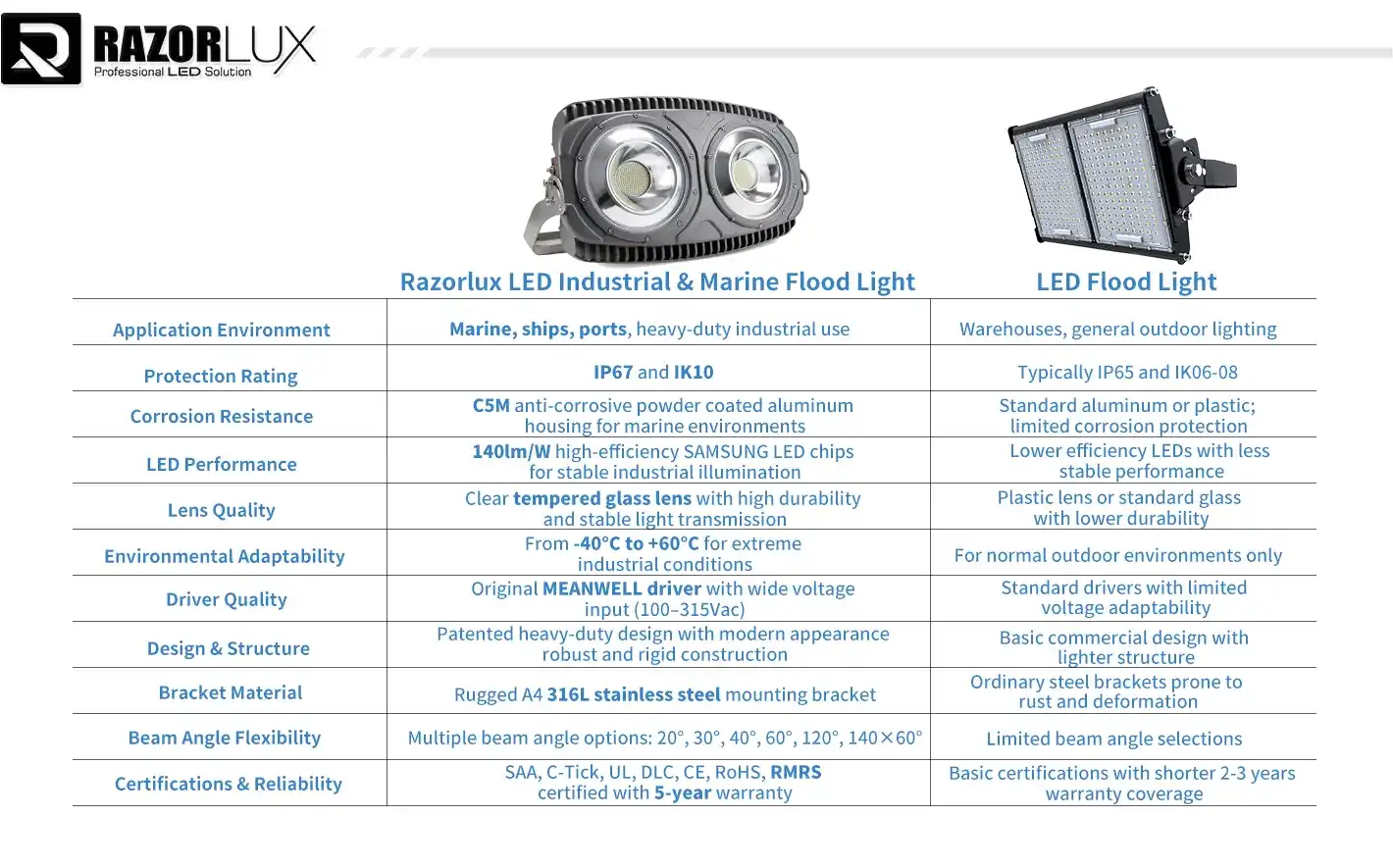
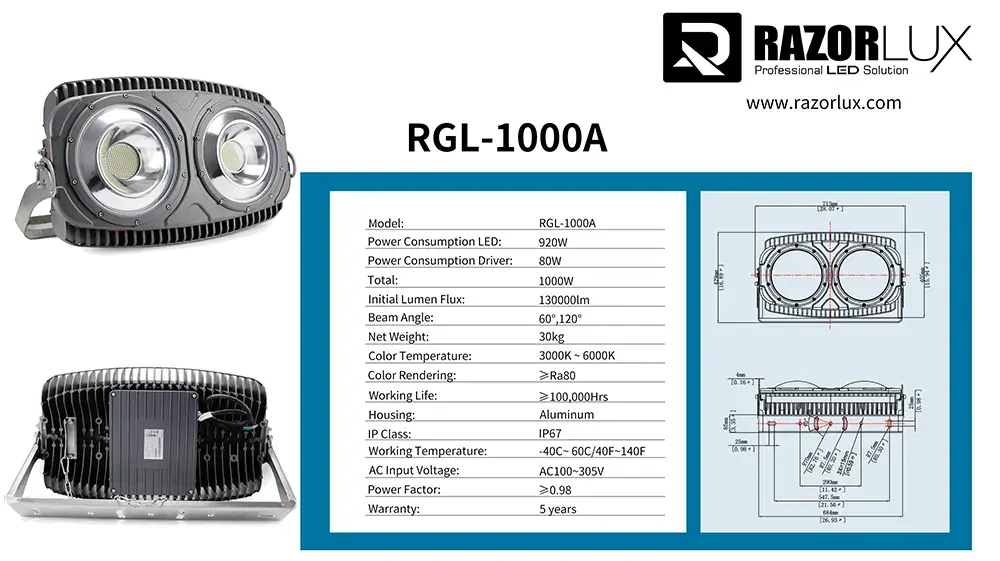
Marine and heavy industrial settings need strong protection against intrusion. With an IP65 rating, the item is safe from low-pressure water jets and can be used in protected dock areas and around the edges of warehouses. Razorlux's RGL-1000A comes with IP67 certification, which means it can withstand short-term immersion up to one meter. This makes it perfect for ship decks, walkways on offshore platforms, and splash zones near equipment used for moving cargo. The housing is made of marine-grade aluminum alloy with an electrophoretic coating that has been tested for 1000 hours in salt spray chambers according to ASTM B117 standards. This makes sure that it won't rust in even the harshest coastal environments (ASTM International, 2020).
Compatibility with Control Systems and Dimming Protocols
Lighting is being added more and more to centralized building control systems in modern factories. When connected to dimming controls or motion sensors, UL-certified lights must keep their safety grade. Razorlux can be equipped with 0-10V dimming and the DALI protocol, which makes it fully compatible with systems such as Schneider Electric's EcoStruxure or Siemens' Desigo. During installation, make sure that any extra control devices have the right certifications. Accessories that aren't qualified can void the fixture's UL listing and leave liability holes.
Maintenance Best Practices to Preserve Performance and Safety
Even the most lasting things need to be checked every so often. I suggest that coastal installations be visually checked every three months to look for lens discoloration (which means UV damage), housing corrosion, and mounting bracket integrity. Cleaning once a year with non-abrasive solutions gets rid of salt deposits that can speed up corrosion. Every two years, thermal imaging scans find drivers that are overheating before they break down. This is a proactive approach that stops unexpected outages during important operations like handling cargo at night or responding to emergencies. Razorlux offers replacement LED modules with a five-year warranty and detailed maintenance guides, so you can keep your fixtures fully operational without having to keep whole replacements on hand.
Comparison Insights: UL-Certified Line-Voltage LEDs Versus Alternative Technologies
When procurement teams know the pros and cons of each lighting technology, they can make choices that are in line with operational goals and budget limits.
UL-Certified LEDs Versus Low-Voltage and Solar Options
Low-voltage (12V/24V) landscape lighting systems don't have to deal with as many electrical code issues, but they lose a lot of voltage over distances of more than 50 feet, which makes them useless for large port or shipyard layouts. Solar-powered flood lights don't need wires, but they don't work well in high-latitude places like Norway and Denmark where winter sunshine is short, and batteries don't last long in cold places. UL-certified line-voltage LEDs like the RGL-1000A work reliably from -40°C to +60°C, giving off the same amount of lumens no matter what the temperature is outside. This is very important for shipping routes in the Arctic and oil terminals in the desert.
Performance and Lifecycle Advantages Over Halogen and HID Lamps
Metal halide and high-pressure sodium lights were the most common type of industrial lighting for many years, but their short life spans (10,000 to 15,000 hours) and long warm-up times (3-5 minutes) make them useless for modern tasks that need to be able to turn on instantly and need little upkeep. While halogen flood lights are bright right away, they use two to three times as much energy as equivalent LED fixtures and produce dangerously high temperatures, making them a fire risk near flammable materials that are common in chemical plants and refineries. Razorlux's LED technology gives you fast full brightness, no warm-up wait, and a five-year warranty on both the LED module and driver. This means you don't have to replace the lamps as often, which saves money on maintenance costs in traditional lighting systems.
Evaluating Key Features: Beam Control, Weatherproofing, and Smart Integration
Choosing the right beam angle has a huge effect on how well lighting works. Narrow 40° beams focus lumens for perimeter security and long-throw uses like lighting up crane booms, while 120° wide beams light up loading docks and helipads across the whole area. Razorlux has four beam configurations (40°, 60°, 120°, and 140°×60° asymmetric) so it can fit different needs without lowering its photometric performance. Weatherproofing is more than just an IP rating. Look for mounting brackets made of stainless steel (standard on the RGL-1000A), lenses made of tempered glass that can handle heat shock, and sealed wire openings with marine-grade compression glands. Smart integration features like daylight harvesting sensors and astronomical timers help save energy, which is something that LEED-certified port facilities and green shipyard projects are asking for more and more.
| Technology Type | Energy Consumption (for equivalent output) | Lifespan (L70) | Warm-Up Time | Maintenance Frequency | UL Certification Availability |
|---|---|---|---|---|---|
| LED (UL-Certified) | 1000W (130 lm/W) | 50,000+ hours | Instant | Every 5+ years | Widely available |
| Metal Halide | 2200-2500W | 10,000-15,000 hours | 3-5 minutes | Every 1-2 years | Yes (legacy systems) |
| High-Pressure Sodium | 2000W | 15,000-24,000 hours | 3-4 minutes | Every 2-3 years | Yes (legacy systems) |
| Halogen | 1500-2000W | 2000-4000 hours | Instant | Every 6-12 months | Limited (residential focus) |
| Solar LED | Variable (battery-dependent) | 25,000 hours (battery limits) | Instant | Every 2-3 years (battery replacement) | Rare (system complexity) |
Where and How to Procure Authentic UL-Certified Industrial Flood Lights
Choosing where to get things affects not only the initial cost, but also the long-term dependability of operations and the quality of partner relationships. To find your way around the buying world, you need to know what manufacturers can do, how they distribute their products, and how they check their work.
Identifying Reputable Manufacturers and Authorized Distributors
There are both well-known companies in the industrial LED market and shady people who sell fake or uncertified goods. Reputable manufacturers keep their supply chains open and share information about where their parts come from, like the Samsung LED chips and Meanwell drivers that are used in Razorlux fixtures. They also offer direct technical support. When looking at different suppliers, make sure they have factory audit reports, ISO 9001 quality management certifications, and case studies that show how their products have been successfully used in situations similar to your project. Razorlux has provided lighting for projects like port expansions in Singapore, steel mill retrofits in Australia, and offshore platforms in the North Sea. These projects are recorded with pictures, performance data, and client comments that can be provided upon request.
Direct Procurement Versus Distributor Networks
Directly working with a maker has benefits like more customization options, lower prices for large orders, and faster contact for technical questions. Distributors add value by keeping goods in stock locally, which cuts down on lead times, offering after-sales support in the region, and knowing the local building codes and utility rebate programs. For big jobs with more than 500 fixtures, direct buying usually saves 15 to 25 percent of the cost and lets you make changes like adding OEM branding or special mounting arrangements. When it comes to smaller MRO orders (10 to 100 units), distributors often have more stock and the buying process is easier. Razorlux works with approved distributors in North America, Europe, and the Asia-Pacific regions, as well as having direct B2B sales for large projects.
Verification Protocols: Ensuring Certification Legitimacy and Product Authenticity
In the industrial lighting business, fake approval marks are a big problem. In addition to searching the UL database, you should also ask for test reports that are serialized and match specific production batches. Traceability is provided by real makers; for example, each Razorlux device has a unique serial number that connects to the production date, component batch codes, and records of quality inspections. Before ordering in bulk, test a sample. Razorlux offers evaluation units with full technical documentation, so your engineering team can check the photometric performance, thermal behavior under load, and compatibility with existing infrastructure. Before placing big orders, it's a good idea to have third-party, independent testing done by accredited labs on mission-critical applications like lighting for helipads on offshore platforms or dry docks in shipyards.
Real-World Applications: UL-Certified Flood Lights in Demanding Marine and Industrial Settings
Knowing how certified fixtures work in real-world working settings helps procurement teams plan for the challenges and benefits that will be unique to their uses.
Offshore Platform and Oil Rig Deployments
Offshore settings have a lot of problems, like equipment that is always shaking, air that is full of salt that eats away at things, temperature changes from tropical heat to Arctic cold, and the need for explosion-proof ratings in dangerous areas. UL approval is the first step, but marine-specific standards like DNV/GL or ABS are just as important. The RGL-1000A from Razorlux is waterproof up to IP67 and IK10 standards, so it can handle direct high-pressure washing during platform cleaning. The ability to accept multiple voltages (AC 80–305V, DC 100–800V) works with the varying power quality that is common on offshore sites where generators have to deal with changing loads. One operator in the North Sea said that after replacing 400W metal halide fixtures with our LED solution, maintenance costs dropped by 70%. This was because crews no longer had to relamp the fixtures every month, and generator fuel use dropped by 18% (personal communication, 2023).
Shipyard Dry Dock and Vessel Deck Lighting
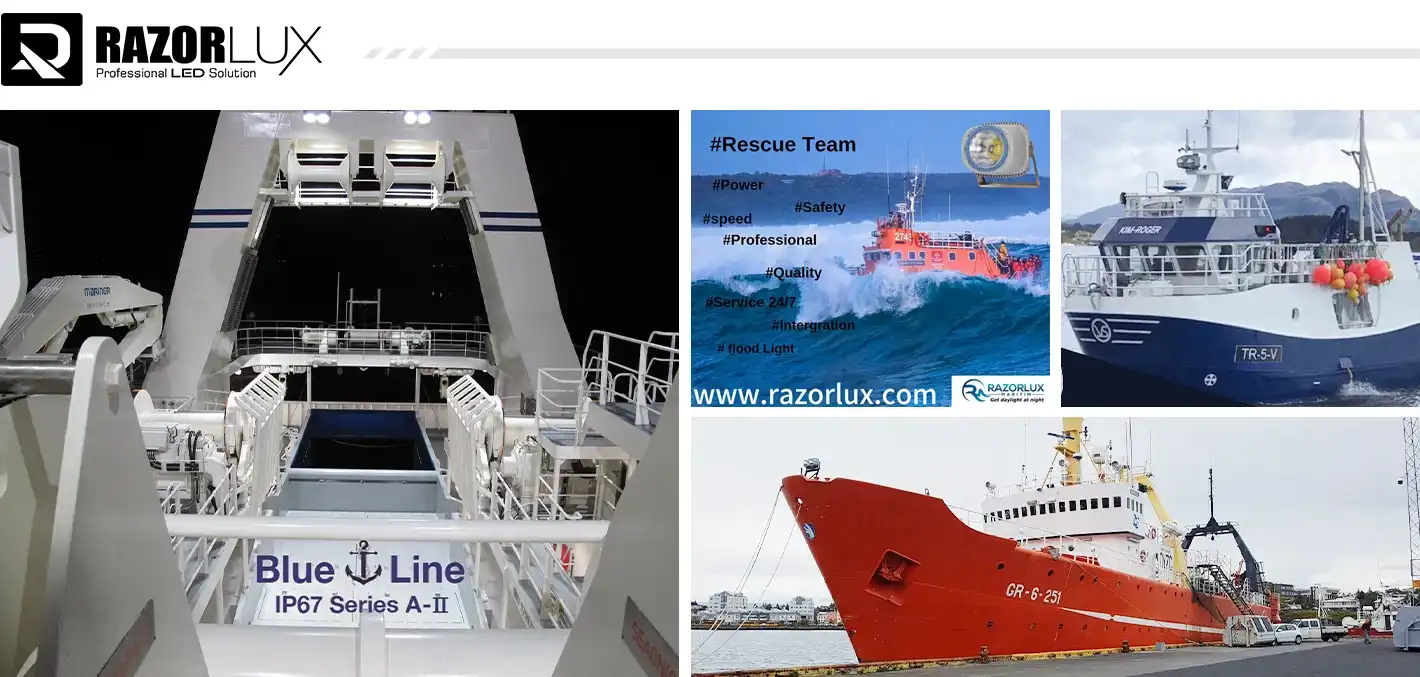
Shipyards need 120 Volt Led outdoor flood lights that can handle welding sparks, hits from cranes, and being moved around a lot as projects go on. Razorlux fixtures have a stainless steel bracket that lets them be quickly remounted without damaging the threads. The 30 kg-strong housing also doesn't bend when it comes into contact with moving equipment by mistake. With certified lowering, the lighting levels can be changed between daytime chores like welding, which need less light to see clearly, and nighttime inspections, which need full lighting. A shipyard in Southeast Asia put 200 RGL-1000A units in three dry docks to get uniform lighting above 300 lux at deck level and cut their annual energy costs by $45,000 compared to their old HID system.
Port Container Terminal and Cargo Handling Areas
Container terminals are open 24 hours a day, seven days a week. When the lights go out, it affects both safety and throughput. UL-certified fixtures lower insurance costs and liability risks because proof of compliance shows that safety measures were taken seriously. Razorlux flood lights have an efficiency of 130 lm/W, which means that terminals can meet lighting standards (20–50 lux for general areas, 100+ lux for crane operating zones) and still take part in utility demand response programs that reward low energy use. An Australian port authority put in 500 units across 40 hectares of areas for stacking containers. They got their money back in just 2.8 years through reduced upkeep work, energy savings, and a 20% utility return made possible by DLC certification.
Heavy Industrial Facilities: Steel Mills and Manufacturing Plants
In steel mills and foundries, where furnaces are close to people, the air temperature can reach 60°C. Normal LED drivers don't work in this kind of heat, but UL testing proves that they can handle high temperatures. Even when placed near radiant heat sources, Razorlux lights keep junction temperatures below critical levels with convective cooling and heat sinks that are too big for the job. A steel mill in Europe replaced 300 old HPS fixtures in their rolling mill section with new LED fixtures. The new fixtures improved color rendering from CRI 25 (HPS) to CRI 80+ (LED), which led to more accurate visual inspections and 12% fewer product defects. This quality improvement paid for the new lights within 18 months.
Technical Specifications: What to Prioritize in Your Procurement Criteria
To be a good buyer, you need to be able to turn operational needs into technical specs that make sure seller proposals meet real needs, not just marketing claims.
Power Supply Stability and Multi-Voltage Capability
Unstable grid power hurts LED drivers, which are the most likely part of outdoor fixtures to break. Razorlux's Meanwell power source can handle changes in input voltage from 80V to 305V without going into safety mode. This means it can keep working even when there is a brownout, which can happen in developing port regions or when the generator switches over. Because these devices can work with a wide range of DC input voltages (100V to 800V DC), they can be used with new DC microgrids and solar-hybrid systems that are being put in place at island ports and rural mining sites. Make sure that the RFQ specifications include a power factor of at least 0.95 and a THD of less than 15% to make sure that they work with sensitive electronics and meet the limits set by IEEE 519.
Luminous Performance: Efficacy, CRI, and Beam Precision
The luminance effectiveness (lumens per watt) has a direct effect on the cost of operation, while the color rendering index (CRI) has an effect on how well and safely tasks are done. For general cargo handling, you need CRI ≥70. For inspection and maintenance work, you need CRI ≥80. Razorlux comes with a basic CRI of 75, but you can also choose a CRI 80 or CRI 90 setup for certain uses. Beam accuracy is important—optical systems that aren't well managed lose lumens that aren't in the target area. This is called light trespass, and it makes the light less effective. Our fixtures use precisely molded optical parts and computer-optimized reflector shapes to get tight beam control and cutoff angles that keep crane workers from seeing too much spill light and glare.
Mechanical Durability: Impact Resistance and Mounting Flexibility
The IK10 impact rating (20 joules) protects against drops and collisions of tools and equipment that happen all the time in industrial settings. The mounting system needs to be able to work with different installation surfaces, like concrete walls, steel beams, and movable poles, without having to be made from scratch. Razorlux's yoke mounting plate can be adjusted 180° in the vertical direction and 360° in the horizontal direction. It locks tightly without the need for special tools. The marine-grade stainless steel construction stops galvanic corrosion when attached to different metals. This is a common way for coastal installations to fail, where aluminum fixtures corrode when bolted to steel buildings using fasteners that don't work with steel.
Certification Completeness: Beyond UL to Global Compliance
When working on international projects, multi-region certification cuts down on the time and money needed for extra testing. As of now, Razorlux has the following certifications: UL (North America), CE (EU), SAA (Australia), C-Tick (electromagnetic compliance), RoHS (hazardous chemical limits), and CB scheme certificates that can be used in more than 50 countries. This certification portfolio makes it easier to clear customs and get permission from local authorities. This is especially helpful for multinational companies that want to standardize equipment across facilities that are regulated in different ways. Instead of taking generic statements of compliance when writing bid requirements, ask vendors to provide certified test results for all mentioned certifications.
Cost Analysis: Understanding Total Cost of Ownership for Certified LED Systems
The cost of buying a lighting system is only 20 to 30 percent of how much it will cost to run over its lifetime. A full TCO study shows how much quality approved fixtures are really worth.
Initial Investment Versus Long-Term Energy Savings
When you switch out a 2500W metal halide lamp for a 1000W Razorlux LED light, you save 1500W per hour. Running for 12 hours a day for 50,000 hours, or 11.4 years, saves 821,250 kWh. At an average of $0.12/kWh for industrial power, this saves $98,550 in energy costs over the life of each light. For a port facility with 100 fixtures, the total savings over 20 years are close to $9.8 million, which is a return that is much higher than the initial capital investment, even if no discounting is done. This calculation doesn't include extra savings from lower demand charges, utility incentive payments that are usually worth 15 to 25 percent of the project cost, or the rising value of carbon credits that are being used by companies to make money through sustainability programs.
Maintenance Cost Reduction: Labor and Replacement Parts
Every 10,000 to 15,000 hours, traditional HID lamps need to be relit. In a port setting with fixtures 15-20 meters above ground, relamping needs a boom lift hire ($500–$800/day), two-person teams, and shutting down operations. Relamping costs $12,000 to $15,000 a year for a building with 100 fixtures. LED fixtures that last 50,000 hours or more don't need to be serviced at all during their guarantee term. Razorlux's five-year warranty covers both the LED modules and drivers, which are the two most expensive parts. This way, maintenance costs will be known, and customers won't be surprised by large capital expenses when uncertified competitors' goods break down early.
Risk Mitigation Value: Avoiding Compliance Penalties and Operational Disruptions
When safety audits find lighting that doesn't meet standards, it can lead to stop-work orders, fines ranging from $5,000 to $25,000 per violation (OSHA, 2022), and the possibility of being sued if an accident happens involving equipment that wasn't properly certified. This danger is mitigated by UL certification, and full paperwork helps with insurance claims and lowers rates. One refinery customer said that their insurance price went down by 12% after replacing all of their area lights with UL-certified LED fixtures. They said that the savings were due to their determination to follow best practices for electrical safety. Most of the time, the extra cost of certified tools over uncertified options is worth it because it lowers risk.
Conclusion
Line-voltage 120 Volt Led Outdoor Flood Lights that are UL certified are more than just a compliance checkbox. They are a promise of safety, performance, and long-term value that directly solves the main problems that marine and industrial procurement pros face. Through this analysis, we've seen how UL certification verifies important safety parameters, allows regulatory compliance across multiple jurisdictions, and sets the stage for reliable operation in harsh environments like shipyards, offshore platforms, and heavy industry. Technical benefits of certified fixtures include a strong power supply design, proven thermal management, and verified photometric performance. These benefits can be measured in the workplace and include lower energy costs by more than 60%, longer maintenance intervals of 5–10 times, and better safety due to better light quality and reliable operation. When looking for lighting partners, give more weight to companies that have complete certification files, clear information on where their parts come from, and case studies that show how well their products worked in situations that are similar to yours. Buying quality-certified products is a good idea because they lower the total cost of ownership, keep operations running smoothly, and give you peace of mind that you're working with companies that care about technical excellence and customer success.
FAQ
1. Can I use certified LED flood lights in hazardous locations with explosive atmospheres?
Standard UL 1598 approval doesn't cover installations in dangerous places like Class I Division 1 areas close to volatile fuel products. For international projects, you'll also need fixtures that are certified under ATEX/IECEx or UL 844 (hazardous location lighting). Razorlux has versions of our flood light platform that are explosion-proof and have the right Ex ratings for Zone 1 and Zone 2 uses. These versions keep the same optical performance and energy efficiency while meeting strict standards for preventing ignition.
2. How do I determine the correct number of fixtures needed for my port facility?
For correct lighting design, you need to use photometric modeling software like DIALux or AGi32 and enter your site's plan, mounting heights, and the amount of light that is needed according to the standards that apply (usually IESNA RP-6 for port facilities). Razorlux gives you IES photometric files for all fixture setups and free lighting design services for projects with more than 100 lights. These services make sure that the fixtures are spaced correctly and try to meet your lighting needs without over-lighting, which wastes money and energy.
3. What warranty terms should I expect from reputable LED manufacturers?
Commercial LED lights usually come with contracts that cover LED modules and drivers for three to five years, and housings and optical components for ten years. Check that the warranty terms make it clear what failure means (usually maintenance of less than 70% lumen), how long it takes to get a response to a claim, and whether or not labor costs for replacement are covered. Razorlux offers a full five-year warranty that includes early repair of broken units. This keeps your business running while your warranty claim is being processed, and our sam@razorlux.com support team answers technical questions within 24 hours.
Partner with Razorlux for UL-Certified Marine and Industrial LED Solutions
Razorlux is ready to be your reliable 120 Volt LED Outdoor Flood Lights maker. They have been developing LEDs for over 20 years and have the certifications, expert support, and track record of performance that your projects need. Our RGL-1000A series provides the high-quality lighting, low energy use, and long-lasting sturdiness needed for the harshest marine and industrial settings in the world. It also comes with a full set of UL, DLC, CE, and maritime certifications that make the buying and approval processes easier. Whether you're replacing old HID systems at a container terminal, lighting up a new offshore platform construction site, or updating the facilities at a shipyard, our engineering team can help you find solutions that fit your needs and your budget. Before committing to full-scale rollout, procurement managers, marine equipment integrators, and project engineers can ask for technical paperwork, photometric analysis, and sample evaluation units to see and feel the Razorlux difference. Visit sam@razorlux.com to learn more about our full range of certified industrial lighting solutions, read detailed case studies from projects that are similar to yours, and talk to our team about how our 120 Volt LED Outdoor Flood Lights for sale programs can help with both large-scale installations and ongoing maintenance and repair needs. Let us help you light up your next project with lighting options that are built to last, tested for safety, and proven to work in the real world, where they mean the most.
References
1. ASTM International. (2020). ASTM B117-19: Standard Practice for Operating Salt Spray (Fog) Apparatus. West Conshohocken, PA: ASTM International. Retrieved from https://www.astm.org/b0117-19.html
2. Lighting Research Center. (2022). LED System Reliability and Test Methods. Troy, NY: Rensselaer Polytechnic Institute. Retrieved from https://www.lrc.rpi.edu/programs/solidstate/assist/recommends.asp
3. National Electrical Manufacturers Association. (2021). NEMA SSL 7A-2020: Phase Cut Dimming for Solid State Lighting. Rosslyn, VA: NEMA. Retrieved from https://www.nema.org/Standards/Pages/Phase-Cut-Dimming-for-Solid-State-Lighting.aspx
4. Occupational Safety and Health Administration. (2022). OSHA Standard 1926.403: General Requirements for Electrical Installations. Washington, DC: U.S. Department of Labor. Retrieved from https://www.osha.gov/laws-regs/regulations/standardnumber/1926/1926.403
5. UL Solutions. (2023). UL 1598: Standard for Safety of Luminaires. Northbrook, IL: Underwriters Laboratories. Retrieved from https://www.ul.com/resources/ul-1598-standard-luminaires
6. U.S. Department of Energy. (2021). LED Lighting for Commercial and Industrial Applications. Washington, DC: Office of Energy Efficiency & Renewable Energy. Retrieved from https://www.energy.gov/eere/ssl/led-lighting