


_1750326878398.png)

Are Marine Flood Lights with Stainless Brackets Worth the Cost?
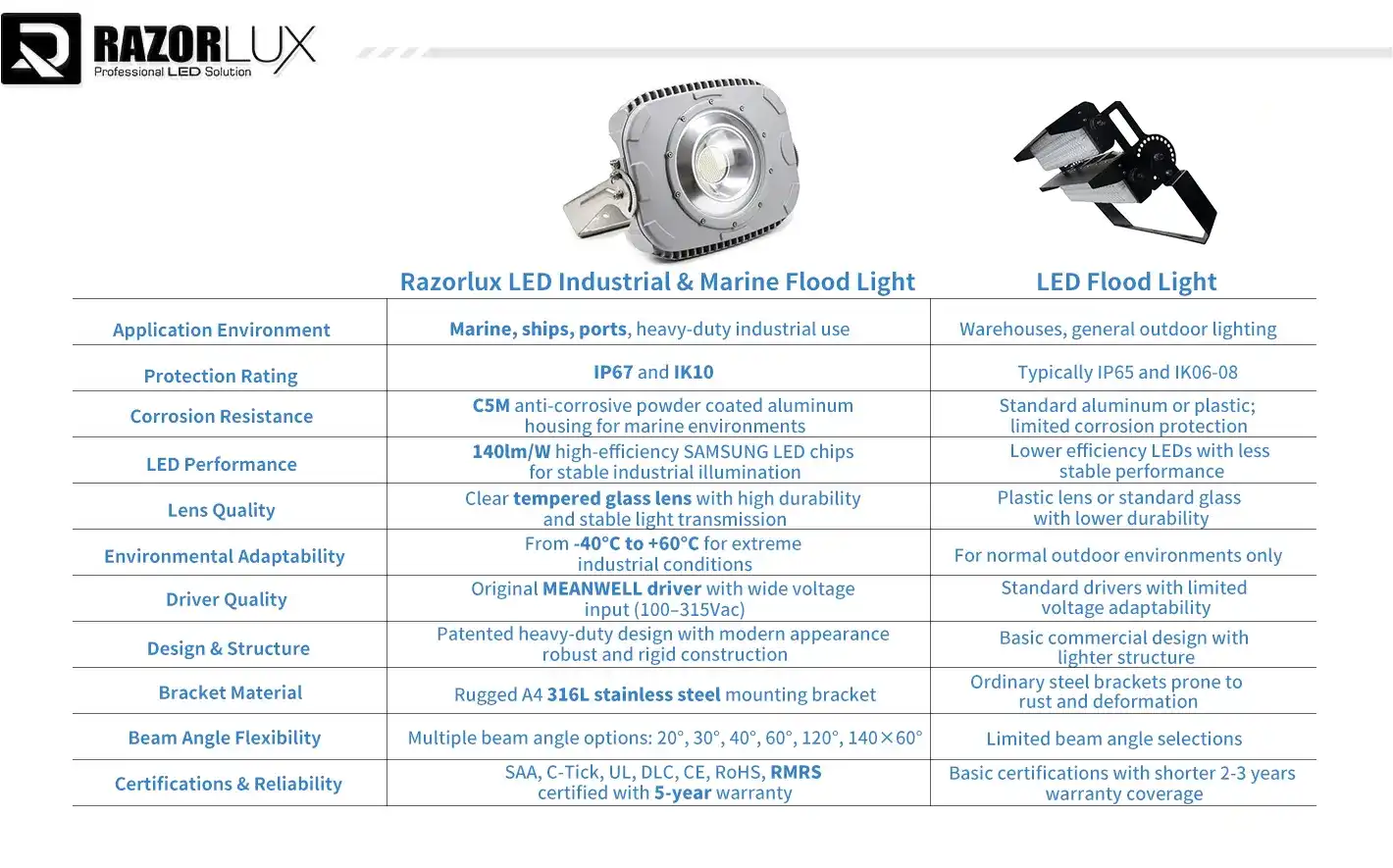
Marine flood lights equipped with stainless steel brackets represent a significant investment decision for maritime operations. The answer is definitively yes—when you consider the total cost of ownership over a fixture's lifetime, stainless steel brackets deliver exceptional value. These mounting systems resist saltwater corrosion far better than aluminum alternatives, reducing replacement frequency from every 3-5 years to 10+ years. The upfront premium of 20-30% translates into 60-70% lower maintenance expenses and virtually eliminates unexpected fixture failures that compromise deck safety during critical operations.
Understanding Marine Flood Lights and Their Components
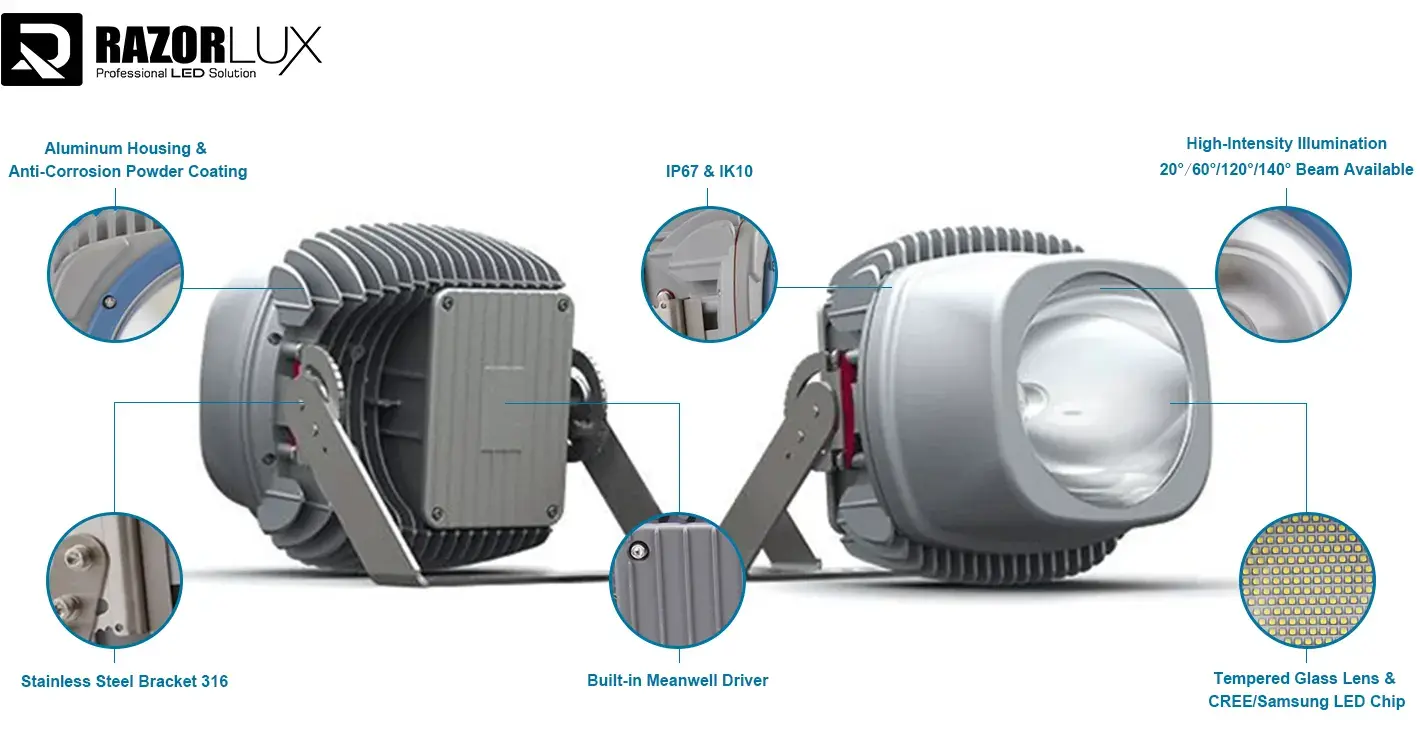
For maritime lighting to work right, you need special equipment that was made to last in conditions that would destroy regular commercial fixtures in months. Ocean spray contains salt particles that can get through tiny flaws on the surface and start electrochemical reactions that quickly break down metals that aren't protected.
The Critical Role of LED Technology in Modern Maritime Lighting
LED lights have changed the way ships are lit because they give off 130 lumens per watt, compared to 20 to 30 lumens per watt from older gas systems. This huge step forward in efficiency is very important for ships because every watt used requires fuel to produce. A 270W LED flood light can be used instead of a 600–1000W metal halide fixture and gives off better light with color rendering indices above Ra75. Quality LED lights have thermal management systems that keep junction temperatures below 85°C, even in tropical regions. This keeps the output constant for the 50,000-hour claimed lifespan.
Mounting Bracket Materials: Engineering Trade-offs
The environmental stressors are always hitting the bracket that holds your light fixture in place. The market is mostly made up of three products, each with its own unique qualities:
Stainless Steel (Grade 316L): Has molybdenum added to it to make it more resistant to cracking in chloride-rich settings. Tensile strength is higher than 500 MPa, which keeps the structure strong even when it's being vibrated. The passive chromium oxide layer fixes itself when it gets scratched, so the fixture will stay corrosion-free for a long time.
Marine-Grade Aluminum (5052/6061 Alloy): It is 65% lighter than stainless steel, which makes it easier to place on buildings that need to be light. Anodized coatings offer some protection against corrosion, but mechanical damage can reveal weak substrate material. When aluminum touches stainless steel or brass parts that aren't properly separated, galvanic reactions happen.
Powder-Coated Steel: The least expensive choice, but it should only be used in partially covered areas. Rust can form quickly on coatings that are damaged by impact or bending. In active saltwater settings, most things last between 18 and 36 months before they start to lose their structural stability.
IP and IK Ratings: Decoding Protection Standards
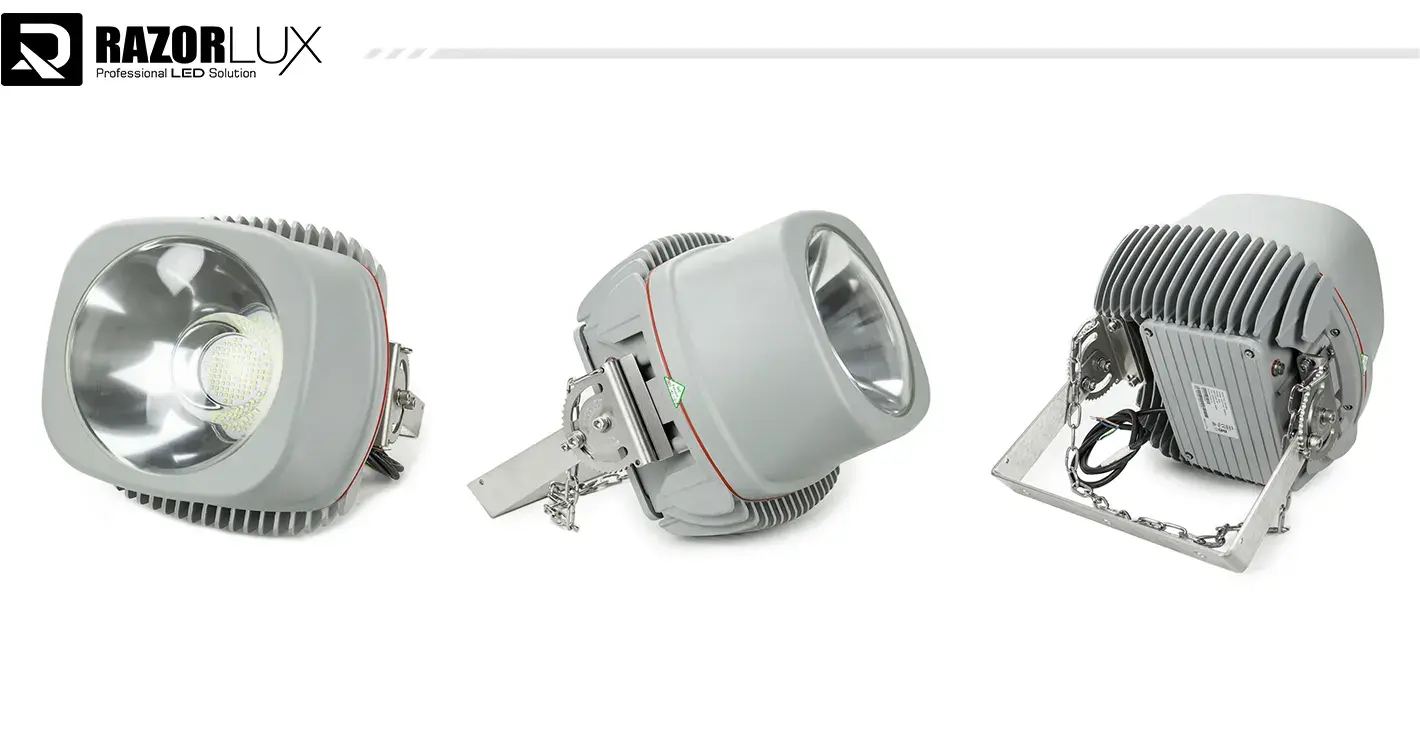
If a marine flood lights fixture has IP67 approval, it means it can withstand being submerged in one meter of water for 30 minutes. This is important for deck-mounted lights that are exposed to wave wash and pressure cleaning. The IP6X dust rating stops particles from getting in, which would cover the optics inside and lower light output by 30–40% in the first year. The fixture has IK10 impact resistance, which means it can handle 20 joules of energy, which is the same as dropping a 5 kg mass from 40 cm. This protects against dropped tools, flying objects during storms, and intentional damage to port facilities.
Stainless Steel Brackets vs Other Mounting Solutions: A Rational Choice Approach
Instead of simple price-per-unit calculations, procurement decisions need to be based on quantitative comparisons across a number of performance dimensions.
Corrosion Resistance Testing Results
Independent tests using salt spray according to ASTM B117 show big differences in how well things work. After 3,000 hours of contact, stainless steel 316L brackets show no signs of corrosion, but after 500 hours, 6061 aluminum gets surface pitting even after anodizing. Powder-coated steel fails badly after 200 to 300 hours because the coating peels off, letting rust happen faster. These lab results directly affect how well the system works in the field—salt exposure equals more than 1,000 test hours per year at a coastal site.
Mechanical Performance Under Dynamic Loads
The lighting on a ship is constantly shaking from the engines, the waves, and the structure bending. After one million vibration cycles, fatigue tests show that stainless steel keeps its clamp force above 90% of its original torque. On the other hand, aluminum braces lose 25–30% of their clamping force, which lets the fixture move, breaking electrical connections and speeding up seal failure.
Installation Flexibility and Adjustment Range
Good stainless steel bracket systems have rounded bearing surfaces that let you change the height by ±30° and the width by 360° without having to loosen the mounting bolts. During commissioning, this flexibility is very helpful for figuring out the best place to put the beams so that they don't cast shadows on important work areas. Aluminum brackets usually only allow a small amount of change before the material starts to bend. This means that the brackets sometimes need to be replaced to fix the way they were placed at first.
Long-Term Value Calculation
This is how the numbers work for a standard vessel installation with 100 fixtures:
| Cost Factor | Stainless Steel System | Aluminum System |
|---|---|---|
| Initial Hardware Cost | $15,000 | $11,000 |
| Installation Labor (@ $85/hour) | $8,500 | $8,500 |
| Year 5 Bracket Replacement | $0 | $11,000 + $6,000 labor |
| Year 10 Bracket Replacement | $0 | $11,000 + $6,000 labor |
| Unscheduled Repairs (Average) | $800 | $4,200 |
| 10-Year Total Cost | $24,300 | $57,700 |
The investment in stainless steel saves $33,400 over the ten-year study period, which is a 137% return on the extra cost that was paid up front. These numbers don't include lost output when broken fixtures stop work or cause safety problems.
The Business Case: Are Stainless Steel Brackets Worth the Investment?
For maritime activities to go smoothly, lighting devices must work without any problems. Each service intervention costs a lot because it needs to plan the vessel's schedule, assign crew, and often use specialized tools like scissor lifts or bosun's chairs.
Environmental Stressors Accelerating Hardware Degradation
There are about 35,000 parts per million of dissolved salts in saltwater. This makes it an active electrolyte that speeds up rusting. UV light from the sun's rays breaks the bonds between molecules in polymers and protective coatings. Changing temperatures from -40°C in the winter to +60°C in the sun cause bolts and mounting surfaces to expand and contract, which puts mechanical stress on them. Vibration from engines moves through structural parts and causes fretting corrosion where metals that are not the same type touch.
Quantifying Total Cost of Ownership
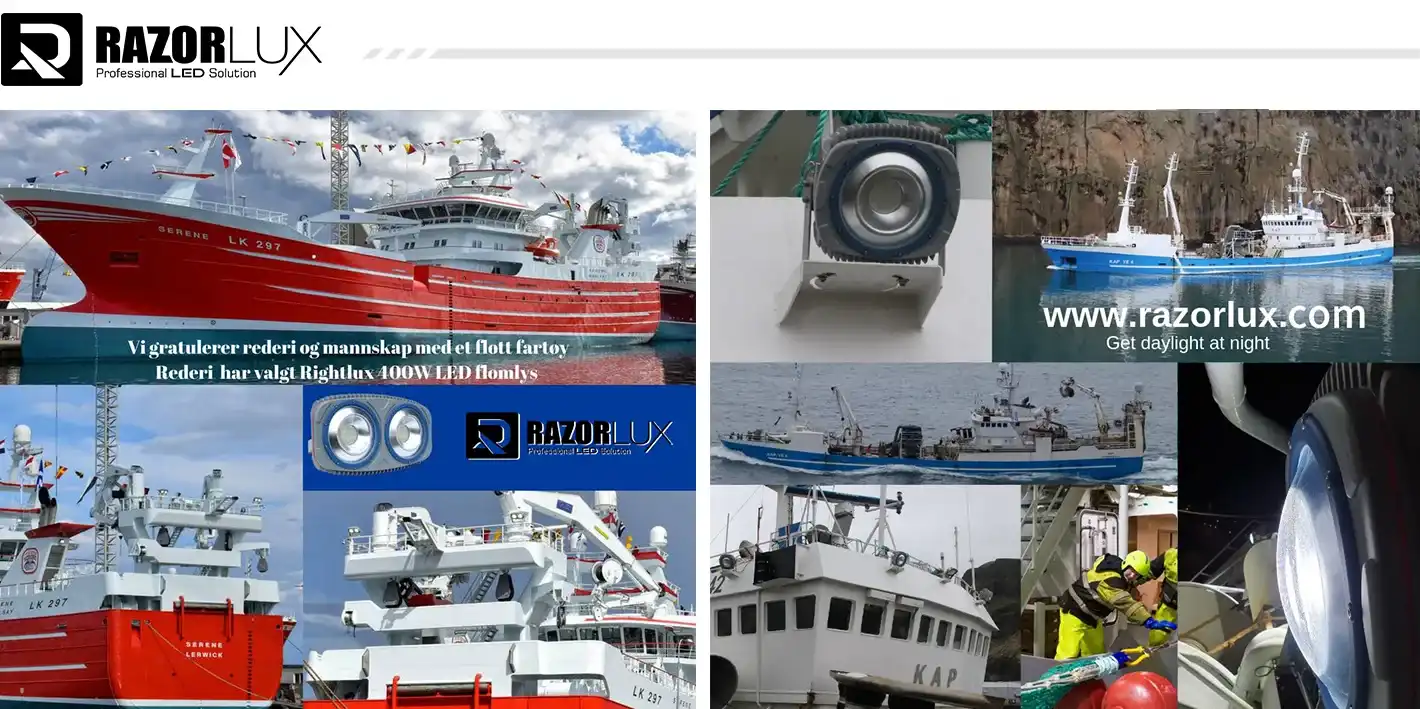
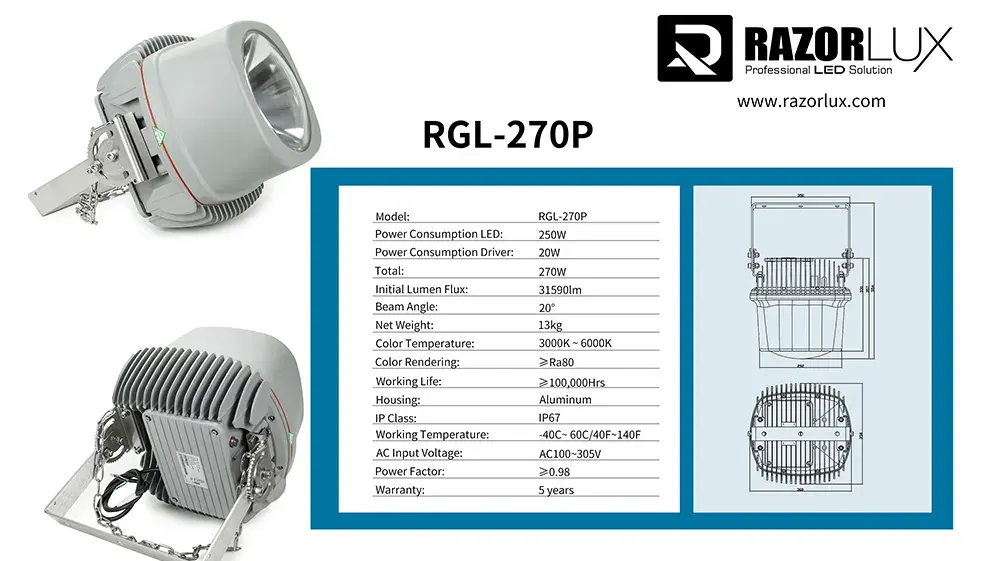
The Razorlux RGL-270P is a great example of how high-quality parts can add value over time. This 270W fixture has 316L stainless steel frames that are guaranteed to last for 10 years, Samsung LED chips that are rated for L90 performance (keeping 90% of their starting output) at 60,000 hours, and Meanwell power supplies that have been shown to have failure rates below 0.2% per year. The five-year guarantee on the fixture shows that the maker trusts the parts to last.
A buying manager at a shipyard said that his company cut its yearly lighting upkeep costs from $47,000 to $8,200 by replacing old fixtures with LED units that came with stainless steel mounting systems. The old system needed brackets to be inspected every three months and replaced every six months because of corrosion-related problems. The repair crew does eye checks every year, and since the brackets were put in four years ago, they have not needed to be replaced.
Risk Mitigation Through Reliable Hardware
Unexpected lighting problems with marine flood lights have very bad effects on operations and safety. Not enough light on the deck can cause people to slip and fall, goods to not be properly secured, and emergency reaction times to be delayed. According to insurance data, accidents at work caused by lightning usually cost $42,000 in direct costs and $127,000 in indirect costs, such as lost output, research time, and activities needed to meet regulations. One accident avoided is more than worth the extra money spent on solid mounting gear.
Warranty Coverage as a Risk Transfer Mechanism
Full guarantee terms move the risk of having to pay for replacement from the user to the maker. Razorlux covers LED modules and drivers for five years and housing and brackets for ten years. This gives you real financial security. Using a 4% discount rate to figure out the present value of this warranty gives us $8,700 in risk-adjusted benefits for a 100-fixture installation. This is 58% of the initial hardware premium for stainless steel brackets.
Installation Considerations and Best Practices for Marine Flood Lights with Stainless Steel Brackets
Even with high-end hardware, the right way to install it has a huge effect on how well it works in the long run.
Pre-Installation Planning Requirements
A thorough site evaluation for marine floodlights is the first step to a successful installation. Write down information about the current electrical system, such as the voltage range (the RGL-270P can accept AC90-305V or DC127-431V input), circuit safety ratings, and the wire gauge that should be used for the planned fixture load. Check the makeup of the mounting surface. Aluminum superstructures need dielectric isolation washers to keep the stainless brackets from corroding the aluminum substrate. Check the amount of vibration in the areas where you want to place the device. Places with a lot of vibration should use mounting systems with springs that absorb shock loads.
Critical Installation Steps
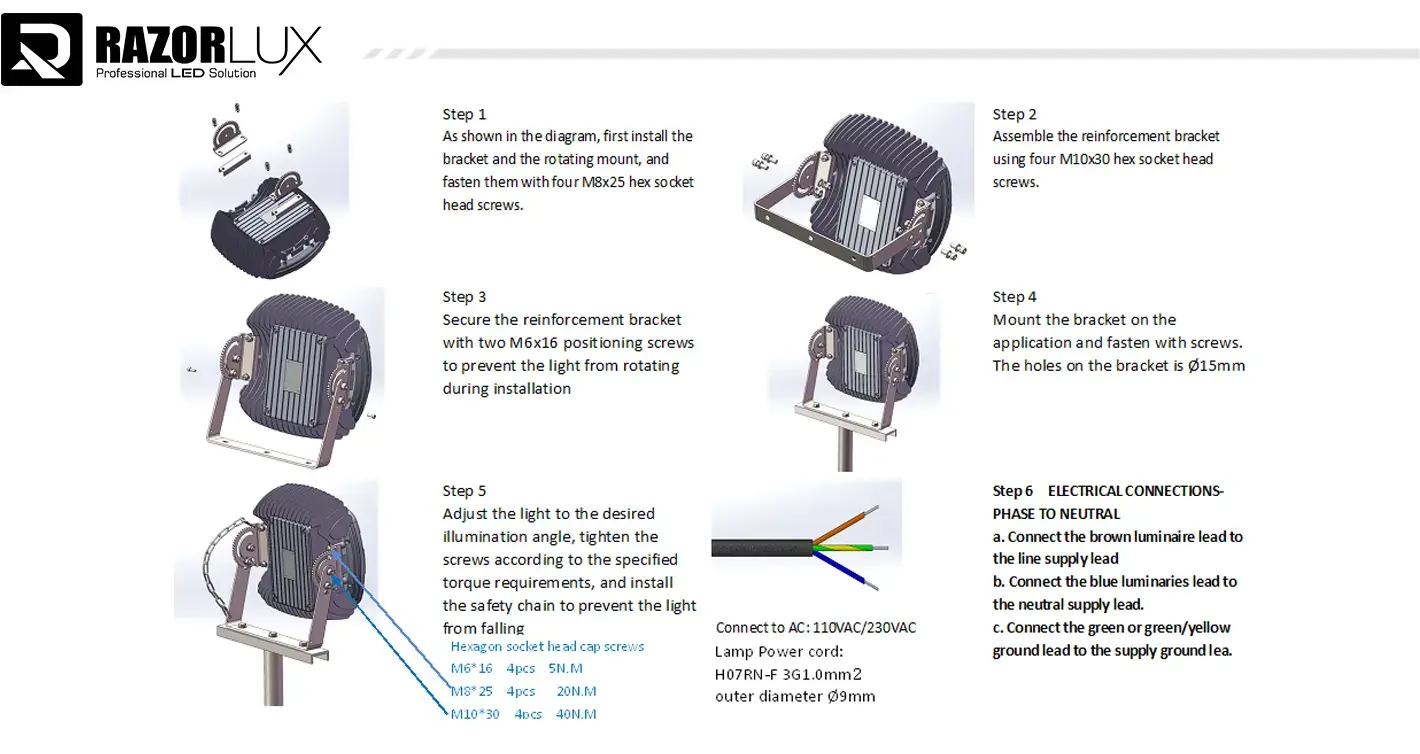
Paying attention to mechanical and electrical details is necessary for getting the best performance. First, a solvent cleans the surface to get rid of salt deposits and oil contamination. Next, an anti-seize substance is put on all threaded bolts. Because stainless steel has a high friction coefficient, it can gall (cold weld) during installation. Nickel-based anti-seize stops this from happening while still protecting against rust.
The torque specs are very important. If you don't tighten something enough, it can move and vibrate, and if you tighten it too much, the sealing surfaces can become deformed, and the housings may crack. For M10 mounting nuts, the RGL-270P mounting gear says they should be 25 to 30 Nm (18 to 22 ft-lbs). Professional installers use torque wrenches that have been calibrated and a star-pattern tightening sequence to make sure that the clamp load is spread out evenly.
Aiming and Beam Pattern Optimization
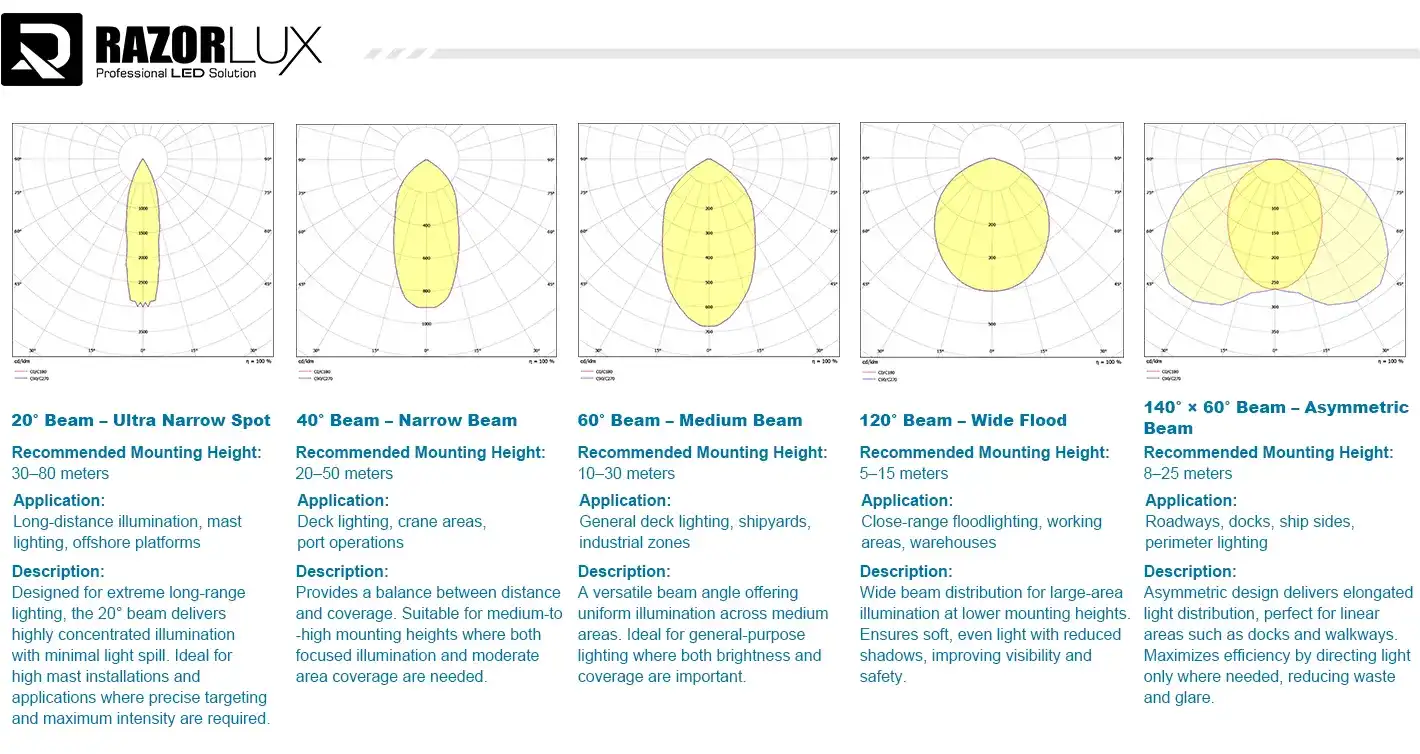
Because the beam directions can be changed (15°, 20°, 30°, 40°, 60°, 120°, and 140°x60°), they can be tailored to different uses. Narrow beams (15–20°) cover long distances and are good for protecting perimeters and identifying ships that are coming up behind you. Medium beams (30–40°) cover and illuminate general deck work areas in a balanced way. Angles between 60° and 120° give storage holds and berthing places a lot of light. Asymmetric 140°x60° shapes give the best coverage along sidewalks and piers.
| Beam Angle | Typical Application | Mounting Height | Coverage Area |
|---|---|---|---|
| 15° | Security/Surveillance | 15-20 meters | 50m distance, 13m width |
| 30° | Deck Operations | 8-12 meters | 8m diameter |
| 60° | General Illumination | 5-8 meters | 9m diameter |
| 120° | Cargo Holds | 3-5 meters | 10m diameter |
Using a lux meter for photometric testing makes sure that there is enough light. For general deck areas, international marine rules say that the light level should be at least 20 lux. For operational work zones, it should be 50 lux, and for precise jobs like equipment repair, it should be 100+ lux.
Maintenance Protocols for Extended Service Life
Regular preventative maintenance keeps things running smoothly and makes them last longer than the listed specs. Bracket integrity, fastener tightness, seal condition, and lens clarity are all checked every three months. A freshwater rinse and mild detergent cleaning are part of the annual deep maintenance that gets rid of salt deposits that have built up. Don't use direct pressure washing on fixture seals; instead, use indirect spray to keep water out. Check the electrical lines for signs of rust, such as white or green copper oxide dust or deposits.
Write down the date, the name of the technician, and any problems that were seen during repair operations. This record of the past helps find problems that keep happening and backs up warranty claims if a part fails. Keeping digital records with picture proof is a good way to show that proper repair is being done.
Selecting the Best Marine Flood Light with Stainless Steel Brackets for Your Business
The best performance and value are achieved by matching fixture specs to operating needs.
Application-Specific Requirements Analysis
Different maritime settings have different requirements for marine flood lights' efficiency. Commercial fishing boats need bright lights on the deck for work at night when processing fish. The lights should be mounted low so that shadows don't hide dangers. Wide-area lighting is needed at the exits to the cargo holds and along the deck paths where the crew moves around all year round. Offshore platforms need to be rated as explosion-proof in dangerous areas where flammable gases can build up. This means they need ATEX or IECEx certifications on top of their regular marine approvals.
Technical Specification Prioritization
Instead of optimizing for just one parameter, procurement professionals should look at fixtures' performance across a number of different dimensions:
Luminous Efficiency: Modern LED bulbs are much more energy efficient than older 25–35 lm/W discharge lamps, which means they use a lot less energy and cost a lot less to run. A 270W LED with 35,100 lumens can replace an 800W metal halide with the same power, which saves 530W per light. If you put 50 lights that are on for 12 hours a day, you will save 115,740 kWh of energy each year, which is $13,900 at the current cost of marine power.
Color Temperature Selection: The range of 2700K to 6500K can be adjusted to meet a variety of operating needs. Warm temperatures between 2700K and 3000K cut down on blue light that makes it hard to see at night, which is helpful for security stations and bridge wings. For general work areas, neutral 4000K strikes a good mix between color rendering and eye acuity. Cool 5000-6500K increases scotopic sensitivity for better long-distance vision in guidance apps.
Certification Requirements for Global Operations
When ships go between countries, they have to follow a lot of different rules. Classification groups like DNV-GL, ABS, Lloyd's Register, and RINA have strict rules about how lights should work and how safe they should be. Razorlux fixtures are approved by RMRS, CE, RoHS, SAA, C-Tick, UL, DLC, CB, and ISO 9001, which means they meet the standards of all major marine countries. This wide range of certifications gets rid of the chance of noncompliance findings during port state inspections, which could keep the ship from leaving and lead to big fines.
Customization Capabilities for Specialized Requirements
Standard catalog items work well for 80% of maritime lighting jobs, but customization options are helpful for more specialized installations. Razorlux's engineering team can make changes, like custom mounting bracket configurations for oddly shaped structures, use of special powder coat colors to match the look of the ship's livery, and integration of control systems that include 0-10V analog dimming and DALI digital protocols for automated lighting management.
Supplier Selection Criteria Beyond Product Specifications
Technical requirements alone don't guarantee project success; the skills of the supplier have a big effect on the total value of the project. Some important rating factors are:
Manufacturing Capacity: Razorlux's factories keep enough stock on hand to ship 500 or more basic parts right away, and they have the manufacturing capacity to fill orders for 2,000 or more units within 30 days. This speed helps with tight project plans and replacements that need to be made right away.
Technical Support Resources: Pre-sales consultation helps match fixture specifications to application needs, which avoids mistakes that cost a lot of money. The engineering team helps with planning the placement by doing photometric estimates, AutoCAD mounting details, and electrical load analyses. Post-sales support includes help with installation, fixing problems, and managing the warranty.
Conclusion
With stainless steel brackets, marine flood light fixtures go from being disposable items that need to be replaced often to long-term investments that will last for decades. The numbers show that a bigger investment up front saves a lot of money over the life of the product because it needs less upkeep, doesn't need to be replaced as often, and works more reliably. Modern LED technology makes these benefits even better by using a lot less energy and lasting a lot longer, which completely changes the economy of lighting. Maritime operations need tools that can work in tough conditions without constant care. Stainless steel fastening hardware is just what they need.
Frequently Asked Questions About Marine LED Lighting with Stainless Steel Brackets
What makes stainless steel brackets superior to aluminum for saltwater environments?
Molybdenum in stainless steel Grade 316L makes it very resistant to pitting corrosion in saltwater that is high in chloride. The passive chromium oxide layer fixes itself when it gets damaged, keeping the fixture safe for as long as it's used. Aluminum gets localized rust when the anodized layer breaks, so it needs to be replaced every three to five years. Stainless steel, on the other hand, can last for 10 years or more.
How do I prevent galvanic corrosion when mounting stainless brackets on aluminum structures?
Polyether or Teflon dielectric isolation washers should be put between the metal mounting surface and the stainless steel frame. Before installing the fixture, put a thin coat of zinc-rich primer on the metal base. These steps stop the electrical path that causes galvanic corrosion between metals that are not the same.
Can LED fixtures handle power fluctuations common on vessel generator systems?
Good marine LED fixtures have wide-input-range drivers that can handle voltage changes from 90VAC to 305VAC without losing any performance. Surge protection (4–10kV) is built into Razorlux lights' Mean Well power sources. This protects against voltage spikes that can damage lower-quality drivers when the generator starts up or when the load switches.
What beam angle should I specify for deck work area lighting?
For most deck operations, beam angles between 30° and 40° are the best for balance. Place fixtures 8 to 12 meters above the ground to create 8-meter-wide coverage rings with 50+ lux of light that are good for operating jobs. Narrow beams make the area directly below the fixture too bright while not covering enough of the area around it, while wide beams lower the intensity below what is needed for functionality.
Ready to Upgrade Your Maritime Lighting System?
Since 1998, Razorlux has been making LED solutions that work well in the harsh marine climate. They have over 25 years of experience in lighting for ships and offshore platforms. Our 270W fixtures with stainless steel brackets come with five-year warranties and are certified to RMRS, UL, CE, and DNV-GL standards. They use reliable Mean Well power supplies, Samsung LED chips, and 316L mounting hardware that won't rust. Whether you're setting up a brand-new ship, replacing old infrastructure, or choosing lights for an offshore platform job, our engineering team can help you find fixtures that meet all of your needs. To get technical specs, photometric calculations, or sample units to test, email sam@razorlux.com or go to razorlux.com and ask for our marine flood lights specialist team. As a well-known company that makes marine flood lights, we keep stock on hand so that we can ship right away. We also offer flexible transportation, such as fast courier, air freight, and ocean shipping, so that we can meet the deadline for your project.
References
1. Maritime and Coastguard Agency. (2019). "Lighting and Light Fittings for Ships: Technical Standards and Compliance Requirements." UK Department for Transport Marine Guidance Note MGN 631.
2. American Bureau of Shipping. (2021). "Guide for LED Lighting Systems for Marine and Offshore Applications." ABS Technical Publications, Houston, TX.
3. International Maritime Organization. (2018). "Performance Standards for Shipboard Lighting and Light Fixtures." IMO Resolution MSC.430(98), London, UK.
4. Det Norske Veritas. (2020). "Environmental Testing of Marine Electrical Equipment: Salt Spray and Corrosion Resistance Standards." DNV-GL Rules for Classification of Ships, Part 4, Chapter 8.
5. Society of Naval Architects and Marine Engineers. (2022). "Energy Efficiency in Marine Lighting: LED Technology Assessment and Life-Cycle Cost Analysis." SNAME Technical Research Bulletin 4-58.
6. U.S. Naval Sea Systems Command. (2021). "Military Specification for LED Lighting Systems in Shipboard Applications: MIL-STD-461G Compliance and Testing Protocols." Naval Standards Document, Washington, DC.