


_1750326878398.png)

Is a 400W Equivalent LED Flood Light Right for Your Parking Lot?
Choosing the right LED flood lighting for your parking lot isn't just about brightness—it's about long-term performance, energy savings, and operational reliability. A 400W Equivalent Led Flood Light can transform how you illuminate outdoor spaces, delivering approximately 48,000 lumens while consuming significantly less power than traditional metal halide or high-pressure sodium fixtures. We at Razorlux have seen a lot of site managers, dock buying heads, and people who buy industrial tools have a hard time making this choice. How much you spend, the size of the area you want to cover, and the height of the mounting all play a role in the answer. This guide explains the scientific details, shows you how it can be used in real life, and gives you different ways to buy it so you can decide if it's right for you.
Understanding the Technology Behind 400W LED Flood Lights
How LED Equivalency Works in Practical Terms
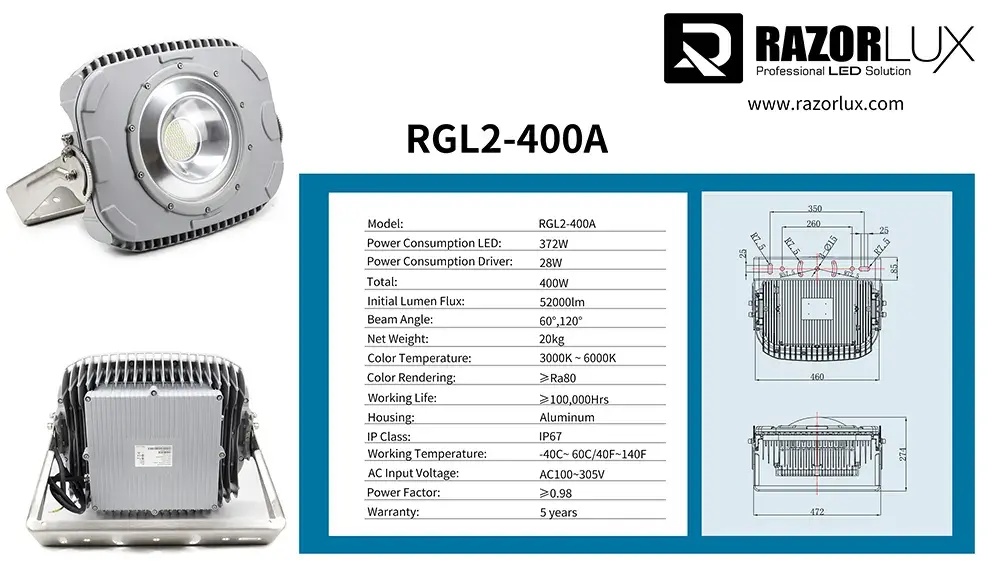
Your real-life energy use is based on how LED equivalents work. When it's brand new, a 400-watt metal halide lamp gives off about 36,000 to 40,000 lumens of light. In this case, "400W equivalent" means this. These days, LEDs only need 100 to 150 watts of power to shine the same amount of light or more. 400W goes into the Razorlux RGL2-400P type. This is split between a 360W LED grid and a 40W driver. It puts off 48,000 steady lumens, which is 130 lumens per watt. In the first year, regular lights lose 20 to 30 percent of their power because the lamps burn out and the ballasts don't work right.
How much it costs to run depends on how well your lights work, so you should know how well they work. For clear savings, increase the light's wattage by the number of hours it works and the price of energy in your area. A parking lot with 20 400W Equivalent LED Flood Lights that are on for 12 hours a night would use 96 kWh of electricity every day. It would need about 240 kWh of metal halide lights of the same size. It uses more than 60% less energy, and that's not even counting the lower cooling loads that come from making less heat.
Core Components That Define Performance Quality
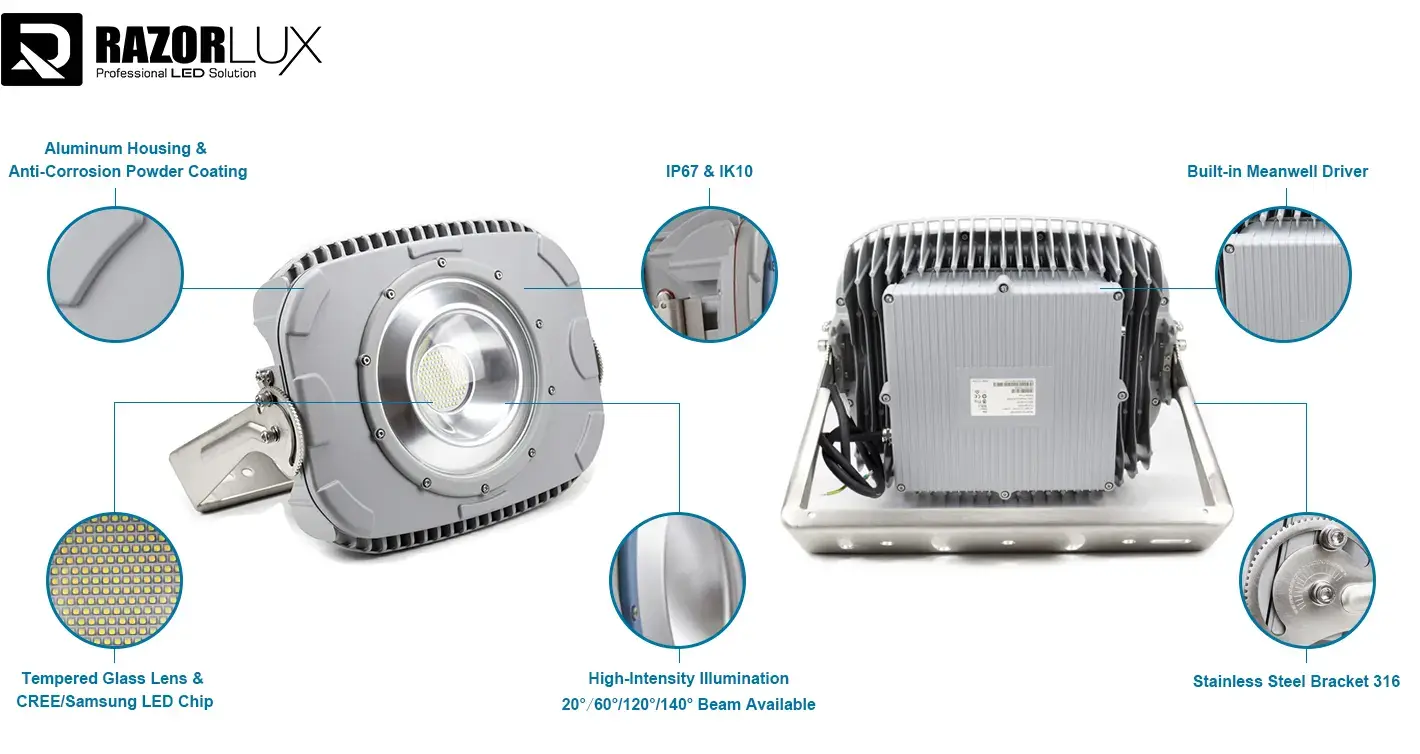
There are three main parts of professional-grade LED flood lights: the power supply driver, the heater system, and the LED grid. In LEDs, these are the chips that control the colour uniformity, brightness upkeep, and lifetime. A lot of the time, these chips come from Samsung or a similar top-tier provider. Our tools have chips that can keep working at 70% of their full power for more than 50,000 hours of normal use.
Taking care of heat is also very important. Because the fins are shaped better, heat moves away from die-cast metal housings. Even when it's 60°C outside, this keeps the temperature at the junctions below 85°C. This rule about temperature keeps things that weren't built well enough from losing light and colour too quickly. Things that are powder-coated don't rust, which is useful in places like plants that use a lot of chemicals and near the ocean.
Weather Resistance Standards and What They Mean
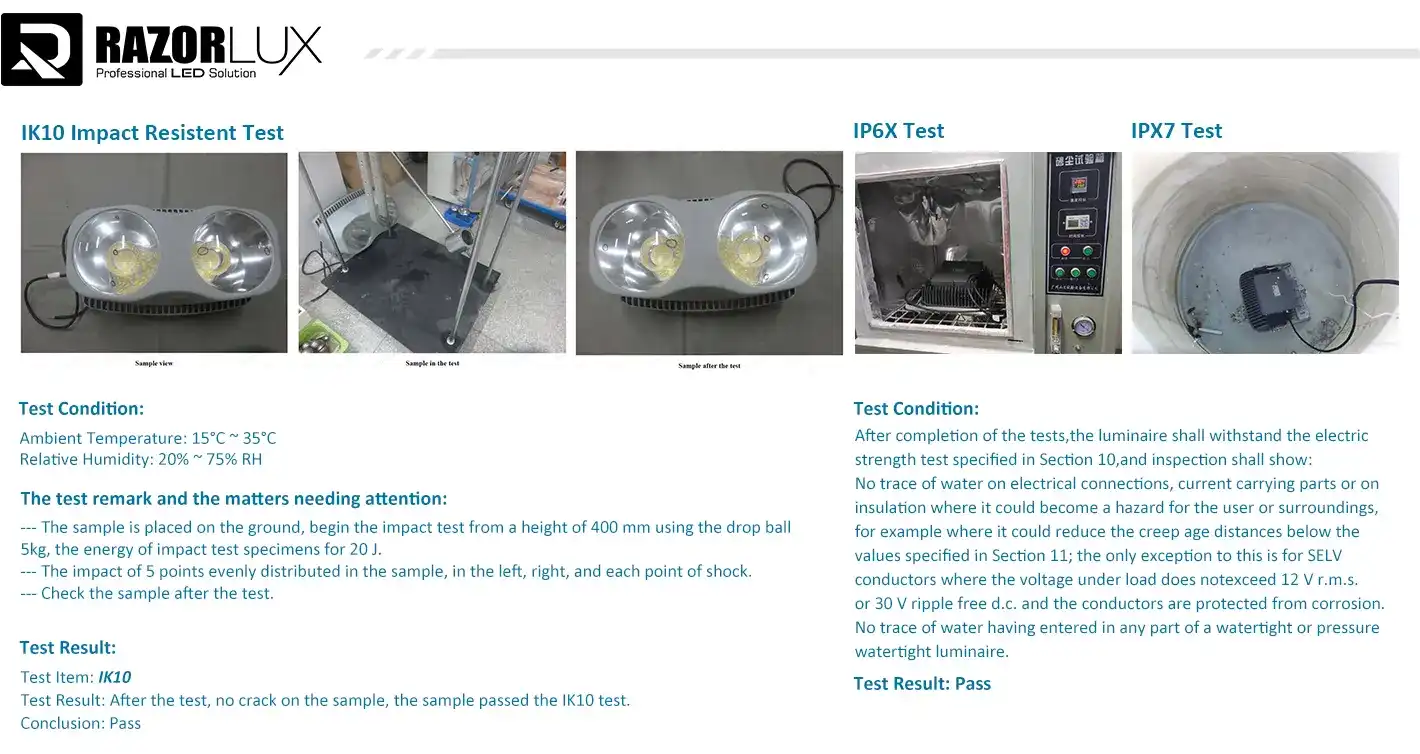
IP ratings for 400W Equivalent Led Flood Light show how well a product protects against solid particles and liquids getting in. An IP65 grade means that the product is completely dust-tight and can withstand water jets coming from any direction. This is enough for most parking lot uses. Our fixtures have IP67 certification, which means they can be submerged up to one meter deep for 30 minutes. This is very important in places that are likely to flood or need high-pressure cleaning.
The highest level of mechanical safety is IK10, which can take 20 joules of impact energy, which is the same as dropping a 5 kg mass from 40 cm. This durability is important in places where vandalism, accidents involving vehicles, or falling objects are likely to happen. These specs, along with the 10-year housing warranty and corrosion-resistant stainless steel mounting bracket, make sure that your investment will last in harsh operational conditions.
Evaluating Performance Against Alternative Lighting Solutions
LED Versus Metal Halide: The Total Cost Equation
For decades, metal halide fixtures were the most popular way to light parking lots because they could render colors accurately and were bright at first. As LED technology has improved, its flaws have become clearer. In addition to using 60% less energy, metal halide lights need 5 to 15 minutes to warm up and can't start up right away after the power goes out, which is a major security issue. Their average rated life of 10,000 hours means that they need to be replaced every year in 24/7 situations, and the cost of work is often higher than the cost of the lamps for setups that need lifts or traffic control.
Lamps lose value in a way that can be predicted. At 40% of its estimated life, metal halide brightness drops to about 70% of its original lumens, so over-design is needed to keep the minimum level of light on throughout the replacement cycle. The 400W Equivalent LED Flood Light fixtures keep 90% of their power at 10,000 hours and 85% at 25,000 hours, giving off steady light that actually covers more area than old HID setups.
Comparing Within the LED Category
The needs of a parking lot are very different from those of a factory or a stadium, so choosing the right device depends on the situation. A 200W LED flood light with 26,000 lumens is good for smaller lots or extra lighting. A 600W unit with 78,000 lumens or more is better for big industrial yards or public buildings. The 400W category is a flexible middle ground that works well for business parking lots that need an average of 1-2 foot-candles of steady light.
Picking the right beam angle has a big effect on covering patterns. Since the optics are only 15° wide, they focus the light over 40 feet or more, so fewer poles are needed in open places. For 25–35-foot poles, which is what you'll find in most parking lots, medium 20–30° spreads balance the vertical and horizontal spread. The adjustable mounting bracket lets you aim precisely to get rid of hot spots and dark corners that make the surveillance camera less safe and less effective.
| Feature | 400W LED (Razorlux) | 400W Metal Halide | 200W LED | 600W LED |
|---|---|---|---|---|
| Actual Power Draw | 400W | 458W (with ballast) | 200W | 600W |
| Light Output | 48,000 lm | ~36,000 lm (initial) | 26,000 lm | 78,000 lm |
| Efficacy | 130 lm/W | 79 lm/W | 130 lm/W | 130 lm/W |
| Rated Life | 50,000+ hrs | 10,000 hrs | 50,000+ hrs | 50,000+ hrs |
| Warm-Up Time | Instant | 5-15 minutes | Instant | Instant |
| Maintenance Frequency | Minimal (5+ years) | Annual lamp replacement | Minimal (5+ years) | Minimal (5+ years) |
| Operating Temperature Range | -40°C to 60°C | -20°C to 40°C | -40°C to 60°C | -40°C to 60°C |
Smart Features and Integration Capabilities
Modern parking lot management is more than just turning lights on and off. Photocell monitors handle operation from dusk to dawn, so no one has to do it by hand, and the least energy is used. Motion sensors turn down the lights to 30–40% of their normal output when the room is empty, and then they turn them back on when they sense movement. This saves 30–50% more energy during times of low traffic while still keeping the minimum level of light needed for safety.
More advanced systems use wireless mesh networks that let building management tools handle tracking and control from one place. These solutions offer performance data in real time, automatic failure notifications, and dimming control from afar. Even though they are more complicated and cost more, they add real value to big buildings where saving money on energy and maintenance is worth it. Razorlux can be customized to work with both traditional and networked control architectures, depending on the needs of the project.
Selection Criteria for Procurement Decision-Makers
Calculating Coverage Requirements and Fixture Spacing
To start illumination engineering for a 400W Equivalent LED Flood Light, you need to know the size, shape, and amount of light that the target area needs. For basic parking lot security, the Illuminating Engineering Society (IES) says that there should be a 5:1 uniformity ratio and an average of 1.0 foot-candles of maintained horizontal illumination. Areas with higher protection may need between 2.0 and 5.0 foot-candles of light, while areas with a lot of people need to figure out the vertical illumination to make sure that faces can be recognized from far away. Environmental Factors Influencing Product Longevity.
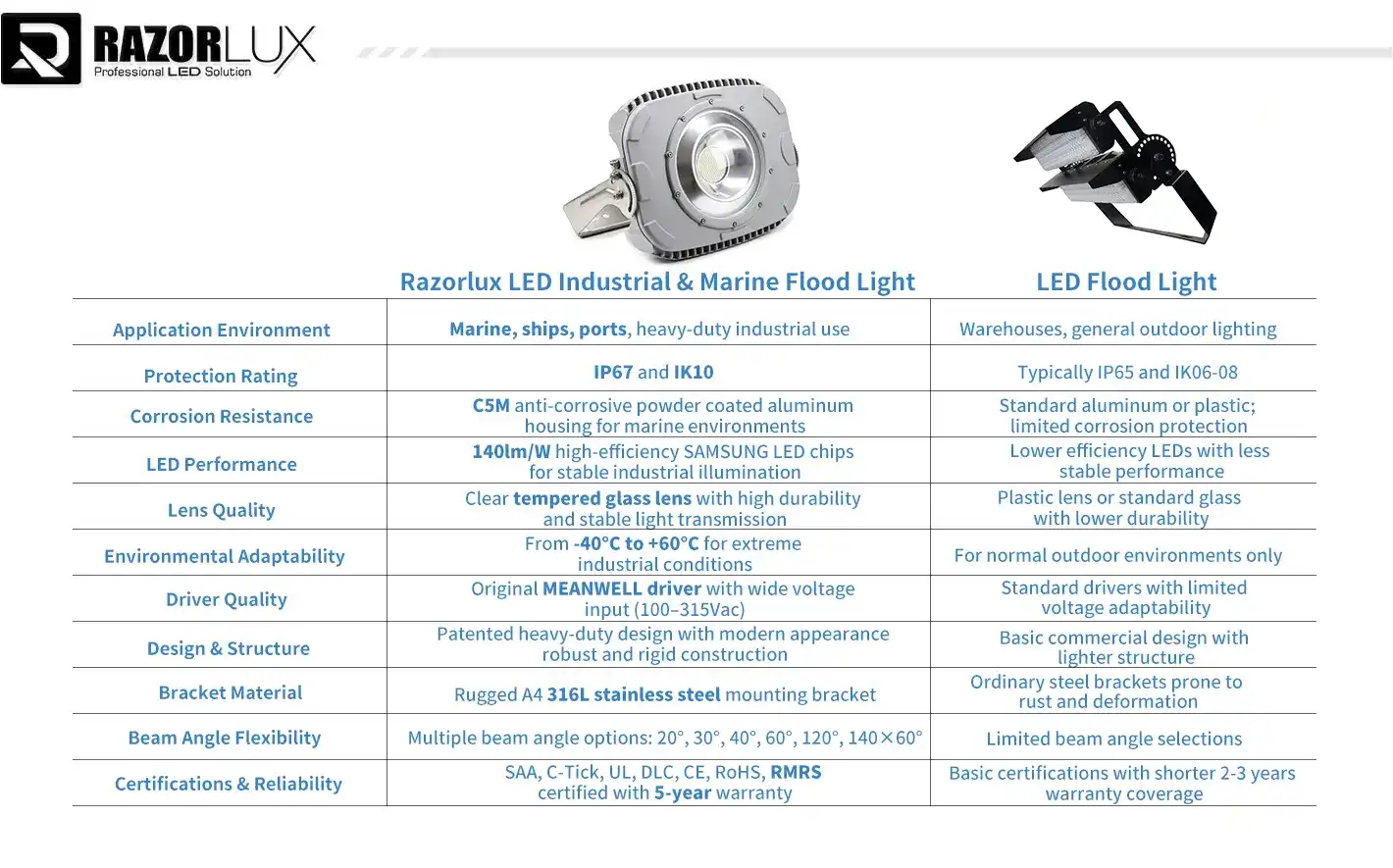
Extremes in ambient temperature test the limits of LED performance. Heat speeds up the rise in junction temperature, which shortens the life of the device and changes the color temperature. Our operating range of -40°C to 60°C covers places with winters in northern Europe and summers in the Middle East. The thermal management system keeps performance constant across this range thanks to a passive cooling design that doesn't need fans or other active parts that can break.
Certification Requirements and Regulatory Compliance
Specifications for professional buying call for third-party certifications that back up claims of safety and efficiency. UL or ETL listings show that an electrical system meets North American safety standards. These standards are needed for building permits and insurance coverage. When you get qualified by the DesignLights Consortium (DLC), you can get utility rebates that often cover 20 to 50 percent of the cost of your purchase through programs that encourage energy saving.
Installation Considerations and Best Practices
Site Assessment and Fixture Placement Strategy
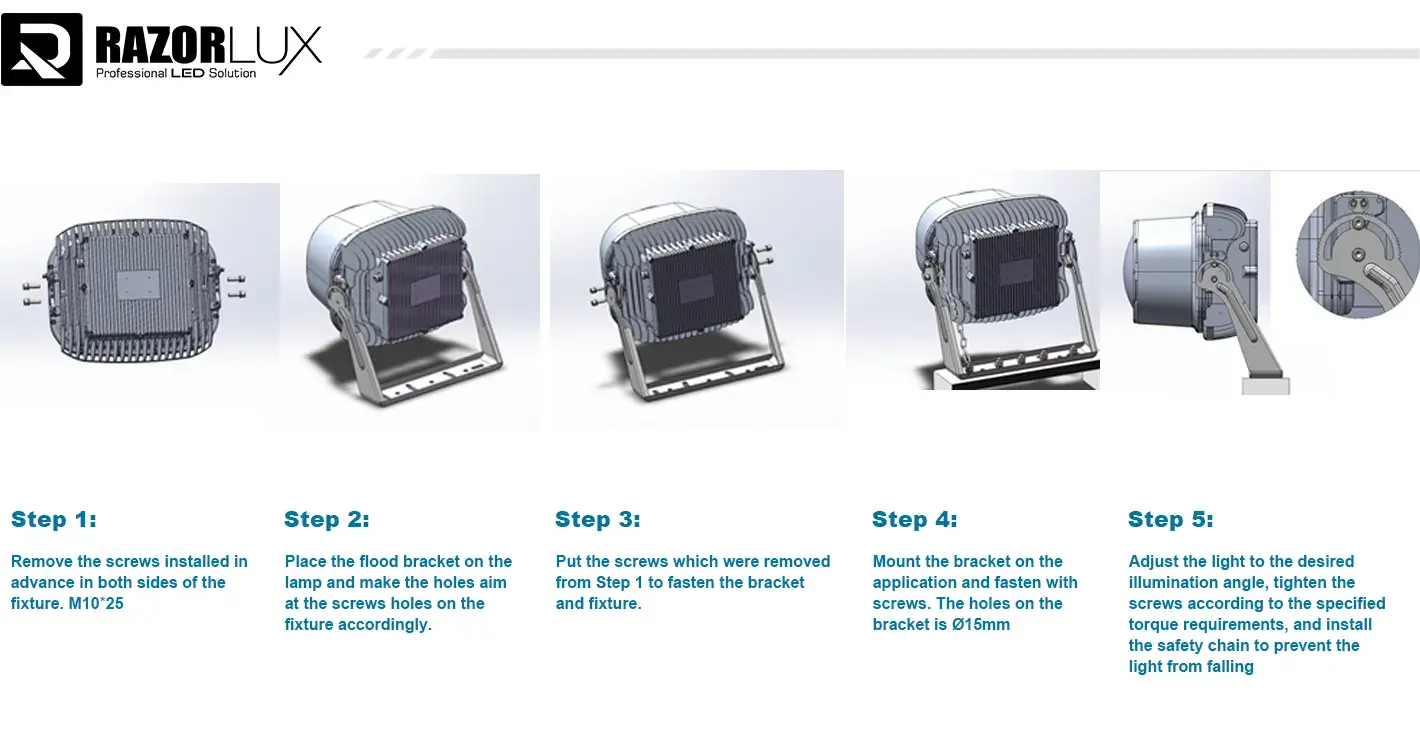
A good lighting design starts with careful documentation of the site. Find out how big the area is, where the current power poles and wiring are, what hurdles are in the way, like trees or buildings that cast shadows, and where the security cameras need to be lit up. Photographs of the site taken from different angles help you picture mounting positions and shooting angles that drawings alone can't show.
Electrical Infrastructure and Power Distribution
Existing electricity capacity often tells us if an upgrade is possible. Figure out the total linked load for the planned LED installation and make sure the circuits can handle the load, taking into account both branch circuits and the main service. A hidden benefit of LED retrofit projects is that they can sometimes add more lighting points or other electrical loads without having to upgrade the service. This is possible because the load is dramatically reduced when HID fixtures are replaced.
Common Installation Mistakes and How to Avoid Them
When you aim wrong, you get glare, light trespass, and uneven lighting, all of which make the device less useful. Instead of guessing, write the shooting angles on the pole mounting clips as you put them together. During commissioning, go back after dark to make sure that the real lighting patterns match what was planned. If they don't, make any necessary changes before the final acceptance. Photographic records give us a starting point for checking the maintenance in the future.
Real-World Applications and Return on Investment
Case Study: Municipal Parking Facility Retrofit
A medium-sized city parking garage that holds 400 cars replaced 32 old 400W metal halide fixtures with Razorlux 400W LED fixtures that are the same size. The original power lines and pole locations stayed the same, which made the job easier and cheaper. The building was used for 12 hours every night, which is 4,380 hours a year. The cost of power was $0.12 per kWh, and upkeep workers were paid $85 an hour.
Industrial Facility Applications and Unique Requirements
Heavy manufacturing environments have problems that go beyond what you'd find in a parking lot. Dust, chemical fumes, high and low temperatures, and shaking test fixtures that last a long time. A steel mill replaced the outdoor yard lighting that covered areas for storing materials and moving vehicles with IP67-rated LED floodlights because the old fixtures were often breaking down because they couldn't handle the harsh conditions.
Offshore Platform and Marine Installation Experience
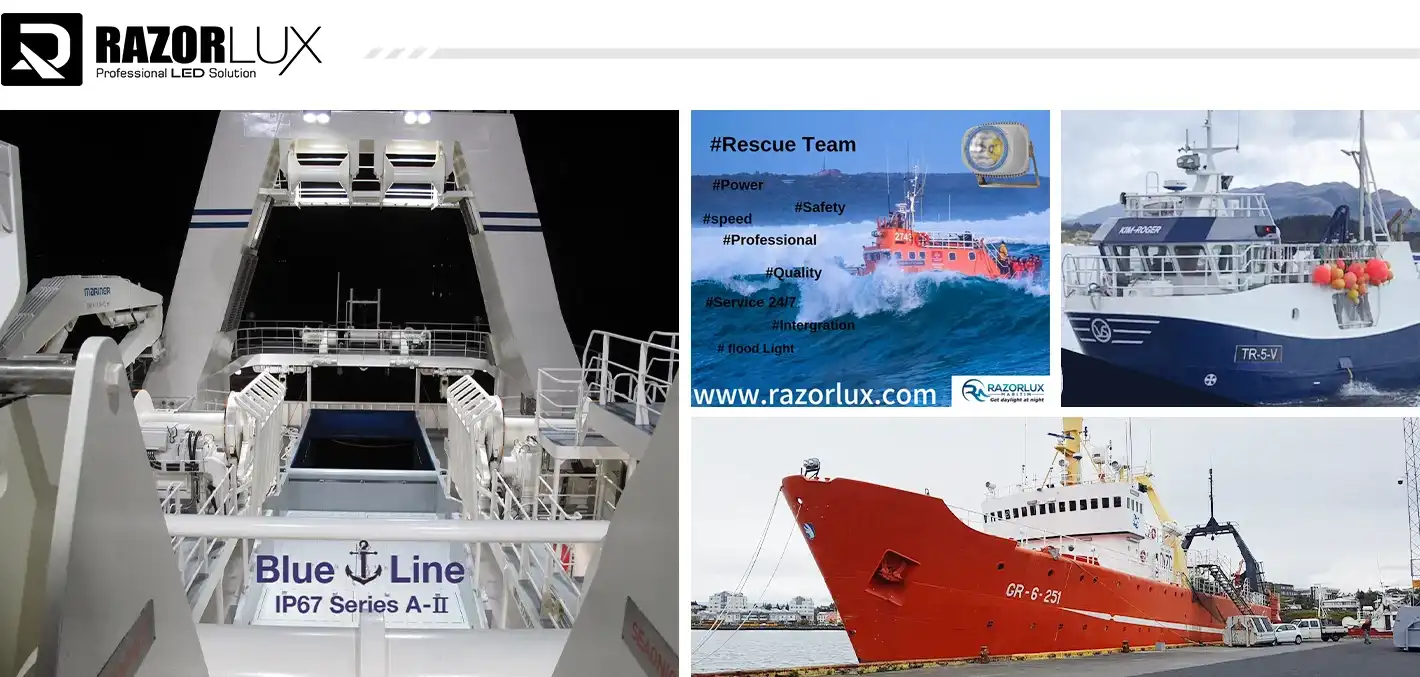
Offshore oil and gas platforms are very harsh places to work because they are exposed to salt spray, high winds, changing temperatures, and limited entry for upkeep. A platform in the North Sea replaced the deck lighting with marine-grade LED flood lights that are certified to IP67 and come with stainless steel brackets that are made to withstand exposure to corrosive atmospheres.
| Application Type | Mounting Height | Fixtures Required | Annual Energy Cost (LED) | Annual Energy Cost (MH) | Payback Period | Additional Benefits |
|---|---|---|---|---|---|---|
| Municipal Parking Garage | 25-30 feet | 32 units | $6,728 | $8,404 | 6.4 years | Better consistency, less maintenance coordination |
| Retail Center Parking Lot | 30-35 feet | 48 units | $10,092 | $12,606 | 5.8 years | Enhanced customer perception, reduced liability |
| Industrial Yard Lighting | 35-40 feet | 24 units | $5,046 | $6,303 | 4.2 years | Continuous operation, improved safety, fewer breakdowns |
| Offshore Platform Deck | 20-25 feet | 16 units | $8,384 | $20,960 | 2.9 years | Eliminated rope access, reduced generator load |
| Shipyard Fabrication Area | 40-50 feet | 36 units | $7,569 | $9,454 | 5.1 years | Better color rendering, instant restart |
Procurement Strategy for B2B Buyers
Supplier Evaluation and Qualification Process
Professional buying of 400W Equivalent LED Flood Light starts with screening suppliers based on more than just the specs of the product. This includes checking their manufacturing capabilities, quality systems, and support infrastructure. Ask companies for specific descriptions that include how long they've been in business, how much they can produce, quality certifications (ISO 9001, ISO 14001), and client references for similar projects. Manufacturers with a history of doing business honestly and openly pose less of a risk to the supply chain than newcomers or trading companies that don't have direct relationships with factories.
Pricing Structures and Total Cost of Ownership
The purchase price is only one part of the total cost of owning. Look at the delivered cost, which includes freight, customs taxes, and any extras or tools needed for installation. Make sure you understand the payment terms, normal lead times, and minimum order quantities that could affect the schedule and cash flow of the job. If your project or expected annual consumption calls for tiered pricing, ask for pricing based on volume.
Navigating International Procurement Considerations
Global sourcing can save you money, but it makes logistics, payment security, and quality control more difficult. Work with sellers that offer well-known foreign shipping methods and help with paperwork for customs clearance. Payment terms in a letter of credit protect both parties in big deals, while payment platforms like Alibaba Trade Assurance protect smaller orders. Check that the Incoterms clearly spell out who is responsible for what and how costs are split to avoid getting charged extra for things you didn't expect.
Maintenance Planning and Long-Term Performance
Proactive Maintenance Strategies for LED Installations
LED lights don't need as much maintenance as regular lighting, but taking the time to do it right will make them last longer and work better. Set up a quarterly visual check plan to keep track of how the fixtures are working and to make note of any out-of-service or dim units that need to be fixed right away. Cleaning the lenses and housings once a year keeps the light output steady, since dust and smog slowly lower the transmission efficiency over time. To keep polycarbonate glasses from getting scratched, only use gentle detergents and soft cloths.
During maintenance visits, checking the electrical connections finds problems before they break. Make sure the mounting hardware is tight, the gaskets around the electrical holes are intact, and the photocell works if it's installed. Using an infrared thermometer to test finds drivers or LED arrays that are getting too hot, which means problems are starting to form and need to be fixed. These easy steps only take a short time, but they keep things from breaking down without warning and make fixtures last longer.
Troubleshooting Common Issues and Resolution
Fixtures that don't light up after being installed are usually caused by problems with the power source, not by problems with the product itself. Use a multimeter to make sure there is power at the fixture site, confirm that the voltage range matches the driver's requirements, and look for blown fuses or tripped breakers. Most problems with installations are caused by loose connections at junction blocks or wires that aren't the right size, which lowers the voltage. Most commissioning problems can be fixed by taking care of these basic issues without having to replace any fixtures.
If the power goes out or flickers, it could be because of a problem with the driver or interference in the control signal. Check the wires of a photocell or sensor for broken or loose connections. To stop electromagnetic interference, keep low-voltage control wires away from high-voltage connections. If the problems don't go away after fixing the wires, you may need to change the driver. This is a simple process that can be done in the field without any special tools.
Planning for End-of-Life and Technology Upgrades
LED technology continues to advance, with future improvements in efficacy, control capabilities, and cost-effectiveness. Plan eventual retrofits by maintaining detailed documentation of existing installations, enabling efficient upgrades when justified by technology improvements or changing requirements. Design electrical infrastructure with excess capacity to accommodate future expansion or technology changes without costly electrical upgrades.
Responsible disposal and recycling practices address environmental concerns and regulatory requirements. LED fixtures contain recyclable aluminum, copper, and electronic components but require proper e-waste handling rather than landfill disposal. Partner with recycling services specializing in lighting equipment or check manufacturer take-back programs. Some jurisdictions mandate recycling compliance, making proactive planning essential for regulatory compliance.
Conclusion
With stainless steel brackets, 400W Equivalent LED Flood Light fixtures go from being disposable items that need to be replaced often to long-term investments that will last for decades. The numbers show that a bigger investment up front saves a lot of money over the life of the product because it needs less upkeep, doesn't need to be replaced as often, and works more reliably. Modern LED technology makes these benefits even better by using a lot less energy and lasting a lot longer, which completely changes the economics of lighting. Maritime operations need tools that can work in tough conditions without constant care. Stainless steel fastening hardware is just what they need.
Ready to Upgrade Your Maritime Lighting System?
Since 1998, Razorlux has been making LED solutions that work well in the harsh marine climate. They have over 25 years of experience in lighting for ships and offshore platforms. Our 270W fixtures with stainless steel brackets come with five-year warranties and are certified to RMRS, UL, CE, and DNV-GL standards. They use reliable Mean Well power supplies, Samsung LED chips, and 316L mounting hardware that won't rust. Whether you're setting up a brand-new ship, replacing old infrastructure, or choosing lights for an offshore platform job, our engineering team can help you find fixtures that meet all of your needs. To get technical specs, photometric calculations, or sample units to test, email sam@razorlux.com or go to razorlux.com and ask for our marine flood lights specialist team. As a well-known company that makes marine flood lights, we keep stock on hand so that we can ship right away. We also offer flexible transportation, such as fast courier, air freight, and ocean shipping, so that we can meet the deadline for your project.
References
1. Maritime and Coastguard Agency. (2019). "Lighting and Light Fittings for Ships: Technical Standards and Compliance Requirements." UK Department for Transport Marine Guidance Note MGN 631.
2. American Bureau of Shipping. (2021). "Guide for LED Lighting Systems for Marine and Offshore Applications." ABS Technical Publications, Houston, TX.
3. International Maritime Organization. (2018). "Performance Standards for Shipboard Lighting and Light Fixtures." IMO Resolution MSC.430(98), London, UK.
4. Det Norske Veritas. (2020). "Environmental Testing of Marine Electrical Equipment: Salt Spray and Corrosion Resistance Standards." DNV-GL Rules for Classification of Ships, Part 4, Chapter 8.
5. Society of Naval Architects and Marine Engineers. (2022). "Energy Efficiency in Marine Lighting: LED Technology Assessment and Life-Cycle Cost Analysis." SNAME Technical Research Bulletin 4-58.
6. U.S. Naval Sea Systems Command. (2021). "Military Specification for LED Lighting Systems in Shipboard Applications: MIL-STD-461G Compliance and Testing Protocols." Naval Standards Document, Washington, DC.