


_1750326878398.png)

Best Outdoor Lighting for Volleyball Court: Key Benefits
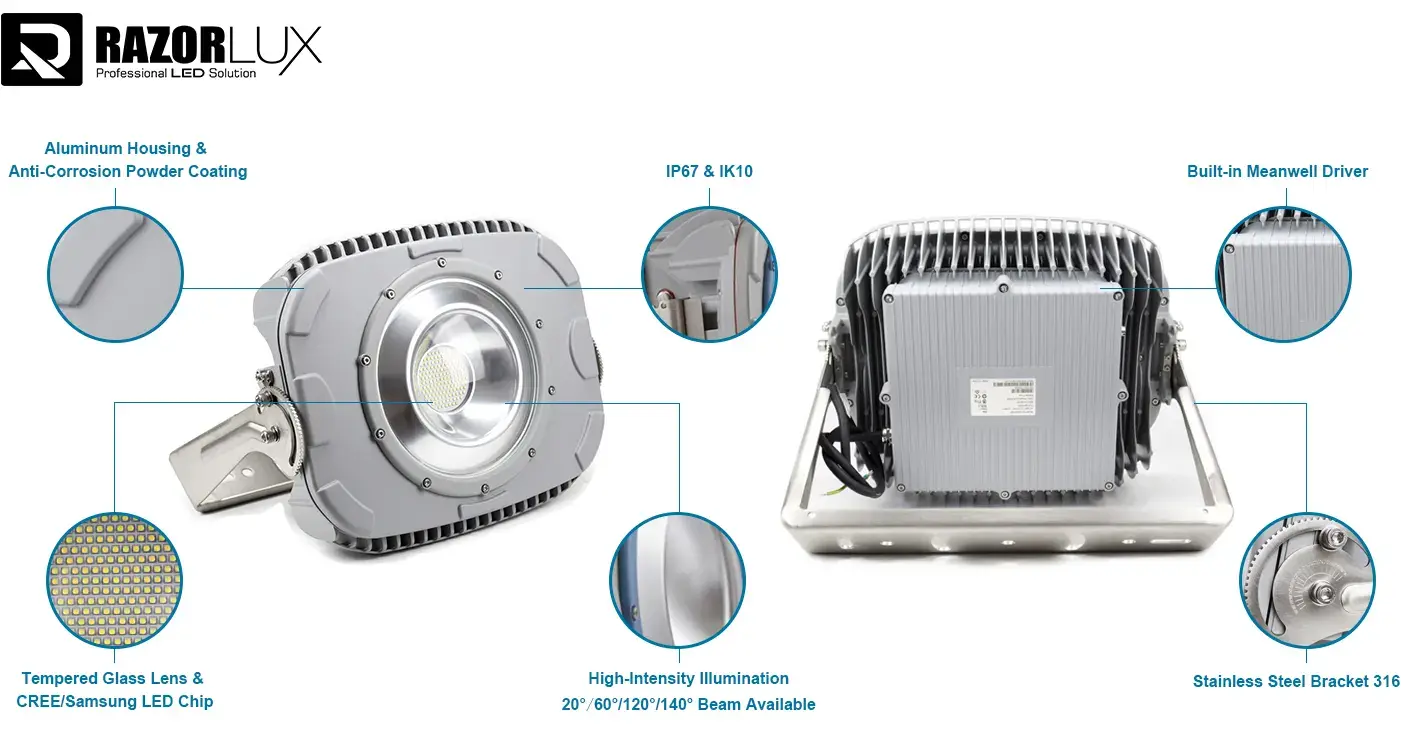
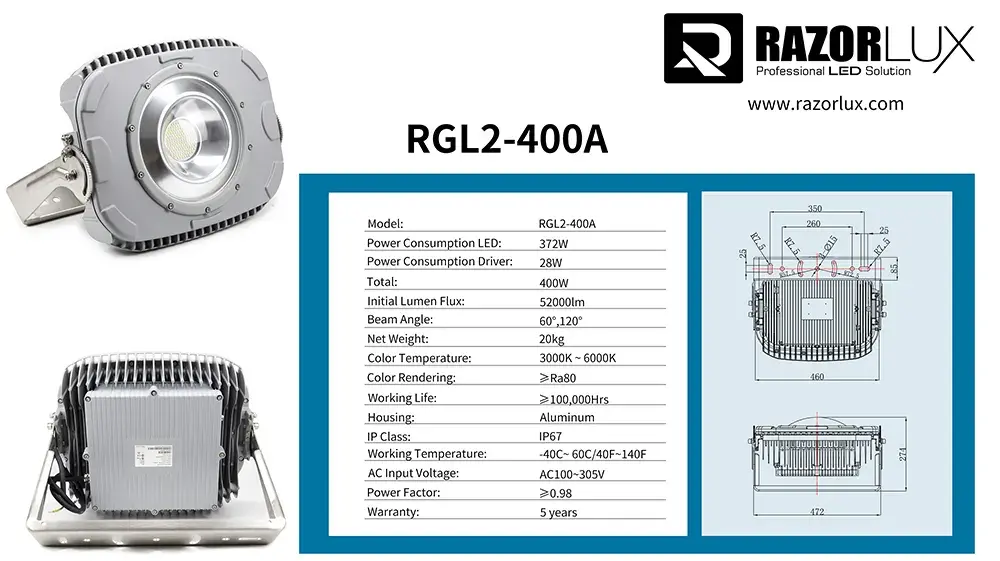
When selecting lighting for recreational or competitive volleyball courts, the right system transforms both safety and playability. Outdoor Lighting For Volleyball Court installations demands fixtures that deliver uniform illumination, resist environmental stress, and operate efficiently over extended periods. High-quality LED solutions now dominate this space, replacing traditional metal halide systems with technology offering superior lumen output, reduced energy consumption, and minimal maintenance. Razorlux's RGL2-400A model exemplifies this evolution, providing 52,000 lumens at 130 lm/W efficiency with IP67-rated protection—ideal for facilities requiring reliable performance in challenging outdoor conditions.
Understanding Outdoor Lighting Requirements for Volleyball Courts
Illuminance Standards and Uniformity Ratios
Lighting a volleyball court correctly follows rules that are known all over the world. The Illuminating Engineering Society's RP-6-15 standard (IES, 2015) says that for casual play, the minimum constant illuminance should be 30 foot-candles (300 lux), but for events, it should be 50 to 75 foot-candles (500 to 750 lux). To keep visual gaps that make it hard to track the ball, uniformity ratios must stay between 2:1 (highest to minimum). These parameters make sure that players can accurately judge the ball's path and distance across the whole field.
In addition to light, color rendering index is a very important factor. It's possible to see colors naturally when the CRI is above 75. This helps players tell the difference between team outfits and judge ball spin. As usual, Razorlux fixtures achieve Ra>75. For broadcast-quality uses where color accuracy is important for camera systems, Ra>80 options are offered.
Fixture Positioning and Glare Control
Coverage and visual comfort are both directly affected by the height of the mount. Best lighting settings are achieved by putting poles 20 to 30 feet above the court level and putting 4 to 6 lights on each normal court. This set-up turns light downward at 25 to 40 degrees, which cuts down on the upward glare that makes it hard for players to see high balls. Asymmetric beam designs, like the 40°, 60°, and 120° choices in Razorlux's multi-function design, make it possible to precisely aim light at playing areas while minimizing spill into nearby properties.
Shadows can be dealt with through strategic placement. Corner-mounted setups get rid of the dark spots that come with side-only setups. This is especially important for beach volleyball, where uneven sand surfaces make shadows look worse. Fixture spacing that is just right keeps the horizontal and vertical lighting consistent, which helps players see what's going on in three dimensions.
Weather Resilience and Ingress Protection
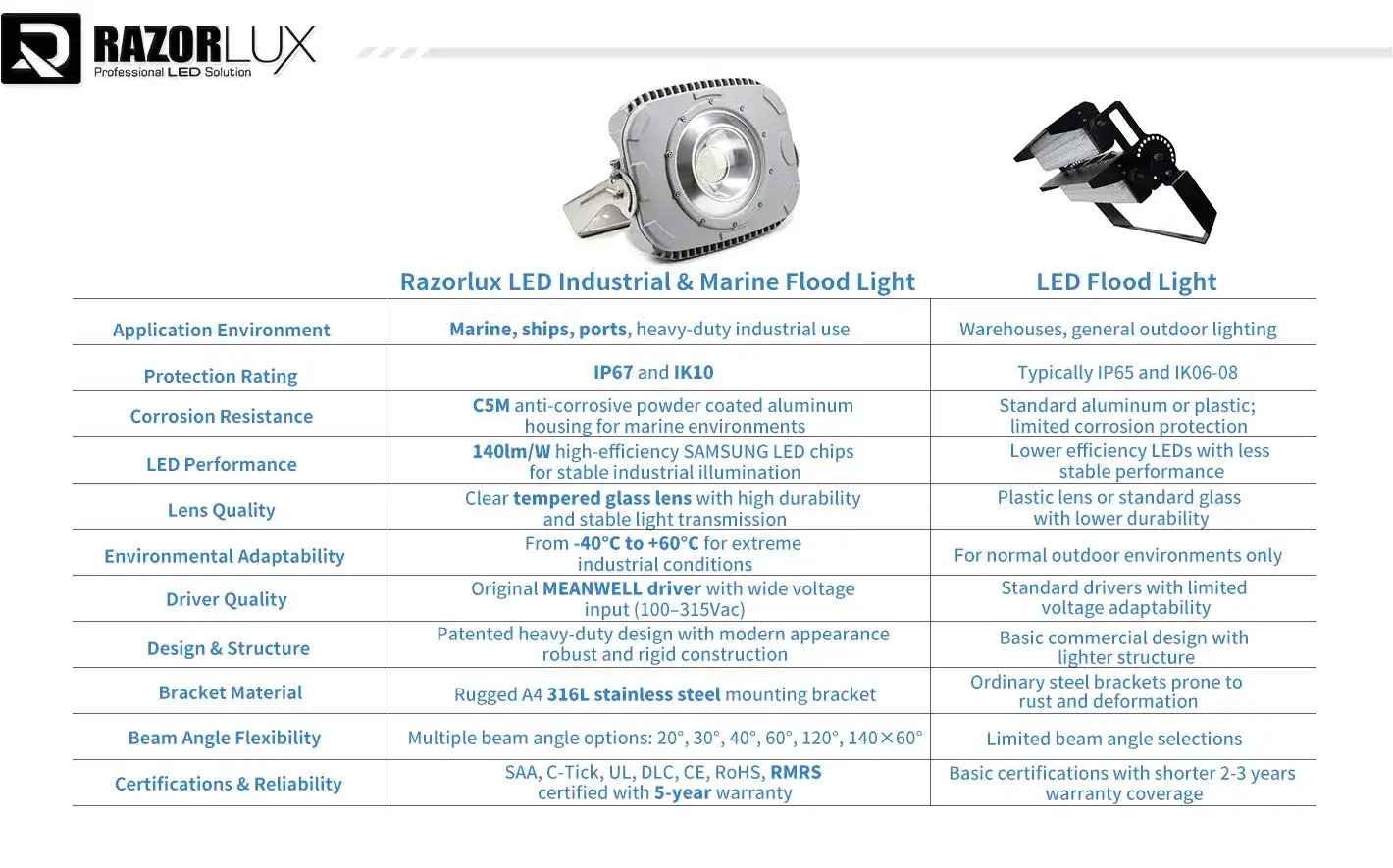
Installations outside have to deal with rain, dust, extreme temperatures, and physical damage. IP67-rated enclosures completely block out dust and guard against short-term immersion in water. This is very important for sites near the coast that get salt spray or in places where it rains a lot. With an IK10 grade, the lenses won't crack, and the housing won't get damaged from direct hits from volleyballs moving at high speeds.
The powder-coated aluminum body and stainless steel frames of Razorlux make it resistant to corrosion, even in salty seas. The working range of -40°C to 60°C works in both Arctic and desert conditions, and temperature management systems keep LEDs from breaking down because of too much heat. These engineering decisions make the operating life longer than 50,000 hours, which is about 17 years of daily use for eight hours.
Benefits of LED Outdoor Volleyball Court Lighting
Energy Efficiency and Operational Cost Reduction
LED technology has immediate benefits for the economy. A 400W LED fixture can be used instead of 800-1000W metal halide lamps and give off the same amount of light or more. This 60–70% drop in energy use means big savings on utility bills over the life of a building. Razorlux systems have a power factor of at least 0.98, which reduces the waste of reactive power and improves electricity economy even more. Total harmonic distortion below 10% ensures that power is used in a way that doesn't mess up sensitive grid control systems.
When repair times are taken into account, the financial case gets stronger. Usually, traditional HID lamps need to be replaced every 6,000 to 15,000 hours, which costs money for both the materials and the labor. LED systems keep 70% of their light output after 50,000 hours of use without any maintenance. This means that there are no boom lifts, expert time, or facility downtime needed for regular lamp changes. Facilities that are in charge of more than one Outdoor Lighting For Volleyball Court see savings that make up for the higher original investment in LEDs within two to three years.
Enhanced Gameplay Through Superior Visibility
Consistent lighting improves player performance in a measurable way. Because LEDs can turn on instantly, they don't need to warm up for 5 to 15 minutes as metal halide systems do. This means that when lights turn on, the music can start right away. The stable color temperature, which can be set between 2700K and 6500K, lets you create the mood you want. For volleyball, the 5000K to 5700K daylight range works best because it makes the difference between the ball and the sky the best.
Getting rid of flicker is another speed factor. When you use good LED drivers, the current stays the same, unlike magnetic ballast HID systems that pulse at 120Hz. When a ball moves quickly under flashing light, stroboscopic effects happen that change how paths are seen. Razorlux's Meanwell power sources make sure that the equipment works without flickering, which is important for both player safety and video recording equipment.
The accuracy of color rendering helps officials make quick decisions. High-CRI lighting makes it easier to see the boundary lines, which means that fewer calls are disputed on close plays. Better viewing experiences are also good for fans, which is especially important for places that make money by hosting tournaments or league games.
Durability and Minimal Maintenance Requirements
Solid-state LEDs don't have flimsy filaments or glass covers that can be broken by vibration. Shock-resistant designs that can handle wind-driven sand wear and accidental ball hits are especially useful for beach volleyball courts. The IP67 rating stops water from getting into the bulb, which ruins its internal parts. Sealed glasses also stop the yellowing and haze buildup that lowers light output over time.
Adaptability to the environment makes systems last longer. The large input voltage range (AC110-480Vac, DC100-800Vdc) works with power lines that aren't stable, like those in growing areas or in remote locations where generators or solar panels are used. Changes in power that shorten the life of lamps in traditional systems can't hurt this system because it is flexible. Razorlux backs up its 5-year warranty on LED modules and drivers with a 10-year warranty on the housing. This shows that the company is confident in the durability of the parts.
How to Choose the Best Outdoor Lighting Solution for Your Volleyball Court
Assessing Court Dimensions and Usage Patterns
Standard volleyball courts are 18m x 9m and have 3m safety zones. This makes lit areas about 25m x 15m. Beach volleyball is more difficult because the safety zones are bigger and the lines aren't always straight. Figure out the total square footage and then apply the lighting needs based on the purpose: recreation centers that need 300–500 lux need fewer lights than sports arenas that need 750–1000 lux for broadcast events.
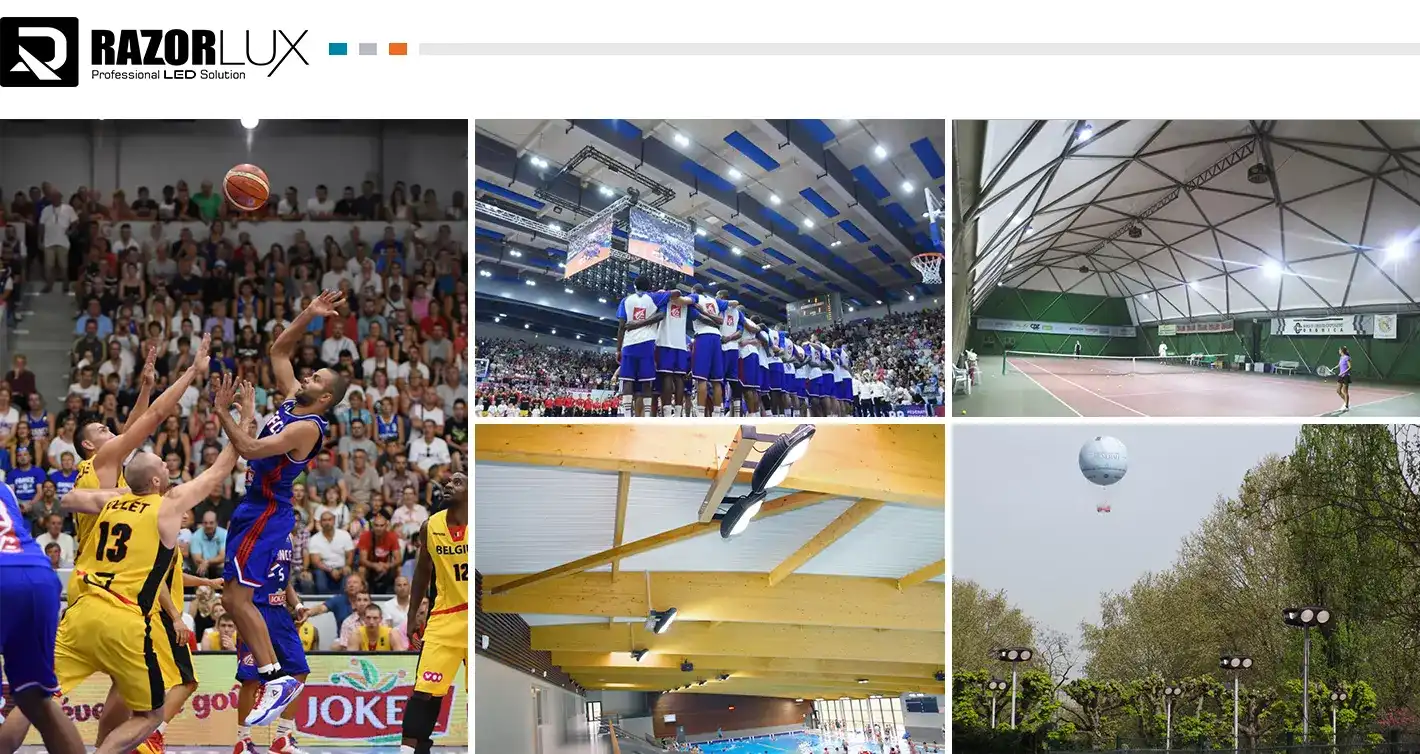
Technology choice is based on how often it will be used. Courts that are open for two to three hours at night will save the most money on energy costs, which will cover the cost of the LEDs. Facilities that are only used sometimes might be able to afford cheaper HID systems, but LED systems usually have a longer lifecycle, even when they are used less often. Multi-sport centers should think about beam angles that can be changed. Razorlux's 140°x60° asymmetric option works for both Outdoor Lighting For Volleyball Courts and tennis courts next to it with just one type of fixture.
Peak load capacity is also important. Facilities that run more than one game at the same time need to check the ampacity of their electrical service. Because LEDs use less power, they can often be installed without the expensive transformer upgrades that are needed for HID equivalents.
Evaluating Technology Options and Installation Methods
LED is the most common type of lighting in current setups, but other technologies fill certain needs. Installing solar-powered systems on remote beaches doesn't require digging trenches, but battery capacity and panel size need to be carefully planned to make sure they work when it's dark. Hybrid solar-grid systems make the best use of renewable energy while providing backup power continuity.
Portable light poles are useful for events that only last a short time or places that need to store things. Permanent installations on poles, on the other hand, are more stable, allow for more accurate aiming, and lower the risk of theft. The choice depends on how the facility is used. For example, tournament sites that host a lot of different sports might prefer fixed systems, while seasonal beach clubs might prefer movable ones.
Adding a control system makes things work better. Astronomical timers change working plans automatically to account for changes in daylight hours, and motion sensors cut down on energy waste when nothing is being used. Razorlux systems can work with both DALI and 0-10V dimming, which lets you set different levels of brightness. For example, lower intensity during practice saves energy, while full brightness meets the needs of competition. These smart controls usually save an extra 20 to 30 percent of energy on top of what LEDs already do.
| Comparison Criteria | LED Systems | Metal Halide Systems | Solar LED Systems |
|---|---|---|---|
| Energy Consumption | 400W (typical) | 1000W (equivalent output) | 0W grid consumption |
| Lifespan | 50,000+ hours | 10,000-15,000 hours | 30,000-40,000 hours (battery dependent) |
| Maintenance Frequency | Every 8-10 years | Every 1-2 years | Battery replacement 3-5 years |
| Warm-up Time | Instant | 5-15 minutes | Instant |
| Color Rendering (CRI) | 75-90+ | 65-75 | 75-85 |
| Initial Cost | Moderate-High | Low-Moderate | High |
Balancing Cost, Sustainability, and Performance
The total cost of ownership is more than just the price of the car. Figure out:
- Costs of fixtures, wires, wiring, and workers are examples of capital expenses.
- Operating costs: the amount of energy used at local electricity rates over a 10-year period.
- Costs of maintenance include replacing lamps, renting lifts, and paying technicians to do work.
- Fees for getting rid of hazardous materials like mercury-containing HID lamps.
Even though they cost more up front, LED systems usually have a 40–60% lower TCO. Sustainability is becoming more and more important for buildings that want to get LEED approval or meet company ESG goals. The fact that LEDs don't contain mercury makes them easier to get rid of, and their energy economy cuts down on carbon emissions—a 600W drop per fixture means about 4 tons less CO₂ per year at the average U.S. grid carbon intensity.
To save money, performance standards shouldn't have to be lowered. Bad LEDs that don't handle heat well or have bad drivers break down early, which takes away any economic benefits. Verified certifications, like CE, RoHS, UL, and DLC, show that safety and performance standards have been met. Razorlux's wide range of certifications gives buyers confidence, which is especially important for public buildings that have to follow rules.
Expert Guidelines for Installation and Safety
Site Assessment and Layout Planning
A photometric study is the first step in a professional installation. Computer modeling predicts how light will be distributed, figuring out the best places for poles and fixtures before any real work starts. This planning stage keeps you from having to pay a lot of money to fix problems with dark spots or glare that you find after the installation. Site surveys should record:
- Location and capacity of existing electricity service.
- To avoid trenching problems, utility paths should be buried.
- Needs for setbacks from property lines.
- Environmental factors, such as the direction of the wind and the way water drains.
- Structures nearby that affect light spill.
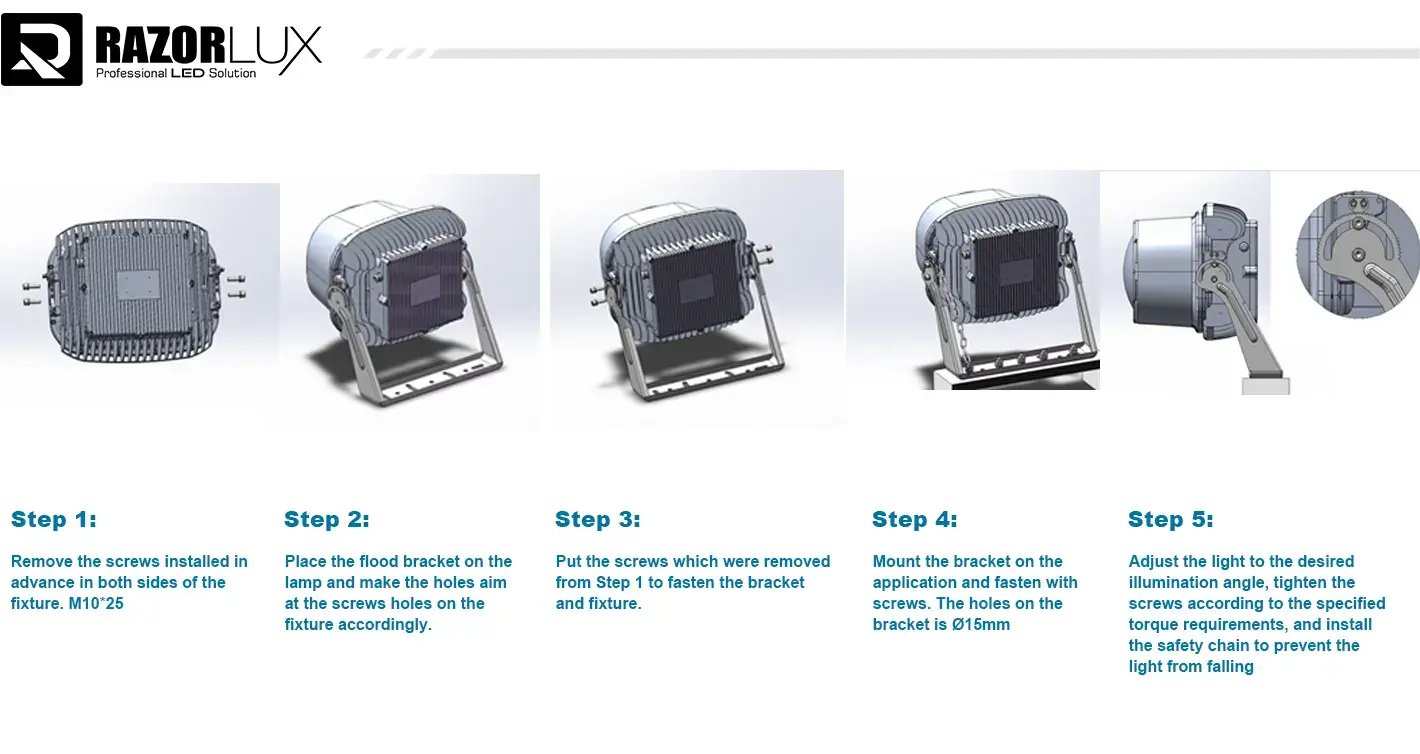
Figuring out the right mounting height balances the area covered with the need to block glare. Lower poles (20 to 25 feet) work best for leisure courts where ease of placement is more important than regularity at the competition level. Higher placements (30–40 feet) allow for wider beam angles, which lowers the number of fixtures needed while improving the regularity of lighting, which is very important for competition sites. Razorlux's beam angles can be changed to fit different mounting heights without having to buy different fitting types.
Electrical Integration and Control Systems
The wiring requirements must match the needs of the fixture. The RGL2-400A can handle a wide range of input voltages (AC110-480Vac), which makes setups easier for areas with different standards. For example, North American 120/240V, European 230V, and industrial 480V systems all work without transformers. DC input compatibility (100–800Vdc) makes it easier to connect to solar panels or battery backup systems for important installations.
Circuit safety sizes should take inrush current into account when multiple fixtures are turned on at the same time. LED drivers need properly rated breakers to keep them from tripping for no reason when they first turn on. Having separate circuits for lighting loads keeps them from interfering with other systems in the building and makes troubleshooting easier.
Advanced control merging makes processes run more smoothly. Astronomical time switches get rid of the need to change schedules by hand, and photocell sensors stop mistakes from happening during the day. Networked control platforms let you watch and change the lighting from a smartphone, which is especially helpful for facility managers who are in charge of multiple places. These systems record how much energy is used, which helps with planning maintenance and doing energy audits.
Safety Compliance and Light Pollution Prevention
Electrical rules require GFCI breakers or receptacles on lighting lines for outdoor setups to protect against ground faults. Grounding systems must meet the requirements set out in NEC Article 250. To keep people from getting shocked, metal poles and fixtures must be properly bonded. In places with a lot of lightning, lightning safety is very important. This includes surge reduction devices and equipotential bonding networks.
Light trespass laws are making it harder to light up areas that aren't on-site. Shielded fixtures direct their output downward, which reduces the amount of horizontal light pollution that affects roads or nearby properties. Full-cutoff optics stop the upward light emission that causes sky glow. This is important for buildings near astronomical observatories or designated dark-sky areas. Razorlux's precise beam control and customizable shields make sure that lighting rules are followed without lowering the brightness of the light on the court.
Regular checks make sure that the structure is sound and that the electricity is safe. Checks should be done once a year to see if the pole supports are moving, the mounting clamps are rusting, and the wire connections are breaking down. Thermal imaging finds connections that are getting too hot before they break, and light meter readings prove that the level of illumination stays within the design parameters. Inspection records that are written down show that the right steps were taken to protect against liability and meet insurance requirements.
Comparison of Top Outdoor Volleyball Court Lighting Products and Suppliers
Leading Manufacturer Capabilities and Product Differentiation
There are both large, well-known global companies and small, specialized companies in the sports lighting business. Global brands benefit from having large distribution networks and well-known brands. On the other hand, focused suppliers often offer better technical support and customization options. When making procurement choices, these things should be weighed against the needs of the individual project.
Razorlux stands out because its marine-grade tech can be used in tough sports settings. Its more than 200 patents show that it keeps investing in new ideas, especially in temperature management and power control systems that are important for LEDs to last a long time. The RGL2-400A's flexible design lets drivers or LED arrays be replaced in the field without having to replace the whole fixture. This saves money on upkeep over the product's lifetime. Coastal installations where other products fail early are good places for stainless steel mounting hardware because it doesn't rust.
Philips has a lot of experience with sports lighting and can provide LVCC-compliant systems for professional sites. Their lights focus on optical accuracy and flicker-free streaming performance, but they charge a lot because that's how their brand is positioned. Specification-grade solutions are worth the money because they provide better color rendering and accuracy.
Cree focuses on making LEDs that work better and more efficiently than any other company in the world. In sports configurations, their XSP series gives off up to 150 lm/W, which saves the most energy. However, distribution may be limited outside of big markets, which could make getting warranty service or new parts more difficult.
| Supplier | Key Strengths | Target Applications | Typical Warranty | Certification Scope |
|---|---|---|---|---|
| Razorlux | Marine-grade durability, voltage flexibility, customization | Coastal facilities, industrial sites, extreme climates | 5-10 years (modular) | CE, RoHS, UL, DLC, CB, ISO 9001 |
| Philips | Broadcast-quality optics, brand recognition | Professional venues, televised events | 5 years | UL, DLC, ENEC |
| Cree | Maximum efficacy, color consistency | Energy-focused projects, LEED facilities | 10 years | UL, DLC, DesignLights Consortium |
| GE Current | Smart controls integration, IoT platforms | Multi-facility chains, municipal parks | 5 years | UL, DLC, FCC (controls) |
Procurement Strategies for B2B Buyers
By buying in bulk, you can save a lot of money. Facilities that want to install more than one court or manage more than one location should work out framework agreements that set different price levels for each unit. Razorlux can meet the specific needs of a project by customizing OEM fixtures with brand names or changing specifications for large orders, without the minimum order quantity requirements that bigger companies usually have.
Specification risks are lessened by sample review systems. Reliable sellers offer test units that can be used on-site to make sure everything works before large orders are committed. This test proves the photometric performance, checks the quality of the building, and lets the expert staff check the installation processes. Samples also make it easier to compare two or more goods side by side, which gives you information that isn't just in the specs.
Professional sellers can be told apart from commodity providers by how full their technical paperwork is. Complete packages should have the following:
- IES photometric files for software used to design lighting
- Installation manuals with wiring diagrams and templates for mounting
- Certification copies (not just claims of compliance)
- Warranty terms with clear coverage exclusions and claim procedures
- Maintenance schedules and replacement parts availability
Razorlux normally gives this information to engineering teams to help them with the process of creating specifications and bidding against each other. Technical support can be reached at sam@razorlux.com, so questions can be answered quickly without having to deal with automated phone systems.
After-Sales Support and Long-Term Partnership Value
Product quality isn't enough to guarantee project success; quick customer service is just as important. How quickly warranty claims are processed affects how long a facility is down when something breaks. Suppliers who keep parts in stock in their own countries can ship replacements within days, but overseas-based suppliers may need weeks to do so.
Long-term relationships bring more value over time. Suppliers who know how a facility's installation works can speed up future growth projects, suggest changes that will work with the current system, and offer better prices for long-term customers. This relationship model works well for groups that are in charge of multiple buildings or that are planning renovations that will happen in stages.
The provision of technical training improves the competence of repair staff. When suppliers offer installation classes or online certification programs, customers don't have to rely on outside workers as much for regular maintenance. Razorlux wants to educate their customers, so they offer thorough video tools and direct access to tech staff for fixing complicated problems. This level of service isn't usually found from large-volume distributors who only deal with transactions.
Conclusion
To choose the right lighting for an Outdoor Lighting For Volleyball Court, you have to weigh technical performance, cost, and operating needs. LED technology now offers strong benefits in all of these areas: it saves energy and lowers operating costs by 60% or more; it doesn't need to be maintained for more than ten years; and it produces better light that improves both player performance and the spectator experience. When specifying, it's important to pay attention to things like illuminance levels, uniformity ratios, and environmental protection. This way, setups can meet both present needs and future growth potential. Razorlux's RGL2-400A is a great example of current sports lighting engineering because it is marine-grade durable, works with multiple voltages, and has a lifespan of 50,000 hours. It also comes with full certifications and quick technical support. In the end, successful procurement rests on working with sellers who not only provide high-quality goods but also offer full system knowledge and a commitment to long-term service.
FAQ
1. How many fixtures does a standard volleyball court require?
Most leisure courts need between 4 and 6 fixtures that give off 300 to 500 lux, while competition courts need between 6 and 8 units that give off 750 to 1000 lux. The exact numbers rely on the height of the mount, the angle of the beam, and the buildings around it. Photometric modeling during design prevents lighting from being too bright or too dim, making sure that the fixtures are placed correctly before they are installed.
2. What differentiates LED from traditional metal halide systems?
LEDs use 60–70% less energy than HID lamps while giving off the same amount of light. They also work right away without waiting to warm up, and their power stays the same for 50,000 hours or more, while HID lamps only last 10,000–15,000 hours. LEDs have better color rendering (CRI >75), which makes them easier to see, and their solid-state construction makes them more resistant to vibration and temperature changes than HID parts, which are more fragile.
3. Can solar power adequately illuminate volleyball courts?
Solar systems work well for beach sites that are far away and don't have access to the power grid, but they need a lot of battery power to keep working during long periods of bad weather. Hybrid solar-grid setups offer a stable backup while making the best use of renewable energy. Pure solar applications work better for occasional use than daily evening operations that need consistent performance.
4. What maintenance do LED volleyball court lights require?
A good LED system doesn't need much maintenance for 8 to 10 years, other than cleaning the lenses every so often. Unlike HID fixtures, which need to be serviced once a year, LED lamps don't need to be replaced during this time. Periodic checks make sure that the mounting gear is still in good shape and that the electrical connections are still safe, but compared to traditional lighting technology, routine care pretty much stops.
Partner with Razorlux for Professional Volleyball Court Lighting Solutions
Razorlux brings more than 25 years of experience in LED tech to sports lighting projects that need it. Our RGL2-400A system is built to last in marine environments and has the energy-saving features and customization options that sports and competition venues need. Unlike product sellers, we take care of the whole project, from photometric design to installation advice and ongoing technical support. Our IP67/IK10-rated fixtures can handle the harshest environments and provide consistent, glare-free lighting that improves both player performance and the fan experience.
As a direct Outdoor Lighting For Volleyball Court producer, we offer competitive project pricing without distributor markups, backed by a wide range of certifications (CE, RoHS, UL, DLC, CB, ISO 9001) and quick technical support. Email our team at sam@razorlux.com to talk about the specific needs of your facility, ask for photometric analysis, or set up a sample evaluation.
References
1. Illuminating Engineering Society. (2015). RP-6-15: Sports and Recreational Area Lighting.
2. U.S. Department of Energy. (2017). LED Lighting for Sports and Athletic Fields.
3. International Dark-Sky Association. (2020). Outdoor Sports Lighting Guide. Tucson: IDA.
4. International Volleyball Federation. (2018). FIVB Facilities Guidelines: Outdoor Lighting Standards.
5. DiLaura, D. L., Houser, K. W., Mistrick, R. G., & Steffy, G. R. (Eds.). (2011). The Lighting Handbook: Reference and Application (10th ed.).
6. Pacific Northwest National Laboratory. (2019). Outdoor Lighting Energy Performance Benchmark. U.S.