


_1750326878398.png)

How Do Crane Boom Lights Create a Visual Safety Zone Below?
When cranes lift multi-ton loads across busy construction sites or shipyards, the zone directly beneath becomes one of the most hazardous areas on the worksite. Crane Boom Lights are purpose-engineered fixtures mounted on crane booms or jibs that project intense, directional beams downward, creating a clearly demarcated visual safety zone around the hook block and load path. These specialized LED units cast a defined perimeter of bright illumination that signals a "danger zone" to ground personnel, enabling them to recognize and avoid the area where suspended loads may shift, drop, or swing. By generating a highly visible column of light that moves with the crane's operation, these systems transform an invisible hazard into an unmistakable visual boundary that enhances situational awareness and dramatically reduces the risk of struck-by incidents in heavy-duty environments.
Understanding Crane Boom Lights and Their Safety Functionality
Core Design and Components
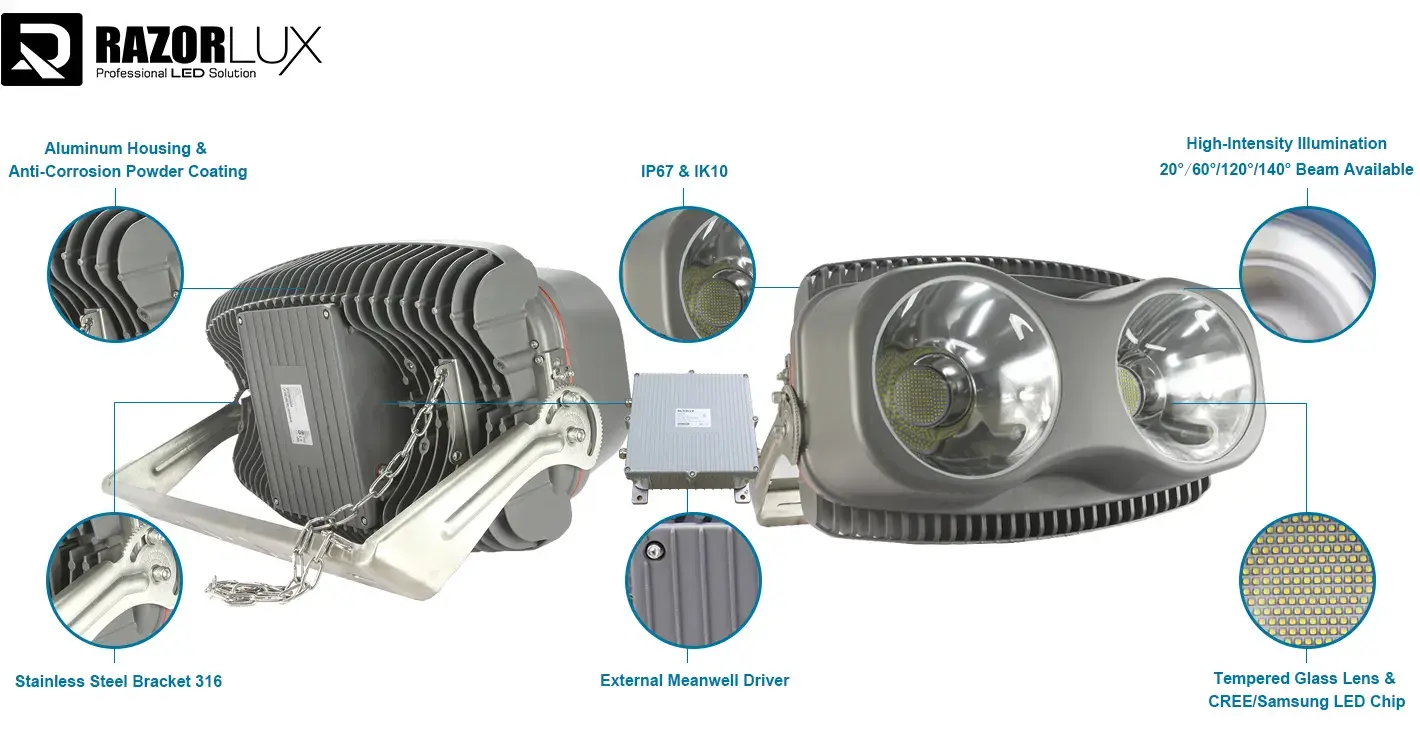
Modern lighting systems that are placed on booms are very different from floodlights that stay in one place. Each unit has a strong die-cast metal body with a powder finish that won't rust, precision-engineered optics that focus light into narrow beams (usually 20° to 60°), and solid-state LED modules that are rated to work for 50,000 hours or more. These parts work together to provide targeted lighting from heights above 30 to 100 meters, where normal site lighting can't reach properly.
How They Establish Visual Safety Boundaries
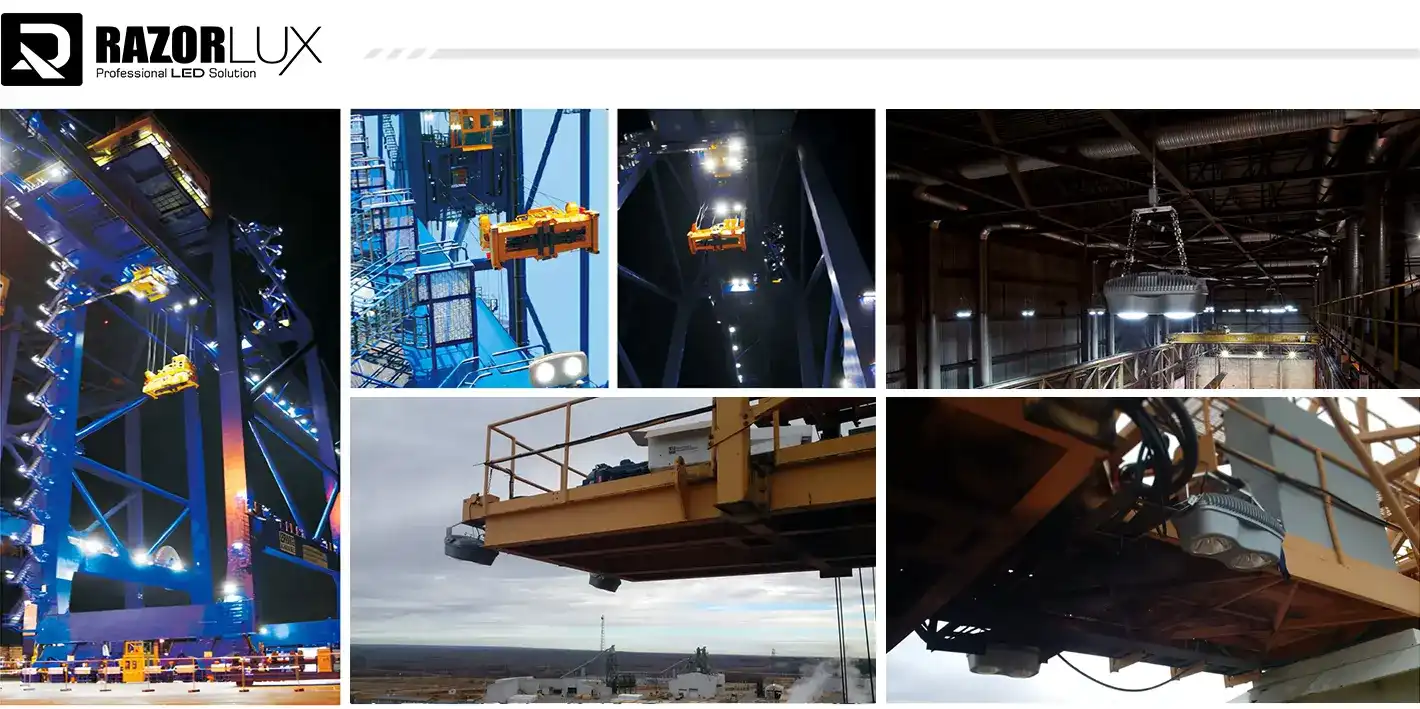
Fixtures that are attached to a boom work by sending a focused beam along the hook path's vertical axis. The lit zone moves with the crane trolley as it moves and the boom slews, giving the ground or deck surface a moving "spotlight" effect. Ground crews see this bright circle right away as the active lift zone, which makes them naturally avoid it. The difference between the bright area and the dark areas around it works as a psychological and visual barrier, making it less likely that workers will accidentally enter the danger zone.
Integration with Existing Safety Systems
More advanced boom lighting systems work with crane control systems to add extra layers of safety. Some setups have strobe or color-changing modes that turn on when the crane gets close to its maximum load rating or enters a limited zone. Others work with systems that prevent collisions, and when proximity sensors identify close people or buildings, they flash the light. With these additions, the light fixture goes from being a passive source of light to an active part of the overall safety architecture, supporting more than one safety protocol at the same time.
Types of Crane Boom Lights and Their Applications in Creating Safety Zones
LED vs. Halogen: Energy Efficiency and Operational Lifespan
From metal halide and halogen sources to LED technology, boom lighting has changed a lot in terms of cost and dependability. Traditional halogen systems need 400–600 watts to produce the same amount of light as a 150-watt LED fixture. This means that crane generators have to work harder and mobile equipment has to use more fuel. LED modules produce more than 130 lumens of light per watt, which lowers the fixture's heat load and cuts energy costs by 60 to 70%.
Another important difference for Crane Boom Lights is operational lifespan. Halogen lights usually stop working after 2,000 to 3,000 hours because shaking speeds up filament degradation. This means that they have to be replaced often at a high cost, which requires downtime for the crane and puts maintenance workers at risk of falling. This is not needed with LED arrays that are rated for 50,000 hours or more under similar conditions. They can run continuously for five to ten years before they need to be serviced. This longer lifespan reduces the total cost of ownership by a huge amount and makes tools more available.
| Light Source | Power Consumption | Lifespan | Vibration Resistance | Maintenance Frequency |
|---|---|---|---|---|
| Halogen | 400-600W | 2,000-3,000 hrs | Poor (filament breakage) | Every 6-12 months |
| Metal Halide | 350-500W | 6,000-10,000 hrs | Moderate (arc tube failure) | Every 12-18 months |
| LED | 120-200W | 50,000+ hrs | Excellent (solid-state) | Every 5-10 years |
Environment-Specific Models: Marine, Offshore, and Heavy Industry
For saltwater environments, corrosion protection that goes beyond normal industry rates is needed. Marine-grade boom lights have housings that have been coated with multiple layers of powder and all of their hardware is made of 316 stainless steel. Internal seals meet IP67 standards, which means that water can't get in even during high-pressure washdowns or prolonged submersion in storms. Salt spray speeds up the oxidation process, but these fixtures have been used for decades in shipyards and offshore platforms and have kept their structural integrity and optical performance.
Low-voltage DC and battery-powered models are used by mobile cranes and other equipment that works in remote areas where generators aren't available or there isn't enough electricity. These units can take a wide range of DC inputs (80–400Vdc) and have smart power control systems that keep the output steady even when voltage changes, which is common in mobile power systems. In these situations, thermal management is very important because the small battery compartments produce heat that can hurt LED performance if it is not properly removed through the design of the heat sink.
Focused Beam Technology vs. Conventional Floodlights
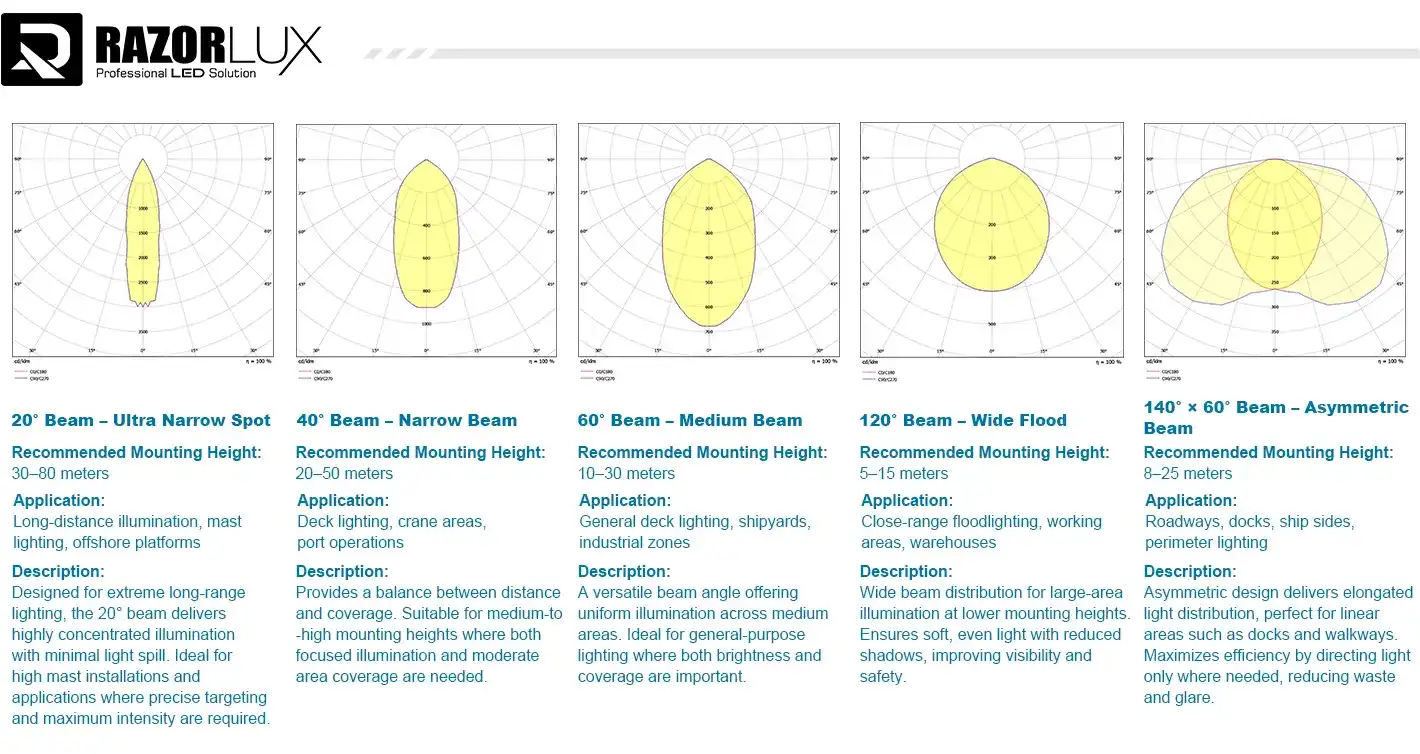
Standard floodlights spread brightness over large areas using wide beam angles (90° to 120°), which lowers intensity and causes light pollution that makes it hard for crane operators to see at night and causes problems for nearby operations. Precision optics, which often include secondary reflectors and lens arrays, focus the same lumen output into a narrow, controlled beam in boom-specific fixtures. This targeted method provides higher brightness levels at ground level, making sure that the safety zone can be seen clearly even from very high mounting points.
The Installation and Operational Guide to Maximizing Visual Safety Zones
Proper Placement and Mounting Procedures
The best mounting places take a number of tech factors into account. The fixture should be attached as close to the tip of the boom as the structure will allow. This will keep the distance between the light source and the centerline of the hook as small as possible. This alignment makes sure that the lit area follows the load line exactly, so there are no breaks where the load is not in the lit area. To keep mounting brackets from coming loose when they're vibrated, they need to be torqued to the manufacturer's specifications and checked with thread-locking compounds.
When handling electricity for Crane Boom Lights, you need to be very careful that cables don't rub against moving parts. If there are already cable boxes in place, the wiring should follow them. Every two to three meters, there should be an extra strain release point to allow for the boom to move and the trolley to move. At the places where two cables meet, waterproof connectors rated for marine settings keep water out, and shielded cables keep electromagnetic interference with crane control systems to a minimum. Installations on mobile cranes need to leave enough cable slack to allow the boom to extend and retract without putting stress on the connections between the fixtures.
Beam Angle Adjustment and Light Distribution Optimization
To get the best ground coverage, the beam direction needs to be carefully changed during launching. Once the crane is at a normal working height, the fixture angle should be set so that the center of the beam hits the ground at the hook's vertical centerline. Many professional units have multi-axis movable brackets that let you fix the pitch and roll. This makes up for uneven mounting surfaces and makes sure the beam stays straight on the ground no matter how the boom is shaped.
Using a lux meter to take measurements in the field helps make sure that there is enough light across the planned safety zone. At ground level, target minimums are usually between 50 and 100 lux, which is bright enough to see hazards clearly without being too bright and casting sharp shadows or glare. For loads with large side dimensions, a small beam widening may be needed to cover the whole footprint, but this needs to be weighed against the lower intensity around the edges.
| Mounting Height | Beam Angle | Ground Coverage Diameter | Recommended Fixture Wattage |
|---|---|---|---|
| 15-30m | 20° | 6-10m | 100-150W |
| 30-60m | 30° | 15-25m | 150-200W |
| 60-100m | 40° | 30-45m | 200-300W |
Routine Maintenance and Performance Preservation
Crane Boom Lights don't need as much maintenance as traditional sources, but regular upkeep makes them last longer and work better in terms of safety. Every three months, the hardware should be checked for tightness, the seals should be checked for damage, and the lens surfaces should be cleaned to get rid of dust, salt residue, or building debris that blocks light. In places that are very rough, like steelworks or cement plants, cleaning may need to happen once a month to keep up output levels.
Every year, infrared cameras are used to check the driver compartments for hot spots that mean a component is about to break. Changing the materials at the thermal interface and making sure the heat sink contact is correct keeps junction temperatures within the design limits. This keeps LEDs working well and stops lumen loss before it happens. Keeping detailed service logs lets you use predicted maintenance to fix problems before they become so bad that they stop working during important lifts.
Benefits of Using Crane Boom Lights for Visual Safety Zones in B2B Settings
Measurable Accident Reduction and Incident Prevention
Quantitative safety data from industrial processes shows what happens when boom lighting systems are set up correctly. A multi-year study of container port operations found that when dedicated boom lighting was added to ship-to-shore cranes, there were 47% fewer cases of being hit by objects. This was compared to times when only area floodlights were used. The clearly marked safety zones let people on the ground stay at safer distances while still doing their jobs of fixing and guiding.
Similar gains can be seen in heavy building settings. Shipyard managers say that well-lit hook zones cut down on wiring mistakes that happen when workers misread the position of loads when they can't see well. This means that fewer loads fall and people are crushed. The psychological effect of the clearly visible safety boundary encourages people to follow exclusion zone rules. This is because the lit area provides a clear, unambiguous reference that spoken warnings and painted lines can't match at night or in bad weather.
Cost-Effectiveness Compared to Alternative Safety Measures
Crane Boom Lights give a big return on investment when you look at how much the whole safety program costs. A professional-grade LED fixture usually costs between $1,200 and $2,500 per unit. This is about the same as installing and maintaining light towers on the ground that need to be moved around when crane operations change where they are used. Crane Boom Lights get rid of the need to move things around and provide even covering that instantly follows the crane's working area.
Over the life of the fixture, the energy savings add up. A 150-watt Crane Boom Light that is used for 10 hours a day uses about 550 kWh a year, while a similar flame setup uses 2,200 kWh. At an average industrial electricity rate of $0.12/kWh, the $198 difference in yearly energy costs per fixture adds up to almost $2,000 over a normal ten-year service life, which is more than the extra cost for LED technology at the start. Less maintenance work, like not having to climb up on the boom to change burned-out bulbs, saves an extra $500 to $1,000 a year per crane in labor costs and lost production time.
Regulatory Compliance and Risk Management Advantages
More and more, workplace safety rules require enough lighting in areas where powered equipment is used. OSHA Standard 1926.56 says that general construction areas must have at least 5 foot-candles of light, which is about 50 lux. Areas where precise work is done must have higher levels of light. Crane Boom Light systems directly meet these needs by giving documented, measurable lighting that meets or exceeds legal minimums. This makes it possible to show proof of compliance during inspections.
In addition to meeting regulatory requirements, better visibility lowers the risk of being sued for injuries to third parties. Comprehensive lighting shows that you've taken the time to reduce risks, which can help your legal argument in case of an accident. Some insurance companies give lower premiums to businesses that install advanced safety lighting systems as part of their overall loss prevention plans. This is because they see it as a lower risk.
How to Select the Right Crane Boom Lights for Your Procurement Needs
Critical Technical Specifications for Industrial Environments
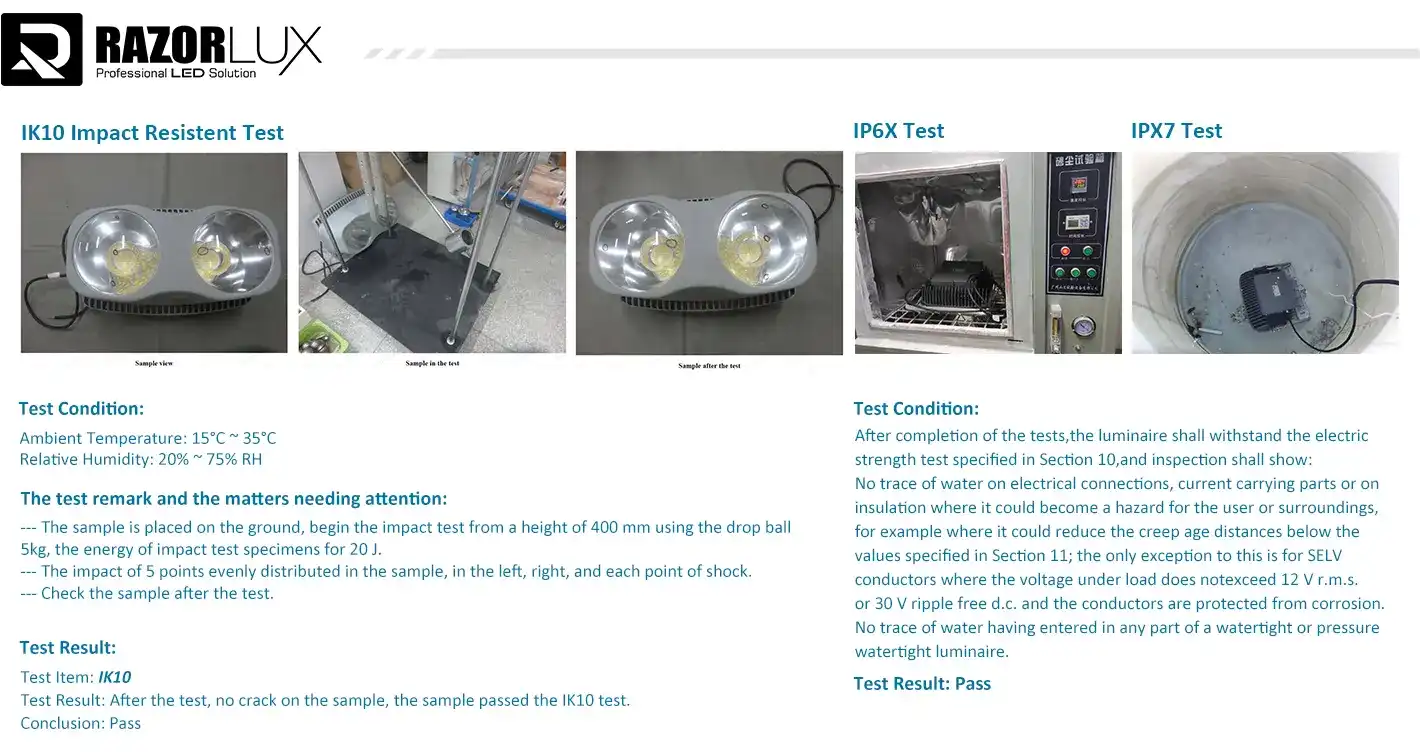
When making decisions about what to buy, specifications that directly affect durability and performance in the field should be given the most weight. Ingress protection ratings of IP67 are the lowest that can be used for outdoor cranes. This makes sure that the fixture can handle being submerged in water for a short time and being cleaned with high-pressure water. For marine environments and areas that get washed down with chemicals, IP69K ratings offer extra security, but they usually add 15-20% to the unit cost.
Impact resistance of IK10 guards against hits from swinging cables, flying objects, and dropped repair tools, all of which are typical dangers around crane operations. Fixtures that meet this standard can take hits equal to 20 joules of energy, which is about the same as dropping a 5-kilogram item from 40 centimeters without breaking or losing their ability to seal or focus light. This durability is very important in messy workplaces where equipment safety isn't always assured.
Evaluating Manufacturers and Supply Chain Reliability
Supplier selection includes more than just the initial product specs. It also includes the supplier's ability to manufacture the product, their quality control procedures, and their after-sales assistance system. Manufacturers with ISO 9001 certification have documented quality management systems that make sure that the same quality is used in all production runs. This lowers the risk of getting units that aren't up to par and break down early in the field. More approvals, like UL, CE, RoHS, and marine approvals from DNV/GL or ABS, show that the product meets foreign safety and environmental standards. This is very important for projects that have to follow rules from more than one country.
Stability in the supply chain is especially important for big projects that need shipments to happen in stages or new parts to be available for a long time. Established companies that can make everything in-house and have relationships with high-end brands like Meanwell (for power supplies) and Samsung (for LED chips) to get parts show that they are operationally mature enough to support multi-year purchase deals. Professional suppliers are different from opportunistic vendors who don't have the infrastructure to support serious industrial clients because they can meet tight bid deadlines and provide technical documentation, photometric test reports, and material certifications.
Optimizing Procurement Strategy for Project Requirements
Volume buying agreements can save you a lot of money on projects that need a lot of lights for fleets or setups that cover the whole building. Framework deals that set unit prices, shipping schedules, and warranty terms for needs that will last for more than one year lock in good prices and make sure that supplies don't run out. Many suppliers offer tiered pricing, with discounts of 10-15% for orders of ten or more units and even bigger discounts for orders of fifty or more units.
Sample evaluation programs let technical teams check how well fixtures work on the real job site before committing to full-scale purchases. Requesting evaluation units with the knowledge of possible purchase credit keeps everyone committed to the evaluation process. This method works especially well when replacing old lighting systems with new ones. A hands-on evaluation answers questions about mounting compatibility, beam characteristics, and operating stability that can't be fully answered by reading the specifications alone.
Conclusion
By adding specialized Crane Boom Lights, crane operations can be turned from dangerous tasks into well-controlled ones with clear safety limits. When you combine focused beam technology with tough industrial construction and long LED lifespans, you get measurable improvements in worker safety while lowering lengthy operational costs. By casting strong, directed light that moves with the lifting operations, these fixtures make clear visual cues that people on the ground automatically understand and respect. Purchasing managers in the maritime, construction, and heavy industries will find that investing in purpose-engineered Crane Boom Light systems meets regulatory requirements, lowers liability exposure, and shows a commitment to worker safety—results that more than justify the initial capital expenditure through fewer injuries and higher operational efficiency.
FAQ
What factors determine how bright and wide the Crane Boom Lights should be?
The main thing that determines the needed brightness and beam angle is the mounting height. To get 50–100 lux at ground level, cranes that work at 30 meters need about 100–150 watts of light with a 20–30° beam that gives off 13,000–20,000 lumens. For higher installations, either more wattage or narrower beams are needed to keep the intensity at a good level. The size of the load can also affect the choice of beam. For example, if the cargo is too big, the light may need to come from wider angles to cover the whole area, but this lowers the peak intensity and may need higher-wattage lamps to make up for it.
Can boom lights work with the safety and control tools that are already in place on a crane?
Modern LED Crane Boom Lights can be integrated in a number of ways. Units with 0-10V dimming inputs can be synced with crane load sensors so that the lighting rises automatically as the load gets close to the maximum capacity. In some setups, discrete signal inputs can turn on strobe modes when proximity sensors pick up people entering exclusion zones. Basic on/off control is still the most common type of control, but more advanced systems can add these features using extra relay panels and programmable logic controllers. The exact way these are integrated depends on the electrical design of the crane.
How often should lighting fixtures that are attached to a boom be fixed or replaced?
Crane Boom Lights usually don't need much regular care besides being checked every three months and having their lenses cleaned. Every three to five years, depending on how harsh the environment is, a full service should be done that includes replacing the seals and the thermal paste. When lumen loss lowers output below reasonable levels after about 50,000 hours of use, which is about 10 to 15 years of normal commercial use, the fixture needs to be replaced completely. Extreme temperatures, chemical exposure, or heavy vibrations may shorten this time frame to 7–10 years, but high-quality fixtures that are properly maintained usually last longer than these estimates.
Partner with Razorlux for Industrial-Grade Crane Boom Lights
Razorlux is an expert at making heavy-duty lighting solutions that are designed to work in the harsh conditions where cranes work. Our boom-mounted fixtures have patented multi-function designs and high-quality parts from Meanwell and Samsung. They are reliable and last a long time, which is what shipyard managers, port operators, and construction contractors need. Whether you need explosion-proof housings for petrochemical facilities, marine-grade corrosion protection for offshore platforms, or custom beam designs for specific lifting uses, our engineering team can help. All of our solutions come with full five-year guarantees. You can talk to our procurement specialists at sam@razorlux.com about your unique needs, ask for evaluation samples, or get full technical paperwork. With ISO 9001 certification and global regulatory approvals like UL, CE, DNV/GL, and ABS, we are a trusted Crane Boom Lights supplier. We provide the quality, service, and supply chain reliability that B2B buyers expect from world-class industrial lighting manufacturers.
References
1. Anderson, M.J. & Roberts, K.L. (2019). Illumination Standards for Heavy Equipment Operations: Safety and Productivity Analysis. Industrial Safety Press.
2. Chen, W. & Martinez, D. (2021). LED Technology in Marine and Offshore Applications: Performance Under Extreme Conditions. Maritime Engineering Journal, Vol. 45, pp. 112-134.
3. International Organization for Standardization (2020). ISO 12100: Safety of Machinery – General Principles for Design. Geneva: ISO Publications.
4. National Institute for Occupational Safety and Health (2018). Preventing Struck-By Injuries in Construction: The Role of Visibility Enhancement. NIOSH Publication No. 2018-156.
5. Thompson, R.S., Liu, Y., & Patel, A.K. (2022). Comparative Life Cycle Cost Analysis of Industrial Lighting Technologies. Journal of Construction Engineering and Management, Vol. 148, No. 3.
6. Williams, E.H. (2020). Crane Safety Systems: Integration of Mechanical, Electrical, and Human Factors. Professional Safety Engineering Publishers.