

_1750326878398.png)

How to Install Outdoor Lighting for Volleyball Court Safely?
To install strong lighting systems for volleyball courts, you need to plan and follow strict safety rules. Fixtures that provide even lighting, reduce glare, and last through weather problems like dust, moisture, and temperature changes are needed for Outdoor Lighting For Volleyball Courts. Choosing certified tools with an IP67 rating, hiring qualified electricians, and following local electrical rules are all important parts of a successful installation. Professional LED systems, like those from Razorlux, have multi-function designs that work well in a variety of work environments. They offer 130 lm/W efficiency and can connect to either AC 110-480 Vac or DC 100-800 Vdc inputs, so they can be used safely in all power systems around the world.
Understanding the Basics of Outdoor Volleyball Court Lighting
Why Does Proper Sports Lighting Matter?
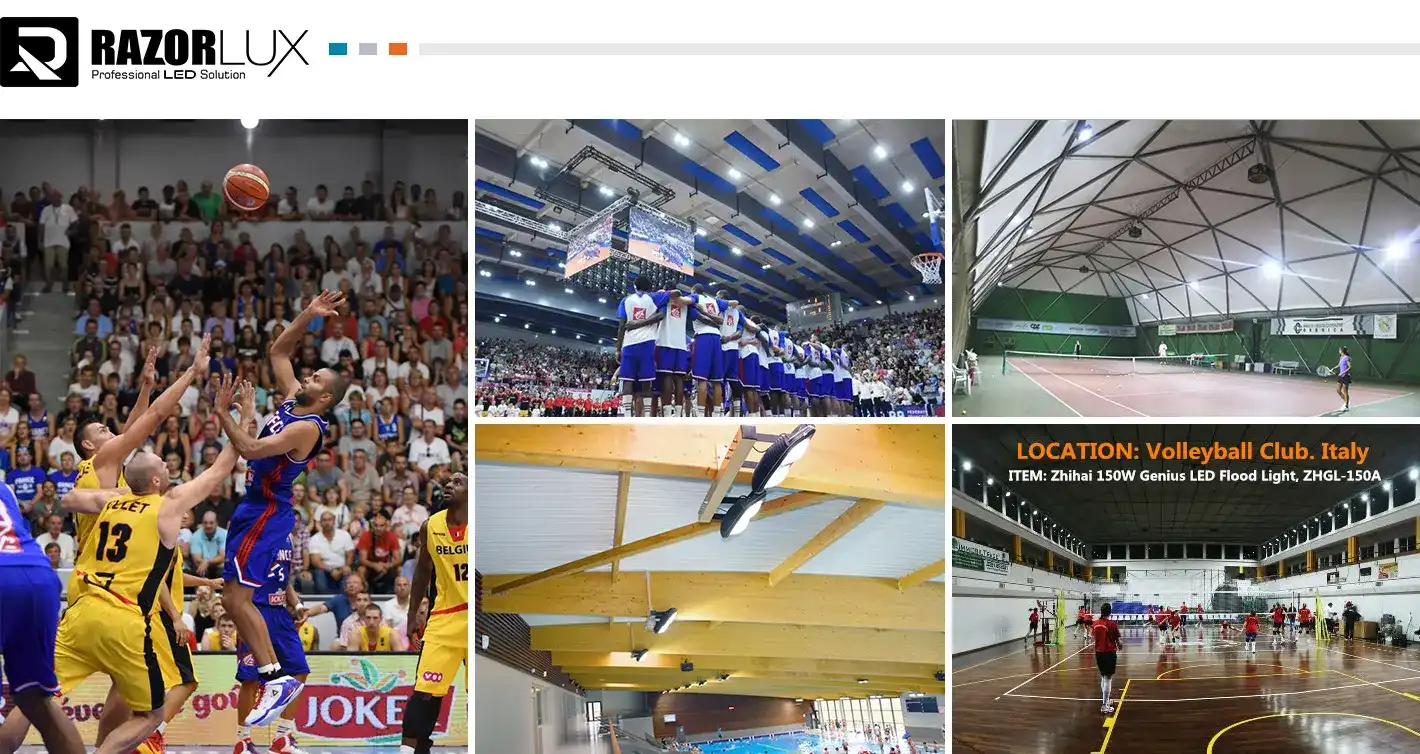
Volleyball requires quickly following a moving ball through a variety of backgrounds, so good lighting is very important. Poor lighting puts players at risk of getting hurt, lowers the quality of the game, and makes it less safe. When there is enough lighting, games can be played longer, the venue is used more, and the fans have a better time. The similarities are clear to procurement managers who are in charge of shipyards or ports: just like deck lighting has to stand up to salt spray and shaking, Outdoor lighting for volleyball court fixtures has to stand up to rain, wind, and UV light while still working properly.
Key Lighting Requirements for Volleyball Courts
Depending on how intense the play is, regulatory guidelines set precise levels of light. Most recreational courts need consistency of 200 to 300 lux, while elite courts need 500 lux or more. Players can keep track of the ball during serves and spikes with the help of vertical illumination. To keep shadows and bright spots from being confusing, uniformity ratios shouldn't go over 1.5: 1. Controlling glare is a must; light fixtures must point light downward so that people can't see directly into sources. Color rendering values above Ra75 make it possible to see the balls accurately, but setups for broadcast quality may need Ra80 or higher.
| Court Type | Horizontal Lux | Vertical Lux | Uniformity Ratio |
|---|---|---|---|
| Recreational | 200-300 | 150-200 | ≤1.5:1 |
| Training/Competition | 500 | 350-400 | ≤1.3:1 |
| Broadcast Standard | 750-1000 | 500-700 | ≤1.2:1 |
LED Technology vs. Traditional Lighting Solutions
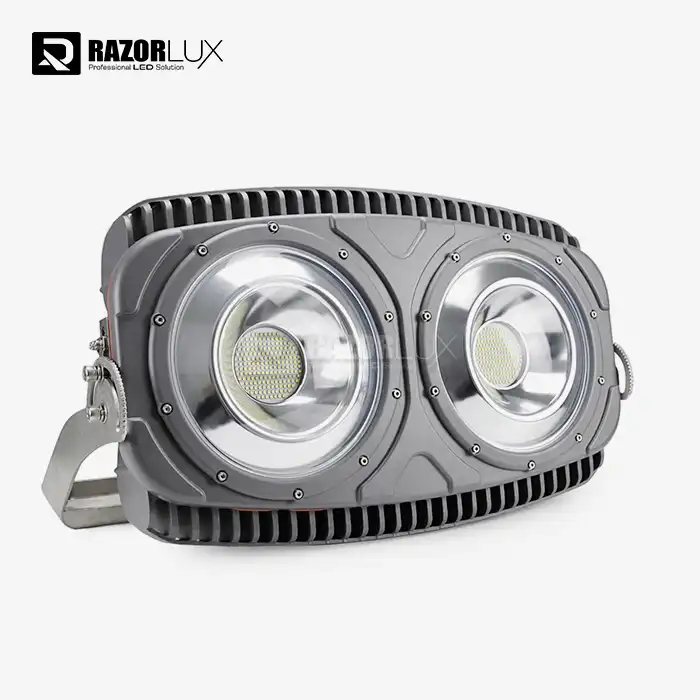
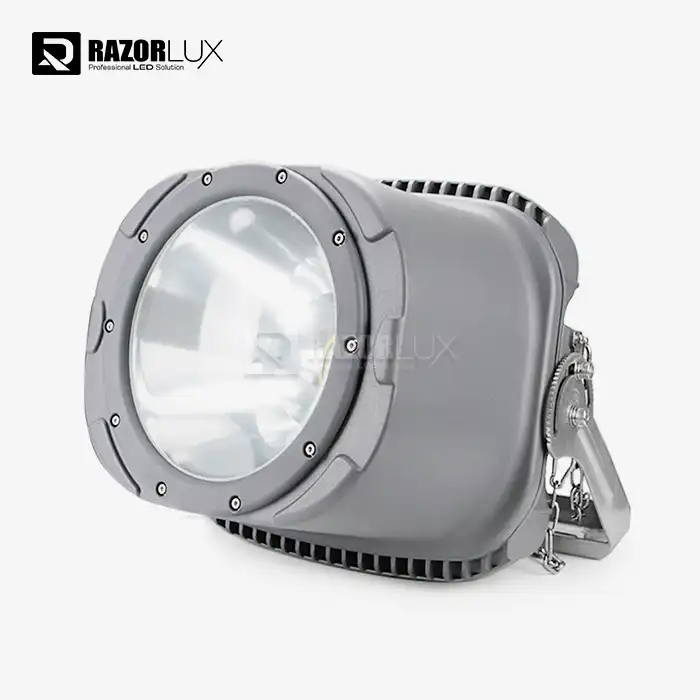
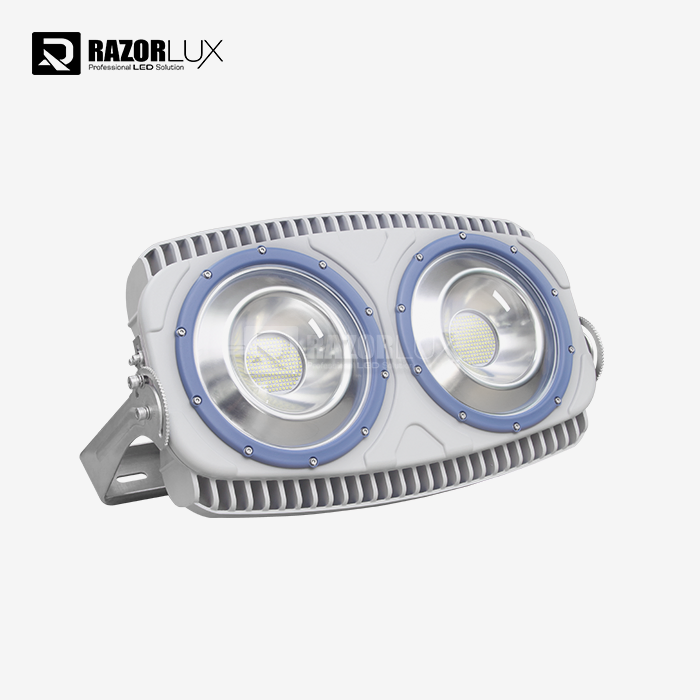
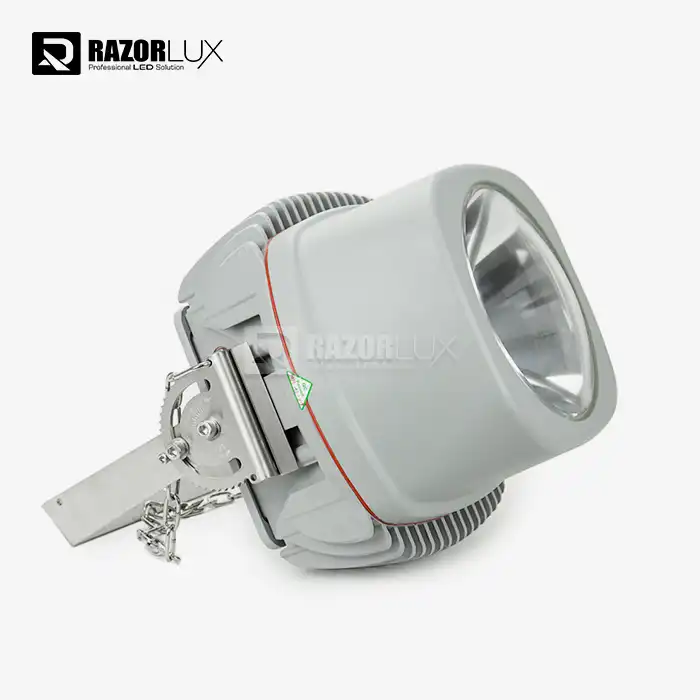
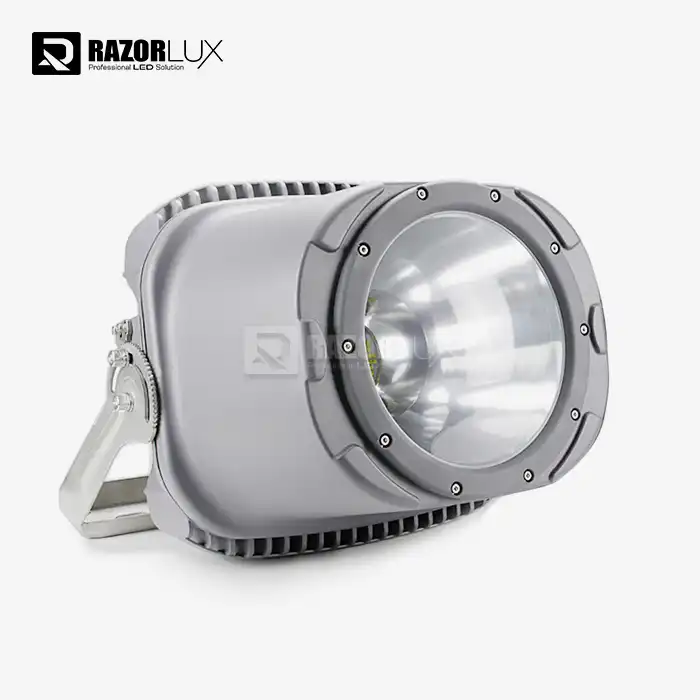
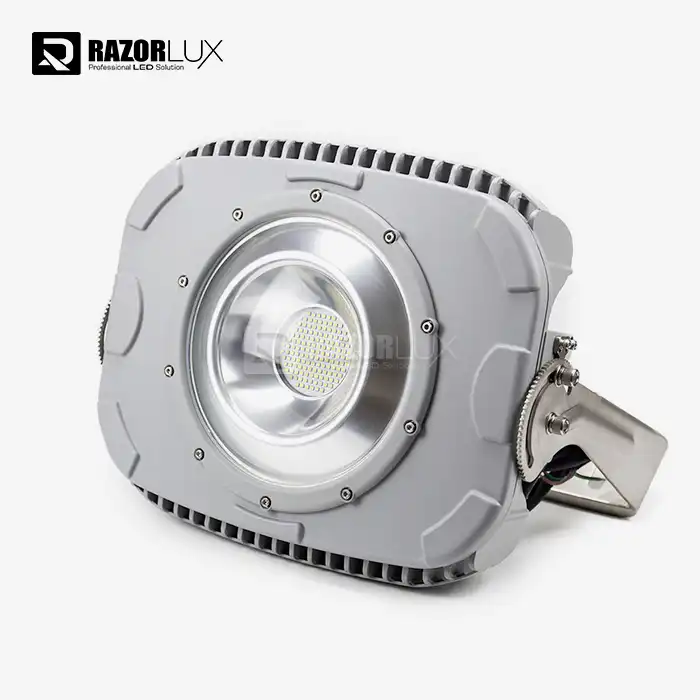
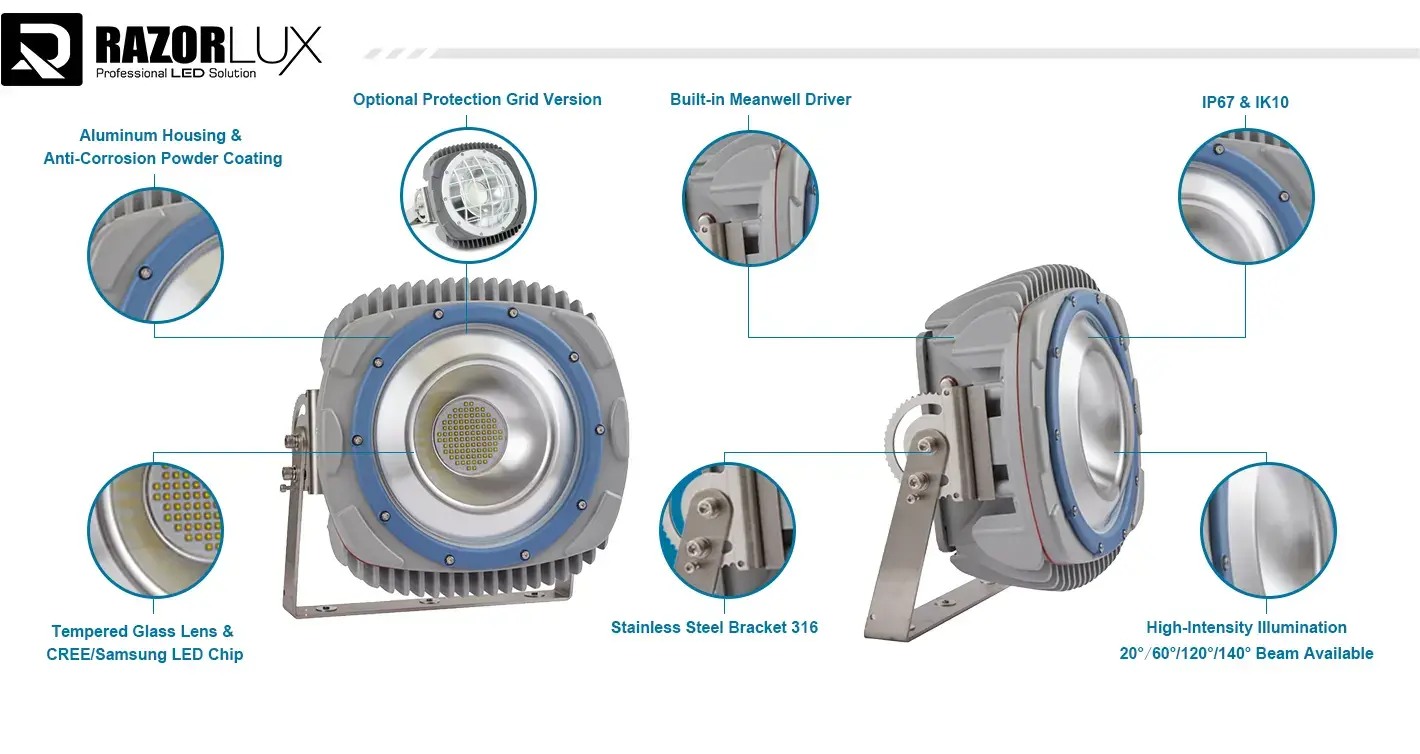
LED lights have taken the place of metal halide and high-pressure sodium lamps as the standard for outdoor sports lighting. There are more benefits than just saving energy. LED systems can turn on instantly, so they don't need to warm up like discharge lamps do. Long operational lives (more than 50,000 hours) cut down on repair rounds, which is very important for places where service is limited. Razorlux's 400W Led Floodlights can be used instead of 800-1000W HID bulbs, which saves 60% of energy and gives off better light. Meanwell power sources make sure of stable operation over a wide voltage range, which is a trait that procurement managers value when they have to deal with unstable grid conditions in offshore platforms or remote port facilities.
Energy Efficiency and Environmental Considerations
Today, choices about what to buy are based on sustainability. LED technology lowers carbon emissions by using less energy and getting rid of dangerous materials like mercury that were used in older light types. Systems with a rating of 130 lm/W or higher give off the most light per watt, which directly saves money on operations. When facilities change to LED lights, their energy costs usually drop by 40 to 60 percent. Environmental compliance is important, even more so than the economy. Products with CE, RoHS, and UL certifications meet strict material safety standards. This makes the approval process easier for international projects where regulations range from country to country.
Fixture Durability and Weather Resistance
Lighting equipment is exposed to toxic substances in coastal and industrial settings. IP67-rated shelters keep out water when submerged up to one meter, which is important for sites near water features or places that can flood. The IK10 grade protects against damage from loose balls or other objects. Powder-coated aluminum housings that are resistant to UV damage and salt corrosion are used in Razorlux lights. They are paired with stainless steel mounting clamps that keep the structure strong during freeze-thaw cycles. With a temperature range of -40°C to 60°C, it can work reliably in harsh climes, from the cold winters of northern Europe to the hot summers of the Middle East.
Step-by-Step Guide to Safe Installation of Outdoor Volleyball Court Lighting
Pre-Installation Planning and Site Assessment
Planning carefully is the first step to a successful operation. Site studies find out what kind of electrical equipment is already there, where the poles are, and what might be in the way. Photometric modeling software models how light is spread and finds the best places for outdoor lighting for volleyball court fixtures to be placed to reach goal lux levels while reducing the number of poles needed. For this process to work, the court's measurements, hanging heights, and reflection values around it must all be exact. The procurement team should ask makers for specific installation drawings that show the aiming angles, mounting hardware, and electricity load estimates. During this time, Razorlux offers technical support by helping engineers choose the right beam angles (40°, 60°, 120°, or asymmetric 140°x60°) for each court's shape.
Electrical Infrastructure and Code Compliance
Strong electricity supply lines are needed for lighting systems. In the United States, installations must meet NEC (National Electrical Code) standards. In other countries, they must meet IEC standards that are similar. Important things to think about are:
- Voltage compatibility: Razorlux lights can work with a wide range of input voltages (AC110-480Vac, DC100-800Vdc), which gets rid of the voltage mismatch problems that are common in multi-phase industrial settings.
- Circuit protection: Breakers and surge protectors with the right ratings stop sudden voltage spikes. This is especially important in seaside areas that are prone to lightning.
- Grounding requirements: To keep people from getting shocked, Class I insulation needs to have solid earth links.
- Conduit routing: Weatherproof tubes keep wires safe from damage and water entry.
By hiring qualified electricians who are familiar with outdoor sports lighting, you can be sure that local changes and review rules will be followed. To speed up the permit approval process, documentation packages should include single-line diagrams, load estimates, and equipment licenses.
Mounting Heights and Fixture Positioning
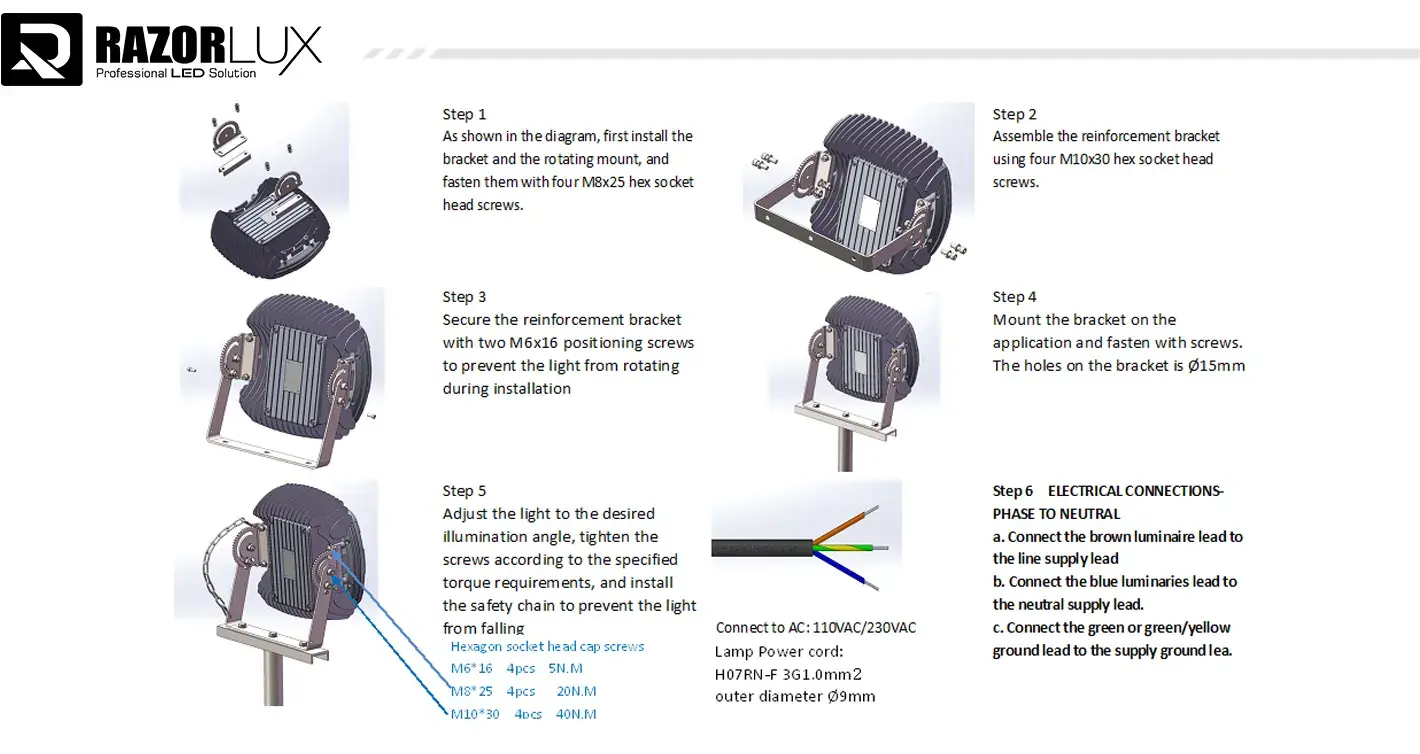
Light spread and glare control are directly affected by the height of the pole. Standard advice says to put fixtures 6 to 12 meters above the playing areas so that the quality of the light is balanced with the cost of the structure. Lower mounting heights make glare worse and make the light less even, while too high of heights need higher wattages to make up for the extra distance. Light is spread evenly with four- or six-pole configurations and lamps aiming inward at 15° to 30° angles. Accurate aiming stops light from entering nearby properties, which addresses worries about dark sky compliance. Razorlux systems come with stainless steel brackets that let you make fine-tuned angle tweaks that take into account changes in the field that may happen during installation.
Wiring Best Practices and Weatherproofing
In outdoor displays, exposed links are places where things can go wrong. All switch boxes must have casings with IP ratings that meet the requirements of the fixtures. For IP67 security, compression glands with neoprene seals are used for cable entrances. Wiring should include service lines close to fixtures so that they can be easily maintained in the future without having to be rewired. When figuring out the ampacity of a wire, it's important to think about the temperature of the room and the pipe fill factor. Razorlux fixtures have built-in terminal blocks that can accept 6mm² wires. This makes connections easier and ensures a safe mechanical connection. During testing, regular thermal imaging scans find loose connections before they get worse and break.
Safety Protocols During Installation
Installation teams have to deal with a lot of risks, including working at heights, getting shocked by electricity, and moving big tools. Safety plans that cover everything include:
- For work above two meters, fall safety devices like harnesses and guardrails are used.
- Lockout/tagout processes make sure that circuits don't get powered up while wiring is being done.
- Safety gear for individuals, such as heated gloves, arc-rated clothes, and hard hats.
- Load-rated rigging gear that is approved for fastening weights (15 kg for Razorlux 400W units).
- Interrupters that sense ground faults on temporary power sources.
Safety meetings and toolbox talks should be recorded to show that proper care was taken. This protects workers from liability and promotes a safety culture. Before letting work begin, project managers should make sure that contractors have the right protection and credentials.
Testing and Commissioning Procedures
Validation after installation makes sure that efficiency specs are met. At grid points across the court, light meters measure the horizontal and vertical lighting and compare the readings to the design goals. Uniformity estimates find points that need to be adjusted for aiming. Functional tests make sure that any lowering controls work easily across their entire range, if they are present. Check voltage balance, power factor (Razorlux systems keep ≥0.98 PF), and total harmonic distortion (<10% THD) with electrical tests. Photographs show things as they were when they were made, which can be used as a starting point for future evaluations. When you register your guarantee, you should get a commissioning report that sets clear performance standards that can be used to figure out what maintenance needs to be done.
Benefits and Long-Term Advantages of Proper Volleyball Court Lighting
Enhanced Player Safety and Performance
Good Outdoor Lighting For volleyball, the court has a direct effect on how well athletes do and how often injuries happen. When there is enough light, players can correctly judge where the ball is going, which cuts down on mistakes that cause crashes or missed plays. Glare-free areas keep players from temporarily going blind when they look at objects during high serves. Color temperatures that stay the same (5000–5700K) make colors look more natural, which helps players tell the difference between team outfits and the edges of the court. When facilities put safety first, they get fewer insurance claims and happier customers, which leads to more bookings and a good image.
Extended Facility Operating Hours
Scheduling is not limited by daylight when you use artificial lights. Leagues, games, and business events that happen in the evening can be good ways to make money. In northern regions, where daylight hours get shorter in the winter, facilities stay open all year. This adaptability is especially helpful in multi-use buildings where volleyball fields are shared with other activities. With dimming, you can save energy during off-peak hours or practice times where you need less light. Because Razorlux systems work with both 0-10V and DALI controls, they can be easily connected to building management systems. This lets automatic scheduling be in sync with booking plans.
Operational Cost Reductions
LED technology changes the costs of operations. Depending on how much you use and how much power costs, the energy savings should cover the costs of installation within three to five years. Lamps with longer lifespans don't need to be replaced as often; 50,000-hour rates mean that a lamp can work for over 11 years if it is used 12 hours a day. The cost of maintenance work goes down equally, which frees up staff to do other things. Systems that use flexible LED boards make it easier to swap parts, so fixtures don't have to be completely changed. Razorlux's 5-year guarantee on LED modules and drivers protects your budget and keeps you from having to pay for unnecessary capital expenses during the warranty period.
Environmental Sustainability and Compliance
Energy-efficient options are bought because companies have to be environmentally friendly. Green building approvals (LEED, BREEAM) can be earned for LED systems, which makes the building more marketable. Scope 2 carbon emissions go down when people use less energy, which helps meet net-zero goals. For easier disposal at the end of its useful life, RoHS compliance makes sure that goods don't contain any banned chemicals. Facilities in places where carbon is priced directly gain from lower taxes on pollution. In addition to following the rules, being a good environmental manager makes relationships in the community stronger and brings in user groups that care about the environment.
| Metric | Traditional HID | LED (Razorlux 400W) | Improvement |
|---|---|---|---|
| Power Consumption | 1000W | 400W | 60% reduction |
| Lifespan | 10,000 hours | 50,000 hours | 5x longer |
| Maintenance Frequency | Every 2 years | Every 10+ years | 80% less frequent |
| Warm-up Time | 5-10 minutes | Instant | Immediate full output |
Long-Term Reliability and Maintenance Strategies
Regular repair makes systems last longer than their rated hours. Once a year, the mounting gear torque, cable links, and glass sharpness are all checked. Thermal imaging finds drivers that are getting too hot before they break. Cleaning plans get rid of dust and bug poop that lowers the light output, and IP67 seals make it easier to clean with power washers. Keeping extra parts like drivers and surge protectors on hand cuts down on downtime while fixes are being done. Because Razorlux uses standard Meanwell parts, replacements are easy to find through global distribution networks. This is especially important for sites that are far away from where shipping delays could affect operations.
Comparing Popular Outdoor Volleyball Court Lighting Solutions for Procurement
LED vs. Metal Halide: Performance and Economics
Metal halide (MH) lights were the standard for sports lighting for many years, but they have some problems. MH systems need 5–10 minutes to warm up, which is too long for situations where light needs to be available right away. After 6,000 hours of use, lumen loss speeds up, so they need to be replaced early to keep the lux level. Power use stays high; 1000W lights draw a constant load with few gains in efficiency. On the other hand, LED systems can turn on instantly and keep their 90% light power for 50,000 hours. Directional light output cuts down on lost lumens, and the ability to lower the light lets it operate based on demand. When purchasing managers look at the total cost of ownership, they always choose LED options for outdoor lighting for volleyball courts, even though they cost more up front.
Solar-Powered vs. Grid-Connected Systems
Solar lighting is good for places that aren't connected to the power source or that want to be energy independent. Photovoltaic panels collect sunlight during the day and store it in battery banks so that it can be used at night. This method gets rid of the need for trenching for electricity distribution, but it also brings new problems. The battery's ability must be able to handle changes in yearly sunlight and cloudy days. Compared to grid-tied systems, the prices of the parts are still higher. The health of the battery affects how well it works. Lithium-ion technologies last between 5 and 8 years before their capacity drops, and they need to be replaced. Grid-connected LED systems are more reliable, and performance can be predicted more accurately. This is especially true for systems that accept a wide range of voltages, like Razorlux lights. Solar supplementation and grid backup are combined in hybrid systems that balance the need to be environmentally friendly with the need to meet practical needs.
Evaluating Fixture Specifications for Procurement
Professional-grade equipment is different from market goods in terms of technical specs. Checklists for buying things should make sure of:
- Lumen efficacy: At least 130 lm/W is needed to make sure energy efficiency; higher numbers lower running costs.
- Color rendering index (CRI): Ra75 is good for casual use, but Ra80+ is needed for competition settings.
- Power factor: Values above 0.95 keep reactive power costs low and ease the strain on the power grid.
- Surge protection: Built-in 10kV protection keeps your equipment safe from lightning-caused problems that often happen in open setups.
- Thermal management: Extruded metal heat sinks with specially designed fins keep the temperatures at the LED junctions below 85°C, which keeps the brightness level constant.
- Ingress protection: An IP67 grade means it can handle bad weather, but installations near the coast may need extra tests for salt fog (ASTM B117).
Selecting Reliable Manufacturers and Suppliers
Evaluation of vendors goes beyond just looking at product specs. Well-known producers show that:
- Experience in the field: Businesses that have been around since the 1990s, like Razorlux (formed in 1998), have been through changes in technology and economic shifts.
- Patent portfolios: More than 200 patents show real investment in research and development (R&D) instead of contract manufacturing.
- Sources of parts: The fact that Samsung LED chips and Meanwell drivers are specified shows a commitment to quality.
- Certification range: Approvals for more than one market (UL for North America, CE for Europe, and SAA for Oceania) make it easier to launch products in multiple countries.
- Samples are available: Being willing to provide evaluation units lets testing happen in-house before a decision to buy is made.
- Technical support: Quickly responding engineering teams help with photometric design and fixing problems during installation.
Ensuring Compliance and Quality Assurance in Lighting Installation
Navigating Certification Requirements
Product approvals show that a product meets safety and effectiveness standards. The CE mark means that the product meets the safety standards set by the European Union for electromagnetic compatibility and low power. UL rating means that the product has been tested independently against North American safety standards, which are required by many U.S. states. Even though DLC qualification is optional, it confirms claims about energy efficiency and makes it possible to get a utility refund. Marine-specific approvals (DNV/GL, ABS) are needed for fixtures that are used for more than one thing in factories or port buildings. Razorlux keeps up with all of its certifications, which makes the approval process easier for international projects that have to follow more than one standard at the same time.
Local Electrical and Building Codes
Installation rules are set by cities and towns, and they often go beyond national standards. Coastal areas may require materials that don't rust or equipment that is placed above water zones. Light pollution laws limit the number of lights that can be put up and the hours that they can be used near residential areas. Historical areas have rules about how things should look, which affects how fixtures and poles are made. Successful projects involve local officials early on and present photometric studies that show compliance before buying materials. Electrical checks make sure that the rules are being followed, and thorough paperwork packages with maker cut sheets, wiring diagrams, and certification letters speed up the approval process.
Performance Testing and Validation
Verification after installation proves the original purpose. For outdoor lighting, for volleyball court studies, certified light meters are placed at regular grid intervals, which are usually 3 meters apart. The measurements are done after dark when the weather is calm, so the moon doesn't affect the results. For measures of vertical illumination, sensors are placed so that they are not pointing in the same direction as the light. By figuring out the average, minimum, and highest lux numbers through data analysis, uniformity ratios can be found. Results are compared to design expectations to find differences that need to be fixed by adjusting the aiming. Video records show subjective evaluations like how easy it is to see the ball, how bright it is from the players' points of view, and the patterns of shadows. Full approval records keep track of these results and set performance standards that can be used for warranty claims or future upgrades.
Warranty Coverage and After-Sales Support
Warranty terms show how confident the maker is. Razorlux's 5-year warranty on LED modules and drivers is longer than the norm in the industry, and the 10-year warranty on the case shows how well it was built. Registration for the warranty should happen right after installation, and serial numbers and times of activation should be written down. It's easier to avoid arguments if you know what the coverage doesn't cover, like physical damage, illegal changes, or functions outside of certain limits. Responding to technical support requests sets one maker apart from another. Being able to talk to application experts who can help with installation problems or suggest ways to improve performance is an added benefit that goes beyond providing hardware. Having spare parts on hand is also important; having drivers, surge protectors, and mounting tools on hand makes fixes go quickly, reducing court downtime.
Partnering with Qualified Installation Contractors
Choosing a contractor has a big effect on how the job turns out. Companies that are qualified show:
- Licensed electricians with either apprentice or master credentials.
- Insurance coverage, including general liability and workers' compensation insurance.
- Prior experience having worked on lighting projects for sports before.
- Expertise with goods made by a certain company, ideally factory-trained on how to put them.
- Safety program paperwork, such as fall safety and limited space rules.
Conclusion
It is important to find a balance between technical performance, legal compliance, and long-term dependability when installing outdoor lighting for a volleyball court. LED technology, especially systems like Razorlux's 400W lights that offer 130 lm/W efficiency, IP67 protection, and wide voltage compatibility, can handle the tough conditions of sports venues while saving money on costs. Thorough planning before installation, following electricity codes, choosing high-quality tools, and professional installation methods are all important for projects to be successful. The benefits go beyond just meeting the instant need for lighting. They include lower energy costs, better building utilization, and less damage to the environment. When purchasing teams prioritize approved goods from well-known companies with strong support networks, their buildings are set up to provide reliable service for decades to come.
FAQ
What mounting height works best for outdoor volleyball courts?
The best heights for mounting are usually between 6 and 12 meters above the game field. Lower placements (6–8 meters) work well in leisure areas but can cause glare, so you have to be careful when shooting. Many competitive sites require poles that are 10 to 12 meters tall to improve regularity and cut down on glare. However, higher wattages make up for the longer distance. It's important to think about the structure. For example, bigger poles need deeper foundations and wind load estimates. Razorlux Outdoor Lighting for Volleyball Court fixtures have brackets that can be adjusted to fit different heights.
How many fixtures does a standard court require?
The fixing height, fixture power, and desirable lux levels determine how the lights are set up. Most leisure courts have four 400W LED fixtures placed in the corners to make the lighting even, at 200 to 300 lux. To hit 500+ lux goals, competitive sites may use six fixtures (mid-court poles) or higher wattages. Photometric modeling figures out exactly what is needed, and Razorlux offers free design services that make plans that work best for each site.
Can existing poles support LED fixture upgrades?
Assessments of structures show whether retrofitting is possible. Most LED lights are lighter than their HID counterparts (Razorlux 400W units weigh 15 kg compared to 25 kg+ for similar metal halide systems), which means that pole loads is lower. Wind loading estimates make sure that the poles can support the effective estimated areas of the fixtures (EPA). If the current wiring isn't big enough for the current that LEDs draw, it may need to be upgraded. However, smaller wattages usually allow straight replacement.
Partner with Razorlux for Superior Volleyball Court Lighting Solutions
Razorlux has been a trusted outdoor lighting maker for volleyball courts since 1998, making tough LED systems made for harsh settings. Our 400W floodlights are 130 lm/W efficient and protected by IP67/IK10. They come with Meanwell drivers and come with a 5-year warranty. Procurement managers can get all the help they need from us, including help with photometric design, technical paperwork packages, sample availability, and shipping around the world. Our team works with your engineers to find the best options, whether they are improving current courts or building new ones. Get in touch with sam@razorlux.com to talk about your project needs and get personalized offers that show how our certified, marine-grade lighting systems provide steady light and long-term value.
References
1. Illuminating Engineering Society. RP-6-15: Sports and Recreational Area Lighting. New York: IES, 2015.
2. National Electrical Manufacturers Association. ANSI C136.31-2010: American National Standard for Roadway and Area Lighting Equipment - Luminaire Vibration. Rosslyn: NEMA, 2010.
3. Commission Internationale de l'Éclairage. CIE 169:2005: Practical Design Guidelines for the Lighting of Sport Events for Colour Television and Filming. Vienna: CIE, 2005.
4. U.S. Department of Energy. LED Lighting for Sports and Arena Applications. Washington: Office of Energy Efficiency & Renewable Energy, 2018.
5. International Dark-Sky Association. Outdoor Sports Lighting: Recommended Practice for Design and Operation. Tucson: IDA, 2020.
6. IEEE Standards Association. IEEE Std 1789-2015: Recommended Practices for Modulating Current in High-Brightness LEDs for Mitigating Health Risks to Viewers. Piscataway: IEEE, 2015.