

_1750326878398.png)

Low Mast Light Retrofit: Upgrade to LED Technology
In Low Mast Light situations, replacing traditional lighting with LED technology is a big step forward for sites that run ports, shipyards, industrial parks, and offshore platforms. A Low Mast Light retrofit includes changing old HID or fluorescent lights that are placed at heights of 8 to 18 meters with high-tech LED options that provide better lumen output, energy savings of more than 130 lm/W, and strong protection ratings. This upgrade directly fixes procurement problems like needing to do regular maintenance, rising energy costs, and gaps in marine-grade certifications. It's a smart investment that lowers the total cost of ownership while keeping operations running in harsh environments.
Understanding Low Mast Lighting and the Need for Retrofit
What Defines Low Mast Lighting in Industrial Settings
Low Mast Light systems are an important middle ground between normal 6-meter street poles and 18-meter-tall high mast setups. Most of the time, these lights are mounted at heights between 8 and 15 meters. They provide focused lighting for industrial yards, shipping hubs, and port loading zones. Unlike high mast systems that are meant to cover a large area, Low Mast Light designs provide precise lighting in a small area that keeps shadows from forming around vertical objects like stacked cargo or machinery enclosures. Because of the mounting height, repair teams can get to fixtures using regular bucket trucks instead of expensive cranes. This cuts down on service interruptions and labor costs. A lot of HID lights, like metal halide or high-pressure sodium fixtures, are used in traditional Low Mast Light setups. These technologies were the norm until the early 2000s, but they have a lot of problems: they take a long time to warm up, the color temperature changes over time, and they lose a lot of lumens in the first 5,000 hours of use. Purchasing managers in shipyards often see early failures caused by frequent switching cycles. HID lamps have trouble in this situation because repeated heat stress speeds up wire wear.
Why Traditional Technologies Fall Short
There are measured inefficiencies with both HID and fluorescent lamps that have a direct effect on business costs. A regular 250W metal halide lamp can only produce 70–80 lm/W at first, and after 10,000 hours, it can only produce 60 lm/W because the electrodes and phosphor are wearing down. This is very different from LED technology, which keeps its brightness fixed for more than 50,000 hours. Facilities that are open 24 hours a day waste a lot of energy. For example, a port station with 200 standard fixtures uses about 50,000W of power all the time, which adds up to 438,000 kWh per year at an average industrial rate of $0.10/kWh, or $43,800 just in electricity costs. These costs are made worse by the need for maintenance. In naval settings, where salty air speeds up ballast rust, HID lights need to be replaced every 12 to 18 months. For each repair event, a crane must be rented, trained technicians must be present, and production must be stopped during safety lockouts. Offshore platform managers say that over the course of five years, repair costs can hit 40% of all lighting costs. Low mast lights and unexpected outages can make nighttime cargo activities less safe.
Benefits of Upgrading to LED Technology in Low Mast Lighting
Quantifiable Energy Savings and Cost Reduction
Retrofitting with LEDs saves money right away because they use less power. A 120W LED light can replace 250–300W HID bulbs and produce 14,400 lumens, which is a straight 52–60% energy savings. Depending on the power rates in their area, industrial equipment sellers who manage warehouses with 150 Low Mast Light fixtures save between $18,000 and $26,000 a year. When you add up the savings on energy and repair costs, the payback time is usually between 18 and 30 months. Lowering demand charges can save you even more money, which is something that is often missed in the first ROI calculations. Facilities that are charged more during peak demand periods see their energy bills go down because they use fewer kWh and less power during peak demand periods. By removing 200 old lights at a transport hub in Singapore, peak demand was cut by 32kW, which cut monthly demand charges by $1,280 and added $15,360 to the yearly savings above and beyond the energy use benefits. Getting rid of long-term repair costs changes daily budgets. In traditional HID systems, the lamps need to be replaced every 12 to 18 months, and the battery needs to be serviced every 3 to 4 years. LED lights that last 50,000 hours or more don't need to have their lamps changed for 11 to 14 years, assuming they are used for 12 hours a day. A port authority that was in charge of 300 fixtures estimated that they would save $47,000 in maintenance costs over five years by not having to repair 600 lamps, which cost $35 each, and $43,000 in labor costs for service that required a crane.
Enhanced Safety Through Superior Light Quality
Uniform lighting has a direct effect on safety at work in industrial settings. Traditional HID lamps make bright spots under fixtures that quickly lose their brightness in the middle zones between the poles. This creates dangerous dark spots where truck drivers can't tell where they are in the room. Asymmetric LED lenses with beam distributions of 60°, 120°, or 140°x60° can give uniformity ratios higher than 0.7, which means that the minimum level of light across the lit area is at least 70% of the average level. The ability to display colors better makes it easier to find hazards and keeps operators from getting tired. When the CRI value of a HID sodium lamp is less than 25, all surfaces become a solid yellow color. This makes it hard to see color-coded safety signs or fluid leaks. Maintaining Ra>75 CRI in LED lights allows for correct color perception, which helps maintenance crews find hydraulic leaks (which leak red fluid), coolant spills (which spill green fluid), and diesel fuel (which spills amber fluid) at night. During a two-year study after LED retrofits, there were 23% fewer near-miss events on offshore platforms, which engineers say is due to better CRI. Instant-on performance gets rid of risky warm-up times that make it harder to respond to emergencies. When the power goes out, HID lamps need 3–7 minutes to reach full output. This means that people working in important places will not be able to see well for a while. In milliseconds, LED fixtures reach full brightness, which is very important during emergency evacuations or when getting back to work after a power outage, which can happen in rural industrial sites.
Comparing Low Mast Light LED Retrofit Options: What B2B Buyers Need to Know
Low Mast vs High Mast: Application-Specific Considerations
Choosing the right mounting height has a big effect on the repair approach, the Low Mast Light, and the performance results. Low Mast Light systems (8–15 meters) work well in places where people need to be able to see and understand small details. For example, loading docks where workers read container numbers, maintenance areas where color-accurate component identification is important, or walking areas where security depends on recognizing faces. Installing high masts (20–40 meters) is best for open spaces like container yards that need a lot of light but not a lot of detail. The difficulty of retrofitting changes a lot depending on the configuration. Low Mast Light jobs usually just involve replacing a few fixtures using the existing pole infrastructure and electricity feeds. This is usually done during regular repair times and doesn't require a lot of civil work. For high mast upgrades, structural engineers often have to look at the old poles to see if they can handle the weight of current LED panels with built-in drivers and advanced thermal management systems.
| Lighting Configuration | Typical Height Range | Ideal Applications | Retrofit Complexity | Maintenance Access Method |
|---|---|---|---|---|
| Low Mast LED | 8 to 15 meters | There are loading docks, upkeep areas, walking paths, and ship repair rooms. | Simple bulb swap, not many internal changes | Bucket trucks and styles with hinged poles |
| High Mast LED | 20 to 40 meters | Yards for containers, places to store large goods, and airport aprons | May need improvements to the structure and a base check. | Crane access and lowering systems |
| Standard Street Pole | 6 to 8 meters | Access roads, parking lots, and lights around the edges | Easy to modify, and poles are often available | Portable tools that can be used by hand |
The requirements for controlling glare are very different depending on the fixing height. Low Mast Light lights that are closer to the ground must have precise visual cutoffs that stop drivers and pedestrians from seeing the LED arrays directly from their eye level, which is usually 1.5 to 1.8 meters. Fixtures that don't have the right shielding create uncomfortable glare that makes it harder to see and makes it easy for workers to mistake distances when making precise moves. High mast installations naturally decrease glare problems because they are farther away, but they need to be carefully aimed to keep light from getting into nearby homes or navigation channels.
LED Technology Advantages Over Legacy Systems
The biggest difference in performance between technologies is in how well luminosity works. Metal halide systems get 70–80 lm/W, while ceramic metal halide systems get 80–90 lm/W. Modern LED lights get 130–140 lm/W. This efficiency directly leads to fewer fixtures; projects that replace HID setups often get rid of 20–30% of pole locations while keeping the same or better amounts of lighting. 165 LED units were put in place of 240 HID lights at a container port, which led to 15% better average lighting while using 38% less energy. Lifecycle cost analysis is changed by changes in operational lives. HID lamps can suddenly go out, which means they need to be replaced right away to avoid dark spots that could be dangerous. LED panels show a graceful decline by slowly losing power over more than 50,000 hours while keeping usable output levels. Because of this, condition-based maintenance planning can be used instead of spontaneous emergency fixes. Marine equipment developers say that planning upkeep has become 40% more efficient since switching to LED infrastructure with recorded performance curves. How reliable something is in tough settings depends on how well it can handle heat. HID lights produce a lot of radiant heat that gets stuck inside the housings. This speeds up the breakdown of seals and puts stress on electrical parts through thermal cycles. When used in marine settings, IP-rated cabinets with internal temperatures between 85°C and 95°C have gaskets that break down quickly, letting salty moisture in within 18 to 24 months. Aluminum heat sinks in LED lights keep the inside temperatures below 65°C even when the outside temperature is very high. This makes the seal last longer than 10 years and stops the thermal stress that causes drivers to fail early.
How to Plan and Execute a Successful Low Mast Light Retrofit
Infrastructure Assessment and Feasibility Analysis
Existing pole structural soundness evaluation stops shocks and safety risks in the middle of a project. When planning a Low Mast Light retrofit, facilities that have been in corrosive sea settings for 15 years or more often find secret damage: internal rust at ground level, hidden by protective coatings that lower the structure's ability to hold weight. Professional evaluations using ultrasound thickness testing find poles that need to be strengthened or replaced before installing new fixings. This keeps catastrophic failures from happening during service. Verifying the ability of electrical equipment makes sure that circuit safety and conductor sizing are correct. Even though LED fixtures use a lot less power than HID versions, branch circuits that are already in place may have wiring that is too small because it was put in place decades ago when the rules were different. A thorough audit finds chances to combine circuits, cut down on pipe runs, and get rid of unnecessary transformers. These changes often save enough money to cover 15 to 20 percent of the cost of buying fixtures. Using photometric tools to model illumination helps find the best places for fixtures and optical setups. Before installation starts, programs that use IES files from maker test reports figure out the expected lighting levels, regularity ratios, and glare indices. By strategically relocating fixtures or choosing different beam distributions, this analysis often shows ways to cut the number of fixtures needed by 10–25%. These saves improve the project's return on investment (ROI) while keeping or exceeding goal illumination levels.
Performance Monitoring and Maintenance Protocols
Regular checks make sure that the LEDs keep working at their best for as long as possible. Visual studies done every three months find that dirt, salt deposits, or biological growth have built up on optical surfaces, cutting light output by 15 to 30 percent within a year in coastal areas. Facilities that clean with deionized water and mild cleansers every two years keep more than 95% of their maximum output. Low Mast Light, which saves the most energy and improves the quality of the light.
| Maintenance Activity | Frequency | Expected Impact | Required Resources | Estimated Time per 100 Fixtures |
|---|---|---|---|---|
| Check for damage visually | Every third | Find actual harm and gasket wear and tear. | Technician for maintenance | 4 hours |
| Cleaning surfaces with light | twice a year | Fix 10-15% of the light loss caused by contamination | Cleaning materials and a bucket truck | 16 hours |
| Checking the electrical connections | Every year | Stop problems caused by rust | An electrician and a thermal camera | 8 hours |
| Verification by photo | Every three years | Keep track of success scores in a document | Light meter and paperwork | 12 hours |
| Change of driver (as needed) | 50,000 hours on average | Bring back all of your functions | Driver and electrician replacement | 20 to 30 minutes for each match |
Thermal imaging scans find electricity problems before they become too big to fix. Infrared cameras can find links that are overheating, drivers that aren't working right, or wires that are broken by finding temperature differences of 15 to 20°C above normal. Early identification allows for planned maintenance during off-peak times instead of having to interrupt operations for emergency fixes. This is especially helpful offshore, where emergency crane mobilization costs are higher than $15,000 per incident. Documenting performance helps with plans for the future and efforts to improve performance all the time. Facilities that keep thorough records of how much energy they use, when upkeep happens, and lighting studies collect data that shows the real ROI compared to the initial estimates. This proof makes the business case for future building upgrades stronger and gives measurable proof of operational gains during budget reviews or reporting to stakeholders.
Procurement Guide: Buying LED Low Mast Lights for Your Business
Sourcing Strategies for Reliable Suppliers
The factors for choosing a manufacturer go beyond the original price and include the value of the partnership in the long run. Suppliers who have a wide range of certifications, such as CE, RoHS, UL, DLC, CB, DNV-GL, and ABS, show that they are committed to quality and market entry in many countries. Standardizing on fixtures that are approved for multiple areas can help facilities that do business around the world by making the process of specifying parts easier and managing extra parts inventories better. Transparency in where components come from shows quality in production and security in the supply chain. Fixtures with Samsung LED chips and Mean Well drivers use top-of-the-line parts that have been tested for stability and are supported by global service networks. When manufacturers reveal where their parts come from, procurement teams can do their own research on the reliability of the supply chain. This is very important for facilities that need to be sure they will always be able to get parts for upkeep and growth projects. The supplier's ability to meet project deadlines and keep output quality uniform depends on their production capacity and quality control systems. Manufacturers who run GMP-certified facilities with DFEMA failure mode analysis procedures show that they take an organized approach to quality control. Site checks or inspection reports from a third party confirm the claimed abilities, lowering the chance that specifications will not be met or that delivery delays will put project plans at risk.
Understanding Pricing Structures and Value Propositions
Total cost of ownership research shows the real costs of a project, not just the prices of buying fixtures. For a full review, you need to know how much it will cost to buy, install, and maintain the system, as well as how much energy it will save and how long it will last. Fixtures that are priced 15–20 percent more than rivals but have premium drivers and advanced thermal management give a better return on investment (ROI) when lifetime costs are taken into account. The initial prices are often recouped within the first 24 to 36 months of operation. Strategies for project-based buying and volume prices make the best use of budgets. Manufacturers with tiered price systems reward loyalty with 12–18% discounts on orders over 200 units, which can save a lot of money on big facility upgrades. Framework deals that lock in prices for 24 to 36 months are good for multi-phase projects because they protect against component cost inflation and allow staged buying that fits with capital budget cycles. Customization options make goods more valuable than normal catalog items. Suppliers who offer customizable mounting brackets, beam angle changes, or connections with integrated control systems make it possible to find the best options for each facility's needs. The extra cost of customization, which is usually between 8 and 12 percent for modest changes, is often not worth it when you consider better speed and easier installation.
Conclusion
Low Mast Light retrofit projects for Low Mast Light systems offer great benefits by saving energy, lowering upkeep costs, and making operations better. When facilities update old HID systems with new LED technology, they save 50 to 60 percent on energy costs, don't have to repair lamps as often, and make the workplace safer by providing better lighting. For projects to be successful, the infrastructure must be carefully evaluated, fixtures must be carefully chosen to meet the needs of the application, and partners must work with experienced sellers who offer full technical support. LED retrofits are more like strategic investments than unnecessary costs because they pay for themselves in 18 to 30 months, last longer (50,000 hours or more), and are better for the environment. This is especially true for industrial facilities, ports, and marine applications where lighting reliability directly affects safety and productivity.
FAQ
1. What payback period can we expect from a low mast LED retrofit?
Most industrial and naval facilities get their money back in 18 to 30 months by saving money on maintenance and energy. When 200 HID lights are replaced with LED equivalents, the project usually saves between $20,000 and $28,000 a year in energy costs and upkeep costs. return times for projects with higher utility rates, longer working hours, or difficult access for maintenance workers are usually between 15 and 20 months. For places that get free energy or don't have to pay much for maintenance, the return time may be 32 to 40 months.
2. Will LED fixtures work with our existing pole infrastructure?
Most low-mast light LED retrofits use poles that are already there. Modern LED fixtures weigh comparable to or less than legacy HID equipment—our 120W model weighs 8kg compared to 250W HID systems, often exceeding 12kg when including external ballasts. The primary compatibility considerations involve mounting interface (slip-fitter diameter, bolt patterns) and electrical connection points, both easily accommodated through standard mounting brackets. Poles showing corrosion or structural deterioration require assessment regardless of fixture technology changes.
3. How much energy can we actually save by switching to LED technology?
Direct fixture replacement yields 50-60% energy reduction—120W LED units replacing 250-300W HID equivalents while maintaining equivalent or superior illumination. For instance, replacing 200 old lights at a transport hub in Singapore cut peak demand by 32kW, which cut monthly demand charges by $1,280 and added $15,360 to the yearly savings. These savings are immediate upon installation and maintain performance for over 50,000 hours, unlike traditional fixtures that lose efficacy significantly in the first 10,000 hours.
Razorlux's Comprehensive LED Retrofit Solutions
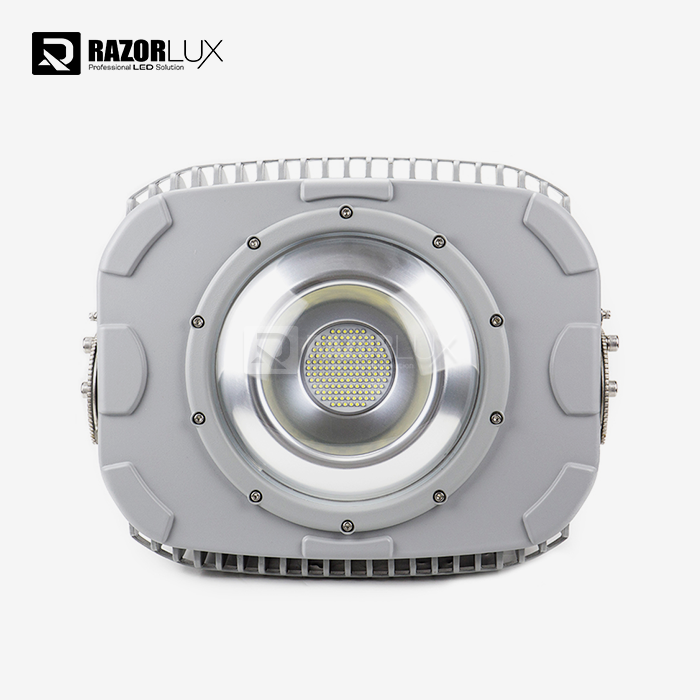
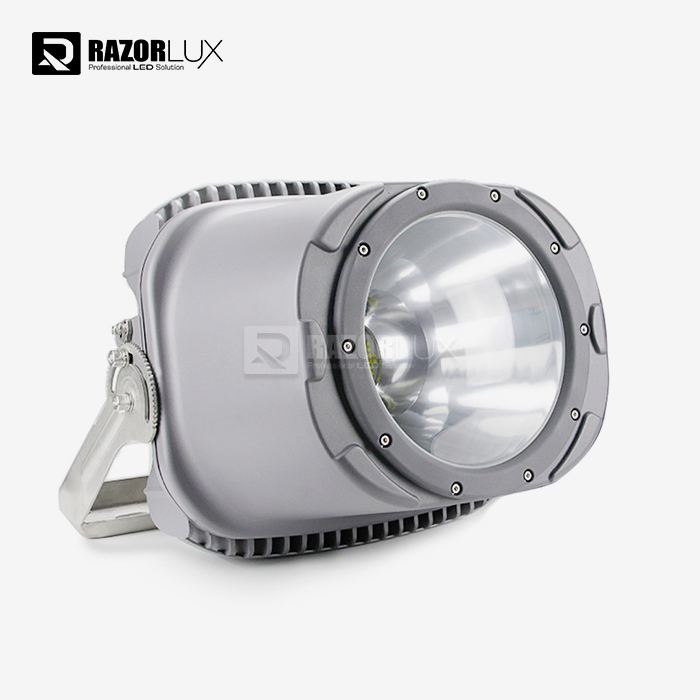
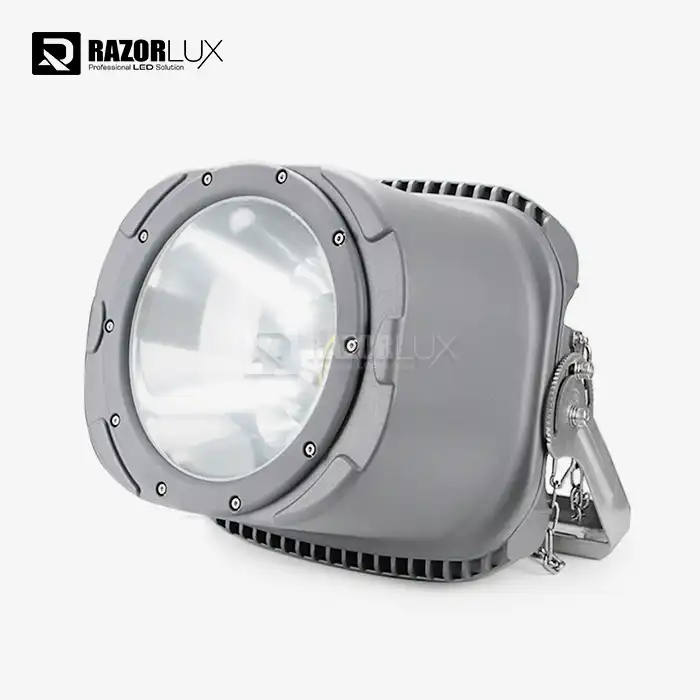
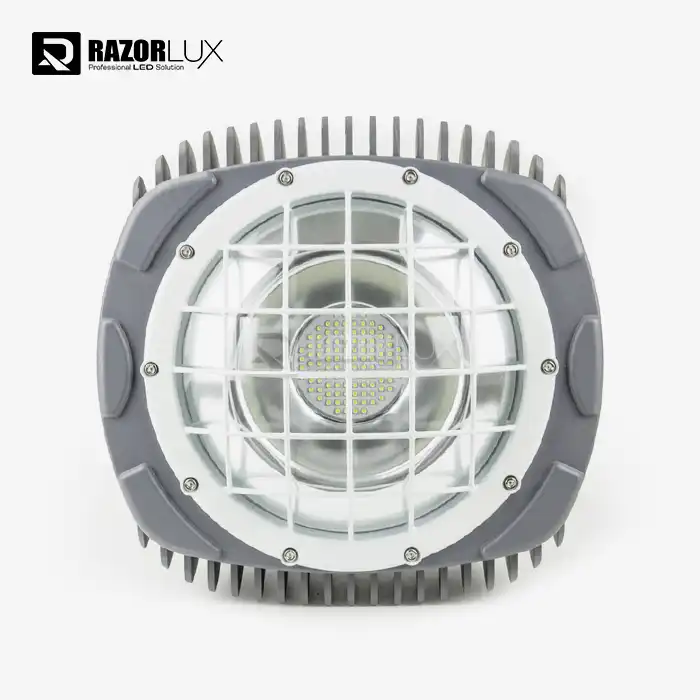
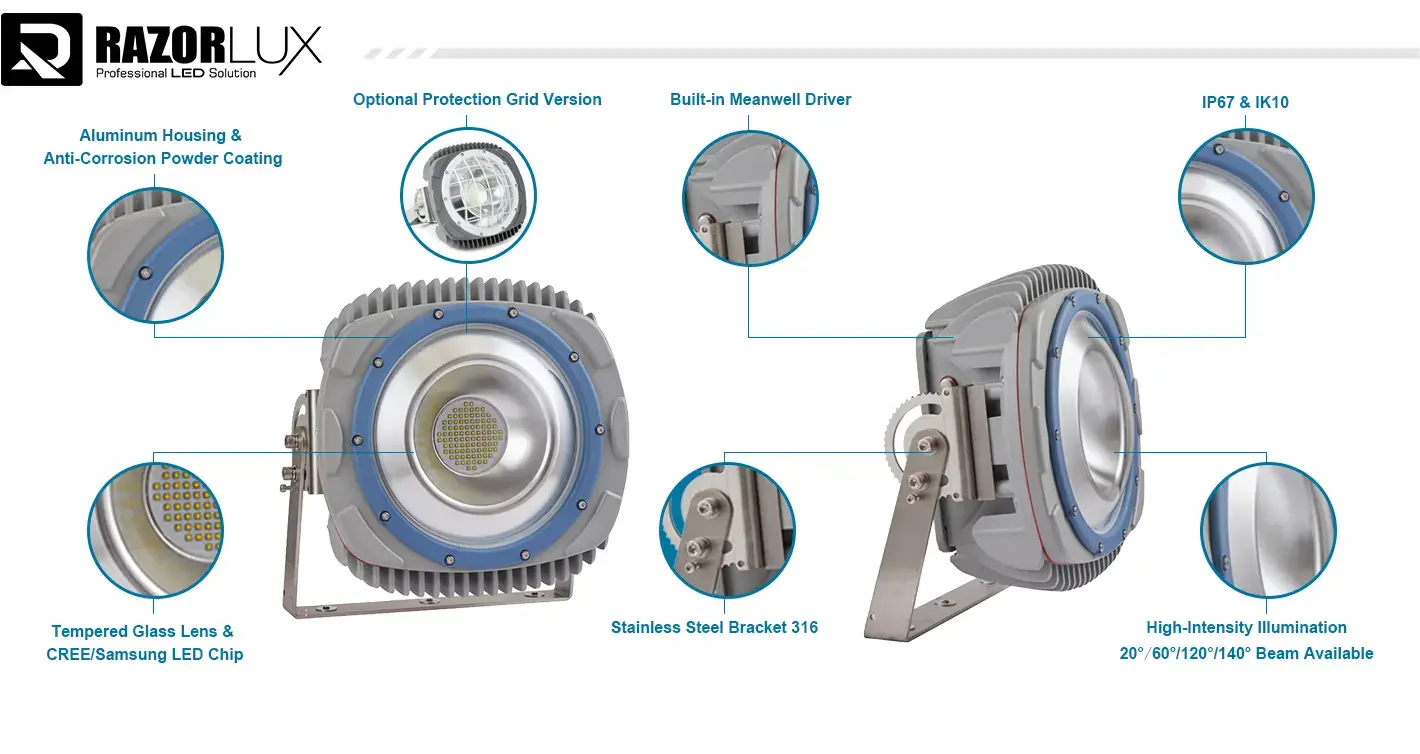
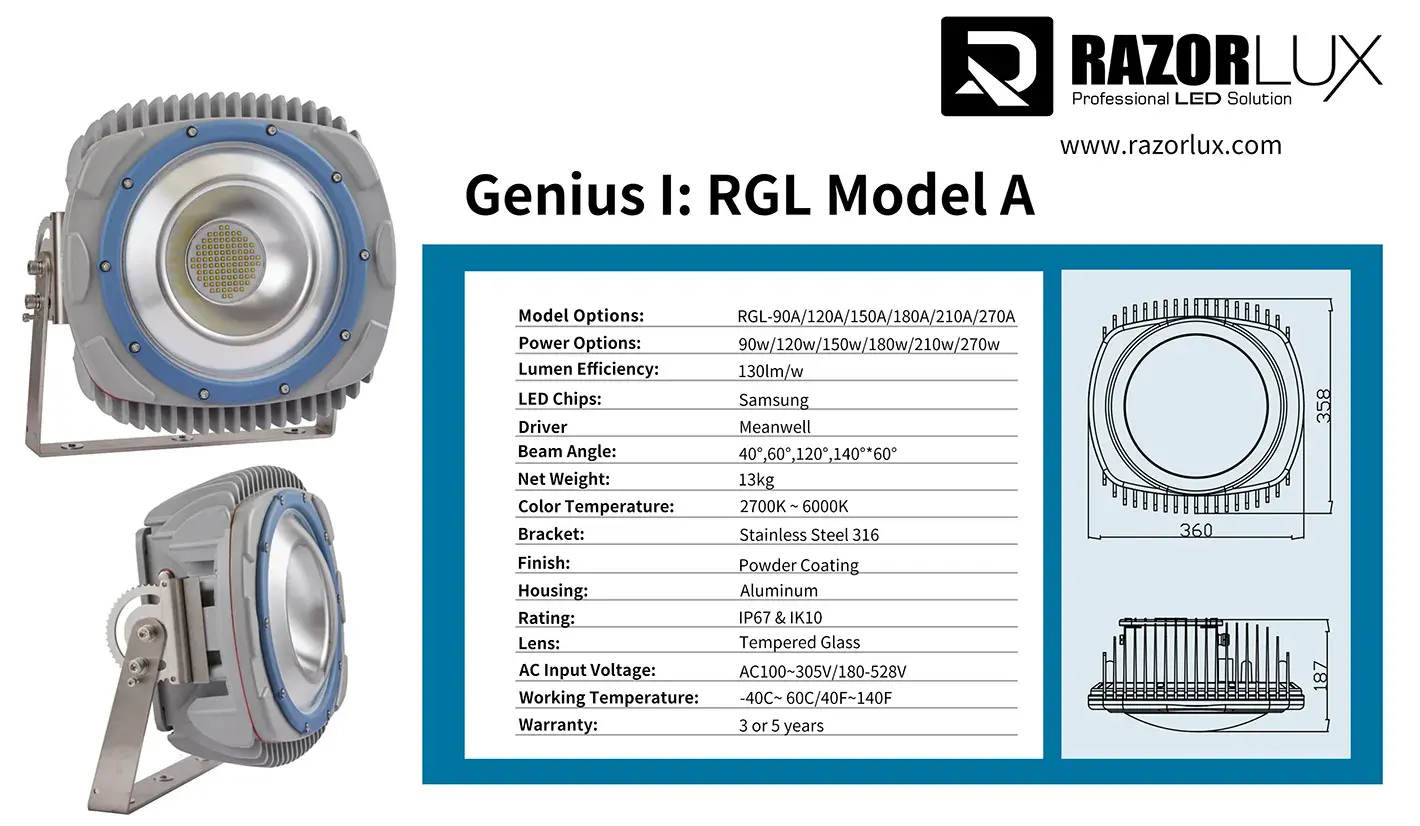
People who work in procurement who want to work with a reliable Low Mast Light maker should work with experienced sources who can help with every step of the project. Xi'an Razorlux Optoelectronic Technology Co., Ltd. has been an expert in LED lighting tech for more than twenty years, focusing on nautical, industrial, and heavy-duty uses. Our unique multi-function Low Mast Light fixtures provide 130 lm/W of light and have IP67/IK10 grades for security. They meet the durability needs of offshore platforms, shipyards, and port facilities. Our RGL-120A model is a great example of application-optimized design: it uses only 120W of power instead of 250–300W HID equivalents while producing 14,400 stable lumens; it works with a wide range of AC input voltages (80–315Vac), so you don't need a transformer; it has multiple beam angle configurations (60°, 120°, and 140°x60°), so you can make it work best for your site; and it has a Mean Well driver built in, so it will last for more than 50,000 hours. These standards directly address the buying goals that shipyard managers, marine equipment integrators, and industrial building engineers from around the world have identified.
Certification completeness speeds up the processes of meeting specifications and getting governmental permission. Our fixtures have been certified by CE, RoHS, UL, DLC, CB, ISO9001, SAA, and C-Tick. They also have marine-specific DNV-GL and ABS approvals that are needed for installations on ships and offshore platforms. This full set of certifications makes it possible for facilities that work in more than one legal area to buy from a single source. This makes managing vendors and quality assurance paperwork easier. Our framework for buying help covers the whole lifecycle of a project. During the planning stages, our technical teams help with photometric modeling and fixture selection. Our flexible sampling programs let you do a full field evaluation before committing to a large order. Our competitive pricing structures can handle projects ranging from pilot installations to facility-wide retrofits. And our five-year warranty, backed by responsive technical support (sam@razorlux.com), guarantees long-term operational success. Razorlux LED retrofits have paid for themselves in 18 to 24 months in facilities around the world, with energy savings of over 50% and upkeep costs falling close to 60% over five-year review periods.
References
1. Illuminating Engineering Society, "Recommended Practice for Outdoor Environment Lighting," IES RP-33-14, New York, 2014.
2. International Electrotechnical Commission, "Degrees of Protection Provided by Enclosures (IP Code)," IEC 60529:2013, Geneva, Switzerland.
3. U.S. Department of Energy, "LED Luminaire Lifetime: Recommendations for Testing and Reporting," Third Edition, 2017.
4. Marine Equipment Trade Association, "Specification for LED Marine Deck Lighting Systems," Technical Standard ML-01, London, 2019.
5. American Petroleum Institute, "Recommended Practice for Classification of Locations for Electrical Installations at Petroleum Facilities," API RP 500, Washington DC, 2018.
6. Norwegian Maritime Authority, "Guidelines for Offshore Installation Lighting Systems Performance in Arctic Conditions," Technical Bulletin 2020-08, Haugesund, Norway, 2020.