


_1750326878398.png)

120 Volt Led Outdoor Flood Lights Buying Guide for Contractors
When sourcing robust outdoor lighting for demanding commercial, marine, or industrial environments, choosing the right high-voltage LED flood light becomes a critical decision. This buying guide helps contractors, shipyard purchasing managers, and facility engineers navigate the technical landscape of 120 Volt LED Outdoor Flood Lights—specifically designed to deliver reliable illumination in harsh conditions while meeting strict energy efficiency and certification requirements.
Understanding 120 Volt LED Outdoor Flood Lights
What Are Line Voltage LED Flood Lights?
Line voltage 120 Volt Led Outdoor Flood Lights can work straight on standard power lines that provide 110V to 130V AC power, so they don't need any extra step-down transformers. Instead of using 12V or 24V systems for low-voltage landscape lighting, these fixtures have built-in LED drivers that change the high-voltage alternating current into stable direct current for the LED array. This design gets rid of voltage drop problems that happen along long cable runs, which is a frequent place where large-scale port lighting, shipyard lighting, and remote platform installations fail (U.S. Department of Energy, 2021).
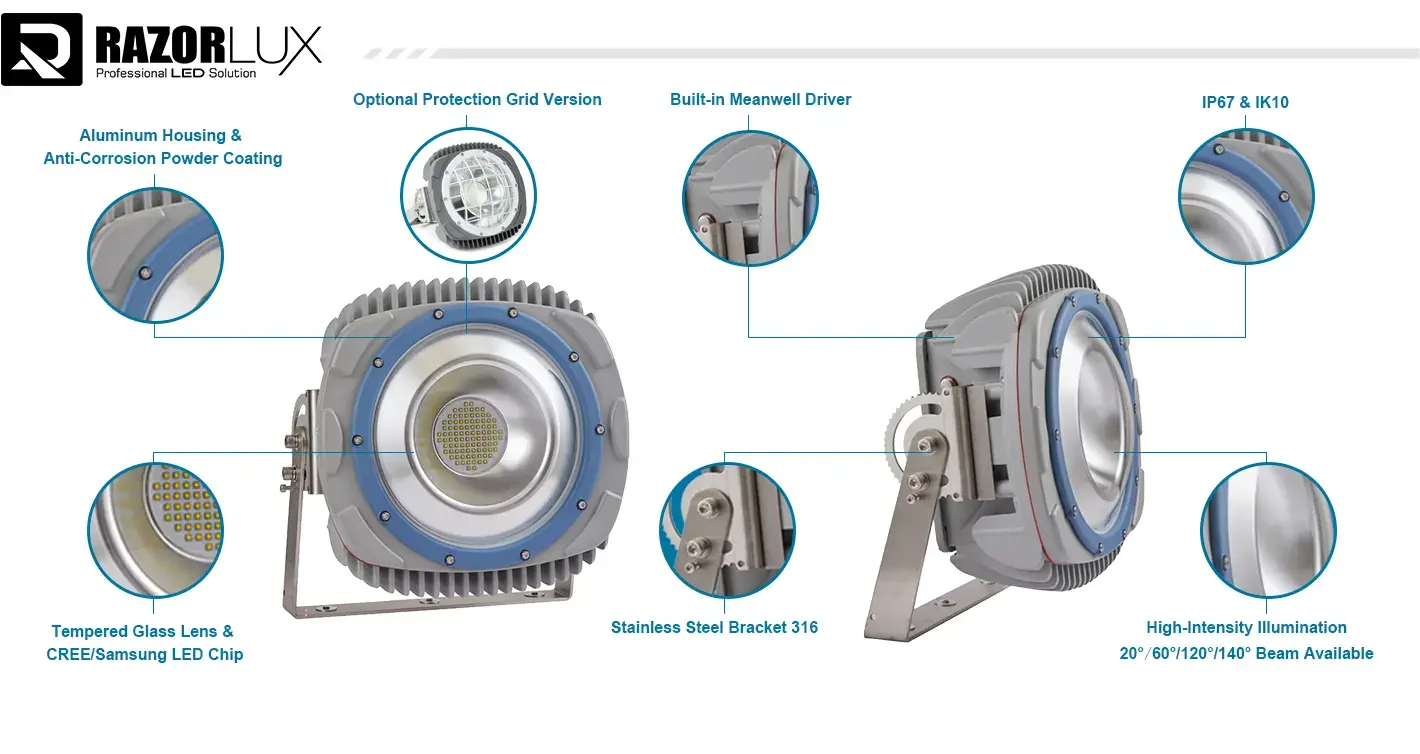
This voltage configuration makes it easier for contractors working on marine projects or heavy industrial facilities to set up the infrastructure. Docks, warehouses, and ship repair yards usually have 120V power lines, which makes it easy to adapt old metal halide or high-pressure sodium lights without having to pay a lot of money for rewiring.
Key Advantages Over Alternative Voltage Systems
There are several clear benefits to operating on standard line voltage. When compared to 12V systems, where even a 50-foot cable run can make a big difference in brightness loss, this voltage drop is very small. The lack of external transformers lowers the number of possible failure points. This is especially important in salt spray environments where corrosion speeds up the breakdown of parts. Line voltage systems can also handle higher wattage fixtures, which makes them good for covering big areas in places like shipping ports, steel mills, and building sites.
According to a study released by the Illuminating Engineering Society (2020)², LED floodlights that run on 120V have better thermal management when paired with good heat sinks. This means that they last longer and keep their lumen output more stable when the temperature changes from -40°C to +60°C.
Common Applications in Marine and Industrial Settings
These lamps work great in places that need both a lot of light and resistance to damage from the environment. Common uses include the following:
- Shipyard perimeter security lighting where fixtures must be resistant to corrosion and shaking
- Offshore platform deck illumination that needs marine-grade certifications and IP67 protection against water intrusion
- Port cargo handling areas needing wide beam angles and the ability to turn on right away
- Heavy manufacturing facility exteriors such as steel mills and paper plants that are open to dust and water
- Emergency egress lighting for areas where ships are moored and for dry dock work
When contractors work in these areas, they have to deal with special problems when they buy things: unstable quality means things break down early and need expensive repairs; missing certification paperwork slows down project approvals; and unreliable delivery schedules mess up important installation windows during vessel dry-dock periods.
How to Choose the Best 120 Volt LED Outdoor Flood Lights
Evaluating Lumen Output and Efficacy Requirements
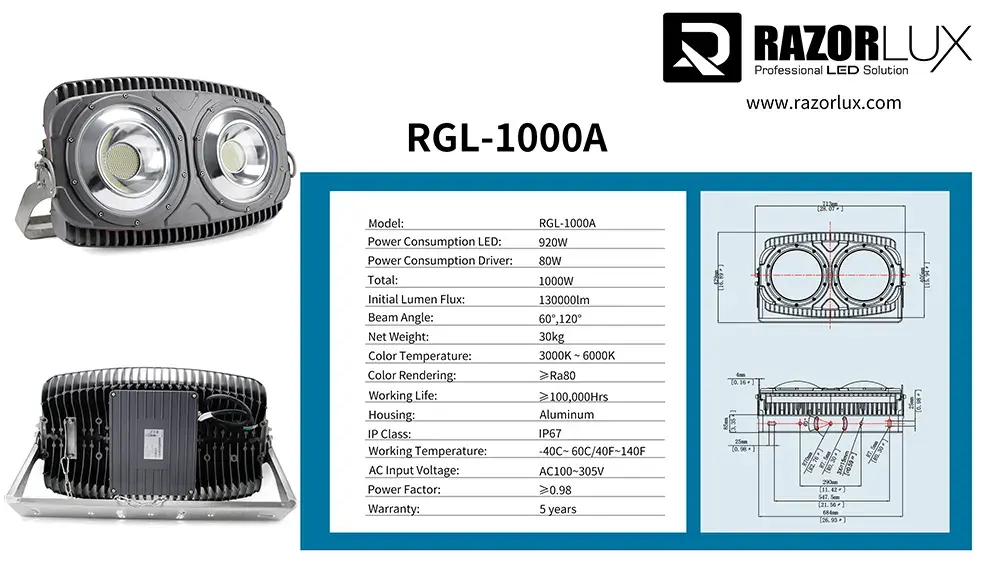
Luminous efficacy, which is measured in lumens per watt (lm/W), has a direct effect on both the cost of operation and the damage it does to the environment. For business uses, builders should look for fixtures that put out at least 130 lm/W to make sure that the money they save on energy costs is worth it. A 120 Volt Led outdoor flood light fixture that uses 1000W and is 130 lm/W efficient makes about 130,000 lumens. It can replace 2200–2500W HID lamps and uses over 60% less electricity.
Lumen density is more important than raw output when choosing security lights around port sites. A fixture with a narrow 40° beam that gives off 130,000 lumens lights up a small area for security cameras, while a 120° beam that spreads light over a larger area for placing goods gives off more light. Before placing a large order, procurement managers should ask for photometric data (IES files) to model how light really spreads.
Razorlux's RGL-1000A type is a good example of this level of performance. It has a constant flux of 130,000 lumens and can be set to 40°, 60°, 120°, or 140°×60° beam angles to fit different site layouts. LM-80 chip testing and TM-21 projections show that the fixture keeps its rated output over its 50,000-hour life.
Understanding IP and IK Ratings for Harsh Environments
The Ingress Protection (IP) and Impact (IK) scores show how well a fixture can handle external stresses. For marine and offshore uses, IP67 certification is the minimum requirement. This ensures complete dust sealing and protection against short-term immersion in water up to 1 meter deep. This rating is important for fixtures that are put in place on ship decks where they will be washed down with high-pressure water during regular maintenance.
The IK10 grade for impact means that the housing can handle 20 joules of force, which is the same as dropping a 5 kg object from 400 mm. Shipyards that work with heavy steel parts and ports that use overhead cranes need this level of protection to keep the housing from getting damaged too soon.
Selection of information is also very important, even more so than scores. Salt spray rust is much less likely to happen on die-cast aluminum housings that have an electrophoretic covering than on regular powder coating. Mounting clamps made of stainless steel (316 grade) keep sites near the coast from rusting. When tempered glass lenses with UV stabilizers are exposed to the sun for years, they don't yellow, which is a common way that polycarbonate lenses break.
Assessing Color Temperature and CRI for Operational Needs
Choosing the right color temperature affects both safety and exposure. Neutral white (4000K–5000K) is great for showing colors clearly for close inspection work in ship repair yards. Cool white light (5700K–6500K) gives off clear light for security tracking and moving goods. Warm white (2700K–3000K) lighting works well as decorative lighting in port areas.
A Color Rendering Index (CRI) above Ra75 makes sure that colors are seen correctly, which is very important for engineers who need to check welds, figure out cable color coding, or judge the quality of coatings during vessel surveys. Higher CRI values (Ra80–Ra90) are available for specific uses that need true color representation, but they usually come at a higher cost.
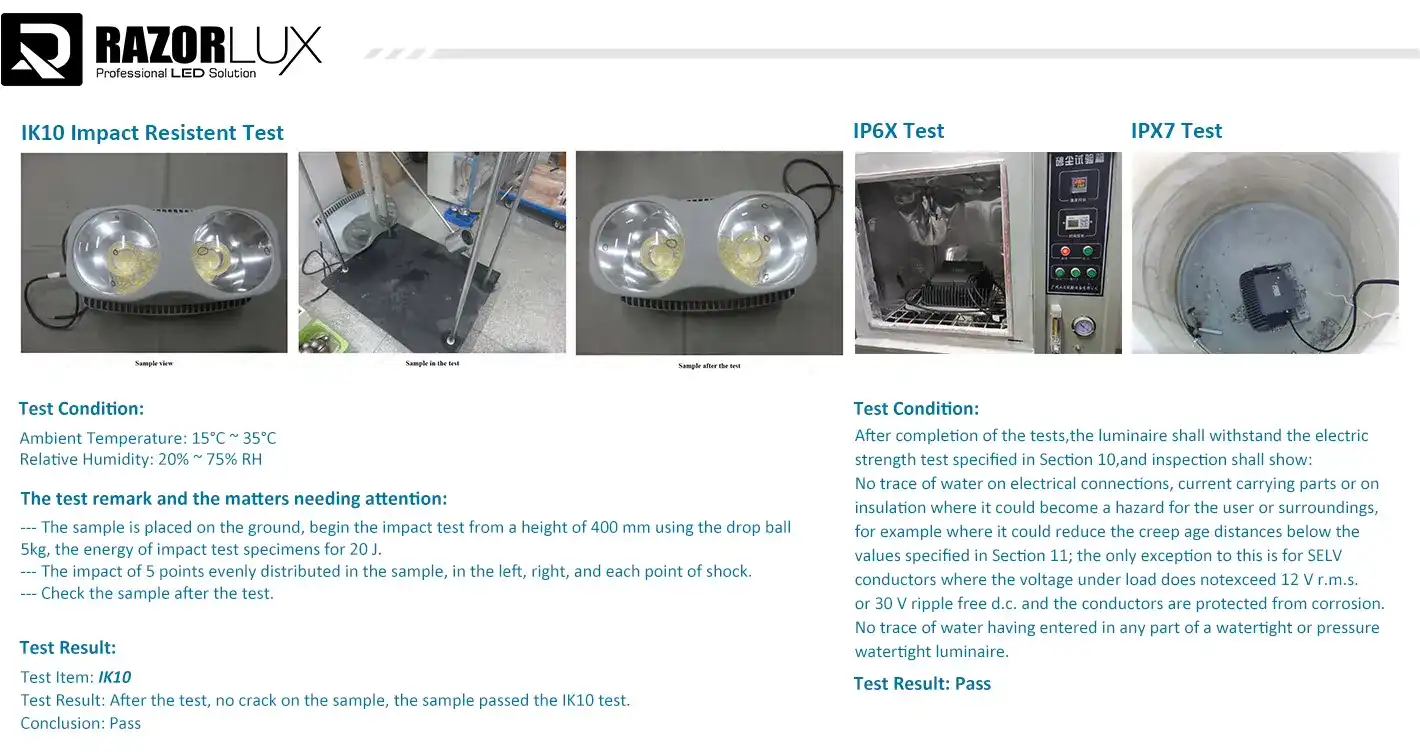
Table 1: Color Temperature Selection Guide by Application
| Application Type | Recommended CCT | CRI Requirement | Rationale |
|---|---|---|---|
| Ship deck operations | 5000K to 5700K | Ra75+ | Good color sense and high exposure for safety |
| Welding inspection areas | 4000K to 5000K | Ra80+ | Correct color evaluation for quality control |
| Security perimeter | 5700K to 6500K | Ra70+ | The highest level of brightness for monitoring camera performance |
| Marina or yacht club | 3000K to 4000K | Ra80+ | Aesthetically pleasing while still being useful |
| Offshore platform hazard zones | 5000K to 5700K | Ra75+ | Dependable vision in fog and spray |
Verifying Certifications for International Projects
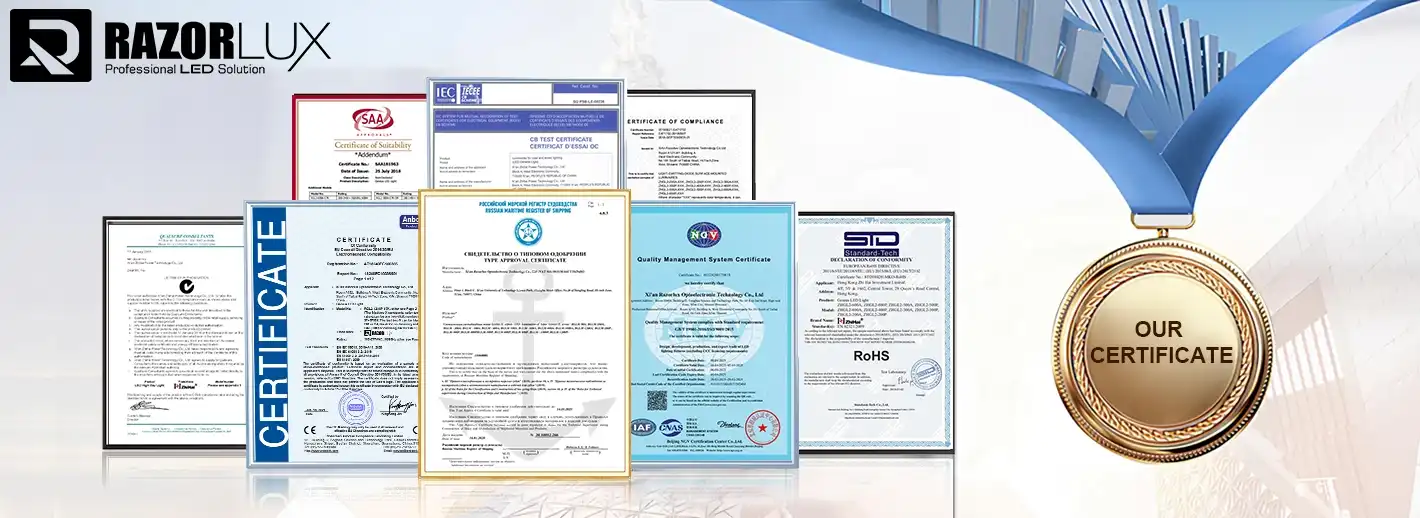
Installations in the ocean and offshore need strict approval compliance. When bidding on international projects, contractors must make sure that the fixtures they use have the right approvals:
- CE and RoHS to get into the European Union market
- UL and DLC for building installations in businesses in North America
- DNV-GL or ABS for marine classification society approval on ships and offshore structures
- ATEX or IECEx for installations in dangerous places close to areas where fuel is handled
- SAA and C-Tick for Australian maritime projects
Razorlux keeps full certification portfolios for these standards, with test results, compliance statements, and material safety data sheets as part of the paperwork. This level of detail in the paperwork speeds up the project approval process, which is especially helpful when technical teams look over the specifications before buying permission is given.
Power Supply Quality and Surge Protection
More than choosing an LED chip, the quality of the internal driver determines how reliable the fixture is. Power factors above 0.98 and Total Harmonic Distortion below 10% are what Mean Well power sources, which are the standard in industrial lighting, provide. These standards make sure that power conversion works well and that electrical noise on facility power lines is kept to a minimum.
Integrated surge protection is needed for installations that are close to crane operations or offshore platform generator switching that could cause electrical surges. Metal Oxide Varistor (MOV) parts and surge protection devices rated up to 6kV are found in high-quality fixtures. These devices soak up short-term voltage spikes that would otherwise damage driver circuits.
Mean Well drivers with 5-year warranties and built-in surge protection are used in Razorlux fixtures. This solves the problem of cheaper options failing drivers too soon, which is a pain point in buying. The ability to accept multiple voltages (AC 80–305V, DC 100–400V, and optionally DC 500–800V) makes it very adaptable to a wide range of electrical systems, from standard shore power to DC systems on ships and offshore platform UPS configurations.
Installation and Maintenance Best Practices for Contractors
Pre-Installation Site Assessment
Before installing fixtures, contractors must make sure that the electrical system can handle them. Include the inrush current during the LED driver's startup, which is usually 1.2 to 1.5 times the recommended power for two to three seconds. Make sure that the circuit breakers and wire gauges can handle this short-term demand + 20%. The environment at the site affects the choice of mounting hardware. Marine-grade stainless steel fasteners (316 alloy at a minimum) must be used for installs within 5 kilometers of the ocean. Vibration-prone locations such as ship engine rooms require fixing brackets with springs to keep them from coming loose.
Wiring and Connection Protocols
When working with line voltage, it's important to follow all local electrical codes. When working outside, use conductors that can handle temperatures as low as 90°C. Before putting the parts together, put dielectric grease on all the threaded connections to keep water out and stop galvanic corrosion between metals that are not the same. Instead of silicone, which breaks down in UV light, use marine-grade polyurethane glue to cover wire entry points. Ground links are very important for safety and EMC reasons. Make sure that there is no resistance of more than 0.1 ohms between the fixture body, the mounting frame, and the electrical ground.
Optimizing Beam Angles and Mounting Heights
Aiming correctly stops light from trespassing and lets in the most useful light. For perimeter security lighting, put lights 8 to 12 meters high and tilt them 20 to 30 degrees downward to make coverage areas that overlap without shining light on nearby homes. 60° or 120° beam floods mounted 15 to 20 meters high can provide even horizontal lighting in areas where cargo is handled, reducing shadows under cranes. Use crank bolts that can be adjusted up or down by 90° and turned 360° in a circle. Write down the final aim angles on as-built drawings so that they can be used for future maintenance.
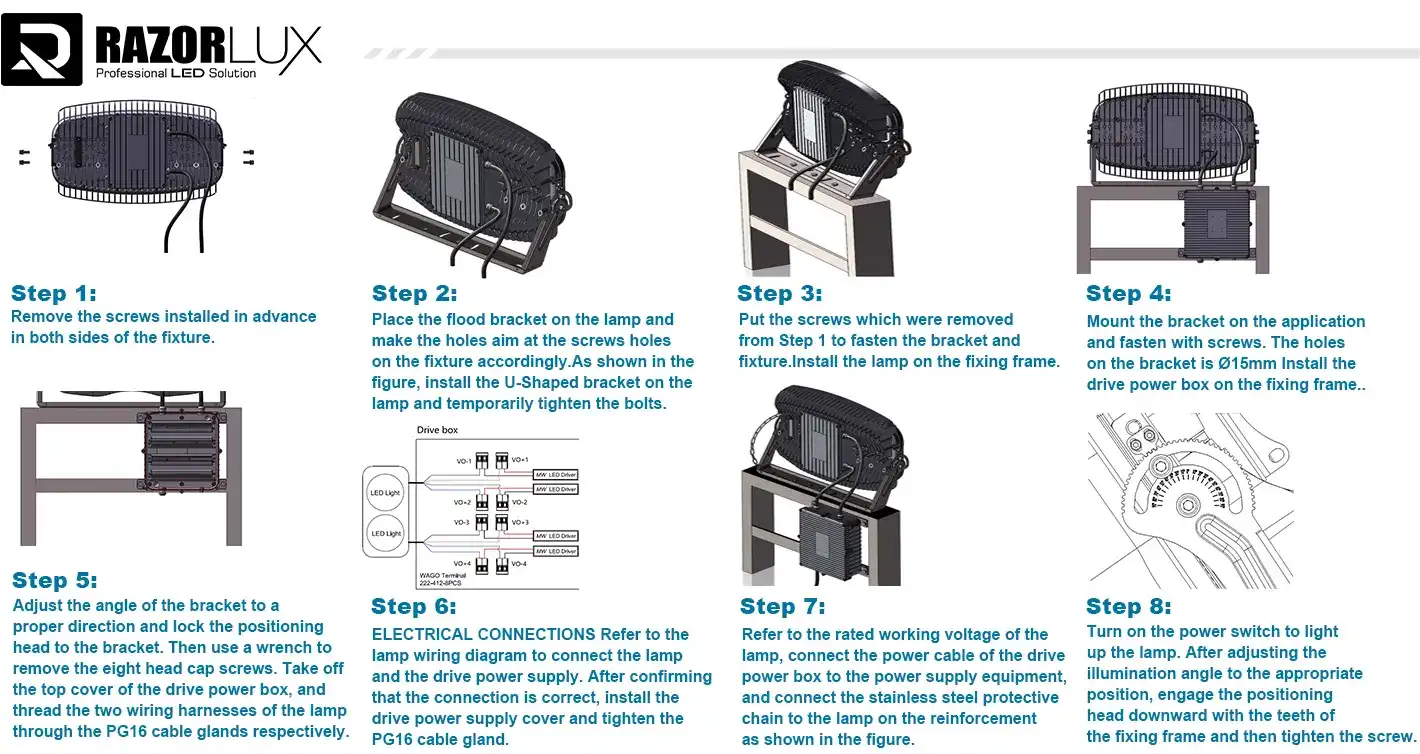
Routine Maintenance Schedules
Even protected LED fixtures need to be checked every so often to keep working well. Set up repair cycles every three months that include:
- Lens cleaning gets rid of salt crystals and dust buildup that blocks light
- Fastener torque verification to make sure that fixing gear stays in place
- Thermal imaging to find hotspots that mean heat sinks or driver parts are failing
- Photometric testing to find lights that lose more than 70% of their original lumen output (L70 failure point)
When 120 Volt Led Outdoor Flood Lights are used continuously, like in port areas that are open 24 hours a day, seven days a week, temperature stress speeds up the aging of parts. Instead of waiting until something breaks completely, plan replacement rounds every 45,000 to 50,000 hours of use. This will keep emergency repair costs low and downtime to a minimum.
Troubleshooting Common Issues
Flickering usually means that the dimming controls aren't working right or that the wire links are loose. Make sure the type of dimmer matches the driver's requirements. Most commercial fixtures need 0-10V analog dimming, not residential Triac phase-cut dimmers. Check the voltage at the fixture's terminals while they are under load. Readings below 108V or above 132V indicate supply problems that need to be fixed before the fixture is replaced.
Too little heat escape is often the cause of failure before its time. Make sure that the way the heat sink is mounted lets air flow naturally around the fins. In sheltered places, enclosed fixtures may need forced air to keep junction temperatures within the acceptable range. Check the temperature of the heat sink while it's working. Readings higher than 70°C air plus 50°C rise show that the heat isn't being managed well.
Table 2: Common Installation Problems and Solutions
| Problem | Symptom | Probable Cause | Solution |
|---|---|---|---|
| Fade quickly (120 Hz) | Strobe effect that can be seen | Driver capacitor not working | Right away, replace the fastener or driver module |
| Slow dimming over months | 30–40% loss of light | Lens has salt on it | Clean the lens with a mild soap; do maintenance more often |
| Operation on and off | Fixture randomly turns on and off | Cycling for thermal overload defense | Better airflow; check that the temperature inside is within the range |
| Change the color to blue | White that is warm turns cool | Phosphor decay from too much heat | Fix the source of the heat problem and replace the fixture |
| Failure in full within a year | Not enough light | Damage to the car from the surge | Check that surge protection is in place and that the facility's grounding system works |
| Uneven beam pattern | Rings or dark spots | Water getting into the reflector covering and ruining it | Check for a leaky gasket seal and replace the device if the insurance covers it |
Top 120 Volt LED Flood Light Products and Brands for Bulk Procurement
What Defines a Commercial-Grade Supplier
There are more factors than just price per fixture that go into choosing a supplier for long-term projects that involve hundreds of units. Several important traits are shown by reliable makers. They keep up their ISO 9001 quality management certification and keep track of their process rules in writing. They offer full sets of technical paperwork, which include optical reports, thermal management analyzes, and certificates of origin for parts. They can be changed to fit the needs of a specific project, such as by changing the beam angle, the mounting bracket, or adding sensor systems.
Manufacturing depth is very important. When there are quality problems, suppliers who control the production of LED Packaging, driver assembly, and housings act faster than resellers who put together imported parts. Facilities with their own testing labs can do rapid life tests, salt spray exposure, and shaking approval without having to wait for third parties to do them.
Razorlux is a good example of this commercial-grade character. The business has been working on more than 200 patents since 1998. These patents cover LED packing technology, heat management systems, and optical design. The vertical integration makes customization possible, which is very important when builders need specific beam distributions for odd site geometries or voltage setups that work with the electrical systems on the vessel.
Evaluating Warranty Terms and Support Infrastructure
Standard consumer warranties that cover broken materials don't work well for business setups. In the field, LED modules, driver electronics, and housing structures all age at different rates, so industrial-grade warranties should cover each one separately. Razorlux covers both LED modules and Mean Well drivers for 5 years and the housing for 10 years, because die-cast metal frames last longer than computer parts.
Logistics for fulfilling warranties are just as important. Suppliers should keep service centers or partner networks in different areas that can handle warranty claims within 48 hours. For installations on offshore platforms where getting to the fixtures costs thousands of dollars per day because the ship has to be moved, longer warranties that lower the number of replacements needed justify higher initial costs.
Comparing Volume Pricing and Customization Options
When you buy in bulk, you can usually get tiered pricing. For orders of 50 to 100 units, you might get 8 to 12% off the list price, and when you buy 500 or more units, you can get 15 to 20% off the list price. In addition to price breaks, tailoring is possible without having to pay for tools. Changes could include custom wire lengths for certain installation shapes, unique mounting brackets for oddly shaped buildings, or pre-programmed dimming profiles for automatic control systems.
OEM relationships give builders another way to buy things when they need to add lighting systems to bigger sets of equipment. With private labeling, custom packaging, and integration services, ordinary fixtures can be turned into solutions that add value. Razorlux works with original equipment manufacturers (OEMs) and has open minimum order amounts. Engineers can also work together to make changes to products.
Supply Chain Stability and Lead Time Management
To meet project deadlines, deliveries must happen on time every time. Check the supplier's inventory levels and production capabilities. Manufacturers who keep finished goods in stock for regular types usually ship within three to five business days. Lead times are longer for custom configurations that need to be set up on an assembly line (4-6 weeks), but they offer schedule certainty that low-inventory distributors don't.
Framework supply agreements lock in prices and delivery dates for projects with multiple stages that last years. These contracts make sure that the goods will be available even if there are shortages of parts that affect other markets. Assemblers that depend on outside component suppliers are less likely to get their products on time than sellers that control the whole supply chain, from buying LED chips to making housings. Razorlux keeps up its production to handle large orders with set delivery dates. This solves the problem of late shipments that mess up project schedules and cost a lot in penalties.
Energy Efficiency and Cost Analysis for Procurement Decisions
Calculating Total Cost of Ownership
The initial cost of a device only makes up 20–30% of its lifetime cost. Total cost of ownership is mostly made up of the energy used over the 50,000-hour operating life. A 1000W LED light fixture that uses $0.12/kWh of electricity will cost you about $6,000 in energy costs over its lifetime. By choosing a fixture with 130 lm/W efficacy instead of 110 lm/W, you can save about $1,200 in electricity costs, which is the same as buying three to four more fixtures just to save money on energy costs.
Installations that are hard to get to cost a lot more because they need to be maintained. In industrial settings, it costs $150 to $300 per service call to fix fixtures that need to be relamped every 10,000 hours, which is standard for HID technology. LED fixtures with 50,000-hour L70 lifespans don't need to be serviced as often, which cuts maintenance costs by 70–80% compared to older technology.
Quantifying Energy Savings Against Legacy Technology
The U.S. Department of Energy says that LED flood lights use 60–75% less energy than metal halide alternatives (U.S. DOE, 2022). A factory that replaces fifty 2000W metal halide lights with 1000W LED floods, which use a total of 1000W (900W LED + 100W driver), saves 50kW in energy. At 4,000 hours of operation per year, this results in an annual energy savings of 200,000 kWh.
At $0.12/kWh, this equates to $24,000 per year in savings. With a simple payback period, if each LED light costs $800, the total cost is $40,000, and the annual savings are $24,000, which equals 1.67 years. This calculation doesn't include the money saved on maintenance, which can cut payback periods below 18 months in places like offshore platforms or lighting on ship masts that are hard to get to.
Environmental Impact and Sustainability Certifications
Sustainability goals set by companies are having a bigger impact on purchasing choices. As more energy is saved with LED technology, carbon emissions go down in the same way. Using regional emission factors (0.92 lbs CO₂/kWh U.S. average per EPA data, 2021)⁴, the above-mentioned 200,000 kWh annual savings stop 92 metric tons of CO₂ emissions annually, which is the same as taking 20 passenger cars off the road.
A DLC (DesignLights Consortium) certification shows that the lights meet energy-saving guidelines, which means they can be used in utility rebate programs. A lot of utilities in the U.S. offer $50 to $150 rebates per fixture for DLC-listed products, which shortens payback times even more. Razorlux fixtures with CE, RoHS, and DLC standards make it easier to show that projects meet the requirements for green reports and fix problems in buying caused by missing or partial paperwork.
Future-Proofing Through Smart Controls Integration
New trends in industrial lighting put a lot of emphasis on IoT integration and networked controls. Digital Addressable Lighting Interface (DALI) standards, wireless control systems, and 0-10V analog dimmers can all be used with modern LED drivers. With these abilities, you can implement daylight harvesting, occupancy-based dimming, and predictive maintenance alerts.
When contractors mention control-ready fixtures, clients can take these cost-cutting steps as their budgets allow, without having to replace all of the fixtures. This forward flexibility is provided by Razorlux lights with multi-voltage input (AC 80–305V) and standard dimming interfaces. The International Energy Agency (2022) says that smart lighting controls can cut energy use by an extra 20–30% on top of the efficiency gains that LEDs already make.
Conclusion
When looking for the right 120 Volt LED Outdoor Flood Lights for industrial and marine uses, you need to think about how well they work technically, how long they last in the setting, and how much they cost over their whole time. Contractors should look for fixtures that have a high lumen output (130+ lm/W), good environmental protection (IP67/IK10), and a lot of certification paperwork (CE, RoHS, UL, DLC, DNV-GL). Choosing high-quality parts, like Mean Well drivers and marine-grade housings, has a direct effect on how well they work and how much it costs to maintain them over 50,000 hours. Total cost of ownership estimates that include savings on energy use and less upkeep support expensive fixtures, especially in offshore and shipboard sites that are hard to get to. Partnering with vertically integrated makers that offer customization options, reliable delivery schedules, and full expert support solves some of the most important problems in procurement, such as maintaining quality, making sure paperwork is complete, and staying on schedule with projects.
FAQ
1. Can these fixtures operate on marine vessel DC power systems?
Razorlux RGL-1000A types can accept DC inputs from 100Vdc to 400Vdc or, if desired, 500Vdc to 800Vdc. This means they can work with most naval electrical systems without the need for extra converters. This ability to work with multiple voltages is especially useful for offshore platforms that can use both AC shore power and DC UPS systems to power their lighting circuits.
2. What differentiates IP67 from IP65 protection ratings?
IP65 lights can handle water jets coming from any direction, but they can't be submerged. IP67 protection means that the device can be submerged temporarily up to a depth of 1 meter for 30 minutes. This is very important for installations on ship decks that are subject to rough seas or high-pressure washing down operations. Razorlux has IP67 updates for naval uses where there is a chance of submersion.
3. How do I verify certification authenticity before bulk ordering?
Suppliers with a good reputation give out certification numbers that can be checked in the records of the granting bodies. Check the UL Product iQ database for listings; for CE, ask for Declaration of Conformity documents; and for marine certifications (DNV-GL, ABS), check the certificate numbers directly with the classification societies. Razorlux gives full certification packages with test reports for the technical department to look over.
4. Do LED flood lights require special disposal procedures?
HID lights contain mercury, but LED lighting uses solid-state technology that doesn't have any dangerous materials in it. Most RoHS-compliant parts can be recycled with other electrical trash without any special care. Aluminum housings and glass lenses can be sold as scrap, which often covers the cost of removal. Check your local laws to see what you need to do to recycle electronic waste.
Partner with Razorlux for Your Industrial Lighting Projects
With 120 Volt LED Outdoor Flood Lights that have been tested and proven to work in the toughest conditions, Razorlux is ready to support your next marine, offshore, or heavy industrial lighting project. Our manufacturing is vertically integrated, and we have more than 200 patents and ISO 9001 certification to back it up. This gives procurement managers the quality consistency, supply chain reliability, and technical support they need. Send an email to sam@razorlux.com to talk to our engineering team about your particular needs, get full technical specifications, or set up sample evaluation units. We are a reliable 120 Volt Led Outdoor Flood Lights manufacturer that works with shipyards, offshore platforms, and industrial facilities all over the world. We offer custom solutions, low-volume pricing, and certified documentation packages that speed up project approvals.
References
1. U.S. Department of Energy. (2021). LED Lighting for Marine Applications: Technical Guidance.
2. Illuminating Engineering Society. (2020). Thermal Management in High-Output LED Systems.
3. U.S. Department of Energy. (2022). Energy Savings Forecast of Solid-State Lighting in General Illumination Applications.
4. U.S. Environmental Protection Agency. (2021). eGRID Summary Tables 2021.
5. International Energy Agency. (2022). Lighting in the Digitalization Era: Opportunities and Challenges.
6. National Electrical Manufacturers Association. (2020). ANSI C136.31: American National Standard for Roadway Lighting Equipment - Luminaire Vibration.