


_1750326878398.png)

How Do LED Area Flood Lights Improve Outdoor Security?
Outdoor security challenges keep facility managers awake at night. From unauthorized access attempts at port terminals to equipment theft at shipyards, inadequate lighting creates vulnerabilities that compromise both personnel safety and asset protection. LED area flood lights transform these security blind spots through superior illumination quality, instant-on reliability, and adaptive control capabilities. Unlike legacy lighting technologies that struggle with delayed warm-up times and inconsistent light distribution, modern LED flood lighting delivers immediate, uniform coverage across expansive perimeters, loading docks, and parking facilities. The technology's inherent energy efficiency combined with extended operational lifespans translates into reduced maintenance burdens while maintaining the constant vigilance that security operations demand.
Comparing LED Area Flood Lights to Traditional Outdoor Lighting Solutions
When you switch from old high-intensity discharge (HID) technology to LED flood lighting, you can see improvements in operational, financial, and security performance. The differences aren't just about how much energy they use.
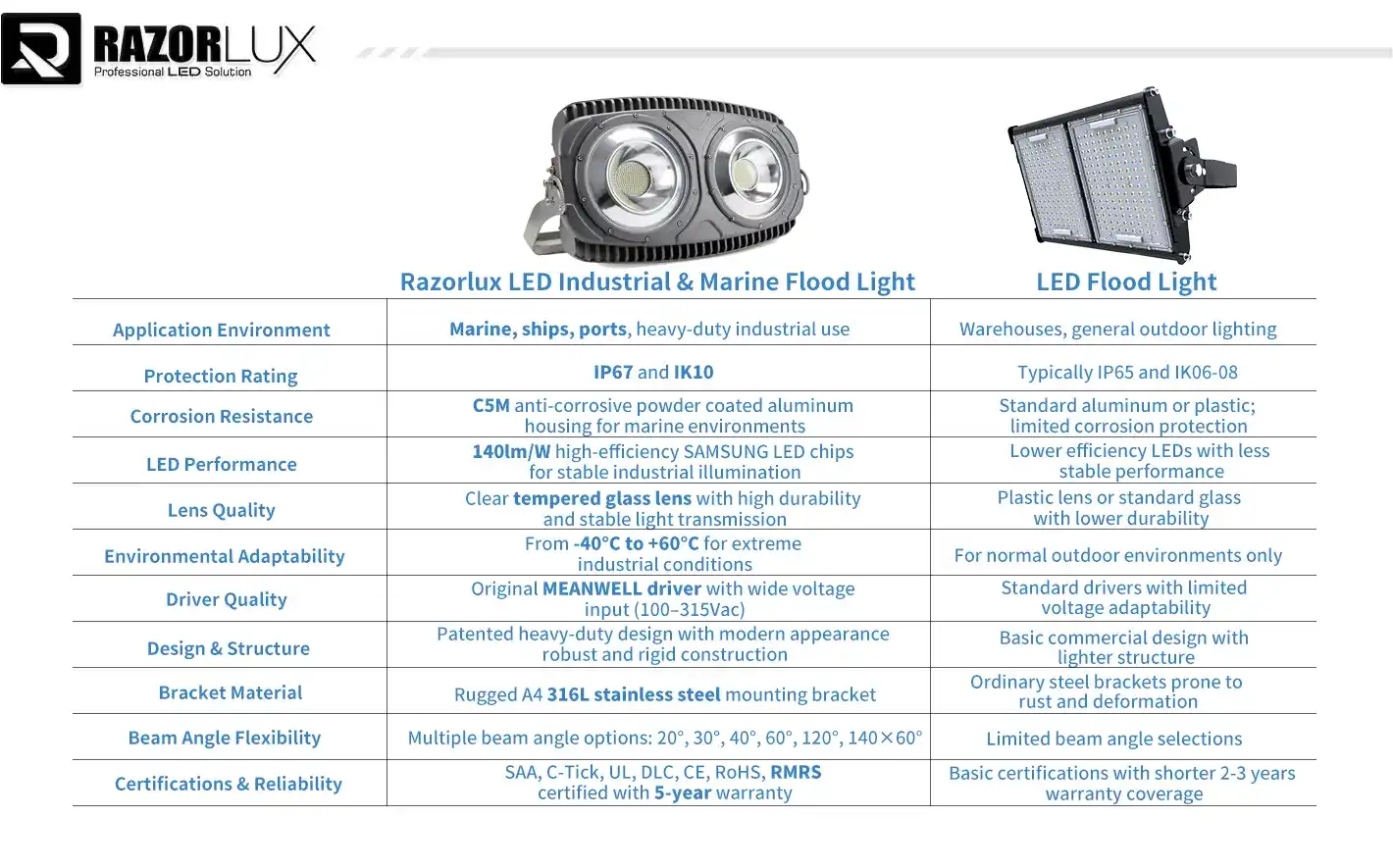
Operational Performance Advantages
Because LED technology can start up right away, metal halide lamps don't need to warm up for 5 to 10 minutes. This quickness is very important during security events, when instant lighting can mean the difference between being able to record an intrusion and losing important video film in the dark. In the same way, LEDs don't need a 15-minute cool-down period before they can strike again as HID systems do, so they protect continuously even when the power goes out.
The ability to display colors has a big effect on how well security cameras work and how people judge threats. When the CRI value is above Ra>75, LED fixtures show true color characteristics that help security staff tell the difference between uniformed employees and regular people, or to figure out the colors of vehicles during investigations of incidents. The poor color rendering of metal halide systems often turns surveillance video into forms that are hard to tell apart, which makes it less useful for forensics.
Another important benefit is shown by lumen maintenance curves. Quality LED systems keep 70% of their original output after 50,000 hours of use, while HID lamps lose 30–40% of their brightness in the first 8,000 hours of use. People usually don't notice that traditional lighting is slowly going out until security holes appear in the form of longer shadows, worse camera performance, and blind spots.
Financial and Environmental Considerations
By comparing how much energy different businesses use, they can save a lot of money. A 1000W LED flood light with 130,000 lumens can be used instead of a 1500W metal halide fixture to get the same level of brightness, saving about 33% of the energy. In a normal port facility with 50 perimeter LED Area Flood Lights on for 4,000 hours a year, this saves 100,000 kWh, which is about $12,000 a year at industrial power rates[2].
Differences in maintenance costs make these savings even bigger. Every 6,000 to 12,000 hours, metal halide lamps need to be replaced. Each service call requires renting lift equipment, hiring electricians, and stopping production. Professional LED fixtures come with a 5-year warranty that covers these costs and lowers the safety risks that come with high-level maintenance work.
The effects on the environment go beyond how much energy is used. LED lights don't contain mercury, so you don't have to worry about getting rid of dangerous waste or polluting the environment when a HID lamp breaks. This legal benefit is especially useful for businesses that use ISO 14001 environmental management systems or have to follow strict local environmental laws.
| Performance Metric | LED Flood Light | Metal Halide | High-Pressure Sodium |
|---|---|---|---|
| Warm-up Time | Instant | 5-10 minutes | 3-5 minutes |
| Luminous Efficacy | 130-170 lm/W | 70-90 lm/W | 80-100 lm/W |
| Color Rendering (CRI) | Ra>75 | Ra 65-70 | Ra 20-25 |
| L70 Lifespan | 50,000+ hours | 12,000-15,000 hours | 16,000-24,000 hours |
| Re-strike Delay | None | 10-15 minutes | 1-2 minutes |
| Mercury Content | None | 15-50 mg per lamp | 0 mg |
This comparison data shows why more and more forward-thinking site managers are choosing LED technology for changes to security lighting. This is especially true in mission-critical settings where lighting failure directly affects operational safety and asset protection.
Key Benefits of LED Area Flood Lights for Enhancing Outdoor Security
There are many security benefits to professional flood lights that go beyond just measuring brightness. Knowing about these benefits helps procurement workers make investments make sense and choose the right options for a wide range of facility needs.
Superior Visibility and Threat Detection Capability
Uneven light distribution gets rid of the harsh shadows and bright spots that come with security lighting that wasn't planned well. Chooseable optics offer asymmetric beam patterns of 15°, 30°, 60°, and 140°x60°. This lets lighting designers direct light exactly where it's needed, like along fence lines, across parking lots, or into loading dock recesses, without wasting light or shining on neighboring properties.
This fine control is especially important for sites that have to follow Dark Sky laws or are close to residential areas. Strategically placing beams keeps the right level of security lighting in place (5–10 lux for perimeter areas and 20–50 lux for high-security zones), while also following good neighbor policies and the rules [3].
Choosing a color temperature between 2700K and 6500K affects both how well people can see and how well security cameras work. Neutral white colors (4000K–5000K) improve the balance between near and far vision, making it easier for security guards to spot threats around the edges of the area they cover. Cooler temperatures (5000K to 6500K) make camera sensors more sensitive, which is useful for systems that read license plates and facial recognition.
Adaptive Control and Energy Optimization
Adding occupancy sensors and daylight harvesting controls to static security lighting turns them into smart, responsive systems. Motion-triggered zones can keep the light at 30% when no one is moving in them, but they can quickly go to full brightness when movement is noticed. Not only does this behavior pattern save energy (it could cut use by another 40–60%), but it also makes the home safer by making would-be burglars more nervous when the lighting changes quickly.
Programmable schedules through building management systems make sure that the amount of light used matches what is needed for operations. Facilities can keep the lights on full during shift changes and material handling tasks, which are times when accidents are most likely to happen. During times of low activity, the lights can be turned down to levels that are safe for patrolling. This operational flexibility is especially helpful for shipyards and ports, where work schedules change based on the tides and when ships arrive.
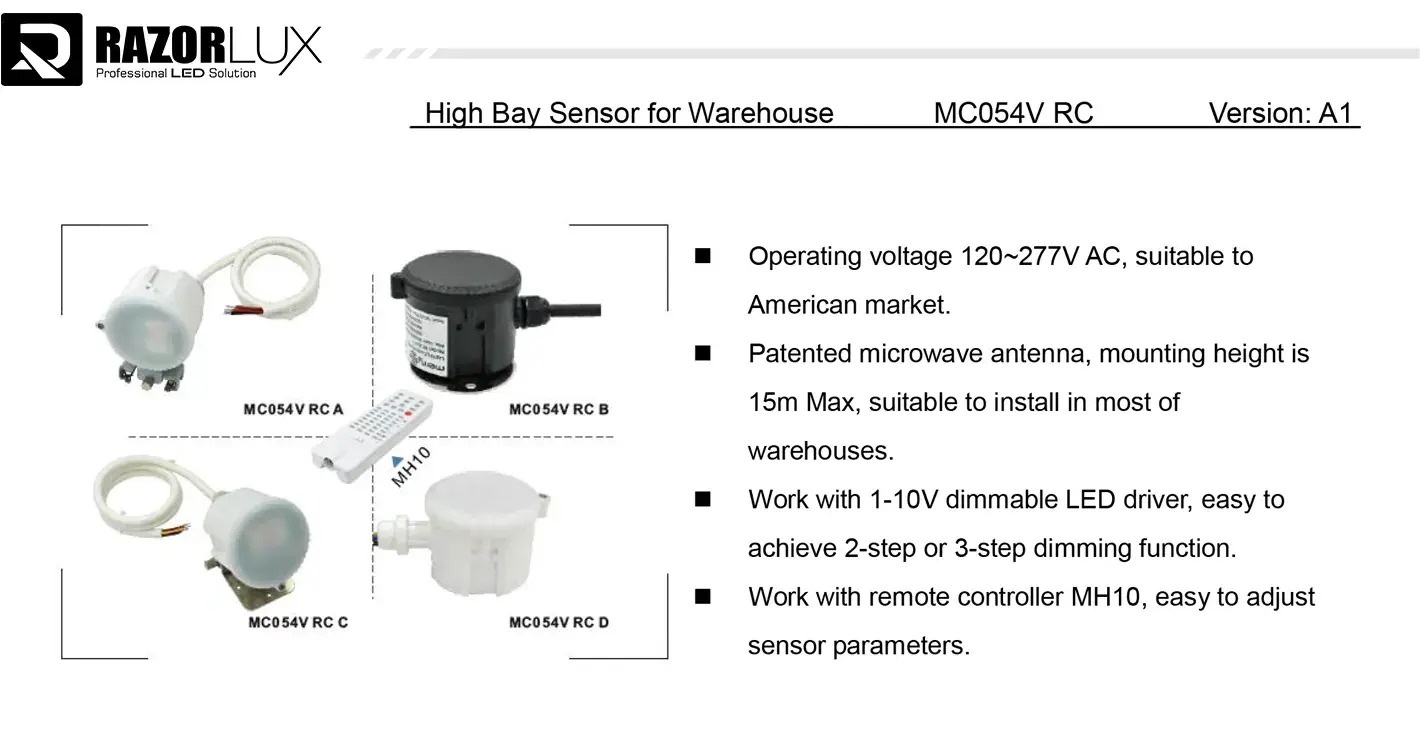
Modern lights are getting more and more wireless control options, which make it easy to change the layout quickly without having to spend a lot of money on switching. As building layouts and security needs change over time, security managers can keep the best level of protection by changing coverage patterns in response to changing danger ratings or operational changes.
Durability and Operational Reliability
Because LEDs are solid-state, they don't have the fragile filaments and gas-filled arc tubes that make regular lamps vulnerable to vibration and shock. This mechanical strength is very important in factories where lighting systems are constantly being stressed by crane operations, moving heavy equipment, and structural vibrations. Fixtures with an IK10 rating can survive both accidental hits and acts of theft that would kill HID lamps right away.
According to IP67 standards, sealing electronics and optical parts against the harsh elements that are common in marine and heavy industry settings keeps them safe. Coastal air that is high in salt, chemical fumes from factories, and the cleaning processes that keep buildings clean all pose risks to the stability of lighting systems. To keep their protection over many years, high-quality flood lights have marine-grade stainless steel hardware, conformal coating on the circuit boards, and silicone gaskets at all the points where they go through things.
LED technology has a longer operating life—usually 50,000 to 70,000 hours to L70 depreciation—which makes upkeep much easier and lowers service-related safety risks compared to HID alternatives, where lamps need to be replaced every one to two years. Quality LED fixtures should last 5 to 7 years without any maintenance. The only thing that needs to be done is cleaning the lenses every so often to keep the light transmission at its best.
Installation and Maintenance Best Practices for B2B Clients
Careful planning is needed to make security lighting work as well as possible, and it's not just about choosing the right fixtures. The right way to set up a system and keep it running smoothly has a direct effect on both its performance and its total cost of ownership.
Pre-Installation Assessment and Planning
A thorough evaluation of the site is the first step in designing effective security lighting. Using accurate light meters, facility managers should keep track of the current lighting levels and mark both areas that are too bright and waste energy and areas that are too dark and leave security holes. By comparing these readings to facility layout plans, you can find the best places for fixtures and the beam distributions that are needed to make the goal lighting even.
Mounting height estimates weigh the effectiveness of coverage against the ease of upkeep. Lower placement (6–8 meters) makes maintenance easier but needs more fixtures to cover the same area. Higher placement (12–15 meters) lowers the number of fixtures needed but makes it harder to do maintenance. Because 1000W industrial fixtures weigh 32 kg, the structure must be checked before they are installed. The existing poles and building attachments must be able to handle both static loads and dynamic wind forces without breaking.
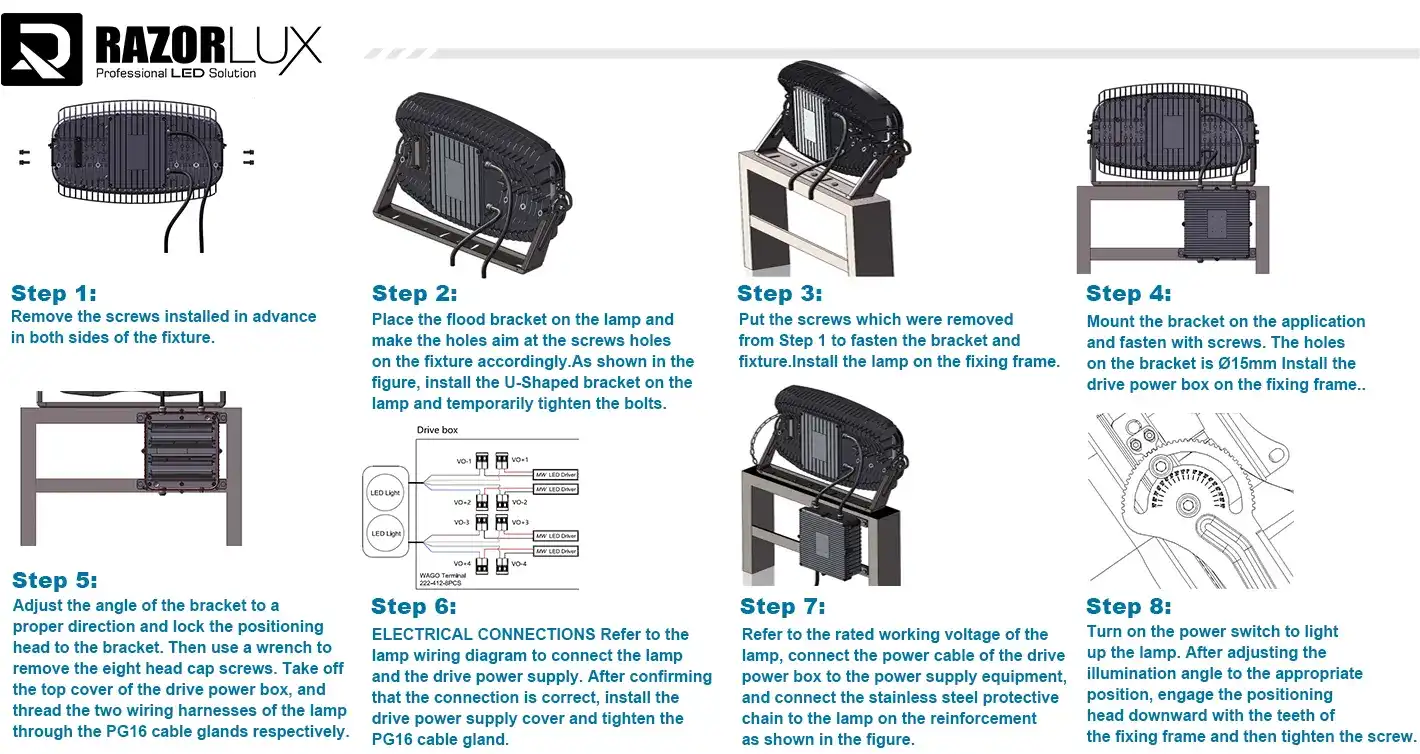
Assessing the electrical equipment before installation keeps problems from happening after the fact. Professional lights can work with a wide range of input voltages (AC100–305V), so they can be used with most industrial power systems. However, the circuit's capacity must be enough to handle the total load that is attached. LED technology uses less power than its HID predecessors, but when multiple lights are turned on at the same time, the initial inrush current can trip circuit protection that isn't big enough. This problem can be solved with staggered start controls or soft-start drivers in places where many fixtures share circuits.
Strategic Placement for Maximum Coverage
For perimeter security lighting to work, the beams need to be spread out in a way that pushes light toward the fence lines while reducing spillover into nearby properties. Type III distributions, which have forward-throw patterns that are about 2.5 times longer than wide, work great for mounting along the sides of buildings or along property lines. They make good "light walls" that show attempts to break in while still following dark sky rules.
Critical access points, like gates, loading docks, and pedestrian entrances, need more light (50–100 lux) than general perimeter zones (5–20 lux). Combining different types of fixtures—for example, narrow-beam (15°-30°) spotlights for focused high-value coverage and medium-beam (60°-90°) LED Area Flood Lights for area lighting—creates depth perception that helps both guards and surveillance cameras figure out what the threat is.
In mixed-use areas where vehicles are used along with people walking, controlling glare is very important. Fixtures directed below horizontal with the right beam cutoff angles keep drivers and forklift workers from seeing the light source directly. This cuts down on the glare that makes it hard to see and increases the risk of accidents. Shielding and louvers make light distribution even better by keeping the light on the surfaces it's supposed to hit and not going into the sky or into office spaces where it's a bother.
Ongoing Maintenance Protocols
Structured service procedures can help all LED systems, even ones that don't need much care, last longer and keep working at their best. Visual checks every three months find physical damage, rising security, and eye degradation before they make security less effective. When dust, salt deposits, or industrial pollutants build up on lens surfaces, they can cut light transmission by 20–30%, lowering the level of illumination below what is needed for safety.
Using the right tools and cleaning lenses on a regular basis protects the optical layers and sealing integrity. Soft microfiber cloths that are cleaned with pH-neutral products get rid of dirt and grime without scratching polycarbonate or glass. High-pressure washing might seem like the fastest way to get things done, but it can damage IP67 sealing by forcing water past gaskets and into electrical compartments. Hand-cleaning or low-pressure methods are safer.
Using thermal imaging for yearly maintenance checks can find problems before they become major ones. High component temperatures can mean that the driver is breaking down, that the LED boards and heatsinks aren't making good thermal contact, or that dirt is stopping the airflow. Dealing with these oddities ahead of time stops sudden power outages that leave security holes and cause emergency service costs that are much higher than the costs of preventative maintenance.
Full documentation during installation and upkeep creates useful operational data. Keeping track of fixture locations, beam angles, installation dates, and service history lets you plan replacements and see how they're doing over time using data. Facilities can find installation areas that aren't working well, back up guarantee claims with clear service records, and make the best decisions about future purchases based on real-world performance data instead of marketing claims.
Selecting the Right LED Area Flood Lights for Commercial and Industrial Procurement
To choose the best security lighting, you have to weigh the needs for technical performance against budget limits, operational priorities, and the total cost of ownership over the long term. Structured evaluation models that match product specs with application-specific needs are helpful for procurement pros.
Application-Specific Requirement Analysis
Fixtures for marine and offshore sites need to be made to prevent corrosion much better than normal industry ratings. Marine-grade aluminum alloys and electrophoretic coating processes can stand up to the fast wear and tear that comes from the salty air in port buildings and offshore sites. DNV-GL and ABS certifications make sure that a ship meets the requirements of a maritime classification society. This speeds up the approval process for both new construction and retrofits [4].
Heavy industrial settings like steel mills, paper mills, and petroleum plants have worries about chemical exposure and explosive atmospheres that need ATEX or IECEx certifications. Fixtures that are approved for Zone 2 (Class I, Division 2) dangerous areas have electrical spaces that can't explode and surface temperature limits that keep flammable vapors from starting a fire. These special needs usually come with 30–50% higher prices than regular industrial fixtures, but they have to be met in order to follow the rules.
Operations in cold climates, like those in the Nordic countries and at high elevations, need to be tested to make sure they work well in cold temperatures. While LED technology naturally handles cold better than HID alternatives—becoming more efficient as temperatures drop—driver electronics and polycarbonate parts can break or become brittle below -30°C if the wrong materials are used. The -40°C lower working limit approved for professional lights like the Razorlux RGL series makes sure that they work reliably in the winter in tough geographic areas.
Performance Specification Priorities
Lumen output alone isn't enough to judge performance; even distribution and steady illumination over the fixture's lifetime are also important. Fixtures that give off 130,000 lumens of light through efficient optics and 0.3 uniformity ratios (minimum to average illumination) are better for security visibility than 150,000-lumen products that have 0.15 uniformity and harsh bright spots and dark shadows.
Different applications have different color rendering needs. In general, CRI>70 is enough for threat recognition and camera performance in security and surveillance applications. However, facilities that need to identify vehicles by color for entry control may need CRI>80. You should weigh this requirement against how well it works. A higher CRI usually means giving up 5–10% of the light's efficiency, which means that the device will cost a little more to run over its lifetime.
Installing dimmers that work with new control systems is possible because they are compatible with existing ones. Fixtures that allow 0-10V analog dimming work well with both simple photocell settings and complex building management systems. Digital Addressable Lighting Interface (DALI) protocols allow for individual fixture addressing and monitoring, which is useful in some situations. However, the extra complexity and cost are mostly worth it in large installations with more than 100 fixtures, where fine-grained control and automated maintenance alerts provide real value.
| Specification Category | Parameter | Standard Industrial | Marine/Offshore | Hazardous Location |
|---|---|---|---|---|
| Ingress Protection | IP Rating | IP65 | IP67 | IP66 (Zone 2) |
| Impact Resistance | IK Rating | IK08 | IK10 | IK09 |
| Corrosion Protection | Salt Spray Testing | 500 hours | 1000+ hours | 750 hours |
| Operating Temperature | Min/Max | -30°C to +50°C | -40°C to +55°C | -25°C to +60°C |
| Certifications | Required Standards | CE, RoHS, UL | + DNV-GL, ABS, RMRS | + ATEX, IECEx |
| Typical Price Range (1000W) | USD per Fixture | $800-1200 | $1200-1800 | $1500-2200 |
By understanding these levels of specification, you can avoid both over-specification, which loses money, and under-specification, which hurts speed or doesn't follow the rules. Instead of setting the highest grade for all uses, procurement professionals should match the amount of security and approval needed to the real installation area.
Supplier Evaluation and Partnership Criteria
Where a component came from has a direct effect on its long-term reliability and the validity of its warranty. Fixtures that use LED chips from Samsung or Philips and Meanwell drivers are more consistent than generic parts whose origin is unknown. These reputable makers offer a lot of application support, performance documentation, and reliable supply chains. These are all very important for keeping spare parts on hand and making sure that guarantee claims are valid over multiple years of service intervals.
The number of certifications a company has shows how committed they are to quality and global market access. For example, in Europe, facilities should check for CE and RoHS certifications; in North America, they should look for UL and DLC certifications; and in Australia, they should look for SAA and C-Tick certifications. Manufacturers who keep their certifications up to date across major markets show that their quality systems are mature and they have the technical know-how to build solid long-term relationships.
Support after the sale means that the product can be evaluated according to its specs. Suppliers who offer help with application engineering, photometric design, and installation problems are worth more than just the product itself. The 5-year guarantee standard for professional fixtures only makes sense if it's backed up by quick technical support and easy RMA procedures. Before placing big orders, make sure that the seller is good at communicating and fixing problems during the quote phase.
Sample evaluation programs let you test performance in real life before making big commitments. Reliable manufacturers offer evaluation units for testing on the job site, which lets engineering teams confirm that the specs they say they meet actually work in real life. Keep track of initial measurements of lighting levels, power use, and thermal performance during evaluation times. This will help you compare suppliers and make sure they are meeting specifications.
Conclusion
For outdoor security to work, the lighting systems need to be able to provide consistent, reliable light in a variety of environments and operational situations.LED Area Flood Lights technology fills in the important performance gaps left by older HID systems by using less energy, responding instantly, lasting longer, and being able to adapt to different situations. The switch to LEDs isn't just a small improvement; it's a basic change in how well security infrastructure works.
When choosing floodlights for marine terminals, shipyards, industrial facilities, and offshore platforms, procurement professionals have to weigh technical requirements against the needs of the environment and the total cost of ownership. Fixtures made with LED chips from Samsung or Philips, Meanwell drivers, IP67 environmental sealing, and IK10 impact resistance give security applications the dependability they need. They also offer 130LM/W efficiency and a 50,000+ hour service life, which saves money by lowering energy costs and maintenance costs.
Razorlux has over 400 patents and 20 years of experience in LED engineering. These patents are used to help create products that solve problems that facility managers and security workers face in the real world. When you combine approved performance, full compliance with international standards, and quick expert help, you get relationships that go far beyond just selling equipment.
FAQ
1. How does LED lifespan compare to traditional security lighting?
Quality LED flood lights keep 70% of their original light output after 50,000 hours of use, which is about 5 to 7 years of nonstop operation. High-pressure sodium lamps last up to 24,000 hours, while metal halide lamps need to be replaced every 6,000 to 12,000 hours (annually if they are used continuously). The longer service interval for LEDs gets rid of the need for regular maintenance and the safety risks that come with doing work at heights.
2. Can LED flood lights operate reliably in extreme weather conditions?
Professional-grade lights with an IP67 rating and a temperature range of -40°C to +60°C work safely in all kinds of weather, from the cold winters in the Nordic countries to the hot summers in the Middle East. Solid-state LED technology is much more resistant to changes in temperature, vibration, and shock than HID lamp filaments, which can break easily. Fixtures made for marine use have extra corrosion protection from marine-grade materials and special finishes that don't rust when exposed to chemicals and salt spray.
3. What brightness level should I specify for perimeter security lighting?
For basic threat detection and surveillance camera support, general perimeter areas need an average of 5 to 10 lux of steady illumination. 20 to 50 lux are needed in high-security areas like gates, loading docks, and important infrastructure. When the uniformity ratio (minimum to average light) is between 0.25 and 0.4, harsh shadows that make it easy to hide are avoided. Work with experts in lighting design to do photometric modeling that matches coverage patterns to the security needs of your building[5].
4. How quickly do LED flood lights respond during power interruptions?
Metal halide systems need 5–10 minutes to reach operating temperature, but LEDs reach full brightness right away without any warm-up time. When the power goes out for a short time, LEDs start up again right away, but HID lamps need to cool down for 10 to 15 minutes before they can strike again. This ability to respond right away is very important for security applications where lighting gaps leave holes that can be used by attackers during utility outages or emergencies that need backup generators to switch on and off.
Partner with Razorlux for Your Security Lighting Requirements
To improve the security of your building, you need a lighting partner with technical know-how and products that have been tested to work in naval and industrial settings. Razorlux is a company that makes LED Area Flood Lights and has more than 20 years of experience in optoelectronic tech. They provide the dependability that ships, port facilities, and heavy industry operations need. Our RGL-1000A series flood lights have Samsung LED chips and Meanwell drivers built into IP67-rated housings that are made to withstand harsh conditions in marine and industrial settings.
Our in-house lighting design team does full photometric analysis to make sure that the fixtures are placed and beams are spread out in the best way for your building's layout and security needs. Razorlux products are certified to meet RMRS, DNV-GL, UL, DLC, CE, and ATEX standards, so they can be sold in any country. Our 5-year guarantee and quick technical help will also protect your investment while it's in use.
Email our applications tech team at sam@razorlux.com to talk about the needs of your security lighting project. For builders and building managers looking for certified, reliable solutions, we offer sample evaluation programs, thorough specification help, and low bulk prices. Razorlux.com has all of our products and technical information.
References
1. U.S. Department of Energy. (2021). Outdoor Area Lighting. Energy.gov. https://www.energy.gov/eere/ssl/outdoor-area-lighting
2. International Association of Lighting Designers. (2022). Security Lighting Design Guidelines. IALD Technical Report Series. https://www.iald.org/
3. International Dark-Sky Association. (2020). Five Principles for Responsible Outdoor Lighting. DarkSky.org. https://www.darksky.org/our-work/lighting/lighting-principles/
4. DNV GL. (2023). Maritime Lighting and Equipment Standards. DNV Classification Notes. https://www.dnv.com/maritime/
5. Illuminating Engineering Society. (2023). IES Lighting Handbook, 10th Edition. IES Publications. https://www.ies.org/standards/
6. National Electrical Manufacturers Association. (2022). ANSI C136.31: American National Standard for Roadway and Area Lighting Equipment—Luminaire Vibration. NEMA Standards Publication. https://www.nema.org/standards