


_1750326878398.png)

120 Volt LED Outdoor Flood Lights: Plug-In vs Hardwired Options?
120 Volt LED outdoor floodlights significantly impact installation efficiency, how reliable the operation is, and how much it costs to fix over time. Plug-in types are adaptable and simple to set up. They also don't require permanent changes to the wires for 120 Volt LED Outdoor Flood Lights, so they can be used for short-term projects or upgrades. Wired options, on the other hand, keep out the weather better and are less likely to disconnect by accident. This is especially important near the water, where vibrations and salt spray can damage any link point. They can make sure that lighting options meet project schedules, safety standards, budgets, and naval certifications like DNV and ABS if they know these differences.
Understanding 120 Volt LED Outdoor Flood Lights
High-voltage 120 Volt LED Outdoor Flood Lights represent a significant advancement in industrial and commercial outdoor illumination, particularly for demanding environments where reliability cannot be compromised.
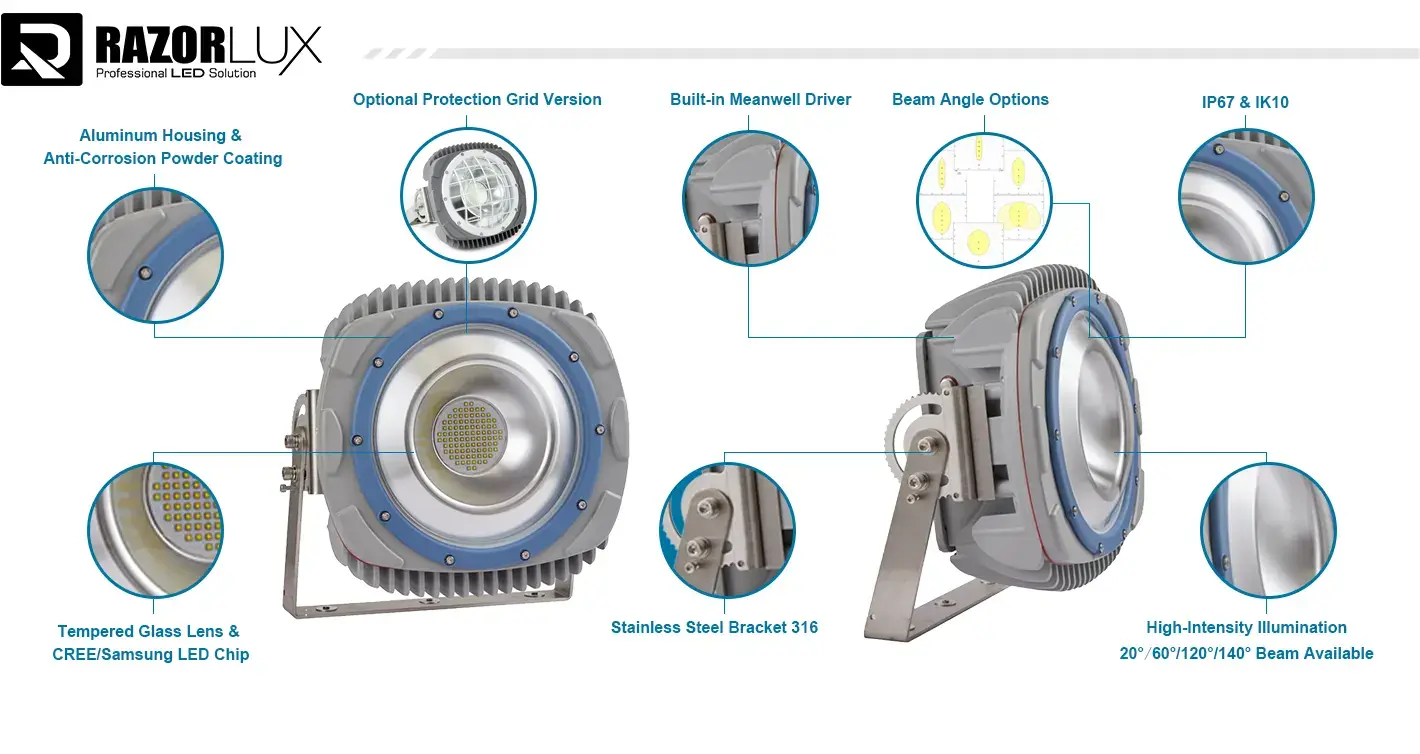
What Makes 120V LED Flood Lights Different
Most home outdoor lighting uses lower voltages, but industrial-grade lights need to be able to handle changing grid conditions because they need to be very strong electrically. If you plug in 120-volt LED outdoor flood lights, they will still work when the power moves from 90V AC to 277V AC. A building with a backup generator or power lines that aren't stable should have this feature. This voltage limit keeps LED drivers that are easily damaged from breaking down too soon. It also keeps the light output steady during working hours.
New driver technology from firms like Meanwell lets them fix power factor errors above 0.98 and keep overall harmonic distortion below 10%. This keeps sensitive equipment safe and cuts down on wasted electricity. It is the job of facility engineers to make sure that lighting systems work with the communication equipment and automatic controls that are widespread in modern workplaces and remote sites. These technical specs directly address their concerns.
Energy Efficiency and Operating Economics
Instead of an HID lamp with 2200–2500W, you can use an LED flood light with 130,000 lumens and 1000W. It will use 60% less electricity. People who work at ports are in charge of many tools in loading docks and shipping yards. This helps them a lot.
Plus, it lasts more than 50,000 hours, so it doesn't need as much upkeep and costs less to run. To get to high places in naval areas, you need trained people with the right tools. This longer useful life changes the total cost of ownership. Now that these tools are around, sites can wait 5 to 7 years longer before they have to change something. You can now use that money to fix more important things.
Critical Performance Standards for Marine and Industrial Use
While looking for lights for harsh environments, it's important to make sure they won't rust and can handle being hit by things and water. Shields with an IP67 grade can handle both water jets and being submerged for a short time. This is very important for things on the deck that will be hit by waves or cleaned with high-pressure water while the ship is being fixed. In the military, salt water can speed up rust and electrical problems. This is why the difference between IP65 and IP67 grades is so important.
Nuts need to have an IK10 impact strength so they can handle the mechanical shock of being hit by tools, handling equipment, or falling objects, which can happen a lot on ships and in big businesses. Metals can rust if they are in air that is salty. This can't happen with marine-grade metal alloys and steel gear that has been electropolished. Managers who buy things are worried that things will break down too fast and cost a lot to fix. These material standards directly address that fear.
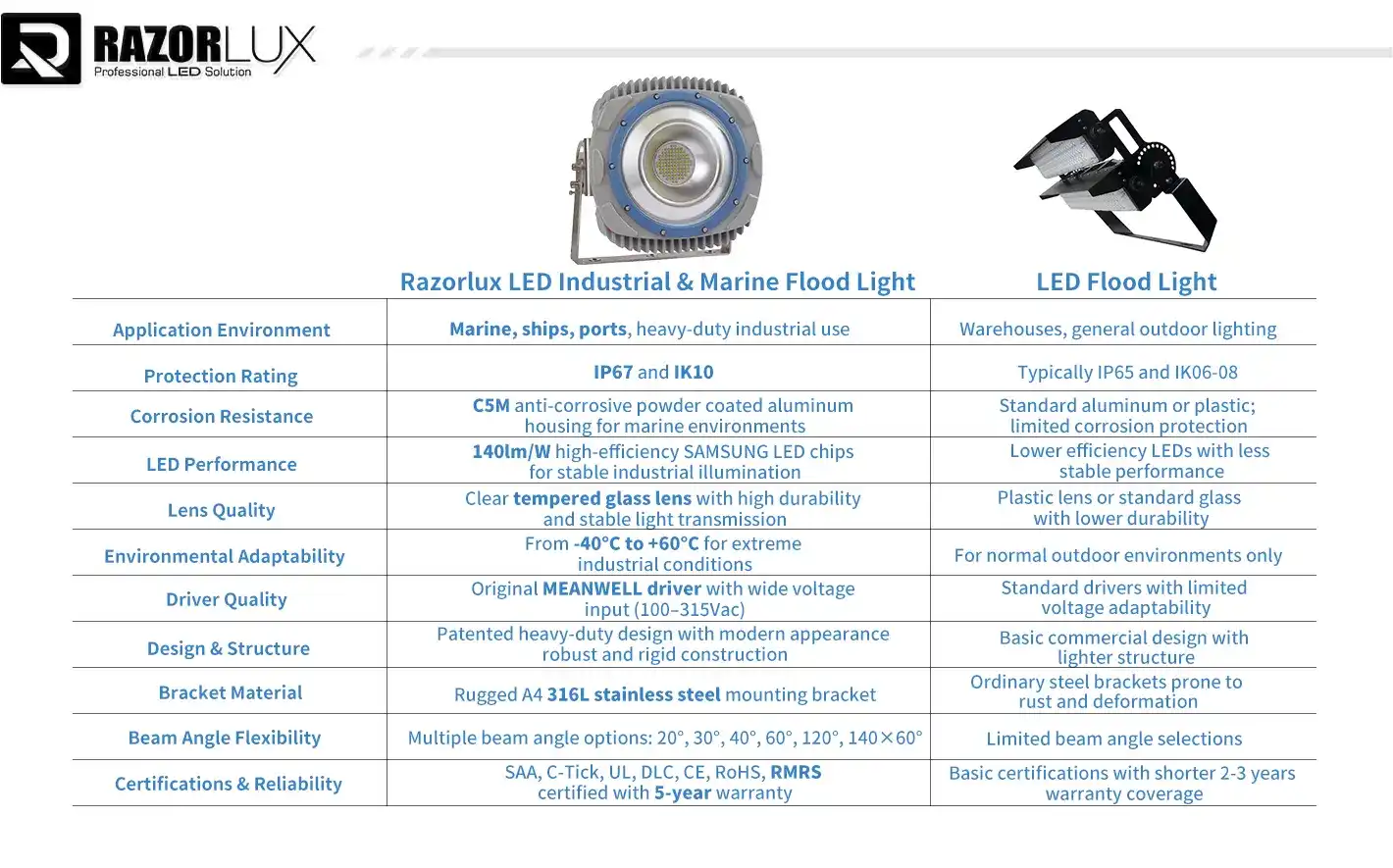
Plug-In vs Hardwired 120 Volt LED Flood Lights – Core Differences and Use Cases
Installation methodology for 120 Volt LED Outdoor Flood Lights fundamentally influences project timelines, electrical compliance requirements, and operational flexibility across the fixture lifecycle.
Installation Flexibility and Project Deployment
These lights are plug-in, so they are easy to put up and don't need to be put in by a professional plumber. This helps during port retrofits because ships move through repair areas and their lighting needs change. It also comes in handy in temporary work zones where lighting needs change as the project goes through its stages. Maintenance workers can move the lights around without having to pay extra or wait for a power permit if they need to change the way the lights work.
The links you make when you hardwire something are fixed and can't be changed. This keeps plugs from getting wet or coming loose by accident. When setting up things this way, it works well for docks and platforms out at sea, where saltwater sprays and waves shake lines that are close to the ground. When connections are made directly inside weather-sealed junction boxes, they stay safe even when it's rough outside. This makes it less likely that annoying failures will happen with the security lights or video.
Weather Resistance and Environmental Durability
When an electrical system is used in tough conditions, the connection points are where it breaks down the most. Water and salt crystals could still get in through the plug-in types, even though they have special marine-grade plugs with O-ring seals and locking systems. UV light and changes in temperature can cause even high-quality joints to lose their seals over time. This is why they need to be checked and kept regularly.
When you have hardwired terminations, there are no connection points on the outside. But now, power is sent through protected pipe systems, and fittings are linked with threaded hubs or compressed glands. This method is better for long-term weatherproofing because it lowers the number of ways something could go wrong. It is the job of facilities engineering teams to light up important structures like helipads on offshore platforms or docks that are needed for travel. Hardwired installs are given more attention because they lower the risk of single-point failures that could make operations less safe.
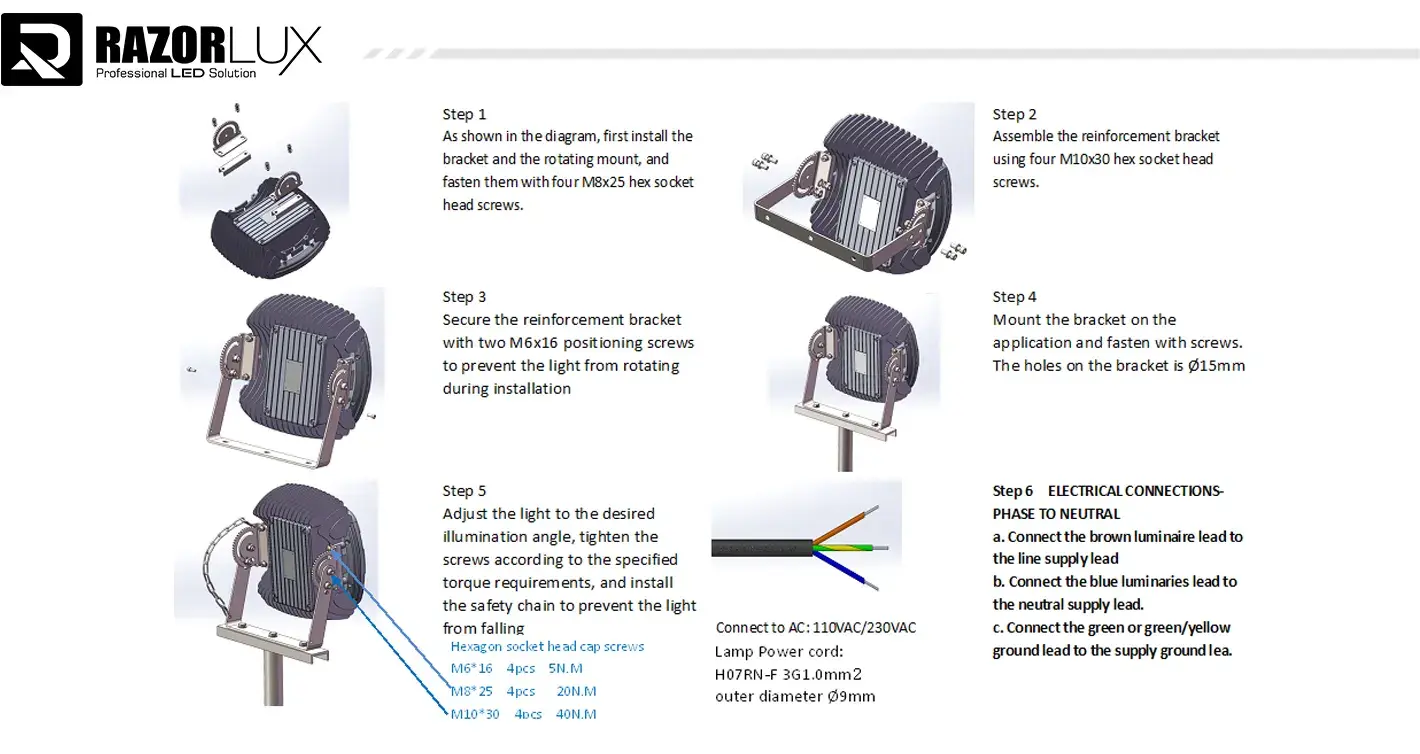
Cost Analysis Across System Lifecycle
Plug-in systems are cheaper to build at first because they require less work and don't need to change the electrical design so fixtures can be put in different places. When building projects have to be finished on time, project managers like being able to quickly turn on lights as different parts of the building begin to work. Making this change keeps the project on track.
However, how often repairs are needed and how hard it is to replace something must be taken into account when figuring out the total cost. Even though they cost more to install at first, connected lights that stay in place for 10 to 15 years generally charge less in the long run. Less maintenance for the connections, no more plug replacement costs, and a drop in the number of failures caused by weather more than make up for the higher price at first. This is very important for buildings that don't have many maintenance entry windows or that pay a lot for service workers.
The table below compares key operational characteristics:
| Specification | Plug-In Configuration | Hardwired Configuration |
|---|---|---|
| Installation Time | 30-45 minutes per fixture | 60-90 minutes per fixture |
| Electrician Requirement | Optional for mounting only | Required for termination |
| Relocation Flexibility | High - unplug and move | Low - requires rewiring |
| Connection Weather Resistance | Good with quality connectors | Excellent with sealed terminations |
| Maintenance Access Frequency | Annual connector inspection | 3-5 year interval recommended |
| Failure Risk from Environmental Exposure | Moderate - connector seal degradation | Low - no external connection points |
These factors guide procurement decisions based on specific facility characteristics, operational requirements, and maintenance capabilities available to site personnel.
Suitability for Specific Marine and Industrial Applications
Flexible plugs are good for port repair docks where vessel sizes and service needs change, which means that lights need to be switched out for a while while the repairs are being done. Fixtures on a platform or mobile work stands can be moved around to light up different parts of the hull or engine areas as the work is done. This improves the lighting without having to change the building's electrical systems in a way that will last.
On the other hand, permanent dock infrastructure like container ports, bulk loading facilities, and offshore platform helidecks needs set systems that can handle being outside all the time without having to be worked on. For these purposes, it's more important to keep things running than to be able to arrange them in different ways. They are ready to pay more up front to avoid long-term problems with dependability that could stop cargo operations or hurt systems that keep people safe during flights.
Key Selection Criteria for 120 Volt LED Outdoor Flood Lights
Technical specifications for 120 Volt LED Outdoor Flood Lights must align with photometric requirements, environmental conditions, and operational control needs specific to each application.
Wattage, Lumen Output, and Illumination Requirements
Photometric design for 120 Volt LED Outdoor Flood Lights begins with understanding illuminance targets for specific work areas or security zones. Container terminal operators typically specify 20-30 lux horizontal illuminance at ground level across loading zones to ensure crane operator visibility and CCTV effectiveness. Achieving these targets across expanses spanning hundreds of meters requires high-output fixtures—often 500-1000W units producing 65,000-130,000 lumens—mounted at heights of 20-30 meters on lighting masts or gantry structures.
Beam angle selection determines light distribution patterns and spacing requirements between fixtures. Narrow 40° beams concentrate luminous intensity for long-throw applications illuminating vertical ship hulls or building facades from ground-mounted positions. Wide 120° beams provide uniform coverage for open yard areas or parking zones where fixture height limitations restrict mounting elevation. Asymmetric beam patterns (such as 140°x60°) optimize illumination for roadways or dock edges, directing light downward onto work surfaces while minimizing upward spill that contributes to light pollution.
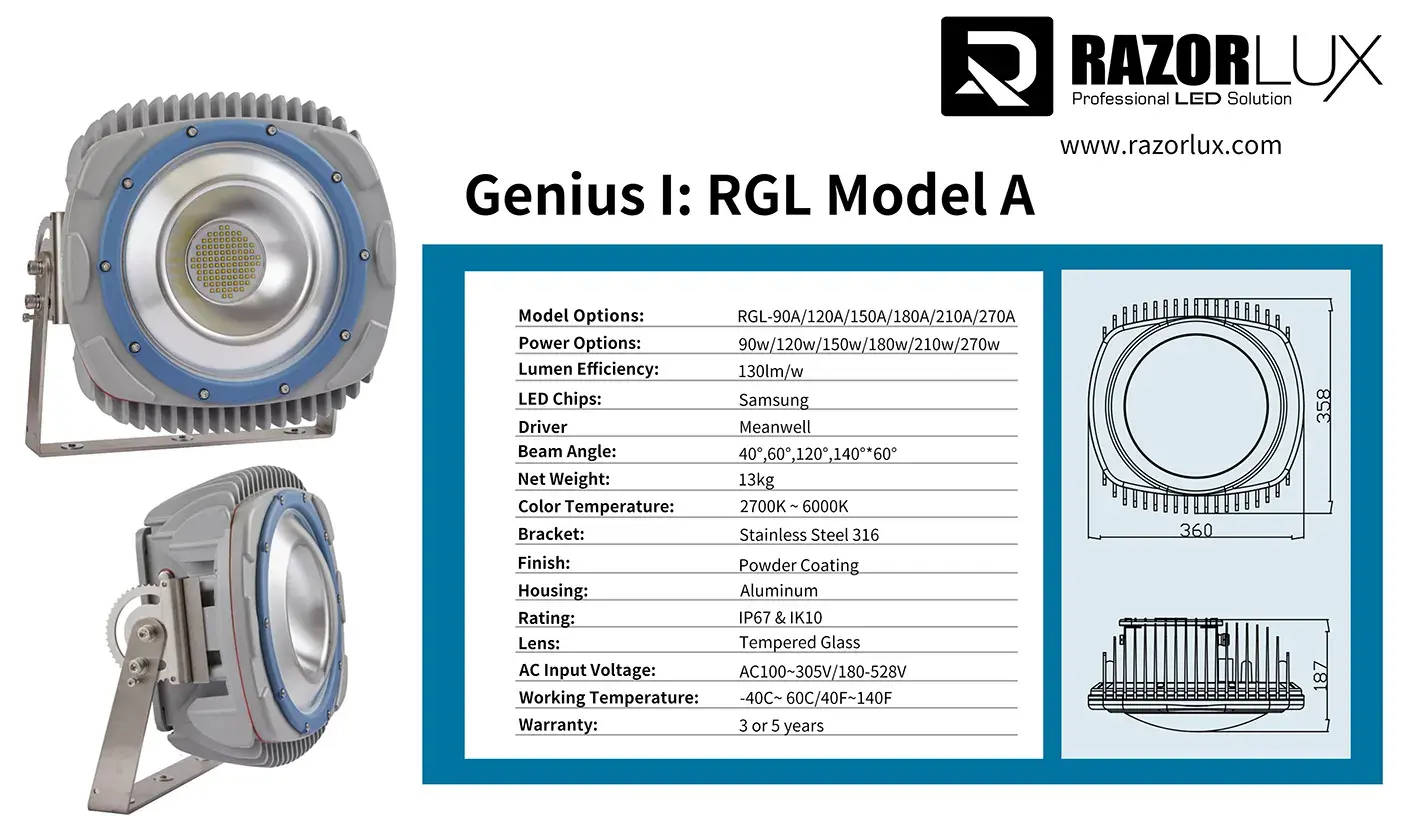
Environmental Protection and Ingress Ratings
IP rating interpretation requires understanding the specific threats present in each installation environment. The table below clarifies protection levels relevant to marine and industrial applications:
| IP Rating | Solid Particle Protection | Liquid Ingress Protection | Recommended Applications |
|---|---|---|---|
| IP65 | Dust-tight protection | Protected against water jets from any direction | Covered dock areas, warehouse perimeters |
| IP66 | Dust-tight protection | Protected against powerful water jets and heavy seas | Open dock infrastructure, shipyard work zones |
| IP67 | Dust-tight protection | Protected against temporary submersion up to 1 meter | Deck-mounted ship fixtures, splash zone installations |
| IP68 | Dust-tight protection | Protected against continuous submersion beyond 1 meter | Underwater or constantly submerged applications |
Marine environments demand IP66 minimum ratings for fixtures mounted in exposed locations subject to pressure washing or heavy weather. Vessel deck lighting requires IP67 specifications to withstand green water events when heavy seas wash over working decks. Understanding these distinctions prevents under-specification that leads to premature failures and warranty disputes—a common frustration expressed by shipyard purchasing managers dealing with suppliers unfamiliar with maritime operational realities.
Advanced Control Features and Operational Efficiency
Today, smart lighting controls are becoming more and more important in facility management because they save energy and link lighting to bigger systems that control the building. With dimmable LED drivers that support 0-10V analogue control or DALI digital protocols, light levels can be changed automatically based on who is in the room, the time of day, or the needs of the task at hand. LEDs not only save energy, but they also let port facilities lower their lights when they're not in use while still keeping security lighting on. More than 30% to 40% of energy can be saved this way.
Adding motion monitors changes the cost of security lighting because lights don't have to be on all the time in places where no one is walking by. If someone moves, PIR or microwave sensors will pick it up and only turn on all the lights when they're needed. A low level of lighting is kept on during rest times. By dropping the total number of hours they are used, this method makes parts last longer. It also makes things safer by changing the way things look when sensors are triggered. This lets security staff know about possible attacks by letting them see changes in the way things are lit.
Component Quality and Manufacturer Reputation
Procurement specifications should mandate use of tier-one LED chips from manufacturers including Samsung, Lumileds, or Cree to ensure lumen maintenance and color stability throughout operational life. Purchasing managers familiar with the LED industry understand that chip quality varies dramatically across suppliers, with lower-tier components exhibiting accelerated lumen depreciation and chromaticity shift that degrades lighting quality within 2-3 years despite marketed 50,000-hour lifespans.
Driver selection equally impacts reliability and longevity. Meanwell power supplies dominate industrial LED applications due to proven track records in harsh environments and comprehensive protection features including over-voltage, over-current, and thermal shutdown circuits. These active protection mechanisms prevent catastrophic failures that damage LED arrays, enabling fixture survival during electrical transients or abnormal operating conditions that would destroy lesser designs.
Installation Guide: Plug-In & Hardwired 120 Volt LED Flood Lights
Proper installation of 120 Volt LED Outdoor Flood Lights ensures fixtures achieve rated performance and longevity while maintaining electrical safety compliance.
Pre-Installation Planning and Site Assessment
Successful deployment begins with comprehensive site evaluation identifying mounting locations, electrical infrastructure access, and potential environmental challenges. Structural engineers must verify that mounting surfaces—whether building walls, mast structures, or gantry beams—possess adequate load capacity to support fixture weight plus wind loading. A 30kg flood light mounted 25 meters above grade experiences substantial wind forces during storms, potentially generating structural loads exceeding 200kg when factoring dynamic effects and safety margins.
Electrical planning must account for voltage drop across supply circuits, particularly critical for fixtures mounted distant from distribution panels. A 1000W fixture drawing 8.3 amps at 120V experiences significant voltage reduction through long cable runs, potentially causing driver malfunction or reduced output if supply voltage falls below driver input specifications. Using appropriate conductor sizing or increasing supply voltage to 208-240V ranges compensates for distribution losses while maintaining proper driver operation at fixture terminals.
Plug-In Installation Procedures and Best Practices
Mounting bracket installation requires secure fastening appropriate to substrate materials—whether steel beams, concrete walls, or aluminum superstructures common in marine applications. Stainless steel fasteners with locking features prevent loosening from vibration, while proper torque specifications avoid crushing gasket materials that maintain weather seals. Bracket positioning must orient fixtures to achieve designed beam angles while ensuring drainage paths allow water egress from lens surfaces and housing cavities.
Cable management prevents damage to power cords from abrasion, UV exposure, or mechanical impact. Armored cable sleeves or protective conduit should shield conductors from sharp edges and physical contact, particularly in active work zones where material handling creates constant hazards. Strain relief at fixture connection points prevents repetitive flexing that fatigues conductors, a common failure mode in temporary installations where fixtures experience frequent repositioning.
Hardwired Installation Requirements and Compliance
Licensed electrician involvement for 120 Volt Led Outdoor Flood Lights ensures compliance with National Electrical Code requirements and local jurisdictional amendments governing outdoor lighting installations. Conduit systems must maintain proper bend radii and support spacing to prevent conductor damage, while junction boxes require appropriate environmental ratings matching or exceeding fixture specifications. Using IP67-rated junction boxes for IP67 fixtures maintains system-level ingress protection, preventing weak links that compromise overall installation integrity.
Wire termination techniques emphasize secure mechanical connections and environmental sealing. Compression lugs provide superior reliability compared to mechanical set-screw terminals, particularly under vibration exposure common in marine environments. Heat-shrink tubing with adhesive inner layers seals conductor insulation transitions, preventing moisture wicking along stranded wire cores—a subtle failure mechanism that causes corrosion at terminal interfaces years after initial installation.
Testing and Commissioning Procedures
Functional verification includes measuring actual illuminance levels with calibrated light meters, comparing field measurements against photometric predictions to validate design assumptions. Discrepancies may indicate aiming errors, incorrect beam angle selection, or performance degradation from improper handling during installation. Thermal imaging surveys identify fixtures operating abnormally hot, suggesting driver problems, inadequate ventilation, or poor thermal interface between LED arrays and heat sinks.
Electrical testing confirms proper voltage at fixture terminals, validates ground fault protection operation, and verifies control system integration where applicable. Dimming functionality should demonstrate smooth, flicker-free operation across the full range with consistent output across multiple fixtures to avoid visual discontinuities. Motion sensors and photocells require sensitivity adjustment and timer configuration to prevent nuisance operation while ensuring reliable activation when required.
Where and How to Procure 120 Volt LED Outdoor Flood Lights
Strategic sourcing of 120 Volt LED Outdoor Flood Lights ensures access to reliable products backed by comprehensive technical support and favorable commercial terms.
Supplier Evaluation and Qualification Criteria
Procurement professionals serving maritime and heavy industrial sectors prioritize suppliers demonstrating marine lighting expertise validated through classification society approvals and documented project references. DNV-GL, ABS, Lloyd's Register, and similar certifications confirm designs meet stringent marine environmental requirements beyond generic commercial lighting standards. Requesting certification documentation during supplier qualification eliminates vendors offering misrepresented products unsuitable for harsh marine service.
Manufacturing capability assessment includes reviewing quality management systems, testing facilities, and supply chain stability. ISO 9001 certification provides baseline assurance of process controls, while suppliers maintaining in-house environmental test chambers and photometric laboratories demonstrate commitment to product validation rather than relying solely on component manufacturer data. Tours of production facilities—increasingly conducted virtually—reveal manufacturing sophistication and quality control rigor that ultimately determine product consistency batch-to-batch.
Negotiation Strategies for Commercial and Industrial Buyers
Volume commitments unlock favorable pricing and preferential terms including extended payment periods, consignment inventory programs, and dedicated production capacity reserving. Facilities planning multi-year retrofit programs benefit from framework agreements establishing pricing for defined product ranges, avoiding market fluctuations while simplifying procurement administration across multiple project phases.
Sample evaluation programs allow technical teams to assess product quality, validate photometric performance, and conduct accelerated environmental testing before committing to volume orders. Reputable suppliers readily provide samples—often at nominal cost or free for qualified projects—recognizing that hands-on evaluation builds confidence and facilitates specification decisions. Requesting samples should include clear evaluation criteria and timeline commitments, respecting supplier investments while ensuring procurement processes advance efficiently.
Razorlux Value Proposition for Marine and Industrial Applications
Xi'an Razorlux Optoelectronic Technology Co., Ltd. has specialized in marine and industrial LED lighting since 1998, accumulating expertise that specifically addresses the challenges facing shipyard purchasing managers and offshore facility engineers. Our product portfolio includes fixtures designed from the ground up for harsh environments rather than adapted from commercial products, incorporating materials selection, sealing strategies, and structural design reflecting decades of field experience and failure analysis learning.
Our RGL-1000A flood light exemplifies this application-focused engineering approach. The 1000W rated power delivers 130,000 lumens through a patented multi-function design adaptable to diverse mounting requirements. Wide input voltage tolerance (AC 80-305V, DC 100-400V, and high-voltage DC 500-800V options) ensures compatibility with variable power sources including ship generators, solar+battery systems, and industrial distribution networks experiencing significant fluctuations.
Conclusion
Selecting between plug-in and hardwired 120 Volt LED Outdoor Flood Lights requires careful analysis of installation flexibility needs, environmental exposure severity, and long-term maintenance capabilities. Plug-in configurations excel in applications requiring repositioning flexibility or rapid deployment without permanent electrical modifications, while hardwired installations deliver superior weatherproofing and connection reliability for permanent infrastructure exposed to harsh marine conditions. Technical specifications including IP ratings, lumen output, beam angles, and component quality directly impact operational performance and lifecycle costs, making thorough evaluation essential during procurement processes. Partnering with experienced manufacturers offering marine-certified products, comprehensive technical support, and proven track records in demanding applications ensures lighting investments deliver reliable illumination throughout extended service lives, protecting operational continuity and facility safety.
FAQ
How long do 120 Volt LED outdoor flood lights typically last in marine environments?
Quality LED flood lights designed for marine service achieve operational lifespans exceeding 50,000 hours when utilizing tier-one LED chips and robust driver protection circuits. In continuous-operation scenarios common at port facilities, this translates to approximately 6-7 years before lumen depreciation reaches the L70 threshold (70% of initial output). Fixtures experiencing duty-cycled operation with motion sensor control can extend service life to 10-12 years. Critical factors influencing longevity include proper thermal management maintaining junction temperatures below 85°C, effective corrosion protection preventing moisture ingress, and electrical system quality minimizing voltage transients that stress driver components.
What certifications should I require when purchasing flood lights for offshore platform use?
Offshore installations demand fixtures certified by marine classification societies including DNV-GL, ABS, Lloyd's Register, or equivalent authorities depending on platform flag state and operational jurisdiction. These certifications verify designs meet environmental testing requirements including salt spray exposure (ASTM B117), shock and vibration resistance, and performance maintenance across extreme temperature ranges. Additionally, require ATEX or IECEx certifications for fixtures installed in hazardous area classifications where flammable atmospheres may exist. Standard commercial certifications (UL, CE, RoHS) remain necessary but insufficient alone for offshore service, where failure consequences and maintenance access limitations demand higher reliability standards.
Partner with Razorlux for Marine-Grade LED Area Flood Lights
Choosing the right LED Area Flood Lights manufacturer can affect how well your facility works, how safe it is, and how much it costs to maintain over time. Razorlux has more than 20 years of experience in marine and heavy-duty industrial lights. They have 436 patents that cover improvements in thermal management, driver technology, and housing design optimization. Our RGL-1000A flood lights are made of aluminum and have 130 lm/W efficiency thanks to Samsung LED chips and Mean Well drivers. They come with a 5-year warranty and are certified by RMRS, DNV, CE, UL, and DLC, among others.
For unique lighting plan designs, photometric analysis, and low bulk prices on your shipyard, port facility, or offshore platform project, email our engineering team at sam@razorlux.com. We give you full technical documentation, chances to test samples, and quick help throughout the whole procurement process, from coming up with the initial specifications to helping you with installation and planning for maintenance over the product's lifetime. You can trust Razorlux to provide you with reliable LED Area Flood Lights that have been tested and proven to work in the harshest naval and industrial settings in the world.
References
1. Illuminating Engineering Society, "Recommended Practice for Outdoor Lighting in Marine Environments," IES Technical Memorandum TM-28-2019.
2. Maritime Equipment Manufacturers Association, "LED Lighting Durability Standards for Shipboard and Offshore Applications," MEMA Technical Report 2021-04.
3. Department of Energy, "Solid-State Lighting Research and Development: Multi-Year Program Plan," DOE Office of Energy Efficiency and Renewable Energy, 2023.
4. International Association of Ports and Harbors, "Best Practices for Port and Terminal Lighting Infrastructure," IAPH Guidelines Document, 2022.
5. American Society for Testing and Materials, "Standard Practice for Operating Salt Spray (Fog) Apparatus," ASTM B117-19, 2020.
6. LED Systems Reliability Consortium, "Thermal Management Impact on LED Component Longevity," LSRC Technical Publication Series, Vol. 8, 2023.