


_1750326878398.png)

What Pole Height is Ideal for Tennis Court LED Flood Lights?
Determining the optimal pole height for tennis court lighting significantly impacts illumination quality, player performance, and operational efficiency. Properly positioned Tennis Court Led Flood Lights enhance visibility while minimizing glare and shadows across the playing surface. For most setups, the poles are between 20 and 40 feet high. However, the exact height will depend on the size of the court, how often it is used, and the lighting rules in your area. To meet the standards of the International Tennis Federation (ITF), professional-level facilities must be carefully thought out so that light is spread out properly and watching is easy. This full guide talks about the technical and practical things that you need to think about when picking the right pole height for your tennis court.
Understanding Tennis Court LED Flood Light Pole Height Requirements
Finding the best pole height for lighting a tennis court has a big effect on the quality of the lights, how well players do, and how efficiently the court is run. Tennis Court LED floodlights that are positioned correctly improve vision while reducing glare and shadows on the court. Standard setups put poles anywhere from 20 to 40 feet high, but the exact height relies on the size of the court, how often it is used, and the lighting rules in your area. To meet International Tennis Federation (ITF) standards, professional-level facilities need to be carefully planned out to make sure that light is distributed evenly and viewing conditions are comfortable. This complete guide looks at the technical and practical factors that affect choosing the right pole height for different tennis court uses.
International Lighting Standards and Regulatory Guidelines
The International Tennis Federation sets standards for lighting that have a direct effect on choices about pole height. The court surface needs to be lit up to a minimum of 200 to 300 lux in recreational facilities for casual players and 500 lux in competitive club venues that want to meet Class II standards. Professional tournament-grade setups meant to be shown on TV must reach 750 to 1000 lux and have very high consistency ratios. These requirements determine not only the output of the fixture but also its mounting height. This is because higher poles spread light over bigger areas more evenly, but they also need brighter fixtures to keep the ground-level strength at a good level.
Local building codes and safety rules also affect how installations are done. Coastal areas close to maritime operations need better corrosion protection, similar to the standards that shipyard purchasing managers use to check equipment for saltwater exposure. Local zoning laws may limit the tallest poles to protect sightlines or meet aviation requirements. This is why it is important to talk to the city government ahead of time when planning a project.
Pole Height Impact on Light Distribution and Uniformity
Mounting height changes how light gets to the game surface in a basic way. Fixtures are placed closer to the playing area by lower poles that are 20 to 25 feet high. This lets smaller wattage units reach the desired lux levels. This setup works well for single-court setups with limited funds, but it makes it more likely for players to get direct glare when they are tracking high lobs. At lower heights, the shadows that nets and players cast are more noticeable, which could make it hard to play during important moments.
By putting more space between the light source and the target area, installations that are 30 to 40 feet higher spread the light more evenly. This slope makes it easier to see because it lowers the angles of strong shadows and glare. For taller poles and more powerful fixtures, the trade-off is higher initial costs and more difficult maintenance. Elevated mounting is very helpful for multi-court buildings because it lets you strategically place poles to light up nearby courts without having to use extra infrastructure.
Typical Pole Height Ranges for Different Court Types
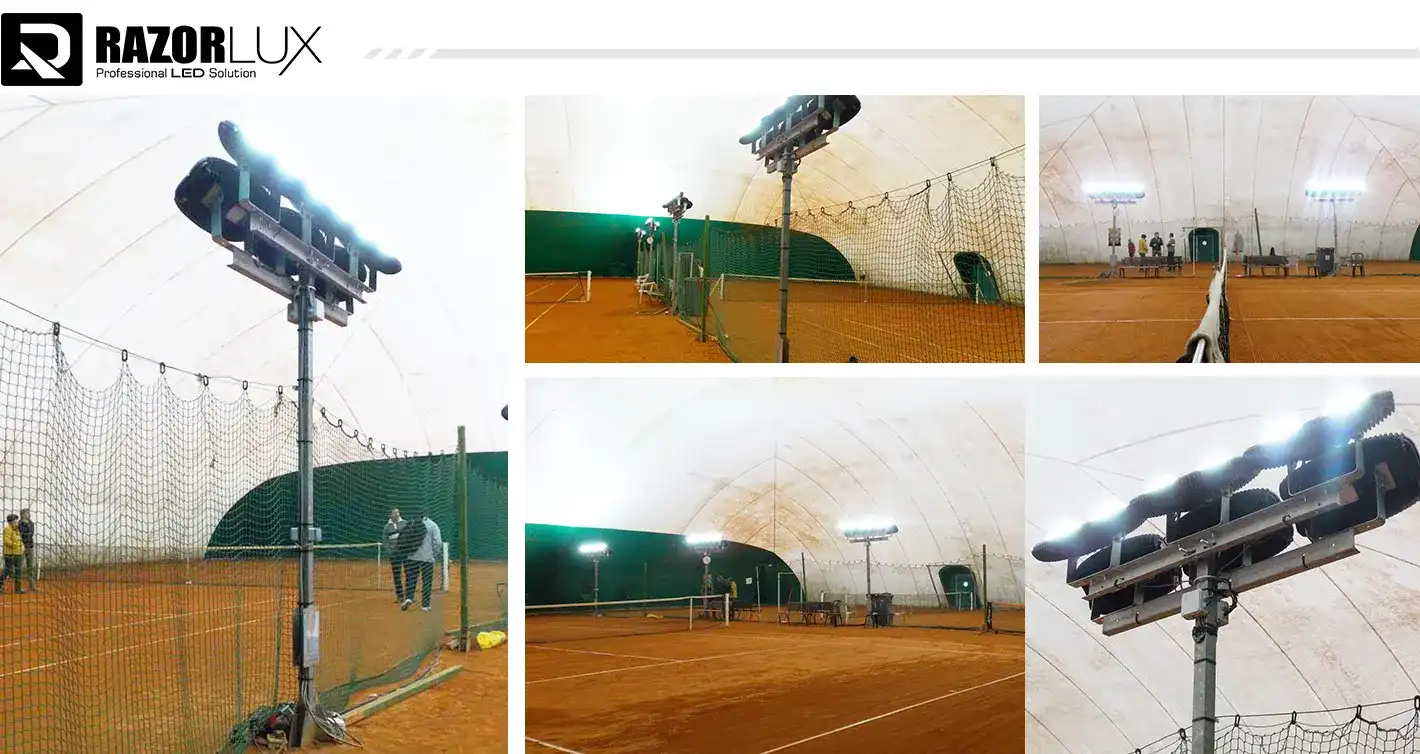
Different installation situations for Tennis Court LED Flood Lights show clear trends in choosing the pole height. Public parks that offer tennis for fun usually set up 20- to 25-foot poles with four posts per court, with the goal of keeping costs low and making upkeep easy. League-playing clubs usually choose 25- to 30-foot poles, combining the need for better performance with limited budgets while still allowing for basic seats for spectators.
Professional sites that host official events need 35- to 40-foot poles with fixtures that are precisely aimed and provide lighting that is good enough for broadcasting. Asymmetric optics is used to control the beams in these systems, which direct light onto the court area while reducing sky glow and light that gets past property lines. Industrial-grade mounting hardware, like that used for lighting systems on offshore platforms, makes sure that the system stays stable even when there is a lot of wind. This meets the durability standards that shipyard engineers look for in coastal environments that are exposed to the elements.
| Court Classification | Recommended Pole Height | Typical Lux Level | Application Context |
|---|---|---|---|
| Recreational (Class III) | 20 to 25 feet | 200 to 300 lux | Public parks and residential areas |
| Club/Business (Class II) | 25 to 30 feet | 500 lux | Tennis courts, schools, and city buildings |
| Business (Class I) | 35 to 40 feet | 750–1000+ lux | Tournament sites and broadcast-quality setups |
Technical Factors Influencing Ideal Pole Height for LED Flood Lights
Luminous Output and Beam Angle Interaction with Mounting Elevation
To keep ground-level lighting, the brightness of the fixture (measured in lumens) must increase or decrease proportionately with the height of the pole. When mounted 20 to 25 feet above the court, a 400W Led Floodlight that produces 52,000 lumens at 130 lm/W is bright enough for recreational courts. The inverse square law says that when you raise the same device 35 feet, you need either more units or models with higher watts to make up for the increased light loss that comes with the distance.
Choosing the right beam angle has a direct effect on the coverage area at different heights. Narrow 40-degree beams focus light for penetration from high up, so they can be used on 30–40-foot poles to target specific court areas. Medium 60-degree spreads are flexible and work well for installations 25 to 30 feet away. On the other hand, wide 120-degree patterns work best at lower elevations where they keep hot spots from forming. Specialized 140°x60° beams push light forward while limiting its vertical spread. This lowers the glare when poles are outside the court lines.
Energy Efficiency Considerations Across Different Pole Heights
Higher systems need stronger fixings, which makes people worry about the costs of running them for 50,000 hours. Modern LED technology solves this problem by making lights brighter and more efficient. The 130 lm/W efficiency of industrial-grade lights is higher than that of standard 800-1000W metal halide lamps, but they only use 400W, which means they use about 60% less energy no matter how high they are mounted.
Voltage flexibility makes a wide range of equipment even more efficient. Universal AC input that accepts 110–480Vac gets rid of the need for expensive transformers when connecting to different types of grids. DC compatibility that covers 100–800Vdc helps green energy systems work. This adaptability is useful for port facilities and offshore platforms with different electrical systems. This is something that industrial equipment procurement supervisors who manage complex installations are used to.
Durability and Maintenance Accessibility at Various Pole Heights
The costs of pole height are directly related to how long a fixture lasts. Units placed 20 to 25 feet away are easier to maintain, but they are more likely to be hit by balls, so they need strong IK10 impact protection. Higher installations between 35 and 40 feet lower the risk of physical damage but make regular checks and lamp changes harder. However, the longer lifespan of LED technology makes service much less frequent than with traditional lighting.
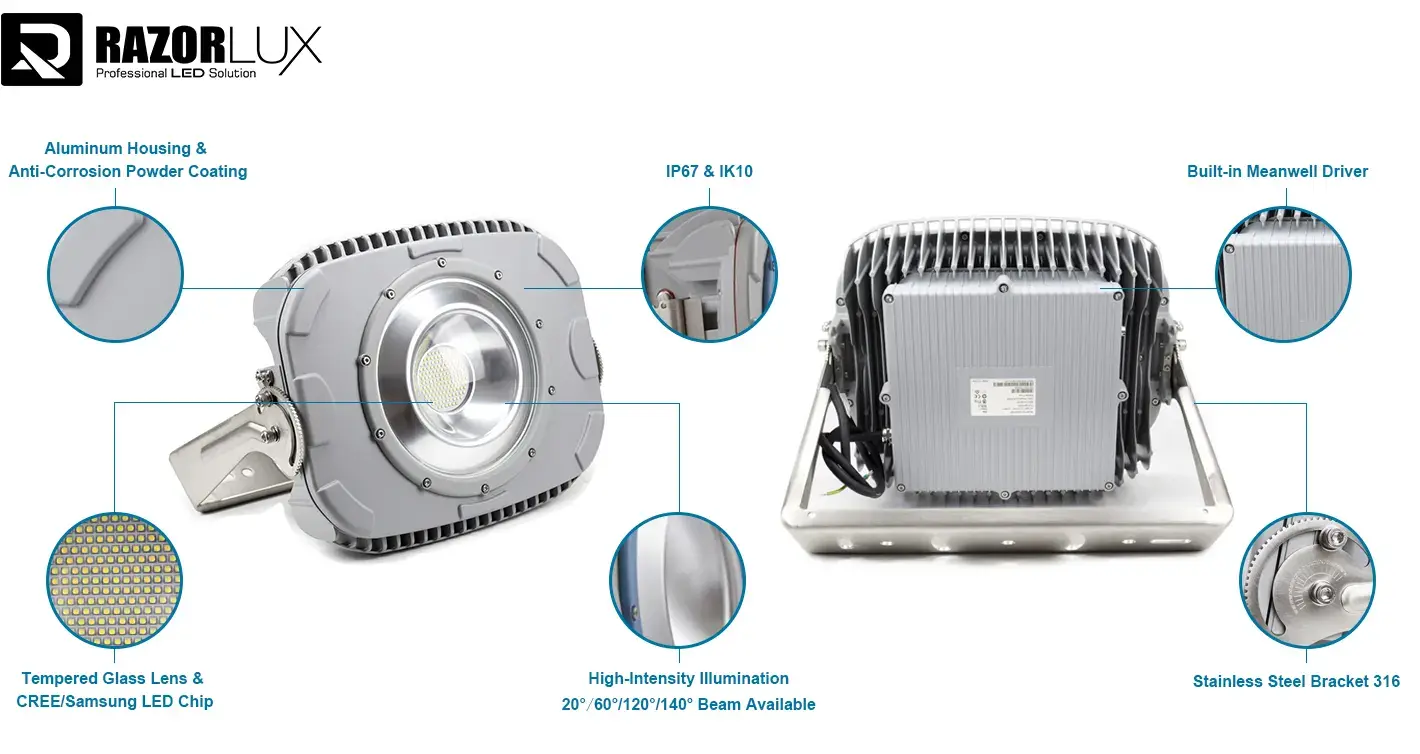
When exposed to high temperatures, weather protection becomes very important. For example, IP67-rated enclosures keep water out during pressure washing or storms, and stainless steel brackets don't rust in humid coastal areas. These requirements are the same as the safety standards that shipyard managers want for pieces that are placed on decks and are exposed to salt spray and temperature changes between -40°C and 60°C.
Selecting the Right Pole Height Based on Tennis Court Size and Use
Single Court Versus Multi-Court Complex Lighting Strategies
For each Tennis Court LED Flood Lights court, four poles with fixtures at each corner work best. The poles should be 20 to 25 feet high for recreational use and 25 to 30 feet high for club standards. This setup gives enough coverage while keeping infrastructure costs low. Putting poles about 10 feet outside the court lines keeps them from getting in the way of play, and places lights at angles that make sky shots less bright.
Through shared pole structures, multi-court facilities can make more money. Six 30- to 35-foot-tall poles placed between two courts can effectively light up three playing surfaces if they are fitted with asymmetric optics that are aimed correctly. This method lowers the cost of installing each court while making them more even by covering the light designs. Industrial-scale sites with six or more courts may be able to use 40-foot poles with high-output lamps that light up multiple courts from one central location. However, these designs need complex photometric modeling to make sure they work on all surfaces.
Indoor Facility Considerations Versus Outdoor Installations
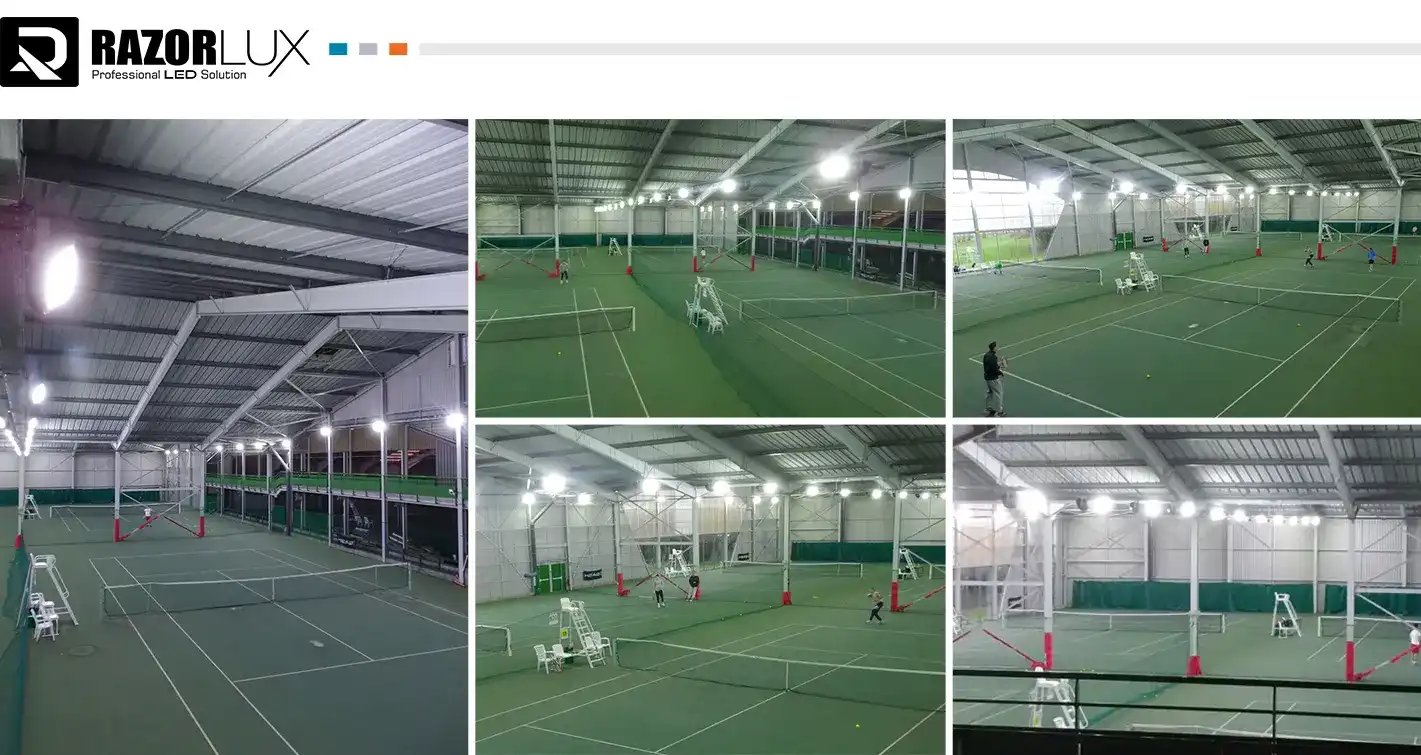
Different rules apply to indoor tennis courts when deciding on an equal pole height. Ceiling-mounted outlets are usually 25 to 35 feet above court level. The exact placement depends on the structure's load capacity and beam spread. The controlled environment gets rid of worries about weathering, so the focus can be on controlling glare and making sure it's spread evenly. When buildings are added on to existing ones, mounting points may have to be changed to fit the poles better, so it's important to choose the right fixtures to make up for the less-than-ideal placement.
Outdoor games need to be completely protected from the outdoors. Changing the temperature from -40°F to 140°F tests the stability of the fixture, and changing the humidity from 10% to 95% tests how well the seal works. These conditions are like the rough working conditions that managers of offshore platforms have to deal with when they have to choose lighting for drilling decks that are out in the open. Coatings that don't rust and marine-grade stainless steel hardware are no longer options; they become necessary upgrades.
Recreational, Club, and Professional Setting Requirements
Recreational spaces that serve the community focus on low-cost options that provide enough exposure. When paired with 300-400W LED lights, pole heights between 20 and 25 feet meet the needs of casual play while keeping project budgets reasonable. Simplified four-pole plans with symmetric beam patterns provide useful lighting without requiring complex aiming changes. This makes them appealing to local procurement processes that like simple requirements and installation steps.
Professional event sites need setups that are 35 to 40 feet tall and meet Class I standards. Broadcast-quality lighting needs uniformity ratios of 750 to 1000+ lux and the ability for a camera to work at 1000 frames per second without flickering. Specialized fixtures with CRI scores higher than 80 produce vivid color contrast, which ensures accurate ball tracking and improves the viewing experience for fans both in-person and on TV. These installations cost a lot of money, like industrial lighting projects for steel mills or power plants, where the quality of the lighting has a direct effect on how well the plants work and how safe they are.
| Installation Scenario | Pole Height Range | Typical Number of Fixtures | Key Performance Priority |
|---|---|---|---|
| One court for fun | 20 to 25 feet | 4 lights | Cost-effectiveness and enough light |
| Club building (two to four courts) | 25 to 30 feet | Eighteen games | Getting rid of glare and even coverage |
| Complex for professionals (6+ courts) | 35 to 40 feet | Over 24 matches | Quality of the broadcast and following the rules |
Comparing LED Flood Lights for Tennis Courts by Pole Height Compatibility
Fixture Brightness and Beam Spread Options for Different Heights
The success of a placement for Tennis Court LED Flood Lights depends on how well the fixture's specs match the pole's height. Lower poles that are 20 to 25 feet tall work well with 300-400W lights that put out 39,000 to 52,000 lumens with 60- or 120-degree beam spreads. Using four-pole layouts, these configurations provide 200 to 300 lux of recreational lighting over a standard 78-foot by 36-foot court. Moderate glare levels are still fine for casual games where basic visibility is more important than being able to see clearly.
IP Rating and Weather Resistance Standards
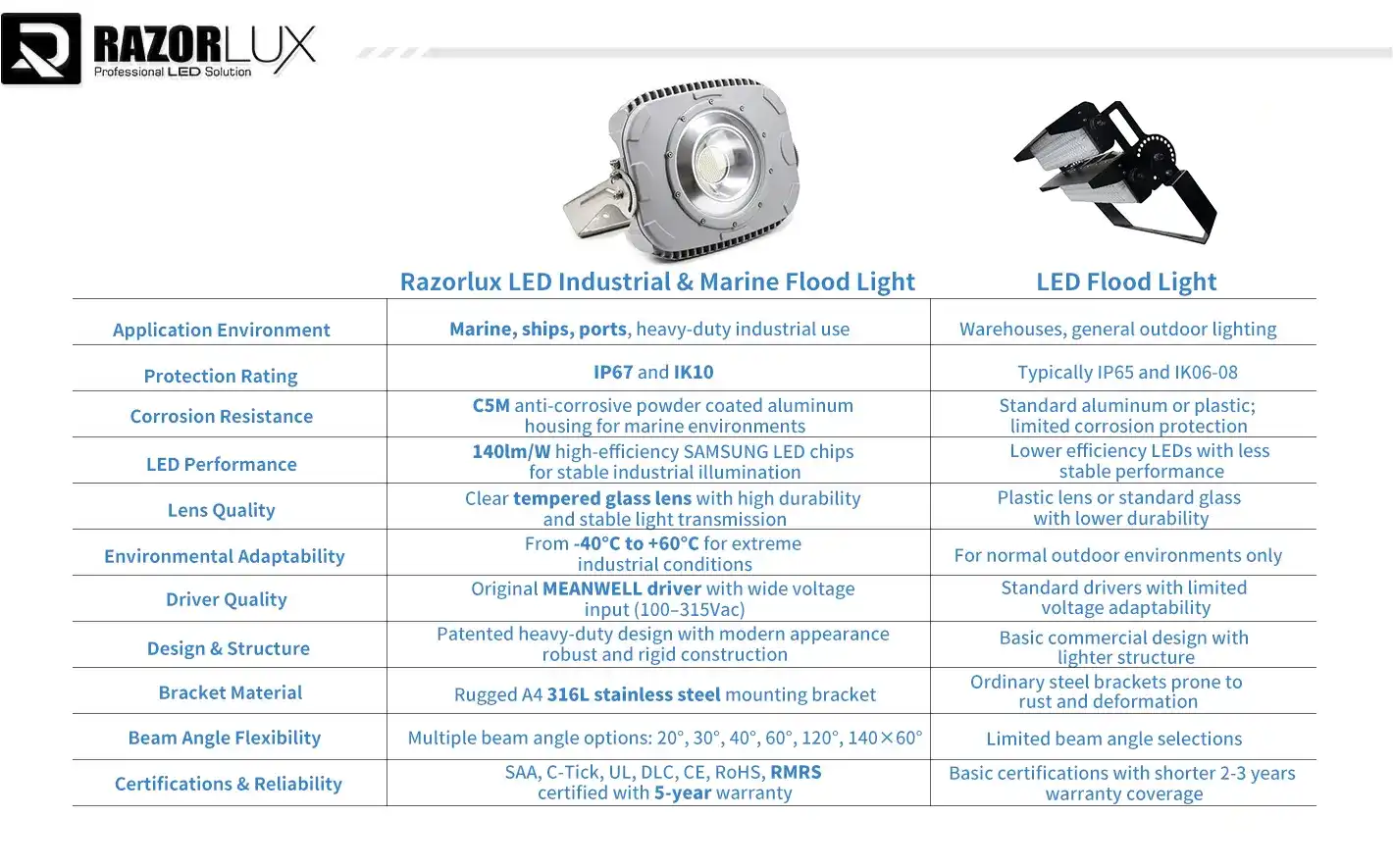
Protecting the environment has a direct effect on whether or not a device is suitable for use in outdoor tennis. IP65-rated enclosures keep out dust and water jets coming from any direction, and they meet the minimum requirements for installations that are partly or fully uncovered. This grade is good enough for indoor buildings or outdoor courts that are protected from the weather above.
Warranty Coverage and After-Sales Support Comparison
The terms of the manufacturer's guarantee show that they are sure the product will last. Most entry-level fixtures come with a two-year warranty, which is enough for safe areas with light use. Most mid-range goods come with three-year warranties, which means that the parts are of higher quality and the testing process is stricter. Premium industrial-grade fixtures with five-year warranties are backed by better thermal management, Tier-1 LED chips, and tried-and-true power supply platforms.
Installation and Maintenance Tips for Optimizing Pole Height Performance
Proper Mounting and Aiming Techniques for Various Pole Heights
Verifying the structure of the pole is the first step in installing fixtures correctly. The existing structure has to be able to handle the extra weight of the fixtures (15 kg per unit with stainless steel brackets) as well as the wind load at full extension. The mounting gear should be able to rotate 360 degrees and tilt in multiple axes so that the aim is accurate during setup. The construction is made of stainless steel, which doesn't rust and keeps the setting tension constant across temperature changes. This stops aim drift, which makes consistency worse over time.
Maintaining Fixtures Installed at Elevated Positions
Scheduled maintenance keeps fixtures working well for as long as they last. Regular checks every year make sure the brackets are solid, the cable entry is sealed, and the lenses are clean. Over several years, dirt can block up to 30% of the light's power, so cleaning it every so often is still a good idea, even though LEDs last a long time and don't need to be changed often. Coastal sites close to water may need to be cleaned every six months because salt layers speed up the wear and tear on optical surfaces.
Energy Management and Control System Integration
No matter how high the pole is, lighting control systems make the lights work better. Photocell sensors turn on fixtures automatically at dusk and turn them off at dawn. This saves energy during the day because you don't have to switch them on and off by hand. Programmable clocks work with the facility's plans to make sure that the lights only turn on during reservation times and don't stay on all night.
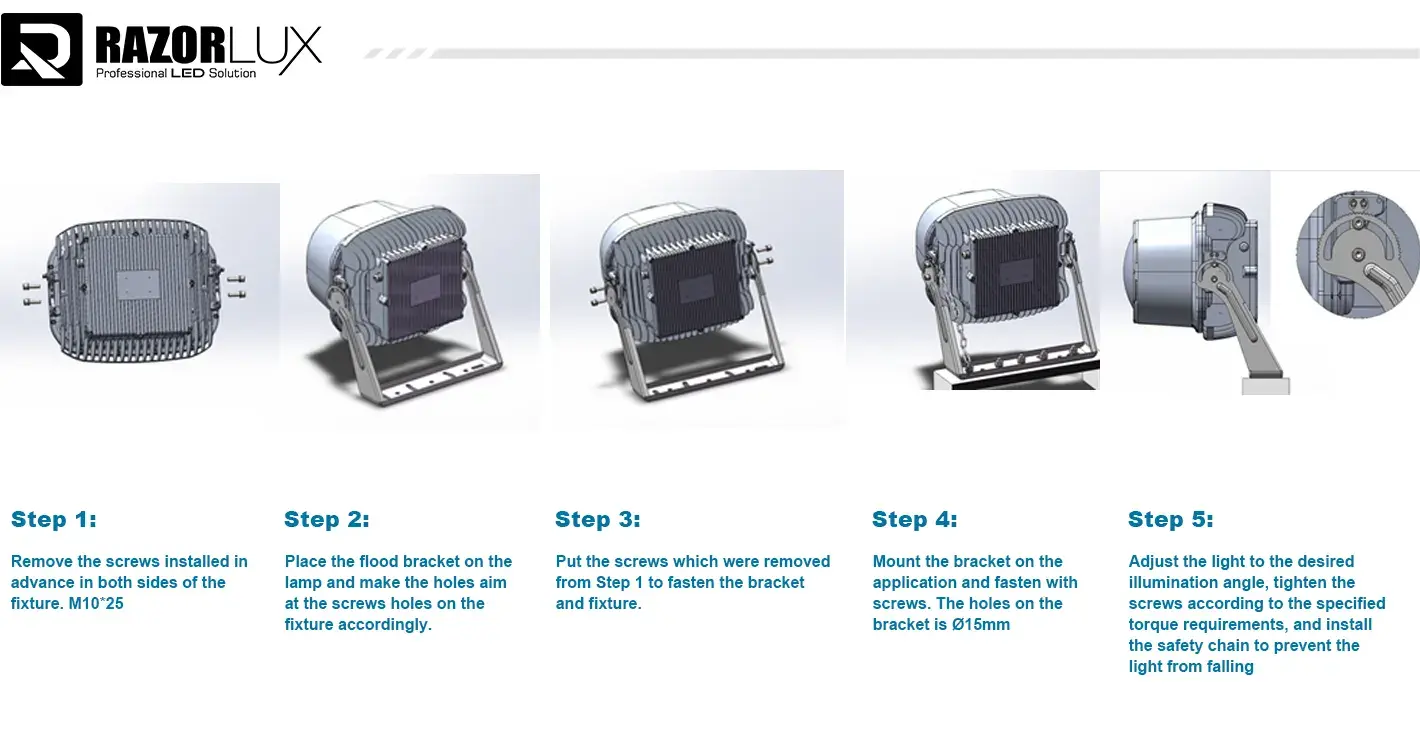
Retrofitting Existing Pole Infrastructure
Many facilities want to improve performance without replacing all of their poles. Older metal halide or high-pressure sodium lights are often replaced with modern LED upgrades in buildings that are 25 to 35 feet tall. To do a successful retrofit, you need to do structural load calculations to make sure the poles can handle the weight of the new fixtures and the wind loads. This is especially important when replacing light legacy units with heavier industrial-grade LEDs.
Conclusion
The best pole height for lighting Tennis Court Led Flood Lights takes into account technical needs, budget limitations, and operational priorities in a variety of installation situations. Poles 20 to 25 feet high work well in recreation areas, 25 to 30 feet high are better in clubs, and 35 to 40 feet high are needed for professional venues that have to meet strict broadcast standards. Specifications that work well combine fixture brightness, beam control, environmental protection, and easy entry for upkeep into complete solutions that last for years. Modern LED technology makes lighting much more efficient and better at its job than older lighting while also lowering the cost of energy use and upkeep for all pole heights. Paying close attention to how the lights are mounted, how the control system is integrated, and how often they are serviced can help them last longer and keep their quality of light.
FAQ
What is the standard pole height for outdoor tennis court lighting?
Outdoor tennis courts for fun usually have poles that are 20 to 25 feet high, which is a good height for lighting up casual games. Clubs that want to meet competitive standards usually say 25 to 30 feet, but professional event places need 35 to 40 feet to get lighting that is good enough for broadcasting and even. The exact height depends on how much light is wanted, the number of courts, and government rules.
How does pole height affect energy consumption in LED flood lights?
More powerful fixtures or more units are needed at higher pole heights to keep ground-level lighting up, which uses more energy overall. The 130 lm/W efficiency of modern LEDs makes this less of a problem compared to older technologies. No matter how high the fixture is mounted, the best way to save energy is to choose the right fixture and use a control system with lowering or timing.
Can LED flood lights be retrofitted to existing tennis court poles?
Existing poles that are 25 to 35 feet long can usually be retrofitted with LED lights. Before installation, a structural assessment is needed to make sure that the structure can handle the load and resist wind. Photometric modeling predicts how well something will work, and electrical infrastructure review makes sure that it works with LED drivers and has the right amount of grounds.
What protection rating is necessary for outdoor tennis court fixtures?
For outdoor tennis courts, LED lights need to have at least IP67 protection, which means they need to be sealed against dust and water for a short time. This rating means that it can handle rain, pressure washing, and the humidity that is common in outdoor installations. When it comes to coastal buildings, housing that doesn't rust and tools made of stainless steel make them last longer in harsh conditions.
Partner with Razorlux for Premium Tennis Court LED Flood Lights
Xi'an Razorlux Optoelectronic Technology Co., Ltd. makes lighting options for businesses that are built to last in tough environments. Our RGL2-400A model has a 52,000-lumen output, Mean Well drivers, IP67 protection, and a five-year guarantee. Shipyards, offshore platforms, and heavy industrial sites around the world trust its performance. We have been making Tennis Court LED Flood Lights for a long time and have over 200 patents and certifications, such as CE, RoHS, UL, and DLC. We can give your projects the technical know-how and high-quality parts they need. Get in touch with our team at sam@razorlux.com for photometric design help, full specifications, and competitive quotes on pole heights ranging from 20 to 40 feet for home, club, and business use. Experience the dependability that people who work in marine and industrial buying count on, now made better for use on tennis courts.
References
1. International Tennis Federation. ITF Lighting Guidelines for Tennis Facilities. London: ITF Technical Department, 2021.
2. Illuminating Engineering Society. IES RP-6-15: Sports and Recreational Area Lighting. New York: IES Publications, 2015.
3. Chen, Michael T., and Sarah J. Rodriguez. LED Sports Lighting: Design Principles and Applications. Boston: Technical Publishing Group, 2020.
4. National Electrical Manufacturers Association. NEMA LSD 63-2019: Solid State Lighting for Outdoor Applications. Rosslyn: NEMA Standards Publication, 2019.
5. Thompson, Richard A. Outdoor Sports Facility Illumination: Engineering and Regulatory Compliance. Chicago: American Society of Civil Engineers Press, 2018.
6. Zhang, Wei, and Patricia Blackwell. "Photometric Performance Analysis of LED Floodlights at Various Mounting Heights." Journal of Illumination Engineering, vol. 47, no. 3, 2022, pp. 112-129.