


_1750326878398.png)

12v led flood lights waterproof: How to Choose the Right Lumens?
Selecting the right lumen output for 12V LED flood lights waterproof demands careful attention to your operational environment and illumination objectives. That's how you figure out how much light something lets through. They change power use, safety, and exposure in a direct way. Boats that have to deal with salt spray, platforms in the ocean that have to deal with rough weather, and factories that need water-resistant solutions can avoid spending too much on too many watts or not enough lighting by adjusting the brightness to the job. This keeps everyone safe and makes things get done faster. This choice will change how safe things are, how much it costs to work, and how fixes are planned in the long run.
Understanding 12V LED Flood Lights Waterproof and Lumens
What Makes Low-Voltage LED Flood Lights Unique
Low-voltage lighting works with 12V LED Flood Lights Waterproof DC or AC/DC systems that are suitable. It is safer to use in wet or conductive areas. These units are safer than 110V or 220V lights when it comes to electric shocks. This makes them perfect for marine decks, boat docks, and other outdoor locations where they will be exposed to water often. The lower voltage also makes it possible for renewable energy systems, like solar battery banks, to work directly with the system without the need for inverters. This cuts down on conversion losses and makes installation easier.
Decoding Waterproof Ratings for Harsh Conditions
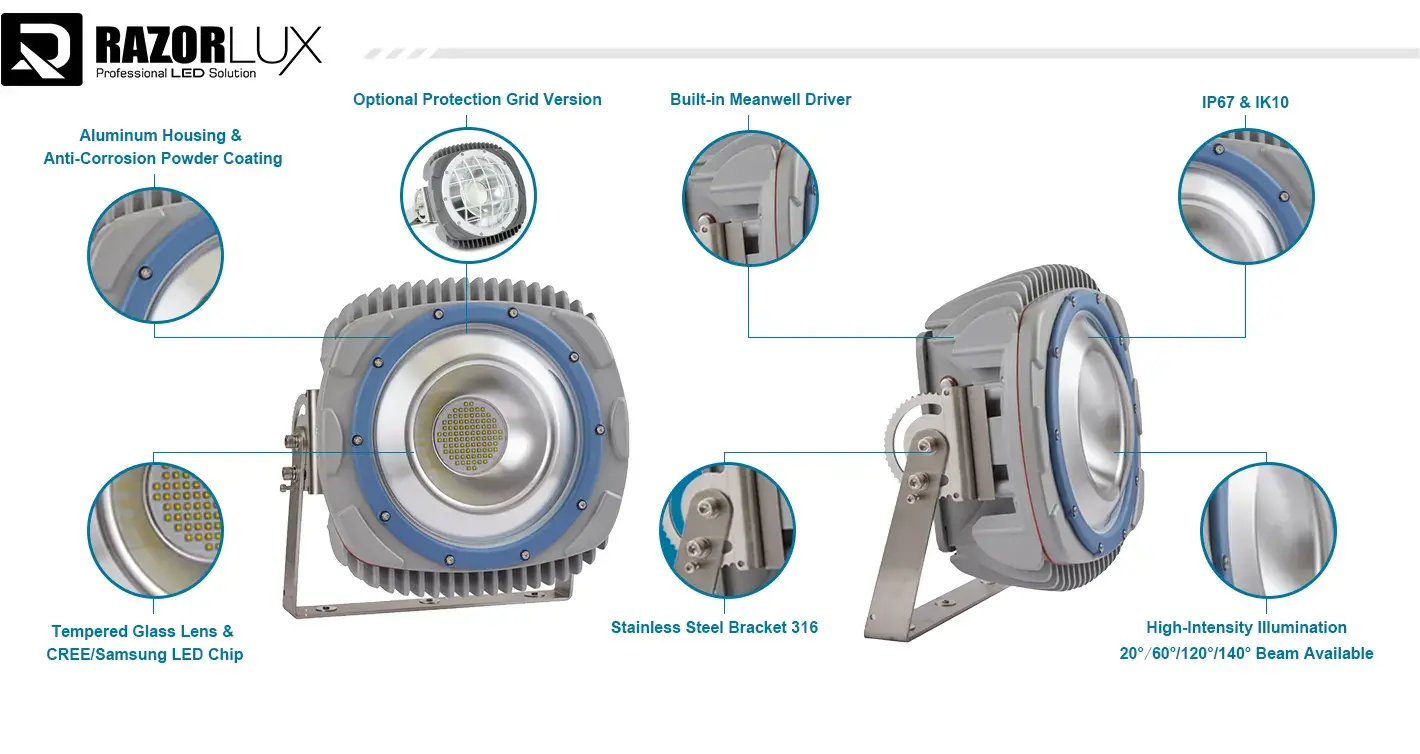
The Ingress Protection (IP) rating method is used to show how waterproof something is. Fixtures with an IP67 rating can be submerged up to one meter for 30 minutes, which is very important for bilge areas or work zones that are often flooded. IP65 types can handle low-pressure water jets coming from any direction, making them good for cleaning decks or being out in heavy rain. The difference is important: a shipyard buying manager who needs to replace old lights must mention IP67 for areas that are likely to get splashed by waves, while IP65 is enough for loading docks that are covered. Razorlux's RGL-90A model is certified IP67 thanks to its precision-engineered gaskets and liquid silicone seals, which were proven to work in a plunge tank test that met IEC 60529 standards.
Lumens Versus Watts: Performance Beyond Power Consumption
In the past, brightness was measured by wattage, but LED technology separates power use from light output. A 90W LED light that gives off 10,800 lumens at 130 lm/W can replace a 150–250W HID lamp and use 60–70% less energy. When procurement teams look at the total cost of ownership, they need to look at lumens per watt (also called luminous efficacy) instead of just power. Higher efficacy means lower electricity bills over the 50,000-hour lifespan of most industrial-grade LEDs. In fact, some installations pay for themselves in 18 to 24 months by saving money on utilities.
How Waterproofing Technologies Preserve Light Output
When moisture gets inside, it breaks down parts inside, leading to early failure and lumen depreciation. High-quality waterproof flood lights have multiple layers of protection. Powder-coated metal housings don't rust, tempered glass lenses don't break easily in hot or cold temperatures, and breather holes keep the pressure inside the lights even so that condensation doesn't form. The RGL-90A has mounting clamps made of 316 stainless steel that have been treated to withstand coastal settings. This stops galvanic corrosion, which weakens structures. These engineering details make sure that the light delivery stays the same over the entire operational lifetime. This is in contrast to cheaper options that lose 30–40% of their lumens within two years because of damage from water.
Key Criteria for Choosing the Right Lumens in 12V LED Waterproof Flood Lights
Matching Lumen Output to Application Requirements
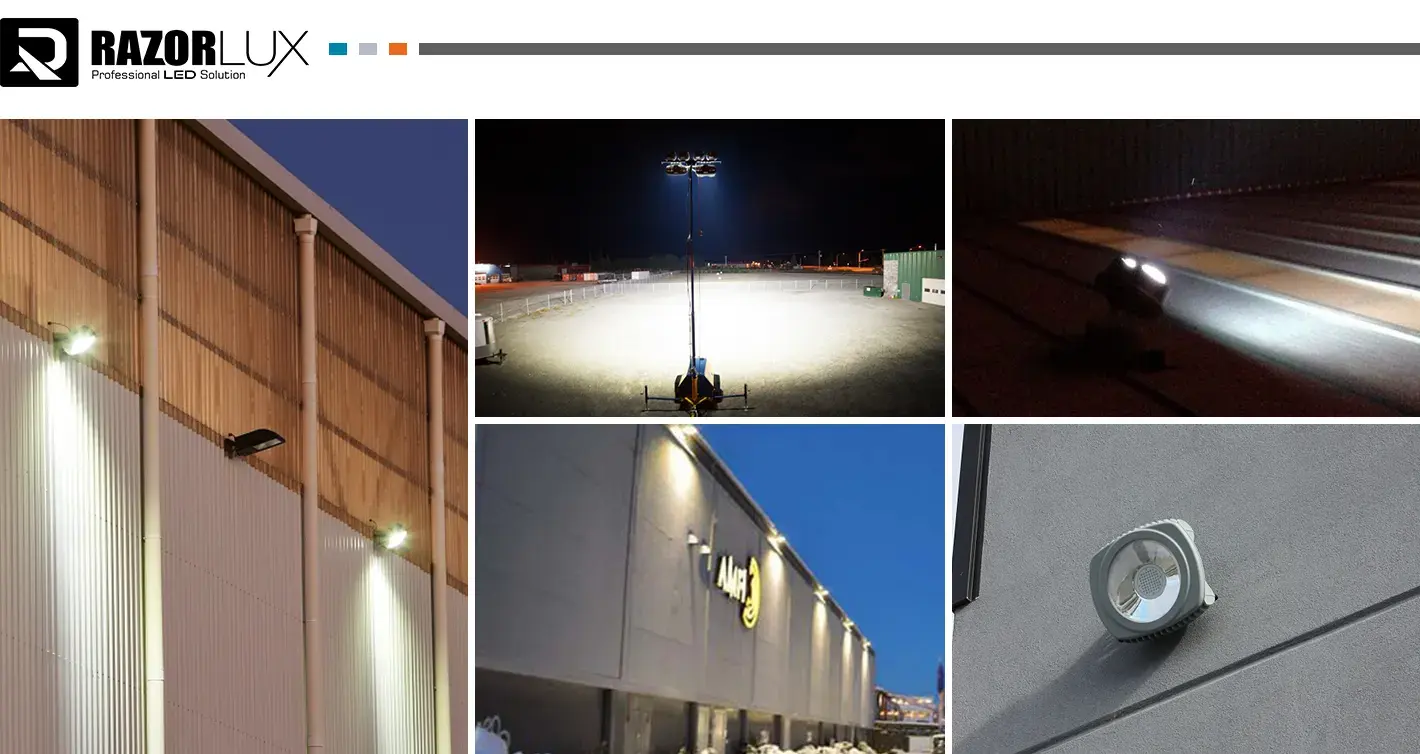
Different jobs need different amounts of light for 12V LED waterproof flood lights, which are measured in lux (lumens per square meter). At a distance of 15-20 meters, security perimeter lighting needs 50–100 lux to identify people, which means that lights with 8,000–12,000 lumens must be spread 25–30 meters apart. For detailed mechanical work, offshore platform work areas need 200 to 300 lux for 12V LED flood lights waterproof, which can be achieved by focusing light at narrower angles. Deck lights on recreational boats work well at 20 to 50 lux so people can move around safely without being blinded. Instead of just choosing a brightness level, procurement specifications for outdoor lighting should use industry standards like IES LM-83 as guides.
Environmental Factors Influencing Lumen Consistency
Extremes in operating temperature can hurt the performance of LEDs. Advanced thermal management lets high-quality fixtures keep their output stable from -40°C to 60°C. For example, the RGL-90A uses aluminum die-cast housings with optimized fin geometry to get rid of heat, which stops the 15-20% lumen loss seen in units that aren't cooled well. Coastal locations are more likely to rust because of salt spray, but ASTM B117-compliant salt fog testing proves that the building is solid. Internal connections become loose when ship engines or industrial machinery shake, so designs need to be shock-tested and rated to IK10 impact resistance. Because of these external pressures, lumen maintenance curves are very important. Fixtures should keep 85% of their power after 10,000 hours and 70% for the full rated lifespan.
Balancing Brightness and Energy Efficiency
Higher brightness makes things more visible, but they also use more power, which can put a strain on solar or battery systems. 10 AWG copper wire must be used for 15-meter runs on a 12V system that draws 7.5 amps (90W) so that the voltage drop stays below 3%. Increasing the brightness to 180W increases the size of the wires needed and the cost of building an electrical system. Smart buying looks at lumen-per-dollar economy. The RGL-90A gives you 120 lumens per dollar over five years, which includes energy savings, compared to 65 lumens per dollar for cheaper options that need to be replaced twice as often. This study of total costs shows that mid-range prices often offer better long-term value.
| Application Type | Recommended Lumens | Typical Coverage Area | Suggested Beam Angle |
|---|---|---|---|
| Marine Safety on Deck | 8,000 to 12,000 | Every 25 to 30 m | 60° to 120° |
| Work Zones Off the Coast | 12,000 to 15,000 | 15 to 20 m between each | 40° to 60° |
| Outside of the shipyard | 6,000 to 10,000 | 30 to 40 m apart | 120° to 140° |
| Industrial Docks for Loading | 10,000 to 14,000 | 20–25 m Apart | 60° to 90° |
| Recreational Boats | 4,000 to 8,000 | 10- 15 m between each | 90° to 120° |
The table above shows basic suggestions that need to be changed depending on the amount of light, how reflective the surface is, and how hard the task is. Darker surfaces take in 40–60% of the light that hits them, so installations over dark surfaces like white concrete or light-colored decks need 50% more lumens.
Decision Support: How to Select 12V Waterproof LED Flood Lights Based on Lumens
Aligning Lumen Selection with Stakeholder Priorities
The scientific specs that engineers care about the most are the lumen output, color rendering index (CRI >75), and heat performance. Purchasing departments look at warranty terms and certification completeness to find the best balance between performance and budget. Operations managers pay attention to how easy it is to do repairs and get new parts. A good purchase process takes into account all points of view: choosing Mean Well power sources meets engineering quality standards, 5-year contracts lower the risk of buying, and flexible designs with swappable parts reduce operating downtime. The RGL-90A's multi-function design lets it be mounted in different ways without the need for special mounts. This makes installation easier, which is something that building managers like.
Impact of Auxiliary Features on Effective Lumens
Motion monitors cut energy use by 60–80% in places with little foot traffic, but they have activation delays that aren't good for constant security tracking. The RGL-90A has adjustable beam angles (15°–140°) that make the best use of light distribution. Narrow beams focus lumens for long-throw applications, while wide beams cover a large area evenly in small spaces. Dimming (0-10V or PWM) makes the fixture more useful, but it needs drivers that work with it, which adds 15 to 20 percent to the cost. Operating scenarios should be included in the procurement requirements. For example, motion monitors don't help a Norwegian shipyard that needs to be lit up 24 hours a day, seven days a week, but they save a lot of energy at a Singapore port that only needs to be lit up at night sometimes.
Evaluating Brand Quality and Warranty Assurance
Well-known brands offer thorough photometric testing records (IES files) that let software simulations check the lighting design. Besides the CE or RoHS marks that are aimed at consumers, certifications from RMRS (Russian Maritime Register), DNV-GL (Det Norske Veritas-Germanischer Lloyd), and ABS (American Bureau of Shipping) show that the construction is marine-grade. Warranty terms show how confident a company is: 5-year warranties on LED modules and drivers, 10-year warranties on housing, and quick technical support are what set professional sellers apart from transactional vendors. Razorlux has been in the lighting business for 25 years and has been ISO 9001 certified for 22 years in a row. This shows that they have strong quality management, which is important when 12V LED Flood Lights Waterproof problems threaten safety or the continuity of operations.
Installation and Maintenance Considerations Impacting Lumen Performance
Proper Installation Techniques for Maximum Output
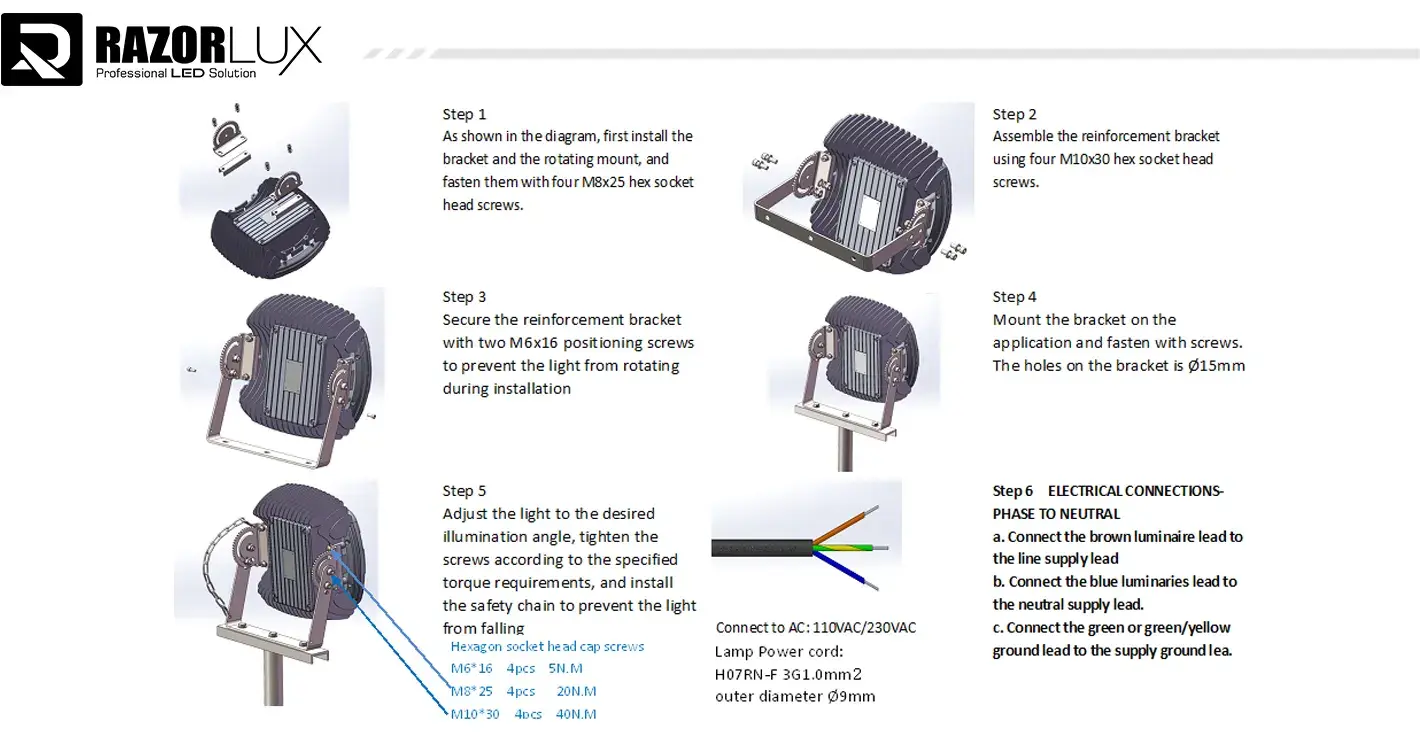
Lumen levels at the ground plane are directly affected by the height and angle of the mount. A light with 12,000 lumens that is 8 meters high and has a 60° beam angle gives off 150 lux in the middle and 40 lux at the edges of the beam. By going down to 6 meters, the center luminance goes up to 200 lux, but the coverage diameter goes down from 18 m to 13 m. Specifications for purchases should include suggestions for mounting heights. For example, the RGL-90A's stainless steel bracket can be adjusted 180°, which makes it ideal for mounting on sloped decks or uneven surfaces. To keep electrical connections from rusting, marine-grade plugs with dielectric grease are needed. If the seals aren't tight enough, water can get in and cause flickering and early driver failure.
Understanding Lumen Depreciation Over Time
All LEDs gradually lose some of their brightness. It says how many hours it will be until 70% of the lumens are used up. High-quality lights last longer than 50,000 hours, while cheaper ones only hit L70 after 20,000 to 25,000 hours. Thermal stress speeds up wear and tear: an increase of 10°C in junction temperature cuts the life of an LED in half. Through improved thermal pathways, the RGL-90A keeps junction temperatures below 85°C, which makes sure that the stated L70 rates are met. So that sellers don't just give procurement teams theoretical estimates without any real-world evidence, they should ask for LM-80 test results that show lumen maintenance under normal conditions.
Maintenance Practices Sustaining Long-Term Performance
Inspections every three months get rid of any salt, dust, or biological growth that has built up and is blocking the light. A 3mm layer of surface contamination cuts useful light by 20–30%, which cancels out the benefits of efficiency. Chemical etching of protective layers can't happen when you clean lenses with pH-neutral solutions. IP67 integrity is kept up by replacing the gasket every 24 to 36 months. Silicone gaskets harden over time, making ways for water to get in. Keeping track of maintenance costs shows total ownership costs: fixtures that need seal replacement every year and driver replacement every two years add up to service costs that are higher than pricier models within 3–4 years. The RGL-90A's 5-year driver guarantee gets rid of the biggest changeable repair cost during the important first few years of ownership.
| Maintenance Task | Frequency | Impact on Lumens | Estimated Labor Time |
|---|---|---|---|
| Cleaning the Lens | Every third | Brings back 15–25% of output | 5–10 minutes for each place |
| Checking the Gaskets | Every year | Stops damage from water | 15 to 20 minutes per set |
| Changing the Gasket | 24 to 36 months | Keeps the IP67 rating | 30 to 40 minutes per item |
| Check the electrical connection | Every year | Stops flickering or failure | 10 to 15 minutes per part |
| Checking the thermal performance | Every year | Makes sure lumen maintenance | 20 to 30 minutes per place |
Setting up organized maintenance plans for 12v led flood lights waterproof cuts down on emergency repairs and adds 30 to 40 percent to the useful life of an item. Facilities that don't have their own electrical experts should negotiate maintenance agreements when they buy new equipment to make sure that critical inspections are done by technicians trained by the manufacturer.
Comparing 12V Waterproof LED Flood Lights to Alternatives
Waterproof vs. Non-Waterproof Models
Fixtures that aren't waterproof (IP20–IP44) cost 25–35% less, but they break quickly in damp places. Internal circuits become short when moisture condenses, and electrical links become weak when rust happens. Over five years, a dock maintenance manager who replaces non-rated lights every 18 to 24 months spends 60% more than they would have on IP67-rated lights at the start. Models that aren't waterproof should only be used in climate-controlled indoor areas. Any outdoor use, even in covered areas that get wet from the wind, needs at least IP65 protection. When you look at replacement workers, machine downtime, and the extra work that comes with having to reorder fixtures so often, it's clear that cheaper fixtures aren't always the best deal.
12V Systems Versus 24V and Solar Options
For the same amount of power, 24V systems draw half as much current. This means that smaller wire gauges are needed and there is less voltage drop in long cable runs. At 24V, a 90W load needs 3.75A, but at 12V LED Flood Lights Waterproof, it needs 7.5A. This means that 20–30% longer cable runs can be made with the same voltage loss. But because the automotive industry has standardized them, 12V parts are easier to find and cost less per unit. Solar-powered lights don't need any wiring, but they don't always work right. When it's dark, they lose 40–60% of their output, and the batteries need to be replaced every 3–5 years, which costs about 40% of the price of the fixture. When it comes to remote sites that don't have stable grid access, hybrid systems that combine 12V fixtures with centralized solar banks give you the most options.
Energy Efficiency and Operational Cost Analysis
Comparing luminous efficacy shows big differences in how well they work. Low-cost fixtures put out 80 to 100 lm/W, mid-range ones 110 to 130 lm/W, and high-end ones more than 140 lm/W. A 130 lm/W fixture that uses 90W saves $720 in electricity costs (at $0.12/kWh) over 50,000 hours of use compared to a 100 lm/W alternative that needs 117W to produce the same amount of light. When you add up the energy savings from 50 to 100 fixtures in a normal commercial system, you get $36,000 to $72,000, which is a lot more than the 15-20% premium for more efficient goods. Utility rates are expected to rise by 3–5% per year, which should be included in total cost modeling. This will make long-term savings from investments in efficient lights even bigger.
Conclusion
To pick the right lumens for 12V LED Flood Lights Waterproof, you need to look at the lighting needs for the application, the operating conditions, and the total cost of ownership. When buying things for marine, offshore, and heavy industry, it's best to choose fixtures that have been tested and proven to be waterproof up to IP67, have a light output of more than 130 lumens per watt, and have all the necessary marine certifications. Lumen output should match the needs of the task, like general navigation, security monitoring, or detailed work, while taking into account the shape of the mounting and the reflectivity of the surface. Planning for maintenance and insurance coverage has a big effect on long-term value, and the differences in price between cheap and expensive goods often don't matter in the end.
FAQ
Can waterproof LED fixtures operate reliably in sub-zero temperatures?
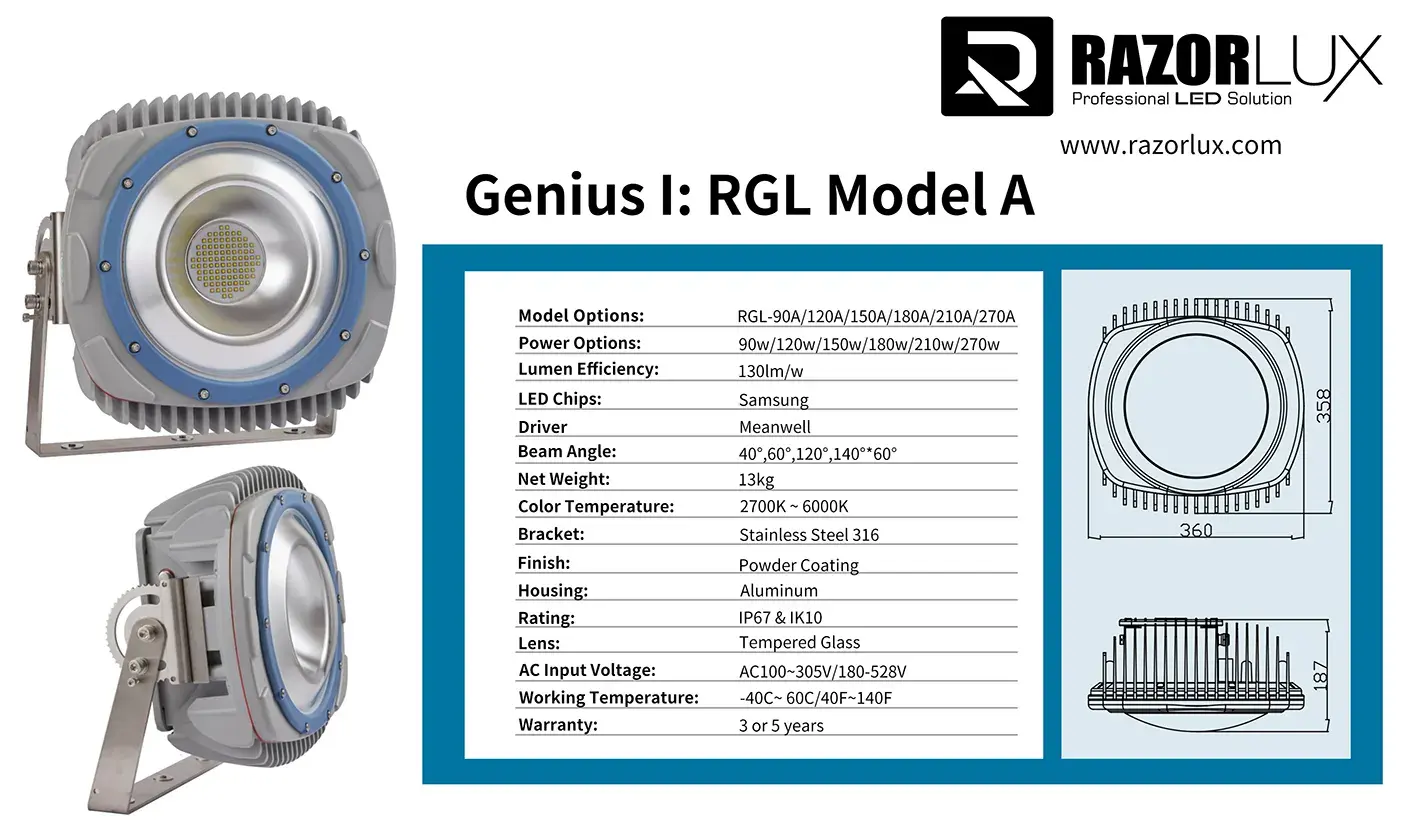
Quality units that can work in temperatures as low as -40°C keep their full power thanks to special driver circuits and cold-resistant sealing materials. The RGL-90A can handle a wide range of input voltages (AC 90-305V, DC 127-431V), so it can handle voltage changes that happen when starting equipment that draws a lot of current.
What lumen output suits container terminal perimeter security?
At ground level, perimeter lighting usually needs 50 to 75 lux. This can be achieved with 10,000 to 12,000 brightness lights placed 30 to 35 meters apart and mounted 8 meters high. Change the lighting to meet the needs of the surveillance cameras. For example, color cameras need 100 lux or more to record good video, while infrared systems can work with lower ambient levels.
How does color temperature affect perceived brightness?
Because of how sensitive our eyes are, cooler color temperatures (5000–6500K) look brighter than warmer tones (2700–3000K) even when the lumen output is the same. For industrial uses, 4000- 5000 K is best because it has a neutral look that balances visibility and visual comfort during long work shifts.
Partner with Razorlux for Marine-Grade LED Lighting Solutions
Razorlux has been making 12V LED Flood Lights Waterproof for harsh nautical and industrial settings since 1998. Our RGL-90A type gives off 10,800 lumens at an impressive 130 lm/W efficiency. It also comes with full RMRS, DNV-GL, UL, and CE standards that meet the strictest buying requirements. As a 12V LED flood light waterproof manufacturer with a lot of experience, we offer technical documentation, photometric testing reports, and sample units for your engineering team to check the performance of before putting them into large-scale use.
Get in touch with our expert team at sam@razorlux.com to talk about beam directions, mounting options, and dimming choices that are specifically made for your project. We have reasonable bulk discounts, reliable shipping schedules that work with project schedules, and a 5-year guarantee that protects your investment over the long run. Razorlux makes lighting solutions that are designed to meet the needs of your business, whether you're installing offshore platforms in the North Sea, lighting up Singaporean ports, or improving the infrastructure of an Australian factory.
References
1. Illuminating Engineering Society (2020). "LM-83-12: Approved Method for Luminaire Performance under Elevated Ambient Temperatures." IES Technical Memoranda.
2. International Electrotechnical Commission (2019). "IEC 60529: Degrees of Protection Provided by Enclosures (IP Code)." 3rd Edition.
3. Marine Equipment Directive Council (2021). "Standards for Marine Electrical Equipment: Certification Requirements for Shipboard Lighting Systems." European Maritime Safety Agency Publications.
4. U.S. Department of Energy (2022). "LED Lumen Maintenance and Light Loss Factors: LM-80 Testing Protocols." Solid-State Lighting Program Technical Report.
5. American Bureau of Shipping (2023). "Guide for Lighting Systems and Components in Marine Environments." ABS Rules and Guides.
6. ASTM International (2018). "ASTM B117-18: Standard Practice for Operating Salt Spray (Fog) Apparatus for Corrosion Testing." ASTM Volume 03.02 Standards.