


_1750326878398.png)

What IP Rating Is Needed for Outdoor Lighting For Volleyball Court?
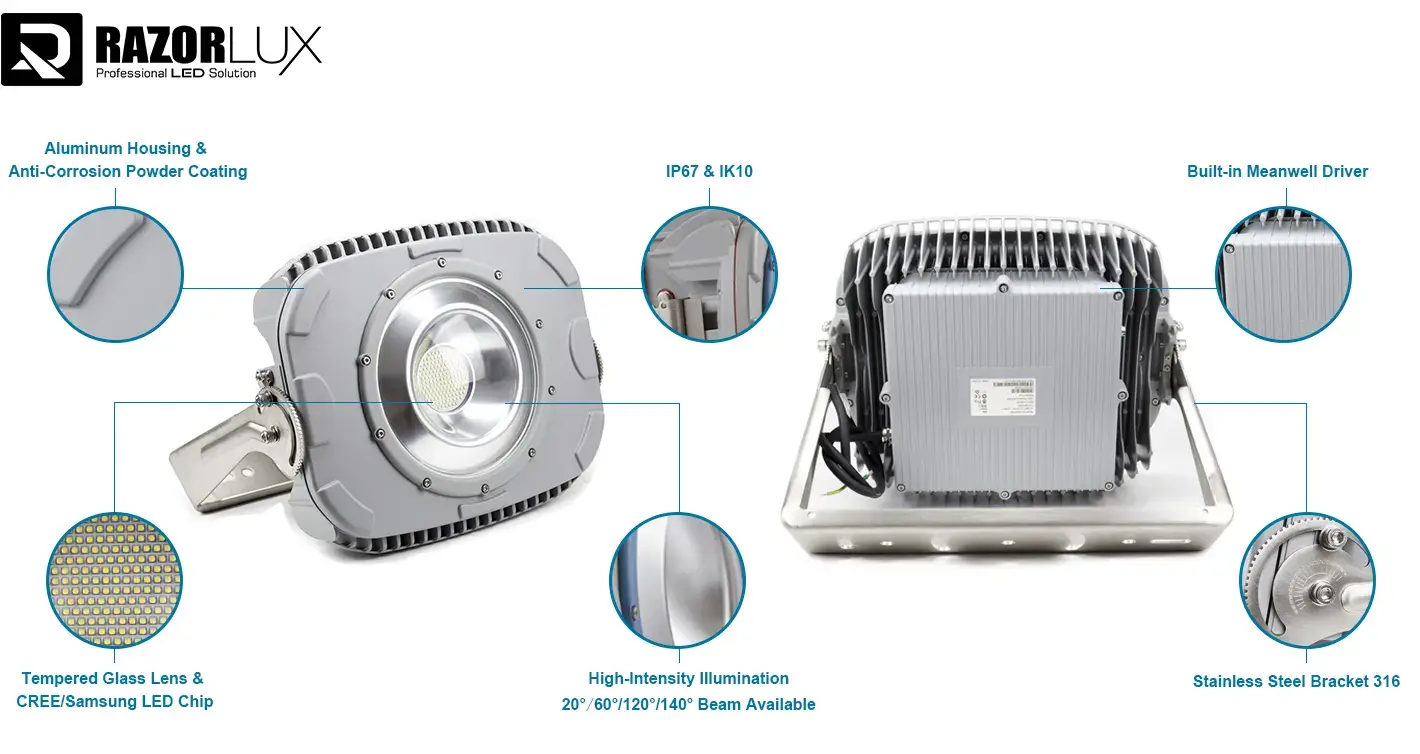
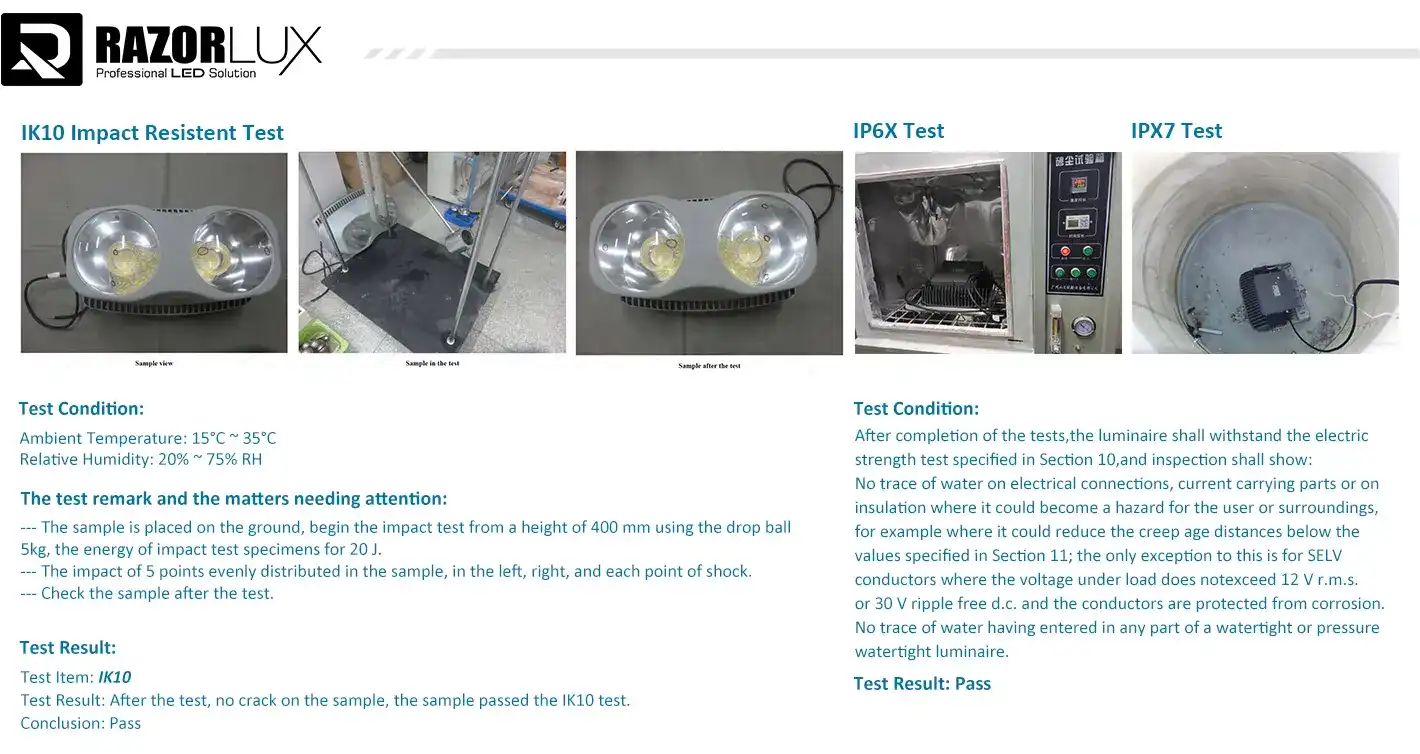
When specifying lighting systems for sports facilities, especially those exposed to the elements, understanding ingress protection becomes non-negotiable. For outdoor volleyball courts, IP65 is generally the baseline recommendation, providing adequate protection against dust ingress and water jets from any direction. However, IP67-rated fixtures offer superior protection for installations near coastal areas, beach volleyball venues, or regions experiencing heavy rainfall and high humidity. At Razorlux, our RGL2-400A series delivers both IP65 and IP67 options, ensuring your Outdoor Lighting For Volleyball Court installations remain operational even under challenging weather conditions. This level of protection directly addresses the procurement pain points of premature fixture failure and excessive maintenance costs, allowing facility managers to focus on operations rather than constant replacements.
Understanding IP Ratings and Their Importance for Outdoor Volleyball Court Lighting
What Does the IP Rating System Actually Mean?
The Ingress Protection rating is made up of two numbers that come after the letters "IP." The first number (0–6) shows how well the product protects against solid particles like dust and sand, and the second number (0–9) shows how well it protects against water and moisture. An IP67 rating, which is common in marine-grade gear, means that the item is completely dust-proof and can withstand being submerged in water up to one meter deep for 30 minutes.
Why IP Ratings Matter More for Sports Lighting Than You Think
Outdoor Lighting For Volleyball Court setups have special needs that can't be met by regular area lighting. Players have to keep looking up to see where the ball is going, which makes fixture integrity very important. Any water getting in can cause condensation inside, which can lower lumen output, cause color shifts, and eventually cause the driver to fail. In the 20 years we've worked in shipyards, offshore platforms, and port facilities, we've seen that fixtures without the right IP ratings have 40–60% shorter operational lifespans in high-humidity areas than fixtures with the right ratings.
Common IP Ratings and Their Protective Capabilities
The table below shows the real differences between the grades that are usually given for sports lighting:
| IP Rating | Dust Protection | Water Protection | Suitable Environments |
|---|---|---|---|
| IP65 | Dust-proof | Water jets won't get through | Normal open courts that get some rain |
| IP66 | Dust-proof | Strong water jets won't hurt you. | Areas with a lot of rain and a lot of washdowns |
| IP67 | Dust-proof | Protected from short-term immersion | Beach volleyball, seaside sites, and places that are likely to flood |
| IP68 | Dust-proof | Protected against long-term soaking | Applications that are underwater or always hidden |
By knowing these differences, procurement teams can avoid either over-specifying (which raises costs needlessly) or under-specifying (which increases the risk of early failure and warranty disputes).
Outdoor Lighting Requirements and Standards for Volleyball Courts
International Standards Governing Volleyball Court Illumination
For professional volleyball courts in Europe, lighting must meet EN 12193 standards. In North America, it must meet IES RP-6-15 standards. These standards say that the minimum amount of light that must be kept up must be between 200 lux for casual play and 750–1000 lux for televised events. To avoid the "hotspot and shadow" effect that makes it hard to see depth when playing quickly, uniformity ratios should usually stay above 0.7.
How IP Ratings Intersect with Performance Parameters
IP security has a direct effect on the ability to control heat. A properly sealed IP67 device with enough airflow inside keeps junction temperatures below 85°C even when the temperature outside reaches 60°C. This is important to keep the 130 lm/W efficiency of our Samsung LED chips over their claimed 50,000-hour lifespan. On the other hand, housings that aren't properly sealed let moisture in, which speeds up the degradation of LEDs and the corrosion of driver components.
Energy Efficiency Considerations for B2B Buyers
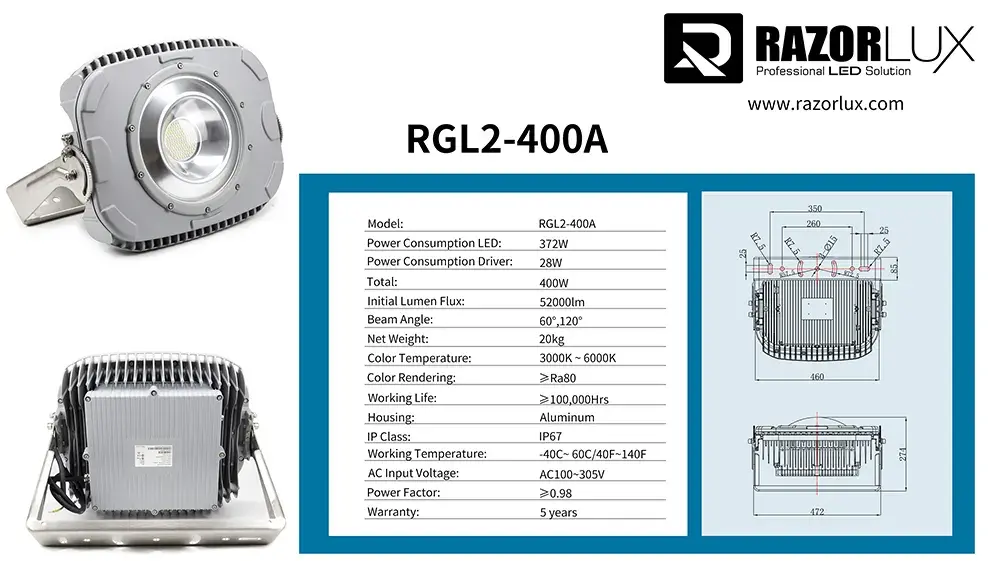
When looking at Outdoor Lighting For Volleyball Court options, people in charge of procurement have to weigh the initial investment against the total cost of ownership. Our 400W LED fixture gives off 52,000 lumens at 5700K, which is the same amount of light as eight to ten thousand-watt metal halide systems. Compared to older HID technology, the Mean Well driver uses 60–70% less energy because it has a power factor of over 0.98 and a total harmonic distortion of less than 10%. At $0.12/kWh, this means that each fixture will save about $8,400 in power over 10 years. These savings are enough to support the higher cost of an IP67-rated building.
Choosing the Right IP Rating Based on Environmental and Operational Conditions
Environmental Factors That Influence IP Rating Selection
Different parts of the world and types of courts require different defense plans:
Coastal and Beach Volleyball Setups: Salt spray speeds up the rusting of interior parts. In addition to IP67 sealing, our fixtures have C5-M grade powder coating on aluminum housings and stainless steel brackets to make them durable enough to survive the harsh marine climate. Since 1998, our port customers have relied on these fixtures.
High-Humidity Continental Climates: Places where the monsoons happen or where fog forms often need IP67 to keep water from building up. The sealed optical chamber keeps the light transfer efficiency high, which stops the cloudy lens problem that often happens in lamps that aren't properly protected.
Deserts and other places with a lot of dust: IP6X is the best level of dust protection, but the number below that is still important. Over time, sand blown by the wind during rainstorms can get through gaskets rated IP65. This is why the extra protection offered by IP67 is worth the money.
Operational Considerations Beyond Weather Exposure
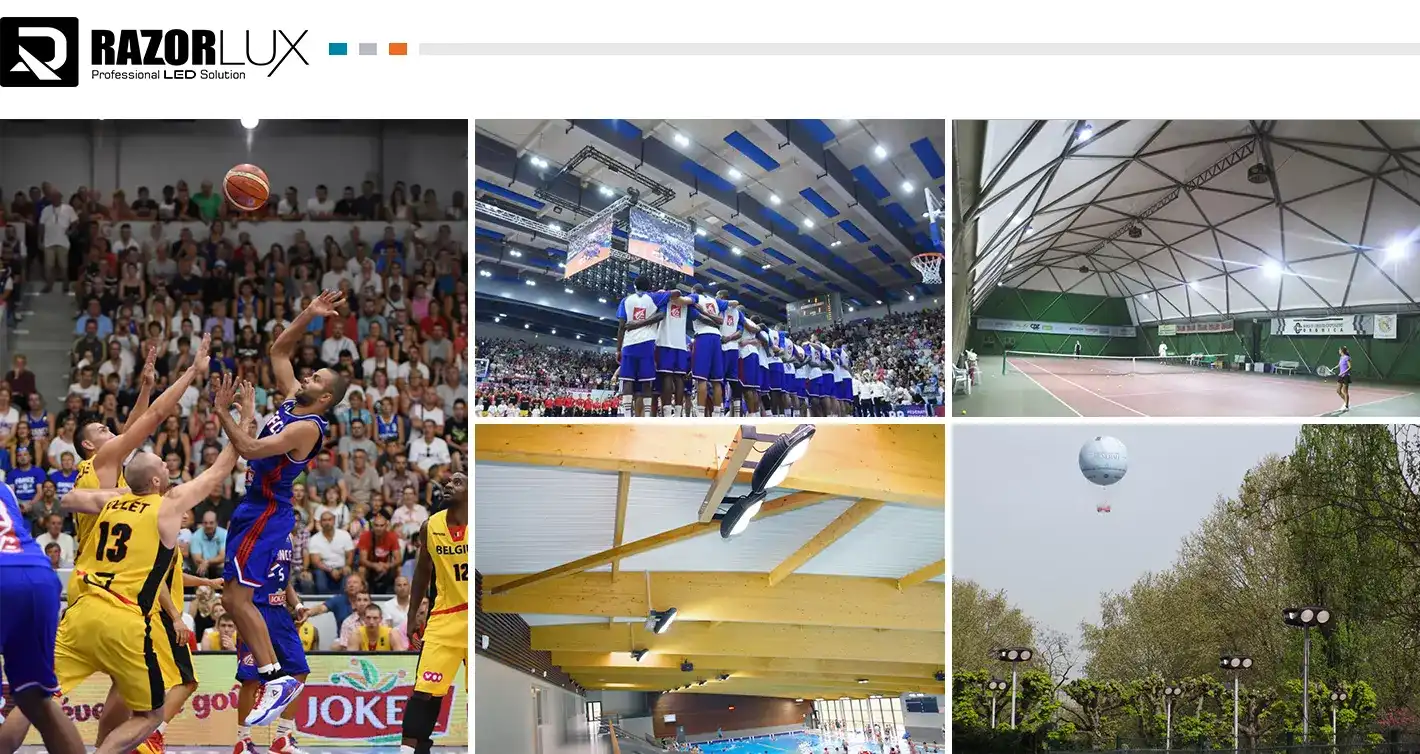
Patterns of usage affect choices about specifications. Municipal courts that are open 12 hours or more a day benefit from IP67's longer durability, which cuts down on repair calls that mess up schedules. The following case studies show how to make decisions in real life for Outdoor Lighting for Volleyball Court:
Case Study 1: Indoor/Outdoor Hybrid Community Center — In Seattle, a building called for IP65 for covered areas that might get wet sometimes and IP67 for perimeter lights that would be fully uncovered. This mixed approach made the best use of the budget while still protecting the areas that needed it the most.
Case Study 2: Qatar Coastal Resort Beach Volleyball Complex — Extreme heat (50°C ambient), salt air, and occasional sandstorms meant that IP67 lights with wide-voltage input (AC 110–480V) were needed to deal with changes in the power grid. The installation has been up and running nonstop since 2019 with no problems caused by bad weather.
Mounting Location and Maintenance Access
Fixtures that are 10 meters or more up on masts need IP67 to make the time between service visits longer. Specialized lifts and people are needed to get to pole-mounted equipment. Just the work for each repair event costs $500 to $1500. By setting higher IP ratings up front, facility managers can cut down on annual maintenance from three to four interventions to one planned check.
Comparing Lighting Solutions: IP Ratings and Beyond
LED vs. Traditional Lighting Technologies
Not only did LED technology change the way sports lighting was done by using less energy, but it also made IP67 sealing possible, which was almost impossible with metal halide fixtures that ran hot. The following list shows the main differences:
| Parameter | LED (Razorlux RGL2-400A) | Metal Halide (1000W) | High-Pressure Sodium |
|---|---|---|---|
| IP Rating Availability | Standards IP65 and IP67 | In most cases, IP54 max | IP54 is usually |
| Operating Temperature | -40°C to +60°C | Limited ability to start from cold | Bad color transfer and not enough sealing |
| Lumen Maintenance | 90% at 50,000 hours | 60% after 10,000 hours | 70% at 15,000 hours |
| Warm-Up Time | Full amount right away | 5 to 10 minutes | 3 to 5 minutes |
| Restrike Capability | Right away | 15 to 20 minutes to cool down | 10-15 minutes to cool down |
Solar-Powered Options and Their IP Considerations
Outdoor Lighting For Volleyball Court solar setups come with their own set of problems. While the photovoltaic panel needs to be sealed to IP67 standards, the battery enclosure needs even higher standards, usually IP68, to keep water from getting in and causing catastrophic failure. The cost of installation goes down because there is no need to dig trenches for electrical lines. However, procurement workers need to think about how often batteries need to be replaced (usually every 5 to 7 years) and how much power is lost when it rains for a long time. These systems work well for recreational sites that are far away, but they have trouble regularly meeting professional lighting standards.
Critical Importance of Installation Hardware and Accessories
The whole lighting system, not just the fixture housing, needs to be IP-compliant. What the procurement requirements need to cover is:
- Waterproof Cable Glands: PG-threaded openings with rubber seals that match the IP grade of the device
- Corrosion-Resistant Mounting Clamps: Our stainless steel clamps keep their shape in salt spray situations where mild steel would rust in 18 to 24 months
- Sealed Junction Boxes: All links to the outside world need IP67-rated casings to keep the whole system safe
A common failure mode occurs when IP67 fixtures are connected using standard IP44 junction boxes—water often gets in through the weakest point, causing nuisance trips and damage to the parts. These integration problems can be avoided by having detailed buying requirements.
Beam Angle Selection and Its Relationship to IP Ratings
Our unique multi-function optical system has a case that is sealed to IP67 standards and can offer beam patterns of 40°, 60°, 120°, and 140°×60°. When fixtures are mounted 15-20 meters high on a tall mast, narrow beams (40°–60°) work best. For lower mounting heights (6–10 meters), wide-angle optics (120°–140°) work best. This adaptability lets purchasing teams stick to a single light platform while changing the photometric performance to fit different court shapes. This makes managing inventory and shipping extra parts easier.
Procurement Guidance: Where to Buy and What to Specify for IP-Rated Volleyball Court Lighting
Key Procurement Criteria for B2B Buyers
When technical teams look at Outdoor Lighting For Volleyball Court providers, they should make sure:
Veracity of the Certificate: Ask for original certificates instead of copies. Our CE, RoHS, UL, DLC, and SAA certifications are regularly renewed through audits. The paperwork includes certificate numbers that can be tracked back to the organizations that issued them.
Component Sourcing Transparency: Make sure you know who makes the LED chips and drivers. We specifically mention Mean Well power sources and Samsung LED chips because these parts go through separate testing to make sure they are safe for use in naval and industrial settings.
What to Specify in Your RFQ
Good procurement documents clear up any confusion. This is what should be in your request for quote:
- Independent test reports that meet IEC 60529 standards and a minimum IP67 rating
- -40°C to +60°C for most applications, which covers the full range of temperatures that can be found in your area
- Light bulb life curves (L90 at 50,000 hours or more)
- Voltage range (wide-voltage AC 110–480V gets rid of the need for transformers that are made for each spot)
- Level of impact strength (IK10 for ball-strike zones)
- Color rendering index (CRI Ra≥75 at the very least, Ra≥80 is best for competitive play)
- Selectable color temperature (5000–5700K sunshine range is best for safety and focus)
Installation Best Practices That Preserve IP Integrity
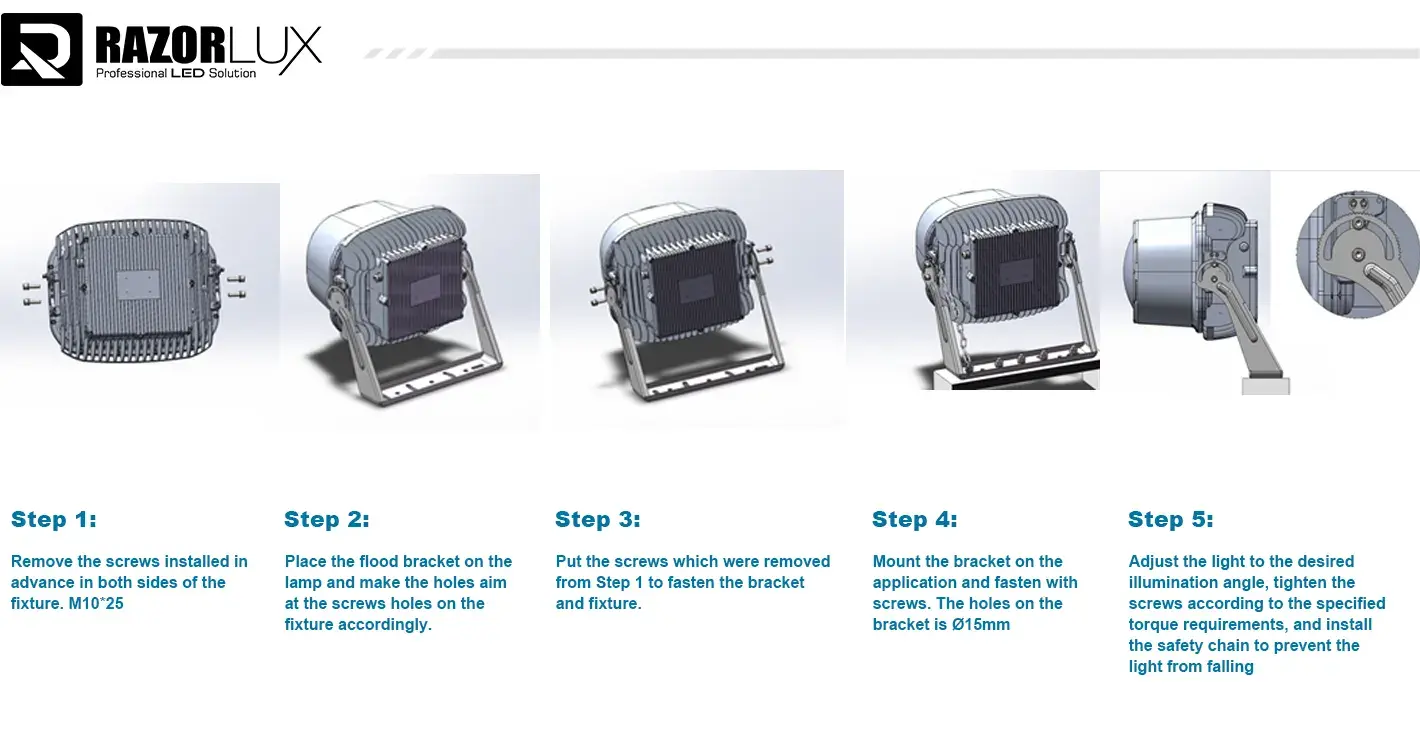
Even the best IP67 device won't work if it's not fitted right. Important steps include:
- Checking the Gaskets: Make sure the silicone gaskets fit properly in the holes before tightening them. Tightening them too much can damage the seals and allow leaks to happen.
- Preparing the cable entry: Only take off as much insulation as you need to. Too much visible conductor raises the chance of corrosion, and not enough stripping stops the gland from compressing properly.
- Mounting Angle Considerations: Place fixtures so that the cable entrances face downwards whenever possible. This way, gravity will act as an extra barrier against water getting in.
- Post-Installation Testing: Use a gentle water spray test (not a high-pressure wash) to check all seals before turning on the circuits. This easy step finds installation mistakes before they fail.
Maintenance Protocols for Long-Term Performance
IP67 lights need less care than lower-rated options, but they last longer if they are checked regularly:
- Visual Inspection Every Three Months: Look for cracks in the seal, cloudy lenses, and rust on the fixing brackets.
- Electrical Testing Once a Year: Use a megohmmeter to check grounding continuity and insulation resistance.
- Bi-Annual Photometric Testing: Every six months, you should do photometric testing to see if the lumens are slowly losing their brightness, which is a sign that the part is getting old.
Conclusion
For outdoor lighting for a volleyball court, you need to carefully look at the weather, how the court will be used, and how it will be maintained over time. IP65 is good enough for basic outdoor uses, but IP67 offers significantly better protection, which is why it is recommended for coastal installations, high-humidity climates, and uses where less frequent maintenance gives a strong return on investment. LED technology is the best choice for Outdoor Lighting For Volleyball Court, both new installations and retrofit projects, because it works with higher IP ratings and maintains lumens better than other technologies. Professionals in procurement who thoroughly specify—not only fixture ratings but also installation hardware, mounting methods, and maintenance schedules—achieve installations that work reliably for as long as they're used, lowering the total cost of ownership while keeping the lighting quality that athletes and fans expect.
FAQ
What's the minimum IP rating acceptable for outdoor volleyball court lighting?
If you want to use outdoor sports lights, IP65 is the bare minimum. It keeps dust out and protects against water jets. This rating is good for covered courts that get some weather or places that get light rain. IP66 provides better security against strong water jets and is good for places where it rains a lot. IP67, on the other hand, is better for places that are likely to flood or are near the coast. The extra cost between IP65 and IP67 is usually between 8 and 15%, which isn't too much when you consider how much longer the products will last and how little upkeep they will need in harsh settings.
How does IP rating affect the upfront cost and long-term value?
Higher IP ratings need more advanced sealing technologies, precisely made housings, and strict testing processes, which makes them 10–20% more expensive to make than IP54-rated options. This investment pays off in several ways: longer component lifespans (often 2-3 times longer in difficult settings); fewer maintenance calls, which saves $500 to $1500 per service call; and better lumen maintenance, which keeps the quality of the light for decades instead of years. Total cost of ownership calculations always favor the IP67 specification for installations that will be used for more than 5 to 7 years, especially when energy savings from LED technology and warranty coverage that protects against early failures are taken into account.
Partnering with a Trusted Outdoor Lighting For Volleyball Court Manufacturer
Razorlux started as Zhihai Power Technology in 1998. Since then, it has grown into a specialist in marine-grade LED solutions that serve sports facilities, ports, and heavy industrial settings in Northern Europe, Southeast Asia, Oceania, and the Middle East. Our more than 200 patents show that we are always coming up with new ideas for protecting the environment, managing heat, and designing optical systems.
Our technology is already trusted by buying managers at shipyards, marine equipment integrators, and port facility planners in some of the harshest places in the world. The same engineering know-how that has been used on platforms in the North Sea and on ship decks in Singapore's humid climate is now used to make sure that your Outdoor Lighting For Volleyball Court projects are completely reliable.
Our RGL2-400A series carries on this tradition: it has IP67 protection, IK10 impact resistance, an operating range of -40°C to +60°C, and L90 lumen maintenance for 50,000 hours. Whether you're choosing lights for a public beach volleyball court or a private vacation facility, you can use tried-and-true marine-grade technology without having to pay the high price that comes with buying specialized industrial equipment.
Technical specifications tell only part of the story. Our buying process takes into account the real-world problems that business-to-business buyers face, such as technical departments needing thorough drawings and photometric data, purchasing departments wanting to compare the total cost of ownership, and management wanting solid delivery schedules that don't throw off project timelines. We give you sample units to test in the field, full technical data with 3D CAD models, and the freedom to make changes based on OEM needs.
Don't put the project at risk of being late or failing early by not specifying the lights properly. Email our team at sam@razorlux.com to talk about your particular needs, get technical drawings, or set up sample tests so that your engineers can check the performance claims before committing to a full-scale purchase.
References
1. International Electrotechnical Commission. "IEC 60529: Degrees of Protection Provided by Enclosures (IP Code)." Third Edition, 2013.
2. Illuminating Engineering Society. "IES RP-6-15: Sports and Recreational Area Lighting Recommended Practice." New York: IES Publications, 2015.
3. European Committee for Standardization. "EN 12193: Light and Lighting – Sports Facility Lighting." Brussels: CEN Publications, 2018.
4. National Electrical Manufacturers Association. "NEMA Standards Publication 250: Enclosures for Electrical Equipment (1000 Volts Maximum)." Rosslyn, VA: NEMA, 2020.
5. LED Professional Review. "Thermal Management and Environmental Protection in High-Power LED Sports Lighting." Issue 87, March-April 2022, pp. 42-51.
6. Marine Equipment Trade Association. "Environmental Testing Standards for Maritime and Offshore Electrical Equipment." Technical Bulletin Series, Volume 12, 2021.