


_1750326878398.png)

Best Dimmable Flood Lights Buying Guide for Professionals
When managing marine installations, offshore platforms, or heavy industrial facilities, selecting the right lighting isn't just about brightness—it's about operational reliability, energy efficiency, and long-term cost control. The Best Dimmable Flood Lights combine robust construction with intelligent control systems, allowing you to adjust illumination levels based on operational needs while maintaining compliance with stringent marine and industrial certifications. These fixtures deliver precise lumen output control through protocols like 0-10V and DALI, enabling you to reduce energy consumption during maintenance windows or low-activity periods without compromising safety. Unlike fixed-output alternatives, professional-grade dimmable flood lights help you balance visibility requirements with operational budgets, extending fixture lifespan and reducing total cost of ownership across demanding environments.
Understanding Dimmable Flood Lights: Technology and Benefits
Core Dimming Technologies Explained
There are three main control methods used by modern commercial dimmable flood lights. Because it is easy to use and works with other building control systems, the 0-10V system is still the most popular choice for marine and heavy-duty uses. This analog method lets the output go from 10% to 100% smoothly, without any flickering that can be seen. This is important for integrating video security and keeping operators comfortable during long shifts.DALI (Digital Addressable Lighting Interface) provides more accuracy for complicated setups that span several deck levels or production zones. Every light fixture has its own digital address, which lets building managers make custom lighting scenes, plan dimming sequences, and check on the state of each light fixture from afar. This fine-grained control is very useful for remote platforms where lighting zones need to react to changes in the weather or in the way the platform is being used.TRIAC dimming is popular in business settings, but it doesn't work well in harsh marine conditions. The phase-cut method can cause electromagnetic radiation that can damage sensitive navigational gear. We've seen that ships and offshore sites always put 0-10V and DALI options at the top of their lists to make sure they work with important safety systems.
Quantifiable Operational Benefits
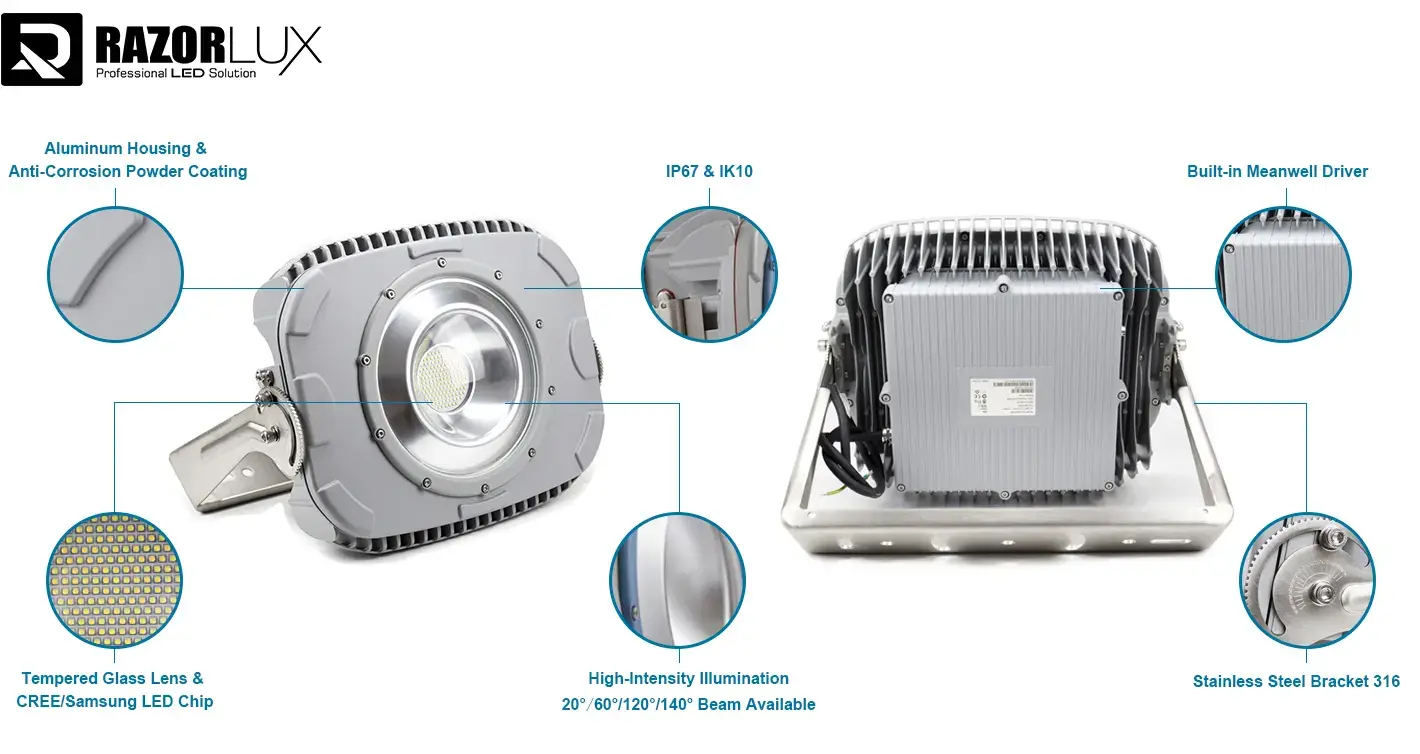
Saving money on operations is a direct result of saving energy. At full power, our RGL2-400A type puts out 130 lm/W, which is the same as 800–1000W HID lights while only using 400W. When lights are turned down to 50% during off-peak hours, like when ships are being maintained or when cargo is being loaded, the amount of energy used drops proportionally. This saves money for groups or building networks as a whole. The longer life of adjustable LED flood lights solves a problem that has been bothering marine buyers for a long time: it's hard to get to the lights for repair. To replace parts on ship masts or platform towers, you have to rent an expensive crane and stop production. Fixtures that are designed to last 50,000 hours or more make these adjustments much less necessary. By lowering thermal stress during partial-load operation, dimming makes LEDs last even longer, which we can confirm through our advanced life testing methods. When fixtures are used in enclosed engine rooms or hallways where the temperature rises above 60°C, thermal control becomes very important. Good dimmable drivers keep the flow of current in check across the whole dimming range, which stops the thermal runaway that happens with cheaper models. This stability makes sure that the color temperature and brightness maintenance stay the same whether the output is 20% or 100%, which is important for quality control checks in the manufacturing zones of shipyards.
How to Choose the Best Dimmable Flood Lights for Your Business Needs
Assessing Lumen Requirements and Beam Distribution
How to Pick the Best Dimmable Flood Lights for Your Company begins with knowing what the practical tasks are, not just changing the wattage that is already there. Forklifts to be able to safely move around a container loading dock, it needs 50 to 100 lux, which is about 150,000 light spread out over a normal 5,000 m² area. Our 52,000-lumen lights cover this area with just three carefully placed units, while most 30,000-lumen options need five units to do the same job. The choice of beam angle has a direct effect on the number of fixtures and the level of regularity. The 140° x 60° uneven distribution is great for lighting walkways and piers because it directs photons horizontally along travel paths and reduces the amount of light that best dimmable flood lights travel upward and gets in the way of bridge navigation. On the other hand, 40° narrow beams focus the light for areas like crane booms or precision welding stations that need 500+ lux. Color temperature affects how aware an operator is and how accurately they can check materials. Our tests with port quality control teams showed that neutral white light between 5000K and 5700K is best for inspecting weld seams, while 4000K makes it easier on the eyes for long maintenance tasks in small machinery rooms. The range of 2700K to 6500K can be adjusted to fit specific needs without having to keep different stock.
Evaluating Dimming Range and Control Integration
You can dim from 10% to 100% without seeing or hearing any steps or buzzing from the driver. Poor drivers have jumps of 15-20%, which makes sudden changes that aren't good for security uses, where gradual dawn/dusk simulation keeps ship workers from getting scared. We've created smooth logarithmic dimming shapes that match the way humans see light, so changes in brightness are seen as linear. Operational freedom is based on how well two control systems work together. Most of the time, Modbus RTU or BACnet are used for building control systems in port facilities to talk to each other. Dimming drivers need to be able to handle these command structures without needing their own unique gateways, which can cause problems and make debugging more difficult. Our technical literature includes details on how to integrate control platforms from Siemens, Schneider Electric, and Honeywell that are often used in industrial marine settings. The emergency bypass feature makes sure that safety rules are followed. Marine classification groups require lighting systems to keep up a certain level of light when the power goes out or there is an emergency. Quality dimmable drivers have bypass circuits or battery backup integration points that let lights work at set output levels even if the control signal isn't working. This is something that consumer-grade goods don't have.
Top Brands and Models: Comparative Performance Analysis
Razorlux RGL2-400A: Marine-Grade Specification
Our most popular model meets the unique needs of buying managers in shipyards and offshore sites. The unique multi-function design allows for different mounting angles without affecting the IP67 rating. This eliminates the problems that come up when standard fixings are put on curved hull sections or angled platform bracing. The input voltage ranges from AC110-480V and from DC100-800V. This means that there is no need to worry about buying the right voltage, which makes standardizing the fleet easier. A Norwegian offshore operator recently streamlined their fastener inventory from seven voltage types to a single model. This cut the amount of space needed to store extra parts by 60% while keeping all of their assets in the North Sea and the Gulf of Mexico compatible.
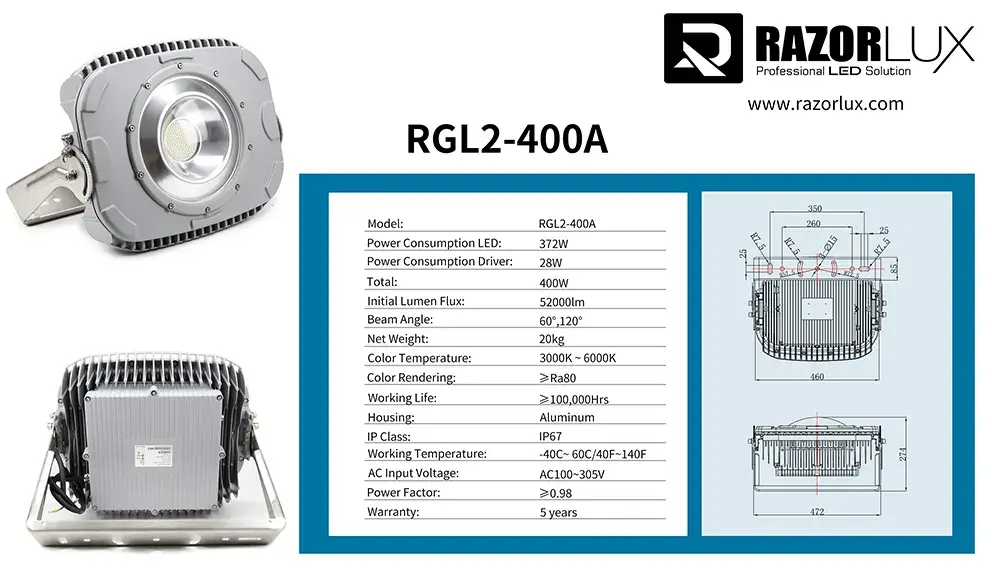
| Performance Parameter | Razorlux RGL2-400A | Competitor Average |
|---|---|---|
| Luminous Efficacy | 130 lm/W | 110-120 lm/W |
| Operating Temperature Range | -40°C to +60°C | -20°C to +50°C |
| Warranty Coverage | 5 years (LED + Driver) | 3 years typical |
| Input Voltage Range | AC110-480V, DC100-800V | Single voltage range |
| Impact Rating | IK10 | IK08 typical |
| CRI Options | Ra75 (Ra80, Ra90 available) | Ra70-75 fixed |
According to IEC 62717 standards, thermal performance testing shows stable operation at 60°C ambient with less than 5% brightness depreciation after 10,000 hours. This is important information for engine room setups because competitors show 12–18% degradation under the same conditions. Our metal heat sink is stable because it has a powder-coated finish and 40% more surface area than extruded shapes, which are often used in cheaper options.
Comparative Brand Positioning
Philips and Cree have good names in residential and industrial lighting, but they don't always have the marine certifications that are needed for vessel class approval. Their lines of products focus on blending in with their surroundings and connecting to smart homes, which are features that add cost without benefit in big industrial settings. When looking at the total cost of ownership for a 50-fixture offshore platform job, these high-end brands usually go over budget by 25–35% without giving any performance benefits in terms of corrosion protection or impact tolerance.LEONLITE and other similar mid-range names have reasonable prices, but the quality of their parts is often lower. "IP65" is listed in their driver specs, but it's not clear if this grade applies to the whole system or just the LED array housing. We've seen these designs fail because of moisture getting in after 8 to 12 months of being exposed to the best dimmable flood lights on the coast. This happens at the driver PCB level, where poor potting compound lets condensation build up. Regional producers sometimes make good products at good prices, but they have trouble keeping their supply chains consistent. A dock in Southeast Asia said that the same source changed three different specifications for four orders. Each change needed to be re-certified through their quality assurance process. This variety makes paperwork more difficult and doesn't work with ISO 9001 standards for purchases and processes for classifying ships.
Procurement Strategies: Sourcing and Supplier Evaluation
Direct Manufacturer Engagement Benefits
Building ties with makers like Razorlux instead of distributors can save you money in a number of ways. Answers to technical questions come from engineering teams that know the design standards, not from sales reps who are reading specification sheets. When a Russian shipyard needed to change the beam angle for an icebreaker upgrade, our R&D team sent them optical modeling data within 48 hours, which is faster than what could be done through normal lines of distribution. When you deal directly with manufacturing sources, you can negotiate a bulk price and models. Through volume agreements, an 18% cost decrease in a 500-fixture port modernization project was achieved compared to prices offered by distributors. Manufacturers can negotiate in this area because they don't have to pay the extra 25–35% margins that delivery networks add. They can pass some of these savings on to customers by signing multi-year supply deals. With direct access to the maker, quality control can see a lot more. We usually agree to requests for plant acceptance testing, which lets procurement teams see how parts are made, look over paperwork about where the parts came from, and make sure testing procedures are followed before shipping. This openness is especially helpful for buyers from the government and state-owned businesses that have to follow strict auditing rules.
Contract Terms and Risk Mitigation
Payment plans should be in line with project deadlines and proof of delivery. Buyers with a lot of experience usually agree to a 30% deposit, 60% against shipping documents, and a 10% holding that is released after installation proof. This system guards against suppliers going bankrupt and makes sure there is enough cash flow for manufacturing activities. Letters of credit offer extra security for large sales, but they come with extra costs of 2% to 3% of the total deal value.
| Procurement Scenario | Recommended Payment Terms | Delivery Window | Warranty Minimum |
|---|---|---|---|
| New vessel construction | 30/60/10 milestone-based | 90-120 days | 5 years |
| Retrofit/replacement | 50% deposit, 50% on delivery | 45-60 days | 3 years |
| Emergency spares | Full payment with the order | 7-14 days | 2 years |
| Multi-year framework | Quarterly releases against the forecast | 30-45 days per release | 5 years |
The warranty terms must make it clear what the limits are. If you don't explain what a "5-year warranty" means, it could not cover problems caused by bad fitting, poor electrical safety, or illegal changes. Comprehensive guarantees cover flaws in the materials, poor production, and broken parts, but they don't cover damage caused by clear abuse or acts of nature. The information in our insurance covers how to make a claim, how long it will take to get an answer, and different ways to solve problems, such as on-site service for jobs with more than 100 fixtures. Critical path plans are kept safe by delivery penalty terms. Delays in lighting installations that lead to delays in finishing have huge financial effects very quickly. In contracts, there should be fixed fees for missing deadlines. These are usually between 0.5 and 1% of the order value per week that is late, with a maximum of 10% of the total order value. These rules show that the seller is committed and give options for tasks that are time-sensitive.
Installation and Maintenance Best Practices
Pre-Installation Planning and System Integration
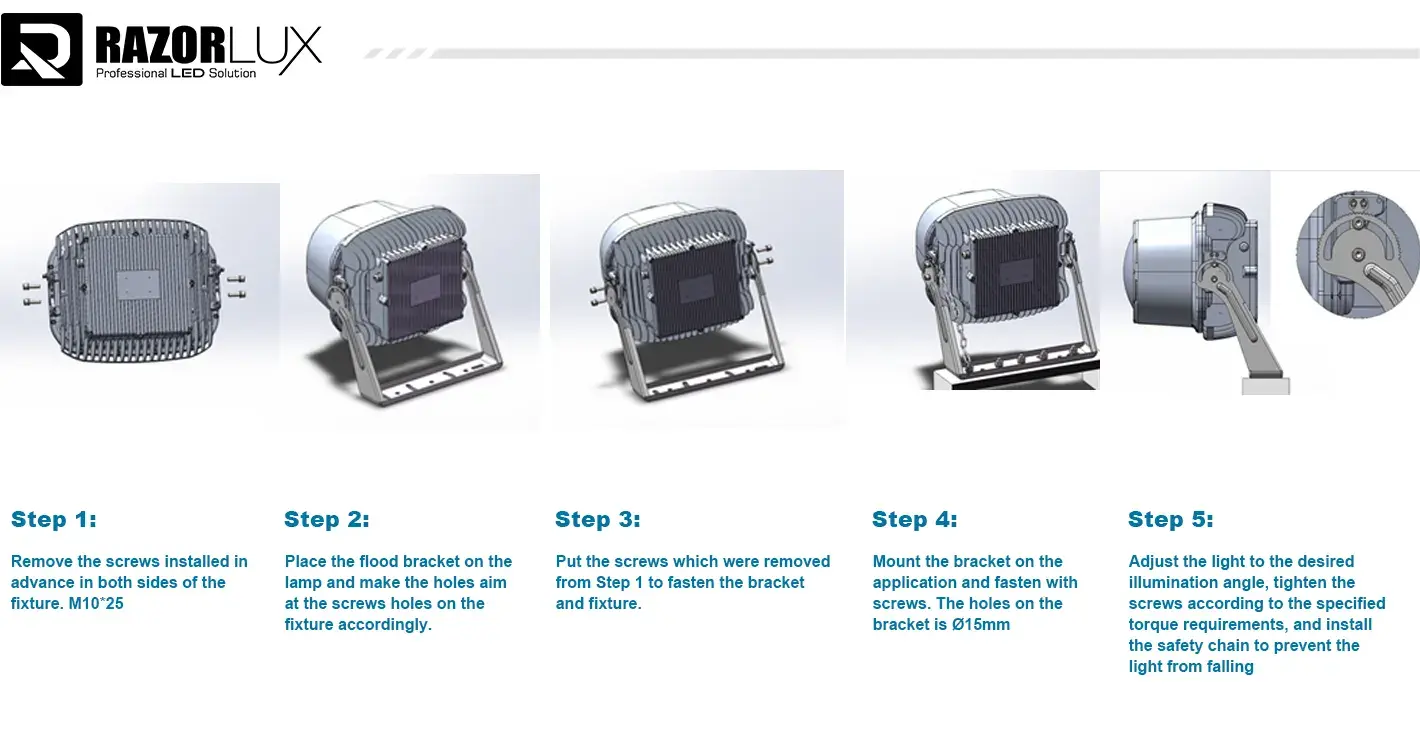
Assessing the electrical equipment stops problems with compatibility from being found during installation. The power factor and frequency curves of dimmable LED drivers are not the same as those of the HID ballasts they replace. Electrical workers should make sure that the current systems for protecting branch circuits, sizing conductors, and grounding can handle the unique features of LED loads. To make this review easier, we give you thorough electrical specifications, such as inrush current, total harmonic distortion (THD <10%), and power factor (≥0.98). Verification of the mounting system guarantees long-term mechanical integrity. A 15 kg light that is affected by wind loads, vibrations, and possible impacts needs a much better dimmable flood light's stronger mounting system than the 5 kg HID that came before it. Grade 316 fasteners with Nord-Lock washers should be used to connect stainless steel brackets to the main structural parts. This will keep the brackets from coming loose due to vibrations. We have records of fixtures coming loose because the fitting instructions weren't clear enough. These problems could have been avoided with proper planning before the installation. Control system setup needs your full attention. Before handing over operations, DALI networks need to be used to address each device and set the lighting scenes that will be used. When done by skilled integrators, this process usually takes two to four hours for setups of fifty fixtures. If systems aren't properly set up, they run in default modes, which takes away the practical freedom that made the initial investment in dimmable technology worth it.
Routine Maintenance Protocols
Cleaning how often depends on the surroundings, but in marine areas, it's usually every three months. If nothing is done, salt buildup will lower the amount of light that passes through plastic lenses by 15 to 25 percent every year. If you don't spray directly on the cable openings, a high-pressure saline rinse will get rid of the deposits without hurting the seals. Don't use cleaners with solvents because they break down gasket materials and make IP67 less reliable. Inspection of connection points finds problems before they become breakdowns. Every three months, you should check the junction boxes for obvious rust, mounting fastener torque, and cable gland tightness. Thermal imaging scans find patterns of overheating in drivers that mean there isn't enough airflow or a part is about to break. This kind of predictive maintenance is especially useful for remote offshore sites where reactive maintenance is expensive. Calibration of the dimming system keeps performance stable as lights get older. LED lumens slowly lose their brightness; after 30,000 hours, fixtures may only put out 90% of their original lumens, while nearby newer fixtures work at 100%. Control systems can make up for it by changing the lowering curve, which keeps the lighting level the same in mixed-age setups. For this optimization to work, photometric readings and code changes need to be done once a year.
Troubleshooting Common Issues
Flickering usually means that the driver isn't working well with the control signals or that the power quality isn't good enough. Check that the control voltage stays within the range allowed (usually 1-10V for 0-10V systems) while the light is being dimmed. Behavior that isn't consistent happens when the voltage drop on the control wire is more than 0.5V. To fix this, you need to separate control circuit home runs or locally powered control modules. Some drivers are sensitive to changes in the AC line caused by variable frequency drives. This means that they need to be power-conditioned or have driver models with better input filters. Installations that don't have enough surge security tend to fail early. Lightning-caused transients and voltage spikes from generator changes happen a lot in marine settings. When Type 2 surge protective devices (SPDs) are placed at distribution panels, they greatly increase the life of fixtures and lower warranty claims by 60 to 70%, according to our study of field data. This safety feature is especially important for systems that use generator power alone, without any buffering from the electric grid. A change in color across light populations means that LED binning isn't uniform, or there are problems with how the driver controls the current. Tough binning tolerances (3-step MacAdam ellipse) are maintained by good makers to make sure that the final product looks regular. If color differences show up within the first 1,000 hours of use, it's likely that there are problems with the quality of the parts. Reliable suppliers will repair any fixtures that are impacted without any problems because this clearly shows production flaws rather than practical damage.
Conclusion
When choosing the right Best Dimmable Flood Lights for naval and commercial uses, you have to weigh the short-term costs of the project against the long-term benefits of its use. The best dimmable flood lights have performance that can be checked thanks to recognized approvals, clear parts, and maker support systems that last after the initial delivery. Razorlux's RGL2-400A is a good example of this method because it works with all voltages, has a proven 50,000-hour life, and is made of marine-grade materials that have been tested over decades of installations abroad. When it comes to buying things, choices that are based on checking technical specs, evaluating suppliers' skills, and figuring out the total cost of ownership always work better than price-focused methods that put off problems until later, when they are much more expensive to fix.
FAQ
1. What dimming protocol works best for offshore platform installations?
Due to its analog ease and lack of digital transmission mistakes caused by electromagnetic interference from close equipment, 0-10V dimming works best in offshore settings. The protocol works over a simple two-conductor control wire and remembers the last setting that was told it to do, even when contact is interrupted. DALI is better for complicated setups that need to be able to address each light individually, but it requires more advanced skills for setting up and fixing problems. Platforms that work with current building control systems should make sure that the protocols work with each other while the specifications are being made.
2. How do you verify marine certification authenticity?
Marine licenses that are real have certificate numbers that can be tracked and checked through the records of classification societies like DNV, ABS, Lloyd's Register, and others. Instead of generic product family certificates, ask for full test results that list the exact model that was tried. Certificates should be up-to-date (usually good for 5 years) and match the type of device that is being bought. Reputable makers provide this paperwork voluntarily; hesitancy or incomplete answers suggest possible compliance issues that need to be looked into more before a promise is made.
3. What causes premature LED driver failures in marine applications?
Driver problems are usually caused by not enough surge protection, moisture getting in, or too much heat from not enough airflow. In marine settings, lightning and switching generators cause voltage spikes that are too strong for driver safety circuits that aren't up to the task. When glands aren't properly closed or when temperature changes make ways for mist to get in, moisture can get into cable entry points. Commercial-grade drivers don't last nearly as long as high-quality drivers that have conformal coating, strengthened potting, and a wide working temperature range (-40°C to +60°C).
Partner with Razorlux for Reliable Dimmable Flood Light Solutions
Razorlux has been helping people with their nautical and heavy-duty lighting needs since 1998 and has a lot of experience. Our RGL2-400A Best Dimmable Flood Lights are 130 lm/W efficient, protected by IP67/IK10, and come with a 5-year guarantee that covers everything. This promise is backed by over 200 patents that are unique to our company. We take away the worries that come with buying lights because we are the direct manufacturers and provide full technical paperwork, the ability to customize, and global shipping coordination. Email our engineering team at sam@razorlux.com to talk about the details of your project, get detailed drawings, or set up a sample review. Whether you're looking for fittings for a factory, an offshore platform, or to update the infrastructure at a port, our application engineers are here to help you make the best choice and make sure the project goes smoothly.
References
1. International Electrotechnical Commission (IEC). "IEC 62717: LED Modules for General Lighting - Performance Requirements." Geneva: IEC, 2014.
2. Marine Equipment Directive (MED). "Requirements for Navigation Lights and Lighting Equipment on Ships." European Commission, 2021 Edition.
3. Illuminating Engineering Society (IES). "Recommended Practice for Design and Maintenance of Lighting in Marine Environments." IES RP-12-23, New York, 2023.
4. Det Norske Veritas (DNV). "Rules for Classification of Ships - Part 4 Chapter 8: Electrical Installations." DNV GL, 2022 Edition.
5. American Bureau of Shipping (ABS). "Guide for LED Lighting Systems." Houston: ABS, 2021.
6. National Electrical Manufacturers Association (NEMA). "SSL 7A-2015: Phase Cut Dimming for Solid State Lighting - Basic Compatibility." Rosslyn, VA: NEMA, 2015.
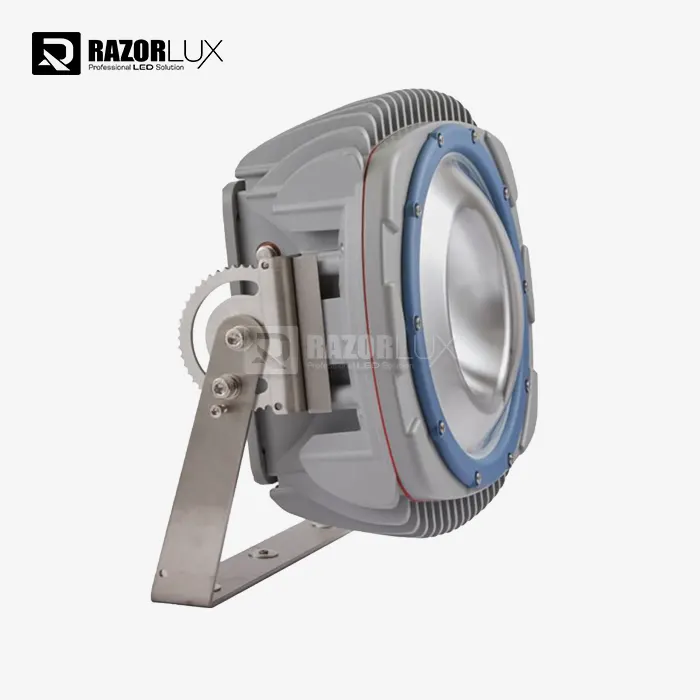
 VIEW MOREstadium led flood lights
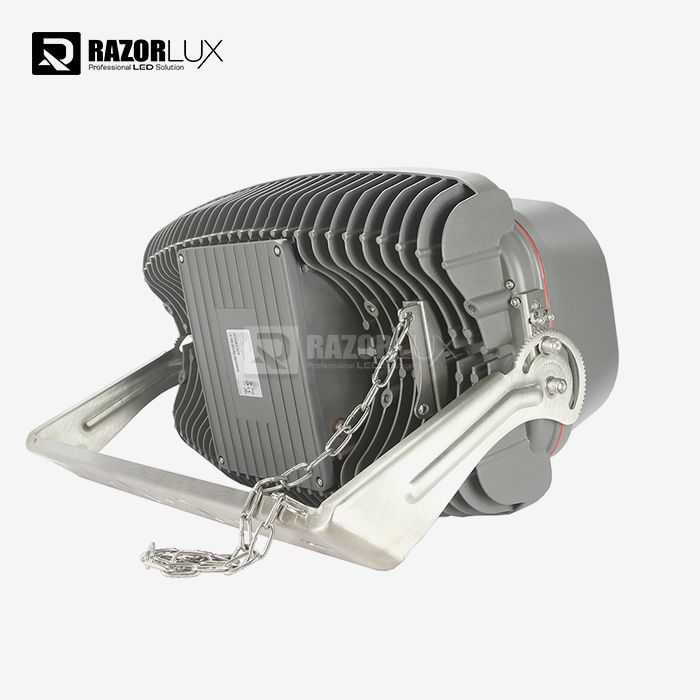
 VIEW MOREvolleyball ground light
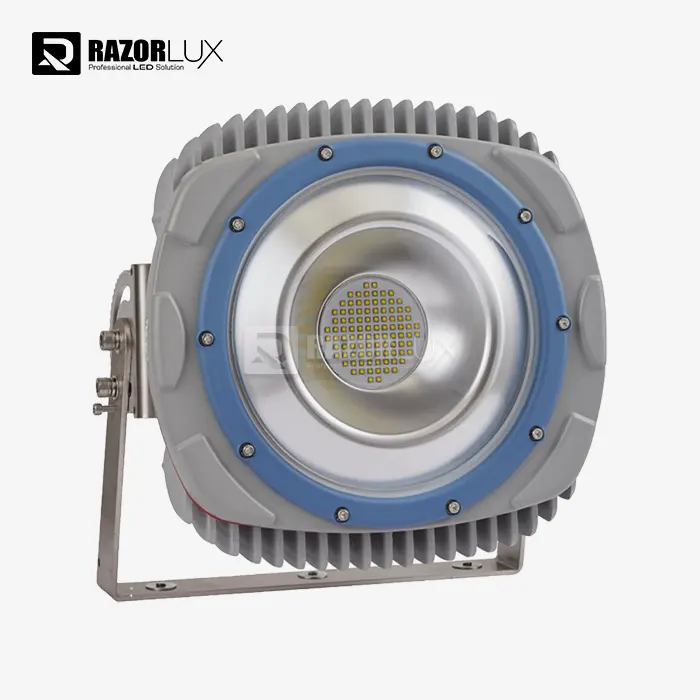
 VIEW MOREflood light for basketball court
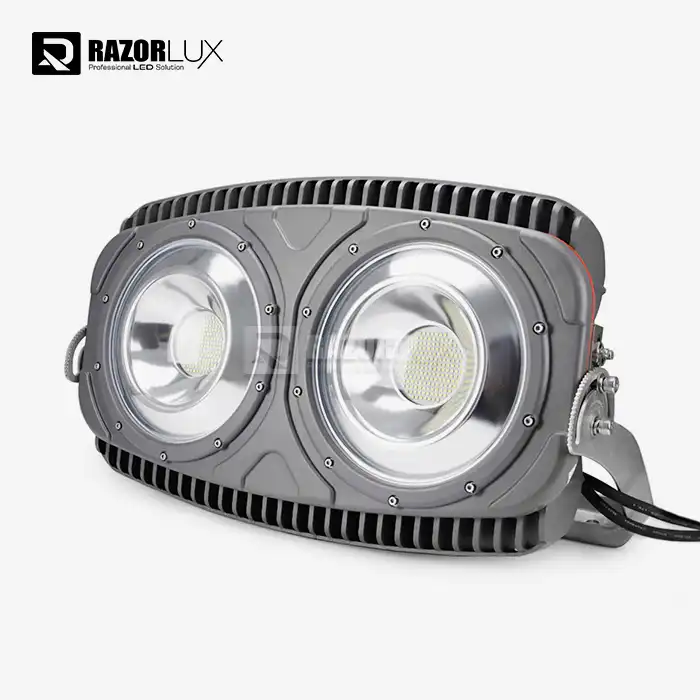
 VIEW MORE12 volt led boat deck lights
 VIEW MOREBest Marine Led Flood Lights
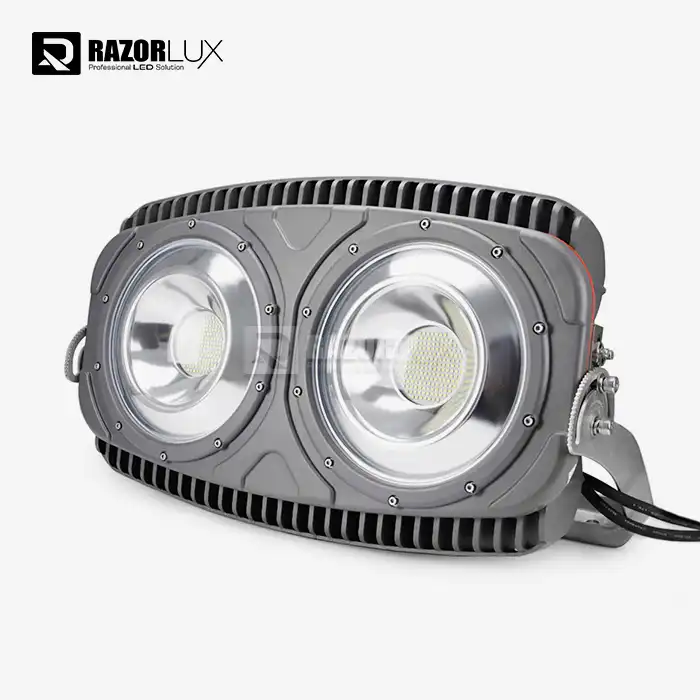 VIEW MOREHigh Mast Led Flood Light
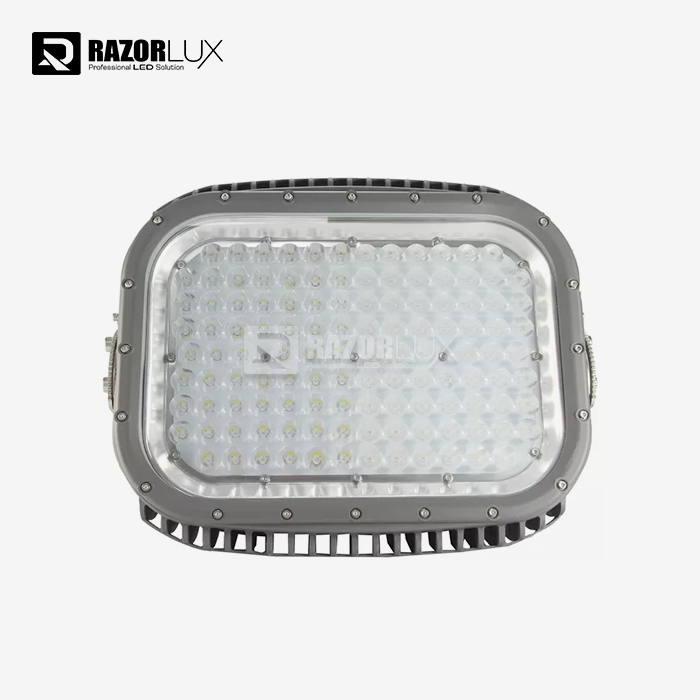 VIEW MORESMD Led Industrial Flood Light 500W 55000 Lm High Power Flood Light
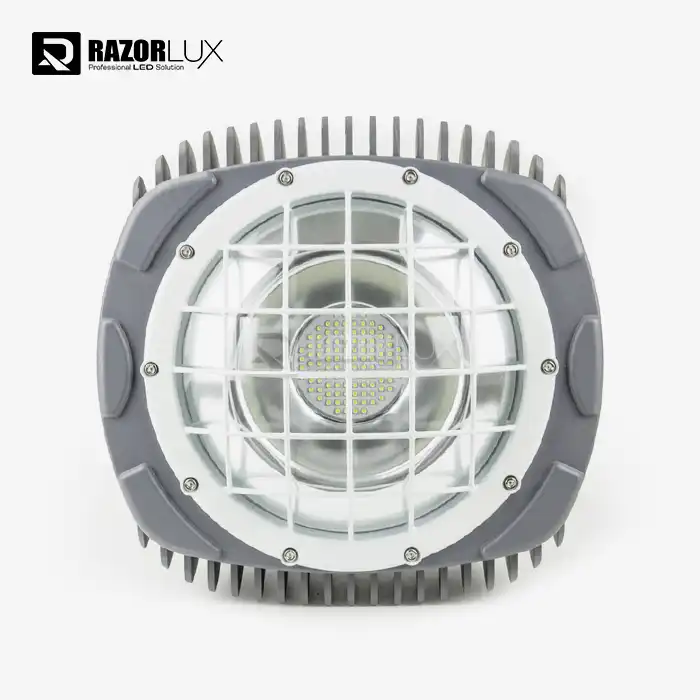 VIEW MOREMast Led