


_1750326878398.png)

Best OEM 400W Equivalent LED Flood Light for Projects
When you're managing a large-scale marine project, shipyard retrofit, or offshore platform installation, lighting isn't just about visibility—it's about reliability, compliance, and long-term cost control. The 400W Equivalent Led Flood Light represents a crucial evolution from traditional metal halide and high-pressure sodium fixtures, offering industrial-grade illumination while drastically cutting energy consumption. At Razorlux, our RGL2-400P model delivers 48,000 lumens at just 400W total power draw, replacing legacy 400-600W HID lamps with proven durability in extreme environments from the Arctic Circle to Middle Eastern offshore platforms.
Understanding 400W Equivalent LED Flood Lights
What Makes a Fixture "400W Equivalent"?
"400W equivalent" refers to LED flood lights that are made to give off as much light as 400-watt metal halide or high-pressure sodium lamps, or even more. Traditional HID fixtures use between 400 and 600W, but they lose about 30% of their brightness after the first 6,000 hours of use because of lumen depreciation (Illuminating Engineering Society, 2021). Our LED solution uses exactly 400W—360W for the LED array and 40W for the Meanwell driver—but it keeps the brightness at 48,000 lumens for more than 50,000 hours.
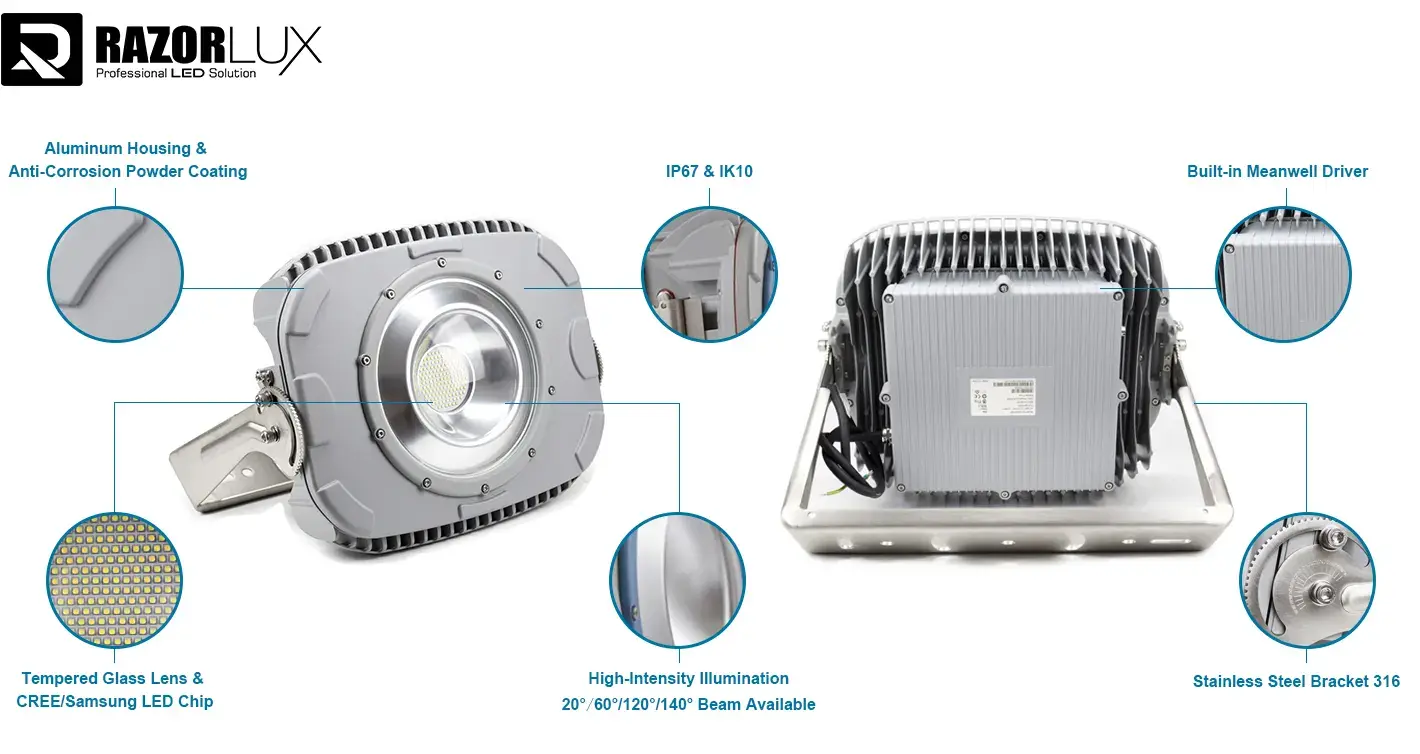
This level of efficiency comes from having better light effectiveness. Modern LED technology turns electricity into visible light at 130 lumens per watt, which is a lot better than HID sources, which only get 80 to 90 lumens per watt. The practical effect on procurement teams is simple: you get the same level of lighting while lowering the loads on the electrical system and the need for cooling in enclosed areas like engine rooms or below-deck areas.
Core Technology Behind Industrial LED Performance
Three important parts must work together for high-performance LED flood lights to work. The LED array is made up of high-quality chips that are arranged in a way that helps them handle heat well. Heat is the main thing that shortens the life of LEDs. Our metal case with powder coating is resistant to corrosion and effectively removes heat, keeping junction temperatures well below the 85°C mark that speeds up lumen degradation.
The operational stability across changing input voltages depends on the quality of the driver. Razorlux recommends Meanwell power sources that can accept AC110-480Vac or DC100-800Vdc without the need for extra adapters. This is an important feature for ships with non-standard electrical systems or offshore bases that run on generator power. The driver keeps the power factor above 0.98 and the total harmonic distortion below 10%. This keeps sensitive communication or navigation equipment from being affected.
Beam spread and regularity are controlled by optical design. Our patented multi-function design lets engineers choose between 15°, 20°, or 30° beam angles, so they can use narrow spotlights for crane work or wider floods to light the deck. This versatility gets rid of the need for different types of fixtures, making it easier to keep track of supplies and ship extra parts.
Durability Specifications That Matter in Harsh Environments
Buyers in the marine and industrial sectors care about three grades for durability: IP grade, IK class, and corrosion protection. Our device has an IP67 rating, which means it completely blocks dust from getting in and can withstand being submerged up to 1 meter. This is very important for deck-mounted setups that may be washed by waves or high-pressure water during maintenance. The IK10 impact rating can handle 20 joules of impact energy, which is the same as dropping a 5 kg mass from 40 cm. This protects against dropping tools or hitting things while moving cargo.
According to ASTM B117 testing standards, our stainless steel bracket doesn't rust when exposed to salt spray, and it stays structurally sound after more than 1,000 hours of exposure. The powder coating on the housing adds to its UV protection, which stops it from chalking and breaking down, which can happen in tropical settings. These aren't just specs; they're the difference between a five-year service life and a sudden failure that causes projects to be delayed and upkeep costs to rise.
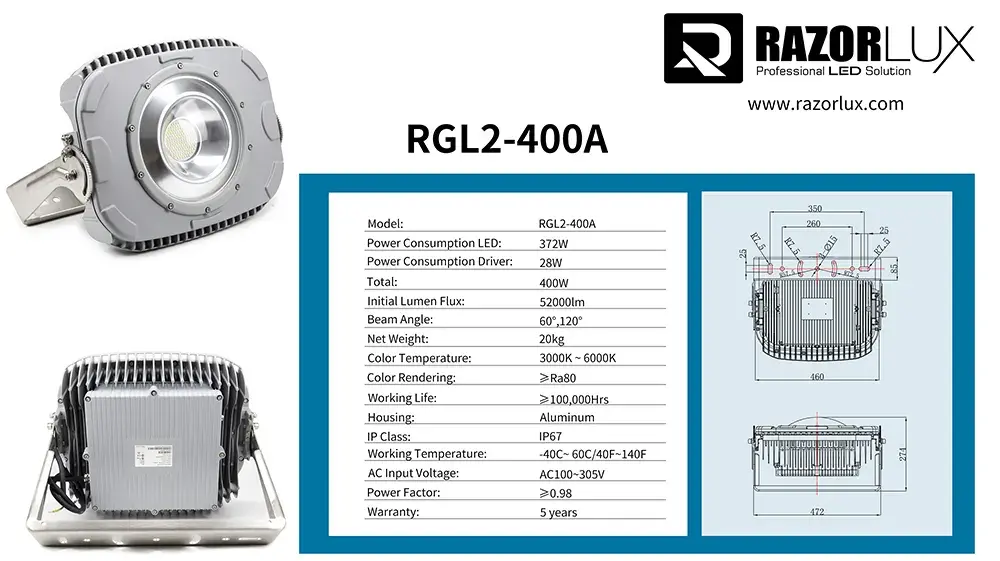
The temperature range of -40°C to +60°C covers harsh environments, from shipyards in Norway in the winter to installations in the UAE in the summer. The thermal management system keeps the performance stable without the 15-minute warm-up time that 400W Equivalent LED Flood Lights need. This means that quick full-brightness illumination is available, which is important for security or emergency situations.
Comparing 400W Equivalent LED Flood Lights to Alternatives
Performance Advantages Over Traditional HID Systems
Making the switch from metal halide to LED lighting has real business benefits beyond just saving energy. During an emergency, HID lights can't quickly start up again if the power goes out because they need a "strike time" of 10 to 15 minutes to reach full output. LED fixtures can turn on instantly at full brightness and work well with motion sensors and emergency lighting systems.
How well you can create colors has a direct effect on the quality and safety of your work. With CRI values around 25, HPS lamps give off a yellow-orange light that is easy to spot. Our LED bulbs, on the other hand, get Ra>75 (and can get Ra>80 and Ra>90 upon request). Higher CRI values make it easier to tell the difference between colors for inspection tasks, ease eye strain during long operations, and improve the quality of CCTV images, which was a concern that port security managers brought up many times during procurement reviews.
When LEDs are used, maintenance schedules change. Traditional HID lights need to be replaced every 6,000 to 10,000 hours, which adds to the cost of work and makes it harder to keep track of supplies. There is a five-year warranty on Razorlux LED modules, and they can work for more than 50,000 hours before they reach L70, which means they keep 70% of their original lumen output. This longer service interval fits with the plans for big overhauls instead of causing repairs to happen during operational times.
Energy Cost Analysis and ROI Calculations
The amount of energy used has a direct effect on running budgets and estimates of carbon footprints. A standard 600W metal halide light that is used for 12 hours a day for a year uses 2,628 kWh. This goes down to 1,752 kWh with our 400W LED equivalent, which is a 33% drop. With industrial power rates of $0.12/kWh on average, each light saves $105 a year in direct energy costs.
At a larger scale, the calculation makes more sense. By replacing 100 fixtures, a medium-sized shipyard can save $10,500 a year on electricity costs alone. When you add up the money you save on ballast repairs, bulb costs, and upkeep work, the payback time is usually between 18 and 24 months. Financial controllers like that LED light fixtures can get utility rebates and green building credits, which cuts the time it takes to get a return on investment even more.
In addition to saving money, LED lights also lower the load on HVAC systems in tight areas. A 400W metal halide light loses more than 400W of thermal energy when you count balance losses. This means that HID lamps give off a lot of heat. This heat gain makes it more important to cool climate-controlled warehouses or ship quarters. LED lights use less energy because they are cooler, which is something that is often missed when comparing simple lighting options.
Certification Requirements and Compliance Standards
In controlled industries, procurement managers know that sellers can be thrown out if they don't have the right certifications, even if their prices or work quality are good. Our wide range of certifications meets the needs of markets all over the world. For example, CE and RoHS are needed for projects in Europe; UL and DLC are needed for installations in North America; SAA and C-Tick are needed for markets in Australia; and we also have ISO 9001 certification for our quality management system.
Marine-specific qualifications are more important than others. Approvals from DNV/GL (Det Norske Veritas and Germanischer Lloyd) and ABS (American Bureau of Shipping) make sure that fixtures meet standards for flame spread, earthquake protection, and EMI/EMC. You can't skip getting these certifications; they're required by contract and determine who can bid on new construction and retrofit projects.
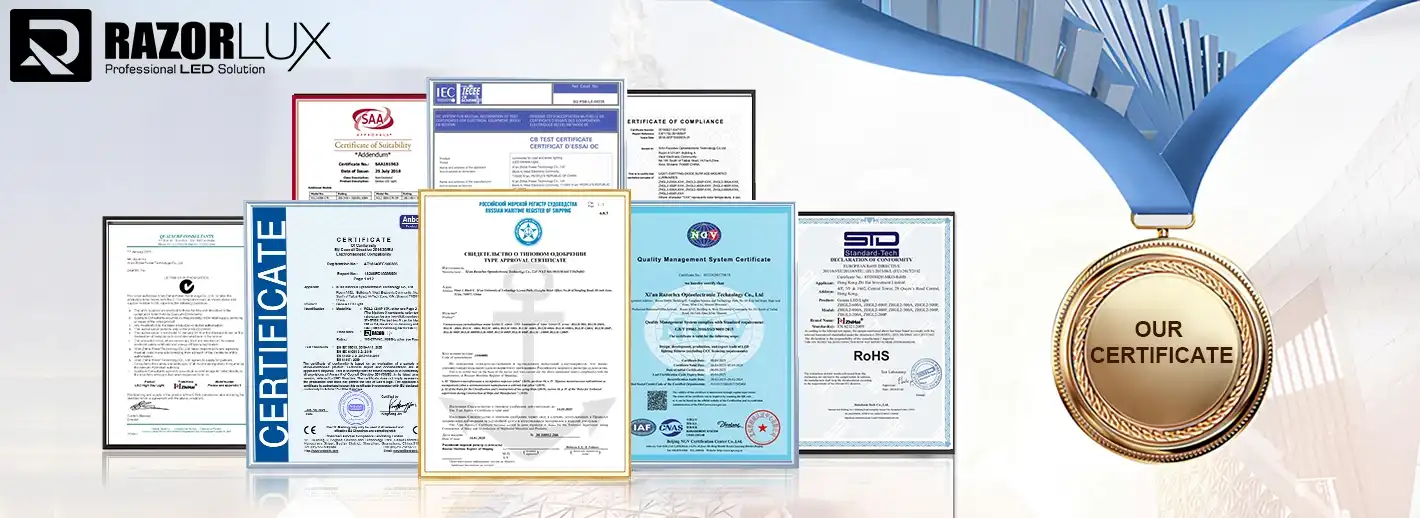
The following table shows the main differences in certifications and how they affect projects:
| Certification | Geographic Scope | Key Requirements | Project Applicability |
|---|---|---|---|
| CE + RoHS | European Union | EMC, LVD, material restrictions | Shipyards, ports in EU member states |
| UL + DLC | North America | Safety construction, energy performance | U.S. Coast Guard vessels, Canadian ports |
| DNV/GL | International Maritime | Vibration, EMI, marine environment | Offshore platforms, commercial vessels |
| SAA + C-Tick | Australia/New Zealand | Safety, electromagnetic compliance | Mining vessels, port infrastructure |
How to Select the Best OEM 400W Equivalent LED Flood Light for Your Project
Assessing Your Environmental and Operational Conditions
Instead of general requirements, the choice of fastener should be based on the specifics of the project. A fixture on the deck of an oil tanker is put under different stresses than a fixture in a warehouse ceiling. Which design gives the best long-term value depends on things like salt spray, vibration patterns, temperature ranges, and ease of servicing access.
The right beam angles depend on the mounting height and coverage area. For area lighting on poles in shipping ports, 30° beams that are wider work well. Narrow 15° spotlights are needed for 400W Equivalent Led Flood Light up areas around a crane boom so that there is no spill light that makes operators blind. Before you make a purchase decision, our engineering team does a photometric study using the exact measurements of the spot to show you the expected levels of illumination and uniformity.
Compatibility with the electrical grid keeps expensive construction surprises at bay. With its wide input voltage range (AC110-480Vac, DC100-800Vdc), the RGL2-400P can work with a variety of power systems without the need for step-down transformers or other conversion gear. This adaptability is helpful for retrofitting projects where the current electricity service might not meet standard requirements or for temporary building lighting where the quality of the generator power changes.
Technical Specifications Checklist for Procurement
To do procurement right, you need to turn business needs into technical standards that suppliers can consistently quote on. Besides the basic lumen output, the following parameters should be taken into account when specifying:
The working effectiveness is based on the luminous efficacy. Fixtures that say they have a high lumen output but need a lot of wattage are probably not very effective. Our 130 lm/W rate is among the highest levels of performance for industrial applications, matching the cost of purchase with the cost of running the business. Manufacturers who quote "up to" numbers without approved test data should be avoided. LM-79 testing from accredited labs gives you performance data that you can trust.
Metrics for power quality affect how well electrical systems work together. Total harmonic distortion (THD) below 10% and power factor above 0.98 keep other equipment from getting messed up and keep you from having to pay extra for utilities, which is common in industrial rate structures. These specs are usually found in full datasheets but not in marketing papers. The fact that they aren't there could mean that the driver parts aren't very good.
Color temperature flexibility helps with a range of tasks. Cooler 5700K temperatures make work areas safer and better at protecting people with security cameras. Warmer 3000K choices cut down on light pollution in residential places or areas that are good for the environment. Razorlux has the full 2700K–6500K range, so building managers don't have to settle for options that work for everyone. Instead, they can customize the lighting for each area.
Evaluating Supplier Reliability and Support Capabilities
It doesn't matter how technical the specs are if your provider can't deliver on time or help with setups in different time zones. Razorlux's more than 25-year history of business and more than 200 patents show that the company has consistently invested in tech rather than buying generic products. This difference is very important when projects need to be customized or when installation problems arise that need technical advice.
How stable your supply chain is affects whether your project schedule stays on track or gets pushed back. We keep enough parts in stock to keep production going for 12 months or more, and we have direct relationships with Meanwell to get drivers. During recent problems with global transportation, sellers who depend on buying parts on the spot market had to wait 16 weeks or more. Even during times of high demand, our combined supply chain kept shipping windows of 4 to 6 weeks.
After-sales support includes more than just warranty claims. It also includes expert advice, finding spare parts, and helping with paperwork for certification checks. From Singapore's Jurong Shipyard to Norwegian offshore platforms, our engineering team has helped with setups by doing photometric calculations, making mounting detail plans, and working with electrical contractors. This level of involvement sets OEM partners apart from transactional suppliers, which is especially helpful for engineering firms that are in charge of several project sites at the same time.
The table below shows how the standards compare and highlights important choice factors:
| Parameter | Razorlux RGL2-400P | Typical LED Competitor | Traditional 400W MH |
|---|---|---|---|
| Actual Power Consumption | 400W (LED 360W + Driver 40W) | 380-420W | 458W (fixture + ballast) |
| Initial Lumens | 48,000 lm | 40,000-45,000 lm | 36,000 lm |
| Luminous Efficacy | 130 lm/W | 105-120 lm/W | 78 lm/W |
| Rated Lifespan (L70) | >50,000 hours | 35,000-45,000 hours | 10,000 hours |
| Startup Time | Instant | Instant | 10-15 minutes |
| Color Rendering Index | Ra>75 (>80, >90 available) | Ra>70 | Ra 65-70 |
| Warranty Coverage | 5 years (LED + Driver) | 3 years | 1 year (bulb only) |
| Operating Temperature Range | -40°C to +60°C | -20°C to +50°C | -20°C to +40°C |
Installation and Maintenance Best Practices for 400W Equivalent LED Flood Lights
Pre-Installation Planning and Safety Protocols
The planning step, not the mounting bracket, is where proper fitting starts. When figuring out the structural load, you have to take into account the 19 kg weight of the fixture plus the stainless steel bracket, wind loading in open areas, and dynamic forces from moving the vessel or the crane vibrating. If you don't take these factors into account, the mounting could fail early or come loose during operations, which could be dangerous.
Electrical planning should check the capacity of circuits and how well protections work together. Even though LED lights use less power than their HID predecessors, breakers and wires that were made for older technology might not be the best way to protect your home. Our technical documents have detailed electrical specifications that contractors can use to make sure they are in line with the rules of marine classification societies like DNV, ABS, and Lloyd's Register before they start work.
Access for maintenance should be thought about during the initial placement. Fixtures that are hung 15 meters above the deck may provide enough light, but they will make working in the future very dangerous. If you can, put fixtures where standard personnel lifts can reach them, or make sure the installation lets the fixture be lowered without having to be taken out completely. This useful thought lowers the cost of future maintenance and raises the level of safety compliance.
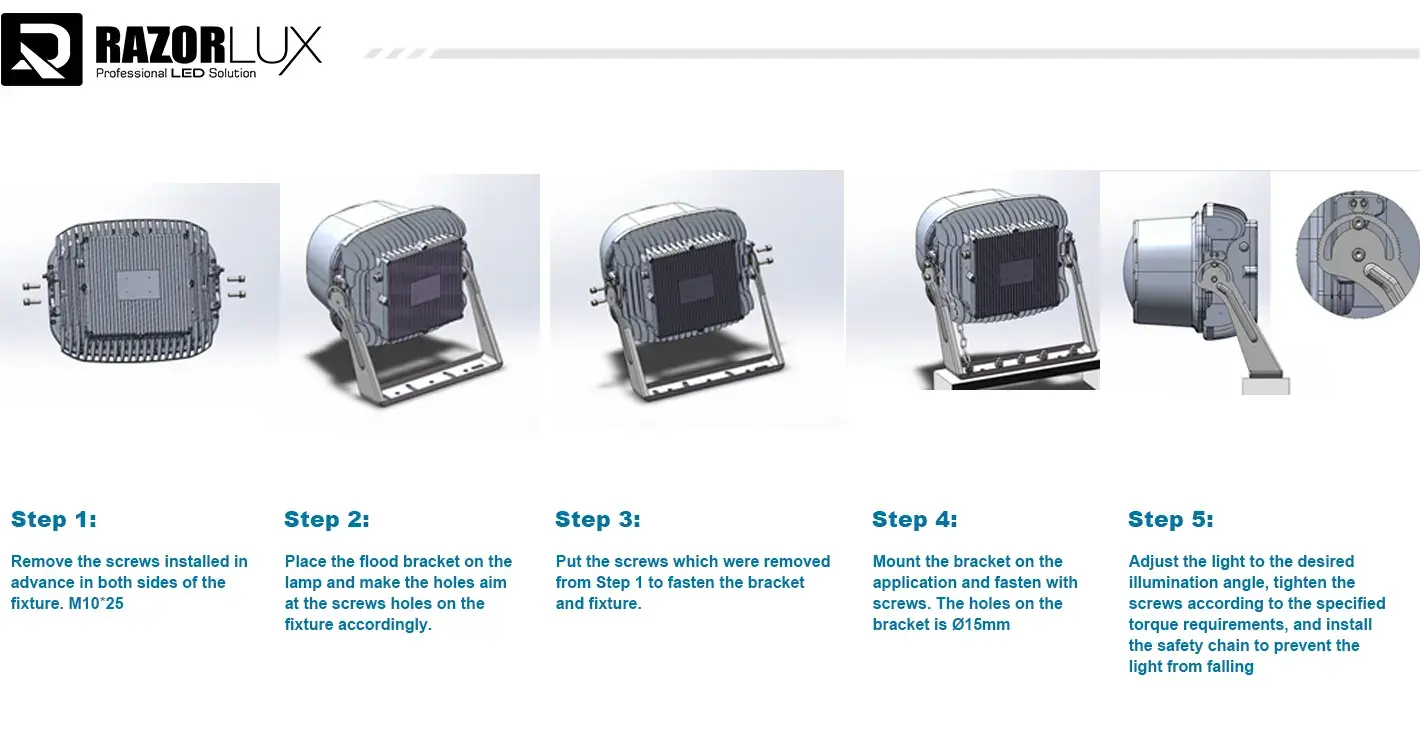
Step-by-Step Installation Process for Marine Applications
Long-term dependability is affected by the building order. First, check the integrity of the mounting surface. Corroded bulkheads or worn-out deck plates can't provide a solid connection, no matter how strong the bracket is. Cleaning the surface, applying primer according to the manufacturer's instructions, and putting anti-seize powder on stainless steel screws to keep them from galling are all parts of surface preparation.
When working in marine settings, electrical links need extra care. For all junction boxes to keep their IP67 ratings, they need to be properly sealed, and cable glands must be installed. When it comes to O-rings, we suggest petroleum jelly, and for threaded joints, silicone-free glue. Cable routing should avoid sharp turns that put stress on conductors and include drip loops that keep water from getting into enclosures.
Performance is best when pieces are aimed and secured correctly. Use the beam angle models to figure out the best placement angles for getting the right amount of light at a good height for working. Once the camera is in place, use thread-locking compound on the adjustment bolts. Over time, vibrations from machines or waves can cause the aim to move, causing areas of uneven lighting and glare. Take pictures and measurements of the final positions so that you can use them as a guide in the future for maintenance or expansion projects.
Routine Maintenance Schedule and Troubleshooting
Maintenance is done much less often with LED technology, but it's still necessary. Every three months, the gasket should be checked for damage, fixing points should be inspected for rust, and electrical connections should be made sure they are secure. Salt spray or dust that builds up in heavy industrial or marine settings can cut light output by 15 to 20 percent before it is cleaned. Pressure washing the glass surface as part of regular building care stops it from wearing down over time.
Drivers and LED boards should be inspected with thermal imaging once a year as part of routine maintenance. Hot spots show that parts are breaking or there isn't enough airflow, which needs to be fixed before the whole thing fails. Check the integration of emergency lighting to make sure it works instantly and that switching between normal and emergency power sources works correctly. In security applications, make sure that the functions of motion sensors haven't become out of whack.
There is a clear order for replacing components. The reason drivers usually break before LED modules is that they are exposed to power spikes and low voltages. Our flexible design lets you change the driver with common tools in 20 to 30 minutes, so you don't have to replace the whole fixture. Keeping extra drivers on hand for important installations like station perimeter lighting, navigation aid illumination, and emergency exit paths lets you get back to work quickly without having to wait for shipments.
Procurement Opportunities: Buying 400W Equivalent LED Flood Lights Wholesale
Strategic Sourcing for Large-Scale Projects
Buying in bulk is not the same as buying one item at a time. Framework deals set prices, delivery times, and quality standards for 12 to 36 months, which successful buyers arrange. These agreements make sure that the budget stays stable and allow order releases to happen at the right time for each project milestone. This way, inventory carrying costs and storage space needs are avoided.
A staged delivery plan works with building schedules and manages cash flow. Instead of getting 500 fixtures all at once, the structure will be delivered in three parts that match the steps of base work, superstructure finishing, and final outfitting. This method cuts down on the need for storage on the job site, lowers the risk of theft or damage, and makes sure that the newest production runs are used instead of warehouse stock that could be kept for a long time.
Changing the payment terms manages the risk for the buyer and the cash flow for the seller. Letters of credit protect foreign deals, and longer net terms are a reward for long-term relationships. Some buyers set up technical escrow accounts that release payment upon successful commissioning instead of delivery. This is done to make sure that the fixtures work as expected in real-world situations. Instead of strict deposit requirements, our finance team sets payment goals that match the stages of the project.
Evaluating Total Cost of Ownership Beyond Purchase Price
Smart buyers look at the total cost of ownership instead of just the purchase price when comparing quotes. Long-term, a fixture that costs 30% more at first but works 25% better and comes with twice as many warranties is a better deal. The total cost of ownership (TCO) should include the prices of energy, labor for upkeep, extra parts, and disposal at the end of the product's useful life.
The costs of shipping and logistics depend a lot on the method used and the final destination. The least expensive way to ship something is by sea, but it takes 4 to 6 weeks to get there, and you need to order at least one container. Delivery is faster with air freight in 7–10 days, but it costs 4–5 times more per kilogram. We work with logistics partners that offer combined shipments for smaller orders. This lets us balance speed and cost for projects that usually run on time.
There are hidden costs in international procurement, like customs duties and making sure you have the right certifications. Check to see if the prices given include destination port duties or if you'll be charged extra when you get there. Different countries have different documentation needs. Some need notarized certificates of origin, while others need specific test records translated by agencies that have been accepted. Our export paperwork team takes care of these needs so that delays at customs don't throw off project plans.
OEM Customization and Private Label Opportunities
Most of the time, standard store items work well, but for special projects, customization is often a good idea. Changes that are often made include making custom mounting brackets for structures with odd shapes, extending the input voltage range for power systems that aren't standard, or changing the beam directions to meet specific geometric needs. Within 48 to 72 hours, Razorlux's engineering team looks over requests for customization and gives price estimates and feasibility assessments before asking for purchase commitments.
With private label programs, distributors and engineering firms can build brand recognition while using manufacturing capabilities that are already in place. Private labeling is possible for local wholesalers or companies with steady project flows because the minimum order numbers are usually between 100 and 200 units per model. We offer custom Packaging, nameplates that have been changed, and paperwork that has your logo on it. We do this while still upholding the quality standards and certifications that make sure the market accepts it.
Technical modification goes beyond cosmetic branding. As part of recent projects, wireless monitoring systems were added to allow facility management from afar, custom color temperatures were made for specific inspection uses, and housings were changed to meet ATEX explosion-proof standards. These new developments use our more than 200 patents and research and development (R&D) skills to turn standard goods into application-specific solutions that get top bids in buying situations.
Conclusion
Choosing an industrial 400W Equivalent LED flood light isn't just a matter of buying something; it's a long-term strategic choice that will affect costs, safety, and upkeep for decades. The best OEM 400W equivalent fixtures have reliable parts from well-known brands like Meanwell drivers, full certifications that cover both marine and industrial standards, and stable suppliers that make sure parts are always available and technical support is available throughout the product lifecycle. Razorlux's RGL2-400P gives off 48,000 lumens at 130 lm/W and meets IP67 and IK10 safety standards, which are important for use in tough settings. Whether you're updating a port, an ocean platform, or an industrial building, making sure the lights are properly specified, installed, and maintained will get you the most out of your investment over 50,000 hours of use. This guide gives you the technical background and buying tips you need to successfully choose fixtures that meet both short-term project needs and long-term operating goals.
FAQ
1. How much can I actually save by switching to LED flood lights?
When compared to 400W metal halide or high-pressure sodium lights, these usually save 60–70% of the energy used. Our 400W LED gives off the same amount of light as a 600W HID lamp, which means that each bulb uses 200W less per hour. At industrial electricity rates, installations that run 12 hours a day save more than $100 per fixture per year. Maintenance cost cuts add up—not having to replace bulbs every six months and the work that goes along with it save money on more than just energy costs (U.S. Department of Energy, 2022).
2. Will these fixtures work in extreme cold or tropical heat?
The RGL2-400P works reliably from -40°C to +60°C, so it can be used in shipyards in the Arctic and offshore platforms in the Middle East. When it's cold outside, LEDs work better because the connection temperatures stay lower, which makes them last longer. Our better thermal management and UV-resistant powder finish help sites in tropical areas stay in good shape, even when they are in direct sunlight for long periods of time. When installed correctly and with enough airflow, the system will work the same way no matter what the weather is like.
3. What should I request when ordering fixtures for marine projects?
Ask for all the certification paperwork, such as DNV/GL or ABS approvals if needed, IP67 test records, vibration testing results according to IEC 60068-2-6, and salt spray protection data according to ASTM B117. Ask for photometric files in IES format so that lighting design tools can check them. Make sure the input power matches the electrical system on your boat, and make sure the color temperature is right for the job. For most naval jobs, 5000K to 5700K works well. Before placing a bulk order, ask for sample units to be physically checked to make sure they will work with your mounting system and that the beam behaves as expected in real life.
Partner with Razorlux for Your Next Industrial Lighting Project
Razorlux is ready to help you with your buying needs. They have been making LEDs for over 25 years and have more than 200 patents covering important lighting technology. The performance requirements, approvals, and dependability needed by heavy industrial, marine, and offshore uses are met by our 400W Equivalent LED Flood Light. As a 400W Equivalent LED Flood Light manufacturer, we have direct control over quality, the continuity of the supply chain, and the ability to make changes that standard suppliers can't match. Our technical team offers photometric analysis, certification documentation, and sample units to help you make confident purchasing decisions, whether you're a shipyard purchasing manager looking at 50 fixtures or an engineering contractor planning lighting for a multi-phase port expansion. Get in touch with sam@razorlux.com right away to get application-specific advice, thorough quotes, and delivery plans that work with your project's schedule.
References
1. Illuminating Engineering Society. (2021). Lumen maintenance and light loss factors. IES TM-21-19 Technical Memorandum. Retrieved from https://www.ies.org/standards/technical-memoranda/
2. U.S. Department of Energy. (2022). LED lighting for industrial facilities. Office of Energy Efficiency & Renewable Energy. Retrieved from https://www.energy.gov/eere/buildings/led-lighting
3. National Electrical Manufacturers Association. (2020). Marine lighting standards and specifications. NEMA Standards Publication. Retrieved from https://www.nema.org/standards/view/marine-lighting-standards
4. American Bureau of Shipping. (2023). Rules for materials and welding: Part 2. ABS Publications. Retrieved from https://ww2.eagle.org/en/rules-and-resources.html
5. International Electrotechnical Commission. (2021). Degrees of protection provided by enclosures (IP code). IEC 60529:2021. Retrieved from https://webstore.iec.ch/publication/2452
6. Maritime and Coastguard Agency. (2022). Lighting requirements for commercial vessels. UK Government Marine Guidance Note MGN 632. Retrieved from https://www.gov.uk/government/organisations/maritime-and-coastguard-agency