


_1750326878398.png)

OEM Outdoor Lighting for Volleyball Court: Supplier Guide
Selecting the right lighting partner for volleyball court projects demands technical precision and supply chain reliability. Outdoor Lighting For Volleyball Court systems must deliver uniform illumination, withstand environmental stress, and comply with international sports facility standards. This guide addresses the core concerns of procurement managers, facility engineers, and lighting contractors seeking OEM suppliers capable of providing high-performance LED solutions with proven durability, energy efficiency above 130 lm/W, and certifications meeting CE, UL, and RoHS requirements. We examine technical specifications, supplier evaluation criteria, installation best practices, and cost optimization strategies to help B2B buyers make informed decisions that balance performance requirements with long-term operational value.
How to Choose the Right OEM Lighting Supplier for Volleyball Courts
Assessing Supplier Technical Capabilities
To evaluate possible Outdoor Lighting for Volleyball Court partners, you need to look at how deep their engineering is and how well they can run a manufacturing facility. Suppliers with in-house R&D teams and patent portfolios show that they can come up with new ideas instead of just putting things together. Xi'an Razorlux Optoelectronic Technology Co., Ltd. has been around since 1998 and has over 200 patents. Their unique LED Packaging, thermal management systems, and optical designs made for harsh settings are all examples of this technical basis.
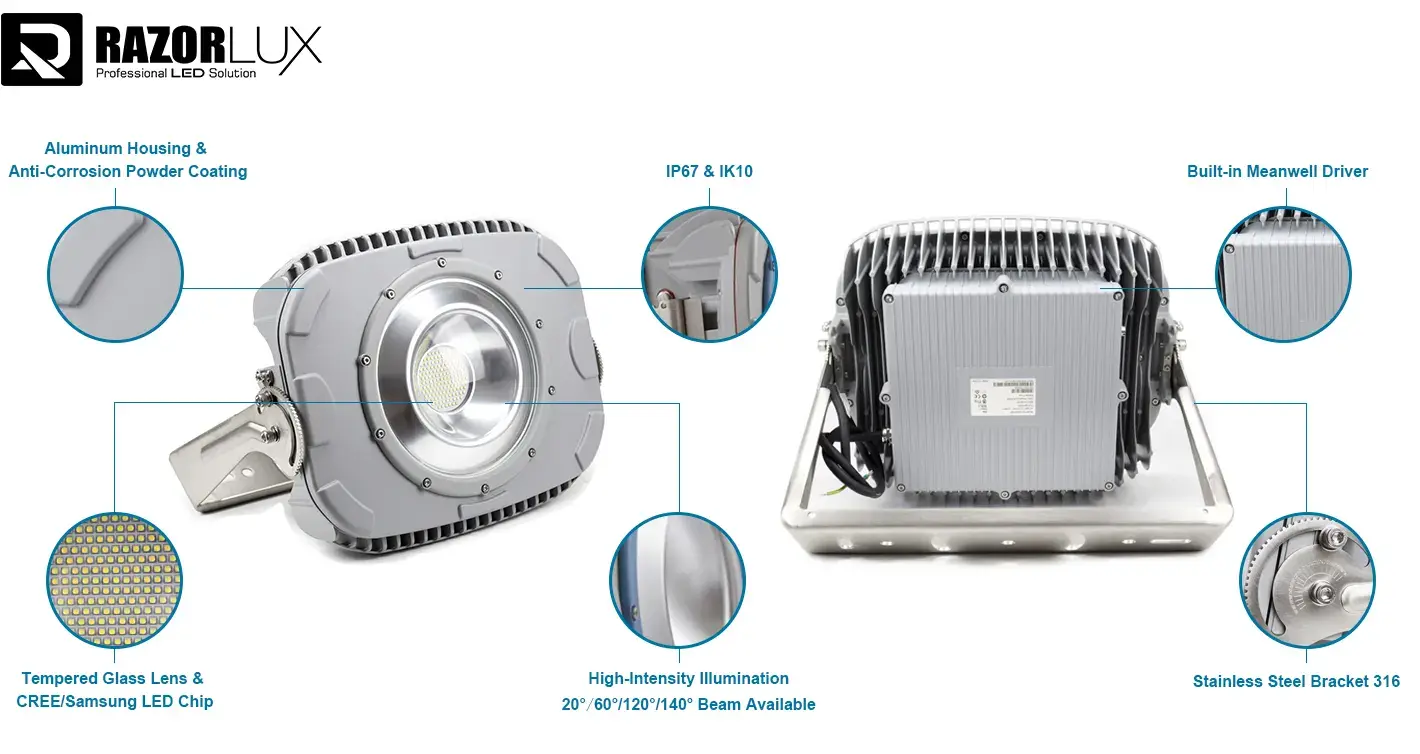
Facilities that make things should keep their ISO 9001:2015 certification, which shows that they use systematic quality management methods. As you look at different providers, find out what kinds of tests they can do. More modern facilities may have sphere photometry, accelerated environmental aging rooms, and vibration testing tools. The capabilities listed here make sure that products meet the published specifications in real-world settings, not just in perfect labs.
Certification and Compliance Documentation
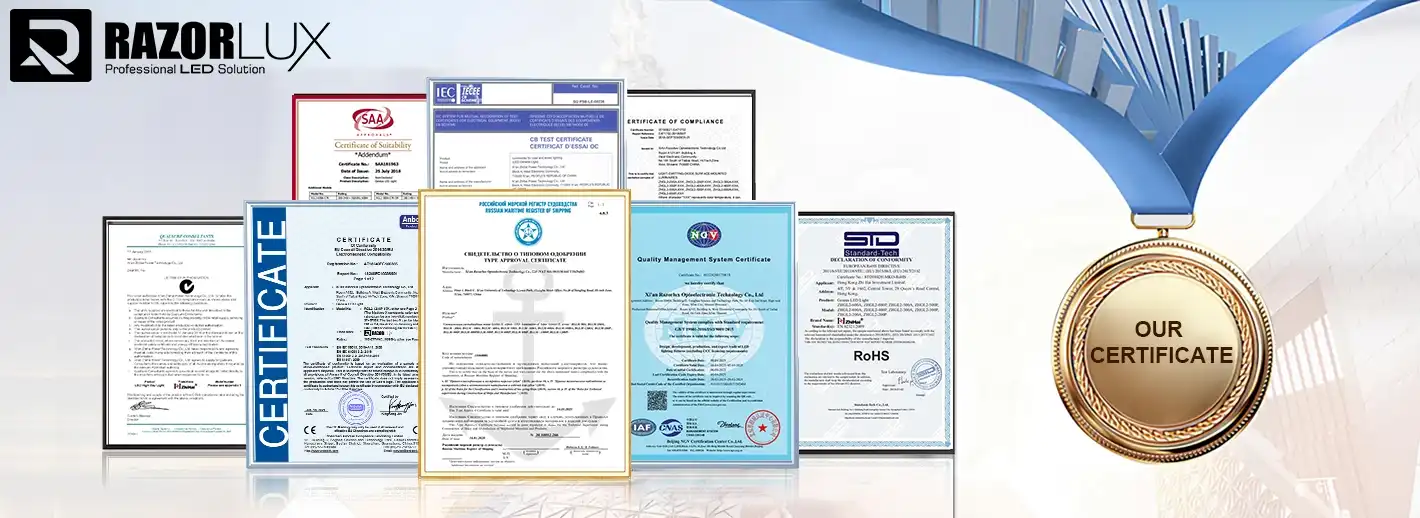
For international projects, full approval files are needed. The CE mark shows that the product meets safety and electromagnetic compatibility standards set by the European Union. The RoHS mark shows that the product does not contain any dangerous substances. For jobs in North America, you need UL or DLC listings. For marine uses, you may need DNV/GL or ABS certifications, based on where the work is happening.
Ask for full sets of technical documents that include photometric test reports, electrical safety certifications, and environmental compliance statements. Suppliers shouldn't treat these papers as special requests; they should be easy to get. The use of well-known parts—Samsung LED chips and Mean Well power supplies are quality standards in the industry—additionally ensures the reliability of the parts and supports the warranty.
Customization Flexibility and Project Support
Volleyball court projects are very different in terms of size, mounting options, and how they need to be used. When suppliers let you change beam angles, color temperatures, and the designs of mounting brackets, you have more options for making lighting layouts work best for your site. OEM partners who are capable are different from catalog-only vendors because they can change specifications, like changing driver configurations for dimming protocols or choosing special coatings for corrosive environments.
During the specification phase, you should check out the supplier's expert help. Can they give you photometric models that show how much light will fall on your court and how evenly it will fall? Do they offer sample units that can be tested on-site before a full order is placed? These services show a partnership approach instead of a transactional sales relationship. This is especially helpful for projects with more than one phase or facility expansions.
| Supplier Evaluation Criteria | Minimum Acceptable Standard | Best-in-Class Indicator |
|---|---|---|
| ISO Quality Certification | ISO 9001:2008 | ISO 9001:2015 with industry-specific extensions |
| Patent Portfolio | Product design patents only | 50+ utility patents in LED technology |
| Component Sourcing | Tier-2 LED and driver brands | Samsung/Lumileds LEDs, Mean Well drivers |
| Warranty Terms | 3 years standard | 5 years with modular replacement |
| Lead Time for Customization | 8-12 weeks | 4-6 weeks with engineering support |
| Sample Availability | Paid samples only | Free testing samples for qualified projects |
Installation and Maintenance of Outdoor Volleyball Court Lighting
Strategic Fixture Placement and Mounting Configuration
The poles should be placed so that they cast the fewest shadows and reflect the most light so that the coverage is as good as it can be. Standard 18m x 9m courts work well with four-pole corner setups, and pole heights between 8 and 12 meters give the best incidence angles. Six-pole side lighting systems provide better uniformity for tournament-level venues that need broadcast-quality lighting.
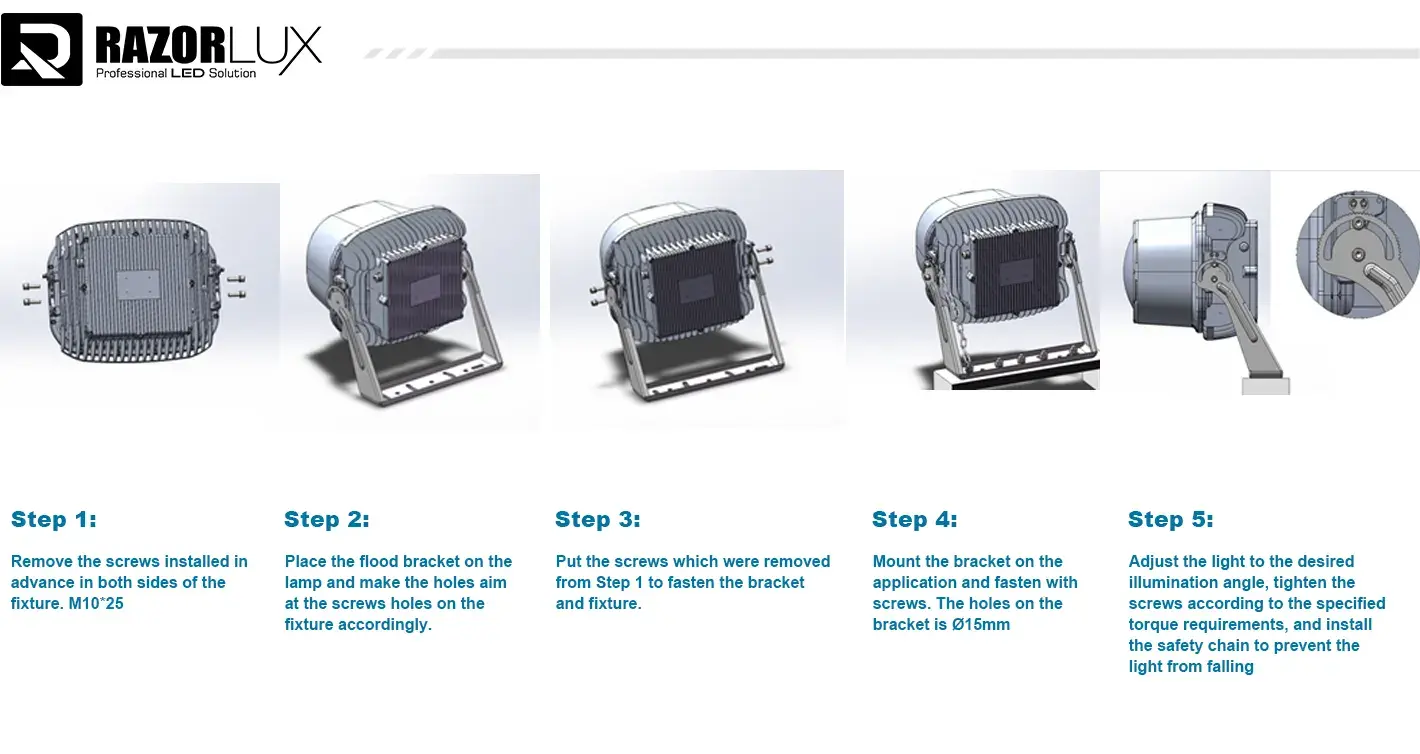
The mounting tools you use must be able to handle wind loading estimates that are specific to your area. Fixtures that weigh 15 kg and are exposed to a lot of wind need frames made of stainless steel that are designed to withstand the wind speed in the area. Aim the lamps 25 to 35 degrees downward to focus the light on the playing field and cut down on spill light into the area around it. This is especially important for facilities that are close to residential areas that are subject to laws about light pollution.
Dedicated circuits with the right overcurrent protection should be built into the electrical grid. The ability of modern fixtures to work with voltages ranging from 110V to 480V makes international projects easier, but final wiring requirements are set by local electrical codes. Include surge protectors that are rated for the installation environment, since lightning strikes , whichand changes in the grid voltage are the main reasons why outdoor drivers fail before they should.
Preventive Maintenance Protocols
LED technology has a long life, but it still needs regular upkeep to keep working well and avoid sudden breakdowns. Visual checks are done every three months to look for damage to the lenses, corrosion on the mounting brackets, and condensation inside the fittings, all of which are early signs of seal failure. IP67 boxes shouldn't have any signs of water getting inside; if they do, the gasket needs to be replaced right away so that interior corrosion doesn't damage the electrical parts.
Cleaning it once a year gets rid of dirt, salt deposits, and biological growth that block light. To keep optical surfaces from getting scratched, clean them with non-abrasive products and soft cloths. Because salt builds up faster along the coast, systems should be cleaned every six months. Fixture lenses that lose less than 10% of their light output over five years are a sign of good environmental protection and good building.
As part of a thermal management review, the cleanliness of the heat sink and the amount of airflow around the fixtures are checked. Even though LED lights produce less heat than older technologies, thermal cycling is still the main way that things get old. Fixtures that work within the recommended temperature ranges (-40°C to 60°C) show good thermal design. Fixtures that work above their rated temperatures show poor heat dissipation and need better airflow or to be moved.
Sustainability and Energy Management
Using lighting controls saves more energy than just using fixtures that use less energy. Occupancy sensors cut the hours of operation by 30 to 40 percent for places that don't have scheduled programming, and astronomical timers make sure that lights only turn on when natural daylight levels drop below what is needed. Dimming features let you lower the brightness during practice sessions compared to full brightness during games, which saves even more energy.
By measuring lux levels on a regular basis to keep an eye on system performance, you can see how it's slowly breaking down and fix it before it gets too bad. Professional light meters can be bought for less than $500 and are used to make sure that buildings are following the original plan specs. Keeping records of these measurements helps with warranty claims and gives solid proof for maintenance budget justifications.
Planning for end-of-life disposal shows that environmental duty is becoming more and more important to people who use public facilities. LED fixtures have aluminum housings that can be recycled, electronic parts that must follow WEEE rules, and not as many dangerous materials as HID lamps, which contain mercury. Setting up relationships with certified e-waste recyclers before replacement projects ensures that the waste is disposed of legally and may lead to material recovery credits that cover the costs of replacement.
Top OEM Brands and Suppliers for Volleyball Court Lighting
Industry-Leading Manufacturers with Proven Track Records
There are well-known companies in the sports lighting market that have been making lights for decades. Xi'an Razorlux Optoelectronic Technology Co., Ltd. stands out because it has been in business for 26 years and has been specializing in LED solutions for harsh environments. For example, marine vessels, offshore platforms, and big industrial facilities need the same level of durability as outdoor sports applications. This knowledge from different industries means that things are made to last instead of to save money.
European companies usually make the best sports lighting because they have good relationships with architecture firms and sports center experts. Asian suppliers have made a big improvement in quality, especially those that put money into their own R&D instead of making products for Western brands. Comparing suppliers based on their patent portfolios, where they get their parts, and reference installations is a more objective way to do it than relying on marketing claims (Illuminating Engineering Society, 2020).
Product Differentiation and Technical Innovation
Advanced sellers stand out by using unique designs that can be used in a variety of work settings. Razorlux's RGL2-400A model is a good example of this approach. It has four beam angles that can be chosen: 40°, 60°, 120°, and 140°x60°. This means that a single fixture model can work with a variety of Outdoor Lighting For Volleyball Court layouts and mounting heights. This modularity makes it easier for site managers who are in charge of multiple sports setups to keep track of their supplies.
Another thing that sets them apart is driver technology. The ability to accept input voltages of 110V to 480V, 100V to 400V, and even 500V to 800VDC makes it possible to use it on foreign projects without having to make changes for each voltage. This adaptability is especially helpful for contractors taking on projects in different parts of the world or for businesses that are growing into new areas with different electrical standards.
New ideas in thermal management make things last longer and keep working well in harsh environments. Designs that use an aluminum body with a powder coating, passive cooling fins, and sealed driver compartments stop the thermal runaway that breaks down LEDs too soon. Fixtures that keep their lumen output stable (52,000 lumens after one hour of stabilization) show good thermal engineering, not just optimistic first-flash measurements.
Verification Processes for Supplier Selection
Doing your research before committing to a source saves you a lot of money and time. Ask for reference installations that can be visited on-site; seeing fixtures in action in conditions that are similar to your project is a much better way to judge them than looking at lab data sheets. Instead of depending on testimonials that were chosen by the seller, talk to facility managers directly to get honest feedback about how well the product works and how good the after-sales support is.
Sample testing under your specific conditions proves that the published specifications are correct. A 30-day trial application lets you check how the light spreads, how much glare there is, and how well the colors are rendered when they are actually used. Write down the first readings of lux, how the screen is mounted, and any subjective feedback from players and maintenance staff. This method, which is based on evidence, gets rid of design risks that show up only after full-scale operation.
For long-term partnerships to work, both the finances and the supply chain need to be stable. Suppliers with stable production capacity, clear inventory levels, and well-established logistics partnerships can provide accurate wait times that are necessary for planning projects. The lack of parts across the entire industry in 2021 and 2022 showed which makers kept inventory buffers and which used just-in-time methods that were more likely to be interrupted (Lighting Research Center, 2022).
Cost Analysis and Procurement Tips for OEM Volleyball Court Lighting
Comprehensive Total Cost of Ownership Calculation
The price of the fixtures at the start is only one part of the total cost of ownership. A complete financial analysis takes into account the costs of installation labor, changes to the electrical infrastructure, yearly energy use, repairs, and the eventual cost of disposal. Even though LED systems cost more up front, they usually have lower overall purchase costs because they use less energy and last longer.
To figure out energy costs, you need to make accurate predictions about business hours and local electricity rates. About 760 operating hours are added up by a facility that is open four evenings a week for 48 weeks a year. At $0.12 per kWh, a 400W LED system costs $36.50 a year, while an 800-1000W HID system costs $91–121. That's a difference of $55-85 per light per year, which adds up to $550–1275 in energy savings over the 10-15 year lifespan of an LED system (U.S. Department of Energy, 2021).
When estimating maintenance costs, you should include the cost of labor, renting lift equipment, and buying new parts. Compared to HID technology, which needs new lamps every two to three years, LED systems don't need to be relit as often, which saves two to four maintenance tasks over their lifetime. At $150 to $300 per repair call, which includes time and tools, this saves $300 to $1200 on maintenance costs per fixture.
| Cost Category | Traditional HID System | Premium LED System | 10-Year Difference |
|---|---|---|---|
| Initial Equipment Cost (per fixture) | $400-600 | $800-1200 | -$400 to -$600 |
| Installation Labor | $200-350 | $200-350 | $0 |
| Annual Energy Cost (760 hrs) | $91-121 | $36-46 | +$550-750 savings |
| Maintenance Cycles | 4-5 lamp changes | 0-1 fixture service | +$600-1500 savings |
| Disposal Costs | $25-50 (hazmat) | $10-15 (recyclable) | +$150-350 savings |
| Total 10-Year Cost | $2,315-3,571 | $1,646-2,396 | +$669-1,175 savings |
Strategic Procurement Approaches for Budget Optimization
When you commit to a certain amount of service, you can get better pricing and terms. Combining projects that happen on multiple sites or coordinating purchases across different parts of a company shows that the buyer is serious, which is why the seller should spend money on customization and technical support. Framework deals that set baseline prices for two to three years make budgeting easier while still letting each project's needs be met.
Ask for specific quotes that break down the prices of the parts, the cost of production, and the cost of shipping. This makes it possible to compare sources in a practical way and find ways to cut costs, like putting up with longer lead times in exchange for lower expedite fees or sticking to a few standard beam angle options to make production easier. Suppliers who are sure of their value proposition are happy to be open about it.
Think about phased application strategies that spread out capital costs over several budget cycles while giving you rewards right away. By focusing on courts or buildings that get a lot of use or have high energy costs, you can save money that can help pay for later phases. This method also lets you use the chosen fixtures in real life before committing to them on a large scale, which lowers the design risk for big installs.
Financing and Alternative Acquisition Models
Energy performance contracting bases financing on guaranteed savings, so there is no need for up-front capital. Third-party providers pay for the installation and equipment, and they get their money back by getting a cut of the energy savings over 5 to 10 years. This plan works especially well for public buildings that don't have a lot of money for major projects but use a lot of energy.
Leasing arrangements keep your money free for other things and give you access to the latest technology. Operating leases that include provisions for technology upgrades every 5 to 7 years make sure that facilities keep getting the benefits of LEDs' increased efficiency and avoid the risk of becoming obsolete. This method moves the cost from capital expenditures to operating budgets, which makes the approval process easier in many public institutions.
Direct purchase is still the most cost-effective option for groups with access to cash and plans to keep the building for a long time. When you combine saving energy, lowering upkeep costs, and making the product last longer, you get a great return on your investment. For high-use buildings, this usually happens in 3 to 5 years. An added financial benefit of accelerated depreciation plans in many places is that they lower tax bills for private sector owners.
Conclusion
To choose OEM suppliers for volleyball Outdoor Lighting For Volleyball Court lighting, you have to balance technical performance requirements with the skills of the vendors and a total cost of ownership study. Systems that meet IP67 environmental protection standards, give off more than 130 lm/W of light, and come with a full set of certifications are the most reliable choice for outdoor sports facilities. A successful procurement process includes more than just choosing the fixtures. It also includes planning the installation, following upkeep procedures, and building long-term relationships with suppliers who can offer expert help and allow for customization. Moving from old HID technology to more modern LED systems saves money because they use less energy and don't need to be maintained as often. They also improve visibility, which helps players perform better and fans enjoy the game more.
FAQ
1. What brightness level suits recreational versus competitive volleyball courts?
Recreational spaces work fine with 200 to 300 lux of horizontal illumination, which is enough for relaxed games and practice sessions. For players to be able to keep track of the ball during fast-paced movements, competitive sites that host league games need 500 to 750 lux. Broadcast-quality setups need 1000+ lux and better vertical illumination for camera coverage. They also need flicker-free technology to stop strobing effects in slow-motion replay video.
2. How does LED technology compare with traditional metal halide lighting?
LED systems use 60–70% less energy, show colors more accurately, and can turn on right away without waiting to warm up. Metal halide lights need 5 to 15 minutes to get fully bright, and because they contain mercury, they need to be thrown away in a certain way. Metal halide lamps lose 50% of their brightness after about 15,000 to 20,000 hours, but LED fixtures keep 70% of their original brightness after 50,000 hours. Even though it costs more at first, LED lighting has a much lower total cost of ownership.
3. Can suppliers customize beam angles and mounting configurations for unusual court layouts?
Reliable OEM makers let you choose the beam angle, the form of the bracket, and the driver specs. Razorlux offers four basic beam angles: 40°, 60°, 120°, and 140°x60°. For difficult placements, custom optical designs are also possible. Stainless steel mounting brackets can hold poles with diameters between 60 and 120 mm, and they have adjustment ranges that let you aim precisely after installation. Facility management systems can work with custom color temperatures and dimming protocols.
Partner with a Trusted Outdoor Lighting Supplier for Your Next Volleyball Court Project
Razorlux makes reliable LED lighting solutions that are designed to work in tough outdoor sports areas where performance and dependability can't be compromised. Outdoor Lighting For Volleyball Court are 130 lm/W efficient, protects against the elements with IP67, and can withstand impacts with IK10. They come with a full set of foreign approvals, such as CE, RoHS, UL, and DLC. We know how durable your volleyball court projects need to be because we've been making things for 26 years, have over 200 patents, and have installed thousands of products in naval, industrial, and infrastructure settings. For photometric simulations, sample units for testing on-site, and ongoing engineering support during installation and operation, our technical team is here to help. Get in touch with our experts at sam@razorlux.com to talk about your particular court measurements, mounting limitations, and performance needs. Find out why Razorlux is the outdoor lighting company that site managers all over the world choose for projects that need the highest quality and the most long-term value.
References
1. International Commission on Illumination. (2019). Sports Lighting: CIE 169-2013. Vienna: CIE Central Bureau. Retrieved from https://cie.co.at/publications/sports-lighting
2. Illuminating Engineering Society. (2020). IES RP-6-15: Sports and Recreational Area Lighting. New York: IES. Retrieved from https://www.ies.org/standards/recommended-practices/
3. Lighting Research Center. (2022). LED System Reliability in Outdoor Applications. Troy, NY: Rensselaer Polytechnic Institute. Retrieved from https://www.lrc.rpi.edu/programs/solidstate/
4. U.S. Department of Energy. (2021). LED Lighting for Sports Facilities: Energy Savings and Performance Benefits. Washington, DC: DOE Office of Energy Efficiency & Renewable Energy. Retrieved from https://www.energy.gov/eere/ssl/sports-recreational-facilities
5. European Committee for Standardization. (2018). EN 12193:2018 - Light and Lighting - Sports Facility Lighting. Brussels: CEN. Retrieved from https://standards.cen.eu
6. National Electrical Manufacturers Association. (2020). ANSI C136.31-2020: Roadway and Area Lighting Equipment - Luminaire Vibration Testing. Rosslyn, VA: NEMA. Retrieved from https://www.nema.org/standards