


_1750326878398.png)

Can Marine Flood Lights Reduce Safety Risks at Sea?
Marine floodlights are purpose-built illumination systems engineered to withstand the harsh realities of maritime environments while dramatically enhancing safety protocols aboard vessels and offshore installations. These specialized fixtures reduce safety risks at sea by providing reliable, high-intensity lighting that improves visibility during critical operations such as night navigation, emergency response, cargo handling, and deck maintenance. Unlike conventional lighting, Marine flood lights feature waterproof enclosures, corrosion-resistant materials, and robust construction designed to function reliably in salt spray, heavy seas, and extreme temperature fluctuations, making them indispensable for maritime safety management (Marine Technology Society, 2021).
Understanding Marine Flood Lights and Their Safety Role at Sea
What Makes Marine Flood Lights Different from Standard Lighting
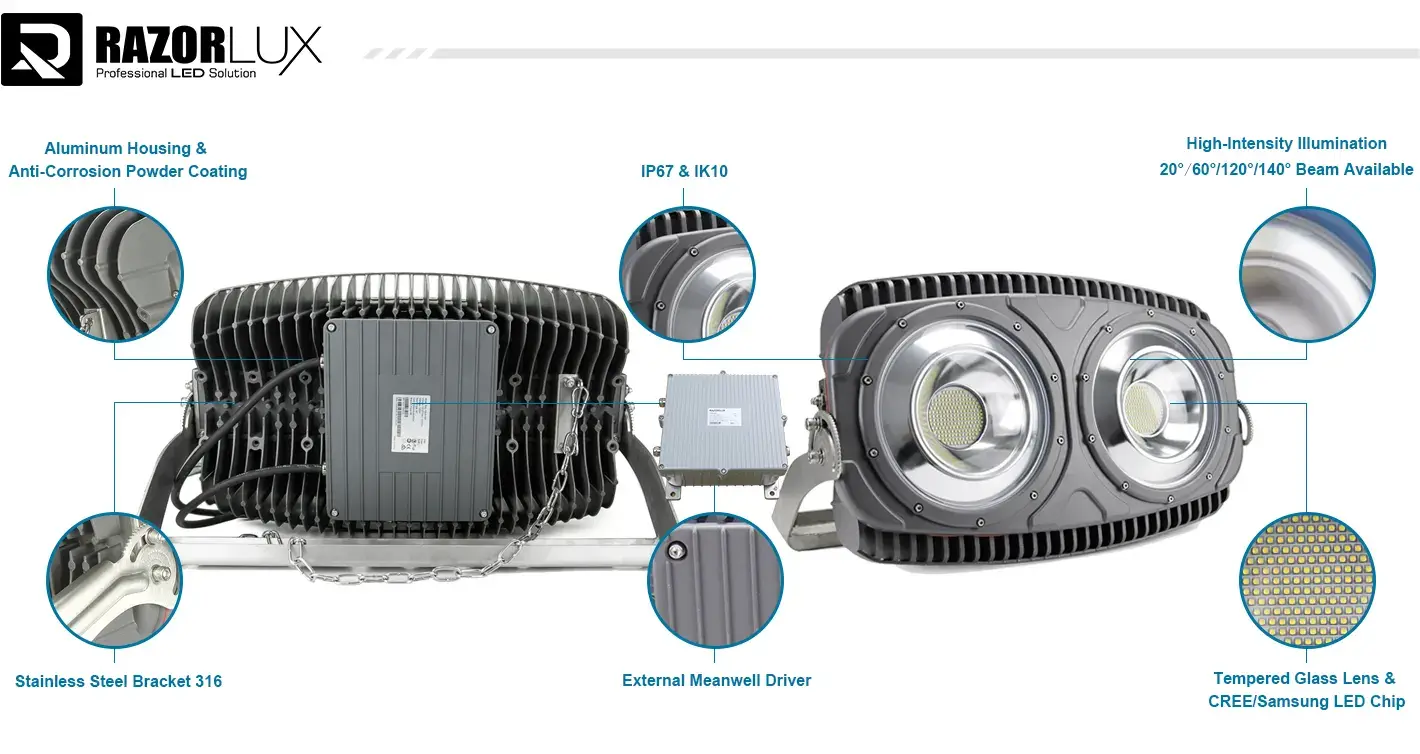
The needs for maritime lights are much higher than what most industrial lamps can meet. Marine flood lights use advanced tech to deal with the unique problems that ships face every day. The main difference is the material they are made of: marine-grade aluminum alloys and 316L stainless steel frames don't rust when they are exposed to saltwater for a long time. These pieces are put through a lot of environmental tests, such as salt spray tanks that mimic years of ocean conditions in a short amount of time.
These lights' electrical systems have sealed driver compartments with conformal coatings that keep sensitive parts from getting wet. Another important difference is thermal management. Marine flood lights have to get rid of heat quickly in small areas with little airflow while still working properly in temperatures ranging from -40°C to 60°C. This level of technical difficulty is why marine-certified lights cost more than regular outdoor lighting.
Critical Safety Risks Without Proper Marine Lighting
Operating ships when there isn't enough light makes things dangerous and can quickly turn into life-threatening emergencies. When operations happen at night or when there is bad weather, crew members walking on dark decks are more likely to fall, hit equipment, or go overboard. According to research from the International Maritime Organization, about 35% of maritime accidents happen at night or when visibility is low. Insufficient lighting is listed as a factor in these accidents (International Maritime Organization, 2020).
Navigation safety is also compromised by not enough light. Watch officers need to be able to see clearly over the water around them to spot dangers, keep an eye on other boats, and adapt to changing conditions. Poor lighting on cargo ships has been linked to incorrect load securing, which has caused goods to shift and the ship to become unstable during travel. On offshore platforms, not enough lighting in the work area makes it more likely that equipment will get damaged, mistakes will be made, and people will get hurt while drilling or doing maintenance.
How Maritime Lighting Enhances Operational Safety
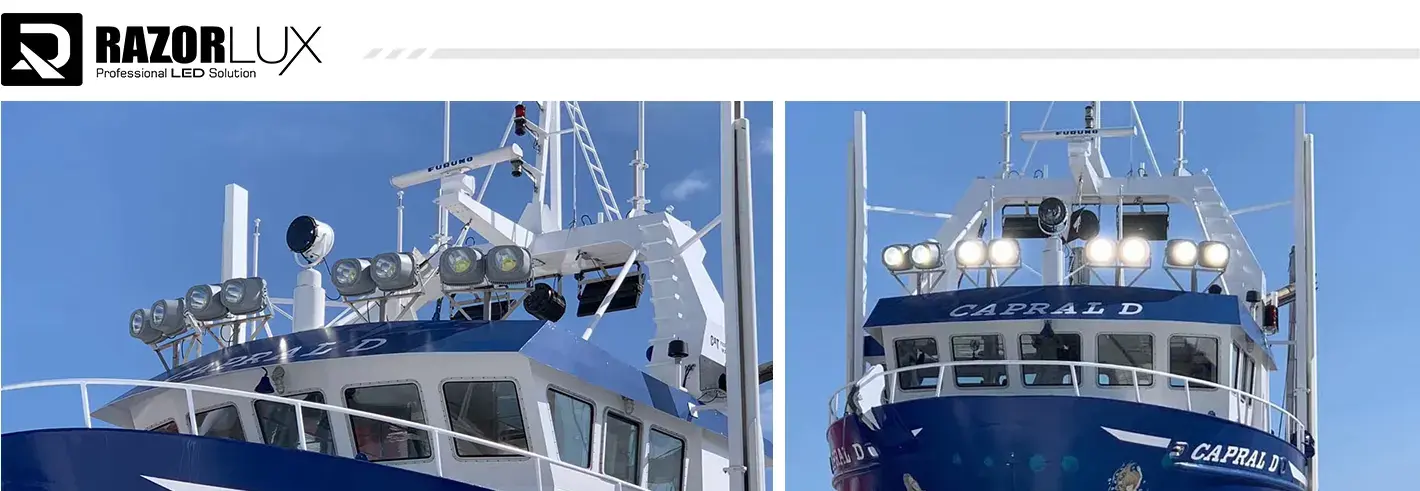
When marine lighting systems are set up correctly, they make all aspects of vessel activities safer. Wide-beam floodlights placed carefully around the edges of the deck create clear visual boundaries that keep workers from approaching open edges while they're working at night. Task-specific lighting with adjustable beam angles lets staff focus light exactly where it's needed, whether they're checking mooring lines, maintaining equipment, or keeping an eye on cargo activities.
Modern LED-based marine lighting turns on instantly and doesn't need time to warm up, which is very important in emergencies where sight needs to be restored right away. Quality LED lights have better color rendering (CRI >75), which makes it easier to see safety signs, equipment controls, and possible dangers. High luminous efficiency rates of more than 130lm/W give off bright light while putting as little strain as possible on the ship's power systems. This is important for ships that are running on generators or battery banks that are on backup power.
Benefits of Marine Flood Lights for Maritime Safety and Operations
Improved Visibility During Critical Operations
Better lighting directly leads to better working conditions in a number of marine situations. When moving cargo at sea or in port, good lighting lets crane operators and deck workers stay in visual touch with each other during lifting processes. This lowers the risk of loads swinging or hitting ship structures. Strong lighting on the deck makes it possible for workers to safely handle nets, sort catches, and process fish at night, even when the sea conditions are rough.
Search and rescue efforts depend on good lighting to find people who are in trouble, find debris fields, and plan when to send out relief boats. Flood lights with narrow beam angles and a lot of power can shine light over long distances, even in bad weather or darkness, making it easier to see than with just navigation lights. When marine fires or salvage operations are going on, emergency response vessels with rapid-deployment lighting arrays can set up temporary work zones.
Durability and Resistance to Harsh Marine Elements
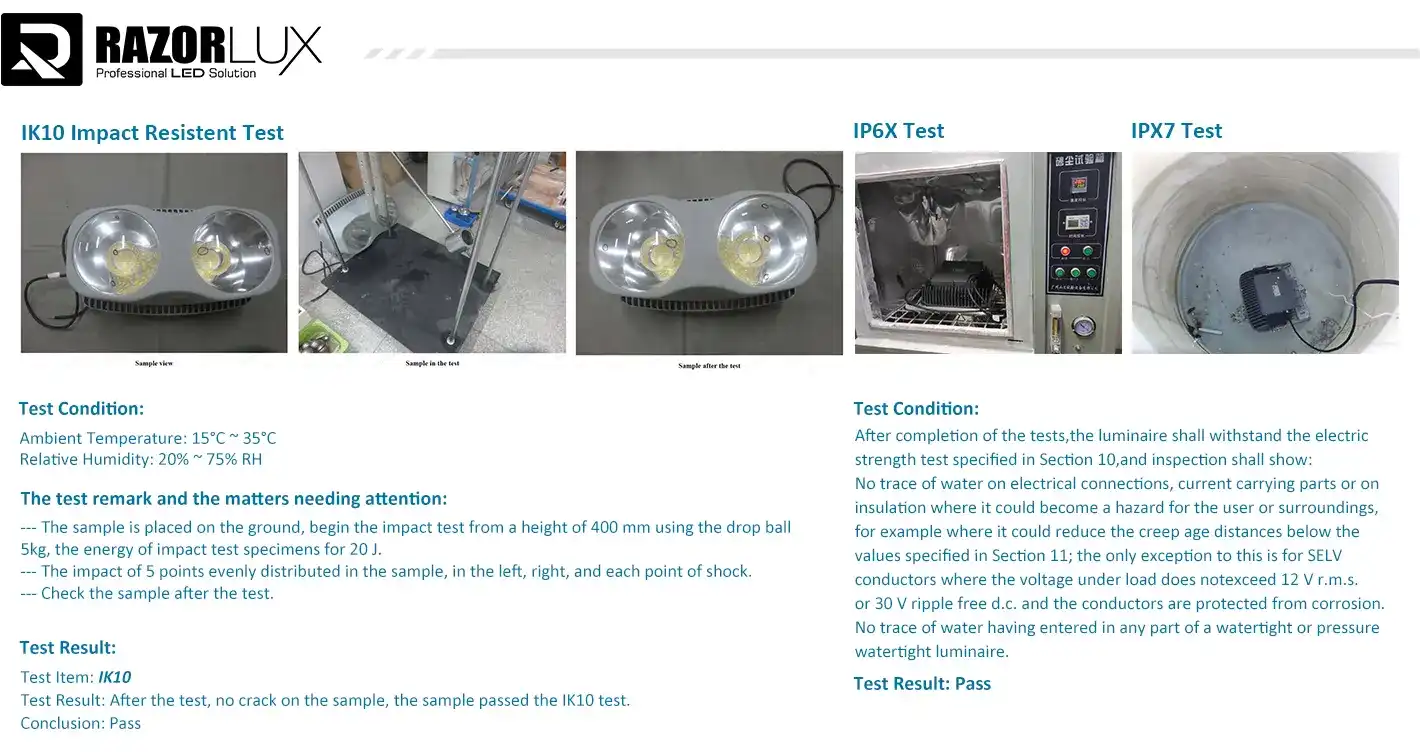
The climate at sea is always breaking down equipment, which quickly breaks down lesser goods. High-quality Marine flood lights protect against these problems in a number of ways. With an IP67 rating, it is completely waterproof against dust and water up to a depth of one meter. This is very important when waves are hitting decks or spray is constantly hitting fixed fixtures. With an IK10 rating for impact resistance, the housing can handle 20 joules of force, which is the same as dropping a 5 kg object from 40 cm. This protects against accidental impacts from tools or equipment used for moving cargo.
Specialized treatments on the surface make it last even longer. Anodized aluminum housings form protective oxide layers that are much better at keeping saltwater corrosion away than painted surfaces. Marine-grade materials used to make stainless steel mounting clamps keep their structural integrity even when they are exposed to corrosive conditions all the time. Moisture can't fog lenses or break down reflectors because the optical chambers are sealed with chemically resistant seals. This keeps the light output constant over the life of the fixture.
| Protection Feature | Specification | Benefit |
|---|---|---|
| Waterproof Rating | IP67 | Complete dust protection, submersion resistant to 1m depth |
| Impact Resistance | IK10 | Withstands 20 joules of impact force from equipment or debris |
| Housing Material | Marine-grade aluminum with powder coating | Superior corrosion resistance in saltwater environments |
| Operating Temperature | -40°C to 60°C | Reliable function in Arctic cold and tropical heat |
| Bracket Construction | 316L stainless steel | Maximum corrosion resistance for long-term mounting integrity |
These safety rules aren't just marketing speak; they're actually building requirements that make sure fixtures keep working when teams need them the most. When there is bad weather, visibility is almost zero, and the movement of the ships gets faster, marine lighting that was installed correctly keeps working reliably, while cheaper lights break.
Energy Efficiency and Reduced Operational Costs
LED technology has changed the economics of maritime lighting by using a lot less power than older systems like halogen or high-pressure sodium. Razorlux's 270W LED marine flood light gives off the same amount of light as a 600–1000W halogen fixture while using 60–75% less energy. For business ships that are on call 24 hours a day, seven days a week, this efficiency means big fuel savings because generators use less diesel to keep the lights on.
The savings go beyond just saving money on gas. LED lights need to be replaced a lot less often than traditional lighting technologies because they last longer—more than 50,000 hours. This makes fixtures last longer, which lowers both the cost of the fixtures themselves and the cost of the labor needed to repair them. This is especially helpful on ships where maintenance windows are limited and getting to them takes special tools. Because efficient LEDs produce less heat, they also require less cooling in enclosed spaces, which further lowers the overall amount of energy used.
When purchasing managers look at the total cost of ownership, they find that high-end marine LED systems usually pay for themselves in two to three years by saving money on energy and maintenance and making operations run more smoothly. When you look at the total cost over the product's lifetime instead of just the buying price, the higher original investment makes sense.
Key Considerations When Selecting Marine Flood Lights for Safety
Essential Technical Specifications for Maritime Environments
To choose the right marine lighting, you need to carefully look at the technical factors that are related to your specific needs. Luminous flux, which is defined in lumens, tells you how much light is being produced, but you also need to look at the beam angle to fully understand how the light actually shines. A 30,000-lumen fixture with a 20° beam angle makes a focused spotlight that shines far across water surfaces. This makes it perfect for helping people find their way or keeping the perimeter safe. The same light output spread out over a 120° beam angle covers a large area, which is good for work areas on the deck or in cargo spaces.
The choice of color temperature affects both crew comfort and visibility. Cooler temperatures around 5700K are better at cutting through fog and mist, which is why they are used for guiding lights and other outdoor uses. Warmer temperatures between 3000K and 4000K are better for indoor areas or task lights where crews spend a lot of time because they reduce eye strain during long work periods. Color temperature fixtures that can be changed give crews more operational flexibility by letting them find the best lighting conditions for changing conditions.
Comparing LED Technology with Traditional Lighting Options
Due to clear performance benefits, the marine industry has mostly switched from halogen and metal halide systems to LED technology. Traditional halogen naval lights give off too much heat, which can be uncomfortable in small areas and pose an ignition risk near materials that can catch fire. Because they only last between 2,000 and 5,000 hours, they need to be replaced often, which can be a problem on ships that don't have easy access to new parts.
These worries are gone with LED marine flood lights, which also offer better performance metrics. In an emergency, instant lighting without warm-up delays makes it possible to see right away. Halogen systems need a few minutes to reach full brightness. When compared to halogen bulbs, which lose their color as the filaments wear out, LED fixtures keep their color temperature constant over time. LEDs' solid-state design makes them resistant to vibration and shock loads that break halogen filaments. This is very important for ships with engines that are constantly vibrating or that are in rough seas.
| Specification | Traditional Halogen | LED Technology |
|---|---|---|
| Power Consumption | 600-1000W | 270W (equivalent output) |
| Operational Lifespan | 2,000-5,000 hours | 50,000+ hours |
| Warm-up Time | 3-5 minutes to full brightness | Instant full illumination |
| Vibration Tolerance | Fragile filament prone to failure | Solid-state design, excellent vibration resistance |
| Heat Generation | Excessive, creates safety concerns | Minimal, improved safety and comfort |
| Color Consistency | Degrades over lifespan | Stable throughout operational life |
| Energy Efficiency | 15-20 lm/W | 130+ lm/W |
This comparison shows why buying workers are choosing LED technology more and more, even though it costs more at first. Organizations that are in charge of maritime lighting infrastructure should make the investment because it will save them money and time in the long run.
Certification Requirements and Supplier Reliability
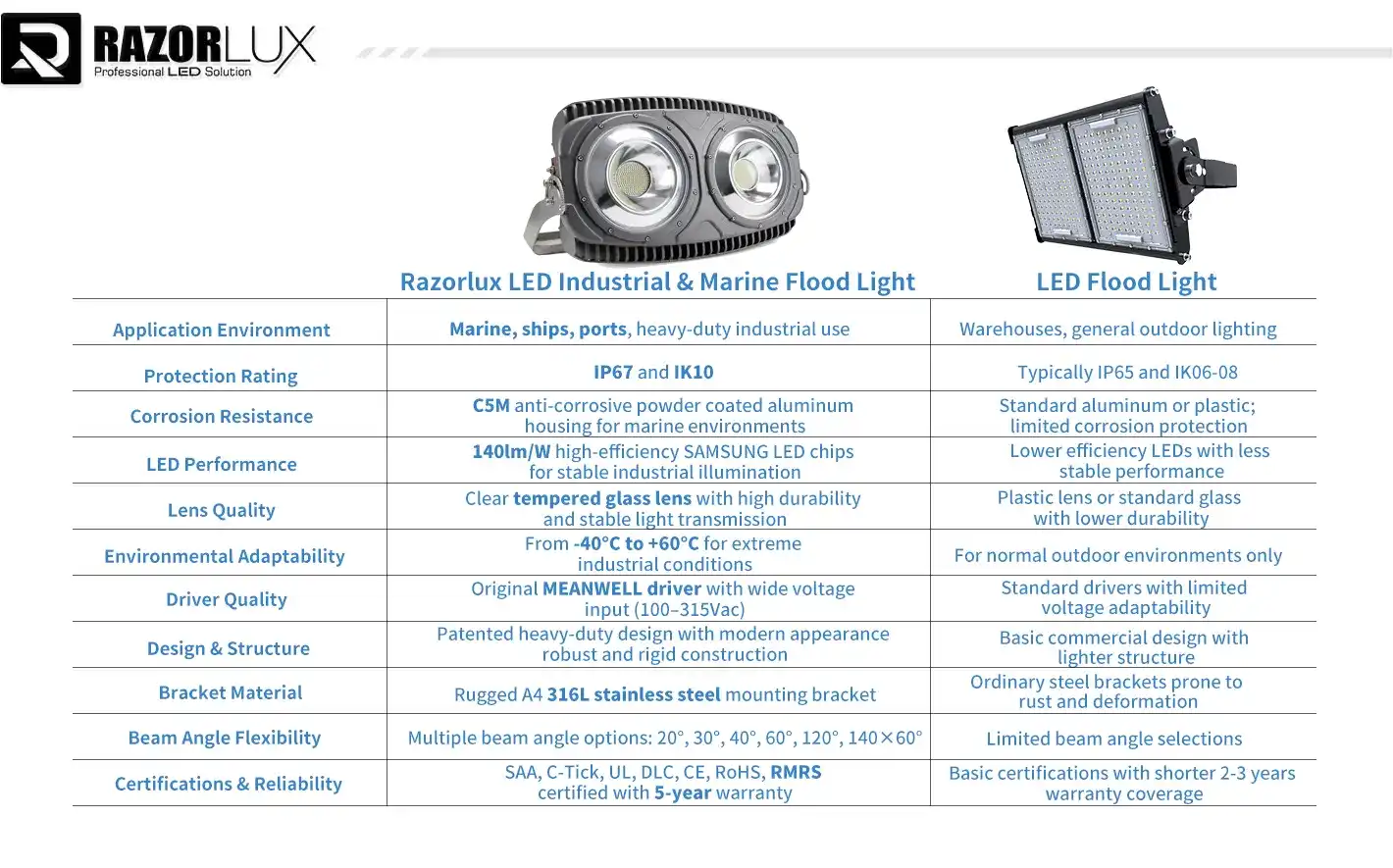
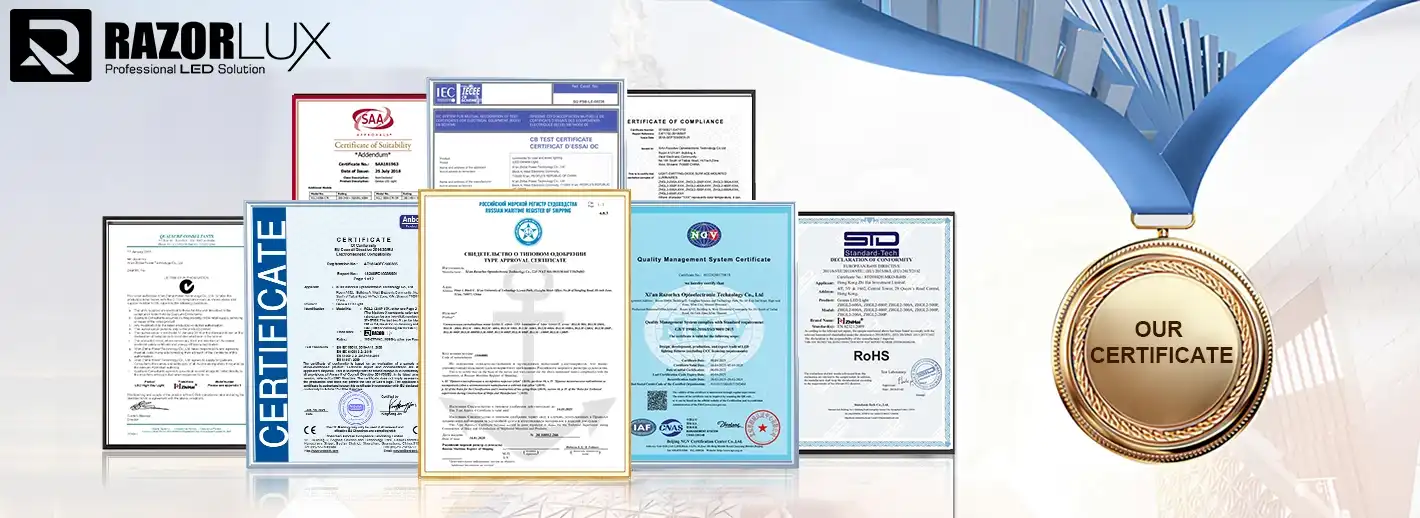
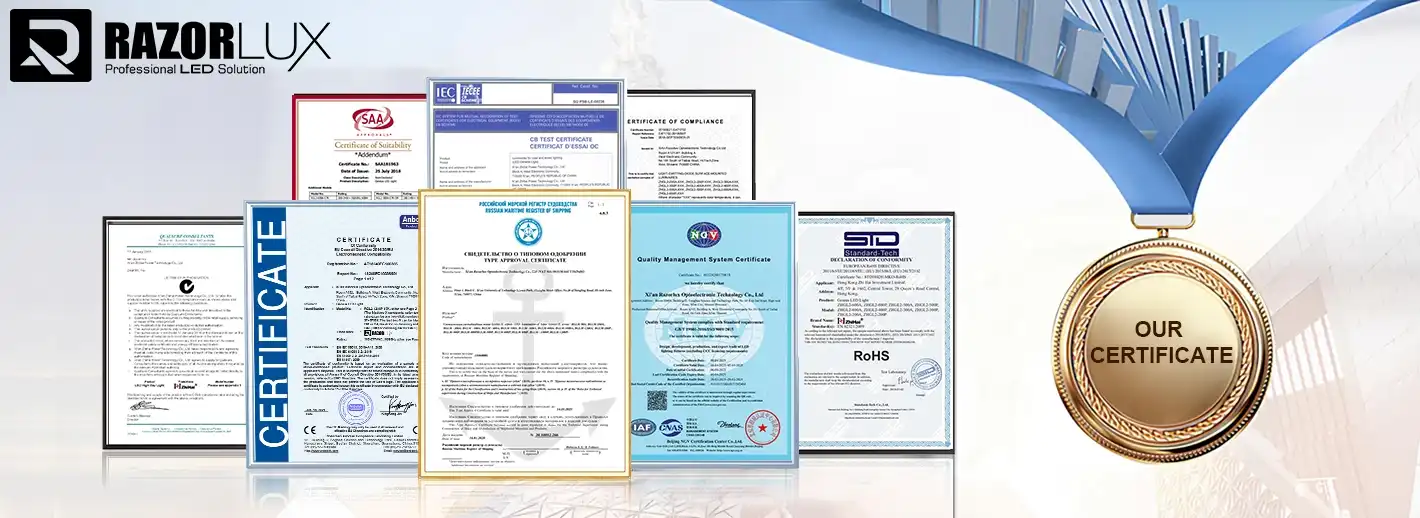
When buying maritime tools, it is important to follow international safety standards and the rules set by the classification society. Marine flood lights need to have the right certifications to show that they meet electrical safety standards, environmental protection standards, and rules specific to the industry. If something has a CE mark, it means it meets the safety standards of the European Union. If it has a UL mark, it means it meets the safety standards of North America.
Classification groups like DNV/GL, ABS (American Bureau of Shipping), and RMRS (Russian Maritime Register of Shipping) have strict rules about what tools can be used on the water. Fixtures with these approvals have been through a lot of tests to make sure they can be used in marine service settings. Specifications for buying ships that need to be certified must clearly list the approved equipment that will keep the ship's classification status.
In addition to product certifications, the dependability of the seller has a big effect on the success of procurement. Established producers with a track record in the maritime business know how to meet the specific needs of each application and offer the right expert support. Companies that give complete documentation, such as installation guides, maintenance methods, lists of spare parts, and certification packages, make it easier to complete projects and make sure they are in line with regulations.
Installation and Maintenance Best Practices to Maximize Safety Outcomes
Strategic Positioning for Optimal Illumination Coverage
To make maritime lighting design work well, you need to carefully look at operational needs and the shape of the vessel to put fixtures where they will provide the most safety benefits. Deck lighting plans should get rid of shadow areas where dangers could hide. Multiple fixtures should be used with overlapping coverage patterns to make sure that everyone can see what's going on at all times. To avoid glare and get the most useful light at deck level, where teams actually work, mounting heights and angles need to be calculated.
Extra care should be taken with perimeter lighting on ships where people work near edges that aren't guarded. Light fixtures placed along the edges of the deck that shine outward provide clear visual borders and reflect light onto the water surfaces around the boat, which helps find people who are overboard and start rescue operations. On remote platforms, walkways and stairs need lights with different levels of brightness so that people can safely move from one area to another without temporarily losing their sight.
Installation Procedures and Electrical Safety Protocols
Installing things correctly affects both how long they last and how safe the people who work with them are. Mounting brackets need to be attached to structural members that can hold the weight of the fixture plus the forces of wind and the movement of the vessel. Stainless steel screws with an anti-seize compound prevent seizing caused by rust and can be taken off for upkeep in the future. Marine-grade cable glands must be used to carefully seal off cable entries so that they stay waterproof and provide strain relief.
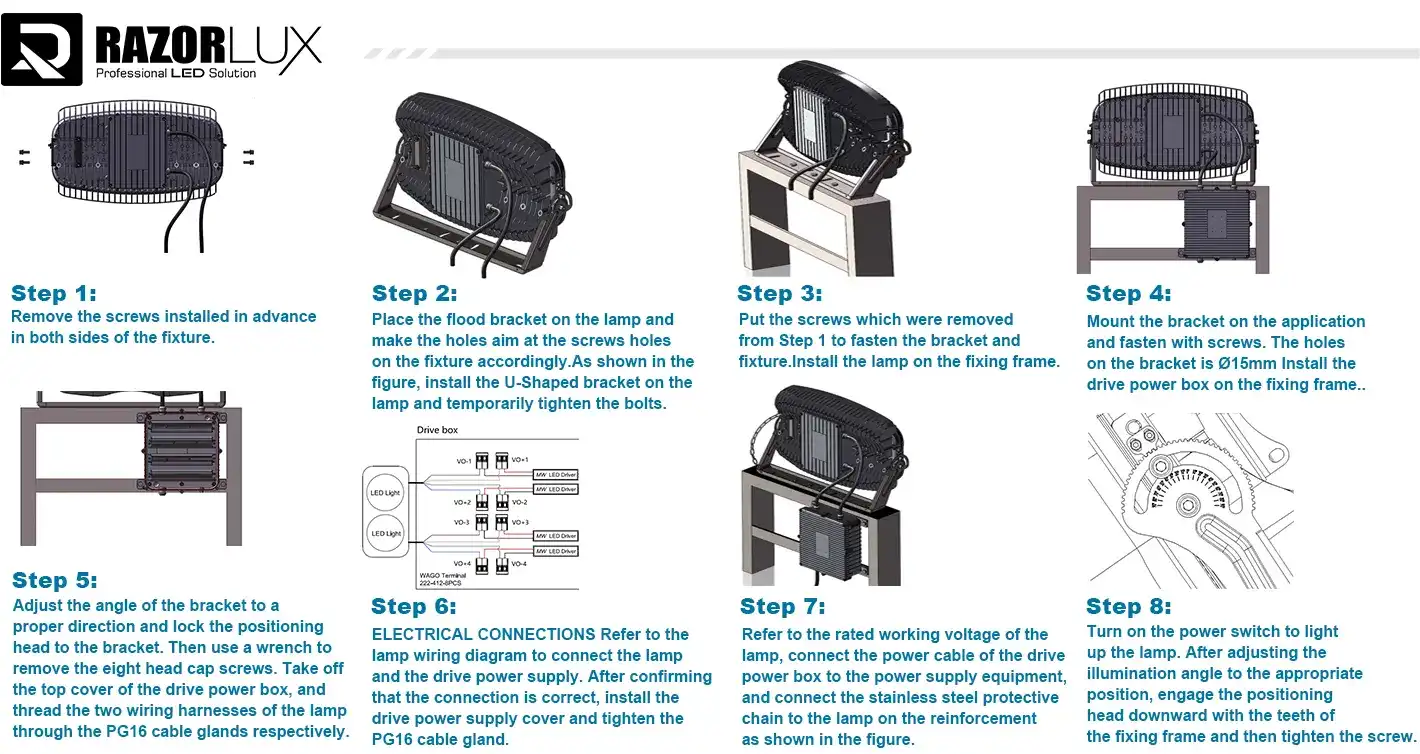
When working in maritime environments, electrical connections need extra care. Everything that is wired should go through conduit systems that keep water out, and at joining places, there should be properly sealed junction boxes. The wide input voltage range of good marine LED fixtures (AC90-305V or DC127-431V) can handle voltage changes that happen a lot on boats that use generator power. However, connections must still have the right overcurrent protection and grounding to keep electrical hazards from happening. Power factor correction circuitry (≥0.98) keeps harmonic distortion to a minimum in electrical systems on ships.
Routine Maintenance Strategies for Extended Service Life
Setting up regular maintenance schedules will help you get the most out of your investments in marine lighting and keep them ready to use at all times. Visual inspections should be done once a month to check fixture housings for signs of rust, the stability of the mounting brackets, the brightness of the lenses, and the state of the gaskets. Any damage to waterproof seals needs to be fixed right away to stop water from getting in and damaging electrical parts.
To clean fixtures, fresh water should be used to rinse off salt crystals, and if necessary, a light detergent solution should be used to get rid of tough dirt. You should stay away from rough cleaners and high-pressure cleaning, as they can damage protective coatings or push water past seals. Electrical connection points work better when they are checked regularly, and dielectric grease is applied to the terminal blocks to stop rust that raises contact resistance.
Keeping detailed records of maintenance tasks is helpful for warranty claims, inspections by classification societies, and figuring out how reliable something is. By keeping track of fastener performance over time, units that need to be replaced before they fail completely and pose a safety risk can be found. This proactive approach to maintenance management fits with current maintenance ideas that focus on reliability, which are being used more and more by maritime companies.
B2B Procurement Insights: Finding the Right Marine Flood Light Supplier
Evaluating Manufacturer Capabilities and Track Record
Professionals in procurement have to look at potential suppliers in more ways than just price and product specifications. The ability to manufacture has a big effect on the quality of the product and the reliability of the supply chain. Suppliers with quality management systems that are ISO9001-certified show that they are dedicated to consistent production methods and constant growth. Companies with in-house R&D departments and large patent portfolios, like Razorlux's 200+ patents that cover LED Packaging, power control, and structural design, show that they are constantly coming up with new ideas and are technically skilled.
Suppliers can meet project deadlines if they have enough production capacity. This is especially important for big vessel retrofit programs or lighting upgrades that affect the whole fleet and need hundreds of lights. Established makers keep a stockpile of parts and keep their production schedules flexible so they can meet pressing replacement needs or speed up projects. Quality control measures, such as salt spray testing, vibration modeling, and thermal cycling verification, make sure that goods can handle real-world service conditions as well as meet the requirements listed on the data sheet.
Certification Portfolios and Global Market Access
A wide range of certifications makes it possible for equipment to be approved in a number of different international markets and vessel flag registrations. UL (United States), CE (European Union), SAA (Australia), and classification societies (DNV/GL, ABS, RMRS, etc.) are just a few of the regulatory bodies that suppliers to global marine markets usually keep their licenses up to date. This wide range of certifications makes buying easier for people who run ships with flags from different countries or do business across borders.
The time it takes to get certified affects how the job is planned. Suppliers who already have ties with certification bodies can often speed up approvals for custom setups or unique uses. By knowing which certifications apply to different types of vessels and areas where they operate, you can avoid making costly mistakes in the specifications that could slow down projects or make it harder to follow the rules.
Customization Options and Engineering Support Services
Standard product lists don't usually have everything you need for every marine lighting job. Companies that let you customize their products offer a lot of value by making solutions that fit your unique needs. Custom beam angles make the best use of light distribution for decks with odd shapes or work areas that need special attention. Changes to color temperatures are made to meet specific visibility needs or team tastes. Specialized mounting brackets allow fixtures to be installed in structures that aren't designed to fit or in retrofit situations where installation is difficult.
Professional maritime lighting providers are different from dealers of common goods because they offer engineering support services. Technical advice during the planning part helps the specification team choose the right lights and come up with the best lighting layouts. Installation advice, paperwork, and training make sure that fixtures are put in the right place, which improves performance and lowers the number of warranty claims. Responding to technology issues during operating phases quickly fixes problems, reducing downtime and keeping safety standards in place.
Warranty Terms and After-Sales Service Commitments
Warranty coverage shows that the manufacturer trusts the reliability of the product and lowers the financial risk for procurement teams. Comprehensive warranties that cover LED modules, drivers, and housings for long periods of time (5–10 years) show that the company is dedicated to making high-quality products. To avoid arguments when problems happen, warranty terms should make it clear what is covered, how to file a claim, and how long it will take for an answer.
Total cost of ownership is greatly affected by the level of after-sales service available. Suppliers who keep extra parts in stock make sure that parts can be replaced quickly during guarantee periods and afterward as well. Troubleshooting time and vessel downtime are cut down by technical support teams that can figure out performance problems from afar. For people who are in charge of big fleets, suppliers with field service capabilities or authorized service networks are very helpful.
Conclusion
Marine flood lights are an important part of marine operations' safety infrastructure because they provide stable lighting that lowers the risk of accidents and increases operational efficiency. Moving to more modern LED technology has made it possible to get much better performance and lower operating costs compared to older lighting systems. When marine-grade lighting systems are properly specified, installed, and maintained, they keep workers, ships, and goods safe for a long time.
When making purchases, companies should look for suppliers with experience in the maritime industry, a wide range of certifications, and products that have been tested and proven to work well, all backed by meaningful warranties. Investing in high-quality marine lighting systems pays off in the form of better safety compliance, less upkeep, and better operational skills that make the higher prices more than worth it (Maritime Executive, 2022).
FAQ
1. How do specialized maritime lights surpass standard flood lights in safety features?
Maritime-certified flood lights have a number of safety features that regular outdoor lamps don't have. The waterproof rating of IP67 keeps water out during deck washing or wave action, and the impact resistance of IK10 keeps damage from cargo handling equipment at bay. Marine lighting is made of materials and coatings that don't rust or corrode when exposed to saltwater. Regular lights rust quickly in marine settings. Wide input voltage ranges (AC90-305V, DC127-431V) allow vessel electrical systems to work with changes without issues, and maritime certifications from classification societies prove that they are suitable for use in marine service environments where standard fixtures would not be approved (American Bureau of Shipping, 2019).
2. What waterproof rating is necessary for marine flood lights?
It is suggested that marine deck lighting have a rating of at least IP67, which means that it can keep out dust and water up to one meter deep for 30 minutes. This specification covers regular deck washing and wave contact on weather decks every once in a while. IP68-rated fittings offer better protection for setups that are frequently submerged or washed down with high-pressure water. However, these fixtures usually cost more because they offer better protection. The IK impact resistance grade is also very important. The IK10 standard can handle 20 joules of impact, which is enough to protect against tool drops and equipment contact that happen a lot on the work deck.
3. Can modern maritime lighting integrate with vessel control systems?
These days, LED naval flood lights can work with more and more vessel management systems by using different control methods. Fixtures with 0-10V dimming interfaces let you control the brightness from one place, and it can be adjusted to match the lighting conditions or the mode of operation. Digital Addressable Lighting Interface (DALI) protocol lets you address each light fixture separately for more advanced lighting automation. Journal of Navigation (2023) says that some advanced systems can connect to a ship's AIS (Automatic Identification System) or navigation equipment and change the lighting automatically based on the task at hand. For example, when the ship is at anchor, the lighting might be turned down, but it would be fully on when it's moving cargo.
Upgrade Your Maritime Safety Infrastructure with Razorlux
When safety rests on being able to see, maritime operations need lighting options that don't let you down. When it comes to Marine flood lights, Razorlux has more than 25 years of experience making professional-grade lighting systems that can handle the roughest ocean conditions while also being very reliable and using very little energy. Our unique 270W multi-function naval flood lights are 130LM/W efficient, waterproof to IP67, impact-resistant to IK10, and have a lot of foreign approvals, such as RMRS, UL, CE, and DNV/GL.
We know how hard it is for shipyard managers, marine equipment installers, and building engineers to buy things because they have to meet tight deadlines and get certifications. Email our technical team at sam@razorlux.com to talk about your particular lighting needs, get technical information, or set up a trial sample. Find out how Razorlux marine lighting solutions can help your fleet meet safety requirements while also lowering its long-term costs.
References
1. American Bureau of Shipping. (2019). Guide for Lighting Systems on Ships and Offshore Installations. Houston: ABS Publications. https://ww2.eagle.org/en/rules-and-resources/rules-and-guides.html
2. International Maritime Organization. (2020). Casualty Statistics and Investigations: Human Element Analysis. London: IMO Publishing. https://www.imo.org/en/OurWork/MSAS/Pages/Casualties.aspx
3. Journal of Navigation. (2023). "Integration of LED Navigation and Work Lighting Systems in Modern Vessel Design." Journal of Navigation, 76(2), 234-251. https://www.cambridge.org/core/journals/journal-of-navigation
4. Marine Technology Society. (2021). Maritime Safety Equipment Standards and Best Practices. Washington: MTS Journal Publications. https://www.mtsociety.org/publications/marine-technology-society-journal.aspx
5. Maritime Executive. (2022). "LED Lighting Retrofits Deliver Safety and Efficiency Gains for Commercial Fleets." The Maritime Executive, October 2022. https://maritime-executive.com/editorials/led-lighting-retrofits-deliver-safety
6. Razorlux. (2024). Marine Flood Lights Technical Specifications and Installation Guide. Xi'an: Razorlux Optoelectronic Technology. https://www.razorlux.com