


_1750326878398.png)

Why Use 120 Volt Led Outdoor Flood Lights Commercially?
When it comes to illuminating large commercial spaces like shipyards, offshore platforms, port terminals, and heavy industrial facilities, choosing the right lighting system is not just about brightness—it's about reliability under extreme conditions, energy efficiency that impacts your bottom line, and long-term durability that reduces costly downtime. High-wattage line-voltage 120 Volt LED Outdoor Flood Lights operating on standard commercial power grids have become the go-to solution for demanding environments where failure is not an option. These fixtures eliminate the common frustrations of voltage drop over long cable runs, the premature failure of external transformers in corrosive atmospheres, and the inconsistent performance that plagues lower-voltage alternatives. With direct connection to existing electrical infrastructure, integrated robust drivers, and housings engineered to withstand salt spray, vibration, and temperature extremes, these lighting systems deliver the consistent, powerful illumination that procurement managers and facility engineers demand for mission-critical applications.
Understanding Line-Voltage LED Flood Lighting Systems
What Makes High-Wattage Commercial Flood Lights Different
Line-voltage LED floodlighting systems are made to join straight to business power grids, so they don't need step-down transformers. Low-voltage landscape lighting runs on 12V or 24V circuits. These industrial-grade fixtures, on the other hand, have internal drivers that change high-voltage alternating current into the exact constant current that high-output LED arrays need to be powered. Voltage drop is a problem that keeps happening in large installations, but this difference in architecture fixes it. When you run wire across a port or along a kilometer-long dock, even a 2% drop in voltage in a low-voltage system makes the lights dim at the far end and makes the lighting uneven all over the building (U.S. Department of Energy, 2022). Because they use standard industrial voltage, these devices keep the same brightness no matter how far away they are from the power source.
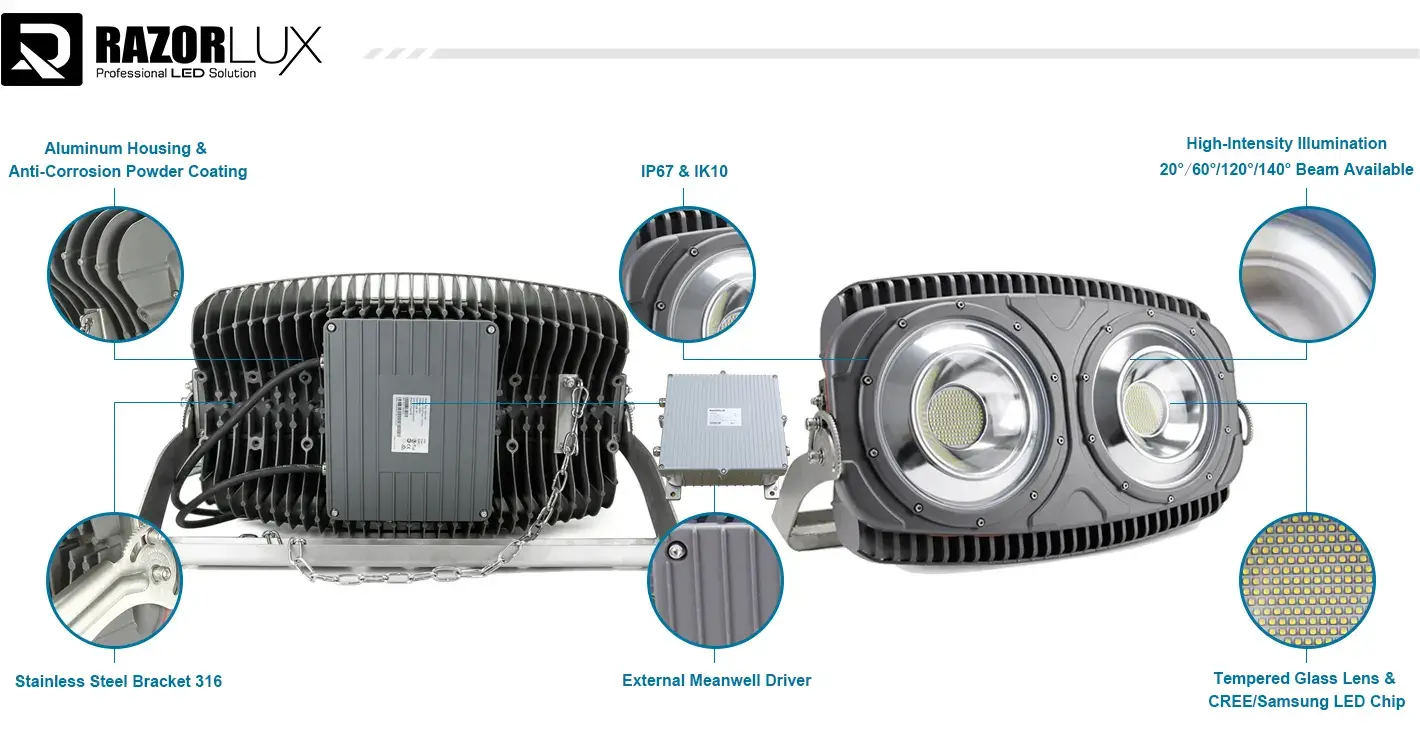
The way these fixtures are built shows what they are used for in industry. Razorlux's RGL-1000A model has a 1000W rated power and an amazing 130 lumens per watt luminous efficacy. It produces 130,000 stable lumens, which is enough to replace 2200–2500W metal halide lamps while using less than half the energy. Die-cast metal with a powder finish makes up the housing. It's meant to get rid of the large amount of heat that high-output LED panels produce while also being resistant to corrosion in naval and industrial settings.
Electrical Architecture and Power Delivery
The wide input voltage range is a technical benefit that procurement teams often don't think about. Good commercial flood lights can handle AC voltages between 80V and 305V, and some models can also handle DC voltages between 100V and 800V. This adaptability is important in real-life industrial settings where power quality isn't always stable, like on offshore platforms that use generators, in shipyards where welding equipment causes voltage fluctuations, or on international projects where grid voltage varies by region (IEEE Standards Association, 2021).
The internal driver is very important for performance and durability. Meanwell power supplies are used in Razorlux fixtures. These supplies are known throughout the industry for being reliable and having safety features. These drivers keep the power factor above 0.98 and the total harmonic distortion below 10%. This means that they use less power and don't put too much stress on your electrical system. The driver also has surge protection, which usually ranges from 4kV to 6kV. This is done by metal oxide varistors, which soak up voltage spikes from lightning strikes or grid switching events that would damage electronics that aren't protected.
Thermal Management and Operating Environment
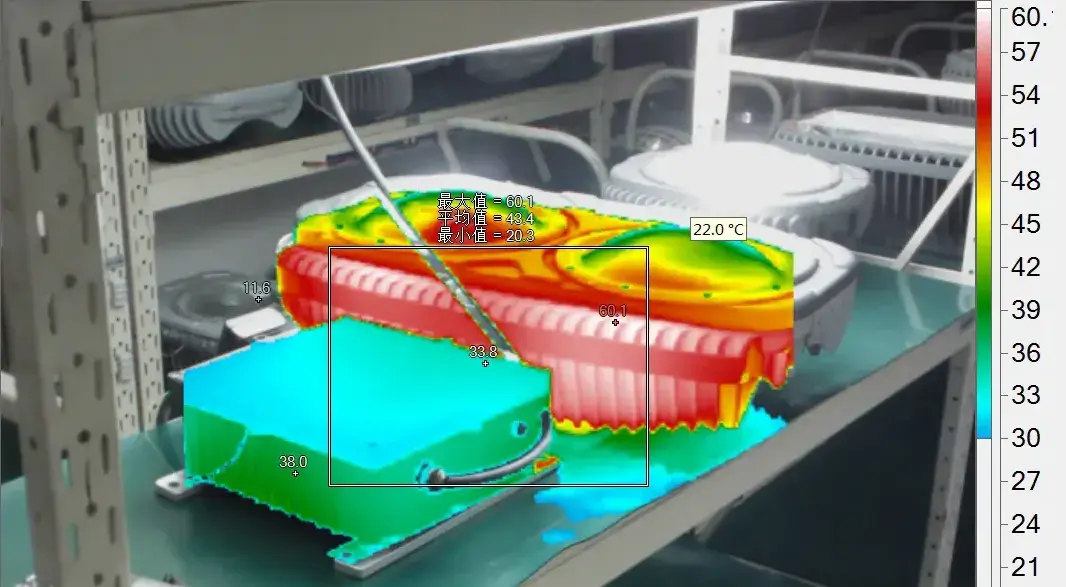
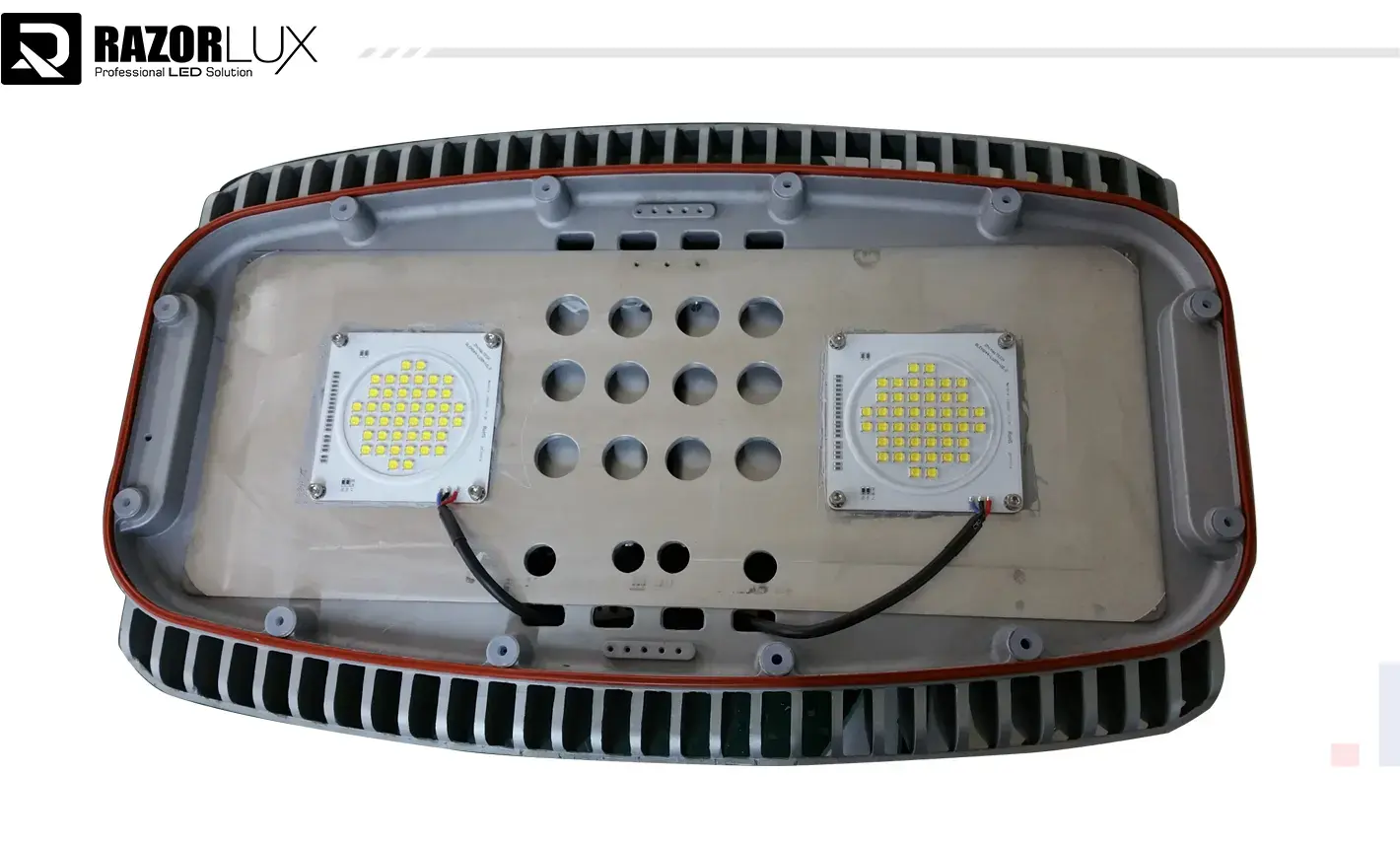
Commercial floodlights need to work consistently in all kinds of weather. Razorlux 120 Volt LED Outdoor Flood Lights can work in temperatures ranging from -40°C to 60°C (-40°F to 140°F), so they can be used on ships in the Arctic and at ports in the Middle East. The wide operating range is made possible by smart thermal design. The aluminum housing acts as a massive heatsink with the right shape of fins, and high-conductivity materials connect the LED array to the housing. LEDs that run cooler last longer and keep their light power over time if they are properly managed thermally.
Resistance to humidity is also very important. With a working humidity range of 10% to 95%, these fixtures can handle the humid air in coastal buildings without forming condensation inside, which would damage connections or cloud optical parts. The IP65 rating (which can be upgraded to IP67) means that the product is completely protected against dust ingress and water jets or short-term immersion. This is very important when fixtures are going to be cleaned or when there is a storm.
Core Benefits of High-Output LED Flood Lights in Industrial Settings
Energy Efficiency and Operational Cost Reduction
It makes a lot of financial sense to switch to current LED floodlights. Fixtures that use metal halide or high-pressure sodium need between 2200 and 2500W to give off the same amount of light as a 1000W LED setup. This difference adds up to big savings over the course of a year. If a port building has 200 floodlights that are on for 12 hours a day, switching from 2300W HID lamps to 1000W LED fixtures would save 260kW per hour, or 1,138,800 kWh per year. The U.S. Energy Information Administration estimates that at a rate of $0.12 per kWh, that would save $136,656 a year on energy costs.
The costs of maintenance also go down a lot. Metal halide lights need to be replaced every 8,000 to 12,000 hours. Good LED systems, like Razorlux's fixtures, can work for 50,000 hours or more with L70 performance, which means they still give off 70% of their original brightness after 50,000 hours. This longer life means that repair crews won't have to move as many trucks and won't have to rent as many scaffolds for high-mounted fixtures. Facility managers can plan their budgets more accurately with the help of the 5-year warranty on LED modules and drivers.
Before going into more detail about the technical specs, it's worth looking at the main performance benefits that make these systems the best choice for tough business needs:
- Superior luminous efficacy: At 130 lumens per watt, Razorlux fixtures extract maximum visible light from every watt of electrical input, surpassing the 80-100 lm/W typical of older LED technology and far exceeding the 60-80 lm/W of HID alternatives. This efficiency translates directly to lower utility bills and reduced carbon footprint—increasingly important as facilities face sustainability reporting requirements and carbon pricing.
- Instant-on capability: Unlike metal halide lamps that require 5-15 minutes to reach full brightness after startup, LED systems reach 100% output instantaneously. This matters for security lighting activated by motion sensors and for facilities that cycle lighting on and off to save energy during low-activity periods.
- Enhanced color rendering: With a Color Rendering Index (CRI) of Ra>75 (upgradeable to Ra>80 or Ra>90), these fixtures reveal true colors and improve visual acuity. This isn't just aesthetic—accurate color perception is a safety issue in industrial environments where workers need to correctly identify color-coded wiring, warning signs, and equipment status indicators. Higher CRI also improves security camera footage quality, making facial recognition and vehicle identification more reliable.
- Flexible beam pattern options: Razorlux offers beam angles of 40°, 60°, 120°, and asymmetric 140°×60° patterns. Narrow beams provide long-throw illumination for perimeter security or lighting tall structures, while wide beams efficiently cover large open areas. The asymmetric pattern is particularly valuable for lighting dock faces or building facades where you want wide horizontal coverage without wasting light into the sky or water.
These benefits work together to solve problems that shipyard purchasing managers, offshore facility engineers, and port infrastructure supervisors keep having: lighting that doesn't work when it's needed, using too much energy, which hurts budgets, and maintenance tasks that keep technicians from doing more useful work.
Durability in Harsh Marine and Industrial Environments
In business and industry, people have to deal with salt spray, chemical exposure, vibrations from heavy machinery, and physical impact every day. Consumer-grade lighting fails quickly in these situations, but lights like Razorlux's are designed to last and have many safety features built in. The IP67 rating means that the fixture can withstand being submerged in water for a short time. This is important for dock lighting that might get hit by waves during storms. The IK10 grade for impact means that the housing can withstand a 5 kg object being dropped from 40 cm, which is about the same as a heavy wrench falling from a worker's hand.
In coastal and chemical industry areas, corrosion protection makes fixtures last longer. Electrophoretic coating is used to put a uniform protective layer on the aluminum housing, even on internal surfaces and geometries that aren't straight. The mounting bracket is made of stainless steel, which keeps the fixture from falling off in marine installations where rust is a problem. Gaskets are made of silicone or fluorosilicone rubber, and they keep their seal after being heated and cooled hundreds of times.
Consistent Performance and Power Quality
Lighting that flickers or isn't stable can be dangerous and make workers uncomfortable. Good LED drivers keep the current output steady even if the input voltage changes. This gets rid of the flickering that you see in cheap LED systems and the low-frequency flickering that comes with HID discharge lights. Because these lights have a high power factor (>0.98) and low total harmonic distortion (<10%), they don't make electrical noise that can mess up the communication or control systems that are popular in modern factories (International Electrotechnical Commission, 2020).
When stated, dimming lets facilities change the amount of light based on who is using the space or the weather, which saves even more energy. The 0-10V dimming protocol used in business installs allows for smooth, flicker-free dimming down to 10% power. This is different from the problems that happen when domestic TRIAC dimmers are used with LED fixtures that aren't compatible.
Commercial Use Cases Across Industrial Sectors
Port and Terminal Lighting Applications
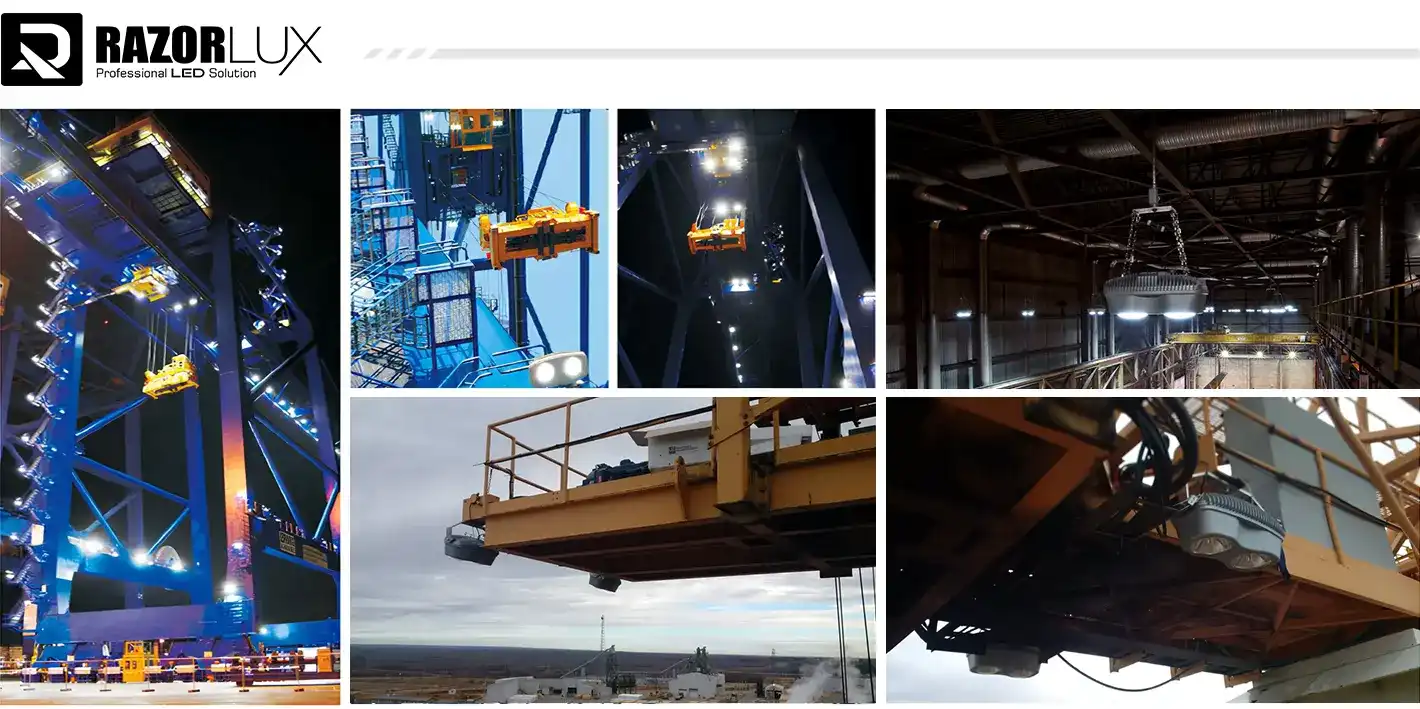
Ports have special lighting problems because they have large open spaces that need even lighting so that containers can be moved safely, high surfaces like ship hulls and gantry cranes that need enough light for repair and inspection, and security perimeters that are hundreds of meters long. High-output floodlights on tall poles or building surfaces provide enough light, and the wide voltage input range can handle the changes in power quality that happen when land power systems connect to boats.
The instant-on feature is useful for ports that use motion-activated lighting in areas with less foot traffic. The 120 Volt LED Outdoor Flood Lights turn on as soon as a person or vehicle enters the zone, cutting out the delay that leaves security holes. The more than 50,000-hour lifespan cuts down on maintenance tasks, which in ports usually involve controlling traffic, shutting down equipment, and making sure that movements of ships don't interfere with the work.
Shipyard and Dry Dock Illumination
Shipbuilding and repair shops need lighting that works reliably in places where there are a lot of welding sparks, grinding dust, paint overspray, and cleaning chemicals that are harsh on metal. These toxins can't get in because the housing is sealed to IP67 standards, and the powder-coated metal is resistant to chemical attack. The high CRI standard helps with quality control. Welders, fabricators, and testers can all accurately judge their work, and high-CRI lighting lets them see flaws in paint finishes or weld beads that they might miss with low-CRI lighting.
Because the dry docks are so deep and enclosed, and there is always water there, lighting them is very difficult. Fixtures need to be mounted securely so they can handle vibrations from nearby heavy machinery, and the stainless steel brackets don't rust quickly in these conditions. Because beam patterns can be chosen, narrow-beam fixtures can be put on top of dry docks to shine light deep into the structure, while wide-beam units can light up the work areas around them.
Offshore Platform and Rig Installation
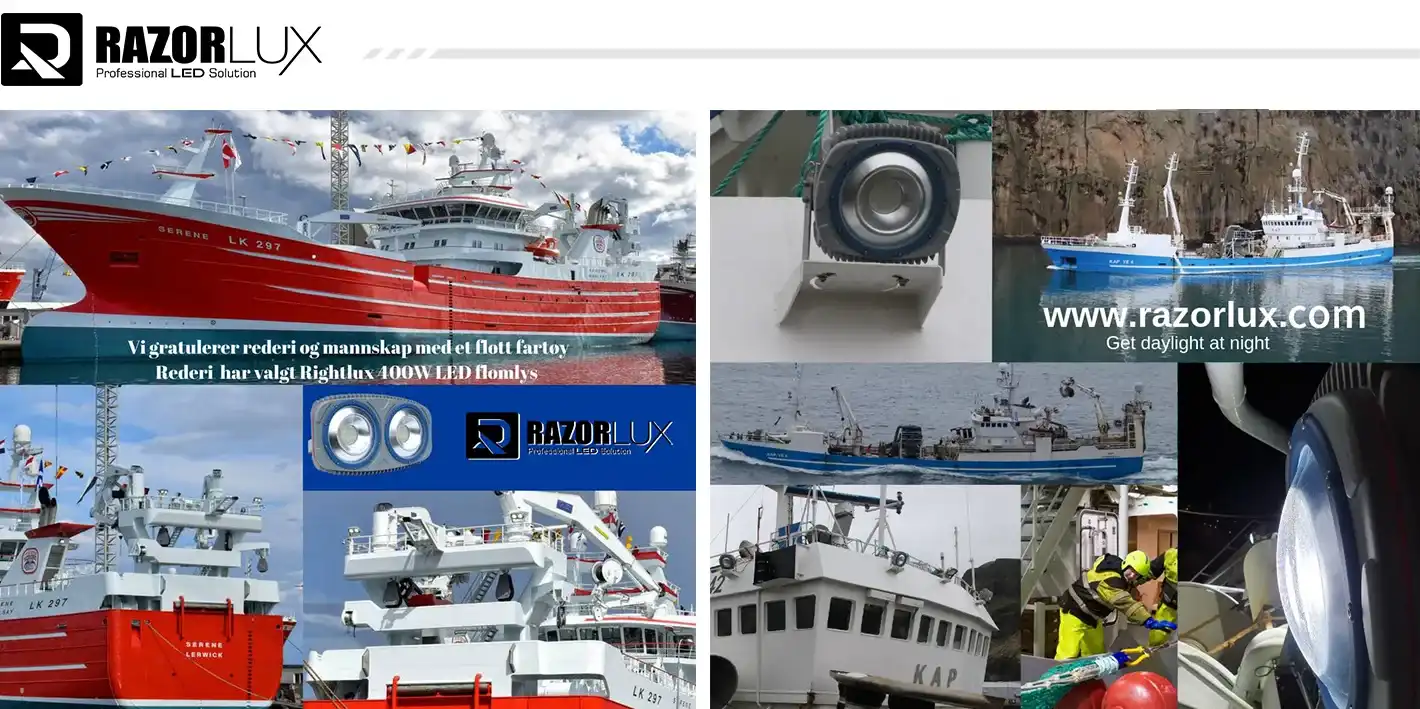
Offshore platforms used for oil and gas production have to deal with the harshest weather: constant salt spray, big changes in temperature, hurricane-force winds, and the difficulties of maintaining equipment hundreds of kilometers from land. Platform safety and working consistency are directly affected by how reliable the lighting system is. To get all the certifications needed for offshore use—including ATEX for some configurations that work in explosive atmospheres—the designs and tests have to be very thorough.
The large DC input voltage range (100V–800V) works with a variety of power systems found on offshore sites, from 110V control circuits to high-voltage DC microgrids that are being used more and more in modern platforms. Facility managers are reassured by the 5-year promise. They know that every helicopter trip to bring a new fixture costs thousands of dollars, so dependability and durability are very important.
Industrial Facility and Warehouse Lighting
Steel mills, paper plants, chemical processing plants, and large distribution warehouses all need lighting that covers a large area, is resistant to dust and moisture, requires little upkeep, and works reliably even when the power quality is bad or the temperature changes. The RGL-1000A type from Razorlux has a 1000W output that is bright enough for high-bay uses. Its 130 lm/W efficiency keeps energy costs low even when lighting large areas.
A typical warehouse setting is shown in the table below, which shows how traditional HID lighting and new LED systems work differently:
| Performance Parameter | Traditional 2300W Metal Halide | 1000W LED Flood Light | Advantage |
|---|---|---|---|
| Power Consumption | 2300W | 1000W | 56% energy reduction |
| Lumen Output | 120,000-140,000 lm (initial) | 130,000 lm (stable) | Consistent output over life |
| Warm-up Time | 10-15 minutes | Instant | Immediate full brightness |
| Rated Lifespan | 10,000-15,000 hours | 50,000+ hours | 3-5× longer service life |
| Maintenance Frequency | Annual lamp replacement | Minimal intervention for 5+ years | Reduced labor and downtime |
| Color Rendering Index | 60-70 CRI | 75+ CRI (upgradeable to 90+) | Improved visibility and safety |
This information makes the case for using LEDs very clear, especially when you look at the total cost of ownership over 5 years.
Security and Perimeter Applications
For security lighting to work, it needs to provide reliable, high-quality light that makes surveillance cameras work better and keeps people from breaking in. The high CRI of LED floodlights makes color reproduction in security footage much better, which makes it easier to identify people and vehicles. The instant-on reaction works well with motion sensors and security system integration, so there is no window of exposure while the HID lamp warms up.
Because narrow-beam configurations can throw light far, they can be mounted safely away from border fences while still providing enough light at ground level. Vandalism attempts can't hurt the sturdy construction, and the sealed housing keeps outside objects from getting in and damaging the internal parts.
Selecting the Right LED Flood Lighting Solution for Your Operation
Technical Specification Evaluation
When purchasing managers look at flood lighting systems, they should look at more than just the wattage. Operating cost is directly related to luminance (lumens per watt); higher numbers mean more light for each unit of electricity used. Razorlux lights get 130 lm/W, which is the best performance available for high-output industrial systems right now.
The IP grade shows how well something is protected from the environment. IP65 is good for most outdoor setups because it can handle jet water, and IP67 is better for places that get flooded or hit by waves because it can handle temporary immersion. The IK impact rating (IK10 being the highest standard rating) shows how strong the metal is. This is very important in places where fixtures could be hit by equipment, debris, or vandalism.
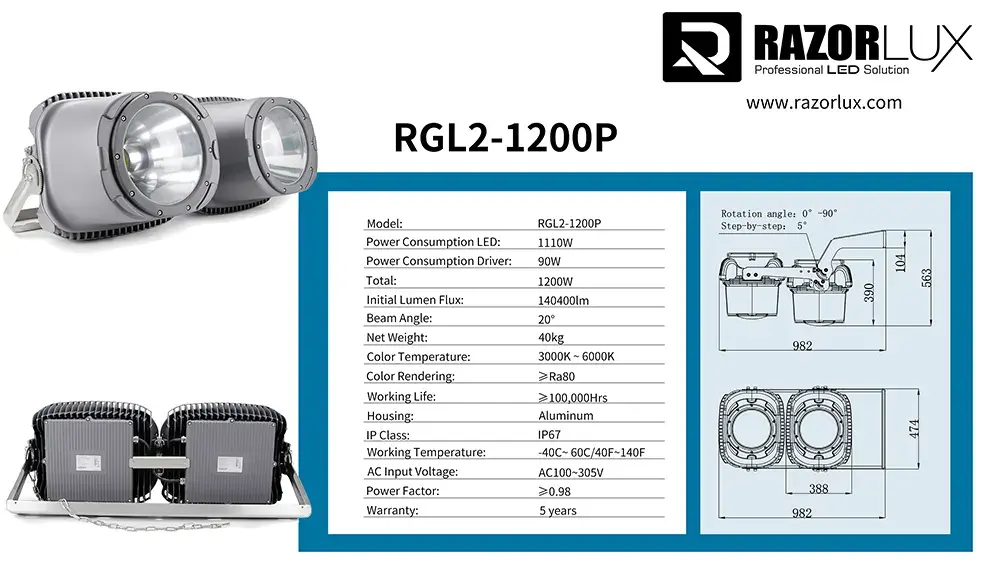
To choose the right beam angle, you need to know how your application is built. Using the table below as a guide, you can match beam patterns to common commercial uses:
| Application Type | Recommended Beam Angle | Mounting Considerations | Typical Use Cases |
|---|---|---|---|
| High-mast area lighting | 40° narrow beam | 20- 40 m pole height | Parking areas, container yards, sports facilities |
| Building facade illumination | 60° medium beam | 5-5- 15 mounting distance | Warehouse walls, ship hulls, architectural features |
| Low-ceiling work areas | 120° wide beam | 4-4- 8 mounting height | Loading docks, covered work bays, canopies |
| Asymmetric applications | 140°×60° asymmetric | Wall-mounted or pole-mounted | Dock faces, building perimeters, roadways |
If you choose the right beam pattern, you can get the most useful light while minimizing light trespass and glare. This is especially important for facilities that work near residential areas or waterways that people can navigate, where too much light can be dangerous.
Certification and Compliance Requirements
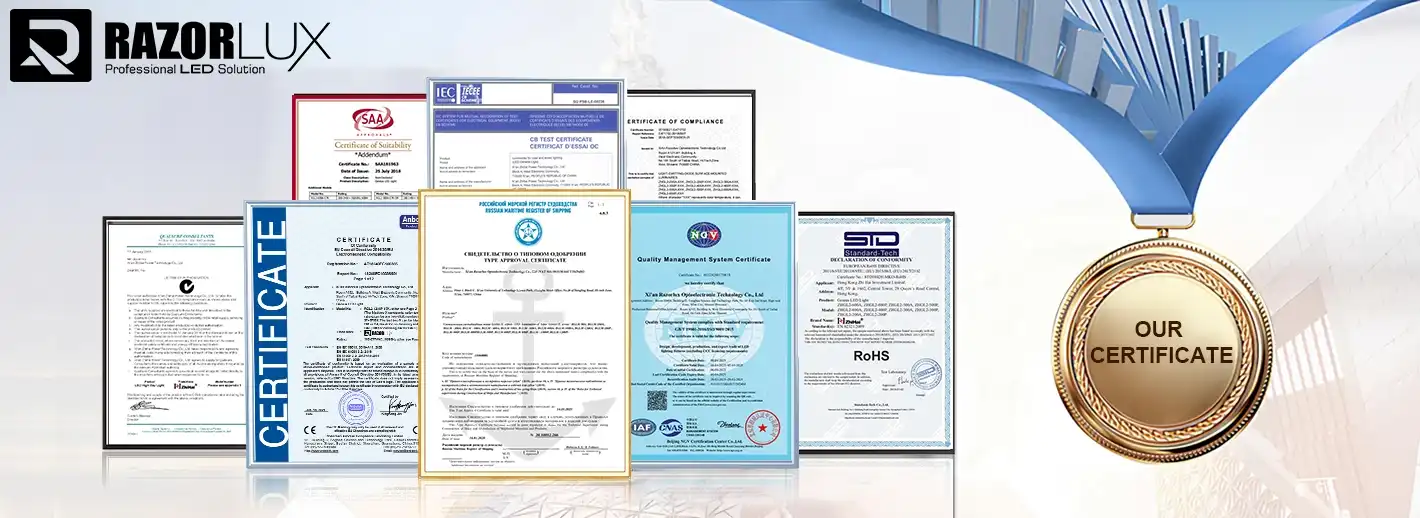
Fixtures that meet safety and efficiency standards are certified on an international level. In the European Union, CE marking means that the product meets safety standards. In North America, UL and DLC listings are necessary for installations and are often needed to get utility rebates. For marine uses, approvals from classification societies like DNV-GL, ABS, or Lloyd's Register show that the product is safe for use on ships and meets maritime safety standards (American Bureau of Shipping, 2022).
RoHS compliance makes sure that the fixture doesn't contain any banned dangerous chemicals. This is becoming more and more important as environmental laws around the world get stricter. When buying hundreds of fixtures for a big project, ISO 9001 approval of the manufacturer's quality management system is important to make sure that the quality of the fixtures will be the same every time. If the quality varies, it could cause problems with how they look or how reliable they are.
Supply Chain and Vendor Assessment
Finding reliable sources for parts affects both the quality of the product and the long-term availability of replacement parts. Razorlux uses Meanwell drivers and high-quality LED chips from well-known companies to make sure that the parts are reliable and easy to find. When looking at different suppliers, purchasing teams should ask for a lot of technical information. This includes test reports for the LM-80 chip and the TM-21 chip's expected lifespan, driver specifications that show how well it handles surges and power factors, and certifications for the housing material that show it doesn't rust.
When planning lighting installations around bigger buildings or remodeling jobs, it's important to think about how reliable deliveries are and how much supply you can hold. Suppliers who can make things and have established logistics networks can work with project deadlines and make sure deliveries happen on time every time. Sample units can be used for pre-installation testing, which lets your technical team make sure that the product will work in your environment before committing to large orders.
Total Cost of Ownership Analysis
The price of the lighting system is only one part of its total cost. An in-depth analysis should look at how much energy the installation uses over its estimated lifetime, how much it costs to maintain and replace parts and labor, how much it costs to shut down activities when lighting fails, and how much it costs to dispose of or recycle the lighting when it's no longer needed. LED systems cost more to buy at first, but they save money in the long run by using less energy, lasting longer, and needing less upkeep.
The terms of the warranty have a big effect on how the risk is shared. Razorlux offers a 5-year warranty on LED modules and drivers and a 10-year guarantee on the housing. This gives you more safety and shows that the company is sure the product will last. Procurement teams should make sure that the warranty covers both replacement parts and labor for taking down and putting back up fixtures. This is because labor is usually the most expensive part of commercial installations.
Installation Best Practices and Operational Maintenance
Pre-Installation Planning and Site Assessment
A careful site evaluation is the first step to a successful installation. Lighting designers or skilled electricians should use photometric calculations to figure out how many fixtures, where to mount them, and what angles they need to be pointed at in order to reach the desired level of illumination. To figure out how the light will spread across the area, these formulas take into account the fixture spacing, beam patterns, mounting height, and surface reflectivity.
An evaluation of the electrical equipment makes sure that there is enough line capacity and proper grounding. High-wattage lights use a lot of electricity. For example, a 1000W light on normal voltage needs about 8.5 amps, which means that a 20-amp circuit can safely support only two bright lights. For commercial installations, all wiring must meet local electrical codes, and circuits must have ground-fault protection that works in wet outdoor areas.
Mounting Hardware and Installation Procedures
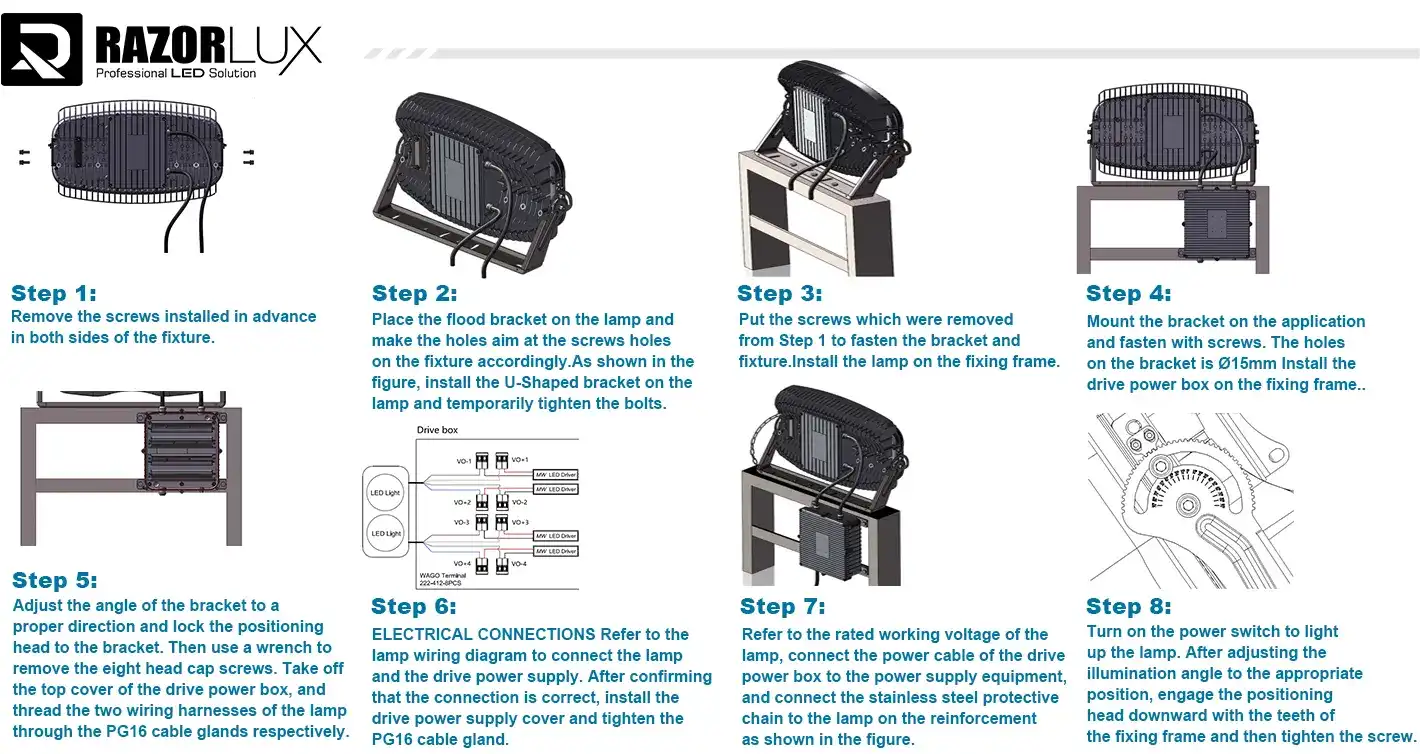
The right mounting provides steadiness and the best spread of light. Razorlux fixtures come with yoke or trunnion mounts made of stainless steel that let you precisely adjust the aim. The 30 kg weight of the fixture, wind loads, and the possibility of snow or ice buildup create large forces that must be supported by the mounting surfaces. When attaching to poles, the place where the fixture is attached should be strengthened, and slip fits should be tightened to the correct torque levels to keep the fixture from turning over time.
When installing electrical equipment outside, you need to pay extra attention to the connections. Junction boxes need to be rated for wet areas and have the right gaskets and sealing compounds. To keep wetness out of wire links, you should use connectors that don't rust and dielectric grease. For safe maintenance, many installations benefit from having a disconnect switch or circuit breaker close to the fixture.
Routine Maintenance and Performance Optimization
Even though LED lights are known for not needing much care, they do need to be inspected and cleaned on a regular basis to keep them working well. Visual checks should be done every three months to look for physical damage, rust on the mounting hardware, and dirt on the lens. Cleaning the optical surface every six months gets rid of dust, salt layers, and other outdoor pollutants that lower light output. In many settings, this cleaning can bring back 10-15% of the lost light.
Using thermal imaging during yearly checks can find problems before they become too big to fix. Unusual hot spots could mean that there are problems with the driver, the thermal connection, or the LEDs. Electrical tests should make sure that the fixture has the right voltage, that the connections are tight, and that the surge safety devices are still working. By writing down the results of inspections, you can make repair records that help you figure out what needs to be replaced and why.
Troubleshooting Common Issues
When fixtures don't work right, thorough analysis helps find the issue. Flickering or unstable output is usually a sign of a problem with the driver, a loose connection, or dimming controls that don't work with the device. Complete failure means that the driver is broken, there are open connections, or there are electrical problems upstream. Checking for the right voltage at the fixture input quickly narrows down the list of possible causes. Less light output without flickering could mean that the LED array is breaking down or that the optical surface is dirty and needs to be cleaned.
Quality fixtures are easy to fix because they are made in a modular way. To change a driver, you usually have to turn off the power, remove a few screws to get to the driver box, cut off the driver's output to the LED array, and then do the process all over again with the new driver. Keeping important extra parts like drivers and LED modules on hand cuts down on downtime when they break. This is especially important for safety or security lighting that needs to work all the time.
Conclusion
Upgrading to high-performance line-voltage 120 Volt Led Outdoor Flood Lights has measurable benefits in commercial and industrial settings. It can save up to 50% of energy use, save money on maintenance costs with lifespans of 50,000 hours or more, improve safety and visibility through better color rendering, and work reliably in harsh environments where traditional lighting fails. Modern fixtures are highly advanced in terms of technology. They have a wide input voltage tolerance, strong temperature management, full environmental protection, and smart driver design. These features help dock managers, port facility engineers, and industrial plant directors deal with the problems they face in the real world. When you carefully look at the features, certifications, and overall cost of ownership of lighting systems, you can be sure that the ones you choose will last, work reliably, and help your business reach its goals.
FAQ
1. Can these fixtures operate reliably in extreme cold environments like Arctic shipyards?
Yes, good industrial LED flood lights are made to work in a wide range of temperatures. From -40°C to 60°C (-40°F to 140°F), Razorlux lights can handle it. The wide temperature range is made possible by a driver design that keeps the output stable even when the temperature changes parts and thermal management that keeps the device from getting too hot even when the temperature outside is high. When it's cold, LEDs work better and put out a little more light, but the drivers have to be specially made to handle the extra electrical stress that comes with cold starts.
2. How does energy consumption compare to our existing metal halide fixtures?
Most of the time, LED systems use 55 to 60% less energy than metal halide fixtures that give off the same amount of light. A 1000W LED light can be used instead of a 2300W metal halide system and produce the same amount of lumens or more. This comparison takes into account the fact that metal halide output drops a lot over the course of a lamp's life, while LED output stays more stable. In HID systems, ballast losses add 10–15 percent to the lamp wattage and should be taken into account when figuring out how much energy can be saved.
3. Are these fixtures compatible with our existing motion sensor security system?
Most industrial LED flood lights work well with building control systems and motion sensors. LEDs are great for motion-activated applications because they turn on instantly and reach full brightness right away, unlike HID lamps that need to warm up. Compatibility depends on the type of sensor switching used. All fixtures can handle simple on/off switching, but for dimming, you need fixtures with compatible dimming drivers, which are usually 0-10V for business installs. Talking to the lighting source will help you make sure that the controls are set up correctly.
4. What maintenance should we expect over the fixture's lifetime?
Compared to traditional lighting, LED systems don't need as much upkeep. Visual checks for physical damage should be done every three months, lens cleaning should be done every six months to get rid of environmental dirt, and electrical testing should be done once a year to make sure the voltage is right and the connections are solid. Unlike HID lamps, which need to be replaced every year, LED fixtures usually work for 5 to 7 years before any parts need to be replaced. LED modules and drivers come with a 5-year warranty that covers the most common failure spots during that time. This means that you won't have to pay for as much maintenance out of your own cash.
Upgrade Your Facility with Razorlux Industrial LED Flood Lighting
Razorlux has the performance, durability, and support needed for mission-critical applications, so procurement managers and facility engineers looking for reliable, high-efficiency lighting for tough commercial settings will find it. Our RGL-1000A line has a brightness of 130,000 lumens at 130 lm/W, is waterproof up to IP67, and has many certifications from UL, CE, DNV-GL, and ABS, so it can withstand the harsh conditions of marine, offshore, and heavy industrial applications. As a manufacturer and supplier with more than 200 patents and more than 20 years of experience in 120 Volt LED OLEDoor Flood Lights innovation, we offer more than just products. We also offer full lighting solutions backed by technical knowledge and quick support. Email our team at sam@razorlux.com to talk about the needs of your project, get detailed documentation and photometric estimates, or set up a review of a sample. We offer flexible bulk prices, the ability to customize for OEM use, and quick responses to technical questions. These features will make sure that your lighting upgrade project goes smoothly from planning to installation and long-term use. Razorlux is trusted by the world's best ships, ports, and industrial sites for their most demanding lighting needs.
References
1. American Bureau of Shipping. (2022). Guide for LED lighting systems. ABS Publications. https://ww2.eagle.org/en/rules-and-resources/rules-and-guides.html
2. IEEE Standards Association. (2021). IEEE Recommended Practice for Monitoring Electric Power Quality (IEEE Std 1159-2019). Institute of Electrical and Electronics Engineers. https://standards.ieee.org/standard/1159-2019.html
3. International Electrotechnical Commission. (2020). IEC 61000-3-2:2018 - Electromagnetic compatibility (EMC) - Part 3-2: Limits for harmonic current emissions. IEC Publications. https://webstore.iec.ch/publication/28164
4. U.S. Department of Energy. (2022). Solid-State Lighting Program: LED Luminaire Lifetime - Thinking Beyond LM-80 and TM-21. Office of Energy Efficiency & Renewable Energy. https://www.energy.gov/eere/ssl/solid-state-lighting-program
5. U.S. Energy Information Administration. (2023). Electric Power Monthly - Average retail price of electricity to ultimate customers by end-use sector. U.S. Department of Energy. https://www.eia.gov/electricity/monthly/epm_table_grapher.php?t=epmt_5_6_a
6. Illuminating Engineering Society. (2020). IES LM-79-19: Approved Method for the Electrical and Photometric Measurements of Solid-State Lighting Products. Illuminating Engineering Society of North America. https://www.ies.org/standards/approved-method-for-the-electrical-and-photometric-measurements-of-solid-state-lighting-products/