


_1750326878398.png)

Can Tennis Court Led Flood Lights Reduce Operating Costs?
Tennis Court Led Flood Lights significantly reduce operating costs by cutting energy consumption by 50-70% compared to traditional metal halide systems, while delivering superior illumination and extending maintenance intervals beyond 50,000 hours. These fixtures eliminate frequent bulb replacements and ballast failures, lowering both labor expenses and downtime. Their instant-on capability avoids wasted warm-up energy, and their robust construction withstands harsh outdoor conditions, protecting your investment over decades. For facility managers seeking sustainable, budget-friendly lighting upgrades, LED floodlights deliver measurable savings and operational efficiency.
How LED Flood Lights Address Cost Issues on Tennis Courts
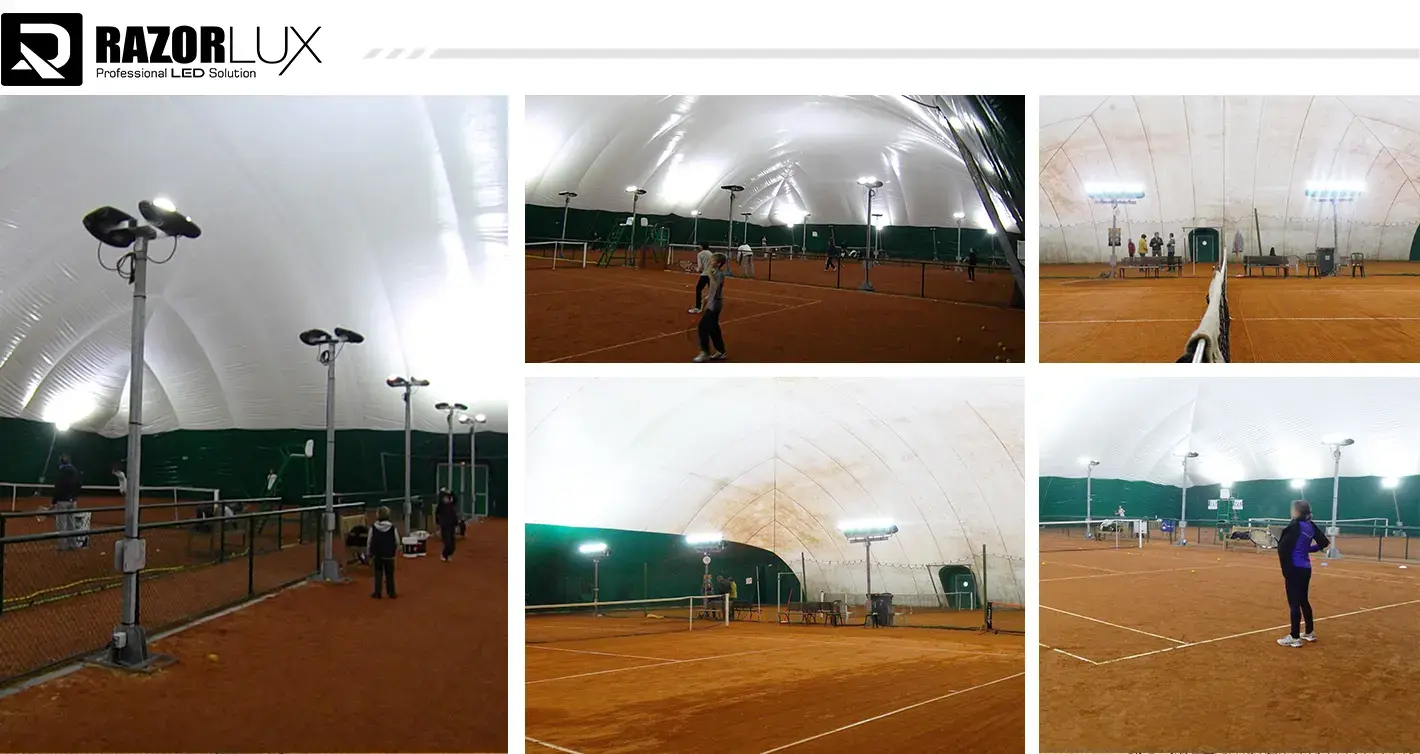
Tennis Court LED Flood Lights change the economics of tennis courts by focusing on the main cost drivers listed above. These high-tech lighting systems give off the same amount of light or more while using 60–70% less energy than metal halide bulbs. A 400W LED fixture can replace an 800-1000W metal halide lamp, which cuts energy use right away and lowers power bills (U.S. Department of Energy, 2021).
Lifespan benefits are just as convincing. Quality LED systems work reliably for 50,000 to 100,000 hours, which is five to ten times longer than traditional lamps. This means that they don't need to be serviced as often, which saves a lot of money on labor costs. Facilities that used to change lamps every three months can now do it once every ten years or more, giving repair staff more time to work on other things.
Immediate Energy Savings
LED technology is much better than gas-discharge lamps at turning electricity into light that can be seen. Metal halide systems waste a lot of energy as heat, but LED lamps use almost all of their power to light up the room. This efficiency directly leads to lower running costs. Depending on how the energy is used and the rates in your area, the payback time is usually between 18 and 36 months.
The instant-on feature gets rid of the wasteful warm-up energy use. Courts can be lit up whenever needed, which lets operators make flexible schedules without having to waste time by leaving lights on between sessions. Smart settings make even better use of resources by lowering or turning off lights automatically when courts are empty to save the most energy.
Enhanced Durability and Reliability
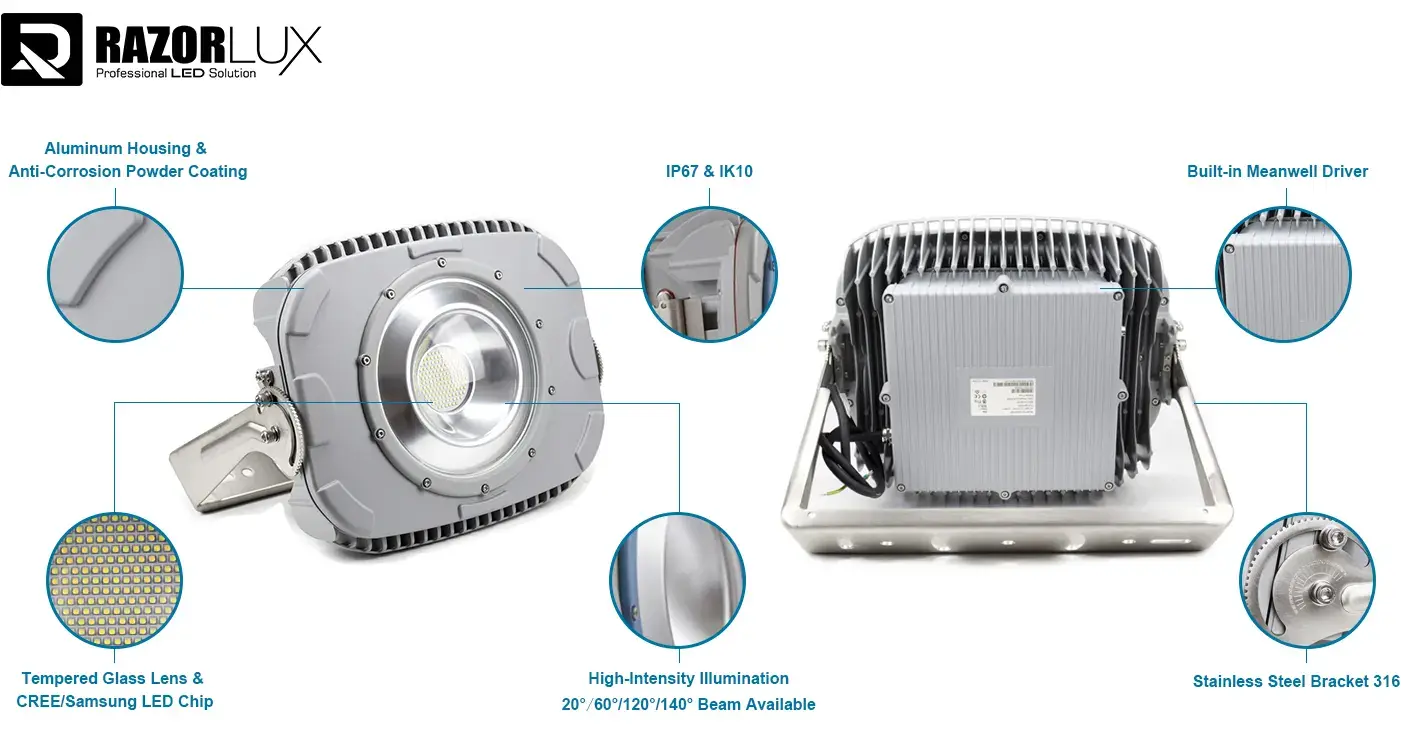
LED fixtures can handle environmental stresses that break down regular lamps very quickly. Solid-state technology isn't affected by vibrations or changes in temperature, so it works the same way in subzero cold and hot heat. Housings with an IP67 rating keep water out, so they will work reliably even when it rains or snows a lot.
This sturdiness keeps your investment from breaking down too soon. Facilities escape the costs that come with emergency fixes, fast shipping of parts, and missed income from courts that can't be used. Accurate long-term planning is made easier by predictable performance, which gets rid of the financial risk that comes with old lighting equipment.
Safety and Liability Benefits
Accidents are less likely to happen when visibility is better, which lowers liability and insurance costs. Even lighting gets rid of shadows and dark spots that are frequent places for injuries. Glare reduction keeps players' eyes safe during high shots, which improves the quality of the game and makes players happier.
By avoiding lawsuits and keeping the facility's good name, these safety improvements indirectly help keep costs down. Users who are happy with your courts tell their friends about them, which brings in more money and increases your return on lighting expenses.
Technical and Procurement Considerations for Cost-Effective LED Solutions
To choose the best LED lighting system for your building, you need to carefully look at the technical specs that match your needs. Brightness levels, which are measured in lux, must meet standards for both fun and work. For fun games, the levels should be 200 to 500 lux, and for work or competition, they should be 500 to 750 lux. Systems that aren't powerful enough don't give off enough light, and setups that are too big waste energy and money.
Choosing the right beam angle has a direct effect on performance and efficiency. Asymmetric optics help tennis courts by focusing light on the playing grounds and reducing the amount that spills out into the nearby areas. Fixtures with different beam options, like 40°, 60°, 120°, and 140°x60°, let you make layouts that work best for your court's size and mounting height.
Critical Performance Specifications
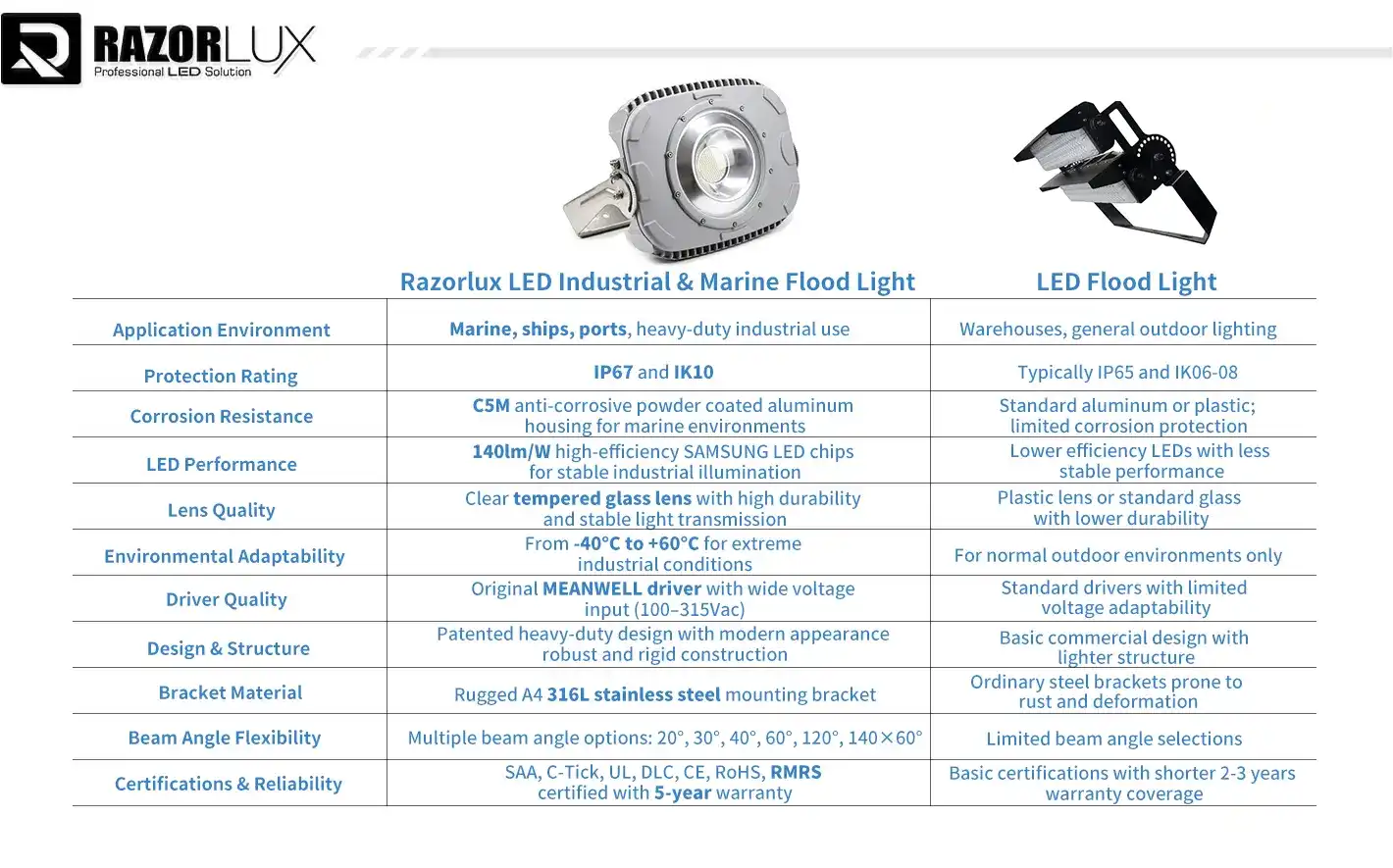
The number of lumens per watt (lm/W) that a bulb produces shows how well it turns power into visible light. High-performance LED systems get 130–160 lm/W, which is a lot more than the 60–90 lm/W that metal halide lamps usually get. This measure is directly linked to lower running costs, so buyers who want to save money use it as their main selection criterion.
The color rendering index (CRI) affects both how well you can see and how well you can track the ball. Fixtures with CRI values above 75 show colors accurately, which improves the player experience and meets the needs of broadcasting. Higher CRI choices (Ra>80 or Ra>90) work best in professional settings where picture quality is very important.
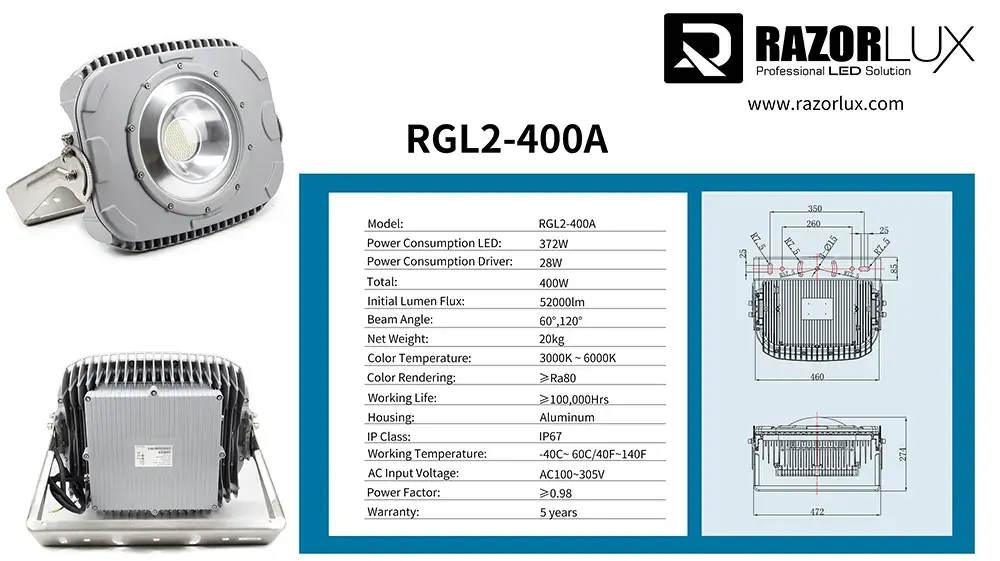
The RGL2-400A type from Razorlux meets these efficiency standards. This 400W bulb replaces 800-1000W metal halide systems and gives off 52,000 lumens at 130 lumens per watt. It also gives off better light. Its multi-function design lets you use different beam angles, and its IP67/IK10 ratings make sure it will last in harsh outdoor conditions.
Durability and Environmental Protection
Long-term dependability is based on scores for waterproofing and impact protection. IP65 rating protects against dust and water jets, making it good for most outdoor uses. IP67 rating, on the other hand, can withstand temporary soaking, which is important for sites near the coast that are likely to flood. Vandalism and accidental ball strikes happen a lot on public courts, but IK10 impact resistance protects against them.
Corrosion protection is affected by the materials used in housing. In moderate climates, die-cast aluminum with a powder coating lasts a long time, and in marine environments, salt spray doesn't damage stainless steel brackets. Facilities that are exposed to tough conditions should choose fittings that are made for C4 and C5 corrosion types to keep them from breaking down too quickly (International Electrotechnical Commission, 2019).
Component Quality and Brand Reputation
The life and security of a system depend on the quality of its drivers. High-end names like Meanwell make drivers with low total harmonic distortion (THD <10%) and high power factors (≥0.98). This makes sure that the electricity works cleanly and that the drivers last as long as possible. Bad drivers fail too soon, taking away the benefits of LED longevity and raising the total cost of ownership.
The choice of chip affects both how well it works and how consistent the colors are. Samsung and other top manufacturers make LEDs with tight binning tolerances. This makes sure that the Tennis Court LED Flood Lights look the same in all fixtures and keeps color shift to a minimum over time. Razorlux uses high-quality parts in all of its products, and all of them are certified to meet strict standards like CE, RoHS, UL, DLC, and ISO 9001.
| Specification | Razorlux RGL2-400A | Typical Metal Halide |
|---|---|---|
| Power Consumption | 400W | 1000W |
| Luminous Flux | 52,000 lm | 45,000-50,000 lm |
| Efficacy | 130 lm/W | 60-80 lm/W |
| Lifespan | ≥50,000 hours | 6,000-10,000 hours |
| Warm-up Time | Instant | 10-15 minutes |
| IP Rating | IP67 | IP54-IP65 |
| Warranty | 5 years (LED/Driver) | 1-2 years |
This comparison shows the big technical benefits that LED systems offer, which directly lead to lower running costs and better building management.
Voltage Flexibility and Global Compatibility
Wide input voltage ranges make installation easier and lower the cost of the equipment. Razorlux fixtures work with a wide range of voltages, from 110V to 480V, so they can be used in any country. DC input range (100–800Vdc) works with solar-powered systems and microgrids, so off-grid sites can use eco-friendly lighting options.
This adaptability comes in handy for international projects, where standardizing equipment makes buying less complicated and managing spare parts across multiple sites easier.
Cost Comparison: LED Flood Lights vs Traditional Metal Halide and Halogen
The initial costs of buying something are only a small part of the total costs of owning it. Even though LED fixtures usually cost two to three times more than similar metal halide systems at first, they end up being much cheaper in the long run because they use less energy and require less maintenance. To make smart purchasing choices, you need to do a full financial analysis that takes into account all of the costs that come up over the life of the item.
Most buildings' running costs are mostly made up of energy use. A 1000W metal halide system that runs for eight hours a day uses 2,920 kWh a year. At $0.12/kWh, this adds up to $350 a year for each fixture. According to the U.S. Energy Information Administration (2023), a 400W LED light bulb uses only 1,168 kWh and costs $140 a year, which saves $210 a year per outlet.
Maintenance Cost Analysis
With traditional systems, maintenance costs add up quickly. Metal halide lights need to be replaced every 6,000 to 10,000 hours, or every two to three years if they are used normally. For every repair, there are lamp costs ($40 to $80), work costs ($100 to $200), and disposal fees ($10 to $20). Every two to three years, maintenance costs range from $150 to $300 per fixture.
These ongoing costs are taken care of by LED systems. Fixtures work for 15 to 20 years before they need to be fixed because they have lifespans of 50,000 hours or more. Maintenance is limited to cleaning the lenses every so often, which is usually done by staff working in-house and not using any special tools. Maintenance savings alone add up to more than $1,500 per outlet over a 15-year period.
Total Cost of Ownership Calculation
Take the example of a typical 6-court facility that needs 24 fixtures to be properly lit. Traditional metal halide systems cost $10,800 a year, which includes $8,400 for energy and about $2,400 for maintenance (paid over time). LED systems save $7,300 a year because they use less energy and don't need much upkeep, which adds up to $3,360 a year.
This building might have to pay $36,000 for its first LED system, compared to $12,000 for its metal halide system. This is a $24,000 difference. But yearly savings of $7,300 pay for themselves in just 3.3 years, and the facility will continue to save money for the next 12 to 17 years. Over the course of 15 years, LED has saved more than $85,000, showing its clear financial edge.
Incentives and Rebates
Many places offer refunds and other benefits for upgrading to lighting that uses less energy, which makes LEDs even more cost-effective. Utility companies often give rebates of $50 to $150 per fixture, and the federal government offers tax breaks through programs like the U.S. The Energy Policy Act gives you more tax breaks. These programs can cut the real cost of LEDs by 20–40%, and in many cases, the payback time is less than two years (Database of State Incentives for Renewables & Efficiency, 2022).
When looking to buy something, facilities should look into the benefits that are out there. Working with experienced LED makers like Razorlux makes sure that the right paperwork is sent in for rebate forms. This helps you get the most money back and speed up the return on your investment.
Best Practices for Maximizing Cost Reduction with Tennis Court LED Flood Lights
The main thing that decides whether LED systems save you money is how well they are installed. To get even lighting with no dark spots or wasted light, the mounting height and aiming angles must be carefully calculated. Professional photometric planning uses special software to simulate how light will be distributed before the fixtures are installed. This makes sure that the right number and placement of fixtures are used.
For asymmetric optics to work, they need to be carefully positioned so that light flows across courts with as little upward spill as possible. Fixtures that aren't pointed properly waste energy by lighting up the sky or nearby areas, which can lead to complaints about light pollution. Hiring experienced workers or talking to the technical teams at makers can help you avoid mistakes that cost a lot of money and hurt the project's economics.
Installation Positioning and Orientation
Mounting heights are usually between 6 and 12 meters, but can be different depending on the court layout and the fixture. When mounted higher, glare and shadows are lessened, but stronger fixtures are needed to keep the lux levels at a good level. Lower placement saves money on fixtures, but it needs to be carefully aimed so that players don't get direct glare in their eyes.
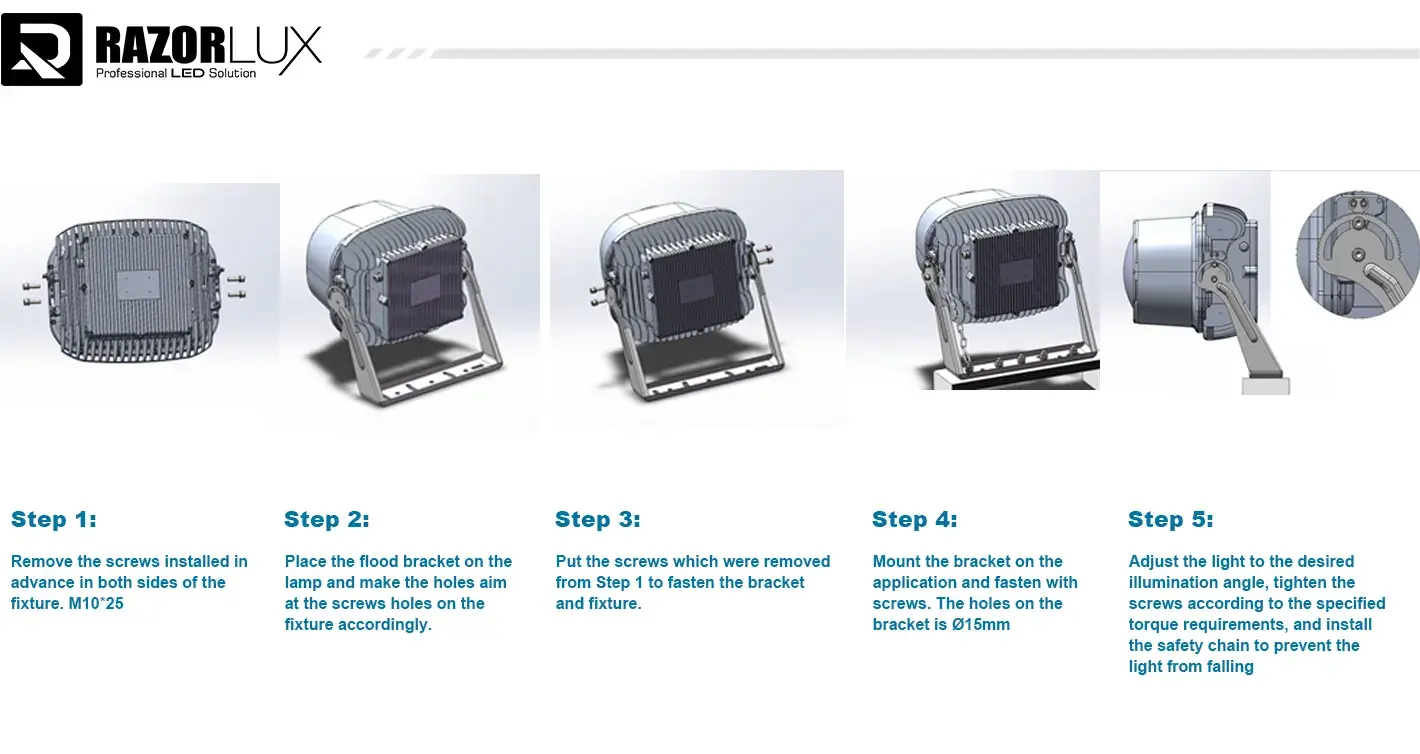
The placement of the poles follows normal tennis court lighting plans, which can be either four-corner or sideline. Four-corner layouts put four to six poles outside the court lines, while side-line layouts put poles along the court lines. Each method has its own benefits. For example, four-corner systems are very uniform but need more room, while side-sidelineuts work well on small sites but may cause more shadows.
Razorlux helps facilities make the best use of layouts by supporting photometric design. Our expert team looks at the site conditions and the needs of the users to suggest the number of fixtures, where to put them, and the angles at which they should point to get the best performance while keeping installation and running costs as low as possible.
Maintenance Protocols for Extended Lifespan
Even though LED systems don't need much upkeep, setting up regular care routines makes them last longer and keep working well. Visual checks every three months look for physical damage, darkening, or lens contamination to find problems before they get worse. Cleaning once a year gets rid of the dirt, pollen, and salt deposits that build up over time and make the light less effective.
To keep salt spray from building up, coastal facilities should be cleaned more often, every three to six months. Protective coatings don't get scratched when you use clean water and soft cloths. Do not use high-pressure washing because it can damage seals and let water into housings.
Every year, especially in places with a lot of humidity, electrical connections should be checked for corrosion or looseness. Surge protection devices need to be tested on a regular basis to make sure they keep working. This is because the parts that absorb electrical stress may break down without any obvious evidence.
Smart Controls and Energy Management
Adding buttons to LEDs makes the cost savings even bigger. Motion monitors check to see if the court is being used, and when players come on, the fixtures automatically turn on. When the court is not being used, the fixtures dim or turn off. Seasonal operating schedules are changed by astronomical timers, which make sure that courts are lit properly without any human help.
Having the ability to dim lights makes them last longer and use less energy. For recreational play or practice, facilities can set the lights to be lower, and for competitive events, they can turn them all the way up. Lowering the brightness to 70% makes LEDs last a lot longer while still giving off enough light for everyday use.
Networked controls make it possible to handle multiple courts or buildings from one place. Real-time monitoring of energy use, remote identification of fixtures that aren't working well, and schedule changes made from mobile devices by operators. These systems use data analytics to support constant optimization, which helps businesses improve their processes and save the most money over time.
Indoor vs Outdoor Court Considerations
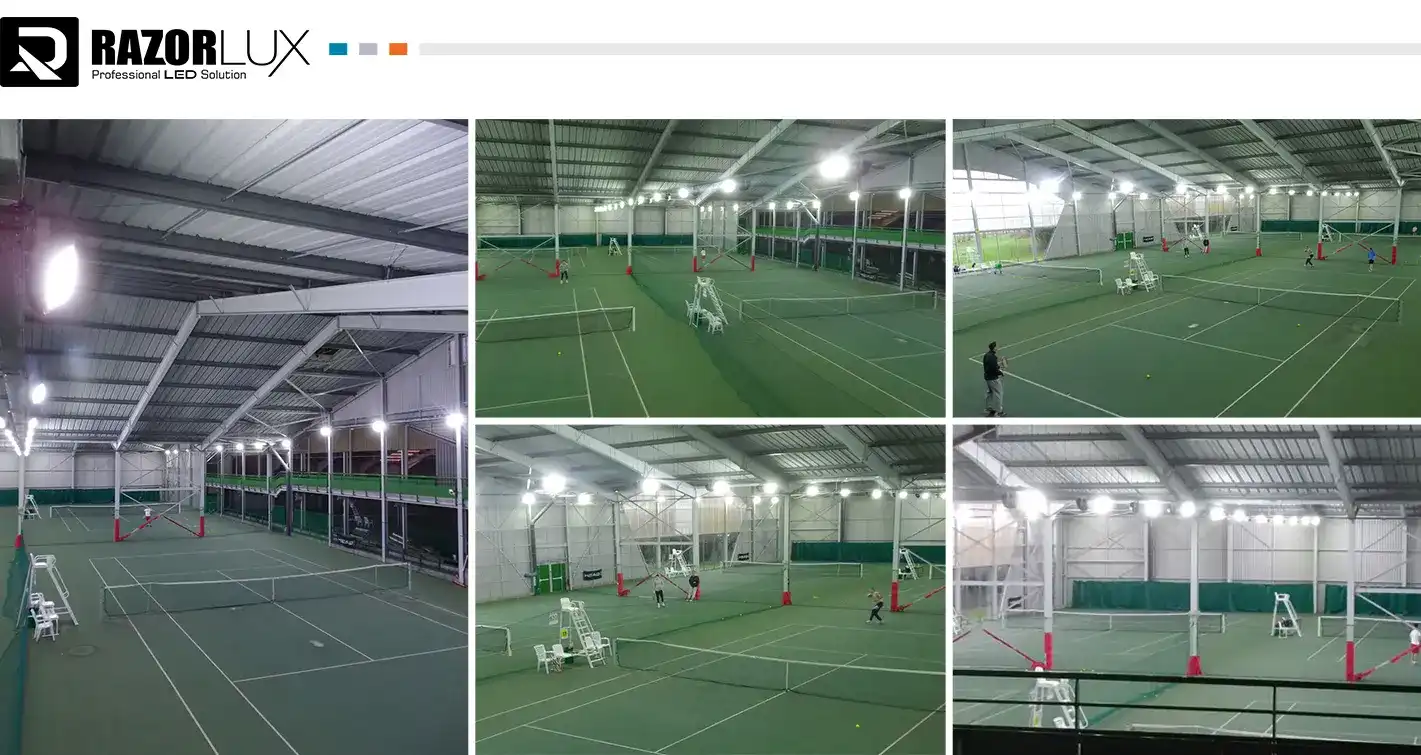
Installations for indoor courts are different from those for open courts. Fixtures can use lower IP grades (IP54–IP65) if they won't be exposed to weather, which could lower their costs. But indoor places can get dusty, and you need to make sure there is enough airflow around things to keep heat from building up.
When courts are outside, they need strong natural safety. The IP67 rating makes sure that water can't get into housithe housing it rains a lot, and the IK10 rating protects against damage from hail and vandalism. Coastal sites should use marine-grade stainless steel and extra coats that don't rust to protect against salt spray damage.
Extreme temperatures have different effects on function. Metal halide lights have trouble or break down in cold places, but LEDs can turn on instantly and keep working at temperatures below zero. In hot places, thermal management is important to make sure that lights get rid of heat properly so that LEDs don't break down too quickly.
| Factor | Indoor Courts | Outdoor Courts |
|---|---|---|
| IP Rating Required | IP54-IP65 | IP65-IP67 |
| IK Rating Required | IK08 | IK10 |
| Mounting Height | 6-9 meters | 8-12 meters |
| Environmental Concerns | Dust, humidity | Rain, salt, temperature extremes |
| Control Systems | Basic timers, manual switches | Smart controls, astronomical timers |
| Maintenance Frequency | Annual cleaning | Quarterly inspection, semi-annual cleaning |
Customizing specs to the type of court improves both performance and cost-effectiveness by making sure that facilities buy the right features without spending too much on features they don't need.
Conclusion
Tennis courts that want to cut down on costs should switch to Tennis Court LED Flood Lights as a long-term investment that will pay off in the long run. Total cost of ownership advantages over traditional lighting include energy savings of 50–70%, maintenance savings of more than 80%, and lifespans of more than 50,000 hours. With payback times of 18 to 36 months, LED conversions are possible even for facilities that are tight on money. Plus, the long-term savings add up over 15 to 20 years of operation. When these benefits are maximized through proper specification, professional installation, and regular maintenance, lighting goes from being an expense to a competitive advantage that boosts the reputation of the facility and makes users happier.
FAQ
1. What energy savings can I expect when switching to LED lighting?
When buildings switch from metal halide to LED lighting systems, they usually use 50 to 70% less energy for lighting. An 800-1000W metal halide lamp can be replaced with a 400W LED fixture that gives off the same amount of light or more, while using more than half as much electricity. The exact amount of money saved depends on how the lights are used, but most buildings get their money back in two to three years just from lower utility bills.
2. How does LED maintenance compare to traditional lighting systems?
LED systems are much easier to maintain than metal halide or halogen options. LED fixtures last for 50,000 to 100,000 hours, which is about 15 to 20 years, while traditional lamps need to be replaced every 6,000 to 10,000 hours, or every two to three years. This gets rid of the need to change lamps and ballasts often, which saves money on work costs. Lenses only need to be cleaned once in a while and inspected once a year, which can usually be done by in-house staff without the need for special tools.
3. Which brands offer the best durability and warranty support for outdoor tennis facilities?
Look for companies that offer full warranties that cover both LED modules and drivers for 5 years or more and have foreign standards such as CE, UL, DLC, and RoHS. The quality of the parts is very important. Fixtures that use Meanwell drivers and tier-one LED chips from Samsung are more reliable. Razorlux stands behind its goods with 5-year warranties on LED modules and drivers and 10-year warranties on housings. This will protect your investment for a long time.
Partner with Razorlux for Professional Tennis Court Lighting Solutions
Razorlux has been working with LEDs for more than twenty years and can help you with your tennis court lighting projects. As a top provider of Tennis Court LED Flood Lights, we offer tried-and-true options that combine top-notch performance with unbeatable dependability. Our RGL2-400A series fixtures have an efficiency of 130 lm/W, a protection rating of IP67/IK10, and adjustable beam angles that can be used in a variety of court layouts. Each item we ship comes with full technical instructions, certifications for international markets, and our best 5-year guarantee in the business. Bulk buying choices offer even more cost savings for facilities with more than one court and for city projects. Contact our skilled technical team at sam@razorlux.com right away to talk about custom lighting solutions that will save you the most money and improve the experience of your players and the reputation of your facility.
References
1. Database of State Incentives for Renewables & Efficiency. (2022). Federal lighting incentives and utility rebates. Retrieved from https://www.dsireusa.org
2. International Electrotechnical Commission. (2019). IEC 60529: Degrees of protection provided by enclosures (IP Code). Retrieved from https://webstore.iec.ch/publication/2452
3. Lighting Research Center. (2021). LED lighting systems for sports and recreation facilities. Rensselaer Polytechnic Institute. Retrieved from https://www.lrc.rpi.edu/programs/solidstate/assist/sports.asp
4. National Electrical Manufacturers Association. (2020). High-intensity discharge to LED conversion guidelines. Retrieved from https://www.nema.org/standards/view/high-intensity-discharge-to-led-conversion-guide
5. U.S. Department of Energy. (2021). LED lighting for outdoor applications. Retrieved from https://www.energy.gov/energysaver/led-lighting
6. U.S. Energy Information Administration. (2023). Average electricity prices by state. Retrieved from https://www.eia.gov/electricity/monthly/epm_table_grapher.php?t=epmt_5_6_a