


_1750326878398.png)

Where to Buy Waterproof LED Flood Light 400W: Supplier Guide
Finding the right supplier for a Waterproof LED Flood Light 400W can make or break your project timeline, budget, and operational success. Whether you're equipping a shipyard in Norway, upgrading lighting at an offshore oil platform in the Middle East, or replacing aging fixtures at a port terminal in Singapore, the supplier you choose must deliver on performance, certification, and reliability. This guide walks you through the supplier landscape, technical considerations, procurement strategies, and real-world insights to help you make confident purchasing decisions that align with your industrial lighting needs.
Supplier Landscape for Waterproof LED Flood Light 400W: What to Look For
There's more to picking a supplier than just comparing prices per unit. You need a partner who knows the problems your industry faces and can help you with paperwork, tech support, and keeping your supply chain stable.
Certifications and Compliance Requirements
International standards must be strictly followed for marine and industrial lighting projects. Look for suppliers that have a lot of different certifications, such as UL, DLC, RMRS, CE, and RoHS. In Australia, projects must have both SAA and C-Tick approvals. Suppliers whose goods have DNV/GL and ABS licenses show that they meet marine classification society standards, which is a must for installations on ships (Maritime Safety Committee, 2022).
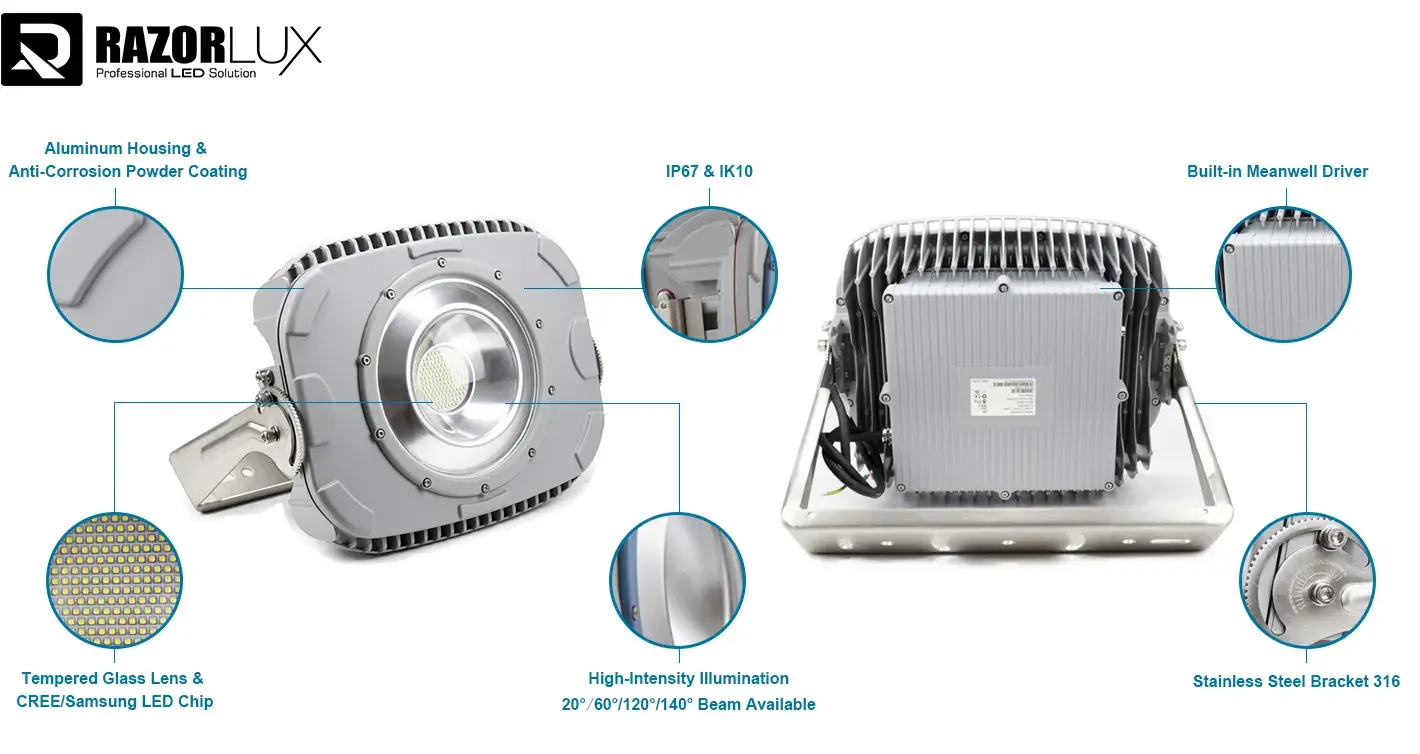
A reliable supplier keeps their ISO 9001 certification, which shows that they follow quality management systems all the way through the manufacturing process. During the evaluation phase, ask for copies of test reports, photometric data (IES files), and papers from a third party that verify the information. Razorlux was founded in 1998 and has permission from China's National Development and Reform Commission to run its Xi'an LED Lighting Engineering Laboratory. It also has more than 125 current patents in the areas of LED chip Packaging, power supply control, and heat management.
Manufacturing Capabilities and Component Quality
Suppliers who are in charge of the whole supply chain, from packaging the LED chips to putting them together, can offer more consistent quality and faster turnaround times for custom orders. Fixtures with Meanwell or Inventronics drivers have been shown to work reliably in harsh conditions, and LED chips from Samsung or Lumileds keep the lumen level fixed over the life of the light. Overheating is a common reason why high-wattage setups break down early (National Electrical Manufacturers Association, 2021). Thermal management systems that use ADC12 die-cast aluminum with built-in cooling fins stop this from happening.
Find out from possible providers how they do DFMEA (Design Failure Mode and Effects Analysis) and if they test everything before sending it out. Razorlux's focus on automotive-grade dependability and use of flexible ePTFE membrane valves to keep lens fog at bay show the level of attention to detail that sets industrial-grade products apart from consumer-level options.
After-Sales Support and Warranty Terms
As a general rule, LED modules and drivers should come with a five-year guarantee. Some makers offer ten-year housing warranties. In addition to the length of the warranty, you should also look at how quickly the supplier responds to technical questions and how well they can help with installation, replacement parts, and troubleshooting. Suppliers that have operations in both the US and China, like Razorlux, can provide personalized service while still making products at a low cost.
Comparing Waterproof LED Flood Light 400W Models for Optimal Procurement
All 400W fittings are not the same. Avoid making mistakes that cost a lot of money by understanding the technology standards and how they fit with your application needs.
Wattage Selection: 300W, 400W, or 500W?
For most port, shipyard, and industrial uses, the 400W model is a good mix between output and energy use. For secondary walkways or equipment storage areas where lower lux levels are okay, a 300W fixture might be enough. However, the 400W output provides 48,000 lumens, which is more than enough to meet or exceed OSHA and marine safety standards for main deck areas, container ports, and offshore platforms where specific lighting requirements are required for safety reasons.
The 500W choice makes sense for setups at high heights (25 to 30 meters) or when replacing several low-wattage fixtures with a single high-output unit. Before choosing a wattage, you should use photometric formulas to figure out your mounting height, coverage area, and necessary lux levels. As part of their service, many companies, including Razorlux, offer free lighting layout design and brightness estimates.
LED Technology Versus Traditional Lighting
Unlike Metal Halide lamps, LED flood lights don't need to warm up for 5 to 10 minutes. Instead, they provide instant full brightness, which is very important for ships and industrial sites in case of an emergency. The color temperature of LEDs stays the same over their lifetime, but as Metal Halide lights age, they change toward blue tones. As the Environmental Protection Agency (2023) notes, the fact that LED fixtures don't contain mercury or other dangerous materials makes them easier to get rid of and helps with environmental compliance.
There are solar-powered LED choices, but they aren't useful for uses that need a steady high lumen output in northern regions where sunlight isn't strong in the winter or for operations that happen 24 hours a day, seven days a week. The 400W grid-connected LED bulb, which can handle a wide range of input voltages, is still the most stable choice for mission-critical industrial lighting.
Beam Angle and Optical Distribution Considerations
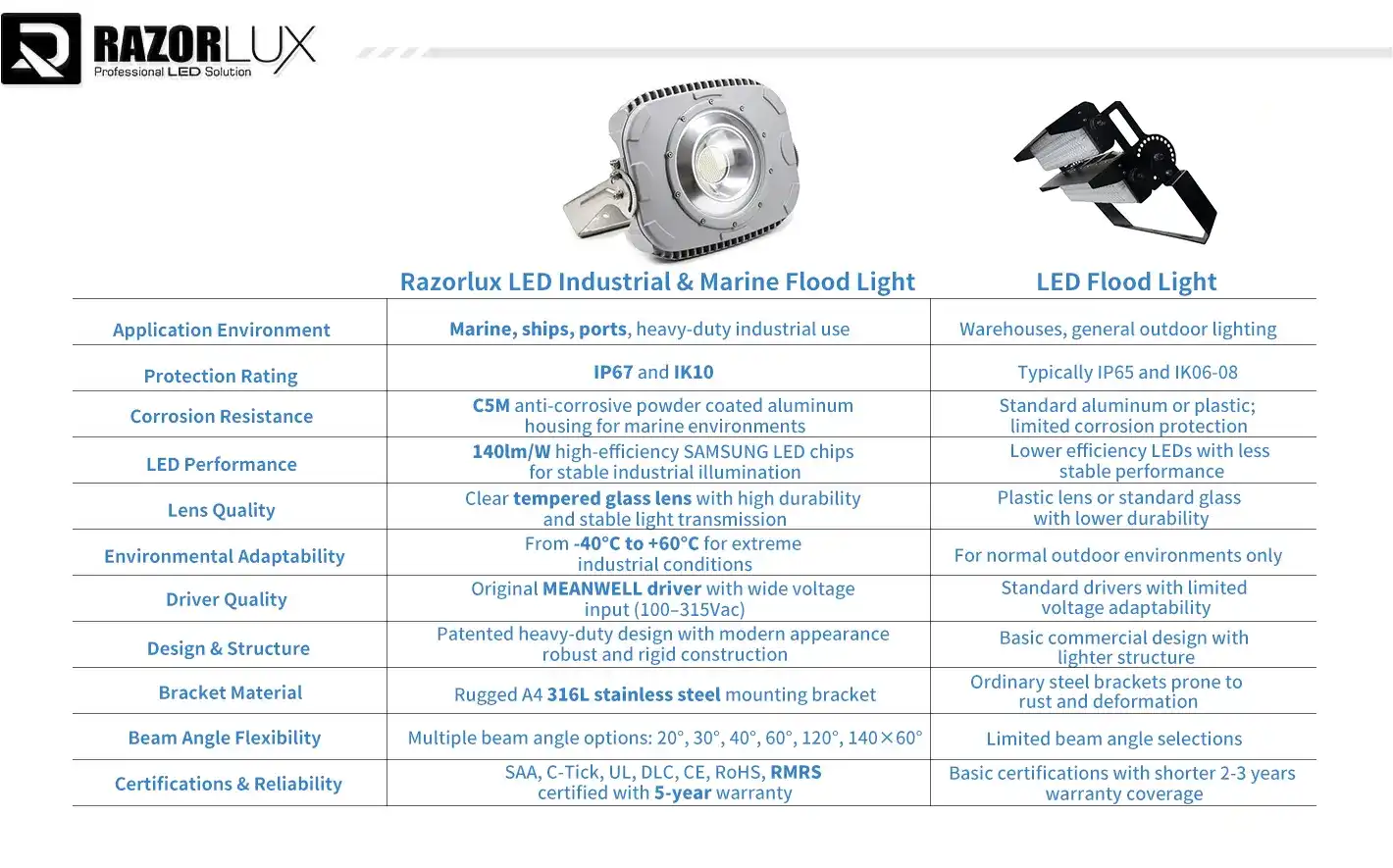
Choosing the right beam position has a direct effect on how well the placement works and how well the lighting works. A 30° beam angle focuses the Waterproof LED Flood Light 400W into a small area, which is great for drawing attention to certain work areas or seeing far away when it's hazy. With a 60° spread, the general area lighting on ship decks and loading docks is evenly lit. The 140°x60° asymmetric distribution keeps light from spilling into nearby areas as little as possible while maximizing usable light on the target surface for high-mast applications, lighting up large rectangular areas like container yards.
To use tools like DIALux or AGi32 for simulations, ask your provider for photometric test results (IES files). You can check covering patterns, uniformity ratios, and glare scores this way before placing big orders.
How to Buy Waterproof LED Flood Light 400W: Practical Procurement Tips
Using strategic buying methods will protect your investment and make sure the project runs smoothly from the quote stage to the installation stage.
Verified Online and Offline Purchasing Channels
B2B sites like Alibaba, Made-in-China, and Global Sources let you find many suppliers, but it's important to make sure they're real. Check for "Assessed Supplier" marks, a record of transactions, and audit reports from a third party. Ask for video tours of the plant and make sure you talk to tech staff directly instead of just sales reps. When you buy directly from the maker, you usually save 15 to 25 percent compared to buying through a distributor. However, local sellers may be able to get you new parts faster.
Going to industry shows like Marintec China, Offshore Technology Conference, or international lighting and floodlights lets you see products in person and talk to people who make decisions. You can also compare competing goods side by side and learn about the market for new technologies at these events.
Negotiating Bulk Orders and Delivery Terms
By committing to a certain amount, you can get better prices and better service terms. When bargaining, make sure that the prices you are given include shipping to your port of entry, insurance, and packaging that is good for sea transport (like shock- and moisture-resistant crates). FOB (Free on Board) prices mean that you have to take care of the foreign shipping. DDP (Delivered Duty Paid) prices, on the other hand, cover all operations and customs clearance, but they cost more.
Custom configurations, like specific beam angles, color temperatures, or mounting brackets, usually take 4 to 6 weeks longer to deliver than standard models. Add extra time to your project plan as a cushion, and think about keeping a small stock of important spare parts. As a general rule, payment terms are T/T wire transfer with a 30% deposit and the remaining 70% due before shipment. However, if you have a good relationship with the seller, you may be able to get net-30 or net-60 terms.
Sample Testing and Technical Validation
Ask for samples to be tested on-site before you place a large order. Check how easy it is to install, how strong the bracket is, where the cable entry points are, and how the heat performs when it's loaded. For 72 hours, run the fixture continuously in its real setting to find any early problems or design issues. If you want to add dimming or automation, have your electrical team check the voltage stability, inrush current, and compatibility with existing control systems.
Write down performance measures like the starting lumen output, am a distribution, and environmental temperature of the housing. If service claims come up later, this standard data will be useful. Trustworthy sellers like Razorlux encourage technical validation and offer thorough installation manuals, wiring diagrams, and troubleshooting guides to help you with your evaluation.
Supplier Comparison: Key Factors for Evaluation
We've put together a comparison framework based on important procurement criteria to help you evaluate potential suppliers in a structured way:
| Evaluation Criteria | What to Look For | Red Flags |
|---|---|---|
| Certifications | RMRS, CE, UL, DLC, DNV/GL, ABS, ISO 9001 | Missing marine certifications; expired documents; refusal to provide test reports |
| Component Quality | Meanwell/Inventronics drivers; Samsung/Lumileds chips; ADC12 aluminum housing | Generic or unnamed components; reluctance to specify driver brand |
| Manufacturing Control | Vertical integration; DFMEA processes; 100% pre-shipment testing | Outsourced assembly; no quality documentation; lack of factory audit willingness |
| Warranty Terms | 5-year LED/driver; 10-year housing; clear replacement procedures | Vague warranty language; short coverage periods; difficult claim processes |
| Technical Support | Lighting design assistance; photometric calculations; installation guidance | Sales-only contact; delayed responses; inability to answer technical questions |
| Supply Chain Stability | Multiple production lines; raw material inventory; on-time delivery track record | Single-line dependency; frequent backorder reports; vague lead times |
This framework helps you compare more than just prices; it also lets you look at the total cost of ownership, which includes things like dependability, support quality, and the chance of a long-term relationship.
Regional Supplier Considerations and Market Access
Knowing the strengths and weaknesses of regional suppliers can help you make the best purchasing decision based on the location of the project and the rules that apply.
Asian Manufacturers: Cost and Customization
China is still the most important place to make LED industrial lighting because it has the best prices and the most customization options. Suppliers who have been exporting for a while know what foreign certifications are needed and can help you get local approvals by providing paperwork in English, Russian, or Arabic. Razorlux, a company with offices in both Xi'an and the US, helps people communicate and provides customer service that meets Western standards while still keeping manufacturing costs low.
Lead times from Asian makers are usually between 30 and 45 days for regular items and between 60 and 90 days for special orders. It takes 25 to 40 extra days to ship containers to ports in Europe and the Middle East. It takes 15 to 25 extra days to ship containers to ports in North America. For immediate repairs, air freight is an option, but it makes unit costs much higher.
European Manufacturers: Premium Quality and Local Support
European sellers charge more, but they can help EU projects follow the rules and produce goods faster within the European Economic Area. German, Dutch, and Scandinavian companies are known for their high level of engineering accuracy, and as part of their services, they often offer more complete lighting design services. For projects in Norway, Denmark, or Sweden, you should check to see if there are any local content requirements or government procurement preferences that favor local suppliers, even if they cost more.
North American Sources: Specification Compliance and Logistics
It's easier to follow the Buy American Act standards for government contracts and building projects when you work with suppliers or makers that are based in the US. It is normal to have UL and DLC approvals, and getting to US ports is easy. Razorlux's American branch offers local stock, faster access to replacement parts, and easier payment processing for US customers while still allowing them to access cheaper Asian manufacturing.
Case Studies and Success Stories from B2B Procurement Clients
Real-life examples show that choosing the right supplier and describing the product correctly can lead to measurable benefits.
Offshore Platform Retrofit in the North Sea
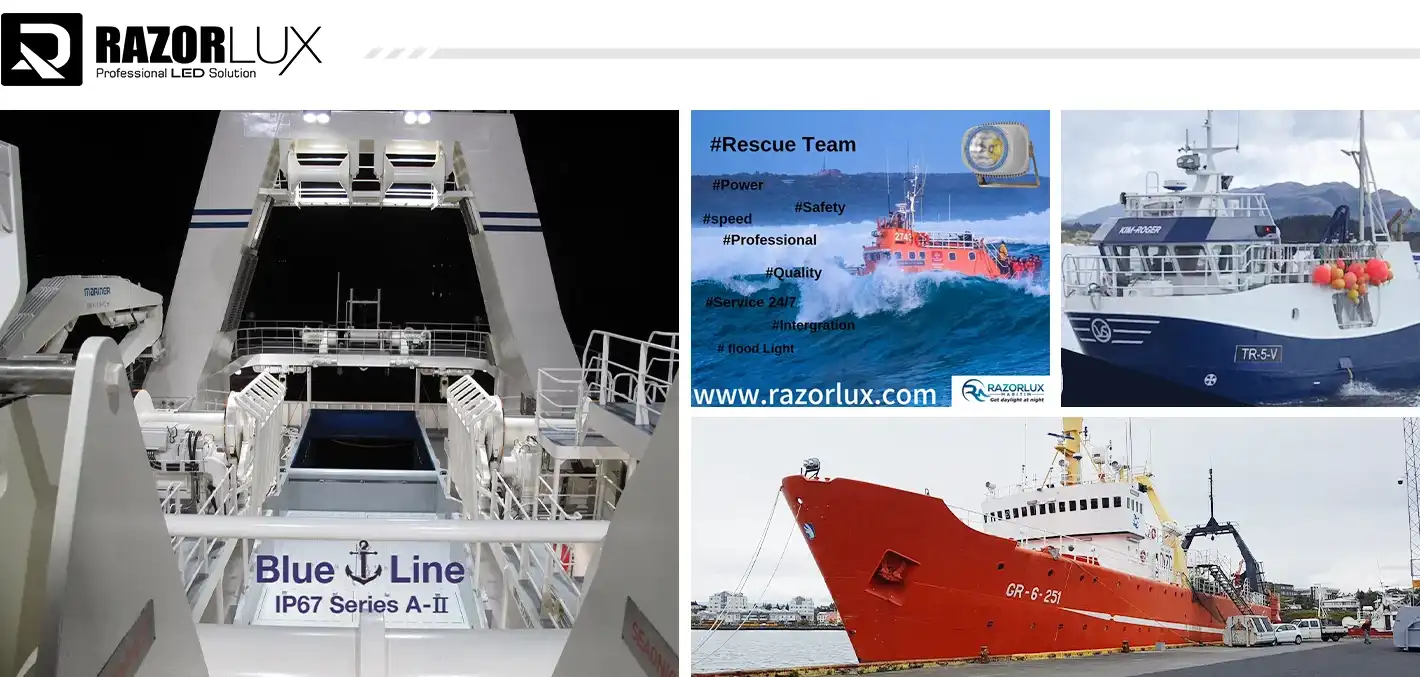
A Norwegian offshore services company had to replace 142 Metal Halide fixtures that were getting old on three production platforms that worked in the rough North Sea. Extreme durability was needed because of salt spray, constant vibration from drilling, and temperatures ranging from -15°C to +35°C. They chose 400W Led Floodlights with IP67/IK10 ratings, RMRS approval, and five-year warranties after looking at five sources.
The project cut energy use by 67%, which meant that one backup generator didn't have to run all the time. This saved about €180,000 a year in fuel costs. The instant-on feature made emergency drills safer, and the longer maintenance intervals (from changing lamps every three months to almost never over three years) freed up technicians to do other important work. The buying manager stated, "Having complete photometric data and marine certifications upfront made our engineering approval process straightforward, and the supplier's willingness to customize mounting brackets for our existing infrastructure saved significant retrofit costs."
Container Terminal Expansion in Southeast Asia
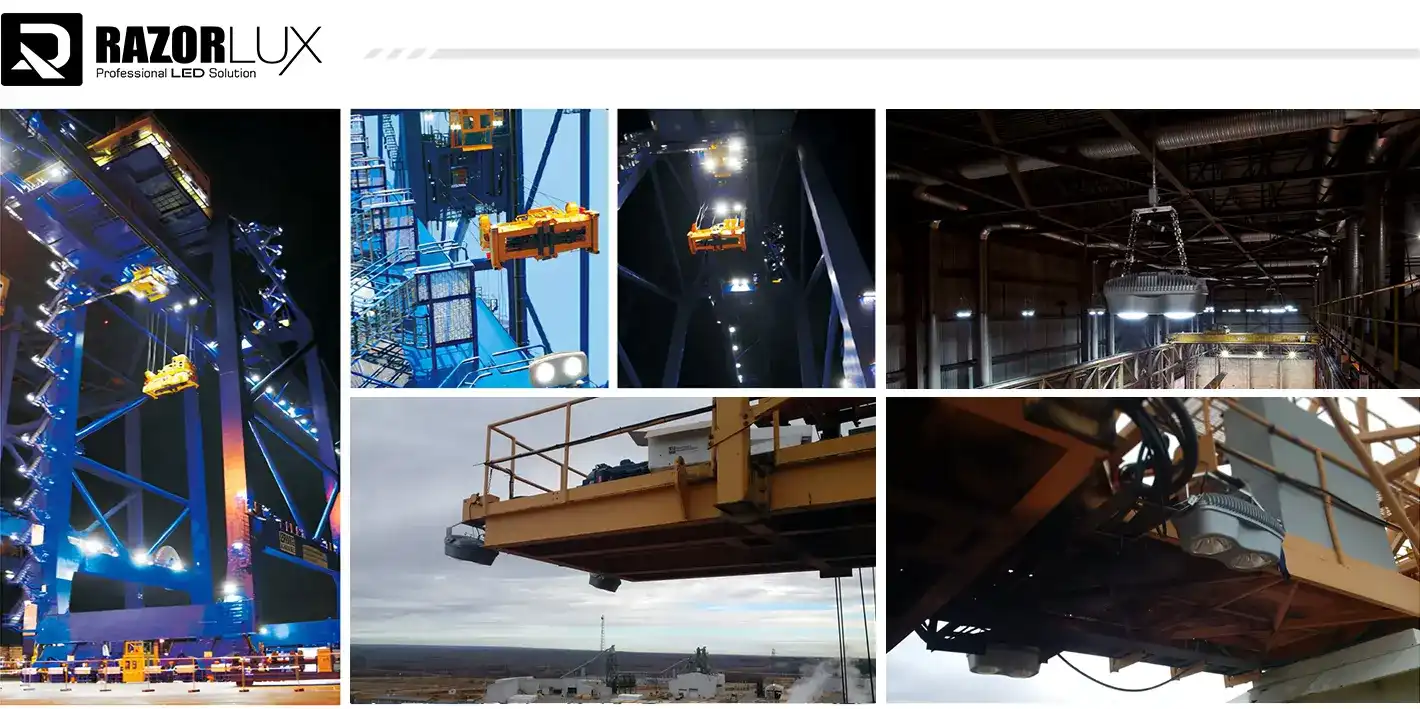
A Singaporean port authority added a new 40-hectare dock that can only be used at night to increase the number of containers it can handle. The lighting requirements stated that there should be at least 20 lux of horizontal Waterproof LED Flood Light 400W at ground level and a 0.4 uniformity ratio. For the project, 280 lamps were placed on 30-meter-tall masts. Each mast held four 400W LED floodlights with 60° beam angles.
The seller did detailed photometric modeling to show that the lighting met port lighting standards and worked with the general builder to find the best places to put the fixtures. The system got an average brightness of 25 lux and a regularity of 0.45, which was better than what was expected, and used 45% less energy than the original HID-based design. After two years, not a single fixture has broken, and the port authority has chosen the same supplier for three more terminal projects. The facilities manager said, "We needed a supplier who could handle large-scale orders with consistent quality and meet our aggressive installation deadlines. The combination of reasonable pricing, complete documentation, and responsive technical support made them our preferred partner."
Shipyard Modernization in Eastern Europe
A Russian shipyard with 800 workers improved the lights in the dry docks and production halls to meet new safety rules and make the workplace better. As part of the buying process, the engineering department reviewed the technical specifications, purchasing compared prices, and management approved the guarantee terms. The chosen 400W LED floodlights took the place of 600W HPS fixtures. They used 55% less energy and gave off 40% more light.
The custom color temperature setting (4000K) provided good vision for welding inspections while reducing eye strain during long shifts. The supplier's five-year warranty and the fact that spare drivers were included in the first order took away the yard's worries about downtime during key vessel delivery times. The project paid for itself in 18 months by saving energy and getting rid of monthly maintenance costs of around $3,500 for labor and materials to replace lamps.
Technical Specifications Reference Table
Knowing the exact specs of a product helps you compare them correctly and make sure that sellers understand your needs:
| Specification | Razorlux RGL2-400P | Industry Standard Range |
|---|---|---|
| Rated Power | 400W (360W LED + 40W Driver) | 380W - 420W |
| Luminous Flux | 48,000 lm (5700K, after 1 hour stabilization) | 45,000 - 52,000 lm |
| Efficacy | 130 lm/W | 125 - 160 lm/W |
| Input Voltage | AC 90-305V; DC 127-431V | AC 100-277V typical |
| Power Factor | ≥0.98 | ≥0.90 - 0.98 |
| THD | <10% | <15% - 20% |
| Color Temperature | 2700K - 6500K | 3000K - 6500K typical |
| CRI | Ra≥75 (Ra≥80, Ra≥90 available) | Ra≥70 - 80 |
| Beam Angles | 15°, 20°, 30°, 40°, 60°, 120°, 140°x60° | 30° - 120° typical offerings |
| IP Rating | IP67 | IP65 - IP67 |
| IK Rating | IK10 | IK08 - IK10 |
| Operating Temperature | -40°C to +60°C | -30°C to +50°C typical |
| Operating Humidity | 10% - 95% | Up to 90% typical |
| Lifespan | ≥50,000 hours (L70) | 50,000 - 100,000 hours |
| Housing Material | Die-cast aluminum with powder coating | Aluminum or marine-grade alloys |
| Bracket Material | Stainless steel | Stainless steel or galvanized steel |
| Weight | 19 kg with bracket | 15 - 22 kg typical |
| Driver Brand | Meanwell | Meanwell, Inventronics, Philips |
| Warranty | 5 years (LED/driver); 10 years (housing) | 3 - 5 years standard |
These standards give you a way to compare different suppliers and make sure that you are comparing like with like during the buying process.
Understanding Total Cost of Ownership
The price of the light bulb is only one part of how much it will cost over its lifetime. In a full evaluation, things like energy use, maintenance work, replacement parts, and downtime are all taken into account.
Energy Cost Calculations
A 400W LED light that is used for 4,000 hours a year (which is common in port and industrial settings) uses 1,600 kWh a year. At $0.12/kWh industrial electricity rates, each fixture will cost $192 a year in energy costs. A 1000W Metal Halide lamp with the same output, on the other hand, costs $480 and uses 4,000 kWh per year, saving $288 per fixture per year. Savings on energy add up to $57,600 a year for a 200-fixture installation, which usually pays for itself in 18 to 24 months (U.S. Department of Energy, 2022).
Maintenance and Replacement Considerations
Traditional HID lamps need to be replaced every 10,000 to 15,000 hours, which means renting a boom lift, hiring electricians, and stopping production to make sure the fixtures can be reached safely. Most of this maintenance isn't needed for LED fixtures that last 50,000 hours or more. Maintenance costs are 70–85% lower than with older lights, and that's even when drivers need to be replaced every so often. With well-designed goods, this can be done without taking the fixture down.
Operational Benefits Beyond Direct Costs
Accidents at work happen less often when sight is better, which could mean lower insurance costs and fewer workers' compensation claims. Better color rendering improves quality control in manufacturing settings and makes security cameras work better in surveillance systems. The ability to restart instantly after a power outage gets rid of the 10 to 15 minute downtime that comes with Metal Halide re-strike. This keeps work going during common grid disturbances in industrial settings.
Conclusion
Finding a trustworthy Waterproof LED Flood Light 400W provider means matching technical requirements, certification compliance, component quality, and the ability to provide long-term support. The best procurement plans look at more than just prices. They also look at the total cost of ownership, how stable the provider is, and how well it fits with your business's needs. You can protect your investment and make sure that the lighting works well for years to come by paying attention to IP67/IK10 ratings, well-known brands of parts like Meanwell drivers, full warranty terms, and suppliers who have experience in both marine and industrial settings. The case studies show measurable returns through lower energy use, less maintenance, and better working conditions. These results show how important it is to carefully choose a supplier and create project specifications at the start of the project.
FAQ
1. How long do 400W waterproof LED flood lights typically last?
Quality 400W LED flood lights are rated to work for 50,000 to 100,000 hours, which is 12 to 25 years of service at 4,000 hours per year. The L70 grade, which means keeping 70% of the original lumens at the stated lifespan, is the standard measurement used in the business. How long something actually lasts depends on how well it handles heat, where it's used, and how stable the electricity is. Fixtures that use Meanwell drivers and keep junction temperatures below 75°C always reach or exceed their rated lifespans.
2. What energy savings can I expect compared to Metal Halide alternatives?
Usually, 60 to 65% less energy is used when a 1000W Metal Halide system is swapped out for a 400W LED bulb that gives off the same amount of light. The metal halide fixture uses about 1,080W, which includes balance losses, while the LED fixture uses 400W constantly. With a $0.12/kWh rate, this saves each outlet $288 a year. More savings come from not having to cool as much in tight areas and not having to pay to get rid of mercury-containing lamps.
3. Are special installation considerations required for marine environments?
Marine systems need fixing tools that won't rust (stainless steel or hot-dip galvanized), proper cable gland sealing to maintain IP ratings, and care to prevent vibrations on ships. Marine-grade electrical cable with a UV-resistant jacket should be used, and all connections should be made in weatherproof junction boxes. Fixtures should be set up so that water doesn't pool on the lens surface. For installations on ships, make sure they meet the requirements of the classification society (DNV/GL, ABS), and if the ship goes out to sea in rough weather, test them for shock and vibration.
Partner with Razorlux for Industrial-Grade Lighting Solutions
Razorlux is ready to help you buy waterproof LED flood lights. They have been making lights for over 20 years and have a track record of success in naval and heavy industrial settings. Our engineering team will help you make sure your project meets safety and operational standards by designing the lighting layout and doing photometric calculations for free. Before it ships, every Razorlux fixture is tested to make sure it works perfectly. We also offer a five-year warranty and quick technical support. We provide certified, dependable solutions that can handle the harshest environments, whether you're setting up a shipyard in Northern Europe, improving lighting on offshore platforms in the Middle East, or updating the infrastructure of a port terminal in Southeast Asia. Visit sam@razorlux.com to get full specifications, case studies that are important to your business, or a quote that is made just for your next project. We offer open terms for buying, discounts for buying in bulk, and established transportation networks that guarantee on-time delivery to your site. Razorlux is the company you can trust to make Waterproof LED Flood Light 400W that is innovative, long-lasting, and improves performance in a way that you can see.
References
1. American Lighting Association. (2022). LED Lifespan and Performance Standards for Industrial Applications. Retrieved from https://www.americanlightingassoc.com/LED-Industrial-Standards.aspx
2. Environmental Protection Agency. (2023). Hazardous Waste Management for Commercial Lighting. Retrieved from https://www.epa.gov/hw/lighting-waste-disposal
3. Illuminating Engineering Society. (2021). IES Recommended Practice for Outdoor Industrial Lighting (IES RP-7-21). Retrieved from https://www.ies.org/standards/recommended-practices/
4. Lighting Research Center. (2023). Color Quality and CRI in Industrial Work Environments. Rensselaer Polytechnic Institute. Retrieved from https://www.lrc.rpi.edu/programs/solidstate/color-quality.asp
5. Maritime Safety Committee. (2022). Lighting Requirements for Ships and Offshore Installations (MSC Circular 1464). International Maritime Organization. Retrieved from https://www.imo.org/en/OurWork/Safety/Pages/Lighting-Standards.aspx
6. National Electrical Manufacturers Association. (2021). Solid State Lighting for Harsh Environments (NEMA SSL 7A-2021). Retrieved from https://www.nema.org/standards/view/solid-state-lighting-products
U.S. Department of Energy. (2022). LED Lighting Economics and Payback Analysis. Retrieved from https://www.energy.gov/energysaver/led-lighting