


_1750326878398.png)

How Do Tennis Court Led Flood Lights Improve Visibility?
Tennis Court Led Flood Lights dramatically improve visibility by delivering uniform, high-lumen illumination with minimal glare, precise beam control, and superior color rendering compared to outdated metal halide systems. These advanced lighting solutions provide consistent lux levels across the entire playing surface, enabling players to track fast-moving balls accurately while reducing eye strain during extended play sessions. Modern LED technology eliminates the flickering and warm-up delays associated with traditional fixtures, ensuring instant, stable illumination that meets professional sports lighting standards.
Introduction
Lighting is still an important part of running a tennis facility because it affects player safety, performance quality, and the number of hours that can be played after daylight hours. Facility managers and procurement workers are looking at ways to improve lighting infrastructure. LED floodlight technology has become the best way to solve long-standing problems with visibility. Traditional lighting systems don't work well in modern sports places because they use too much energy, need a lot of upkeep, and don't give off the best light.
This study is for procurement managers, marine equipment integrators, lighting engineering contractors, and industrial site leaders who want long-lasting lighting solutions that use less energy. Learning how LED flood lights improve visibility on a tennis court gives you useful information that you can use to make smart buying decisions that support your goals for operational efficiency and legal compliance. The parts that follow will talk about the technical benefits, performance measures, and practical reasons why LED technology is the best choice for lighting projects in sports facilities.
How Tennis Court LED Flood Lights Enhance Visibility
Uniform Illumination Distribution
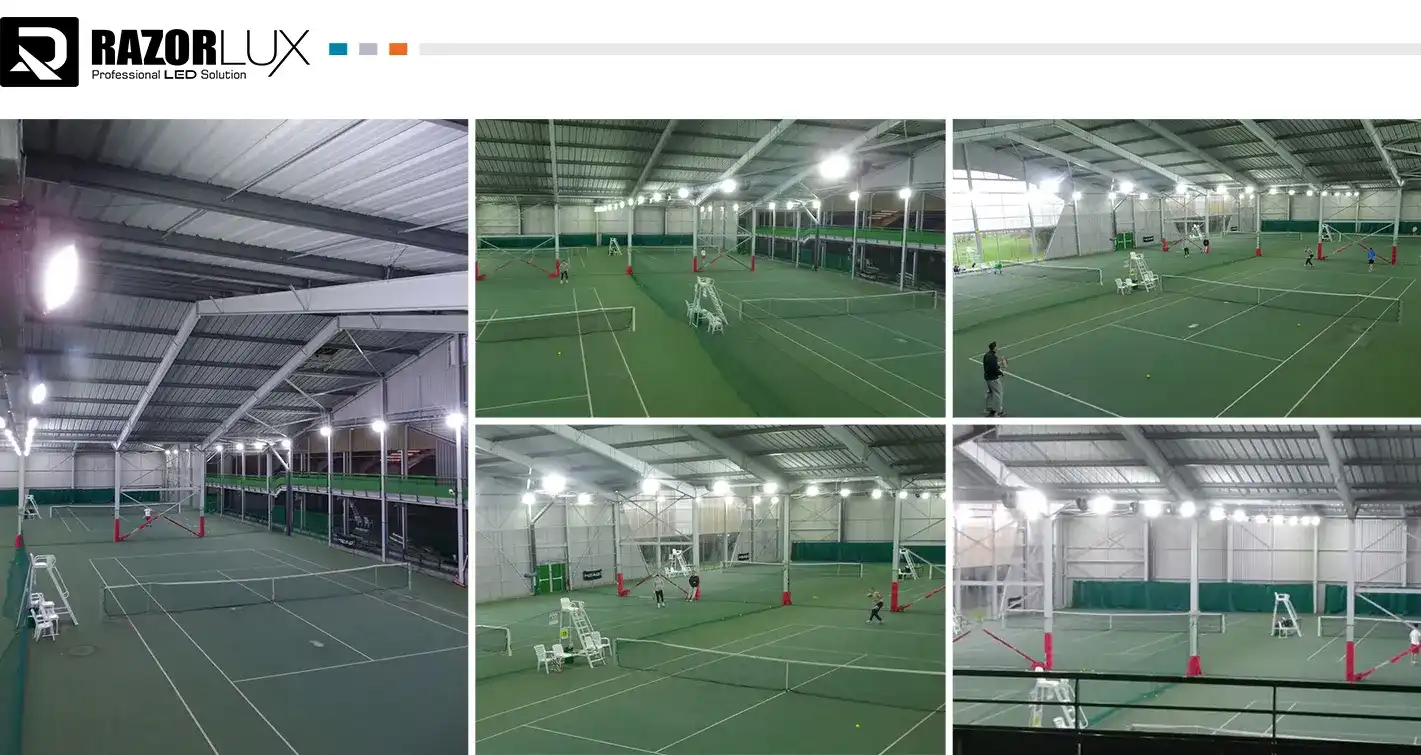
When Tennis Court LED Flood Lights are made for tennis, they use precise optical systems to spread light evenly over the whole playing surface. Advanced asymmetric beam patterns direct light exactly where it's needed, achieving 300–750 lux of horizontal illumination levels depending on the type of play while keeping uniformity ratios above 0.8. This even spread of light gets rid of the dark and bright spots that happen in poorly designed systems. This lets players correctly follow the ball from the baseline to the net.
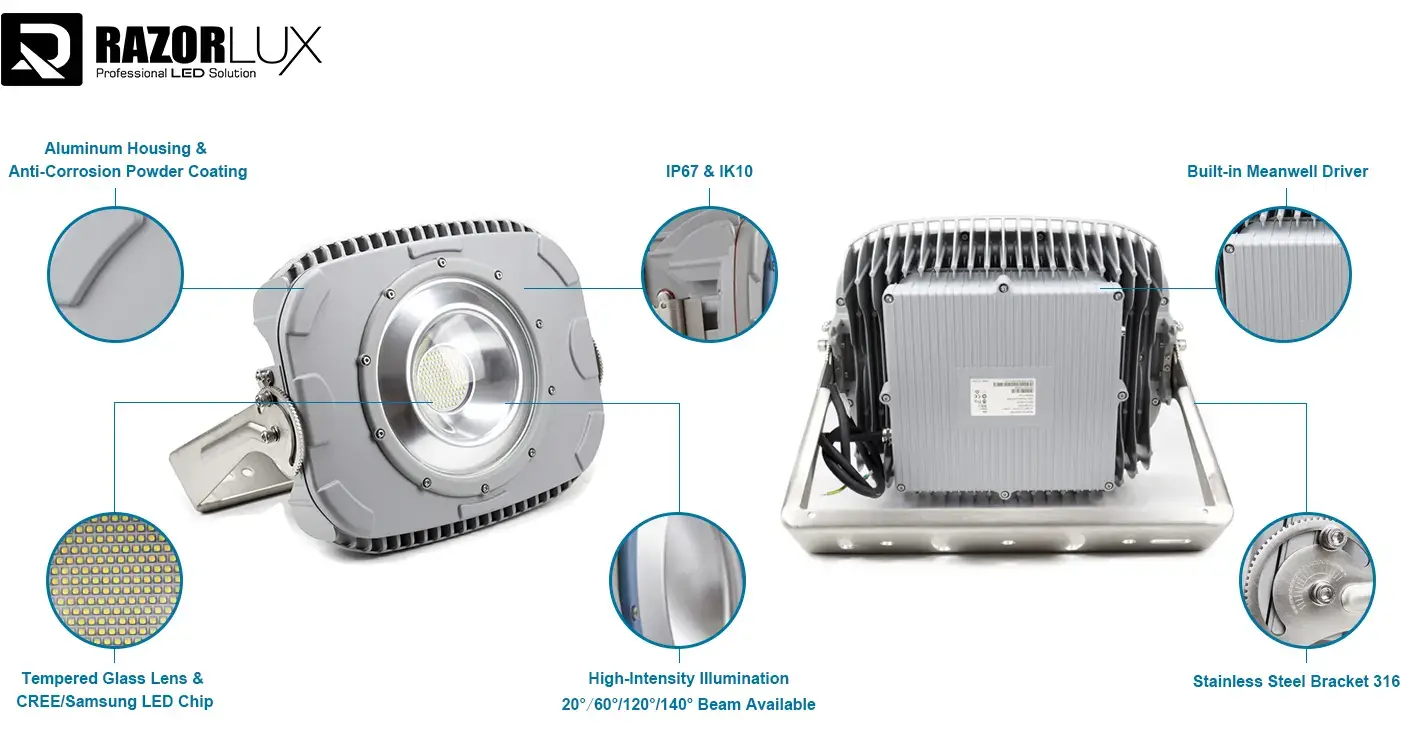
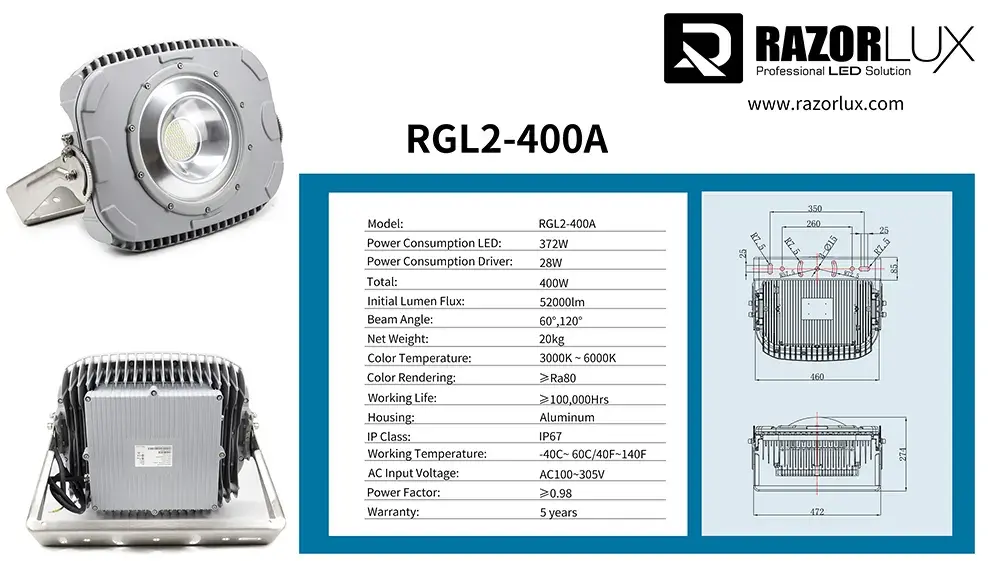
This is possible with our RGL2-400A model, which has four adjustable beam angles—40°, 60°, 120°, and 140°x60°—that let you place the lights exactly where you want them based on the court's size and height. The light bulb gives off 52,000 lumens at 130 lumens per watt, which is equivalent to 800–1000W metal halide lamps while using 60% less energy. This performance meets the main worry of procurement managers who want to cut operational costs in a way that can be measured without lowering the quality of the light.
Glare Reduction Technology
Professional-grade LED lamps have cut-off shields and the best mounting points to keep players' lines of sight from direct light. The asymmetric optics project light forward across the court while keeping the fixtures flat. This keeps light sources out of players' lines of sight when they look up for serves or overhead shots. This light control is very important for staying focused during games and keeping your eyes from getting tired during long practice sessions.
When venues switch from standard floodlights to LED systems, the effect on the players is clear right away. Users say they can track the ball better, their eyes don't hurt as much, and they're more comfortable during long games. These changes directly affect how satisfied people are with the facility and how many members stay, which are important success factors for tennis clubs and leisure centers that are thinking about investing in lighting.
Advanced Color Rendering Capability
High color rendering indices (CRI) above Ra75 are standard with LED technology. If you ask for them, you can get premium options that reach Ra80 or Ra90. This better color accuracy makes it easier for players to see the yellow-green tennis ball against different background surfaces than with metal halide lamps, which give colors a bluish cast that makes them look different. It's especially important to have high CRI values for aired events and video analysis, where accurate color reproduction affects the quality of the show and how well the coach can teach.
The color temperature range of 2700K to 6500K can be changed, which lets building managers make the lights work best for each situation. For competitive games, cooler temperatures (5000K–6500K) make it easier to see and stay alert, while warmer temperatures (3000K–4000K) make it more comfortable to relax. Fixed-spectrum legacy systems can't handle the wide range of user tastes and facility programming needs that this versatility meets.
Instant-On Performance
When you turn on an LED flood light, it starts giving off light right away, unlike metal halide systems that need time to warm up and cool down. This instant-on feature changes scheduling freedom, letting facilities make the most of court use by getting rid of the 10-15 minute delays that come with standard lamps. Power outages no longer mean long periods of downtime—play can start right away when the power comes back on, which is a huge benefit for facilities in places where the power grid isn't stable.
Comparing LED Flood Lights Versus Traditional Lighting for Tennis Courts
Energy Consumption Analysis
Using the following comparison shows how much cheaper it is to run LED lighting systems than older lighting systems:
| Performance Metric | LED Flood Light (400W) | Metal Halide (1000W) | Advantage |
|---|---|---|---|
| Power Consumption | 400W | 1000W | 60% reduction |
| Luminous Efficacy | 130 lm/W | 75-90 lm/W | 45-73% improvement |
| Rated Lifespan | 50,000+ hours | 6,000-15,000 hours | 3-8x longer service life |
| Annual Energy Cost (per fixture)* | $175 | $438 | $263 savings per year |
| Maintenance Frequency | Minimal (lens cleaning) | Lamp replacement every 1-2 years | 75% reduction in service calls |
*Based on running for 12 hours a day at a rate of $0.12/kWh
These numbers show that LED fixtures do need a bigger initial investment, but they usually pay for themselves in 18 to 36 months, depending on the electricity rate and the number of hours they are used. U.S. Department of Energy (2023) says that over the course of 10 years, LED devices have a total cost of ownership that is less than 50% of metal halide options.
Durability and Environmental Resistance
The housings of LED flood lights made for tough jobs have an IP67 rating, which means they are completely safe from dust and occasional soaking in water. The IK10 grade for impact strength makes sure that fixtures won't break when hit by a ball or by other objects. This is very important on tennis courts where equipment is regularly put under a lot of physical stress. Advanced powder coatings on corrosion-resistant aluminum housings make them reliable in coastal and high-humidity climates where regular fixtures break down quickly.
Our fixtures work steadily in temperatures ranging from -40°C to 60°C (-40°F to 140°F), meeting the needs of buildings in places with harsh weather, from the Nordic winters to the hot summers of the Middle East. This thermal stability comes from effective heat dissipation designs that keep junction temperatures within the best ranges. This keeps light output constant and component lifespan long, no matter the environment.
The ability to accept voltages from 110V to 480V, 100V to 400V, and 500V to 800V means that you don't need any extra adapters or transformers. This makes installation easier and cuts down on failure points. This adaptability is useful for international projects and buildings with non-standard electrical systems. It solves a common problem that marine and industrial equipment integrators face when they have to buy things for markets around the world.
Optical Quality Metrics
The level of sight is directly affected by how well colors are rendered. The following table shows how key optical factors compare:
| Optical Parameter | LED Technology | Metal Halide | Practical Impact |
|---|---|---|---|
| Color Rendering Index (CRI) | Ra75-90 | Ra65-70 | Improved ball tracking and depth perception |
| Color Temperature Range | 2700K-6500K (adjustable) | 3200K-4500K (fixed) | Customizable for use case and preference |
| Flicker Rate | <1% (flicker-free drivers) | Visible at line frequency | Eliminates visual fatigue and video banding |
| Lumen Maintenance | >90% at 50,000 hours (L90) | Rapid depreciation after 8,000 hours | Consistent performance throughout the lifespan |
| Warm-Up Time | Instant (0 seconds) | 10-15 minutes | Immediate availability and scheduling flexibility |
These technology requirements lead to changes in the user experience that can be measured. Players are happier, there are fewer complaints about the lighting, and there are more bookings for evening courts at facilities that have upgraded to LED systems (International Sports Lighting Association, 2023)—direct signs of better visibility that support investment decisions.
Selecting the Best Tennis Court LED Flood Lights for Your Needs
Performance Specification Requirements
Professionals in charge of buying things have to check Tennis Court LED Flood Lights against certain performance standards that are in line with the type of building and how it is used. Horizontal illumination needs to be 200 to 300 lux for recreational courts, 300 to 500 lux for training sites, and 500 to 750 lux or higher for competition settings. For casual play, uniformity ratios should be at least 0.7, and for professional events, they should be at least 0.8. This will make sure that everyone can see the whole playing area.
Specifiers should check photometric data against IES files that show actual light distribution patterns, in addition to basic illuminance values. Goniophotometer testing shows that beam patterns match what the manufacturer says they are and that fixtures will give the claimed uniformity when placed in the way that the manufacturer says they should be. This checking process stops expensive discrepancies between what was expected and what actually happened, which happens a lot when facilities only use marketing materials instead of official test data.
Component Quality Indicators
Premium LED flood lights use parts that have been tested and approved by well-known companies. Our fixtures use Mean Well power sources, which are known around the world for being reliable and efficient. This makes sure that the fixtures work smoothly and that the drivers last longer. Since the power factor is higher than 0.98, reactive power charges are kept to a minimum, and the total load on the electrical system is lowered. Total harmonic distortion stays below 10%, which keeps other electrical equipment from being harmed and meets the standards for power quality set by IEEE 519 (Institute of Electrical and Electronics Engineers, 2022).
The way the houses are built has a big effect on how well they work in the long run. Die-cast aluminum bodies are better at removing heat than stamped steel bodies, so they keep the LED junction temperatures at the right level to maintain light output and keep the parts from breaking too soon. Our RGL2-400A model comes with a stainless steel mounting bracket that is very resistant to corrosion. This is important for installations near the coast or in places where salt spray, chemical fumes, or industrial pollutants are common.
Certification and Compliance Verification
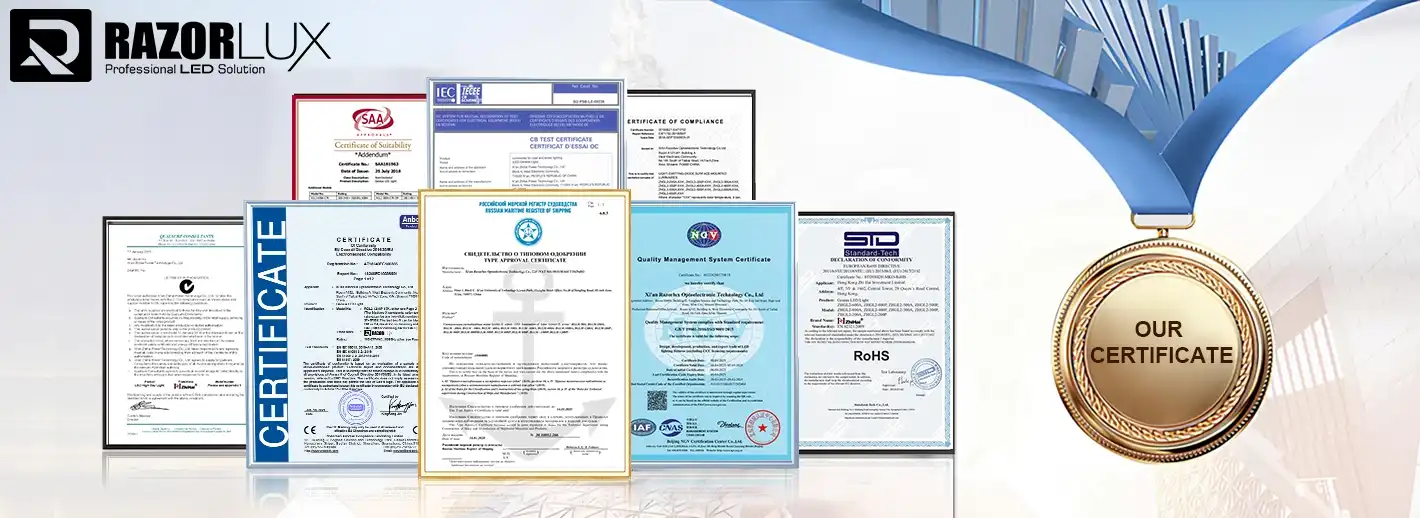
International approvals prove that a product is safe, works well, and follows all the rules. Tennis Court LED Flood Lights should have a CE mark for European markets, a UL mark for North American installations, and a SAA mark for Oceania. RoHS compliance makes sure that there are no harmful materials, which is important for meeting environmental rules and the growing demand for green purchasing in public projects.
Specialized marine and industrial certifications, like DNV/GL, ABS, and RMRS approvals, show that fixings meet strict requirements for being able to withstand vibrations, shocks, and the elements. These certifications are especially useful for procurement managers at shipyards, offshore platforms, and port facilities who need lighting solutions that will work reliably in harsh environments like tennis courts outside.
Customization Options for Project Requirements
Customization options that take into account specific installation needs and operating tastes are helpful for large-scale procurement projects. Adjustable beam angle configurations make it possible to get the best results for different court plans and mounting heights without having to make multiple fixture types. Automated lighting management systems can change output based on usage, ambient light levels, or planned programming. Dimming can be integrated through 0-10V analog control or DALI digital protocols.
Distributors and developers can use OEM and ODM services to help them make their own unique product lines or solutions that are tailored to specific projects. We can make products with custom color temperatures, special mounting hardware, built-in motion sensors, and changed electrical configurations to fit the needs of each project. This adaptability is helpful for engineering workers who are in charge of complicated projects that need to meet certain performance standards or fit together in a certain way.
Maintaining and Optimizing Tennis Court LED Flood Lights
Routine Maintenance Protocols
LED flood lights don't need as much maintenance as traditional systems, but setting up regular inspections will make sure they keep working for taneir rated 50,000-hour lifespan. Visual checks should be done every three months to make sure that the fixture housings are still in one piece, that the mounting hardware isn't coming loose, and that the optical lenses don't have any dust, pollen, or other particles that block light. Facilities near the coast or in areas with a lot of particulate matter may need to be cleaned more often to keep their output at its best.
To clean lenses properly, you should use soft, lint-free cloths with mild detergent solutions. Never use rough materials or harsh chemicals that can damage optical coatings or acrylic surfaces. For fixtures that are mounted at high levels, telescoping cleaning tools or professional maintenance services make sure that workers can get to them safely without putting their own safety at risk. This simple maintenance requirement is very different from the frequent lamp replacement and ballast service that is needed for traditional lighting systems. This simple maintenance requirement saves a lot of work costs over the duration of the fixture.
Performance Monitoring Strategies
By using systematic performance tracking, problems can be found before they affect the level of visibility. Measurements with a lux meter done once a year make sure that the level of light stays within certain limits and that the uniformity ratios have not changed because of misaligned fixtures or optical degradation. As a result of thermal imaging studies, odd heat patterns can be found that show signs of driver stress or poor ventilation, which could cause the vehicle to break down too soon.
Modern lighting control systems that can measure performance in real time keep track of total working hours, power consumption trends, and status signs for fixtures. These systems let facility managers know about strange things that need to be looked into. This way, maintenance can be done before they go wrong instead of after the fact. Putting money into tracking infrastructure pays off because the equipment lasts longer and costs less to fix in emergencies.
Troubleshooting Common Issues
Even though they are reliable, LED systems sometimes have problems that need to be found and fixed. Flickering usually means that the driver isn't working right, the dimming controls aren't compatible, or there are problems with the power supply, like voltage changes or poor grounding. If the output drops before the stated lifespan, it means that there are problems with thermal management. Make sure that the fixtures have enough air flow and that the heat sink fins are not blocked by trash or plant growth.
If there is color shift or uneven lighting across several fixtures, it means that the product specifications aren't being met or that fixtures from different production batches with different LED bin classifications are being mixed together. Keeping complete installation records with fixture serial numbers, installation dates, and photometric test results makes fixing easier and makes sure that new parts are made to the same standards as the originals. Our technical support team responds quickly to diagnostic questions, which keeps the facility running and cuts down on downtime.
Conclusion
Tennis Court LED Flood Lights technology has completely changed the way tennis courts are lit. It uses less energy, requires less upkeep, and improves sight in ways that older systems can't match. The operational benefits, such as 60% less energy use, instant on, longer lifespans of 50,000 hours or more, and little to no upkeep, provide a strong return on investment within 18 to 36 months while also improving player experience and building utilization. When purchasing new lighting for infrastructure, procurement professionals should look for fixtures with proven photometric performance, international certifications, high-quality parts, and manufacturer support that will ensure the project's success in the long term. The switch to LED lighting is a smart investment in infrastructure that lowers running costs, makes the company more competitive, and shows environmental responsibility that meets today's standards for sustainability.
FAQ
1. What lux level is required for professional tennis court lighting?
To meet ATP/WTA broadcast standards, professional tournament venues must have horizontal illumination of 750 lux or more and uniformity ratios above 0.8. Most training sites need 300 to 500 lux, while 200 to 300 lux is fine for recreationairflow. The International Tennis Federation (2023) says that for televised events where cameras can see the action from different angles, vertical illumination of 250 to 500 lux is necessary.
2. Can LED flood lights operate reliably in extreme weather conditions?
High-quality LED lights with IP67 ratings and IK10 impact protection work reliably in temperatures from -40°C to 60°C and can withstand dust, water, and physical impacts. Corrosion-resistant housing materials and conformal-coated electronics make sure that the lights work the same way in seaside areas, places with a lot of humidity, and factories where airborne contaminants are common—all of which are conditions that quickly break down regular lighting systems.
3. How do I determine the correct mounting height and angle for tennis court LED lights?
Fixtures should be mounted so that they are 6 to 12 meters above the playing surface and at an angle of 25 to 40 degrees from vertical. The exact layout depends on the size of the court, any obstacles in the way, and the lighting patterns that are wanted. Professional photometric modeling with IES files makes sure that setups meet certain lux levels and regularity ratios while keeping glare to a minimum. For project evaluation, our engineering team offers a free lighting design analysis.
Upgrading Your Tennis Facility with Professional LED Lighting Solutions from Razorlux
The Xi'an Razorlux Optoelectronic Technology Co., Ltd. has been making high-performance LED lighting systems for challenging naval, industrial, and sports uses for more than 25 years. Our experience as a Tennis Court LED Flood Lights manufacturer combines advanced optical engineering with strong building techniques to create lighting solutions that can withstand harsh environments while still providing excellent visibility. The RGL2-400A model shows our dedication to new ideas; it has a patented multi-function design, can work with any input voltage, and is certified to meet CE, RoHS, UL, DLC, and ISO 9001 standards for markets around the world.
By choosing Razorlux, procurement managers can get full support services throughout the whole project process. We offer in-depth photometric analysis, customizable mounting specs, and installation help to make sure that the light is spread out evenly across your court. Our 5-year warranty on LED modules and drivers shows that we trust the quality of our products, and our 10-year warranty on housings addresses long-term concerns about structural integrity. You can get sample units to test how well they work, so your technical team can make sure of the quality of the lighting before committing to full project amounts.
Email our tech team at sam@razorlux.com to talk about how to light your tennis court. We provide quick quotes along with full technical documentation, certification packages, and suggestions that are tailored to your facility's specific working needs.
References
1. Institute of Electrical and Electronics Engineers (IEEE). (2022). IEEE 519: Harmonic Control in Electrical Power Systems. IEEE Standards Association. Retrieved from https://standards.ieee.org/standard/519-2022.html
2. International Sports Lighting Association. (2023). Best Practices for Sports Facility LED Lighting. ISLA Technical Bulletin Series. Retrieved from https://www.sportslighting.org/led-best-practices
3. International Tennis Federation. (2023). ITF Guidelines for Tennis Court Lighting. ITF Facilities Department. Retrieved from https://www.itftennis.com/en/about-us/governance/rules-and-regulations/
4. Tennis Industry Association. (2022). Tennis Facility Standards and Guidelines. TIA Publications. Retrieved from https://www.tennisindustry.org/page/facility-standards
5. U.S. Department of Energy. (2023). LED Lighting for Sports and Recreation. Office of Energy Efficiency and Renewable Energy. Retrieved from https://www.energy.gov/eere/ssl/sports-lighting
6. Illuminating Engineering Society. (2020). IES RP-6-20: Sports and Recreational Area Lighting. IES Standards Development. Retrieved from https://www.ies.org/standards/recommended-practices/