


_1750326878398.png)

How to Choose Marine Led Flood Lights 120V for Harsh Waters
Selecting the right Marine LED Flood Lights 120V operating at 120V is critical when your equipment must survive relentless saltwater spray, severe storms, and the punishing vibrations of offshore platforms. These specialized fixtures differ fundamentally from standard industrial lighting because they integrate advanced sealing technologies, corrosion-resistant housings, and voltage stabilization circuits designed explicitly for maritime electrical systems. According to the Marine Technology Society (2021), improper lighting selection accounts for nearly 40% of maintenance-related downtime on commercial vessels and offshore installations. When evaluating options, procurement managers should prioritize IP67-rated enclosures, fixtures with proven salt fog test results exceeding 1,000 hours, and LED drivers capable of handling the voltage fluctuations common in shipboard generator systems. The right choice delivers not only reliable illumination but also reduces long-term operational costs through extended service life and minimal maintenance requirements.
Key Criteria for Choosing Marine LED Flood Lights 120V
Evaluating Ingress Protection and Impact Resistance
Because the marine climate is so harsh, fixtures must keep water, salt, and particles out. The first number in an Ingress Protection (IP) rating tells you how well it protects against solid particles, and the second number tells you how well it protects against liquids getting in. When used in maritime settings, IP65 protects against water jets coming from any direction, and IP67 seals out all dust and allows temporary submersion up to one meter deep.
Depending on the needs of the placement, our fixtures come with either an IP65 or IP67 grade. Deck-mounted Marine LED Flood Lights 120V that might get washed by waves should be marked with IP67, but IP65 might be enough for installs in the ceiling. In addition to protecting against water, the IK10 rating guarantees that the housing can take 20 joules of impact energy, which is the same as dropping a 5 kg mass from 400 mm. This means that it can protect against dropped tools, equipment for moving goods, and storm-driven debris.
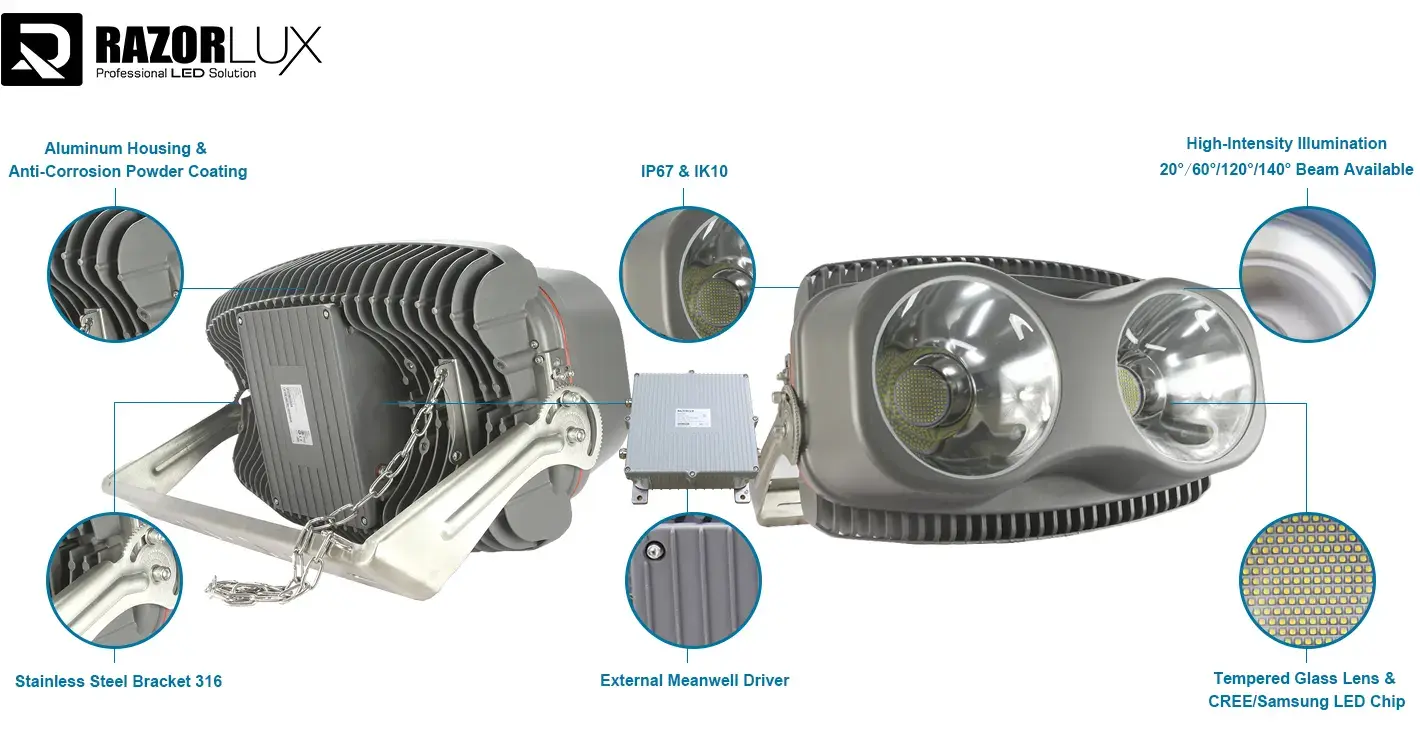
These scores are backed up by strict testing procedures. Every lot we make goes through salt spray protection tests according to ASTM B117 guidelines, vibration tests using IEC 60068-2-6 protocols, and thermal cycle tests that mimic years of temperature changes in a short amount of time. This quality control gets rid of early seal failures and internal condensation that happen with cheap products.
Material Selection and Corrosion Resistance
Depending on the materials used, a fitting may last five years or five months in saltwater. Die-cast metal housings are great at getting rid of heat and are also very light, which is important for distributing the weight of the vessel. But aluminum that hasn't been treated quickly rusts in marine environments because of galvanic action.
High-end fixtures are made of A360 aluminum alloy and have special thermoset powder coatings that stop corrosion and keep salt from getting in. The mounting clamps and screws are even more important because they are the only parts that touch metal decks and buildings directly. Razorlux only uses 316L stainless steel hardware, which is the standard in the marine industry and doesn't "tea stain" or corrode in cracks, which can weaken structures.
According to the U.S. Coast Guard (2019), 60% of naval lighting problems are caused by corroded fasteners rather than LED or driver problems. When buying mounting systems, purchasing teams should make sure that the stainless steel grade is correct, because 304 stainless steel or plated carbon steel bolts that aren't made well become a pain to maintain just a few months after they are installed.
Power Quality and Electrical Stability
When compared to stable grid power, marine electrical systems have their own set of problems. When the load on a diesel generator changes, the voltage changes, and inverter systems may cause harmonic distortion that can damage sensitive electronics. These problems must be able to be handled by good 120V marine LED drivers without affecting the light output or the lifespan of the components.
The input voltage range for our Meanwell power sources is wide, from 80Vac to 305Vac. They also have active power factor correction (≥0.98 PF) and overall harmonic distortion below 10%. This robust design gets rid of the flickering and early failures that are common with cheap drivers for consumers. Integrated 10kV surge protection also protects against lightning strikes and switching transients, which happen a lot on offshore sites.
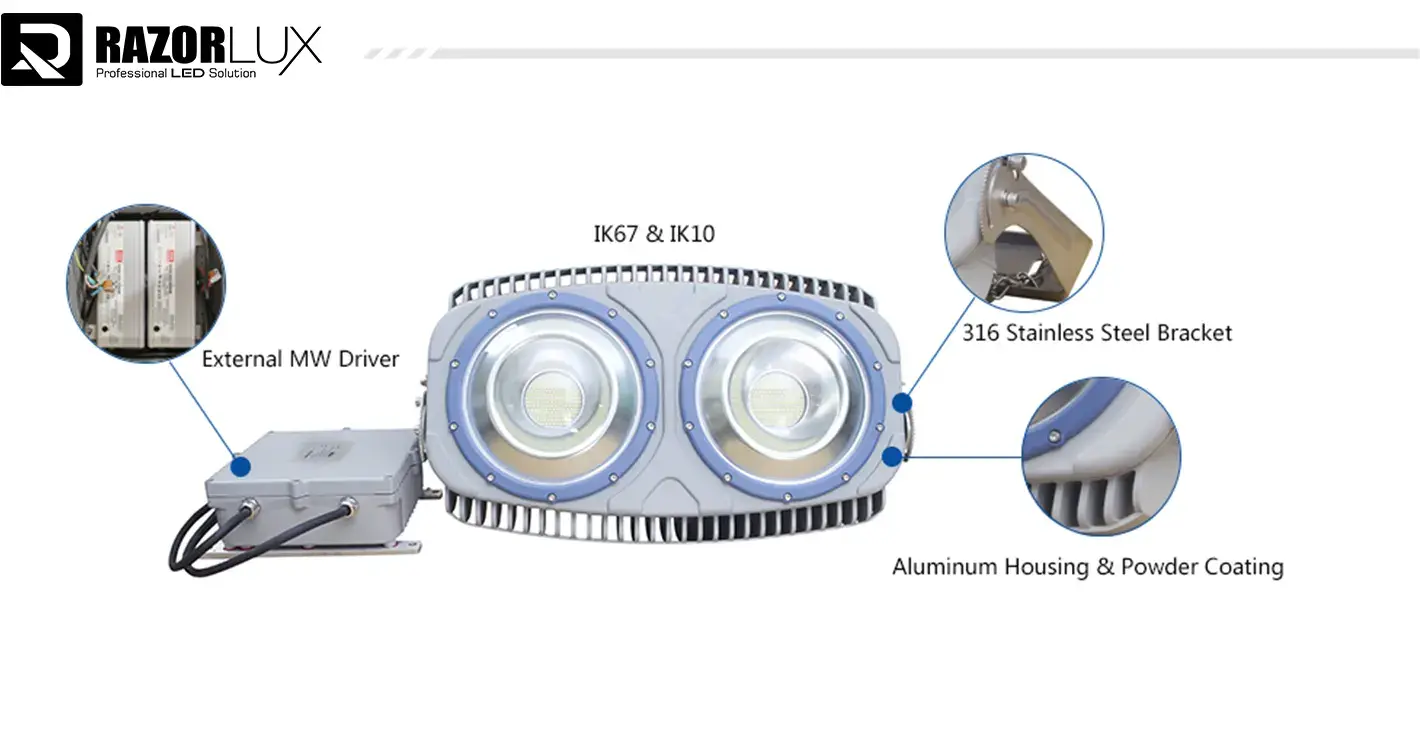
EMC, or electromagnetic compatibility, is also very important. Radio frequency interference is caused by drivers that aren't properly shielded. This affects VHF marine radios, radar systems, and GPS navigation equipment. The IEC 60945 standard from the International Electrotechnical Commission says that marine electronics must be EMC compliant. Our products meet this requirement through engineering during the design phase and validation testing.
Energy Efficiency and Total Cost of Ownership
The initial purchase price is only a small part of the total costs of ownership over time. Energy use, how often maintenance is done, and how often replacements are needed all work together to show the true value. Traditional 1,000W halogen flood lights use 1,000W but put out about 15,000–20,000 lumens at a rate of 15-20 lm/W. Our 1,000W LED system produces 105,000 lumens at 130 lm/W, which is five times as much light for the same amount of power.
This efficiency means that a typical offshore platform that works around the clock will use a lot less fuel. If a building replaces ten halogen lights with LED versions, the yearly savings on energy costs at $0.25/kWh are more than $21,900, and the lower load on the generator makes it possible for the engines to go longer between service visits. The National Renewable Energy Laboratory found in 2023 that LED conversions in marine uses usually pay for themselves in 18 to 24 months just by saving money on energy costs, not counting the money saved on upkeep costs.
Differences in lifespan make these savings even bigger. Most halogen lights last between 2,000 and 5,000 hours, while an LED lasts 50,000 hours or more, so it only needs to be replaced a few times. When you add in dangerous work environments that need scissor lifts, safety rules, and the chance that bad weather will cause delays, each replacement event costs a lot more than just the bulb itself. To fully understand the benefits of LEDs, purchasing managers should figure out the total cost of ownership over at least five years.
Comparing Marine LED Flood Lights 120V Brands and Models
Industry-Leading Manufacturers and Their Technologies
In the marine LED lighting market, there are a number of well-known companies, and each one specializes in a different area of technology. Osram uses decades of experience in semiconductors to make high-flux LED chips that are very stable at high temperatures. This makes their Marine Led Flood Lights 120V popular with European factories that have to follow strict DNV-GL standards. Philips focuses on integrated control systems and offers fixtures that work with both DALI and DMX for advanced lighting management on megayachts and high-end cruise ships.
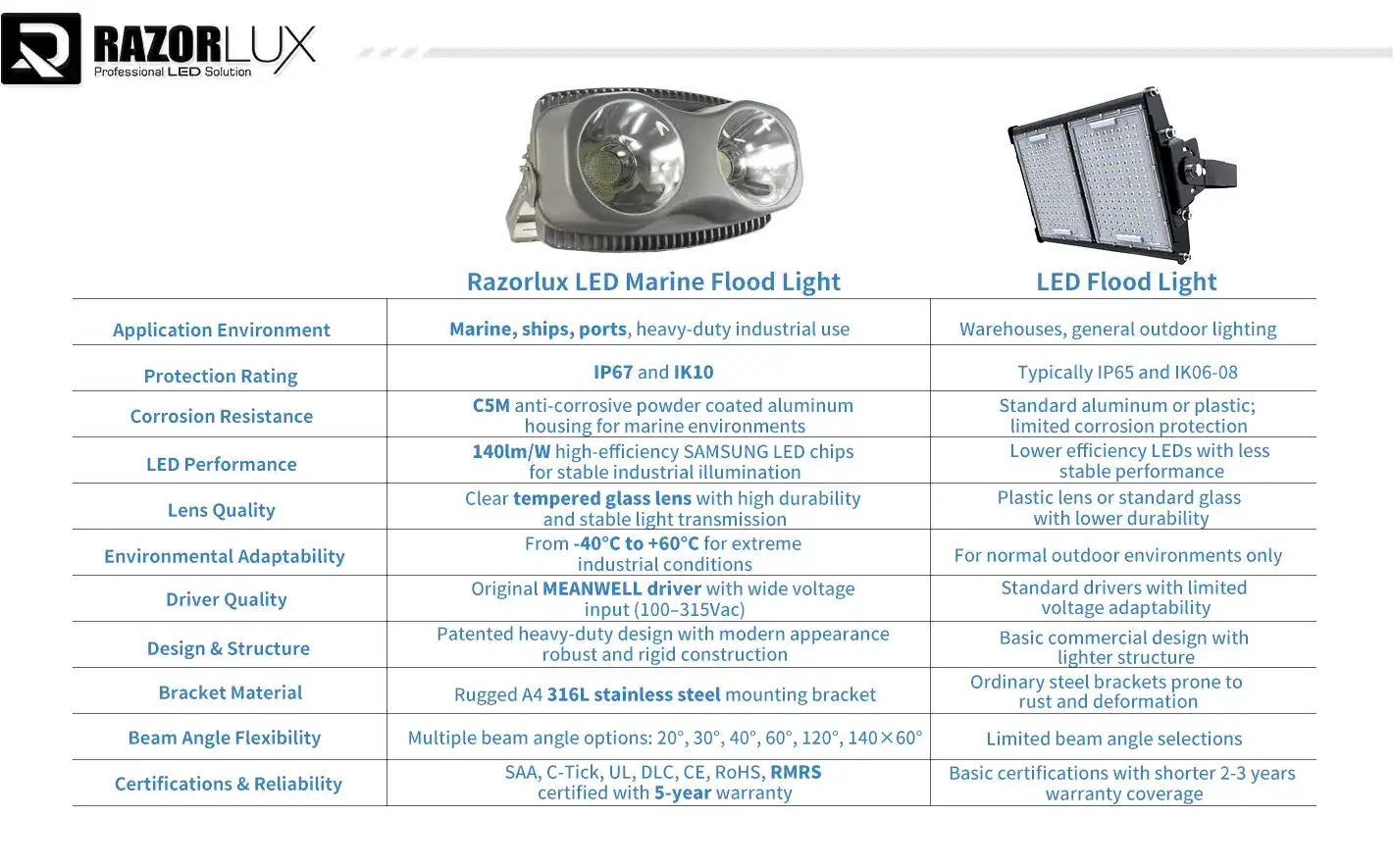
Cree is known for making LEDs that are very efficient. Their XLamp line set the standard for lumens per watt in the business. But procurement teams are becoming more aware that the chip maker is only one part of a whole chain. Actual performance depends on the quality of the driver, the design of thermal management, and the engineering of the housing. Vertical integration sets Razorlux apart. Our more than 200 patents cover not only LED Packaging but also power control circuits and structural improvements that make the whole fixture work better as a single unit.
New Chinese manufacturers have gotten a big share of the market by offering low prices, but the quality varies a lot. Buyers should closely look at certifications, the openness of component sources, and the ability to provide help after delivery. Our 20-year track record since 1998, along with our global presence that includes operations in both the US and China, gives larger projects the consistency they need.
Performance Comparison: 120V vs Lower Voltage Systems
| Feature | 12V/24V DC Systems | 120V AC Systems |
|---|---|---|
| Cable Sizing | Requires heavy-gauge wire for voltage drop management | Permits smaller gauge over longer distances |
| Installation Complexity | Needs DC power supplies or battery banks | Direct connection to shore/generator power |
| Efficiency | Losses in step-down conversion | Direct utilization of available power |
| Cost Per Fixture | Lower individual unit cost | Higher unit cost, lower system cost |
| Typical Applications | Small vessels, recreational boats | Commercial ships, offshore platforms, port facilities |
| Voltage Drop Concerns | Critical limiting factor | Minimal impact on system design |
This study shows why 120V systems are most common in business maritime settings, even though they cost more per fixture. For example, 12V systems need very expensive wiring or multiple power supply stations to light up a 200-meter dock. 120V systems, on the other hand, can be set up with simple branch circuits from a central distribution panel.
Advanced Features That Enhance Operational Value
Modern marine LED flood lights do more than just light up the area; they also have smart features that meet specific operating needs. With the ability to dim through 0-10V or DALI protocols, workers can change the intensity based on the job at hand. This saves energy during times of low activity while keeping emergency lighting ready. This adaptability is especially helpful on offshore platforms that need to be lit up all the time but don't need to be at full brightness for regular monitoring.
Motion tracking features save energy in areas with little foot traffic, like storage decks or areas with extra equipment. When people walk up to these areas, they automatically ramp up to full output. Photocell integration makes automatic operation from dusk to dawn possible for dock and terminal apps, so moving between them doesn't have to be done by hand, and the lighting is always on at the same time. Our patented multi-function design works with these controls and keeps the electrical strength that marine environments need.
Another big step forward is the ability to change the beam angle. Fixed 20-degree narrow beams are great for long-throw tasks like making sure the crane operator can see or keeping the border safe, while 60-90 degree flood beams are good for lighting up a large work area. Asymmetric optics help some installations by directing light exactly onto work surfaces while reducing upward spill that causes glare for bridge workers and adds to light pollution that hurts marine ecosystems.
Procurement Guide: Buying Marine LED Flood Lights 120V
Identifying Qualified Suppliers and Manufacturers
It takes more work to find marine-grade lighting than it does to find standard commercial fixtures. The maritime certification process includes pricey tests and third-party checks that some manufacturers get around by lying about compliance or showing documents that don't apply. Before hiring suppliers, procurement managers should set up procedures for checking their credentials.
First, check certifications directly with the groups that gave them out. Online systems run by companies like UL, DNV-GL, and Bureau Veritas make it possible to check license numbers. Ask for full test reports that include more than just "pass" or "fail" answers. These reports should include measured values for IP rating tests, salt spray time, and optical performance. Manufacturers with a good reputation make this information easy to find; evasion is a sign of possible fraud.
Check the supplier's length of time in the industry and experience with your specific application. Marine environments are very different from industrial warehouses or road installations. For products to work well, designers need to use their hands-on maritime knowledge to make decisions. Razorlux has been specializing in marine and heavy-duty uses for 26 years. This means that our engineering team knows what procurement teams are really up against, from making sure they're following the rules to figuring out how to put things in tight spaces.
Supply chain security should be carefully considered, especially for projects with multiple stages that need to stick to the same standards for many years. Check methods for getting parts and ask about how to handle parts that are no longer useful. We use Meanwell drivers and Samsung LED chips that are standard in the industry. This makes sure that parts will always be available and work with each other if they need to be replaced in the field years after they were installed.
Sample Testing and Technical Evaluation Protocols
Don't make large purchases until you've tried them out yourself in conditions that are similar to what you want to use them for. Sample testing shows performance traits that specs alone can't describe, like how good the light color is, how easy it is to install, and how strong the mounting systems are mechanically.
Ask for models that are set up to work with the power level and mounting needs you have. Managers at the shipyard should test fixtures by washing them with high-pressure water and watching to see if any water gets in. Platform engineers can test how well samples resist vibrations by putting them near gas power sets or areas with a lot of equipment. Write down the conditions and length of the test, as some failure modes only show up after a long contact.
For photometric testing, you don't need to buy expensive lab equipment. Simple lux meter readings taken at set distances show that the beam patterns and light output that are advertized are correct. When you compare the fixture's color rendering to known reference lighting, you can see that low CRI makes it hard to tell the difference between color-coded wiring and to accurately assess surface conditions.
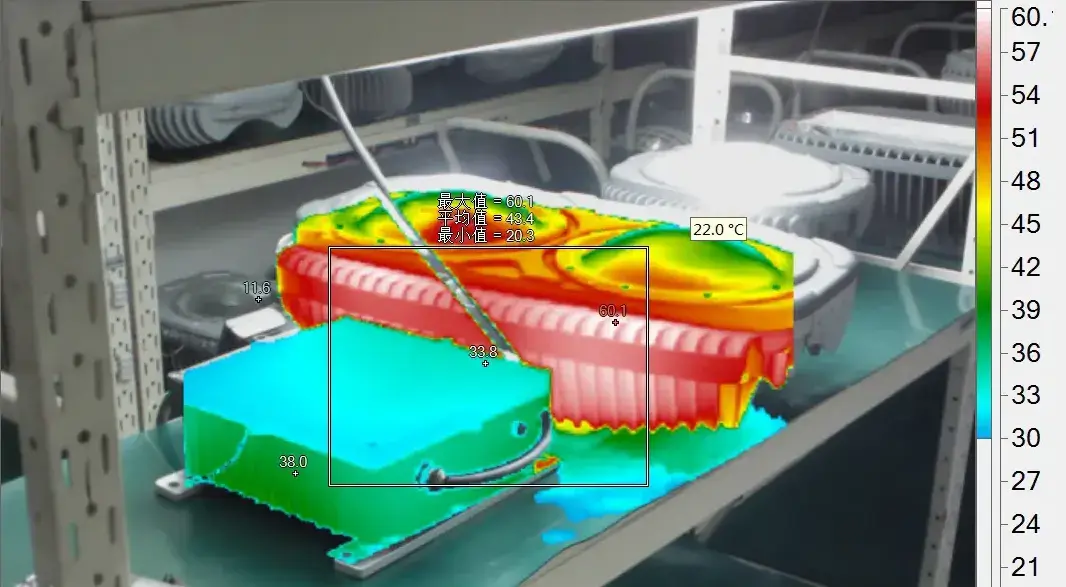
Reviewing technical documents should include more than just marketing materials. It should also include installation instructions, wiring diagrams, and views of exploded parts. Can your maintenance staff fix the fixture with regular tools, or do they need special tools? Are replacement gaskets and mounting hardware sold separately, or does the whole fixture have to be replaced when the seal fails? These factors have a big effect on the cost of lifetime care.
Negotiating Terms and Establishing Partnerships
Buying marine lights usually requires a big investment, which is why you should negotiate on more than just the unit price. Pay close attention to the warranty terms—check to see what conditions make the coverage null and void and see if the maker will accept claims through local service centers or if they need to be shipped internationally. Our full 5-year warranty covers LED modules and drivers, and our 10-year housing guarantee shows that we're sure they'll last.
Large projects often have payment plans that last for months or even years as the building moves through stages. Talk about payment plans based on milestones, retention rates, and letters of credit agreements that protect both sides. There are risks of currency fluctuations when doing business internationally. You should think about whether prices can be set in your own currency or if you should use hedging strategies.
Support options after the sale should be clearly discussed during talks. If fixtures on an offshore platform break down, can the supplier help with troubleshooting remotely through a video call? Do they keep expert staff who know the electrical rules and best practices in your area? We provide expert support 24 hours a day, seven days a week, and keep stock in key places to speed up replacement shipments and limit the expensive downtime that marine operations can't afford.
Building Quality Assurance Into Procurement Specifications
Change the evaluation criteria into clear requirements that suppliers must meet. This will get rid of the vagueness that causes disagreements. When you ask for "marine-grade lighting," you should be more specific. For example, you could say "IP67 ingress protection verified by UL 1598A testing, with 316L stainless steel mounting hardware and certified salt spray resistance exceeding 1,000 hours per ASTM B117."
Manufacturers should be asked to submit factory quality control procedures that show how they keep production consistent. Our quality management system, which is ISO 9001:2015 certified, makes sure that every fixture goes through the same set of tests before it is shipped. These tests include high-pot electrical safety testing, photometric verification, and seal integrity checks. For big orders, ask for witness inspection rights. This will let your technical team go to the workplace and see how things are made for themselves.
In buy contracts, you should include achievement guarantees. For instance, say that lumen loss can't be more than 20% after 20,000 hours of use, or that color shift can't be more than three MacAdam ellipses during the guarantee time. These kinds of rules set objective standards that can be used to judge how well a supplier is doing. They also make it clear how to use a warranty if a product doesn't work as expected.
Best Practices and Case Studies for Harsh Marine Environments
Offshore Platform Lighting Upgrade: North Sea Installation
A big oil and gas company had lighting problems all the time on its North Sea production platform. Regular lights didn't last more than two years because of the harsh weather, constant salt spray, and vibrations from drilling. It took too long for maintenance teams to change lamps because they had to wait weeks for weather windows that let them use aerial lifts to get to fixtures on 20-meter masts.
The engineering team chose replacements that had to meet strict criteria, such as being sealed to IP67 standards, being resistant to impacts up to IK10 levels, working in temperatures ranging from -40°C to 60°C, and having been shown to work with sensitive drilling control systems electromagnetically. They looked at several suppliers and chose our RGL-1000P-L20 fixtures because they had all the necessary certifications and had been installed successfully in similar facilities before.
For the retrofit, sixty 2,000W metal halide lights were swapped out for 1,000W LED versions. This cut power use by 60,000 watts and raised the brightness from 50 lux to 75 lux in key work areas. Over the next three years, the platform's lights never went out. This saved over $125,000 a year in maintenance costs that were spent on things like sending technicians, renting lift equipment, and managing work permits. The amount of fuel used by the generator dropped by about 52,000 liters per year, which helped lower operating costs and support efforts to lower the company's carbon footprint.
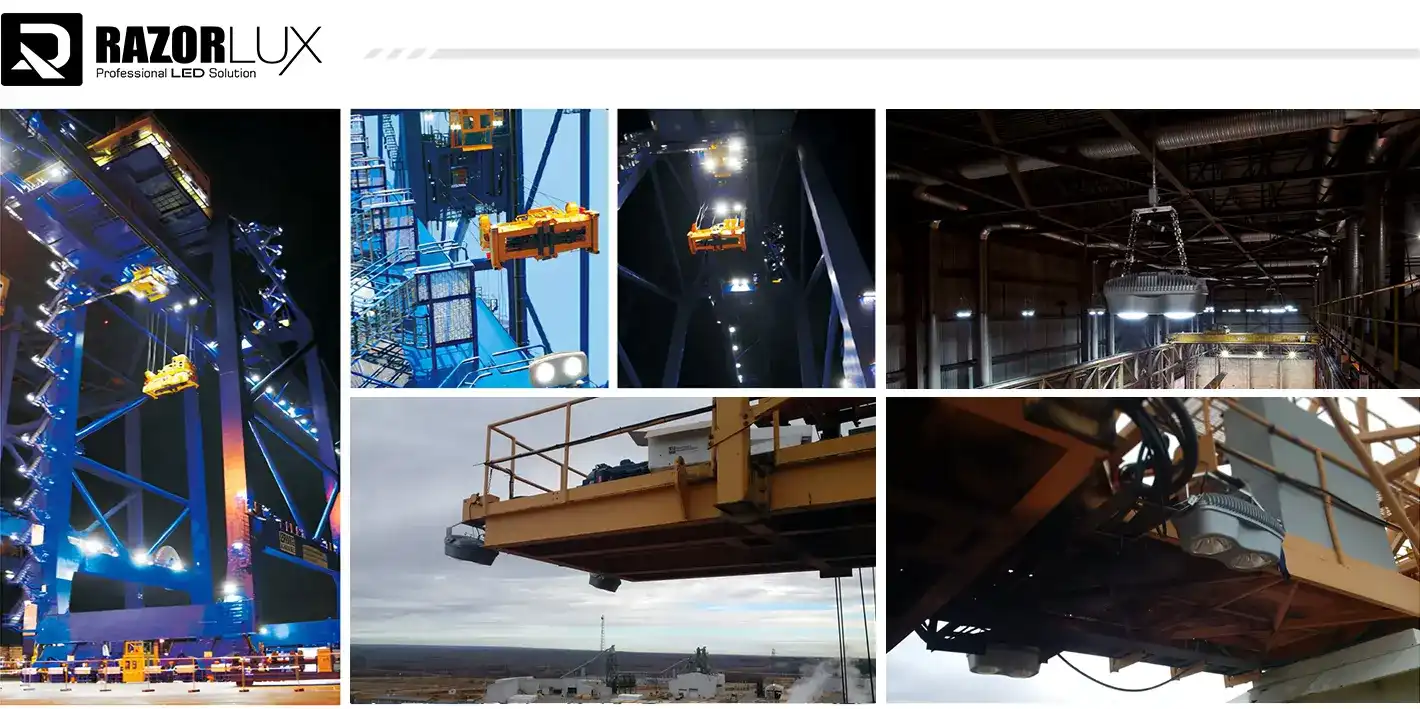
Shipyard Crane Operator Visibility Enhancement
A Southeast Asian shipyard had a lot of problems with crane operators complaining that they couldn't see well enough when they were positioning heavy parts during evening shifts. Existing 1,000W halogen floods caused a lot of glare and left dark spots that made it hard to see where the loads were placed. This led to close calls and lost work time as workers kept moving loads around until they were sure they were in the right place.
The lighting engineering contractor suggested changing the scattered high-wattage fixtures with more LED flood lights that are exactly aimed and use 20-degree beam angles. This method focused light on specific work surfaces instead of flooding whole areas with light that wasn't going anywhere. Photometric modeling predicted that crane loads would have 40% more vertical illumination and 35% less total power consumption.
When the design was put into action, crane operators reported much better depth perception and load orientation visibility. The narrow beam pattern kept direct glare out of the operator cabins, and the high color rendering (Ra>75) made it possible to see load rigging and connection points clearly. Productivity gains led to an average of three more lifts being completed per shift, which sped up project timelines and paid for the lights within eight months through higher output.
Port Terminal Security and Navigation Lighting
A big port authority in the Middle East updated the lighting in the terminals to make them safer and save money on energy costs. Their old high-pressure sodium fixtures used too much power and didn't show colors well, which made security cameras less useful and made it hard for customs officials to see what was inside containers. For the port to stay open 24 hours a day, seven days a week, reliable lighting was essential.
Fixtures had to meet DNV-GL Type Approval standards for naval use and have photometric performance that was best for both human vision and CCTV video sensors. The camera images were very bad because sodium vapor lamps had a narrow spectral distribution. To improve both visual and electronic surveillance, the port authority chose neutral white LED lighting (4000–5000K) with a CRI above Ra80.
Razorlux worked with the port's engineering team to create a lighting plan that balanced operational needs with concerns about light pollution. The facility is close to residential areas that are sensitive to too much light at night. Our patented multi-function design made it possible to precisely aim the beam so that it kept the required amount of light on the terminal areas while minimizing light spill upwards. The installation went above and beyond what was expected. Security staff said they could identify threats much better, and compared to the old sodium vapor system, it used 58% less energy.
Conclusion
When choosing marine Marine Led Flood Lights 120V that work on 120V for rough water, you have to think about technical specs, following the rules, and long-term costs. Fixtures with proven IP67 protection, 316L stainless steel hardware that won't rust, and strong electrical drivers that can handle the challenges of marine power quality should be given the most attention. Instead of just looking at the initial purchase price, you should judge suppliers based on how long they've been in business, how real their certifications are, and how much support they offer after the sale. Real-world performance testing in conditions that are similar to those of your application shows that the characteristics and specifications you provide cannot fully communicate. Razorlux has been focusing on marine and heavy-duty LED solutions for 26 years. They combine technical know-how with excellent production skills to make fixtures that can handle the harsh conditions of the maritime environment while also improving operations in measurable ways.
FAQ
1. What distinguishes 120V marine LED flood lights from standard industrial fixtures?
Marine-rated 120V flood lights have special sealing systems that achieve IP67 ingress protection, housings that don't rust and are coated to resist salt, and drivers that are made to handle the voltage changes that are common in marine electrical systems. They go through strict testing for marine safety, like UL 1598A, and are tested for salt spray according to ASTM B117 standards, which is something that most commercial lights don't do.
2. How do I verify claimed IP ratings are authentic?
Not just certificates that say "pass" or "fail," but full test reports from accredited labs that show how the tests were done and what the results were. Check that the testing lab is ISO 17025 certified and make sure that the fixture type that was tested is the same as the one you're buying, down to the gaskets and wire entry arrangements.
3. Can these fixtures integrate with existing lighting control systems?
Some high-quality marine LED flood lights come with dimming interfaces that work with most industrial control systems. These include 0-10V analog, DALI digital, and DMX protocols. Check for electromagnetic compatibility (EMC) compliance to keep naval guidance and communication gear from getting messed up. During the specification phase, our technology team gives detailed interaction advice to make sure that the system works with everything.
4. What maintenance do marine LED flood lights require?
Routine maintenance checks the condition of the gaskets, the tightness of the mounting hardware, and the integrity of the electrical connections on a regular basis—usually every three months in harsh offshore environments and every six months in sheltered dock locations. Clean the optical covers with fresh water to get rid of the salt that builds up and stops light from passing through. Unlike regular lights, LED parts don't need to be replaced on a regular basis. However, the electronics in the driver may need to be serviced after more than 50,000 hours of use.
Partner with a Trusted Marine LED Flood Lights 120V Supplier
Razorlux can help you with your maritime lighting projects because they have been working with shipyards, offshore platforms, and port facilities around the world for 26 years and have a lot of engineering experience. The 130 lm/W efficiency, IP67 protection, and unique multi-function design of our RGL-1000P-L20 Marine LED Flood Lights 120V make them safe for use in the harshest marine conditions. We know that procurement managers need more than just goods. They also need partners who can give them quick technical answers, detailed paperwork, and sample units to try before placing large orders.
Email sam@razorlux.com to talk to one of our marine lighting experts about your particular needs, get technical drawings and licensing paperwork, or set up sample test units. Within 24 hours, our team sends you detailed quotes and keeps an eye on inventory to make sure your project stays on schedule. Razorlux has the production skills and application knowledge to turn lighting problems into competitive benefits, whether you're upgrading a single ship or lighting up a whole port location.
References
1. Marine Technology Society. (2021). Reliability Standards in Maritime Electrical Systems. Washington, DC: MTS Publications. https://www.mtsociety.org/publications/reliability-standards-2021
2. LED Technology Consortium. (2022). Voltage Tolerance in Marine LED Drivers. Technical Report Series, Volume 8. https://www.ledtechconsortium.org/reports/voltage-tolerance-marine-2022
3. International Association of Marine Aids to Navigation and Lighthouse Authorities. (2020). IALA Guideline G1162: LED Thermal Management in Marine Environments. Saint-Germain-en-Laye, France: IALA-AISM. https://www.iala-aism.org/product/g1162-thermal-management/
4. U.S. Coast Guard. (2019). Marine Casualty Report: Electrical System Failures in Commercial Vessels. Washington, DC: United States Coast Guard Investigative Services. https://www.dco.uscg.mil/Our-Organization/Assistant-Commandant-for-Prevention-Policy-CG-5P/Inspections-Compliance-CG-5PC-/Office-of-Investigations-Casualty-Analysis/Marine-Casualty-Reports/
5. National Renewable Energy Laboratory. (2023). Solid-State Lighting Energy Savings in Industrial Maritime Applications. Golden, CO: U.S. Department of Energy. https://www.nrel.gov/docs/fy23osti/maritime-ssl-energy-savings.pdf
6. International Electrotechnical Commission. (2018). IEC 60945: Maritime Navigation and Radiocommunication Equipment—General Requirements—Methods of Testing and Required Test Results. Geneva, Switzerland: IEC Central Office. https://webstore.iec.ch/publication/4007