


_1750326878398.png)

OEM Guide: How to Import Waterproof LED Flood Light 400W
Sourcing industrial-grade illumination solutions through OEM channels has become a strategic priority for procurement professionals in marine, port, and heavy-duty sectors. A Waterproof LED Flood Light 400W delivers the robust performance required for offshore platforms, shipyards, and coastal infrastructure while offering significant energy savings over traditional HID lamps. This comprehensive guide walks you through the entire import process—from understanding technical specifications and selecting verified manufacturers to managing logistics and building sustainable supplier relationships. Whether you're replacing aging halogen systems at a container terminal or equipping a new offshore rig, the insights here will help you make informed decisions that balance cost, compliance, and long-term reliability.
Understanding Waterproof LED Flood Light 400W – Key Features and Market Insights
LED floodlights with a lot of wattage have changed how manufacturing sites light outdoor and dangerous areas. The 400W category is where performance and efficiency meet. It replaces old 1000–1500W metal halide fixtures while giving the same or more lumen output.
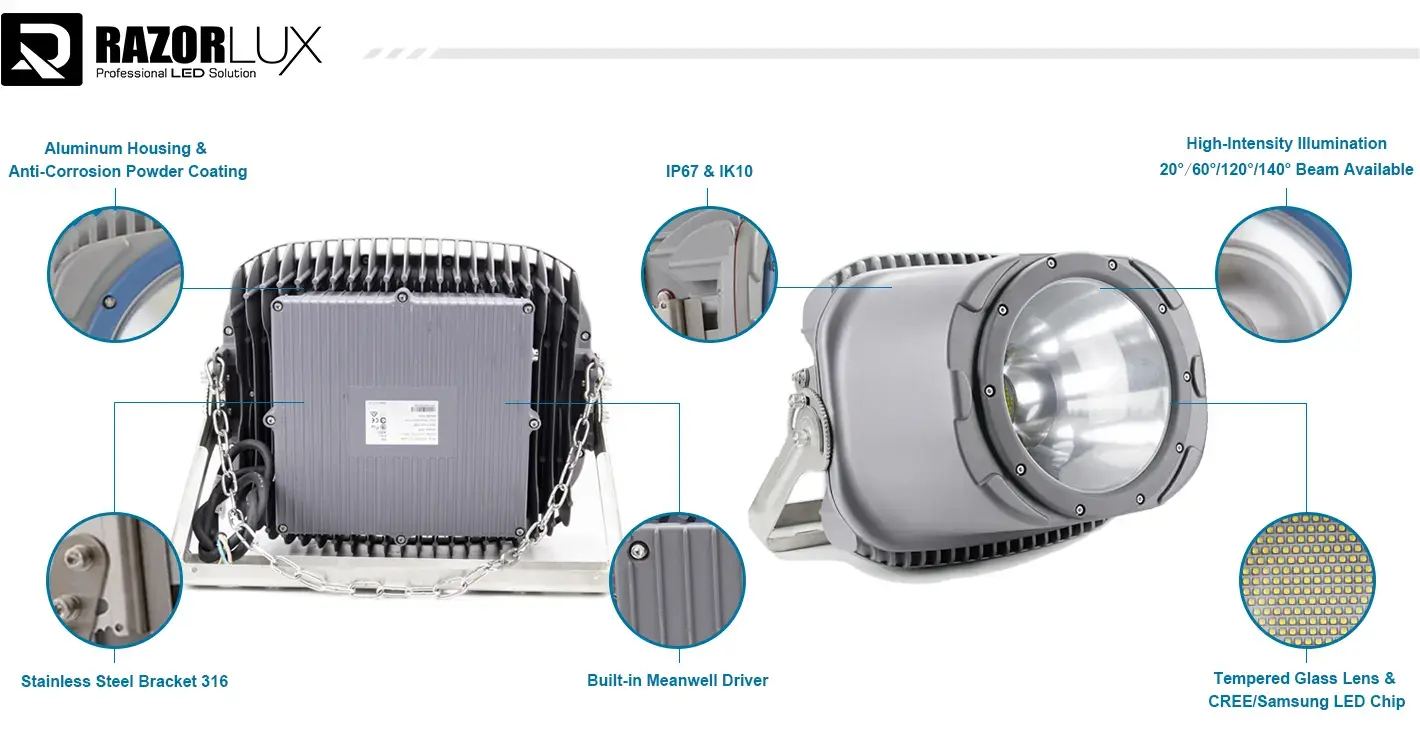
What Defines a 400W Marine-Grade LED Flood Light
At its core, this lighting solution is made up of a high-efficiency LED array and strong environmental protection. Industrial units are built to survive salt spray, temperature changes (-40°C to +60°C), and constant vibration, unlike consumer-grade goods. The term "waterproof" usually refers to an IP67 rating, which means that the fixture is completely sealed against dust and can be submerged in water for a short time[^1]. For managers of shipyards and engineers working offshore, this means fewer repair calls and longer periods of operation, even during storms or wash-down processes.
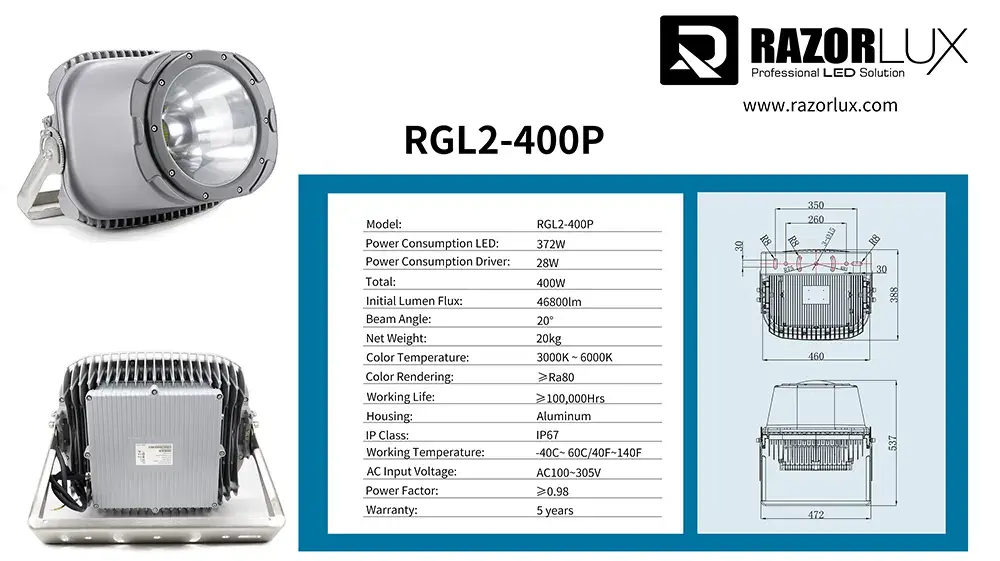
The 400W power rating is for the whole system. The LED grid usually uses about 360W, and the driver circuits use 40W. Modern designs make lights that give off at least 48,000 to 52,000 lumens and have a luminous efficiency of 130 lm/W or higher. This output directly swaps out 400–600W HID bulbs, which saves more than 60% on energy costs. These savings add up quickly when spread out over dozens of fixtures on a port gantry or drilling platform.
Core Technical Specifications That Matter
A lot of the time, procurement teams get data sheets with dozens of factors on them. But some specs have a direct effect on both the initial investment and the costs over the product's lifetime. Input voltage flexibility is very important: units that can accept either AC 90–305V or DC 127–431V get rid of the need for transformers that are special to each spot and make installation easier in a variety of power systems. Total harmonic distortion must be less than 10%, and the power factor must be above 0.98 to make sure it works with sensitive grid systems and cut down on lost reactive power.
Coverage patterns depend on the beam angle chosen. Narrow angles (15°-30°) work best for high-mast uses where focused light needs to reach faraway work areas. On the other hand, wider angles (60°–120°) are better for lighting up a large area at lower mounting heights. There are different color temperature options (2700K–6500K) that let you match the lighting conditions. For example, warmer tones cut down on glare in foggy maritime areas, while cooler temperatures make it easier to see for precise tasks.
The Color Rendering Index (CRI) looks at how true colors are to life in different lighting conditions. Basic industrial uses work fine with a CRI of over 75, but jobs like color-coding wiring, paint inspection, or making safety signs work better with a CRI of over 80. Corrosion resistance depends on the material used for the housing, which is usually marine-grade aluminum with a powder coating. Mounting brackets made of stainless steel make the equipment last even longer in salty environments.
Market Landscape and Competitive Positioning
As governments tighten rules on energy saving and offshore owners put safety first, the demand for marine-certified LED floodlights keeps growing. An analysis of the maritime lighting market in 2022 found that more than 70% of commercial ships used LED lights. This was due to efforts to reduce emissions by the International Maritime Organization and by port authorities to be more environmentally friendly [^2].
Distributors and integrators can get manufacturer prices through OEM partnerships, but they still have control over branding and customization. Working directly with a well-known OEM cuts out middlemen and lets regional suppliers serve specific markets, like Nordic ships or industrial sites in the Middle East, without having to pay markups. This also lets them make custom beam patterns, voltage setups, or certification packages.
Choosing the right components is what makes the difference in quality. Premium units have Waterproof Led Flood Light 400W chips from Samsung or CREE, drivers from Meanwell or Inventronics, and go through DFMEA (Design Failure Mode and Effects Analysis) that is used in the car industry. These details tell the difference between cheap options that break down after only 20,000 hours and need expensive relamping efforts.
Step-by-Step OEM Import Process for Waterproof LED Flood Light 400W
There are several steps that need to be carefully documented and checked before industrial lights can be imported through OEM methods. The steps below are typical of what purchasing managers at shipyards and marine equipment integrators in North America, Europe, and the Asia-Pacific region do.
Defining Your Technical Requirements
Make a full specification sheet before you start talking to possible providers. Start by looking at the temperature range, humidity levels, exposure to salt spray or chemical fumes, and the level of shaking. These things decide if IP67 certification is enough or if IP68 or ATEX approval is needed for dangerous environments.
Next, set the requirements for photometry. Figure out the lighting area, the lux levels you want (20 to 50 lux for general port operations, 100 to 200 lux for precision assembly zones), and the height at which you want to place the light. With this information, manufacturers can suggest the right wattages, amounts, and optical configurations. Choose the voltage range, frequency, and whether dimming (0-10V, DALI, or PWM) is important for energy management based on your site's infrastructure.
Compliance paperwork is essential for goods to go smoothly. For projects in the United States, UL or DLC Premium listings make it easier to apply for utility rebates. In Europe, installations need to have CE marking, and depending on the flag state of the vessel, marine applications often need DNV-GL, ABS, or RMRS certification. Getting specific licenses adds several weeks to the lead time, so make this list early.
Sourcing and Evaluating OEM Manufacturers
On B2B platforms, industry group directories, and certification body databases, trustworthy providers keep their identities clear. When you're interviewing individuals, make sure they can do more than just put things together. Suppliers who package chips, make drivers, and build housings all in-house produce more stable quality than those who use third-party subassemblies.
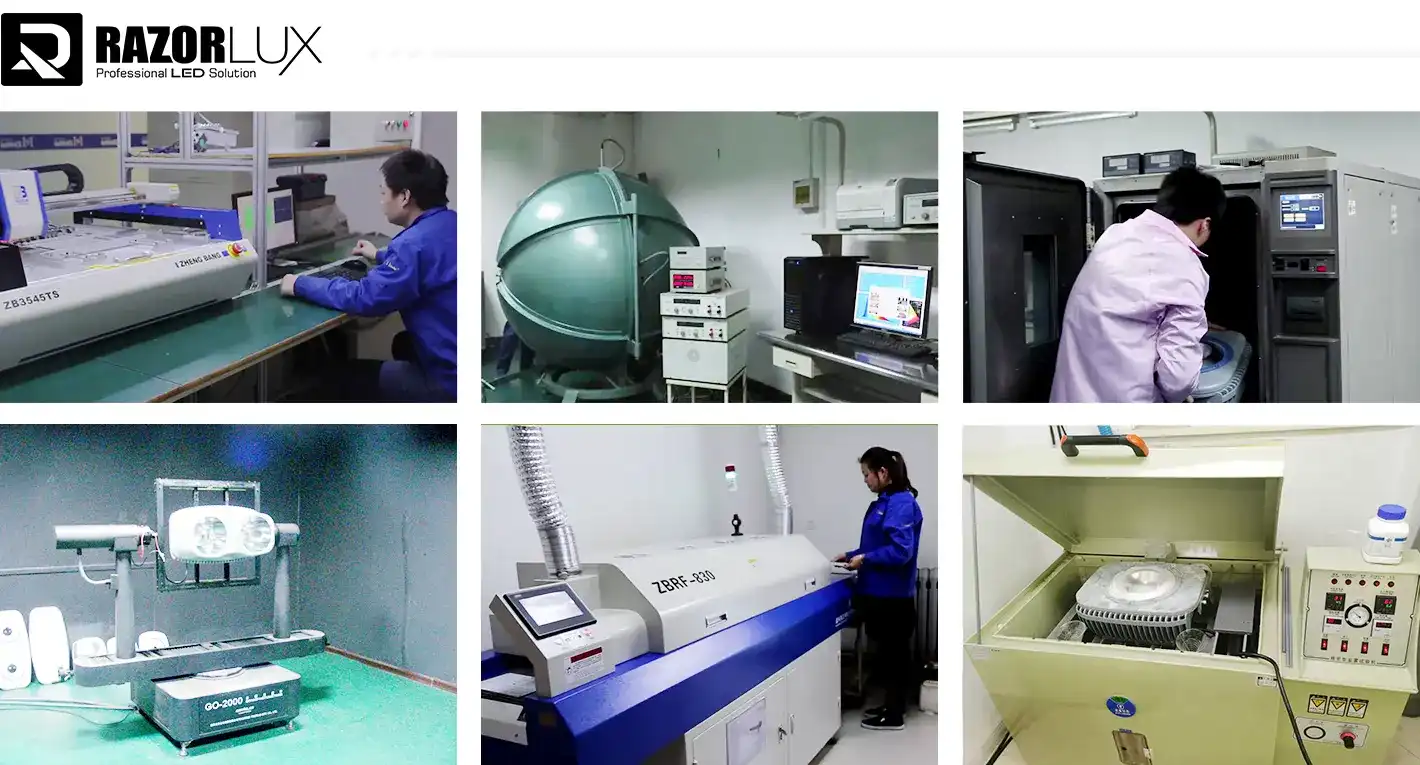
Ask for full factory audit records or set up video tours to get an idea of the production scale and testing facilities. Combine sphere photometric chambers, salt spray chambers, temperature shock chambers, and vibration tables on your list of things to look for. While ISO 9001 certification is a good start, many companies that work with the marine industry also have ISO 14001 (environmental) and ISO 45001 (occupational safety) certifications.
Traceability of components is what sets professional operations apart from commodity makers. Ask for the bin codes for the LED chips, the brand and model numbers of the drivers, and the specifications for the housing alloy. Tier-1 parts, like Samsung LEDs and Meanwell drivers, usually come with 5-year warranties. Generic parts, on the other hand, might only cover you for 2–3 years. This difference has a direct effect on the total cost of ownership when labor costs for relamping are included in upkeep funds.
| Evaluation Criteria | Tier-1 OEM Indicators | Red Flags |
|---|---|---|
| Component Sourcing | Named brands (Samsung, CREE, Meanwell) with verifiable part numbers | "High-quality chips" without specific brands |
| Testing Capacity | In-house photometric labs, environmental chambers, 100% aging tests | Outsourced testing, sample-only QC |
| Certification Portfolio | UL, CE, DNV-GL, ABS, ATEX with current validity | Expired certificates, uncertified products |
| Engineering Support | Custom optical design, lighting layout calculations, IES files | Off-the-shelf catalog only |
| Production Scale | 10,000+ units/month capacity, dedicated marine product lines | Small-batch workshop operations |
Sample Testing and Quality Validation
Don't agree to large items until you've seen them in person. Ask for two or three sample units that have the beam angles and color temperatures you need. Put these through real-life tests in the field: mount them at the correct installation height, run them through several thermal cycles, and, if you can, test them for water ingress.
Technical teams should use certified meters to measure the real lumen output, compare beam patterns to IES photometric files, and look over the mechanical build for places where it might fail. Check the quality of the electrical connections, the gaskets, and the seals on the wire glands. Thermal imaging during extended operation shows whether heat dissipation meets design parameters. Junction temperatures above 85°C mean that thermal management isn't good, which will shorten the lifespan.
Systematically write down what you find. If the tests work well enough, talk about the terms of the purchase. If problems show up, talk to the manufacturer about how to fix them. OEMs that are responsible see sample comments as information that can help them make their products better, not as criticism, and they often make changes to the designs before they go into mass production.
Contract Negotiation and Import Logistics
When an international OEM order comes in, payment terms are usually 30% down and 70% due upon receipt of the bill of lading. However, if there are already good working relationships, net-30 or net-60 terms may be possible. Letters of credit are best for big orders (5,000 units or more) where lowering the credit risk is worth the bank fees.
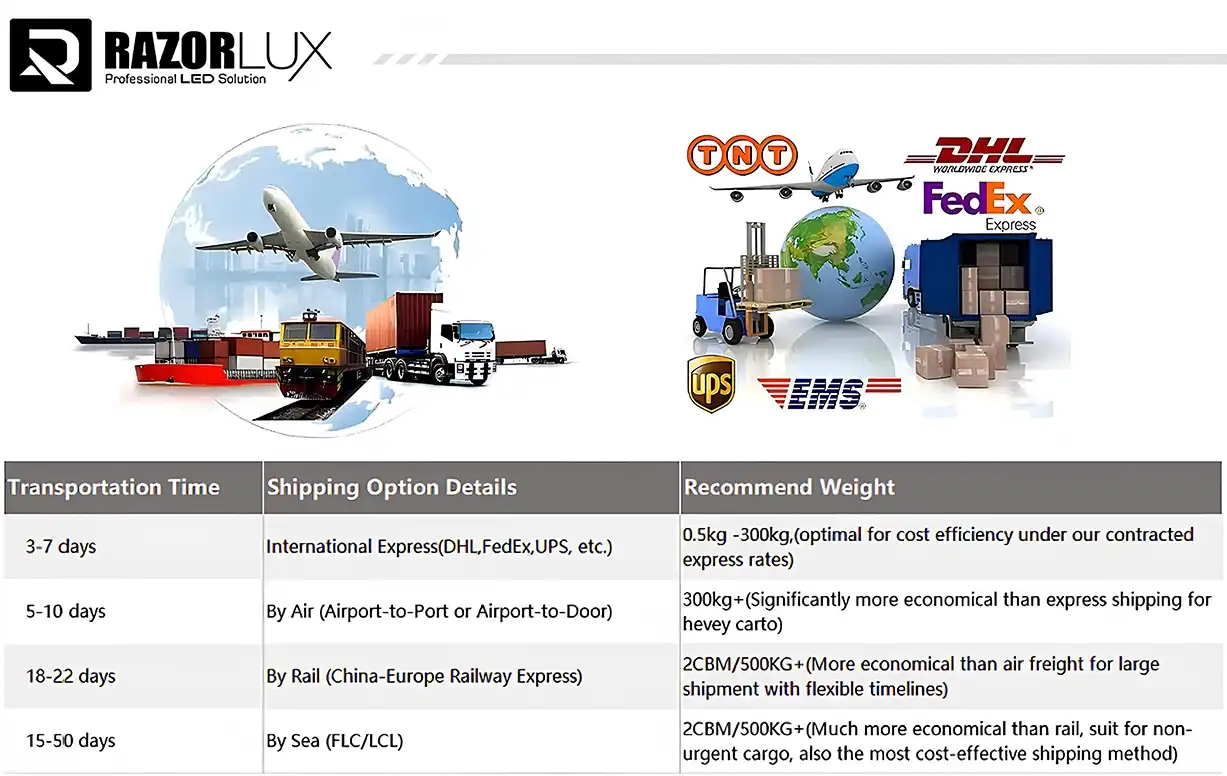
There are different ways to ship things that balance cost and wait time. Sea freight is still the cheapest way to ship large amounts of goods (it takes 4 to 6 weeks to get there), but air freight is better for urgent projects even though it costs 3 to 5 times more. Door-to-door transportation companies make customs entry easier by handling duties, Harmonized System (HS) code classification, and serving as the importer of record.
A business invoice, packing list, certificate of origin, and product compliance certificates (UL, CE, DNV) are some of the most important documents for importing goods. For marine uses, classification society type-approval certificates speed up the approval process for installing a vessel. Many ports now need cargo records to be filed ahead of time. To avoid delays at the dock, your freight forwarder should handle these files.
Technical Guide – Installation, Maintenance & Efficient Usage
Fixtures last longer and work better with photometry when they are installed correctly. When lighting is used in marine or industrial settings, extra care needs to be taken with mounting stability, electrical safety, and sealing against the environment.
Safe Installation Procedures for Harsh Environments
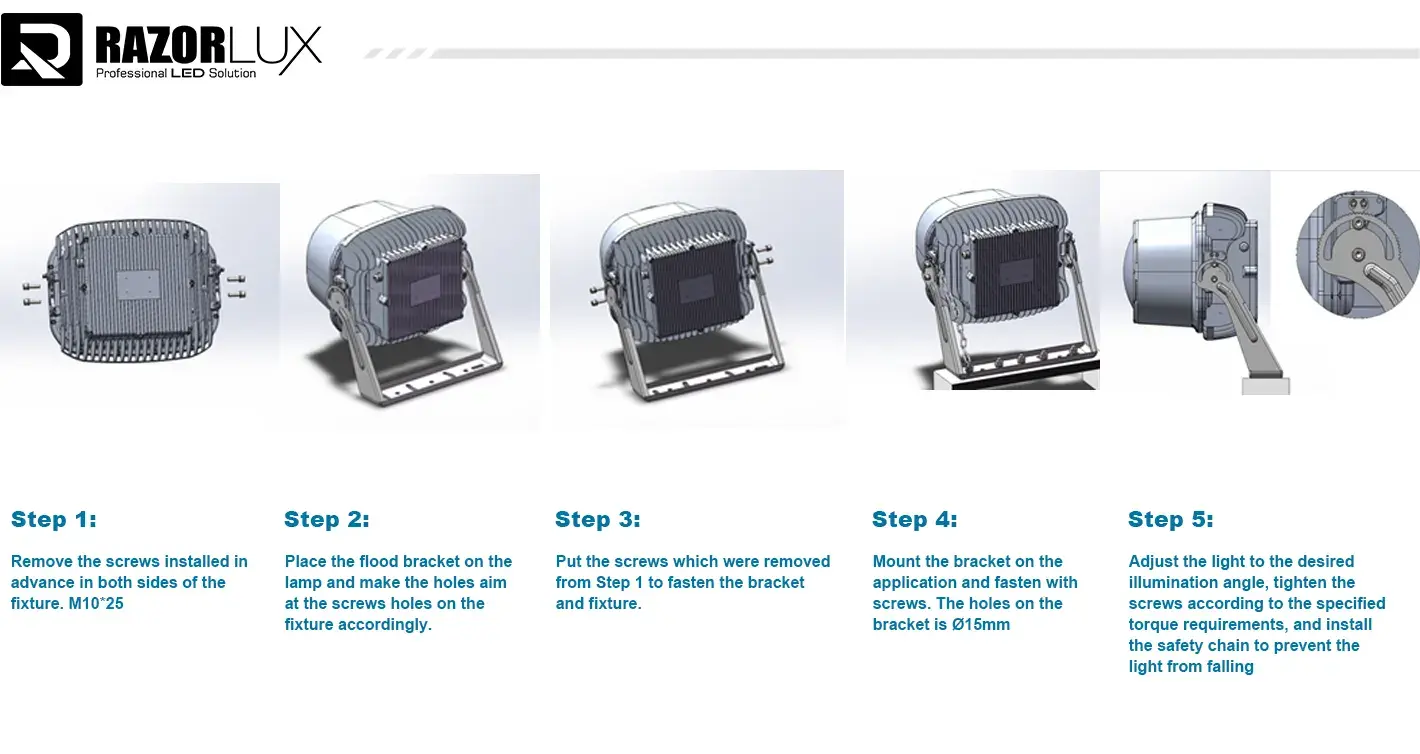
Only use stainless steel tools to mount fixtures—galvanized steel rusts quickly in salt spray. To keep mounting bolts from coming loose from vibration, tighten them to the manufacturer's recommended level (20 to 25 Nm for M12 fasteners). When installing on moving machinery like ships or cranes, use marine-grade rubber isolators that reduce vibration.
Waterproofing electrical connections needs to be done carefully. If supply lines let water into junction boxes, even IP67-rated faucets can break. Marine-grade cable glands with the right amount of strain relief should be used, and dielectric grease should be used on end contacts. Check the polarity and continuity of the ground for AC installations. For DC systems, like those on ships, make sure the polarity is correct to keep the driver from getting damaged.
For thermal management, orientation is important. Mount lights so that nearby structures don't get in the way of the heat sinks. Allowing air to flow around the fins keeps LEDs from breaking down too quickly. Fixtures shouldn't be put in places where they'll be flooded during deck washing unless they are rated IP68. Angle adjustments should lock securely; brackets that are too loose cause coverage to be off-center and complaints of glare.
Routine Maintenance and Troubleshooting
Set up inspection schedules so that accessible fixtures are checked every three months and high-mast installations are checked every six months. Chemical cleaners can break down polycarbonate over time, so use microfiber cloths and light detergent to clean your glasses. Check the gaskets for cracks or compression set; repair any that show signs of wear to keep the entry protection up.
Keep an eye out for dimming between groups of fixtures. Early loss of lumens is usually a sign of poor heat dissipation or driver problems, not an LED failure. Thermal photography can find units that are getting too hot before they break down completely. If several lights dim at the same time, look into whether supply voltage changes or harmonic distortion are shortening the life of the drivers.
Flickering (usually caused by a bad driver or loose wires), total blackouts (check the input power, then the driver/LED module continuity), and discolored output (single LED failures in the array) are all common problems that need to be fixed. Many makers offer modular designs that let drivers and Waterproof LED Flood Light 400W boards be swapped out in the field without taking the whole device apart. This cuts down on downtime.
Optimizing Energy Efficiency and Performance
Adding lighting settings will help you save the most energy. Photocell monitors turn down lights during the day, which cuts energy use by 30 to 50 percent in partially sunny areas. Motion sensors work well in storage yards that aren't used very often, but they may go off when it's windy, so use time delays to stop this from happening.
Networked control systems, like those based on DMX, DALI, or Ethernet, let you watch and plan for repair from afar. These platforms keep track of the hours that they are used, look for strange trends in the power that they use, and set up dimming modes that work with the shifts that they are in. When a port isn't being used, lowering the power to 70% during times of low activity can extend the life of the LEDs while still providing enough light for safety.
When replacing old HID systems, photometric surveys should be done after the installation to make sure that the lux levels meet the design intent. Too much lighting wastes energy, and too little lighting can be dangerous. IES photometric files and modeling tools are used by professional lighting designers to find the best places to put fixtures before they are installed. This saves money on trial-and-error costs.
Comparing Waterproof LED Flood Light 400W Solutions – Making Informed Procurement Decisions
Figuring out how 400W units stack up against other wattages and technologies can help you choose products that meet your needs and your budget.
Wattage Comparison: When 400W Makes Sense
Most high-bay and area lighting needs are met by the 300W to 500W range, but each power level is better for a different situation. Most of the time, a 300W fixture with 39,000 to 42,000 lumens is enough for general storage areas with 6 to 8-meter ceilings or security lighting around the edges. The 400W category is for mounting heights between 10 and 15 meters, which are common in places like shipyards, container terminals, and offshore helidecks where both intensity and uniformity are important.
Stepping up to 500W (60,000 to 65,000 lumens) is needed for masts that are 20 meters or higher, or where light loss from dark surfaces like asphalt or weathered steel needs to be made up for. However, the extra cost and heat load go up dramatically after 400W. Two carefully placed 400W lights often provide better uniformity than a single 500W unit while also providing support.
Technology Comparison: LED vs Traditional Alternatives
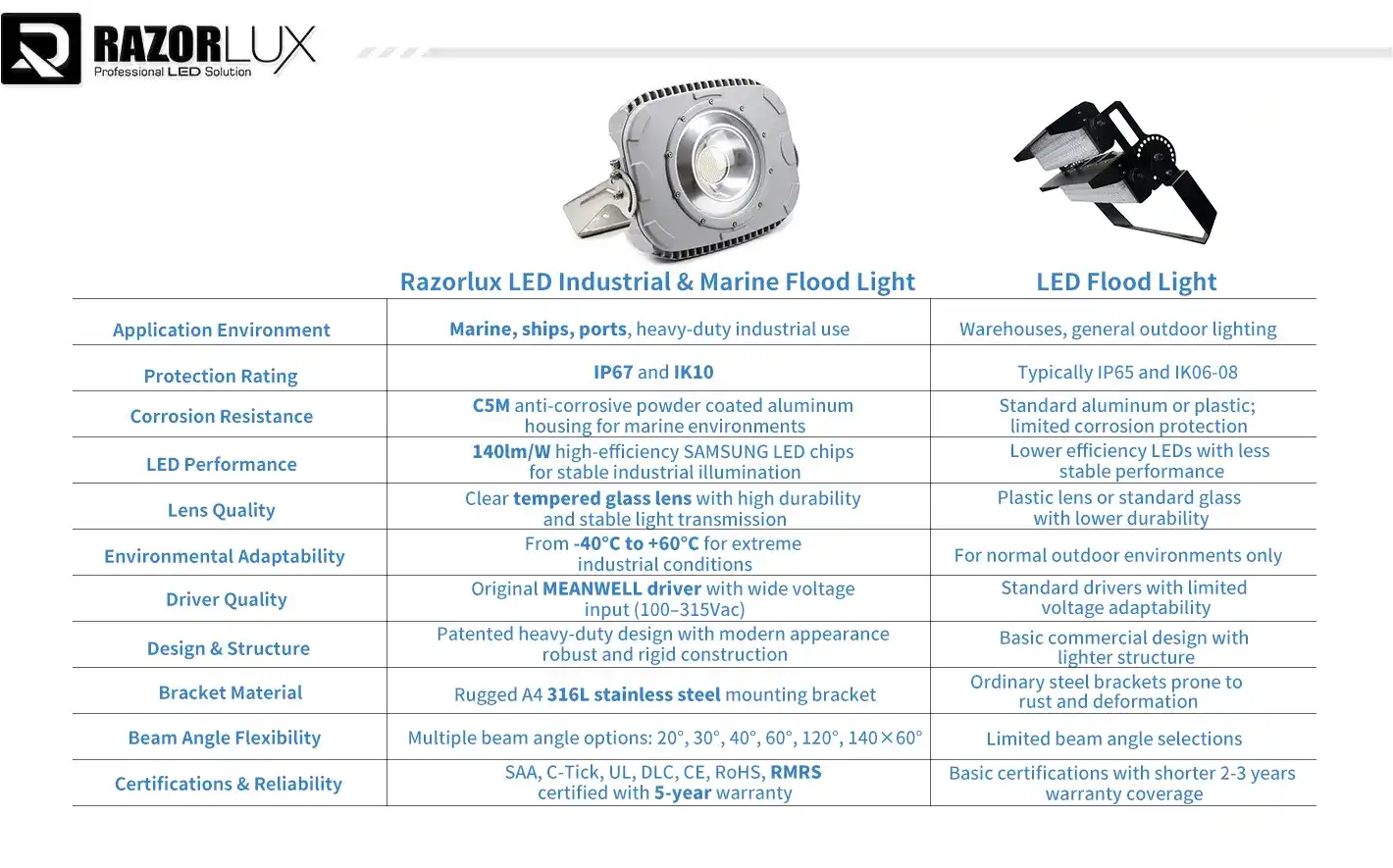
In older systems, metal halide and high-pressure sodium lights are still used, but the economics of purchasing LEDs strongly support switching. HID lamps need 10 to 15 minutes to warm up, and they can't be turned back on right away after the power goes out, which is a major problem in emergency cases. In HID systems, lumen loss hits 30% after 5,000 hours, but in quality LEDs, 90% of the power is still there after 50,000 hours.
Off-grid places like marine settings are good for solar-powered floodlights, but they make things more complicated. When salt builds up on photovoltaic panels, they charge less efficiently, and batteries work much less well when they're below freezing. Mains-powered LEDs work more reliably and cost less over their lifetime in places with reliable grid or generator power.
| Technology | Initial Cost (per fixture) | Energy Consumption (kWh/year) | Maintenance Frequency | Effective Lifespan | Total 10-Year Cost |
|---|---|---|---|---|---|
| 400W LED | $850-1,200 | 1,460 kWh | Minimal (gasket checks) | 50,000+ hours | $3,200-4,500 |
| 1000W Metal Halide | $400-600 | 3,650 kWh | Relamping every 2 years | 10,000 hours | $7,800-9,200 |
| 500W HPS | $350-550 | 1,825 kWh | Relamping every 3 years | 15,000 hours | $5,500-6,800 |
| 400W Solar LED | $1,800-2,500 | 0 kWh | Battery replacement (3-5 years) | 25,000 hours | $4,000-6,500 |
Energy costs $0.12/kWh, labor costs $75/hour, and the business is open 10 hours a day.
Price Benchmarking and Warranty Considerations
Industrial-grade 400W Waterproof Led Floodlights cost between $850 and $1,200 per unit on the street. The price depends on the level of certification and the quality of the parts. When an OEM places an order for 500 units or more, they can often get savings of 30 to 40 percent, which means that each unit costs less than $600. Be wary of prices that are less than $500; these usually use less reliable drivers or cheaper LED chips that lose their brightness faster.
How the warranty is set up shows how confident the maker is. Standard guarantees cover LEDs and drivers for 5 years, and some go up to 10 years for the case. Carefully read the warranty terms. Does coverage include the cost of shipping returns? Are replacement units given out while repairs are being done? For important installations, like offshore platforms, where downtime can have very bad effects, talk about advance replacement clauses that ship spares before the broken units are sent back.
There are big differences in the standard of after-sales help between suppliers. Respondent OEMs keep spare parts stocked in regional service centers and offer technical support over the phone within 24 hours. This is very important when fixing problems with installations or dealing with sudden failures that put project deadlines at risk.
Building a Long-Term Partnership with OEM Suppliers
Transactional buying may get you competitive prices on single items, but building strategic relationships with suppliers can unlock benefits that go far beyond lowering unit costs.
Verifying Supplier Authenticity and Capability
Before signing long-term contracts, make sure you've done your research. Ask to see proof of your business license, proof that you own the manufacturing site, and signs of your financial security. Legitimate makers are happy to share third-party audit results, like those from Bureau Veritas or SGS, and keep their profiles up to date on databases maintained by certification bodies.
When talking about special needs, protecting intellectual property is important. Before giving out confidential information, make sure that there are no NDAs or design ownership contracts in place. OEMs with a good reputation keep IP boundaries clear and often keep private-label products on separate production lines to keep designs from getting mixed up.
Checking references gives you a lot of useful information. Ask for contact information for three current clients who are using similar apps: a Singaporean port authority, a Norwegian shipyard, and an Australian mining company. Ask these examples about how reliable the delivery is, how consistent the quality is across batches, and how quickly they respond to guarantee claims.
Leveraging OEM Customization Advantages
Unlike catalog sellers, OEM partners can make changes to designs to meet specific business needs. Custom beam designs make the best use of light spread for each site's shape, which cuts down on the number of fixtures needed and the cost of installation. Voltage setups can be changed to fit non-standard power systems, like the 380V three-phase power systems that are popular in European factories or the 440V power systems used on ships.
Distributors and installers can build a market footprint by having branding options that are flexible. If you buy more than 200 units, OEMs will usually do brand etching, custom box design, and private labeling for very little money. With this feature, generic products can be turned into branded ones that people think are more valuable.
Long-term relationships let people work together to make new products. Share failure analysis reports and field performance data with your OEM. This feedback loop keeps things getting better. Manufacturers who are serious about the marine market value feedback from end users who work in tough conditions and often make design changes based on suggestions from key partners.
Managing Post-Import Support and Continuous Improvement
Set clear rules for how to communicate right away. To keep information from getting lost, give each side a single point of contact. Accountability is built with weekly updates on production during busy orders, monthly business reviews for strategy planning, and clear ways to report quality problems right away.
Start working together to improve quality. When field failures happen, root cause analysis should be done with cooperation instead of conflict. Find out if the problem is caused by flaws in the manufacturing process, mistakes in the installation, or application conditions that are too different from what was planned. Write down what needs to be fixed and use follow-up testing to make sure it works.
Talk about volume-tiered price systems that reward customers for their loyalty while still being able to adapt to changes in demand. Purchase agreements that last a year and have call-offs every three months balance commitment with inventory risk. Include terms that cover "force majeure" events—disruptions caused by pandemics taught many procurement teams how important it is to plan for supply chain resilience.
Conclusion
When you buy a Waterproof LED Flood Light 400W through OEM channels, you have to carefully plan how to evaluate the technical aspects, choose a supplier, coordinate logistics, and manage relationships. The 400W category has the best mix of speed and economy for marine, port, and heavy industrial uses. It can replace old HID systems and save a lot of money on running costs.
We've talked about the important differences between industrial-grade products and commercial ones, gone over the step-by-step process of importing from the initial request for quote to clearing customs, and looked at the best ways to install fixtures to make them last as long as possible. Comparative research showed that 400W units are part of a wider range of wattage and technology choices. Partnership plans, on the other hand, stressed the long-term value of working together with suppliers rather than just buying things one time.
Three things are necessary for successful importation: technical due diligence to make sure products meet performance and environmental standards; logistical expertise to handle international shipping and regulations; and supplier partnership quality to ensure responsive support throughout the product lifecycle. When procurement teams work on these areas, they regularly finish projects better than when they only focus on getting the lowest unit cost.
FAQ
1. What exactly does an IP67 waterproof rating mean for marine applications?
Its IP67 rating means that it is fully dust-proof (first digit 6) and can handle being submerged in water up to 1 meter deep for 30 minutes (second digit 7). In marine settings, this protects against deck wash-down, rain getting in, and short-term flooding. But IP67 doesn't cover ongoing submersion; IP68 fittings are needed for underwater use. The rating only works if all of the cable glands and access covers are sealed correctly according to the installation instructions [3].
2. How can I verify that LED efficacy claims are accurate?
Instead of just depending on company data sheets, get photometric test results from third-party labs that are compliant with LM-79. Reports should say what temperature the device was tested at (usually 25°C) and say whether the lumens show the initial output or performance that has been stable after temperature equilibrium. To find the effectiveness, divide the total light output (in lumens) by the total power of the system (in watts, including driver losses). Claims of more than 150 lm/W for marine-grade lights should be looked into more closely, since toughened designs give up some efficiency for robustness.
3. What are typical lead times and minimum order quantities for OEM imports?
Standard wait times for production are 15 to 25 days after receiving a deposit. It takes an extra 4 to 6 weeks for sea freight to get to ports in North America or Europe. Custom configurations, like beam angles, voltage requirements, or certifications that aren't standard, may add two to three weeks to the lead time. For normal models, the minimum order quantity varies by maker. For private marking, the minimum order quantity is 200–500 units, and for modified housings, it's 500–1,000 units. Sample orders of two to five units are usually sent out by express courier in three to five days.
Partner with Razorlux: Your Trusted Waterproof LED Flood Light 400W Supplier
Working with an experienced maker that knows what the marine and industrial sectors need makes it a lot easier to deal with the complicated parts of OEM imports. Razorlux has been making Waterproof LED Flood Light 400W for more than 20 years and has a wide range of in-house skills, from chip packing technology to final assembly. This makes sure that the quality of every production run is the same. Our RGL2-400P model gives off 48,000 lumens at 130 lm/W and is backed by RMRS, UL, CE, and DNV certifications that make it easier for ships and offshore platforms around the world to get approval.
We help your procurement team through the whole process, from providing samples for field testing to providing expert advice on how to match fixtures to application needs. We also offer open OEM customization for beam patterns and branding, as well as reliable shipping coordination with clear paperwork. Our engineering team gives you photometric layout calculations and IES files before you commit to buying, so you don't have to make as many changes after the fact.
Get in touch to talk about the details of your project. You can get full product data sheets, approval paperwork, and case studies from successful shipyard and port installations by emailing sam@razorlux.com. Our quick-to-respond team can usually give formal quotes within 24 hours and ship samples right away for projects that qualify.
References
1. International Electrotechnical Commission (IEC). (2013). Degrees of Protection Provided by Enclosures (IP Code) – IEC Standard 60529. Geneva: IEC Publications. Available at: https://webstore.iec.ch/publication/2452
2. Maritime Executive Research Division. (2022). LED Lighting Adoption in Global Commercial Shipping: Market Analysis and Energy Impact Assessment. Available at: https://maritime-executive.com/editorials/led-lighting-adoption-shipping
3. U.S. Department of Energy. (2021). LED Lighting Facts: Understanding Product Performance and Quality. Office of Energy Efficiency & Renewable Energy. Available at: https://www.energy.gov/eere/ssl/led-lighting-facts
4. International Association of Marine Aids to Navigation and Lighthouse Authorities. (2020). Guideline G1162 – The Application of LED Technology in Marine Navigation. Available at: https://www.iala-aism.org/technical/g1162-led-technology/
5. Illuminating Engineering Society. (2019). IES LM-79-19: Approved Method for Electrical and Photometric Measurements of Solid-State Lighting Products. New York: IES Publications. Available at: https://www.ies.org/standards/lm-79/
6. World Maritime University. (2021). Energy Efficiency in Port Operations: LED Conversion Case Studies from Container Terminals. Malmö: WMU Research Publications. Available at: https://commons.wmu.se/all_dissertations/1847/