


_1750326878398.png)

How to Design Uniform Outdoor Lighting for Volleyball Court?
To make sure that the light is spread evenly across the playing area, you need to plan when lighting a volleyball court. Outdoor Lighting For Volleyball Courts needs to provide consistent lux levels (300–500 lux for recreational use and 500–750 lux for competitive play), cut down on glare by aiming fixtures precisely, and use LED technology with the right beam angles (40°–140°) to get rid of dark spots. This includes figuring out mounting heights (6–12 meters), choosing lights with IP65 or IP67 ratings for weather protection, and running photometric models to make sure the uniformity ratios are correct before installing them. Good lighting for a volleyball court keeps players safer, eases eye pain, and meets international standards such as IEC and IESNA recommendations.

Understanding the Challenges of Volleyball Court Illumination
The Impact of Glare on Player Performance
Glare is still one of the most important problems in designing sports lights. When players look up to follow the ball during serves or spikes, they are directly hit by fixtures that aren't directed correctly, which makes them temporarily blind and slows down their reactions. This effect, called disability glare, makes it very hard to see in depth and coordinate your hands and eyes. For professional setups, it's important to pay close attention to the Unified Glare Rating (UGR) formulas. Values should be kept below 30 for competition settings and below 25 for broadcast-quality courts. This problem is solved by the Razorlux RGL2-400A type, which has precise optics and a range of beam angles (40°, 60°, 120°, and 140°x60°). Each arrangement lets lighting designers exactly aim light at the playing area while limiting the amount of light that gets in the way of players' lines of sight.
Shadow Formation and Dark Zones
Shadows caused by uneven lighting make it harder to play and raise the risk of getting hurt. These dark spots are usually caused by not enough fixtures, too few fixtures, or placing them in the wrong place. Volleyball courts are 18m x 9m, and placing fixtures with mathematical accuracy is needed to make the whole area level.
Cross-illumination methods are necessary when more than one pole is used. Fixtures are put on opposite sides of the court in this way to fill in any shadows that players, nets, and other structure elements might make. This makes the lighting even across the board, so it stays the same no matter where the player is standing.
Weather Resistance Requirements
Outdoor lighting for volleyball courts and setups in humid areas breaks down faster because of salt spray, water getting in, and temperature changes. Standard faucets with an IP rating below 65 let water in, which corrodes internal parts and causes them to break early. IP67-rated equipment, like the Razorlux RGL2-400A, protects against dust and water for short periods of time, so it can be used in places like beaches and places that get a lot of rain.
The metal powder-coated housing and stainless steel bracket system don't rust in marine settings, so they can be used for more than 50,000 hours. Because they last longer, site managers who are in charge of port installations, offshore platforms, and coastal leisure centers can save money on their total cost of ownership.
Key Principles for Designing Uniform Volleyball Court Lighting
Fixture Placement and Height Considerations
Both symmetry and glare control are directly affected by the height of the mount. The best height for installations is between 6 and 12 meters. Lower heights raise the risk of glare, and higher poles need more power to keep goal lux levels. The Razorlux 400W Led Floodlight can be used instead of standard 800-1000W HID lights and works better when mounted at a mid-height.
How the spacing is calculated depends on which beam angle is chosen. Narrower 40° beams focus light for use on taller poles, while 120° designs work best for lower mounting heights and closer spacing. Advanced photometric software models these factors before they are installed physically, which cuts down on the cost of making costly changes by trial and error.
Selecting Appropriate Lux Levels
Different situations call for different levels of illumination:
Recreational play works fine with an average constant illumination of 200 to 300 lux, making it easy to see for relaxed games and practice sessions. This level lets you track the ball in a basic way, but not with the accuracy needed for competition settings. For competitive games to run quickly, accurately perceive depth, and make quick decisions, the lighting needs to be between 500 and 750 lux. Even higher levels (750–1000 lux) are often required for tournament-level facilities so that they can be used for TV broadcasts and slow-motion review. The RGL2-400A has a constant flux output of 52,000 lumens at 5700K color temperature, and this will stay the same for as long as it works. The system gives off 130 lm/W of light, which is professional-grade lighting while using 60% less energy than similar HID setups.
Color Temperature and Rendering
Color brightness affects how well a player can see and how alert they are. The 5000K–5700K range makes it look like daylight, which makes the contrast between the ball, the court surface, and the background stronger. Compared to warmer 3000K options, this setting helps you focus during long game sessions and keeps your eyes from getting tired. Color Rendering Index (CRI) changes how well players see game marks and equipment. Ra>70 is good enough for most outdoor uses, but Ra>80 choices are better for places that host broadcast events. The Razorlux system comes with Ra>75 by default, and better CRI versions can be ordered to meet broadcast standards.
| Lighting Parameter | Recreational Use | Competitive Play | Broadcast Quality |
|---|---|---|---|
| Average Lux | 200 to 300 lux | 500 to 750 lux | 750 to 1000 lux |
| Uniformity Ratio | 0.5 (good enough) | Between 0.6 and 0.7 | 0.7+ is needed |
| UGR (Glare Rating) | 35 | ~30 | 25 |
| CRI | Ra>70 | Ra>75 | Ra>80+ |
| Color Temperature | 4000 to 6500K | 5000 to 5700K | 5000 to 6000K |
As the intensity of use rises, this table shows how the speed needs rise as well. To make sure the project specs are met, simulations must be run before installation, and readings must be taken after installation to check each parameter.
LED Technology Advantages Over Traditional Systems
LED floodlights have changed the way sports lighting is done because they can turn on instantly, don't flicker, and last a very long time. Traditional metal halide light bulbs need 5 to 15 minutes to warm up, and the color changes over time. The output of LED systems is full right away, and the color temperature stays the same for their 50,000-hour or more useful life. The Meanwell power source built into Razorlux lights makes sure that the power factor is above 0.98 and the total harmonic distortion is below 10%. This gets rid of the stroboscopic effect that gets in the way of recording fast-moving video. This technical standard is very helpful for places that are doing speed research or streaming games online.
Thermal control is what sets high-end LED systems apart from cheaper ones. Even when the temperature outside reaches 60°C (140°F), cold-forged metal heat sinks keep the junction temperatures below 85°C. This thermal control keeps the light from fading and extends the life of the driver, which are both very important for placements in places like the Middle East and Southeast Asia, where temperatures regularly reach over 40°C during the day.
Step-by-Step Guide to Installing Uniform Volleyball Court Lights
Conducting Pre-Installation Site Assessment
Before choosing fixtures, site surveys are used to find problems, current equipment, and the amount of electricity that can be used. Measurements show the size of the court, any nearby buildings that might cast shadows, and possible mounting spots. This information is used by photometric modeling software to make accurate counts of fixtures and suggestions for where they should be placed. The type of soil and wind loads used in formulas determine the base needs for new poles. Coastal sites have to deal with higher wind loads because nearby buildings don't rub against them as much. This means that the footings have to be lower and the poles have to be stronger. The RGL2-400A's low Effective Projected Area (EPA) design reduces wind resistance, so it doesn't need as much support as HID lights that are bigger.

Selecting Reliable Lighting Equipment
Long-term system dependability depends on the strength of its parts. The Samsung LED chips in the RGL2-400A are known for their long life, and the Meanwell drivers are known for their durability across the industry. These requirements are especially important for sites that are far away and hard to get to for upkeep. A wide input voltage range (AC110-480Vac and DC100-800Vdc) works with a variety of power systems in different countries. Facilities in Northern Europe that use 230V networks use the same fixtures as facilities in the Middle East that use 380V systems. This makes it easier for companies with multiple sites to keep track of their supplies.
Certification files show that electricity and safety standards in the area are being met. With approvals from CE, RoHS, UL, DLC, and CB, the Razorlux system can be used in Europe, North America, and Asia without the need for special versions. For offshore platform and shipyard installations, DNV/GL and ABS licenses for marine use are a must.
Installation Best Practices
The results of consistency depend on how well the fixtures are aimed. Each lamp needs to be adjusted separately so that its beam goes exactly where the optical plans say it should. Laser alignment tools and inclinometers make sure that installation is always accurate, so there is no need to guess, which can lead to hotspots and dark areas.
Waterproofing at connection points must be part of electrical safety rules. The IP67-rated case protects the main part, but marine-grade fittings and shrink tubing are needed to seal the junction boxes and cable entrances. This extra protection stops water from getting in, which would otherwise cause rust and ground flaws.
Lightning hits can damage outdoor systems, so surge protection is very important. The RGL2-400A has a 10kV/20kV surge protection device (SPD) built in to protect the electronics inside during lightning strikes nearby. Extra surge suppressors at the panel level offer extra protection for expensive installs in areas that are prone to storms.
Post-Installation Verification
Readings from Lux meters taken at several grid points across the court show that the real lighting fits what was planned. After an hour of use, when the LED brightness is stable, measurements should be taken. Any differences from the goal values that are greater than 10% show aiming mistakes that need to be fixed right away.
Calculating the uniformity ratio means dividing the lowest and highest amounts of lux by the ratio. Values above 0.6 mean that the uniformity is good enough for professional play, while 0.7 or higher is needed for television use. Most of the time, problems with regularity can be fixed without moving the poles by changing the angles of each fixture by 2 to 5 degrees.
Photographic evidence from the player's point of view records subjective glare features that UGR formulas might miss. Before signing off, players should make sure they can see well from all places on the court when looking up.
Maintenance and Energy Efficiency for Long-Term Performance
Scheduled Maintenance Protocols
Cleaning every three months gets rid of the dirt, salt layers, and bug parts that build up over time and cut light output by 20 to 30 percent over six months in coastal areas. Detergents that are pH-neutral and soft brushes can be used to protect lens coats without scratching polycarbonate surfaces. Pressure washers that push water past locks and into electrical areas should not be used.
Lens sharpness, seal strength, and mounting gear state are all checked once a year. Coastal systems may need to be inspected every six months because salt spray speeds up rusting. Razorlux fixtures come with a 10-year guarantee on the housing. This shows that Razorlux is confident in the material's durability, but regular upkeep will actually make the fixtures last longer than the warranty time.
With LED technology, you don't have to change the bulbs as often as you do with HID systems. The 50,000-hour LED lifespan means that it will work for 11 years or more if it is used for 12 hours a day. The main repair event is when the driver fails, which usually happens between 40,000 and 60,000 hours, based on thermal stress and power quality. The separate 5-year guarantee for the driver recognizes that this part has a limited life.
Energy Efficiency Optimization
Adding smart controls lowers energy use during times of low activity without affecting access. When motion is detected on the court, the lights quickly go from 30% brightness in sleep mode to full power. This plan lowers energy costs by 40 to 60 percent for buildings that are only used sometimes in the evening.
Dimming methods save energy and make LEDs last longer. Running at 80% power lowers the temperature of the joint and increases its useful life by 30 to 50 percent, while still providing enough light for practice sessions. DALI and 0-10V dimming connections let building management systems handle everything from one place.
At normal business energy rates ($0.12-0.15 per kWh), the RGL2-400A uses 400W of power, while similar HID fixtures use 1000W. This means that each fixture saves $150 to $300 a year. Multi-court buildings with 20 to 40 fixtures can save between $3,000 and $12,000 a year on their running costs, and they can recoup their LED premium costs in two to three years.
| System Type | Initial Cost | Annual Energy Cost | Maintenance Cost (5 yr) | Total 5-Year Cost |
|---|---|---|---|---|
| Traditional HID (1000W) | $800 per fixture | $438 | $200 (bulb replacement) | $3,190 |
| LED System (400W) | $1,200 per fixture | $175 | $50 (minimal) | $2,075 |
| 5-Year Savings | -$400 upfront | +$263/year | +$150/5 years | $1,115 |
Based on running for 12 hours a day, using $0.12/kWh energy, and the normal cost of work for maintenance. These figures show a strong ROI that more than makes up for the higher initial LED investment.
Comparing Solar Versus Grid-Powered Systems
With solar-powered Outdoor lighting for volleyball court lights, you don't have to pay for trenching or utility connection fees for sites that are far away. Battery storage lets the system run after dark, which makes this method useful for parks and beaches that don't have access to electricity. But solar systems need new batteries every three to five years, and they don't always work well when it's cloudy for a long time.
Grid-powered LED setups are more reliable and give off the same amount of light no matter what the weather is like. The RGL2-400A can handle unstable grid conditions that are common in developing areas thanks to its wide input voltage range. Its high power factor also keeps utility demand charges for business users to a minimum.
Hybrid systems that use both solar panels and the power grid as a backup are reliable for important uses. Offshore sites and rural shipyards can use solar power on their own when conditions are normal, and they can switch over to the power grid automatically when they need to for long periods of time for repair or bad weather.
Procurement Guide: Choosing the Right Volleyball Court Lighting Solutions
Evaluating Supplier Capabilities
The success of a long-term relationship rests on how much the supplier can make and how consistent the quality is. Xi'an Razorlux Optoelectronic Technology Co., Ltd. has production facilities that are ISO 9001:2015 approved and can package LEDs, integrate power supplies, and do optical design in-house. This vertical integration makes sure that all of the parts work together and speeds up the customization process.
Patent portfolios show that a company invests in research and development and is a star in technology. Razorlux has over 200 patents covering LED Packaging, thermal management, and structural design. This shows that the company has been constantly coming up with new ideas since it was founded in 1998. These rights protect features of a product that rivals can't copy without paying a license fee.
Global certifications allow for smooth rollout in many places. The RGL2-400A has CE, RoHS, UL, DLC, and CB certifications, which mean it meets the rules in Europe, North America, and Asia. When installing platforms offshore or working on ships, marine licenses from groups like DNV/GL and ABS are very important.
Customization Options for Specific Applications
By choosing the beam angle, normal fixtures can be changed to fit the needs of each spot. Asymmetric 140°x60° spreads make it possible for rectangular courts with poles placed on the sides to cover the whole court with fewer fixtures. For corner placements to throw light over greater distances, the beams need to be narrow (40°).
Customizing the color temperature takes into account regional tastes and special usage needs. For a clear look, European clients often choose cooler temperatures between 6000K and 6500K, while sites in the Middle East like neutral 5000K outputs. The RGL2-400A can handle these different market conditions because it has a range of 2700K to 6500K.
When smart control is added to basic lighting, it turns them into smart building management systems. Scheduling, occupancy-based control, and predictive repair alerts are all possible when building management systems are integrated. This feature is especially helpful for port officials and industrial sites that have a lot of land and need to run multiple outdoor lighting for volleyball courts.
Engaging Suppliers for Technical Support
Consultations before the purchase make application needs clear and help find the best combinations. Lighting planners can make photometric models that show how the lighting will work if they have photos of the site, information about the court's size, and information about how it is used. These visuals give people more faith in the reviews done by the procurement group and the technical staff.
Before making big promises, speed claims are checked with small tests. Razorlux offers trial units that can be tested in the field in real working conditions. This way, maintenance teams can see how hard it is to install, check the quality of the light, and see how long the units will last in their local environment. This testing process usually lasts between 30 and 90 days before an order is placed.
Full documentation packages make the approval process faster and easier in buying offices. Technical specification sheets, test results, copies of certifications, and guarantee terms give procurement managers the proof they need to choose a provider and meet internal compliance standards. Responding to contact during this evaluation phase shows that the seller is reliable, and this dependability continues to help after the purchase.
Conclusion
To get even outdoor lighting for volleyball court, you have to balance technical requirements, problems that might arise in the surroundings, and long-term operating efficiency. Good LED systems, like the Razorlux RGL2-400A, always work well because they have accurate vision, strong construction, and smart heat management. Switching from traditional HID technology to LED platforms cuts energy use by 60% and gets rid of the upkeep problems that come with having to change bulbs all the time. To be successful at procurement, you need to choose suppliers with proven engineering skills, full certifications, and quick expert help that lasts as long as the system is in use.
FAQ
What mounting height works best for volleyball court floodlights?
Depending on the fixture's size and beam angle, the best height for placement is between 6 and 12 meters. Lower placement (6–8 m) works well for fields that aren't very wide and lowers installation costs, but it raises the risk of glare. Higher poles (10–12m) reduce glare and make lighting more even, but they need higher-output lights to keep goal lux levels. The Razorlux RGL2-400A works well in this range. Beam angles of 40° are good for higher poles, while 120° angles are best for mid-height jobs.
How many fixtures are needed for a standard volleyball court?
A standard 18 m x 9 m court needs between 4 and 8 fixtures, based on where the poles are placed and how high they are mounted. Four-pole systems put lights in corners with 60° beam angles, while two-pole side-mounted systems use 6–8 lamps with 140° x 60° beams that aren't all the same. Based on goal lux levels and consistency ratios, photometric modeling figures out the exact needs. For site-specific advice, please contact our expert team.
Can these fixtures withstand coastal salt spray environments?
The IP67 grade and stainless steel structure of the bracket make it safe to use in marine settings. The metal housing gets a powder coating that doesn't rust and can stand up to salt spray tests according to IEC 60068-2-52 standards. In harsh seaside environments, regular cleaning makes things last longer. In Southeast Asia and the Middle East, many systems work well on oil rigs at sea and volleyball courts on the beach.
Partner with a Trusted Outdoor Lighting For Volleyball Court Manufacturer
Razorlux is ready to help you with your next volleyball court lighting project. Their mechanical skills have been honed over 20 years of developing LED technology. Our RGL2-400A floodlight has an output of 130 lm/W, is waterproof to IP67 standards, and is impact-resistant to IK10 standards. It is a flexible platform that can be used for leisure, competitive, and broadcast purposes. Whether you're replacing old HID systems or lighting up a new building, our team can help with optical analysis, custom setup suggestions, and quick sample delivery to make sure the work will work before you commit to buying it. You can talk to our application engineering team about your specific needs by emailing sam@razorlux.com. You can also ask for technical paperwork and review samples to see the Razorlux difference in quality and dependability for outdoor sports lighting.
References
1. Illuminating Engineering Society of North America. RP-6-15: Sports and Recreational Area Lighting. New York: IESNA, 2015.
2. International Commission on Illumination. CIE 169:2005—Practical Design Guidelines for the Lighting of Sports Events for Colour Television and Film Systems. Vienna: CIE Central Bureau, 2005.
3. European Committee for Standardization. EN 12193:2018 - Light and Lighting - Sports Facility Lighting. Brussels: CEN, 2018.
4. National Electrical Manufacturers Association. ANSI C136.31-2010: Luminaire Vibration. Rosslyn: NEMA, 2010.
5. Society of Light and Lighting. The SLL Code for Lighting. London: CIBSE, 2012.
6. U.S. Green Building Council. LEED v4 for Building Design and Construction: Outdoor Lighting Standards. Washington: USGBC, 2016.
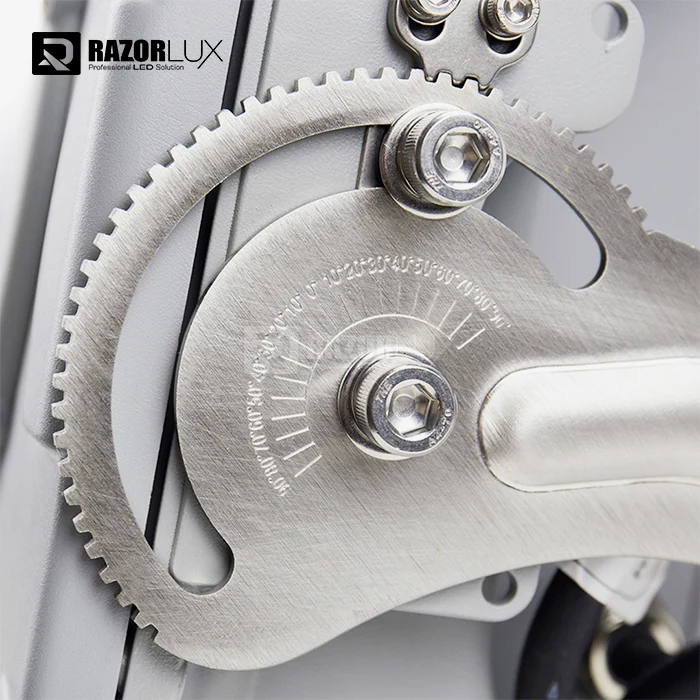 VIEW MOREled field lights
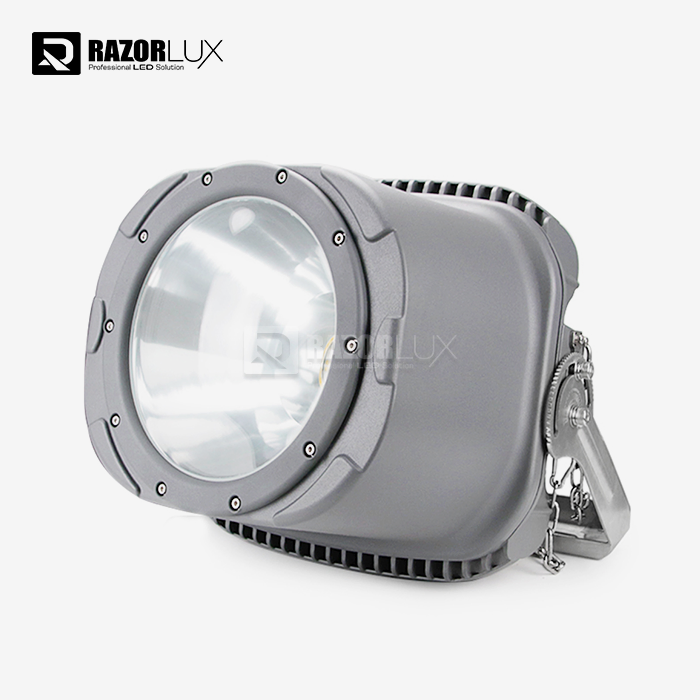 VIEW MOREbasketball court flood lights
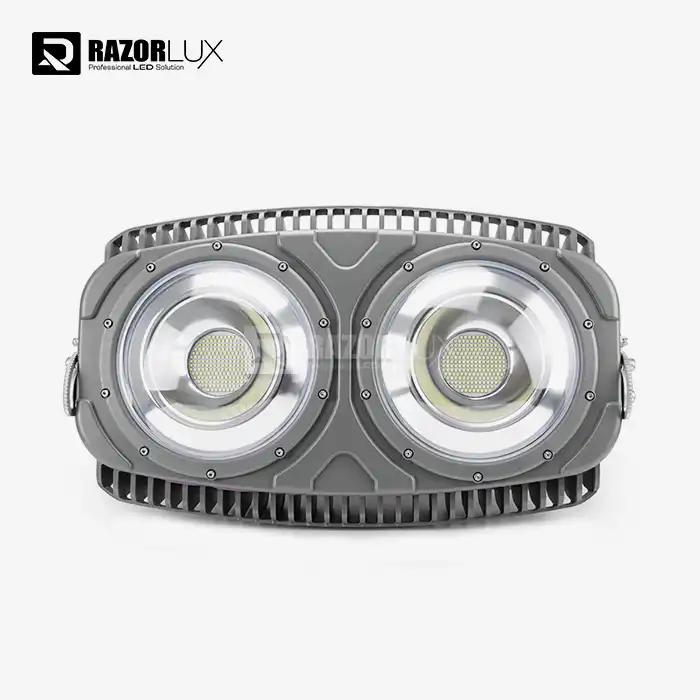 VIEW MOREConstruction Site Flood Lights
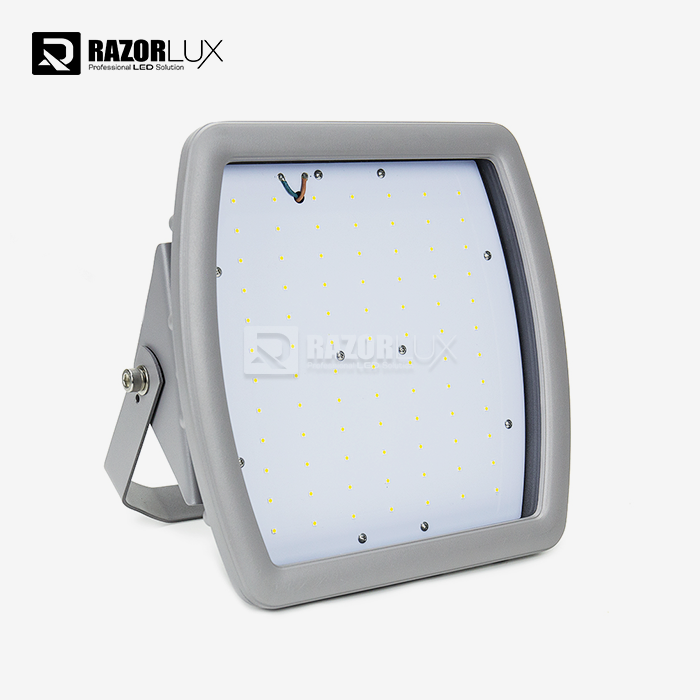 VIEW MOREHazardous Area Lighting Fixtures
 VIEW MORESports Venue 120000lm Led Sports Light 347 Vac Basketball Court Lights
 VIEW MOREUfo Led High Bay Light 200W
 VIEW MOREOutdoor Ceiling Flood Lights
 VIEW MORE120 Volt Flood Light