

_1750326878398.png)

How to Install Marine Flood Lights on Boats Safely?
When marine flood lights are installed correctly, they make sure that ships can see clearly, work efficiently, and keep their crews safe at night and in bad weather. This detailed guide shows you how to do the important things like choosing certified IP67-rated fixtures with housings that won't rust, finding the best places to mount them so that they don't get damaged by vibrations or water pooling, using marine-grade wiring with heat-shrink terminals and cable glands, securing fixtures with stainless steel hardware, and testing thoroughly for electrical continuity and waterproof seals. When fixtures are installed correctly, they last longer than 50,000 hours and don't break down as often because of problems like moisture getting in, terminal corrosion, and LEDs dying too soon in harsh marine settings.
Understanding Marine Flood Lights and Their Importance on Boats
Marine settings need lighting solutions that are made to last in situations that would quickly break down regular fixtures. Electrical equipment works very poorly in saltwater because of the constant vibrations caused by waves and engines, as well as the high humidity and temperature changes.
Why do standard flood lights fail at sea?
Normal outdoor lighting doesn't have the strong sealing systems needed to keep water out when it's raining. When ships are in rough seas or having their decks washed, normal fixings break in terrible ways. Moisture gets through seals that aren't good enough, which leads to electrical shorts, rusting of internal parts, and fast lumen degradation. Normal metal housings also suffer from galvanic corrosion when they are exposed to saltwater, which weakens the structure within months instead of years.
Critical Technical Specifications for Maritime Use
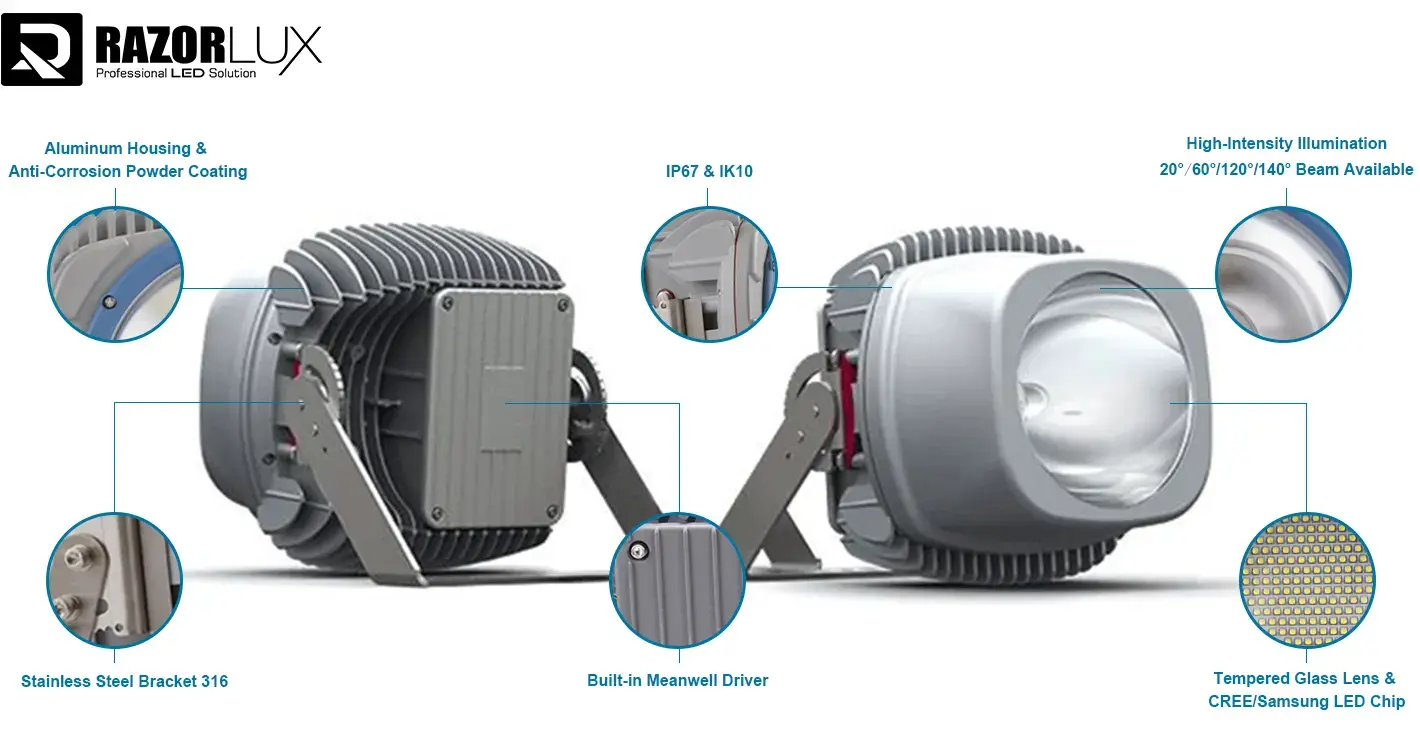
Professional-grade marine flood lights for boats need to have certain technical features that can be checked through international nautical certifications. The IP67 grade is the bare minimum for ingress protection, providing resistance to water up to one meter for 30 minutes. However, IP68 or IP69K grades are better for demanding uses. Impact resistance rated IK10 keeps the machine from breaking when it's being moved, hit by waves, or hit by a tool by chance during maintenance. The choice of material is also very important. Marine-grade aluminum alloys with multi-stage powder coating don't rust, and 316L stainless steel is better at resisting corrosion in places that come into close touch with saltwater. Lenses made of tempered borosilicate glass can handle sudden changes in temperature without breaking, which would make them less waterproof.
Energy Efficiency and Operational Cost Reduction
LED technology changed the economy of marine lights by using a lot less power than older halogen or metal halide systems. Modern LED lamps have luminous efficiency levels above 130 lm/W, which means they give off the same amount of light while using 70–80% less electricity. This economy directly leads to lower fuel costs for generators on boats that don't have power links to the shore. Total cost of ownership goes down even more when operating lifespans are extended. Good LED systems keep working for at least 50,000 hours, which is five to ten years of normal naval use before they need to be replaced. This makes repair less necessary, which is very important for ships that work in rural areas where getting technicians to the ship is hard and costs a lot.
Common Challenges and Risks When Installing Marine Flood Lights
Most early breakdowns of lighting systems on ships are caused by mistakes made during installation. Once procurement managers and engineering teams know about these risks, they can set up procedures that keep costly mistakes and safety risks from happening.
Electrical Hazards in Wet Environments
Marine power systems are always at risk of getting wet. When wires are terminated incorrectly, they create high-resistance links that produce heat. This heat speeds up the breakdown of insulation and increases the risk of fire. Water can move along the conductor strands into junction boxes and outlets when the wrong cable gland is used. This can cause shorts and ground failures. When used in naval settings, where cables may have to go a long way from power sources to mounting places, voltage drop is noticeable. When wires are too small, fixtures don't work as well, and connection places get too hot. Professional setups take voltage drop estimates into account and choose the right wire sizes to keep the voltage at the fixture connections where it should be.
Corrosion and Material Compatibility Issues
Galvanic rusting happens when two different metals touch each other in a fluid, such as saltwater. When you mount stainless steel marine flood lights with normal zinc-plated hardware, electrochemical cells are made that quickly break down the less valuable metal. For proper setups, use suitable fasteners (which are usually made of 316 stainless steel) and dielectric compounds on threaded connections. Material breakdown isn't just limited to metal parts. Standard wire insulation gets hard and cracks when it is exposed to UV light and the ozone that naval electrical systems make. Marine-rated wires have special insulation materials that don't break down in these harsh conditions, so they keep their flexibility and dielectric strength over time.
Mechanical Stress and Vibration Failures
When a ship is in operation, the lighting fixtures are constantly vibrating and getting shock loads from waves and the operation of the equipment. Fixtures that aren't mounted properly can move around, putting stress on the electrical lines and fixing points. Housings and clamps develop cracks from wear and tear, which finally cause the whole mounting to fail. Anti-vibration attachment methods are very important. Lock washers, thread-locking chemicals, and bolts that are properly torqued keep them from coming loose when they are vibrated. Flexible cable strain reliefs keep conductor terminations safe from wear failures that can happen when fixtures move away from conduit entry points.
Step-by-Step Guide to Safely Installing Marine Flood Lights on Your Boat
For construction to go smoothly, you need to pay careful attention to every detail during every step. This organized method guarantees dependable, long-lasting performance while upholding safety standards.
Pre-Installation Planning and Assessment
Before putting up any marine flood lights, you should do a full analysis of the lighting needs and the limitations of the vessel. Think about what you need for operations: lighting for deck work needs a different beam pattern than lighting for outer security. Write down how much power the current electrical system can handle, making sure to include available circuit breakers, wire lengths, and panel space for extra lines if needed. Create a detailed installation plan that shows where the fixtures should go so that they provide enough light without making guiding staff vulnerable to glare. Think about where repair workers can get to fixtures—fixtures that are installed in hard-to-reach places cost more to fix in the future and may not work for longer when they break.
Essential Tools and Materials Checklist
For professional installs, you need marine-grade parts and the right tools. Here are the basic needs for setups that are safe and follow the code:
Electrical Components:
Marine-rated wire that is the right size for the current and run length, usually three-conductor with ground (14 AWG minimum for most uses, 12 AWG for runs longer than 50 feet or higher current fixtures). Double-insulated wire that is approved for wet areas is very important for safety. Cable glands or watertight cord grips make it possible for devices and junction boxes to have sealed cable entrances. Heat-shrink terminals with an adhesive covering are much better than normal crimp terminals at making waterproof connections. Marine-grade solder and heat-shrink tubes can be used to make lasting splices that won't rust.
Mounting Hardware:
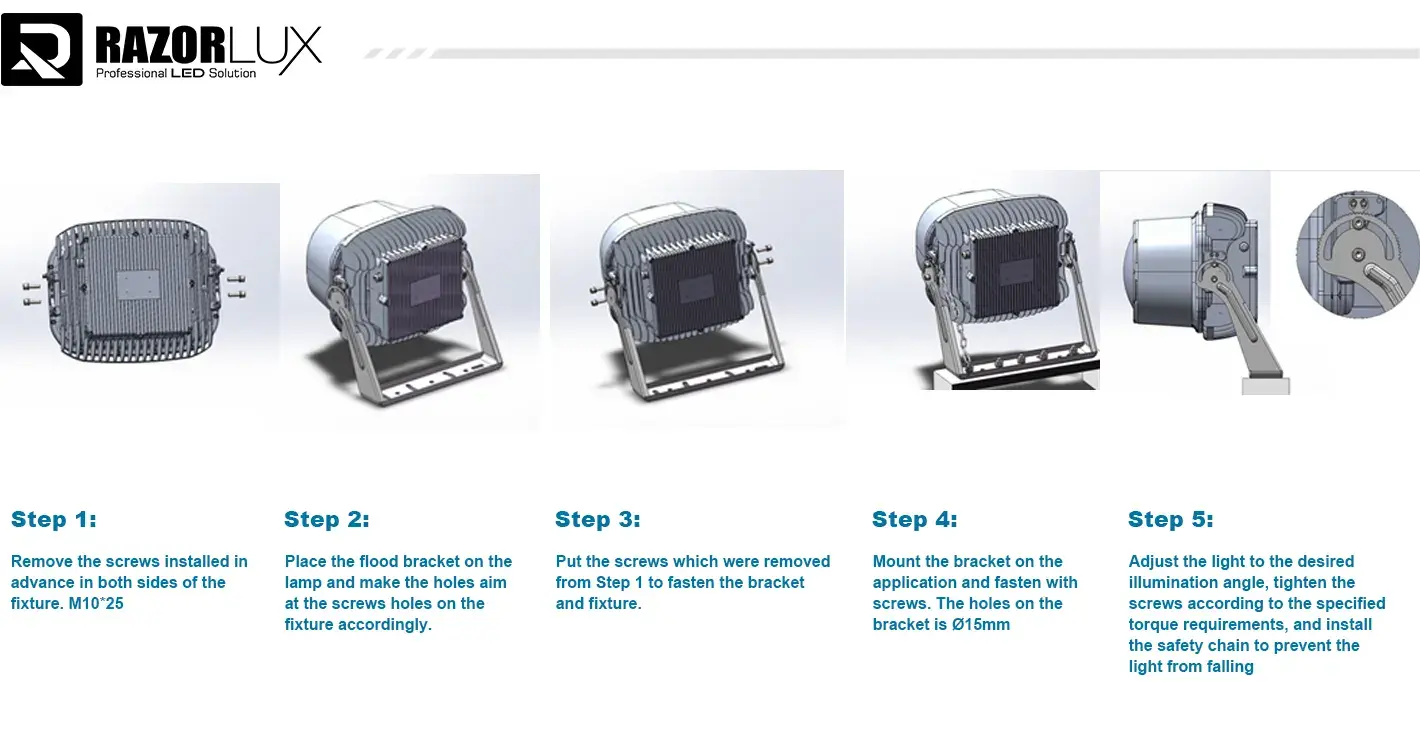
316 stainless steel bolts, washers, and lock washers that are the right size for device mounting brackets stop galvanic corrosion and keep the clamping force even when the brackets shake. Mounting loads are spread out over bigger deck areas by backing plates. This keeps stress from building up in one place, which could break fiberglass or thin metal structures. U-bolts made of stainless steel make mounting to fences and other upright structures safe. Marine-grade seals, which come in polysulfide or polyurethane forms, keep water out of fixing holes.
Installation Tools:
A digital multimeter checks voltage and continuity, torque wrenches make sure fasteners are properly tightened without being over-tightened, marine-rated wire strippers don't damage conductor strands, a heat gun sets heat-shrink terminals and tubing properly, and the right drill bits with cutting fluid are used to drill stainless steel surfaces.
Selecting Optimal Mounting Locations
Strategic location makes lights work better while reducing problems with installation and operating interruption. Think about a few important things when choosing a place. Coverage Analysis: Place lights so that there are no dark spots in work areas and no coverage overlaps, which wastes energy. Computer-aided optical analysis tools can help you see how light is spreading, but often, real-world experience is just as useful. Take into account things that block the view, like masts, crane booms, and luggage that casts shadows.
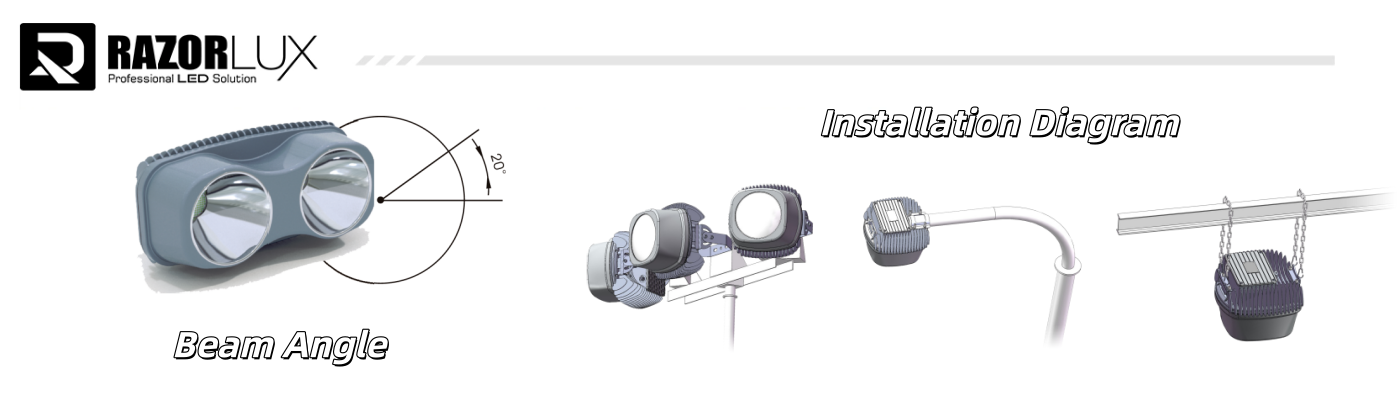
Structural Considerations: Attach fixtures to strong structural parts that can hold the weight of the fixtures and apply loads without bending. Loads need to be spread out on support plates for lightweight panels and thin fixing surfaces. Make sure there is enough space behind the mounting surfaces for the depth of the device and electrical connections.
Environmental Exposure: Place faucets so that they have the least amount of direct spray effect possible. Orientations that face downwards keep water from building up on the lenses. Sheltered mounting sites make fixtures last longer, but they still need to meet all environmental standards because security isn't perfect.
Wiring and Electrical Connection Procedures
Proper electrical work is the basis for a lighting system that works reliably. Taking shortcuts during this time will lead to early mistakes and safety risks. Circuit Planning: Make sure there is enough circuit capacity for the extra lighting loads. Total current draw, including inrush currents during LED driver starting, must be found. To keep annoying trips from affecting multiple loads, give important lighting systems their own circuits. Place circuit breakers so that they are easy to reach while you are fixing.
Cable Routing: When planning wire routes, make sure they are protected from mechanical damage, heat sources, and sharp edges as much as possible. Use the right clips or cable ties to keep wires in place at regular intervals. Be careful not to over-tighten, as this can damage the insulation. As required by the electrical code, keep transmission wiring and high-current power cords separate. Set up drip rings at low points to stop water from moving toward electrical covers.
Termination Techniques: Carefully remove the insulation from the wire so as not to damage the strands, which can cause stress concentration spots and lower current capacity. Use controlled heat to apply heat-shrink terminals so that the glue melts out completely and can be seen at the edges of the terminals. To check the mechanical strength, slightly tug on the finished terminations. Connections that are done right can withstand a lot of pull force. Apply dielectric grease to threaded terminal connections to keep water out.
Mounting and Securing Fixtures
When installing something physically, you need to think about both the short-term safety and the long-term reliability in the face of constant vibration and weather exposure. Surface Preparation: Thoroughly clean the fastening surfaces, getting rid of any dirt, rust, or loose coats. Abrading surfaces a little makes sealer stick better. Keep clean surfaces from getting dirty again before installing the device. Sealant Application: Use a lot of marine sealer around the edges of the mounting base and where fasteners go through it. For the right amount of time to fix before being exposed to water, check the manufacturer's instructions. For best bonding, some mixtures need to be primed on porous surfaces.
Fastener Installation: Put the backing plates in place, use sealant, and hand-tighten the bolts before applying the final pressure. Tighten the bolts in a star design so that the clamping force is spread out evenly. Using calibrated torque tools, apply the stated torque values. Over-tightening destroys sealant gaskets, while under-tightening lets water in. Thread-locking powder can be used to keep fastening threads from coming loose when they are vibrated.
Testing and Commissioning Procedures
Testing systems thoroughly before calling them active cuts down on service calls and makes sure that safety rules are followed. Electrical Testing: Check that the voltage readings at the fixture connections while the load is on them are within acceptable limits, which are usually ±10% of the standard voltage. Check how the phases of a multi-phase system relate to each other. Check for and write down ground continuity between the housings of the fixtures and the ground systems in the vessels. Check the trip times of any GFCI or RCD safety devices that are present.
Waterproof Integrity Verification: Check all seals, wire entrances, and mounting holes to make sure sealer covers everything and is compressed properly. Close-range splash tests with outdoor hoses should be done, and water should not get into the cable glands or housing seals. For some installs, items in splash zones need to be temporarily submerged.
Operational Verification: Run lights through their full duty cycles, checking for proper lighting, strange sounds coming from drivers or thermal management systems, and connection points that are getting too hot. Keep track of beam patterns and lighting levels so you can use them later when you're repairing.
Comparing Marine Flood Light Options for Professional Buyers
When making procurement choices, you have to weigh a lot of technical and business factors to find the best total cost of ownership while still meeting daily needs.
LED versus Traditional Lighting Technologies
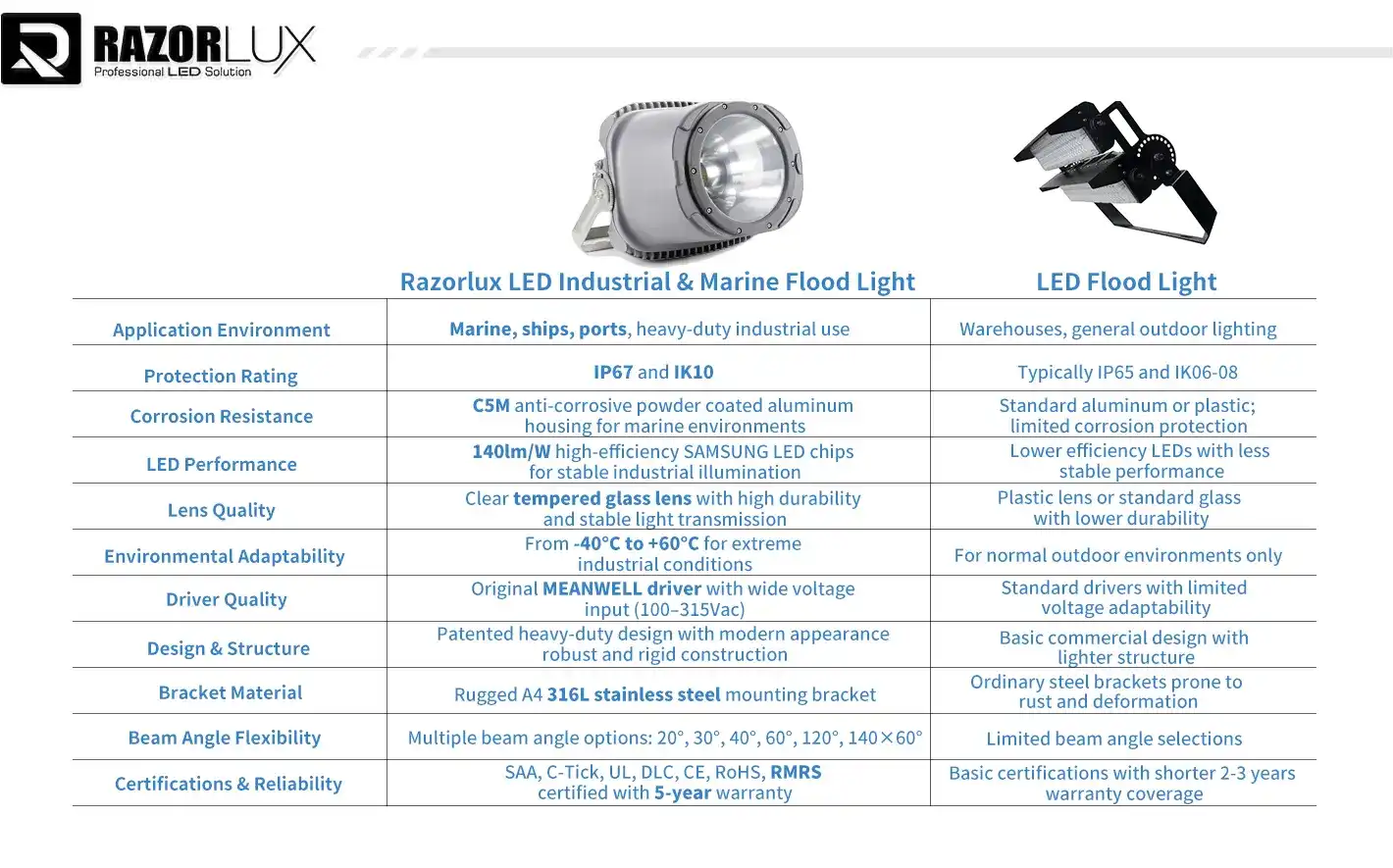
Modern naval lighting standards are mostly based on LED technology because it is much more efficient, reliable, and easy to keep than older technologies. Performance Comparison: LED lamps give off the same amount of light as metal halide systems while using 70–80% less power and 85–90% less power than halogen systems. This efficiency benefit directly leads to less engine fuel use and smaller electrical system needs. LEDs reach full light right away, so they don't have to wait for high-intensity discharge devices to warm up.
Maintenance Needs: LEDs last 50,000 to 100,000 hours, which is a lot longer than gas and metal halide technologies, which only last 2,000 to 4,000 hours and 10,000 to 20,000 hours, respectively. Less frequent relamping is especially helpful for ships that work in rural areas where it can be hard to find spare parts and skilled techs.
Durability in harsh environments: Solid-state LEDs are much more resistant to shock and pressure than filament and arc tube technologies. LEDs can be heated and cooled many times without losing any of their performance, but discharge lights' lifespans are shortened by the frequent on-off cycles that happen in marine use.
Key Manufacturers and Product Selection
Several companies make marine-qualified LED marine flood lights that can be used on challenging vessels. To properly judge certain models, you need to carefully compare their technical specs, certifications, and overall costs.
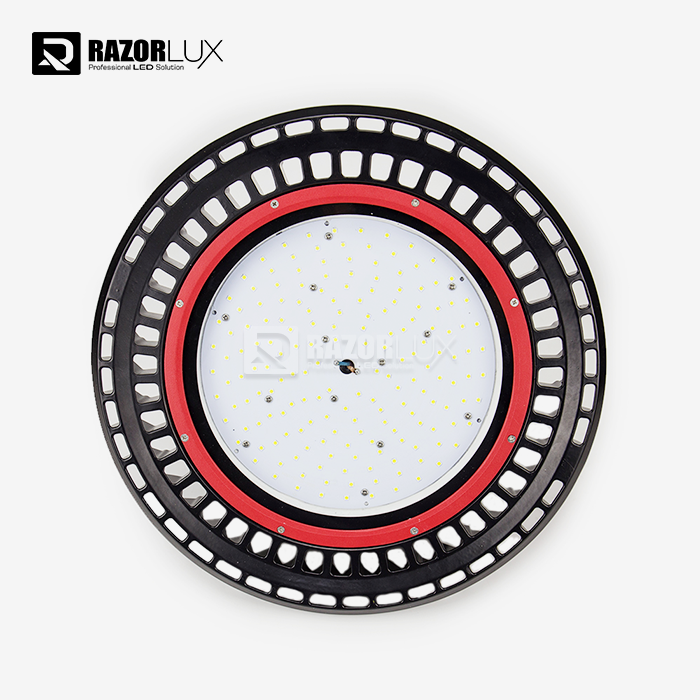
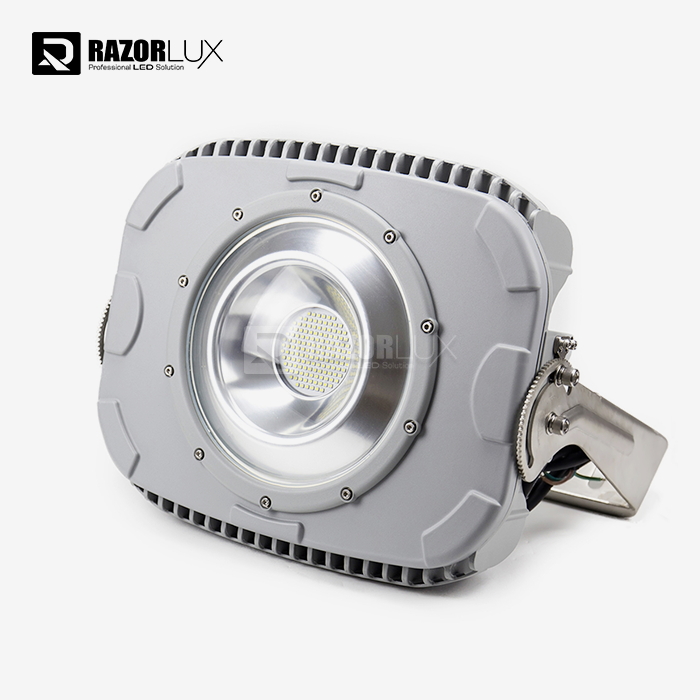
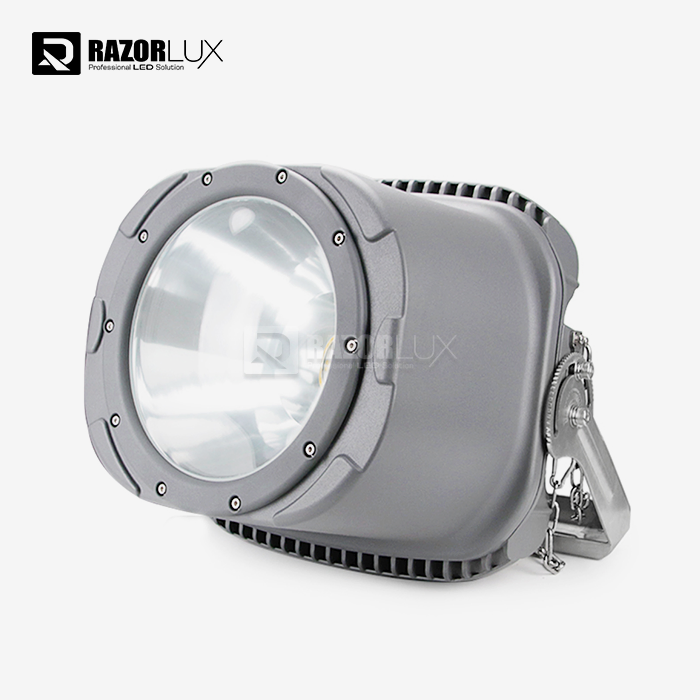
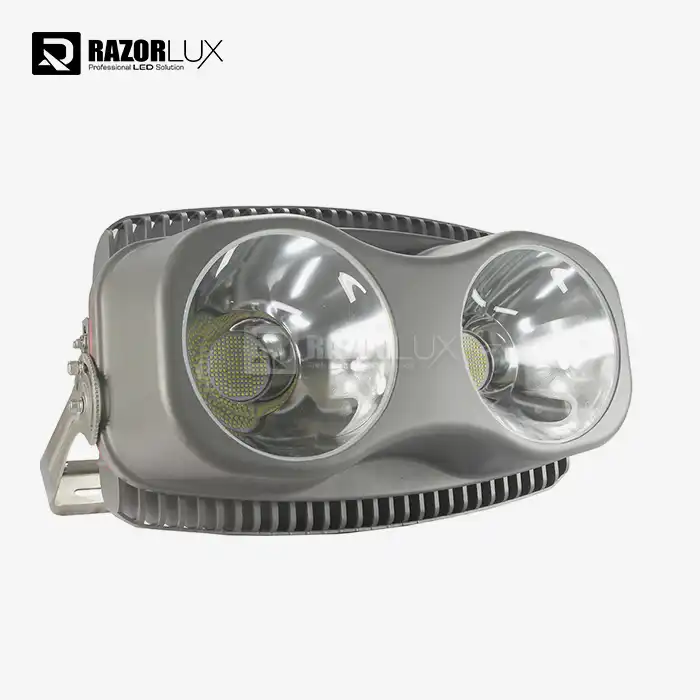
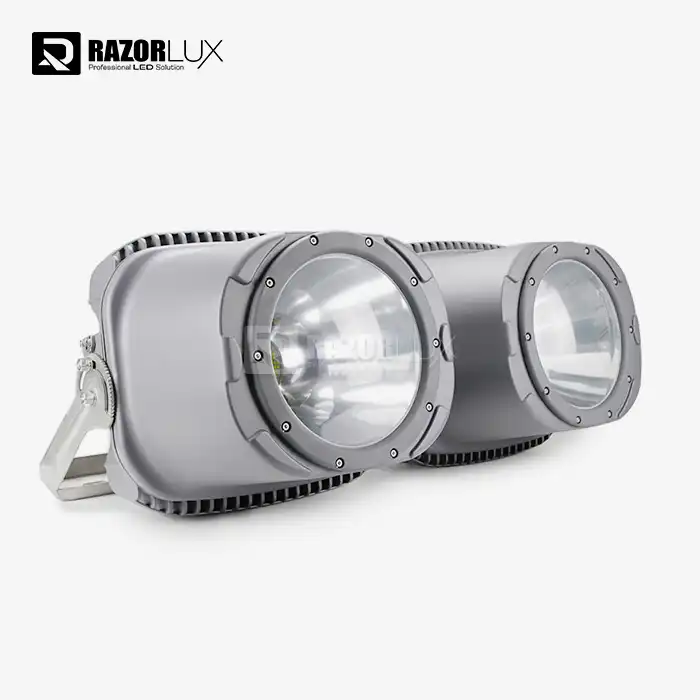
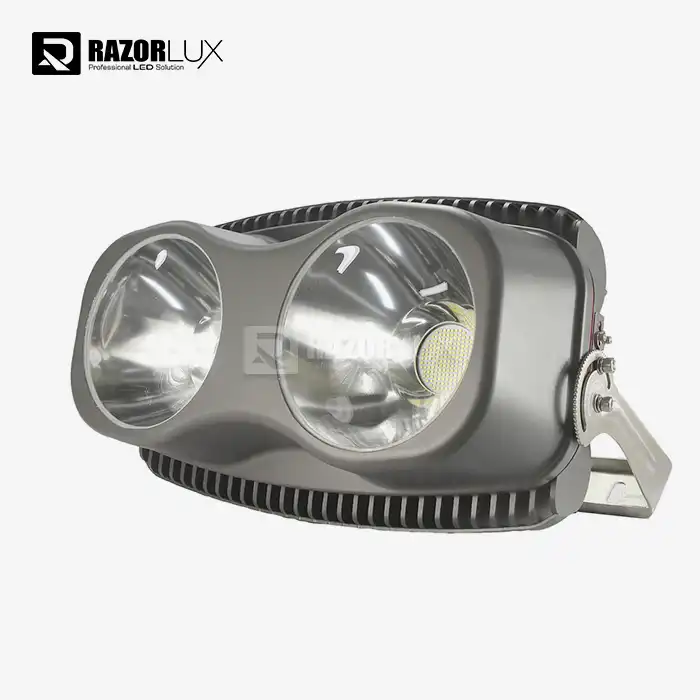
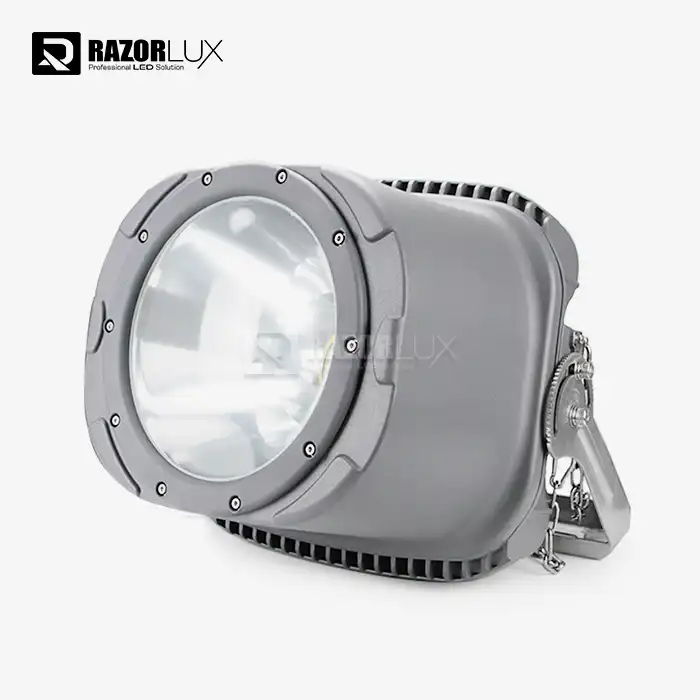
Razorlux stands out because it focuses on naval and industrial applications and has over 25 years of experience coming up with new LED technologies. Their patented multi-function design lets them be mounted in a variety of ways while still providing IP67 protection against water and IK10 impact resistance. The RGL-270P type produces 29,700 lumens while using only 270W, which is 130 lights per watt. It can also work with a wide range of voltages (AC 80-315V, DC 80-400V) without the need for extra adapters, which is a big plus for ships with different electrical systems.
Full foreign certifications like RMRS, UL, CE, SAA, and DNV approvals make sure that all marine laws are followed around the world. The five-year warranties on LED modules and drivers give buyers peace of mind, and the ten-year guarantee on the building shows that the company expects good construction quality. Meanwell power supplies have the most reliable drivers in the industry, which is important for keeping breakdowns to a minimum in remote work settings.
Different makers make similar goods that cost different amounts. To compare choices, you need to make sure that the certifications are real marine certifications and not just industrial or business ratings that aren't good enough for vessel service. As required by ASTM B117, you should ask for thorough technical documents such as photometric test reports, thermal management specs, and salt spray test results.
| Specification | Entry-Level LED | Mid-Range LED | Premium LED (Razorlux RGL-270P) |
|---|---|---|---|
| Luminous Efficacy | 90–110 lm/W | 110 to 125 lm/W | 130 lumens/W |
| Ingress Protection | IP65 | IP66 to IP67 | IP67 |
| Impact Rating | IK08 | IK08 and IK09 | IK10 |
| Operating Temperature | -20°C to +50°C | -30°C to +55°C | -40°C to +60°C |
| Voltage Compatibility | Only one voltage | Not many options | All-around (80-315VAC/80-400VDC) |
| Warranty Period | Two to three years | 3 to 4 years | LED and driver: 5 years, housing: 10 years |
| Certifications | RoHS and CE | UL, CE, RoHS | RMRS, UL, CE, SAA, DNV, DLC, and CB |
| Typical Applications | Recreational boats | Workboats for businesses | Commercial ships, offshore platforms, and factories |
Evaluating Total Cost of Ownership
The price of the lighting system is only one part of how much it will cost in the long run. A full study looks at many things that affect the total cost over the operating life of a fixture. Energy Costs: Figure out the yearly running costs by using the fixture's power, the number of hours it runs each day, and the cost of energy or fuel in your area. The energy savings from LEDs add up over many years of use, and the higher original costs are often recouped within 18 to 36 months just by using less energy.
Maintenance Expenses: Think about how much work costs, how much extra parts cost, and how much time the machine will be down for upkeep. When repairs need to be done often, facilities with fixtures that are hard to get to or boats that work from afar have much higher care costs. Longer LED lifespans cut these costs by a huge amount compared to older technologies that needed to be relamped every one to two years.
Regulatory Compliance: Make sure that the fixture's approvals match the places where it will be installed. Installing non-compliant lighting during checks comes with a lot of costs, such as replacing fixtures and paying inspectors. The ship may also have to be shut down for a while, and operations may be limited. Getting properly approved fixings at the start will keep you from having to pay these costs.
Best Practices and Safety Tips When Using Marine Flood Lights
Operating methods and upkeep schedules have a big effect on how reliable, safe, and long-lasting a lighting system is.
Adhering to Marine Electrical Standards
In addition to general electrical codes, maritime electrical systems must follow special rules that cover the safety needs of ships.
Applicable Regulations: In North America, ABYC E-11 rules control the AC and DC electrical equipment on recreational boats. Depending on the type of ship and where it operates, commercial ships must follow either Coast Guard rules (46 CFR Subchapter J) or international agreements like SOLAS. Classification society rules (ABS, DNV, and Lloyd's Register) make classed boats follow extra rules.
Grounding and Bonding: When grounding systems are done right, they stop shock risks and slow down rust. Use the right wire sizes to connect fixture housings to vessel joining systems. Check the consistency of the connection by measuring the resistance on a regular basis. Isolated ground systems need special setups to keep underwater metals from rusting due to stray currents.
Circuit Protection: Make sure that the circuit breakers or fuses are the right size for the wire ampacity and light needs. Ground fault protection should be put in wet places where people might come into touch with electricity. Write down how the circuits are set up and keep up-to-date electrical system models that show all the changes.
Implementing Preventive Maintenance Programs
Maintaining lighting systems in a planned way makes them last longer and finds problems before they break.
Inspection Schedules: Fixtures should be visually checked every three months for rust, physical damage, and loose mounting hardware. Check that the seals around the wire openings and housing joints are still good. Writing down the results will help you keep track of the rate of degradation and plan for replacement.
Cleaning Procedures: Get rid of salt layers, biological growth, and built-up dirt every six months, or more often in tough settings. Avoid rough materials that can scratch lenses and damage coatings when cleaning your glasses. Instead, use light detergents and soft cloths. After cleaning, rinse well with clean water. During cleaning, check the seals and replace any gaskets that are worn out.
Performance Monitoring: Use light meters to record values at regular places once a year to check the amount of illumination. Lower readings show that the LED is breaking down or that the optical surface is contaminated and needs to be cleaned up. Compare the amount of electricity used to the starting point; a rise in current draw indicates that the driver component is getting older.
Troubleshooting Common Operational Issues
Knowing the most common ways that marine flood lights fail lets you quickly figure out what's wrong and get the lights working again.
Flickering or Intermittent Operation: If your device flickers or stops working sometimes, it's probably because of loose links at the ports. Look for connections that are tight and end contacts that work well. Look at the driver parts for signs that they are getting too hot or breaking. Check the stability of the input voltage. If it changes too much, it could go beyond the driver's correction range, which would make the output unstable.
Complete Fixture Failure: Before assuming a fixture fault, check the power source at the fixture connections. Check the circuit breakers and fuses to see if they trip when there is an overload or a short circuit. Check the forward voltage of an LED. Readings that are very different from what is expected are a sign that the LED array is broken. Check the output voltage of the driver when it is loaded.
Reduced Light Output: First, clean the optical surfaces, because dirt and dust greatly lower output. If cleaning doesn't work, take precise measurements of the lighting to see if degradation is higher than the normal rate of LED degradation. High working temperatures speed up the loss of lumens, so make sure that heat management systems work properly and that there are no blocks in the airflow paths.
Integrating Advanced Control Systems
Automated controls make modern naval lights safer, more efficient, and easier to use.
Motion Detection Integration: PIR sensors turn on lights when they sense movement of people, cutting down on power while still making sure there is light when it's needed. Choose sensors that are rated for use in marine environments and have the right detecting ranges and placement options. You can change the sensitivity to stop fake triggers from wave motion or wildlife while still making sure that people can be reliably detected.
Automated Scheduling: Lighting is turned on and off by programmable clocks or vessel management systems based on plans, amounts of light in the area, or operating states. When tracking systems are integrated, lights can be turned on automatically at night. During the day or when the boat is at dock and connected to shore power, power is saved.
Remote Monitoring: Networked lighting systems send information about their state to central tracking stations, which then send alerts to people who need to fix problems. This feature is useful on big ships where checking all the fixtures by hand takes a lot of time. Instead of finding problems during regular checks, maintenance teams decide what needs to be fixed based on failure alerts.
Conclusion
To properly install marine flood lights, you need to carefully plan, choose high-quality parts, carefully carry out the installation, and commit to ongoing upkeep. In the harsh maritime climate, there are no shortcuts allowed. Only lighting systems that are properly defined, installed, and regularly kept will work reliably for a long time. Professional procurement managers know that the original cost needs to be weighed against the total cost of ownership, the dependability of operations, and the safety consequences. Lighting options from Razorlux that were made to withstand tough marine conditions give mission-critical vessels the durability, efficiency, and approved performance they need. Investing in high-quality lights, having them installed by a professional, and following regular repair procedures will make sure that lighting systems support safe, effective operations for a long time.
FAQ
What IP rating is required for marine flood lights?
IP67 is the lowest level of ingress protection that is acceptable for most marine uses. It provides dust-tight sealing and brief submersion resistance up to one meter deep for 30 minutes. Fixtures placed in areas that are directly hit by waves or cleaned with high-pressure water benefit from IP68 or IP69K grades, which make them more resistant to water getting in. Check the exact application needs with the classification groups or regulatory bodies that oversee your vessel class. In harsh working conditions, meeting basic standards might not be enough. Choosing fixtures that go above and beyond the minimum requirements gives you a practical margin that improves long-term reliability.
Can I install marine flood lights myself, or should I hire professionals?
Installation difficulty varies on a number of factors, such as the layout of the electrical system, how easy it is to get to the mounting position, and any legal requirements that apply. Smaller boats can be installed by recreational vessel owners who know how to work with electricity, but a professional installation is recommended to make sure the boat meets all codes and works at its best. Commercial boats usually need qualified marine electricians who know how to follow Coast Guard and classification society rules. Doing things wrong can put people in danger, cancel guarantees, and lead to regulatory violations during inspections. Instead of seeing professional installation as a cost, think of it as an investment in safety and dependability.
How do LED marine flood lights compare to halogen options?
When used in naval situations, LED technology has huge benefits. 70–85% less energy is used than with halogen bulbs, but they give off the same amount of light or more. LEDs last 50,000 to 100,000 hours, while halogens only last 2,000 to 4,000 hours. This means that LEDs require much less upkeep and repair costs. LEDs can handle shock and pressure better than halogen filaments, which can break easily. With LEDs, a lot less heat is made, which makes workers safer around lights and lowers the load on air conditioners in small rooms. Even though LEDs cost more at first than halogens, they are much cheaper to own in the long run because they use less energy, last longer, and need less upkeep.
Partner with Razorlux for Professional Marine Lighting Solutions
Razorlux is a reliable company that makes marine flood lights. They offer approved, high-performance LED lighting that is designed to work in harsh ocean settings. We offer lighting solutions that meet the highest international standards thanks to our more than 25 years of experience in coming up with new ideas and our 200+ patents in areas like LED technology, power management, and structural design. Our RGL-270P series marine flood lights are 130 lm/W efficient, protected by IP67/IK10, work with all voltages, and come with full five-year warranties. Procurement managers like that we offer quick technical help, the ability to make changes, and reasonable bulk prices for large orders. Our marine lighting experts can be reached at sam@razorlux.com to talk about your particular vessel's needs, get full technical paperwork, or set up sample evaluation units that show how committed we are to quality and performance.
References
1. American Boat and Yacht Council. ABYC E-11: AC and DC Electrical Systems on Boats. ABYC Technical Standards, 2021.
2. DNV GL. Rules for Classification of Ships: Part 4 Chapter 8—Electrical Installations. Det Norske Veritas, 2020.
3. International Maritime Organization. SOLAS Consolidated Edition: Chapter II-1 Construction - Electrical Installations. IMO Publications, 2020.
4. National Electrical Manufacturers Association. NEMA LE 5: Luminaires for Use in Marine Environments. NEMA Standards Publication, 2019.
5. U.S. Coast Guard. 46 CFR Subchapter J: Electrical Engineering. Code of Federal Regulations, Department of Homeland Security, 2022.
6. International Electrotechnical Commission. IEC 60598-2-18: Luminaires for Swimming Pools and Similar Applications. IEC Standards, 2020.