

_1750326878398.png)

How Do 120 Volt LED Outdoor Flood Lights Reduce Electricity Costs?
I've learned that energy costs take up a big chunk of practical funds when I'm in charge of running a factory or an offshore platform lighting system. Running high-wattage outdoor flood lights all the time can use up resources faster than most building managers think. Modern 120 Volt LED Outdoor Flood Lights that work with normal line power are a good way to deal with this problem. These lamps are very cost-effective because they work directly with current electrical systems and produce light at a very high efficiency (often over 130 lumens per watt). When facilities replace gas or metal halide systems with LEDs, they can cut their power use by 60–70% while keeping or even improving the quality of the lighting. This makes LED technology an investment that pays off in lower utility bills and lower upkeep costs.
Understanding LED Technology and Energy Efficiency in Outdoor Lighting
The Science Behind LED Power Savings
LED technology is very different from regular lighting because it uses semiconductor technology to turn electricity straight into light. Incandescent bulbs lose about 90% of their power as heat, but LED systems turn most of their power into light that can be seen. This efficiency directly means that less electricity is used for the same amount of light. This difference is especially clear where I've worked, both in the sea and industry fields. A 1000W 120 Volt LED outdoor floodlight fixture can be used instead of a 2200W or 2500W high-intensity discharge (HID) lamp and give off the same amount of light or more. When procurement managers look at their first utility accounts after an installation, they are often surprised by how the change affects their monthly energy bills right away.
Luminous Efficacy: The Critical Performance Metric
The number of lumens per watt that shows how well a light source turns power into visible light is called its luminous efficacy. Metal halide lights from the past usually get between 60 and 80 lm/W, but current LED systems get 130 lm/W or more. Higher efficiency means more light output per dollar spent on power, which is directly related to how much energy costs. Modern LED flood lights have optical systems that were carefully designed to send the most light to specific places. LED lights use reflectors and filters to send light exactly where it's needed, unlike regular bulbs that spread light out in all directions. This directed control gets rid of lost lumens and lowers the total amount of power needed to cover an area well.
Real-World Performance in Harsh Environments
A lot of the time, purchasing managers ask me if LEDs still work well in harsh situations. The answer is completely dependent on how the temperature control is set up. Good LED lights have heat sinks and thermal paths that keep the junction temperatures at the right level even when the temperature outside is -40°C to +60°C. Both efficiency and lifespan are directly affected by how stable the temperature is. When LED systems are properly regulated for temperature, they keep their maximum lumen power for the whole time they are working, which is usually more than 50,000 hours. Because of this, the energy savings that were estimated at the time of installation continue year after year. This is in contrast to traditional systems that use more power over time to keep the light levels the same.
Why Do Traditional Outdoor Floodlights Waste Energy and Money?
The Hidden Costs of Incandescent and Halogen Systems
Traditional incandescent and halogen floodlights use old technology that turns most of the electricity it gets into heat instead of light. In open industrial areas, this waste adds to the costs of running the business in more ways than just using more energy. When heat builds up in contained or partially enclosed spaces, cooling systems have to work harder, which adds to the cost of energy. Because these bulbs only last between 1,000 and 2,000 hours, they need to be replaced often, which increases the cost of work and requires a large collection of spare parts. For offshore sites or factories that need scaffolding or other specialized equipment to get to, each repair event costs a lot of money. Using modern 120-volt LED outdoor floodlights eliminates these frequent maintenance cycles.

Metal Halide and High-Pressure Sodium Limitations
Metal halide and high-pressure sodium light bulbs are more energy-efficient than incandescent ones, but they are still not even close to as good as LEDs. It takes these systems 5 to 15 minutes to reach full brightness, which wastes energy during starting and raises safety issues in areas that need immediate lighting. The ballast that is needed for HID operation wastes more power and is a frequent place where things go wrong. I looked at repair logs from port facilities where 40% of lighting system downtime was due to ballast problems. Each failure means not only the cost of a new system but also the waste of energy from running systems that are only partly working until they can be fixed.
Energy Loss Through Omnidirectional Light Distribution
Traditional flood lights send light in almost every direction, so they need mirrors to focus the light on the right spot. This method loses energy because the light that is absorbed or mirrored by the fixture housing never gets to the work area. Studies show that regular light sources lose 30 to 50 percent of the light they make inside the device or when they shine on things they're not supposed to. This basic waste is fixed by semiconductor design in LED technology, which sends light in a specific way from the start. When this is combined with precise optics, lights are made that put 85–90% of the lumens they produce right where they are needed. This makes the total wattage needed for the same level of useful lighting much lower.
Core Factors That Maximize Energy Savings in LED Flood Lighting
Voltage Compatibility and System Integration
For industrial and business systems, operating at standard line voltage has clear benefits. Systems that are built to work with 120V inputs don't need step-down transformers, which waste 5 to 15% of their efficiency. They can be easily connected to current electrical systems. A wide input voltage range is also helpful in places where the power supply isn't stable. 120 Volt LED outdoor flood lights that can take AC input from 80V to 305V or DC input from 100V to 400V keep working properly even when the power grid changes, which can happen in marine or remote industrial settings. This flexibility keeps sensitive gadgets from losing their effectiveness and breaking down too soon, which can happen when they don't get stable power.
Optimizing Power Consumption Through Smart Design
Smart design can help you use less electricity.
| Power Component | Traditional 2500W HID | Advanced 1000W LED | Energy Reduction |
|---|---|---|---|
| Light Source | 2200W | 900W | 59% reduction |
| Driver/Ballast | 300W | 100W | 67% reduction |
| Total Consumption | 2500W | 1000W | 60% reduction |
| Annual Operating Cost (24/7 at $0.12/kWh) | $2,628 | $1,051 | $1,577 savings |
This comparison shows why workers see the benefits of LEDs right away. Changing just one light bulb can save you over $1,500 a year on power costs. When you do this for dozens or even hundreds of lights in a shipyard or manufacturing building, the total cost savings are big.
High power factor (≥0.98) and low total harmonic distortion (10%) in modern LED drivers make these savings much bigger. These electrical features keep reactive power losses to a minimum and ease the load on electrical distribution systems, which improves the efficiency of the whole building's power system.
Durability's Role in Long-Term Cost Reduction
Energy economy is more than just lowering running power costs; it also includes total lifetime costs. Fixtures with an IP65 or IP67 rating and IK10 impact protection keep their sealed integrity even when they are hit by water, salt spray, or other objects. This safety stops early failures that would have to be replaced, and whole units would have to be thrown away otherwise.
Corrosion-resistant metal housings with special coatings can handle marine settings where the salty air breaks down less durable materials quickly. Stainless steel fixing clamps stay in place even after years of being exposed to vibrations and the weather. These features make sure that the estimated energy savings keep adding up for more than 50,000 hours of use without stopping or degrading.
Selecting and Implementing LED Solutions for Maximum Cost Efficiency
Matching Specifications to Application Requirements
Whether setups save as much money as they can depends on how well the specifications are chosen. The choice of beam angle has a big effect on how well it works. Narrow beams (40° to 60°) focus light for high-mounting uses, while wider patterns (120° to 140°) work for lower placements that need to cover a lot of ground.
Color temperature changes both how much energy is used and what kinds of uses are possible. For security and precision work areas, cooler temps (5000–6500K) give you the best visual clarity, while warmer temperatures (2700–4000K) are better for building uses. The main idea is that selecting the right color temperature for your 120-volt LED outdoor flood lights from the start keeps extra lighting from being added later to fix setups that weren't done right the first time.
To get the best wattage, you have to carefully figure out the mounting height, spacing, and amount of light you need. If you don't specify enough, you'll have to add fixtures later, which loses time and money. Using IES files for photometric analysis makes sure that setups meet standards while reducing the overall connected load as much as possible.
Integration with Control Systems for Additional Savings
Motion sensors and photocells make LEDs even more efficient by turning them off when they're not needed. In perimeter security applications, sensors can cut annual working hours by 30 to 50 percent compared to continuous operation. This saves a lot of electricity without lowering safety.
Smart dimming through 0-10V or DALI protocols lets you make changes on the fly based on the environment or the needs of the operation. Facilities can set their output to be lower during times of low activity. This can cut energy use by an extra 20–40% while still providing enough light for safety and security.
Network integration allows for unified tracking that finds broken or poorly working fixtures right away. This kind of proactive management stops the waste of energy that comes from systems that aren't working as well because they're old and broken, and building managers don't even know about the problem.
Installation Best Practices That Preserve Efficiency
Professional fitting protects the energy efficiency that was built into high-quality LED lights.
| Installation Factor | Impact on Efficiency | Best Practice |
|---|---|---|
| Wiring gauge | Voltage drop reduces efficiency | Use an appropriate gauge for distance and load |
| Connection quality | Poor connections create resistance | Use marine-grade connectors with corrosion protection |
| Mounting orientation | Affects thermal management | Follow manufacturer specifications for optimal heat dissipation |
| Environmental sealing | Moisture ingress degrades performance | Verify gaskets and cable glands are properly installed |
| Electrical protection | Surges damage drivers | Install appropriate circuit protection and surge suppression |
I've looked into many cases where bad installation methods—like wire that wasn't the right size, not covering the system well enough against the weather, or not properly grounding it—lowered system performance by 15 to 30 percent. Inefficiencies that could have been avoided waste the energy savings.
Bulk Procurement Strategies for Maximum Value
Buying in bulk lowers the cost per unit and makes sure that all installs are the same. Building ties with dependable makers creates the stability in the supply chain that is needed for big projects or ongoing site management. Suppliers with a good reputation give full paperwork, including photometric data, thermal performance standards, electrical features, and certificates of compliance. This openness lets you figure out how efficient something really is and helps with the approved processes for buying things that need to show a clear return on investment.
Manufacturers that let you customize their products add value by making fittings that fit the needs of a specific application. Custom beam angles, mounting setups, or control integration keep you from having to settle for standard goods that don't quite work for the job.
Advanced Features and Technologies That Enhance Cost Savings
Thermal Management and Efficiency Retention
The temperature at the LED junction has a direct effect on both the immediate efficiency and the maintenance of lumens over time. Fixtures that keep junction temperatures below 85°C while they're working will always work at their maximum efficiency. When thermal design isn't done right, junction temperatures can rise above what is safe. This makes efficiency loss faster and shortens the working life. Advanced heat sink designs that use metal extrusions and fins with the best shape for convection cooling work best. There are high-output 120-volt LED outdoor flood lights that use heat pipe technology to move heat away from the LED panels. These temperature control systems make sure that the energy savings that were calculated at the time of installation stay in effect year after year.
Power Supply Quality and Efficiency
Mean Well and other high-end drivers work more than 94% of the time, which means that less power is lost between the power supply and the LED grid. These drivers keep the output fixed even when the input voltage changes. This protects LED performance in places where the power quality isn't always stable. When to change a driver is often based on how long the driver lasts. Premium parts that are marked for 100,000 hours or more at high temperatures make sure that the whole system works as long as it's supposed to without any parts breaking down and losing efficiency.
Optical Precision and Light Control
With ±3° beam angle accuracy, precision-molded lenses and reflectors make sure that the light placement matches the figures used for the design. This accuracy keeps overlapping or holes that need extra fixtures from being inefficient. Asymmetric optics are used in some more advanced systems to shape the light so that it fits rectangular areas like building walls or paths. This smart light shaping gets the job done with fewer lamps and less overall wattage than symmetric patterns, which lose light on areas other than the goal.
Future Trends in LED Outdoor Lighting and Cost Optimization
Smart Controls and IoT Integration
The next wave of outdoor LED systems has sensors and network connections built right in. These smart light bulbs change their output based on the amount of light in the room, the number of people in it, and set plans, all without the need for separate control systems. Cloud-based management systems let you see how much energy is being used, the status of operations, and efficiency data in real time. From centralized dashboards that can be accessed from anywhere, facility managers can find ways to save money on power, keep track of real costs, and improve operations. Predictive maintenance algorithms look at practical data to find things that are getting close to the end of their useful life before they break. This preventative method stops waste caused by poor performance and gets rid of the need for expensive emergency repairs.
Emerging Efficiency Standards and Specifications
As energy rules change, they require business and industrial lighting to meet higher and higher minimum levels of efficiency. The plans we have now say that we will need 140+ lm/W within the next 3–5 years. When companies invest in advanced LED technology and thermal control for their 120 Volt LED outdoor flood lights, they put their users ahead of what the government requires. Utility refund programs are favoring high-efficiency LED installs more and more. Some places give rewards that cover 20–40% of the costs of installing systems that are more efficient than the minimum requirements. These programs speed up the return on investment and lower the amount of money needed to improve facilities.
Sustainability and Total Cost of Ownership
Companies that want to be environmentally friendly buy lighting that uses the least amount of energy possible because it is an easy way to save energy. Putting in LED lights is often the best way for business buildings to save the most electricity. Life cycle cost analysis is becoming more and more important in buying choices. Even though premium LED lights cost more at first, they are more efficient, last longer, and need less upkeep, so the total cost of ownership is cheaper. Smart buying groups now require TCO analysis instead of just looking at the price of the item.
Conclusion
There are several reasons why 120-volt LED outdoor flood lights save electricity: better luminous efficiency turns more electricity into useful light; longer operational lifespan lowers replacement frequency and costs; durability in harsh environments prevents early failure; and integration with smart controls optimizes operation for actual needs instead of worst-case scenarios. When facilities switch from standard 2500W HID systems to 1000W LED options, each fixture immediately uses 60% less power. These savings add up to hundreds of thousands of dollars when spread out over whole sites and over more than 50,000 hours of use. 120-volt LED outdoor floodlight technology is a good investment for businesses that run large outdoor lighting systems because it uses less power, needs less upkeep, and gives off better light.
FAQ
How quickly do LED flood lights pay for themselves through electricity savings?
Payback times are usually between 1.5 and 3 years, but they rely on a number of factors, such as the number of hours the business is open each year, the cost of power in the area, and the difference in energy efficiency between old lights and new LED systems. Facilities that run lights 24 hours a day, seven days a week at higher power rates see the biggest returns, usually getting their money back within 18 to 24 months. Payback time is extended to 30 to 36 months for installations with shorter daily working periods or lower energy rates. These estimates only look at direct energy savings. Lower upkeep costs and longer replacement times greatly speed up the return on investment for 120 Volt LED outdoor flood lights.
Do LED flood lights maintain efficiency in extreme temperatures?
Advanced heat management lets high-quality LED lights made for industrial and marine settings keep working at their rated efficiency from -40°C to +60°C. Temperature at the joint, not temperature in the room, is the most important issue. No matter what the outside conditions are like, LED junctions stay below critical levels thanks to well-designed heat sinks and thermal pathways. I've seen setups on offshore sites in the Arctic and in the Middle Eastern desert where LED systems work perfectly even when the temperature outside is very high or very low. For harsh climate uses, it should be normal to check the thermal design and maker testing data.
What certifications verify energy efficiency claims?
DLC (DesignLights Consortium) approval is an outside check of photometric performance, claims of efficiency, and long-term brightness maintenance. UL and CE approvals make sure that electricity is safe, but they don't say anything about how efficient something is. Look for public LM-79 test results that show how well the lights really work and LM-80 data that backs up predictions about how long they will last. Manufacturers with a good reputation back up their claims with full optical files and performance proof.
Partner With Razorlux for Proven Energy-Efficient LED Flood Light Solutions
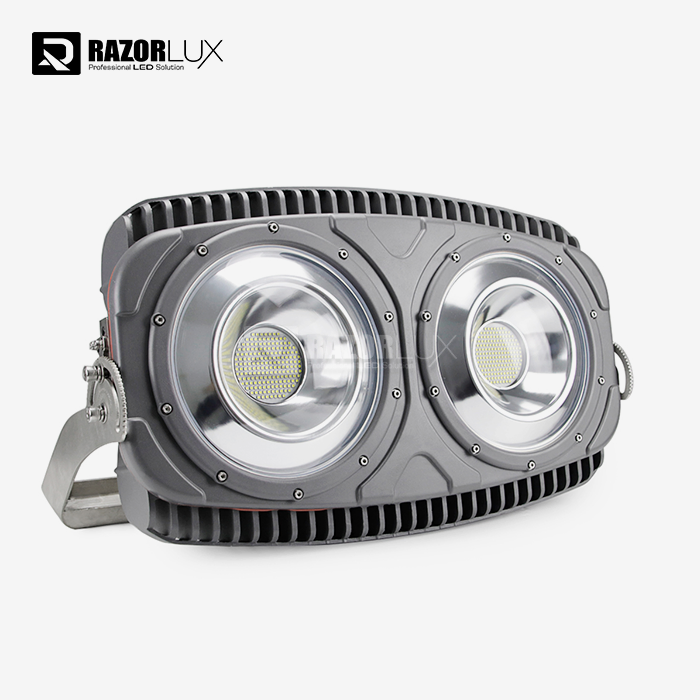
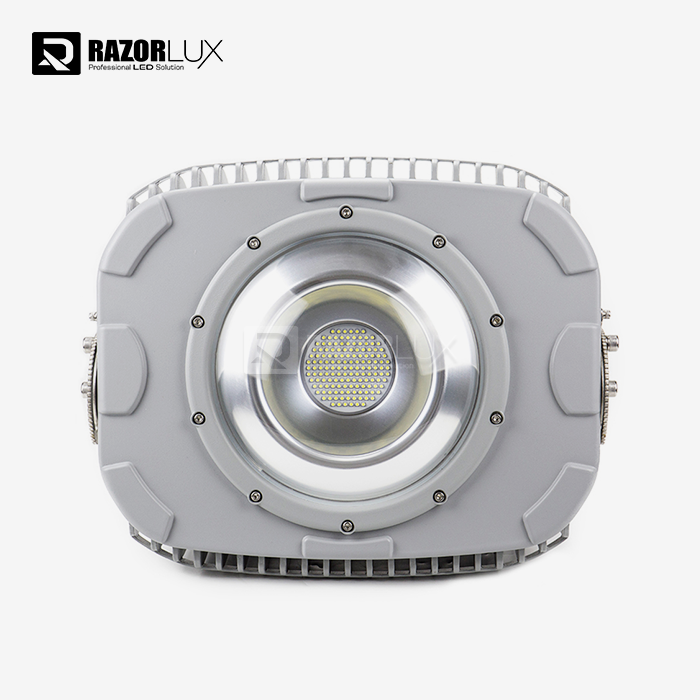
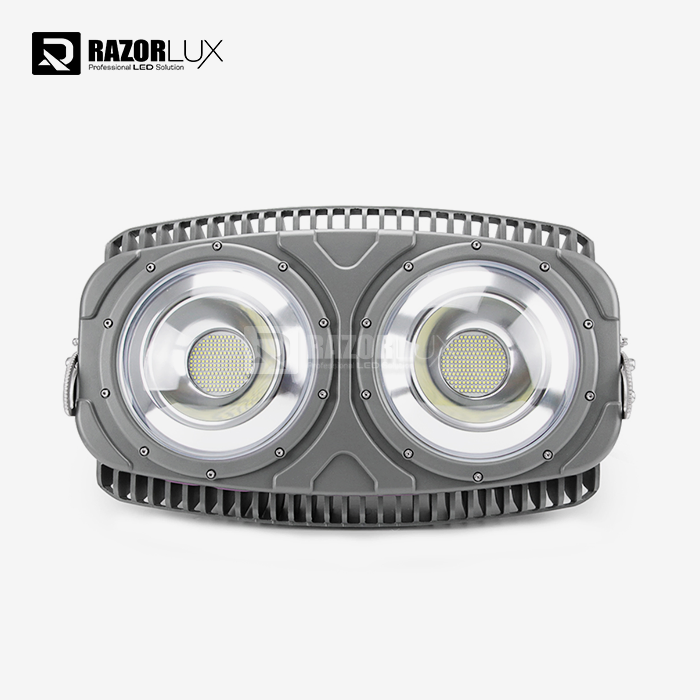
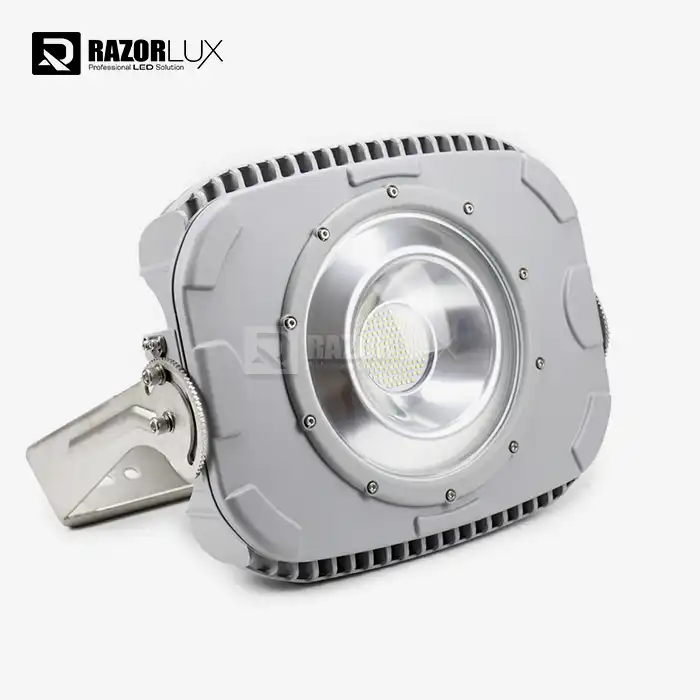
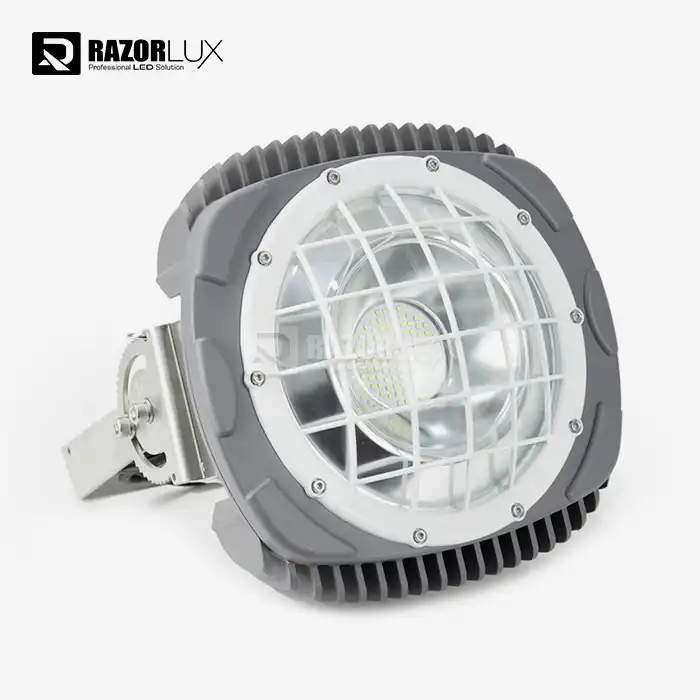
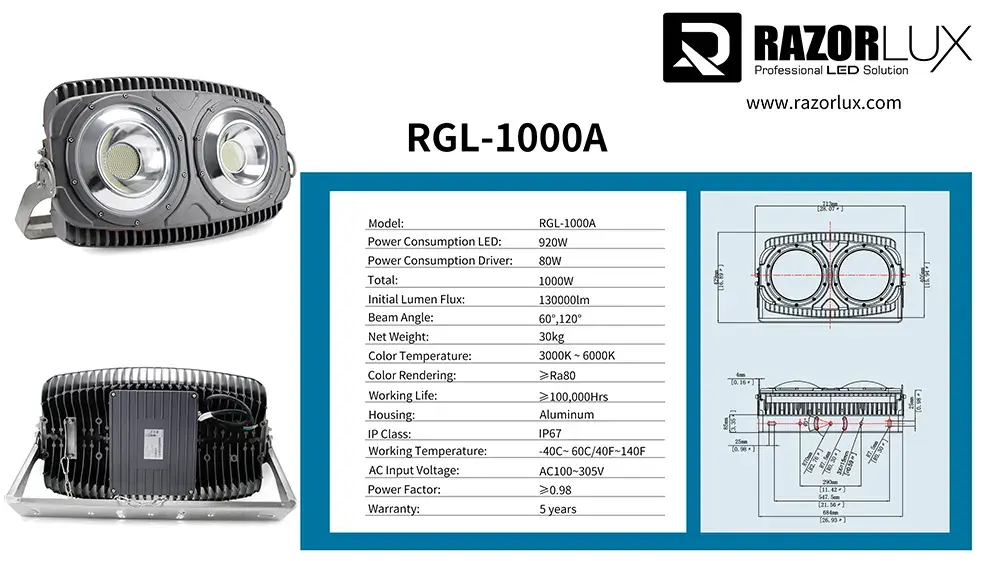
Razorlux is a reliable company that makes 120-volt LED outdoor flood lights. They have more than 20 years of engineering experience in naval and heavy-duty industrial settings. Our RGL-1000A line has the highest efficiency in the business at 130 lm/W. It can replace 2200–2500W traditional systems while only using 1000W, which cuts power costs by 60% right away. We know how hard it is to buy things when you have to deal with tough working conditions, approval rules, an unreliable supply chain, and a clear return on your investment.
Our lights have Mean Well power sources, IP67 protection against water and dust, and IK10 impact ratings. You can support your technical review and procurement approval processes with full paperwork that includes photometric data, thermal performance standards, and foreign certifications (CE, RoHS, UL, DLC). Custom sampling lets your tech teams check how well something works before committing to large orders. We can make things and have more than 200 patents and an ISO 9001 quality system to back them up. This gives big projects the supply chain security they need.
Email our technical team at sam@razorlux.com to talk about your unique application needs and get detailed efficiency estimates that show how much money your facility will save on power costs.
References
1. Chen, W., & Morrison, R. (2021). Industrial LED Lighting Systems: Energy Efficiency and Economic Analysis. Illuminating Engineering Society Technical Publications.
2. Department of Energy. (2022). LED Lighting Performance in Commercial and Industrial Applications. Office of Energy Efficiency & Renewable Energy Research Report.
3. International Maritime Organization. (2020). Energy-Efficient Lighting Standards for Marine Vessels and Port Facilities. IMO Maritime Safety Committee Guidelines.
4. Peterson, L., & Yamada, K. (2023). Lifecycle Cost Analysis of LED vs. Traditional Outdoor Lighting in Harsh Environments. Journal of Industrial Engineering and Management.
5. Razorlux Optoelectronic Technology Co., Ltd. (2024). Technical Specifications and Performance Data: RGL-1000A Series LED Flood Lights. Xi'an, China: Company Technical Documentation.
6. Stevenson, M., & García, A. (2022). Thermal Management in High-Power LED Systems: Impact on Efficiency and Longevity. Applied Thermal Engineering Research Quarterly.