

_1750326878398.png)

How to Reduce Energy Costs with Construction Site Flood Lights?
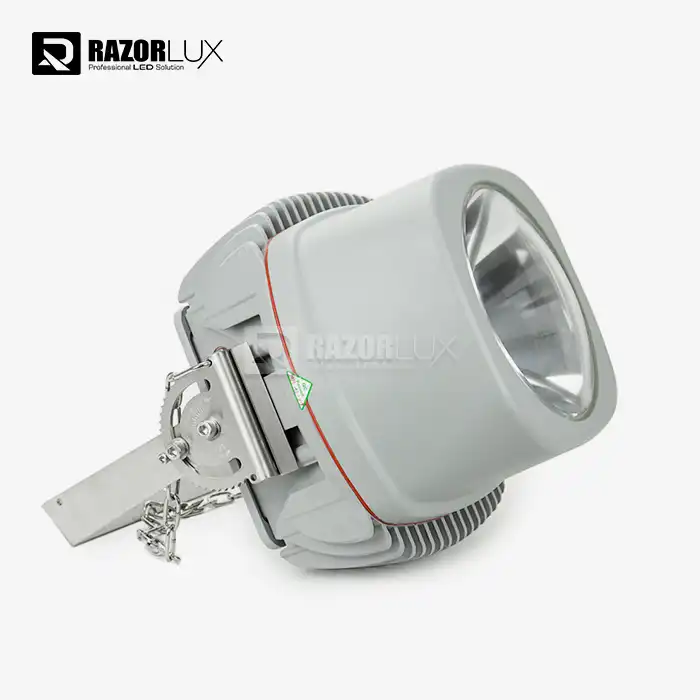
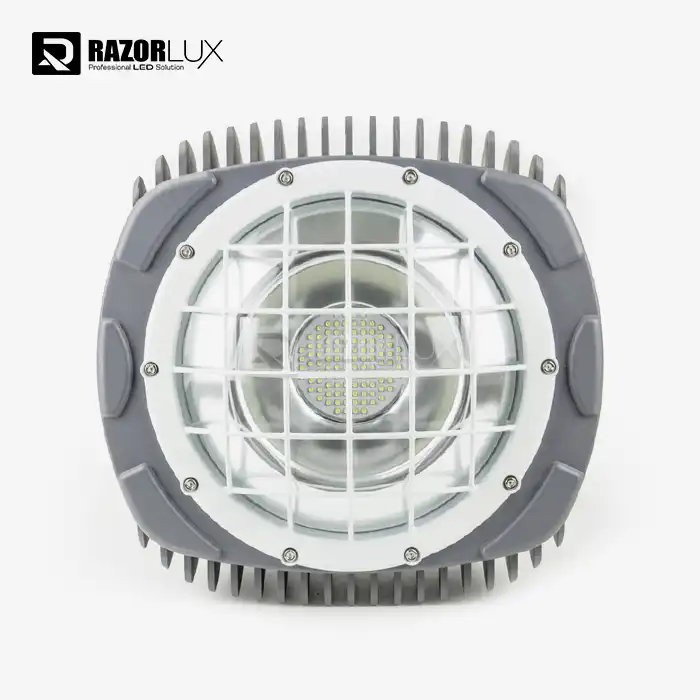
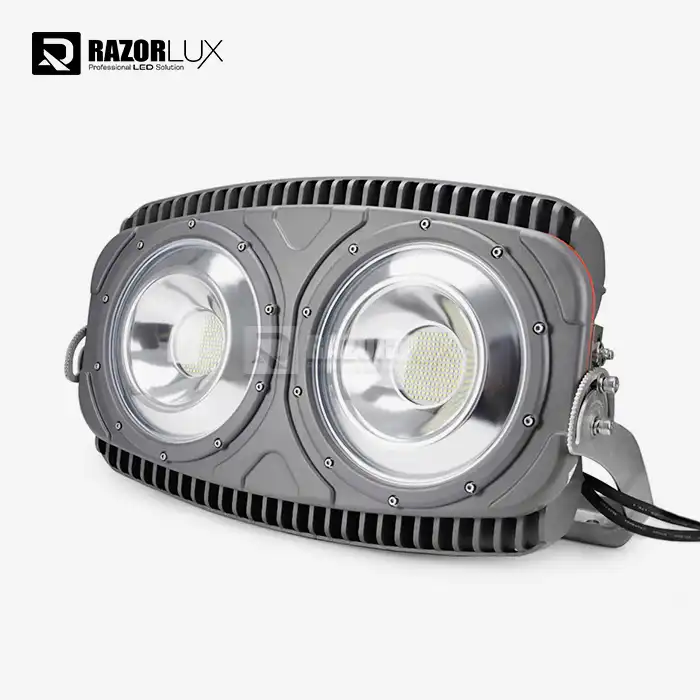
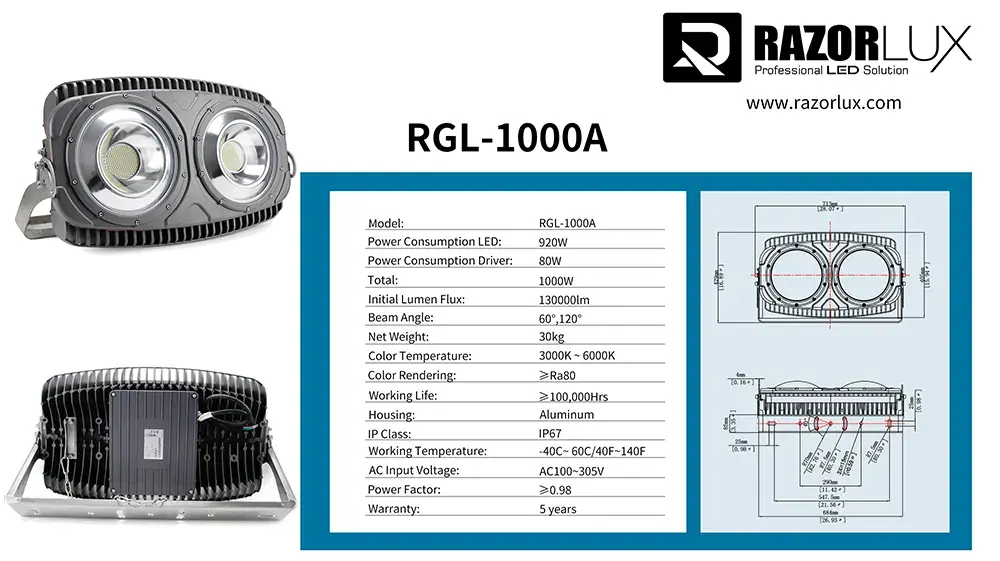
Reducing energy costs with high-performance LED flood lighting is achievable by Construction Site Flood Lights replacing outdated halogen or metal halide systems with advanced LED technology. Modern LED flood lights consume 60-70% less power while delivering superior lumen output and extended operational lifespans. Strategic installation with optimised beam angles, integration of motion sensors and timers, and routine maintenance further enhance efficiency. At Razorlux, our 1000W LED flood lights achieve 130 lm/W luminous efficacy, replacing traditional 2200-2500W HID lamps and dramatically cutting energy bills while ensuring robust illumination for demanding work environments.
Understanding Energy Consumption Challenges on Construction Sites
A lot of the money that building, factory and heavy industry projects spend on running costs goes to energy costs. Twenty to thirty per cent of all the energy used on a site goes to lighting, so this is an important place to focus on if you want to save money.
Common Causes of High Energy Consumption
Halogen and metal halide flood lights are still used on many older construction sites because they are cheap. Most of the time, 1500W to 2500W per bulb, these old technologies use too much power and lose a lot of heat. Moving the lights around doesn't help the situation, so more of them are needed to cover everything. If you don't set your lights to turn off automatically, they may stay on all night in places that aren't being used. Workers add more lights instead of fixing the problem that's causing the lack of light because of poor upkeep.
Impact on Project Budgets and Operations
Too much energy use hurts the ability of a project to make money. Every day, 50 halogen flood lights at 2000W each use 1,000 kWh of electricity to run for 10 hours at night on a regular construction site. Energy costs more than $3,600 a month at $0.12 per kWh. That's money that could be used to pay for work, supplies, or new tools. In places like Northern Europe and the Middle East, where strict environmental laws are in place, bad lighting not only wastes money but also makes it harder to follow the law.
Benefits of LED Technology in Reducing Energy Costs
LED flood lights have changed the way industrial and naval lighting is done by using less energy, lasting longer, Construction Site Flood Lightsand saving money on operations. There are real cost and efficiency benefits to switching from traditional systems to LED technology.
Superior Energy Efficiency Compared to Traditional Lighting
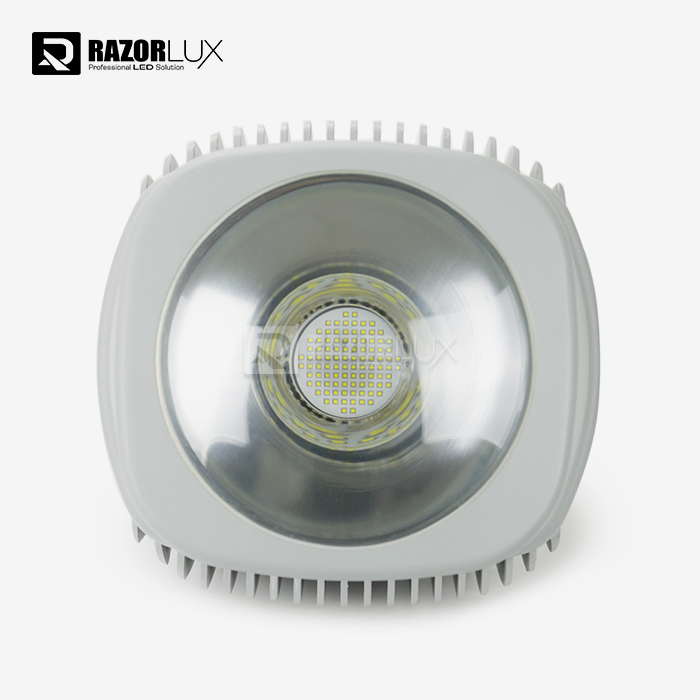
It is possible for LED flood lights to be as bright or brighter than halogen or metal halide flood lights while using 60–70% less energy. Razorlux's RGL-1000A model, which uses a total of 1000W (900W LEDs plus 100W driver), can replace 2200–2500W HID lamps and gives off 130,000 lumens at 130 lumens per watt. Because of this efficiency, power costs went down right away. When a shipyard replaces 30 regular 2000W lights with 1000W LED units, it saves about 30,000W per hour. This cuts monthly energy use by 9,000 kWh and costs by over $1,000 a month at standard industrial power rates.
Extended Lifespan and Reduced Maintenance Frequency
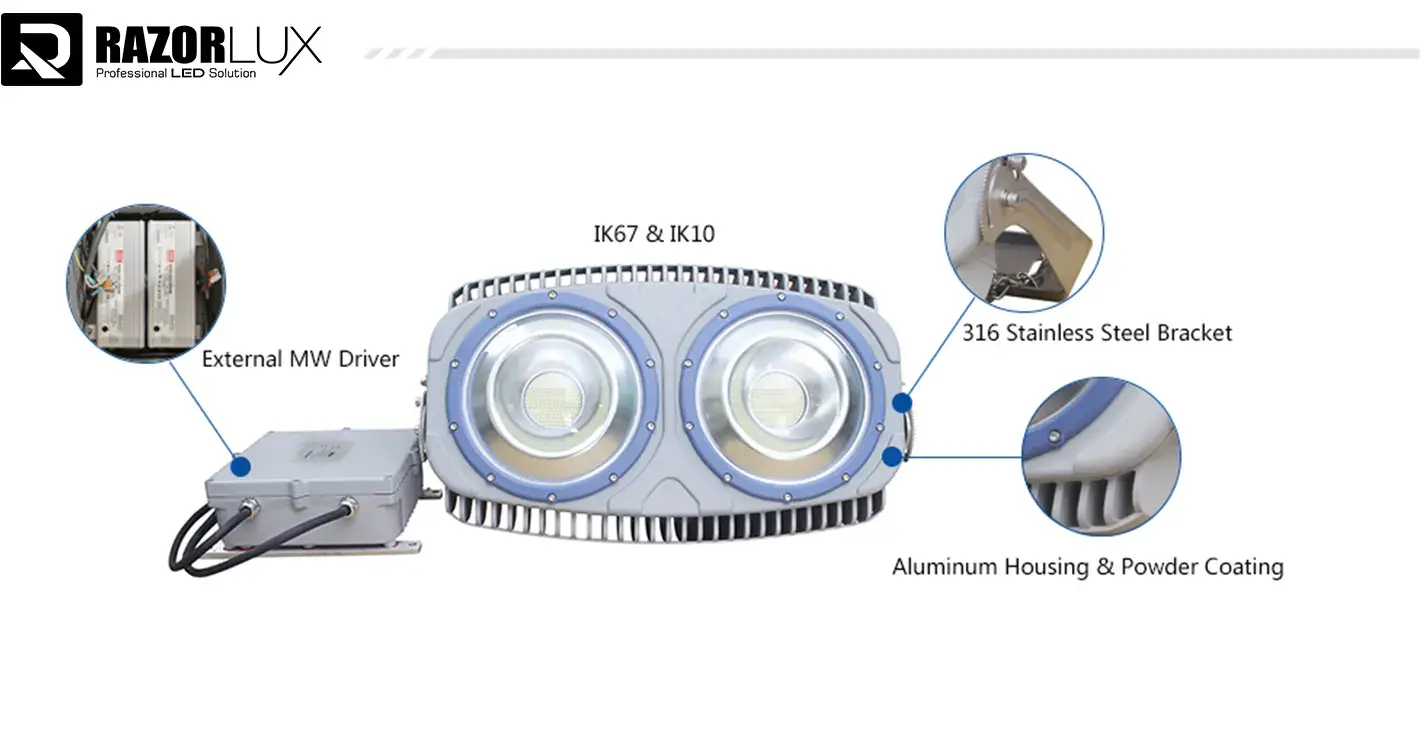
LED technology can work for more than 50,000 hours, while gas lamps only last between 5,000 and 10,000 hours. Because they last so long, they don't need to be replaced as often, which saves money on work and time spent fixing fixtures. In rough marine and offshore settings, where salt spray, humidity, and vibration make equipment break down faster, LED longevity is important. Razorlux flood lights have IK10 impact resistance and IP65/IP67 entry protection, so they will work reliably in temperatures ranging from -40°C to 60°C. Mean Well power sources and Samsung LED chips make things even more reliable, which is important because fixtures breaking down too soon is a major problem.
How to Choose Energy-Efficient LED Flood Lights for Construction Sites
To choose the best flood lighting, you need to weigh the technical specs, how well it will work in different environments, and the total cost of ownership. To make sure long-term speed and dependability, procurement pros have to look at a lot of different factors.
Evaluating Brightness and Power Consumption
Energy economy is directly related to luminous power and wattage. How well a bulb turns electricity into visible light is shown by its luminance effectiveness, which is measured in lumens per watt (lm/W). High-efficiency LEDs give off 130–170 lumens per watt, which is a lot more light than halogen lamps (15–25 lumens per watt) and metal halides (70–100 lumens per watt). Razorlux's 1000W flood light puts out 130,000 lumens of light, which is enough to light up large building sites, ships, and offshore platforms while using as little energy as possible. Choosing the right beam position is just as important. Wide-angle beams (120° to 140°) work well in big open spaces because they require fewer connections and cost less to install. Narrow beams (40° to 60°) focus light to light up specific areas and keep that light from being too bright, which wastes energy.
Assessing Environmental Protection and Durability
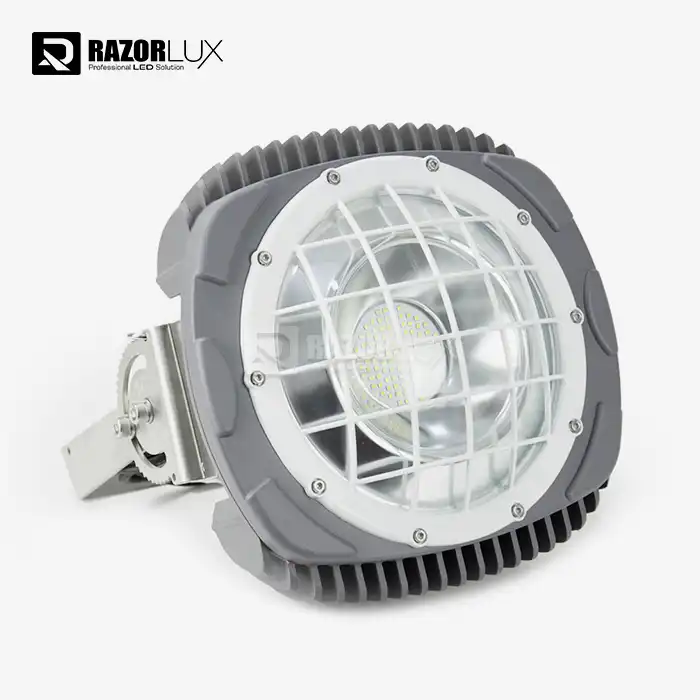
Lighting equipment is put through rough conditions on construction sites, ships, and offshore platforms, such as saltwater rust, high-pressure water jets, dust, and mechanical impact. IP scores show how well something is protected against solids and liquids. Fixtures with an IP65 rating can handle low-pressure water jets, making them ideal for most building sites. IP67-rated units can handle being submerged for a short time, which is important for construction site flood lights and sites near the coast. IK10 impact resistance ensures that fixtures can withstand being hit by tools or falling objects. Building elements are important. Die-cast metal with a powder finish is very good at getting rid of heat and resisting corrosion. Stainless steel clamps make sure that the mounting is stable even in places with a lot of shaking. Tempered glass or polycarbonate lenses keep the optics clear while protecting LED clusters.
Installation and Maintenance Strategies to Maximise Energy Efficiency
To get the most energy-saving benefits from LED flood lights, they need to be installed correctly and kept up with regularly. At the distribution stage, strategic planning and disciplined operating practices make sure that efficiency stays high.
Optimising Fixture Placement and Coverage
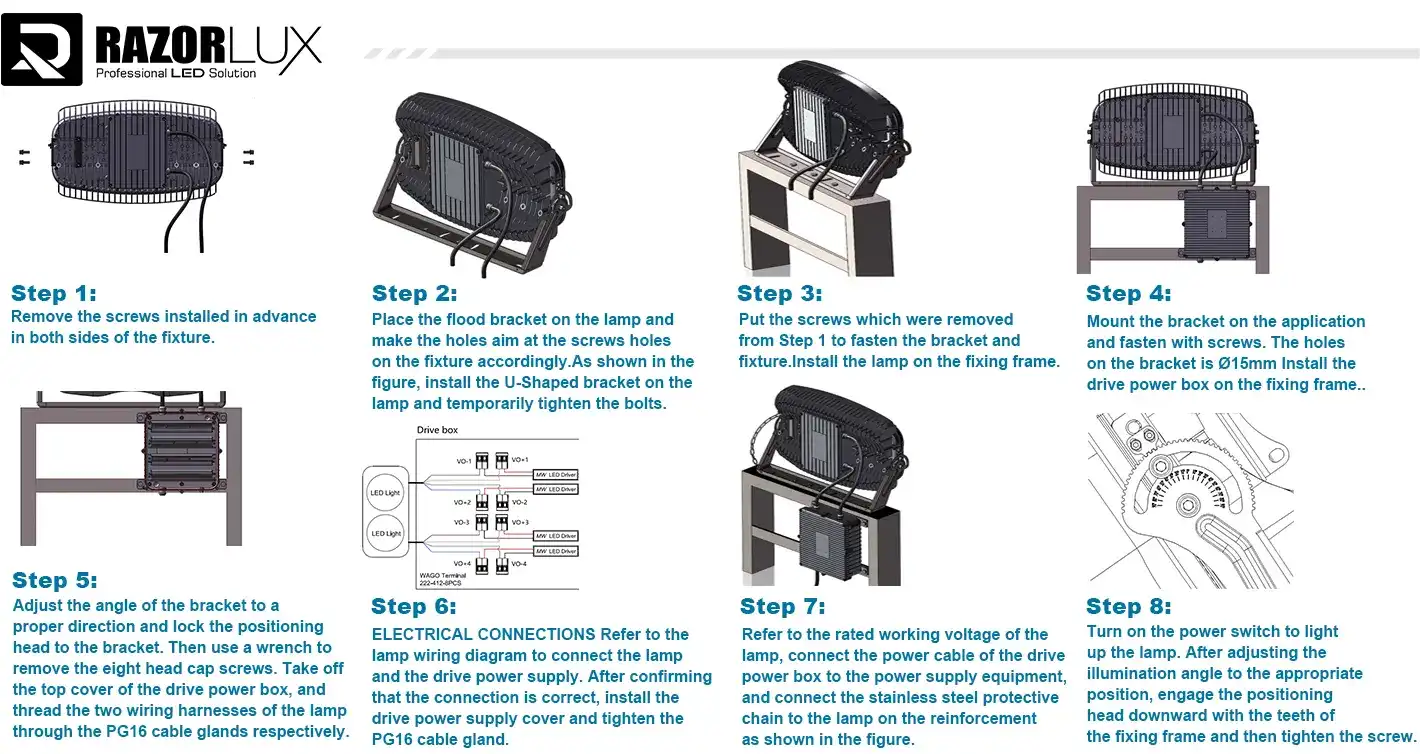
Fewer lights are needed because they are placed more strategically, but they still give off enough light. Based on how light is spread, photometric modelling software works out the best mounting heights, distances, and angles to get a smooth cover with no dark spots or overlap. The covering area is bigger when mounted from above on tower cranes, poles, or portable structures. Fewer fixtures are needed, and less work is needed to set them up. By pointing in a certain direction, light can't reach areas that aren't being worked on. Light pollution is a problem in towns and along the coast. This cuts down on light pollution and saves energy. This is made easy by frames that can be moved around. This makes it easy to line up everything perfectly during installation.
Implementing Automated Control Systems
Putting in motion monitors and timers from the beginning keeps things that use too much energy from running all the time. Lights are turned on when workers enter a zone. Once the time is up, the lights go out for about 5 to 15 minutes. Operating in sync with shift plans is made possible by timers that turn off lights automatically when they're not being used. You can watch and change things from afar in real time with centralised control screens or wireless management systems. This means you don't have to do as much by hand. Because it can be set to change the brightness at dawn and dusk, it can make better use of natural light and use even less.
Procurement Strategies for Energy-Efficient LED Flood Lights
A good procurement strategy combines the initial investment with practical savings over time, source dependability, and expert support. Strategic choices about buying affect the success of a project and its financial results.
Balancing Price and Quality for Long-Term ROI
It's important to find the best price and quality for a long-term profit on your investment. The purchase price doesn't tell you much about how much it will cost to own in the long run. The parts in cheap fixtures are usually not as strong, so they break down faster, need to be changed more often, and cost more to keep up. Taking a look at the full cost of ownership, which includes things like energy use, length, maintenance needs, and downtime, gives you a full picture of value.LED lights with a higher efficiency cost more at first, but they save you money on energy costs quickly. The gas light that cost $300 is changed for an LED light that costs $800. A 1000W LED, on the other hand, uses about $1,200 less in energy costs per year (10 hours of use per day at $0.12/kWh), so it pays for itself in less than 10 months. Altogether, each outlet will save over $5,000 over 5 years, which is a lot more than the fee.
Leveraging Bulk Purchasing and Framework Agreements
Using Framework Agreements and bulk purchases for your Construction Site Flood Lights is essential. Buying in bulk lowers the cost per unit and gets better payment terms. Framework agreements with manufacturers like Razorlux make sure that prices are always the same, orders are filled in the order they were received, and there is specific expert help for all projects. Bulk sales also make it easier to keep track of supplies, which helps keep things on hand and keeps project delays to a minimum. Centralized procurement helps shipyards, port officials, and industrial sites that are working on various projects at the same time. Standardizing on a single LED platform makes it easier to handle spare parts, teach technicians, and do maintenance. This lowers the cost and complexity of operations.
Comparison of LED Flood Light Specifications
| Parameter | Razorlux RGL-1000A | Traditional Metal Halide | Advantage |
|---|---|---|---|
| Rated Power | 1000W | 2200-2500W | 55-60% energy reduction |
| Luminous Efficacy | 130 lm/W | 70-100 lm/W | Higher light output per watt |
| Lifespan | 50,000+ hours | 5,000-10,000 hours | 5-10x longer operational life |
| Operating Temperature Range | -40°C to 60°C | -20°C to 40°C | Superior performance in extremes |
| IP Rating | IP65/IP67 | IP54 (typical) | Enhanced water and dust protection |
| Surge Protection | 6KV-20KV | Limited or none | Protects against electrical spikes |
| Warm-Up Time | Instant | 5-10 minutes | Immediate full brightness |
| Color Rendering Index (CRI) | ≥Ra75 (≥Ra90 optional) | Ra60-70 | Improved visibility and safety |
Total Cost of Ownership Analysis: LED vs. Traditional Lighting
| Cost Factor | LED (Razorlux RGL-1000A) | Metal Halide (2200W) | 5-Year Savings per Fixture |
|---|---|---|---|
| Initial Purchase Price | $800 | $300 | -$500 upfront |
| Annual Energy Cost (10h/day) | $438 | $964 | $526/year |
| Bulb Replacement Costs | $0 (50,000h lifespan) | $600 (5 replacements) | $600 over 5 years |
| Maintenance Labor | $100 | $500 | $400 over 5 years |
| Total 5-Year Cost | $3,090 | $6,120 | $3,030 savings |
Conclusion
Using modern LED floodlights to cut down on energy costs is more than just an improvement to how things work; it's a long-term investment in safety, saving money, and being good to the environment. Switching from old halogen and metal halide systems to high-efficiency LED technology immediately lowers energy use, increases equipment longevity, and lowers the amount of upkeep that needs to be done. The best results are achieved through strategic procurement that is based on technical standards, supplier dependability, and a total cost of ownership analysis. The best performance and savings come from using the right installation methods, automatic controls, and regular upkeep. Razorlux's certified, long-lasting LED flood lights are the tried-and-true option that procurement workers trust to light up tough work settings while cutting costs and meeting international standards.
FAQ
1. How much energy can be saved by switching from halogen to LED flood lights?
Most of the time, switching from traditional halogen or metal halide flood lights to LED technology cuts energy use by 55 to 70%. Putting in a 1000W LED light bulb instead of a 2200W metal halide bulb cuts the power use by 1200W per bulb. If this is run for 10 hours a day, it saves 12 kWh per fixture every day, which adds up to 360 kWh per month. At $0.12 per kWh, this saves each fixture about $43 a month.
2. Why are IP65 and IP67 ratings important for construction site lighting?
IP scores show how well something is protected against dust and water getting in. Fixtures with an IP65 rating can handle low-pressure water jets, making them perfect for most building sites that get wet or need to be cleaned. IP67-rated units can be submerged for a short time up to 1 meter, which is necessary for marine decks, offshore platforms, and coastal factories where high-pressure washdowns and wave splash happen. The right IP grades keep things from breaking down too soon and make sure they work reliably in tough conditions.
3. What installation features reduce energy consumption?
Motion monitors turn on lights only when someone is there, so they don't waste electricity lighting up areas that aren't being used. Timers set up operations so that they work with shift routines. This stops operations from going on all night. Dimming lets you change the brightness based on the light around you or the needs of the job at hand, which lowers the power use during the day and night. Strategically placing fixtures lowers the number of units needed while still providing enough coverage. This saves money on both energy costs and installation costs.
Razorlux: Your Trusted LED Flood Light Supplier for Energy-Efficient Solutions
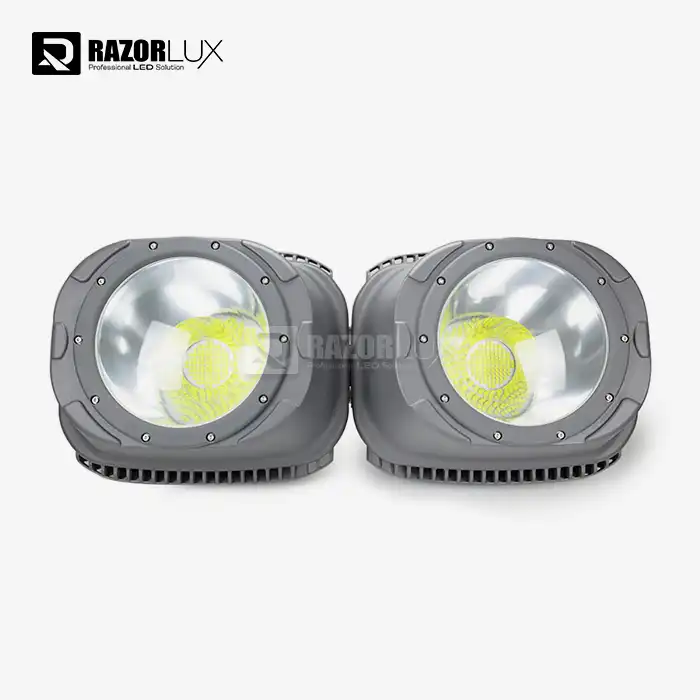
Razorlux is the world's biggest and best brand of high-performance LED floodlights for heavy-duty, industrial, and naval use. We have more than 200 patents and more than 20 years of experience in LED Packaging, power control, and structure design. We offer approved, long-lasting solutions that are designed to lower energy costs and improve working efficiency. This dedication is shown by our RGL-1000A LED flood light. It replaces 2200–2500W HID lights and is rated at 1000W with 130 lm/W efficiency. It saves 55–60% of energy while providing 130,000 lumens of strong, even light. The unique multi-function design works in a variety of work settings because it has adjustable beam angles (40°, 60°, 120°, and 140°), can accept a wide range of input voltages (AC80–305V, DC100–800V), and is protected by IP65/IP67 standards. Mean Well power sources and stainless steel brackets work reliably in temperatures ranging from -40°C to 60°C, which is high enough for ships, offshore platforms, and heavy industrial sites. Our quality and world compliance are proven by our many approvals, such as CE, RoHS, SAA, UL, DLC, CB, and ISO 9001. We offer solutions that can be changed to fit your needs, fast sample delivery, and focused expert support to help you make decisions about what to buy. Razorlux can help you get energy-efficient LED flood lights that fit your needs, whether you're setting up a new building site, fixing up an offshore station, or improving the infrastructure at a port. You can email our team at sam@razorlux.com to get examples, talk about buying in bulk as a reliable provider of Construction Site Flood Lights, or get personalized advice for your next project. Let us work with you to save energy, cut down on upkeep costs, and make sure that your site activities are sustainable.
References
1. U.S. Department of Energy. (2021). Energy Savings Potential of Solid-State Lighting in General Illumination Applications. Office of Energy Efficiency & Renewable Energy.
2. International Marine Contractors Association. (2020). Guidelines for Lighting Systems on Offshore Installations. IMCA SEL 019 Rev. 2.
3. Illuminating Engineering Society. (2019). IES Recommended Practice for Lighting Exterior Work Areas During Construction and Demolition. ANSI/IES RP-6-19.
4. Maritime and Coastguard Agency. (2018). Marine Guidance Note: Electrical Installations - Lighting and Navigation Lights. MGN 330 (M+F).
5. European Committee for Standardisation. (2017). Light and Lighting - Lighting of Work Places - Part 2: Outdoor Work Places. EN 12464-2:2014.
6. American Petroleum Institute. (2016). Recommended Practice for Design and Hazardous Area Classification of Electric Installations on Offshore Production Platforms. API RP 505, 3rd Edition.