

_1750326878398.png)

Can LED High Mast Flood Lights Lower Operating Costs?
Compared to older lighting systems, LED High-Mast Flood Lights have much lower running costs. These lights use 60–75% less power than metal halide or high-pressure sodium alternatives because they are more energy efficient (often 130 lm/W or higher). LED High-Mast Flood Lights systems have a very low total cost of ownership for ports, shipyards, offshore platforms, and industrial sites because they last longer (more than 50,000 hours) and need very little upkeep. Their strong construction, with IP67-rated enclosures and materials that don't rust, makes sure that they work reliably in harsh naval and heavy-duty settings. This means that they don't need to be replaced as often, which saves operations managers money on downtime costs.
Understanding LED High-Mast Flood Lights and Their Operating Costs
Learn about LED High-Mast Flood Lights and how much they cost to run. Over the past ten years, high-intensity area lighting has changed a lot. This is because solid-state technology has gotten better, and big industrial processes need cost-effective solutions right away. LED High-Mast Flood Lights are a big change from older systems. They can help procurement managers and building engineers save a lot of money on operations.
What Defines LED High-Mast Flood Lights in Industrial Applications
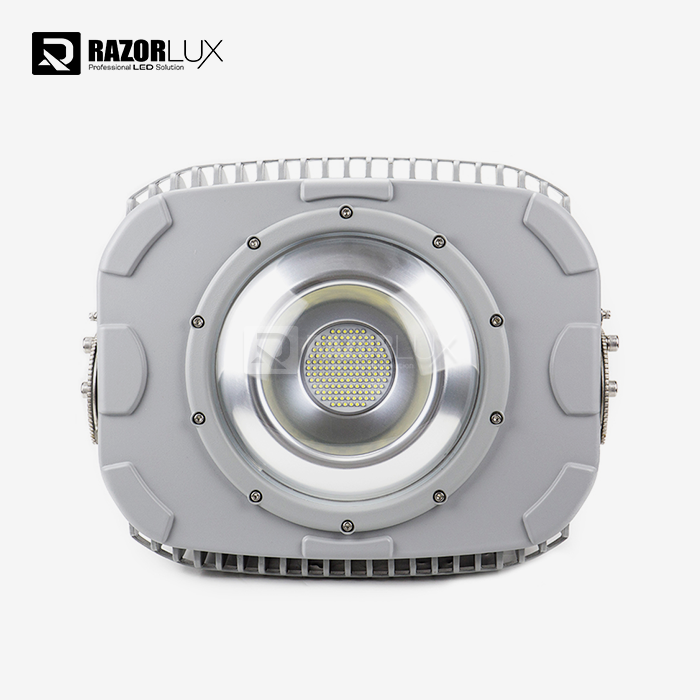
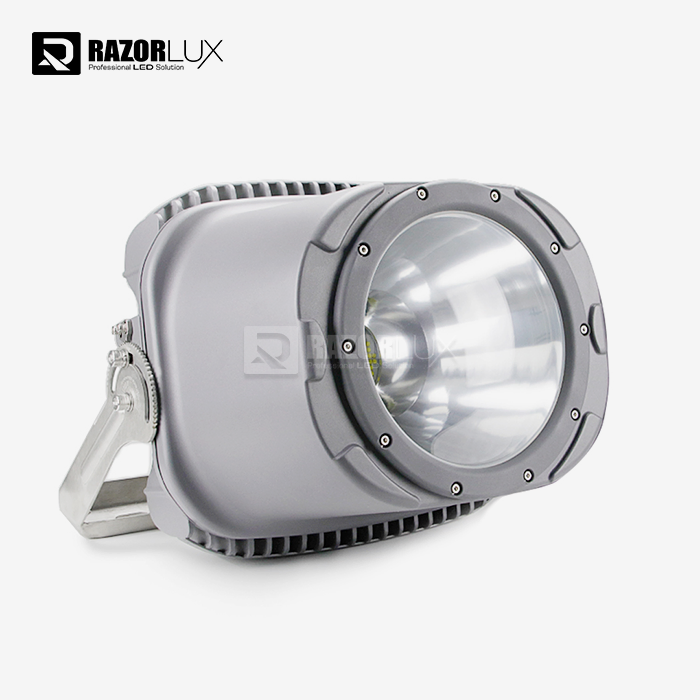
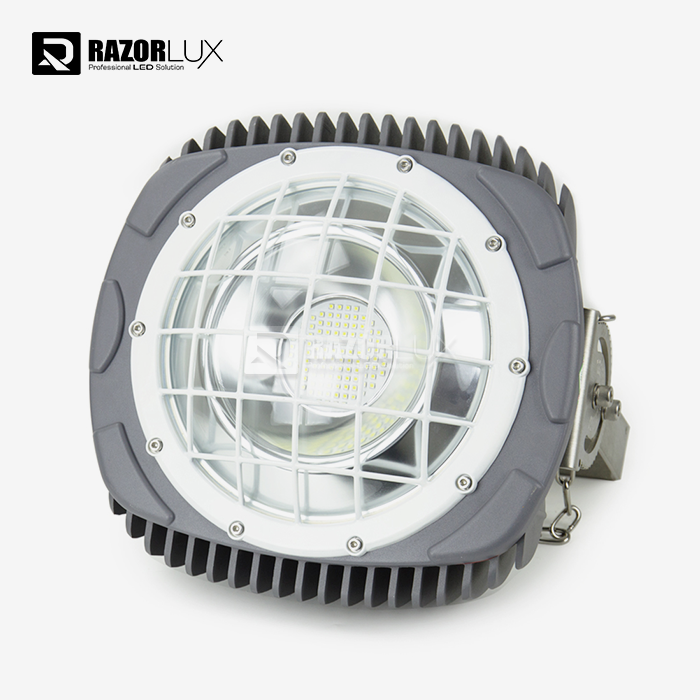
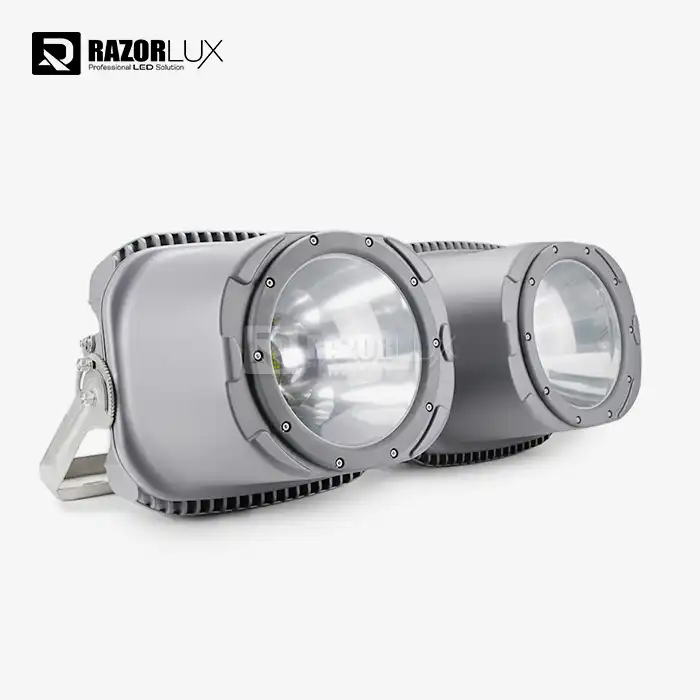
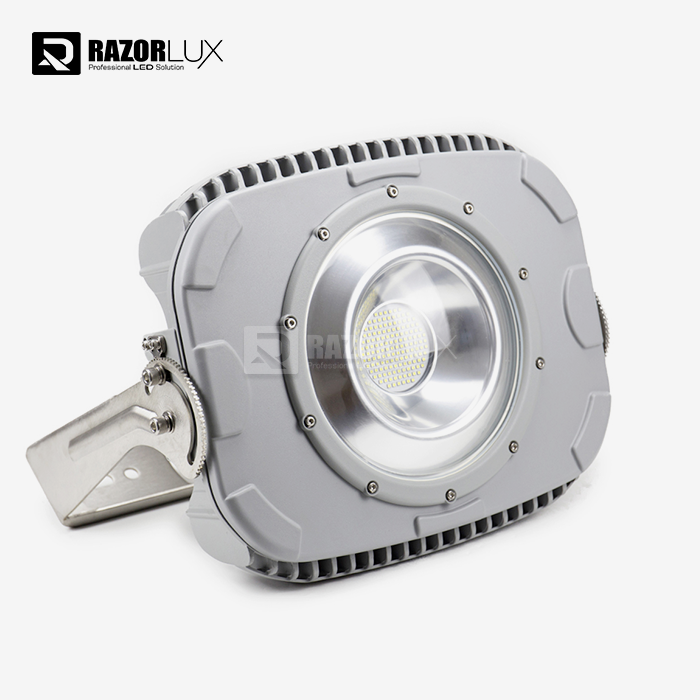
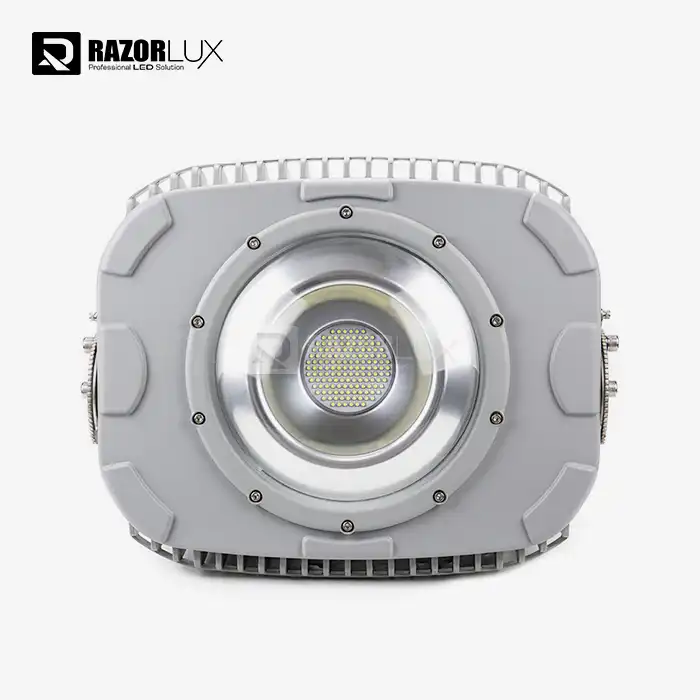
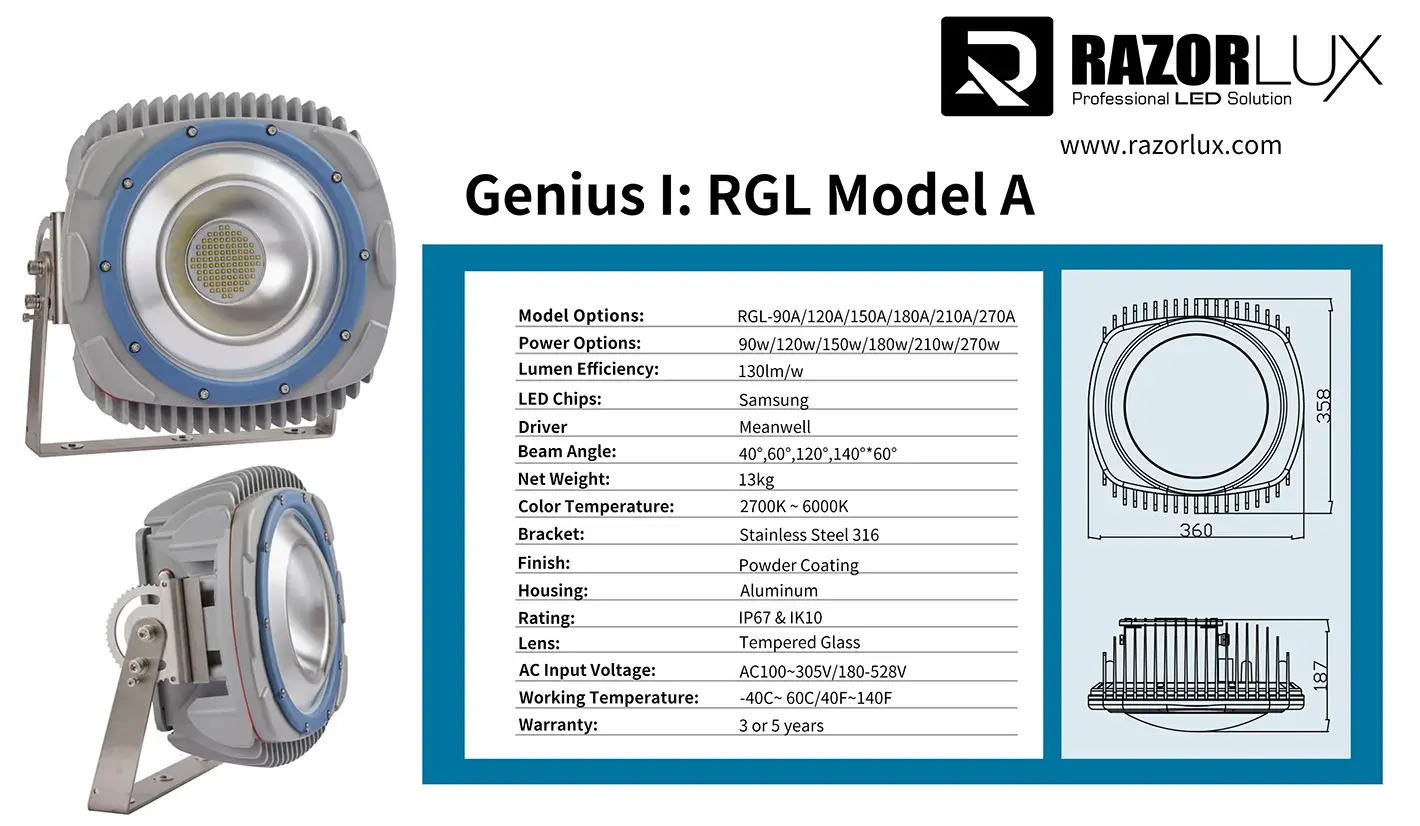
Specific lighting fixtures like these are made to be mounted at heights between 15 and 50 meters, providing even lighting over large areas like shipyards, offshore platforms, and shipping ports. LED High-Mast Flood Lights systems are different from regular floodlights because they have better heat management, more precise optics, and housings that are made to last in harsh circumstances. This way of building is shown by our RGL-120A model, which has a unique multi-function design that works in any workplace. The system replaces 250–300W HID lights with a 120W rated power and produces 14,400 lumens at 130 lm/W efficiency. This is an important feature for procurement teams that care about the environment and are looking at long-term running costs.
How Component Quality Impacts Long-Term Reliability
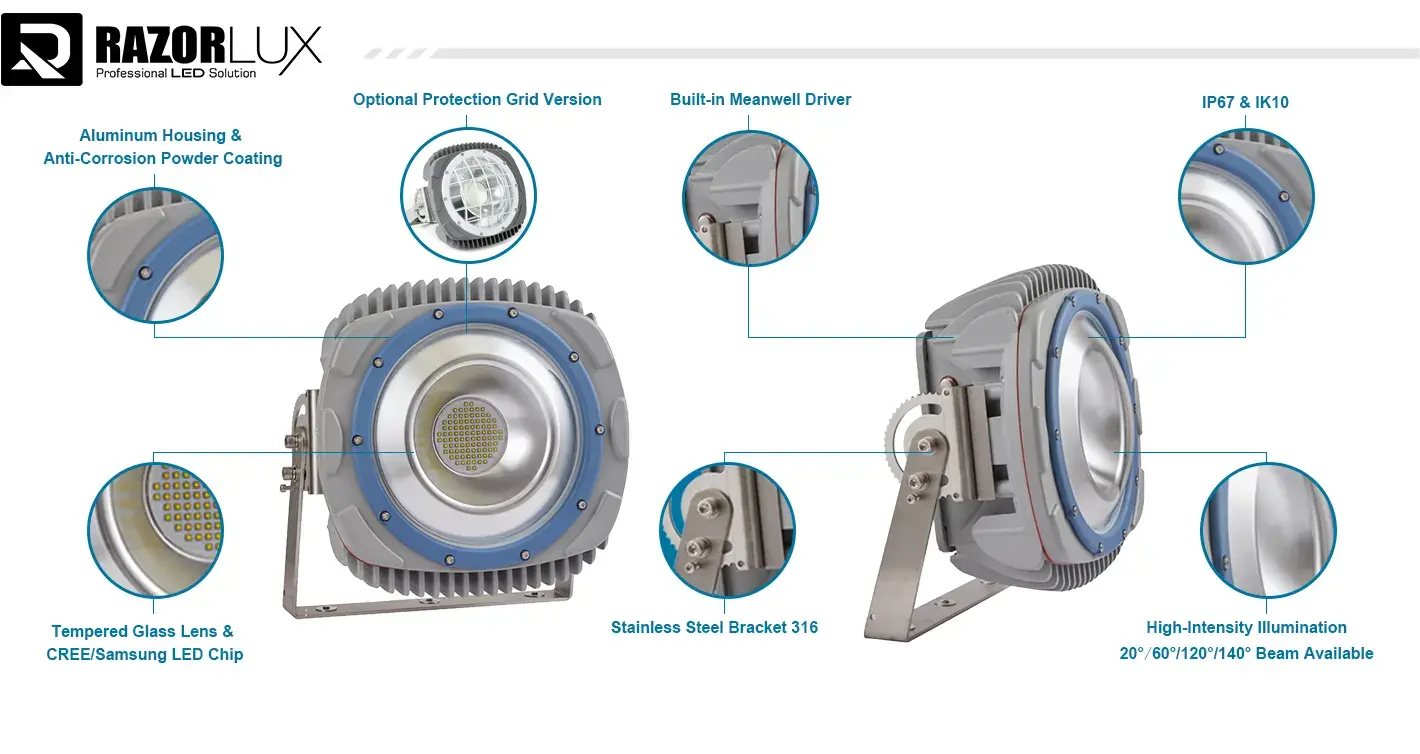
How long LED High-Mast Flood Lights systems last depends a lot on the parts that are used and how well they handle heat. In ports and offshore sites where salt spray is frequent, bad power supplies break down early, which leads to higher repair costs. Razorlux solves this problem with Mean Well motors that can handle AC 80-315Vac and DC 80-400Vdc input. This makes sure that the system stays stable even when the power grid changes, which is common in industrial settings. The powder finish on our aluminum housing and the stainless steel brackets make it resistant to the corrosive marine environment. The IP67 and IK10 grades protect it from impact and pressure washing, which are common in port repair tasks. This focus on engineering directly leads to lower failure rates and longer service gaps, both of which are important for facilities managers when they are figuring out the total cost of ownership.
Comparing LED High-Mast Flood Lights With Traditional Lighting Options
People who are making decisions about lighting changes need numbers that LED High-Mast Flood Lights compare LED High-Mast Flood Lights technology to the systems that are already in place. Understanding these differences in performance helps make accurate ROI estimates and supports convincing top management of the need for capital expenditures.
Energy Efficiency: Quantifying the LED Advantage
Metal halide and high-pressure sodium lights were the most common types of industrial lighting for many years, even though they weren't very efficient. These technologies waste 20–30% of the electricity they use as heat instead of turning it into visible light. 40–50% conversion efficiency is reached by LED devices, which completely changes the economic situation. If you replace 300W metal halide lights with 120W LED counterparts in a normal port facility that runs 200 high mast fixtures 12 hours a day, you can save 1,577,600 kWh of energy each year, which is enough to power about 145 average homes. At $0.12/kWh, this saves $189,312 a year, so the investment pays for itself in two to three years, even with the higher costs of the LEDs at first.
Real-World Case Study: Port Terminal Lighting Upgrade
In 2019, an Asian container port swapped out 180 metal halide high mast lights for LED systems. The project data shows what buying managers can usually expect to happen:
| Performance Metric | Metal Halide (Before) | LED System (After) | Improvement |
|---|---|---|---|
| Total Wattage | 54,000W | 21,600W | 60% reduction |
| Annual Energy Cost | $237,600 | $95,040 | $142,560 savings |
| Maintenance Cycles/Year | 36 lamp replacements | 2 fixture inspections | 94% reduction |
| Average Illuminance | 18 lux | 23 lux | 28% increase |
| Downtime Hours | 144 hours | 8 hours | 94% reduction |
The system paid for itself in 2.3 years, and it's expected to save more than $1.4 million over the next 10 years. Just as importantly, better lighting cut down on mistakes made when handling containers by 17%. This shows that investing in the right lighting has benefits for operations beyond just saving money.
Key Factors That Influence the Operating Costs of LED High-Mast Flood Lights
To get the most out of an LED High-Mast Flood Lights system, you need to know what factors affect how much energy it uses and how often it needs to be maintained. These insights can help procurement teams come up with ideas that fit the needs of the project and the budget.
Luminous Efficacy and Wattage Selection Strategy
Not all LED lighting give the same amount of light for each watt used. Efficacy rates, which are given in lumens per watt, range from 90 lm/W for basic types to 140 lm/W or more for high-end systems. Our 130 lm/W standard puts Razorlux goods at the top of the range for industrial-grade performance, which has a direct effect on the costs of running the business. If a building needs 20,000 lights per pole, a 154W bulb at 130 lm/W or a 200W unit at 100 lm/W will do the job. Over 50,000 hours, the difference in efficiency uses an extra 2,300 kWh per bulb, which is about $276 at current rates. When you add up the effects of more than 100 lights in a big installation, you get to six figures. Minimum standards for effectiveness should be written into procurement specifications to avoid long-term cost fines from equipment that doesn't work well.
Installation Quality and Environmental Protection Requirements
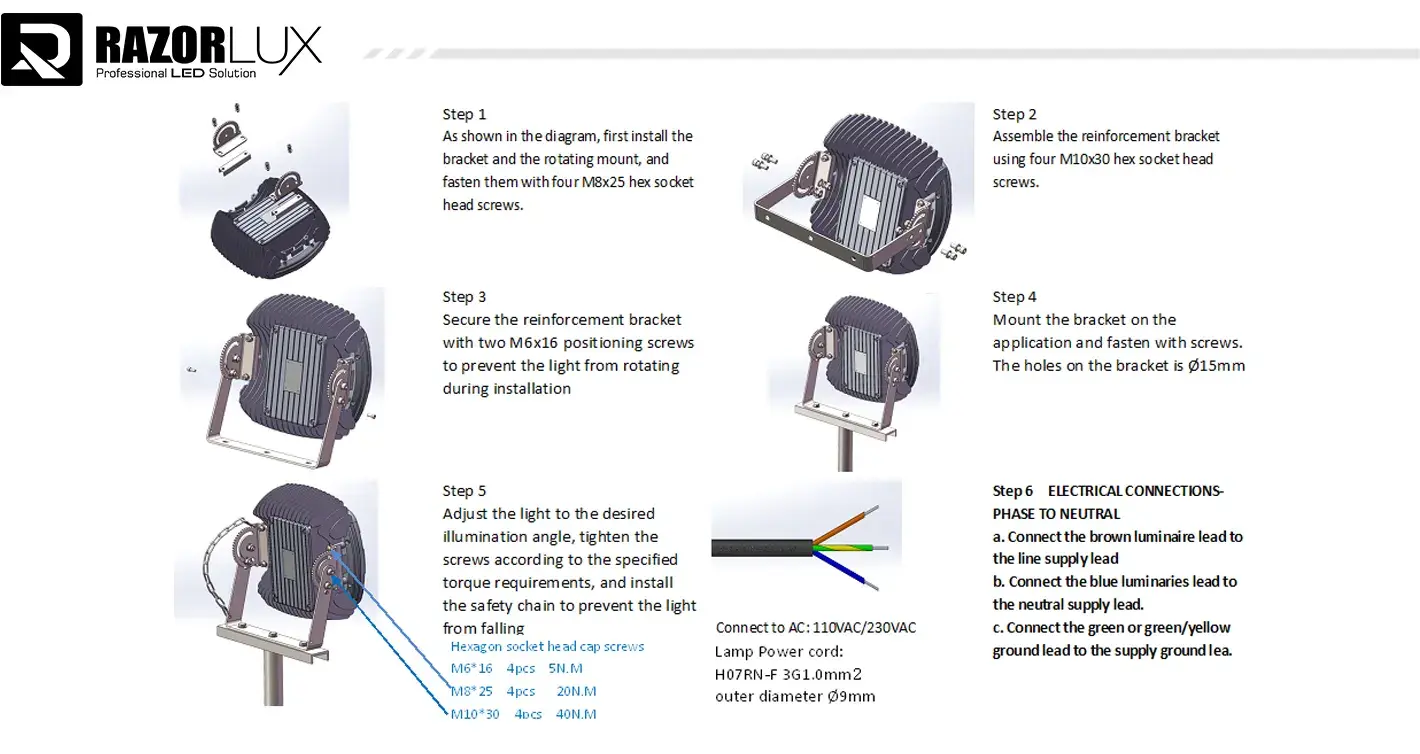
When placed incorrectly, even high-end LED lights don't work as well as they should. When mounting angles are off, hot spots and shadows appear. To fix this, operators have to run equipment at higher outputs, which defeats the purpose of increasing efficiency. Electrical lines need to be properly sealed to keep water out, especially in marine settings where salt contamination speeds up rusting. Our IP67 grade protects against submersion, but how well it works in real life depends on how well it was installed. Professional installation with photometric testing should be included in procurement contracts to make sure that the plan's illuminance values are met. Also, choosing lighting with the right color temperatures (between 2700K and 6500K) can help you see better for certain tasks. For example, cooler temperatures make contrast better for navigation and inspection tasks, which could mean less light is needed for LED High-Mast Flood Lights and less energy is used.
How to Procure LED High-Mast Flood Lights Optimally for Cost Efficiency
Strategic buying includes more than just choosing a product. It also includes evaluating suppliers, negotiating contracts, and setting up lifetime support plans. All of these things affect whether or not LED High-Mast Flood Lights investments give the expected returns.
Evaluating Manufacturer Credentials and Component Sourcing
Long-term ownership costs are affected by a supplier's image in a direct way through product stability and support continuity. Razorlux has been specializing in naval and heavy-duty LED uses since 1998. They have over 200 patents covering LED Packaging, thermal management, and structural engineering. Because they have so much experience, they can make goods that are specifically designed to deal with the problems that procurement managers face, like harsh environments, extreme temperatures, and tight operating plans. Being able to see where the parts come from gives you even more trust. For example, our specification of Mean Well power supplies—the dependability standard in the industry—gets rid of a common LED system failure point. This reliability is especially helpful for facilities that work in remote areas or on platforms that aren't in the water, since broken parts can cause expensive emergency service calls and working interruptions.
Volume Purchasing Strategies and Total Project Cost Optimization
Economies of scale help both the price of products and the speed of work on a large scale. Shipyards that are planning multi-phase growth or port officials who are improving whole stations should work with suppliers early on in the design process to get the best fixture specs and the earliest possible delivery. Volume agreements allow for better prices and make sure that the supply chain gets the attention it needs, which is very important for keeping to project plans. Suppliers can also help with value engineering, which could help find ways to lower the number of fixtures by using higher-wattage units or better pole placement. This would lower the cost of installation without lowering the quality of the light. Our production is flexible enough to meet OEM and customization needs. This lets us standardize across a range of uses, including vessel-mounted, dock-mounted, and high-mast configurations. This makes it easier to keep track of supplies and train technicians.
Future Trends and Innovations Impacting Operating Costs of LED High-Mast Flood Lights
As time goes on, technology keeps getting better, which gives forward-thinking procurement managers chances to cut costs even more while making LED High-Mast Flood Lights systems more useful.
Next-Generation LED Technology and Better Energy Efficiency
The current LED effectiveness levels of 130–140 lm/W are a big improvement over earlier generations, but controlled lab tests have shown that they can produce more than 200 lm/W. When ultra-high-efficiency chips hit the market in the next three to five years, they will either allow for big drops in brightness or higher levels of lighting at the same level of power use. Purchasing plans should take this trend into account by putting an emphasis on modularity—systems built so that parts can be upgraded, increasing the value of an investment as technology advances. Our modular method removes LED engines from structural parts, so they can be added to fixtures in the future without having to be replaced completely.
Renewable Energy Integration and Microgrid Applications
Solar and wind power are being used more and more by remote sites and offshore platforms to offset the cost of gas fuel. LED lighting is easy to connect to DC microgrids and battery storage systems because it uses little power and can work with a wide range of voltages. Our 80-400Vdc input rate lets you connect directly to green energy systems without losing any extra power during conversion, which makes you more energy independent. This feature lowers running costs in places that need diesel fuel while also making operations more reliable, which is important for places where power blackouts affect operations. When making purchases for remote or growth places, it's important to look at how green energy sources can be integrated. Investing in LEDs and solar panels together can quickly pay for itself by saving money on fuel costs.
Implementing LED High-Mast Systems: Practical Considerations for Procurement Teams
For LED High-Mast Flood Lights changes to go smoothly, you need to carefully plan more than just choosing the right product. You also need to evaluate the site, coordinate the installation, and test the performance to make sure the savings you expect happen.
Conducting Comprehensive Site Surveys and Lighting Assessments
To make changes work, you must first understand how things are currently working and look for ways to make them better. Measurements of illumination taken in typical spots set baselines and show where problems exist, such as safety zones that aren't well lit, areas with too much glare, or covering patterns that don't work well. This information guides the design of fixtures and where they should be placed, making sure that new LED systems fix problems while using less energy. Photometric modeling software models possible designs to make sure that the specs meet the necessary lighting levels before committing capital. Professional lighting reviews should be paid for by the procurement process, as design optimization often finds ways to cut down on the number of fixtures needed and the cost of installation while also improving performance. This increases the project's return on LED High-Mast Flood Lights investment (ROI).
Performance Verification and Commissioning Procedures
Post-installation evaluation makes sure that systems work as planned and meet the requirements. Measurements of illumination at grid points across coverage areas make sure that the design standards are met, and electrical testing makes sure that the grounding, surge protection, and integration of the control system are all correct. This paperwork guards against problems with the contractor and sets performance standards for future repair. As part of commissioning, operators should be taught how to use control systems, do regular upkeep, and fix problems. This is called knowledge transfer, and it's what makes systems more reliable and extends their life. To make sure a smooth transfer from the installation phase to the operating phase, procurement contracts should clearly call for commissioning outputs and operator paperwork.
The Razorlux Advantage: Engineering Excellence for Demanding Applications
Because we specialize in naval and heavy-duty lights, we can help procurement managers with the problems they face in harsh industrial settings. We don't just sell general products; we design LED High-Mast Flood Lights to work in places like ships, offshore platforms, and heavy industrial sites where there is harsh vibration, corrosive salt spray, and big changes in temperature.
Proven Performance in Marine and Industrial Environments
In the table below, you can see how our standards stack up against the usual ones for tough jobs:
| Requirement Category | Typical Marine/Industrial Spec | Razorlux RGL-120A Performance | Advantage |
|---|---|---|---|
| Corrosion Resistance | IP65 minimum | IP67, stainless steel bracket, marine-grade coating | Enhanced longevity in salt spray |
| Impact Protection | IK08 | IK10 | Withstands heavy handling and impacts |
| Voltage Tolerance | ±10% nominal | AC 80-315Vac, DC 80-400Vdc | Operates reliably despite power quality issues |
| Operating Temperature | -20°C to +40°C | -40°C to +60°C | Functions in extreme climate zones |
| Luminous Efficacy | 110 lm/W | 130 lm/W | 18% better energy efficiency |
| Power Factor | >0.90 | ≥0.98 | Minimizes reactive power charges |
These standards directly lead to lower failure rates and longer service intervals, which save money for facilities that have to work in tough circumstances. Our engineering focus on marine uses makes sure that our goods can last in places where regular industrial fixtures break down quickly.
Comprehensive Support Throughout the Procurement Lifecycle
A supplier's responsiveness and expert help are also important for procurement success, along with how well the product works. We offer pre-sales consultation to help you get the best specs for your needs, as well as custom samples for testing and thorough technical paperwork to back up engineering approvals. Our range of global certifications makes it easier to follow rules, and our 5-year promise and dedicated support team give you long-term peace of mind. Customers like how quickly we can provide technology solutions, quotes, and delivery promises; these are skills we've honed over 26 years of working with picky B2B customers around the world. This support system keeps your investment safe and makes sure the project goes smoothly from the planning stages to the final approval.
Conclusion
When compared to older technologies, LED High-Mast Flood Lights save a lot of money on running costs because they use less energy, last longer, and need less upkeep. Facilities can save 60–75% on energy costs while improving lighting quality and making operations more reliable. Strategic procurement—choosing makers with proven marine and industrial experience, setting the right technical parameters, and making sure there is full support after the sale—is essential for successful implementations. As smart controls, higher efficiency, and the use of renewable energy continue to improve technology, early users of LEDs set themselves up for long-term operating benefits. When purchasing managers look at lighting upgrades, they should put the total cost of ownership (TCO) ahead of the original price. This is because the saves over the lifetime of a quality LED system are much greater than the small investments made up front.
FAQ
1. How long does it take to achieve ROI on LED High-Mast Flood Lights investments?
The payback time is usually between 2 and 4 years, but it depends on the energy rate, the number of hours worked, and the technology that was changed. In places where power costs a lot, buildings that run their lights for more than 4,000 hours a year often get their money back in less than two years. This estimate takes into account things like lower repair costs and less energy use, but not business benefits like better visibility and less downtime. To help with the capital approval process, procurement teams should ask for a thorough ROI analysis that includes variables that are unique to the place.
2. Can LED fixtures withstand offshore platform environments and salt spray exposure?
High-quality LED High-Mast Flood Lights systems made for marine use are designed to work in these circumstances. Our IP67 rating protects against water pressure washing and short-term submersion, and the marine-grade powder finish and stainless steel fittings keep them from rusting. Mean Well power sources have a conformal covering that keeps the electronics from getting dirty with salt. However, the specs must clearly state that the building must be marine-grade, since standard industrial fixtures break down quickly in coastal and offshore settings, even when they have the right IP ratings.
3. Are LED High-Mast systems compatible with existing mounting infrastructure?
Most LED lights have standard mounting connections that let them be added to existing poles without having to make any structural changes. But differences in weight and wind loads are different for each type of device. An engineering study shows that the structure is strong enough, especially for older installations or mounting heights that are very high. Our light design (8 kg per fixture) usually works, but the specs for purchase should include the needs for adapters and deliverables for structural verification to avoid having to make expensive changes in the field.
Partner With a Trusted LED High-Mast Flood Lights Manufacturer
With 26 years of experience, Razorlux has been designing LED High-Mast Flood Lights solutions for the toughest naval and industrial environments in the world. Our RGL-120A high mast system has a proven 130 lm/W efficiency, is built to last with an IP67/IK10 rating, comes with Mean Well drivers, and has a long list of certifications, such as CE, UL, DLC, and marine classification approvals. We have the technical knowledge, high-quality products, and quick support that your projects need, whether you're in charge of a container center that needs hundreds of fittings or an offshore platform that only needs a few very reliable units. Our team helps with photometric design, specification optimization, and purchase paperwork. These are all services that make it easier to get approvals and make sure installations go smoothly. Shipyard buying managers, port facility engineers, and suppliers of industrial tools are welcome to email us at sam@razorlux.com to talk about your unique needs. Find out how working with an experienced LED High-Mast Flood Lights supplier can lower your facility's running costs while improving performance and dependability by asking for technical specs, setting up a sample evaluation, or setting up a consultation.
References
1. Illuminating Engineering Society (2020). IES Recommended Practice for Outdoor Lighting in Port and Harbor Facilities, ANSI/IES RP-14-20, New York: IES Publications.
2. U.S. Department of Energy (2021). Solid-State Lighting Program: Energy Savings Forecast of LED High-Mast Roadway Lighting, DOE/EE-2156, Washington DC: Office of Energy Efficiency and Renewable Energy.
3. International Association of Ports and Harbors (2019). Technical Guidelines for Energy-Efficient Port Lighting Systems, IAPH Sustainability Report Series Vol. 8, Tokyo: IAPH Publications.
4. Det Norske Veritas (2022). Classification Notes: Electrical Installations and LED Lighting Systems for Ships and Offshore Platforms, DNV-CN-0148, Oslo: DNV Group AS.
5. National Electrical Manufacturers Association (2021). NEMA LSD 61: Specifications for High-Output LED Luminaires in Outdoor Industrial Applications, Rosslyn VA: NEMA Standards Publications.
6. Marine Technology Society (2020). Journal of Marine Engineering: Lifecycle Cost Analysis of LED Versus Conventional Lighting in Offshore Oil Platform Applications, MTS-JME Vol. 54, No. 3, pp. 87-103.