


_1750326878398.png)

What Are the Best Led High Mast Flood Lights for Large Areas?
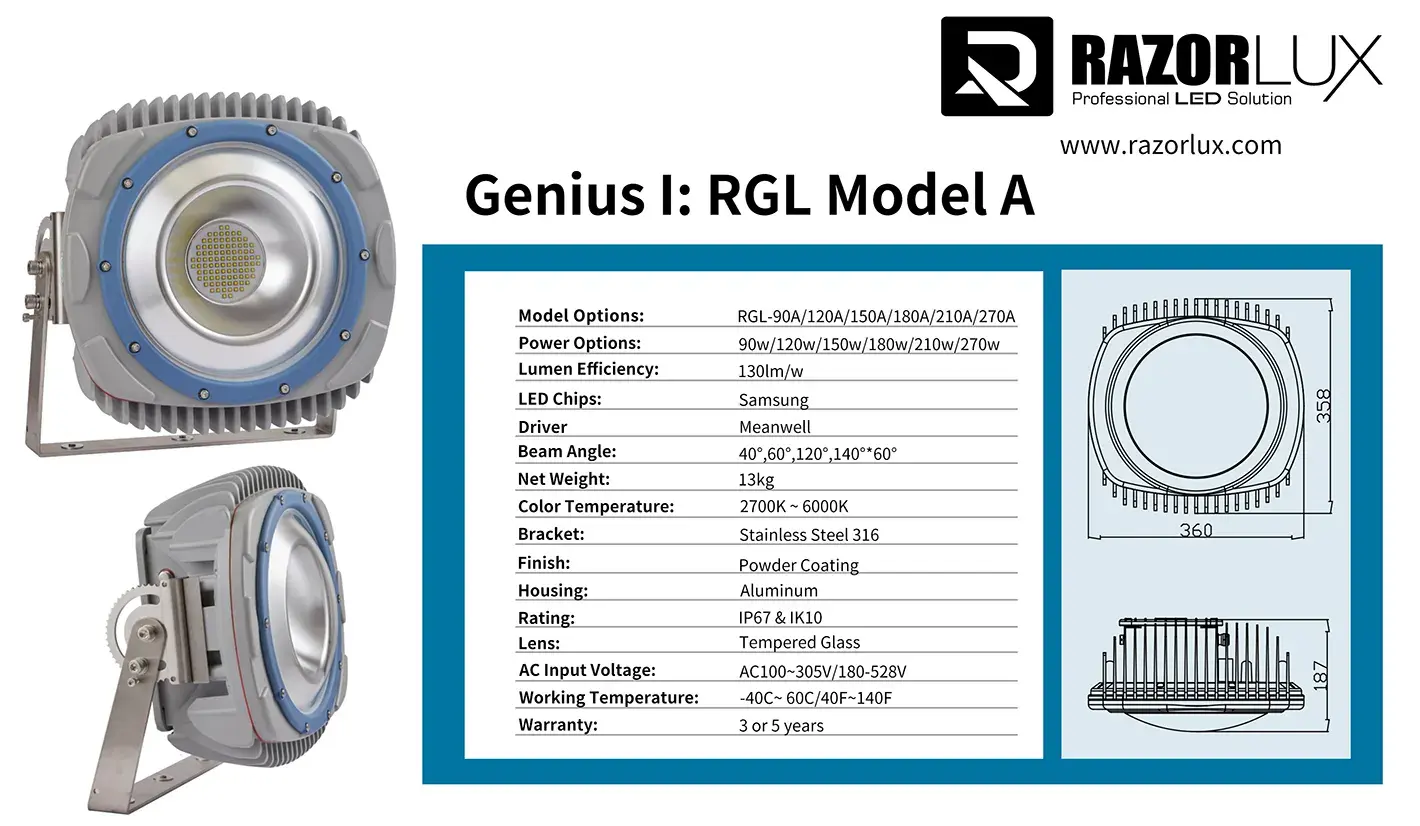
It is very important to choose the right lighting option for large outdoor areas like ports, ships, manufacturing sites, and offshore platforms. The best high-intensity lighting systems for big areas have a light output of more than 130 lm/W, strong environmental protection scores of IP67 and IK10, and a track record of lasting in harsh conditions like salt spray, vibration, and temperature changes from -40°C to 60°C. Led High Mast Flood Lights Our Razorlux RGL-120A model meets these standards perfectly; it provides 14,400 lumens of light while replacing 250–300W HID bulbs with just 120W of power, and it comes with Meanwell drivers and a long list of certifications, such as CE, RoHS, UL, and DNV/GL.
Understanding LED High Mast Flood Lights: Technology and Benefits
Core Components Engineered for Reliability
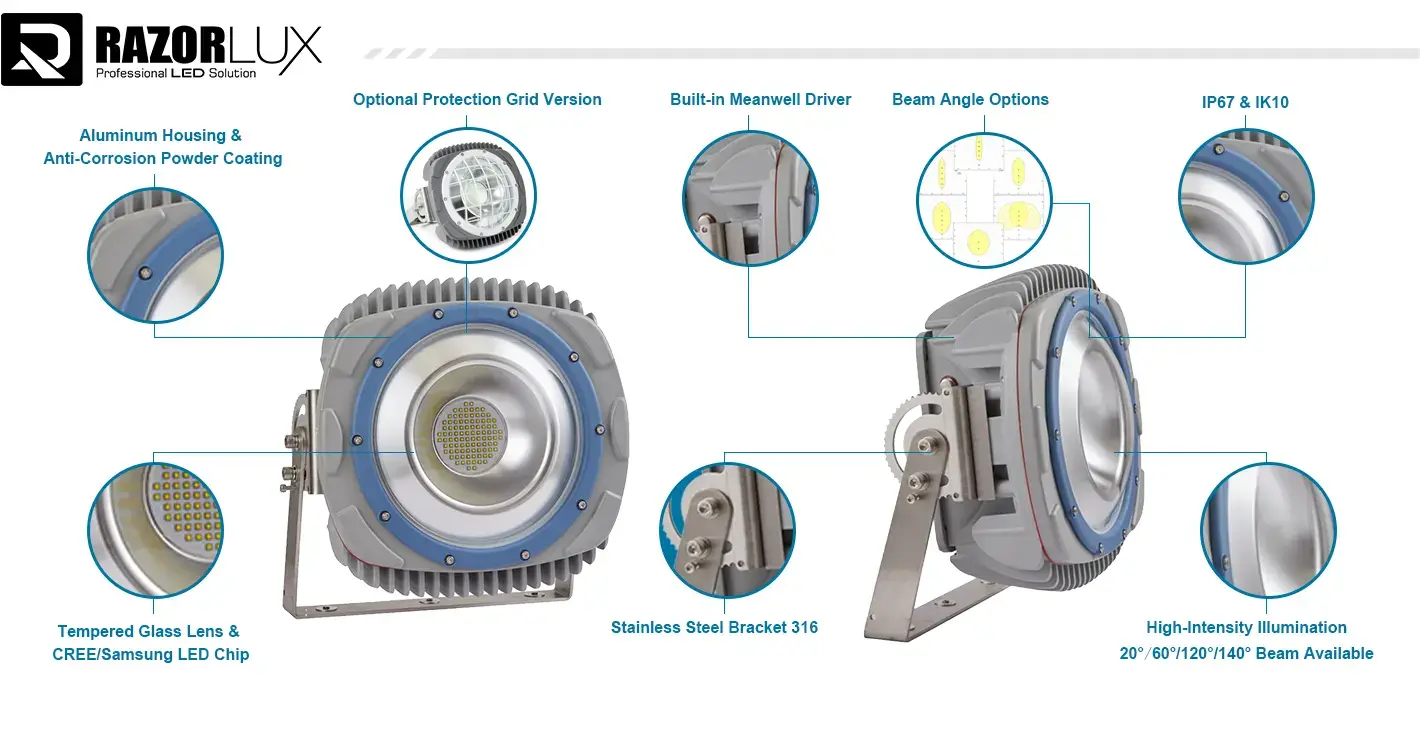
For industrial and marine settings, high mast lighting systems need more than just standard lighting technology. Our method combines three important factors that affect how well it works in the long run. The LED chip array uses high-quality diodes that work at 108W and a 12W driver from Meanwell, a name that is known around the world for making reliable power supplies. The thermal management system has an aluminium body with a special powder coating that effectively gets rid of heat, even when it's running all the time in temperatures as high as 60°C. This mix keeps the junction temperature in the right range, which stops the early failure that we've seen happen with competing goods in harsh marine environments.
Tangible Benefits Beyond Basic Illumination
Energy efficiency directly leads to lower running costs, which is something we know that building managers and procurement directors look at when they decide what to buy. When you compare our 120W fixture to older metal halide systems, you can see that each unit saves more than 55% of energy each year. In a normal port facility with 50 high mast installations, this difference adds up to big savings in energy costs and carbon emissions over the estimated lifespan of 50,000 hours or more. Another important benefit that is often overlooked at the start of the buying process is maintenance ease. For fixtures 15 to 50 meters above ground, expensive lift tools and labour are needed to change traditional HID lamps every 8,000 to 12,000 hours. Our modular design lets technicians repair driver parts or LED modules on their own, which means that big maintenance tasks can be put off for 7–10 years when everything is working normally. This feature is very helpful for shipyard repair teams and offshore platform operators who have to plan breaks around working schedules and weather restrictions. The ability to start right away gets rid of the warm-up delays that come with discharge lamp technology. When there is a security breach or an emergency, full lighting is available right away. This is a safety feature that building engineering managers who are in charge of following rules and protecting workers really like.
Environmental Protection Standards That Matter
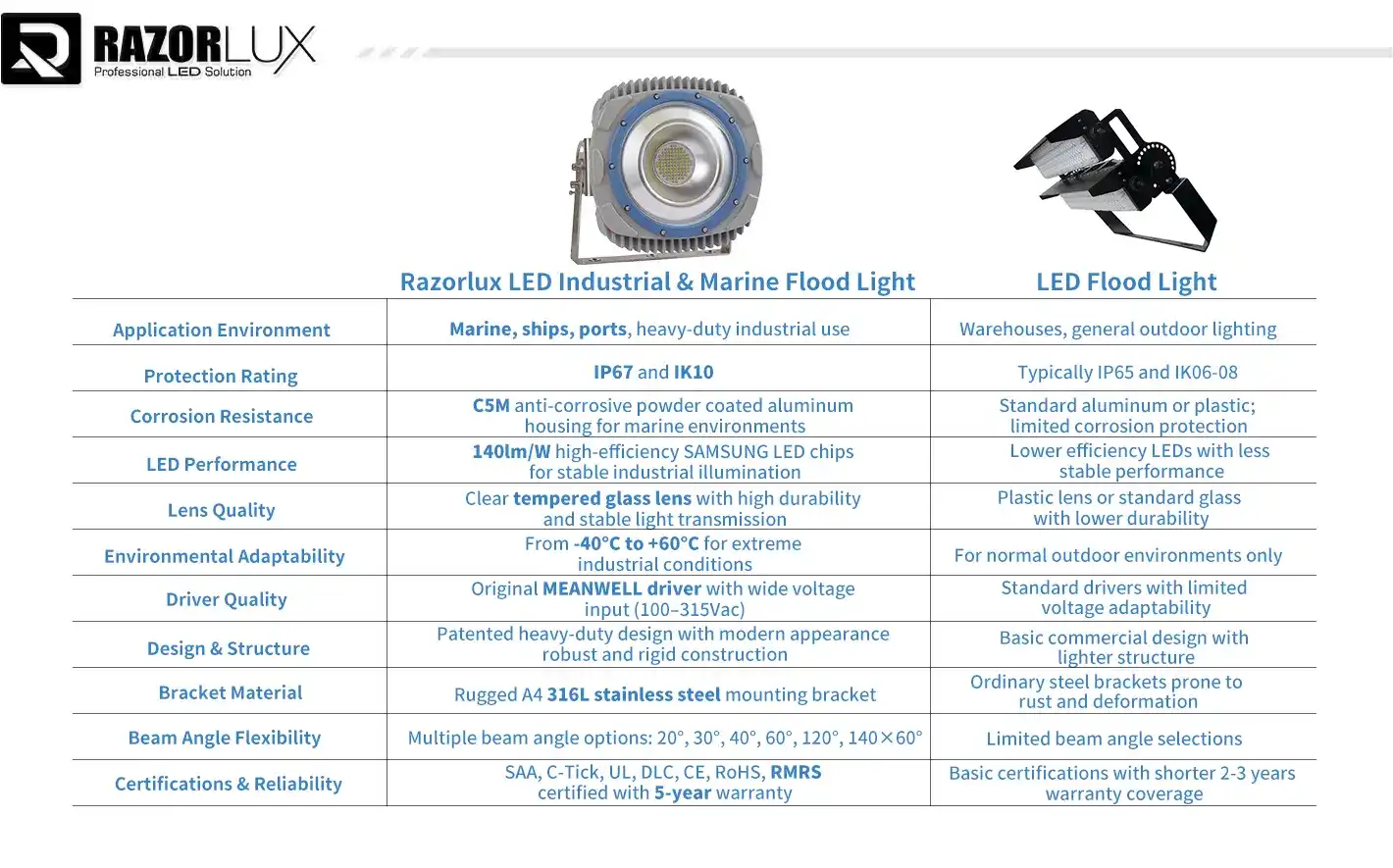
With an IP67 grade, something is completely dust-tight and can withstand being submerged in water for 30 minutes at a depth of 1 metre. We've made sure this standard is correct by trying it in a chamber that mimics tropical monsoon conditions and frequent pressure-washing situations that happen in port cleaning operations. The polycarbonate lens has an IK10 impact resistance rating, which is the highest level. This means it can withstand hits from 5 kg masses dropped from 40 cm, which takes care of worries about falling tools, flying debris during storms, or accidental contact during crane operations. Standard 1,000-hour methods are not enough for salt spray resistance tests. For more than 2,000 hours, our fixtures are exposed to accelerated corrosion chambers, which are like decades of exposure to the coast. The special coating on the aluminium housings and stainless steel mounting bracket stop the galvanic corrosion we've seen in competing products that are used on offshore platforms in Norway and at petrochemical plants in the Middle East.
| Parameter for Performance | The Razorlux RGL-120A | Metal Halide in its traditional form | Competitor for standard LEDs |
|---|---|---|---|
| How much power is used | 120W | 250–300W | 150W |
| Bright Output | 14,400 lm | 15,000 to 18000 lm | 13,500 lm |
| Shining Effectiveness | 130 lumens/W | 60–72 lm/W | 90–100 lm/W |
| Rated for Lifespan | 50,000 hours or more | 10,000 to 15,000 hours | 35,000 hours |
| Time Between Maintenance | 7 to 10 years | 1.5 to 2 years | 4 to 5 years |
| Rating by IP | IP67 | IP54 to IP65 | IP65 |
| Rating of Impact | IK10 | IK07 | IK08 |
| Temperature Range for Use | -40°C to +60°C | -20°C to +40°C | -30°C to +50°C |
| Safety from surges | 10kV/20kV | 2–4kV | 6–10kV |
| Warranty Time | For 5 years (10 years of living) | 1 to 2 years | 3 years |
These specs are based on actual performance in the field, not theoretical maximums. This gives buying teams a good idea of what to expect when planning projects and figuring out the total cost of ownership.
Comparing LED High Mast Flood Lights with Traditional and Alternative Technologies
Energy Consumption Analysis in Real-World Scenarios
There is more to switching a medium-sized container port from HPS to LED technology than just comparing power. We help our customers by doing photometric studies that record the current amounts of light, the uniformity ratios, and trouble spots where shade zones make things less safe or less efficient. A standard 40-fixture HPS system uses 400W per unit and needs 16kW of power all the time. When we replace these with our 120W systems, the demand drops to 4.8kW, which is a 70% drop. This has an effect on the size of the electrical infrastructure, the amount of power that a generator needs, and the demand charges that utility companies charge. Electrical experts who are looking at how to integrate systems should pay attention to the power factor standard. Our power factor of ≥0.98 keeps reactive power draw to a minimum. This is different from older magnetic ballast systems, where power factors below 0.85 lead to extra losses and could lead to fines from utility companies. Total harmonic distortion below 10% keeps sensitive electronics working and keeps communication systems from being harmed. This is especially important for airport yard lights, where radio frequency interference can be dangerous.
Lumen Output and Light Quality Considerations
Without knowing about spectral distribution and colour rendering qualities, raw light numbers don't tell the whole story. Our normal 5700K colour temperature gives off bright white light that makes it easier to see for close inspections, operating equipment, and security camera systems. The Ra75 colour rendering index is good enough for general area lighting. The Ra80 or Ra90 options are better for specific tasks, like inspecting paint in ship repair facilities or quality control areas in factories.The features of lumen maintenance show if the real light levels meet the design requirements over the product's lifetime. Led High Mast Flood Lights Based on TM-21 predictions from LM-80 testing data, we say that the fixture has L70 performance, which means it keeps 70% of its original output at its stated lifespan. This cautious approach is different from what rivals are saying about L90 promises that rarely hold true in the real world, especially in high-temperature settings where LEDs break down more quickly.
Advanced Features for Enhanced Functionality
With smart dimming, lighting systems that are static can be turned into systems that change based on operational needs. Our lights can work with both 0-10V analogue control signals and DALI digital protocols, so they can be connected to building management systems, occupancy sensors, and controls for daylight harvesting. Time-based lighting plans are used by port operators to cut output to 50% during times of low activity. This saves even more energy and extends the life of components without affecting safety during full operations. The input voltage range is wide, from 80VAC to 315VAC, so it can handle changes in the utility grid that happen in growing areas and on islands where generator power is used in addition to main power. DC input ranges from 80VDC to 400VDC, which makes it easy to connect to solar panels, battery backup systems, and shipboard electrical networks that use voltages that aren't standard. This adaptability gets rid of the need for an external transformer, which makes competing products more expensive, more likely to break, and harder to install.
How to Choose the Best LED High Mast Flood Lights for Your Procurement Needs
Evaluating Application-Specific Requirements
Purchasing managers who contact us have a range of needs that are shaped by their working setting and the rules and regulations that apply to them. An update to the lighting on a Norwegian offshore station needs to be approved by DNV/GL, protect against corrosion with C5-M, and include proof that it meets ATEX standards for a dangerous area. On the other hand, an expansion of the Singapore port focuses on fast delivery, compatibility with existing mounting infrastructure, and specific beam patterns that fit the layout of its operating zone. By knowing these differences, you can create focused specifications instead of choosing a general product. Cross-functional evaluation groups should be put together by procurement teams. These groups should include electrical engineers who will look at technical specs, maintenance supervisors who will look at how well the product works, and operations managers who will know what the performance requirements are. This way of working together stops the misalignment we've seen happen when buying departments focus on the initial cost, while maintenance teams deal with early failures and operations have trouble with not enough light.
Technical Specifications That Determine Suitability
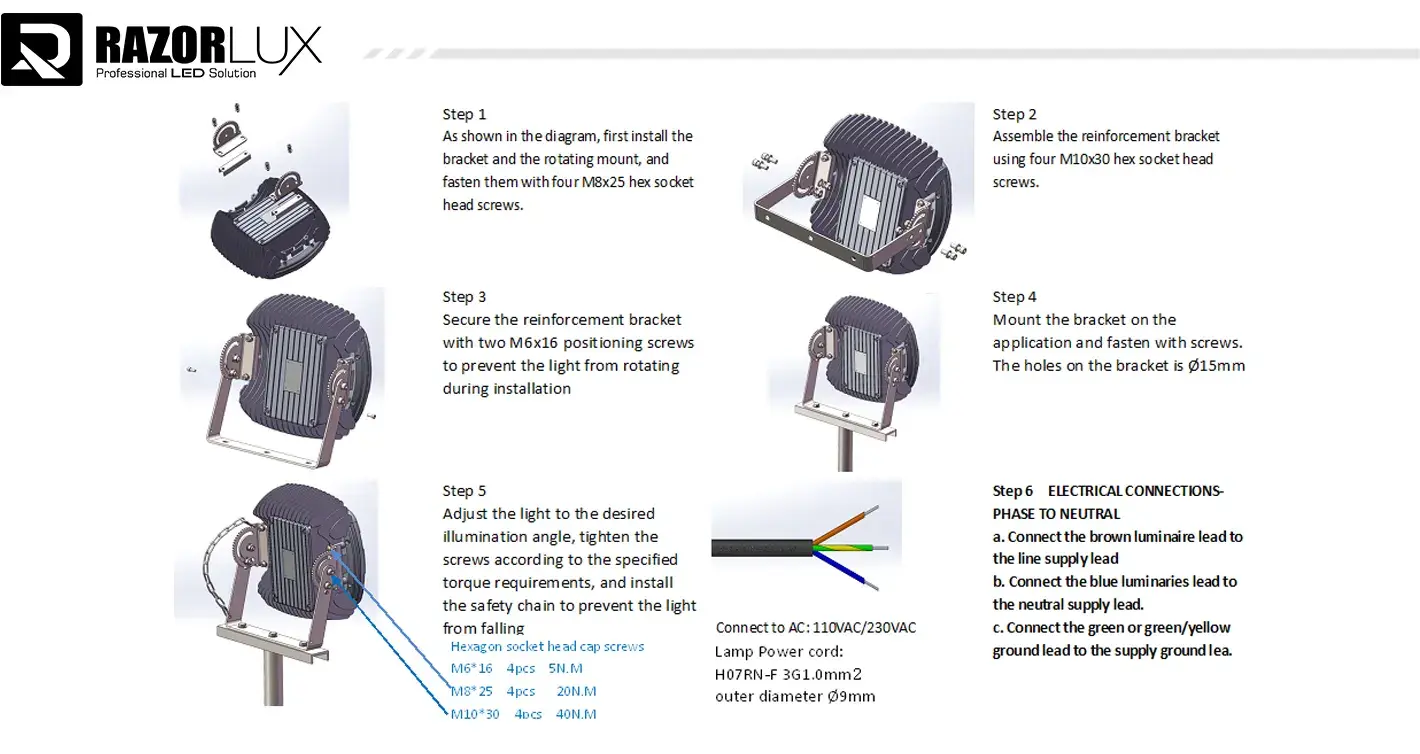
Instead of easy one-to-one replacement ratios, choosing the right wattage should be based on how much space it covers. Our 120W fixture works well in place of 250–300W HID lamps. The exact number of bulbs needed depends on the mounting height, pole spacing, target illumination levels, and the need for uniformity. We do photometric modelling with IES files and AGi32 software, which creates illumination plots that show compliance with standards like IESNA RP-6 for road lighting or specific requirements from classification societies that oversee maritime facilities. The IP rating proof goes beyond the catalogue specs and includes quality control during production and best practices for installation. Fixtures that are properly rated can fail if the cable glands are not tightened enough, if the gaskets get damaged during installation, or if the way they are mounted creates places where water can collect. We give full installation instructions and offer remote technical help to make sure that people in the field know how to do things the right way. This is an example of the kind of service that sets performance-focused manufacturers apart from transaction-only ones.
| Criteria for Selection | These are the important details: | Method of Verification | *Typical Application Needs |
|---|---|---|---|
| Protecting the environment | IP67, IK10, and Resistance to Corrosion | Test results and records of chamber testing | Offshore rigs and ports on the coast |
| Performance in Optical | Angle of beam, output in lumens, and uniformity ratio | Photometric reports and IES files | Airport aprons and container terminals |
| Compatibility with Electrical | Range of input voltage, Power factor, and THD | Documents for certification, tests for compatibility | Installations in remote areas and changing grid conditions |
| Quality of Components | Brand of LED chip, Driver company | List of supplies and specs for each part | Low-maintenance solutions that will last for a long time |
| Taking Care of Heat | Junction temperature, how the heat sink is made | LM-80 test results and thermal image data | Places with high air temperatures |
| Compliance with Regulations | ABS, CE, RoHS, UL, DNV/GL | Copies of certifications and compliance paperwork | International projects and businesses that are regulated |
| How the Warranty Works | Length, Range, and Response Time | Terms of warranties and service level agreements | Planning a budget and managing risks |
We've worked with purchasing managers in Northern Europe, Southeast Asia, and the Middle East to improve this set of criteria by working with them in the maritime, industrial, and infrastructure sectors.
Supplier Assessment and Partnership Considerations
Verification of the authenticity of a certificate stops operators from making the costly mistakes we've seen happen when they find fake certificates during regulatory audits or insurance inspections. Ask for the original certification papers that have test report numbers, contact information for the granting body, and scope lines that make it clear which model of the product was tested. Legitimate makers quickly provide this paperwork; evasive answers show possible compliance issues that put buyers at risk of being sued. A manufacturing capability assessment should look at how much can be made, how quality is controlled, and how stable the supply chain is. We keep a stock of parts that lets us start making more than 5,000 units right away, use automatic testing tools that make sure all of our finished products are safe, and check out more than one provider for important parts to avoid single-source vulnerabilities. These operational characteristics ensure reliable delivery, which is something we hear a lot from project managers who have had their schedules thrown off by suppliers who didn't have the right infrastructure. The structure of after-sales help decides whether technical issues are minor annoyances or problems that could destroy the project. Our team is made up of application engineers who help with lighting design, technical support specialists who help with problems, and quality inspection staff who handle warranty claims following set procedures. We promise to do a basic review within 24 hours of being notified of an issue, and we keep spare parts in stock at regional distribution points to help with quick settlement.
Installation and Maintenance: Ensuring Optimal Performance and Longevity
Professional Installation Procedures
To figure out the mounting height and pole spacing, you need to do a photometric analysis that takes into account the target's light levels, symmetry needs, and interference from obstacles. We've worked on jobs where there wasn't enough space between fixtures, leaving dark spots between coverage areas, and where too many fixtures lost money and energy. The 140°x60° asymmetric beam pattern works especially well for rectangular areas because it positions the long axis along the main covering direction while reducing the number of fixtures needed to meet code requirements. Long-term dependability in tough settings depends on how well the electrical connections are made. We ask for cable glands with an IP67 rating or higher, the right size for the conductor diameter, and installation torque specs that keep the cables from coming loose from vibration. The input voltage range of 80VAC to 315VAC allows for changes in utility rates, but installation electricians should check the actual supply characteristics, such as voltage stability, frequency consistency, and the effectiveness of the ground system. Poor grounding makes surge protection less effective and presents a risk of shock during repair. When pieces weighing 8 kg are put up at heights above 15 meters, wind load estimates become very important. The small size (360x358x187mm) makes it less resistant to wind than bigger competing products, but structural engineers must check the pole's capacity, the foundation's strength, and any guy wire requirements that apply. Led High Mast Flood Lights. We give you mechanical drawings that show the mounting interface specs, the location of the center of gravity, and the wind load coefficients that you need to do structural analysis.
Proactive Maintenance Strategies
Every six months, the gear should be inspected to make sure it is tight, the lens should be clear, the gasket should be in good shape, and any uncovered areas should be checked for signs of corrosion. The modular design lets techs change drivers without taking apart all the fixtures. This process takes about 30 minutes, compared to two to three hours for combined designs that need lift tools and full disassembly. We carry new drivers that are exactly the same as the originals and can ship them anywhere in the world within 48 hours of your order. Cleaning methods depend on the environment. For example, installations near the coast need to be cleaned every three months, while installations in less harsh areas only need to be cleaned once a year. Rinse with fresh water instead of high-pressure washing, which pushes water past seals. Dry with a soft cloth to keep mineral deposits from building up. Do not use rough cleaners or solvents that can damage the polycarbonate lens or housing coating. Effective cleaning keeps the optics working well, stops heat buildup from accumulated dirt, and allows eye evaluation to spot problems before they break. Performance tracking by taking regular measurements of the lighting system shows how it's breaking down and helps with planning upkeep. We suggest taking measurements once a year at grid points that match the original layout and comparing the results to the manufacturer's specifications and baseline values. Readings that show a drop of more than 30% from the starting levels mean that more research needs to be done. This could show that dirt has gathered, LEDs are breaking down, or power output is going down. This method, which is based on data, finds the best times to change lamps and backs up choices to buy new capital with facts.
Warranty Service and Technical Support
Our five-year warranty covers LED modules and drivers, and our ten-year warranty on the housing shows that we're confident in its ability to protect against corrosion. For warranty claims, you need to show proof of the date of installation, an account of the working environment, the failure symptoms, and, if necessary, photos. We look at returned parts to find out what went wrong and tell the difference between production flaws, fitting mistakes, and environmental conditions that are too high. Throughout the lifetime of a product, the technical support team helps with application questions, troubleshooting, and finding the right new part. Send us an email at sam@razorlux.com with full details about the problem, photos of the installation, and any signs of mistakes you see. Response times for the first assessment are usually less than 24 hours, and for more complicated cases, escalation procedures involve senior engineers. This easy-to-reach support structure cuts down on downtime and helps maintenance teams fix problems quickly without having to shut down equipment for long periods of time.
Future Trends and Environmental Impact of LED High Mast Flood Lights
Smart Lighting Integration and IoT Connectivity
When lighting systems and digital infrastructure come together, it can lead to more efficient operations and management based on data. Our fixtures connect to building control systems using standard protocols. This lets one place keep an eye on operating state, energy use, and repair needs. In future product generations, there will be built-in sensors that can detect fixture tilt, vibration patterns that show problems with the structure, and thermal profiles that show problems starting to form before they break completely. Wireless mesh networking gets rid of the need for expensive control cables and lets you set up complex lighting scenes that change based on practical needs. Port workers turn down the lights in areas that aren't being used while leaving them on full in areas where cargo is being moved. This dynamic control cuts energy use by an extra 20–30% on top of the static efficiency gains of LEDs. This saves even more money and makes parts last longer by reducing thermal stress during low-output periods.
Environmental Responsibility and Regulatory Compliance
Getting rid of your carbon footprint is a measurable benefit that helps companies with their sustainability efforts and legal compliance. Based on average grid density and constant operation, our 120W fixture stops about 730 kg of CO2 emissions each year compared to similar HID systems. When this happens in a lot of places, it has a big effect on the environment. For example, when a medium-sized port replaces 100 fixtures, it stops 73 metric tonnes of emissions every year, which is the same as taking 16 passenger vehicles off the road.RoHS compliance gets rid of dangerous materials like mercury, lead, and other poisons that were used in older lighting technologies. It's easier to get rid of things that are no longer useful when they don't need to be handled in a certain way. This lowers the cost of removal and the environmental risk. The aluminium housing and parts support recycling efforts, and the separation steps make it possible to reuse the materials instead of throwing them away in landfills. Using precision optics to cut down on light pollution addresses growing worries about how skyglow affects astronomy, animal behaviour, and people's sleep-wake cycles. The uneven beam patterns focus light precisely on target areas, reducing the upward spill that adds to light pollution. This focused method meets the requirements of new dark sky laws in environmentally sensitive areas and also makes lighting more efficient by making better use of the lumens that are produced.
Market Evolution and Procurement Outlook
Performance keeps getting better, and costs keep going down thanks to progress in technology. As LED chip efficacy rises to 200+ lm/W, lower-wattage fixtures will be able to provide the same amount of light, which will further cut down on energy use and the need for thermal management. When you use predictive algorithms in more advanced driver designs, the output will be optimised based on the environment, the temperature of the parts, and how they're wearing down. These designs will automatically make changes to keep the target illumination levels throughout the service life. As companies set up regional production and delivery hubs, supply chain localisation trends affect how they buy things. This spread of locations lowers shipping costs and wait times while making the supply chain more resilient to problems. We've grown our delivery network to help customers in Europe, Asia, and the Middle East by having local merchandise and technical support available. We did this because we know that responsive service is what sets successful partnerships apart from transactional vendor relationships. As projects come up with unique needs that can't be met by regular catalogue items, the need for customisation keeps growing. Led High Mast Flood Lights Our engineering team works with clients to make changes to beam patterns, custom mounting arrangements, integrated control systems, and better environmental protection for harsh uses. This gives procurement managers more options when they have to deal with specifications that are written around existing suppliers or unique operational constraints that mean they have to come up with custom solutions instead of settling for standard products.
Conclusion
To choose high-performance area lighting for naval and industrial uses, you need to carefully look at the technical specs, the supplier's skills, and the estimated total cost of ownership. The best solutions have tested and proven parts from trusted companies like Meanwell, strong environmental protection that has been proven through rigorous testing, and optical designs that are flexible enough to fit a wide range of installation needs. Led High Mast Flood Lights Our work with ships, offshore platforms, ports, and heavy industry in global markets helps us make products that are reliable, easy to service, and perform well in tough conditions. Moving from old HID technology to new LED systems has measurable benefits, such as saving more than 55% of energy, extending the time between repair visits to 7–10 years, and providing better lighting that supports operational and safety goals.
FAQ
What lifespan can we expect from industrial-grade high-mast LED fixtures?
Professional-grade lights can usually work for 50,000 to 100,000 hours or more with L70 lumen maintenance. That's 10 to 20 years of service under normal conditions. Based on conservative LM-80 testing and TM-21 projections that take into account normal ambient temperatures in industrial settings, our RGL-120A model says it will last for 50,000 hours or more.
How do these fixtures withstand extreme weather and corrosive environments?
With IP67 ingress protection, dust can't get in, and the device can be submerged in water up to 1 metre deep for 30 minutes. The IK10 grade means it can take hits from 5 kg objects dropped from 40 cm. The special powder finish on the aluminium body and stainless steel mounting plate protects against corrosion from salt spray in tests that last more than 2,000 hours and go beyond normal procedures. We have proof of successful installations at industrial plants in the Middle East, offshore platforms in Norway, and ports in Southeast Asia. The lights work all the time in temperatures ranging from -40°C to +60°C and humidity levels between 10% and 95%.
Can existing high mast poles accommodate LED fixture retrofits?
Most setups can be used for retrofitting, but a structural assessment is needed to make sure that the pole's load capacity and wind resistance can handle the weight and shape of the new fixtures. Our 8 kg fixture weight and small size usually put less stress on systems than older HID systems, though mounting multiple fixtures close together needs to be checked by calculation. The input voltage ranges from 80VAC to 315VAC, so it can work with a variety of power supplies without the need for extra transformers.
Partner with a Trusted LED High Mast Flood Lights Manufacturer
With over twenty years of engineering excellence serving the marine, industrial, and infrastructure sectors around the world, Razorlux is a trusted provider of LED High Mast Flood Lights. Our RGL-120A model has all the performance features that procurement professionals look for: 130 lm/W efficacy, IP67/IK10 protection, Meanwell drivers, and a long list of certifications that include CE, RoHS, UL, DNV/GL, and ABS. We help with your project from coming up with the initial specifications to photometric design, logistics for shipping, installation advice, and long-term technical support backed by a five-year guarantee. Whether you're looking to fix up old infrastructure, build new facilities, or find ways to deal with difficult weather conditions, our team can help. We communicate quickly and provide all the paperwork you need for the evaluation. You can email our technical sales team at sam@razorlux.com to talk about your specific application needs, get samples to test, or get detailed quotes for your upcoming projects. You can see our whole line of products at razorlux.com, download technical specs, and read case studies that show how well our products have worked in a variety of settings.
References
1. Illuminating Engineering Society of North America (2020). Recommended Practice for Roadway Lighting (RP-6-20). New York: IESNA Technical Publications.
2. Det Norske Veritas (2019). Standard for Certification of Maritime and Offshore Lighting Systems. DNV/GL Classification Society Guidelines.
3. U.S. Department of Energy (2021). LED Luminaire Lifetime: Recommendations for Testing and Reporting, Third Edition. Washington, D.C.: Building Technologies Office.
4. International Commission on Illumination (2018). CIE 150:2017 - Guide on the Limitation of the Effects of Obtrusive Light from Outdoor Lighting Installations. Vienna: CIE Central Bureau.
5. Marine Equipment Directive (2019). Essential Requirements for Marine Equipment Directive 2014/90/EU Implementation. European Commission Publications.
6. American Bureau of Shipping (2020). Guide for Lighting and Marking of Offshore Installations. ABS Technical Publications, Houston, Texas.