

_1750326878398.png)

Most Powerful Flood Light Applications in Industrial Lighting
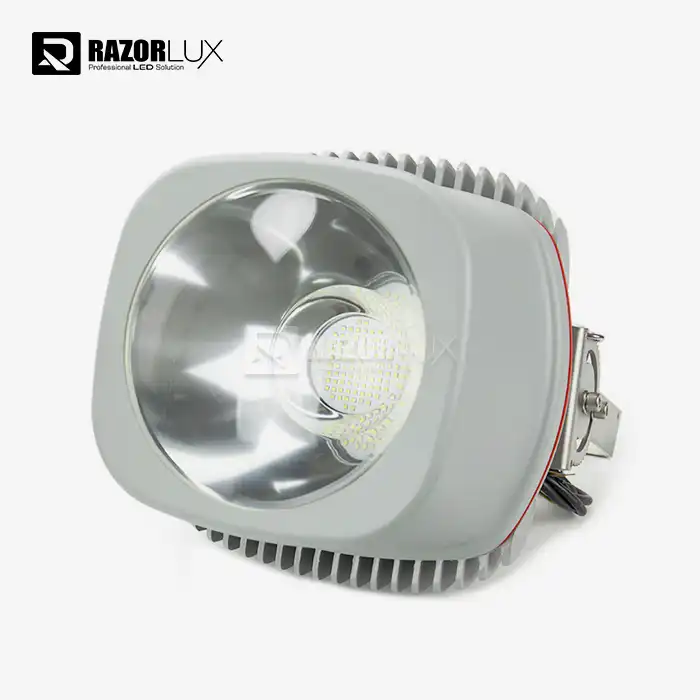
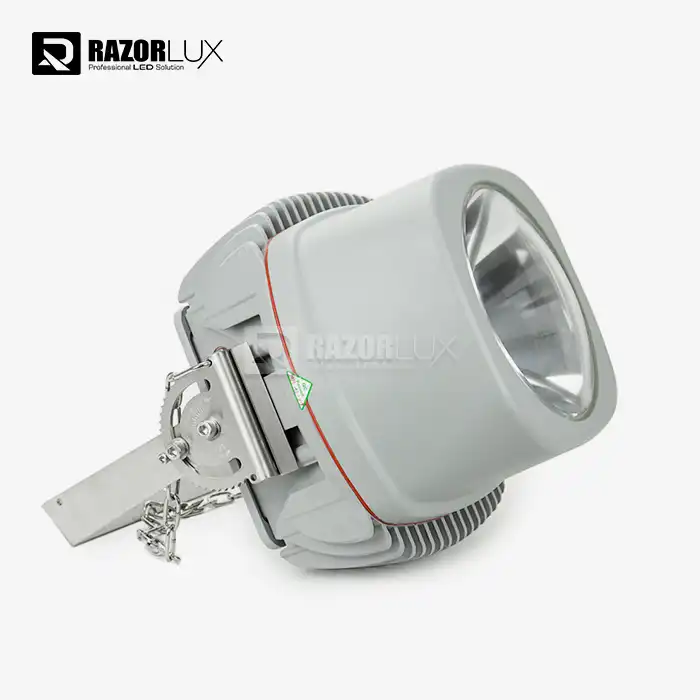
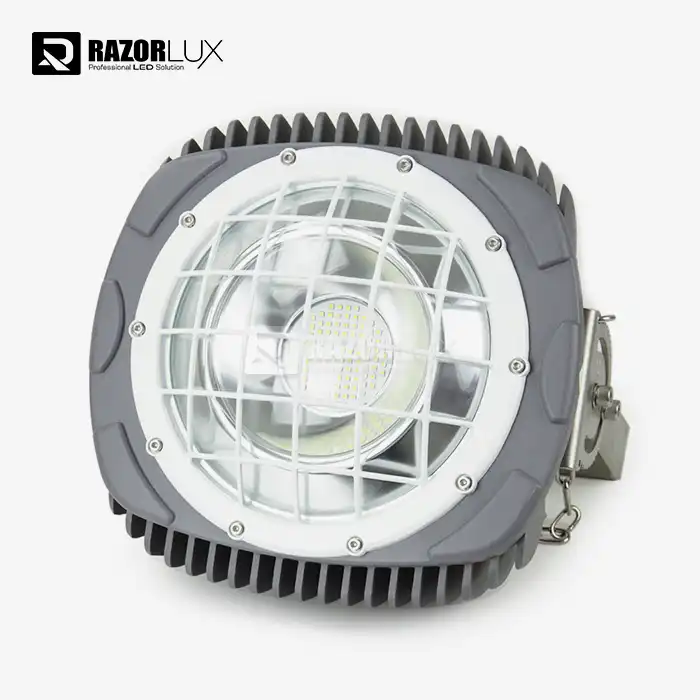
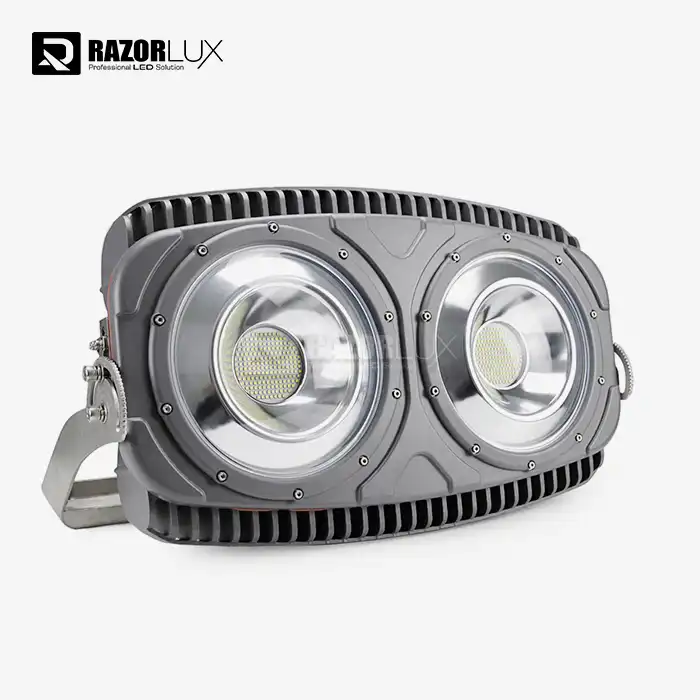
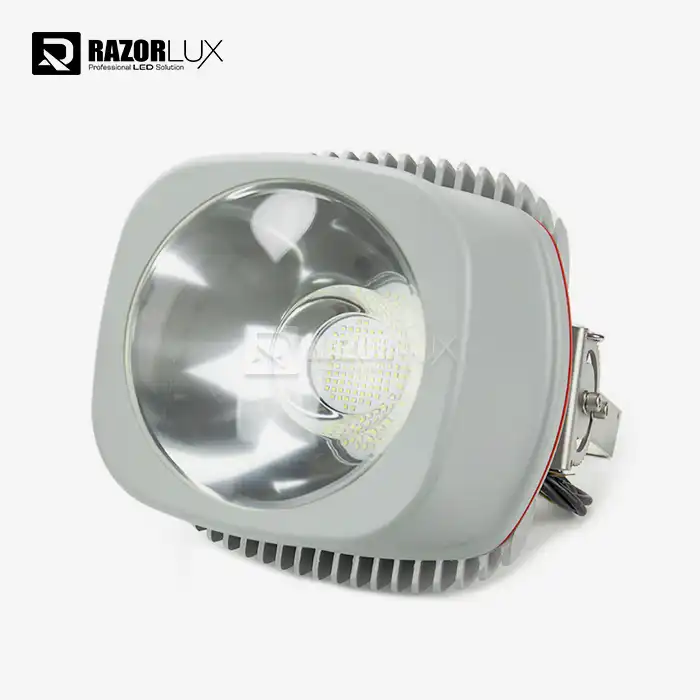
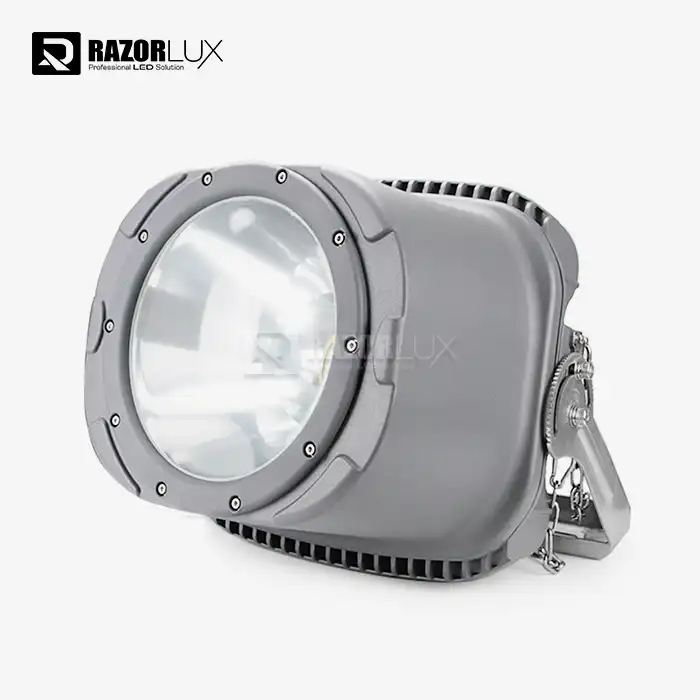
Industrial environments demand lighting that performs under pressure. From offshore platforms battling saltwater corrosion to shipyards operating around the clock, the Most Powerful Flood Light solutions deliver more than brightness—they provide reliability that directly impacts safety, productivity, and long-term operational costs. At Razorlux, we've spent over 25 years engineering LED flood lighting systems that withstand extreme conditions while maintaining exceptional energy efficiency. Our flagship 1200W model delivers 156,000 lumens with 130LM/W efficiency, equipped with Samsung chips and Mean Well drivers, providing the robust performance industrial procurement managers need when choosing lighting partners they can trust.
Understanding High-Intensity Industrial Flood Lighting Technology
When we talk about the most powerful industrial flood lights, we're referring to fixtures engineered to deliver luminous outputs exceeding 100,000 lumens—far beyond what standard commercial lighting provides. These specialized systems incorporate advanced thermal management, ruggedized housings, and precision optics to illuminate vast areas consistently.
Defining Power in Industrial Lighting Context
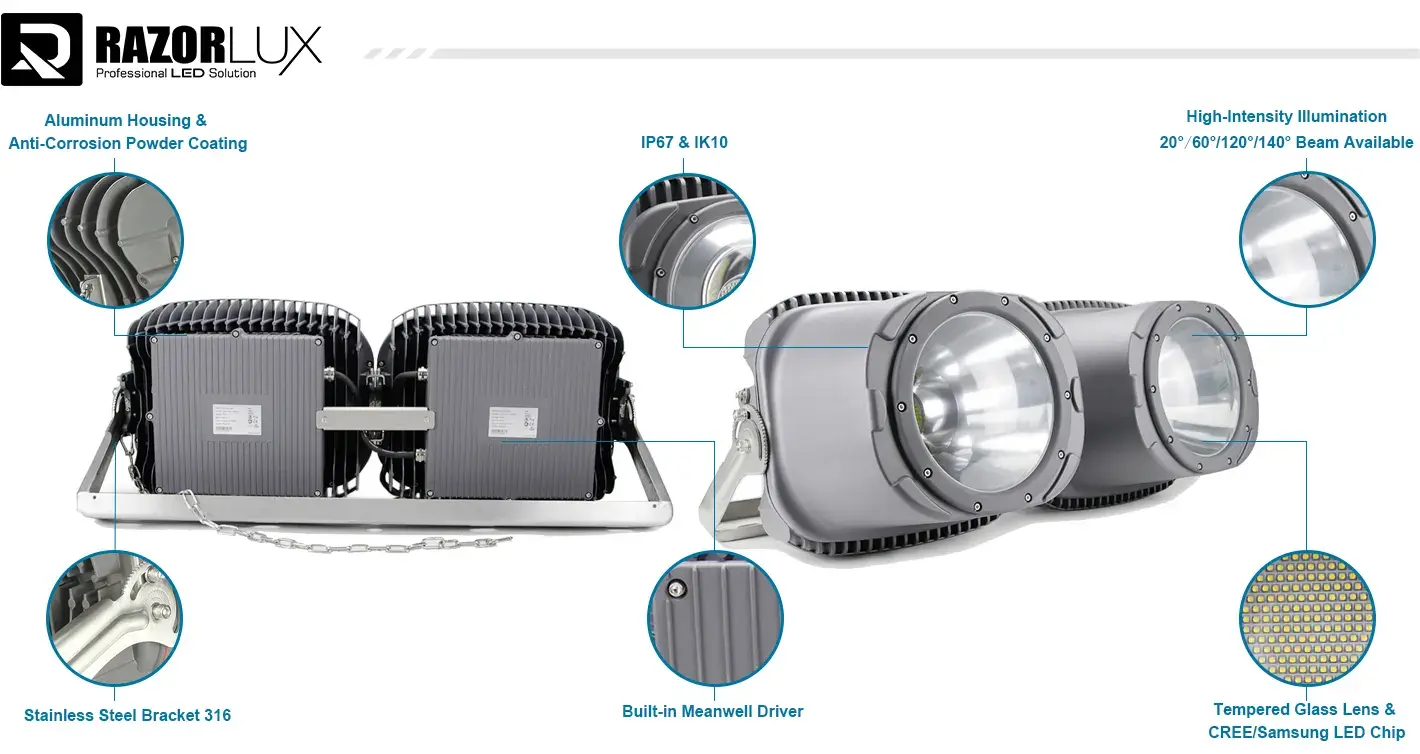
Power in industrial lighting isn't solely about wattage. A truly powerful system balances several critical factors: luminous efficacy (measured in lumens per watt), beam distribution, color rendering index, and operational lifespan. Our 1200W system achieves 130LM/W efficiency while offering flexible beam angles from 15° to 140°x60°, allowing precise light placement whether illuminating a loading dock or a ship's deck. The tempered glass lens protects the Samsung LED chips while maintaining optical clarity even after years of exposure to industrial contaminants.
LED Technology Advantages Over Traditional Systems
Traditional metal halide and high-pressure sodium fixtures dominated industrial lighting for decades, but their limitations have become increasingly costly. LED technology has fundamentally changed the economics of industrial illumination. While a 2000W metal halide system might deliver 140,000 lumens initially, output degrades rapidly, and the fixture requires replacement every 6,000-10,000 hours. Our LED systems maintain 70% of original output beyond 50,000 hours—five times longer operational life with significantly lower energy consumption. The thermal management in professional LED systems separates premium from mediocre products. Excessive heat remains the primary failure mode for LED components. Razorlux fixtures utilize aluminum alloy housings with engineered heat dissipation structures that maintain junction temperatures within safe parameters, even when operating continuously in ambient temperatures ranging from -40°C to 60°C. This thermal control directly extends component life and maintains consistent light output.
Critical Performance Specifications for Industrial Applications
Industrial procurement teams evaluate lighting based on specifications that directly relate to operational reliability. IP (Ingress Protection) ratings indicate resistance to dust and water intrusion—essential for maritime and outdoor applications. Our IP67 rating means complete dust-tight protection and the ability to withstand temporary immersion in water, critical when fixtures are exposed to deck washing or heavy rainfall during offshore operations. Impact resistance, measured by IK ratings, matters equally in industrial settings where equipment movement, flying debris, or accidental contact occurs regularly. The IK10 rating on Razorlux systems represents the highest protection level—capable of withstanding 20 joules of impact energy, equivalent to a 5kg mass dropped from 40cm. Stainless steel brackets provide corrosion-resistant mounting that maintains structural integrity in marine environments where standard steel would fail within months.
Core Industrial Applications Requiring Maximum Illumination
Industrial lighting serves multiple critical functions beyond basic visibility. Safety protocols, operational efficiency, security monitoring, and regulatory compliance all depend on properly designed lighting systems matched to specific environmental challenges.
Maritime and Offshore Platform Lighting
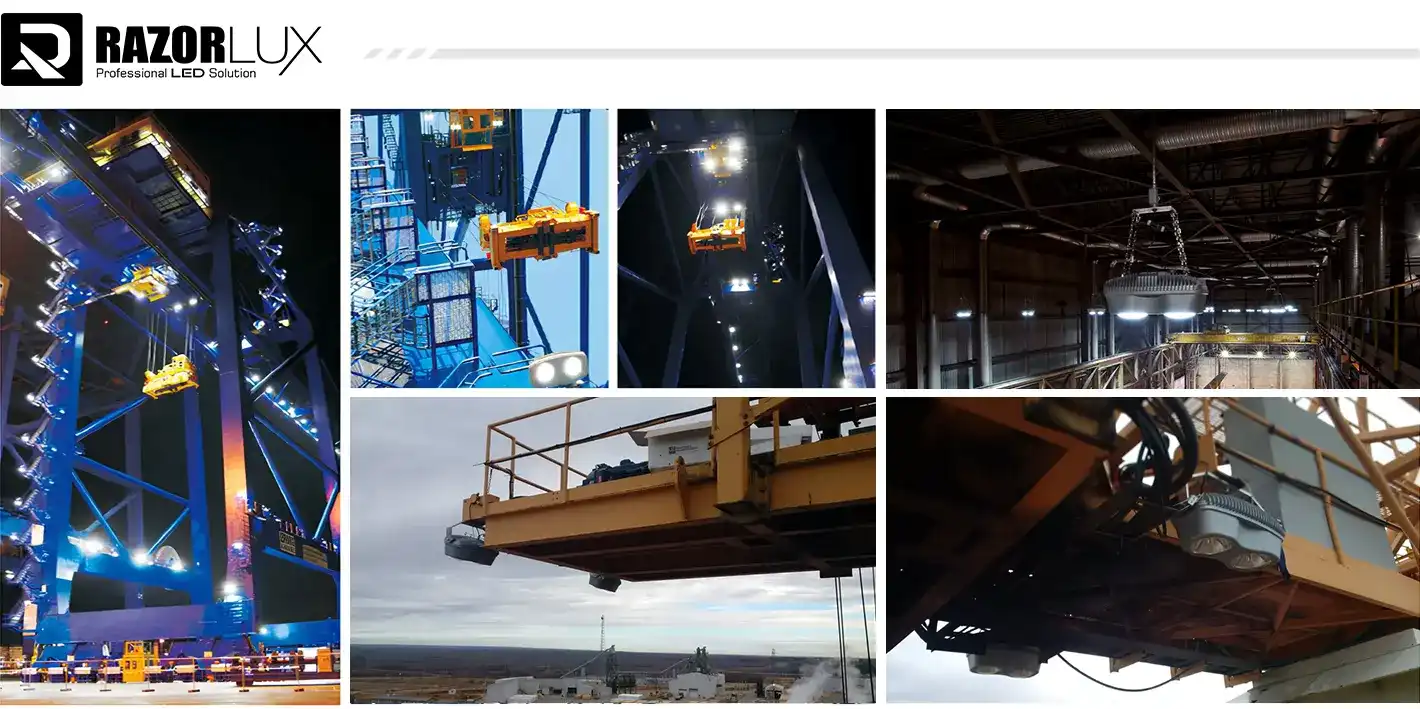
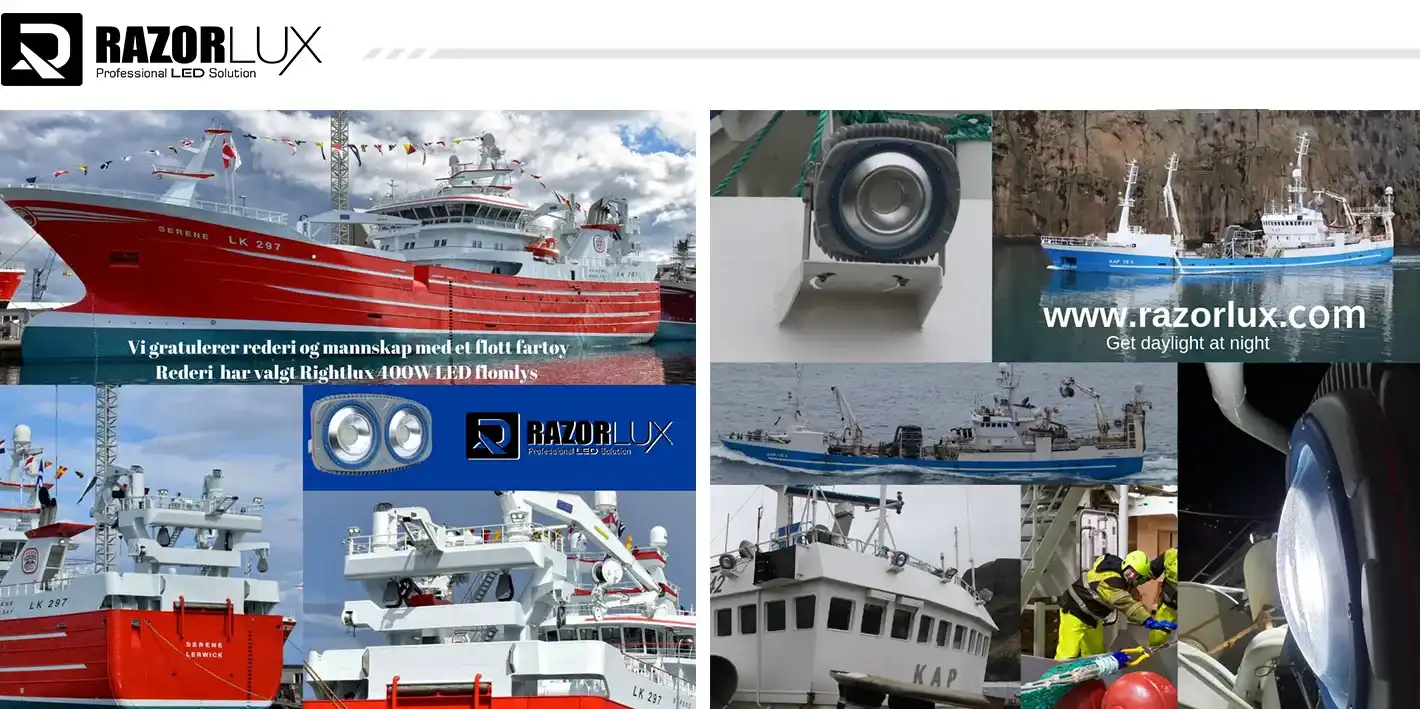
Offshore platforms present one of the harshest environments for electrical equipment. Constant salt spray, high winds, temperature fluctuations, and 24/7 operational requirements demand lighting that simply cannot fail. We've deployed our systems on platforms throughout the North Sea, Middle East, and Southeast Asian waters where ambient conditions would quickly destroy inadequately protected equipment. The corrosive nature of marine environments requires specialized coatings and sealed construction. Our fixtures undergo 1000-hour salt spray testing per ISO 9227 standards, ensuring the aluminum housing maintains integrity and the internal components remain protected. The wide input voltage range (AC90-305V, DC127-431V) accommodates the power quality variations common on offshore platforms where generators provide primary power and voltage stability can fluctuate. Crane operations on offshore platforms create unique lighting challenges. Operators working 30 meters above deck need shadow-free illumination to safely maneuver loads. Our adjustable beam angles allow lighting designers to eliminate dark spots while minimizing glare that could impair operator vision. The high CRI (Ra>75) ensures accurate color perception, critical when operators must visually inspect equipment, read signage, or assess material condition.
Port Terminals and Container Yards
Modern container terminals operate continuously, handling thousands of containers daily through precisely choreographed movements of cranes, trucks, and straddle carriers. Adequate lighting directly impacts throughput capacity and safety. Insufficient or inconsistent illumination slows operations and increases accident risk. Terminal lighting typically mounts on 25-40 meter high masts, creating throw distances that demand both intensity and appropriate beam distribution. Our 1200W fixtures with narrow beam options (15° or 20°) can project effective illumination across these distances while maintaining uniformity ratios that meet international standards for industrial work areas. The patented multi-function design allows mounting flexibility, accommodating various pole configurations and adjustment angles. Container identification requires sufficient illumination for both human operators and automated OCR (Optical Character Recognition) systems. Color temperature selection impacts this functionality—our adjustable range from 2700K to 6500K allows terminal operators to optimize for specific needs, with cooler temperatures generally providing better contrast for alphanumeric character recognition.
Shipyard and Drydock Operations
Shipyards combine construction, repair, and maintenance activities that occur both indoors and outdoors, often simultaneously on vessels in various stages of completion. Lighting requirements vary from broad area illumination during hull construction to focused task lighting for precision welding and assembly work. The 50kg weight of our 1200W fixture, while substantial, reflects the robust construction necessary for industrial environments. Lighter fixtures typically sacrifice thermal mass, structural integrity, or component quality—compromises that lead to premature failure in demanding applications. The stainless steel bracket system allows secure mounting on temporary scaffolding, permanent gantries, or vessel structures without risk of corrosion-induced failure. Shipyard environments expose lighting to welding spatter, grinding debris, paint overspray, and chemical vapors. The IP67 rating provides essential protection, while the tempered glass lens withstands thermal shock and impact that would shatter standard glass. Regular maintenance remains important, but the sealed construction dramatically reduces cleaning frequency compared to open fixtures that accumulate internal contamination.
Heavy Industrial Facilities and Warehouses
Most Powerful Flood Light Steel mills, paper plants, and large manufacturing facilities present combinations of heat, dust, vibration, and chemical exposure that challenge lighting systems. Production cannot stop for lamp replacement, making reliability paramount. Our 5-year warranty reflects confidence in system longevity, but properly selected LED fixtures routinely operate 8-10 years before requiring replacement in heavy industrial settings. Warehouse and logistics facilities increasingly operate 24/7, serving e-commerce fulfillment and just-in-time manufacturing supply chains. Energy consumption for lighting in facilities running 8,760 hours annually becomes significant. A facility replacing 100 traditional 2000W fixtures with our 1200W LED systems reduces lighting energy consumption by approximately 40% while improving light levels—typically recovering investment costs within 18-24 months through energy savings alone. The dimming capability in our systems allows facilities to reduce illumination during periods of reduced activity, extending energy savings further. Integration with occupancy sensors and scheduling systems can reduce lighting energy consumption by an additional 20-30% in facilities with variable activity patterns.
Construction Sites and Mining Operations
Construction sites require portable, durable lighting that withstands rough handling, power quality variations, and exposure to weather. Mining operations—whether surface or underground—demand even more robust solutions capable of operating in dusty, humid, or potentially explosive atmospheres. The wide input voltage tolerance in our systems (AC90-305V) accommodates the portable generators and temporary power distribution common on construction sites. Voltage fluctuations that would damage sensitive electronics in consumer-grade products do not affect industrial-grade drivers designed for variable power quality. Open-pit mining operations illuminate vast working areas where equipment operates continuously. Light towers equipped with multiple high-output fixtures must withstand vibration from blasting and heavy machinery movement. Our fixtures undergo vibration testing to ensure they maintain functionality and structural integrity under 3G acceleration forces—the mechanical stress generated by mining equipment and transport vehicles operating nearby.
Selecting the Optimal High-Power Flood Lighting System
Procurement decisions for industrial lighting involve technical evaluation, supplier assessment, and total cost of ownership calculations. A systematic approach ensures you select systems that meet immediate needs while providing long-term value.
Defining Your Specific Illumination Requirements
Begin by documenting the area requiring illumination, including dimensions, mounting height options, and environmental conditions. A 50-meter by 100-meter container yard with 30-meter mounting height presents entirely different requirements than a 20-meter by 40-meter shipyard work area with 12-meter mounting height. Throw distance, required illumination levels, and uniformity ratios all factor into fixture selection and placement. Industry standards guide minimum illumination levels. EN 12464-2 specifies lighting requirements for outdoor workplaces in Europe, while IESNA standards provide similar guidance in North America. Container terminals typically require 20 lux horizontal illuminance with uniformity ratios of 0.4 or better. Shipyards performing precision work may require 50-100 lux with higher uniformity. Understanding applicable standards prevents over-lighting (wasting energy) or under-lighting (compromising safety).
Environmental Protection and Durability Factors
IP ratings indicate protection against solid particles and liquids, but understanding the rating system prevents misinterpretation. IP67 means complete dust-tight protection (the "6") and protection against temporary immersion up to 1 meter for 30 minutes (the "7"). This differs from IP65, which protects only against water jets, not immersion. For marine decks regularly washed with high-pressure water, or equipment potentially exposed to flooding, IP67 provides essential additional protection.IK impact ratings range from IK01 (withstanding 0.15 joules) to IK10 (withstanding 20 joules). Industrial environments where forklift trucks, cranes, or other equipment operate nearby should specify IK08 minimum, with IK10 preferred for high-risk areas. The cost difference between IK08 and IK10-rated fixtures is minimal compared to the expense of premature failure and emergency replacement.
| Environmental Factor | Recommended Specification | Razorlux RGL-1200P Performance |
|---|---|---|
| Dust Ingress | IP6X (dust-tight) | IP67 certified |
| Water Ingress | IPX7 (immersion resistant) | IP67 certified |
| Impact Resistance | IK08-IK10 | IK10 certified |
| Operating Temperature | -40°C to +55°C minimum | -40°C to +60°C rated |
| Corrosion Resistance | 1000hr salt spray minimum | ISO 9227 compliant |
| Vibration Tolerance | 3G acceleration | Tested to 3G standards |
Energy Efficiency and Operating Cost Analysis
Luminous efficacy—lumens produced per watt consumed—directly impacts operating costs. A 1200W fixture producing 156,000 lumens achieves 130 LM/W, matching or exceeding the efficiency of competing systems while delivering superior build quality and component selection. Operating 100 fixtures continuously consumes 120kW. At industrial electricity rates averaging $0.10 per kWh, the annual energy cost reaches $105,120. Improving efficiency by 20 lumens per watt reduces this to approximately $97,000 annually, saving $8,000 yearly while delivering identical illumination. Mean Well drivers, standard in Razorlux systems, provide industry-leading reliability with typical lifespans exceeding 100,000 hours at rated load. Driver failure represents the most common LED system failure mode. Specifying premium drivers increases initial cost by perhaps 10-15% but dramatically reduces maintenance requirements and unplanned downtime costs that dwarf the initial savings from budget components.
Evaluating Supplier Capabilities and Certifications
Supplier evaluation should extend beyond product specifications to manufacturing capabilities, quality systems, and support infrastructure. ISO 9001 certification indicates established quality management processes, but visiting manufacturing facilities or reviewing detailed quality documentation provides deeper insight into actual practices. Product certifications vary by target market. CE marking is mandatory for European markets, UL listing for North American markets, and various regional certifications for other areas. Our comprehensive certification portfolio (CE, RoHS, SAA, C-Tick, UL, DLC, CB, RMRS, ISO:9001) reflects investment in meeting global standards, allowing use in virtually any market without additional certification delays. Purchasing managers serving multinational operations or those planning expansion benefit from this flexibility.
Customization Options and Technical Support
Most Powerful Flood Light Standard products serve many applications well, but industrial projects often benefit from customization. Beam angle selection, mounting bracket configuration, cable entry locations, and even housing color may require modification from standard offerings. Our in-house engineering team, including over 10 PhDs and professors specializing in LED technology, provides technical consultation and custom design services when projects require solutions beyond catalog products. Technical support extends throughout the product lifecycle. Pre-sale support includes lighting calculations and layout design—we provide professional photometric analysis using industry-standard software, modeling proposed installations to verify they meet illumination requirements before purchase. Installation guidance, commissioning support, and troubleshooting assistance ensure systems perform as specified. Our commitment to responsive communication addresses the common complaint among international buyers about delays in getting technical questions answered.
Installation Best Practices and Operational Guidelines
Proper installation significantly impacts system performance and longevity. Even premium fixtures underperform when incorrectly installed, while proper installation maximizes value from your lighting investment.
Site Preparation and Mounting Considerations
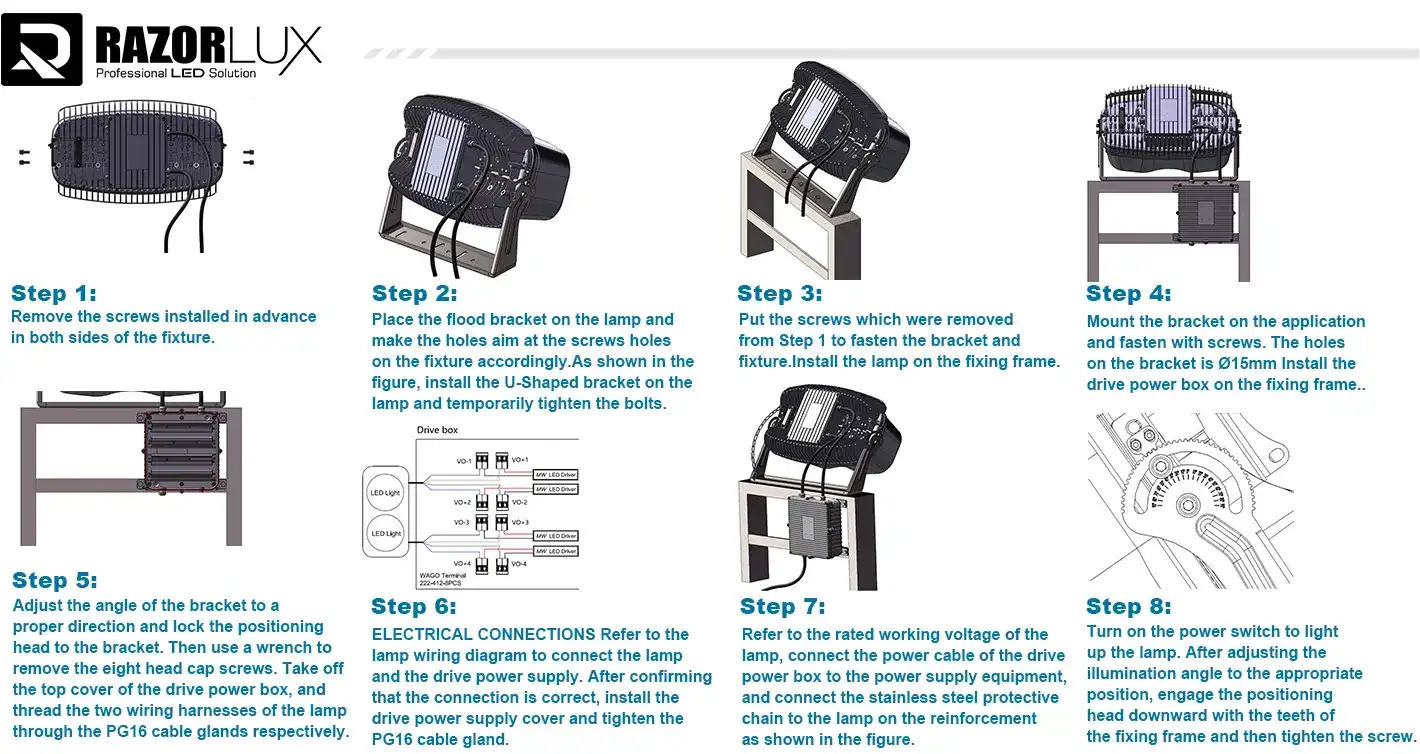
Structural adequacy of mounting locations is paramount. A 50kg fixture subjected to wind loads in coastal environments generates substantial forces on mounting structures. Structural engineers should verify that poles, brackets, or building structures can safely support both static weight and dynamic wind loads. Inadequate mounting structures lead to alignment shifts, vibration, or catastrophic failure during storms. Mounting height affects both illumination pattern and maintenance accessibility. Higher mounting reduces the number of fixtures required to cover an area, but increases throw distance requirements and complicates maintenance access. Lower mounting improves accessibility but may require more fixtures and increases vulnerability to accidental damage. Photometric analysis during the design phase optimizes this balance for specific applications.
Electrical Installation and Power Quality
Electrical installation must comply with local codes and industrial safety practices. Industrial environments often present additional hazards—explosive atmospheres, wet locations, or areas subject to chemical exposure—requiring specialized installation methods. Licensed electricians familiar with industrial installations should perform work, following the NEC (National Electrical Code) requirements in the US or IEC standards internationally. Power quality affects LED driver lifespan and performance. Industrial facilities with large motor loads, welding equipment, or variable frequency drives often experience voltage transients and harmonic distortion. Our fixtures include 10kV surge protection as standard, expandable to 20kV for locations with poor power quality or frequent lightning activity. Additional power conditioning at the circuit level may benefit facilities with particularly problematic power quality.
Aiming and Optical Adjustment Procedures
Precise aiming maximizes lighting effectiveness. Fixtures should be positioned and aimed to achieve target illumination levels while minimizing wasted light directed above the horizontal plane (contributing to light pollution) or into areas where it creates glare without improving useful visibility. Adjustable mounting brackets allow fine-tuning during commissioning. Beam angle selection interacts with aiming angle and mounting height to determine the illumination pattern. Narrow beams (15-30°) suit high-mounting applications where the throw distance is substantial. Medium beams (40-60°) work well for moderate heights where coverage area and intensity must balance. Wide beams (120° or asymmetric 140°x60°) serve lower mounting heights where broad coverage matters more than throw distance. Our multi-function design accommodates field adjustment of beam angle on some models, providing installation flexibility.
Maintenance Scheduling and Inspection Protocols
Proactive maintenance extends system life and maintains performance. Establish inspection intervals based on environmental severity—quarterly inspections for harsh marine environments, semi-annual for moderate industrial settings, and annual for protected locations. Inspections should document any physical damage, verify secure mounting, check for water intrusion or seal degradation, and clean optical surfaces.LED systems require less maintenance than traditional technologies—no lamp replacement every few thousand hours—but they're not maintenance-free. Optical surfaces accumulate dust and contaminants that reduce light transmission. Tempered glass lenses tolerate cleaning with mild detergents and soft cloths. Avoid abrasive cleaners or tools that scratch glass, reducing optical transmission. Scheduled cleaning maintains light output, potentially extending replacement intervals by years.
| Maintenance Task | Recommended Frequency | Estimated Time per Fixture | Required Tools/Materials |
|---|---|---|---|
| Visual inspection for damage | Quarterly (harsh environments) | 2-3 minutes | Binoculars, documentation forms |
| Lens cleaning | Semi-annually | 10-15 minutes | Mild detergent, soft cloth, water |
| Electrical connection inspection | Annually | 5-10 minutes | Multimeter, torque wrench |
| Mounting hardware torque check | Annually | 5-10 minutes | Torque wrench, thread locker |
| Thermal imaging scan | Every 2 years | 3-5 minutes | Thermal imaging camera |
| Comprehensive system testing | Every 5 years | 20-30 minutes | Lux meter, electrical testing equipment |
Safety Protocols and Regulatory Compliance
Industrial lighting installation and maintenance involve working at height, with electrical systems, and potentially hazardous environments. Comprehensive safety protocols protect workers and ensure regulatory compliance. Fall protection, lockout/tagout procedures, and electrical safety practices are non-negotiable. Documentation proves compliance during audits and provides historical records for troubleshooting. Maintain records of initial installation, including photometric measurements verifying illumination levels meet design specifications. Document maintenance activities, noting any issues discovered and corrective actions taken. This documentation demonstrates due diligence in maintaining safe working conditions and may prove valuable during incident investigations or regulatory inspections.
Strategic Procurement Approaches for Industrial Lighting Projects
Most Powerful Flood Light Purchasing industrial lighting at scale requires a strategy extending beyond simple price comparison. Total cost of ownership, supplier reliability, and long-term support matter as much as unit pricing.
Supplier Evaluation and Risk Assessment
Supplier financial stability and manufacturing capacity affect long-term viability. A supplier offering attractive pricing but lacking financial reserves may not survive industry downturns, leaving you without support for warranty claims or replacement parts. Established manufacturers with 25+ years of operation, like Razorlux, demonstrate staying power through multiple economic cycles. Manufacturing capability determines whether suppliers can scale to meet large orders while maintaining quality. Our production facilities, supported by the Xi'an LED Lighting Engineering Laboratory authorized by China's National Development and Reform Commission, provide both technical excellence and production capacity. We maintain relationships with major component suppliers (Samsung for LED chips, Mean Well for drivers), ensuring consistent access to premium components even during supply chain disruptions.
Certification Verification and Compliance Documentation
Request actual certification documents, not just claims of compliance. Genuine certifications include certificate numbers, testing laboratory identification, and specific model numbers tested. Generic claims about "CE compliance" without supporting documentation should raise concerns. We provide complete certification packages, including test reports, certificates, and technical files demonstrating compliance with all claimed standards. Different markets require specific certifications. European projects may require CE marking and potentially ATEX certification for hazardous locations. North American projects need UL or ETL listing. Marine applications benefit from classification society approvals like DNV/GL, ABS, or RMRS. Our comprehensive certification portfolio, including marine-specific RMRS approval, addresses diverse project requirements without delays for additional testing.
Warranty Terms and After-Sales Support Structure
Warranty duration indicates manufacturer confidence, but warranty terms matter equally. What failures does the warranty cover? Who pays shipping costs for warranty returns? What response time can you expect? Does the warranty cover consequential damages if a lighting failure causes production disruption? Clarify these details before purchase, not after problems arise. Our 5-year warranty covers defects in materials and workmanship, including both product replacement and reasonable shipping costs for warranty claims. We maintain a stock of common replacement components, allowing rapid fulfillment of warranty claims without multi-week delays. Technical support available via email at sam@razorlux.com provides direct access to engineering staff who can diagnose issues and recommend solutions.
Volume Pricing and Project-Based Negotiations
Large projects justify investment in detailed supplier negotiations. Beyond unit pricing, discuss delivery schedules, payment terms, and technical support. Can the supplier provide on-site commissioning assistance? Will they provide spare fixtures or components for your maintenance inventory? Can delivery be staged to match construction schedules, avoiding storage costs and potential damage to fixtures warehoused on construction sites? Flexible shipping options accommodate varying project urgencies and budgets. We offer express shipping (3-7 days via DHL/FedEx) for urgent requirements, air freight (5-10 days) balancing speed and cost for moderate quantities, rail freight (18-22 days) for China-Europe shipments, and sea freight (15-50 days) for maximum economy on large volumes. Understanding these options during the planning phase prevents rushed decisions and premium freight costs.
Building Long-Term Supplier Relationships
Successful projects lead to ongoing relationships benefiting both parties. Suppliers' understanding of your operations, standards, and preferences provides better service. Buyers working with responsive, technically competent suppliers reduce procurement overhead and project risk. After completing an initial project successfully, communicate feedback—both positive and areas for improvement. Suppliers valuing long-term relationships will address concerns and adjust processes to better serve your needs. We've built lasting partnerships with major shipyards, port authorities, and industrial facilities worldwide through consistent quality and responsive service. Purchasing managers who've worked with us on one project often return for subsequent projects, sometimes in different roles at different companies—the strongest endorsement of supplier performance. Our goal extends beyond individual transactions to becoming your preferred lighting partner for all industrial illumination needs.
Advanced Features Enhancing Industrial Lighting Performance
Modern industrial LED systems offer capabilities beyond simple on-off operation. Understanding and leveraging these features optimizes lighting performance and operational efficiency.
Dimming and Control Integration Options
Dimming capability allows lighting levels to adjust based on activity, time of day, or available natural light. Not all LED systems dim smoothly across their full range—low-quality drivers may flicker, produce uneven dimming, or fail to dim below 30-40% of full output. Mean Well drivers in our systems provide smooth dimming from 100% to 10% output using standard 0-10V control signals, PWM (Pulse Width Modulation), or DALI (Digital Addressable Lighting Interface) protocols. Integration with building management systems or industrial control systems enables sophisticated lighting control strategies. Occupancy sensors reduce lighting in unoccupied areas. Photocells dim or switch off fixtures during daylight hours in areas with natural illumination. Scheduled dimming reduces illumination during low-activity periods—perhaps midnight to 6 AM in facilities with minimal overnight activity—saving energy without compromising safety during those hours when staff is present.
Emergency Backup and Failsafe Operation
Critical operations cannot tolerate lighting failures. Emergency backup systems ensure continued operation during power outages. Battery backup systems maintain illumination using stored energy, typically for 90-180 minutes depending on battery capacity. Generator-backed systems provide longer duration backup by automatically switching to generator power during utility failures. Dual-circuit installations enhance reliability further. Critical lighting fixtures receive power from two independent circuits, ideally fed from separate electrical panels or even separate utility services. If one circuit fails, the other maintains operation. This approach costs more than single-circuit installation but may be justified for safety-critical applications where even brief darkness creates hazards.
Smart Lighting and IoT Integration
Industrial IoT (Internet of Things) platforms increasingly incorporate lighting into broader facility management systems. Smart lighting fixtures with embedded sensors and communication capabilities report status, energy consumption, and even environmental conditions back to central management systems. This data enables predictive maintenance—identifying fixtures showing signs of impending failure before complete breakdown occurs. Networked lighting systems allow individual fixture control and monitoring. Facility managers can adjust lighting levels, receive alerts about failures, and analyze energy consumption patterns from a central dashboard. While adding cost and complexity, these capabilities benefit large facilities seeking to optimize operations and reduce energy consumption systematically.
Conclusion
Industrial lighting decisions impact safety, productivity, and operational costs for years following installation. High-power Most Powerful Flood Light systems have matured into reliable, energy-efficient solutions that outperform traditional technologies across virtually all metrics. Successful procurement requires understanding application requirements, evaluating specifications critically, selecting suppliers with proven capabilities, and ensuring proper installation and maintenance. The Most Powerful Flood Light systems available today deliver unprecedented performance when matched appropriately to application needs and installed according to best practices. Our experience supporting industrial lighting projects worldwide positions us to guide your team toward solutions optimized for your specific operational environment, whether offshore platforms in the North Sea, container terminals in Southeast Asia, or heavy industry throughout North America.
FAQ
What lifespan should I expect from industrial-grade LED flood lights?
Premium LED flood lighting systems typically deliver 50,000 to 80,000 hours of operation before luminous output degrades to 70% of initial levels (L70 rating). At 12 hours daily operation, this represents 11-18 years of service life. Actual lifespan varies based on operating temperature, power cycling frequency, and environmental conditions. Our systems incorporate thermal management and premium components engineered to achieve the upper end of this range even in demanding industrial environments. Traditional metal halide systems require lamp replacement every 6,000-12,000 hours—dramatically higher maintenance costs and operational disruption over equivalent timeframes.
Can I replace existing metal halide fixtures with LED flood lights using the same mounting infrastructure?
Most industrial installations can retrofit LED fixtures onto existing poles and mounting structures, though verification of structural adequacy is essential. While LED fixtures generally weigh less than equivalent metal halide systems, including ballasts, confirming load capacity prevents issues. Electrical modifications may be necessary since LED drivers have different input requirements than magnetic ballasts. Our technical team provides retrofit consultation, helping evaluate existing infrastructure and identify any necessary modifications to ensure successful LED conversion without unexpected complications during installation.
How much energy can industrial facilities save by switching to LED flood lighting?
Energy savings depend on the specific fixtures being replaced and operating hours, but industrial facilities typically reduce lighting energy consumption 50-70%, converting from metal halide or high-pressure sodium to LED technology. A facility operating 8,760 hours annually (24/7 operation), replacing 200 traditional 2000W fixtures (400kW total) with 1200W LED systems (240kW total), reduces consumption by 160kW. At $0.10 per kWh, this represents $140,160 in annual savings. Including maintenance cost reductions from eliminated lamp replacements, total annual savings often exceed $160,000 for this scenario. Projects typically achieve positive return on investment within 18-30 months.
Partner with Razorlux for Your Industrial Lighting Solutions
Razorlux stands ready to support your next industrial lighting project with proven technology, comprehensive certifications, and responsive technical support. Our 1200W Most Powerful Flood Light delivers 156,000 lumens with industry-leading component quality—Samsung LED chips and Mean Well drivers—backed by our 5-year warranty and 25+ years of manufacturing excellence. Whether you're a shipyard procurement manager, port facility engineer, or industrial equipment supplier, we provide the technical consultation, customization capabilities, and reliable delivery your projects demand. Connect with our team at sam@razorlux.com to discuss your specific requirements, request technical documentation, or arrange a sample evaluation. As an established Most Powerful Flood Light supplier serving maritime, industrial, and infrastructure projects worldwide, we combine manufacturing scale with engineering flexibility to deliver lighting solutions optimized for your operational environment and budget requirements.
References
1. Smith, J.R., & Anderson, T.K. (2021). Industrial Lighting Systems: Design, Implementation, and Energy Management Strategies. Technical Publishing International.
2. Maritime Classification Society Standards Committee. (2022). Guidelines for Electrical Installations and Lighting Systems on Offshore Platforms. International Marine Standards Association.
3. Peterson, M.L. (2020). LED Technology in Heavy Industrial Applications: Performance Analysis and Total Cost of Ownership Models. Journal of Industrial Engineering and Technology Management, 45(3), 178-204.
4. European Committee for Standardization. (2019). EN 12464-2: Lighting of Work Places - Part 2: Outdoor Work Places. Brussels: CEN Publications.
5. Williams, R.H., & Chen, Y. (2023). Thermal Management in High-Power LED Luminaires: Design Principles and Reliability Engineering. Semiconductor Lighting Research Quarterly, 18(2), 89-115.
6. International Electrotechnical Commission. (2020). IEC 60598-2-5: Luminaires - Part 2-5: Particular Requirements - Floodlights. Geneva: IEC Central Office.
_1748337998981.webp)