

_1750326878398.png)

What Makes LED Stadium Flood Lights Ideal for Night Games?
When looking for lights for evening sports events, LED stadium flood lights are clearly the best option because they provide even lighting, use less energy, and work reliably in a variety of situations. Modern LED solutions can turn on instantly and provide broadcast-grade lighting that meets the strict requirements of aired sports events, unlike old metal halide systems that have gaps when they need to be turned back on and colors that don't always look right. Additionally, the technology makes sure that players can see clearly and that fans can enjoy vivid, lifelike watching conditions throughout the whole game.
Understanding LED Stadium Flood Lights: Technology and Advantages
How LED Technology Transforms Sports Venue Illumination
The main benefit of LED lighting comes from semiconductor technology, which changes electricity straight into photons with very little heat loss. Because of this basic difference from regular gas-discharge lights, the lighting system works cooler, lasts much longer, and reacts quickly to control inputs, without any warm-up or restrike delays.
Energy Efficiency That Reduces Operational Expenses
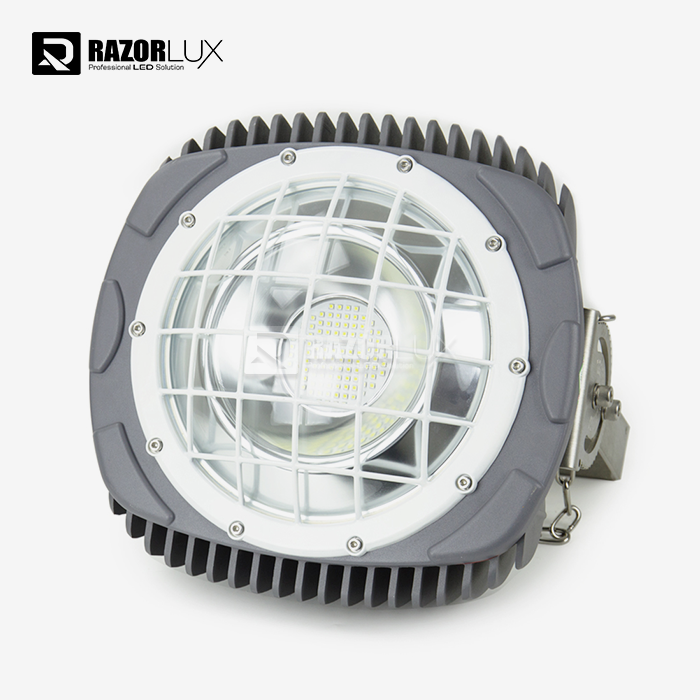
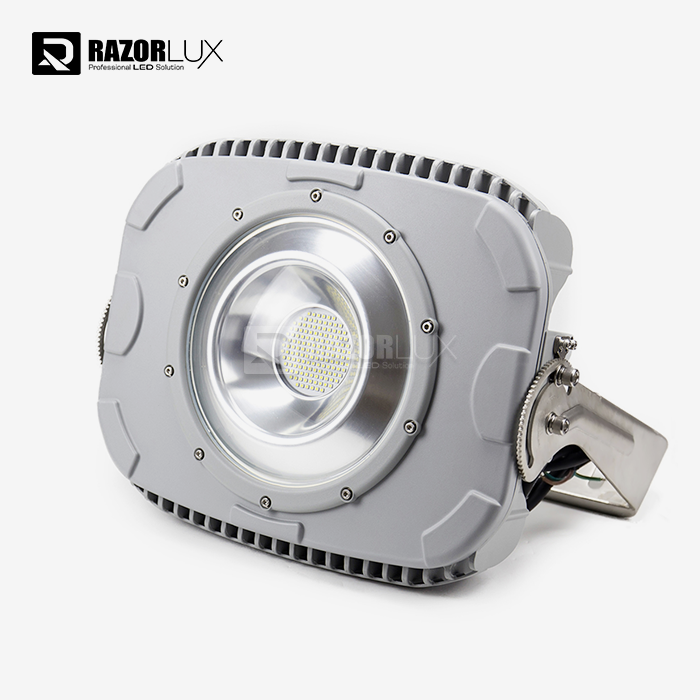
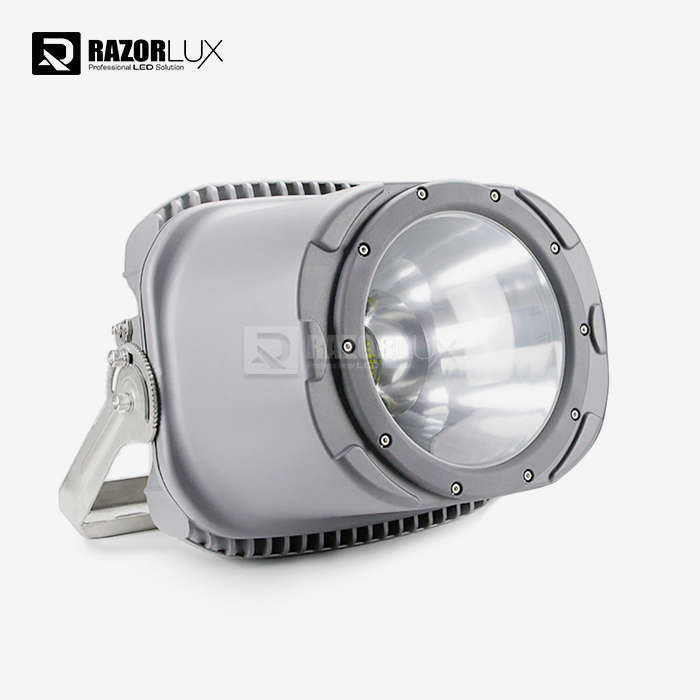
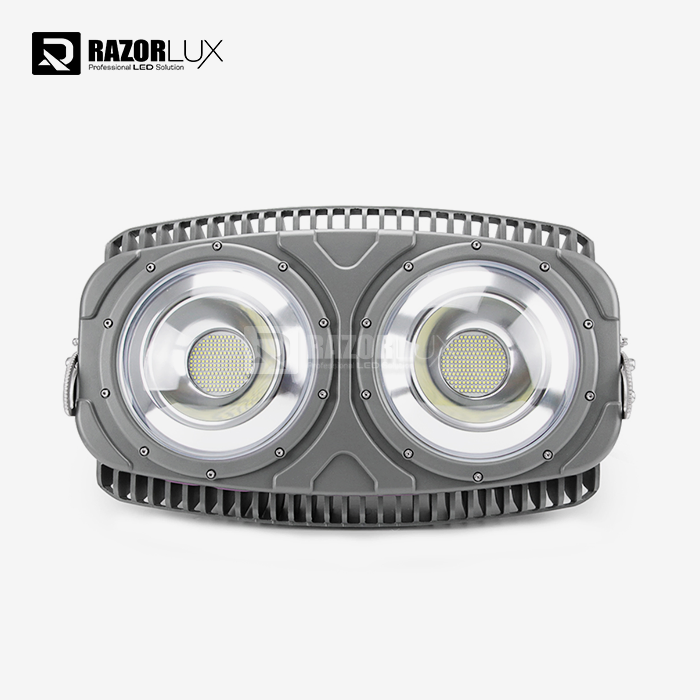
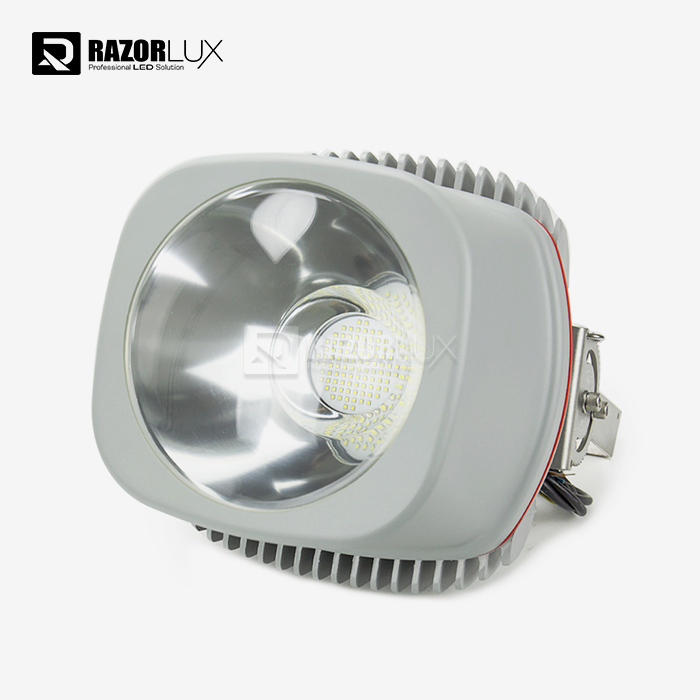
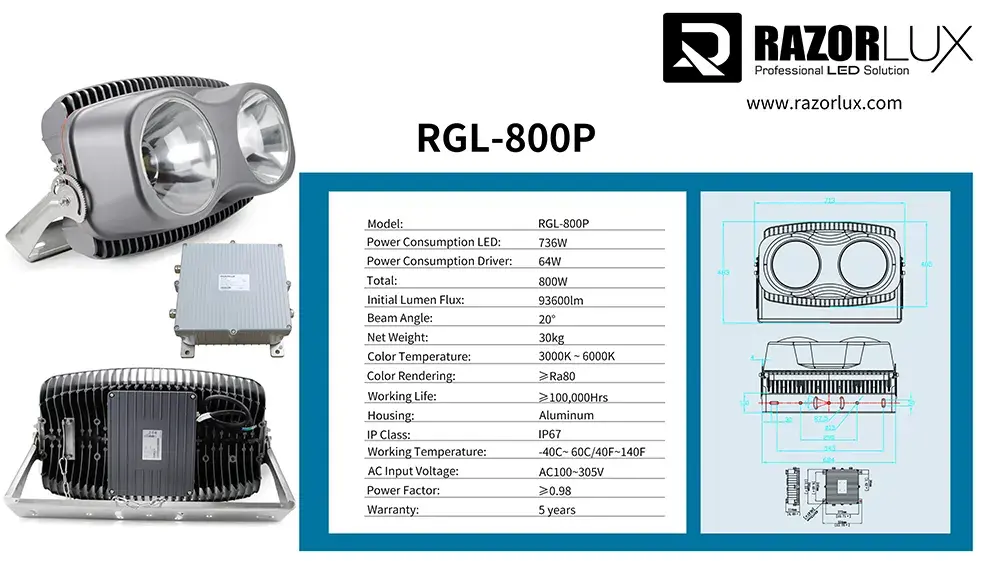
Facility managers who are in charge of big sports centers worry a lot about operating costs. Traditional metal halide systems use between 1500W and 2500W per bulb and produce a lot of heat, which makes cooling even more important. Modern LED solutions provide the same or better lighting with only 800W per unit, which means that in real life, they save more than 70% of the energy used. This big improvement in efficiency cuts monthly utility costs by a huge amount and cuts carbon emissions by thousands of metric tons a year for big venue owners. The Razorlux RGL-800P-L20 model is a great example of this breakthrough in efficiency; it gives off 88,000 lumens of stable output at 130lm/W, which is a performance level that far exceeds other technologies. When businesses replace old infrastructure, they quickly see lower demand charges and better power factor numbers across all of their electricity delivery systems.
Extended Lifespan Minimizes Maintenance Disruptions
The cost of replacing lamps is high and hard to do in places where lights are placed more than 30 meters above the floor. Usually, traditional discharge lamps need to be replaced every 6,000 to 15,000 hours of use. This means that expensive crane hires are needed and safety risks arise during repair times. LED systems completely change the maintenance equation because they have operational lifespans exceeding 50,000 hours, which usually translates to 10-15 years of service before they need to be fixed. This longer operational life gets rid of the need for frequent maintenance cycles that mess up event schedules and require a lot of work. When compared to older lighting technologies, venue owners say that upkeep costs have dropped by about 80%. This is on top of the safety benefits that come from not having to work at high levels as much.
Weather Resistance for Reliable Year-Round Performance
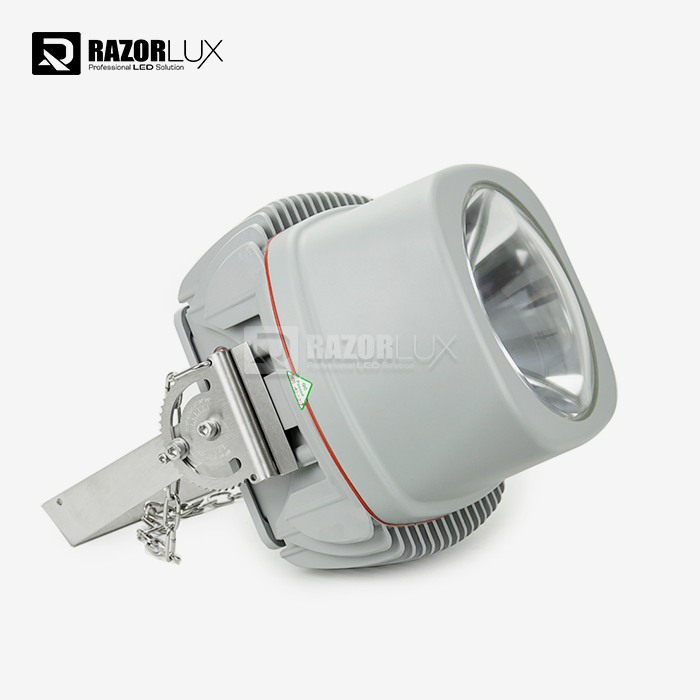
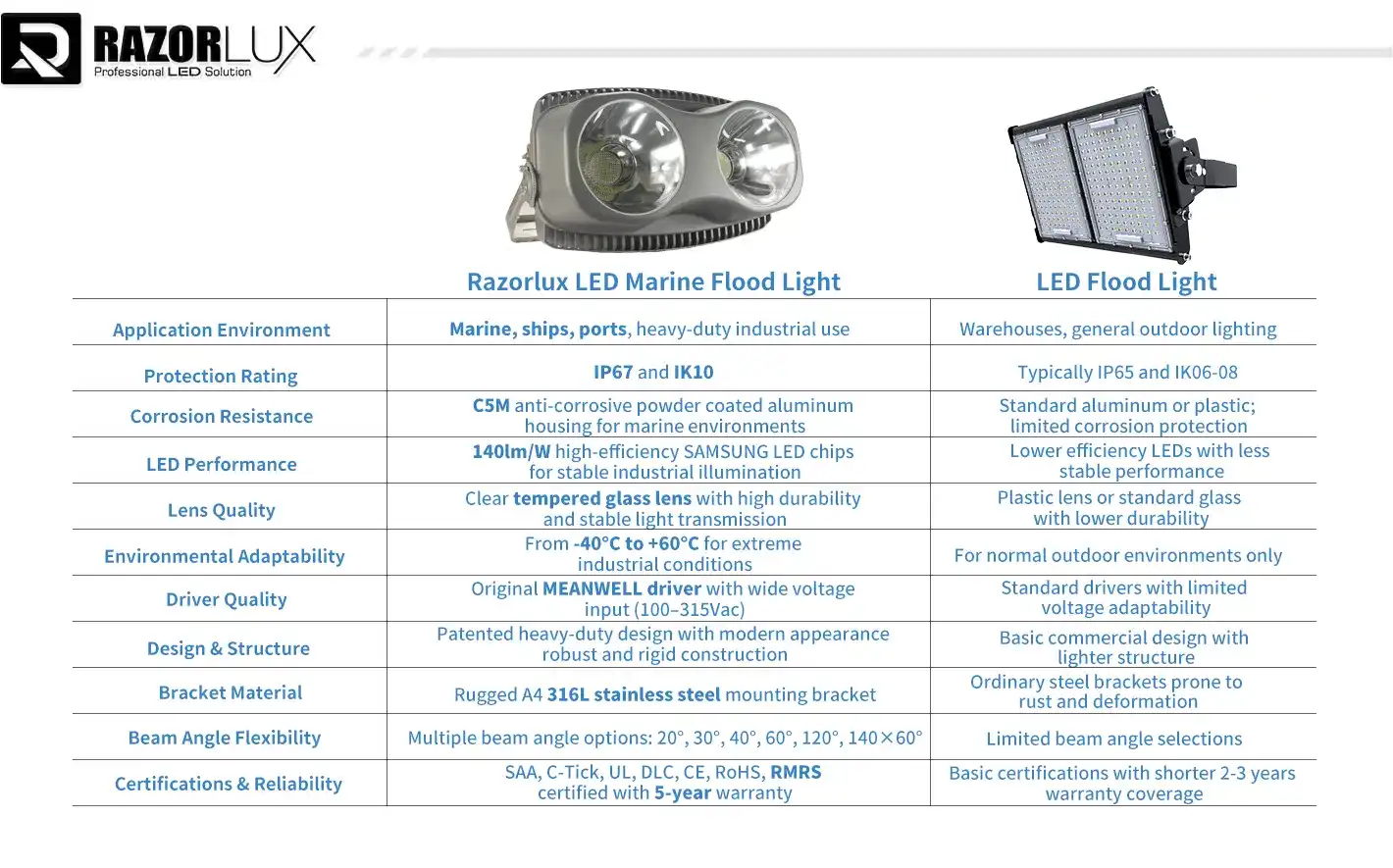
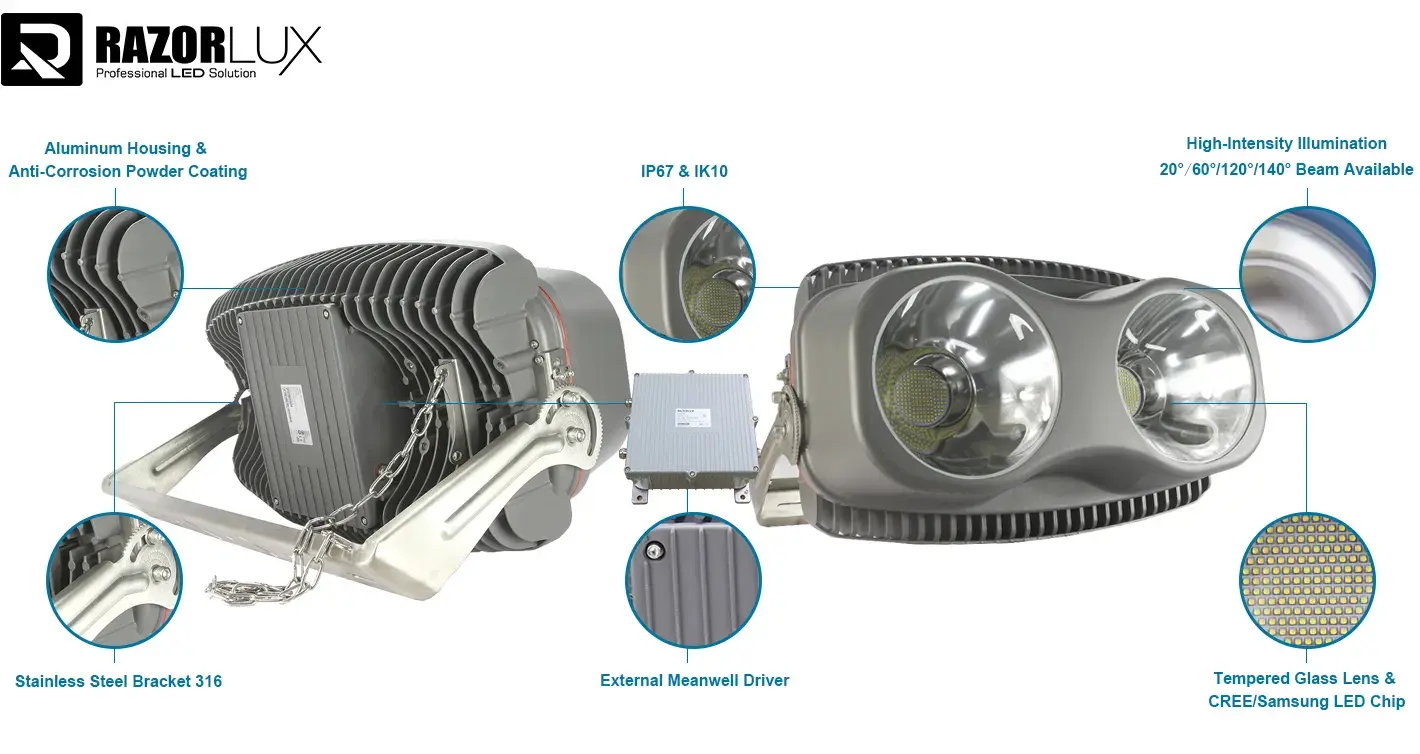
Outdoor sports sites have to deal with harsh weather all year long, from subzero temperatures in the winter to intense heat in the summer. They also have to deal with rain, humidity, and salt spray in coastal areas. Professional LED solutions are built to last, with IP67-rated enclosures that keep water out and IK10 impact resistance that stops mechanical stress from vibration, thermal cycling, and accidental contact. Marine-grade aluminum housings treated with special powder coatings don't rust, even in harsh coastal environments where salty air speeds up material breakdown. Stainless steel mounting clamps keep their structural integrity at temperatures ranging from -40°C to +60°C. This makes sure that things stay in place no matter what the weather is like.
Comparison of LED Stadium Flood Lights and Traditional Lighting Solutions
Power Consumption and Operating Cost Analysis
When you look at how much it costs to run all of a building's lighting systems, the financial case for switching to LEDs becomes strong. A full cost study shows that LED technology has real benefits in a number of areas: • Energy Consumption: Traditional 2000W metal halide lights use about 2.2 kW of energy, which includes ballast losses; similar LED units only use 800W. This saves more than 140,000 kWh of energy every year for a standard stadium installation with 50 fixtures that are used for 2,000 hours a year. At business electricity rates of $0.12 per kWh, buildings save close to $17,000 a year just on energy costs.Demand Charges: In addition to charges based on usage, many commercial rate structures also include charges based on peak power draw. Depending on how the utility bills are set up, lowering peak demand by 70 kW through LED conversion can save $8,000 to $15,000 a year in demand charges.Maintenance Labor: With traditional systems, lamps need to be replaced every one to two years, which takes 40 to sixty hours of work to do because of the need to rent a crane, get to the fixtures, and change the lamps. LED systems get rid of these ongoing costs for 10 years or more, saving between $20,000 and $30,000 in work costs over the life of the light.
Here's a detailed cost comparison between lighting technologies:
| Cost Factor | Metal Halide System | LED System | Annual Savings |
|---|---|---|---|
| Energy Consumption (50 fixtures) | $22,000 | $6,000 | $16,000 |
| Maintenance Labor | $8,000 | $800 | $7,200 |
| Lamp Replacement Parts | $12,000 | $0 | $12,000 |
| Demand Charges | $15,000 | $4,000 | $11,000 |
| Total Annual Cost | $57,000 | $10,800 | $46,200 |
These substantial operating cost reductions typically enable payback periods under 3 years for LED conversion projects, even accounting for higher initial equipment investment. Over a 10-year analysis period, facilities realize cumulative savings exceeding $400,000 while simultaneously improving illumination quality and reducing environmental impact.
Illumination Quality and Broadcast Compatibility
LED stadium flood lights Another important difference between lighting systems is how well they work visually. Metal halide lights change color a lot as they age, and their color temperature changes a lot over the course of their life. This makes noticeable differences between fixtures that are replaced at different times, resulting in uneven lighting with different colors visible across the playing surface. LED technology keeps the color temperature stable throughout its lifetime, so all fixtures look the same, no matter when they were installed. High color rendering indices (CRI ≥75, with choices for CRI ≥80 or ≥90) make sure that colors are seen correctly, which is important for both athletes and fans. Players can correctly judge where the ball is going and where their opponents are standing, and fans can enjoy natural, bright watching conditions. Broadcast compatibility is becoming a more important factor as places try to make money off of content through streaming services and TV rights. High-speed cameras that shoot at 1000 frames per second or more can pick up flicker in regular lighting systems, which shows up as bands in slow-motion videos. Professional LED systems have high-frequency drivers that have very little ripple current (<3%), which gets rid of flickering effects that hurt broadcast quality.
Controllability and Operational Flexibility
Traditional discharge lights don't have many control choices; they're basically on/off switches that take 10 to 15 minutes to reach full power after being lit. There aren't many ways to dim the lights, and they can't be quickly turned back on after being turned off, which is a big problem when the power goes out or the weather delays things. LED systems, on the other hand, offer more operational flexibility because they can turn on or off instantly, dim smoothly across wide ranges (100% output), and work with advanced control systems. Automatic lighting plans, sun collecting algorithms, and scene settings that are made for certain types of events can be put in place by venues. For example, during practice sessions, only 60% of the light might be used to save energy, but during championship matches, the whole area is lit up to meet broadcast standards. Beam angles that can be adjusted (15°, 20°, 30°, 40°, 60°, 120°, 140°x60°) allow for precise light distribution that fits the shape of the venue and the needs of the sport. This optical flexibility gets rid of dark spots and extra spill light that makes it hard for players to see and causes light pollution in the neighborhoods nearby.
How to Choose the Best LED Stadium Flood Lights for Night Games
Assessing Venue-Specific Illumination Requirements
A careful analysis of the venue's features and performance goals is the first step to a successful lighting project. Depending on the size of the ball, the speed of the game, and the visual demands of the job, each sport has its own lighting needs. For casual games, soccer and football need horizontal illumination levels of 200 to 500 lux. For broadcast-quality expert events, these levels rise to 750 to 1,500 lux. Outfielders in baseball need to be able to see high fly balls against the dark sky, so they pay close attention to vertical illumination. Field measurements directly affect the number of fixtures and how they are mounted. Small venues might get enough covering with lights on four corner poles, but big stadiums need six or eight pole places to make sure the lighting is even. The height of the mounting has a big effect on both the covering patterns and the control of glare. Higher mounting places usually produce better consistency but need lights with higher outputs.
Evaluating Technical Specifications and Performance Metrics
When reviewing supply choices, procurement managers should put a number of important criteria at the top of their lists. Luminous effectiveness, which is measured in lumens per watt, shows how energy-efficient something is. Values above 130lm/W show the best performance in its class right now. Total brightness output shows how much light the bulb can produce, but it needs to be looked at along with beam angle to get a true picture of how much light is hitting the playing surface. Color temperature choice affects how comfortable and clear the image is. Values between 5000K and 5700K give off a soft white light that looks natural and makes things visible. Lower values (3000K–4000K) make warmer tones that work well in recreation centers, while higher values (6000K–6500K) make crisp, cool light that works best for broadcasting. Input voltage flexibility is important for places where the power quality changes or where backup generators are used. Fixtures that can work with a lot of different voltages (AC 90–305V, DC 127–431V) work effectively even when the voltage changes, which can happen in industrial settings or out in the middle of nowhere. Power factor adjustment (≥0.98) and low total harmonic distortion (<10%) make sure that the system works with existing electrical infrastructure and keep utility fines for bad power quality to a minimum.
Certification and Component Quality Verification
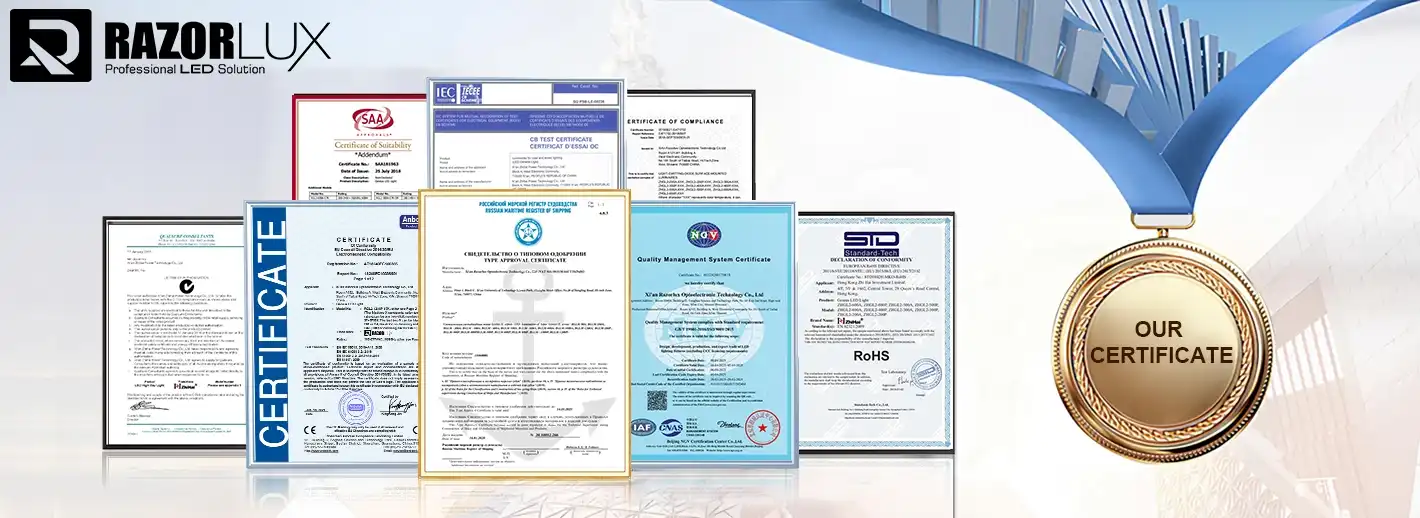
Manufacturers with a good reputation provide a lot of paperwork that shows they follow safety and efficiency standards. Some important certifications are safety certifications like UL (North America), CE (Europe), SAA (Australia), and C-Tick, which show that the product meets the safety standards for the target market. Marine Classifications: Places near the coast or used for specific tasks should check for RMRS (Russian Maritime Register of Shipping) or similar marine certifications that say the product is suitable for corrosive environments and can withstand vibrations. Environmental Compliance: RoHS certification makes sure the product doesn't contain any harmful substances that are restricted by international environmental laws, and ISO 9001 quality management certification shows that manufacturing process controls have been set up. The choice of components has a big impact on how reliable and long-lasting the product is. Fixtures that use high-quality LED chips from companies like Samsung or Lumileds show that they care more about quality than about saving money. In the same way, power sources from well-known names like Meanwell have been used in a lot of difficult situations and have a long history of reliability. The guarantee structure shows how confident the maker is in the product's durability. For LED modules and drivers, standard guarantees last for 5 years. Some makers offer building warranties that last for 10 years. Full guarantee terms should cover not only replacing parts, but also the costs of work for taking down and putting back up fixtures.
Comparing Supplier Capabilities and Support Services
In addition to product requirements, planning skills that affect the success of the project should also be taken into account when choosing a seller. Lighting design services, such as photometric estimates, pole plan optimization, and thorough installation models, can be provided by well-known makers with their own engineering teams. This professional support is very helpful during the planning process and helps make sure that the project runs smoothly once it's done. Samples are available so that you can try it out before you commit to buying a lot of it. Reliable sellers give facility engineers trial units with full technical paperwork so they can check the light quality, build quality, and fitting compatibility. A 30-day evaluation period is enough time to do a full evaluation in real-world working conditions. The dependability of the supply chain decides whether projects stay on schedule or experience costly delays. When manufacturers have set production capacities and quality control methods, they can stick to their shipping plans even when demand is high. During the buying process, trust is built by clear information about production schedules, shipping choices, and order tracking.
Installation, Maintenance, and Longevity of LED Stadium Flood Lights
Professional Installation Practices for Optimal Performance
LED stadium flood lights The most important thing that makes a system work well and last a long time is that it is installed correctly. Unlike simple lamp replacement projects, installing stadium lighting requires careful attention to structural issues, electrical infrastructure, and precise aiming to reach the desired lighting levels. A structural evaluation confirms that the existing poles can support the weight of the new fixtures. Even though LED systems are lighter than similar metal halide systems, workers still need to make sure that the estimates for pole strength, base stability, and wind load are safe. The Razorlux RGL-800P-L20 fixture weighs 45 kg, so it needs strong mounting brackets and the right amount of torque to keep it from moving when the wind blows. The electrical infrastructure must be able to handle the power needs of the new system and any control systems that are needed for the installation. Even though LED lights use less electricity than older lights, setups may benefit from power factor adjustment or surge protection devices that make the system last longer and use electricity more efficiently. Accurate targeting affects both the level of light and the amount of glare. Professional workers use specialized aiming tools or aiming markers built into the device to get exact positioning based on photometric design papers. Even small mistakes in aiming can add up over a number of games, making areas that are too bright, too dark, or too reflective, which makes it difficult to play.
Maintenance Protocols That Extend System Lifespan
Compared to older technologies, LED systems don't need as much upkeep. However, simple preventative steps can greatly increase their working life and keep them running at their best. Visual checks every three months find problems before they get too bad and cause the system to fail: Cleaning fixtures: Dirt, pollen, and other flying particles that build up make it harder for light to pass through protective lenses. Cleaning the faucets once a year with light detergents and soft cloths brings them back to their original output levels. Do not use rough cleaners or high-pressure water washing, as these can damage the lens coatings or push water past the environmental seals. Mounting Hardware Inspection: Wind loading causes vibrations that slowly loosen the mounting bolts and adjustment mechanisms. Fixtures stay firmly in place at design aim points thanks to an annual checkup that checks the torque. Even though stainless steel gear doesn't rust, it's still important to check it regularly for any damage that needs to be fixed. Electrical Connection Verification: Over time, thermal cycling and shaking can weaken electrical connections. Infrared thermography scans done on a regular basis can find hot spots that are growing, which can mean that connections aren't tight enough or that parts are breaking down before they break. Optical System Assessment: Check lenses and mirrors for damage, darkening, or seal degradation that could let water in. When seal failures are found early, guarantee claims can be made before water gets inside and damages internal parts.
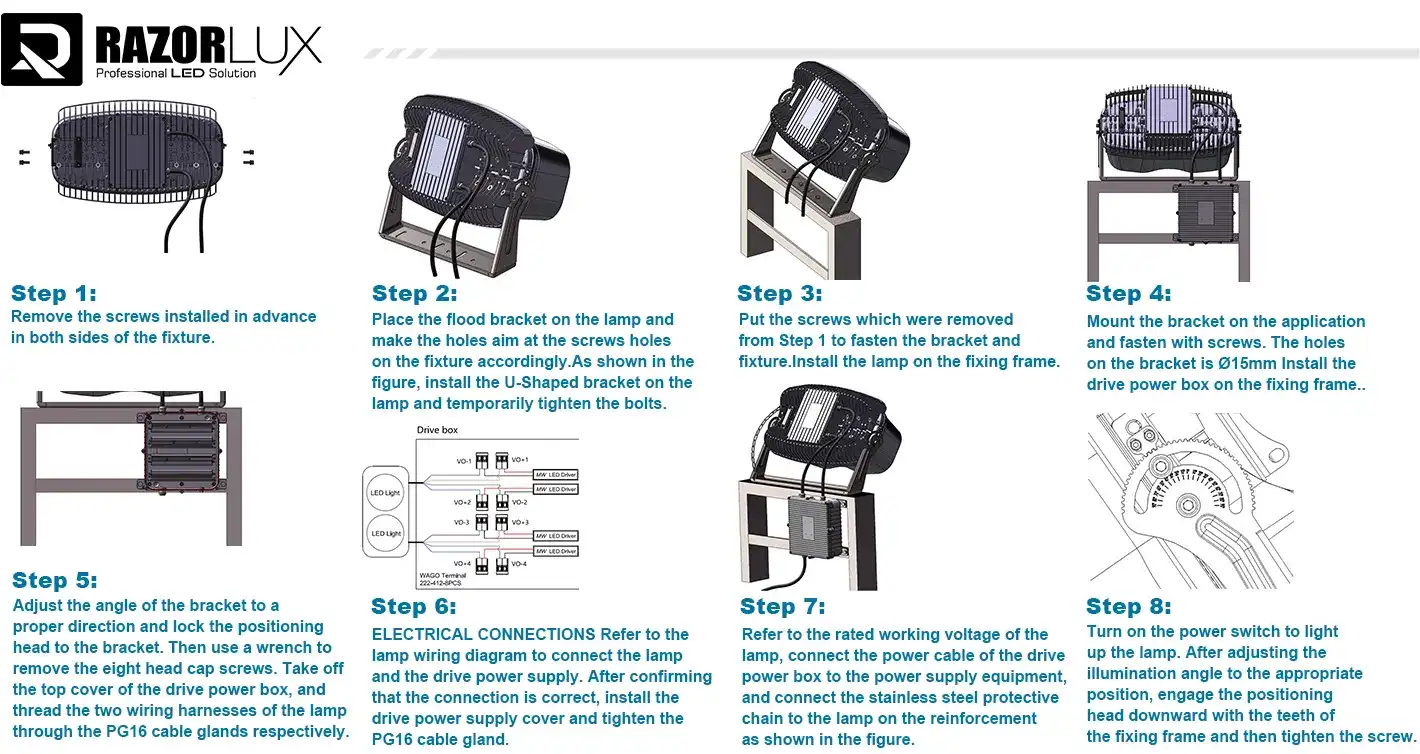
Troubleshooting Common Performance Issues
Even though systems are built well and go through a lot of testing, they sometimes have speed problems that need to be looked into. Some common signs and ways to fix them are: Complete Fixture Failure: Check the power source connections and circuit safety devices. To tell the difference between problems with the device and the power source, check the input voltage at the fixture connections. Internal driver failures are usually covered by the guarantee and can be replaced as long as the installation stays within certain voltage and weather conditions. Less output or flickering: flickering is often a sign of a problem with the driver or a loose electrical link that causes power to go out and on again. Systematic voltage readings at multiple test points find connection issues that need to be fixed. Uneven Lighting: Make sure all bulbs are still aimed correctly according to the original design papers. Measure the amount of light hitting the playing area to find out which sources are causing problems with regularity. Localized problems can be fixed by reaming or replacing fixtures. The table below shows normal upkeep needs and suggested intervals:
| Maintenance Task | Frequency | Required Equipment | Estimated Duration |
|---|---|---|---|
| Visual Inspection | Quarterly | Binoculars, checklist | 2 hours |
| Lens Cleaning | Annually | Bucket lift, cleaning supplies | 8 hours |
| Electrical Testing | Annually | Multimeter, infrared camera | 4 hours |
| Mounting Hardware Check | Annually | Torque wrench, hardware kit | 6 hours |
| Complete System Assessment | Every 3 years | Illuminance meter, lift equipment | 16 hours |
| Professional Re-aiming | Every 5 years | Aiming equipment, photometric software | 24 hours |
This maintenance schedule requires approximately 30 labor hours annually—dramatically less than the 80-120 hours typical for metal halide systems requiring frequent relamping and ballast replacement.
Future Trends and Sustainability Benefits of LED Stadium Flood Lights
Smart Control Integration and IoT Connectivity
The trend toward smart building systems has spread to sports lighting infrastructure, which now has built-in control tools that make the best use of energy and improve operating skills. Modern LED fixtures have communication interfaces that support DMX512, DALI, or wireless protocols, which let you use more complex control strategies than just turning the light on and off. Automatic scheduling systems make sure that the lighting works with how the building is used, so it doesn't run when it's not needed and there is enough light for scheduled activities. Motion sensors sense when the field is occupied, turning on lights automatically when players arrive and turning them off or lowering them when they leave. This automatic operation saves energy and gets rid of the need to switch things on and off by hand. Daylight harvesting programs change the output of artificial lighting based on the amount of natural light that is available at dusk. Gradual dimming as natural light rises or falls keeps the level of light constant while using the least amount of energy during transitions. Compared to fixed-output operation, daylight harvesting can cut energy use by 15–25% over the course of an entire year. Remote monitoring features let facility managers keep an eye on system performance, energy use, and maintenance needs from centralized dashboards that can be accessed through web interfaces or smartphone apps. Predictive maintenance algorithms find things that aren't working as well as they used to, so they can be replaced before they completely break down and mess up events.
Environmental Impact Reduction and Sustainability Metrics
LED stadium flood lights As companies try to be more environmentally friendly and show they are good caretakers, their sustainability pledges become more important in their buying decisions. One important way that LED arena lighting helps reach these goals is by lowering carbon emissions. For example, when energy use drops by 70%, carbon emissions from making electricity go down directly. A normal 50-fixture stadium change cuts CO2 emissions by about 85 metric tons per year, which is the same as taking 18 passenger cars off the road. Over the course of a 15-year fixture's life, more than 1,200 metric tons of pollution are avoided. Material sustainability: LED lights don't contain mercury or other dangerous substances that are limited by RoHS regulations. This makes them easier to throw away when they're no longer needed and lowers the risk of polluting the environment. Fixtures made of aluminum and stainless steel can be recycled at high rates when they reach the end of their useful life. Light Pollution Mitigation: LED technology allows for precise optical control, which lowers light spill beyond intended target areas. This keeps the sky dark, which is important for astronomical observation and the health of nocturnal ecosystems. Adjustable beam angles and built-in shielding focus light directly on playing surfaces instead of spreading it out to other areas without any purpose. Less maintenance waste: Since lamps don't need to be replaced as often, thousands of used bulbs don't end up in landfills over the facility's lifetime. Traditional systems produce about 250 used lamps every year that need to be thrown away in a special way. LED systems, on the other hand, produce almost no regular waste.
Market Growth and Adoption Trends
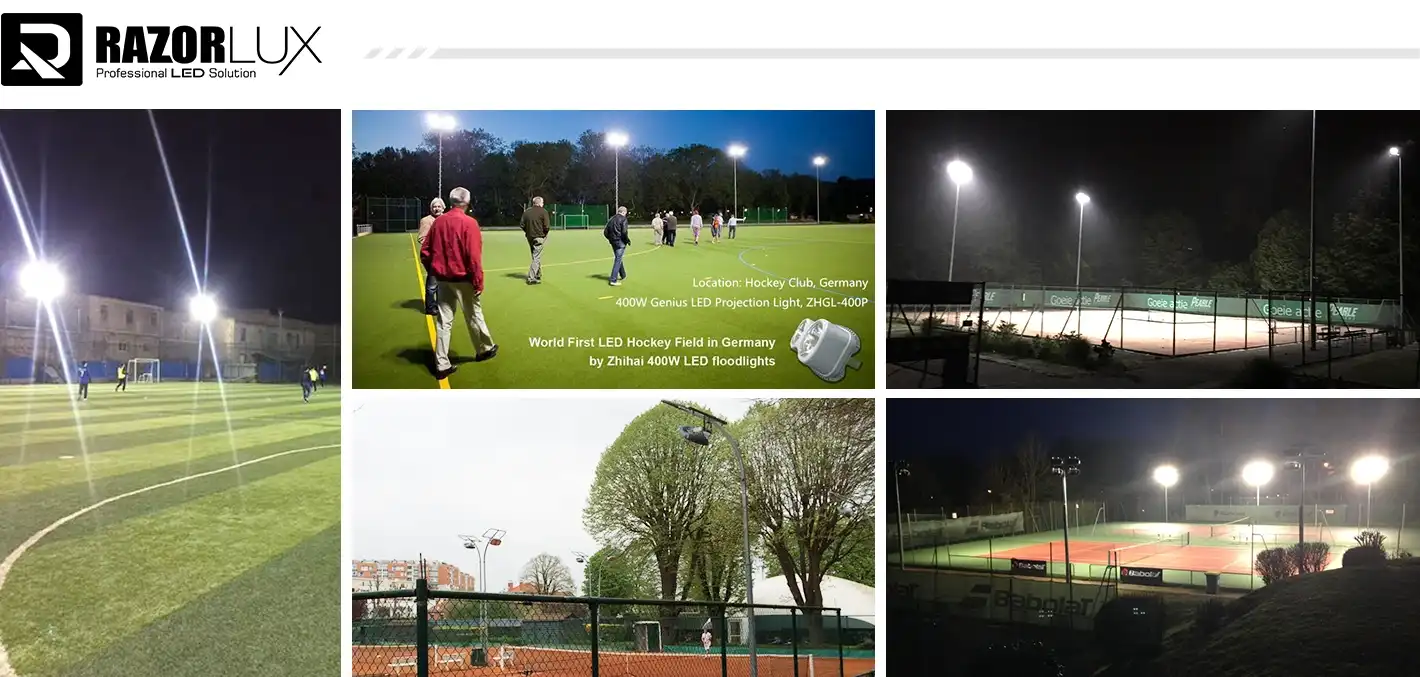
Industry research shows that the use of LED sports lights is growing quickly. This is because they are more cost-effective and better at what they do. North America and Europe have the highest adoption rates because of their high electricity costs and strict energy efficiency rules that shorten the time it takes for LED conversion projects to pay for themselves. Major sports venues like professional stadiums, college facilities, and municipal complexes are increasingly choosing LED technology for both new construction and retrofit projects. Successful installations at well-known venues serve as examples that speed up adoption in secondary and tertiary markets, as facility managers see the performance benefits and financial returns achieved by early adopters. As technology improves, LEDs become more efficient, fixtures become cheaper, and control options grow. Efficacy gains of about 150 to 160 lm/W are being reported from study labs, which means that even more energy savings will be possible once the products are sold to the public. As a manufacturing industry grows and the supply chain matures, equipment costs go down. This makes projects more profitable and cuts down on the time it takes to get the money back.
Conclusion
LED stadium flood lights are a revolutionary technology that solves the most important problems sports facility managers face: using too much energy, needing to be maintained often, not giving off enough light, and being concerned about the environment. LED technology offers great financial returns and better user experiences by dramatically improving efficiency (over 70% energy savings), extending lifespans (over 50,000 working hours), and producing better light quality that meets broadcast standards. When facilities switch to LED lighting, they usually get their money back within three years. They also get better efficiency, less upkeep, and a much smaller carbon footprint. As smart control systems and IoT connectivity get better, the performance benefits will grow even more, making LED technology the best choice for lighting sports venues.
FAQ
Why does flicker-free operation matter for athletic lighting?
High-speed cameras used during broadcast productions operate at frame rates exceeding 1000 fps to capture slow-motion footage that enhances viewer engagement. Traditional lighting systems powered by standard drivers exhibit flicker at twice the AC line frequency—creating visible banding artifacts in slow-motion replays that compromise production quality. Professional LED fixtures incorporate premium drivers delivering stable current with minimal ripple, eliminating flicker effects and ensuring broadcast compatibility.
Can existing pole infrastructure support LED fixture upgrades?
Most facilities discover existing poles possess adequate structural capacity for LED fixture installation due to the technology's lighter weight compared to metal halide equivalents. A 800W LED fixture typically weighs 40-45kg compared to 60-75kg for equivalent metal halide assemblies. However, professional structural evaluation remains essential to verify pole integrity, foundation condition, and wind load calculations before proceeding with upgrades. This assessment protects against potential failures while ensuring installations meet current safety standards.
How do LED systems perform in extreme temperature environments?
Professional-grade LED fixtures operate reliably across temperature ranges from -40°C to +60°C through advanced thermal management systems that efficiently dissipate heat generated by LED chips and driver electronics. Aluminum heat sinks with optimized fin geometry maximize convective cooling, while thermal interface materials ensure efficient heat transfer from LEDs to housing structures. Cold weather operation actually improves LED efficiency, though extreme heat requires careful attention to thermal design. Quality fixtures maintain rated performance across their entire operational temperature range without degradation or premature failure.
Partner with Razorlux for Premium Stadium Lighting Solutions
Razorlux brings over two decades of LED engineering excellence to sports venue projects demanding uncompromising performance and reliability. Our led stadium flood lights supplier capabilities extend beyond equipment provision to comprehensive technical support including photometric design, structural analysis, and post-installation commissioning. The RGL-800P-L20 series exemplifies our commitment to premium component selection—incorporating Meanwell power supplies, advanced thermal management, and marine-grade construction that ensures reliable operation across the most demanding environments. Our Xi'an LED Lighting Engineering Laboratory, authorized by China's National Development and Reform Commission, maintains rigorous testing protocols that verify performance specifications before products reach your facility. Contact our technical team at sam@razorlux.com to discuss your specific requirements, request photometric calculations, or arrange sample units for hands-on evaluation. We provide detailed project proposals within 24 hours and maintain flexible manufacturing capacity to meet your installation timeline.
References
1. Illuminating Engineering Society, "Recommended Practice for Sports and Recreational Area Lighting," IES RP-6-15, 2015.
2. Journal of Light & Visual Environment, "Comparative Analysis of LED and Metal Halide Stadium Lighting Systems," Vol. 42, No. 3, 2018.
3. International Commission on Illumination, "Guide on the Limitation of the Effects of Obtrusive Light from Outdoor Lighting Installations," CIE 150:2017.
4. U.S. Department of Energy, "Gateway Solid-State Lighting Sports Lighting Program: LED Stadium and Area Lighting," 2019.
5. Energy Studies in Review, "Life Cycle Cost Analysis of LED Conversion in Large-Scale Athletic Facilities," Volume 28, Issue 4, 2020.
6. International Association of Lighting Designers, "Best Practices in High-Performance Sports Venue Illumination," Technical Memorandum 34, 2021.