


_1750326878398.png)

Outdoor Lighting For Volleyball Court: 4-Pole vs 6-Pole Layouts?
Choosing the optimal Outdoor Lighting For Volleyball Court installations hinges on understanding layout configurations. A 4-pole system positions luminaires at each corner, delivering adequate illumination for recreational play with lower upfront costs but potential uniformity challenges. A 6-pole arrangement adds mid-court fixtures, producing superior light distribution and reduced glare—ideal for competitive venues demanding compliance with standards like EN 12193. The decision balances budget, performance requirements, and site-specific environmental factors such as wind load and maintenance access.
Understanding Volleyball Court Lighting Fundamentals
Effective court illumination begins with grasping the technical requirements that separate adequate visibility from professional-grade performance.
Critical Brightness and Lumen Standards
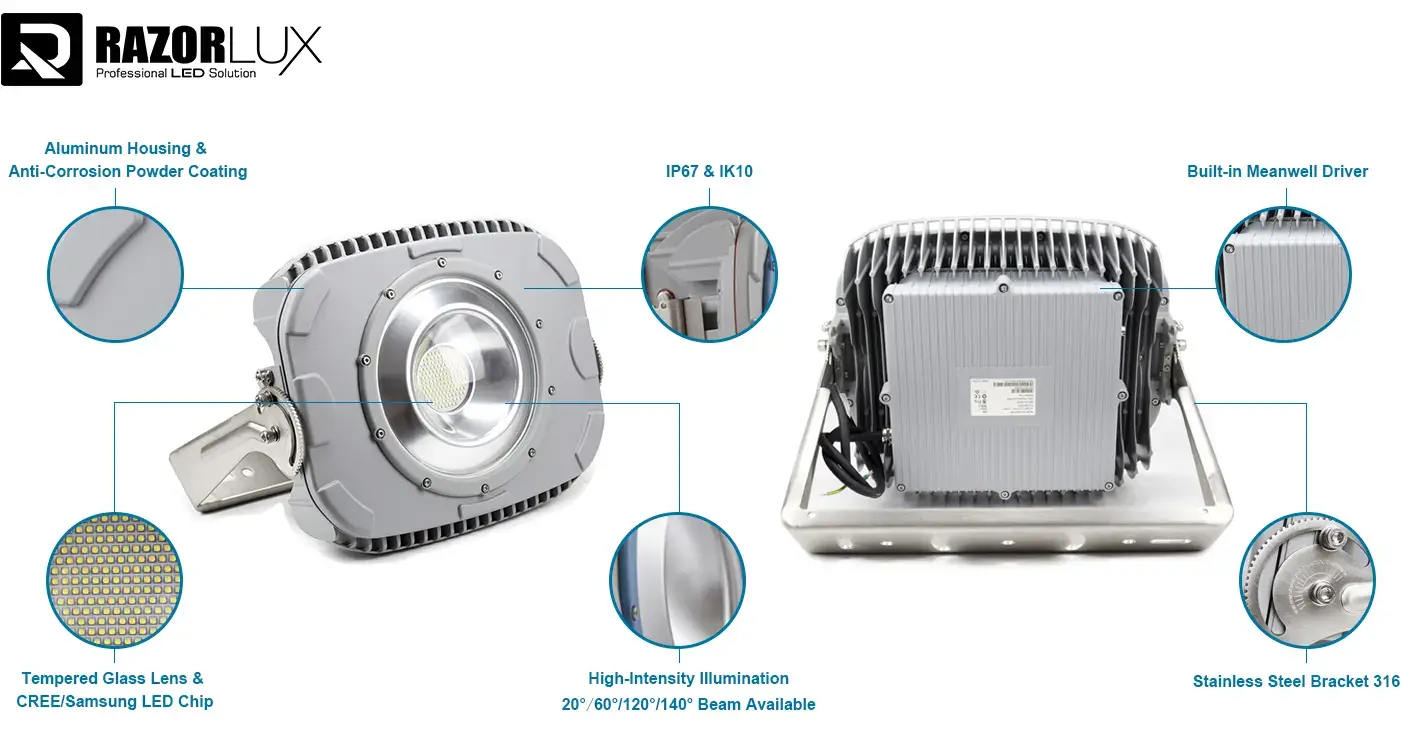
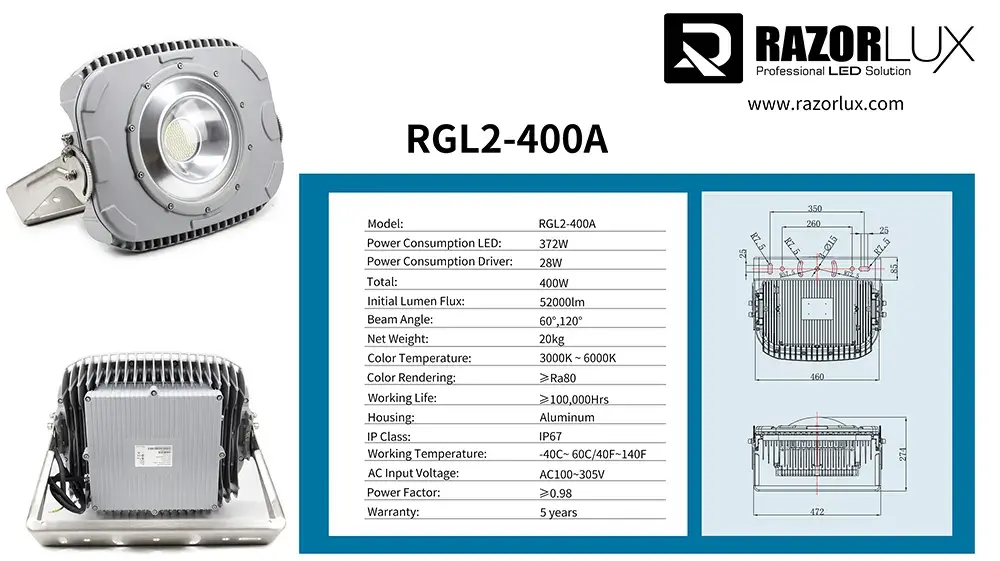
At ground level, volleyball courts for fun usually need 200 to 300 lux, but for broadcast games, competitive venues need 500 to 750 lux. Our RGL2-400A model gives off 52,000 lumens at 130 lm/W, which is 60% more energy-efficient than standard 800-1000W metal halide lights. To reach these levels, you have to carefully figure out the pole height, the number of fixtures, and the beam spread. Just as important are uniformity ratios. The IESNA RP-6-15 standards say that minimum-to-average ratios should be 0.5 for training and 0.7 for tournaments to prevent disorienting shadows during high-speed ball tracking.
LED Technology Versus Legacy Lighting Solutions
Metal halide lights were the standard for sports lighting for decades, but they need to be warmed up for 15 minutes, lose lumens quickly, and need to be replaced every 5,000 hours. These problems are solved by LED systems like ours, which can turn on instantly, last for more than 50,000 hours, and produce a stable flux output. The Mean Well drivers in our lights keep flicker to less than 1%, which is important for analyzing slow-motion video. Halogen choices are still not good for outdoor sports because they don't work well and make too much heat. The people in charge of buying things for shipyard recreation areas or amenities on offshore platforms know that LED technology meets their needs for fewer maintenance calls and more stable operational costs.
Environmental Protection Requirements
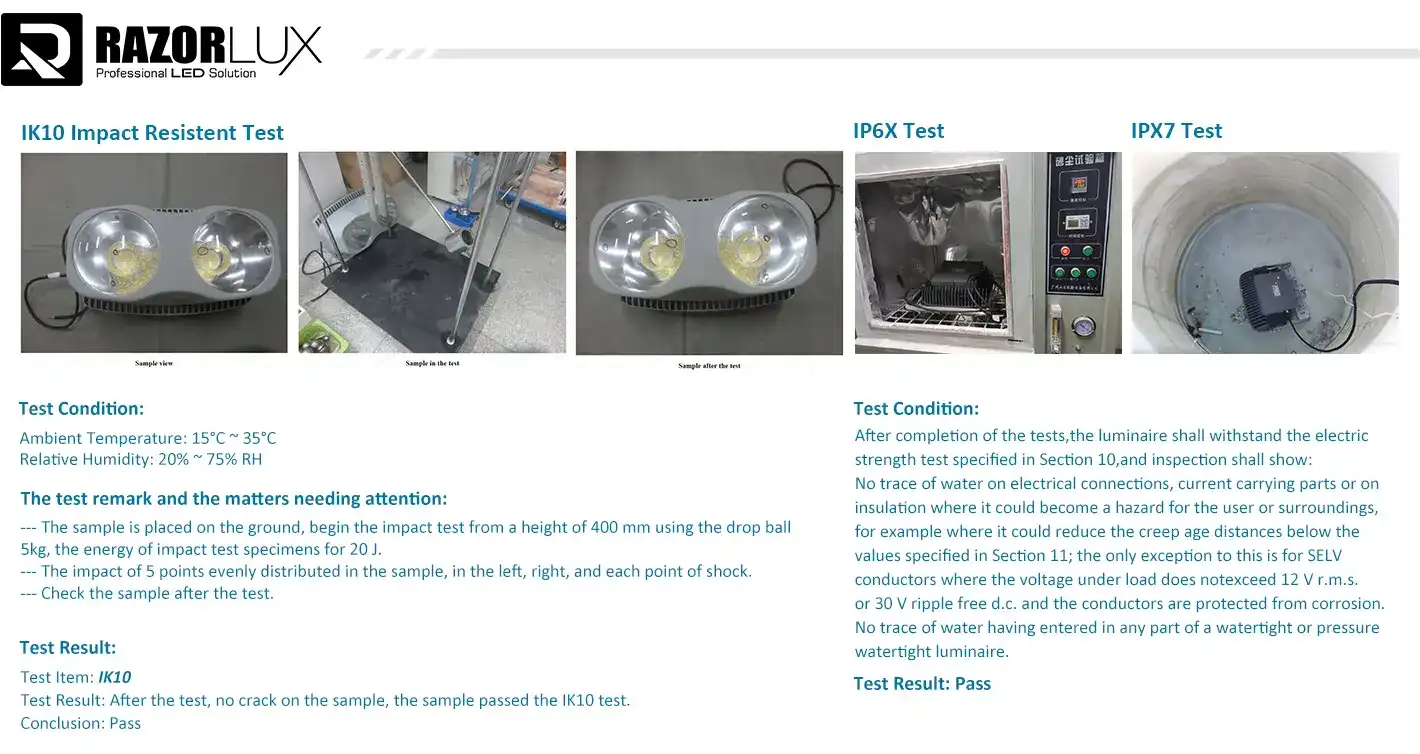
Coastal volleyball courts have to deal with harsh conditions. Salt spray speeds up corrosion, and changes in temperature put stress on electronic parts. Our IP67-rated housings have conformal-coated PCBs and stainless steel frames that can work in temperatures ranging from -40°C to 60°C and humidity levels ranging from 10% to 95%. The IK10 impact grade guards against hits from stray balls and poles that get touched by mistake. These specs are useful for port facility managers in Singapore and offshore engineers in the North Sea when choosing fixings that need to last for years without gaskets failing or lenses turning yellow.
Comparing 4-Pole vs 6-Pole Lighting Layouts
The choice of layout has a direct effect on the quality of the Outdoor Lighting For Volleyball Court, the difficulty of installation, and the long-term costs of running the system.
Structural Configuration Differences
Four poles hold up fixtures 8 to 12 meters high at the ends of the court. This makes four light cones that meet in the middle of the court. This set-up works well for 18m x 9m regulation courts where money issues make it hard to make decisions. The 6-pole version has two mid-court poles on opposite sides. This makes it possible to place the poles lower (6–8 meters) and at shallower angles (40°–60° instead of 90°–120°). Lower poles lower wind loads, which is very important for installations near the coast where IEC 61194 compliance requires structural calculations. Facility engineers at Australian beach resorts like 6-pole layouts because they keep the pole heights below the limits set by local flight officials near the approaches to the coast.
Illumination Uniformity Analysis
Four-pole devices have trouble with hotspots in the middle of the court and dropoff on the edges. When serving from the baseline, players often have to deal with glare from fixtures in the corners that are aimed across the court. Six-pole configurations spread light more evenly because the extra poles in the middle of the court fill in dark spots and lower the intensity needs of each fixture. Photometric studies show that 6-pole layouts have uniformity ratios of 0.6 to 0.7, while 4-pole layouts have uniformity ratios of 0.4 to 0.5. When shipyard recreation committees in Norway's fjord regions improve facilities, they make sure that they are all the same so that workers from different shifts can get to them during the winter months when the sun isn't out.
Cost-Benefit Evaluation
| Factor | 4-Pole System | 6-Pole System |
|---|---|---|
| First Equipment | 8–12 fittings (about $6,400 to $9,600) | 12–18 fixtures (from $9,600 to $14,400) |
| Pole Infrastructure | 4 bases and 4 poles | 6 base pieces and poles |
| Installation Work | 40 to 50 hours | 60 to 75 hours |
| Annual Energy (LED) | £1,200 (based on 400W bulbs) | ~$1,400 (more lights, less power) |
| Maintenance Access | More poles means more lift tools | Fewer poles mean ladder access |
Even though 6-pole systems cost 30–40% more up front, they offer real benefits in reducing glare and making fixtures last longer because they have less heat stress on each unit. When dock facility procurement managers balance capital budgets against worker safety, they often say that the higher cost is worth it because there is a lower chance of injuries and fewer requests for lighting changes because of complaints.
Maintenance and Operational Considerations
For lamp maintenance, taller 4-pole installations need bucket trucks or scaffolding, which makes it harder to get to shipyards or platforms with limited space. Maintenance crews can use regular extension ladders on six-pole systems with poles that are 6 to 8 meters long. Because our LEDs are modular and have separate module sections and drivers that can be replaced, technicians can quickly and easily replace broken parts without taking the whole fixture apart. Offshore platform managers who have to follow strict hot-work permits like this modularity because it makes repairs that weren't planned easier.
How to Choose the Right Lighting Layout for Your Volleyball Court
To choose between configurations, you need to carefully look at the working situation and performance objectives of your Outdoor Lighting For Volleyball Court project.
Assessing Court Dimensions and Usage Patterns
Standard 18m x 9m courts can be used for both plans, but training sites that are bigger (20m x 12m) need six poles to keep the boundaries lit. The amount of use is important. For example, community centers that host casual evening play three times a week can handle 4-pole compromises, but daily tournament schedules need 6-pole consistency. When marine equipment integrators design lighting for multipurpose recreation areas in shipyards, they often choose 6-pole flexibility so that shared surfaces can be used for volleyball, badminton, and futsal.
Environmental and Site-Specific Factors
Limits on pole height are set by wind exposure. In coastal areas with gust winds of more than 40 m/s, engineered supports and low-profile 6-pole systems are needed to cut down on sail area. Facilities in the UAE desert need dust-resistant IP67 seals, while installations in the Russian Arctic need to be able to start up at -40°C. Our wide-voltage AC input (110–480Vac) can handle the unstable power grid that is common in remote areas. Heavy industrial sites close to steel mills choose devices with conformal coats to protect them from chemicals and airborne particles.
Energy Efficiency and Long-Term ROI
Our 400W fixtures replace old metal halides that use 1000W, which saves 60% of energy. At $0.12/kWh industrial rates, a 6-pole setup that works 1,500 hours a year saves about $1,800 a year compared to HID versions. The 5-year guarantee on LED modules and drivers, along with Mean Well's reputation for dependability, gets rid of the need to replace bulbs every year, which costs $200 to $300 for HID systems. Scandinavian port facility planners figure that the payback period will be 3.5 years when they take into account the lower costs of upkeep and disposal for mercury-containing HID lights.
Below are advantages worth highlighting when discussing procurement with technical teams:
- Adaptive Beam Options: Our 40°, 60°, 120°, and 140°x60° asymmetric optics let you aim precisely to keep light from spilling into residential or work areas next door.
- Universal Voltage Compatibility: Inputs of AC110-480Vac and DC100-800Vdc get rid of the need for transformers in port electrical systems that use a mix of voltages.
- Superior Color Rendering: Ra>75 standard (Ra>80/90 available) ensures accurate depth perception, which is important for player safety when following fast-moving balls against backdrops of the evening sky.
These features directly address the pain points voiced by offshore platform facility managers: "We need fixtures that won't break during North Sea gales and don't require electricians to change the voltage every time we move equipment between platforms."
Installation and Maintenance Best Practices
Proper implementation safeguards performance and extends system lifespan beyond warranty periods.
Professional Installation Procedures
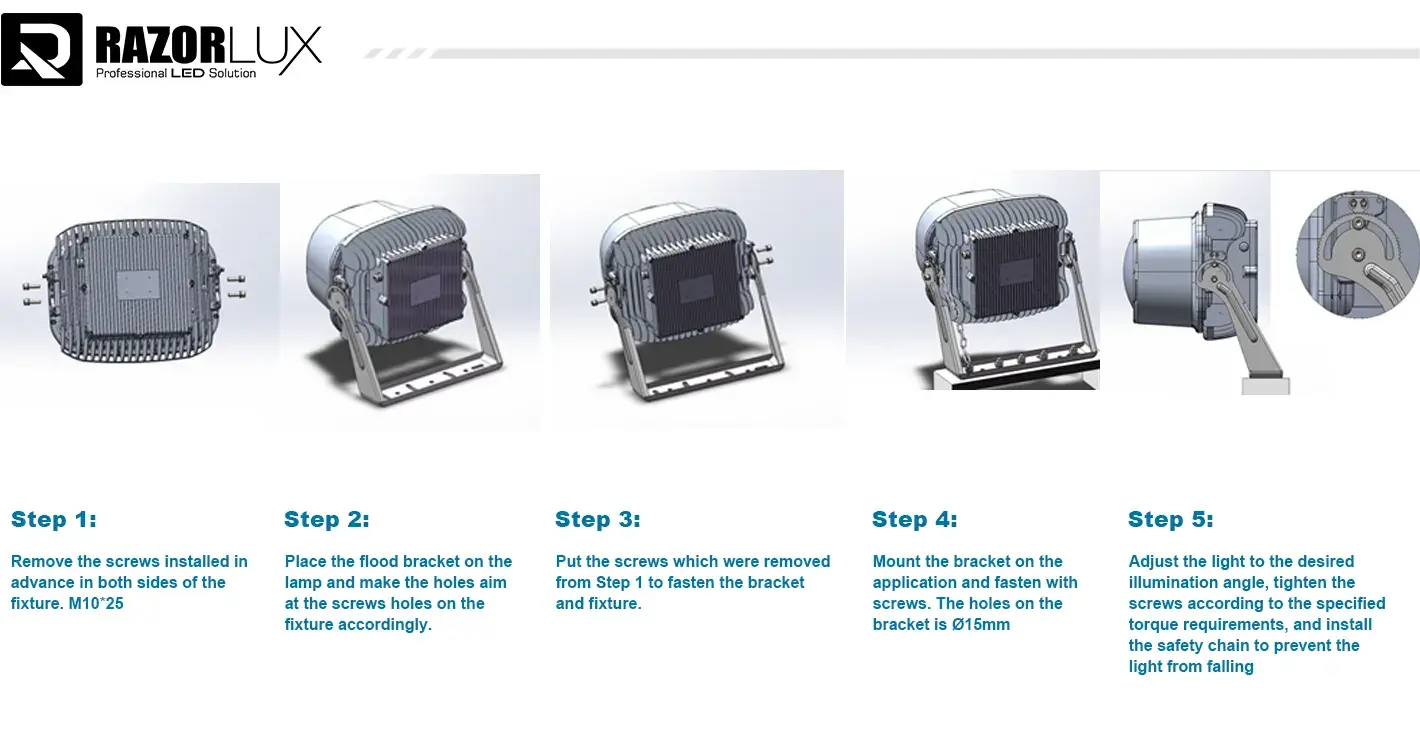
First, the site is prepared by checking the earth to make sure that the foundations can stand up to the wind loads in the area. To keep the beams from being off-center, the poles must be plumb-aligned within 0.5°. We provide CAD models that show the exact shooting angles for each fixture point. Electrical contractors must add 10kV surge protection to supply lines, especially in places like Southeast Asia that have a lot of lightning strikes. Stainless steel brackets on our fixtures are attached by M12 bolts that have been torqued to 40 Nm. This keeps them from coming loose from vibrations. As part of commissioning, lux meters are checked at 10 measurement points to make sure they meet IESNA standards. This is done to prove compliance before the final acceptance.
Routine Maintenance Protocols
LED systems don't need much maintenance, but checking them every three months can find problems early. Technicians check the stability of the seal, clean the lenses with microfiber cloths that don't scratch, and make sure the attaching hardware is tight. Coastal sites can benefit from freshwater rinses once a year to get rid of salt buildup. Our modular design lets you change the driver without taking apart the fixtures. This only takes 15 minutes, compared to 90 minutes for integrated HID ballasts. Facilities that keep an inventory of spare drivers (which usually costs $80) can get back to working within hours instead of having to wait for full fixture shipments.
Addressing Common Outdoor Lighting Challenges
Light pollution problems happen when lights don't have the right shielding. Our internal louvers and asymmetric optics guide light downward, achieving uplight rates of less than 1%, which is required by Dark Sky laws. To reduce glare, fixtures need to be placed outside of the 60° vertical view cone of the players. 6-pole layouts easily do this by placing the lights lower and more evenly. Polycarbonate lenses with an IK10 rating that can handle 20-joule impacts make vandalism less likely. Industrial equipment providers who manage the lighting for steel mill leisure areas say that over three years of using our housings, no fixtures have had to be replaced because of damage from impacts.
Case Studies and Real-World Applications
Installs that have been recorded show that different Outdoor Lighting For Volleyball Court layout choices have measured effects on speed.
Competitive Beach Volleyball Resort – Australia
A lodge on the coast of Queensland switched from 4-pole HID to 6-pole LED lighting using our RGL2-400A lights. Before the installation, lux mapping showed that there was 0.42 uniformity, and players often complained about baseline glare. After the installation, measures showed 0.68 uniformity, which ended protests and made it possible to hold tournaments at night. The yearly cost of energy went down from $3,200 to $1,150, and the number of repair calls went down by 80%. The facility manager at the resort said, "The Mean Well drivers have worked perfectly through two cyclone seasons. Our old metal halides failed every storm."
Shipyard Recreation Facility – Norway
A shipyard in Bergen with 800 workers put in 6-pole LED lights for their multipurpose court. The IP67 grade means it can handle the steady wetness of the North Sea, and the -40°C operating range means it can handle Arctic cold snaps. The yard's 380Vac three-phase system could be used without transformers because the input voltage was wide. After 18 months, the building had no more upkeep needs and used 55% less energy than it did with the old HID system. Worker happiness polls showed that better visibility led to 40% more people using the court in the evening.
Offshore Platform Installation – Middle East
An offshore oil platform off the coast of Abu Dhabi needed lighting so that the crew could have fun in 50°C temperatures, salt spray, and helicopter deck clearances that depended on weight. To keep light from messing up navigation systems too much, engineers chose our 6-pole layout with 40° narrow beams. After 24 months, there was no rust on the powder-coated aluminum housings or frames made of stainless steel. DC voltage capability allowed direct connection to platform emergency power systems, which powered recreation lighting while the generator was being serviced.
The table below summarizes performance metrics from these installations:
| Application | Layout | Uniformity Achieved | Energy Savings | Maintenance Incidents (2 years) |
|---|---|---|---|---|
| Beach Resort | 6-Pole LED | 0.68 | 64% vs HID | 1 (gasket inspection) |
| Shipyard | 6-Pole LED | 0.65 | 55% vs HID | 0 |
| Offshore Platform | 6-Pole LED | 0.61 | 58% vs HID | 0 |
| Legacy 4-Pole HID (typical) | 4-Pole HID | 0.43 | Baseline | 8-12 |
These results show that 6-pole LEDs work better in harsh industrial and marine settings where reliability directly affects the ability to keep operations going.
Conclusion
The choice between 4-pole and 6-pole for Outdoor Lighting For Volleyball Court comes down to balancing performance needs with price limits. Four-pole systems are good for recreational uses that don't need a lot of uniformity, while six-pole configurations provide tournament-level lighting, less glare, and easier access for maintenance. Razorlux's RGL2-400A fixtures meet the main needs of procurement managers in charge of marine, industrial, and heavy-duty installs. They have 130 lm/W efficacy, IP67/IK10 protection, Mean Well drivers, and 5-year guarantees. If you choose the right plan, have it professionally installed, and keep up with the regular upkeep, it will last for decades in the toughest outdoor conditions.
FAQ
What lumen output suits competitive volleyball standards?
For professional tournaments, the playing surface needs to have 500 to 750 lux, which is about 50,000 to 60,000 lumens per fixture in a 6-pole layout. Our RGL2-400A meets FIVB and NCAA standards because it gives off 52,000 lumens of stable flow over a 50,000-hour lifespan.
Can LED systems operate in extreme cold environments?
From -40°C to 60°C, our fixings work effectively. Even in the Arctic winter, the aluminum heat sink keeps the LED junction at the right temperature. The wide-voltage DC input (100–800Vdc) works with off-grid power systems that are popular in northern factories and offshore sites that are far from the power grid.
How does IP67 protection compare to IP65 for coastal installations?
An IP67 rating means that dust can't get in and the device can withstand being submerged in water up to 1 meter for 30 minutes. This is very important for docks that are exposed to storms. The IP65 rating protects against dust and water jets, but not submersion. Salt spray environments need at least IP67 protection to keep gaskets from failing and internal corrosion from happening.
Partner with Razorlux for Superior Volleyball Court Lighting Solutions
Razorlux, a leading Outdoor Lighting For Volleyball Court manufacturer, brings 25+ years of LED innovation to your marine and industrial projects. Our patented multi-function designs, universal voltage inputs, and Mean Well stability in our RGL2-400A floodlights solve the hardest problems that port procurement managers and offshore facility engineers face. Our expert team offers photometric analysis, custom beam configurations, and full certification paperwork (CE, RoHS, UL, DNV/GL) for both new buildings and upgrades to current HID systems. You can email our experts at sam@razorlux.com to get lighting plans, trial fixtures, or technical data sheets that are specific to your project. We offer global shipping and a 5-year warranty on all of our turnkey solutions, which make maintenance easier for you and meet or exceed international standards for sports lighting.
References
1. Illuminating Engineering Society of North America (2020). Recommended Practice for Sports and Recreational Area Lighting (RP-6-15). New York: IESNA Publications.
2. International Commission on Illumination (2019). Guide to the Lighting of Sports Events for Colour Television and Film Systems (CIE 169:2019). Vienna: CIE Central Bureau.
3. Marine Equipment Manufacturers Association (2021). Corrosion Protection Standards for Coastal Industrial Lighting Systems. Technical Report MEMA-2021-04.
4. Norwegian Standards Institute (2018). Outdoor Sports Facility Lighting in Arctic Climates: Design and Maintenance Guidelines. Oslo: Standards Norway.
5. International Electrotechnical Commission (2020). Luminaires – Part 2-5: Particular Requirements – Floodlights (IEC 60598-2-5:2020). Geneva: IEC Publications.
6. Australian Building Codes Board (2019). Energy Efficiency Requirements for Outdoor Sports Lighting in Commercial Facilities. Canberra: ABCB Regulatory Reports.