


_1750326878398.png)

What Makes Marine Flood Lights 1000W Suitable for Offshore Platforms?
When we talk about lighting solutions for offshore platforms, the conversation inevitably centers on reliability, power, and survival against nature's harshest assaults. Marine Flood Lights 1000W deliver exceptional luminous output exceeding 130,000 lumens while maintaining energy efficiency at 130LM/W, making them ideal for illuminating vast offshore work zones where visibility directly impacts safety and productivity. Their robust IP67-rated construction paired with marine-grade materials ensures consistent performance despite continuous exposure to salt spray, extreme temperatures ranging from -40°C to 60°C, and the relentless vibration from drilling equipment and wave action that defines offshore environments.
Understanding High-Intensity Marine Lighting and Its Critical Role Offshore
Offshore platforms work in conditions that would kill normal industrial lights in just a few weeks. When you add in corrosive saltwater droplets, hurricane-force winds, and operating needs that happen around the clock, it makes for a place where lighting failure isn't just an inconvenience; it could be catastrophic.
The Engineering Behind 1000W Marine-Grade Illumination
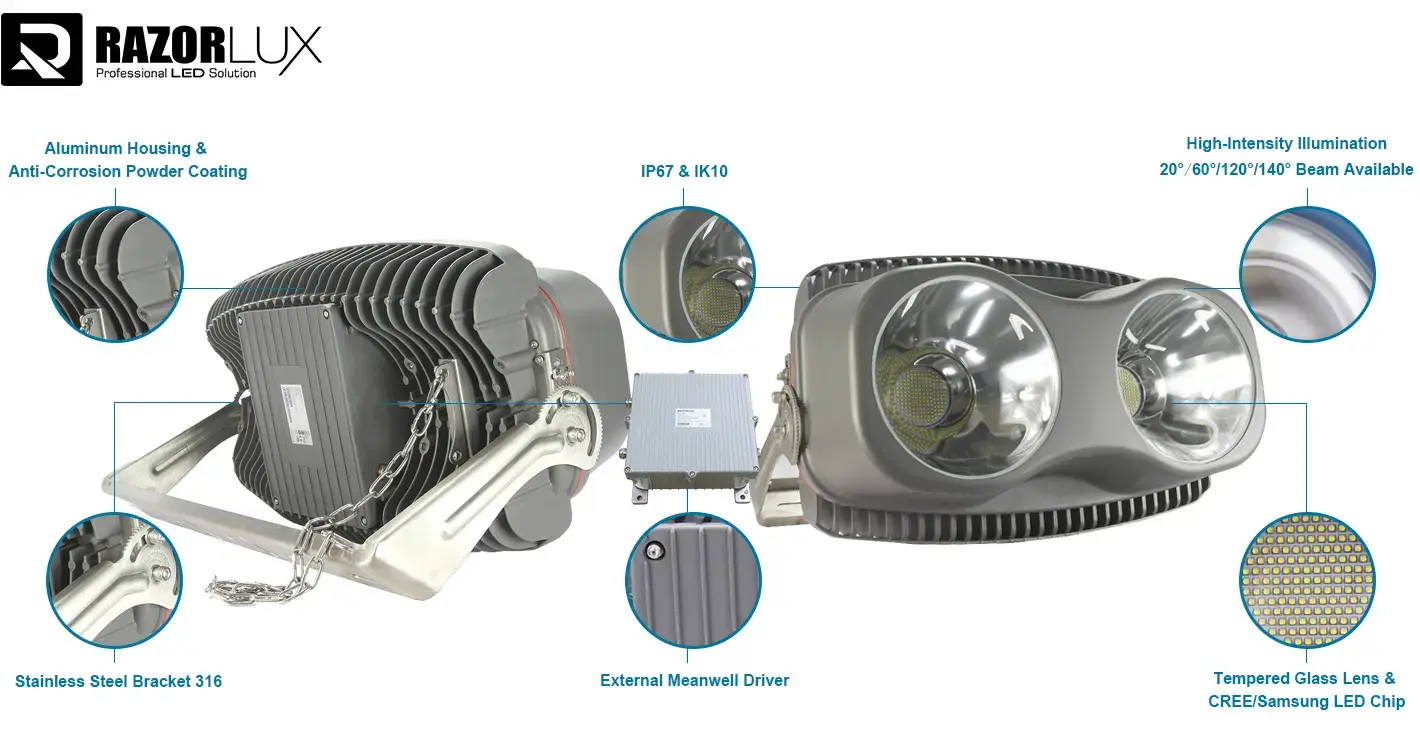
The new high-output naval floodlights are very different from the old metal halide and sodium vapor systems. These LED-based systems use Samsung LED chips and Meanwell power supplies to provide stable lighting without the warm-up delays that came with older technologies. The Marine Flood Lights 1000W number refers to either the real amount of power used or the equal output of an LED. Modern designs can reach 100,000 to 130,000 lumens thanks to advanced chip layout and thermal management systems.
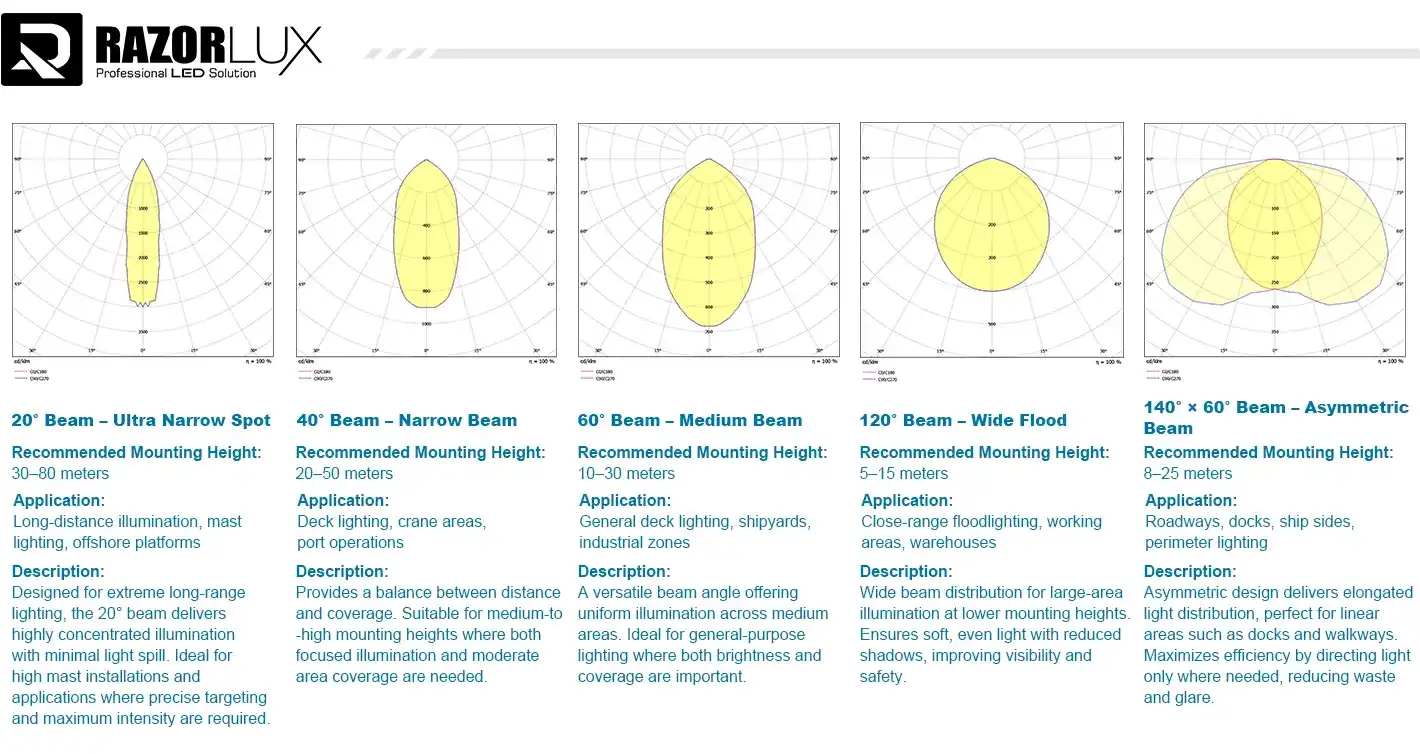
Leading makers use a patented multi-function design that lets these lamps change their beam angles from focused 15° searchlights to wide 140°x60° area coverage. This means that they can be used for a wide range of lighting needs offshore, from lighting up helipads for approach to work to making sure people can see what's going on at the deck.
Why Offshore Operations Demand This Power Level
Platform operations include drilling, moving cargo, maintenance work, and responding to emergencies. All of these require clear visibility, no matter what the weather is like. On a typical offshore installation, 150 to 300 people may live on different deck levels and work on things like cranes, pipes, and machines all at the same time. There is a direct link between not enough lights in these situations and more accidents and less efficient operations.
According to research from maritime safety groups, having the right lighting at work can cut accidents by up to 60% in offshore settings. The Marine Flood Lights 1000W power class gives off enough light to see through sea fog and spray while keeping the light level even across big work areas. This gets rid of dangerous dark areas where accidents tend to happen.
Operational Principles in Marine Environments
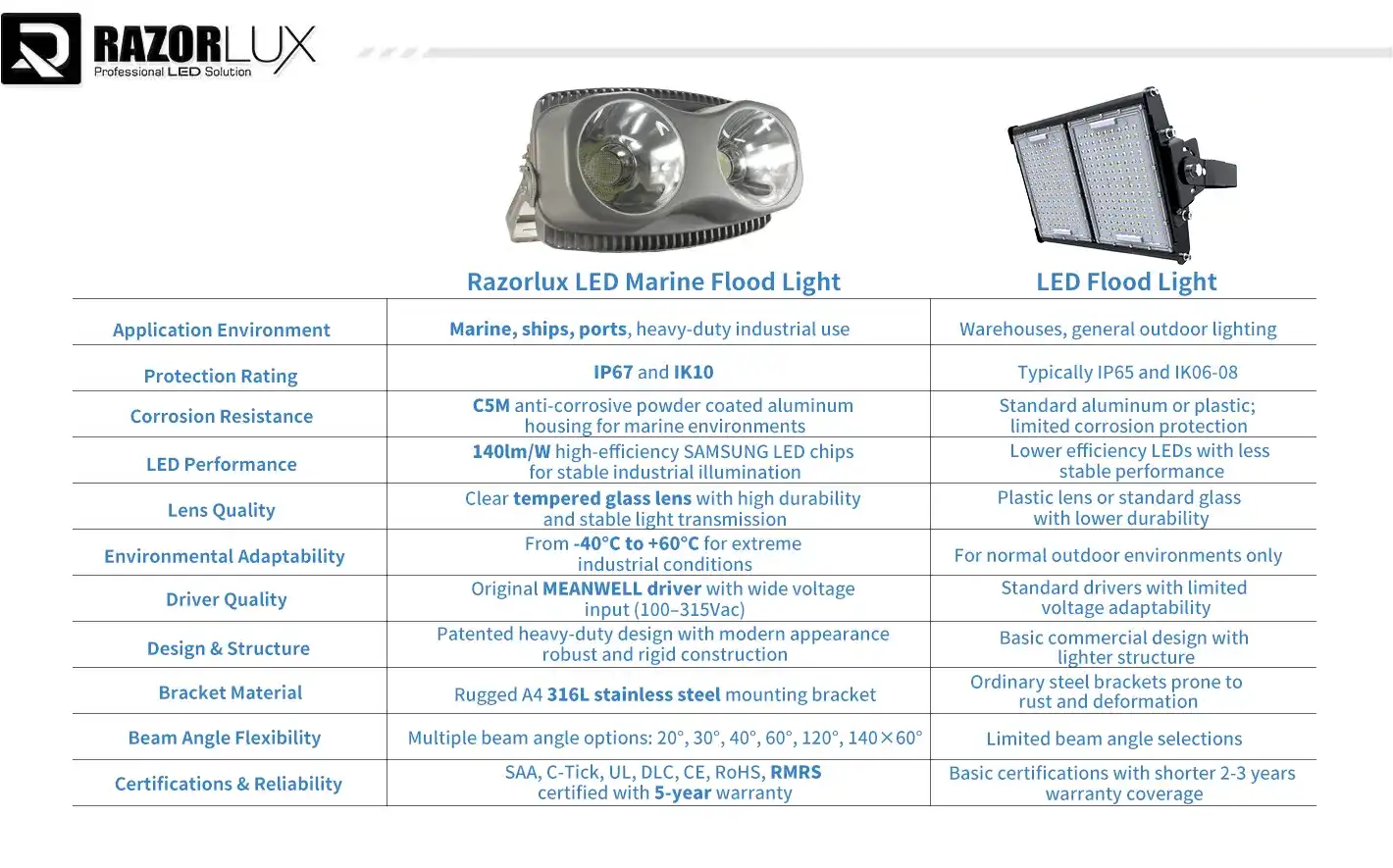
These lighting systems work with special LED panels that turn electricity into lights with almost no heat loss. The temperature range of -40°F to 140°F makes sure that it works from drilling operations in the Arctic to installations in the equator. The wide input voltage tolerance (AC90-305V, DC127-431V) handles the voltage changes that happen on station electrical lines when generators are turned on or off or when heavy equipment is started up.
At this power level, thermal management is very important. Modern heatsinks made of copper-free die-cast aluminum and powder coating make it easier for heat to escape, even in salty, humid environments where thermal transfer efficiency is much lower than on land.
Critical Engineering Features That Enable Offshore Performance
Going from "suitable for marine use" to "engineered for offshore survival" requires specific technology solutions that deal with the unique ways that lighting fails in oceanic settings.
IP67 Protection and What It Actually Means Offshore
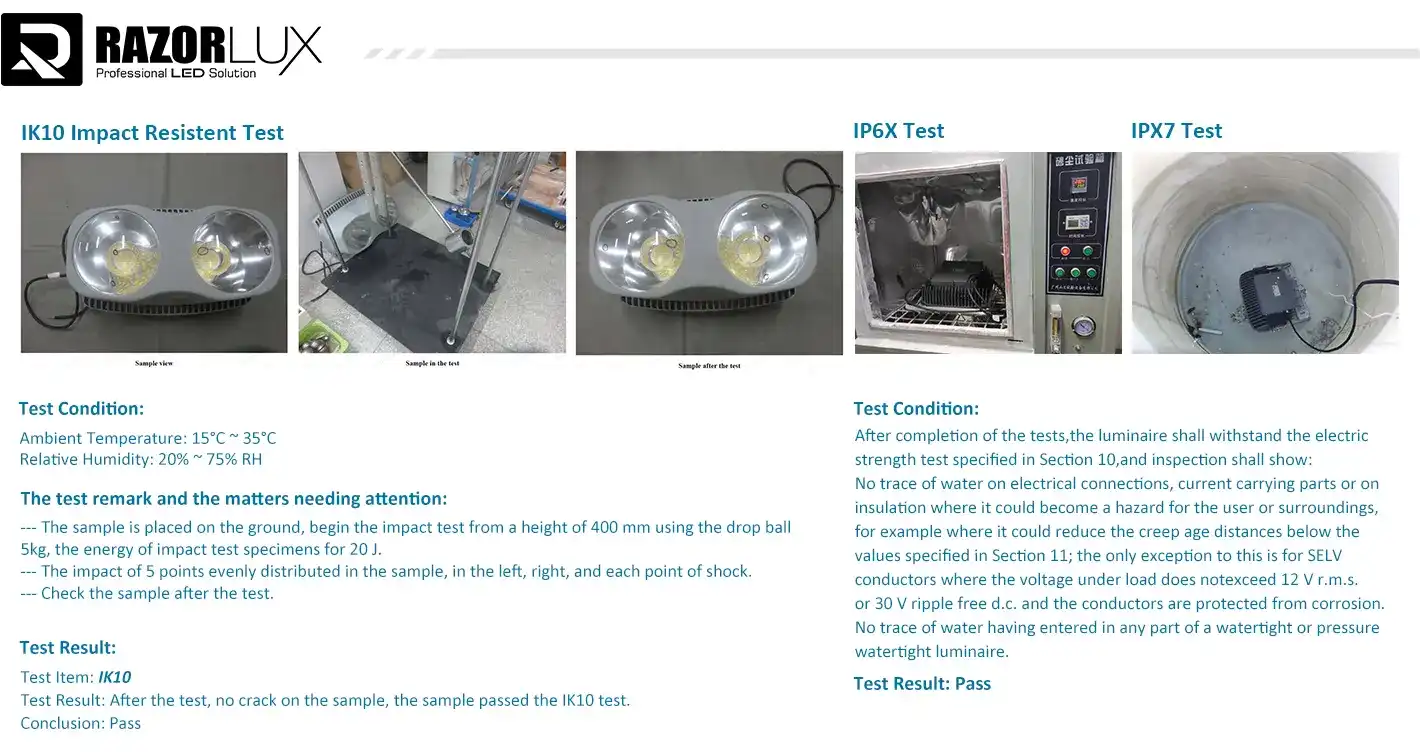
If it has an IP67 rating, it means that it can withstand being submerged in water up to one meter deep for 30 minutes. Offshore, this means being able to stay alive during wave wash-overs and deck floods that happen a lot during storms. This is done by high-quality makers using multiple-stage sealing systems with silicone seals, pressure adjustment valves, and special wire glands that stay in place through thousands of thermal cycles.
Razorlux's design has an IK10 impact grade, which means it can withstand 20 joules of impact energy, which is the same as dropping a 5 kg object from 40 cm. This keeps you safe from things like falling tools, cargo that swings around, and wind-blown debris, which are all common dangers on work platforms.
Corrosion Resistance Through Material Science
Standard metal and steel parts break down quickly in marine environments when tested with salt spray according to ASTM B117 standards. Marine-grade aluminum alloys and special powder coating methods are used in high-end offshore fittings to achieve a C5-M corrosion protection rating. Stainless steel brackets (usually SS316L) provide structural support that lasts longer than the fixture's useful life.
The 29 kg weight with stainless steel mounting brackets shows how much material is needed to make the structure strong. When buying fixtures, lighter ones might look appealing, but they usually get their lighter weight from using smaller materials that break down more quickly.
Extended Service Life and Maintenance Implications
The 50,000-hour operating life means that it can work nonstop for about 5.7 years or for more than 10 years with normal job cycles. This durability is very important offshore, where upkeep work includes:
- Mobilizing specialized personnel to the scene by crew boat or helicopter
- Implementing hot work permits into effect in secret places
- Coordinating with production schedules to keep problems to a minimum
- Managing replacement parts logistics in global supply chains
When you add up the costs of logistics, labor, and production delays, each maintenance event costs between $5,000 and $15,000. If you buy nautical lighting fixtures that need to be replaced every 18 to 24 months, you'll quickly spend more on care than you saved when you bought them in the first place.
Thermal Management in High-Humidity Environments
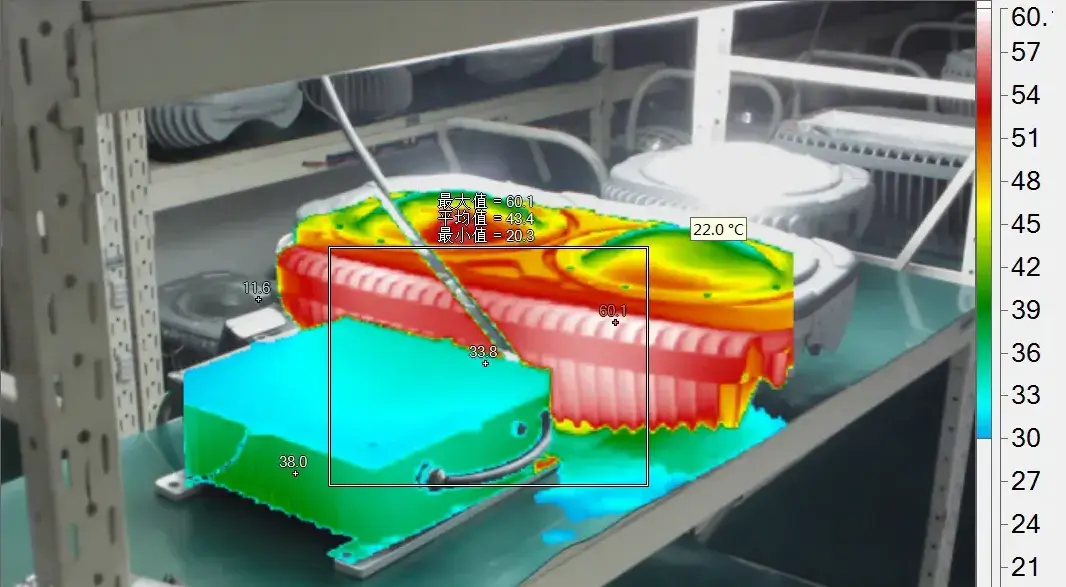
Offshore, the air is often very muggy (90–95%) and there are small salt particles that stick to objects and stop heat from moving. Graphene-enhanced thermal interface materials and over-sized heatsink geometries are used in more advanced designs to keep LED junction temperatures below 85°C even in tropical environments.
Studies using thermal imaging of working fixtures show that not managing heat well speeds up the degradation of LEDs, resulting in a 30–40% drop in light output within the first year. Quality methods make sure that the L80B10 works well for its whole working life (80% of fixtures keep their light output).
Performance Comparison: Power Ratings and Technology Options
When making decisions about what to buy, it helps to know where 1000W fixtures fit in with other marine lighting options and how they compare to other technologies.
Wattage Selection and Coverage Analysis
| Power Rating | Typical Output | Coverage Area | Best Application |
|---|---|---|---|
| 500W | 65,000 to 70,000 lm | 800 to 1200 square feet | Walkways and places to stay |
| 1000W | 100,000 to 130,000 lm | 1,500 to 2,500 square feet | Bases for cargo, helidecks, and main decks |
| 1500W | 150,000 to 180,000 lm | 2,500 to 3,500 square feet | A lot of space to work and crane operations |
In terms of balance, the Marine Flood Lights 1000W group is best for most remote uses. For lower wattages, you need more fixtures to cover the area properly, which means more installation points and more maintenance. When the wattage is higher, the number of fixtures is lower, but the amount of focused heat and the need for power facilities go up.
LED Versus Legacy Technologies
Metal halide devices were the most common way to light up the ocean for many years, but the way they work has a lot of problems. These old technologies need 5 to 15 minutes to warm up before they can work at full capacity, which can be a problem in emergency situations. They also give off a lot of infrared radiation, which makes HVAC systems work harder in small spaces and increases the risk of burns.
When you turn on LED technology, it instantly gives off full brightness, works at much lower temperatures, and keeps the color consistent over time. A review of the total cost of ownership shows that LED systems pay for themselves in 18 to 30 months just by saving energy, and that's before the lower upkeep costs are taken into account.
Smart Integration and Control Capabilities
Modern marine fixtures can now dim, be monitored from a distance, and have operating settings that can be programmed. These features let you:
- Automated dawn/dusk adjustment cuts down on daytime operations that aren't needed.
- Integration with platform safety systems to set up emergency lights.
- Predictive maintenance alerts based on the number of hours worked and tracking of thermal stress.
- Zone-based control lets different deck areas work on their own based on what they're doing.
A Norwegian offshore company said that they saved 23% on energy costs after putting smart lighting controls on all of their platforms. At the same time, they were better able to follow the rules about light pollution that affect nearby trade lanes.
Strategic Procurement and Installation Considerations
Successful offshore lighting projects need detailed planning that goes beyond fixture specifications and includes things like making sure the supply chain is reliable, following all the rules for certification, and the right way to install the lights.
Evaluating Suppliers and Certification Requirements
Offshore activities are usually governed by more than one set of rules. There are different rules set by the national government, the U.S. Coast Guard, and classification groups like DNV-GL, ABS, and Lloyd's Register. Important certifications include:
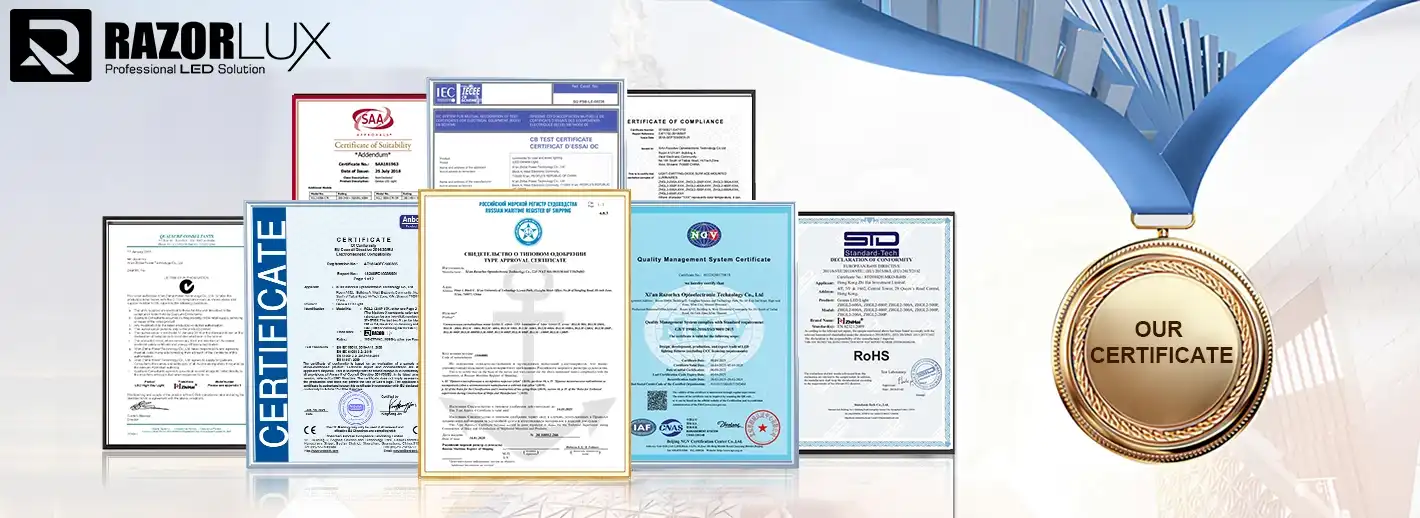
- RMRS, DNV-GL, or ABS certification for marine equipment approval.
- CE marking that shows EU compliance.
- UL/DLC listing for North American installations.
- ATEX/IECEx certification for installations in Zone 1 and Zone 2 hazardous areas.
Razorlux has many certificates, such as RMRS, CE, RoHS, SAA, C-Tick, UL, DLC, and CB. This makes sure that they follow all the rules in offshore countries around the world. Our factories use ISO 9001 quality management systems, which gives offshore owners the traceability and paperwork they need for reviews by classification societies.
When procurement teams are reviewing sources, they should check where the parts are coming from. Mean Well power sources and Samsung LED chips are standard parts in the industry that have a history of being reliable. When manufacturers don't want to reveal where their parts come from, they usually use lower-quality alternatives that break down quickly in harsh offshore conditions.
Installation Best Practices and Structural Considerations
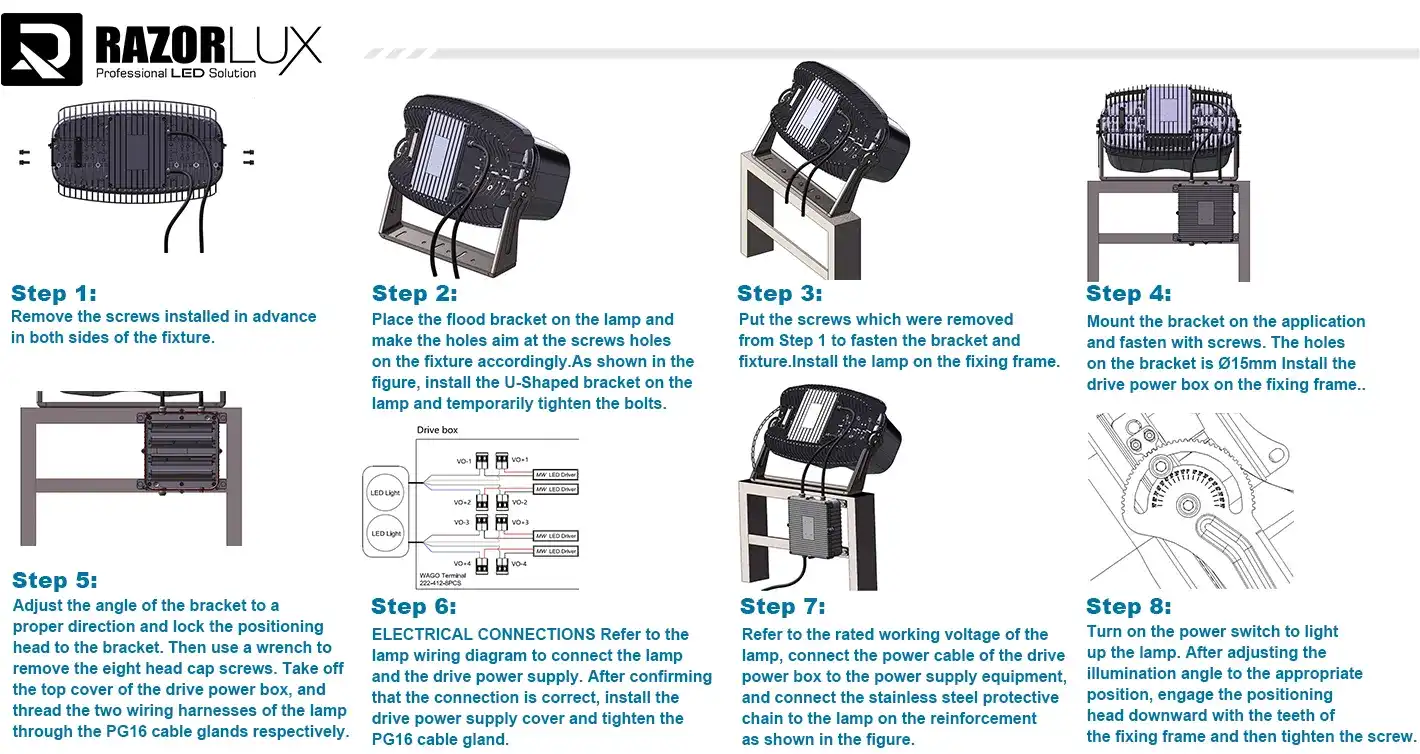
Installing things correctly has a direct effect on how long they work and how safe they are. Important things to think about are:
Mounting fixtures to structural steel instead of extra supports ensures they stay stable even when the platform moves or bad weather happens. The 29 kg weight needs the right load-rated clamps with lockwire or mechanical closing features to keep the fasteners from coming loose from the constant shaking.
Marine-rated armored wire with the right ampacity for circuit length and voltage drop estimates is needed for cable management. When cables aren't the right size, voltage drops when they're under load, which lowers light output and shortens the life of the driver. Moving and bending cables can damage them, but installing them in cable trays with the right support spacing stops this from happening.
Aiming and positioning should take into account how glare affects navigation and how the helicopter works. Maximum upward light ratios are set by international marine laws to keep them from getting in the way of bridge visibility and air approach paths.
Total Cost Analysis and Procurement Strategy
| Type of Cost | The original HID | System of 1000W LEDs |
|---|---|---|
| Initial fixture cost | $800 to $1,200 | $1,500 to $2,500 |
| Annual energy cost (per fixture) | $450 to $600 | $180 to $240 |
| Maintenance cost (5-year) | $2,500 to $4,000 | $400 to $800 |
| 10-year total cost | $8,300-13,200 | $4,100-6,900 |
These numbers are based on the assumption that energy costs $0.15/kWh and take into account the cost of replacing lamps in HID systems. When production, transportation losses, and environmental compliance are taken into account, the real cost of offshore energy is often more than $0.25/kWh. This makes LED payback times shorter.
Strategies for buying in bulk offer extra benefits. When you order more than 50 units, you can usually get project pricing, which lowers the price by 15 to 25 percent from the list price. Setting up framework agreements with preferred suppliers makes sure that prices stay the same and that delivery is prioritized for projects like expansion and emergency replacements.
Sample Testing and Technical Validation
Sample testing is part of progressive buying processes before agreements to buy in bulk. The following evaluation protocols are suggested:
- Conducting vibration testing using platform-mounted accelerometers for vibration testing to make sure the fixture can handle real-world vibrations.
- Performing salt spray exposure testing per ASTM B117 for long amounts of time (500 hours or more) to find flaws that were not obvious when looking at them visually.
- Measuring actual light output with standardized photometric equipment to make sure that performance meets purchase requirements.
Maximizing Operational Value Through Strategic Implementation
In addition to choosing the right fixtures, practical value comes from carefully planning how to put them and keeping an eye on their performance all the time.
Optimal Placement and Coverage Design
Professional lighting design takes into account the needs of the job, safety rules, and the flow of operations. Critical areas for lighting include:
Helidecks require special lighting for approaches with certain patterns of intensity, as well as lighting for obstacles that meets CAP 437 standards or an equivalent standard. The Marine Flood Lights 1000W lamps with 30° beam angles light up the main deck very well without blocking the pilots' lines of sight during approach.
Cargo handling zones benefit from overlapping coverage because it gets rid of shadows that could hide people while the crane is working. With 60° beam angles and multidirectional mounting, the light shines evenly across the deck, and there is less deck glare.
Emergency muster stations and evacuation routes for these to work, they need lighting that has two sources of power and can automatically switch to the backup source. Strategic location makes sure that people can safely leave even if the main power goes out.
A recent installation on a production platform in the Gulf of Mexico used computer modeling to find the best positions for 47 fixtures. This led to all work decks having at least 30 foot-candles of light while lowering the number of fixtures by 22% compared to the original design. This improvement saved $180,000 in tool costs and dropped yearly energy use by 8,200 kWh.
Energy Management and Sustainability Practices
The 130LM/W effectiveness of good LED systems is a big step up from older technologies, but there are still more ways to make them even better. By using astronomical time clock controls, operating schedules can be changed to match actual darkness hours instead of fixed schedules. This takes into account changes in the length of daylight throughout the year.
Occupancy-based dimming cuts down on unnecessary lighting in low-traffic areas while keeping the lights on as soon as someone walks into the area. In addition to the basic energy savings that LEDs bring, these systems usually save an extra 15 to 30 percent.
Renewable energy integration benefits from LED lighting's quick response time and wide voltage range. Platforms that use wind or solar power also have LED lighting that works with the voltage changes that come with these sources, unlike HID systems that extinguish during momentary voltage sags.
Real-World Performance Data
A North Sea company that was keeping track of the performance of lighting systems on six platforms reported the following after switching from HID to LED technology:
- Maintenance calls dropped by 68% from one year to the next.
- There were no unplanned power outages during the 14-month measurement period.
- 71% less energy was used for the same level of lighting.
- Savings on operational costs of more than $420,000 a year across the platform network.
One important change was that emergency maintenance calls for lighting problems were no longer needed. Under the old HID system, there were an average of four to six emergencies a year that needed urgent lighting repairs, each requiring a helicopter or crew boat mobilization costing $8,000 to $15,000 per event.
Adapting to Operational Changes
Modular design ideas let you change the configuration as the platform's functions change. The 15°, 20°, 30°, 40°, 60°, 120°, and 140°x60° adjustable beam angles let coverage patterns be changed in the field when work areas are rearranged or when new equipment is installed and changes how space is used.
The choice of color temperature (2700K–6500K) affects how well you can see and how tired you get after working for a long time. Cooler temperatures (5000K to 6500K) make it easier to see and stay alert when doing precise tasks, while warmer temperatures (3000K to 4000K) make it easier on the eyes during long exposure. Some operators change the color temperature based on peak activity shifts.
Conclusion
Selecting appropriate lighting for offshore platforms involves balancing technical performance, regulatory compliance, operational reliability, and long-term value. High-output LED Marine Flood Lights 1000W class deliver the luminous intensity necessary for safe offshore operations while providing the durability and efficiency that makes them economically viable across 10+ year service lives. The combination of IP67 environmental protection, marine-grade construction, and premium components creates lighting infrastructure that functions reliably despite the extraordinary challenges of oceanic environments. Procurement teams benefit from evaluating total ownership costs rather than focusing narrowly on initial acquisition prices, as maintenance burden and energy consumption dominate lifecycle economics. Partnering with established manufacturers offering comprehensive certifications, documented component sourcing, and responsive technical support ensures successful project outcomes.
FAQ
Are 1000W marine flood lights compatible with existing platform electrical systems?
These Marine Flood Lights 1000W accommodate wide voltage ranges (AC90-305V, DC127-431V), making them compatible with most offshore electrical systems worldwide. The broad input tolerance handles voltage fluctuations common during generator switching or heavy equipment startup without requiring additional regulation equipment. Confirming specific voltage characteristics with your electrical contractor ensures optimal circuit design and proper protection coordination.
What safety certifications are essential for offshore platform lighting?
Classification society approval (DNV-GL, ABS, RMRS, or Lloyd's Register) represents the fundamental requirement, as these certifications verify compliance with international maritime standards. Operations in classified hazardous areas require ATEX or IECEx certification appropriate to the zone classification. Regional requirements include CE marking for European installations and UL listing for North American projects. Verify certification applicability to your specific platform location with regulatory authorities during project planning.
Can offshore lighting fixtures be customized for specific project requirements?
Reputable manufacturers offer extensive customization including beam angle selection, mounting bracket configurations, cable entry orientations, and coating specifications. We provide engineering support for unique installation challenges, developing custom solutions when standard configurations don't address specific platform geometry or operational requirements. Color temperature selection and dimming integration represent commonly requested customizations that enhance operational flexibility.
Partner With Razorlux for Proven Offshore Lighting Solutions
Offshore platform operators worldwide trust Razorlux as their Marine Flood Lights 1000W supplier, benefiting from our 25+ years of LED innovation and deep maritime industry expertise. Our RGL-1000P series delivers 100,000-130,000 lumens with proven reliability across Arctic to equatorial installations, backed by comprehensive RMRS, DNV-GL, CE, UL, and ATEX certifications. We support your project from initial lighting design and photometric analysis through installation guidance and ongoing technical support. Our Xi'an Engineering Laboratory holds over 436 patents in LED technology, power supply design, and thermal management—innovations directly benefiting the durability and performance of our marine lighting systems. Request technical specifications, sample units for field testing, or project-specific lighting analysis by contacting our marine lighting specialists at sam@razorlux.com. We deliver complete documentation packages supporting classification society approvals and provide responsive communication throughout procurement, installation, and operational phases.
References
1. Maritime Safety Committee, "Illumination Standards for Offshore Installations," International Maritime Organization Technical Guidelines, 2021.
2. Petersen, K. and Larsson, M., "LED Lighting Performance in Marine Environments: A Five-Year Offshore Platform Study," Journal of Marine Engineering and Technology, Vol. 19, No. 3, 2020.
3. Offshore Safety Division, "Lighting Requirements for Petroleum Operations," UK Health and Safety Executive Guidance Note, Revised Edition, 2022.
4. American Bureau of Shipping, "Guide for Lighting and Visibility Systems on Offshore Installations," ABS Technical Standards, 2021.
5. Chen, H., Rodriguez, J., and Williams, T., "Total Cost of Ownership Analysis: LED versus HID Lighting in Offshore Applications," Energy Efficiency in Industrial Operations Quarterly, Vol. 14, No. 2, 2019.
6. Norwegian Petroleum Directorate, "Recommended Practice for Lighting Design on Offshore Installations," Technical Standards and Guidelines Series, 2020.