


_1750326878398.png)

What Makes Tennis Court Led Flood Lights Energy Efficient?
Energy efficiency in modern sports lighting stems from advanced LED technology that converts electrical power into visible light with minimal waste. Tennis Court Led Flood Lights achieve superior energy performance through high luminous efficacy—typically 130 lm/W or greater—which means more usable light per watt consumed compared to legacy metal halide or halogen systems. This efficiency results from precision-engineered semiconductor chips, optimized thermal management, and intelligent driver circuits that maintain stable output while drawing significantly less power. Facilities switching to LED floodlights often see energy reductions exceeding 60%, translating to lower operational costs and reduced environmental impact without sacrificing illumination quality or player visibility.
Core Components That Drive Energy Efficiency
The way LED sports lighting is built inside decides how much energy it uses in real life. When procurement managers and building engineers understand these parts, they can more accurately evaluate specs and choose systems that will work efficiently for a long time.
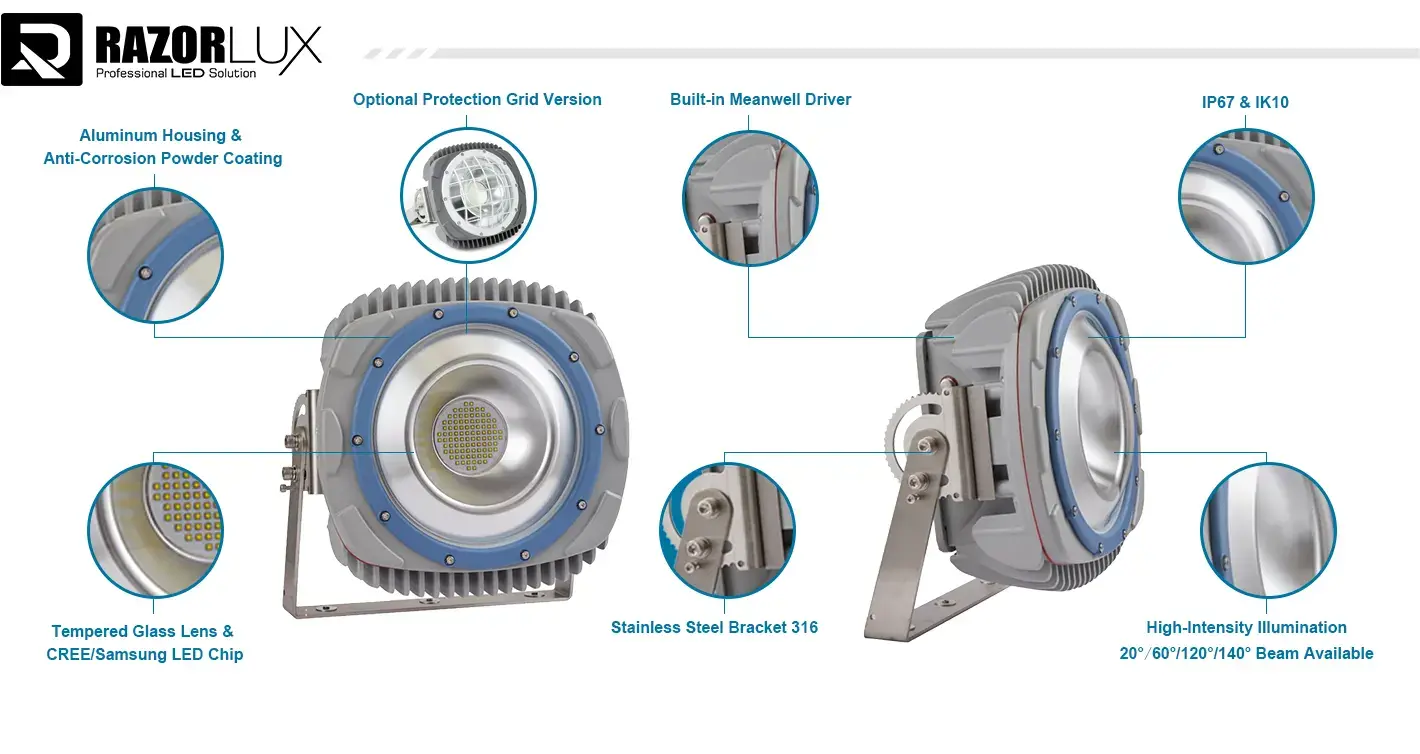
Advanced Semiconductor Materials and Chip Design
Premium LED chips, like those from Samsung or other top manufacturers, have crystal structures and phosphor mixtures that are fine-tuned to get the most photons out of light. Chip-on-board (COB) and high-power LED array configurations focus light output while managing thermal loads well, which stops the loss of efficiency that happens when junction temperatures rise too much.
Precision Optics for Targeted Light Distribution
Light is focused exactly where it needs to be on the tennis court by secondary optics like lenses, mirrors, and beam-shaping parts. Asymmetric beam patterns, like 40°, 60°, or 140°x60° arrangements, get rid of spill light that shines outside the playing area. This cuts down on wasted lumens and light pollution. With this precise targeting, fewer lights are needed to reach the right amount of illumination, which saves even more energy across the whole system.
High-Performance Driver Circuits
The power source or driver controls the flow of current to the LED chips. This keeps the operation fixed even when the voltage or temperature changes. Power factors above 0.98 and total harmonic distortion below 10% are signs of high-quality drivers from companies like Mean Well. These specs make sure that the drivers convert power efficiently with little loss of electricity. Wide input voltage ranges (AC110-480Vac or DC100-800Vdc) let it work with a variety of electrical systems without the need for extra converters or transformers that add conversion losses.
Buyers can make better decisions about product specifications when they understand these technical aspects. Razorlux Tennis Court LED Flood Lights carefully combine these high-tech parts, achieving 130 lm/W efficiency while still being protected against the elements (IP67) and being resistant to impacts (IK10 rating), which is important for tennis courts that are often used in harsh naval and industrial settings.
Table 1: Energy Performance Comparison
| Lighting Technology | Typical Efficacy (lm/W) | Power Consumption (W) | Equivalent Output | Annual Energy Cost |
|---|---|---|---|---|
| Metal Halide | 70-90 | 1000 | Baseline | $525 |
| High-Pressure Sodium | 80-100 | 800 | Comparable | $420 |
| LED (Standard) | 100-120 | 500 | Better uniformity | $263 |
| LED (High-Performance) | 130-160 | 400 | Superior quality | $210 |
*Based on running for 12 hours a day, 365 days a year at $0.12/kWh
These differences in performance are especially noticeable in buildings with multiple courts or maritime installations where lights are on for long periods of time and energy costs add up quickly.
Installation Factors That Affect Energy Efficiency
When installed incorrectly, even the most energy-efficient LED lights don't work as well as they should. The factors of the mounting directly affect how well light hits the playing surface, which has an effect on both the amount of energy used and the quality of the lighting.
Optimizing Mounting Height and Angle
The right pole height and shooting angles make sure that the light hits the floor evenly, without any dark spots or areas that are too bright. When fixtures are mounted too low, they cause glare for players, and when they are mounted too high, they need more power to keep the light on. To get the most out of your energy use, professional lighting designers figure out where to put the poles, how to tilt the fixtures, and how to shape the beams. When replacing old systems on existing poles, facilities must make sure the structure can handle the extra weight and wind load that come with modern LED fixtures, which weigh 15 kg.
Electrical Infrastructure Quality
A drop in voltage in the supply lines can cause power issues and can hurt LED drivers that are sensitive. Resistance losses are kept to a minimum, and a stable power supply is guaranteed by using the right-sized wires, high-quality connectors, and proper grounding. Facilities in places where power grids aren't stable can benefit from 10kV or 20kV surge protection, which stops damage that makes them less efficient over time. Quality LED systems can handle a wide range of input voltages (110–480Vac), so they can work with changes in the power grid without losing efficiency.
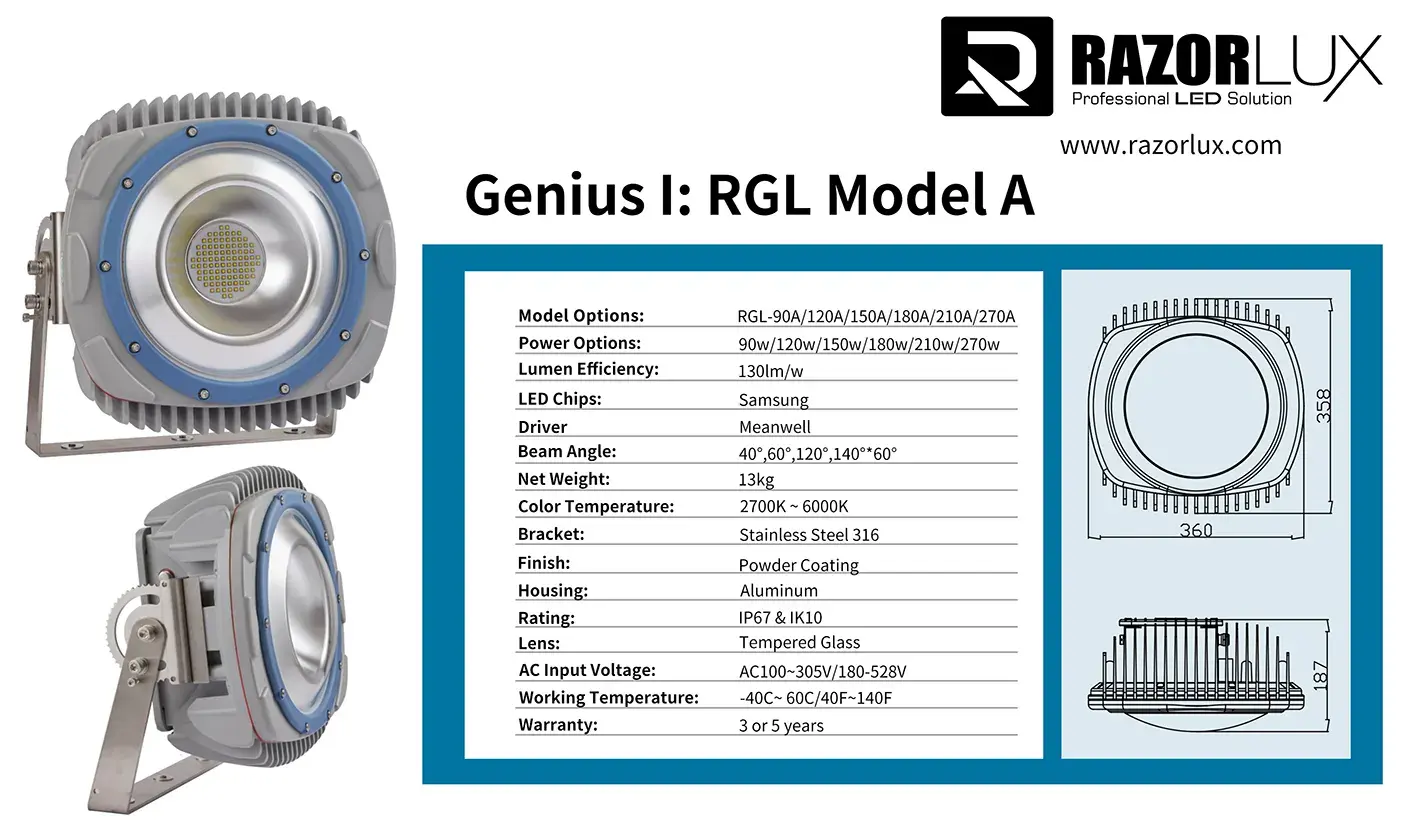
Environmental Considerations
Coastal tennis courts have to deal with salt spray and humidity, which eat away at bulbs and seals, lowering light output and causing early replacement. The C4/C5 corrosion-resistant stainless steel brackets and housing maintain the structure's integrity and thermal performance, keeping the energy economy high for the stated 50,000+ hour lifespan. IP67 ingress protection stops water from getting in, which can damage electronics and make drivers less effective.
These facts about installation make it clear why Razorlux offers detailed technical documentation, installation help, and customization help. High-efficacy LED components can save the most energy when they are properly integrated into a system.
Maintenance and Lifespan Influence on Long-Term Efficiency
Energy efficiency is more than just meeting the initial requirements; it also includes how well the system works over many years of use. How well maintenance is done and how long parts last determine whether the savings that were promised actually happen in real life.
Impact of Lens Cleanliness on Light Output
Dust, pollen, and salt buildup on fixture lenses stop light from passing through and lower the amount of light that is actually shining through. When light output drops by 20%, facilities have to use more sources or higher wattages to meet standards, which cancels out any efficiency gains. Regular cleaning—maybe every three months in dusty or seaside areas—keeps the optics working well and saves energy. The sealed IP67 case design keeps out dirt and germs that can't be cleaned without taking the whole thing apart.
L70 Lifespan and Lumen Depreciation
As semiconductors and phosphors break down, LED fixtures lose their brightness over time. For good tennis court lighting, the L70 grade means the number of hours until the power drops to 70% of its original lumens. This is usually more than 50,000 hours. Poorer goods might hit L70 in 20,000 to 30,000 hours, which means they need to be replaced sooner and cost more over their whole life. Razorlux fixtures have longer L70 ratings because they do a better job of managing heat. The aluminum die-cast housing with optimized fin geometry gets rid of heat quickly, keeping junction temperatures low, which slows down the aging process.
Component Reliability and Replacement Costs
The most common problem with LED systems is a bad driver. Power supplies that are of good quality and come with five-year warranties cut down on maintenance calls and wasted energy from circuits that don't work right. Fixtures that let you change the driver without taking the whole unit apart save money on work and downtime. Professional LED flood lights are built in a way that lets you do focused upkeep that keeps the system running efficiently and using little energy.
Choosing things that are made to last is important for the long-term energy economy. Razorlux's five-year guarantee on LED modules and drivers shows that the company is confident in its long-term performance and helps procurement teams correctly estimate the total cost of ownership.
Comparing Energy Efficiency: LED vs. Alternative Lighting Technologies
If you want to compare lighting choices, you need to know how different technologies work in more than just power terms.
Operating Cost Analysis
Energy use is only one part of the total cost of running a business. Maintenance work, replacement parts, and disposal costs all add up to a lot. Every 6,000 to 15,000 hours, metal halide lamps need new bulbs, which cost $50 to $150 each plus the cost of work. Failures of the ballast add costs that are hard to estimate. (Illuminating Engineering Society, 2020) Says that LED systems save both energy and labor because they don't need to replace lamps or call for maintenance as often.
Environmental Considerations
LED light bulbs don't have any mercury, lead, or other dangerous materials that need special removal methods. Their lower energy use lowers carbon emissions, which is especially important for buildings that are powered by grids that use fossil fuels. The longer lifespan reduces the impact on manufacturing and waste in landfills. These benefits for the environment are in line with companies' goals to be more environmentally friendly and with stricter rules for installing lights in businesses and factories.
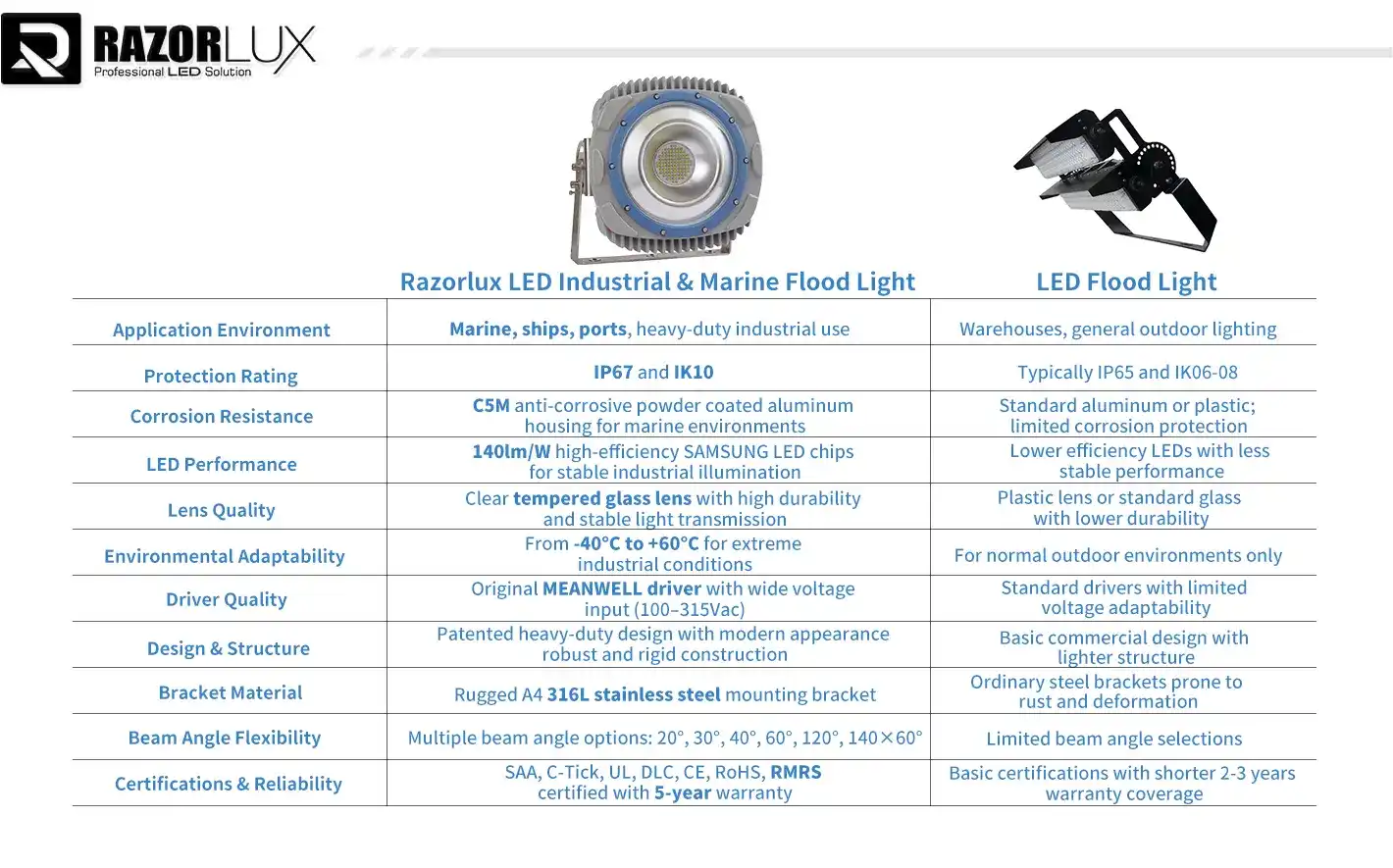
Color Temperature and Visual Efficiency
Choosing the right color temperature improves how well something works. The lighting for tennis courts is usually between 4000K and 5700K. This gives off a bright white light that makes it easier to see the ball and respond faster. Higher color rendering indices (CRI >75, with Ra >80 or Ra >90 also an option) make sure that colors are seen correctly. Facilities can meet lighting standards with lower amounts of illumination when it's easier to see. This saves energy and makes the playing experience better for everyone.
Table 2: Technology Comparison Matrix
| Feature | Metal Halide | HPS | LED (High-Performance) |
|---|---|---|---|
| Warm-up Time | 10-15 minutes | 5-10 minutes | Instant (<0.1 sec) |
| Color Rendering (CRI) | 65-70 | 20-25 | 75-90+ |
| Directional Control | Poor (requires reflectors) | Poor | Excellent (native) |
| Dimming Capability | No | No | Yes (0-10V, DALI) |
| Cold Temperature Operation | Degraded performance | Degraded performance | Unaffected (-40°C rated) |
| Useful Lifetime | 6,000-15,000 hrs | 16,000-24,000 hrs | 50,000+ hrs |
This thorough comparison shows why LED technology is used in most new tennis facilities and most retrofit projects. This is especially true in harsh naval and industrial settings where dependability and efficiency have a direct effect on running costs.
Smart Control Systems for Enhanced Efficiency
Adding smart settings to LED technology makes it even more efficient, allowing for dynamic energy management that adjusts lighting output to how the building is actually used.
Occupancy Sensing and Scheduled Operation
Motion monitors in the court make sure that the lights only turn on when they're needed, so no energy is wasted when the court isn't being used. Because the length of daylight changes with the seasons, astronomical time clocks change when they are on and when they are off. In many places, these controls cut down on operating hours by 20 to 40 percent without affecting the user experience. LEDs can turn on instantly and reach full light in less than 0.1 seconds. This makes sensor-based control possible, while metal halide lamps need longer to warm up.
Dimming for Variable Lighting Levels
For practice, you don't need as much light as for competitive play. During training, dimming systems lower output to 40–60%, which cuts energy use by the same amount. Good LED drivers support the 0-10V dimming protocol, which lets you make adjustments smoothly over a wide range without flicker. This is important for player comfort and fast video recording. Dimming LEDs also makes them last longer by lowering their operating temperatures and easing the stress on their parts.
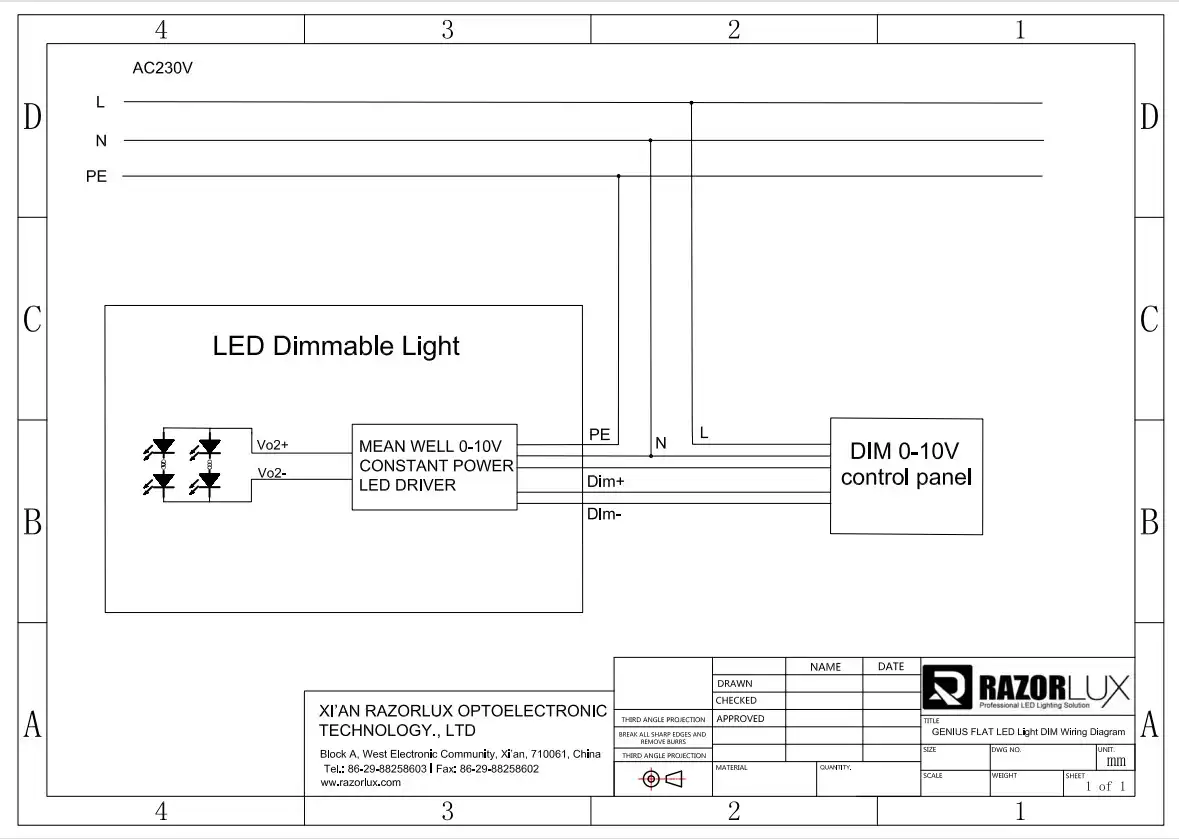
Integration with Facility Management Systems
Networked lighting controls work with larger platforms for managing buildings, so they can be monitored and improved from one place. Remote tests find things that aren't working right before they break completely. This lets you plan repairs that keep you from having to call for emergency service. Data from tracking energy use can be used to make changes in efficiency and to report carbon emissions. With these high-tech features, tennis courts can meet new energy efficiency standards and meet the requirements for sustainability certification (U.S. Green Building Council, 2022).
Razorlux Tennis Court LED Flood Lights work with current control systems because they have driver electronics that are compatible and technical paperwork that makes setting up the system easier. This design approach looks to the future to protect investments in buildings as smart building technologies change.
Real-World Performance in Marine and Industrial Environments
Setting standards for energy efficiency in the lab must be able to be translated into long-term success in tough operational settings like tennis courts.
Thermal Management in High-Temperature Locations
Ambient temperatures above 40°C make it hard to control the temperature of LEDs. When heat isn't removed properly, junction temperatures rise, which lowers the brightness and speeds up aging. High-end fixtures have housing designs that encourage natural convection, heat sinks that are too big, and thermally conductive interfaces. Razorlux flood lights keep working at their recommended levels from -40°C to 60°C, so their efficiency stays stable even in deserts, hot areas, or near factories that make a lot of heat.
Vibration Resistance in Industrial Settings
Buildings that are close to factories, heavy machinery, or offshore platforms are constantly vibrated, which harms sensitive electronics and loosens connections. The shock-resistant design with an IK10 grade and mechanically secure driver mounting keeps the electrical purity and energy efficiency even when the device is under a lot of mechanical stress. The strong stainless steel bracket design makes sure that lights stay at the right shooting angles, which keeps efficiency from dropping due to optics that aren't lined up correctly.
Corrosion Protection in Coastal Installations
Aluminum housings rust faster when exposed to salt spray, and electrical connections corrode, causing resistance that wastes energy and finally leads to failure. Facilities that are less than five kilometers from the coast need to be resistant to corrosion at the C4/C5 level. This can be done with marine-grade fasteners, a special powder coating, and electrical compartments that are sealed and rated IP67. Protective coats need to be inspected and maintained on a regular basis to keep their structural integrity and the thermal performance needed for long-term energy economy.
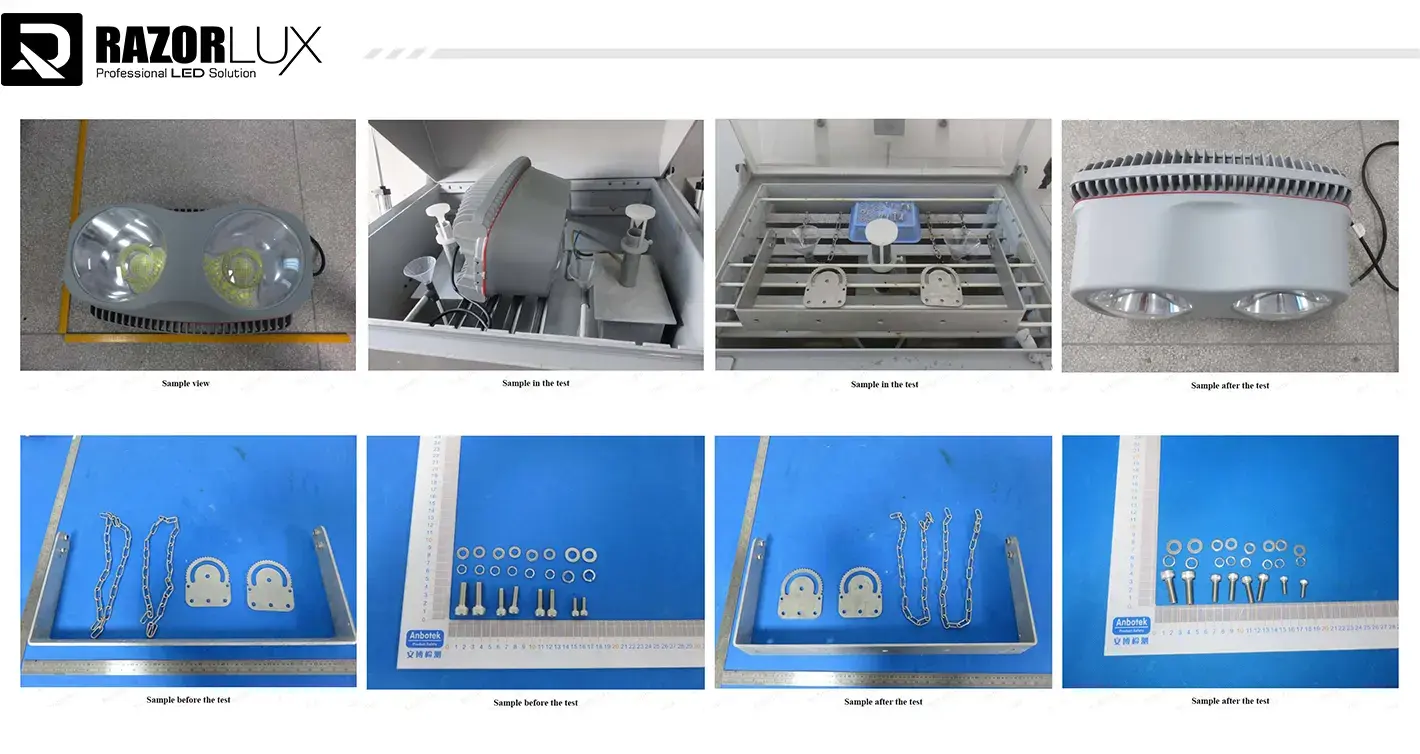
Because of these real-life factors, Razorlux puts a lot of emphasis on its product line's ruggedized construction and environmental protection ratings. Energy economy doesn't mean much if things break down quickly or need to be serviced often in tough situations.
Certification Standards and Energy Compliance
Certifications that are known to be valid back up claims of energy efficiency and make sure that lighting systems meet the regional rules that apply to commercial and industrial installations.
Understanding Energy Star and DLC Requirements
The DesignLights Consortium (DLC) sets performance standards for business LED lighting. These standards include minimum levels of effectiveness, power factor, and lumen maintenance. Products on the DLC list can get energy rebates that lower the project's starting costs. Products that are Energy Star certified meet U.S. EPA standards for efficiency. These validations from a third party give buying teams the confidence to choose energy-efficient options (DesignLights Consortium, 2023)⁹.
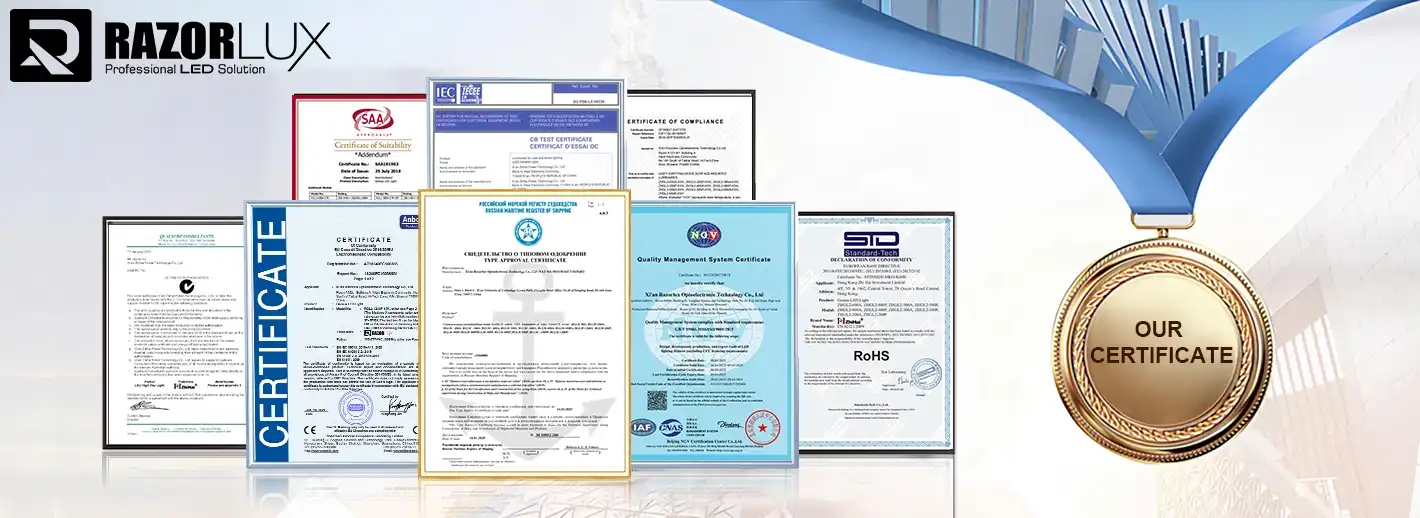
International Compliance for Global Projects
In Europe, tennis courts need to have a CE mark that shows they follow EU energy efficiency rules. Installations in Australia need to be certified by both the SAA and the C-Tick. For marine uses, DNV/GL or ABS norms are used. Razorlux keeps up with certifications like CE, RoHS, SAA, C-Tick, UL, DLC, CB, and ISO 9001, which lets it be used in a wide range of legal settings without having to wait for expensive re-certifications. This full set of certifications makes it easier for foreign facility owners and marine users to buy things.
Documentation for Rebate Applications
For utility incentive programs to work, they need detailed technical specs, photometric data, and certification papers. Complete paperwork packages speed up the refund process and make sure that facilities take advantage of any financial benefits that are available. When manufacturers offer detailed technical resources like IES photometric files, LM-79 test reports, and LM-80 lumen maintenance data, it's easier for buyers to apply for rebates, and it shows that they are honest, which builds buyer confidence.
Razorlux goods have a lot of different certifications that make it easier to make sure they are compliant and help with energy-saving buying efforts in maritime, industrial, and institutional areas around the world.
Conclusion
Tennis Court LED Flood Lights use less energy because of improvements in optical design, thermal management, power electronics, and semiconductor technology. When buildings switch from old metal halide or high-pressure sodium systems to new ones, they save 50 to 70 percent of their energy, get better lighting, and need less upkeep. Modern LED systems offer strong benefits in terms of total cost of ownership, thanks to their 130 lm/W efficacy, 50,000-hour lifespan, and strong environmental protection. Not only should the original specifications be looked at when making a purchase choice, but also the product's real-world durability, licensing credentials, and the manufacturer's support capabilities to make sure that it stays efficient throughout its operating lifetime. As the price of energy goes up and rules about sustainability get stricter, smart lighting investments become more important for the environment and the bottom line of buildings.
FAQ
1. What energy savings can facilities expect when switching to LED tennis court lighting?
When compared to metal halide systems, most facilities save 50 to 70% of the energy they use. A 400W LED fixture can replace lighting that uses 800–1000W and provides better uniform illumination. Savings vary depending on how long the facility is open, how much power costs, and how the system is set up, but four-court facilities usually save $3,000 to $5,000 a year just on energy costs.
2. How does color temperature selection affect energy efficiency?
Color temperature, which is measured in Kelvin, doesn't have a direct effect on how much energy an LED uses, but choosing the right one makes it work better. The range of 4000K to 5700K makes it easy to see, so buildings can meet lighting guidelines with fewer lights or lower wattages. Higher CRI values (Ra>80) make colors look better without using a lot more energy in good LED systems.
3. Do smart controls justify their additional cost?
Most occupancy sensors and dimming systems pay for themselves in less than three years by saving money on energy costs. Facilities with unpredictable usage patterns, like courts that aren't being used for long periods of time, see the highest returns. Because LEDs can turn on instantly, sensors can be used in ways that weren't possible with metal halide technology. This makes it possible for new systems to be more efficient than old ones.
Partner with Razorlux for Superior Energy-Efficient Sports Lighting Solutions
Cutting down on running costs while keeping the quality of the lighting at a high level requires both cutting-edge technology and experienced application support. Razorlux has been designing LEDs for more than 20 years and uses them to light tennis courts and factories all over the world. Our 400W flood lights with 52,000 lumens at 130 lm/W replace old 1000W fixtures and are certified to work in temperatures ranging from -40°C to 60°C. They also offer IP67 protection, IK10 impact resistance, and these features. We provide detailed technical instructions, the ability to make changes, and quick service that helps projects succeed from the beginning to the end of their operation. Email our team at sam@razorlux.com to talk about the lighting needs of your building and find out how our energy-efficient Tennis Court LED Flood Lights manufacturer solutions can help you save money and improve performance.
References
1. U.S. Department of Energy. (2021). LED Lighting. Office of Energy Efficiency & Renewable Energy. Retrieved from https://www.energy.gov/energysaver/led-lighting
2. Illuminating Engineering Society. (2020). IES LM-79-19: Approved Method for the Electrical and Photometric Measurements of Solid-State Lighting Products. New York: IES. Retrieved from https://www.ies.org/standards/
3. U.S. Green Building Council. (2022). LEED v4.1 Building Design and Construction. Washington, DC: USGBC. Retrieved from https://www.usgbc.org/leed/v41
4. DesignLights Consortium. (2023). Technical Requirements for Horticultural Lighting V5.0. Lexington, MA: DLC. Retrieved from https://www.designlights.org/solid-state-lighting/technical-requirements/
5. International Association of Lighting Designers. (2021). Sports Lighting Guidelines. Chicago: IALD. Retrieved from https://www.iald.org/
6. Navigant Research. (2022). LED Lighting for Commercial and Industrial Applications. Boulder, CO: Guidehouse Insights. Retrieved from https://guidehouseinsights.com/reports/led-lighting-for-commercial-and-industrial-applications