


_1750326878398.png)

Are LED Overhead Crane Lights Suitable for Outdoor Cranes?
Led Overhead Crane Lights work great for outdoor cranes as long as they are built to protect the environment. Rain, salt spray, temperature changes, and UV damage are just some of the problems that modern LED Crane Lighting systems made for outdoor use have to deal with. These problems aren't usually found in controlled indoor buildings. At Razorlux, we've seen a big change among port officials, builders, and owners of offshore platforms toward LED options that are both weatherproof and provide better lighting. Leading companies like GE, Philips, and Cree have set standards in this area. They have shown that LED fixtures that have IP67 ratings, corrosion-resistant housing, and wide voltage tolerance work better than metal halide and halogen systems in terms of reliability and total cost of ownership. The question isn't whether LEDs can work outside; it's about choosing lights that are made to do well in those situations.
Understanding LED Overhead Crane Lights and Their Suitability for Outdoor Use
Core Technology and Design Principles
Solid-state semiconductor technology powers LED overhead crane lights, which get rid of the flimsy filaments and gas-filled tubes that are common in traditional lighting. This main benefit directly translates to toughness in the outdoors. This is shown by our RGL-120A model, which has a unique multi-function design rated at 120W and a wide-voltage input (AC80-315V or DC80-400V) that keeps it running smoothly even when the power lines on a crane go through changes in voltage. Since there is no warm-up time, the screen is instantly bright, which is very important for workers who need to see right away in emergencies or when the weather changes quickly.
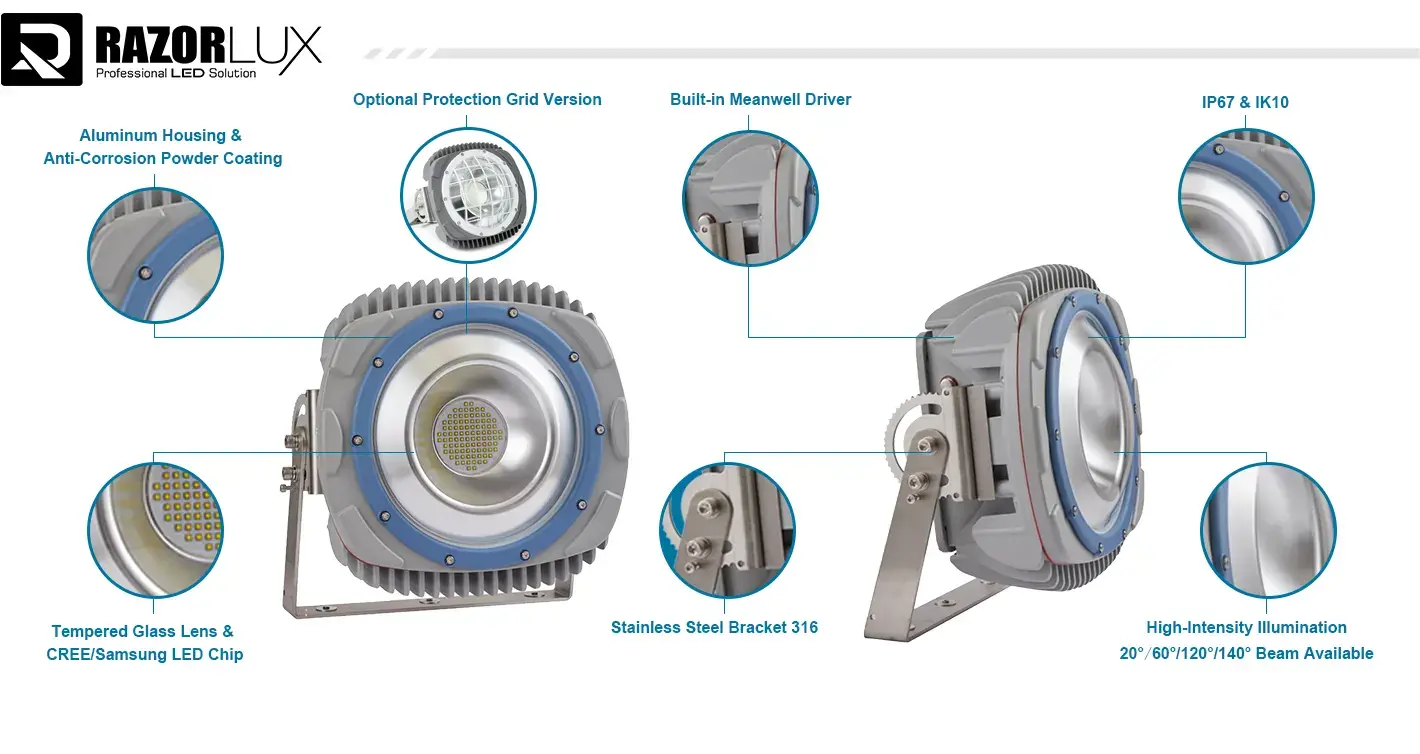
The main difference between indoor and outdoor LED lights is how well they guard against water and weather damage. Most indoor lights have an IP44 grade, which is high enough to protect them from dust and water. For outdoor crane use, IP65 is the bare minimum. However, IP67 offers better protection against brief submersion, which is important when fixtures have to deal with deck washing or storm conditions. Razorlux designs use powder-coated metal housings with stronger sealing that have been tested to stay together for 10,000 hours or more of salt spray exposure (ASTM B117 standard).
Weatherproofing and Environmental Resistance
Outdoor crane lights have to work in temperatures ranging from -40°C to 60°C and keep giving off the same amount of light. Thermal management is very important because LEDs quickly lose their quality in poorly designed products where heat can't escape properly. Modern lights use heat sinks with fins and materials that conduct heat well so that LED joints don't get too hot. Our engineering team proves this through thorough testing—each unit goes through thermal cycling to make sure the flux output stays stable across all working temperature ranges.
Corrosion protection is more than just a layer on the outside. Marine-grade screws, UV-stabilized cable glands, and stainless steel mounting clamps stop the corrosion that weakens fixtures over time. We have records of installations at Australian port sites where fixtures kept their structural integrity after five years of constant saltwater exposure. This is an example of how to properly specify materials.
Comparative Advantages Over Traditional Lighting
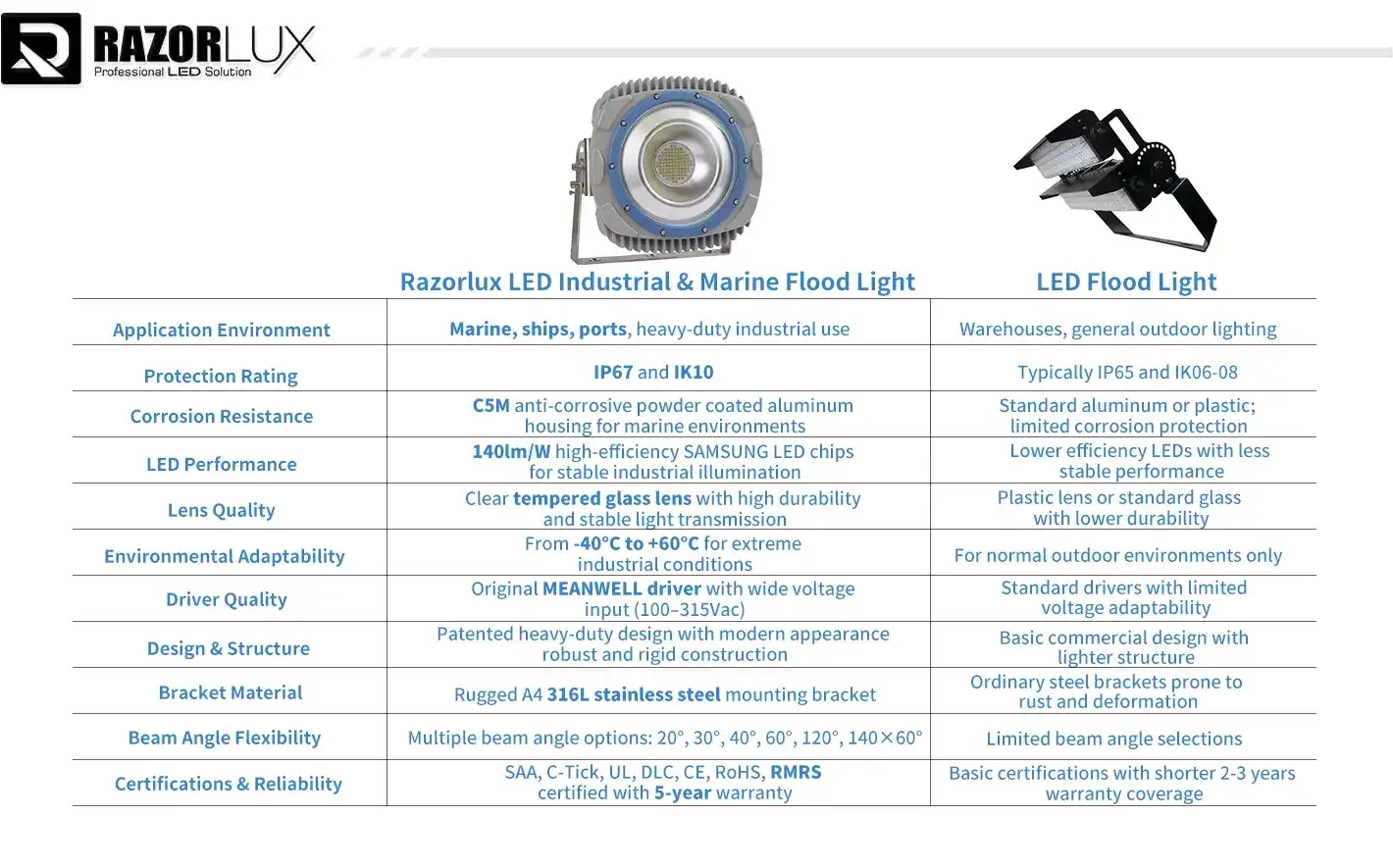
When used on an open crane, traditional metal halide and high-pressure sodium lights have a number of problems. The difference in energy use alone is reason enough to switch to LEDs. Metal halide systems that use 400W give off the same amount of light as 120W LED lamps, which means that crane teams can save 70% on power costs. This means that a factory with 20 gantry cranes will save a lot of money every year on electricity and carbon emissions. Through planned LED conversion, we've helped clients in the UAE cut the energy costs of their whole buildings by over $80,000 a year.
With LED technology, maintenance is done much less often. Usually, metal halide lights need to be replaced every 10,000 to 15,000 hours, which means doing dangerous work at heights. LED systems that last 50,000 hours or more cut down on replacement cycles by five times. Another important benefit is the ability to instantly restrike. When the power goes out, traditional HID lamps need 5 to 15 minutes to reach full output, which is a dangerously long time to be without light. LEDs reach full light instantly, so they stay safe to use even when the power goes out, which happens a lot in commercial electrical systems.
Core Benefits of Using LED Overhead Crane Lights on Outdoor Cranes
Energy Efficiency and Operational Cost Savings
With 130 lm/W of luminous efficiency, our RGL-120A type is a big step forward in turning electricity into useful light. This measure of efficiency has a direct effect on practical economics. Take a look at a normal container port. It has 30 rail-mounted gantry cranes, and each one has four lighting units that run 16 hours a day. Changing 300W metal halide bulbs to 120W LED overhead crane lights saves 180W per light, or 21.6kW across the fleet. This will save 126,144 kWh of energy over the course of a year, which could save anywhere from $15,000 to $25,000 in electricity costs, based on the rates in your area.
Not only does less heat output save energy directly, but it also lowers the need for HVAC in officer rooms, which makes the whole system more efficient. We've seen temperature drops of 3 to 5°C in the cabin when HID lamps are replaced with cool-running LEDs. This makes the operators more comfortable and lowers the load on the air conditioning.
Enhanced Safety and Visibility
The quality of the illumination is directly related to the safety of operations. Our lights achieve Ra>75 color rendering, which lets workers clearly see load marks, rigging parts, and safety vests for ground staff. This is very important when lifting heavy things, because if you don't check the load direction or rigging situation correctly, it could result in a terrible accident.
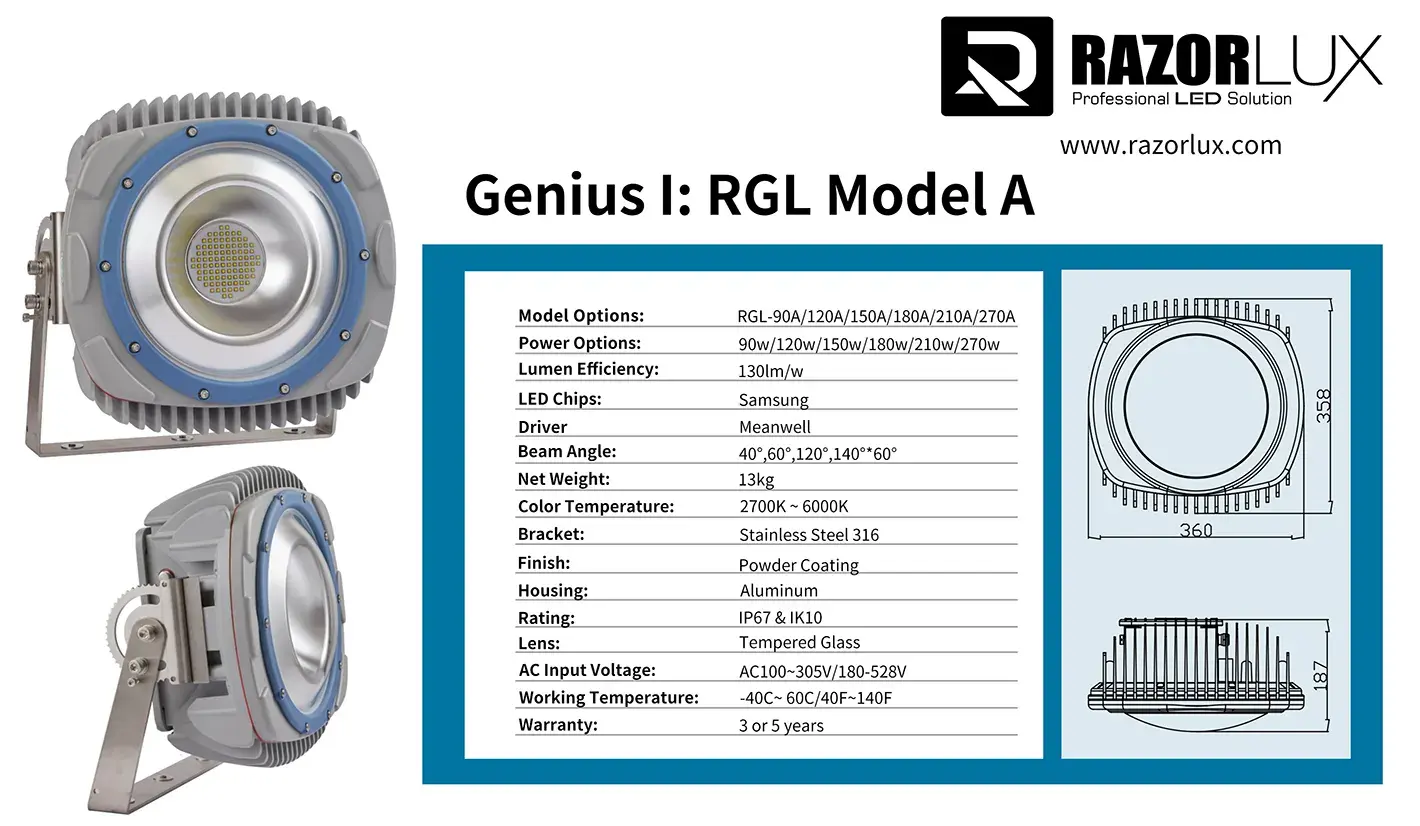
Choosing the right beam angle has a big effect on how the ground is covered. The RGL-120A has three settings: 60°, 120°, and 140° × 60°. This lets you precisely distribute light based on the shape of the crane and your needs. For high-mounting situations (20–30 meters), narrow 60° beams focus the strength, while 120° angles give a wider range for lower-mounted situations. We help buying teams choose the right beam angle by taking into account the mounting height, hook movement range, and light conditions in the area.
Glare reduction helps operators see better during long shifts. When lights aren't made well, they create areas with high contrast and shine glare into operators' lines of sight, which strains their eyes and slows their reactions. Professional lighting fixtures use optical diffusers and exact LED array positioning to spread light evenly without creating disability glare. These fixtures meet EN 12464-1 workplace lighting standards, which say how much glare can be present for industrial chores.
Extended Lifespan and Reduced Maintenance
The fact that good LED crane lights can work for 50,000 hours changes the way upkeep is planned in a big way. In traditional lighting programs, lamps are replaced every three to six months. Each change requires taking down the crane, getting safety permits, and hiring skilled workers. Under normal job cycles, LED systems work for 5 to 7 years before they need to be serviced. This makes planned maintenance less of a hassle and more of an event.
Component-level serviceability makes the useful life last even longer. Our modular design lets you replace the driver without having to replace the LED modules. This lets you fix the most common problem without having to replace the whole light. The total cost of ownership went down a lot with this method; a Mean Well driver costs between $45 and $80, but replacing the whole device costs between $400 and $600.
Vibration resistance keeps things from breaking down too soon in a dynamic crane setting. Traditional lights break filaments and arc tubes when they are hit with 5G to 10G shaking loads, but solid-state LED technology doesn't. We tried fixtures on crane models that mimicked the shock loads that happen during emergency braking and load swing. This made sure that the mechanical integrity was still good after more than 100,000 vibration cycles.
Installation and Maintenance Considerations for Outdoor LED Crane Lighting
Professional Installation Requirements
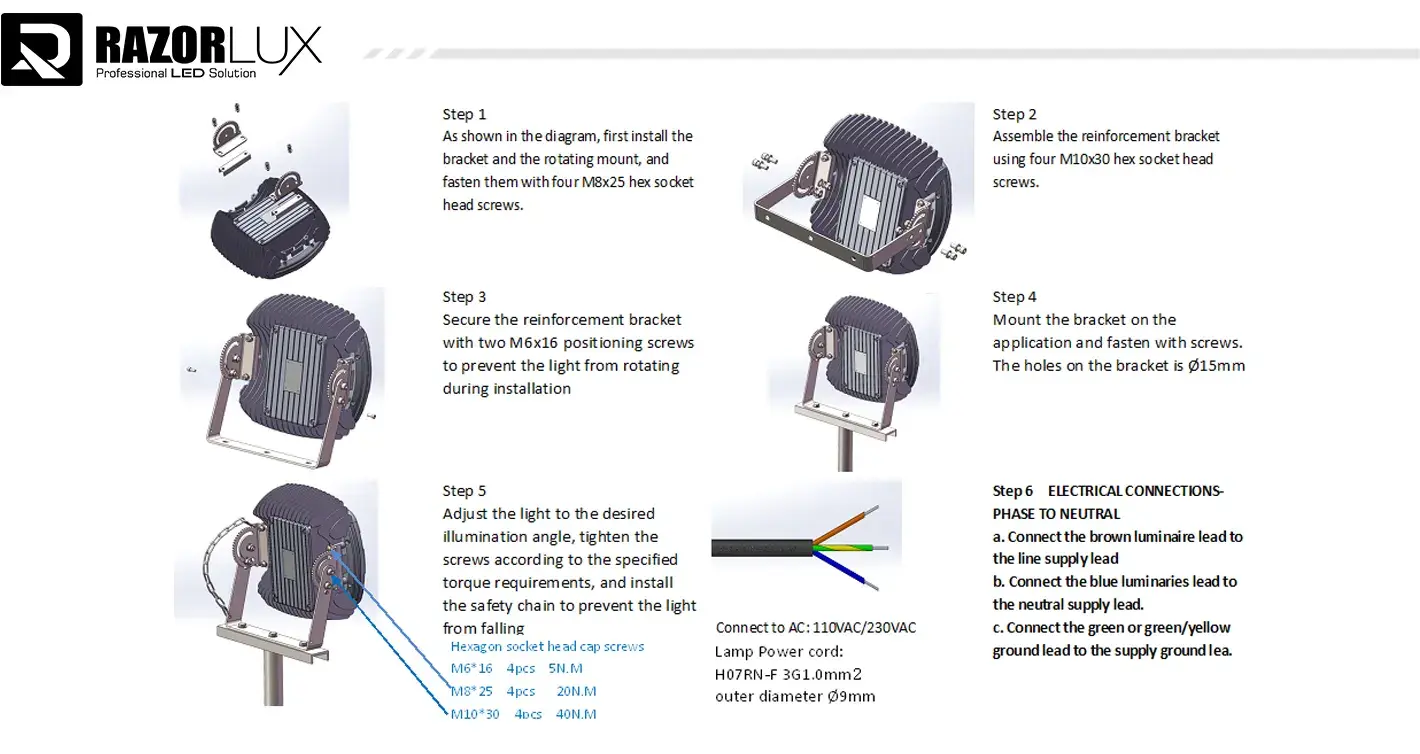
Installing LED overhead crane lights correctly sets the stage for long-term dependability. The mounting gear has to be able to handle the bending of the crane's structure without putting stress on the device housings. We need U-brackets made of stainless steel with rubber isolators that stop vibrations and screws of grade 8.8 or better. For electrical connections, you need marine-grade cable glands with an IP68 rating and conductors that are big enough to compensate for voltage drops over long cable runs. This is especially important when mounting fixtures more than 30 meters away from junction boxes.
Pay close attention to how you route your cables. Wiring that is exposed must be able to withstand UV damage, bending fatigue, and wear and tear from the crane's structure parts. We suggest flexible SOOW or STOOW jacket wires that have extra conduit safety at wear points. Proper strain relief stops wire fatigue at termination points, which is a typical way for setups that weren't done right to fail. In outdoor crane electrical systems, voltage stability is very important. Voltage changes more than 10% because of motor starting spikes, VFD harmonics, and long feeding runs. Wide-voltage drivers (80-315 Vac) with built-in surge protection rated for 6-10 kV transients are used in our lights.
Environmental Sealing and Weatherproofing
To confirm an IP67 grade, strict testing methods must be followed. Our lights are submerged in water up to a depth of 1 meter for 30 minutes, and then they are tested to make sure they work properly. This makes sure that no water gets in and compromises electrical safety. In docks, where decks are often washed, and during storms when wind-driven rain gets through regular weather seals, this amount of protection is very important.
The choice of gasket material affects how well the seal works in the long run. Silicone gaskets are better at withstanding UV light and extreme temperatures than regular EPDM materials. They keep their compression set qualities after thousands of thermal cycles. In warm settings, silicone seals have been seen to work for eight years while EPDM gaskets have failed in just three.
Managing condensation deals with a tricky but important problem. Differences in temperature between day and night can cause sealed fixings to condense on the inside. Pressure adjustment membranes (Gore-Tex style) are used in high-quality designs to keep liquid water out while letting moisture vapor escape. This stops the internal rusting that shortens the lifespan.
Routine Maintenance Protocols
Visual checks every three months catch problems as they start to happen before they become major problems. The maintenance teams should check the attachment hardware for looseness, the state of the gaskets for loss of compression, and the optical surfaces for salt residue or other industrial contaminants. Our clients can use review checklists to speed up the process, which only takes 15 minutes per crane.
Cleaning the lens keeps the light output at its best. Surface films are made by salt spray and industrial particles. These films lower transmission efficiency by 15–30% after months of building up. Cleaning it every three months with a pH-neutral soap and a soft cloth brings it back to full output. Do not use rough cleaners or high-pressure water washing, as these can damage seals or scratch glass surfaces. Monitoring the driver lets you know about problems early on. Mean Well drivers have safety circuits that can shut down the motor for no reason if the voltage drops. Recording stop events helps find electricity problems further up the line.
| Maintenance Task | Frequency | Estimated Time | Key Focus Areas |
|---|---|---|---|
| Visual Inspection | Quarterly | 15 min per crane | Mounting security, gasket integrity, lens condition |
| Lens Cleaning | Quarterly | 10 min per fixture | Salt/dust removal, transmission efficiency |
| Electrical Testing | Annually | 30 min per crane | Voltage stability, ground continuity, insulation resistance |
| Driver Diagnostics | Annually | 20 min per fixture | Protection circuit logs, thermal performance |
Choosing the Best LED Overhead Crane Lights for Outdoor Use
Critical Technical Specifications
For outdoor use, the IP grade is the most important thing to consider. The IP65 rating protects against dust and water jets, which is good enough for most covered outdoor areas. IP67 adds security against temporary submersion, which is important for sites that will be fully open to water or deck washing. Based on our hundreds of installations, IP67 is clearly the base standard for reliable LED overhead crane lights.
Its IK impact grade talks about how resistant it is to mechanical damage. The IK10 grade means that it can handle 20 joules of impact energy, which is the same as dropping 5 kg from 40 cm. This keeps you safe from hits from dropped tools, moved objects, and other things that happen a lot in industrial settings. Fixtures with lower ratings break or bend when they get hit, but IK10 units don't get damaged.
The practical efficiency is based on the lumen output and distribution. A common design mistake is choosing lights based only on their wattage, not their given lumens or beam pattern. Our 120W light gives off 14,400 stable lumens, which is about the same as a 250–300W metal halide setup. You must choose a beam angle that matches the installation height. Color temperature choice affects how well a job is done and how comfortable the person is. 5700K (cool white) gives you the best vision and wakefulness; 4000K, or "neutral white," combines visibility and eye comfort; 2700–3000K (warm white) lowers the amount of blue light.
Compatibility with Crane Systems and Controls
Careful voltage matching is needed for electrical system integration. Crane power methods are very different. Some use 110V power, while others use 220V, 380V, or 480V three-phase power. Wide-voltage drivers (80-315Vac) get rid of the need for separate transformers, which makes installation easier and lowers the number of places where something could go wrong. Being able to work with DC voltages (80–400 Vdc) is useful for battery-powered mobile cranes and naval uses that use DC distribution systems.
The ability to dim lights saves energy and gives you more working options. 0-10V analog dimming lets you connect occupancy monitors or daylight-collecting systems, which lowers the output during the day or when the system is not being used. DALI digital control lets you precisely dim lights and receive feedback, which lets you keep an eye on whole teams of cranes from one place. We've set up systems so that lighting levels can be changed on more than 50 tower cranes at the same time from control rooms on land.
Electromagnetic compatibility (EMC) safety keeps electronics in the crane from being harmed. Lighting, wireless remote controls, proximity sensors, and PLC systems all use the same electricity. Filtering and insulation built into good LED drivers keep conducted and radiating emissions below EN 55015 Class B limits. This makes sure that everything works together without any problems.
Comparative Brand Analysis and Selection Guidance
To choose between top makers, you need to know how their different value propositions work. For projects that need to follow the Buy American Act, GE Industrial has strong fittings that were designed and built in the United States. Philips focuses on lighting that is linked and can connect to the Internet of Things (IoT). Cree works on optical innovation and makes high-efficiency LED packages that get the most light per watt. European shipyards and offshore companies like Osram because it has high engineering standards and a lot of naval licenses.
Razorlux stands out from the other companies in this tough market. Our 20+ years of manufacturing knowledge and 200+ patents show that we keep coming up with new ways to improve engineering. The RGL-120A model has unique multi-function design elements that let one platform be used for a variety of tasks. This makes it easier for workers to keep track of supplies when they are handling mixed crane teams. Mean Well drivers give purchasing managers the power source stability they need, and Samsung LED chips give 130 lumens per watt of efficiency that makes LED investment worth it.
The project's status is directly affected by the certification portfolio. CE marking lets you enter European markets. The UL/DLC listing meets the needs of North America and the standards of the utility refund program. DNV/GL and ABS marine licenses show that a ship or offshore station meets the standards set by a classification society. The standards of the Russian Maritime Register are met by RMRS approval. Our lights come with this full set of certifications, which makes them easy to buy in all global markets.
| Specification | Razorlux RGL-120A | Industry Standard Range | Competitive Advantage |
|---|---|---|---|
| Power Consumption | 120W | 100-150W | 70% savings vs. 300W HID |
| Luminous Efficacy | 130 lm/W | 110-140 lm/W | Exceeds most competitors |
| IP Rating | IP67 | IP65-IP67 | Superior waterproofing |
| Voltage Range | AC80-315V / DC80-400V | AC100-277V typical | Widest compatibility |
| Operating Temperature | -40°C to 60°C | -30°C to 50°C typical | Extended range |
| Warranty | 5 years comprehensive | 3-5 years | Industry-leading coverage |
Bulk Procurement and Customization Options
When you buy in bulk, you can customize the improvement for each job. If you order more than 50 units, you can get custom beam angles, color temperatures, or mounting hardware that fits your specific needs without having to pay extra for tooling. Our team has built unique asymmetric optics for specific gantry crane uses where regular beam patterns let too much light into nearby work areas.
OEM partnerships give equipment installers and crane makers the chance to sell their own brands. Our ability to make things and our flexible minimum order quantity (MOQ) rules help crane makers who want to sell lighting solutions that are bundled under their own brand. This strategy helps them stand out in the market while using our technical knowledge and array of certifications.
Sample review programs lower the chance of buying something. We give engineering samples with 30-day review times so that technical teams can make sure they work well in real-world situations before committing to buying the whole fleet. This gets rid of the doubt about the specifications that causes costly changes to be made after installation.
Real-World Case Studies and Success Stories of Outdoor LED Crane Light Applications
Southeast Asian Port Container Terminal Upgrade
A big container port in Singapore had 24 rail-mounted gantry cranes that used 400W metal halide lighting systems that were getting old. During the rainy season, lamps often broke down, which put people in danger and caused delays in operations. Five to fifteen lamps had to be replaced every month across the entire fleet of cranes, which meant that the cranes had to be taken out of service and expensive work-at-height processes had to be done.
We did a full site review, which included measuring the amount of light that was there, writing down patterns of failure, and looking at the electrical equipment. The answer called for RGL-120A fixtures with an IP67 grade, 120° beam angles, and mounting heights of 25 meters. The old distribution system in the building caused electricity fluctuations, but wide-voltage motors were able to handle them.
Implementation happened during six months of planned repair windows, which kept operations running as smoothly as possible. Results were better than expected: the amount of energy used dropped by 68%, which is equal to 480 MWh per year. Over the next 18 months, the number of times maintenance lamps needed to be replaced dropped to zero. The terminal managers said that the better color rendering and less glare made the operators happier. The project paid for itself in 2.8 years by saving money on energy costs.
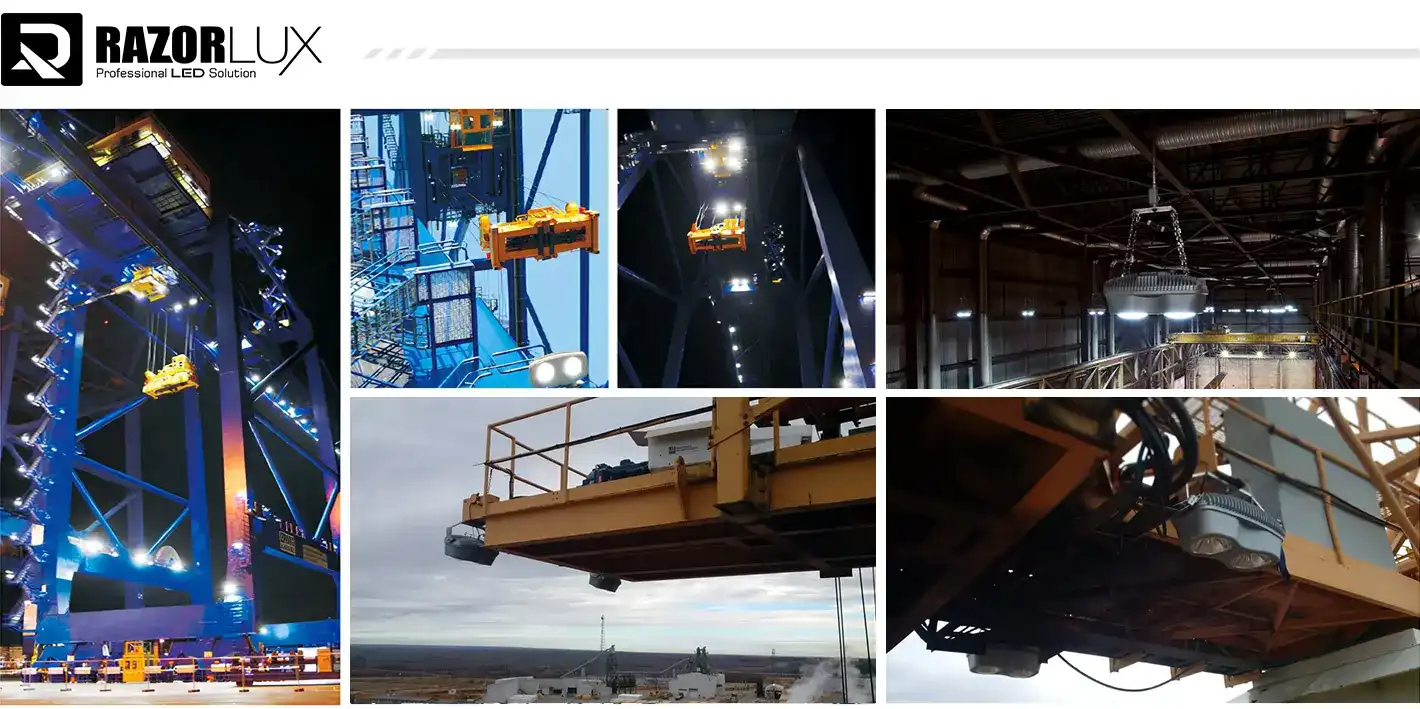
Norwegian Offshore Crane Platform Installation
Three tower cranes that work with supply ships on an offshore oil base in the North Sea needed better lighting. Previous lighting systems were damaged in 18 months by the harsh climate, which included salt spray, -20°C winter temperatures, and steady shaking. Platform managers needed solutions that could last 5 years or more so that they wouldn't have to rely on helicopters for upkeep.
Razorlux made LED overhead crane lights that are more resistant to rust by using marine-grade powder coating, duplex stainless steel hardware, and stronger wire ports. Thermal tests confirmed operation at -40°C, which is higher than what the base needed. Vibration tests showed that the structure could withstand 10G shock loads, which are typical of emergency stops on cranes.
It took three days to install during the summer repair time for the platform. Fixtures are still producing 98% of their original output after two years of use, with no failures. This is a huge improvement over the 18-month failure processes that were in place before. Platform management wants to get rid of helicopter repair trips, which cost between $15,000 and $20,000 each in shipping costs alone. This piece shows that LEDs can work in even the roughest outdoor crane settings.
Key Success Factors and Lessons Learned
These versions show themes that are always the same. Failure before its time is avoided by using the right specifications based on real-world situations. A lot of LED "failures" happen because the lights aren't up to code. For example, IP65 units are used where IP67 protection is needed, and surge protection isn't enough for places with a lot of electrical noise. These mistakes can be avoided by working with experienced sellers who ask deep questions about the conditions of the job.
Professional fitting is just as important as the quality of the product. We've seen fixtures with great specs fail because the wire gland wasn't installed correctly, there wasn't enough strain relief, or the mounting hardware transferred too much energy. These risks are greatly reduced when you work with providers who offer installation help or thorough installation instructions.
The whole-life cost study supports the requirements for premiums. When spread out over 7 to 10 years of use, the difference in cost between good and great fixtures—maybe $100 to $150 per unit—becomes almost invisible. If, on the other hand, you save $50 per device by making it so that it needs to be replaced every three years, the total cost of ownership will double, and you will have to do more upkeep over time.
Conclusion
When properly designed and installed, LED overhead crane lights not only work well for outdoor crane use; they work better. Weatherproofing through IP67 sealing, temperature resistance from -40°C to 60°C, and vibration resistance through solid-state design are all big problems that outdoor settings pose. Compared to older lighting technologies, LEDs are much safer and more cost-effective because they use less energy, last longer, and improve sight. For success, you need to work with providers who have been in the business for a while and know the subtle differences between perfect standards. Razorlux is the trusted partner for procurement managers, marine engineers, and facility workers who want the best outdoor crane lighting. We have a wide range of certifications, a lot of technical knowledge, and our products have worked well in a lot of different setups.
FAQ
Can LED crane lights withstand continuous saltwater exposure?
High-quality LED Overhead Crane Lights with an IP67 rating and marine-grade materials are very resistant to saltwater. Our sites in ports in the Middle East and on Norwegian offshore rigs are still working perfectly after years of being exposed to salt spray. Important parts include tools made of stainless steel (at least 316-grade), a powder finish that has been tested to meet ASTM B117 salt spray standards for 1000 hours or more, and silicone gaskets that can withstand UV light and changes in temperature. Cleaning the lenses regularly gets rid of salt layers that would otherwise block light, but the fixtures themselves don't rust, which kills cheap designs too quickly.
How do LED lights perform in extreme cold climates?
LED technology works better when it's cold outside. LEDs can start up right away at -40°C, while HID lamps have a hard time below -10°C. Our wide-voltage drivers have the ability to start up in cold weather and have heat control that is best for working in temperatures below zero. Installations in Norway and Russia show that they work reliably even in the Arctic cold. The practical problem changes from making sure the LEDs work well to making sure the wires are flexible enough. Below -20°C, normal PVC-coated cables become brittle and need SOOW or special cold-weather compounds.
What maintenance does outdoor LED crane lighting require?
As part of routine maintenance, the lenses are cleaned every three months, and the state of the mounting gear and gaskets is checked visually. This usually takes fifteen minutes per crane. Electrical testing once a year checks the consistency of the ground and the resistance of the insulation. The main service that needs to be done is replacing the drivers, which usually needs to be done every 7–10 years, based on the job cycle and the quality of the electrical environment. This low level of upkeep is very different from traditional lighting, which needs lamp changes every three months and frequent ballast service.
Are LED crane lights compatible with dimming systems?
You can use a 0-10V analog dimmer or DALI digital control with professional LED overhead crane lights. These systems work with occupancy monitors or daylight harvesting settings to lower output during the day or when no one is using them. Dimming LEDs makes them last longer and saves more energy than just using LEDs more efficiently. If control integration is going to happen, the procurement requirements should make it clear that dimming capability is needed, since not all lights come with this feature as standard.
Partner with Razorlux for Superior Outdoor Crane Lighting Solutions
Razorlux makes industrial LED lighting that is designed to work well in the harsh conditions of an outdoor crane. Our RGL-120A lights are weatherproof up to IP67, have an efficiency of 130 lm/W, and can work with a wide range of voltages (AC80-315V, DC80-400V). They have been used reliably in sites around the world. As a producer with more than 200 patents and full certifications (CE, UL, DLC, DNV/GL, ABS, RMRS), we offer procurement managers the technical know-how and stable supply chain they need.
Whether you're improving shipyard infrastructure in the Middle East, offshore platform sites in the North Sea, or port gantry cranes in Southeast Asia, our engineering team can make solutions that fit your exact needs. We know how to buy things, from detailed specs and evaluating samples to big orders and helping customers after the sale. Our full 5-year warranty and quick expert support give you the peace of mind you need for important infrastructure projects.
Email our team at sam@razorlux.com to talk about how to light your outdoor crane. For your project, we'll give you thorough technical specs, relevant case studies from similar uses, and cheap quotes. To work together with an LED overhead crane lights provider, you need to first understand your specific problems. Let's start that conversation today.
References
1. International Commission on Illumination (CIE). "Guide on the Limitation of the Effects of Obtrusive Light from Outdoor Lighting Installations." Technical Report CIE 150:2017. Vienna: CIE Central Bureau, 2017.
2. Marine Equipment Directive Council. "Essential Requirements for Navigation Equipment: Lighting Standards for Marine Applications." European Commission DG MOVE Publication Series, 2019.
3. Department of Energy. "LED Lighting Facts: Performance in Extreme Temperatures and Outdoor Environments." Office of Energy Efficiency & Renewable Energy, Washington, DC, 2021.
4. DNV GL. "Rules for Classification of Ships Part 4 Chapter 9: Electrical Installations—Lighting Systems." Det Norske Veritas, Oslo, 2020.
5. American Bureau of Shipping. "Guide for Lighting and Marking of Offshore Installations." ABS Technical Publications, Houston, 2018.
6. International Labour Organization. "Safety and Health in Ports: ILO Code of Practice—Section 12: Lighting Requirements for Cargo Handling Operations." International Labour Office, Geneva, 2016.
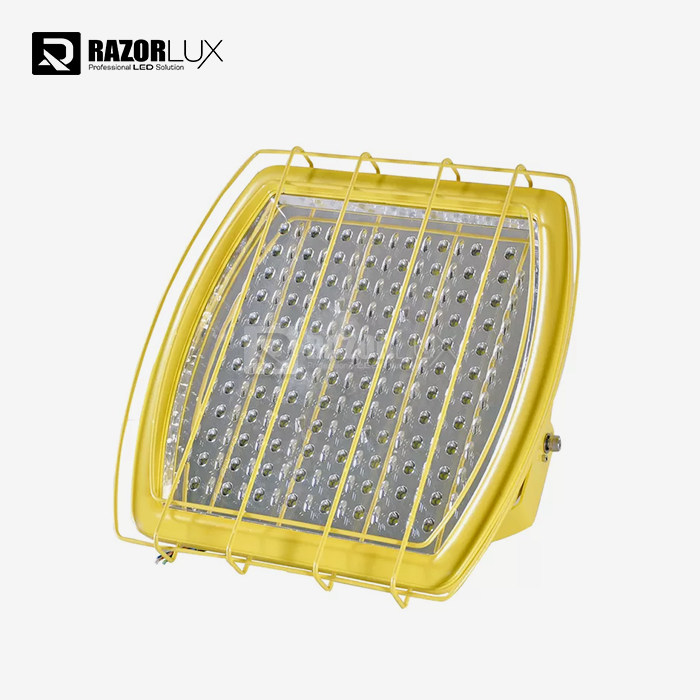 VIEW MORE305V 100w Led Explosion Proof Light Aluminum Paint Booth Lighting Design
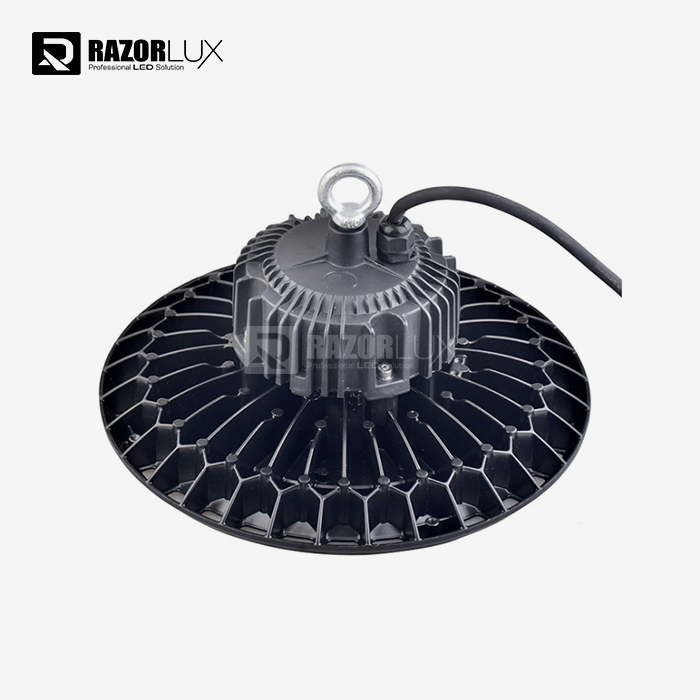 VIEW MOREindustrial warehouse light fixtures
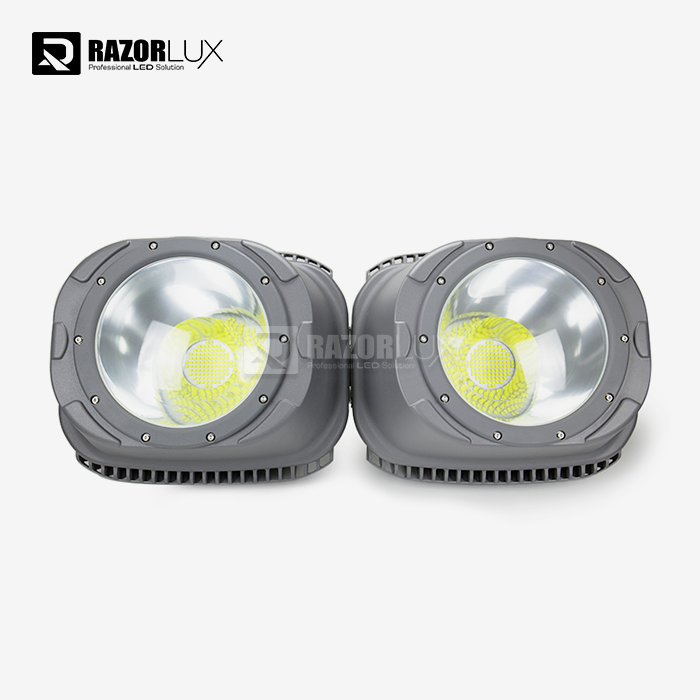 VIEW MOREled soccer field lights
 VIEW MOREDimmable Exterior Flood Lights
 VIEW MORE1000 Watt Flood Light Outdoor
 VIEW MOREFootball Field 140F Led Stadium Lights 1000 Watt 5700K Sports Lighting Fixtures
 VIEW MOREPortable 1000w Led Stadium Lights
 VIEW MORE1000 Watt Stadium Light