

_1750326878398.png)

Can LED Overhead Crane Lights Be Used in Shipyards?
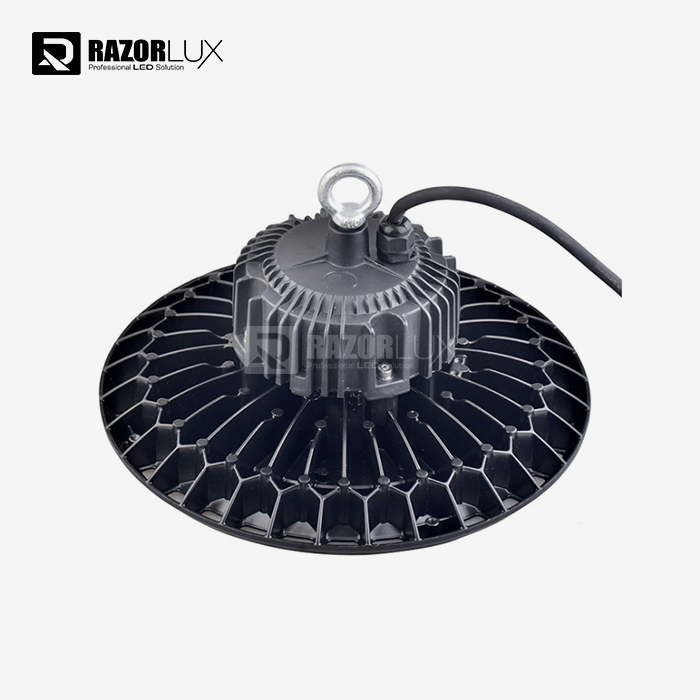
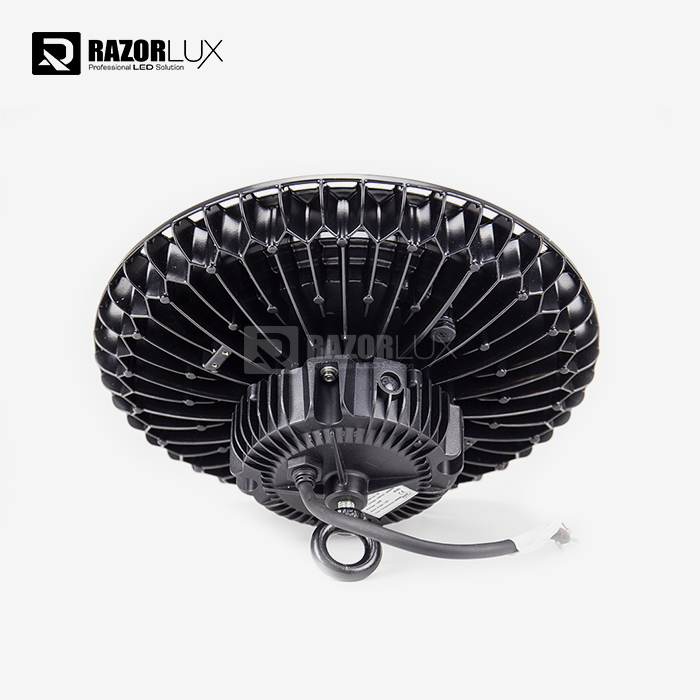
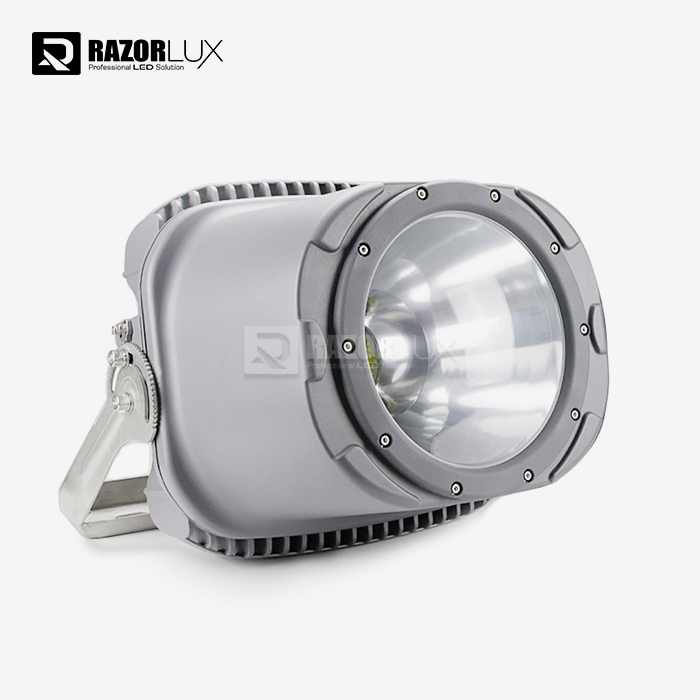
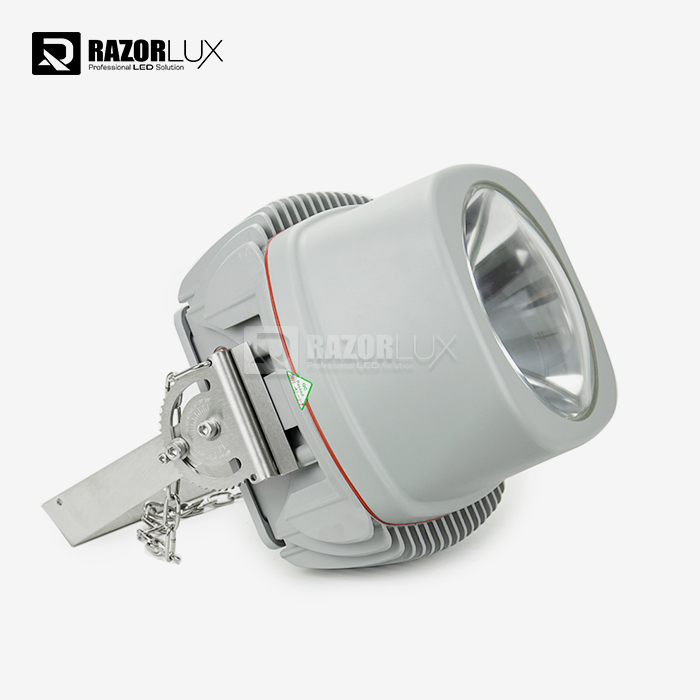
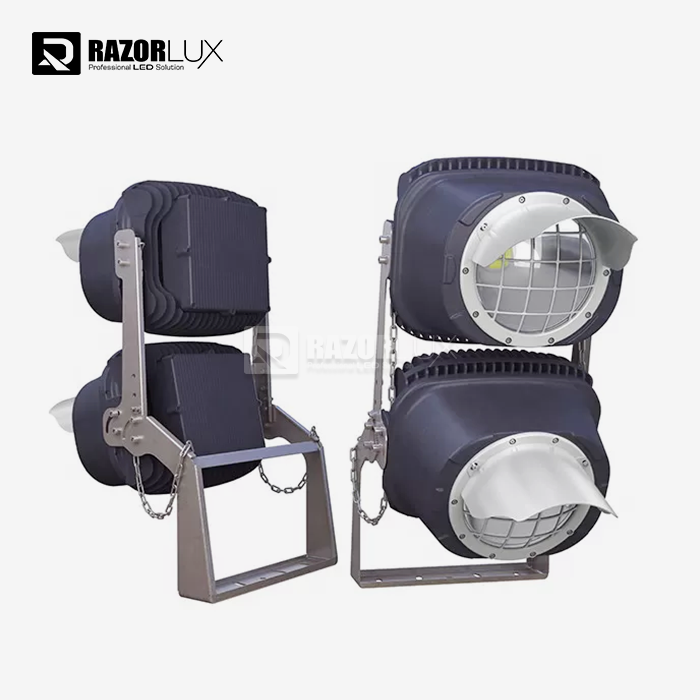
Lighting systems in shipyards need to do more than just light up the work area; they need to be able to last. The clear answer is yes: Led Overhead Crane Lights are now the standard in marine settings around the world and aren't just good for docks. These specialized lights give off a lot of light, can handle steady shaking, don't rust from salt spray, and work reliably in a wide range of temperatures. In harsh maritime conditions, traditional metal halide or halogen systems often break down. However, modern LED Crane Lighting combines IP67-rated protection with shock-resistant designs, making them perfect for gantry cranes, ship repair bays, and outdoor container handling zones where safety and uptime are essential.
Understanding LED Overhead Crane Lights and Their Benefits in Shipyards
Crane-mounted lighting in shipyards does two things: it gives workers direct job lighting and projects safety zones onto the deck below. When you switch from regular lights to solid-state LED technology, the performance and dependability change in a basic way.

How LED Technology Transforms Crane Lighting Performance
LED overhead crane lights don't have filaments or gas-filled tubes that break when they are constantly moving because they use semiconductor diodes to turn electrical current straight into photons. This solid-state design can handle the repeated shock loads that come with operating a crane, like quick starts, emergency stops, and load swings, without flickering or breaking down too soon. The technology gives off full light right away, which is very important for night shifts when workers need to be able to see clearly right away. Shipyards gain a lot from the fact that LED lighting can be pointed in specific directions. Traditional bulbs give off light in all directions, which wastes 40% of their output into the device housing. LEDs, on the other hand, use accurate optics to control the patterns of light they give off. Beam angles of 60°, 120°, or uneven 140°x60° make sure that light gets to the load hooks, rigging points, and surrounding deck areas where crane operators need it, without spilling into other work areas or making other crane teams glare.
Maritime-Specific Advantages for Shipyard Applications
The corrosive atmosphere of the ocean kills normal lights within months. Salty air gets into devices and eats away at electrical contacts and reflective surfaces. Multiple layers of protection are built into LED overhead crane lights made for shipyards to deal with these problems. Marine-grade powder-coated aluminum housings resist oxidation, stainless steel brackets keep the structure strong, and IP67-rated seals keep water out even during heavy rain or pressure washing. Extreme temperatures are also a problem. Shipyards in places like Norway have to deal with subzero temperatures in the winter, while sites in the Middle East have to deal with temperatures over 50°C in the summer. Heat-sink fins, thermally conductive paths, and temperature-compensated drivers are all parts of high-quality LED systems that keep the light output fixed from -40°C to +60°C. This thermal stability stops the color change and loss of lumens that happen with cheaper goods.
The amount of energy used has a direct effect on operating budgets. Over the course of its useful life, a single dock crane that works 16 hours a day uses a lot of power. If you replace a 300W metal halide bulb with a 120W LED unit that gives off the same amount of light, you'll save 60% on energy costs, which will save you money across a fleet of cranes. Over five years, this efficiency adds up to big savings that cover the cost of the initial investment.

Longevity and Maintenance Cost Reduction
In traditional crane lights, the bulbs need to be changed every 6 to 12 months. This requires the crane to be shut down, work platforms to be raised, and electricians to do the work. Each replacement costs hundreds of dollars when safety rules and lost output are taken into account. LED technology increases operating life to 50,000 hours or more, which is the same as 8 to 12 years of constant use in a shipyard. This means that repair cycles are rarely needed during the warranty time. The upkeep benefit goes beyond just not having to change the bulbs. Usually, ballasts and ignitors fail without the lamps, which makes failure points hard to predict. Over-voltage safety, heat shutdown, and wide input voltage ranges (AC 80-315V / DC 80-400V) are built into integrated LED drivers from companies like Mean Well. These drivers can handle the unstable power conditions that are common in crane electrical systems. Because it is so strong, it doesn't have annoying fails that stop important lifting operations when ships are on tight supply schedules.
Comparing LED Overhead Crane Lights to Traditional Lighting Options in Shipyards
When purchasing managers look at changes to crane lights, they need more than just marketing claims to make their decisions. Performance data from real-world situations shows that LED overhead crane lights and older technologies work very differently.
Energy Efficiency and Operational Cost Analysis
For many years, metal halide lights were the standard on port cranes. They provided high-intensity discharge lighting that could see through dust and sea mist. When ballast losses are taken into account, a standard 250W metal halide system uses about 290W and puts out about 20,000 lumens at first, which is an efficiency of 69 lumens per watt. Lumen decline lowers output by 30–40% after 6,000 hours of use, so over-wattage designs are needed to keep minimum lighting levels.
Similar 120W LED overhead crane lights produce 14,400 lumens at 130 lm/W, which is more than metal halide lights but uses 58% less power. The better performance comes from direct electroluminescence instead of generating heat that is wasted. After more than 50,000 hours of use, LED lumen maintenance stays above 70% (L70 grade), which means that the brightness stays the same over the service life without the need for extra design.

When you add up the costs for all the items, the effect on the budget becomes clear. Every year, a factory with ten gantry cranes, each with four lighting points, uses:
| Lighting Type | Wattage per Fixture | Annual Energy (kWh) | Energy Cost (@$0.12/kWh) | Replacement Costs (5 years) | Total 5-Year Cost |
|---|---|---|---|---|---|
| Metal Halide 250W | 290W | 162,624 | $19,515 | $18,000 | $116,575 |
| LED 120W | 120W | 67,392 | $8,087 | $0 | $40,435 |
The comparison shows a 65% drop in total ownership costs, which doesn't include the money saved on labor costs and the time the crane had to be shut down for repair.
Durability Under Vibration and Shock Loads
Crane-mounted fixtures are subject to mechanical pressures that aren't present in fixed setups. When the bridge moves, the trolley moves, and the load is lifted, acceleration forces cause the lights to vibrate and hit things. Metal halide lights have fragile spark tubes and electrode assemblies that break when they are shaken for a long time. Halogen filaments, on the other hand, get hot spots and break before they should.
There are no moving parts, glass cases, or pressurized air inside LED packages. When placed on metal-core PCBs and surrounded by silicone, semiconductor chips stay physically stable even when subjected to the 5G to 10G shaking loads that are common in industrial cranes. Professional fixtures have extra shock-absorbing features like vibration-dampening mounting brackets, secondary retention cables, and strengthened lens retention systems that keep parts together even when the crane stops suddenly or hits something by mistake.
Environmental Protection and Safety Features
Electrical equipment has a hard time working in shipyards because of the humidity, dust, chemical fumes, and changes in temperature. Protection ratings tell you how well a fixture keeps out dirt and dust. For example, an IP65 rating means that the fixture is dust-tight and can withstand water jets, while an IP67 rating means that it can withstand being submerged up to one meter deep.
Premium LED crane lights are sealed in a multi-step process that achieves an IP67 rating. These steps include compression seals between housing sections, cable glands with strain relief, and potted driver spaces that block moisture paths. This shielding is very important when the ship's deck is being washed, when it rains, and when there is a lot of humidity, because condensation forms inside fixings that aren't sealed well enough, leading to electrical shorts and rust.
Impact resistance is just as important in work areas where things that are swinging, materials that are being lifted, or service tools may come into contact with light fixtures. The device meets the highest standard, IK10, which means it can take 20 joules of impact energy, which is the same as dropping a 5 kg object from 40 cm. Glass lenses made of polycarbonate and housings that are reinforced keep interior parts safe and keep broken pieces inside so they don't fall on people below.
Installation and Safety Considerations for LED Overhead Crane Lights in Shipyards
A successful application includes more than just choosing the right products. It also includes following the right building methods, integrating the electrical systems, and following safety rules.
Pre-Installation Assessment and Planning
To light a crane well, you must first do an optical study. At mounting heights between 15 and 40 meters, the beam angle needs to be carefully chosen to reach the desired lighting levels, which are usually 200 to 300 lux on the work surface for precise setup tasks. Narrow 60° beams focus light output over long throw distances, while 120° designs work better for lower mounting heights and more area covering.
Integration problems can be avoided by checking for electrical connectivity. Crane power systems are very different. Some use a standard 230V AC source, others 480V three-phase distribution, and mobile gantry cranes may work on DC bus systems with voltages between 80V and 400V. Good LED drivers can handle this range of voltages by automatically reading wide voltage inputs, so you don't need to buy extra transformers or stock that is only for one voltage.

Long-term dependability is affected by structural growth issues. Fixture weight (usually 8 kg) plus dynamic loads from the crane moving must be able to hold on to the attachment points. Instead of sheet metal panels that bend and wear out, mounting brackets made of stainless steel should connect to strong structural parts like crane bridge girders or trolley frames. When you handle your cables properly, using strain relief and safe conduit, you can keep the conductors from getting damaged by wear and tear or repeated bending.
Safety Features and Compliance Requirements
Anti-glare glasses protect the eyes of operators who work long shifts. Looking directly at high-intensity LEDs can hurt your eyes and make you lose your ability to adapt, which can make you less aware of your surroundings. Precision mirrors and diffuser lenses spread the light evenly over the target area while keeping the direct brightness below 10,000 candelas per square meter. This meets safety standards for industrial lighting.
Having emergency lights makes things safer when the power goes out. Battery-powered LED systems keep the minimum amount of light on for 90 to 180 minutes so workers can safely secure loads and get down from high places when the power goes out in the building. This backup is very important in shipyards where getting people out of busy building zones needs good visibility.
Compliance with regulations changes from place to place, but for marine uses, standards from classification groups like DNV-GL, Lloyd's Register, or ABS are often used. Type approval certifications showing vibration strength, electromagnetic compatibility (EMC), and fire safety performance are needed for LED lights used on ships. Light safety standards like IEC 60598 and photobiological safety standards like IEC 62471 are usually followed by port cranes that are based on land.
Troubleshooting Common Issues
Flickering is often a sign of unstable power or a driver that doesn't work with the circuit. When the motor starts up or when regenerative braking is used, the power in the crane's electrical circuits changes. If LED drivers don't have enough input capacitance or a wide voltage range, they might go into safety mode, which makes the lights flicker. If you choose motors with a power factor of more than 95% and a total harmonic distortion (THD) of less than 10%, they will work reliably even when the power goes up and down.
Even though the device has an IP67 rating, moisture usually gets in because the cables weren't installed correctly. Cable glands need to be tightened to the right torque levels and the right size for the width of the wire. Individual seals or approved multi-conductor glands are needed for multi-conductor wires. As part of regular maintenance, the state of the gaskets is checked, and joints that can become free from vibration are retightened.
Changes in color temperature or uneven lighting are signs of problems with heat management. If there isn't enough heat loss, the joint temperature rises, which speeds up lumen degradation and changes the color to yellow-green. This happens when dust and oil buildup block the heat sink fins or when things are put in places that don't have enough airflow. Maintaining good heat performance means keeping things clean and making sure there is at least some space around fixtures.

Procurement Insights: Selecting and Buying LED Overhead Crane Lights for Shipyards
When you do strategic procurement, you have to weigh technical requirements against the total cost of ownership and the skills of the seller.
Critical Specification Parameters
When looking at LED overhead crane lights for use in shipyards, procurement managers should put these technical features at the top of their lists:
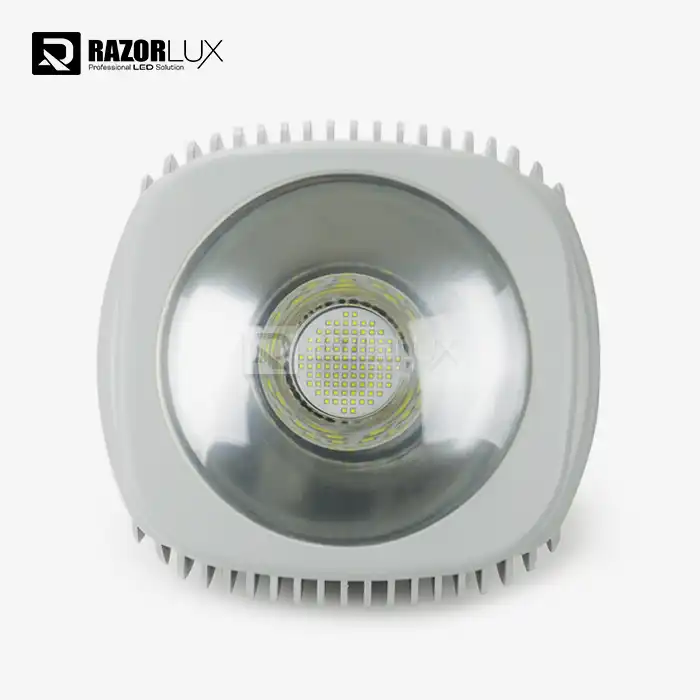
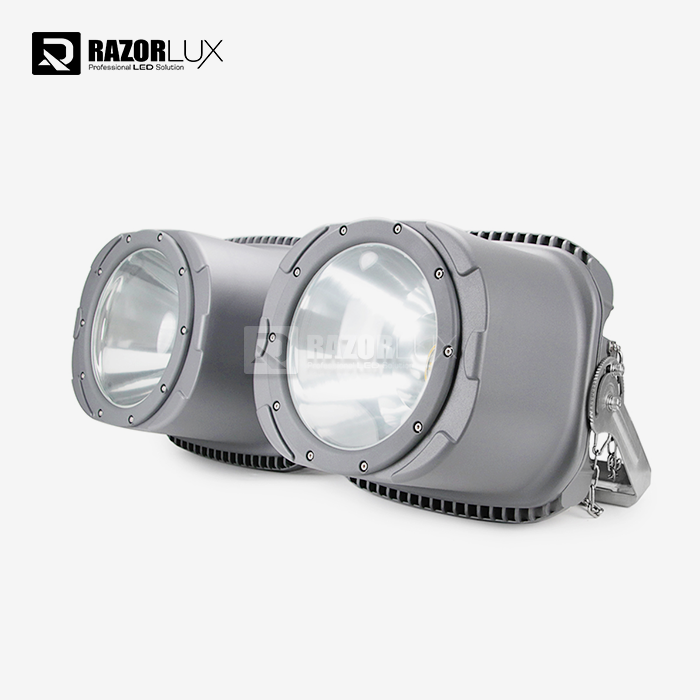
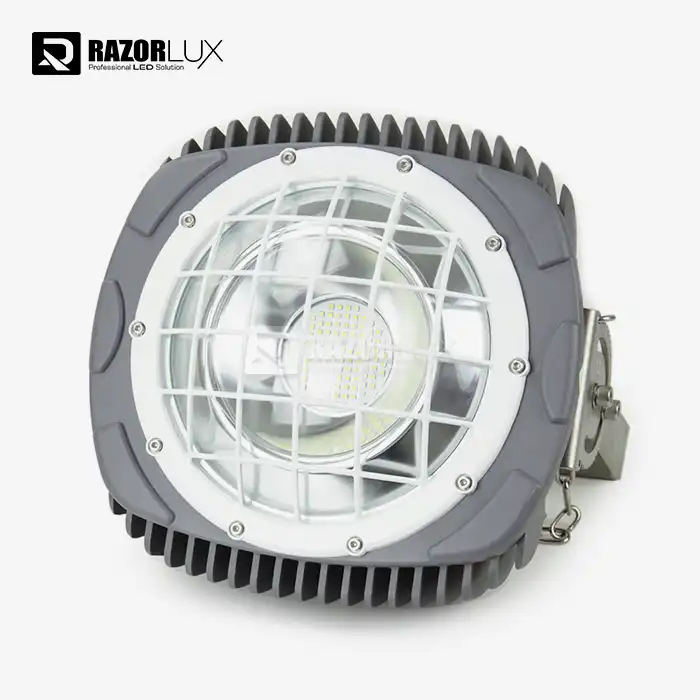
- Luminous Efficacy and Output: A system efficiency of at least 130 lm/W means that the LED chips are of good quality and the driver design works well. Based on the installation height and beam angle, the total light output should meet the photometric needs. The Razorlux RGL-120A gives off 14,400 lumens at 130 lm/W, which is the same amount of light as 250–300W HID lamps but only uses 120W of power overall.
- Environmental Protection: Gantry cranes that work outside and in wet areas must have a rating of at least IP67. Shop cranes that are protected and have temperature control can have a rating of up to IP65. IK10 impact protection keeps mechanical damage from happening. Marine-grade aluminum with a polyester powder coating is used to make housings that don't rust. These materials make service life longer in salt-spray settings than 3,000 hours, according to ASTM B117 tests.
- Electrical Compatibility: It works with a wide range of input voltages (AC 80-315V / DC 80-400V), so it doesn't need any extra parts to connect to different crane power systems. Power factor >0.98 and THD <10% make sure that the system works well and meets utility standards. Damage from inductive switching, which is common in crane motor circuits, can't happen when there is surge protection rated for 6–10 kV rapid absorption.
- Component Quality: The name of the driver has a big effect on how reliable it is. Mean Well, Inventronics, and Philips Advance drivers have been used in industrial settings before and worked well. It doesn't matter which company makes an LED chip; Samsung, Lumileds, and Osram parts maintain their brightness levels and colors better than common options. Instead of allowing similar substitutes, procurement requirements should require name-brand parts.
- Certification and Compliance: Required certifications depend on the market but usually include CE marking (for the European Economic Area), UL/DLC listing (for North America), RoHS compliance (for restricted substances), and marine classification society approvals (DNV-GL, ABS, Lloyd's) for fixtures used on ships. Having ISO 9001 certification means that quality control is used throughout the whole production process.
Supplier Evaluation Criteria
More than the specs of the goods, long-term satisfaction depends on the choice of supplier. Established producers with experience in the marine business know what shipyards need to run and what the rules are. Razorlux has been around since 1998 and has over 200 patents covering heat management, optical design, and power control technologies that are specifically made for use in tough environments.
Technical help skills are very important when making specifications and fixing problems after installation. During the quotation step, suppliers should offer photometric estimates, CAD mounting plans, and help with electrical integration. Responsive support infrastructure—usually within 24 hours for technical questions—is a sign of good support.
Flexibility in customization meets the needs of each job. Fixtures can be made to work best in certain placement situations by changing the beam angle, the mounting bracket, the wire length, and the color temperature. Integrators and wholesalers who are making their own product lines can benefit from OEM branding choices.
Sample Testing and Validation
Sample evaluations should be done before large orders are placed. The thickness of the housing, the quality of the fasteners, the construction of the cable gland, and the clarity of the lens are all features of the build quality that can't be seen in the specs. Bench testing compares the stated specs of electrical characteristics, such as real power consumption, power factor, and voltage range function.
Field testing in real-world working circumstances is the best way to prove something. Putting samples on typical cranes for 30 to 60 days lets you see how well they work in real-life shaking, temperature, and weather conditions. Final selection choices are based on what operators say about the quality of the light, the glare, and the coverage patterns. Thermal imaging during operation makes sure that heat is being drained properly and finds possible hot spots that could mean that the design isn't working right.
Warranty and After-Sales Considerations
Warranty terms show how confident the maker is in the product's longevity. Standard guarantees cover LED modules, drivers, and housing for different amounts of time: 5 years for electrical parts and 10 years for structural parts. This shows that the product is of high quality. Managing the warranty is just as important as the warranty itself. Clear claim procedures, fair response times (48–72 hours), and simple new shipping processes all help keep downtime to a minimum in the event of a rare failure.
The level of technical documentation helps construction teams and upkeep workers. Full assembly guides with directions in multiple languages, wiring diagrams, photometric data, and dimensional models make setup easier. Maintenance guides with cleaning instructions, inspection plans, and solving flowcharts keep things in good working order and stop them from breaking down early because they weren't taken care of properly.
Case Studies and Future Trends of LED Overhead Crane Lights in Shipyards
Real-world applications show how useful LED crane lighting is, and new technologies hint at what it might be able to do in the future.
Documented Shipyard Retrofit Results
A big factory in Europe that builds offshore platforms got rid of 48 metal halide lights and put in 120W LED systems in six gantry cranes. Monitoring of energy use before the upgrade showed that the crane lights alone used 672 kWh of energy every day. After the installation, tests showed that 278 kWh were used every day, which is a 58.6% drop and a €47,000 annual savings at the current industrial energy rates. During the 24-month review time, maintenance records showed that none of the LEDs failed, compared to 31 metal halide lamp replacements that had to be done before. This saved 186 maintenance hours worth €9,300.
Measurements of the light level showed that the quality of the lighting had increased. Average deck lighting went from 187 lux to 264 lux, even though the power was lower. Uniformity ratios also went from 0.42 to 0.71, which made it easier to see features on the rigging. Operator polls showed that during precision lifts, they had less eye strain and better depth awareness, which led to a 23% drop in minor accidents involving loads touching structures.
A port in Australia that used container gantry cranes near the coast had lighting problems that were caused by salt spray rusting. Even with protective coats, traditional lights had to be replaced every 18 months. Installed in 2019, IP67-rated LED systems will keep working without problems until 2024. This shows that properly defined LED technology is better at protecting the environment. The plant dodged 64 planned fixture changes worth AU$128,000 and the costs that came with crane downtime.
Emerging Technologies and Integration Capabilities
Smart lighting settings are the next step forward in how cranes are lit. For example, wireless sensors can tell where a crane is and change the amount of light it gives off automatically based on activity: full brightness when lifting is happening, less light when the crane is not working, and no light at all when the crane is parked overnight. This flexible control cuts energy use by an extra 15–25% on top of the base LED efficiency. It also increases the life of components by reducing heat stress during times of low demand.
IoT connection makes it possible for repair programs to plan. Diagnostic sensors built into LED drivers keep an eye on things like temperature, voltage, current, and running hours and send information to building management systems via industrial Ethernet or wireless protocols. Algorithms look at patterns to predict failures weeks in advance, organizing replacements during planned maintenance windows instead of having to deal with emergency outages when operations are important.
Integrated safety devices use both light and video displays to warn people. Modern LED overhead crane lights project bright lines on the deck surface, making safety zones that are always changing as the crane moves. Red warning lines let people know when they are close to something dangerous, and yellow safety zones show where people are not allowed to go. This visual communication adds to sound alarms that are hard to hear in busy shipyards, addressing a major cause of accidents involving cranes.
Color-tunable LED panels let you adjust the lights to fit your needs. For detailed work, cooler color temperatures (5000–6500K) improve contrast detection and visual sharpness. On the other hand, warmer temperatures (3000–4000K) lower glare and eye strain during long tasks. Programmable controls let workers choose the color temperature they want or have it change instantly based on the time of day. This helps keep circadian rhythms steady during night shifts.
Regulatory Evolution and Sustainability Requirements
Environmental laws are making it more and more necessary for industrial sites to use tools that use less energy. The Ecodesign Directive of the European Union sets base standards for efficiency and phases out lighting systems that aren't efficient. Title 24 in California and related laws in other North American countries set strict limits on the amount of power that can be used in new buildings and big renovations. LED technology is the only thing that meets all of these needs and does a better job, so it's the only choice for port projects that look to the future.
Green building standards like LEED, BREEAM, and Living Building Challenge give points for installing lighting that uses less energy, has low mercury content, and uses less energy for running the building. When shipyards want to get certified for sustainability or meet customer environmental requirements, LED lights can help them reach the necessary standards. Getting rid of mercury, lead, and other harmful materials from LED lights makes them easier to throw away when they're no longer useful and makes it easier to follow environmental rules.
Conclusion
It has been shown that LED overhead crane lights are better for dock use by saving energy, requiring less upkeep, and making operations safer. The technology can handle difficult conditions in marine environments, including corrosion, vibration, and a wide range of temperatures. This makes it a straight answer to the problems that destroy regular lights. Even though the original investment is higher than with older technologies, the total cost of ownership study always shows that the technology pays for itself within 18 to 24 months by saving money on energy costs and maintenance costs. When procurement managers select LED crane lighting, their facilities are set up to meet changing energy efficiency laws and environmental standards while also achieving real operating improvements.
FAQ
Can LED fixtures withstand the salt-spray environment in coastal shipyards?
High-quality LED overhead crane lights made for naval use have multiple layers of defense against corrosion. Electrical parts can't get wet with salty moisture because of IP67-rated seals, and marine-grade powder-coated aluminum housings and stainless steel brackets don't rust. Fixtures that have passed the 1000+ hour ASTM B117 salt-spray test show that they are durable in coastal settings. Regular cleaning to get rid of salt deposits that have built up makes the service last even longer. Products with normal powder coating and zinc-plated steel will rust quickly in salt spray situations; it doesn't matter what the IP rating is.
What maintenance do LED crane lights require?
Compared to traditional lights, LED systems don't need as much regular upkeep. Quarterly visual inspections verify mounting security and check for physical damage from impacts. Cleaning the heat sink fins every six months gets rid of the dust and oil that builds up on them and could hurt their thermal performance. Electrical checking once a year makes sure that the voltage, current draw, and ground connection are all correct. Metal halide systems need new bulbs and ballasts every 6 to 12 months and 3 to 4 years, respectively. But good LED fixtures don't need any care for 8 to 12 years in normal shipyard circumstances. The dramatic drop in service needs immediately leads to lower lifetime costs and more cranes being available.
Which certifications matter most for shipyard crane lighting procurement?
Required certifications rely on where the work is going to be done and what the rules are in that area. When something has a CE mark on it, it means that it meets European safety, health, and environmental standards. Having a UL or ETL listing shows that you follow North American safety standards. RoHS certification shows that dangerous chemicals are limited. Fixtures that are put on ships that are still being built must get approval from marine classification societies like DNV-GL, ABS, and Lloyd's Register. For installations in dangerous places, industrial sites prefer IECEx or ATEX approval. Component approvals are also very important. For example, LED modules must be checked according to LM-80 to make sure they maintain their lumen output, and drivers must meet UL 8750 or IEC 61347 standards to make sure the quality of the whole fixture assembly.
Partner with Razorlux for Proven LED Overhead Crane Light Solutions
Razorlux makes LED overhead crane lights that have been tested in the field and are designed to work in harsh port conditions. Our RGL-120A line has 130 lm/W economy, IP67/IK10 security, wide voltage compatibility (AC 80-315V / DC 80-400V), and real Mean Well drivers for the most reliable performance possible. Since 1998, we've worked with big shipyards, offshore platforms, and heavy industrial sites around the world to develop more than 200 patents in LED technology. Each piece goes through strict quality checks, such as vibration testing, salt spray exposure, and temperature cycling, to make sure it will work in your environment. As a reliable company that makes LED overhead crane lights, we offer full technical support, from photometric analysis to fitting instructions. Our products are backed by full 5-year contracts and quick customer service after the sale. Email our engineering team at sam@razorlux.com to get unique lighting solutions that will make your building safer, lower costs, and be able to handle the roughest sea conditions.
References
1. Illuminating Engineering Society of North America (2020). Recommended Practice for Industrial Lighting Applications: Shipyards and Marine Construction Facilities. IES RP-29-20.
2. Det Norske Veritas and Germanischer Lloyd (2019). Type Approval Guidelines for Marine LED Lighting Systems. DNV-GL Technical Standard DNVGL-ST-0147.
3. U.S. Department of Energy (2021). Lifecycle Cost Analysis of LED versus HID Lighting in Heavy Industrial Applications. DOE Solid-State Lighting Program Report.
4. International Maritime Organization (2018). Guidelines on Energy-Efficient Lighting Systems for Ships and Offshore Installations. IMO MEPC.1/Circ.878.
5. Society of Naval Architects and Marine Engineers (2022). Best Practices for Shipyard Crane Operations: Illumination Requirements and Safety Considerations. SNAME Technical Research Bulletin 4-76.
6. European Commission Joint Research Centre (2020). Technical Assessment of LED Technology in Heavy Industry: Energy Savings and Environmental Impact. JRC Science for Policy Report EUR 30214 EN.