

_1750326878398.png)

What Makes 12V LED Flood Lights Waterproof and Reliable Outdoors?
Superior engineering is the first step in figuring out how low-voltage LED flood lights can handle harsh outdoor circumstances. Quality waterproof LED lighting uses advanced ingress protection standards, marine-grade housing materials, airtight closing systems, and advanced ingress protection standards to make lights that don't let water in, rust, or get hit by something. The Safety Extra Low Voltage (SELV) design and IP67-rated 12V LED flood light waterproof make them reliable for use in marine settings, offshore platforms, and heavy-duty industrial sites where standard high-voltage systems would be dangerous. Precision gaskets, long-lasting metal housings, and tempered glass eyes work together to keep the devices working even when they are constantly exposed to saltwater spray, high temperatures, and mechanical stress.

Understanding Waterproof Ratings for 12V LED Flood Lights
Procurement managers have to understand the technical terms of ingress protection ratings when looking at outdoor lighting systems for use in coastal areas or industrial areas. Based on these standard scores, you can tell if a fixture can handle the difficulties in your area and if these 12V LED flood lights meet the environment's specific demands.
The IP Rating System Explained
The Ingress Protection (IP) code is a standard way to rate how well a barrier keeps solids and liquids from getting into its internal parts. Every good light source has this two-digit method for identifying it. The first number, from 0 (no protection) to 6 (full dust-tight seal), shows how well the seal protects against dust and solid items. The second number, from 0 (not covered) to 8 (submersion deeper than 1 meter), shows how resistant the product is to liquid getting in. An IP67 rating means that the product is completely protected from dust and can also survive being submerged in water up to one meter deep for 30 minutes. This is an important requirement for deck lighting on ships or at loading docks where the lights will be directly exposed to water.
Comparing IP65 and IP67 Standards
Marine equipment designers often wonder if IP65 safety is enough for their projects or if they need IP67. In the real world, the difference is very important. Fixtures with an IP65 rating can withstand low-pressure water jets coming from any direction. This means they can be used in places where rain and splashes are likely to happen, like the outside of a building or a covered dock. However, IP67 approval improves security for short-term submersion situations, such as flooding during a storm, accidental immersion during deck washing, or placement near bilge areas. When buying things for navy ships or offshore platforms, shipyard purchasing managers usually set IP67 as the lowest level that will do. The better sealing needs more gaskets and stronger compression mechanisms, which adds a small amount to the cost but makes the system much more reliable in harsh marine settings.
How Waterproof Ratings Affect Operational Lifespan
Picking the right IP rating has a direct effect on the number of repair rounds and the total cost of ownership. Fixtures on ship decks are constantly exposed to salt spray, which is a toxic environment that can get into shelters that aren't sealed well enough. When water gets inside the case, it speeds up the degradation of the LEDs, damages the electrical connections, and weakens the driver circuits. Facilities that work in the marine areas of the Middle East (UAE, Qatar) or Southeast Asian ports (Singapore, Malaysia) say that IP67-rated systems last longer than 50,000 hours when they are put correctly. These longer service intervals cut down on the number of replacements needed and keep important operations running as smoothly as possible. This is especially helpful on offshore oil sites where repair requires expensive helicopter transport and specialized techs.

Key Factors Making 12V LED Flood Lights Waterproof and Reliable
Professional-grade LED flood lights are waterproof because they are made with very careful attention to detail and the right materials are used. All of these parts work together to make walls that keep the outside world out of 12V LED flood lights waterproof.
Marine-Grade Housing Materials
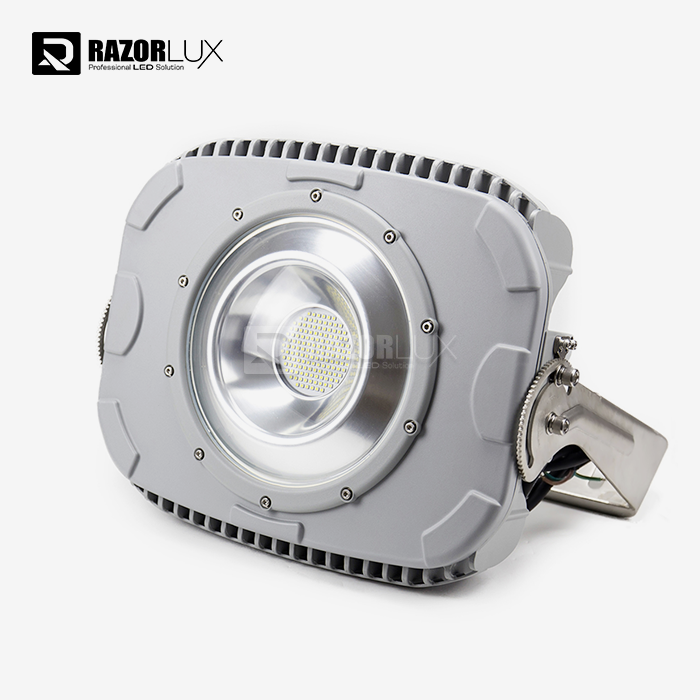
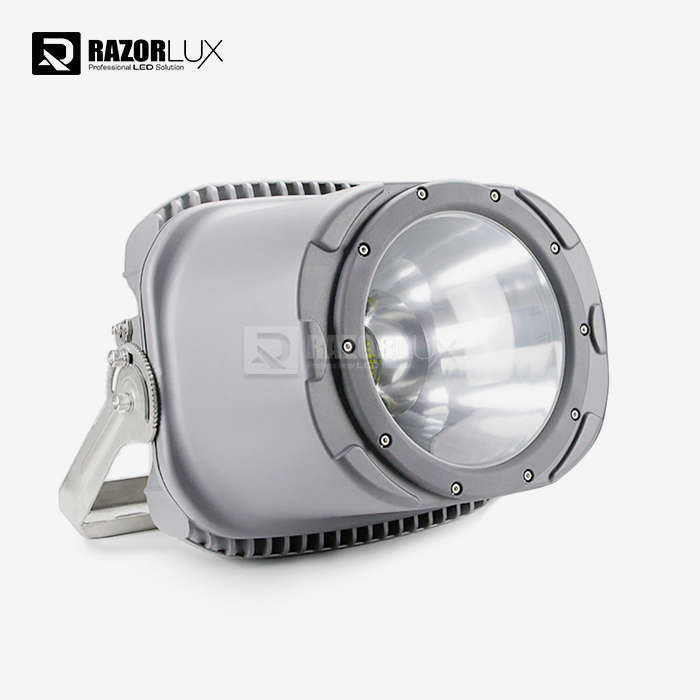
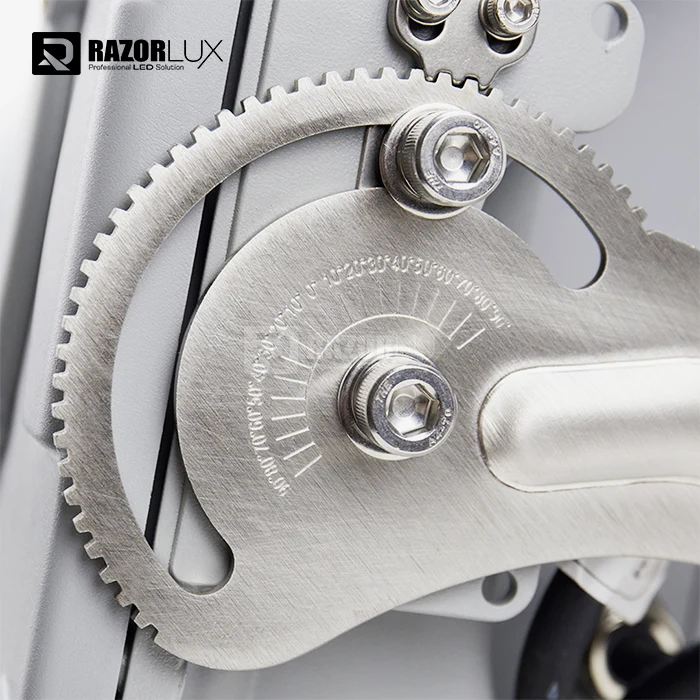
Aluminum alloy housings (usually ADC12 standard) made through high-pressure die-casting are used in high-performance outdoor lighting systems. This way of making things makes casings that are dense, have no pores, and are very good at transferring heat, which is important for getting rid of the heat that high-efficiency LED clusters that put out 130 lumens per watt produce. The aluminum is treated with a powder coating that sticks to the metal's surface electrostatically. This makes a safe layer that can't be damaged by saltwater rust or UV light. 304 or 316 grade stainless steel mounting brackets are recommended for marine settings because they are strong and won't rust like carbon steel mounts do. At Razorlux, our lights are made with these high-quality materials and tempered glass lenses that keep the lenses' visual clarity while withstanding impact forces up to IK10, which means they can take 20 joules of energy without breaking.
Advanced Sealing Technologies
The quality of the seals at key connecting points is what makes waterproof LED systems work. Multi-layer gasket systems are used by manufacturers. These systems combine silicone rubber covers with liquid silicone potting solutions. Compression gaskets around the housing-to-lens contact keep the pressure steady around the whole edge, stopping water from getting in even when the temperature changes. Cable entry places are a particular weakness. High-end faucets use IP67-rated cable glands with multiple compression rings that seal the wire insulation against water. Conformal coating is a protective polymer layer that goes over internal circuit boards. It keeps electronic parts safe from condensation and moisture that eventually get into any structure over time. Because they have two sets of sealing devices, high-quality valves cost more at first, but they don't break as quickly as cheaper ones do.

Rigorous Testing Protocols
When purchasing managers look at possible providers, they should ask about specific testing methods. Companies that are ISO 9001-certified do a lot of testing to make sure their products are safe. This includes salt spray testing according to ASTM B117 standards (continuous exposure to 5% sodium chloride solution for 500 hours or more), thermal shock cycling between -40°C and +60°C, and IP validation using measured water jets and immersion tanks. For 22 years in a row, Razorlux has kept its testing methods up to date. Each product goes through a full pre-shipment review that checks for waterproofing, vibration resistance, and thermal performance. These quality control measures find problems with the way products are made before they get to the installation sites. This is especially important for offshore platform projects, where fixing problems after installation costs a lot more than fixing problems on land-based facilities.
The following table compares protection standards and their suitable applications:
| IP Rating | Dust Protection | Water Protection | Suitable Applications | Limitations |
|---|---|---|---|---|
| IP65 | Complete dust seal | Withstands water jets | Covered docks, warehouse exteriors, moderate climate zones | Not suitable for submersion or flooding scenarios |
| IP67 | Complete dust seal | Temporary immersion (1 m, 30 min) | Ship decks, offshore platforms, coastal installations | Extended submersion requires IP68 |
| IP68 | Complete dust seal | Continuous submersion | Underwater installations, bilge areas, aquaculture facilities | Application-specific depth and duration ratings vary |
Selecting the Best Waterproof 12V LED Flood Lights for Outdoor Use
To find the best lighting option, you need to match technical requirements with business needs. Professionals in procurement have to look at more than just basic waterproof scores when judging the performance of 12V LED flood lights waterproof.
Application-Specific Selection Criteria
Lighting systems have to meet different needs in different work settings. Wide beam angles (120° to 140°) are needed for marine vessel deck lighting to make sure there aren't any dark spots between lights and that there is even lighting for work and navigation. Narrower beam patterns (60° to 90°) help offshore platform work zones by focusing light on specific job areas without causing too much light pollution. To meet these different needs, Razorlux's RGL-90A type has beam settings that can be set to 15, 20, 30, 40, 60, 120, or 140°x60°. Choosing the right color temperature is also very important. Warmer tones (2700K–3000K) lower glare and eye pain during long work shifts, while cooler temperatures (5000K–6500K) improve vision for detailed work. Manufacturers of industrial equipment should make sure that the fixtures they sell have a wide input voltage range (AC 90-305V or DC 127-431V) so that they can work with the voltage changes that happen a lot in generator-powered offshore installations and onboard electrical systems.
Performance Features That Make It More Reliability
Intelligent features built into modern LED flood lights make them last longer and work better. Thermal management systems that use finned metal heat sinks keep junction temperatures below 85°C. This keeps LEDs from breaking down faster than they should when chips are used beyond their thermal limits. Good drivers, like the Meanwell power sources that come with Razorlux fixtures, have low total harmonic distortion (THD <10%) and active power factor correction (PFC ≥0.98). This means that the drivers are less likely to damage electrical components and work better with sensitive onboard electronics. Facilities that work in rural areas benefit from fixtures that are made of different modules. This is because field fixes can be done with replaceable LED modules and separate driver chambers. The ability to work in temperatures ranging from -40°C to +60°C guarantees consistent performance whether it's placed on oil rigs in the North Sea that are exposed to Arctic conditions or in port facilities in the Middle East where summer temperatures reach over 50°C.

Cost-Effectiveness Analysis
When making a buy choice, you need to look at the total cost of ownership, not just the purchase price. A good IP67-rated LED bulb that uses 90W of power, like the RGL-90A, can replace 150–250W high-intensity discharge (HID) lights and give off 130 lm/W more light. Over the course of 50,000 hours of use, the initial investment is more than justified by the savings in energy costs. This is especially true for port facilities that have lights around the perimeter that is on all the time or offshore platforms where diesel generator fuel costs more than $3 per gallon. Traditional HID lamps need to be replaced every 10,000 to 15,000 hours, and the ballast needs to be serviced every so often. LED systems, on the other hand, don't need any upkeep for 5 years or more, and the guarantee covers that. When buying from suppliers, purchasing managers should ask for specific proof of warranty terms that cover LED modules, drivers, and housing components separately. Full coverage shows that the maker is confident in the product's longevity.
Installation and Maintenance Best Practices for Waterproof 12V LED Flood Lights
If waterproof lights do what they're supposed to do, it depends on how they were installed. When mounting methods risk the purity of the seal, even high-end 12V LED flood lights waterproof fail early.
Critical Mounting Techniques
How the fixture is positioned has a big effect on how water drains and how long the seal lasts. If you can, place flood lights so that the lens surfaces are slightly tilted downward (5–15° from horizontal). This will keep water from pooling on flat glass surfaces, where it can seep through seals through capillary action. Make sure the mounting surfaces are flat and physically sound. Surfaces that aren't level stop seals from compressing evenly, which leads to leaks. Stainless steel screws with lock nuts stay attached even when they are exposed to vibrations, which can happen on ships and other industrial equipment. Pay close attention to where the cables enter; run the electrical lines downward in a "drip loop" pattern so that water that flows along the cable surfaces drips away from the device instead of going into the housing. Many early failures that are blamed on bad seals are actually caused by bad wire placement that lets water get into the wiring.
Sealing Cable Connections Effectively
When it comes to waterproof lighting systems, the wire gland is where things can go wrong the most. Apply marine-grade electrical grease to the ends of the conductors before putting them into terminal blocks. This grease gets rid of wetness and stops rust at the connection points. As directed by the maker, tighten the cable gland compression nuts to a force of 2-3 Nm. This will ensure that the seal is properly compressed without being over-tightened, which can damage the rubber sealing elements. In some setups, silicone sealant can be used as an extra protection around the places where cables enter, but it shouldn't be used instead of proper gland installation. When fixtures need hard-wired connections, use waterproof junction boxes with an IP rating that matches or exceeds the fixture's. No matter what connection method you use, you should never leave wire splices exposed to the environment.

Routine Inspection and Cleaning Protocols
Setting up preventive repair plans for fixtures increases their useful life and finds problems before they happen. Checking the quality of the seal every three months should include looking for signs of gasket compression, cracks in the powder coating on the housing, or rust at the mounting points. Use light soaps and soft cloths to clean the lens surfaces. Don't use rough cleaners or high-pressure washers, as they can damage the protection coatings or force water past seals. Putting salt on things that work in salty water speeds up corrosion. Rinsing them with fresh water on a regular basis gets rid of salt layers before they get through protective coatings. Write down the date, the name of the fixture, and any strange things you noticed during the check. This maintenance log will show trends that point to environmental factors that need to be taken into account in the design or better safety measures need to be put in place. Offshore platform managers say that compared to reactive repair methods, regular inspection programs cut the number of unplanned lighting failures by 60 to 70%.
The table below outlines a recommended maintenance schedule:
| Maintenance Task | Frequency | Inspection Points | Action Required | Responsible Personnel |
|---|---|---|---|---|
| Visual inspection | Quarterly | Seal integrity, housing condition, lens clarity | Document findings and note any anomalies | Maintenance technician |
| Cleaning | Semi-annually | Lens surfaces, salt deposits, ventilation fins | Wash with mild detergent, rinse with fresh water | Facilities crew |
| Seal examination | Annually | Gasket compression, cable glands, junction boxes | Replace compromised seals, re-torque connections | Certified electrician |
| Thermal imaging scan | Annually | Heat dissipation patterns, hotspots | Replace fixtures showing abnormal thermal signatures | Engineering team |
| Complete system audit | Every 2 years | Performance metrics, energy consumption, illumination levels | Replace underperforming units, update installation documentation | Project manager |
Understanding the Technology Behind Waterproof Low-Voltage LED Systems
Line-voltage lighting systems are very different from 12-volt lighting systems in terms of how they are built. Differentiating these things makes naval and commercial uses of 12V LED flood lights waterproof better and more important.
Low-Voltage System Advantages
Safety Extra Low Voltage (SELV) systems that run on 12V DC get rid of the risk of shock in places where workers often touch wet metal surfaces. Even in the worst fault situations, this voltage level is below the level that can send dangerous current through a person's body. When buying lights for tight spaces, tank interiors, or places where people work while standing in water, shipyard purchasing managers like that these lights have this built-in safety feature. The low-voltage design also makes it easier to connect green energy systems. Solar panel arrays and battery banks usually output 12V DC, which means that inverters aren't needed, and the system is simpler. More and more offshore sites are using hybrid power systems that combine diesel engines with solar or wind power. Standard 12V LED fixtures can connect straight to these systems without the need for extra tools to convert the voltage.
Voltage Range Compatibility
To deal with the voltage changes that come with battery systems and generator power, good LED drivers can handle a wide range of input voltages. The Razorlux RGL-90A can connect to either AC 90-305V or DC 127-431V power sources, so it can work with almost any power source found in naval or industrial settings. This adaptability comes in handy on boats where charging processes change the voltage from 10.5V (discharged) to 14.8V (charging) on 12V systems. Standard electronics don't work when this kind of variation happens, but professional-grade LED drivers have voltage control hardware that keeps the light output constant across the whole working range. When looking at different providers, make sure you get written information about their voltage tolerance specs and brownout performance. Cheap fixtures often flicker or break before they're supposed to when they're used at voltage extremes that are within their rated ranges but exceed their design margins.
Power Factor and Harmonic Distortion Considerations
Electrical quality factors don't get enough attention during buying, but they have a big effect on how reliable a system is. Power factor (PF) shows how well a device turns electrical input into useful work. A high power factor (≥0.98) lowers the amount of energy that is lost and keeps electrical distribution systems from getting too hot. Total harmonic distortion (THD) measures the amount of electrical noise that is fed back into power systems. Too many harmonics can damage sensitive electronics and set off safety devices in modern integrated power management systems. Professional LED drivers have to meet strict electrical quality standards (THD <10%) to make sure they work with shipboard power systems that power lighting systems that work with navigation gear, communication equipment, and automatic control systems. Ports with unified power distribution should make sure that planned lighting systems won't cause problems with harmonic resonance when hundreds of lights are on at the same time.
Real-World Applications and Case Studies
Procurement managers can make better decisions when they know how 12V LED flood lights work in real-world situations. These examples of applications show how proper design and installation can lead to real benefits.
Marine Vessel Deck Lighting
A Norwegian shipping company that fishes in the North Sea got rid of 250W metal halide deck lights and replaced them with 90W IP67 and IK10 LED flood lights. The project included twelve ships, and each one needed 18 to 24 deck lights that could work all year in freezing spray, steady vibration, and salt air. After 36 months of nonstop use, the LED systems had no problems. This is in contrast to the previous HID installation, which needed lamp repairs every three months and yearly ballast service. The amount of energy used dropped by 64%, which meant that each ship used about 1,200 liters less engine fuel each year. Because it worked with a wide range of voltages (AC 90–305V), it didn't need voltage controllers to handle the changes in power quality that are common with ship engines. According to the crew, the constant color temperature (5000K) made it easier to see than when HID lights were old and their colors changed.

Offshore Platform Work Area Illumination
An oil and gas company that runs platforms in the Middle East (Qatar territorial seas) needed lights that could survive high humidity, extreme heat (above 50°C), and salt spray that can damage electronics. The project called for lights with proven thermal control to keep LEDs from breaking down at high temperatures. Razorlux RGL-90A units with metal heat sinks and thermal control that kept junction temperatures below 85°C were able to keep working in these harsh conditions. 140 flash lights were installed on the platform deck, in areas where the crane would work, and in areas where drilling tools would be used. After 18 months of operation in the summer, when the light was on for 14 hours a day, the lumen upkeep was higher than 97% of the original output. This proved that the thermal design worked as planned. The stainless steel fixing clamps didn't rust even after being exposed to salt water for a long time. This meant that they didn't need to be maintained as often as the carbon steel fixtures they replaced.
Port and Dock Infrastructure Projects
Singapore, a Southeast Asian port authority, updated the perimeter security lights along 2.3 kilometers of dock facilities to make surveillance cameras work better while using less energy. For the project, IP67-rated fixtures had to be able to handle hot monsoon conditions, such as heavy rain that doesn't stop and floods during storm surges. The standard stressed the need for fixtures with a range of beam angles to suit different mounting heights (4–12 meters) and coverage needs. The people who installed the lights chose 120° beam angles for lighting large areas and 60° patterns for lighting high-security areas more closely. The lighting control system had a 0-10V dimmer built in so that power could be lowered during off-peak hours. This saved even more money on energy costs. Because the AC input range was so wide (90–305V), it could handle the voltage changes in the old port's electrical infrastructure without the need for special tools to regulate the voltage, which would have added a lot to the cost of the project.
Trusted Brands and Procurement Insights for Waterproof LED Flood Lights
Choosing a trustworthy manufacturing partner is just as important for the success of a project as the specs of the 12V LED flood lights' waterproofing. Aside from product specs, experienced procurement managers look at sellers in a number of other areas as well.
Evaluating Manufacturer Credentials
Certification files show that a product meets standards and that the company can make it. For marine and industrial uses, RMRS (Russian Maritime Register of Shipping) certification is necessary for ships that operate in Eastern European waters, DNV/GL certification is needed for international marine classification, and ABS certification is needed for U.S.-flagged ships. Electrical safety approvals from groups like UL (Underwriters Laboratories), CE (European Conformity), and SAA (Standards Australia) show that the equipment meets the rules in each area. RoHS (Restriction of Hazardous Substances) and other environmental certifications show that a company is committed to using sustainable production methods, which are becoming more and more important in government buying policies. Razorlux has been certified to all important international standards for 22 years in a row, including RMRS, CE, RoHS, SAA, C-Tick, UL, DLC, and CB. They also have an ISO 9001 quality management certification, which shows that their manufacturing is consistent across multiple product generations.
Warranty Coverage and Terms
The structure of the warranty shows how confident the maker is in the product's longevity. Full covering should include LED modules, drivers, and housing parts, and the terms should be made clear. The Razorlux RGL-90A comes with a 5-year warranty on the LED modules and drivers and a 10-year warranty on the metal housings. This is because electronic and structural parts are expected to last different amounts of time. Procurement managers should make it clear how to activate warranties, how long they take to respond to claims, and whether coverage includes new units or repair credits. For international projects, it's important to know where the warranty claims process takes place—whether they go through local distributors or directly to the manufacturers—as well as how changes in warranty law between regions effect coverage. When working on projects with the government or state-owned businesses, guarantee terms often need to follow certain rules for buying things. Make sure the seller is flexible enough to meet these needs when negotiating the contract.
Supply Chain Reliability
Continuous supply is important, especially for projects with multiple stages or sites that need extra stock to replace it quickly. Check out possible providers' production ability, inventory depth, and how consistent their lead times are. Vertically integrated manufacturing facilities, which handle LED packing, driver assembly, and housing fabrication, have more stable supply chains than assembly operations that rely on a lot of outside providers. Razorlux has specialized factories that make fixtures from the level of individual parts to final assembly. This lets them keep to delivery dates and give customers more options for customization. Offshore platform operators look for suppliers who can quickly deliver replacement parts when they need them. Check with makers to see if they keep emergency stock for important uses and what extra fees they charge for rush orders. If a port or dock has unified procurement, it can arrange framework agreements that set prices, delivery dates, and minimum order amounts for needs that will last for more than one year. This helps keep costs down and makes sure that supplies are available as project phases move forward.
Technical Support Capabilities
Support after the sale is what determines whether setups work as planned. Check out the technical tools that the provider offers, such as application engineering support, installation guide documentation, and help with fixing problems. Manufacturers should include detailed technical drawings, photometric data files in IES format for lighting design software, and thorough installation instructions that explain how to place the products and connect the electricity. Razorlux provides pre-sales advice to help procurement teams choose the right configurations for each application, custom samples for validation testing, and full technical documents to help with engineering review processes. Responding to messages quickly is important, especially during the execution of a project when changes to the specifications are needed because of conditions on the ground. Check to see if suppliers give direct access to engineering staff instead of sending technical questions through sales channels that don't have the knowledge to answer complicated installation questions.
Conclusion
Professional-grade LED flood lights are waterproof because they are designed to deal with multiple failure modes at the same time. IP67-rated shelters made of marine-grade metal, precise gasket systems, and tried-and-true temperature management make fixtures that work reliably in harsh conditions, from offshore platforms in the Arctic to port facilities in the tropical Pacific. When you combine wide-voltage-range drivers, modular components, and high-efficiency LED arrays, you get operational benefits that go far beyond basic lighting. For example, you can save 60–70% on energy costs, avoid maintenance for 5 years or more, and get consistent light output across a wide range of temperatures. For successful procurement, you should look at more than just the initial buy price when evaluating suppliers. You should look at how many certifications they have, how extensive their warranties are, how stable their supply chains are, and how well they can help with technical issues for 12V LED flood lights waterproof.
FAQ
Can waterproof LED flood lights operate on battery power systems?
High-quality fittings made for marine use are built to work with battery power sources. The Razorlux RGL-90A has a wide DC input range (127–431V DC), so it can handle voltage changes from charging 12V batteries many times without the driver failing or the output flickering. Instead of thinking that models that only work with AC will work with battery systems, make sure that the specs make it clear that they are compatible with DC for 12V LED flood lights waterproof.
How does salt exposure affect fixture lifespan?
Standard finishes don't hold up as well against salt rust as marine-grade powder paint and stainless steel hardware. Facilities that rinse fixtures with fresh water every three months to get rid of salt buildup can make them last longer than 50,000 hours, even when they are exposed to spray all the time. Aluminum, which is used for the frame, doesn't rust in saltwater as long as it is properly covered and coated.
What beam angle works best for deck lighting?
Wide beam patterns (120° to 140°) reduce the number of lamps needed to cover an area evenly and get rid of dark spots between lights. Narrow beams focus the strength, but they make uneven lighting patterns that need more lights. 120° beams placed at 6–8 meter heights work well for most deck uses.
Are IP67 fixtures suitable for underwater installation?
IP67 approval allows for short-term submersion up to 1 meter deep for 30 minutes, but not for ongoing operation underwater. For uses that need to be submerged permanently, fixtures with an IP68 rating and depth and length ratings that match the fitting conditions are needed. Areas of the bilge that could flood meet IP67 standards, as long as the length of the submersion stays within the stated limits.
Partner with a Trusted Waterproof LED Flood Light Manufacturer
Razorlux is an LED lighting company with 25 years of experience making lights for the toughest naval and industrial settings. Our 12V LED flood lights, waterproof with an IP67 rating, come with Meanwell power sources, are made of marine-grade aluminum, and have all the foreign approvals (RMRS, UL, DNV/GL, CE, SAA) that are needed to buy them in any market. Before it is shipped, every fixture goes through a lot of tests, such as salt spray validation and temperature cycling. They are also covered by our 5-year guarantee. Our engineering team can help you choose the best lights for offshore platforms, shipyards, or port infrastructure by giving you advice based on the unique needs of the job. Send an email to sam@razorlux.com to talk about your project needs and ask for technical paperwork from our sourcing experts. As a seller of Waterproof Led Floodlights that has been ISO 9001 approved for 22 years in a row, we can give your important operations the dependability they need.
References
1. International Electrotechnical Commission. "IEC 60529: Degrees of Protection Provided by Enclosures (IP Code)." Edition 2.2, 2013.
2. American Bureau of Shipping. "Rules for Building and Classing Steel Vessels: Part 4, Chapter 8 - Electrical Installations." 2022 Edition.
3. Maritime and Coastguard Agency. "Lighting and Electrical Systems on Commercial Vessels: Safety Standards and Best Practices." UK Department for Transport, 2021.
4. Society of Petroleum Engineers. "Offshore Platform Lighting Design: Energy Efficiency and Safety Considerations." Technical Paper SPE-194628, 2019.
5. Illuminating Engineering Society of North America. "IES TM-21-11: Projecting Long-Term Lumen Maintenance of LED Light Sources." 2011.
6. Det Norske Veritas. "DNVGL-CG-0339: Electrical Installations on Offshore Platforms - Classification Guidance." 2020 Edition.