

_1750326878398.png)

What Makes Crane Boom Lights Suitable for Harsh Environments?
Crane Boom Lights with specialized lights have to work under very tough conditions. These lights have to provide exact lighting from very high up while working in environments with constant shaking, acidic air, and temperature changes that would kill regular lights in just a few weeks. The hardest part of engineering is finding the right balance between visual performance and mechanical durability. For example, a 150W LED light that works at 130 lm/W must keep its output stable in both cold Arctic conditions and hot, warm ones. Modern industrial-grade boom lights have housings made of strengthened metal, closing systems that meet military standards, and solid-state LED arrays that get rid of filaments that break easily. When a ship-to-shore crane moves goods through salty ocean air or a tower crane works 80 meters above a building site, the lighting system is just as important as the load monitors. Shipyards and offshore platforms are asking for solutions with an IP67 rating and IK10 impact protection more and more. This is because the costs of downtime are much higher than the initial investment in the equipment. Knowing what makes survival-grade boom lighting different from regular industrial lights helps engineering teams make choices that protect workers and keep projects on schedule.
Understanding Harsh Environment Challenges for Industrial Crane Lighting
Extreme Temperature Fluctuations and Thermal Stress
Cranes are used in a wide range of weather, from -40°C in Russian Arctic ports to over-60°C in Middle Eastern factories. These swings cause cycles of expansion and contraction that break down cheap lens materials and weaken sealants. Under these conditions, regular polycarbonate glasses break after six months, but marine-grade fittings use UV-stabilized plastics that have the right temperature expansion factors for metal housings. The internal driver electronics also have problems. Capacitors made for business settings fail early when they are frozen and thawed, so the whole power supply chain needs parts that can handle high temperatures.
Corrosive Atmospheric Exposure
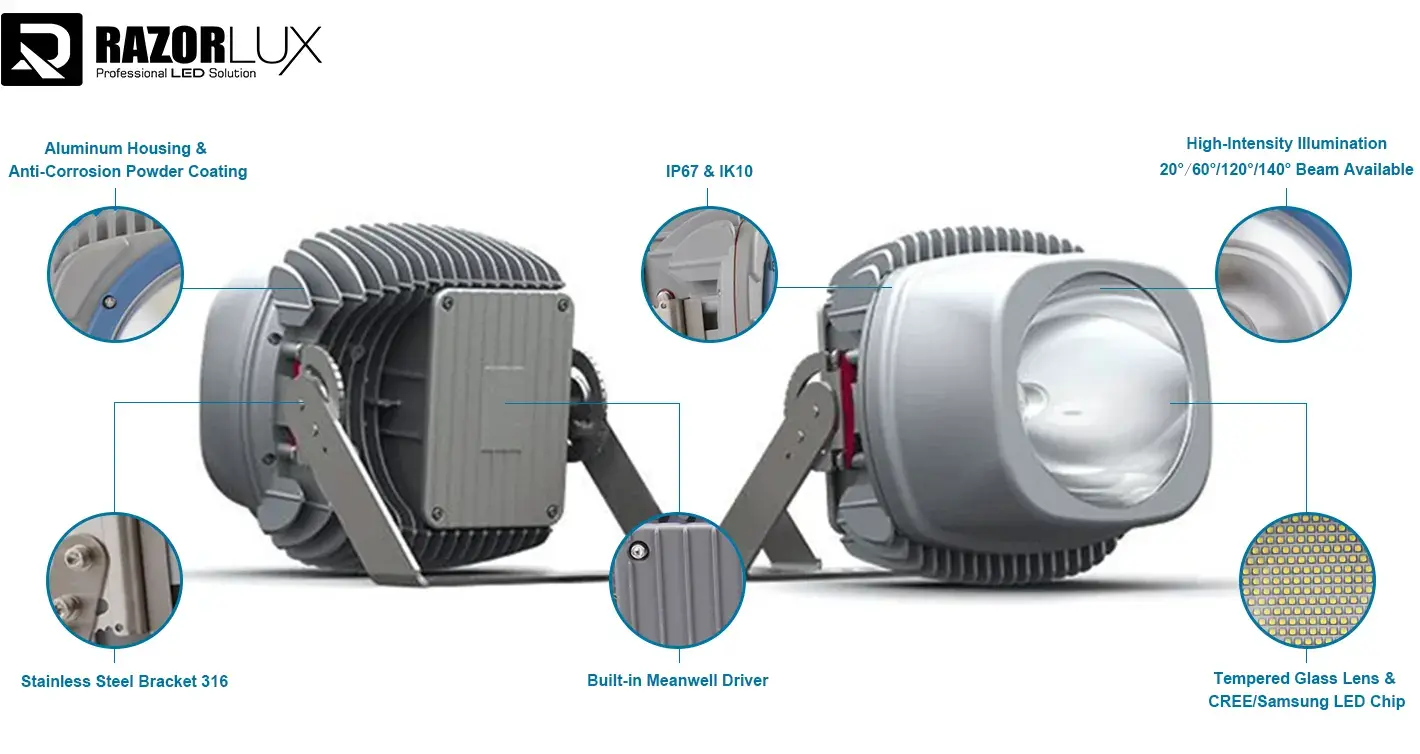
In maritime and marine settings, equipment is constantly hit with salt spray and humidity levels above 95%. Mounting brackets, electrical links, and heat sink fins are especially vulnerable to electrochemical rust. We've seen fixtures that weren't properly protected against C5 rust get surface cracking eight weeks after being installed in coastal areas. Even though stainless steel 316L clamps and conformal-coated circuit boards are important defenses, they need to be proven through 1000-hour salt fog chamber testing in line with ASTM B117 standards. Buying managers at shipyards always give more weight to sellers who can prove rust protection with third-party lab studies instead of marketing claims.
Mechanical Shock and Continuous Vibration
Boom-mounted lights work by vibrating at a low frequency all the time when the trolley moves, and they also experience quick shock loads when workers make emergency stops. In these situations, traditional metal halide lights have catastrophic bulb failure, but solid-state LED technology can handle shaking rates of up to 15 Hz at 2G acceleration. Vibration dampening must be built into mounting assemblies without affecting the stiffness of the structure. This problem is solved by spring-loaded gimbal designs that keep the optical assembly separate while keeping accurate aim. Manufacturers with a good reputation use sine sweep vibration testing in the 10–100 Hz range to model practical stress over a decade in a short amount of time.
Dust and Particulate Ingress Risks
Particulates in the air are made by mining, steel mills, and cement sites. These particles get into areas that aren't protected, cover optical surfaces, and block heat paths. Ingress protection is measured by the IP rating system. However, many buying teams get it wrong when they think that IP65 only lets a small amount of dust in when there is no airflow. In reality, only IP67 promises total dust-tightness. The coating approach for the lens is also very important. Anti-static treatments stop electrostatic particles from sticking together, and wet coats make it easier for rain to wash away dust. Australian mine workers have seen that pieces that don't have these coats need to be cleaned every 30 days, while properly stated units only need to be maintained every three months.
Key Features That Make LED Boom Lights Exceptionally Durable
Advanced Ingress Protection Engineering
To get real IP67 protection, you have to pay close attention to every possible entry point. Cable glands need to have multiple compression seals that are rated IP68 for the cable itself. Lens-to-housing connections need to have precision-machined holes that can fit silicone gaskets with a Shore hardness that is best for high temperatures. Submersion at a depth of 1 meter for 30 minutes is part of the testing procedure. Many fixings pass this test when they are brand new, but they fail after heat cycling weakens the gasket's flexibility. As part of our production process, we test for leaks as small as 0.1 mbar/minute after assembly. This makes sure that the seal stays strong over time and can handle abuse in the real world. Norwegian dock data shows that parts that are properly sealed keep their IP67 performance over five-year service intervals, while lower-quality designs need new gaskets every 18 months.
Impact Resistance Through IK10 Certification
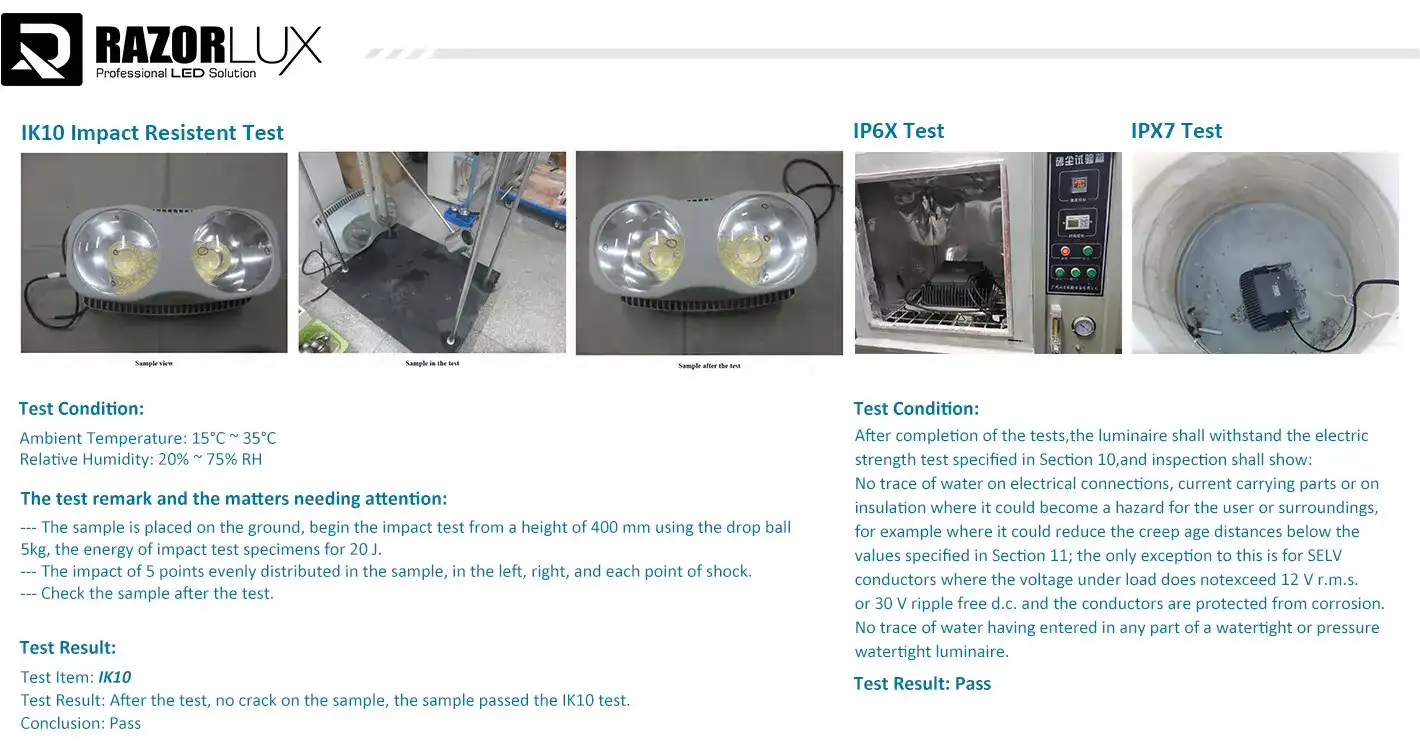
The IK rating method measures how well something can withstand mechanical impact energy. An IK10 rating means that it can withstand 20-joule hits, which is the same as a 5 kg mass being dropped from 40 cm. This standard is very important when working with cranes in busy building zones where tools and materials that fall are a constant danger. To get IK10, the glasses must be at least 5 mm thick and have ribbing inside them that spreads out impact forces. The shapes of the frames must also deflect stress instead of concentrating it. A spring-loaded impactor is hit over and over again during testing, and passing pieces show that there is no lens breaking, seal compromise, or optical misalignment. Singapore's port officials made IK10 the standard for all lights in container terminals after a chain fell and broke a regular bulb, which caused delays in moving goods.
Thermal Management Architecture
Crane Boom Lights. The temperature at the joint of an LED directly affects its lifespan. For every 10°C rise above the rated temperature, the expected lifetime is cut in half. High-purity metal heat sinks with optimized fan shape that improve convective surface area while shedding dust and rain are the first step in good thermal design. Our 150W lights use thermal contact materials with a conductivity of more than 3 W/mK between the LED boards and the heat sinks, along with airflow paths that have been checked by computational fluid dynamics. The most important test for validity is the junction temperature at 60°C with no wind, which is the worst possible situation. Thermal imaging shows that our designs keep Tj below 85°C at these temperatures, which backs up the L70 grade of 50,000 hours of life. Competitors with poorly designed products that use LEDs at junction temperatures of 105°C lose 60% of their lumens in 20,000 hours, even though the LED specs are the same.
Wide Input Voltage Tolerance
Crane electrical systems are known for having shaky power conditions. In most setups, the source voltage changes from 80V to 315V AC because of things like motor start-up voltage changes, regenerative braking transients, and long line runs. It's even more complicated when offshore sites use dual-voltage systems or when ships have DC distribution networks. These changes are handled by universal input drivers that use active power factor adjustment to keep the LED current fixed. This keeps the light engine safe from damaging overvoltage events. Our Mean Well power sources have transient suppression rated for 4kV surge immunity according to IEC 61000-4-5. This standard stops problems that aren't necessary during electrical storms or switching operations. Installation data from the Russian Arctic shows that none of the drivers in 2,400 units failed over three winters. This level of stability is not possible with standard SMPS systems.
| Environmental Challenge | Standard Fixture Failure Mode | Industrial-Grade Solution | Validation Standard |
|---|---|---|---|
| Salt Spray Exposure | Connector corrosion within 90 days | 316L stainless hardware + conformal coating | ASTM B117 1000-hour test |
| -40°C Operation | Driver capacitor failure, lens cracking | Industrial-temp components, thermoplastic lens | IEC 60068-2-1 cold test |
| Continuous Vibration | Solder joint fatigue, optical misalignment | Dampened mounting, reinforced PCB | MIL-STD-810G vibration |
| 20-Joule Impact | Lens shattering, seal breach | 5mm polycarbonate + IK10 housing | IEC 62262 impact test |
Precision Optical Control
The 20° beam angle specification addresses a fundamental challenge in crane lighting: projecting usable illumination across 50+ meter vertical distances without excessive spill light. Narrow beam optics concentrate the 13,200 lumen output into a controlled cone that maintains a minimum of 150 lux at the load zone—adequate for safe rigging operations per OSHA 1926.56 standards. This precision comes from parabolic reflector designs with multi-layer dielectric coatings that preserve light polarization and minimize chromatic aberration. Contrast this with wide-beam fixtures that waste 40% of generated lumens illuminating irrelevant areas while failing to deliver adequate task lighting where operators need it. Port engineering teams conducting photometric surveys consistently measure 3:1 illumination ratios favoring properly specified narrow-beam fixtures over generic floodlights of identical wattage.
Installation and Maintenance Best Practices for Maximum Reliability
Structural Mounting Considerations
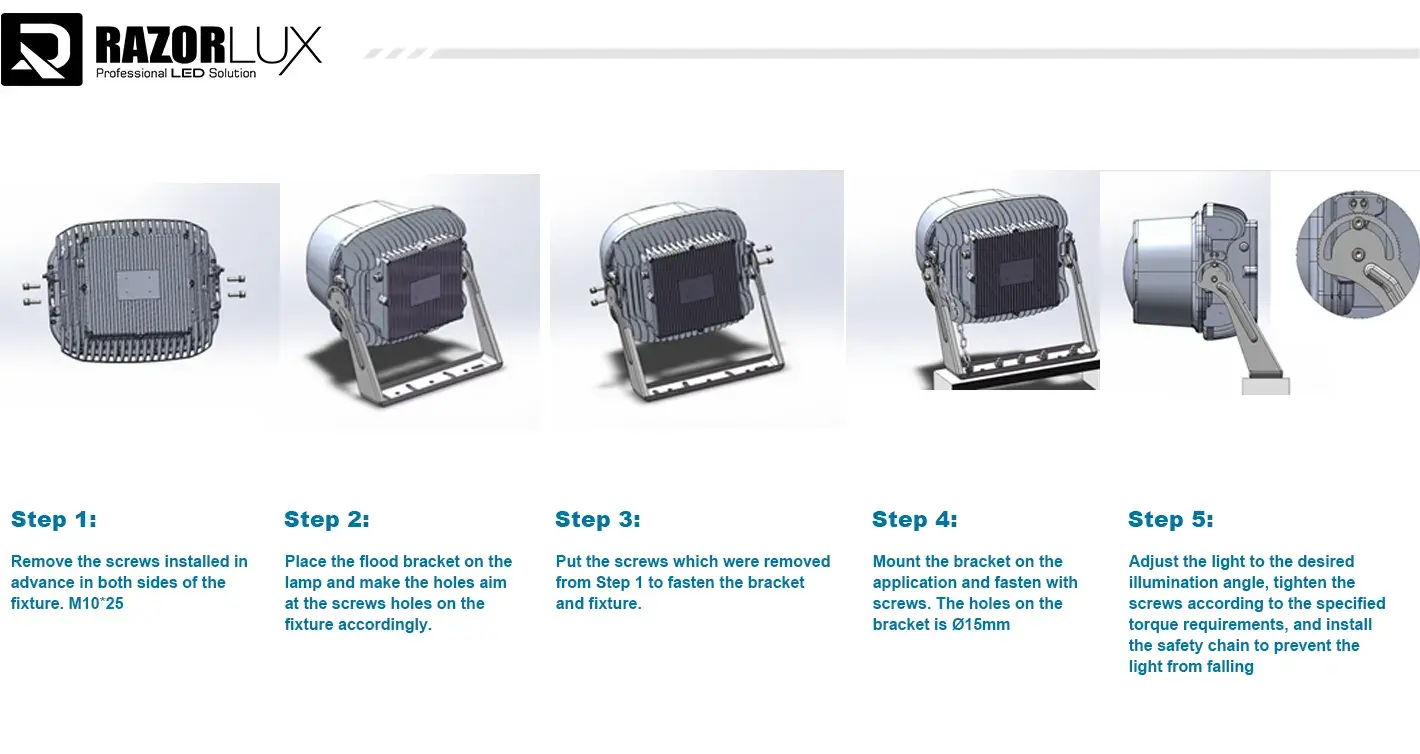
Proper fixture installation begins with load path analysis of the boom structure. Mounting points must distribute fixture mass and aerodynamic loads through primary structural members rather than secondary paneling. The 10kg weight of industrial fixtures generates significant cantilever moments during crane slewing, necessitating reinforcement plates, a minimum of 8mm thick, at attachment points. Vibration isolation becomes equally critical—neoprene isolators with 40 Shore A hardness provide optimal dampening without introducing excessive fixture movement. Installation teams often overlook cable strain relief, yet this detail prevents conductor fatigue failures. We specify service loops with a minimum 300mm length with cushioned cable clamps every 500mm along cable runs, accommodating boom flexure during maximum load conditions.
Electrical Integration and Grounding
Crane electrical systems present unique grounding challenges due to the moving connection between rotating superstructure and stationary base. Lighting circuits must incorporate slip ring considerations, with voltage drop calculations accounting for contact resistance that increases with slip ring wear. Ground fault protection becomes essential in marine environments where conductive salt deposits create leakage paths—GFCI protection rated for 30mA trip thresholds prevents nuisance tripping while maintaining personnel safety. Swedish shipyard electrical codes require isolation transformers for boom lighting circuits, preventing ground loops that cause LED flicker and premature driver failure. Proper commissioning includes insulation resistance testing with a minimum of 10 megohms between conductors and frame, verified both at installation and annually thereafter.
Preventive Maintenance Protocols
Proactive maintenance schedules extend fixture life while preventing operational failures. Quarterly inspections should document lens clarity, gasket condition, and mounting hardware torque values. Salt-contaminated environments necessitate fresh water washing every 60 days to prevent alkali buildup that attacks aluminum anodizing. The often-neglected maintenance task involves verifying electrical connections remain torqued to specification—thermal cycling loosens terminal screws, creating high-resistance joints that generate destructive heat. Our service documentation specifies retorquing to 1.2 Nm at six-month intervals for M4 terminals. Thermal imaging surveys during annual inspections identify developing failures before catastrophic breakdown—fixtures exhibiting 15°C temperature rise versus adjacent units indicate LED degradation or driver component stress requiring preemptive replacement.
Lens Cleaning Techniques
Improper cleaning causes more optical damage than environmental exposure. Abrasive wiping of salt-encrusted lenses scratches anti-reflective coatings, permanently reducing light transmission. The correct protocol involves an initial low-pressure fresh water rinse to dissolve salt crystals, followed by pH-neutral detergent application with microfiber cloths. Hydrocarbon solvents attack polycarbonate lenses, causing stress cracking that propagates over subsequent months. Maintenance teams should avoid high-pressure washers exceeding 40 bar, as these force water past seals designed for immersion rather than directed jets. Australian mining operations implementing these protocols document 90% lens clarity retention after five years, versus 60% clarity for fixtures receiving casual maintenance.
Comparing Industrial Boom Light Technologies and Specifications
LED Versus Traditional HID Performance
Crane Boom Lights The transition from 400W metal halide to 150W LED boom lights represents more than energy savings. HID fixtures require 10-15 minute warmup periods before reaching full output—unacceptable when crane operations demand immediate illumination. LED instant-on capability supports safer operational protocols while eliminating hot restrike delays. Color rendering index differences prove equally significant: metal halide CRI typically measures 65-70, rendering colored rigging equipment and warning markings poorly distinguishable. Our LED fixtures specify a minimum CRI 75, with CRI 80+ available for applications requiring superior color differentiation. Lifespan comparisons reveal HID's fundamental weakness—electrode erosion limits metal halide to 6,000-hour lifespans versus 50,000+ hours for quality LED arrays. Total cost of ownership calculations incorporating energy, maintenance labor, and replacement costs demonstrate LED payback within 18 months despite a higher initial investment.
| Performance Parameter | 400W Metal Halide | 150W Industrial LED | Advantage Factor |
|---|---|---|---|
| Luminous Efficacy | 75 lm/W | 130 lm/W | 1.73x efficiency |
| Operational Lifespan | 6,000 hours | 50,000 hours | 8.3x longevity |
| Warmup to Full Output | 12 minutes | <1 second | Instant availability |
| Color Rendering (CRI) | 65 | 75+ | Superior visibility |
| Annual Energy Cost* | $876 | $329 | $547 yearly savings |
*Based on 4,000 annual operating hours at $0.12/kWh industrial rate
Beam Pattern Selection for Specific Applications
Tower crane installations at heights exceeding 60 meters require narrow 20° beam angles to prevent excessive light spread that reduces ground-level illumination below usable thresholds. Conversely, crawler cranes operating at 15-meter boom heights benefit from 40° medium beam patterns providing broader coverage of the immediate work zone. The photometric principle involves the inverse square law—doubling the distance reduces illumination to one-quarter intensity. A 20° beam projecting 13,200 lumens maintains 200 lux at 50 meters, whereas a 60° wide beam achieves only 80 lux at the same distance despite identical fixture output. Application engineering requires matching beam angle to typical operating geometry, a calculation many purchasing managers overlook when specifying "general purpose" lighting. Our technical team provides photometric modeling services using AGI32 software, generating illuminance contour maps that predict performance before equipment purchase.
Driver Technology and Power Quality
The power supply represents the fixture's most failure-prone component, yet receives insufficient procurement attention. Low-cost constant current drivers lacking active PFC exhibit power factors below 0.7, drawing excessive reactive current that overloads crane electrical systems and triggers nuisance breaker trips. Our fixtures specify Mean Well drivers with >0.98 power factor, reducing VA burden by 30% compared to passive PFC designs. Total harmonic distortion below 10% prevents interference with crane control systems—particularly critical on vessels where VFD-controlled hoists share electrical distribution with lighting circuits. The often-overlooked specification involves driver efficiency: 94% efficient drivers waste only 9W as heat in our 150W fixtures, whereas 85% efficient alternatives dissipate 26W, accelerating thermal degradation of nearby components. Offshore platform operators report 40% longer fixture lifespans when specifying premium driver technology despite 15% higher initial costs.
Procurement Considerations for Engineering and Purchasing Teams
Matching Specifications to Operational Environment
Procurement specifications must reflect actual site conditions rather than generic industrial ratings. A shipyard in tropical Singapore faces fundamentally different challenges than a Russian Arctic port—the former prioritizes corrosion resistance and high-humidity operation, while the latter demands cold-start capability and freeze-resistant materials. Detailed specification development begins with environmental surveys documenting temperature ranges, humidity profiles, and corrosive contaminant types. These inform IP rating selection (IP67 for washdown environments versus IP65 for enclosed gantry cranes), impact resistance requirements (IK10 for construction zones versus IK08 for controlled port facilities), and housing material choices (aluminum for weight-critical applications versus steel for maximum impact resistance). Malaysian port authorities reduced lighting failures 70% after implementing environment-specific procurement standards, replacing their previous one-size-fits-all approach.
Supplier Evaluation Beyond Price Comparison
The initial purchase price represents merely 15-20% of the total lifecycle costs for industrial lighting. Comprehensive supplier evaluation must assess technical support capabilities, spare parts availability, and warranty response times. Our clients prioritize suppliers offering photometric analysis services during the specification phase—this front-end engineering investment prevents costly misapplications. Warranty terms require careful examination beyond duration: does coverage include labor costs for fixture replacement at height, or only component replacement? What failure rate triggers warranty claims—individual fixture failures or statistically significant batch issues? The supplier's installed base in similar applications provides valuable risk mitigation data. Procurement managers should request reference site contacts within their specific industry segment, then conduct independent performance verification calls. Norwegian offshore operators maintain approved vendor lists requiring a minimum of three comparable installation references before qualifying new suppliers.
Total Cost of Ownership Analysis
Crane Boom Lights Rigorous TCO calculations incorporate energy consumption, maintenance labor, replacement part costs, and operational downtime expenses over projected equipment life. A detailed comparison between 400W HID and 150W LED reveals dramatic differences: assuming 4,000 annual operating hours, $0.12/kWh energy costs, $85/hour maintenance labor rates, and a 15-year analysis period, the LED option saves $12,400 per fixture despite 2.5x higher purchase price. The calculation methodology must account for the time value of money through net present value analysis using appropriate discount rates. Hidden costs often escape initial analysis: crane rental fees for replacement operations, production losses during lighting-related delays, and safety incident costs following inadequate illumination. Australian mining operators using comprehensive TCO models report 40% lower lighting expenses versus competitors, making purchase decisions on fixture price alone.
Certification and Compliance Verification
International certifications provide essential risk mitigation but require understanding beyond logo recognition. CE marking indicates a manufacturer's declaration of conformity with EU directives, but lacks independent verification—buyers should demand third-party test reports from notified bodies. UL listing provides rigorous safety validation for North American markets, with factory inspections ensuring ongoing compliance. Marine classification society approvals (DNV-GL, ABS, Lloyd's Register) prove critical for vessel installations, as these govern insurance coverage and port entry permissions. The procurement specification should explicitly require certificate copies with model number verification—many manufacturers display certifications earned by different product lines, creating misleading compliance impressions. Our documentation package includes certificate copies, test reports, and a declaration of conformity for every fixture model, eliminating ambiguity during compliance audits.
Conclusion
Harsh environment suitability in Crane Boom Lights emerges from deliberate engineering choices rather than generic ruggedization. The integration of IP67 ingress protection, IK10 impact resistance, wide-range power supplies, and precision thermal management creates fixtures capable of 50,000-hour operational lives under conditions that destroy conventional alternatives within months. Procurement decisions based on comprehensive total cost of ownership analysis, rather than initial price, consistently deliver superior outcomes, reducing maintenance burdens while improving worksite safety through reliable illumination. The transition from legacy HID technology to properly specified LED solutions offers not merely energy savings but fundamental operational improvements, including instant-on capability, superior color rendering, and elimination of warmup delays. Specification development must reflect actual site conditions through detailed environmental assessment, matching protection ratings and material selections to documented exposure profiles. Supplier selection criteria extending beyond price comparison to encompass technical support capabilities, certification completeness, and reference site performance establishes partnerships that deliver value across multi-decade equipment lifecycles.
FAQ
What IP rating do I need for offshore platform crane installations?
Offshore environments demand minimum IP67 protection due to direct seawater spray exposure and periodic deck washdown operations. IP67 certification guarantees complete dust-tightness and immersion resistance to 1-meter depth for 30 minutes. Fixtures must incorporate marine-grade gaskets maintaining elasticity across -40°C to +60°C temperature range, with stainless steel 316L hardware preventing galvanic corrosion. Verify certification through independent test reports rather than manufacturer declarations alone.
How does vibration affect the boom light's lifespan?
Continuous low-frequency vibration (5-15 Hz typical in crane operations) causes solder joint fatigue and optical misalignment in poorly designed fixtures. Quality LED fixtures employ reinforced PCBs with through-hole component mounting and vibration-dampened mounting systems that isolate the optical assembly. Properly engineered solutions withstand 2G acceleration across a 10-150 Hz sweep testing without performance degradation. Request vibration test reports conforming to MIL-STD-810G Method 514 when evaluating suppliers.
Can LED boom lights operate reliably at -40°C?
Industrial-temperature-grade LED fixtures function reliably to -40°C through careful component selection and thermal design. The challenge involves driver electronics rather than LED arrays—capacitors and semiconductors must carry industrial temperature ratings. Cold-start capability requires drivers to maintain efficiency and power factor below -30°C, a specification that many commercial-grade supplies fail. Request cold-temperature performance data and driver component specifications during the procurement evaluation process to verify genuine cold-weather capability.
Razorlux Industrial LED Solutions: Engineered for Your Toughest Challenges
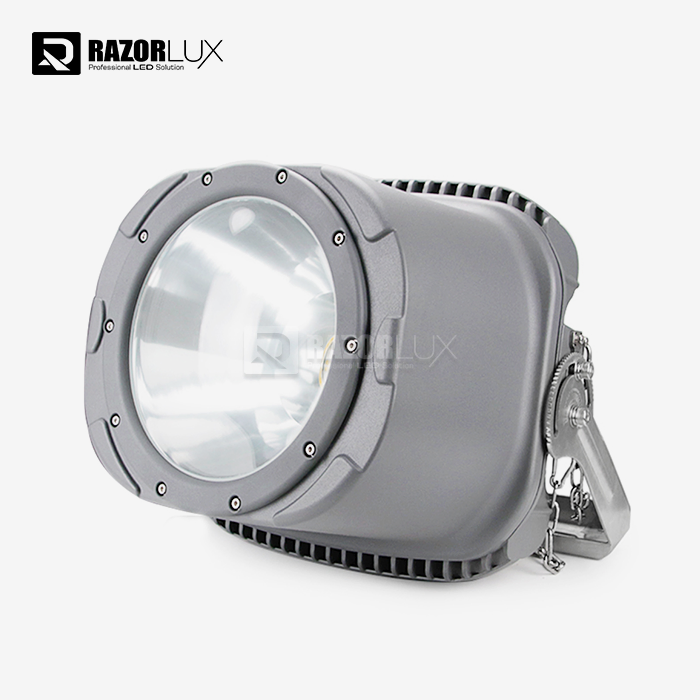
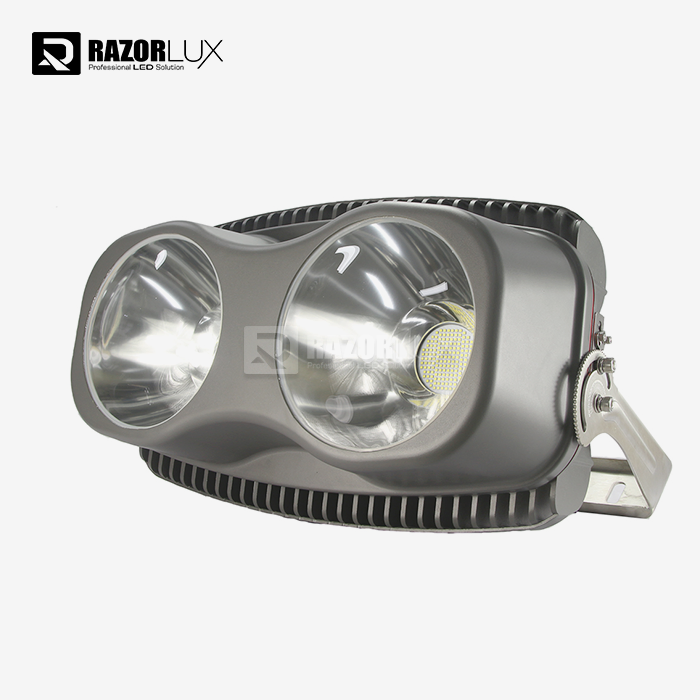
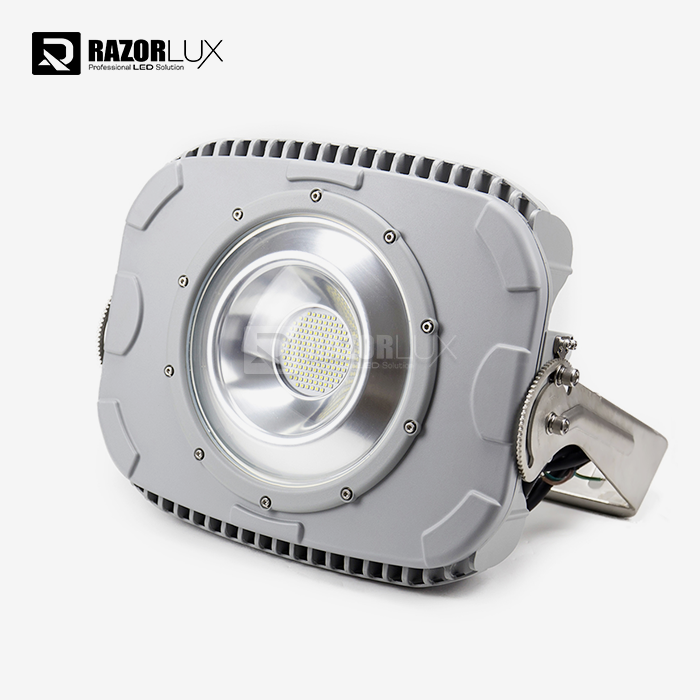
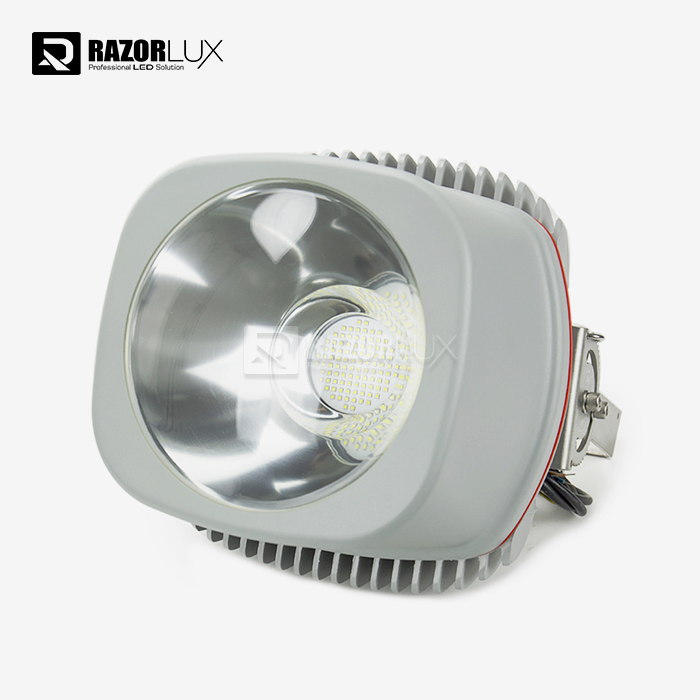
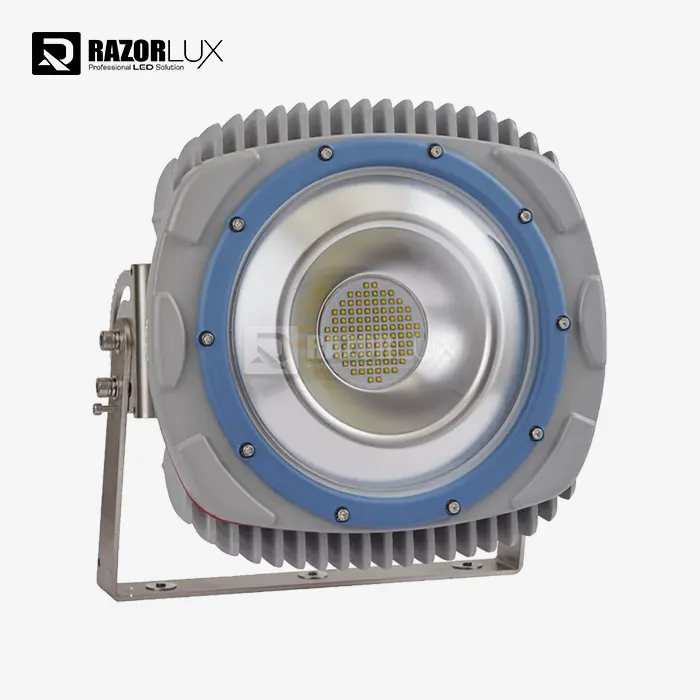
Selecting the right boom lighting supplier determines whether your investment delivers decade-long reliability or becomes a recurring maintenance burden. At Razorlux, we've spent over two decades engineering LED solutions specifically for the punishment that maritime, mining, and heavy industrial environments inflict on equipment. Our RGL-150P boom light embodies this expertise: 150W of precisely controlled illumination delivering 130 lm/W efficiency through a focused 20° beam, housed in an IP67/IK10-rated enclosure weighing just 10kg. The Mean Well driver handles 80-315VAC or 80-400VDC input, eliminating compatibility concerns across diverse crane electrical systems. Stainless steel mounting hardware resists corrosion in the harshest salt spray environments, while our five-year comprehensive warranty—backed by ISO 9001 manufacturing processes—protects your investment. Purchasing managers working with Razorlux gain access to photometric modeling services, application engineering support, and technical documentation, complete with CE, UL, RoHS, and marine classification certificates. Whether you're specifying lights for North Sea offshore platforms, Singapore container terminals, or Australian mining operations, our team provides the expertise that transforms procurement from a transactional purchase into a strategic partnership. Contact our engineering team at sam@razorlux.com to discuss your specific requirements—we'll provide detailed specifications, certification documentation, and delivered pricing within 24 hours. As a crane boom lights manufacturer committed to measurable performance rather than marketing claims, we invite you to evaluate our solutions against any competitor through sample testing or site visit arrangements.
References
1. American Society of Mechanical Engineers, "Recommended Practices for Crane Boom Lighting Systems in Heavy Industrial Applications," ASME B30.5 Technical Report, 2021.
2. Det Norske Veritas, "Environmental Testing Standards for Marine Deck Equipment: Ingress Protection and Impact Resistance Requirements," DNV-GL Class Guideline DNVGL-CG-0339, 2020.
3. International Electrotechnical Commission, "Photometric Performance of Industrial LED Luminaires Under Vibration and Thermal Stress," IEC Technical Report 62722-2-1, 2019.
4. Marine Equipment Trade Association, "Lifecycle Cost Analysis Framework for Shipboard and Offshore Lighting Systems," META Industry White Paper, 2022.
5. National Institute for Occupational Safety and Health, "Illumination Requirements for Safe Crane Operations in Construction and Maritime Environments," NIOSH Publication 2018-123, Centers for Disease Control, 2018.
6. Society of Naval Architects and Marine Engineers, "Electrical System Design for Offshore Crane Installations: Power Quality and Lighting Integration," SNAME Technical & Research Bulletin 3-48, 2020.