

_1750326878398.png)

What Materials Are Used in Corrosion-Resistant Marine Flood Lights?
Marine flood lights that don't rust are made of special materials that can withstand sea, humidity, and high temperatures. Most of the time, marine-grade stainless steel (316L), anodized aluminum alloys, UV-stabilized polycarbonate lenses, and advanced silicone or EPDM sealing materials make up the core of these tough lighting options. Together, these materials stop rust, pitting, and electrical failure, making sure that offshore platforms, ships, and shoreline sites always have light. When choosing lights for your boat or marine project, these material choices have a direct effect on how long it works, how often it needs to be maintained, and how much it costs to own the whole thing.
Understanding Corrosion Challenges in Marine Flood Lights
The Harsh Reality of Marine Environments
There are hurdles when using lighting tools at sea that aren't present when using it on land. Continuous ocean spray creates an electrochemical environment that strikes metal surfaces fiercely, speeding up the rate of oxidation by ten times or more compared to sites in the interior. High humidity levels—often more than 95% relative humidity—make this effect stronger by letting acidic agents get through protective layers and reach materials that are weak. Temperature changes between decks that are very hot during the day and very cold at night cause expansion and contraction cycles that put stress on house materials and weaken seals. These changes can be more than 80°C in 24 hours on offshore sites near the Arctic Circle or in tropical trade lanes. This means that the materials used must be very stable at high temperatures.
How Corrosion Compromises Performance
Getting rust on something has effects that go far beyond just looking bad. When rust forms on metal housings, it creates insulation layers that trap heat. This raises the temperature at the LED junctions, which greatly reduces their brightness. If the heat path gets damaged, the light output can drop by 30% in the first year, which means the bulb has to be replaced too soon. Pitting rust, which is when small holes are made in a structure because of localized metal loss, weakens it and lets water in. When saltwater gets to internal parts, electrical connections break down quickly, leading to irregular operation or total failure. We've seen offshore sites where fixtures that weren't made for marine use had to be replaced after 18 months, while units that were properly described were still working well after ten years.
The Hidden Cost of Material Compromises
When purchasing managers look at lighting offers, they might only look at the original purchase price and not consider the cost over the whole life of the lights. A fixture made of regular automotive-grade metal instead of marine-grade alloys could save you $200 up front, but it will need to be replaced three times as often. That initial savings turns into a $15,000 loss over ten years when you consider the cost of renting a crane, getting a work crew to the site, and production stopping for overseas installs. Knowing about these natural problems changes how you choose materials. Instead of asking "what's the cheapest option?" you should ask "which material combination delivers the lowest total cost of ownership while meeting safety and performance requirements?" This way of thinking aligns procurement strategy with operational excellence, which cuts down on unplanned maintenance and makes sure your crew always has light when they need it most.
Key Materials Used for Corrosion Resistance in Marine Flood Lights
Materials that marine flood lights use to keep them from corrosion:
Marine-Grade Stainless Steel
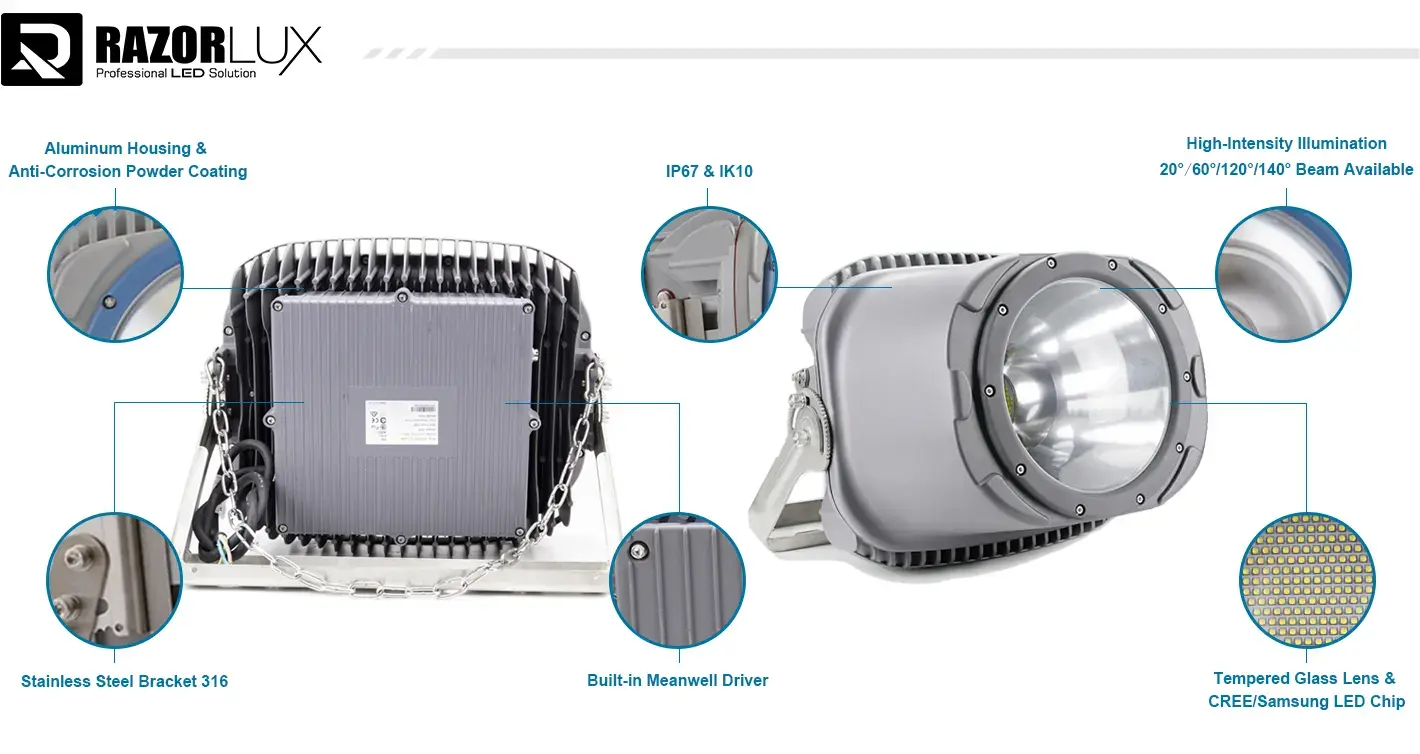
Marine lighting gear should be made of stainless steel alloys, especially the 316 and 316L types that have molybdenum added to them to make them much more resistant to salt. When these metals are scratched, they form a passive chromium oxide layer on the surface that fixes itself. This keeps them safe from saltwater attack. All of the mounting brackets and screws in our professional marine lighting systems are made of 316L stainless steel. This makes sure that the structural links stay strong for the life of the fixture. The letter "L" means that the metal has a low carbon percentage, usually less than 0.03%. This keeps the metal from becoming sensitized during welding. This quality is very important for manufactured brackets and housings, since intergranular rust could happen in heat-affected areas near welds if it weren't for this trait. Type 304 stainless steel is used in some marine applications that are limited by price. It works well in splash zones and less harsh coastal environments, but we suggest 316L for any installation that will be regularly submerged in saltwater or hit by heavy spray.
Aluminum Alloys with Protective Treatments
Aluminum has a great strength-to-weight ratio that makes it easier to place on the superstructures of ships and offshore platforms, where weight affects estimates for stability. Marine-grade aluminum alloys, like 5052, 6061, or special types of 5083, have magnesium added to them to make them more resistant to rust while still letting heat flow well through LEDs. Raw aluminum naturally makes an oxide layer, but this isn't enough to protect it from saltwater for long periods of time. We use Type II or Type III anodizing methods to make the oxide layer thicker through electrochemical reactions. This makes a shield that is like ceramic and is 5 to 25 microns thick. This solid surface doesn't wear down easily and makes a great base for powder coating.
Powder coating adds an extra layer of protection. It's usually made of polyester or polyurethane and has UV blockers and anti-corrosive colors in it. After the electrostatic coating process and heat curing, a uniform 60–100 micron film is formed that protects the anodized surface from damage from the outside world. Before powder coating, our parts go through a chromate conversion pretreatment. This creates chemical bonding between layers that keeps them from coming apart even after years of heat cycles.
High-Performance Lens Materials
In marine settings, optical parts have to deal with special problems. They need materials that stay clear while being exposed to UV light, heat, and impact forces. Tempered borosilicate glass is very good at both transmitting light (92% across visible wavelengths) and withstanding sudden changes in temperature. This means that the fixture can handle being suddenly cooled down by wave splash on a surface that has been heated by the sun.
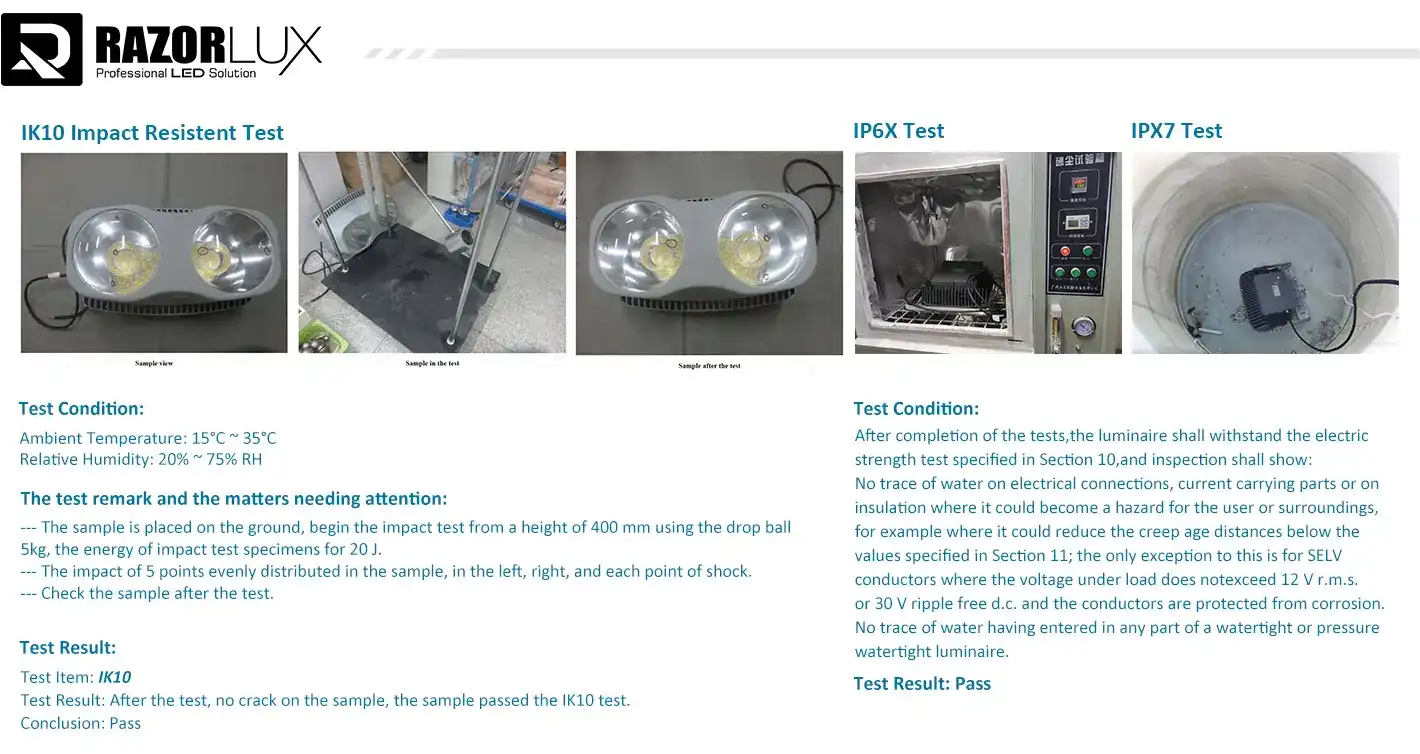
UV-stabilized polycarbonate is an option when impact protection is important. It has IK10 impact ratings, which mean it can handle 20 joule hits from a 5 kg mass falling from 40 cm. Marine-grade polycarbonate versions contain UV filters that keep plastics from turning yellow and breaking down after being in the sun for a long time. Even though optical transmission starts out a little lower than glass (around 88%), polycarbonate is better for fishing boats and military uses where moving objects or equipment hitting the surface is a constant risk.
Advanced Sealing Technologies
To be fully functional, any nautical lighting device needs seals that keep saltwater out and allow for temperature changes. Rubber seals made of EPDM (ethylene propylene diene monomer) are very resistant to ozone, UV light, and temperature changes from -40°C to +130°C. These man-made rubbers stay flexible through changes in temperature that would cause natural rubber materials to crack in months.
Silicone sealing solutions can handle even more temperatures and hold up better over time, but they cost more to make. Marine-grade silicone formulations don't break down in saltwater and stick to different materials like metal, stainless steel, and glass, making moisture shields that work for the whole life of the fixture. Fluoropolymer seals are the best because they can withstand chemicals like those found in oil products and cleaning solvents that are used in marine settings.
Our IP67-rated cases have two seals: compression gaskets and silicone filling for the electrical connections. This two-step process makes sure that even if the main seal fails in one place, the internal parts will still be safe. We put these units through 1000 hours of salt spray exposure according to ASTM B117 standards. The results showed that no water got in, which is the same as decades of real-world use.
Advanced Coatings and Surface Treatments Enhancing Durability
Powder Coating Technologies
Modern powder coating systems are much more than just pretty finishes. They are now designed to be safe shields that are made to work in marine environments. Marine-grade polyester powder coatings have zinc phosphate pigments that guard against rust by sacrificing themselves, so when the coating is broken, it corrodes faster than the metal substrate underneath. This science saves time because it stops the coating from failing quickly if it gets hit while moving goods or doing repair.
Polyurethane powder coats are better at resisting UV light and keeping their gloss, which is important for keeping up with look standards on superyachts and cruise ships where function and style are important. The hardening process, which usually takes 10 to 15 minutes at 180 to 200°C, makes a cross-linked polymer network that is much more resistant to chemical attack and mechanical wear than regular wet paints.
Epoxy-polyester blend formulas combine the chemical resistance of epoxies with the weatherability of polyesters to make coats that work best for installations on offshore platforms where hydrocarbon contact and saltwater corrosion are common. These high-tech systems get pencil hardness rates of 2H or higher, which means that metal tools and equipment can't scratch the layer while it's being installed or during regular maintenance.
Anodizing Processes
Anodizing aluminum changes the surface of the metal by using controlled electrolytic oxidation to make an aluminum oxide layer that is fully attached to the base metal. Type II anodizing, which uses sulfuric acid, makes coats that are 5 to 25 microns thick and can be used in most coastal splash zones. Type III hard anodizing makes layers 25–100 microns thick that are harder and less likely to wear down. This makes them ideal for fixtures on commercial fishing boats that are constantly being worn down by nets, lines, and tools used to move goods.
Because anodizing makes the structure porous, it can be sealed in ways that make it even more resistant to rust. Sealing with hot water stops the pores through hydration reactions, and sealing with nickel acetate is better for tough marine settings. We recommend mid-temperature sealing methods that balance output with performance. This creates sealed surfaces that can withstand salt spray tests for 1000 hours or more without showing any signs of corrosion.
It's also easy for paint to stick to anodized surfaces, which makes them perfect for powder finishing later on. This mix provides multiple layers of protection, so even if the outer coating fails, there is still an anodized shield that stops rust from happening quickly.
Nano-Coatings and Hydrophobic Treatments
New surface technologies add hydrophobic and oleophobic qualities that make water and dirt stick to and roll off of optical surfaces, keeping the light output even without cleaning them by hand. These nanoscale coatings, which are usually made of silica or fluoropolymer, make surfaces with contact angles higher than 110 degrees. This means that water drops have a small area to touch and can easily fall off.
The self-cleaning effect shortens the time between maintenance visits, especially for fixtures that are placed on platform towers and top vessel superstructures that need to be accessed by ropes or cranes. These coatings keep optical transmission at design levels by stopping saltwater from building up on lenses. This keeps the brightness that is needed for navigation and safety lights.
Marine-grade nanocoatings must show that they are durable by surviving rapid aging tests and still work after being exposed to hydrocarbon fuels and alkaline deck cleaners. We've added these treatments on request for clients who work in remote offshore sites where repair access is limited to scheduled shutdowns. This means that cleaning intervals have been pushed from three times a year to once a year.
In addition to improving the look of the metal housings, hydrophobic treatments also stop moisture from staying in cracks and where fasteners meet, which are places where regular coats have trouble covering everything. This extra protection goes over one of the most common places where rust starts: gaps in gasket covers let saltwater leak in through capillary action.
Comparing Materials: Performance, Cost, and Application Suitability
Material Performance Characteristics
| Material Category | Corrosion Resistance | Weight (relative) | Thermal Conductivity | Impact Resistance | UV Stability | Cost Factor |
|---|---|---|---|---|---|---|
| 316L Stainless Steel | Very good | 3.0x | Moderate | High | Very good | High |
| Marine Aluminum (Anodized + Powder Coated) | Very Good | 1.0x | Very good | Moderate | Very Good | Moderate |
| Polycarbonate Lens | good | 0.5x | Bad | Very good | Well taken care of | Moderate |
| Borosilicate Glass Lens | Very good | 1.2x | Bad | Moderate | Very good | Moderate to High |
| EPDM Seals | Very Good | 0.2x | Not at all | Not at all | Very Good | Low |
| Fluoropolymer Seals | Very good | 0.2x | Not at all | Not at all | Very good | High |
This framework for comparison shows the engineering trade-offs that come with designing marine lights. Stainless steel is the best at resisting rust, but it is also very heavy. This is an important thing to keep in mind for mast-mounted setups where the extra weight on top of the vessel can make it less stable. Because it's three times heavier than aluminum, it needs to be reinforced structurally and may need bigger fixing tools, which makes installation more difficult.
Aluminum's high thermal conductivity—about 237 W/m ·K compared to 16 W/m·K for stainless steel—is important for managing LED heat. Lower junction temperatures directly lead to higher lumen output and a longer LED lifespan. This is why metal housings are especially good for high-wattage lights like our 270W marine floodlight models.
Application-Specific Material Selection
Deck-mounted devices that serve cargo activities are mechanically affected by moving loads, containers, and equipment. These setups are made better with brackets made of stainless steel and lenses made of impact-resistant polycarbonate rated IK10, which can handle the 20-joule hits that are common in industrial settings. The small loss in visual transmission compared to glass (88% vs. 92% of glass) is fine considering how much longer it lasts.
Lights for navigation and search that are placed on upper decks and masts focus on visual accuracy and reducing weight. In this case, aluminum housings with borosilicate glass lenses work best because they keep the beam qualities that are needed for regulation compliance while putting the least amount of stress on the masts and rigging.
Underwater and transom-mounted fixtures are most likely to rust because they are constantly submerged in saltwater and have to deal with biofouling. For these unique uses, housings made of bronze or 316L stainless steel with sacrificial anodes and anti-fouling coats are needed, even if they cost more. This is because they need to work reliably.
Offshore platform sites in oil and gas settings have extra requirements for housings that can't explode and resistance to hydrocarbon exposure. Because it is very strong and easy to weld, aluminum alloy 5083 is used to make housings that meet ATEX Zone 1 standards and don't rust in settings with both saltwater and hydrocarbons.
Total Cost of Ownership Analysis
| Cost Component | Standard Aluminum Fixture | Marine-Grade Coated Aluminum | 316L Stainless Steel |
|---|---|---|---|
| Initial Purchase | $850 | $1,200 | $1,850 |
| Installation Labor | $400 | $400 | $550 (bigger) |
| Expected Service Life | 3-5 years | 8-12 years | 15-20 years |
| Replacement Frequency (15 years) | 3–5 times | 1-2 times | 0 to 1 times |
| Total Material Cost (15 years) | $2,550 to $4,250 | $1,200 to $2,400 | $1,850 to $3,700 |
| Total Installation Cost (15 years) | $1,200 to $2,000 | $400 to $800 | $550 to $1,100 |
| Maintenance Costs (15 years) | $1,200 | $600 | $300 |
| Total 15-Year Cost | $4,950 to $7,450 | $2,200 to $3,800 | $2,700 to $5,100 |
This economic study shows that buying decisions that are based only on the original purchase price are not the best ones. Over the life of a normal project, standard metal fixtures that don't protect against corrosion cost 60–95% more than marine-grade options that are properly defined. It costs more than just the materials to replace a fixture because of things like transportation costs, crane rentals, work permits, and production delays. Often, these costs are higher than the cost of the fixture itself.
Marine-grade aluminum with advanced coating methods is the most cost-effective option for most uses. It has lifetime costs that are similar to stainless steel and is better at keeping LED lights cool. The 8–12-year service life is in line with when ships usually go into dry dock and when offshore platforms need maintenance. This means that the parts can be replaced during planned breaks instead of having to be fixed in an emergency.
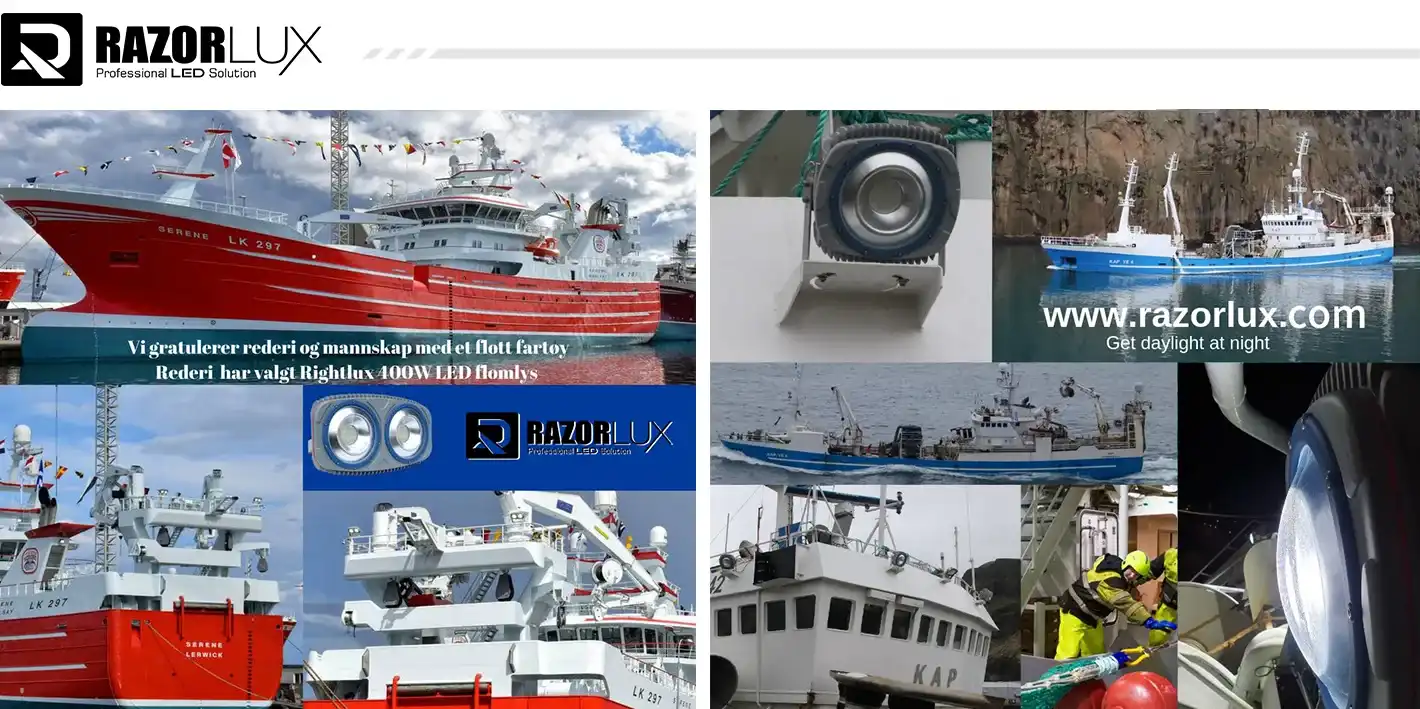
Stainless steel is worth the extra cost in heavy-duty situations like lights on fishing boats, underwater installations, and chemical processing areas where corrosion resistance is total, and weight is not a factor. The 15–20-year service life is the same as the life of a ship's hull, so there is no need to replace anything during the installation's operating time.
Procurement Guide: Choosing the Right Corrosion-Resistant Marine Flood Lights
How to Buy: Picking the Best Marine Floodlights That Won't Corrode:
Evaluating Environmental Conditions
The first step in choosing materials is to do a full assessment of the surroundings. Write down how much exposure there is at the installation site, such as constant soaking, a heavy spray zone, occasional splashes, or coastal atmospheric exposure. Take a look at the temperature ranges in the area and write down both the operating extremes and the regularity of thermal cycling. Offshore sites close to the equator rust in different ways than bases in the North Sea, where cold weather makes the effects of salt spray worse.
Chemical contact above and beyond saltwater needs special attention. Hydrocarbons can get on offshore oil and gas sites, and some cargo activities use acids, bases, or solvents that can damage normal marine coatings. We keep a database of coating systems that are compatible with common marine chemicals. This way, we can make sure that the fixture you choose will work in your setting.
When it comes to mechanical loading, things to think about are vibrations from machinery and waves, impact risks from moving goods or bad weather, and wind loads for installations that are placed on masts. In places with a lot of vibration, like engine rooms and thruster areas, fasteners made of stainless steel work better than aluminum ones because fatigue resistance is more important than corrosion resistance.
Certification and Compliance Requirements
Marine floodlight fixtures have to meet several different approval requirements, which depend on where they are used and what type of vessel they are. International marine standards include those set by classification groups like DNV GL, ABS, and Lloyd's Register. These set the rules for how to build things, how to test them, and what kinds of materials can be used in different areas for ships. Our fixtures have been approved by the Russian Maritime Register for use on ships listed with that organization. This means they meet the special needs of Arctic operations.
Regional electrical safety standards are very different. For example, you need a CE mark to operate in the European Economic Area, a UL mark to operate in U.S. waters, a SAA mark for Australian-registered ships, and a C-Tick for electromagnetic compatibility in the Pacific. We keep our certifications up to date in all major countries, which makes buying easier for foreign companies and shipyards that build for more than one market.
Tanker sites and offshore platforms that handle volatile fuels will have to get explosion-proof ratings. To get ATEX certification for installations in Europe or IECEx certification for installations in other countries, you have to follow special tests and building methods that change the materials you can use. For ATEX Zone 1 use, aluminum housings must follow certain alloy limits to stop sparks that could start fires. They must also be resistant to rust and be able to handle heat.
Customization and Integration Capabilities
Standard catalog items rarely offer the best options for unique marine setups. We offer a wide range of customization options for mounting arrangements, wiring requirements, and optical features. Mounting brackets can be used on curved ship frames, angled mast setups, and engine rooms with limited space. Customization of the electrical system includes input circuits that can handle unstable ship power (AC 90–305V, DC 127–431V), making sure that the system works reliably whether it is linked to the main power source or a backup battery system.
Customization of the optics meets specific lighting needs: narrow 15-20° beams for long-range deck lighting, middle 40-60° distributions for general work areas, and wide 120° flood patterns for full lighting of the cargo hold. You can change the color temperature from warm (2700K) to cool (6500K) to suit your tastes and specific visual jobs. Higher color temperatures improve your eyesight for close inspections.
During the planning phase, our engineering team works with shipyards and integrators to make sure that the physical and electrical components are compatible by reviewing installation plans and providing 3D CAD models. This review finds possible problems before they are built, so expensive changes don't have to be made during installation. By trying sample units, your expert staff can make sure that the product works well in real-world situations before committing to buying a lot of it.
Warranty and After-Sales Support
Professional marine lighting comes with a full guarantee, which shows that the company that makes it trusts the materials they use and the quality of the build. We back up our 5-year promises on LED modules, drivers, and housings with our 25-year history of making products and our world service network. This covers more than just repair; it also includes engineering help for problems during installation and detailed documents in several languages.
When it comes to helping foreign maritime activities, logistics skills are just as important as product quality. Our network of warehouses keeps track of inventory, which cuts down on delivery times. Additionally, our freight handling relationships make shipping cheap, whether you need fast air delivery for urgent repairs or consolidated sea freight for brand-new projects. Sample shipments usually go out via DHL or FedEx within 3–7 days. Production orders, on the other hand, are sent by rail or sea freight, depending on the time frame and budget.
After-sales expert support includes help with installation, fixing problems, and getting replacement parts for as long as the gadget is in use. Within 24 hours of receiving an inquiry, our team replies with full technical specs, photometric data, and information on how to integrate them with vessel control systems. When plans for shipyard building are behind, this responsiveness is very important because delays can affect shipping dates for vessels.
Conclusion
The choice of material has a big impact on how well marine flood lights work, how long they last, and how much they cost to own overall. Specifications that work well balance things like resistance to corrosion, heat handling, impact resistance, and cost by selecting marine-grade stainless steels, treated aluminum alloys, improved lens materials, and designed sealing systems. Advanced coatings and surface treatments protect even more than the base material can, and customization based on the application solves specific installation problems. Full certification, maker knowledge, and support after the sale complete the buying process. This makes sure that your lighting investment gives off reliable light for as long as it's supposed to, with as little upkeep and unplanned replacement costs as possible.
FAQ
Questions People Ask About marine flood lights That Don't Corrode:
What IP rating should marine deck lighting achieve?
Marine deck lighting needs to have at least an IP67 grade, which means it can withstand dust and water exposure up to 1 meter deep for 30 minutes. This standard talks about splashing waves, deck washdown, and bad weather. For continued submersion, IP68 grades are needed for underwater systems and bilge lighting. The IP number only talks about defense against water getting in. How well it resists corrosion relies on the materials used and how the surface is treated.
How does material choice affect LED performance?
The material of the housing has a direct effect on thermal management, which controls the temperature of the LED junction. Aluminum conducts heat about 15 times better than stainless steel, so it can be used at lower temperatures. This makes the light work 8–12% better and LEDs last 30–50% longer. Fixtures made of stainless steel make up for their lower performance by using better fin designs and heat pathways, but they do so at the cost of more materials and labor.
Can powder coatings be repaired if damaged?
Two-component epoxy paints made for nautical use can be used to fix minor coating damage, but it's hard to match the paint's look. For major damage, a professional recoating job is needed, which includes preparing the surface, reapplying the coating, and using thermal sealing equipment that is not available on board. For naval devices, it's better to avoid problems in the first place by coating them well and installing them in a way that protects them.
What maintenance do corrosion-resistant marine lights require?
Most failures can be avoided by checking the seal's integrity, the security of the mounting, and the visual clarity every three months. A once-a-year cleaning with freshwater gets rid of salt buildup, and a lens check finds any scratches or cracks that need to be fixed. Using dielectric grease on electrical connections during installation makes upkeep easier because all that needs to be done is a check. Fixtures that are properly installed usually don't need any upkeep other than cleaning for 5 to 7 years of continued use.
Razorlux Marine Lighting Solutions: Your Trusted Partner
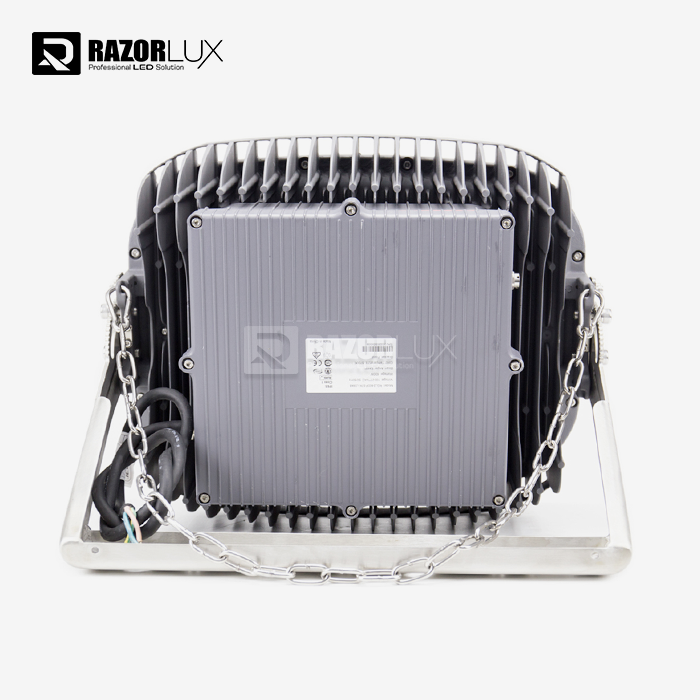
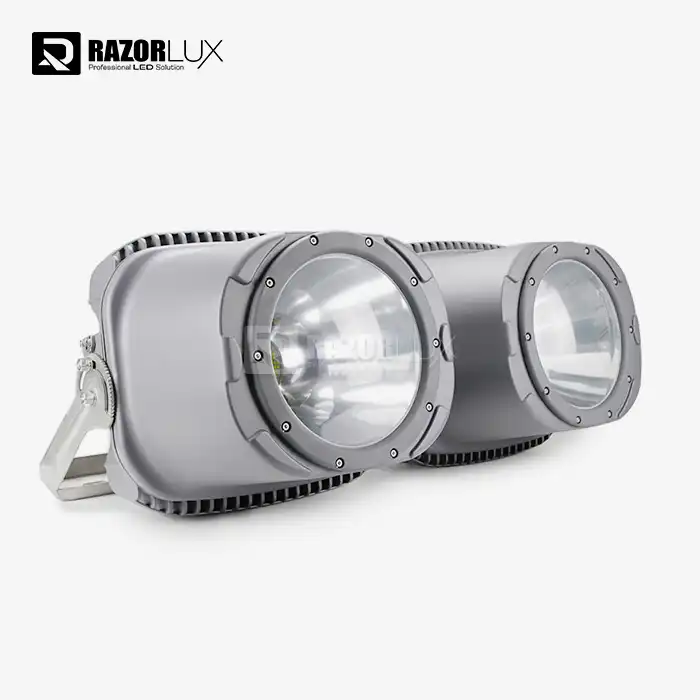
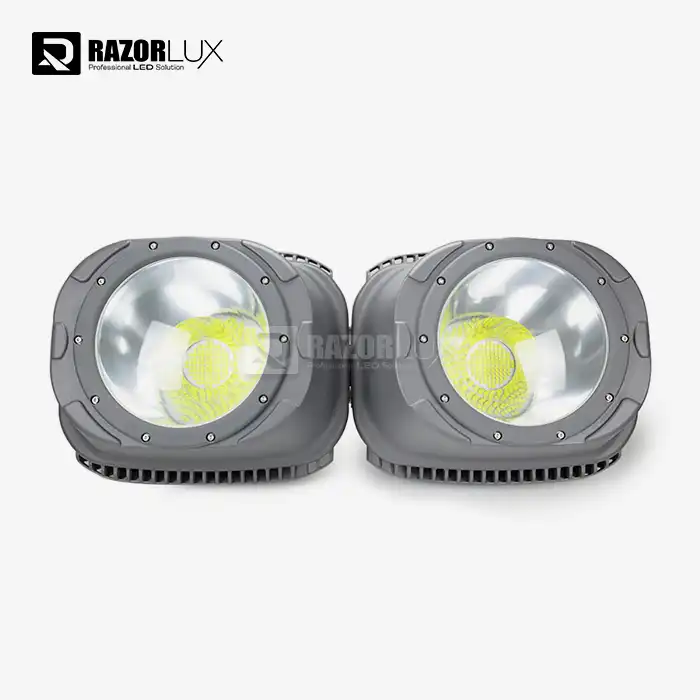
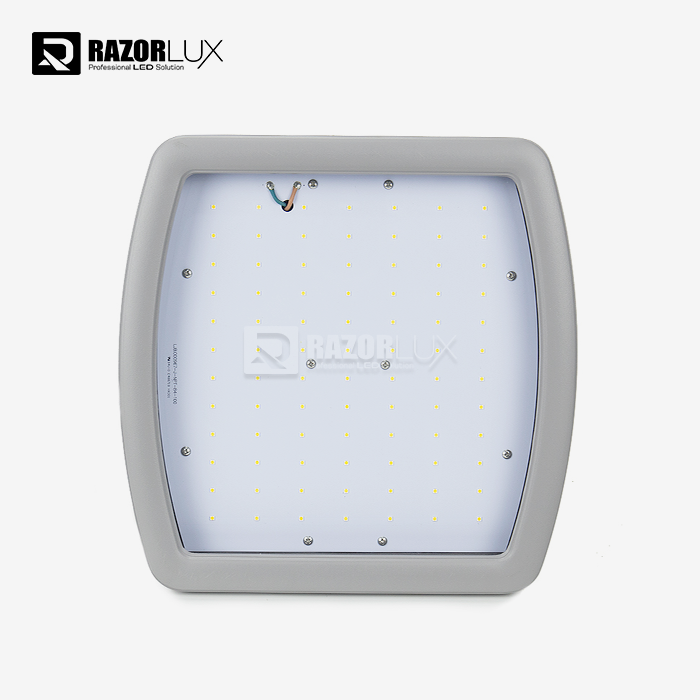
Razorlux has 25 years of experience in nautical and heavy-duty LED lighting, mixing modern material science with a real-world understanding of how things work in the maritime industry. Our unique multi-function floodlights are made with marine-grade metal housings that are protected against corrosion in three steps: anodizing, conversion coating, and marine-grade powder finishing. 316L alloy stainless steel mounting clamps keep the structure of the device strong for its entire life, even when it's exposed to saltwater spray all the time.
The 270W naval floodlight is a great example of our building philosophy. It gives off 29,700 lumens of steady light with 130 lm/W efficiency thanks to Samsung LED chips. Mean Well power supplies, which are the most reliable in their field, work well with input voltages ranging from 90V to 305V AC to 127V to 431V DC. This means they can handle the unstable power situations that are common on working boats. The IP67 and IK10 ratings show that the product is waterproof and resistant to mechanical damage. These ratings are backed by certifications from RMRS, UL, CE, and other foreign groups.
We know that choices about what to buy involve more than just technical specs. They also involve things like the reliability of the supply chain, expert support, and service throughout the product's life. Our ISO 9001 quality management system makes sure that our goods are always made to the highest standards. Before they get to your building, they are put through a lot of tests to make sure they live up to their performance claims. These tests include salt spray exposure, thermal cycling, and vibration endurance. Different lighting needs can be met with custom beam angles ranging from narrow 15° spotlights to wide 120° flood patterns. The color temperature can be changed from 2700K to 6500K to suit practical tastes and visual task needs.
As a marine floodlight manufacturer serving shipyards, offshore operators, and maritime integrators worldwide, we maintain inventory positions enabling rapid response to both emergency requirements and planned projects. Whether you need sample units for technical evaluation or containerized shipments for new vessel construction, our logistics capabilities and freight partnerships deliver on schedule and on budget. Connect with our team at sam@razorlux.com to discuss your specific application requirements and receive detailed technical specifications, photometric data, and project-specific pricing. Visit razorlux.com for comprehensive product information, certification documents, and case studies demonstrating proven performance across global maritime installations.
References
1. International Maritime Organization. (2021). Guidelines on Marine Lighting Systems for Commercial Vessels: Material Specifications and Corrosion Prevention Standards. IMO Technical Publication Series.
2. American Bureau of Shipping. (2022). Guide for Electrical Equipment Installation on Offshore Structures: Chapter 8—Lighting System Material Requirements. ABS Technical Standards.
3. NACE International. (2020). Corrosion Control in Marine Environments: Best Practices for Material Selection in Saltwater Applications. NACE Publication 35120.
4. Det Norske Veritas. (2023). Rules for Classification of Ships: Part 4 Chapter 8 - Lighting Equipment Material and Construction Standards. DNV-GL Classification Guidelines.
5. Society of Naval Architects and Marine Engineers. (2022). Marine Electrical Systems Design and Material Selection Handbook. SNAME Technical Reference Library.
6. LED Systems Reliability Consortium. (2021). Thermal Management and Material Selection for High-Power LED Fixtures in Corrosive Environments. LSRC Research Report Series Vol. 14.