


_1750326878398.png)

What Voltage Range Do LED Overhead Crane Lights Typically Need?
When specifying industrial crane lighting, understanding voltage compatibility is fundamental to system reliability and safety. Led Overhead Crane Lights typically operate within a wide voltage range to accommodate diverse industrial power infrastructures. Most modern LED Crane Lights accept AC input voltages between 100-277V or 100-347V, with some advanced models featuring ultra-wide ranges spanning AC80-315V and DC80-400V. This flexibility addresses a critical procurement challenge: eliminating the need for costly voltage adapters while ensuring stable performance across international electrical standards, from North American 120V systems to European 230V networks and industrial three-phase 480V installations.
Understanding LED Overhead Crane Lights and Their Voltage Requirements
What Makes Crane-Mounted LED Lighting Unique
Lighting for industrial cranes is very different from lighting for high bays. These special lights have to deal with constant mechanical stress, like shaking from the crane, shock loads when the crane stops suddenly, and the structure bending under different loads. The electrical systems that power high cranes are more complicated than they need to be. Heavy motor starts can cause voltage changes, variable frequency drives can make noise, and older buildings may have power problems. High-quality crane lights have wide-voltage drivers and built-in safety circuits that keep the output steady even in these tough conditions.
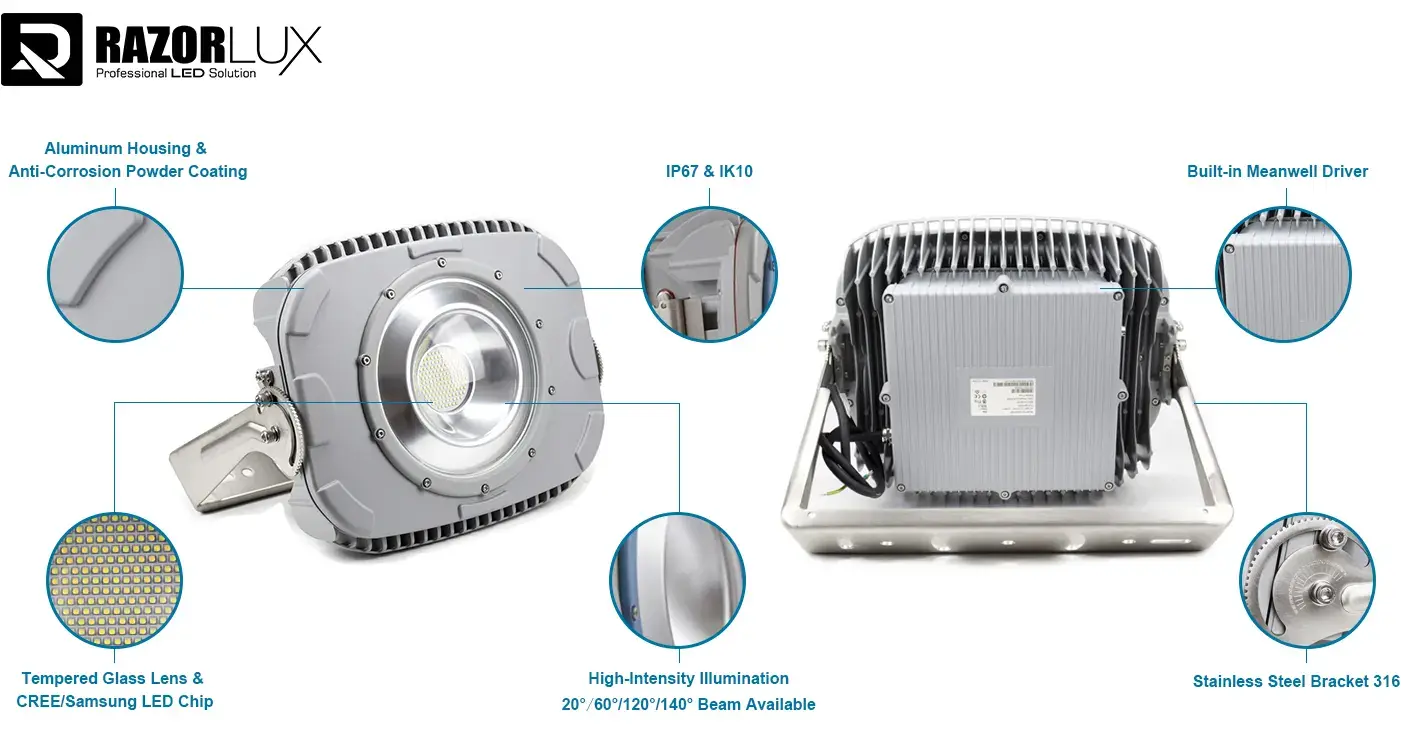
Razorlux's RGL-120A model is a great example of this way of engineering because it can accept AC80-315V and DC80-400V without the need for extra adapters. This design choice directly addresses the issue that buying managers have when they are in charge of multi-national sites with different electrical standards or old equipment that doesn't promise stable voltage.
Common Voltage Specifications in Industrial Settings
Depending on where the facility is located and the type of tools it uses, it usually has more than one power system in use. Most plants in North America use three-phase systems that are 120V, 208V, 240V, or 480V. Most sites in Europe and Asia use either 220-240V single-phase or 380-415V three-phase systems. For intrinsically safe areas, port facilities and offshore platforms can use 24V DC systems. For compatibility with marine electrical standards, they can use 110V systems.
Several performance factors are directly affected by the voltage specification. Higher voltages usually make it easier to send power over longer wire runs, which lowers voltage drop and lowers the cost of the line. In settings that are wet or corrosive, lower power systems are naturally safer. Knowing your building's main voltage infrastructure before you buy anything keeps construction delays from being expensive and makes sure you follow local electrical codes.
AC vs. DC Voltage: What Procurement Managers Need to Know
Most industrial facilities use alternating current (AC), but some places need to be able to work with direct current (DC). DC electrical systems are often used on boats, in mines, and at rural places driven by solar panels. Not only is the voltage level different, but so are the waveforms and the design needs for the motor.
AC-compatible LED drivers change incoming AC current into stable DC output for LED chips. They do this by correcting the power factor and filtering out harmonics. DC-input drivers skip this conversion step, which makes them a little more efficient but means they need to be protected against reverse polarity and voltage fluctuations that happen a lot in DC distribution systems. Razorlux solves this problem by making dual-input drivers that can accept both AC80-315V and DC80-400V. This gives purchasing teams one SKU that can be used in almost all industrial voltage situations around the world.
Comparing Voltage Ranges Among Different Types of LED Overhead Crane Lights
Low Voltage Systems: When 12-48V Makes Sense
Low-voltage Led Overhead Crane Lights systems (12–48V) are used in certain situations where safety rules require less electrical risk. In chemical plants or grain handling facilities with ATEX or IECEx classified areas, low-voltage equipment is sometimes required to lower the risk of fire. In the same way, low power systems are helpful in small rooms and places that get a lot of moisture.
There are, however, big trade-offs. For low-voltage systems to carry the same amount of power without too much voltage drop, the wiring needs to be a lot thicker. At 24V, a 120W fixture draws 5 amps, but at 240V, it only draws 0.5 amps. This is a tenfold difference that needs ten times as large of conductors. The cost of installation goes up as a result, especially for cranes where the wire length from the power source to the moving bridge may be more than 50 meters.
Standard Industrial Voltage Ranges: The Sweet Spot
For the vast majority of crane lighting tasks, normal industrial voltage levels work well. The 100–277V AC bracket works with almost all single-phase and split-phase systems around the world. The 347–480V compatibility range is for three-phase industrial distribution. These voltage levels let you connect directly to facility power without using step-down transformers. This makes installation easier and stops efficiency losses that happen when voltages are changed.
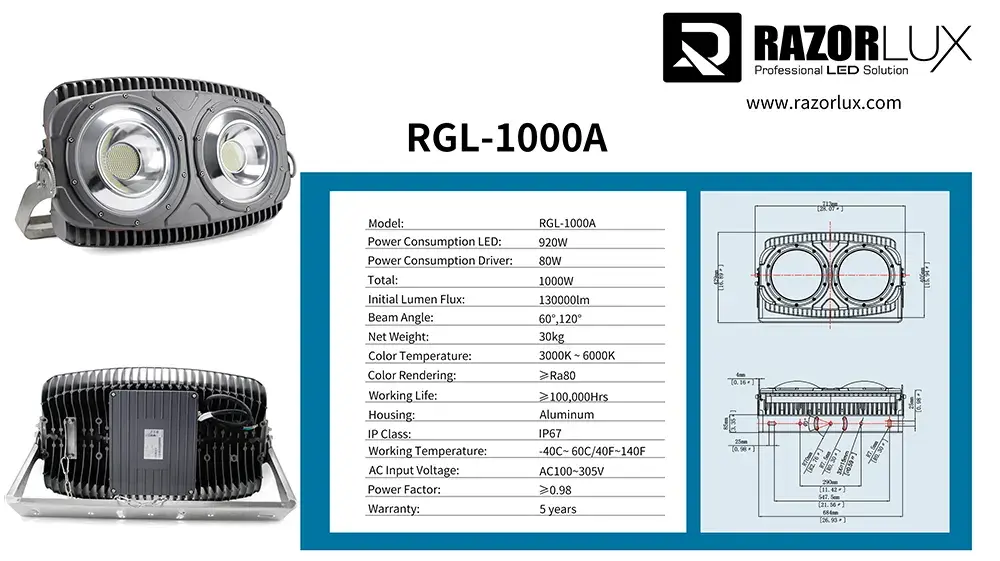
Razorlux's patented multi-function design works smoothly across AC80-315V without the need for extra adapters, which solves a common problem with buying things. Purchasing managers can stick to a single type of fixture instead of keeping separate stock for each region when they grow their business overseas or fix up older buildings with unstable power. This standardization makes spare parts less complicated and makes training for maintenance easier.
| Voltage Range | Geographic Coverage | Typical Applications | Adapter Required | Installation Complexity |
|---|---|---|---|---|
| 12 to 48V DC | Safety zones with specific rules | ATEX areas, ships | Yes (transformer) | High (wires that are heavy) |
| 100V to 277V AC | Asia and North America | Making things and warehouses | No | Low |
| 220-480V AC | Third phase of industry in Europe | Ports and heavy industry | Sometimes | Medium |
| 80–400V AC or DC | Worldwide power range | International business | No | Lowest |
Specialized Applications: Dimmable and Smart Controls
When dimming and smart settings are added, there are more power issues to think about. Traditional 0-10V dimming systems need a separate low-voltage control circuit in addition to the main power, which makes installation more difficult. DALI (Digital Addressable Lighting Interface) systems need separate control wires too, but they can set more complex lights.
Razorlux's crane lights can work with a number of different control protocols and color temperatures (2700K–6500K), but the main power input is still the most important feature. When looking at dimmable options, make sure that the driver stays compatible with the full voltage range even when the dimming functions are turned on. Some lower-quality drivers limit the input voltage when dimmer features are turned on. This is a standard detail that is easy to miss until the product is installed and compatibility problems are found.
LED vs. Traditional Lighting: Voltage Efficiency Advantages
LED Overhead Crane Lights are much more efficient than older metal halide or high-pressure sodium fixtures. This is partly because they can handle higher voltages better. Traditional HID lights need ballasts that drain a lot of power, especially when the lamp is first turned on and when it warms up. Also, these ballasts usually only work within smaller voltage ranges, usually within ±10% of the standard voltage.
When it comes to LED drivers, those that use active power factor adjustment are better at getting useful power across a wider voltage range while keeping the light output stable. Razorlux fixtures are very efficient, putting out 130 lumens per watt and having a power factor of 0.98 or higher. This means that they use less energy and cause less harmonic distortion in building electrical systems. This advantage in efficiency grows over the fixture's 50,000-hour lifespan, saving a lot of money compared to 250-300W HID lamps that need to be replaced every 10,000–15,000 hours.
Installation and Maintenance Considerations Related to Voltage
Pre-Installation Electrical System Assessment
Before putting up crane lighting, you should do a full electrical study and write down the real voltage levels at the connection point under different loads. Nominal "480V" systems often change from 460V to 510V, based on how the transformer taps are set up and how much power is being used in the building. In the same way, "240V" circuits can show any voltage between 220V and 250V at different times.
Surge Protection and Power Stabilization
There is a lot of electricity noise and power fluctuations in places where cranes work. When motor controllers switch heavy magnetic loads, voltage spikes happen that can hurt LED drivers that are sensitive. High-frequency harmonics are made by variable frequency drives (VFDs) that control how cranes move and connect to power distribution systems. When lightning hits a building's infrastructure, it sends out huge amounts of energy that can damage exposed equipment.
Professional Installation for Voltage Compatibility
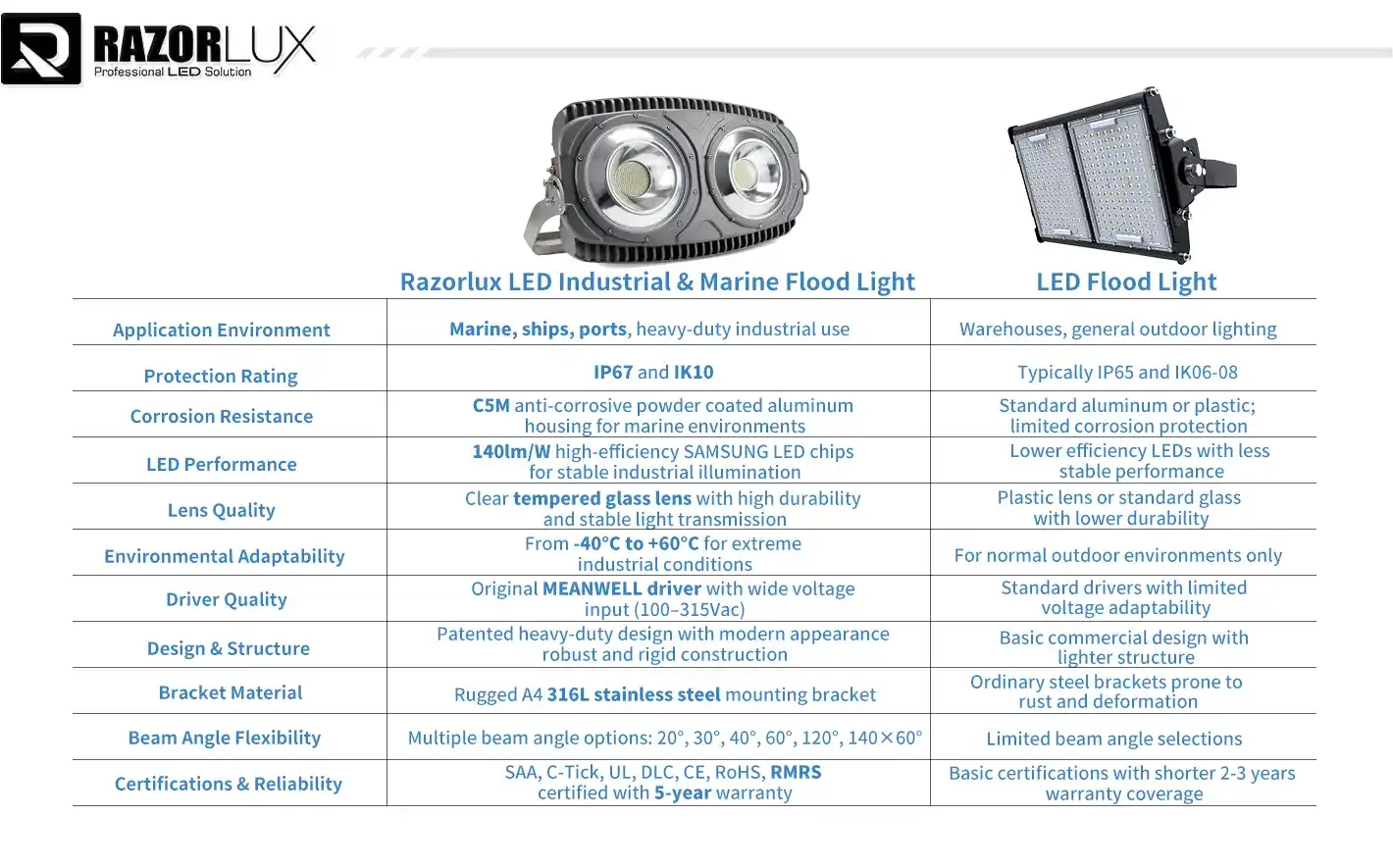
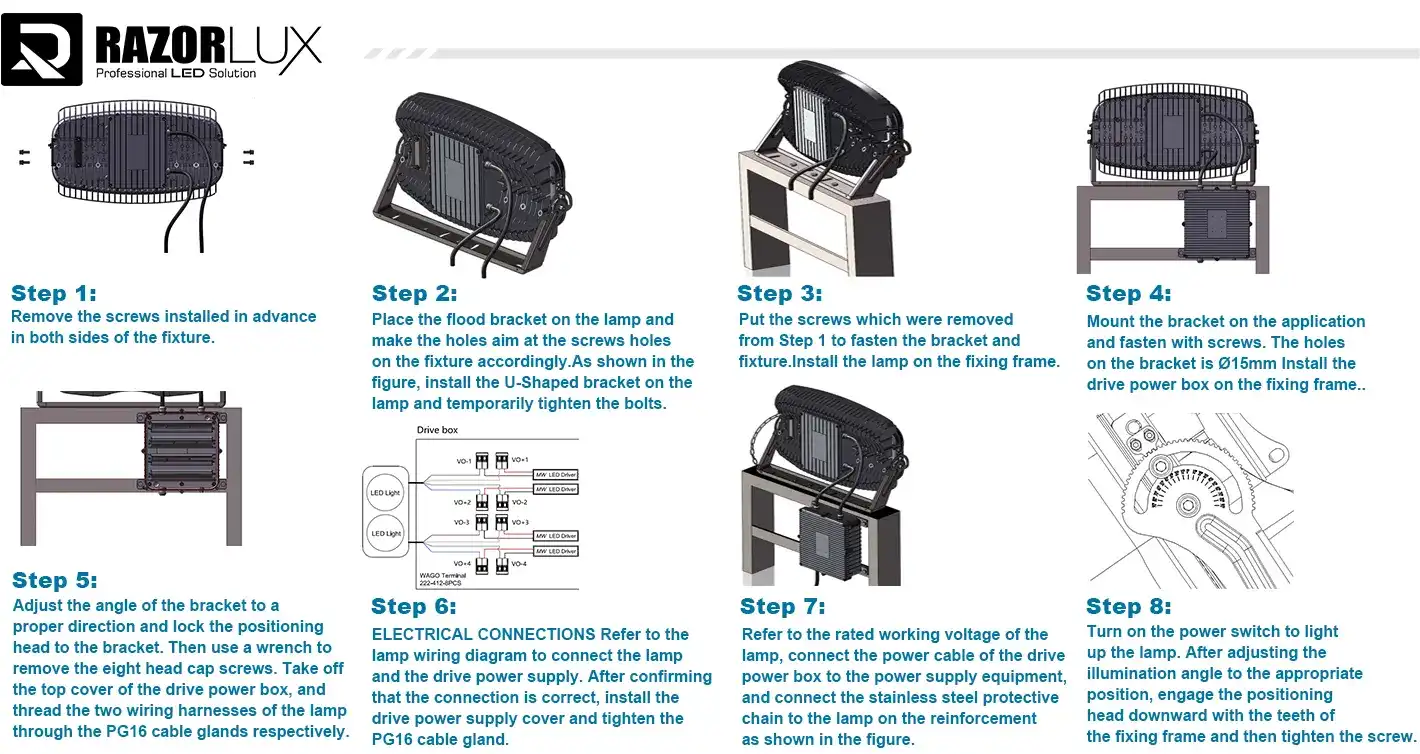
The right way to place Led Overhead Crane Lights has a direct effect on how stable the power is and how long the fixture lasts. When you have loose connections, you get high-resistance joints that get hot when they're under load. This lowers the voltage and could lead to a fire. When links are over-torqued, they damage wires or terminals, which also lowers the electrical performance. Follow the torque specs exactly. For 14-12 AWG conductors, which are popular in lighting systems, the torque is usually between 7 and 9 inch-pounds.
Troubleshooting Voltage-Related Issues
Voltage problems are often to blame when crane lighting flickers, dims, or fails before it should. Systematic fixing starts with checking the power at the fixture while it is actually working, not just at the electrical switch. A big drop in voltage between the panel and the device means that the wires are too small, the connections are bad, or the cable is too long, which means that the circuit needs to be redesigned.
How to Choose LED Overhead Crane Lights Based on Voltage Needs
Assessing Your Facility's Electrical Infrastructure
Before choosing Led Overhead Crane Lights fixtures, make a detailed list of your building's electrical features. Get electrical plans that show where the distribution panels are, how much power they handle, and how many circuit breakers they can handle. If the plans are out of date or not available, you should get an electrical study done to record the real voltages, phase balance, and power quality. This baseline data is necessary to make smart choices about buying.
Find out if your building uses single-phase or three-phase power and what the normal voltage values are. Write down any planned changes or additions to the electrical system that could affect the power that is available. When a building is being updated, it might switch from older power standards to more up-to-date ones. During this time, the lighting needs to work with both old and new systems.
Standard vs. Custom Voltage Solutions
Standard wide-voltage lights that cover 100V to 277V AC or wider ranges are better for most commercial uses. These ready-to-use products have shorter lead times, lower prices, and have been tested and shown to work reliably in millions of pieces. Custom voltage specifications are only needed in very rare cases, like when there are very specific industrial processes to use, old equipment that still uses old voltage standards, or government rules that require certain voltage levels.
Question assumptions when deciding if custom solutions are really needed. Is it possible to upgrade a building's electrical systems without having to pay as much? Would lights that use standard voltage and area transformers have a lower total cost of ownership? When looked at more closely, requirements that seem to call for unique voltage solutions often fall apart, showing that standard products with the right application engineering can better meet needs.
Environmental Factors Influencing Voltage Selection
Extremes in ambient temperature have an effect on how well electricity works and how stable the voltage is. Razorlux lights can work in temperatures ranging from -40°C to 60°C (-40°F to 140°F), but very high temperatures raise the resistance of the conductors, which could lead to voltage drops in long wire runs. When electrical installations are outside in tropical climates or near furnaces that are hot, they put a lot of stress on the insulation and connections. To keep the voltage stable at the fixture, you need to take these factors into account when choosing the size of the wire and how it should be connected.
Corrosive atmospheres, like salt spray in the ocean, chemical vapors in process industries, or just high humidity, damage Led Overhead Crane Lights electrical connections and the insulation around conductors. IP67-rated fixtures are important for keeping out water and other debris, but connection spots outside of sealed fixture housings need just as much care. To stop voltage instability caused by corrosion, use marine-grade heat-shrink tubes, dielectric grease on threaded connections, and tools made of stainless steel.
| Application Environment | Typical Voltage | Key Environmental Challenges | Recommended Protection | Maintenance Frequency |
|---|---|---|---|---|
| Indoor manufacturing | Three-phase 208–480V | Vibration and dust | IP65 at least | Inspection once a year |
| Shipyards & ports | 220-480V AC | Salt spray and water | IP67 and stainless steel parts | Checkup every three months |
| Steel mills & foundries | 480V three-phase | Heat, smoke, and particles | IP67 rating plus high temperature rating | Inspection every six months |
| Cold storage facilities | 208-277V | Very cold, mist | IP67 and a wide temperature range | Inspection once a year |
| Offshore platforms | 110V to 240V AC or DC | Waves, wind, and salt spray | Marine and IP67 ratings | Checkup every three months |
Partnering with Qualified Manufacturers and Suppliers
In addition to product specs, other things that should be taken into account when choosing a manufacturer are their technical support, certification paperwork, and the reliability of their supply chain. Manufacturers should be required to provide full test results that show how well their products work in the voltage range, not just specification sheets. Ask for proof that the wide-voltage system can work with different types of power quality, such as voltage changes, harmonic distortion, and frequency changes.
Check to see if the certifications are real and valid in the area where you will be installing them. CE marking is needed for sites in Europe, but it's not the same for naval (DNV-GL, ABS) or explosive environment (ATEX) uses. In North America, installations must follow UL and DLC listings, which have special rules for wet or dangerous places. Razorlux has many certifications, such as CE, RoHS, SAA, C-Tick, UL, DLC, CB, and ISO:9001. These certifications make it easier for projects to get approved by a wide range of regulatory bodies.
Energy Efficiency and Cost Benefits Related to Voltage Optimization
How Voltage Selection Impacts Energy Consumption
Wide-voltage LED drivers keep the output power constant over their whole operating range. However, the input voltage has a small effect on their efficiency. Drivers usually work best near the middle of their voltage range. At very low or very high voltage sources, they work less efficiently. These changes are usually only 2% to 3% across the whole working range. They are very small compared to the huge energy savings that LED technology provides over traditional lights.
Total Cost of Ownership: Beyond Purchase Price
When buying lighting fixtures, people who only look at the original cost don't think about the much bigger costs of installation, energy use, and care over the system's lifetime. A full total cost of ownership (TCO) analysis shows that the purchase price usually only accounts for less than 20% of the total costs over the product's lifetime. The main costs are energy use and maintenance labor.
Real-World Case Study: Voltage Optimization in Multi-Site Operations
There were problems with standardizing the lights at a Southeast Asian port operator's sites in Singapore, Malaysia, and Thailand. For older metal halide crane lights, each facility needed a different voltage specification (110V, 220V, or 380V). This meant that each site had to keep its own inventory, follow its own repair processes, and not be able to use equipment from another site.
Sustainable Lighting: Low-Voltage LED Innovations
New sustainability projects look at embodied energy in transportation and manufacturing more and more, along with operational energy use. Low-voltage LED systems, especially those driven by sustainable energy sources, get rid of the losses that come with using regular grid power. They can also be combined with solar panels, battery storage, or fuel cells that work at naturally low DC voltages.
Conclusion
Specification of voltage is an important but often overlooked factor in buying LED Overhead Crane Lights. Wide voltage ranges, like the AC80-315V / DC80-400V range that Razorlux offers, get rid of compatibility issues, make installation easier, and allow for operational flexibility that saves money over the life of the system. Procurement pros who care about performance, dependability, and the total cost of ownership should demand lights that are designed to work with a range of voltages in addition to standard features like lumens, beam angle, and water resistance. The electricity system that serves your cranes has a direct effect on how well the lights work, how much they cost to install, and how much upkeep they need over time. By fully knowing these voltage issues and working with makers who offer complete solutions, you can set up your facilities for safer, more efficient, and more cost-effective lighting that supports operating excellence and productivity.
FAQ
What is the most common voltage for industrial overhead crane lighting?
The most common voltage range is 100V to 277V AC, which works for most industrial electrical systems around the world. This range includes 120V and 208/240V systems in North America, 220V and 230V standards in Europe, and a lot of commercial 277V uses. 480V or 380-415V systems are common in three-phase industrial buildings, so fittings need to be rated for these higher voltages. Razorlux fixtures that accept AC80-315V can handle all of these voltages without the need for extra equipment. This makes it easier to buy and install in a variety of facilities.
Can LED crane lights operate on both AC and DC power?
Good industrial LED fixtures have drivers that can take both AC and DC inputs within certain voltage ranges. This two-in-one functionality is very important for marine vessels, mining operations, solar-powered buildings, and other uses that need DC electrical distribution. Razorlux's RGL-120A type works perfectly on either AC80-315V or DC80-400V, which makes it very adaptable for different setups. Check to see if competing products really do support both types of current across their entire voltage range, instead of needing separate models that only work with AC or DC.
What happens if LED crane lights receive voltage outside their rated range?
If you run LED lights above their recommended voltage, the driver could fail right away or start to break down over time, shortening their lifespan. Depending on how far below minimum voltage the supply drops, undervoltage can cause the lights to dim, flicker, or turn off completely. Overvoltage puts stress on internal parts, makes too much heat, and could lead to a catastrophic breakdown. Wide-voltage drivers, like the ones in Razorlux lights (AC80-315V), can handle large voltage changes that happen in industrial settings, while narrow-range drivers (±10% of normal) can only handle small changes before their performance starts to suffer.
Partner with Razorlux for Superior Industrial Lighting Solutions
The Xi'an Razorlux Optoelectronic Technology Co., Ltd. is ready to help you with your crane lighting problems with engineered solutions that have been used in thousands of installations around the world. Our RGL-120A LED Overhead Crane Lights have a patented multi-function design and can accept input voltages ranging from AC80 to 315V and DC80 to 400V. This means that you don't have to worry about voltage compatibility issues, and they also have great 130 lm/W efficiency and tough IP67 protection. We are a well-known company that makes LED Overhead Crane Lights. We have over 200 patents and a wide range of approvals, including CE, RoHS, UL, DLC, and DNV-GL. Our scientific knowledge, high-quality products, and reliable supply chains are exactly what your projects need. Email our team at sam@razorlux.com to talk about your particular voltage needs, get technical information, or set up a trial sample. We offer unique solutions, low prices, and expert help to make sure that your investment in industrial lighting works perfectly for years to come.
References
1. Illuminating Engineering Society. (2020). IES Recommended Practice for Industrial Lighting Applications. New York: IES Publications.
2. National Electrical Manufacturers Association. (2021). NEMA Standards Publication: LED Drivers and Power Supplies – Performance Requirements. Rosslyn, VA: NEMA.
3. International Electrotechnical Commission. (2019). IEC 62776: Double-capped LED Lamps Designed to Retrofit Linear Fluorescent Lamps – Safety Specifications. Geneva: IEC Central Office.
4. Marine Equipment Directive Compliance Working Group. (2022). Marine LED Lighting Systems: Voltage Specifications and Installation Guidelines for Shipboard Applications. London: Maritime Standards Institute.
5. Society of Petroleum Engineers. (2021). Offshore Platform Electrical Systems: LED Lighting Integration and Voltage Considerations. Richardson, TX: SPE Publications.
6. American Society of Mechanical Engineers. (2020). ASME B30.2: Overhead and Gantry Cranes – Safety Standards Including Electrical and Lighting Requirements. New York: ASME Press.