

_1750326878398.png)

LED High Mast Flood Lights Layout Design Best Practices
When planning lighting for large industrial areas, ports, or docks, it's important to know how to lay out high-intensity LED lights on tall poles correctly. A good design strikes a mix between even lighting, saving energy, and lasting sturdiness, Led High Mast Flood Lights, while also taking into account problems like glare and shadows. By choosing the right pole placement, fixtures, and beam configuration, facility managers can get reliable vision over large areas while lowering costs and upkeep requirements. These are important factors for marine and heavy-duty uses.
Understanding High Mast Lighting Systems and Layout Challenges
Core Components and Technical Specifications
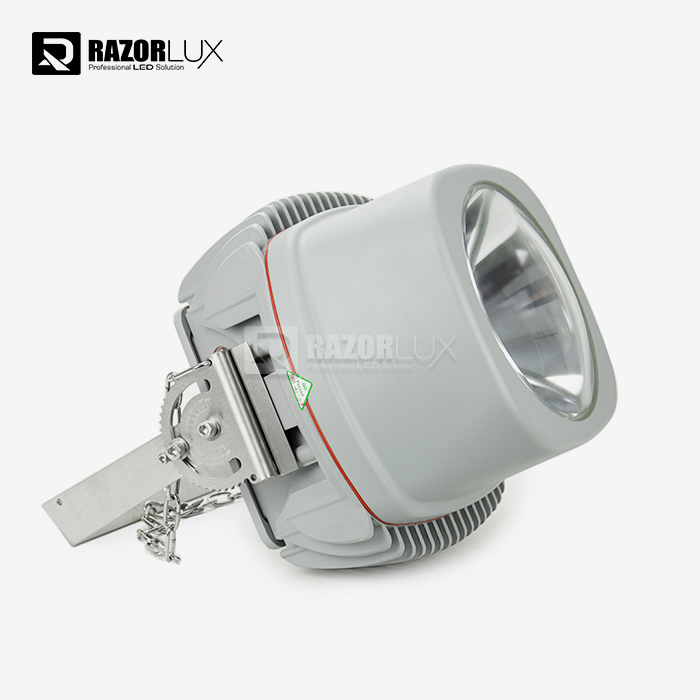
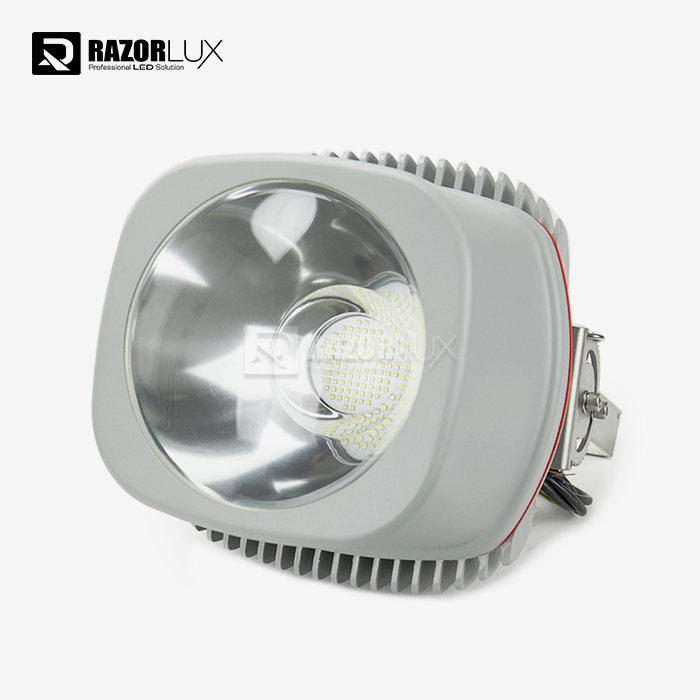
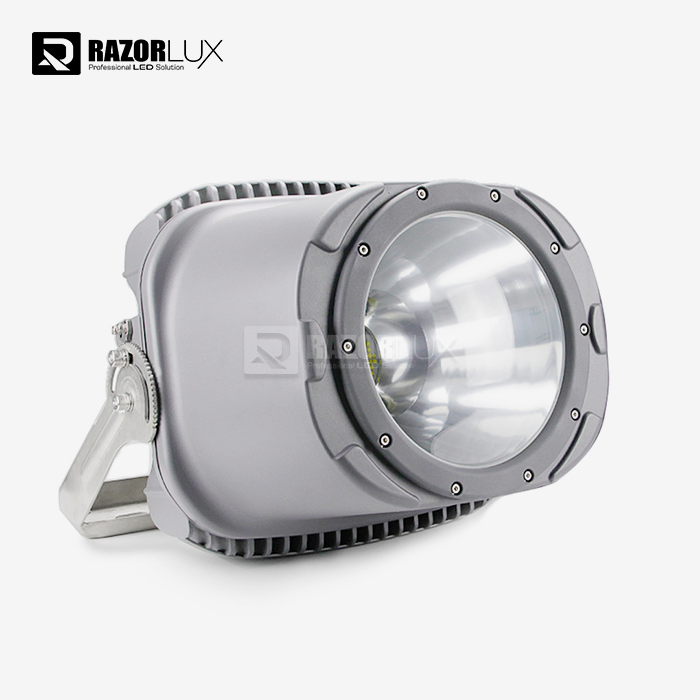
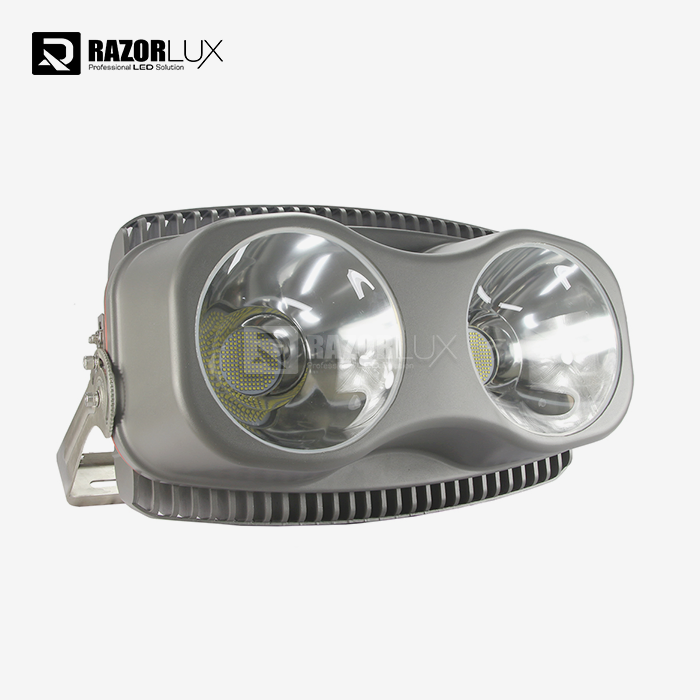
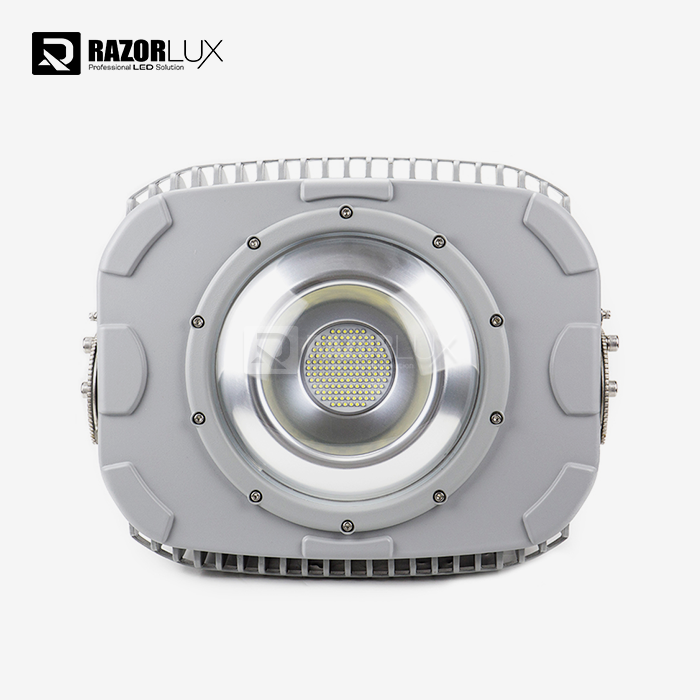
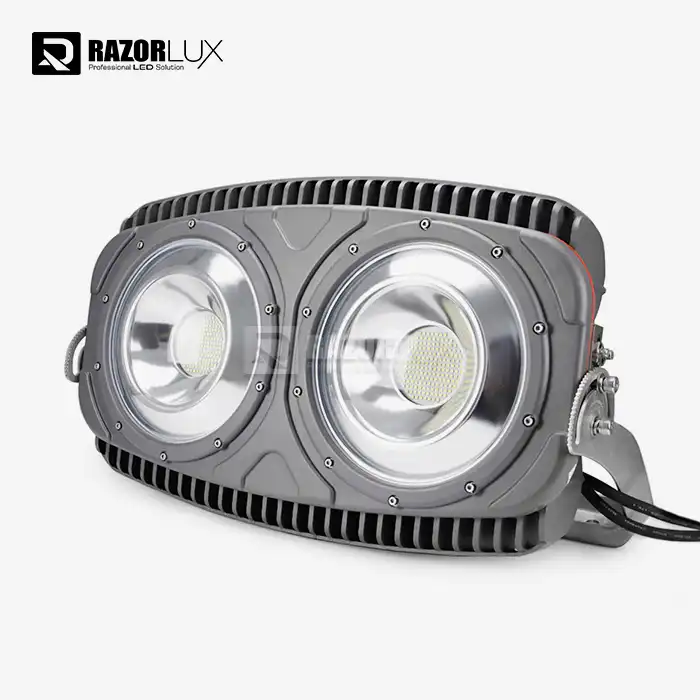
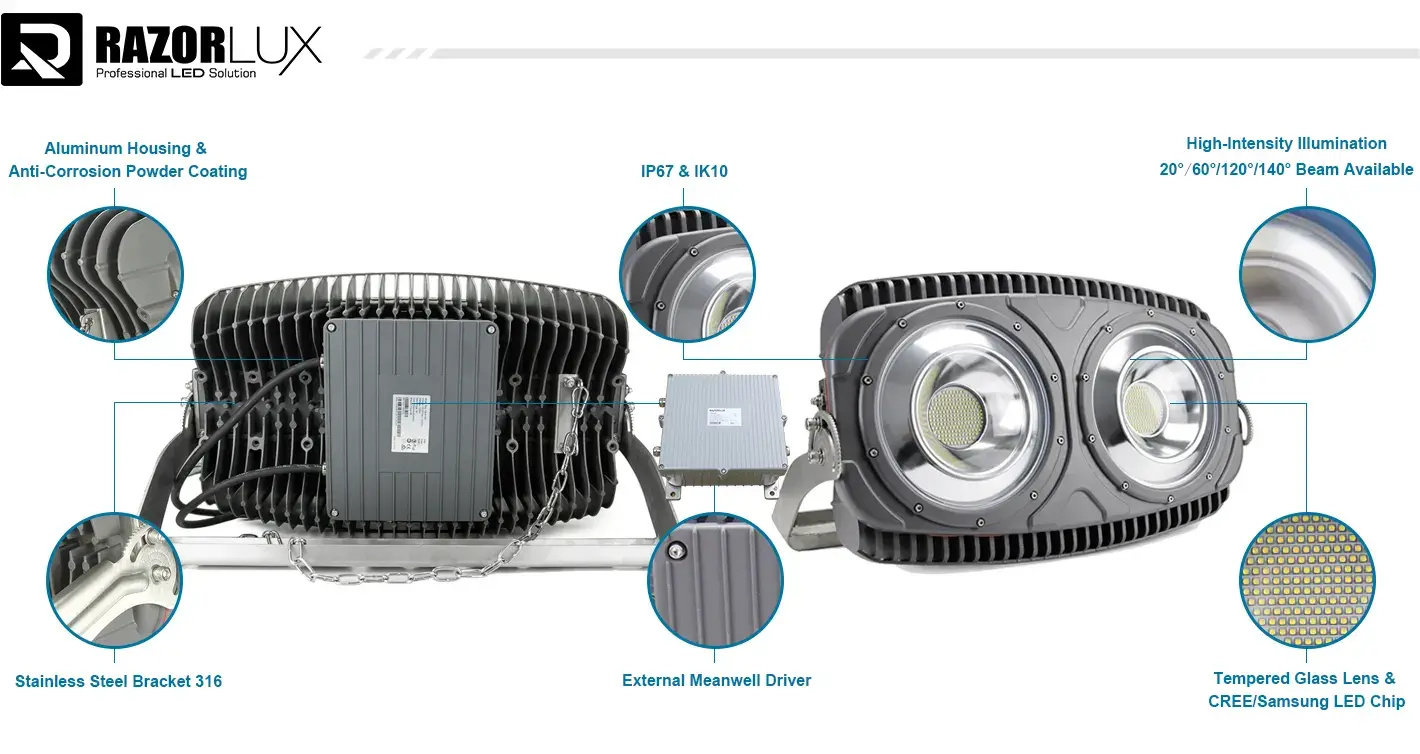
Multiple high-output luminaires are mounted on poles that are 15 to 50 meters high to make up high mast lighting systems. The purpose of these installations is to provide consistent lighting over big areas for important structures. In contrast to regular street lighting, these systems need precise engineering to make sure that the right amount of light is distributed evenly. With 14,400 lumens of brightness at 130 lumens/W economy, the Razorlux RGL-120A model is a great example of current LED High Mast Flood Lights technology. This device fixes voltage problems that happen a lot in industrial and marine settings because it can work on either AC 80-315V or DC 80-400V without the need for extra adapters. With an IP67 rating for waterproofing and an IK10 rating for impact protection, the housing can handle salt spray, vibration, and temperatures ranging from -40°C to 60°C, which are common in ships and offshore platforms. Because the beam angles can be changed (60°, 120°, 140°×60°), they can be tailored to the shape of the area and the coverage needs. Meanwell motors with a power factor of at least 0.98 and a total harmonic distortion (THD) of less than 10% power the system. This makes sure that it works smoothly without messing up nearby sensitive electronics.
Common Layout Design Obstacles
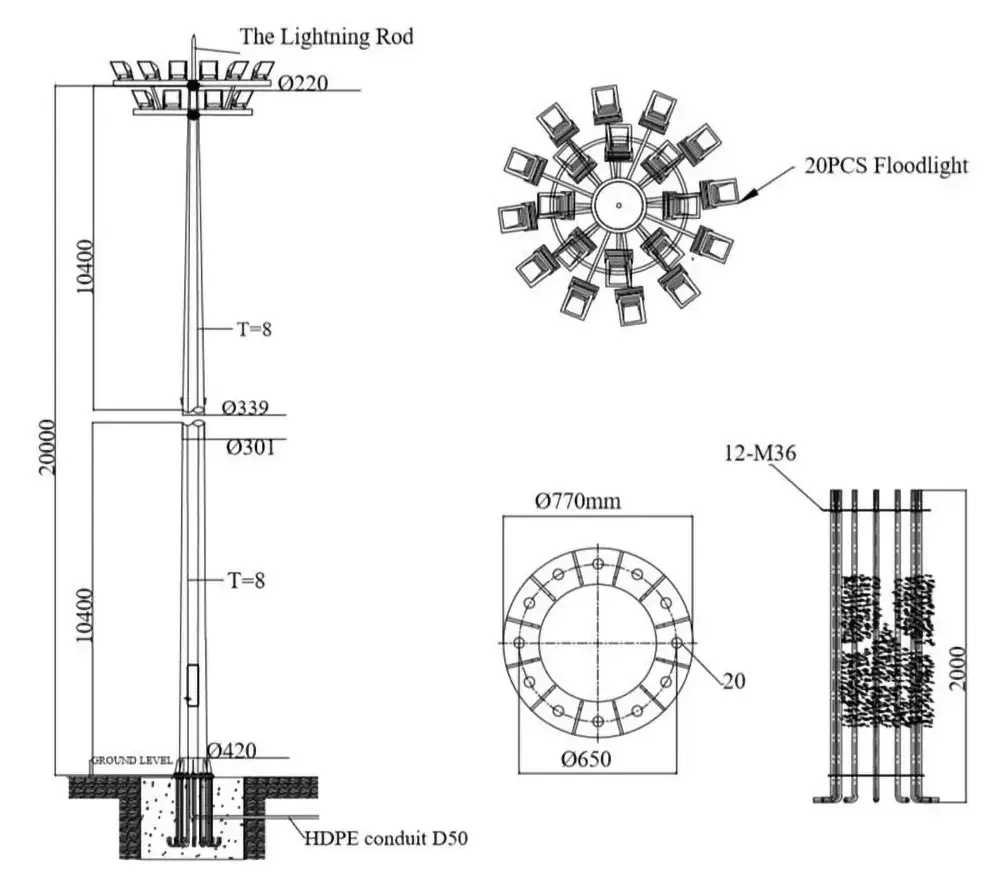
Getting uniform lighting is hard from a technical point of view. Light patterns that overlap from fixtures that aren't in the right place create bright spots and dark areas, which can be dangerous in areas where people move goods or fix ships. Glare is a problem when light sources are directed incorrectly and shine on operator sight lines, which can put crane operators or navigation staff at risk. When too many fixtures are used to make up for bad layout planning, energy is wasted. This method raises the costs of both installation and running while putting stress on tools through heat. These problems are made worse by environmental factors. For example, coastal salt fog damages cheap housing, and high temperatures affect how well drivers work and how stable the LED High Mast Flood Lights output is. Miscalculating the height of a building often hurts the success of a project. When the height is too low, the covered area is too small, and when it's too high, the wattage needs to be higher to meet the ground-level lux standards, which drives up costs. Because of the wind load at height, pole buildings need to be strong. This is especially true in coastal areas that are open to typhoons.
Site Assessment and Planning Methodology
Conducting Comprehensive Usage Analysis
A good plan design starts with a thorough description of the site. The best way to plan is to write down the LED High Mast Flood Lights, the size of the area, where the obstacles are, and what the job needs to be done. When compared to general cargo storage zones, shipyards need different lighting than container ports. For example, welding processes need higher lux levels and better color rendering (CRI ≥80). Design choices are greatly affected by operational trends. Integrated dimming systems lower output during times of low activity, which extends the life of parts and lowers energy costs in buildings that work continuous shifts. Advanced LED high mast flood light systems can dim from 0 to 10V, which gives you this freedom without affecting how reliably they restart. Many design decisions are based on following the rules. Authorities in charge of aviation put tight limits on light spilling upwards near airports and heliports. Maritime infrastructure must meet the standards set by the port authority so that glare doesn't get in the way of travel. DNV/GL and ABS certifications make sure that something is suitable for use in the sea environment. They give buying managers the proof they need to get project approvals. When planning, soil conditions and base needs are often not given enough thought. High mast poles create a lot of wind loads, especially when they hold up a lot of big fixtures. Geotechnical studies help engineers choose the right base designs, which keep the structure strong for the whole life of the installation and save a lot of money in repairs.
Selecting Appropriate Fixture Specifications
Fixtures must be chosen based on how they will be used and how well they need to work in the setting. For sites near the coast, the IP67 rating is necessary. For installations inland in controlled conditions, the IP65 rating might be enough. Impact resistance (IK10) keeps people from accidentally touching each other while using a crane or moving equipment. Lifespan is directly linked to thermal efficiency. Even when the temperature outside is high, good designs keep the joint temperatures below dangerous levels. This keeps the L70's 50,000-hour lifespan. Because it can handle a wide range of voltages (AC 80-315V, DC 80-400V), the Meanwell driver is resistant to grid instability that is common in industrial settings. This means that it doesn't have to deal with annoying failures that stop activities. Color temperature selection affects how well workers can see the job and how comfortable they are. Warmer colors (3000–4000K) make things look less sharp and may be easier to accept in mixed-use areas. Cool white (5000–6500K) makes it easier to see for detailed work and keeps you awake during night shifts. The range of 2700K to 6500K that is offered in professional lights can be used for a variety of tasks. Customizing the beam design improves the efficiency of coverage. Asymmetric patterns work well for lighting up rectangular areas like loading docks or train sidings, while symmetric patterns work best for lighting up square or circular areas. The 140°×60° choice gives you directional coverage that cuts down on lost light and makes long rooms more even.
| Design Parameter | Typical Range | Selection Consideration |
|---|---|---|
| Pole Height | 15-35m for industrial sites | Wind load, maintenance access, coverage radius |
| Fixture Output | 10,000-20,000 lumens | Target lux level, mounting height, area size |
| Beam Angle | 60° to 140° | Area geometry, uniformity requirements |
| Color Temperature | 4000-5700K (industrial) | Task visibility, environmental conditions |
| Spacing Ratio | 3:1 to 5:1 (height: spacing) | Uniformity, fixture count optimization |
Energy Efficiency and Sustainability Integration
Optimizing Fixture Quantity and Power Consumption
Setting up fixtures of the right size stops both under-illumination and energy waste. A thorough photometric analysis finds the lowest number of fixtures needed to reach the desired brightness levels while still maintaining a good level of uniformity. Modern LED high mast flood light systems can save a lot of energy compared to older Metal Halide (MH) or High-Pressure Sodium (HPS) setups because they use 130 lumens per watt. When you replace 250–300W MH fixtures with 120W LED High Mast Flood Light versions, you save 50–60% on energy costs while getting better light quality and longer service times. Large buildings that run hundreds of lights all the time can save tens of thousands of dollars a year on energy costs. Less load on the transformers and distribution systems is good for the infrastructure and could delay expensive electricity upgrades. Adding power factor correction to quality drivers (PF ≥0.98) lowers the need for reactive power, which lowers energy costs in places where power factor fees apply. Low total harmonic distortion (THD <10%) keeps sensitive electronics from being harmed and lowers the loss of heat in distribution lines. This is especially important in complex industrial electrical settings. With the ability to dim, static lights can be turned into systems that can change to real-world needs. During times of low activity, lowering the power to 50% saves energy while still providing enough safety lighting. The longer life of LED High Mast Flood Lights due to lower working temperatures and current levels increases the return on investment in ways other than saving energy.
Implementing Smart Control and Monitoring Systems
More complex operational tactics are possible with advanced lighting control systems. Astronomical Led High Mast Flood Lights timers change the output automatically based on how much daylight there is, and presence sensors turn down the lights in areas that aren't being used at the moment. These features are useful in places where activity patterns change or where operations need to be controlled separately in more than one area. Wireless tracking lets you see how the system is working in real time and lets repair staff know about problems before they become dangerous. Individual device tracking finds worn-out parts that can be replaced before they break down, during planned repair windows instead of having to be fixed in an emergency. This feature is especially helpful for high-mast setups that need special tools to get to and cause problems with operations. When operational events happen, responses are organized when building management systems are linked to them. When cargo activities start, or security alerts go off, the lighting instantly turns on and off again to save energy. This intelligence makes things run more smoothly and safely without sacrificing operating freedom or safety. Remote tests lower service costs by letting techs troubleshoot without having to be sent to every problem report. Changes to the configuration, the amount of dimming, and the schedule can all be made remotely, which cuts down on labor costs while keeping performance at its best as operating trends change.
Installation Best Practices and Technical Considerations
Pre-Installation Planning and Site Preparation
For adoption to go smoothly, a lot of work needs to be done before the equipment arrives. Structural studies check to see if current poles can hold LED High Mast Flood Lights or show what kind of reinforcements are needed. Foundation checks make sure that new pole installations have enough strength, especially when dirt conditions or wind loading estimates show that there are problems. A review of the electrical infrastructure shows that it has enough power and is properly grounded. High-quality LED high-mast flood light systems with low THD don't put a lot of stress on the electrical system, but installations that replace a lot of fixtures may need changes to the distribution system. Making sure the voltage stays stable across the typical AC 80-315V working range stops compatibility problems and makes sure the driver works at its best. Safety planning takes into account risks that are unique to the place, such as operating an overhead crane, dealing with traffic, and doing work at sea. Setting up safe work areas, scheduling installations for times when there isn't much going on, and working together with operations staff can help keep accidents from happening and keep production running smoothly. Specialized equipment needs, like aerial work platforms, cranes, or marine entry boats, need to be planned ahead of time. Creating documentation makes installation and future upkeep easier. Making as-built models that show where the poles are, how the fixtures are aimed, and how the electricity is connected are useful tools. By writing down fixture model numbers, activation dates, and initial performance readings, you can use this information as a starting point to track long-term performance and manage warranties.
Mounting and Optical Aiming Techniques
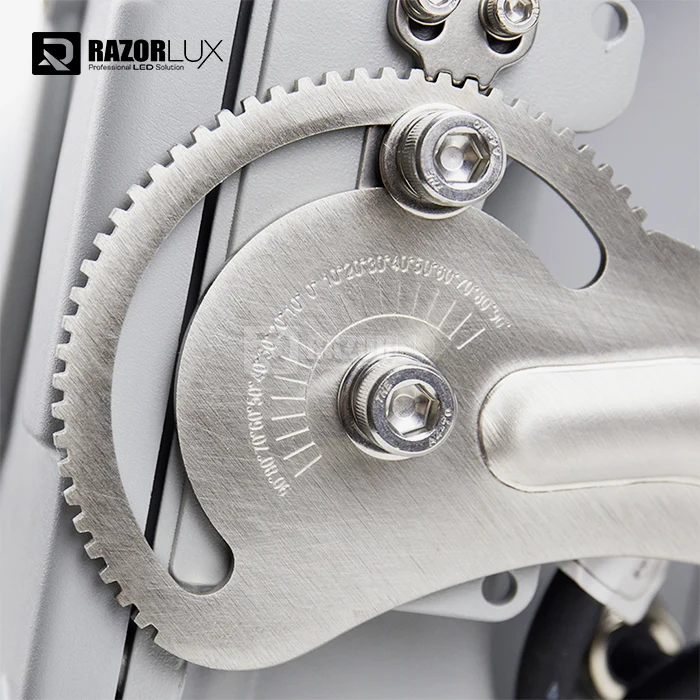
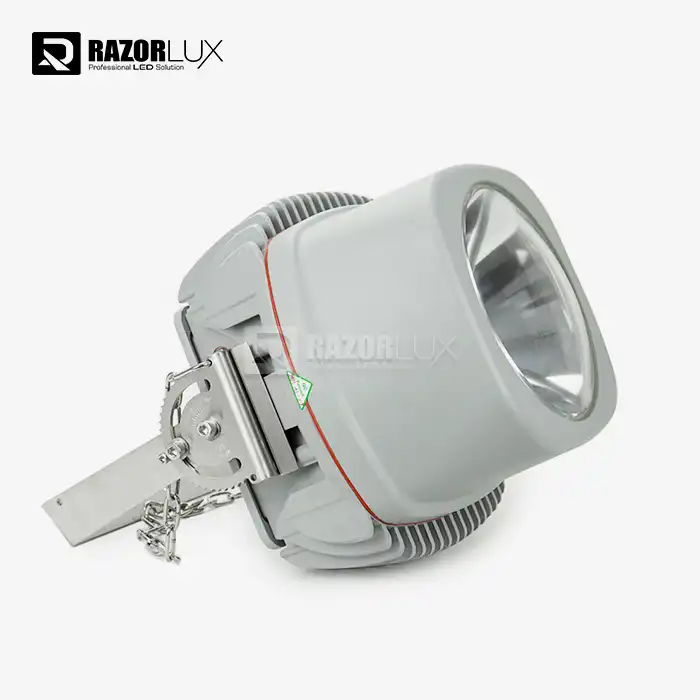
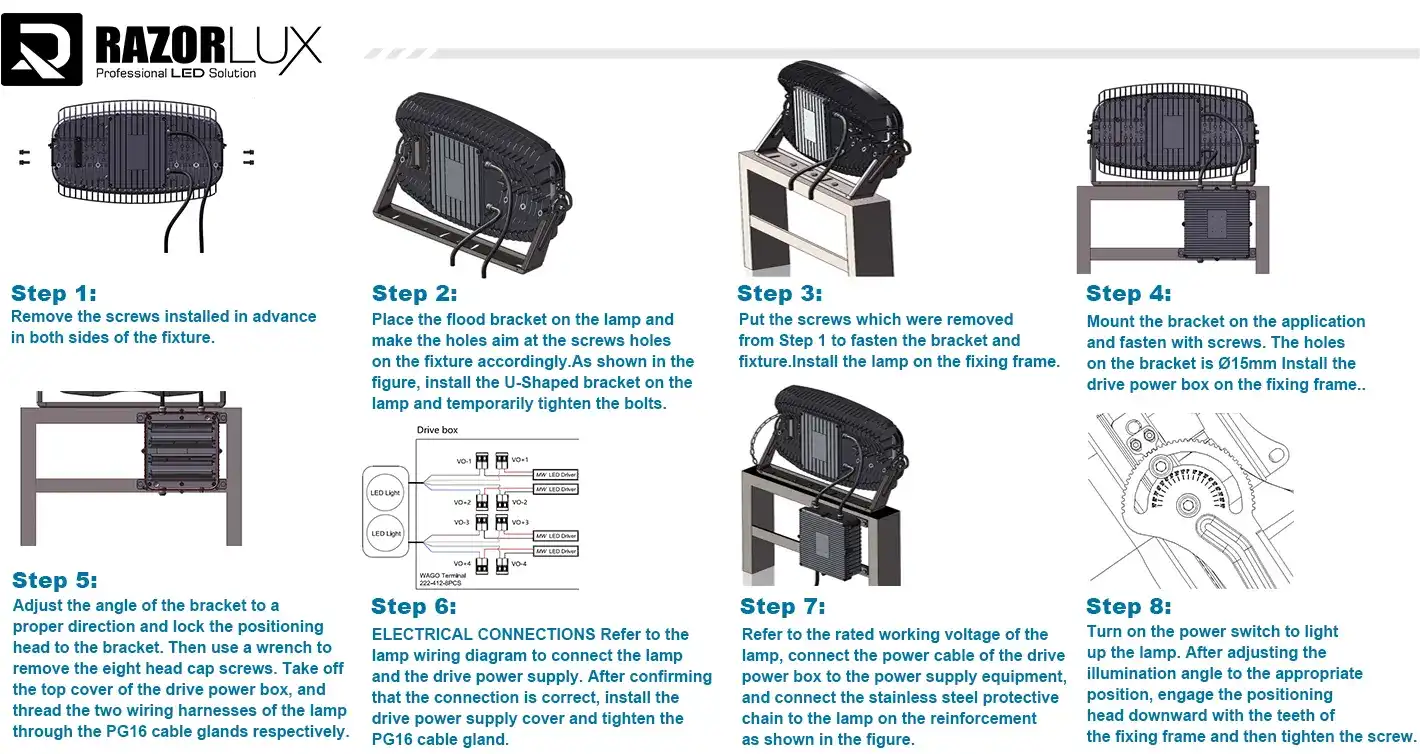
When fixtures are installed correctly, the design purpose is carried out in real life. A secure base stops vibrations from loosening things up, which can lead to aiming drift and even fixture separation. Stainless steel brackets don't rust, which is important for sea settings, and they keep the structure strong even when the wind blows and the temperature changes. To get the right light distribution patterns for optical pointing, you need to be very precise. Before the installation is complete, specialized pointing tools and photometric measures make sure that everything is lined up correctly. Keeping track of end aim angles makes it easier for maintenance workers to re-shoot after cleaning or replacing parts, which keeps the system's performance stable over its entire life. When making electrical links, you need to be careful to protect the surroundings. Premium connections with IP67 ratings keep water out of the termination points, which is a typical way for installs near the coast to fail. Good strain relief stops movement caused by wind from putting stress on the link, and good service loops allow for future repair without having to re-terminate. Before handing over, commissioning processes make sure that the whole system works. Full-power operation, dimming function proof (if needed), and thermal performance checks in real-world working conditions are all part of the testing process. Initial photometric readings check the achieved lux levels and regularity against the design specs. This lets you know if any aiming changes need to be made before acceptance.
Comparative Analysis: LED Technology Advantages
Performance Metrics Versus Traditional Lighting
Many areas of performance are where modern LED High Mast Flood Light systems are clearly better than older technologies. Luminous efficiency of 130 lm/W or higher is two to three times better than Metal Halide systems, which means that energy is saved immediately. Instant-on capability gets rid of the warm-up and restart delays that come with HID technologies and makes them less safe when the power goes out. Color rendering (CRI ≥75, with ≥80 and ≥90 options) is much better than HPS lights, making it easier to see for detailed work and making security tracking more effective. Keeping the color temperature the same over the lamp's lifetime stops the color shift that happens with old HID lamps, so setups with multiple fixtures look the same. The operational lifespan of 50,000 hours or more is 5–10 times longer than that of HID options, which greatly reduces the number of replacements needed and the work costs that come with them. Lumen maintenance for quality LED High Mast Flood Lights systems is more than 70% at stated lifespan, compared to 50–60% for HID technologies. This means that fixtures don't need as much over-design leeway to keep providing enough light as they age. The directed emission of LED High Mast Flood Lights sources gets rid of the wide output of HID lights, which requires reflectors and lowers efficiency. This feature makes optical systems more efficient with higher fixture efficiency, turning raw LED lights into useful provided illumination more effectively than designs that use reflectors.
| Performance Factor | LED High Mast | Metal Halide | HPS |
|---|---|---|---|
| Efficacy | 130+ lm/W | 70-90 lm/W | 80-100 lm/W |
| Operational Life | 50,000+ hours | 10,000-15,000 hours | 16,000-24,000 hours |
| Lumen Maintenance @ Rated Life | 70%+ | 50-60% | 60-70% |
| Color Rendering (CRI) | 75-90+ | 65-75 | 20-25 |
| Warm-up / Restrike Time | Instant | 5-15 minutes | 3-5 minutes |
| Dimming Capability | Smooth 0-100% | Limited/None | Poor |
Lifecycle Economics and Return on Investment
Even though LED High Mast Flood Lights cost more at first than HID options, economic LED High Mast Flood Lights research always shows that LED technology is better. Energy savings alone usually pay for investments within two to four years for setups that are used all the time. When fifty 400W Metal Halide fixtures are replaced with 120W LED High Mast Flood Lights equivalents, the building saves 14kW of constant demand, which is about 123,000 kWh per year at normal industrial duty cycles. At $0.12/kWh, the yearly savings get close to $15,000, quickly covering the extra cost of the LEDs.Cutting down on maintenance costs has a lot of extra benefits. Getting rid of the need to change HID lamps every three to five years saves money on both materials and labor. This is especially helpful for high mast setups that need special access tools. Longer LED High Mast Flood Lights lifespan cuts these repairs down to every 10 to 15 years, which saves 60 to 70 percent on lifetime maintenance costs compared to HID options. Avoiding interruptions in output has a secret value that is hard to measure but important for operations. Each repair cycle that shuts down an area or limits operations has potential costs on top of the direct costs of maintenance. These operating effects are greatly reduced when the number of interventions is cut from every two to three years to once every ten years. As more LED high-mast flood lights are used, the costs of meeting environmental standards keep going down. Getting rid of mercury-containing HID lights gets rid of the need to dispose of hazardous trash and the legal burdens that come with it. Less energy use directly lowers carbon emissions, which supports companies' efforts to be more environmentally friendly and could help them get environmental benefits or better funding.
Supplier Selection and Procurement Strategy
Evaluating Technical Specifications and Certifications
Careful evaluation of suppliers ensures the success of the project and their long-term happiness. Independent testing reports that confirm the claimed specs keep customers from being let down by goods that don't work as promised. Reputable makers provide LM-79 photometric test data from approved labs that show that the product's real output, effectiveness, and distribution qualities match what the manufacturer said they would be. Certification paperwork shows that the safety and performance standards that are important to the planned uses have been met. If something has a CE mark, it means it meets European safety standards. If it has a UL or DLC mark, it means it meets North American standards. For marine uses, you need DNV/GL or ABS certificates that show the product is safe for maritime use, with tests for vibration, salt fog, and impact protection. Being clear about where components come from builds trust in their long-term dependability. Led High Mast Flood Lights with high-quality parts, like Samsung or similar tier-one LED chips and Meanwell or similar drivers, show that the maker cares more about quality than cutting costs. These parts have separate names and warranties, which lowers the risk of failure early on from bad internal parts. Warranty terms show that the company that made the product is confident in its longevity. Coverage for LED modules and drivers for five years is normal for professional-grade goods, and coverage for housings for ten years confirms expectations for structural stability. By going over guarantee exclusions and claim processes, you can avoid confusion about the scope of coverage and the paperwork that needs to be done.
Assessing Manufacturing Capability and Service Support
Product accuracy and supply dependability are directly affected by how mature the manufacturing process is. Manufacturers that have been in business for ten years or more show steadiness and a wealth of experience that newcomers to the market lack. Patent files with more than 200 items, like Razorlux's, show a lot of money spent on research and development and a high level of technical skill that goes beyond simple assembly tasks. ISO 9001 standards for quality management systems give people faith in process control and a mindset of always making things better. These systems make sure that the quality of the production is the same across all order amounts and times. They do this by lowering batch-to-batch variation, which makes maintenance easier and makes managing inventory harder. Verifying production capacity stops shipping delays that put project plans at risk. Large inventory stocks and flexible manufacturing capabilities allow quick responses to urgent needs while keeping LED High Mast Flood Lights available for regular orders. Established sellers keep extra supplies of parts on hand in case there are problems in the supply chain that delay projects. During the specification, installation, and operating phases, how quickly technical help responds is very important. Suppliers who provide detailed paperwork, such as installation instructions, photometric files for lighting design software, and upkeep guides, make it easier to carry out projects quickly and correctly. Support staff who speak more than one language and know about international standards make it easier for people working on global projects that span multiple legal states to talk to each other.
Conclusion
A good design for LED High Mast Flood Lights takes into account technical specs, site-specific needs, and lifetime cost analysis. When you plan your layout correctly, including where to put the poles, which fixtures to use, and how the light is arranged optically, you can get even lighting while also saving money on energy costs and making maintenance easier. Modern LED high mast flood light technology has clear benefits over older HID systems because it is more efficient, lasts longer, and has less of an effect on the environment. A careful site inspection, precise installation, and preventative maintenance backed by the manufacturer's knowledge and service abilities are all necessary for a successful implementation. Strategically choosing a provider based on certified goods, proven manufacturing skills, and full support guarantees the success of the project and long-term happiness.
FAQ
1. What L70 lifespan should I expect from professional LED High Mast Flood Lights?
Based on LM-80/TM-21 testing methods, quality fixtures with tier-one LED chips and well-designed thermal management keep 70% of their original power for 50,000 to 100,000 hours. At normal workplace job cycles, this means 10 to 20 years. How long something actually lasts relies on its working temperature, electrical stress, and the environment. The longest lifespan is reached by high-end goods with careful thermal design and stable drivers that work well within the limits of their parts.
2. How do I figure out the right pole spacing and height for my building?
To start the calculation, you need to know the goal luminance standards (20–50 lux for general industry areas, higher for task zones) and the uniformity ratios (at least 0.4 for walking areas, 0.6+ for vehicle areas). Professional lighting designers provide optimized layouts accounting for obstacles, operational requirements, and economic constraints.
3. Why specify IP67 rating instead of IP65 for outdoor installations?
IP67 provides protection against temporary submersion (1 meter depth, 30 minutes), while IP65 resists water jets but not immersion. Coastal and marine environments expose fixtures to wave splash, pressure washing, and extreme weather, where IP65 may prove inadequate. The incremental cost for IP67 protection provides insurance against moisture-related failures requiring expensive high-altitude maintenance interventions. Industrial facilities benefit similarly from enhanced environmental protection, reducing long-term maintenance costs.
4. What surge protection level is necessary for high mast installations?
Professional installations typically require 10kV to 20kV surge protection to safeguard sensitive LED High Mast Flood Lights electronics against lightning strikes and grid transients. High mast poles act as lightning rods in exposed areas, making robust suppression essential for preventing catastrophic driver failure. Integrated protection within the driver, combined with external surge protection devices, ensures multi-level resilience for critical infrastructure lighting.
Partner with Razorlux: Your Trusted LED Sports Lighting Fixtures Supplier
Razorlux brings over 20 years of highly skilled engineering to the task of lighting up sports venues. As a company that makes specialized Led Sports Lighting Fixtures, we know how hard it is for procurement managers to find reliable products, have good performance records, and offer quick technical support. This dedication is shown by our RGL-120A model, which has 130 lm/W output, IP67 weather resistance, Mean Well drivers, and a stainless steel build that comes with a full 5-year warranty. We keep a large inventory, which lets us quickly send samples for technical review and cut down on shipping times to meet project deadlines. Our engineering team offers photometric analysis, unique mounting options, and fitting advice to make sure you get the best results. Our products are certified by UL, CE, RoHS, and DLC, which means they meet world standards. Our ISO 9001 quality systems make sure that our products are always made to the highest standards. Send an email to sam@razorlux.com to talk to our expert sales team about your facility's needs, get full specs, or set up a free evaluation. We give buying workers the paperwork, performance, and partnerships they need for LED conversion projects to go smoothly.
References
1. Illuminating Engineering Society (2020). IES Recommended Practice for Outdoor Lighting in Port and Harbor Facilities, ANSI/IES RP-14-20, New York: IES Publications.
2. U.S. Department of Energy (2021). Solid-State Lighting Program: Energy Savings Forecast of LED High-Mast Roadway Lighting, DOE/EE-2156, Washington DC: Office of Energy Efficiency and Renewable Energy.
3. International Association of Ports and Harbors (2019). Technical Guidelines for Energy-Efficient Port Lighting Systems, IAPH Sustainability Report Series Vol. 8, Tokyo: IAPH Publications.
4. Det Norske Veritas (2022). Classification Notes: Electrical Installations and LED Lighting Systems for Ships and Offshore Platforms, DNV-CN-0148, Oslo: DNV Group AS.
5. National Electrical Manufacturers Association (2021). NEMA LSD 61: Specifications for High-Output LED Luminaires in Outdoor Industrial Applications, Rosslyn VA: NEMA Standards Publications.
6. Marine Technology Society (2020). Journal of Marine Engineering: Lifecycle Cost Analysis of LED Versus Conventional Lighting in Offshore Oil Platform Applications, MTS-JME Vol. 54, No. 3, pp. 87-103.