


_1750326878398.png)

Outdoor Tennis Court Lighting: LED vs Metal Halide — Which Wins?
Picture this: you're in the middle of an intense match when suddenly your metal halide lights flicker and dim, forcing play to halt for 15 minutes while they restart. Or worse, your electricity bill arrives showing thousands of dollars wasted on inefficient lighting that barely illuminates the court corners. If you're still relying on outdated metal halide systems for your Outdoor Tennis Court Lighting, you're not just losing money—you're compromising player safety, match quality, and facility reputation. This comprehensive guide reveals why LED technology has decisively won the battle for tennis court illumination, backed by real performance data, cost comparisons, and expert insights that will transform how you light your courts.
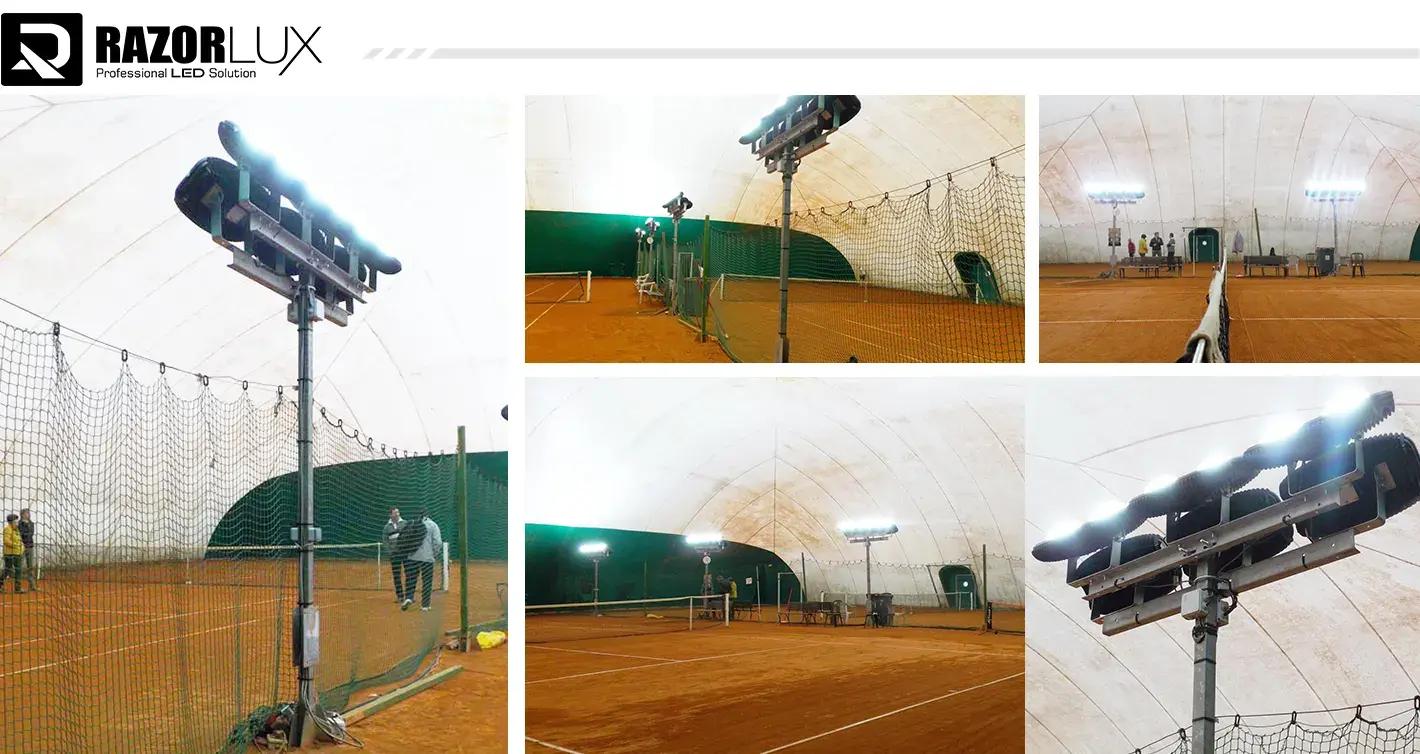
Understanding Outdoor Tennis Court Lighting Technologies
The Evolution of Tennis Court Illumination Systems
Tennis court illumination has undergone remarkable transformation over recent decades. Traditional metal halide systems dominated the sports lighting industry for years, primarily because they offered sufficient brightness levels at relatively affordable installation costs. However, these conventional systems came with significant operational drawbacks that facility managers gradually discovered through years of frustration. The emergence of LED technology in the sports lighting sector introduced a revolutionary alternative that addresses virtually every limitation associated with metal halide fixtures. Modern outdoor tennis court lighting now demands not just adequate brightness, but also instant activation, energy efficiency, uniform distribution, and minimal maintenance requirements that only advanced LED systems can reliably deliver.
Key Performance Metrics for Tennis Court Lighting Quality
Evaluating outdoor tennis court lighting requires understanding several critical performance indicators beyond simple brightness measurements. Luminous efficacy, measured in lumens per watt, determines how efficiently a light source converts electrical energy into visible illumination. Metal halide systems typically achieve 75-100 lm/W, whereas premium LED fixtures reach 130-160 lm/W, representing a substantial efficiency advantage. Color Rendering Index (CRI) measures how accurately colors appear under artificial lighting, with values above Ra75 considered acceptable for recreational play and Ra80+ preferred for competitive matches. Uniformity ratios indicate how evenly light distributes across the playing surface, preventing dangerous dark spots or excessively bright zones that compromise player performance and safety during outdoor tennis court lighting applications.
Comparing Light Distribution Patterns and Beam Control
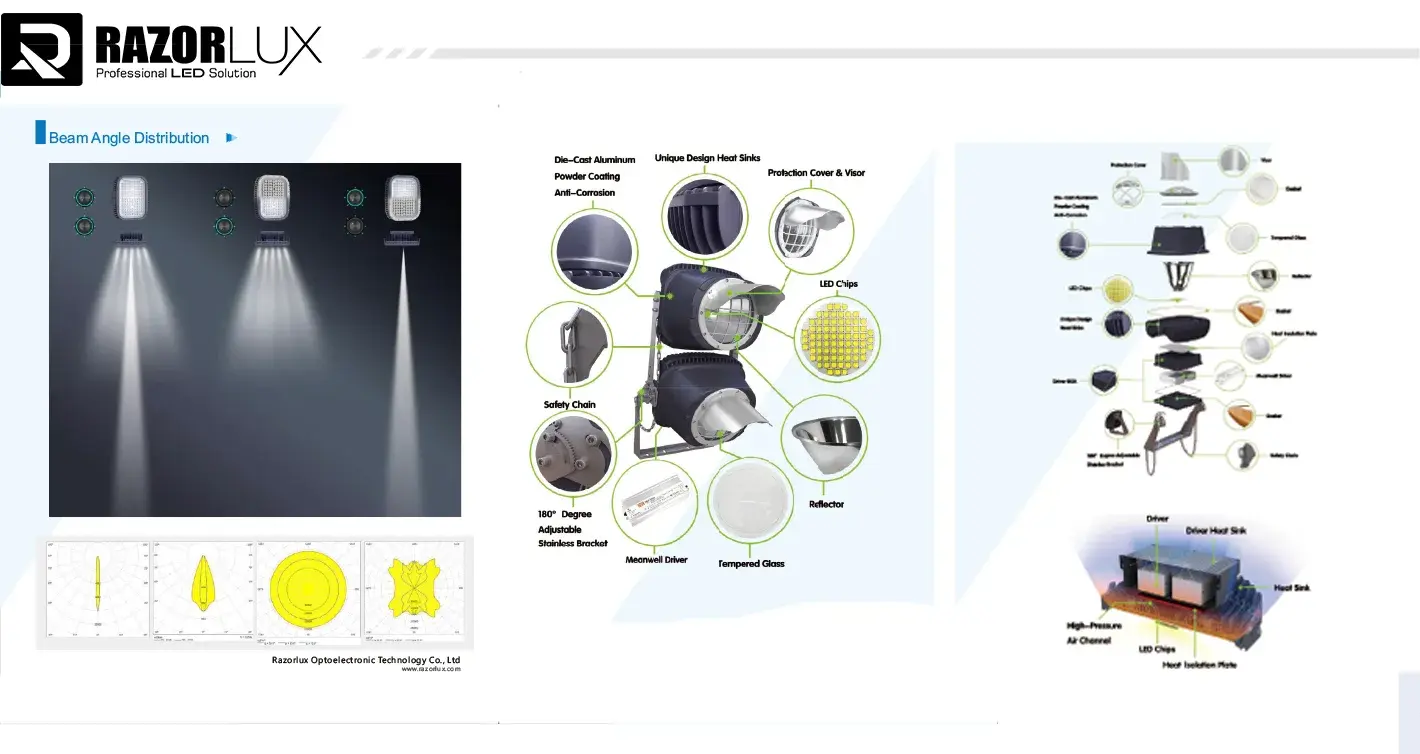
Light distribution patterns fundamentally differ between metal halide and LED outdoor tennis court lighting systems. Metal halide lamps emit light omnidirectionally, radiating illumination in all directions without precise control, resulting in significant light spillage beyond the intended court area. This inefficiency necessitates using more fixtures to achieve adequate playing surface brightness while simultaneously creating light pollution problems for neighboring properties. Advanced LED systems incorporate sophisticated optics that direct light exactly where needed, utilizing beam angles ranging from 40° to 140° depending on pole height and court configuration. The Razorlux RGL-1000A model exemplifies this precision with multiple beam angle options (40°, 60°, 120°, 140°x60°) that optimize outdoor tennis court lighting distribution while minimizing wasted illumination and glare issues.
LED vs Metal Halide: The Comprehensive Performance Comparison
| Performance Factor | LED Lighting | Metal Halide Lighting |
|---|---|---|
| Luminous Efficacy | 130-160 lm/W | 75-100 lm/W |
| Lifespan | 50,000-100,000 hours | 6,000-15,000 hours |
| Startup Time | Instant (0 seconds) | 10-15 minutes |
| Energy Consumption | 1000W replaces 2000-3000W | Higher baseline consumption |
| Color Temperature | 2700K-6500K (adjustable) | Limited range, degrades over time |
| Dimming Capability | Smooth, instant dimming | Difficult, requires voltage changes |
| Maintenance Frequency | Minimal (every 10+ years) | Frequent (every 1-3 years) |
| Light Quality | Consistent throughout lifespan | Degrades significantly over time |
Energy Efficiency and Operating Cost Analysis
Energy consumption represents the most dramatic difference between LED and metal halide outdoor tennis court lighting systems. A typical metal halide installation requires eight 1000-watt fixtures to adequately illuminate a standard 60×120 court, consuming 8,000 watts continuously during operation. Equivalent LED systems like the Razorlux RGL-1000A achieve superior illumination using just 1000 watts per fixture, replacing 2000-3000 watt metal halide units with identical or better performance. This translates to 50-70% energy reduction immediately upon installation. For facilities operating lights four hours nightly, the annual electricity savings exceed $4,000 per court at average commercial rates. Over the LED system's 50,000-hour lifespan, these savings compound dramatically, offsetting higher initial investment costs while delivering decades of reduced operational expenses for outdoor tennis court lighting applications.
Lifespan, Durability, and Maintenance Requirements
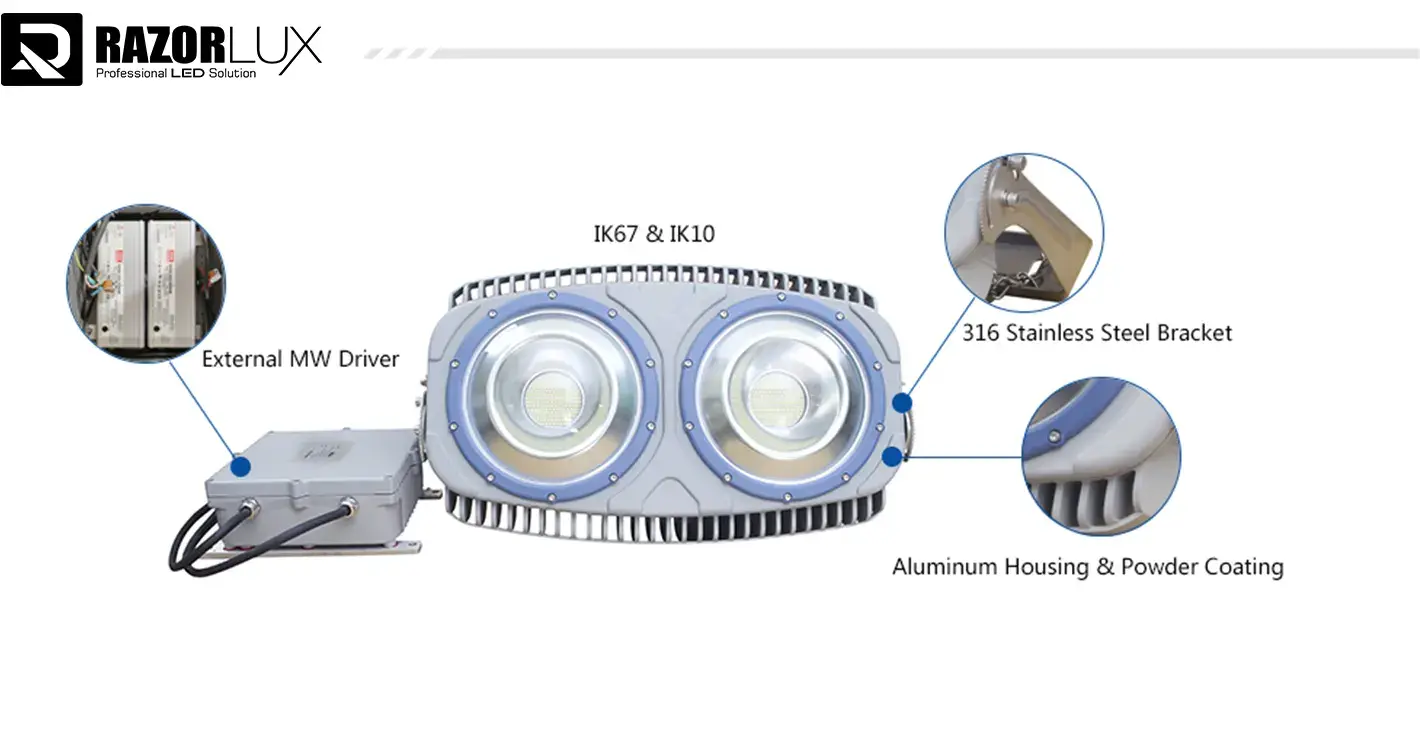
Lifespan differences between LED and metal halide outdoor tennis court lighting profoundly impact long-term ownership costs. Metal halide bulbs typically survive 6,000-15,000 operational hours before requiring replacement, necessitating bulb changes every 12-36 months depending on usage patterns. Each replacement involves material costs, labor expenses, equipment rental fees, and court downtime that disrupts facility scheduling. Premium LED systems like those from Razorlux deliver 50,000-100,000 hour lifespans, effectively eliminating routine maintenance for decades under normal usage. The Razorlux RGL-1000A offers comprehensive five-year warranties covering both LED modules and drivers, with ten-year housing warranties demonstrating exceptional build quality. This durability stems from superior thermal management using aluminum construction, powder coating protection, and advanced heat dissipation designs that maintain optimal operating temperatures even during extended outdoor tennis court lighting operation.
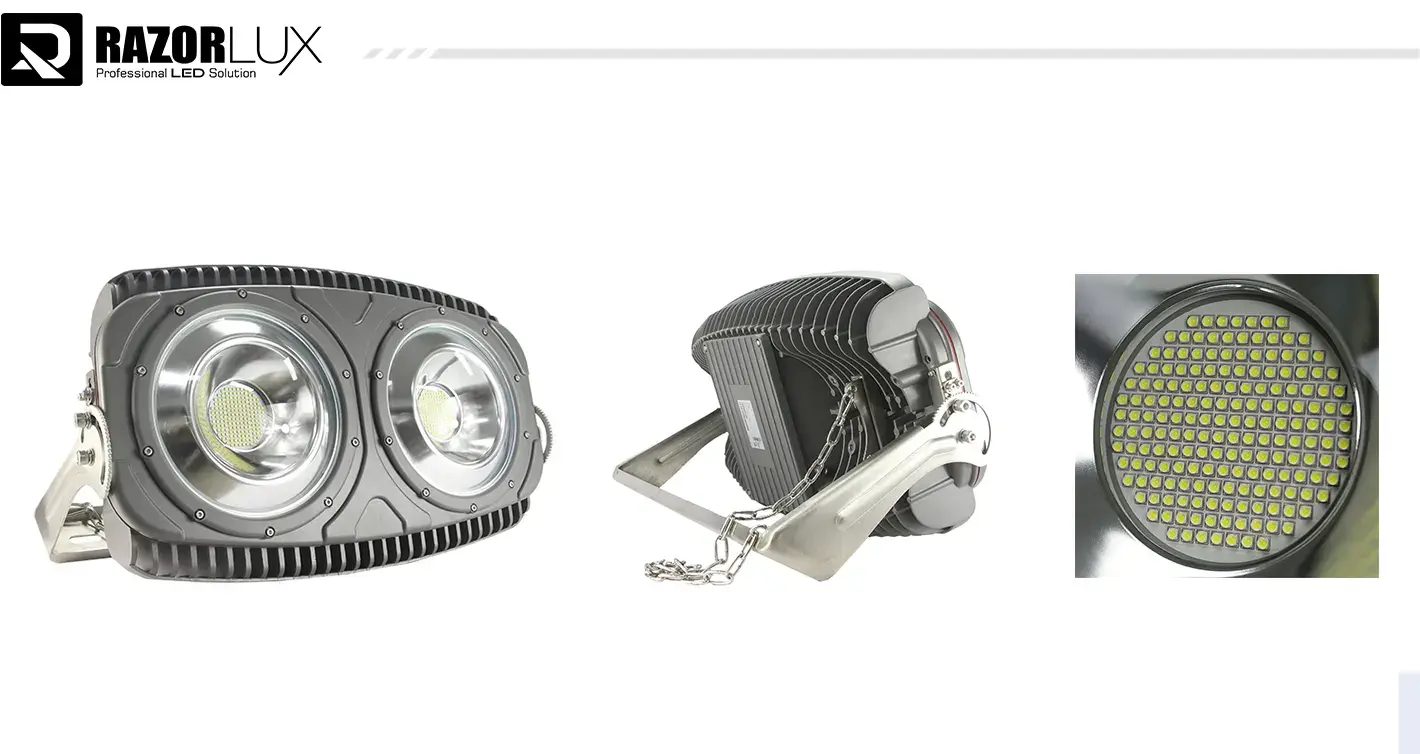
Instant-On Performance and Operational Flexibility
Operational flexibility dramatically distinguishes LED from metal halide outdoor tennis court lighting systems. Metal halide fixtures require 10-15 minutes warm-up time to reach full brightness after activation, creating frustrating delays when courts need immediate illumination. If a metal halide system experiences power interruption during play—whether from weather events, circuit breaker trips, or accidental switch-offs—players must wait another 15 minutes for lights to cool down and restart completely. This limitation severely impacts facility operations, customer satisfaction, and revenue generation during peak usage hours. LED systems provide instant full-brightness illumination within milliseconds of activation, eliminating all warm-up delays. Furthermore, LED outdoor tennis court lighting supports smooth dimming capabilities for different activity levels, practice sessions, or energy conservation periods without the complex voltage adjustments that metal halide dimming requires.
Advanced LED Features and Technical Advantages
Color Rendering and Visual Comfort for Players
Color rendering quality substantially affects player performance and comfort during outdoor tennis court lighting conditions. The Color Rendering Index measures how accurately artificial lighting reproduces colors compared to natural daylight, with higher values indicating superior color fidelity. Metal halide systems typically achieve CRI values around Ra65-75, adequate for basic visibility but causing noticeable color distortion that affects depth perception and ball tracking. LED technology achieves CRI values of Ra75-90+, with the Razorlux RGL-1000A standard offering Ra>75 and optional Ra80-90 configurations available upon request. This enhanced color rendering helps players accurately judge ball trajectory, court boundaries, and opponent positioning during outdoor tennis court lighting scenarios. Furthermore, LED systems maintain consistent color temperature throughout their operational lifespan, whereas metal halide fixtures shift noticeably toward yellow-green tones as they age, degrading visual comfort progressively.
Weather Resistance and Environmental Durability
Environmental durability determines outdoor tennis court lighting reliability across varying climate conditions. The Ingress Protection rating system classifies fixtures' resistance to dust and moisture intrusion, with IP65 representing dust-tight protection and resistance to water jets from any direction. The Razorlux RGL-1000A achieves IP65 standard protection with optional IP67 upgrades available, indicating submersion resistance up to one meter depth. This exceptional sealing prevents moisture infiltration, corrosion, and electrical failures even during severe weather events including heavy rainfall, snow accumulation, and humidity exposure. The aluminum housing with powder coating finish provides marine-grade corrosion resistance, extending fixture lifespan significantly beyond standard outdoor applications. Additional IK10 impact resistance rating ensures outdoor tennis court lighting fixtures withstand physical impacts, hail damage, and vibration stresses without compromising structural integrity or optical performance.
Smart Control Integration and Automation Capabilities
| Control Feature | Implementation Benefit |
|---|---|
| 0-10V Dimming | Smooth analog brightness adjustment for different activities |
| DALI Integration | Digital addressable control for individual fixture management |
| Photoelectric Sensors | Automatic activation based on ambient light conditions |
| Occupancy Detection | Energy savings by illuminating only when courts are in use |
| Remote Management | Smartphone/computer control for convenient operation |
| Scheduled Programming | Automated on/off times matching facility operating hours |
| Emergency Backup | Battery system providing 2-hour operation during power outages |
Modern outdoor tennis court lighting systems incorporate sophisticated control technologies impossible with traditional metal halide fixtures. LED drivers support multiple dimming protocols including 0-10V analog dimming and DALI (Digital Addressable Lighting Interface) for precise, individual fixture control. Facility managers can program lighting schedules matching court reservation patterns, automatically adjusting brightness levels for different activity types—full intensity for competitive matches, reduced levels for practice sessions, minimal illumination for security purposes. Photoelectric sensors enable automatic activation at dusk and deactivation at dawn, eliminating manual switching while optimizing energy consumption. Advanced systems integrate with facility management software, allowing remote monitoring, troubleshooting, and adjustment through smartphone applications. The Razorlux emergency power function provides two-hour backup operation during electrical outages, ensuring outdoor tennis court lighting continuity for scheduled matches and preventing revenue loss from weather-related power interruptions.
Thermal Management and Performance Stability
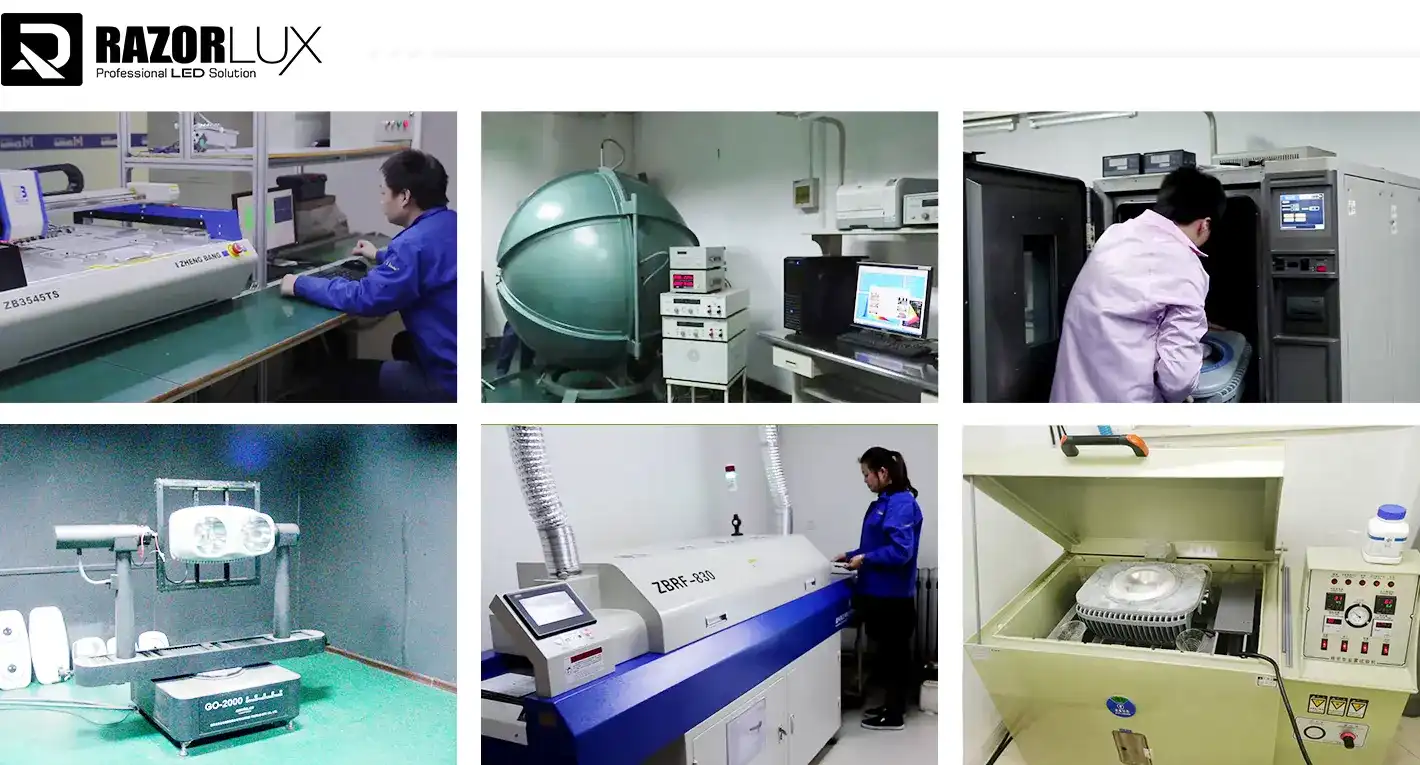
Thermal management critically impacts LED outdoor tennis court lighting performance and longevity. LED chips generate heat during operation, and excessive temperatures accelerate light output degradation, color shift, and premature failure. Premium fixtures like the Razorlux RGL-1000A incorporate advanced thermal management through multiple mechanisms: substantial aluminum heat sink construction, phase-change heat dissipation technology, and air circulation designs that efficiently transfer heat away from LED modules. This sophisticated thermal engineering maintains LED junction temperatures within optimal ranges even during extended operation in high ambient temperatures reaching 60°C (140°F). Consequently, light output remains stable throughout the fixture's operational lifespan without the 30-40% lumen depreciation characteristic of metal halide systems. Stable thermal performance ensures consistent illumination levels for outdoor tennis court lighting applications, eliminating the gradual brightness reduction that forces premature metal halide replacement despite bulbs technically still functioning.
Implementation, Installation, and Practical Considerations
Professional Lighting Design and Photometric Analysis
Successful outdoor tennis court lighting requires professional photometric design analysis before installation. Lighting designers utilize sophisticated computer modeling software that simulates fixture placement, beam angles, and pole heights to predict illumination levels across the entire playing surface. The analysis segments the court into a detailed grid, calculating lux or foot-candle values at each point to ensure compliance with USTA and IES standards for recreational (200-300 lux), club-level (500 lux), or professional play (750+ lux). Proper design eliminates dark corners, excessive brightness variations, and glare problems that compromise player safety and performance. For standard 60×120 foot courts, optimal configurations typically position eight fixtures on poles 20-30 feet high, evenly distributed around the court perimeter. However, site-specific factors including surrounding structures, tree positioning, neighboring property considerations, and pole placement restrictions necessitate customized outdoor tennis court lighting designs that professional analysis provides.
Installation Requirements and Mounting Configurations
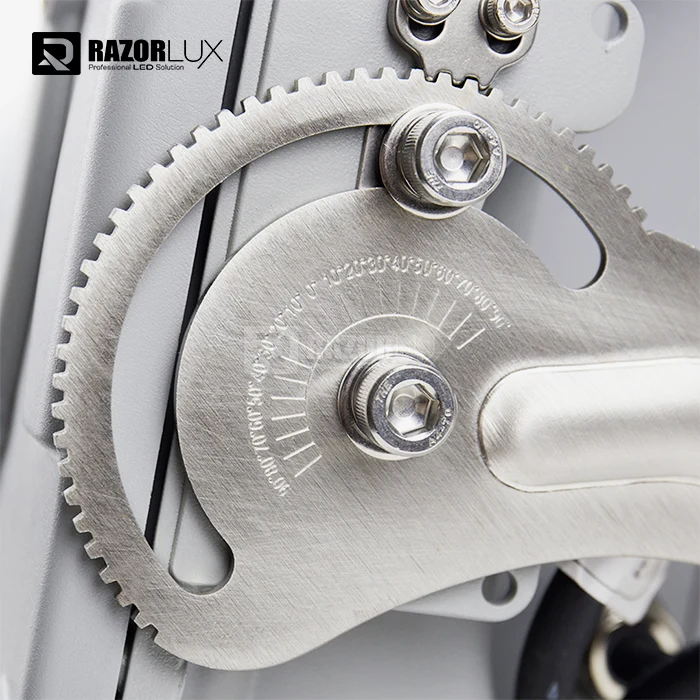
Installing outdoor tennis court lighting involves multiple technical considerations beyond simply mounting fixtures on poles. Electrical infrastructure must deliver appropriate voltage—the Razorlux RGL-1000A accommodates wide input ranges (AC 80-305V, DC 100-400V, or 500-800V DC) providing exceptional installation flexibility. Pole selection requires structural calculations ensuring adequate strength for fixture weight (29kg per RGL-1000A unit) plus wind loading considerations. Stainless steel mounting brackets provide corrosion-resistant attachment with adjustable angles optimizing beam direction. Wiring must meet local electrical codes with proper circuit protection, grounding, and weather-resistant connections. Professional installation teams coordinate trenching for underground electrical runs, concrete footing construction for pole foundations, and fixture positioning achieving photometric design specifications. While some facilities attempt DIY installations, professional installation ensures code compliance, warranty validity, optimal performance, and liability protection for outdoor tennis court lighting systems.
Cost-Benefit Analysis and Return on Investment
| Cost Factor | LED System | Metal Halide System |
|---|---|---|
| Initial Equipment Cost | Higher ($6,000-10,000 per court) | Lower ($3,000-5,000 per court) |
| Installation Labor | Similar | Similar |
| Annual Energy Cost | $800-1,200 | $3,000-4,500 |
| Annual Maintenance | Minimal ($0-200) | Significant ($800-1,500) |
| Replacement Cycle | 10-20 years | 2-3 years |
| Total 10-Year Cost | $12,000-18,000 | $35,000-50,000 |
| Environmental Impact | 60-70% carbon reduction | Baseline |
Comprehensive cost-benefit analysis demonstrates LED outdoor tennis court lighting delivers superior return on investment despite higher initial purchase prices. While LED systems like the Razorlux RGL-1000A require greater upfront investment, the total cost of ownership over ten years remains substantially lower than metal halide alternatives. Annual energy savings of $2,000-3,000 per court compound rapidly, recovering initial cost premiums within 3-5 years. Elimination of frequent bulb replacements, ballast failures, and maintenance service calls further reduces ongoing expenses. Many utility companies offer rebates for LED conversions, sometimes covering 20-40% of equipment costs and accelerating payback periods. Government sustainability incentives and tax credits provide additional financial benefits. Beyond direct cost savings, LED outdoor tennis court lighting enhances facility reputation, attracts more players willing to pay premium rates for superior playing conditions, and reduces carbon footprint aligning with corporate sustainability commitments—delivering both financial and reputational returns on investment.
Safety Standards and Regulatory Compliance
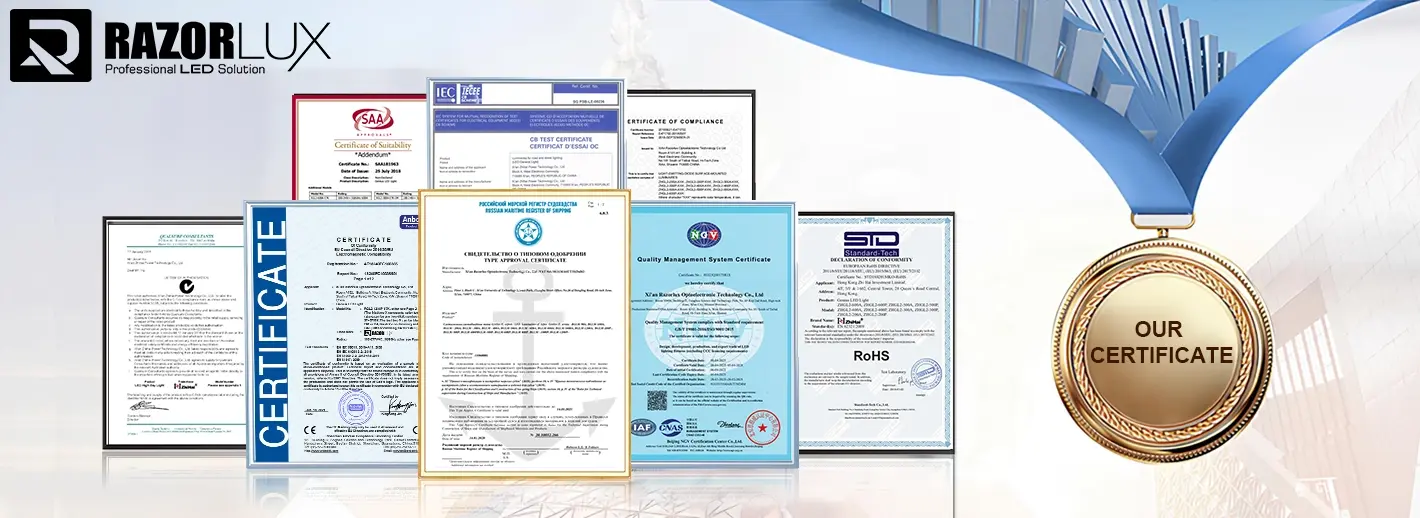
Outdoor tennis court lighting installations must comply with multiple safety standards and regulatory requirements. The Razorlux RGL-1000A carries comprehensive certifications including CE, RoHS, SAA, C-Tick, UL, DLC, CB, and ISO:9001, demonstrating compliance across international markets. UL certification verifies electrical safety meeting United States standards for commercial lighting installations. DLC qualification ensures energy efficiency performance claims, often required for utility rebate eligibility. CE marking indicates conformity with European Union safety, health, and environmental protection standards. RoHS compliance confirms restricted hazardous substance limitations, addressing environmental and disposal concerns. Local building codes, electrical codes, and zoning ordinances impose additional requirements regarding light spillage, glare control, and neighboring property impacts. Professional outdoor tennis court lighting designers navigate these complex regulatory requirements, ensuring installations meet all applicable standards while avoiding costly compliance violations or project delays.
Conclusion
LED technology has definitively won the outdoor tennis court lighting battle against metal halide systems through superior energy efficiency, instant operation, extended lifespan, and exceptional performance quality. Facilities upgrading to LED solutions like the Razorlux RGL-1000A immediately realize 50-70% energy cost reductions, eliminate frustrating warm-up delays, and enjoy decades of maintenance-free operation while delivering superior illumination quality that enhances player performance and safety. The comprehensive advantages—from 130 lm/W efficiency and 50,000+ hour lifespans to IP67 weather protection and advanced control capabilities—make LED the only rational choice for new installations and retrofit projects. Investment analysis consistently demonstrates 3-5 year payback periods with ongoing savings throughout the system's operational lifetime, making the decision financially compelling regardless of facility size or budget constraints.
Ready to transform your tennis facility with professional-grade outdoor tennis court lighting? Xi'an Razorlux Optoelectronic Technology Co., Ltd. stands as a leading China outdoor tennis court lighting manufacturer, China outdoor tennis court lighting supplier, and China outdoor tennis court lighting factory with over two decades of LED innovation excellence. Our outdoor tennis court lighting for sale delivers unmatched quality at competitive outdoor tennis court lighting prices, backed by comprehensive warranties and global certifications. Whether you need China outdoor tennis court lighting wholesale solutions for multi-court complexes or customized systems for specialized applications, our expert team provides complete support from initial consultation through installation and beyond. contact us today at sam@razorlux.com to discuss your project requirements, request customized photometric designs, or arrange sample evaluation units. Transform your courts with lighting technology that wins—choose Razorlux for outdoor tennis court lighting excellence that illuminates victory.
References
1. Illuminating Engineering Society and United States Tennis Association. "Recommended Practice for Sports and Recreational Area Lighting." IES RP-6-15. Authors: Sports Lighting Committee.
2. Smith, J.R. and Johnson, M.K. "Comparative Analysis of LED and Metal Halide Lighting Systems for Outdoor Sports Facilities." Journal of Sports Facility Management, Volume 28, Issue 4.
3. Anderson, T.L. "Energy Efficiency in Athletic Lighting: A Technical Guide for Facility Managers." National Association of Sports Commissions Research Division.
4. Chen, W. and Martinez, R. "Photometric Design Standards for Tennis Court Illumination." International Association of Lighting Designers Technical Paper Series.
5. Williams, P.D. "Life Cycle Cost Analysis of LED versus Traditional Sports Lighting Technologies." Facility Management Journal, Volume 15, Issue 2.
 VIEW MOREbest led warehouse lights
 VIEW MOREcrane spot light
 VIEW MOREoutdoor riding arena lights
 VIEW MOREoutdoor field lighting
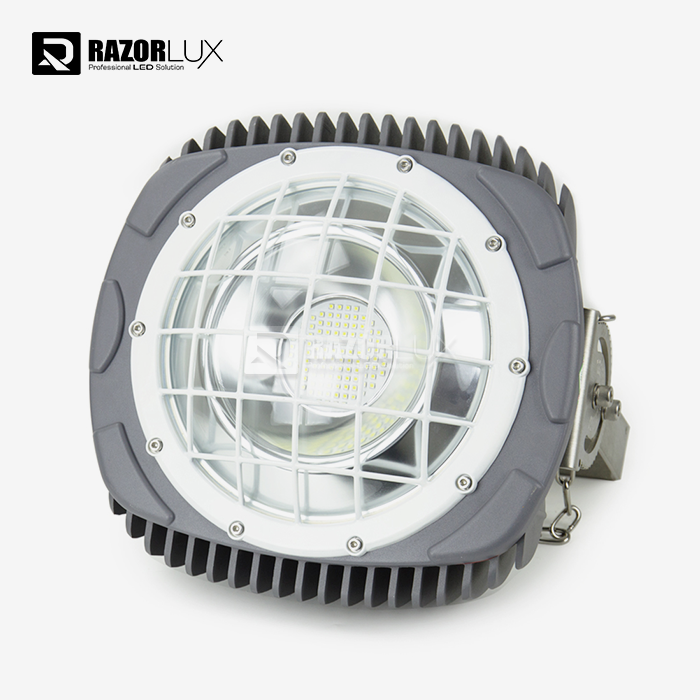 VIEW MOREmarine led flood light
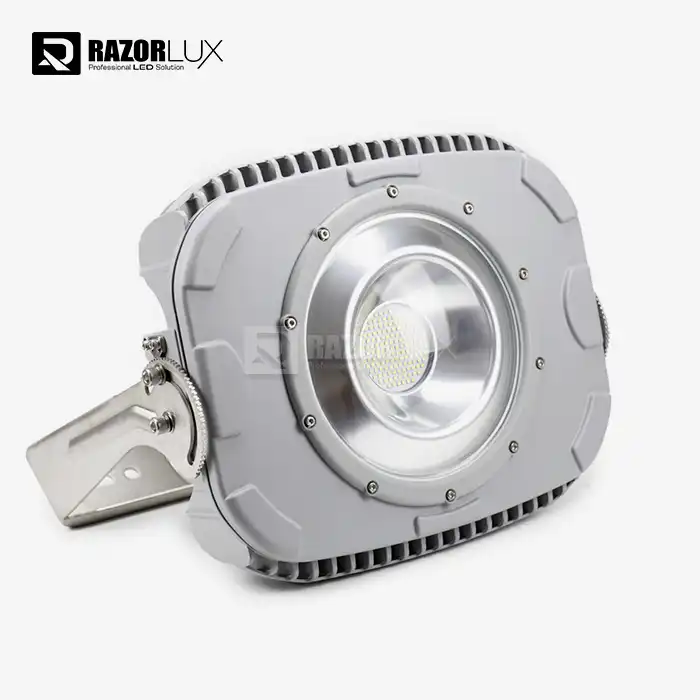 VIEW MORE400 Watt Led Stadium Lights
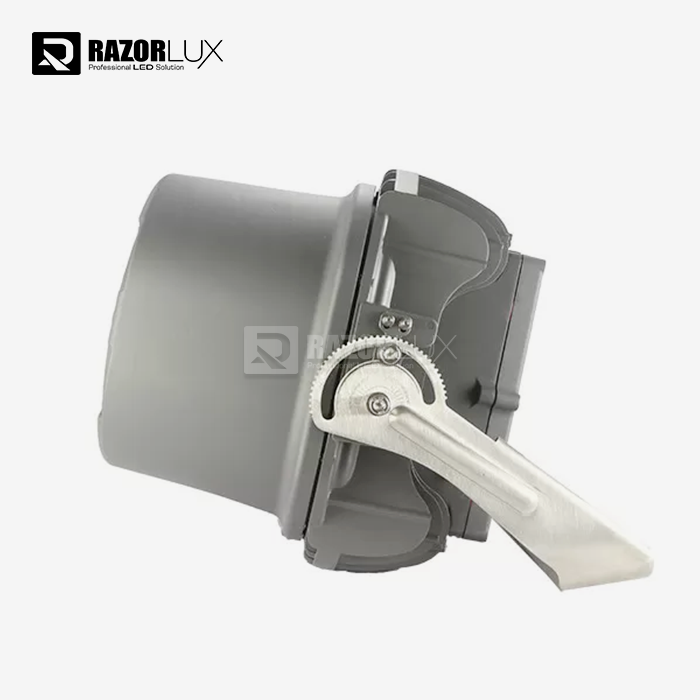 VIEW MOREFootball Field 140F Led Stadium Lights 1000 Watt 5700K Sports Lighting Fixtures
 VIEW MORE80ra LED Outdoor Sports Lighting Football Pitches 52000lm 400W Portable Stadium