

_1750326878398.png)

Best Affordable Outdoor Tennis Court Lighting Options in 2025
Picture this scenario: your community tennis club hosts evening matches, but players struggle to track fast-moving balls under inadequate lighting. Shadows create blind spots, energy bills spiral from inefficient fixtures, and constant bulb replacements drain your maintenance budget. Finding the right Outdoor Tennis Court Lighting solution doesn't have to break the bank. This comprehensive guide explores the most affordable yet high-performance LED lighting options available in 2025, helping facility managers, club owners, and tennis enthusiasts make informed decisions that balance cost, quality, and long-term value for their outdoor tennis court lighting needs.
Understanding Outdoor Tennis Court Lighting Requirements in 2025
Modern outdoor tennis court lighting has evolved dramatically with LED technology becoming the industry standard. Whether you're upgrading an existing facility or installing new fixtures, understanding current requirements ensures your investment delivers optimal performance while maintaining affordability.
Illumination Standards for Different Play Levels
Outdoor tennis court lighting requirements vary significantly based on the level of competition and facility usage. Recreational courts typically require illumination levels between 200-300 lux, providing adequate visibility for casual players and club members enjoying evening matches. This lower lighting threshold makes recreational outdoor tennis court lighting more budget-friendly, requiring fewer fixtures and lower wattage options. Semi-professional and club-level courts demand approximately 500 lux to support competitive play, ensuring players can accurately track ball movement and react quickly during intense rallies. Professional and tournament-grade facilities must achieve 750+ lux to accommodate not only elite-level play but also spectator viewing and potential broadcast requirements. Understanding your facility's primary use case helps determine the appropriate outdoor tennis court lighting specifications without overspending on unnecessary brightness levels that exceed your actual needs.
Energy Efficiency and Long-Term Cost Savings
The transition to LED outdoor tennis court lighting represents one of the most significant cost-saving opportunities for facility owners. Traditional metal halide systems consuming 1000-1500 watts per fixture can be replaced with LED alternatives using just 300-600 watts while delivering superior illumination quality. This dramatic reduction in power consumption translates to energy savings of 60-75% on monthly electricity bills, with payback periods typically occurring within 2-4 years. Beyond energy savings, LED outdoor tennis court lighting fixtures offer operational lifespans exceeding 50,000-70,000 hours compared to metal halide bulbs lasting only 10,000-15,000 hours. This extended lifespan virtually eliminates maintenance costs associated with frequent bulb replacements, lift rentals, and labor expenses. When calculating total cost of ownership for outdoor tennis court lighting projects, facilities often discover that higher initial LED investments deliver substantially lower lifetime costs compared to seemingly cheaper traditional lighting alternatives.
Critical Technical Specifications to Consider
Selecting affordable outdoor tennis court lighting requires careful attention to several technical parameters that directly impact performance and value. Color temperature measured in Kelvin determines the quality of light, with 5000K-5700K daylight white being optimal for outdoor tennis court lighting as it provides natural visibility similar to daytime conditions. The Color Rendering Index (CRI) should exceed 80 to ensure accurate color perception, allowing players to distinguish ball color and trajectory clearly. Uniformity ratio represents how evenly light distributes across the court surface, with ratios of 0.7 or higher preventing dark spots that compromise play quality. IP ratings indicate weather resistance, with IP65 or IP67 essential for outdoor tennis court lighting to withstand rain, humidity, and temperature extremes. Beam angle selection critically affects coverage patterns, with wider angles like 120-140 degrees providing broader illumination from fewer mounting points. Understanding these specifications helps identify outdoor tennis court lighting solutions that deliver professional-grade performance at accessible price points.
Comparing Affordable LED Tennis Court Lighting Technologies
The market offers diverse LED outdoor tennis court lighting solutions at various price points, each with distinct advantages for budget-conscious buyers. Understanding the differences between available technologies helps facility managers select systems that optimize both upfront costs and long-term performance.
| Lighting Type | Typical Wattage | Lumen Output | Price Range per Fixture | Best Application | Key Advantage |
|---|---|---|---|---|---|
| Standard LED Flood Lights | 150-300W | 20,000-40,000 lm | $150-$400 | Recreational courts, budget installations | Lowest initial cost |
| High-Performance LED Sports Lights | 300-600W | 40,000-80,000 lm | $400-$800 | Club-level competitive courts | Balanced cost and performance |
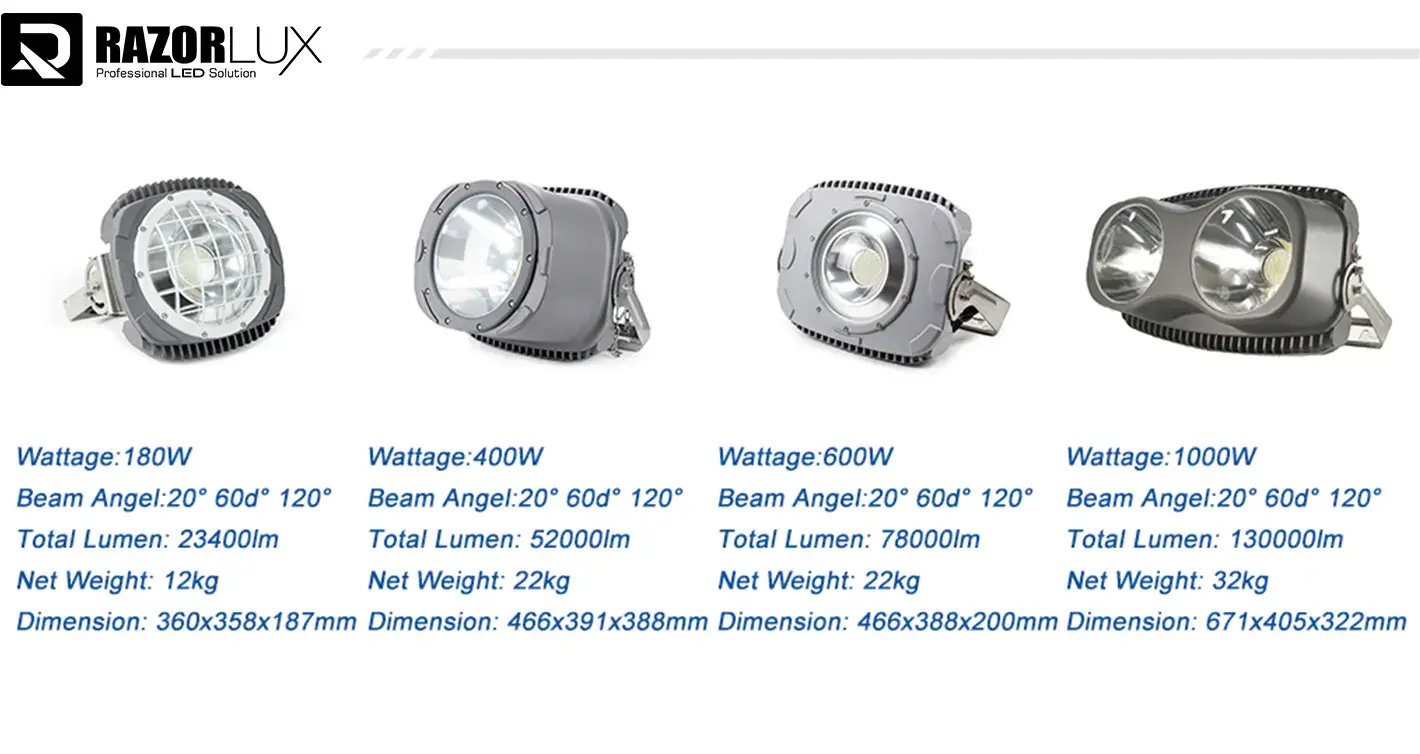
| Professional LED Tennis Fixtures | 600-1000W | 80,000-130,000 lm | $800-$1,500 | Tournament facilities, professional venues | Maximum brightness and uniformity |
| Modular LED Systems | 200-500W (adjustable) | 25,000-65,000 lm | $300-$700 | Multi-purpose courts, varying usage needs | Flexible wattage adjustment |
Budget-Friendly LED Flood Light Solutions
Entry-level LED flood lights represent the most affordable outdoor tennis court lighting option for facilities prioritizing initial cost minimization. These fixtures typically range from 150-300 watts and deliver 20,000-40,000 lumens, sufficient for recreational play on community courts and residential facilities. Standard LED flood lights designed for parking lots or general area illumination can be adapted for outdoor tennis court lighting applications when equipped with appropriate beam angles and mounting positions. The primary advantage lies in their widespread availability and competitive pricing, with quality units starting around $150-$250 per fixture. However, facility managers should verify that selected flood lights provide adequate uniformity across the court surface, as general-purpose fixtures may create hotspots or shadows without specialized optics. For small clubs operating on tight budgets, strategically positioned LED flood lights offer a practical entry point into modern outdoor tennis court lighting while achieving substantial energy savings compared to legacy metal halide systems.
Mid-Range High-Performance Sports Lighting
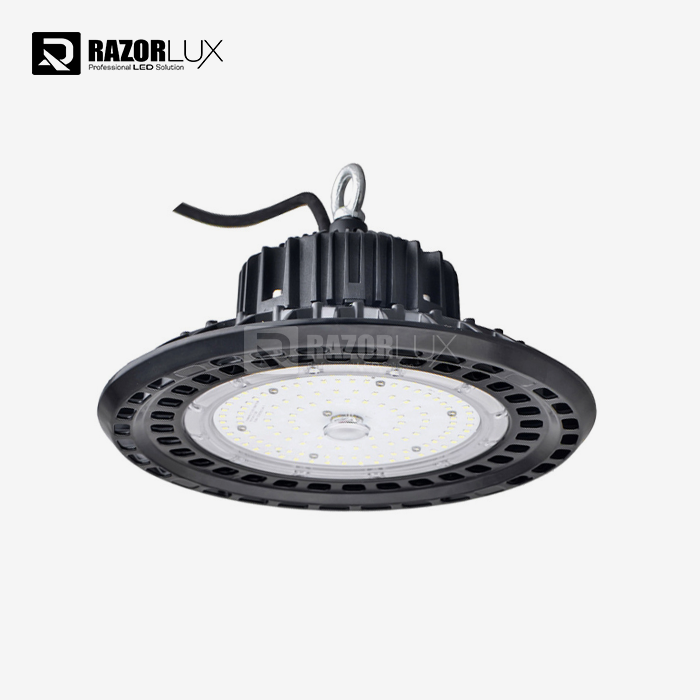
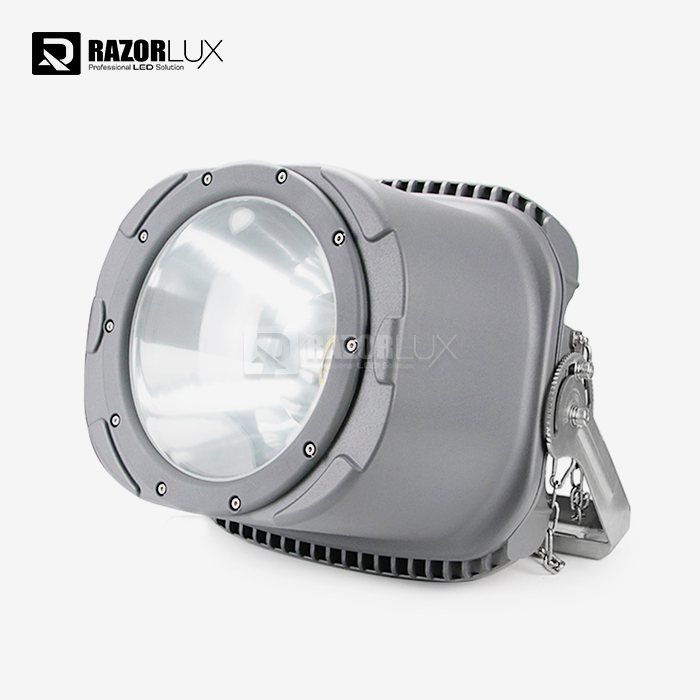
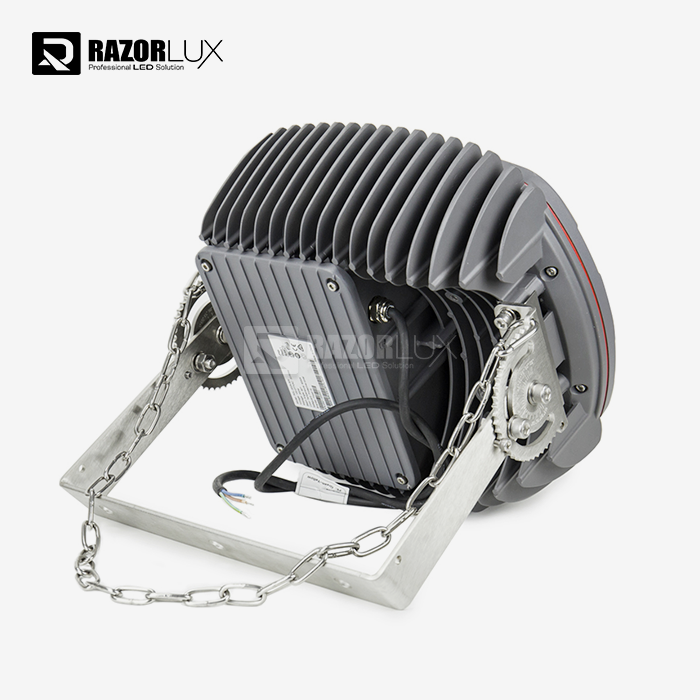
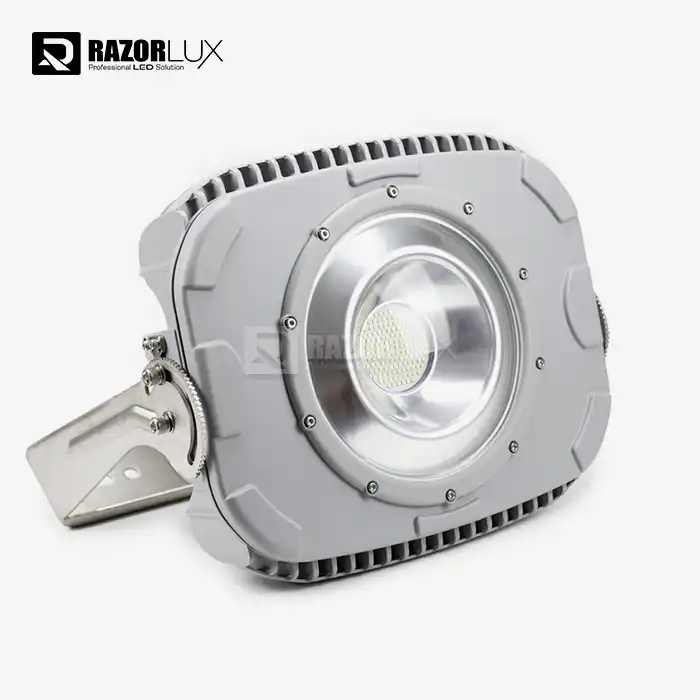
The sweet spot for affordable yet professional-quality outdoor tennis court lighting exists in the mid-range sports lighting category, where fixtures balance performance with reasonable pricing. These purpose-designed LED systems typically consume 300-600 watts while producing 40,000-80,000 lumens, providing illumination levels suitable for competitive club play and semi-professional tournaments. Manufacturers engineer these outdoor tennis court lighting fixtures with specialized optical designs that direct light precisely onto playing surfaces while minimizing spill light and glare. Features commonly include adjustable beam angles (40°, 60°, 120°, 140°x60°), allowing customization to specific court dimensions and pole configurations. Quality mid-range outdoor tennis court lighting fixtures incorporate robust thermal management systems ensuring consistent output over their 50,000+ hour lifespan. Premium brands like Razorlux offer models in this category featuring marine-grade construction, IP67 weather protection, and comprehensive certifications (UL, CE, RoHS, SAA) at competitive prices. For facilities seeking professional-grade outdoor tennis court lighting without premium price tags, these high-performance LED sports lights deliver exceptional value through superior reliability and comprehensive warranty coverage.
Premium Professional-Grade LED Systems
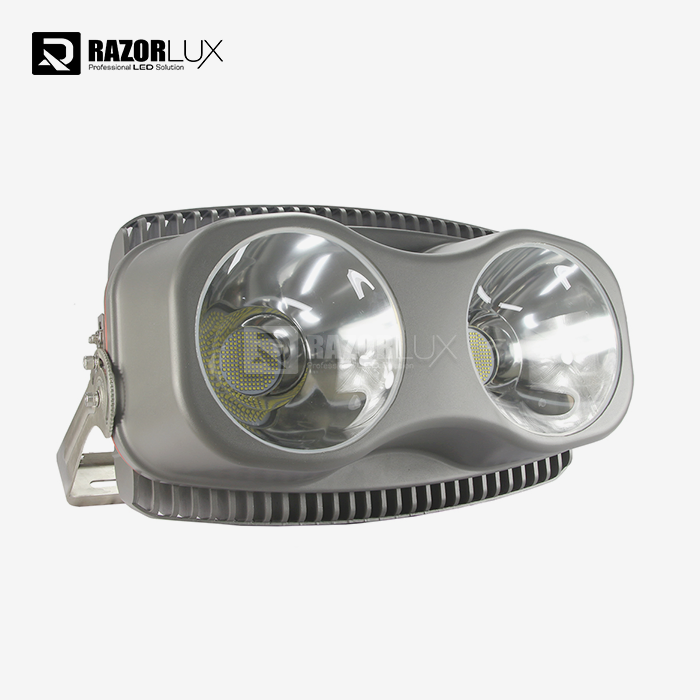
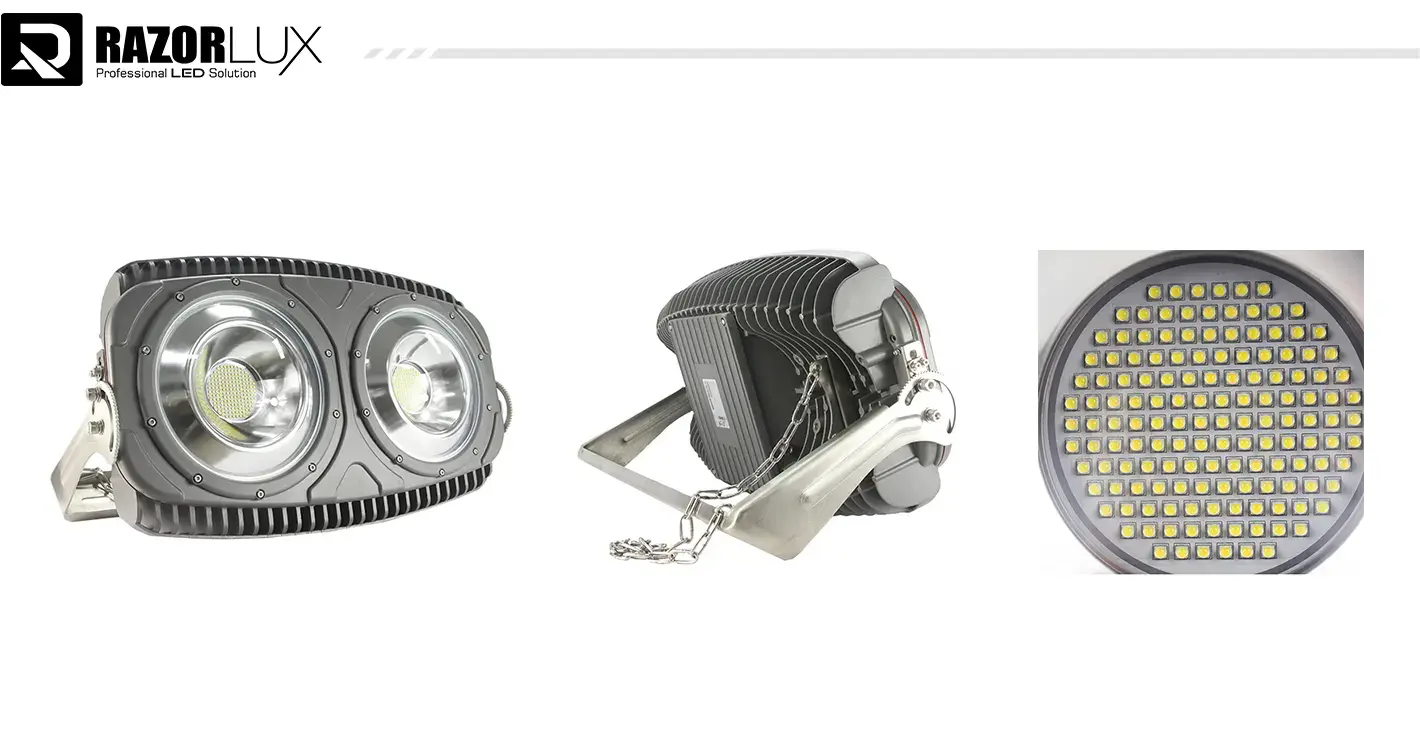
Top-tier outdoor tennis court lighting systems command higher initial investments but deliver uncompromising performance for championship-level facilities and multi-court complexes. These advanced LED fixtures operate at 600-1000 watts producing 80,000-130,000 lumens with exceptional uniformity and color rendering capabilities. Professional outdoor tennis court lighting incorporates patented optical technologies ensuring glare-free illumination across entire playing surfaces, critical for televised events and elite competitions. The Razorlux RGL-1000A exemplifies this category with its 1000W power consumption (900W LED + 100W driver) generating 130,000 lumens stable output. This professional outdoor tennis court lighting solution offers multiple beam angles, operates across wide voltage ranges (AC 80-305V, DC 100-800V), and provides extended warranty coverage (5-year LED module and driver, 10-year housing). While premium outdoor tennis court lighting fixtures cost $800-$1,500 each, their superior construction, verified performance metrics, and comprehensive support justify the investment for facilities demanding the highest quality standards.
Installation and Configuration Strategies for Cost Optimization
Strategic planning during outdoor tennis court lighting installation significantly impacts total project costs and long-term operational expenses. Smart configuration choices help facilities achieve professional lighting quality while controlling budget requirements.
Pole Positioning and Fixture Quantity Planning
Optimal pole placement forms the foundation of effective outdoor tennis court lighting design, directly influencing both illumination quality and project costs. Standard single-court installations typically utilize four poles positioned at court corners, approximately 18-25 feet from sidelines and 10-15 feet behind baselines. This configuration for outdoor tennis court lighting requires 4-8 LED fixtures depending on pole height and beam angles selected. Taller poles (30-40 feet) allow wider beam angle fixtures covering more court area from fewer mounting points, potentially reducing total fixture count. However, taller poles cost more to install and require specialized equipment for maintenance access. Lower poles (18-25 feet) provide easier maintenance access but may require additional fixtures to achieve uniform outdoor tennis court lighting coverage. For multi-court facilities, shared pole structures between adjacent courts optimize installation costs by reducing total pole quantity. Facility managers should request photometric analysis demonstrating light distribution patterns across court surfaces, ensuring proposed outdoor tennis court lighting configurations meet illumination standards without purchasing unnecessary fixtures that exceed minimum requirements.
Electrical Infrastructure and Control Systems
Electrical infrastructure represents a substantial portion of outdoor tennis court lighting installation costs, particularly for facilities upgrading from older systems. Modern LED fixtures operate efficiently across wide voltage ranges, with quality outdoor tennis court lighting systems accepting both AC input (80-305V) and DC input (100-800V), providing flexibility for diverse electrical configurations. Facilities with existing poles and electrical runs can often retrofit LED fixtures onto existing infrastructure, dramatically reducing installation expenses compared to complete system replacement. Smart control integration adds modest upfront costs but enables significant operational savings through outdoor tennis court lighting automation. Timer-based systems automatically activate fixtures during scheduled evening play hours, preventing unnecessary energy consumption. Dimming capabilities allow facilities to adjust outdoor tennis court lighting intensity based on usage type, reducing power consumption during practice sessions while maintaining full brightness for competitive matches. Some venues implement coin-operated systems where players activate outdoor tennis court lighting as needed, generating revenue while encouraging energy-conscious usage. Proper electrical planning and control system selection optimize both installation budgets and ongoing operational efficiency.
Professional Installation vs. DIY Approaches
Installation method selection significantly affects outdoor tennis court lighting project costs and ultimate system performance. Professional installation by licensed electrical contractors ensures code compliance, proper fixture alignment, and optimal light distribution across playing surfaces. Experienced installers understand outdoor tennis court lighting requirements including mounting angles, spacing calculations, and wiring configurations that prevent performance issues. Professional installation typically costs $3,000-$8,000 per court depending on complexity, existing infrastructure condition, and local labor rates. This investment provides peace of mind through proper execution and warranty protection covering both fixtures and installation workmanship. DIY installation appeals to budget-conscious facilities with qualified maintenance staff capable of electrical work and equipment operation. Self-installation of outdoor tennis court lighting saves substantial labor costs but requires careful attention to photometric plans, mounting precision, and electrical safety standards. Facilities considering DIY approaches should obtain detailed installation documentation from manufacturers and potentially hire consultants for design verification even if performing actual installation work internally. Hybrid approaches combining professional design services with self-installation offer middle ground solutions for outdoor tennis court lighting projects balancing cost control with technical expertise.
Maintenance and Total Cost of Ownership Considerations
Understanding long-term maintenance requirements and total ownership costs proves essential when evaluating affordable outdoor tennis court lighting options. The most economical initial purchase may not represent the best financial decision when considering multi-year operational expenses.
| Cost Category | Traditional Metal Halide | Standard LED Systems | Premium LED Systems | 10-Year Projection |
|---|---|---|---|---|
| Initial Investment (per court) | $25,000-$35,000 | $35,000-$50,000 | $50,000-$75,000 | Varies by system |
| Annual Energy Costs | $4,500-$6,000 | $1,500-$2,000 | $1,800-$2,500 | Cumulative 10-year |
| Bulb Replacement Costs | $3,000-$5,000 every 2-3 years | Minimal (50,000+ hours) | None (70,000+ hours) | Total replacement cycle |
| Maintenance Labor | $2,000-$3,000 annually | $500-$800 annually | $300-$500 annually | Total labor over decade |
| 10-Year Total Cost | $90,000-$125,000 | $55,000-$75,000 | $60,000-$85,000 | Complete ownership cost |
LED Lifespan and Replacement Cycles
The extended operational lifespan of LED outdoor tennis court lighting dramatically reduces long-term maintenance burdens and associated costs. Quality LED systems operate for 50,000-70,000 hours before requiring replacement, translating to 15-20 years of service when used 10 hours daily. This longevity far exceeds traditional metal halide bulbs lasting only 10,000-15,000 hours, which require replacement every 2-3 years in typical outdoor tennis court lighting applications. The maintenance savings extend beyond bulb costs to include labor expenses, equipment rentals for accessing elevated fixtures, and operational disruptions during replacement work. Facilities utilizing premium outdoor tennis court lighting systems with 70,000-hour ratings may never replace fixtures during typical 20-year facility lifecycles. When evaluating affordable outdoor tennis court lighting options, calculating total replacement cycles over intended ownership periods reveals that higher-quality LEDs with extended lifespans often provide superior financial value despite elevated initial costs. Manufacturers like Razorlux offering 5-year warranties on LED modules and drivers, plus 10-year housing warranties, provide additional financial protection ensuring outdoor tennis court lighting investments deliver promised longevity.
Weather Resistance and Environmental Durability
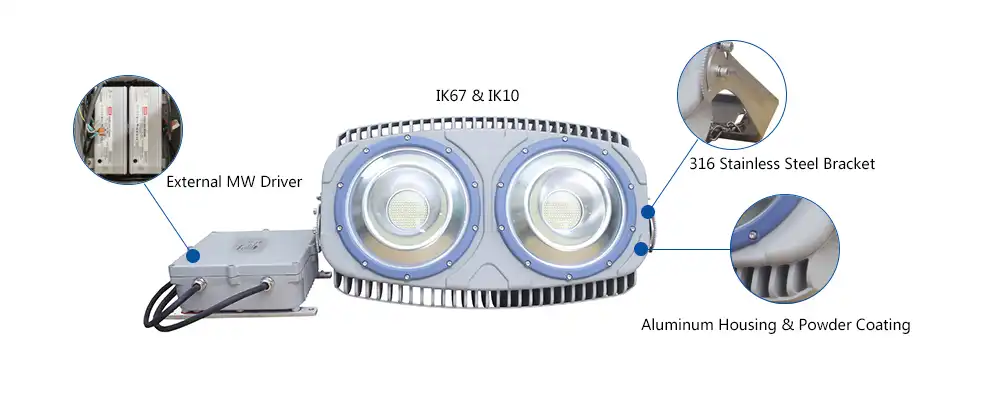
Outdoor tennis court lighting endures harsh environmental conditions requiring robust construction that maintains performance across temperature extremes, precipitation, humidity, and UV exposure. IP65 and IP67 ratings indicate sealed fixtures preventing moisture and dust ingress that degrades electrical components and reduces operational lifespan. Quality outdoor tennis court lighting utilizes marine-grade materials including powder-coated aluminum housings and stainless steel mounting brackets resisting corrosion in coastal and high-humidity environments. Operating temperature ranges of -40°C to 60°C (-40°F to 140°F) ensure reliable outdoor tennis court lighting function across diverse climates from northern winter conditions to desert summer heat. IK10 impact ratings protect fixtures from accidental ball strikes and vandalism attempts common in public sports facilities. Affordable outdoor tennis court lighting solutions should not compromise environmental protection, as premature fixture failure from weather exposure eliminates any initial cost savings through early replacement requirements. Facilities in challenging climates particularly benefit from premium outdoor tennis court lighting construction like that offered by Razorlux, featuring IP67 protection and marine-grade anti-corrosion coating ensuring decades of reliable service.
Energy Cost Projections and ROI Calculations
Accurate energy cost projections demonstrate how LED outdoor tennis court lighting investments generate positive returns through operational savings. A typical four-court facility operating legacy 1000W metal halide systems for 10 hours daily consumes approximately 16,000 watts per court or 64,000 total watts. At $0.12 per kWh electricity rates, annual energy costs reach $28,032 across all four courts. Upgrading to 400W LED outdoor tennis court lighting reduces consumption to 6,400 total watts, lowering annual energy costs to $7,008—a savings of $21,024 yearly. Over a 10-year period, this outdoor tennis court lighting upgrade saves $210,240 in electricity costs alone, easily justifying initial LED investment even at premium pricing levels. Additional savings from eliminated bulb replacements and reduced maintenance labor further accelerate payback timelines. Most outdoor tennis court lighting LED retrofits achieve full return on investment within 2-4 years, with subsequent years delivering pure cost savings. Facilities should request customized energy analysis from outdoor tennis court lighting suppliers like Razorlux, who can provide detailed projections based on specific usage patterns, local electricity rates, and proposed system configurations.
Selecting the Right Supplier and Ensuring Quality
Choosing a reliable outdoor tennis court lighting supplier significantly impacts project success, long-term satisfaction, and total ownership experience. Affordable pricing means little if fixtures fail prematurely or manufacturers provide inadequate support when issues arise.
Manufacturer Credentials and Certifications
Reputable outdoor tennis court lighting manufacturers demonstrate their quality commitment through comprehensive certification portfolios and industry credentials. Essential certifications include UL (Underwriters Laboratories) approval for North American electrical safety standards, CE marking for European market compliance, and RoHS certification confirming absence of hazardous materials. DLC (DesignLights Consortium) qualification indicates verified performance claims and may enable utility rebate eligibility reducing outdoor tennis court lighting project costs. SAA and C-Tick certifications demonstrate Australian/New Zealand compliance, important for international facilities or manufacturers serving global markets. ISO 9001 certification verifies quality management system implementation ensuring consistent manufacturing standards across outdoor tennis court lighting production. Companies like Xi'an Razorlux Optoelectronic Technology Co., Ltd., founded in 1998 with over 200 patents covering LED Packaging, power control, and structural design, exemplify established manufacturers providing certified outdoor tennis court lighting solutions. Verifying manufacturer certifications protects facilities from substandard fixtures that may fail safety inspections, perform inconsistently, or require premature replacement.
Warranty Coverage and After-Sales Support
Comprehensive warranty protection and responsive technical support distinguish quality outdoor tennis court lighting suppliers from commodity vendors focused solely on transaction completion. Industry-leading warranties cover LED modules for 5 years, drivers for 5 years, and fixture housings for 10 years, demonstrating manufacturer confidence in outdoor tennis court lighting reliability. Facilities should clarify warranty terms including coverage scope, claim procedures, replacement part availability, and labor reimbursement policies. Responsive after-sales support proves invaluable when installation questions arise, performance optimization becomes necessary, or troubleshooting assistance is required. Quality outdoor tennis court lighting suppliers like Razorlux provide pre-sales consultation helping facilities select appropriate specifications, custom sampling for performance verification, detailed technical documentation supporting installation, and ongoing technical support addressing operational questions. Global manufacturers with established subsidiaries in key markets (USA, Hong Kong, Europe) offer advantages including local support contact points, faster shipping times, and region-specific electrical expertise. Affordable outdoor tennis court lighting investments should always include robust warranty coverage and accessible support channels ensuring long-term satisfaction regardless of initial purchase price.
Customization Options and OEM Capabilities
Flexibility in product customization enables facilities to obtain outdoor tennis court lighting solutions precisely matching their unique requirements without accepting compromises inherent in one-size-fits-all standard products. Customization capabilities include adjustable wattage options, selectable color temperatures (2700K-6500K), multiple beam angle choices (40°, 60°, 120°, 140°x60°), various mounting bracket configurations, and optional control system integration (0-10V dimming, DALI protocols). Facilities with special voltage requirements benefit from outdoor tennis court lighting accepting wide input ranges including standard AC 80-305V as well as DC 100-400V and high-voltage DC 500-800V for specialized applications. OEM and ODM services allow clubs or facility management companies to develop branded outdoor tennis court lighting solutions for multiple locations or create unique products addressing specific market needs. Manufacturers offering customization and sampling programs enable facilities to test proposed outdoor tennis court lighting configurations before committing to full-scale orders, verifying actual performance matches theoretical specifications. This testing capability proves particularly valuable for facilities seeking affordable outdoor tennis court lighting without sacrificing site-specific performance requirements.
Conclusion
Investing in affordable outdoor tennis court lighting in 2025 requires balancing initial costs against long-term performance, energy savings, and maintenance requirements. Quality LED systems from established manufacturers like Razorlux deliver professional-grade illumination while achieving rapid ROI through dramatic energy reduction and extended operational lifespans. By carefully evaluating technical specifications, installation strategies, and total ownership costs, facilities can secure outdoor tennis court lighting solutions that enhance player experience without exceeding budget constraints.
Ready to upgrade your facility with premium outdoor tennis court lighting? Xi'an Razorlux Optoelectronic Technology Co., Ltd., a trusted China outdoor tennis court lighting manufacturer, offers comprehensive LED solutions backed by over 200 patents and 25+ years of industry expertise. As a leading China outdoor tennis court lighting supplier, we provide competitive outdoor tennis court lighting wholesale pricing, customization capabilities, and 5-year warranty coverage. Contact our China outdoor tennis court lighting factory today to discuss your project requirements and receive a customized quote. Reach out to sam@razorlux.com to explore our outdoor tennis court lighting for sale and discover how our outdoor tennis court lighting price structures deliver exceptional value for facilities worldwide. Save this article for future reference and connect with us whenever you're ready to illuminate your courts!
References
1. Sports Venue Calculator. "LED Tennis Court Lighting Cost, Funding & Design Guide." Sports facility planning and cost estimation resource, 2025.
2. International Tennis Federation (ITF). "Technical Standards for Court Lighting and Illumination Requirements." Official tennis court specifications and competition standards, 2024.
3. DesignLights Consortium (DLC). "Technical Requirements for Sports Lighting Products." LED lighting qualification standards and energy efficiency verification, 2024.
4. Illuminating Engineering Society (IES). "Recommended Practice for Sports and Recreational Area Lighting." Professional lighting design standards and measurement protocols, 2023.
5. U.S. Department of Energy. "LED Lighting for Outdoor Sports Facilities: Energy Savings and Performance Benefits." Federal energy efficiency research and case studies, 2024.