


_1750326878398.png)

Construction Site Flood Lights Installation Tips for Maximum Coverage
Picture this scenario: workers struggling to complete critical tasks after sunset, accidents happening in poorly lit zones, project delays mounting due to inadequate visibility. These are the harsh realities of construction sites with improper lighting systems. When darkness falls, productivity plummets, safety risks escalate, and costly mistakes become inevitable. The solution lies in strategic Construction Site Flood Lights installation that transforms hazardous work environments into well-illuminated, productive spaces. This comprehensive guide reveals proven installation techniques that maximize coverage, enhance worker safety, and ensure your construction operations run efficiently around the clock, eliminating the productivity losses that plague inadequately lit worksites.
Understanding Construction Site Flood Lights Requirements
Essential Technical Specifications for Construction Lighting
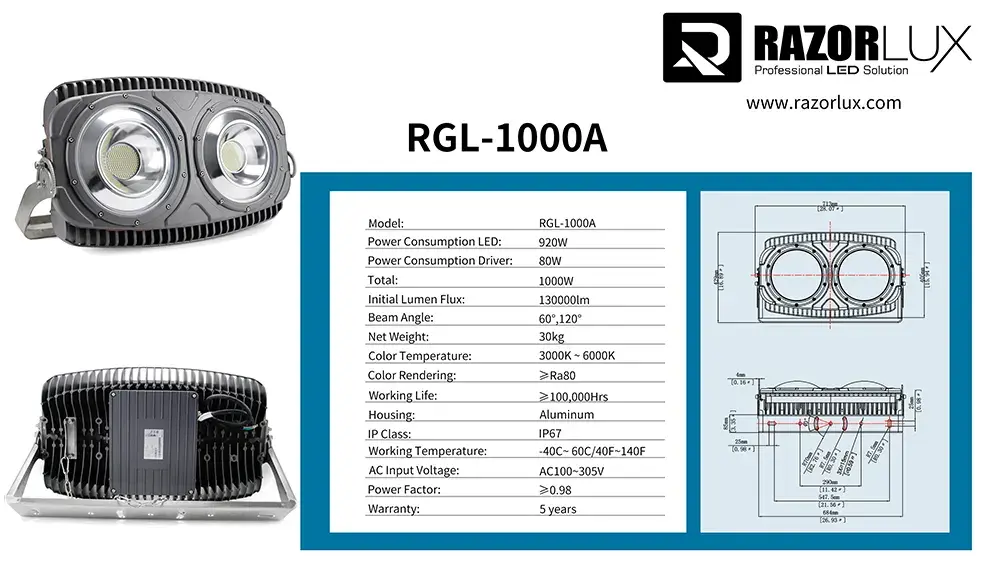
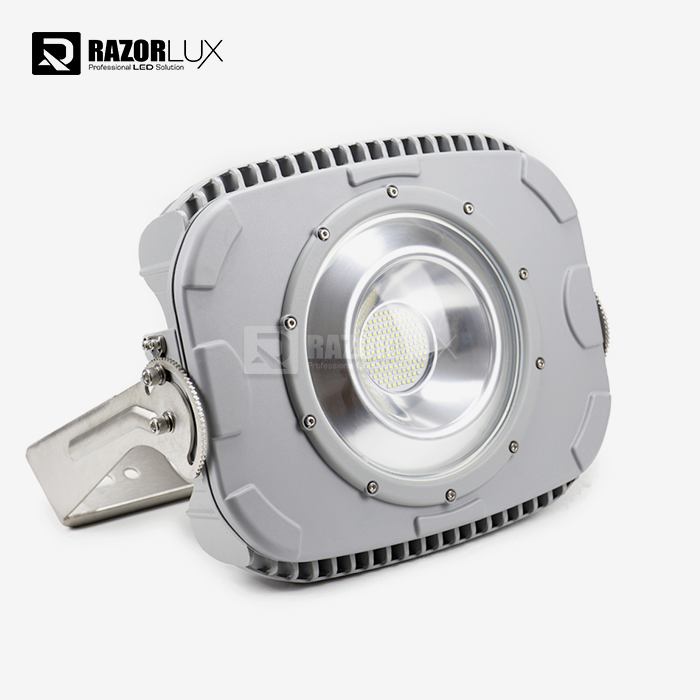
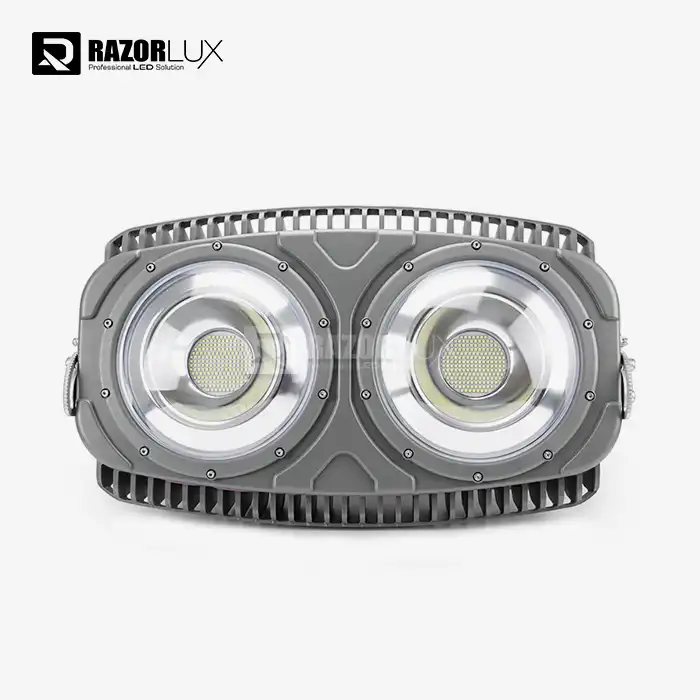
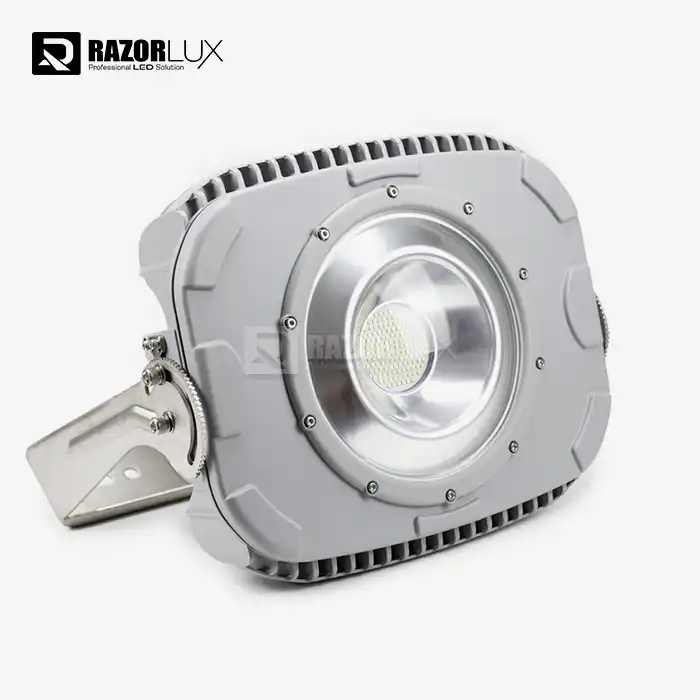
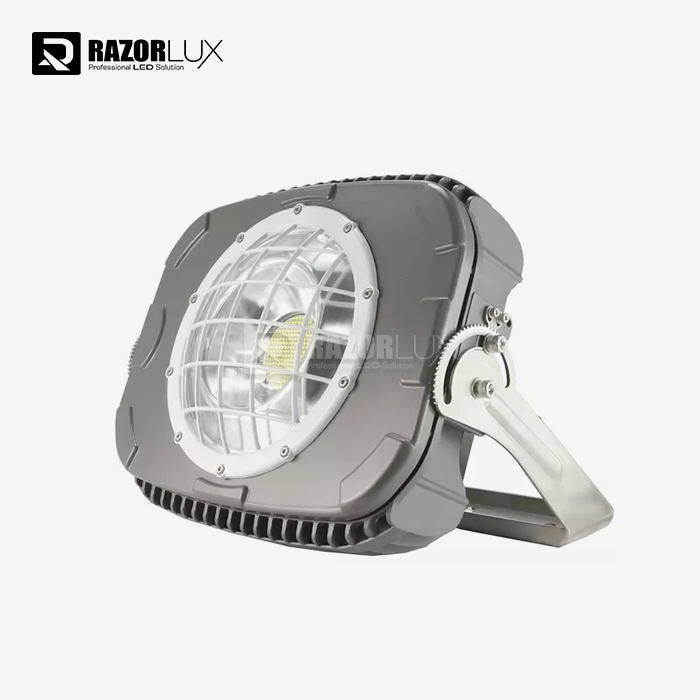
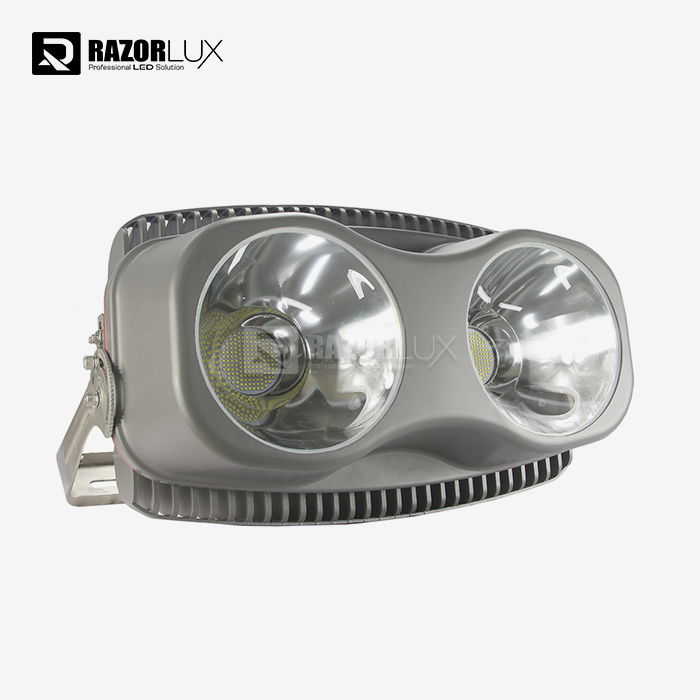
When selecting Construction Site Flood Lights for industrial applications, understanding the technical specifications is fundamental to achieving optimal performance. Modern construction environments demand lighting solutions that deliver exceptional illumination while withstanding the harshest conditions. The RGL-1000A model from Razorlux exemplifies this with its 1000W rated power and remarkable 130LM/W lamp efficiency, producing 130,000 lumens of stable flux that effectively replaces traditional 2200-2500W HID lamps. The versatility in beam angles—40°, 60°, 120°, and 140°x60°—allows project managers to customize light distribution patterns based on specific site requirements. With color temperature options ranging from 2700K to 6500K and a CRI of Ra>75, these lights provide accurate color rendering essential for precision work and safety inspection. The IP65/IP67 protection grade ensures Construction Site Flood Lights operate reliably in dusty, wet, and challenging environmental conditions typical of construction operations.
Power Input Flexibility and Energy Efficiency
The adaptability of Construction Site Flood Lights to various power sources represents a critical advantage for construction sites with inconsistent electrical infrastructure. Advanced models accommodate AC input from 80-305Vac and DC input ranging from 100-400Vdc and 500-800Vdc, providing unparalleled flexibility for diverse construction environments. This wide voltage compatibility ensures Construction Site Flood Lights function reliably whether connected to standard electrical grids, temporary generators, or specialized power systems common in remote construction locations. The emergency power backup capability allows units to operate for two hours during power outages, maintaining critical illumination for worker safety and preventing costly project interruptions. With power factor exceeding 0.98 and THD below 10 percent, these lighting systems minimize electrical waste while maximizing operational efficiency. The combination of Meanwell power supplies and aluminum housing with powder coating guarantees Construction Site Flood Lights deliver consistent performance throughout their 50,000-hour working life, even in temperature extremes from -40°C to 60°C.
Durability Standards and Certification Requirements
Construction Site Flood Lights must meet rigorous international standards to ensure long-term reliability and worker protection. The IK10 impact resistance rating indicates these fixtures withstand severe mechanical impacts, essential for construction environments where equipment movement and accidental collisions occur regularly. The stainless steel brackets weighing 30KG provide robust mounting stability even in high-wind conditions and vibration-prone locations. Comprehensive certifications including CE, RoHS, SAA, C-Tick, UL, DLC, CB, and ISO:9001 demonstrate Construction Site Flood Lights comply with global safety and quality benchmarks. The five-year warranty covering LED modules and drivers, alongside a ten-year housing warranty, reflects manufacturer confidence in product durability. With over 200 patents in LED Packaging, power control, and structural design, manufacturers like Xi'an Razorlux Optoelectronic Technology Co., Ltd. combine innovation with proven reliability to deliver Construction Site Flood Lights that perform consistently in demanding applications ranging from large-scale infrastructure projects to temporary work zones and emergency response areas.

Strategic Planning for Maximum Coverage Installation
| Planning Factor | Recommended Approach | Impact on Coverage |
|---|---|---|
| Site Assessment | Map dark zones and high-risk areas | Identifies critical lighting needs |
| Mounting Height | 15-20 feet for general coverage | Balances spread and intensity |
| Fixture Spacing | 20-30 feet between units | Eliminates dark spots |
| Beam Angle Selection | 120° for wide areas, 60° for focused zones | Optimizes light distribution |
| Power Source Location | Within 50 feet of installation points | Reduces voltage drop |
| Environmental Factors | Consider weather, dust, vibration | Ensures long-term reliability |
Site Analysis and Coverage Calculation Methods
Effective Construction Site Flood Lights installation begins with comprehensive site analysis to determine precise lighting requirements and optimal fixture placement. Professional installation teams start by calculating the total square footage requiring illumination and identifying specific task areas demanding higher light levels. Industry standards recommend 2-4 Construction Site Flood Lights fixtures per 1,000 square feet for comprehensive coverage, though this varies based on mounting height and beam angle configuration. Using photometric data from manufacturer specifications, installers can predict exact light distribution patterns and adjust placement accordingly. For the RGL-1000A model with dimensions of 671x405x379mm, proper spacing ensures uniform illumination across the entire work area. Construction sites benefit from creating lighting zone maps that categorize areas by activity type: high-intensity zones for precision work, medium-intensity zones for general construction, and lower-intensity zones for material storage and access routes. This systematic approach to Construction Site Flood Lights deployment maximizes coverage efficiency while minimizing energy consumption and equipment costs.
Mounting Height and Angle Optimization Techniques
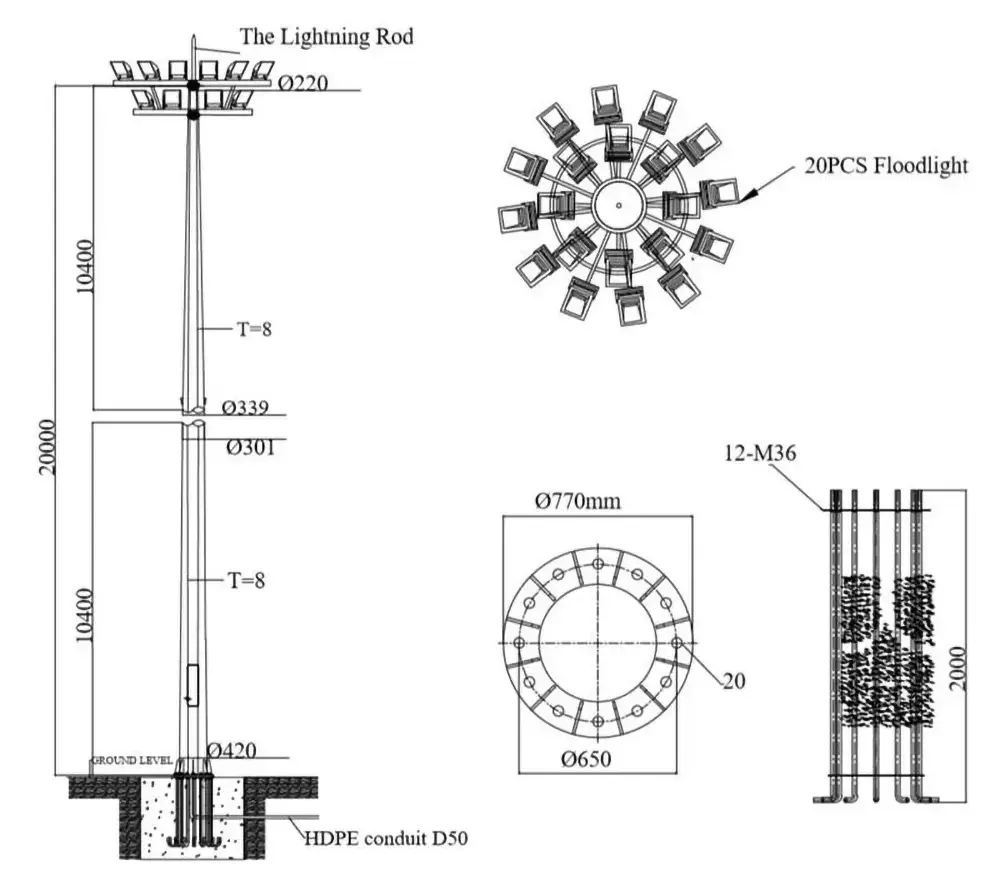
The relationship between mounting height and beam angle fundamentally determines how effectively Construction Site Flood Lights illuminate work areas without creating glare or dark zones. For construction applications, mounting heights between 15-20 feet typically provide optimal coverage for general site illumination, while specialized task lighting may require adjustments based on specific operational needs. When installing Construction Site Flood Lights at standard heights, downward angles between 22-30 degrees ensure broad ground coverage while preventing light trespass and minimizing sky glow. Higher mounting positions up to 30-60 feet accommodate more powerful fixtures like the 1000W models, extending coverage radius while maintaining adequate ground-level illumination intensity. The adjustable knuckle mount design allows precise angle modifications after installation, enabling fine-tuning based on actual performance observations. Construction managers should consider seasonal sun angles and typical equipment heights when determining optimal Construction Site Flood Lights positioning, ensuring lights remain effective as site conditions evolve throughout project phases. Testing beam coverage with temporary installations before permanent mounting validates placement decisions and prevents costly repositioning.
Power Distribution and Electrical Infrastructure Setup
Establishing robust electrical infrastructure forms the foundation of reliable Construction Site Flood Lights operation throughout project duration. Each 1000W fixture requires dedicated circuit planning to ensure adequate power delivery without overloading existing systems. Professional electricians recommend circuits support no more than 80 percent of their rated capacity, meaning a 15-amp breaker should handle maximum 12 amps to maintain safe operational margins. For large construction sites deploying multiple Construction Site Flood Lights, separate electrical panels with properly sized breakers prevent power fluctuations affecting other site operations. The wide input voltage range of 80-305Vac allows Construction Site Flood Lights to function despite common voltage variations in temporary construction power systems. When planning installations, electrical teams must account for cable run distances, selecting appropriate wire gauges to minimize voltage drop over extended distances. Incorporating ground fault circuit interrupters (GFCI) protection enhances worker safety when Construction Site Flood Lights operate in wet conditions. The emergency backup power function integrated into advanced models ensures continuous illumination during generator maintenance or unexpected power interruptions, maintaining safety standards even during electrical service disruptions.
Professional Installation Procedures and Best Practices
Step-by-Step Mounting and Positioning Guidelines
Professional installation of Construction Site Flood Lights follows systematic procedures ensuring safety, performance, and longevity. Begin by identifying structurally sound mounting surfaces capable of supporting the 30KG fixture weight plus mounting hardware and environmental loads from wind or vibration. Mark mounting hole locations using the provided template, ensuring proper spacing and alignment for stable attachment. Pre-drill pilot holes appropriate for the mounting surface material, whether structural steel, concrete walls, or specialized light poles designed for Construction Site Flood Lights. Secure the stainless steel bracket using commercial-grade fasteners rated for outdoor applications and mechanical stress. Before final tightening, loosely position Construction Site Flood Lights to verify unobstructed beam paths and proper coverage areas. Thread electrical conduit through the bracket assembly, maintaining weatherproof seal integrity to preserve the IP65/IP67 protection rating. Insert the fixture's threaded knuckle into the mounting bracket, hand-tightening initially to allow angle adjustments. Verify the fixture remains stable when positioned at desired angles before applying final torque specifications to locking nuts. This methodical approach to Construction Site Flood Lights installation prevents alignment issues and ensures mounting systems withstand years of harsh construction environment exposure.
Electrical Connection and Safety Protocol Implementation
Connecting Construction Site Flood Lights requires strict adherence to electrical safety protocols and local building codes to prevent hazards and ensure reliable operation. Before beginning any electrical work, completely shut off power at the circuit breaker and use a voltage tester to confirm no current flows through installation area wiring. Strip cable insulation carefully, exposing only the necessary wire length to make secure connections within weatherproof junction boxes. Match wire colors correctly: black to hot/line, white to neutral, and green or bare copper to ground, using appropriately rated wire connectors for Construction Site Flood Lights current requirements. Seal all connection points with dielectric grease and weatherproof tape to prevent moisture ingress that could compromise electrical integrity. Install proper strain relief fittings where cables enter the fixture housing, preventing wire damage from tension or movement during construction activities. For Construction Site Flood Lights with integrated control features, follow manufacturer wiring diagrams precisely to ensure dimming functions and sensors operate correctly. After completing connections, carefully test with a multimeter before restoring power, verifying correct voltage and proper grounding. Only after thorough inspection should Construction Site Flood Lights be energized for initial performance testing and adjustment.
Testing, Adjustment, and Performance Verification
Comprehensive testing validates that Construction Site Flood Lights deliver intended coverage and performance levels before full operational deployment. Restore power systematically, monitoring each circuit individually to detect any electrical anomalies or unexpected behaviors. Observe Construction Site Flood Lights during initial power-up, checking for proper illumination across the full beam angle and verifying color temperature meets specifications. Use illuminance meters to measure light levels at various distances and angles from fixtures, comparing actual performance against photometric predictions from planning phase calculations. Walk the entire coverage area after dark, identifying any unexpected shadows, glare issues, or insufficient illumination zones requiring fixture repositioning. For Construction Site Flood Lights equipped with emergency backup systems, simulate power failures to confirm the two-hour emergency operation capability functions reliably. Adjust mounting angles incrementally using the adjustable brackets, testing coverage after each modification until optimal light distribution is achieved. Document final positioning, electrical measurements, and coverage patterns for future reference and maintenance planning. This thorough verification process ensures Construction Site Flood Lights installations meet project requirements and provide the safe, productive working environment construction teams depend on throughout project lifecycles.
Advanced Installation Considerations for Complex Sites
| Site Complexity Factor | Installation Challenge | Solution Approach |
|---|---|---|
| Multi-Level Structures | Varying illumination requirements | Layered lighting design with different wattages |
| Temporary Relocations | Frequent position changes | Portable mounting systems with quick-disconnect |
| Hazardous Material Zones | Explosion-proof requirements | Certified ATEX/IECEx rated fixtures |
| Extreme Weather Locations | Enhanced durability needs | IP67 rating with reinforced mounting |
| Remote Sites | Limited power infrastructure | DC input capability with solar/generator compatibility |
| High-Security Areas | Tamper-resistant installation | Vandal-proof hardware and elevated mounting |
Specialized Applications and Custom Configuration Solutions
Construction Site Flood Lights installations frequently require customization to address unique project challenges and specialized operational requirements. Mining operations demand fixtures with exceptional dust resistance and vibration tolerance, necessitating enhanced mounting systems and IP67 protection grades. Oil and gas facility installations require hazardous area certifications and explosion-proof housings to comply with petroleum industry safety regulations. Infrastructure development sites spanning multiple elevations benefit from Construction Site Flood Lights with adjustable wattage settings, allowing single fixture types to serve varying illumination zones. Temporary work zones requiring frequent relocation benefit from portable mounting configurations featuring quick-release brackets and weather-resistant electrical quick-disconnects. Xi'an Razorlux Optoelectronic Technology Co., Ltd. offers extensive customization capabilities including modified color temperatures, specialized beam patterns, and integrated control systems supporting 0-10V and DALI dimming protocols. For projects requiring Construction Site Flood Lights with enhanced features, the company's OEM and ODM services enable branded solutions tailored to specific market demands while maintaining the core performance characteristics that make these fixtures reliable across diverse applications.
Integration with Smart Controls and Monitoring Systems
Modern Construction Site Flood Lights installations increasingly incorporate intelligent control systems that enhance operational efficiency and reduce energy costs through automated management. Photocell integration enables automatic dusk-to-dawn operation, ensuring lights activate only when natural illumination falls below specified thresholds, eliminating unnecessary daytime power consumption. Motion sensor integration in perimeter Construction Site Flood Lights provides security benefits while conserving energy by activating only when movement is detected in monitored zones. Advanced projects utilize centralized lighting management systems that remotely control multiple Construction Site Flood Lights fixtures, adjusting intensity based on specific work schedules and activity requirements. Time-based scheduling programs different illumination levels throughout shifts, providing full brightness during peak construction hours and reduced intensity during maintenance periods or security-only operation. For large-scale installations, wireless mesh networking enables comprehensive monitoring of Construction Site Flood Lights performance, alerting maintenance teams to fixture failures or performance degradation before they impact operations. Data logging capabilities track energy consumption patterns, supporting sustainability reporting and identifying opportunities for further efficiency optimization. These intelligent features transform Construction Site Flood Lights from simple illumination devices into sophisticated components of comprehensive site management systems.
Long-Term Maintenance and Lifecycle Management Strategies
Sustaining optimal Construction Site Flood Lights performance throughout project duration requires systematic maintenance protocols and proactive lifecycle management. Establish quarterly inspection schedules to clean fixture lenses and housings, removing accumulated dust and construction debris that reduces light output and accelerates component degradation. Check mounting hardware for looseness caused by vibration or thermal cycling, retightening fasteners to prevent fixture misalignment and potential safety hazards. Inspect electrical connections periodically for corrosion or moisture intrusion, particularly in coastal or high-humidity construction environments where Construction Site Flood Lights face accelerated weathering. Monitor illumination levels using light meters to detect gradual lumen depreciation, scheduling proactive LED module replacement before output falls below acceptable thresholds. Maintain detailed maintenance logs documenting cleaning dates, component replacements, and performance measurements to identify patterns and optimize future maintenance intervals. For Construction Site Flood Lights approaching their 50,000-hour rated life, plan systematic replacement programs ensuring continuous illumination without unexpected failures disrupting construction operations. Xi'an Razorlux Optoelectronic Technology Co., Ltd. provides comprehensive after-sales support including technical consultation, installation guidance, maintenance advice, warranty service, and spare parts availability, ensuring Construction Site Flood Lights deliver maximum value throughout their operational lifespan.
Conclusion
Strategic Construction Site Flood Lights installation combining proper planning, professional execution, and ongoing maintenance transforms construction operations by ensuring consistent, high-quality illumination that enhances safety, productivity, and project success. By selecting appropriately specified fixtures, following systematic installation procedures, and implementing intelligent control strategies, construction managers create lighting environments that support efficient operations throughout project lifecycles.
Ready to illuminate your construction site with professional-grade lighting solutions? Xi'an Razorlux Optoelectronic Technology Co., Ltd., a leading China Construction Site Flood Lights manufacturer with over 20 years of LED technology expertise, delivers premium lighting systems backed by 200+ patents and comprehensive international certifications. As a trusted China Construction Site Flood Lights supplier and China Construction Site Flood Lights factory, Razorlux offers competitive Construction Site Flood Lights wholesale pricing and flexible customization options. Our Construction Site Flood Lights for sale feature industry-leading specifications at competitive Construction Site Flood Lights price points, supported by comprehensive technical assistance, reliable global shipping, and responsive warranty service. Whether you need standard configurations or custom solutions, our experienced team ensures you receive optimal lighting products tailored to your project requirements. Contact our sales specialists today at sam@razorlux.com for detailed product specifications, project consultation, and personalized quotations that address your specific construction lighting challenges. Bookmark this guide for future reference when planning your next installation project.
References
1. "Illuminating Engineering Society Lighting Handbook: Reference and Application," Illuminating Engineering Society of North America, 10th Edition, edited by Rita M. Harrold and Mark S. Rea.
2. "LED Lighting Systems: Design, Integration, and Applications," by Robert Karlicek, Ching-Cherng Sun, Georges Zissis, and Ruiqing Ma, published by Cambridge University Press.
3. "Construction Site Safety and Health Handbook," by R. Scott Stricoff and James Rough, published by John Wiley & Sons, addressing proper illumination requirements for construction safety.
4. "Outdoor Lighting Design Guidelines for Energy Efficiency," International Dark-Sky Association, technical publication on minimizing light pollution while maintaining adequate illumination levels.
5. "ANSI/IES RP-33-14: Lighting for Exterior Environments," American National Standards Institute and Illuminating Engineering Society, providing technical standards for outdoor workplace lighting design and installation.
 VIEW MOREWaterproof Led Flood Light 400W
 VIEW MOREoutdoor basketball light
 VIEW MOREoutdoor basketball court lighting
 VIEW MOREIndustrial Flood Lights Led
 VIEW MORELed Lights For Outdoor Badminton Court
 VIEW MORELed Overhead Crane Lights
 VIEW MOREAluminum Alloy IP67 LED Navigation Lights For Marine Boating
 VIEW MORESports Flood Lights Outdoor