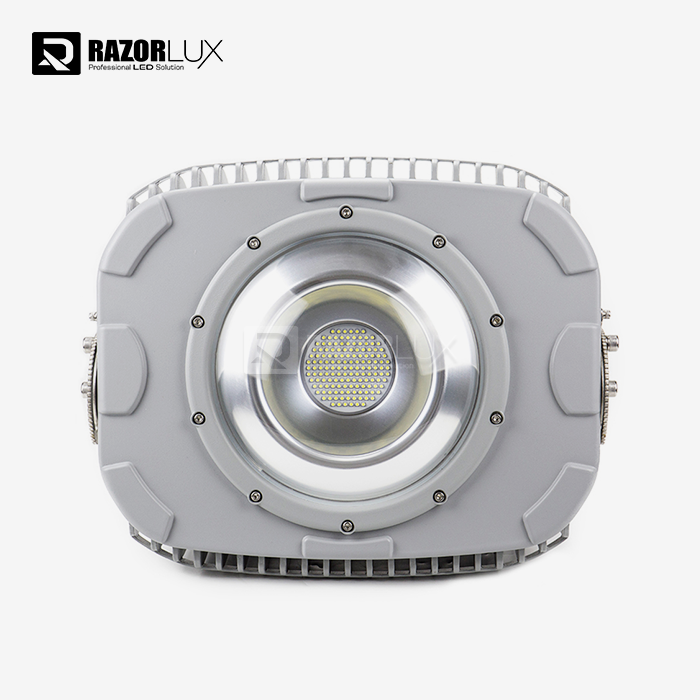
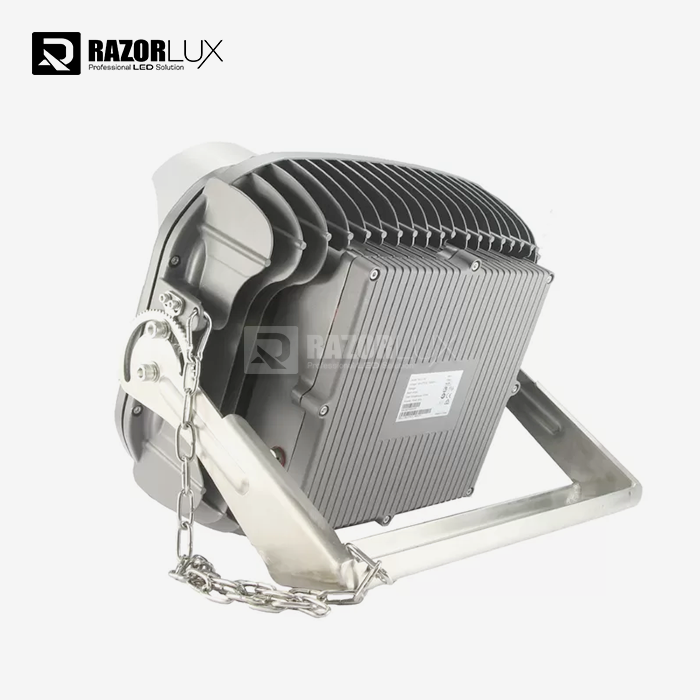
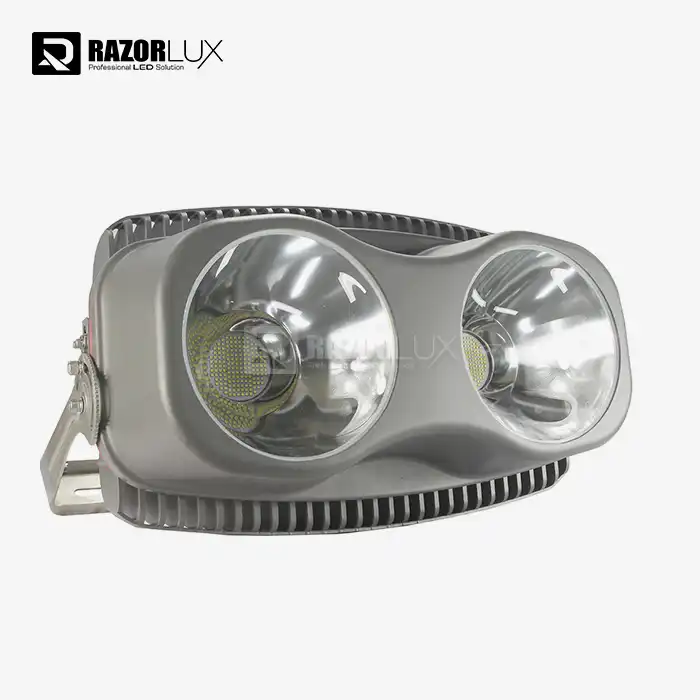
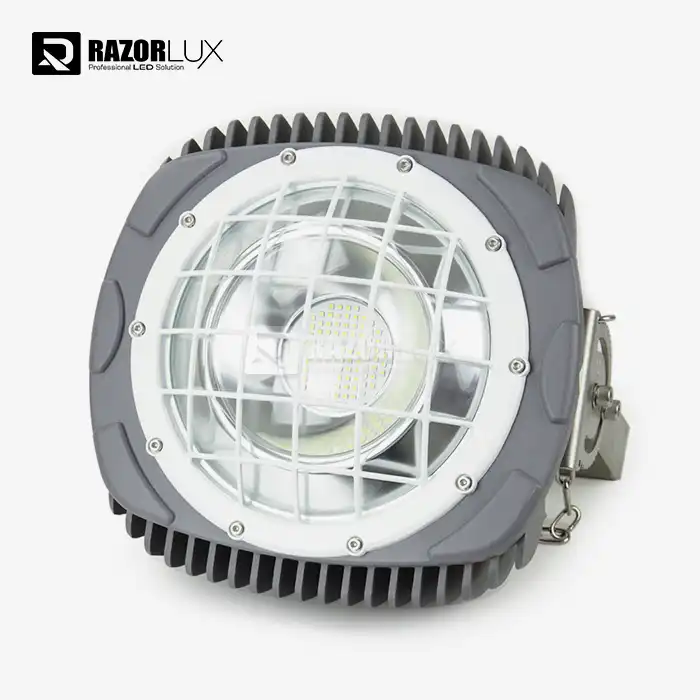
When sports facility managers ask us about upgrading their arena lighting, visibility and safety consistently rank as top concerns. A 1000 Watt Led Sports Light addresses both priorities by delivering powerful, uniform illumination that eliminates dark spots and reduces accident risks during gameplay. These advanced lighting systems produce approximately 130,000 lumens with exceptional energy efficiency of 130 lm/W, ensuring athletes can track fast-moving objects clearly while spectators enjoy an enhanced viewing experience. Beyond brightness, these fixtures incorporate features like flicker-free operation, minimal glare, and instant-on capabilities that traditional metal halide systems simply cannot match, creating safer playing environments across professional stadiums, municipal complexes, and indoor arenas.
Understanding the Impact of High-Wattage LED Stadium Lighting on Arena Visibility
The change from routine lighting to Driven innovation speaks to more than a fair gear upgrade—it on a very basic level changes how we illuminate competitive sports situations. Stadium lighting frameworks must meet requesting guidelines for brightness consistency, color exactness, and moment responsiveness amid basic moments.
How LED Technology Delivers Superior Light Distribution?
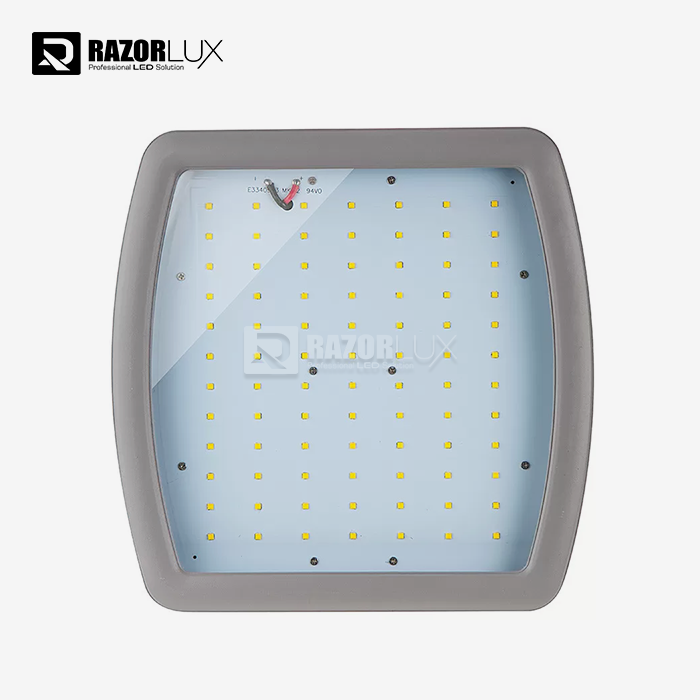
Modern Driven stadium lights work on semiconductor standards that convert electrical vitality straightforwardly into obvious light, achieving exceptional efficiency compared to older systems that squander critical vitality as heat. The engineering of these installations consolidates precision-engineered optical focal points that coordinate light precisely where required, minimizing spill and maximizing scope over playing surfaces. This focused approach guarantees each corner of the field gets steady light, killing the shadowy zones that compromise player security and performance.
The bar point alternatives available—40°, 60°, 120°, and specialized 140°x60° configurations—allow lighting architects to customize scope designs based on field geometry and sport-specific prerequisites. Limit bar points concentrate light for high-mast establishments in expansive open air stadiums, whereas more extensive points suit lower-ceiling indoor offices. This adaptability speaks to a critical advantage over fixed-output conventional installations that advertised small adaptability.
Achieving Optimal Color Rendering and Temperature Selection
Color temperature determination significantly influences how players see their environment amid competition. Razorlux installations offer flexible color temperatures extending from warm 2700K to cool 6500K, empowering office supervisors to select the perfect visual environment for their particular wear. Ball and volleyball competitions ordinarily benefit from cooler temperatures (5000K-6500K) that upgrade readiness and accuracy, whereas hotter temperatures make more comfortable air for training sessions and recreational activities.
The Color Rendering List (CRI) measures how precisely lighting uncovers genuine colors compared to normal daylight. Our sports lighting frameworks keep up a least CRI of Ra>75, with higher Ra>80 and Ra>90 alternatives available for broadcast-quality applications. This detail guarantees that group regalia show up dynamic, security markings stay clearly distinguishable, and video capture hardware duplicates exact color data for examination and broadcast purposes.
Uniform light over the playing surface anticipates the visual weakness that happens when eyes continually alter to changing light levels. Proficient establishments target consistency proportions under 0.7, meaning the contrast between the brightest and dimmest zones remains negligible. This consistency permits competitors to keep up center on gameplay or maybe than adjusting to changing visual conditions as they move over the court or field.
Energy Efficiency and Operational Lifespan Benefits
The economic advantages of a 1000 Watt Led Sports Light extend well beyond initial purchase considerations. A single 1000W LED fixture effectively replaces 2000-3000W metal halide lamps while consuming half the electricity, translating to substantial reductions in monthly utility expenses. Facilities operating lights for several hours daily can recover their investment through energy savings alone within a relatively short payback period.
Longevity speaks to another basic financial calculation. Conventional metal halide lights regularly require replacement every 6,000-15,000 hours of operation, making progressing support costs and operational disturbances. Our Driven modules keep up steady execution for over 50,000 hours—equivalent to more than 15 years of normal use—dramatically lessening substitution recurrence and related labor costs. The Cruel Well control supplies coordinates into these frameworks share this amplified life expectancy, guaranteeing unwavering quality all through the fixture's operational life.
The steady flux yield characteristic merits specific consideration from acquisition experts. Numerous lighting frameworks encounter noteworthy lumen deterioration over time, requiring offices to over-illuminate at first to compensate for unavoidable corruption. Our installations keep up 130,000 lumens indeed after expanded operation, dispensing with the requirement for intense starting brightness and encouraging lessening vitality consumption.
Addressing Safety in Sports Arenas with Advanced LED Lighting
Safety contemplations in sports situations expand past anticipating collisions and wounds amid play. The lighting framework itself must work dependably beneath challenging conditions without presenting extra dangers through electrical disappointments, warm dangers, or visual disturbances.
Robust Construction and Environmental Protection Standards
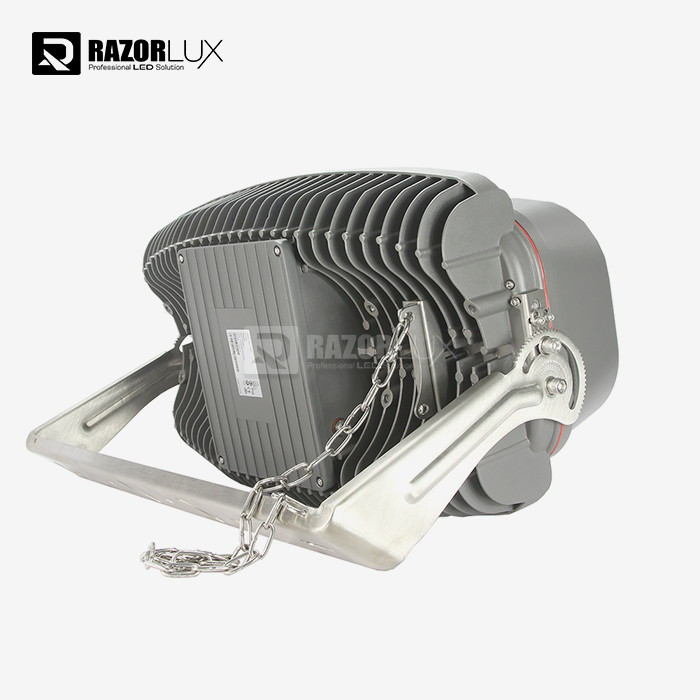
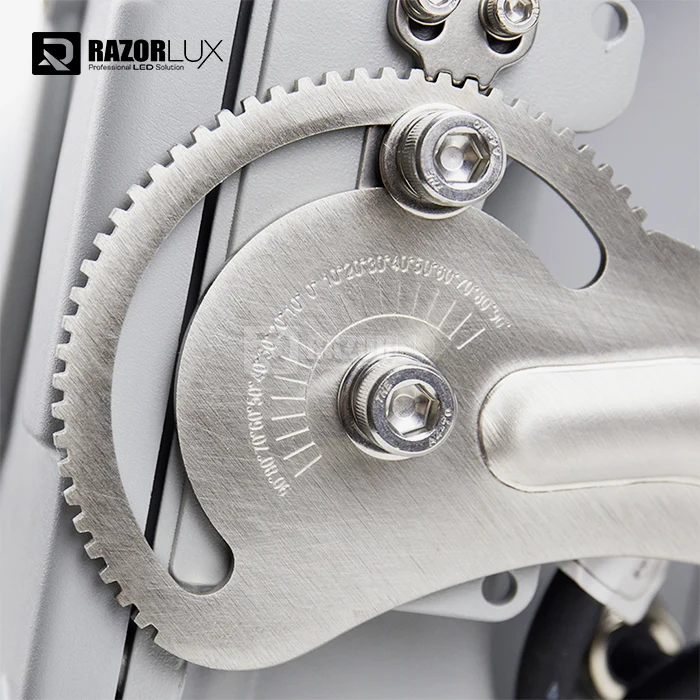
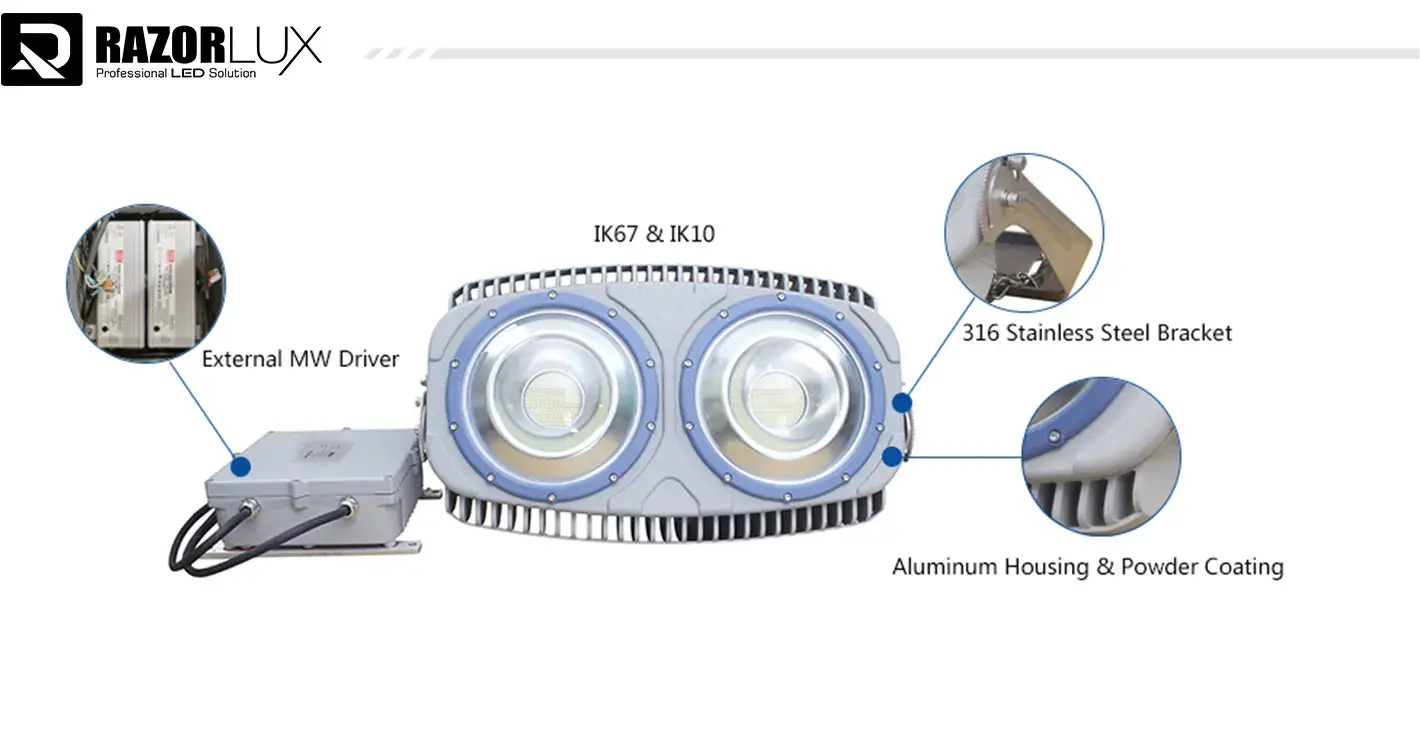
The requesting conditions in sports arenas—whether indoor mugginess, open air climate presentation, or vibration from swarm activity—require lighting installations built to mechanical guidelines. Our 1000W sports lights include aluminum lodgings with powder coating that stands up to erosion indeed in coastal situations where salt splash postures consistent challenges. The stainless steel mounting brackets give secure establishment that withstands wind loads and auxiliary movement.
| Protection Feature | Specification | Practical Benefit |
|---|
| IP Rating | IP65/IP67 | Complete dust protection and water immersion resistance |
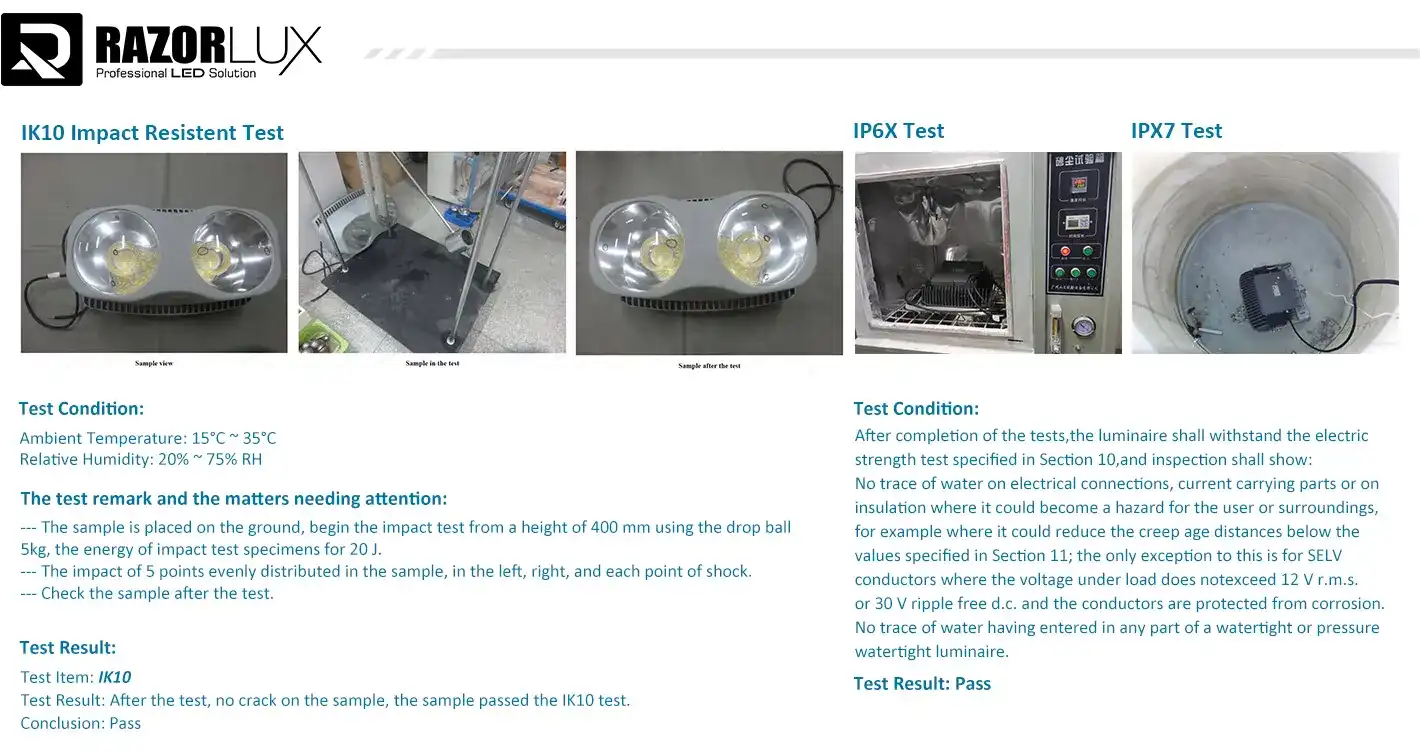
| Impact Rating | IK10 | Withstands 20 joules of impact energy |
| Operating Temperature | -40°C to 60°C | Functions reliably in extreme climate conditions |
| Working Humidity | 10% to 95% | Maintains performance in humid environments |
The IP65/IP67 ratings indicate complete protection against dust ingress and resistance to powerful water jets or temporary immersion. This specification proves essential for outdoor stadiums experiencing heavy rain or for indoor facilities where cleaning procedures involve high-pressure washing. The upgradable design allows facilities to specify the exact protection level matching their environmental conditions, avoiding unnecessary cost while ensuring adequate safeguards.
Impact resistance rated at IK10 means these fixtures can withstand the equivalent of a 5kg mass dropped from 40cm—protection against accidental ball strikes, maintenance accidents, or vandalism attempts. This durability minimizes both replacement costs and the safety risks associated with broken lighting components falling onto playing surfaces or spectator areas.
Eliminating Common Lighting Hazards
Older lighting advances present a few security concerns that present day Driven frameworks successfully dispose of. Flicker—the subtle fast variety in light output—can cause migraines, visual inconvenience, and indeed trigger seizures in vulnerable people. High-quality Driven drivers keep up consistent current conveyance, creating totally flicker-free brightening that bolsters visual consolation amid expanded events.
Glare speaks to another noteworthy concern, especially for open-air establishments where installation arrangement may position lights inside players' locate lines. Progressed optical plan consolidates anti-glare highlights that coordinate light descending toward playing surfaces whereas minimizing upward light contamination and even glare. This thought is especially critical for sports, including following high-trajectory balls where competitors regularly see upward toward shinning light sources.
The warm administration of Driven sports lights contrasts on a very basic level from metal halide frameworks that produce extraordinary surface temperatures able of causing burns or lighting adjacent materials. Our installations join proficient warm scattering plans that keep up secure outside temperatures indeed amid persistent operation, diminishing fire dangers and permitting more secure support procedures.
Installation and Maintenance Best Practices
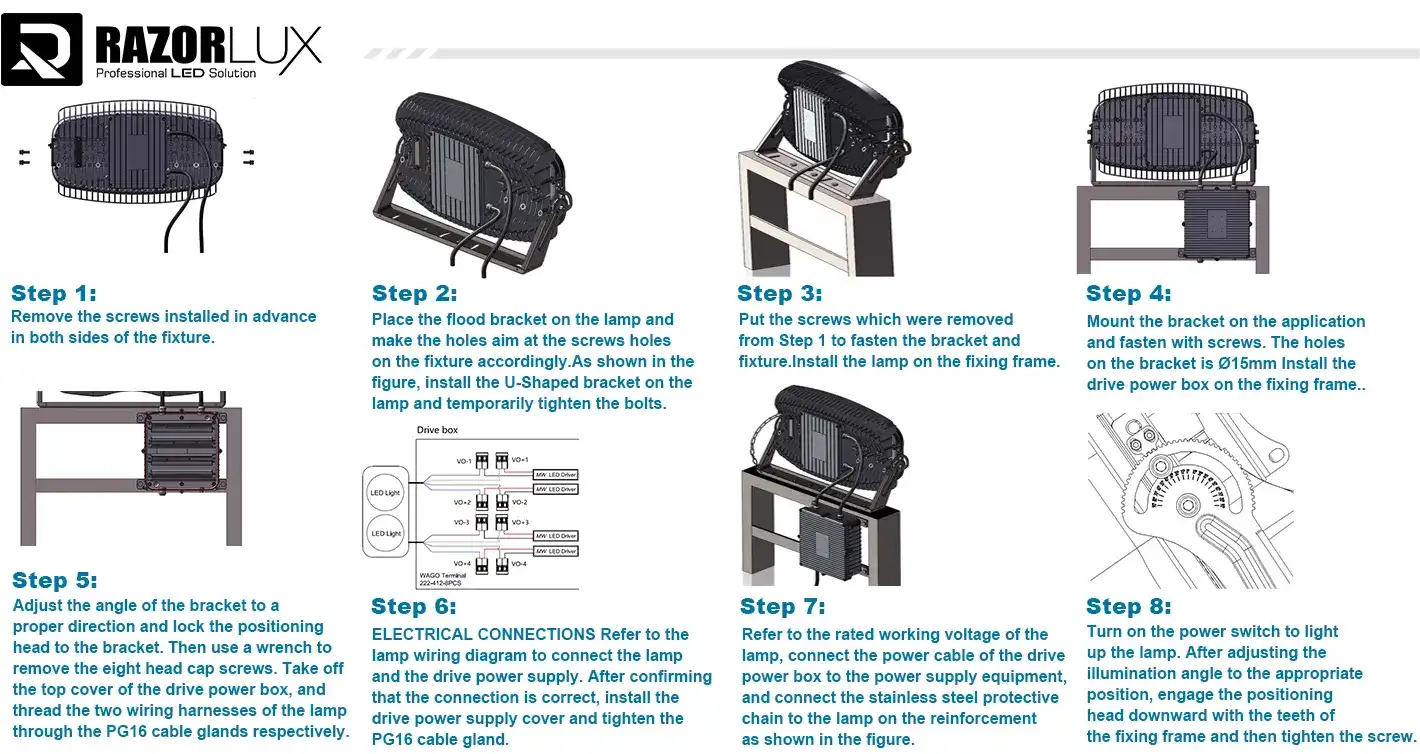
Proper installation establishes the foundation for long-term safety and performance. Our technical documentation provides comprehensive guidance for mounting heights, spacing calculations, and electrical connections appropriate for various arena configurations. The modular design allows technicians to service individual components without complete fixture replacement, streamlining maintenance while reducing downtime.
The wide input voltage range—AC 80~305Vac and DC 100~400Vdc or 500~800Vdc—accommodates power supply variations and voltage fluctuations common in large facilities. This tolerance prevents premature failures and maintains stable operation even during grid irregularities that might damage more sensitive equipment. The power factor exceeding 0.98 and total harmonic distortion below 10% demonstrate electrical efficiency that minimizes stress on facility power infrastructure.
Regular maintenance schedules should include visual inspections of mounting hardware, cleaning of optical surfaces to maintain light output, and verification of electrical connections. The 5-year warranty covering both LED modules and drivers provides assurance that components will perform reliably throughout their expected service life, with our technical support team available to address any concerns that arise during operation.
Comparing High-Performance LED Arena Lights with Alternative Solutions
Procurement choices advantage from objective comparisons over accessible advances and control evaluations. Understanding the trade-offs between diverse approaches makes a difference office supervisors select arrangements ideally coordinated to their particular prerequisites and budget constraints.
Performance Analysis: 1000W LED vs. Lower-Wattage Options
While 500W LED fixtures serve many applications effectively, large arenas and outdoor stadiums often require the output capacity that only higher-wattage units can deliver. A 1000W LED fixture producing 130,000 lumens provides the illumination necessary for professional competitions, broadcast requirements, and expansive playing surfaces where multiple lower-wattage fixtures would create installation complexity and visual clutter.
The economic calculation extends beyond fixture count to include installation labor, electrical infrastructure, and control system complexity. Installing six 500W fixtures to achieve equivalent output requires six mounting points, six electrical connections, and six potential failure points compared to a single 1000W unit. This simplification reduces both initial installation costs and ongoing maintenance requirements.
Light uniformity improves when fewer, more powerful sources provide coverage from optimal mounting positions. Multiple lower-wattage fixtures create overlapping beam patterns that can produce uneven illumination and complicated shadow patterns, particularly for sports involving aerial play. Strategic placement of higher-output fixtures achieves superior uniformity with simpler lighting layouts.
LED vs. Traditional Metal Halide Technology
The comparison between LED and metal halide systems reveals fundamental differences in operation, economics, and environmental impact. Metal halide lamps require warm-up periods of 10-15 minutes to reach full output and similar cool-down times before restart, creating operational inflexibility that proves problematic for facilities with variable schedules. LED systems provide instant full output and support unlimited switching cycles without degrading lamp life.
| Performance Metric | 1000W LED | 2000W Metal Halide |
|---|
| Luminous Output | 130,000 lumens | 110,000-120,000 lumens |
| Energy Consumption | 1000W | 2000W |
| Operational Lifespan | 50,000+ hours | 6,000-15,000 hours |
| Warm-up Time | Instant | 10-15 minutes |
| Maintenance Frequency | Minimal (5+ years) | Frequent (6-18 months) |
The lumen maintenance characteristics tell an important story about total cost of ownership. Metal halide lamps lose approximately 30% of their initial output by mid-life, requiring facilities to over-illuminate initially or accept gradually deteriorating visibility as lamps age. LED fixtures maintain consistent output throughout their rated lifespan, ensuring the visibility standards established at installation persist for years without intervention.
Environmental considerations increasingly influence procurement decisions as organizations adopt sustainability commitments. Metal halide lamps contain mercury and require specialized disposal procedures, while LED fixtures contain no hazardous materials and qualify for standard recycling processes. The reduced energy consumption of LED systems translates directly to lower carbon emissions, supporting corporate environmental responsibility goals.
Evaluating Manufacturer Credentials and Warranty Coverage
The proliferation of 1000 Watt Led Sports Light suppliers necessitates careful evaluation of manufacturer credentials to ensure product quality and long-term support. International certifications including CE, RoHS, SAA, C-Tick, UL, DLC, CB, and ISO:9001 demonstrate compliance with rigorous safety and performance standards across multiple markets. These certifications involve independent testing and verification, providing objective assurance beyond manufacturer claims.
Component sourcing significantly impacts reliability and performance consistency. Fixtures incorporating branded components like Mean Well drivers and quality LED chips from established manufacturers deliver superior reliability compared to generic alternatives. The five-year warranty covering LED modules and drivers reflects manufacturer confidence in component quality and provides financial protection against premature failures.
Manufacturing experience matters when evaluating potential suppliers. Companies with decades of LED development history bring accumulated knowledge about thermal management, optical design, and reliability engineering that newer entrants lack. The patent portfolio—with over 200 patents covering LED Packaging, power control, and structural design—demonstrates ongoing innovation and technical depth that supports product differentiation and performance advantages.
How to Procure Stadium LED Lighting: A B2B Buyer's Guide?
Successful procurement extends beyond comparing specifications to encompass supplier evaluation, customization capabilities, and comprehensive support services. Facility managers and procurement professionals benefit from understanding the complete procurement process and key decision criteria.
Selecting Certified Suppliers with Proven Track Records
The initial supplier selection establishes the foundation for project success. Reputable manufacturers maintain transparent operations with documented quality control procedures, comprehensive technical documentation, and responsive customer support infrastructure. Companies operating since the late 1990s bring experience across multiple technology generations and understand the evolving requirements of sports lighting applications.
Manufacturing capabilities deserve careful evaluation during supplier assessment. Integrated facilities managing the complete production process—from LED packaging through final assembly—maintain better quality control than assemblers sourcing completed components. The GMP-certified factory standards, rigorous testing procedures, and comprehensive pre-shipment inspections ensure consistent product quality across production runs.
Geographic presence and market certifications indicate a supplier's commitment to specific regions. Products certified for North American markets (UL, DLC) demonstrate compliance with local standards and facilitate specification approval during project planning. Similarly, European certifications (CE, RoHS) and regional approvals (SAA for Australia, RMRS for Russian maritime applications) confirm products meet local requirements without requiring special exemptions or equivalency determinations.
Understanding Pricing Structures and Customization Options
Transparent pricing builds trust and facilitates accurate project budgeting. Professional suppliers provide detailed quotations specifying included components, optional features, and any customization charges. The pricing structure should clearly identify unit costs, volume discounts, shipping expenses, and payment terms to avoid misunderstandings during procurement.
Bulk purchase advantages become significant for large projects or facilities managing multiple locations. Volume commitments often unlock preferential pricing, priority production scheduling, and enhanced support terms. Framework agreements establishing long-term partnerships provide price stability and streamlined ordering processes for ongoing maintenance and expansion projects.
Customization capabilities address the reality that no two sports facilities share identical requirements. The ability to specify exact beam angles, color temperatures, mounting configurations, and control system integration ensures lighting solutions precisely match application needs. Our engineering team collaborates with clients to develop customized solutions for unique architectural constraints, special performance requirements, or specific regulatory compliance needs.
The color temperature flexibility spanning 2700K-6500K allows facilities to optimize lighting characteristics for primary uses while maintaining adaptability for alternative events. A stadium hosting both athletic competitions and evening concerts benefits from adjustable color temperature that creates appropriate atmospheres for each event type. The available CRI options—standard Ra>75, enhanced Ra>80, or premium Ra>90—similarly accommodate varying requirements for color accuracy.
Logistics, Installation Support, and Warranty Management
Efficient project execution requires coordination across procurement, shipping, installation, and commissioning phases. Our logistics capabilities encompass air, rail, and sea freight options tailored to project timelines and budget constraints. Secure packaging using eco-friendly materials protects fixtures during transit while minimizing environmental impact and disposal complications.
Installation support services range from basic technical documentation to comprehensive on-site assistance depending on project complexity and client preferences. Detailed installation manuals, dimensional drawings, and electrical specifications enable experienced contractors to complete installations efficiently. For specialized applications or particularly complex projects, our technical team provides remote consultation or on-site guidance ensuring optimal fixture placement and configuration.
The warranty structure significantly impacts total cost of ownership and operational risk. Our five-year coverage on LED modules and drivers, extended to ten years for housing components, provides exceptional protection compared to industry-standard warranty terms. This coverage reflects manufacturing quality confidence while protecting clients against premature component failures that could disrupt facility operations.
Warranty claims processing should be straightforward and responsive. Our established procedures ensure rapid evaluation of reported issues, quick determination of appropriate remedies, and efficient shipping of replacement components when necessary. The technical support team remains available throughout the warranty period and beyond to address questions, provide troubleshooting guidance, and support long-term operational success.
Illuminate Your Competitive Advantage with Razorlux Stadium Lighting Solutions
Xi'an Razorlux Optoelectronic Technology Co., Ltd. has specialized in high-performance LED lighting since our founding in 1998, accumulating over two decades of engineering expertise and manufacturing excellence. Our comprehensive product portfolio addresses demanding applications across marine, industrial, and sports lighting sectors where reliability, performance, and durability prove non-negotiable.
The RGL-1000A model represents our flagship sports lighting solution, combining patented multi-function design with components selected specifically for arena environments. The 1000W rated power delivers 130,000 stable lumens through efficient LED modules consuming just 900W, with the remaining 100W supporting the Mean Well driver that maintains stable performance across extreme input voltage variations. This architecture achieves the 130 lm/W efficiency that directly translates to reduced operational costs throughout the fixture's 50,000+ hour lifespan.
Our manufacturing infrastructure integrates advanced R&D capabilities with end-to-end production control, ensuring consistency from component selection through final testing. The quality control procedures encompass comprehensive pre-shipment inspections, environmental stress testing across the full -40°C to 60°C operating range, long-term performance validation, and rigorous compliance verification against international safety standards. These procedures ensure every fixture leaving our facility meets the exacting standards professional installations demand.
The applications expertise we have developed spans professional sports stadiums, collegiate athletic facilities, municipal sports complexes, indoor arenas, tennis courts, golf driving ranges, outdoor concert venues, and large-scale event spaces. This diverse project experience informs our product development, ensuring our solutions address real-world challenges facility managers encounter daily. We understand that lighting systems must perform flawlessly during critical moments when athletes depend on clear visibility and spectators expect professional-quality experiences.
Customization capabilities extend across the complete product range, addressing the reality that standardized solutions rarely optimize performance for specific facility requirements. Our engineering team collaborates with clients to specify exact beam angle combinations, select optimal color temperatures, configure mounting systems for unique architectural constraints, and integrate control systems supporting sophisticated lighting management. The available options—40°, 60°, 120°, and asymmetric 140°x60° beam angles—enable precise coverage tailoring, while the 2700K-6500K color temperature range accommodates diverse event types and aesthetic preferences.
After-sales support represents a core commitment differentiating our client relationships from transactional supplier interactions. The comprehensive warranty coverage, responsive technical support team, and established service infrastructure ensure clients receive assistance whenever questions or concerns arise. We provide detailed installation guidance, maintenance recommendations, troubleshooting assistance, and component replacement support throughout the fixture lifecycle and beyond the warranty period.
Our global presence supported by comprehensive certification coverage—CE, RoHS, SAA, C-Tick, UL, DLC, CB, ISO:9001—facilitates specification approval and procurement processing across international markets. These certifications represent independent verification of product safety, performance, and environmental compliance, providing procurement professionals with objective assurance supporting their supplier selection decisions.
The technical documentation supporting our products encompasses detailed specification sheets, dimensional drawings, photometric data, installation manuals, electrical schematics, and maintenance guidelines. This comprehensive information package enables accurate project planning, facilitates contractor bidding, supports permitting requirements, and ensures installers possess the guidance necessary for optimal system configuration.
Sample availability supports the evaluation process, allowing technical teams to assess build quality, verify performance specifications, and validate compatibility with existing infrastructure before committing to volume orders. We maintain ready inventory enabling rapid sample shipment and supporting the accelerated project timelines common in facility upgrade projects.
Conclusion
The transition to 1000 Watt Led Sports Light represents a strategic investment delivering immediate performance improvements and long-term economic benefits. Superior visibility created by uniform, flicker-free illumination enhances athletic performance and spectator enjoyment while advanced safety features eliminate hazards associated with older technologies. The combination of 50% energy savings, minimal maintenance requirements, and extended operational lifespan creates compelling total cost of ownership advantages that justify initial investment and support facility sustainability goals. Razorlux fixtures incorporating Mean Well drivers, comprehensive environmental protection, and five-year warranty coverage provide the reliability demanding applications require. Procurement professionals benefit from our established manufacturing expertise, comprehensive certification coverage, and responsive support infrastructure ensuring successful project outcomes.
Frequently Asked Questions About High-Output LED Sports Lighting
1. How much energy do LED stadium lights save compared to traditional systems?
Energy savings represent one of the most compelling advantages driving LED adoption in sports facilities. A typical 1000W LED fixture replaces 2000-3000W metal halide lamps while delivering equivalent or superior illumination, reducing energy consumption by 50-67% for the lighting system. Facilities operating lights for 2,000 hours annually realize substantial utility cost reductions that often recover the initial investment within 2-4 years depending on local electricity rates.
The savings calculation extends beyond direct energy consumption to include cooling load reduction. Traditional lighting systems release significant heat into arena spaces, increasing air conditioning requirements during warm weather operation. LED systems generate minimal heat relative to their light output, reducing HVAC loads and creating additional energy savings particularly pronounced in indoor facilities.
2. What maintenance is required to sustain performance and safety?
LED sports lighting requires minimal maintenance compared to traditional systems needing frequent lamp replacement. The recommended maintenance schedule includes quarterly visual inspections of mounting hardware to verify secure installation, semi-annual cleaning of optical surfaces to maintain maximum light output, and annual electrical connection verification ensuring tight, corrosion-free terminations.
The 50,000+ hour operational lifespan means facilities can expect 10-15 years of service before component replacement becomes necessary under typical usage patterns. When maintenance becomes necessary, the modular design allows selective replacement of specific components rather than complete fixture replacement, minimizing both material costs and labor expenses.
Proper maintenance records support warranty claims and provide documentation demonstrating facility commitment to safety standards. Our technical support team provides guidance for establishing appropriate maintenance schedules based on specific environmental conditions and usage patterns affecting each installation.
3. Can sports lighting be customized for different arena sizes and sports?
Customization capabilities prove essential given the diverse requirements across sports types and facility configurations. Basketball courts require different illumination patterns than soccer fields, while broadcast-quality installations demand higher CRI values than recreational facilities. Our engineering team works with clients to specify optimal beam angle combinations, color temperature selections, and mounting configurations matching specific requirements.
Smaller indoor facilities typically benefit from wider beam angles (120° or asymmetric 140°x60°) mounted at lower heights, while large outdoor stadiums require narrower beams (40° or 60°) positioned on high masts. The available color temperature range allows facilities to select cooler temperatures enhancing alertness for competition, or warmer temperatures creating comfortable atmospheres for practice and recreation.
Control system integration supporting dimming, scheduling, and zone management provides operational flexibility for multipurpose facilities. Our fixtures accommodate 0-10V and DALI dimming protocols, enabling integration with building management systems and supporting energy optimization during periods requiring less than full output.
Partner with a Trusted 1000 Watt LED Sports Light Manufacturer
Razorlux invites procurement managers, facility engineers, and lighting contractors to experience the performance advantages and reliability benefits our advanced LED sports lighting delivers. Whether you manage a professional stadium requiring broadcast-quality illumination, oversee a municipal complex balancing performance and budget constraints, or coordinate installations across multiple facilities demanding consistent specifications, our team brings the expertise and manufacturing capabilities your projects deserve.
We encourage you to request detailed technical documentation, photometric data, and project-specific recommendations tailored to your facility requirements. Our sales team responds promptly to inquiries with comprehensive quotations, specification comparisons, and customization options addressing your unique needs. Sample units remain available for evaluation, enabling your technical team to verify performance claims before committing to volume orders.
Contact our team at sam@razorlux.com to discuss your sports lighting requirements and explore how our 1000 Watt LED sports light solutions deliver the visibility, safety, and operational efficiency modern facilities demand. As an established supplier serving global markets since 1998, we provide the reliability, technical support, and product quality that successful projects require.
References
1. International Association of Lighting Designers. (2021). Sports Lighting Design Guidelines for Professional and Recreational Facilities. IALD Technical Publications.
2. U.S. Department of Energy, Solid-State Lighting Technology Fact Sheet: LED Lighting for Sports Facilities, DOE.
3. European Committee for Standardization, EN 12193: Light and Lighting – Sports Lighting, CEN.
4. International Electrotechnical Commission, IEC 60598-1: Luminaires – General Requirements and Tests, IEC.
5. Narendran, N., Gu, Y., Freyssinier, J. P., Yu, H., and Deng, L., “Solid-State Lighting: Failure Analysis of White LEDs,” Journal of Crystal Growth.
6. Boyce, P. R., Human Factors in Lighting, 3rd Edition, CRC Press, Taylor & Francis Group.



_1750326878398.png)