

_1750326878398.png)

Construction Site Flood Lights for Outdoor Night Work Explained
When night falls on a construction site, productivity doesn't have to stop. High-performance flood lighting transforms darkness into a safe, well-lit workspace where crews can continue critical tasks without delay. Construction Site Flood Lights are specialized illumination systems engineered to deliver intense, reliable brightness across large outdoor areas during nighttime operations. Unlike standard outdoor fixtures, these lights feature rugged construction, extreme weather resistance, and high-lumen output designed specifically for demanding industrial environments. They enable round-the-clock project schedules, reduce accident risks caused by poor visibility, and help contractors meet tight deadlines—making them indispensable tools for modern construction management.
What Are Construction Site Flood Lights and How Do They Work?
Defining Professional Construction Lighting Systems
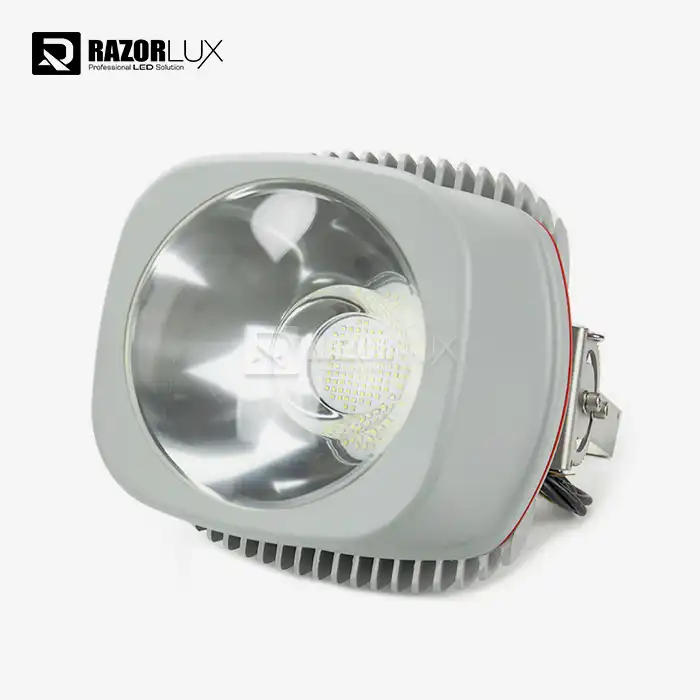
There are special lights called Construction Site Flood Lights that make it possible to do work outside at night. Because they have to stand up to being dropped, wet, handled roughly, and constantly vibrated by heavy machinery, these light bulbs are very different from those used in homes or businesses. Powerful LED screens are what make the system work. Very quickly, they change electricity into broad-spectrum light. Newer LED systems have mostly taken the place of metal halide and halogen technologies. These systems last longer, use less energy, and can turn on right away without having to warm up first.
Core Operating Principles and Technology
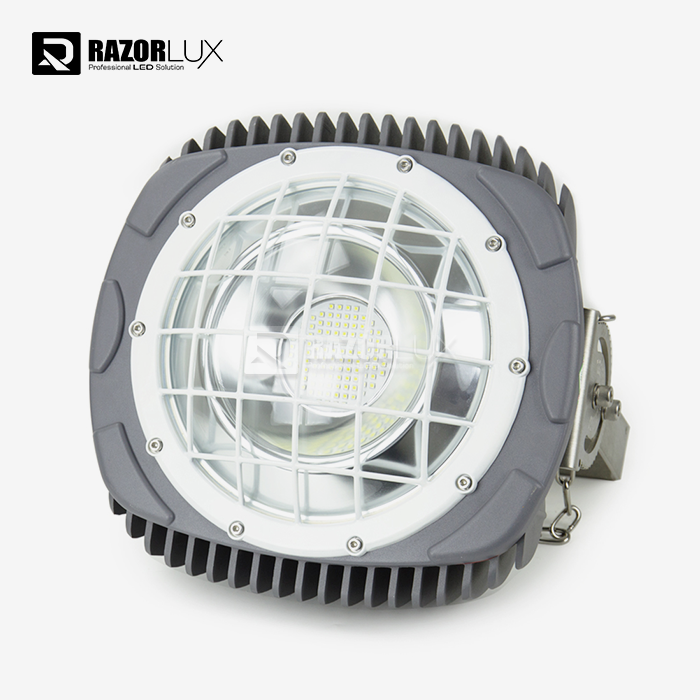
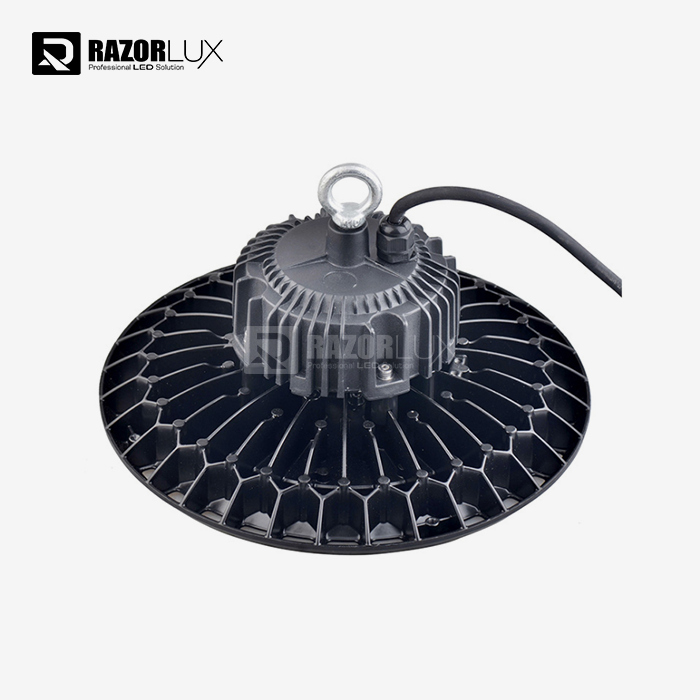
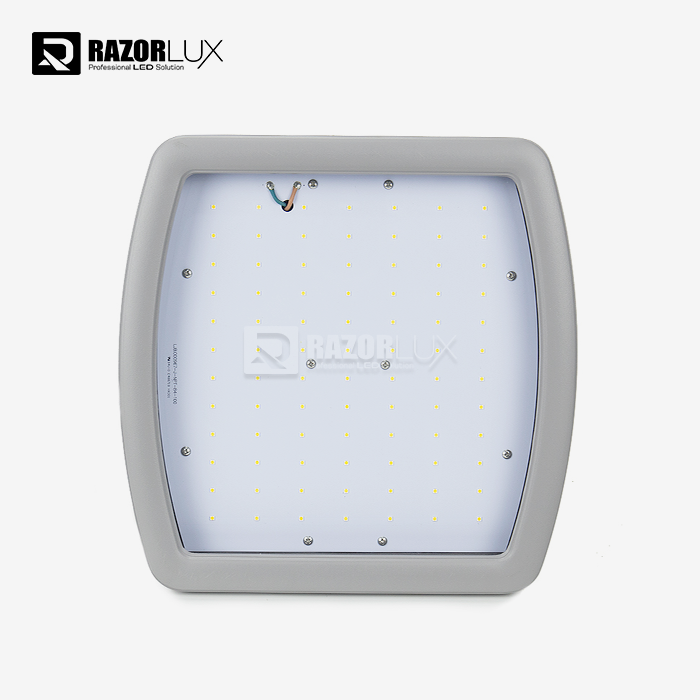
These lights are made up of several parts that fit together and work together. The way the LED chips are set up is what makes the light work. Most of the time, it has diodes with 130 lumens per watt or more of power. An improved driver circuit turns the AC or DC energy that comes in into a steady current. These steps protect the LEDs from power changes and make them work better. Heat management systems get rid of extra heat so that parts don't break down too quickly. These systems are usually metal heat sinks with thermal covers. The beam patterns of the raw light are controlled by optical filters and mirrors, which direct the light exactly where workers need it most. The die-cast aluminum or stainless steel case assembly keeps dust, water, and physical damage from getting to the inside parts.
Types and Comparison of Construction Site Flood Lights
LED vs. Halogen: Performance and Economics
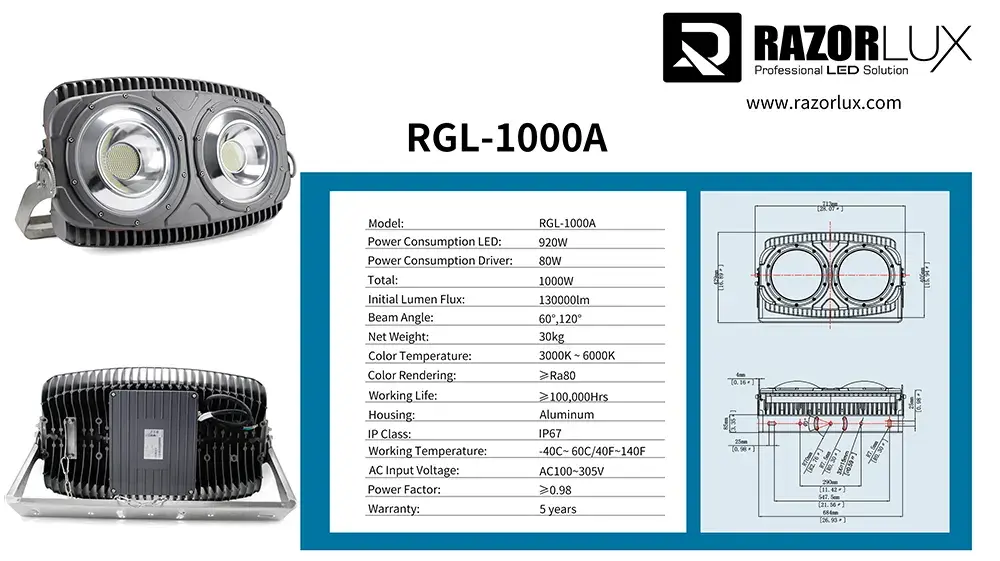
Costs to light construction sites have changed a lot since LEDs came out. LED Construction Site Flood Lights are better in every way than older incandescent systems. Instead of a 2200W or 2500W metal halide lamp, use a 1000W LED flood light instead. It gives off about 130,000 lumens of light while only using 1000 watts of power. This huge boost in efficiency will save a lot of money on energy costs over the life of the gadget. Also, LED lights are safer in places with things that can catch fire because they run cooler. Because they are instant-on, the lights are already at full brightness when workers get to the job site, instead of needing 5–10 minutes to warm up. Halogen lights are less expensive at first, but they need to be changed every 2,000 hours, which means more work and more time lost during the changes.
Understanding IP and IK Protection Ratings
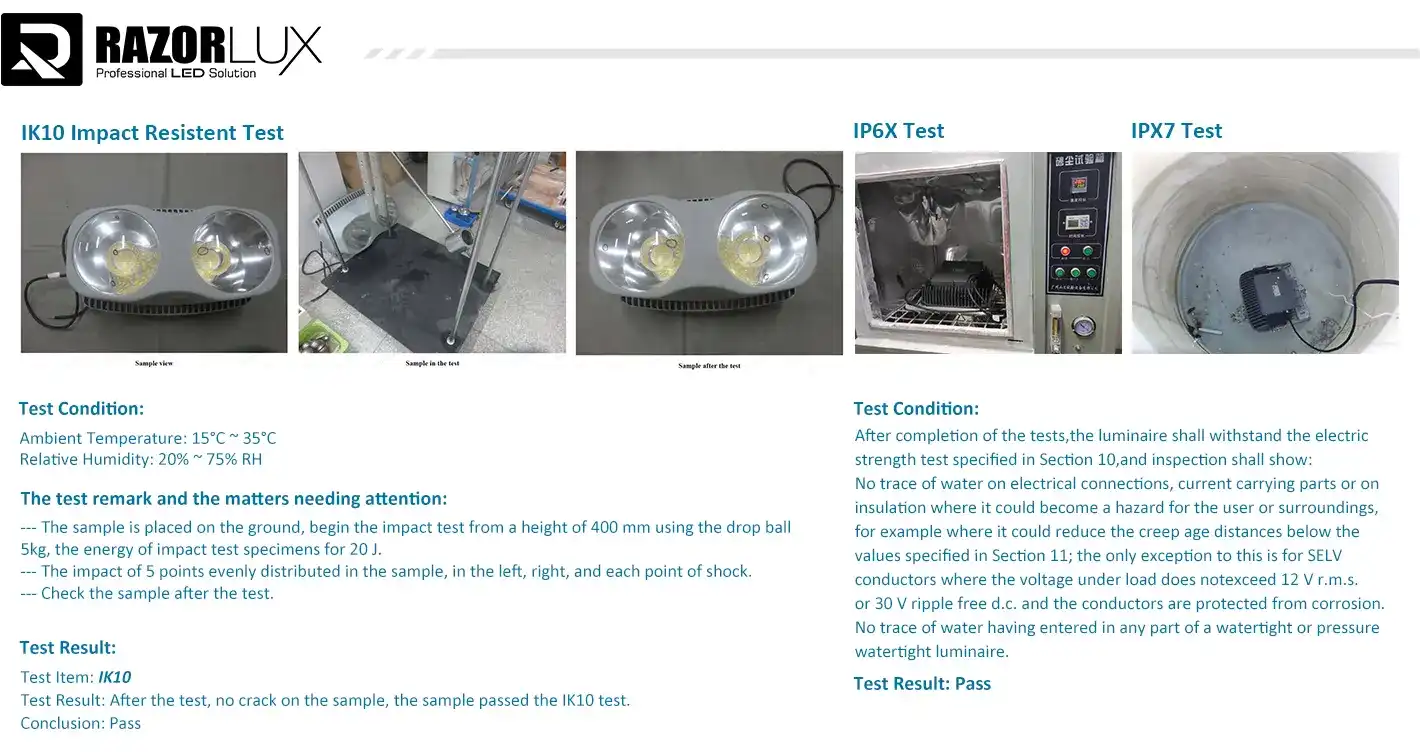
Before they buy something, buying teams need to look at ratings for how environmentally Construction Site Flood Lights friendly it is. IP (Ingress Protection) codes show how solid and liquid things can't get through something. Fixtures with an IP65 grade can handle low-pressure water jets coming from any direction, which makes them perfect for most construction sites. It is certified IP67, which means that it can survive being buried in water up to one meter deep for 30 minutes. This has to be done for dock work, making ships, or places that might flood. Rates of Impact Protection (IK) show how strong a machine is. Having the IK10 mark means that it can handle 20 joules of impact energy, which is the same as dropping 5 kg from 40 cm. When tools are dropped, equipment is moving, or people run into machinery by accident, this level of safety keeps things from breaking. RGL-1000A from Razorlux has IP65 (which can be improved to IP67) and IK10 ratings, which means it will work reliably on the job site even if the weather is bad.
| Technology Type | Lifespan (Hours) | Efficacy (lm/W) | Warm-up Time | Typical Applications |
|---|---|---|---|---|
| LED | 50,000+ | 130-170 | Instant | All construction types are preferred for long-term projects |
| Metal Halide | 10,000-15,000 | 75-100 | 5-10 minutes | Legacy installations are gradually being phased out |
| Halogen | 2,000-4,000 | 15-25 | Instant | Small projects, backup lighting, budget-constrained scenarios |
Installation and Safety Considerations for Construction Site Flood Lights
Best Practices for Secure Mounting
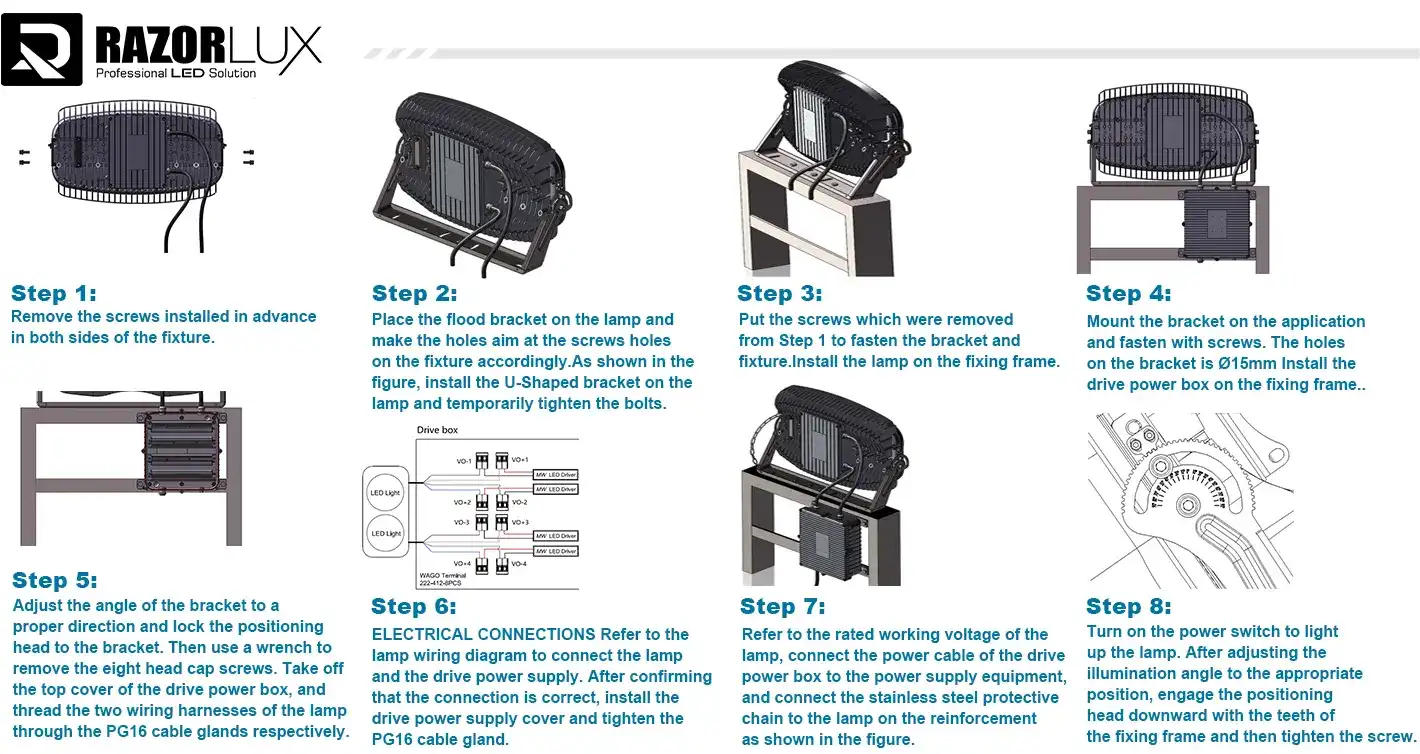
The safety of the equipment and how long it lasts are both directly linked to how well it is installed. You should carefully check the installation site before putting up any Construction Site Flood Lights to make sure that the support structures can handle the weight of the lights plus wind loads. There needs to be a strong gear to connect a 30 kg unit like the RGL-1000A. This could be 3-inch steel pipe supports or heavy-duty clamps that can hold at least 150 kg in dynamic load. Make sure that the lights don't get in the way of workers' views. Mounting heights between 6 and 12 meters usually give the best coverage with the least amount of eye pain. To keep important work areas from getting harsh shadows, adjust the beam so that it doesn't shine on places where heavy tools and materials are kept. In military or toxic settings, you should only use gear made of stainless steel. All threaded joints should have an anti-seize substance added to them to stop galvanic corrosion.
Electrical Safety and Power Management
When adding power, you have to follow the rules and standards in your area, whether they are NEC 590 in the US or IEC 60364 in Europe. Circuit breakers should have a rating 20% higher than the biggest current draw of the light bulb. A 240V 1000W LED light needs at least a 5-amp breaker, but a 6-amp breaker is better. Outdoor building lights must have ground fault circuit interrupters (GFCIs) so that workers don't get shocked if water gets into the electrical lines. When connecting more than one light, be sure to carefully check the total current so that the branch circuits don't get too busy. Anywhere from 80V to 305V or 100V to 400V, the RGL-1000A can handle it. Connecting to different power sources, like generators on the job site or utility lines, makes it easier. This helps avoid connection issues that are common in multi-phase building projects.
How to Choose the Best Construction Site Flood Lights: A Procurement Guide
Matching Lumens and Beam Angles to Project Needs
Find out how much light is needed for each job. This is the first step in planning the Construction Site Flood Lights installation. It's best to have 300 to 500 lux in general building areas and 750 to 1000 lux for exact work like finishing or putting in electricity. A single 1000W LED bulb with a 60° beam angle can light up an area of about 500 to 800 square meters if it is put in at the right height. Narrow 40° beams spread light over longer distances and are great for lighting up crane paths or extra safety around the edge. Wide 120° beams cover a large area evenly, like a building base or a yard for storing materials. You can choose from four beam directions on the RGL-1000A: 40°, 60°, 120°, and an uneven 140°x60°. This lets buying teams order the right number of lights for each zone, so no extra lights are wasted or there are safety risks from not enough light.
Assessing Supplier Reliability and Support
The seller of lights has a relationship with the buyer that goes far beyond the sale. Check to see if the maker is ready to help you with technical questions while you are designing, before you hire them. This will help you pick the right beam designs, wattages, and fixing parts. If there are samples, they can be tried on-site before large orders are made. This way, the performance of the parts can be checked against what the project needs. Deliveries must be always on time. Late lighting items can stop the whole night shift, which costs a lot of money in lost work. Two places where Razorlux keeps a lot of stock are in the US and China. It can quickly fill requests from both countries this way. Help with setup, fixing problems, and having spare parts on hand for as long as the gadget is being used should all be part of the support after the sale.
| Evaluation Criteria | Minimum Acceptable Standard | Razorlux RGL-1000A Performance |
|---|---|---|
| Luminous Efficacy | ≥120 lm/W | 130 lm/W |
| IP Rating | IP65 | IP65 (IP67 available) |
| IK Rating | IK08 | IK10 |
| Operating Temperature Range | -20°C to +45°C | -40°C to +60°C |
| Warranty Period | 3 years | 5 years (LED + Driver), 10 years (Housing) |
| Voltage Tolerance | ±10% | AC 80-305V, DC 100-400V, DC 500-800V |
Top Construction Site Flood Lights: Features and Buyer Insights
Razorlux RGL-1000A: Heavy-Duty Performance Leader
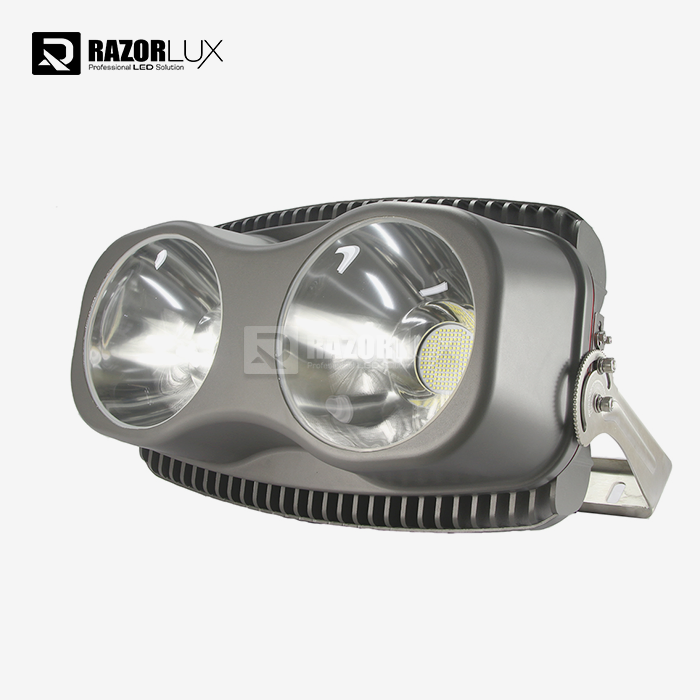
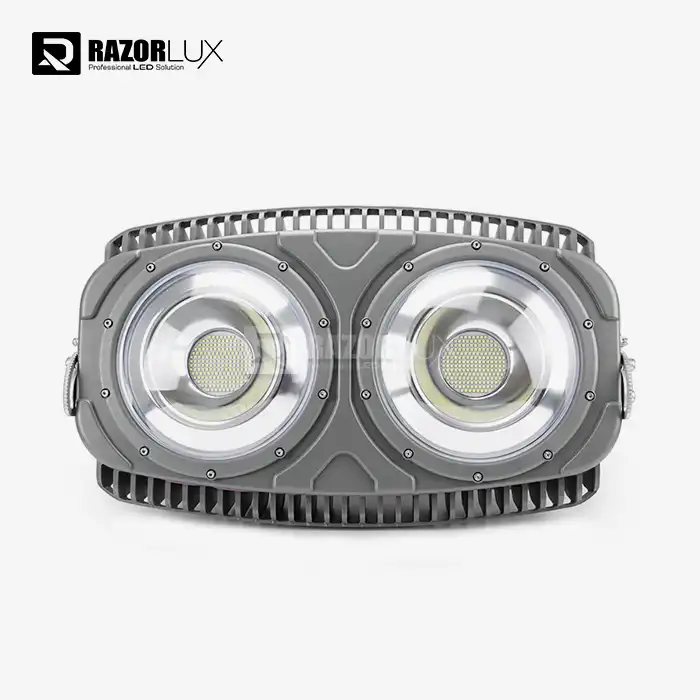
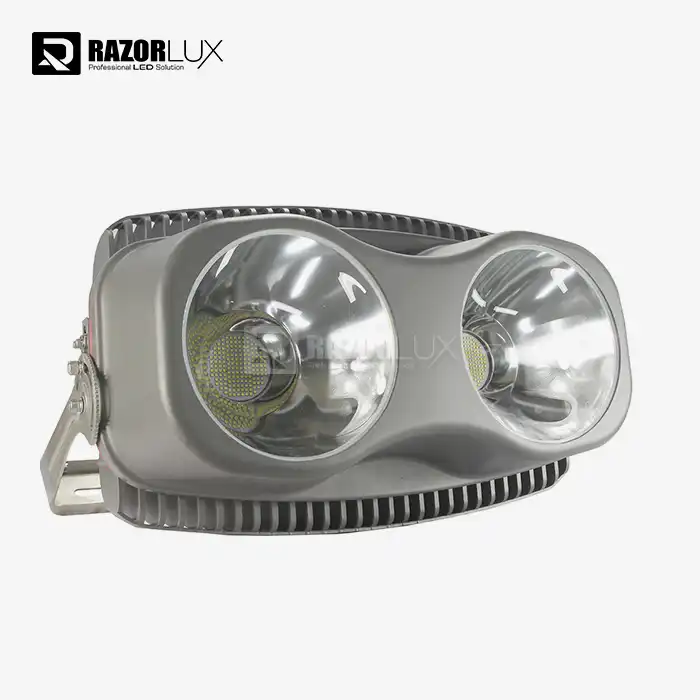
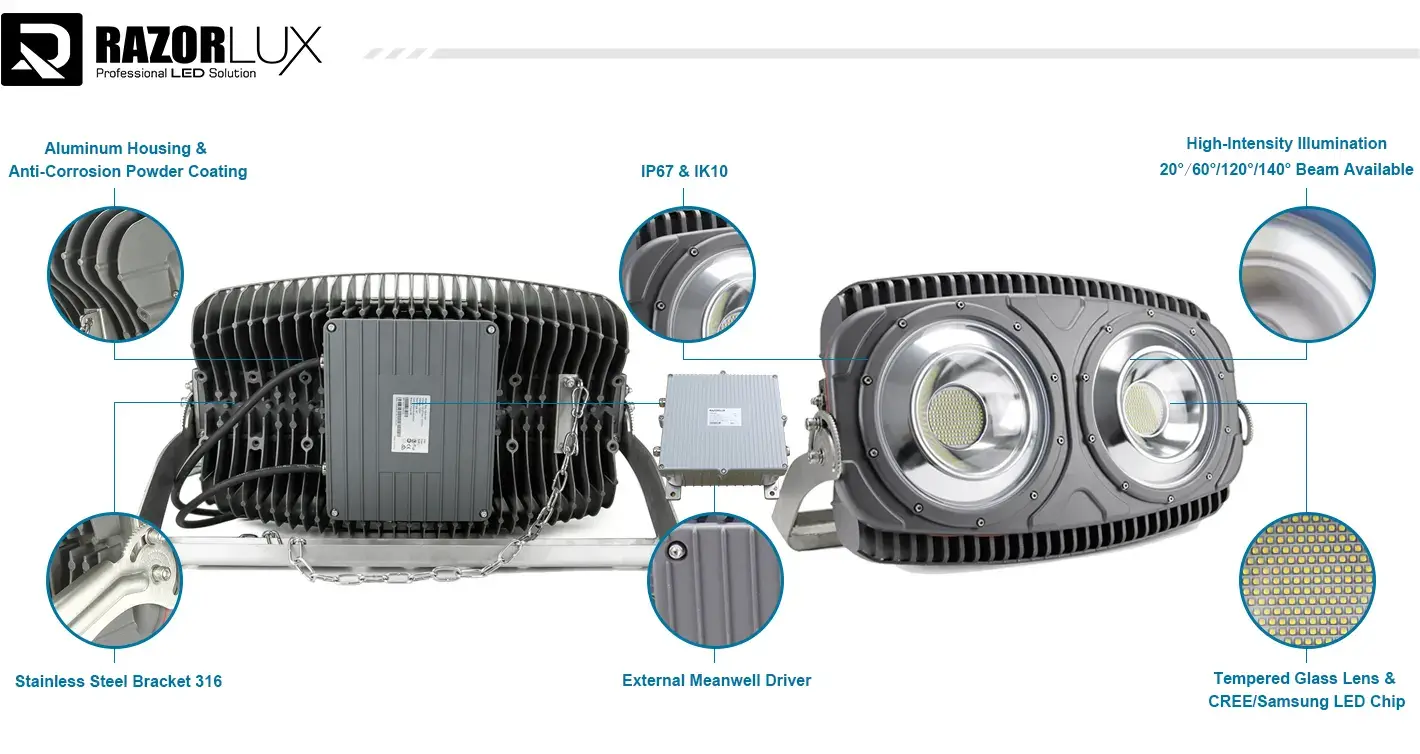
Right now, the RGL-1000A is the best industrial-grade Construction Site Flood Lights solution on the market. If you use this 1000W powerhouse instead of normal 2200–2500W discharge lights, you can get constant lighting of 130,000 lumens while cutting your energy use by over 60%. Because it has more than one use, the one-of-a-kind form can be attached to crane booms, scaffolding, or a pole for lighting at ground level, among other places. This is possible because of its strong bracket system made of stainless steel. Many people think that Meanwell power sources are the most stable in their field. They still work well when energy levels change a lot, which can happen on construction sites. There is no need for any extra voltage regulators or transformers because it can work with generators, temporary utility lines, and stable power infrastructure. It can accept AC 80–305V as an input.
Technical Specifications That Matter
There are more technical differences between professional-grade and consumer-grade lights than just the amount of power they use. You can set the color temperature (2700K–6500K) to make the light work for the job. For example, 3000K light is warmer and stops your eyes from getting tired after long shifts. 5700K light is cooler and better for detailed work. Colors are correctly seen if the Color Rendering Index (CRI) is above 75. This is very important for workers who need to tell the difference between wire colors or check the finish on surfaces. In the RGL-1000A, the power stays stable from -40°C to +60°C thanks to its thermal control system. This stops the 30–40% loss of lumens that happens in poorly constructed lights that are heated. According to the power factor, reactive power fees on utility bills stay low when the power factor is above 0.98. Also, sensitive electronics are safe when the overall harmonic distortion is below 10%.
Bulk Procurement Advantages for Large Projects
Large building projects need a lot of things, which means there are chances to buy things to save money. When you buy in bulk, the price per unit goes down because of economies of scale. When you buy more than 50 units, you generally get a 15% to 25% discount. Shipping more than one item at a time saves money on shipping fees and makes it easy to get things. Service is easier when the same model is used for the whole project. This is because technicians only need to learn how to work with one type of fastener and don't need to keep as many extra parts on hand. Large-scale deployments are no problem for Razorlux. They offer dedicated project management, planned delivery plans that work with the building schedule, and extra on-site installation control to make sure everything is set up right from the start.
Conclusion
If you want to make your Construction Site Flood Lights investment safer, more productive, and more profitable, you should hire professionals to light it up. LED technology has changed the costs of working at night because it uses less energy, lasts longer, and gives off better light than older lighting systems. To make a good buy, you should carefully look at technical specs, scores for how well the product protects the environment, vendor reliability, and the total cost over its entire life. Right now, the Razorlux RGL-1000A is the best building lighting system there is. It is built to last, has a smart design, and is fully certified to meet the strict needs of naval, industrial, and heavy-duty uses all over the world. A procurement manager who cares about quality, stability, and long-term value should buy high-quality lighting options. These will save them money on maintenance, make the workplace safer, and help the project finish faster.
FAQ
1. Are LED flood lights more cost-effective than halogen for construction sites?
Construction Site Flood Lights using LED are a much better deal, even though they cost more at first. A 1000W LED light with 130,000 lumens can be used instead of a 2500W incandescent light, which uses 60% less power. Because LEDs use less energy, they save about $1,971 per light over the course of an average three-year building project that runs for 10 hours a day. HID lights only last 2,000 hours, so you have to change them more often than LED lights, which last 50,000 hours. It saves time and money to keep this up. When you look at the total cost of ownership, LEDs are always better for projects that will last longer than 6 months.
2. What brightness level do I need for different construction activities?
Most building places need 300 to 500 lux (30 to 50 foot-candles) of light to keep people and things safe while they move. There needs to be 500 to 750 lights in places where people are moving things around or doing rough building. 750 to 1000 lux is enough light for accurate tasks like wiring, checking welds, and finishing work. A single 130,000-lumen bulb lights up an area of about 600–800 square meters when installed at the recommended heights of 8–12 meters. But the area it covers changes based on the beam angle picked and the exact lighting needs.
3. Can solar-powered flood lights handle large construction projects?
If you live in the country and don't have access to the power grid, solar flood lights are a good way to add extra lighting to security perimeters and equipment storage areas. But because their batteries are small and only last 4 to 8 hours, they can't be used as the main source of light in a busy building at night. Large projects that need lighting all night for 10 to 12 hours need LED systems that are tied to the power grid or run by a generator. These systems should provide steady, high-intensity lighting even when the weather doesn't allow solar charging.
Partner with Razorlux for Your Construction Lighting Needs
It is best to get Construction Site Flood Lights choices that are as big and hard as the job. Razorlux has been making LED goods for more than 20 years and is an expert in these systems. Procurement professionals need them because they work well, are reliable, and offer help. We offer the best 5-year guarantee in the business on our RGL-1000A type, which has a 130,000-lumen output and an IP67-ready design. Its design has been put through tough naval, industrial, and heavy-duty tests all over the world. If you need help finding the right lights for your needs, we can help. We also offer competitive bulk prices that will fit your budget, and if you need it, we can help you right away after the sale. Send our team an email at sam@razorlux.com to talk about your project needs, get full technical information, or set up a free review. We want you to be successful.
References
1. Illuminating Engineering Society (2023). Recommended Practice for Temporary Outdoor Construction Lighting (ANSI/IES RP-28-23). New York: IES Publications Department.
2. National Institute for Occupational Safety and Health (2022). Construction Site Lighting and Worker Safety: A Review of Current Standards and Emerging Technologies. Cincinnati: NIOSH Publications.
3. European Committee for Standardization (2024). Light and Lighting—Lighting of Work Places—Part 2: Outdoor Work Places (EN 12464-2:2024). Brussels: CEN Technical Committee 169.
4. International Association of Lighting Designers (2023). LED Technology in Construction Applications: Performance Benchmarking and Lifecycle Cost Analysis. Chicago: IALD Research Foundation.
5. Maritime and Coastguard Agency (2023). Guidance on Lighting Requirements for Marine Construction Projects. Southampton: UK Department for Transport.
6. American Society of Safety Professionals (2024). Best Practices for Temporary Construction Site Lighting Systems: Installation, Maintenance, and Compliance. Park Ridge: ASSP Construction Practice Specialty.