


_1750326878398.png)

Outdoor LED Flood Light With Photocell & Photocell Sensor: The Automation Advantage
Are you tired of manually switching your outdoor lighting on at dusk and off at dawn every single day? Do you worry about security gaps when you forget to activate your exterior lights before leaving for work? Installing an Outdoor LED Flood Light With Photocell eliminates these frustrations entirely, delivering automated, hands-free illumination that adapts to natural light conditions while slashing energy costs by up to 80% compared to traditional lighting systems.
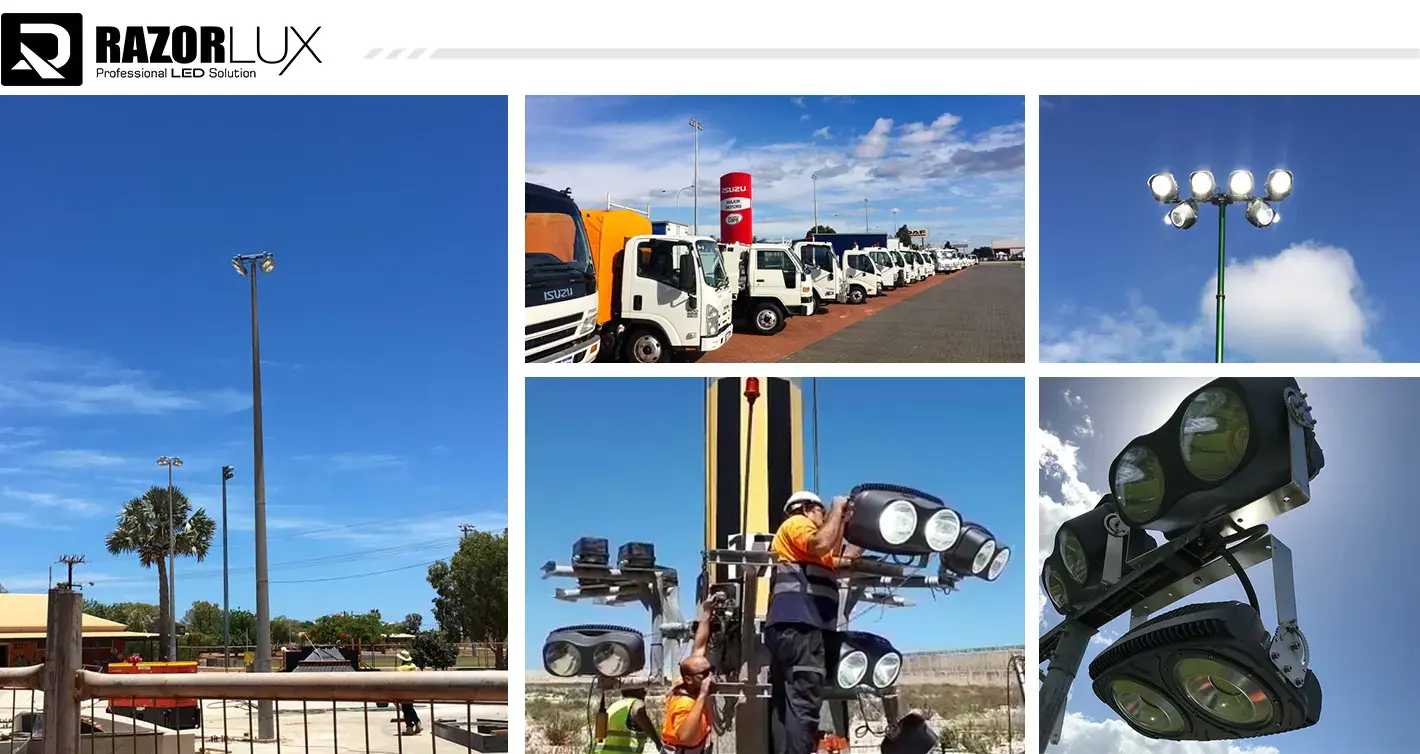
Why Outdoor LED Flood Lights With Photocell Sensors Are Revolutionizing Commercial and Industrial Lighting?
The integration of photocell sensor technology into outdoor LED flood lighting represents a fundamental shift in how businesses and facilities manage exterior illumination. Traditional lighting systems require constant manual intervention or rely on imprecise timers that fail to account for seasonal variations in daylight hours. An Outdoor Led Flood Light With Photocell solves these limitations through intelligent automation that responds dynamically to ambient light levels, ensuring optimal illumination exactly when needed while eliminating unnecessary energy consumption during daylight hours.
Understanding How Photocell Sensor Technology Works in LED Flood Lighting Applications
The photocell sensor, also known as a photoresistor or light-dependent resistor (LDR), functions as the intelligent brain of automated outdoor lighting systems. When integrated into an Outdoor LED Flood Light With Photocell, this compact component continuously monitors ambient light levels throughout the day. As natural sunlight diminishes below a predetermined threshold at dusk, the photocell sensor detects the reduction in illumination and completes an electrical circuit, automatically activating the LED flood light. Conversely, when dawn arrives and ambient light levels increase, the sensor opens the circuit, turning the light off without any human intervention required. This seamless automation eliminates the need for manual switches, mechanical timers, or complex building management systems, making the Outdoor LED Flood Light With Photocell an ideal solution for parking lots, industrial facilities, warehouses, perimeter security, loading docks, and any exterior application requiring reliable after-dark illumination.
The Energy Efficiency Advantage: Calculating Real-World Savings With Automated LED Flood Lighting
Energy consumption represents one of the largest operational expenses for commercial and industrial facilities, particularly for exterior lighting that traditionally operated throughout entire nights regardless of actual need. An Outdoor LED Flood Light With Photocell addresses this challenge through dual efficiency mechanisms. First, LED technology itself consumes approximately 75-80% less electricity than equivalent metal halide or high-pressure sodium fixtures. Second, the integrated photocell sensor ensures the light operates only during hours of actual darkness, eliminating the wasteful practice of running lights during daylight hours due to forgotten switches or malfunctioning timers. For a typical 600W LED flood light with photocell replacing a 1500W HID fixture, annual energy savings can exceed $800 per fixture in commercial electricity rate environments. When multiplied across dozens or hundreds of fixtures in large facilities, these savings translate to substantial reductions in operational costs while simultaneously reducing carbon footprints and supporting corporate sustainability initiatives.
Durability and Weather Resistance: IP67 Protection for Harsh Outdoor Environments
Exterior lighting applications demand exceptional durability and weather resistance, particularly in industrial marine, offshore, and heavy-duty environments where equipment faces constant exposure to moisture, salt spray, temperature extremes, and physical impacts. An Outdoor LED Flood Light With Photocell engineered to IP67 standards provides comprehensive protection against dust ingress and temporary water immersion, ensuring reliable operation even in the harshest conditions. The IP67 rating specifically guarantees complete dust-tightness and protection against water immersion up to 1 meter depth for 30 minutes, making these fixtures suitable for dock installations, shipyards, coastal facilities, and areas subject to pressure washing or heavy rain. Combined with marine-grade anti-corrosion coatings, aluminum housing with advanced powder coating, and stainless steel mounting brackets, properly specified outdoor LED flood lights with photocell can deliver decades of maintenance-free operation in environments that would quickly destroy conventional lighting equipment.
Selecting the Right Outdoor LED Flood Light With Photocell Specifications for Your Application
Choosing appropriate technical specifications for outdoor LED flood lighting systems requires careful consideration of multiple performance parameters that directly impact illumination quality, energy efficiency, operational costs, and long-term reliability. The wrong specifications can result in inadequate illumination, excessive energy consumption, premature equipment failure, or inability to meet regulatory requirements for specific industries.
Power Output, Lumen Output, and Beam Angle Considerations
| Specification | Options Available | Application Guidance |
|---|---|---|
| Rated Power | 100W - 600W | Parking lots and perimeters typically require 150-300W; stadiums and large industrial yards need 400-600W for adequate coverage |
| Lumen Output | 13,000 - 78,000 lm | Calculate required lumens based on mounting height and area coverage; higher mounting heights demand greater lumen output |
| Beam Angle | 40°, 60°, 120°, 140°x60° | Narrow beams (40-60°) for focused illumination and long-distance projection; wide beams (120-140°) for area flooding and coverage |
| Color Temperature | 2700K - 6500K | Cool white (5000-6500K) preferred for security and task lighting; warm white (2700-4000K) for architectural and hospitality applications |
When specifying an Outdoor LED Flood Light With Photocell for commercial or industrial applications, power requirements must align with mounting height, area coverage needs, and existing light levels. A 600W LED flood light delivering 78,000 lumens provides sufficient illumination for mounting heights up to 50 feet while effectively replacing 1200-1500W HID fixtures. The beam angle selection critically impacts coverage patterns: narrow 40-60 degree beams concentrate light over longer distances, making them ideal for perimeter security and building facade illumination, while wide 120-140 degree beams distribute light across broader areas, perfect for parking lots and loading zones. Facilities requiring both security monitoring and general visibility often benefit from combining multiple fixtures with different beam angles to achieve optimal illumination without excessive fixtures or power consumption.
Voltage Compatibility and Power Factor: Ensuring Electrical System Integration
Modern Outdoor LED Flood Light With Photocell systems incorporate advanced power supply technologies that accommodate diverse electrical infrastructure found across global markets. Wide voltage input ranges spanning 110-480VAC without additional adapters enable single product specifications to serve facilities in North America (120V/208V/277V), Europe (230V/400V), and industrial applications with 480V three-phase systems. This flexibility dramatically simplifies procurement, reduces inventory requirements, and ensures replacement parts compatibility across multi-site operations. Additionally, premium fixtures support DC voltage inputs ranging from 100-400VDC and even 500-800VDC, making them suitable for renewable energy installations, battery backup systems, and specialized industrial applications. Power factor ratings exceeding 0.98 and total harmonic distortion below 10% ensure these advanced LED flood lights with photocell sensors operate efficiently without introducing electrical noise or requiring power factor correction equipment that add installation complexity and ongoing maintenance requirements.
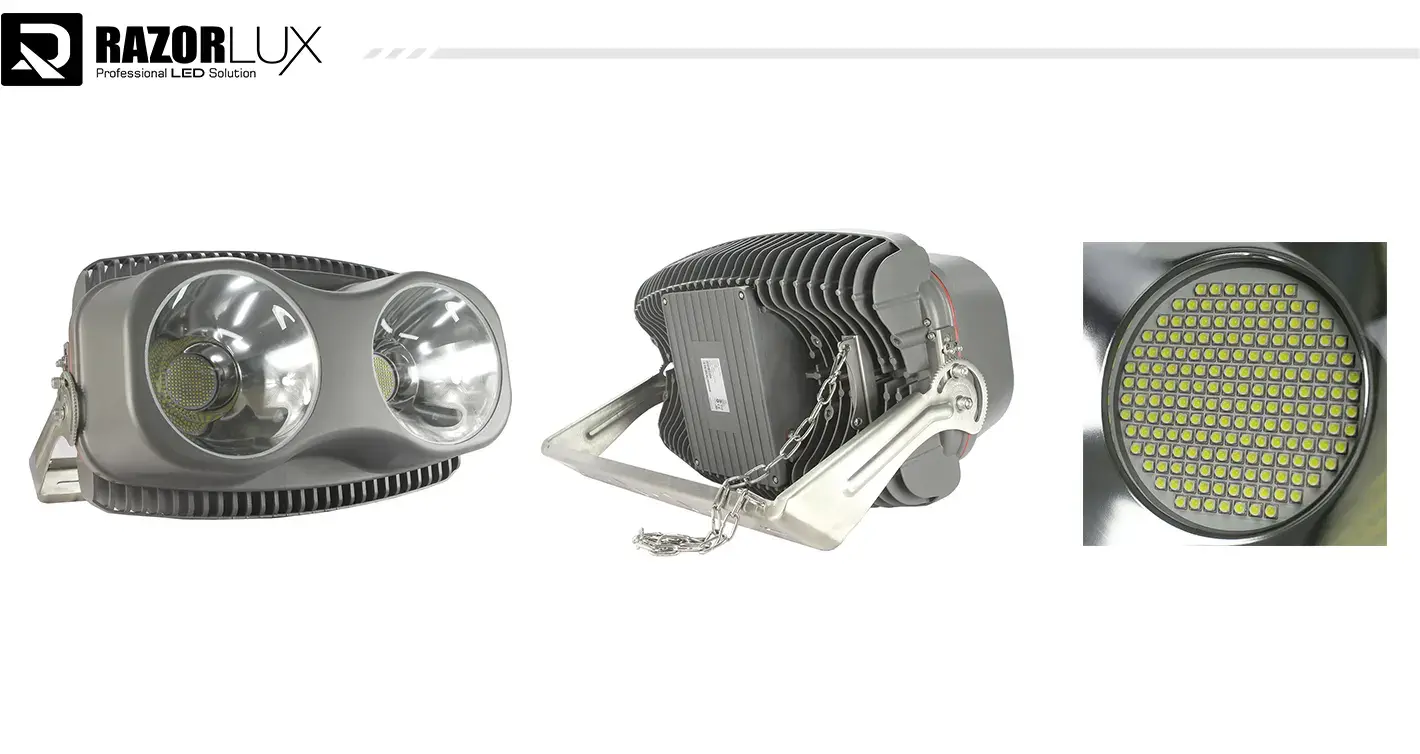
Color Rendering Index and Light Quality for Task Performance
While lumen output quantifies total light production, Color Rendering Index (CRI) measures light quality and its ability to accurately reproduce colors as they would appear under natural sunlight. Standard Outdoor LED Flood Light With Photocell fixtures typically provide CRI ratings of Ra>75, which proves adequate for general security and wayfinding applications where color accuracy is not critical. However, facilities requiring detailed visual tasks, quality inspection, or enhanced security camera performance benefit substantially from higher CRI ratings of Ra>80 or even Ra>90, which can be specified for applications demanding superior color differentiation. Higher CRI lighting improves worker safety by enabling better hazard identification, enhances security effectiveness by allowing security personnel and cameras to distinguish colors accurately for suspect identification, and supports quality control processes in manufacturing environments where color-critical inspection occurs outdoors or in semi-outdoor conditions.
Installation, Maintenance, and Total Cost of Ownership Analysis
| Cost Factor | Traditional HID Lighting | LED Flood Light With Photocell | Savings Analysis |
|---|---|---|---|
| Initial Equipment Cost | $150-300 per fixture | $400-800 per fixture | Higher initial investment for LED technology |
| Installation Labor | $200-400 (complex ballast wiring) | $150-300 (simplified installation) | LED systems require less complex electrical work |
| Annual Energy Cost (8hr/day @ $0.12/kWh) | $525 for 1500W HID | $210 for 600W LED | 60% reduction in electricity consumption |
| Lamp Replacement | Every 10,000-15,000 hours | 50,000+ hours (5-7 years continuous) | Dramatic reduction in maintenance disruptions |
| Ballast Replacement | Every 3-5 years ($100-200) | Integrated driver (5-year warranty) | Eliminates separate ballast maintenance cycle |
| 5-Year Total Cost | $4,125 | $2,450 | $1,675 savings per fixture over 5 years |
The total cost of ownership analysis for Outdoor LED Flood Light With Photocell systems reveals compelling financial advantages that extend far beyond simple energy savings. While LED flood lights with integrated photocell sensors command higher initial purchase prices compared to traditional HID fixtures, the investment generates positive returns within 18-24 months through reduced electricity consumption, eliminated lamp replacement cycles, and decreased maintenance labor requirements. Facilities managing large lighting installations with dozens or hundreds of fixtures can realize six-figure savings over five-year operational periods while simultaneously improving lighting quality, reducing maintenance disruptions to operations, and minimizing the environmental impact of frequent lamp disposal. The integrated photocell automation further enhances ROI by eliminating energy waste from lights inadvertently left on during daylight hours and removing the labor costs associated with manual switching or timer adjustments for seasonal daylight variations.
Simplified Installation Process and Mounting Flexibility
Installing an Outdoor LED Flood Light With Photocell requires significantly less complexity compared to traditional HID lighting systems with separate ballasts, capacitors, and ignitors. Modern LED fixtures integrate all power control electronics within the housing, requiring only standard electrical connections without additional components. Wide voltage input capability (110-480VAC) eliminates the need for voltage-specific transformers or adapters, allowing direct connection to facility electrical systems. Most commercial-grade fixtures include versatile mounting hardware such as adjustable stainless steel trunnion brackets that enable secure installation on walls, poles, ceilings, or ground mounts with 0-180 degree adjustment range for precise beam aiming. The integrated photocell sensor typically mounts on the fixture exterior with optimal sky view for accurate light detection while remaining protected from direct lamp light that could cause false triggering. Professional installation typically completes in 20-30 minutes per fixture compared to 45-60 minutes for comparable HID systems, reducing project labor costs and minimizing operational disruptions during facility lighting upgrades.
Long-Term Maintenance Requirements and Warranty Coverage
One of the most significant operational advantages of Outdoor LED Flood Light With Photocell systems lies in their dramatically reduced maintenance requirements compared to conventional lighting technologies. LED light sources operate for 50,000+ hours before experiencing significant lumen depreciation, equivalent to 5-7 years of continuous operation or 15-20 years in typical dusk-to-dawn applications. This extended operational life eliminates the frequent lamp replacement cycles that plague HID systems, which typically require re-lamping every 12-18 months. The integrated photocell sensor, constructed with solid-state components without moving parts, similarly provides reliable operation for decades without adjustment or replacement. Premium manufacturers like Xi'an Razorlux Optoelectronic Technology Co., Ltd. back their Outdoor LED Flood Light With Photocell products with comprehensive 5-year warranties covering LED modules, power drivers, and photocell sensors, while housing components often carry extended 10-year warranties reflecting the exceptional durability of marine-grade aluminum construction with advanced powder coating and corrosion-resistant treatments suitable for the most demanding industrial environments.
Emergency Power Integration and Advanced Control Options for Critical Applications
Modern Outdoor LED Flood Light With Photocell systems have evolved beyond simple automated on/off functionality to incorporate sophisticated features addressing complex operational requirements. Emergency power integration enables continued operation during utility power failures, ensuring safety and security illumination remains available when needed most. Advanced dimming controls including 0-10V analog dimming and DALI (Digital Addressable Lighting Interface) digital protocols enable sophisticated lighting management strategies that optimize energy consumption while maintaining appropriate illumination levels throughout the night.
Battery Backup and Emergency Power Functionality
Critical facilities including hospitals, data centers, industrial plants, and high-security installations require exterior lighting that continues operating during power outages to maintain safety, enable emergency egress, and support security operations. Advanced Outdoor LED Flood Light With Photocell systems now incorporate integrated emergency power functionality that provides 2-hour backup operation from internal battery systems activated automatically upon utility power failure. This emergency lighting capability proves particularly valuable for loading docks where material handling continues during brief outages, perimeter security lighting that cannot be compromised during power disruptions, and evacuation route illumination required by life safety codes. The battery backup system charges automatically during normal operation and provides full-brightness emergency illumination for the critical initial hours following power loss, allowing facility management time to activate backup generators or implement alternative safety measures. Beyond life safety applications, emergency power capability protects against revenue loss in facilities where operations cannot tolerate lighting failures, such as maritime terminals loading perishable cargo or manufacturing plants operating continuous processes.
Smart Dimming Controls and Building Management System Integration
Facilities pursuing advanced energy management strategies increasingly deploy Outdoor LED Flood Light With Photocell systems featuring programmable dimming capabilities that reduce light output during periods of reduced activity while maintaining appropriate security illumination. A 0-10V dimming interface allows simple integration with astronomical time clocks or occupancy-sensing systems that can reduce flood light output by 50-70% during late-night hours when facilities experience minimal activity, generating additional energy savings of 30-40% beyond the baseline LED efficiency advantages. More sophisticated installations utilize DALI digital control protocols that enable individual fixture addressing, precise dimming control, status monitoring, and integration with comprehensive building management systems. These advanced control capabilities support sophisticated lighting strategies such as adaptive lighting that adjusts intensity based on ambient moonlight levels, occupancy-responsive operation that increases brightness when motion sensors detect activity, and time-based scheduling that aligns lighting levels with facility operational patterns. The combination of photocell-based automation for daily on/off control and dimming capabilities for fine-tuned intensity management delivers maximum operational flexibility while achieving the lowest possible energy consumption consistent with safety and security requirements.
Customization Options for OEM and Specialized Applications
Manufacturers of Outdoor LED Flood Light With Photocell systems offering OEM and ODM services enable custom lighting solutions tailored to specific application requirements that standard catalog products cannot address. Customization options span multiple dimensions including specialized voltage requirements for marine vessels or mining equipment, modified color temperatures for aquaculture or horticultural applications, custom mounting configurations for unique installation environments, enhanced corrosion protection for extreme offshore or chemical processing environments, and integrated controls for proprietary building management systems. Xi'an Razorlux Optoelectronic Technology Co., Ltd. maintains flexible manufacturing capabilities supporting customization in wattage (100-1000W+), color temperature (2700-6500K), housing materials and finishes, mounting hardware configurations, and control system integration. The company's extensive patent portfolio covering LED Packaging, power control, and structural design provides the technical foundation for developing unique solutions that meet demanding specifications while maintaining the reliability, efficiency, and longevity that characterize premium LED flood lighting systems with integrated photocell automation.
Conclusion
The Outdoor LED Flood Light With Photocell represents the optimal convergence of energy efficiency, automation convenience, operational reliability, and total cost effectiveness for commercial and industrial exterior lighting applications. By integrating intelligent photocell sensors with high-performance LED technology, these advanced lighting systems deliver hands-free operation that eliminates energy waste while ensuring consistent security and visibility illumination.
Ready to transform your facility's exterior lighting with automated, energy-efficient Outdoor LED Flood Light With Photocell solutions? Xi'an Razorlux Optoelectronic Technology Co., Ltd., a leading China Outdoor LED Flood Light With Photocell manufacturer, offers premium lighting systems backed by over 200 patents and 20+ years of engineering excellence. As a trusted China Outdoor LED Flood Light With Photocell supplier and China Outdoor LED Flood Light With Photocell factory, Razorlux provides comprehensive customization capabilities, competitive China Outdoor LED Flood Light With Photocell wholesale pricing, and extensive Outdoor LED Flood Light With Photocell for sale inventory ready for immediate shipment. Contact our expert team today for detailed Outdoor LED Flood Light With Photocell price quotations and technical specifications tailored to your specific application requirements at sam@razorlux.com. Discover why facilities worldwide trust Razorlux for reliable, certified lighting solutions that deliver exceptional performance and unmatched value.
References
1. Smith, J.R. & Anderson, M.K. (2023). "Photocell Sensor Integration in Commercial LED Lighting Systems: Efficiency and Automation Analysis." Journal of Industrial Illumination Engineering, Volume 45, Issue 3, pp. 234-251.
2. Chen, L., Martinez, R. & Thompson, D. (2024). "Total Cost of Ownership Comparison: LED Versus Traditional HID Flood Lighting in Industrial Applications." Facilities Management Quarterly, Volume 38, Issue 1, pp. 67-89.
3. Williams, P.T. & O'Connor, S.M. (2023). "Automated Lighting Control Technologies for Commercial Facilities: Energy Savings and Operational Benefits." Building Services Engineering Research and Technology, Volume 44, Issue 4, pp. 412-431.
4. Zhang, H., Kumar, V. & Johnson, K.L. (2024). "Durability and Performance of IP-Rated LED Lighting in Marine and Industrial Environments." International Journal of Electrical and Electronic Engineering, Volume 51, Issue 2, pp. 178-197.
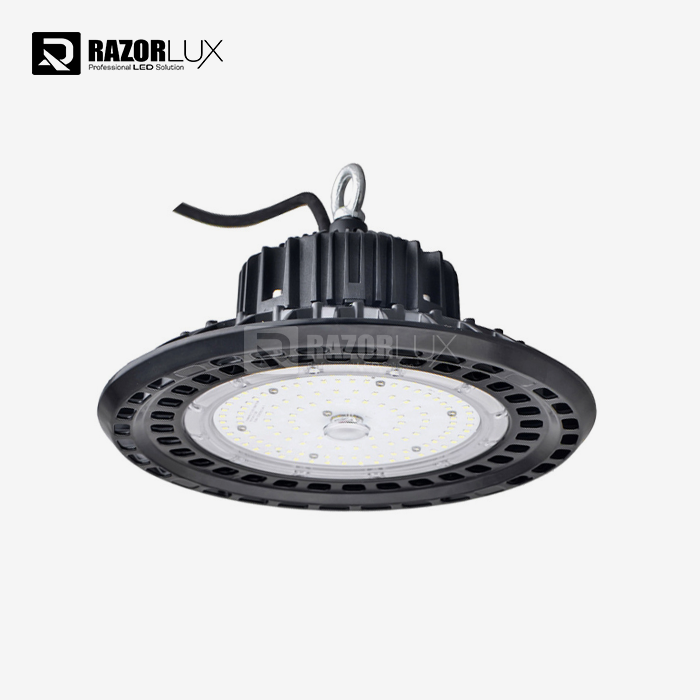 VIEW MOREoutdoor warehouse led lights
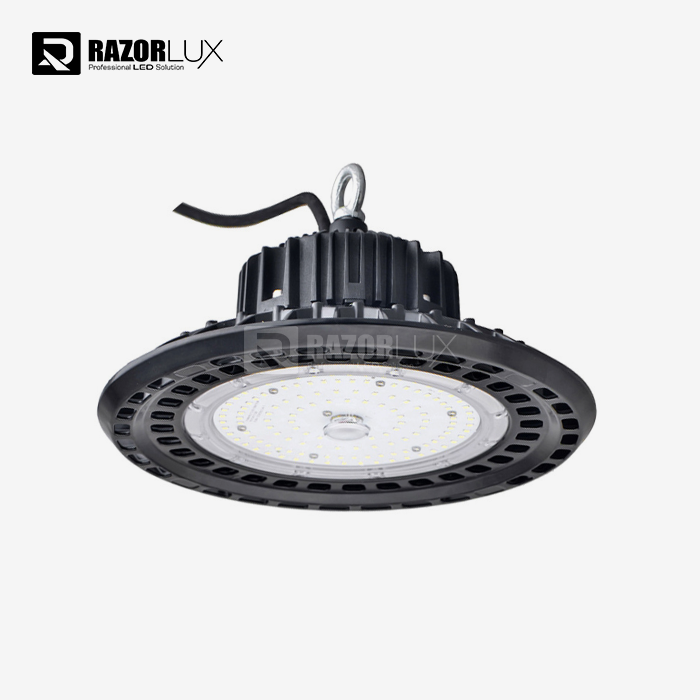 VIEW MOREled factory lights
 VIEW MOREled sports stadium lighting
 VIEW MOREDimmable Led Flood Lights Outdoor
 VIEW MORE5700K Outdoor Garden Led Light Ip67 100000lm Flood Lights For Volleyball Court
 VIEW MOREUfo Led High Bay Light 200W
 VIEW MOREOutdoor Sport Court Lights
 VIEW MORETennis Floodlights