

_1750326878398.png)

High Power Stadium Flood Lights: Up to 174000 Lumens
Picture this: a crucial championship game under dim, flickering lights where players struggle to track the ball and spectators miss the action. Poor stadium lighting doesn't just frustrate fans—it compromises player safety, ruins broadcast quality, and wastes thousands in energy costs. High power stadium flood lights delivering up to 174000 lumens solve these critical challenges by providing consistent, brilliant illumination that transforms sporting venues into professional-grade facilities. Whether you're managing a college athletic complex or operating a professional stadium, understanding LED Stadium Lights technology is essential for creating safe, energy-efficient, and visually stunning sports environments that meet modern broadcasting standards.

Understanding LED Stadium Lights Technology
Advanced LED Chip Performance
Modern LED Stadium Lights utilize cutting-edge semiconductor technology that delivers exceptional luminous output while maintaining remarkable energy efficiency. The Best Led Stadium Lights incorporate premium Samsung or Philips LED chips that achieve lamp efficiency ratings of 120-130 lumens per watt, significantly outperforming traditional metal halide or high-pressure sodium fixtures. This technological advancement means that a 1200W LED stadium light can produce up to 144,000 lumens of brilliant white light, creating uniform illumination across vast playing surfaces. The superior chip architecture also ensures consistent color rendering with CRI values exceeding Ra>75, which is crucial for accurate color perception during live sporting events and broadcast productions. These high-performance chips operate reliably across extreme temperature ranges from -40°F to 140°F, making them suitable for outdoor stadiums in any climate. The thermal management systems integrated into LED Stadium Lights prevent chip degradation, maintaining optimal light output throughout the fixture's operational lifespan of over 50,000 hours.
Optical Design and Beam Control
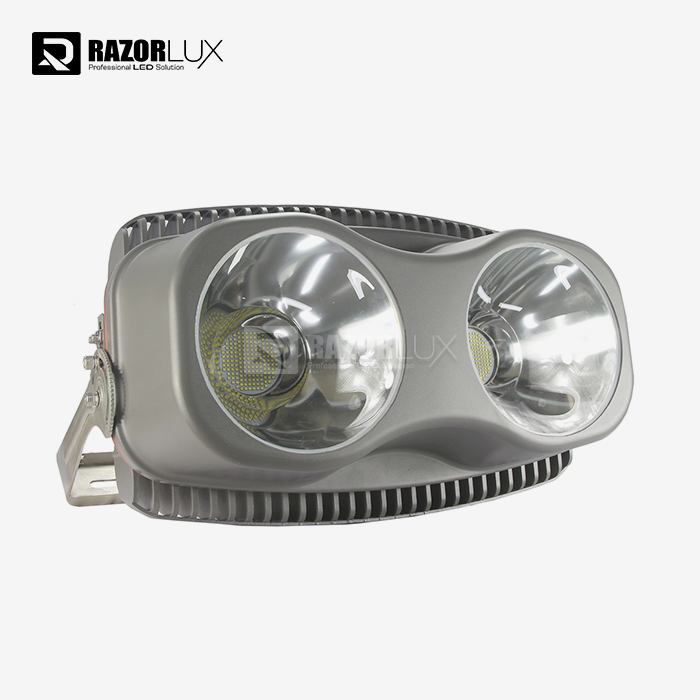
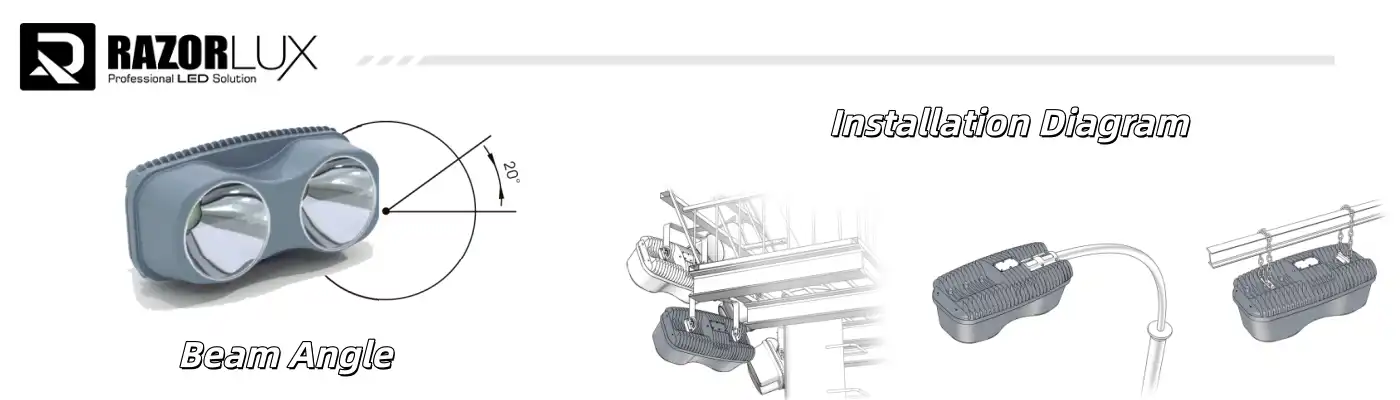
The optical engineering behind best LED stadium lights represents a sophisticated balance between light distribution, glare control, and energy efficiency. Precision-engineered beam angles ranging from 15° to 140°x60° enable lighting designers to customize illumination patterns for specific venue requirements, whether illuminating football fields, baseball diamonds, or multi-purpose arenas. Tempered glass lenses protect the LED arrays while maintaining optimal light transmission, and advanced reflector systems maximize photometric efficiency by directing every available lumen onto the playing surface. The asymmetric beam options available in premium LED Stadium Lights allow for precise light placement, minimizing spill light into surrounding neighborhoods while maximizing visibility on the field. This level of optical control is impossible with conventional lighting technologies, making LED solutions the clear choice for facilities requiring compliance with sports lighting standards. The anti-glare design features incorporated into modern stadium lights ensure that players can track fast-moving objects without visual discomfort, while spectators enjoy clear sightlines throughout the venue.
Power Management and Driver Technology
High-quality LED Stadium Lights incorporate industrial-grade Meanwell drivers that accept wide voltage inputs from AC100-305V or DC127-431V, providing operational flexibility across different power infrastructure configurations. These intelligent drivers maintain consistent light output despite voltage fluctuations, protecting the LED chips from power surges and ensuring uniform illumination during critical game moments. The best LED stadium lights feature drivers with power factor correction exceeding 0.95, reducing reactive power consumption and lowering utility costs. Advanced thermal management within the driver compartment extends component lifespan, while built-in surge protection up to 10kV safeguards against lightning strikes and electrical transients common in outdoor installations. Many modern systems now incorporate emergency power backup functionality, enabling lights to operate for up to two hours during power outages—a critical feature for ensuring event continuity and facility safety. The modular driver design facilitates easy maintenance, allowing technicians to replace components without removing entire fixtures from their mounting positions.

Smart Control Integration
Contemporary LED Stadium Lights seamlessly integrate with intelligent building management systems through 0-10V dimming, DALI protocols, and IoT connectivity options. This smart functionality enables facility managers to program sophisticated lighting scenes that adjust intensity levels for different events, from practice sessions requiring 300 lux to broadcast-quality competitions demanding 1,500+ lux. The energy savings achieved through dimming capabilities can reduce operational costs by 40-60% compared to non-dimmable fixtures, while extending LED lifespan through reduced thermal stress. Remote monitoring systems provide real-time performance data, alerting maintenance teams to potential issues before they impact events. The best LED stadium lights support integration with motion sensors and scheduling systems, automatically activating appropriate lighting levels based on facility usage patterns. This level of control sophistication transforms stadium lighting from a passive utility into an active asset that enhances venue operations, reduces environmental impact, and improves the overall spectator experience.

Performance Specifications Comparison
| Specification | Traditional Metal Halide | High Power LED Stadium Lights |
|---|---|---|
| Rated Power | 1500W | 1200W |
| Lumen Output | 90,000 LM | 144,000 LM |
| Efficacy | 60 LM/W | 120 LM/W |
| Lifespan | 10,000 hours | 50,000+ hours |
| Warm-up Time | 15-20 minutes | Instant-on |
| Color Temperature | Fixed 4000K | 2700K-6500K adjustable |
| Maintenance Frequency | Annual relamping | 5+ years maintenance-free |
| Energy Consumption | 100% | 40-50% of traditional |
Lumen Output and Coverage Analysis
Stadium lighting design requires careful calculation of illumination levels across playing surfaces to meet sport-specific standards and broadcasting requirements. LED Stadium Lights delivering up to 174,000 lumens enable designers to achieve Class I lighting standards with fewer fixtures compared to conventional systems. A typical professional soccer stadium measuring 105m x 68m requires approximately 1,500 lux average horizontal illuminance with uniformity ratios of 0.7 or better—targets easily achieved using strategically positioned high-lumen LED fixtures. The best LED stadium lights provide consistent light distribution without the hot spots and dark zones characteristic of older technologies, ensuring players have optimal visibility regardless of their position on the field. Vertical illuminance levels, critical for television broadcasts, benefit significantly from the directional nature of LED optics, delivering superior camera-facing brightness that enhances broadcast image quality. Computer modeling software now allows lighting professionals to simulate exact photometric performance before installation, eliminating guesswork and ensuring first-time compliance with regulatory standards.
Energy Efficiency Calculations
Upgrading to LED Stadium Lights generates substantial financial returns through reduced energy consumption and maintenance expenses. Consider a stadium operating 2,000 hours annually with 100 traditional 1500W metal halide fixtures consuming 300,000 kWh per year at $0.12/kWh for a total energy cost of $36,000. Replacing these with 80 high-efficiency 1200W LED stadium lights consuming only 192,000 kWh annually reduces costs to $23,040—saving $12,960 per year in electricity alone. When factoring in elimination of frequent relamping labor, disposal costs, and lift equipment rental, total annual savings typically exceed $18,000. The best LED stadium lights offer 5-year warranties with expected lifespans exceeding 15 years, compared to annual replacement cycles for metal halide lamps, multiplying these savings across the facility's operational lifetime. Many utility companies offer substantial rebates for LED conversions, further improving return on investment and accelerating payback periods to under three years in most markets.
Durability and Environmental Resistance
Professional sports venues demand lighting solutions that withstand harsh environmental conditions without performance degradation. LED Stadium Lights constructed with marine-grade aluminum alloy housings and IP67 waterproof ratings provide complete protection against dust ingress and withstand temporary submersion, making them ideal for exposed outdoor installations. The corrosion-resistant coatings applied to fixtures and stainless steel mounting brackets ensure structural integrity even in coastal environments with salt-laden air. IK10 impact resistance ratings protect against accidental ball strikes and vandalism, critical considerations for facilities hosting high-velocity sports. The best LED stadium lights undergo rigorous aging tests where fixtures operate continuously at elevated temperatures, identifying potential failure modes before products reach customers. This quality-focused approach results in remarkably low failure rates, with many installations operating flawlessly for over a decade without requiring component replacement or significant maintenance intervention.
Installation and Application Guidelines
Mounting Configuration Options
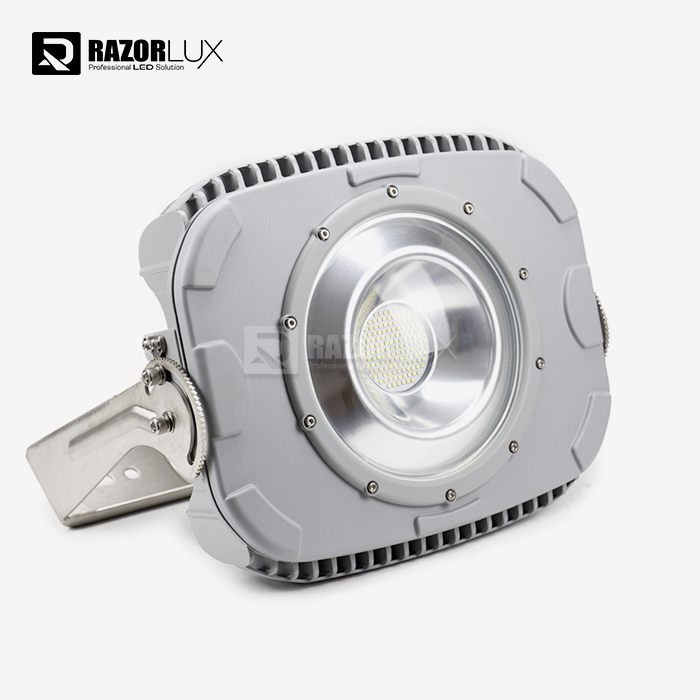
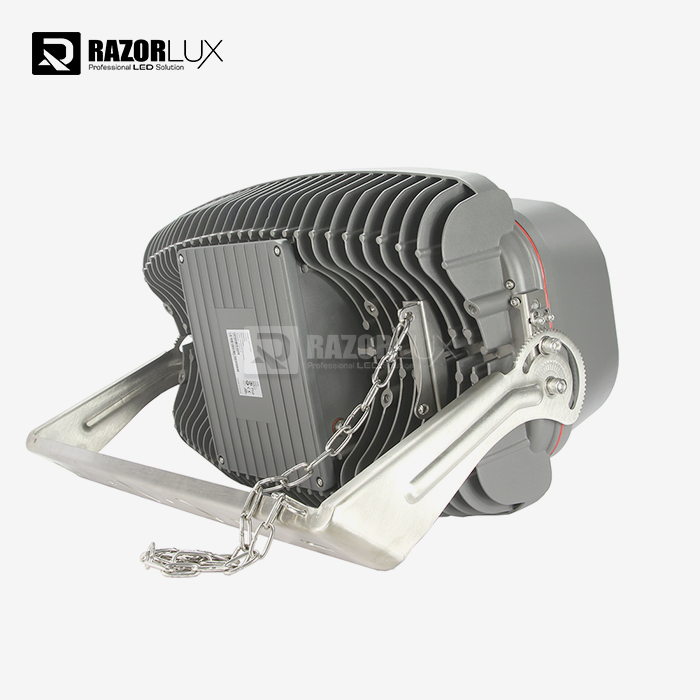
LED Stadium Lights offer versatile mounting solutions adaptable to various facility architectures, from pole-mounted arrays to truss-suspended configurations. Typical stadium installations utilize four to eight lighting towers positioned around the playing surface, with fixture mounting heights ranging from 20 to 40 meters depending on venue size and sport requirements. The best LED stadium lights include adjustable mounting brackets allowing precise aiming adjustments in both horizontal and vertical planes, enabling technicians to optimize light distribution post-installation. Asymmetric optics particularly benefit facilities with limited mounting locations, as specialized beam patterns can deliver required illumination while complying with light trespass restrictions. Newer stadium designs increasingly incorporate integrated lighting rails within roof structures, distributing fixtures for superior uniformity while eliminating the visual impact of traditional light towers. Regardless of mounting approach, proper structural analysis ensures that supports can safely accommodate fixture weights—typically 45kg for high-power models—plus wind loading and maintenance personnel access requirements.
Sports-Specific Lighting Requirements
Different athletic activities impose unique illumination requirements that LED Stadium Lights must satisfy for optimal competition conditions and safety compliance. Football and soccer demand horizontal illuminance levels of 500-1,500 lux with excellent uniformity, while baseball requires specialized lighting patterns that illuminate the diamond, infield, and outfield with different intensity zones. Tennis facilities benefit from lower mounting heights and tighter beam control to minimize glare for players tracking overhead shots. Track and field venues need extended throw distances to illuminate straightaways and field event areas without interfering with competition. The best LED stadium lights provide the optical flexibility necessary to address these varied requirements through interchangeable lens systems and adjustable mounting positions. Broadcasting elevates standards significantly, with televised events requiring 1,400-2,000 lux with superior color rendering and flicker-free operation to prevent camera interference. Multi-purpose venues hosting various sports benefit tremendously from dimmable LED systems that adjust illumination characteristics to match specific event requirements, maximizing facility utilization while maintaining optimal playing conditions.
Safety and Compliance Standards
Professional stadium lighting installations must comply with numerous regulatory frameworks governing photometric performance, electrical safety, and environmental impact. LED Stadium Lights certified to UL, DLC, CE, SAA, and RoHS standards demonstrate manufacturer commitment to meeting rigorous safety benchmarks. The IP67 ingress protection rating ensures electrical components remain safe even during heavy rain or snow, preventing shock hazards that could endanger maintenance personnel. Proper grounding and surge protection are essential for outdoor installations, with the best LED stadium lights incorporating comprehensive protection circuitry that safeguards against lightning-induced damage. Anti-glare design considerations prevent excessive brightness that could temporarily blind pilots of low-flying aircraft, a critical concern for facilities near airports. Light pollution regulations increasingly restrict upward light spillage, making the precision beam control of LED technology essential for regulatory compliance. Installation must follow national electrical codes, with properly rated conductors, disconnect switches, and circuit protection devices sized for the total connected load of all stadium lighting fixtures.
Maintenance and Serviceability
The extended lifespan and robust construction of LED Stadium Lights dramatically reduce maintenance requirements compared to traditional lighting technologies. Facilities using the best LED stadium lights typically implement annual inspection schedules rather than the frequent relamping cycles demanded by metal halide systems. Maintenance crews check mounting hardware tightness, clean lens surfaces to maintain light transmission, and verify electrical connections remain secure. The modular construction of quality LED fixtures allows technicians to replace individual drivers or LED modules without removing entire units from mounting positions, minimizing disruption and reducing labor costs. Diagnostic features built into smart LED systems provide advance warning of potential failures, enabling proactive component replacement during scheduled maintenance windows rather than emergency repairs during events. The 5-year warranties offered by premium manufacturers like Razorlux demonstrate confidence in product reliability, transferring risk from facility owners to manufacturers and ensuring long-term performance assurance backed by responsive technical support.
Cost Analysis and Return on Investment
| Cost Factor | Traditional System (10 years) | LED Stadium Lights (10 years) |
|---|---|---|
| Initial Equipment | $150,000 | $200,000 |
| Installation | $50,000 | $50,000 |
| Energy Costs | $360,000 | $192,000 |
| Maintenance Labor | $80,000 | $15,000 |
| Replacement Lamps | $120,000 | $0 |
| Total 10-Year Cost | $760,000 | $457,000 |
| Net Savings | Baseline | $303,000 (40% reduction) |
Capital Investment Considerations
Stadium lighting retrofits represent significant capital expenditures requiring careful financial analysis and stakeholder approval. LED Stadium Lights typically cost 30-40% more than traditional fixtures initially, but this premium is rapidly offset through operational savings and reduced maintenance expenses. Facility managers should evaluate total cost of ownership over projected system lifespans rather than focusing solely on acquisition costs. The best LED stadium lights from manufacturers like Razorlux offer transparent pricing reflecting quality components, comprehensive warranties, and technical support that protects long-term investment value. Many jurisdictions offer utility rebates, tax incentives, and energy efficiency grants that substantially reduce net project costs, improving financial feasibility for budget-constrained facilities. Financing options through equipment leasing or energy service contracts can eliminate upfront capital requirements, allowing facilities to implement upgrades using a portion of guaranteed energy savings. This approach enables immediate access to superior lighting performance while preserving capital budgets for other facility improvements.
Operating Cost Reductions
The dramatic energy efficiency advantages of LED Stadium Lights translate directly into reduced monthly utility expenses that accumulate substantially over system lifespans. A typical large stadium consuming $36,000 annually in lighting energy can reduce this expense to $14,000-$18,000 through LED conversion—savings exceeding $18,000 yearly that continue throughout the fixture's 15+ year operational life. Demand charge reductions provide additional savings for facilities on commercial power rates, as LED systems draw significantly lower peak power compared to traditional lighting requiring ballast overhead. The instantaneous on/off capability of the best LED stadium lights eliminates the extended warm-up periods required by metal halide systems, enabling facilities to minimize operating hours by activating lighting only when needed. Dimming capabilities further enhance savings by reducing power consumption during practice sessions, maintenance periods, and events requiring less than maximum illumination. These combined efficiency gains typically enable LED installations to achieve complete payback within 2-4 years, with all subsequent savings flowing directly to facility operating budgets.
Maintenance Cost Savings
Beyond energy reductions, LED Stadium Lights deliver substantial savings through dramatically reduced maintenance requirements. Traditional metal halide systems require annual relamping campaigns involving expensive lift equipment rental, significant labor hours, and lamp disposal costs—expenses eliminated by LED technology's 50,000+ hour lifespan. A 100-fixture stadium spending $8,000 annually on relamping labor and materials can redirect these resources to other facility priorities after LED conversion. The best LED stadium lights feature solid-state construction with no fragile filaments or electrodes, eliminating premature failures from vibration and thermal cycling that plague conventional technologies. Group relamping strategies required for metal halide systems to maintain uniform light output become unnecessary with LED's consistent performance throughout operational life. Emergency lighting failures during events that require costly immediate repairs become rare occurrences with reliable LED technology. The 5-year warranties standard on premium LED fixtures provide additional protection, transferring risk from facilities to manufacturers and ensuring predictable maintenance budgets without unexpected capital expenditures for equipment replacement.
Long-term Value Proposition
The financial case for LED Stadium Lights extends beyond immediate cost savings to encompass enhanced facility capabilities, improved user experiences, and environmental stewardship. Superior light quality enables venues to attract premium events including televised competitions that generate substantial revenue while enhancing community visibility. The instant-on capability and dimming flexibility of the best LED stadium lights support expanded facility utilization by enabling quick transitions between different activity types, maximizing return on infrastructure investment. Reduced maintenance requirements minimize disruption to scheduled programming, avoiding cancellations that disappoint users and damage facility reputations. The environmental benefits of LED technology—reduced energy consumption, elimination of mercury-containing lamps, and decreased carbon emissions—increasingly influence funding decisions as sustainability becomes central to organizational missions. Forward-thinking facilities recognize that LED Stadium Lights represent not merely cost-reduction measures but strategic investments that enhance competitive positioning, operational flexibility, and long-term institutional sustainability.
Conclusion
High power stadium flood lights delivering up to 174000 lumens represent the definitive lighting solution for modern sports facilities. LED Stadium Lights combine exceptional performance, energy efficiency, and reliability.
Ready to transform your stadium with cutting-edge LED technology? Contact Xi'an Razorlux Optoelectronic Technology Co., Ltd.—your trusted China LED Stadium Lights manufacturer, supplier, and factory offering competitive LED Stadium Lights wholesale pricing. With over 200 patents and 25+ years of expertise, we deliver the best LED Stadium Lights for sale at exceptional LED Stadium Lights prices. Our mature R&D team, comprehensive certifications, and robust 5-year warranty ensure your investment delivers decades of reliable performance. Reach out today at sam@razorlux.com to discuss your project requirements, request samples, and discover why facility managers worldwide choose Razorlux for superior illumination solutions.
References
1. Illuminating Engineering Society. "IES Lighting for Sports and Recreational Areas Standards." Illuminating Engineering Society of North America, Technical Committee.
2. National Electrical Manufacturers Association. "High-Intensity Discharge and LED Lighting Systems for Sports Applications." NEMA Standards Publication, Lighting Systems Division.
3. International Commission on Illumination. "CIE Guide on Sports Lighting Performance Requirements." CIE Technical Report, Outdoor Lighting Technical Committee.
4. U.S. Department of Energy. "LED Stadium and Area Lighting Performance Assessment." Solid-State Lighting Program, Building Technologies Office.