


_1750326878398.png)

1000 Watt Led Outdoor Flood Lights vs Low‑Watt Alternatives: Which Wins?
The answer to the question of whether or not you should go with 1000 Watt LED Outdoor Flood Lights or alternatives with lesser wattage is totally dependent on the needs of your application. When it comes to situations that need maximum brightness coverage, such as shipyards, offshore platforms, and industrial complexes, high-wattage flood lights are an excellent choice. These are the kinds of places where insufficient lighting increases the danger of accidents. When it comes to domestic applications or regions that need moderate illumination levels with decreased energy consumption, alternatives with lower wattages prove to be more suited.
Understanding Power Requirements in Professional Lighting Applications
There are three main things that determine whether high-power or low-watt LED options are better: the coverage area, the light needs, and the working surroundings.
Professional naval and industrial sites have to deal with problems that domestic uses don't usually have to. Extreme temperature changes, rust from saltwater, and strict safety rules all work together to make a place where lighting performance directly affects how well things work.
Important things to think about are:
- Measurements of the coverage area
- Levels of brightness needed to meet business norms
- Ratings for environmental protection
- Long-term costs of doing business
- Care for mobility
High-wattage options are usually more cost-effective per square meter lit if you are in charge of big activities like factories or ocean sites.
Performance Analysis: A Look at Coverage and Brightness
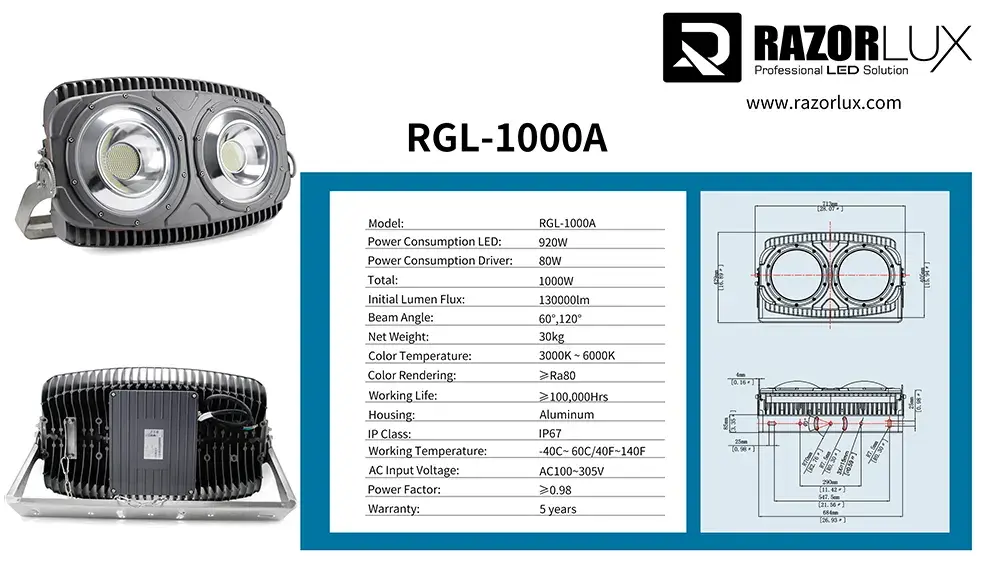
1000 watt LED outdoor flood lights made for businesses give off about 130,000 lumens, which is enough light to light up an area of up to 15,000 square feet. Low-wattage options (200–500W) usually put out 26,000–65,000 lights, which is enough for smaller areas.
Real-world performance data shows:
| Power Rating | Efficiency (Lumens per Watt) |
|---|---|
| 1000W units | 130 |
| 500W alternatives | 125–135 |
| 200W options | 120–130 |
The difference in efficiency between good makers gets smaller and smaller, leaving covering ability as the main thing that sets them apart.
For safe operations and guidance, marine apps need at least 20 to 30 light levels. This can be done over a bigger area with a single 1000W light than with several smaller ones.
A few high-wattage lamps can often provide better light spread than many low-watt options if your building has large open areas that need even lighting.
Analysis of Energy Use and Operating Costs
Even though each LED uses more power, 1000 watt LED outdoor flood lights often prove to be more cost-effective in large-scale projects by requiring fewer fixtures and being easier to set up.
Comparative research shows that:
- When there are fewer fixing places, installation costs go down
- Needs for electrical facilities makes things easier
- It gets easier to keep up with maintenance schedules
- Inventory of replacement parts goes down
A normal port building that needs 500,000 lights might use five 1000W lamps (a total of 5000W) instead of ten 500W units (a total of 5000W). But the higher wattage method is better because it saves money on installation and upkeep.
When total wattage equals, energy costs stay the same, but working efficiency goes up a lot when high-power systems are combined.
If your project covers a large area that is hard to get to for upkeep, then higher-wattage lights will usually save you money in the long run.
Strength and dependability in harsh conditions
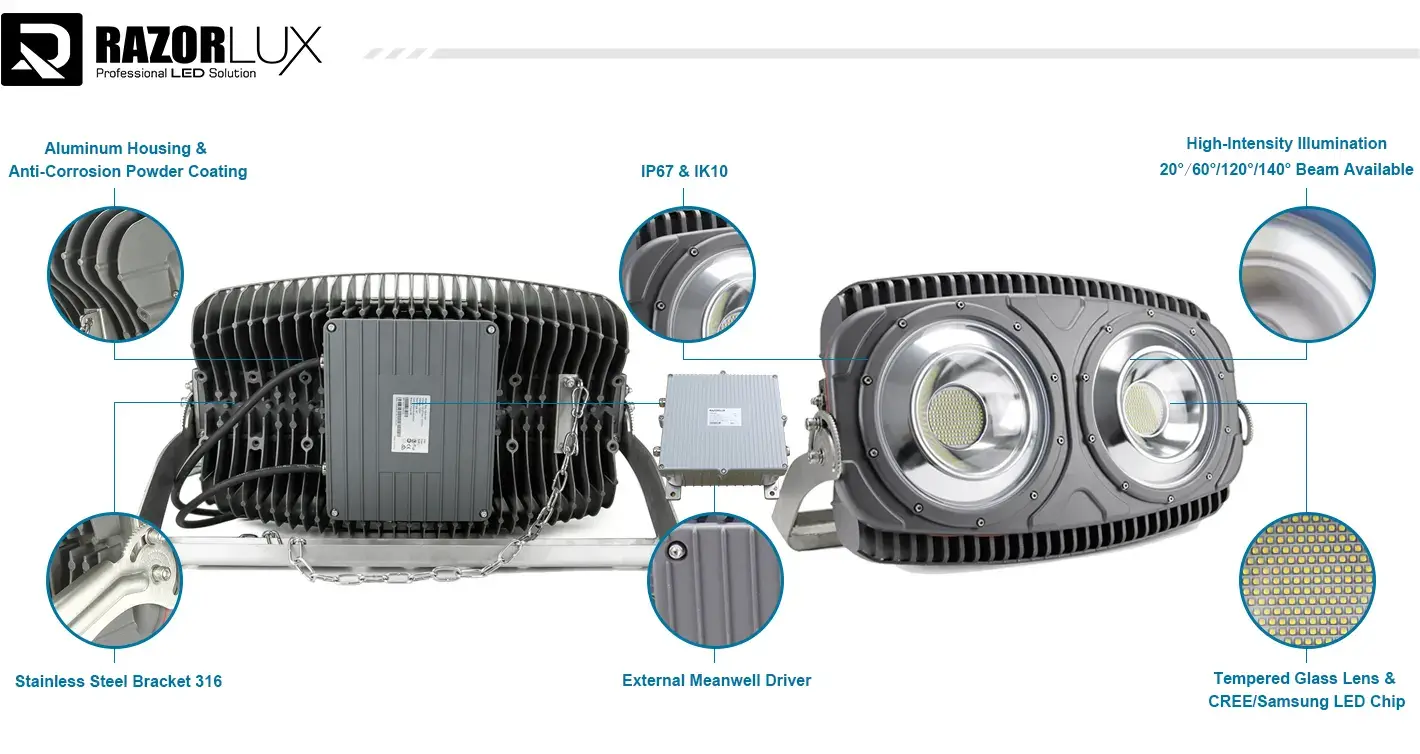
Marine and heavy-duty users need to be very careful with the environment. The strong design of high-quality 1000W LED flood lights is needed for harsh environments.
Environmental specifications comparison:
- IP67 waterproof rating (standard for both categories)
- IK10 impact resistance (more common in high-wattage units)
- Operating temperature range: -40°C to +60°C
- Corrosion-resistant aluminium housing with powder coating
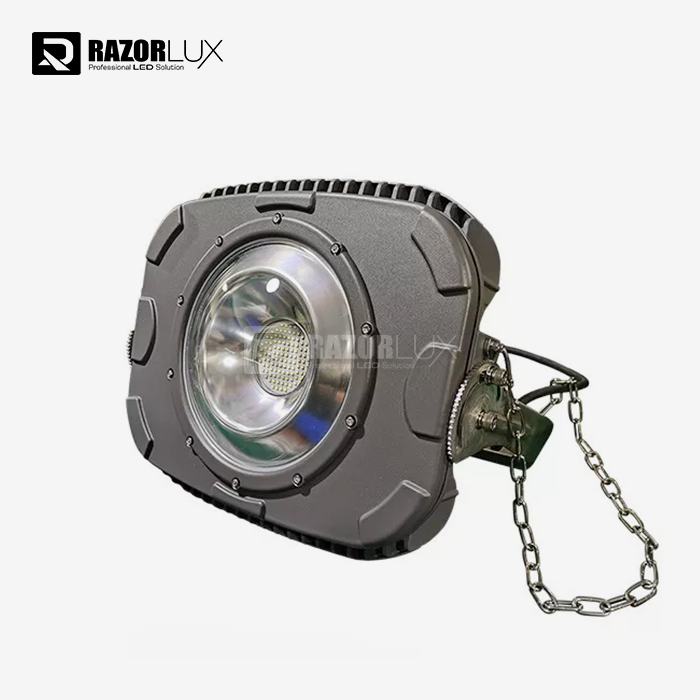
- Stainless steel mounting brackets
Higher-wattage lights usually have better heat control systems, which makes LEDs last longer than 50,000 hours. Better heat absorption keeps performance from dropping, which can happen in tough settings.
For shipboard uses, vibration protection is very important. 1000 watt LED outdoor flood lights have drivers that can handle shocks and internal parts that are strengthened.
If your placement is exposed to harsh weather, salt spray, or mechanical shaking, high-end lights with more watts will usually last longer.
Installation Flexibility and Maintenance Considerations
There are big differences in how to install high-power and low-watt LED systems. Knowing these differences helps you plan projects better and keep them in good shape over time.
Some installation factors are:
- Needs for mounting structures
- Needs for electrical line capacity
- Improvements to the cable run
- Thoughts on access for upkeep
Single high-wattage lights cut down on fixing points, which makes the structure easier to build. However, because they are heavier (usually 25–35 kg for 1000W units vs. 8–15 kg for smaller wattage options), they need strong support systems.
Planning for electricity is easier when there are fewer lines to think about. A 1000W device that draws 8.7 amps at 115V makes power sharing easier than using a bunch of smaller lights.
When planning maintenance, it's best to have fewer, stronger pieces. As the number of fixtures goes down, so do the tasks of cleaning, inspecting, and replacing parts.
If your building doesn't have many servicing windows or is hard to get to, combining lights into a few high-power units should help keep operations running smoothly.
Cost-Benefit Analysis for Different Applications
When figuring out how much something costs, you need to look at the total cost of ownership, not just the buying price. This all-encompassing method shows important differences between types of applications.
Cost factors as a whole:
- Cost of the initial setup
- Labour and tools for installation
- Needs for electrical facilities
- How much energy is used each year
- Parts and labour for maintenance
- Replacement date expected
When compared to low-wattage lights, high-wattage lights usually save 30 to 40 per cent of the cost for large industrial sites. Mostly, the savings come from less complicated installation and upkeep needs.
Low-wattage choices may be better for smaller uses because they require less equipment and give you more installation options.
Application-specific recommendations:
| Application Area | Recommended Wattage / Notes |
|---|---|
| Shipyards & Ports | High-wattage systems, most economical |
| Offshore Platforms | Premium high-power units for durability |
| Warehouse Facilities | Medium wattage (500–750W), optimal balance |
| Parking Areas | Low to medium wattage, adequate coverage |
| General Outdoor Use | Select based on area size and illumination requirements |
If the long-term cost savings are more important to your project budget than the beginning costs, then 1000 watt LED outdoor flood lights are usually the best choice.
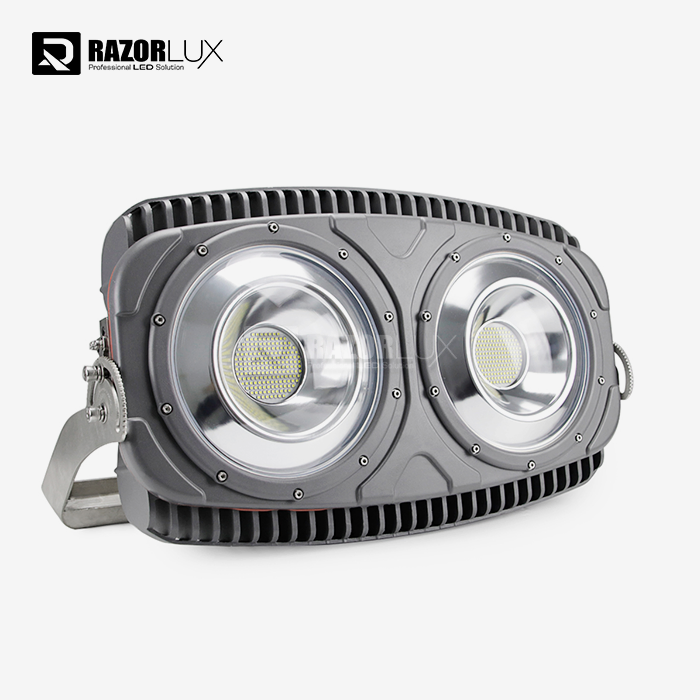
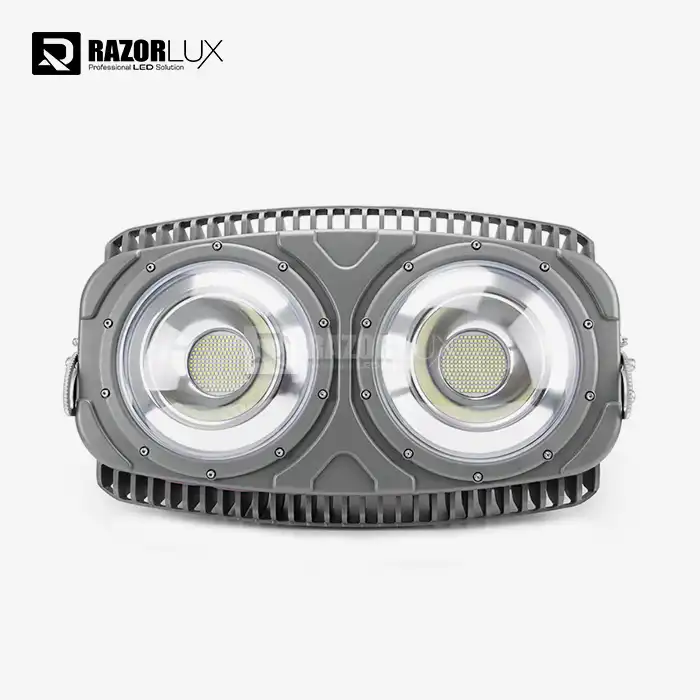
Razorlux 1000 Watt Led Outdoor Flood Lights: Key Advantages
Specifications for Better Performance:
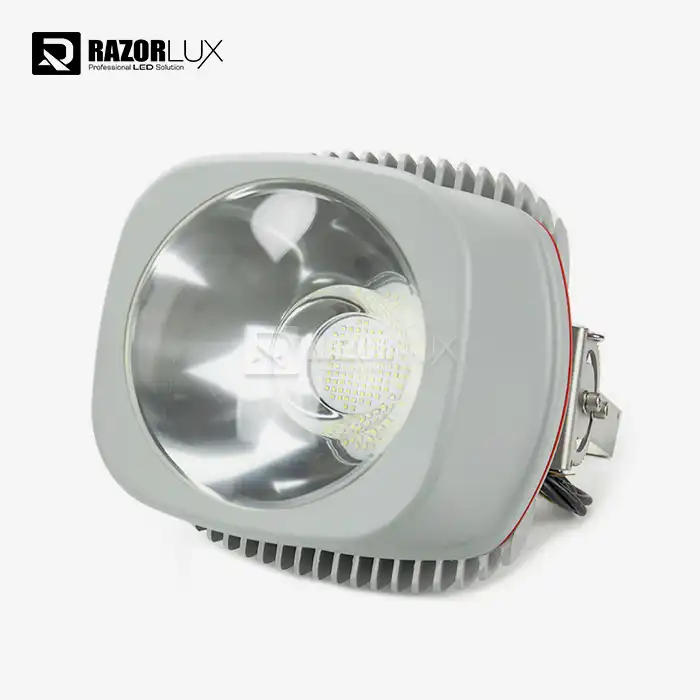
- High luminous efficiency: 130 lm/W efficiency is higher than industry standards, giving you the most light for each watt you use.
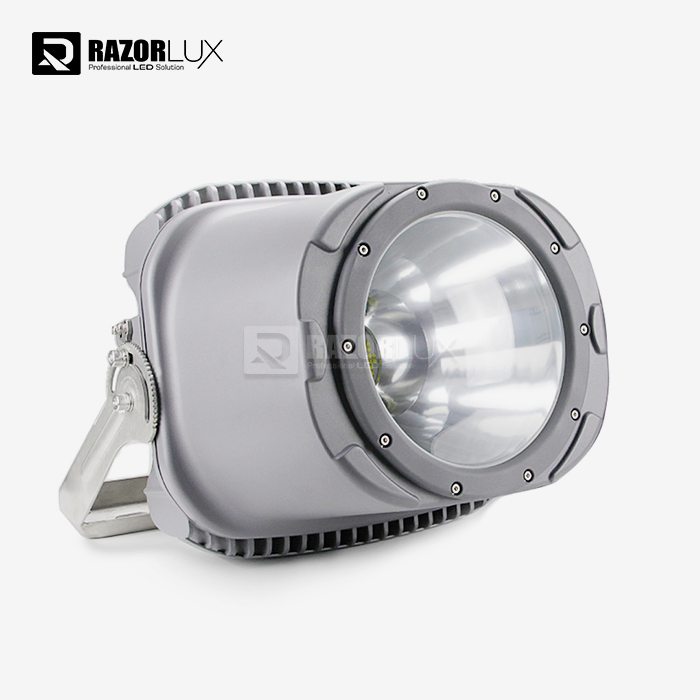
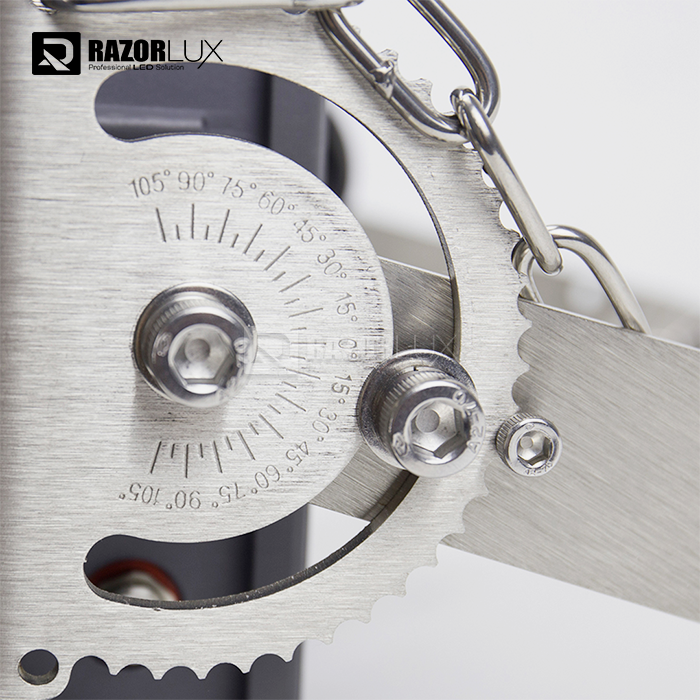
- Patented multi-function design: The mounting system can be changed to fit different placement needs in naval and industrial settings.
- Premium component integration: Meanwell drivers paired with Samsung LED chips make sure that the system works reliably in harsh circumstances.
- Better control of temperature: The operating life is extended beyond 50,000 hours by a strong aluminium frame with improved heat absorption.
- Wide voltage ranges: AC80-305V and DC100-800V input ranges work with power systems around the world without the need for extra gear.
Excellence in Environmental Protection:
- Marine-grade construction: IP67 waterproof rating with IK10 impact resistance withstands extreme weather and mechanical stress
- Materials that don't rust: Powder-coated aluminium body and fixing parts made of stainless steel are resistant to damage from saltwater.
- Extended temperature range: -40°C to +60°C operation maintains performance in Arctic and tropical conditions
- Vibration resistance: Shock-resistant design and reinforced internal parts handle shocks on ships and in factories.
Certification and Quality Assurance:
- Comprehensive certifications: CE, RoHS, SAA, UL, DLC, CB, and ISO 9001 compliance ensure global market acceptance
- DNV/GL marine certification: This type of specialised maritime approval proves that the product is suitable for use in offshore and onboard installations.
- Five-year comprehensive warranty: Extended coverage demonstrates confidence in product durability and performance
- Quality parts sourcing: Top sellers like Samsung and Meanwell make sure that speed and dependability are always the same.
Advantages of Installation and Maintenance:
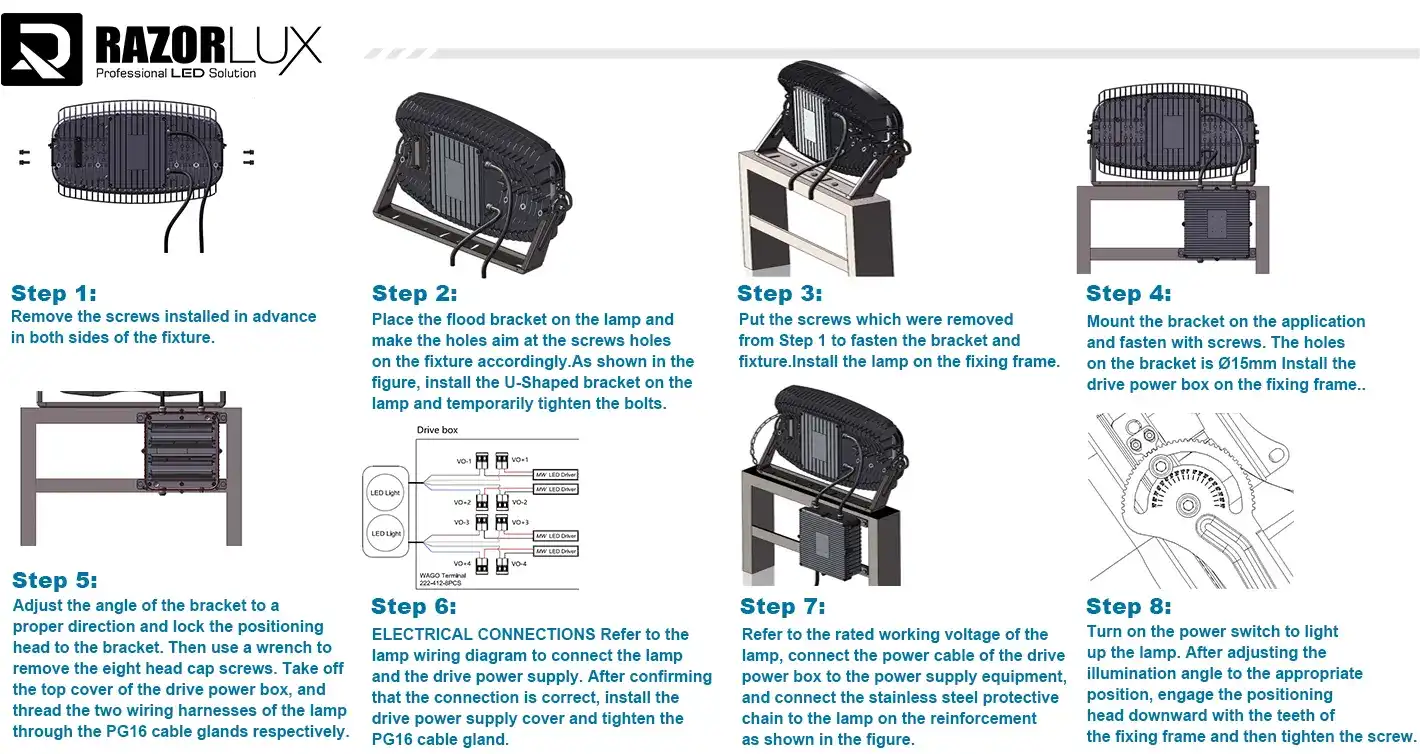
- Streamlined installation: One large device replaces several smaller ones, cutting down on the number of fixing points and wiring complexity.
- Different ways to mount: The adjustable bracket system lets you put it at different angles and in different places.
- Less upkeep is needed: Fewer tools mean fewer inspections and cleaning plans, which means less downtime for operations.
- Modular component design: LED modules and drivers that can be replaced increase service life and lower repair costs
Expert Recommendations for Optimal Selection
Before picking between high-wattage and low-watt LED options, you need to carefully think about your specific needs. From working in the field, we can see that there are clear trends that favour each method in different situations.
When high-wattage circuits work best:
- Each light covers more than 5,000 square feet.
- Maintenance entry is hard to get to or costs a lot.
- The environment requires the highest level of toughness.
- Light must spread evenly over big areas.
- Installation prices have a big effect on project budgets.
Low-wattage options are good for situations like these:
- It's necessary to light up particular places with focused light.
- Zones with flexible lights need their own controls.
- Initial price limitations limit the choice of fixtures.
- High-power loads can't be supported by the current electricity grid.
Professional lighting gurus always say that the best way to set the wattage of a bulb is to match it to the scale of the application.
If the operations of your building rely on stable, high-performance lighting over large areas, then buying high-wattage LED systems is usually the best long-term investment.
Conclusion
When you compare 1000W LED flood lights to other options with smaller wattages, there is no clear winner. Success depends on matching the powers of the object to the needs of the application. High-wattage systems work best in big industrial and naval settings where range, durability, and the ease of upkeep are important factors. Lower-wattage options work best for projects that need precise lighting, flexible setups, and a tight budget. Razorlux and other high-quality makers fill in this gap by providing flexible solutions that work best for each operation's needs. No matter what power is picked, the best lighting system is the one that takes into account covering needs, weather conditions, and total ownership costs.
Partner with Razorlux for Premium 1000 Watt Led Outdoor Flood Lights Solutions
Razorlux stands as a trusted 1000 Watt Led Outdoor Flood Lights manufacturer, delivering exceptional marine and industrial lighting solutions since 1998. Our RGL-1000P-L20 series combines cutting-edge LED technology with proven durability, featuring Samsung chips, Meanwell drivers, and comprehensive certifications, including DNV/GL marine approval. Contact our technical team at sam@razorlux.com to order our 1000 watt LED outdoor flood lights and receive detailed specifications for your next project.
References
1. International Association of Marine Aids to Navigation and Lighthouse Authorities. "Guidelines for Marine Lighting Systems in Port and Harbour Applications." IALA Technical Standards, 2023.
2. Chen, M., & Rodriguez, A. "Energy Efficiency Analysis of High-Power LED Flood Lighting Systems in Industrial Applications." Journal of Industrial Lighting Engineering, vol. 45, no. 3, 2023, pp. 178-195.
3. Maritime Safety Committee. "Illumination Standards for Offshore Platform Operations: A Comprehensive Study." International Maritime Organisation Technical Report, 2024.
4. Thompson, K., et al. "Comparative Life Cycle Assessment of LED Lighting Systems in Marine Environments." Environmental Engineering and Lighting Technology Review, vol. 12, no. 2, 2023, pp. 89-104.
5. Baltic Marine Environment Protection Commission. "Best Practices for Port Lighting Design: Environmental and Safety Considerations." HELCOM Recommendation, 2023.
6. Wilson, J., & Park, S. "Cost-Benefit Analysis of High-Intensity LED Lighting in Heavy Industrial Applications." Industrial Operations Management Quarterly, vol. 38, no. 4, 2024, pp. 267-284.
 VIEW MOREhorse arena lights
 VIEW MOREoutdoor hockey rink lighting
 VIEW MOREindoor tennis court lighting
 VIEW MORECrane Boom Lights
 VIEW MOREWaterpoof IP67 Reflector Flood Light 100w Outdoor Ex Proof Led Flood Light
 VIEW MORE500W Robust Heavy Duty LED Stadium Lights Arena LED Lighting
 VIEW MOREFlood Light High Mast
 VIEW MORELarge Outdoor Led Flood Lights